How Does Private Pay Home Care Work?
FirstLight Home Care Minneapolis
For more information about the author, click to view their website: FirstLight Home Care
Sep 18, 2024
Minnesota - Twin Cities Metro Area

Email US
Click to Email Us
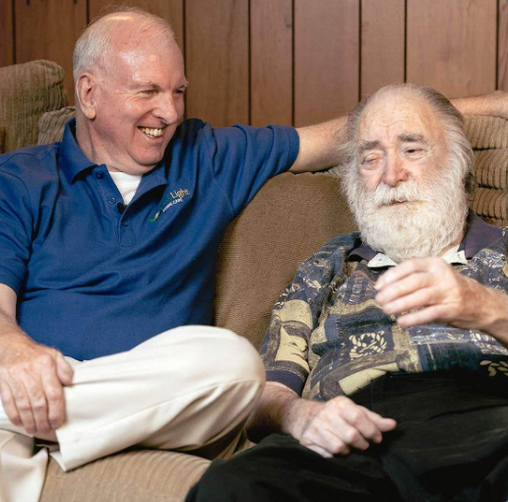
As our parents grow older, they may need more hands-on help than their children can provide. According to a 2021 AARP survey, 77% of adults 50 and older want to age in place, staying in their own homes long term and retaining as much independence as possible. With private pay home care services, families can avoid placing their loved ones in a nursing home and help ensure they’re safe and comfortable in their own home.
What is Private Pay Home Care?
Private pay is the most common way of paying for home care services. This is when the payment comes directly out of pocket, using savings or existing assets to cover the costs of services.
Some families are concerned about how to pay for in home care if they don’t have existing assets to cover everything. At FirstLight Home Care, we understand that cost matters, so we work with you and your family to fully understand and navigate any third-party payment options. A number of insurance companies will provide home health care insurance, and there are also a variety of benefits and programs you may qualify for, including veteran benefits.
What Do I Get Out of My Investment in Home Care?
At FirstLight Home Care, care is not one size fits all. We assess your loved one’s unique needs and develop a customized plan from our experienced care team. This personalized approach means that home care prices will vary depending on each client’s needs.
For example, your mom may still live at home and only need about four hours of care per day to help her with daily tasks such as housekeeping, meal preparation and running errands. Meanwhile, another family might need a live-in caregiver for a loved one with dementia and requiring full-time support.
When taking care of a family member, the cost of caregiving goes beyond the value of paying for food or medications but also the lost time and energy spent in caretaking. Having someone else step in and help as a caregiver is one of the best ways to strengthen your relationship with your family member while also ensuring their physical and mental safety.
What Services Can I Expect From Home Care?
Aging in place in the comfort of your own home is one of the biggest blessings and one that everyone should be able to experience. With FirstLight’s senior care services, we allow your loved ones to maintain their independence and keep up with their daily routines.
Here are just a few of the ways our caregivers can help at home:
Light housekeeping services
Meal preparations
Maintaining personal hygiene and bathing assistance
Continence and toileting care
Transportation to medical appointments and errands
Medication reminders
Assisting with walking and mobility
Providing conversation and company
At FirstLight Home Care, we’re committed to helping you find the best solution for care services for your loved ones. Request a personalized quote, and we’ll guide you through the process and partner with you to explore all options available for your particular situation. Call us at (

- To view the original version of this article visit www.firstlighthomecare.com/blog/private-pay-home-care/
- Seniors Blue Book was not involved in the creation of this content.
Other Articles You May Like
How Do You Decide What Is Clutter?
Im not a fan of the word decluttering, although it comes up a lot in my work as a professional organizer. The reason I dont like that term is because clutter has such a negative connotation, and sometimes when people hear the word decluttering, it makes them feel guilty that they have clutter in the first place. Is this clutter? is a question that my clients ask me a lot. I think there are a lot of myths and misunderstandings about what counts as clutter. Often, people are afraid that I will tell them that something important to them is clutter, or they need to get rid of something that is sentimental but doesnt seem to have practical value. But Im happy to say that this isnt the case! When I work with my clients, I take a different approach to decluttering than they might have seen on a TV show or read about in a book. Heres what I think is important for you to know about clutter and decluttering: There is no single item that is always clutter. Have you ever heard the expression, whether something is a weed or a flower depends on your perspective? Well, I think the same is true about clutter. Something that seems useless to one person could be extremely important to another. I think of clutter as anything in your space that doesnt provide you value (whether that value may be practical use, sentimental or financial value, or pleasure). Something that you dont have the time, energy, or space to properly take care of, no matter how much you want to, can also become clutter. Thats why its so important to evaluate what you think is important before you begin to address clutter in your home. Only you can decide what is clutter in your own space. Sentimental and decorative items arent necessarily clutter.Many of my clients struggle with decisions about whether to keep sentimental items. Sometimes we keep them out of feelings of guilt or obligation, and sometimes we feel guilty for holding onto items that we love but have no practical purpose.I personally love sentimental items, and as you can see on my bookshelf, I love to display them through my home. Seeing my favorite books, photos of loved ones, and little pieces of my history on a regular basis make me happy. I encourage my clients to keep, display, and properly preserve sentimental items that bring them joy, and let go of the ones that bring feelings of guilt or burden. The key to not allowing sentimental items to become clutter is to be selective about which items you keep, and to store or display them in a way that allows you to enjoy them. Things that are useful can still be clutter. But that could be useful! is one of the most common protests I hear when I encourage clients to let go of something theyre not using. And I understand that it can feel wasteful to let go of something that could be possibly used in the future. However, many of us hold onto potentially useful itemsthat we never actually use! And that ultimately leads to clutter in your home. If youre not going to use something, its ok to pass it along to someone who will. Clutter isnt always an eyesore, or even visible. Just because a home doesnt look messy doesnt mean it isnt cluttered. Going back to the definition of clutter, if something in your space isnt providing you value, no matter how neat or organized it looks, it is still clutter. Also, clutter sometimes isnt visible at all. Maybe you have commitments on your calendar that are sucking up time but dont provide you with value, or you have tons of files and photos on your photo that are just taking up space. Clutter can come in many forms, not just physical. Once you start thinking critically about the things you are giving time, space, and energy, you will be able to apply a decluttering mindset to all aspects of your life. Dont start by decluttering, start by assessing. Instead of decluttering, I prefer to begin the organizing process by assessing. I help my clients take a look at their items in a non-judgemental way are these items helping them to achieve their goals, or are they just taking up space without providing enough value? If theyre happy with everything, we figure out how to make all of their items work in their space. But more often than not, clients realize they do have things in their space they want to let go of. If you need help thinking through the items you have in your space and deciding what to keep or let go of, Im here for you. Set up a time to chat with me so I can give you some guidance.
Give the Gift of a Clutter-Free Home
This is a loaded topic, but since its December, Im going to take on holiday gift-giving. Gulp. My approach to gift giving has dramatically changed since Ive become a professional organizer. Why? Because gifts are one of the biggest clutter challenges for my clients.I dont really like this, but it was a gift and I feel guilty about letting go of it. I dont want this, but my Mom gave it to me and Im afraid shell ask about it the next time she comes over. Someone bought me this expensive item, but its just not my style. These are sentiments I hear from clients over and over. After I saw how often gifts the clients not only didnt give them joy, they actually created a negative effect of adding guilt, stress, and clutter, I realized I needed to change my personal approach to holiday gifting. I want to shared what Ive learned with you in the hopes that youll feel more confident both as a gift-giver and recipient. Sooo many giftsHow did we get here?First of all, I want to say that this post isnt about being a Grinch or not giving gifts. I love giving gifts and a world without gifts would be a sad one.At the same time, we live in a culture where there is an incredible pressure to buy lots of gifts, particularly around Christmas. So much so that 47% of Americans surveyed expect to go into debt for holiday gift-giving, travel, or both, this year. And so many people are already overwhelmed with belongings. Eleven percent of Americans rent storage units to store extra stuff. Now that I see much stress gifts create for both givers and receivers, I think its time for a different approach to gifts. Realize the change starts with youBefore we get into strategies, its important to acknowledge that you only have control over your own gift giving behavior. Yup, thats right. You cant stop your mother-in-law or your aunt Suzy from wrapping up LOL dolls or vanilla-scented candles if thats the way they are hell-bent on showing their love. I often hear my younger clients say things like I ask my parents to gift my kids experiences like museum tickets, but they just keep buying plastic toys. Honestly, Im not surprised by that. Buying tons of stuff to show our families that we love them at certain times of the year has become so culturally ingrained that many people feel its mandatory. And for gift givers, gifting something intangible is a change from the tradition of handing someone a wrapped box. Its going to take a bigger cultural change before more people feel comfortable gifting differently. Over the years, Ive realized that although I cant change other peoples behaviors around gifting, I can change the way I give gifts. How Ive changed my approach to giftingBefore I became an organizer, I felt obligated to buy holiday gifts for every party and event I went to. At times, I fell into the trap of buying things I liked or that seemed really nice to me (like an expensive pair of earrings or bottle of wine) but the recipient didnt actually care about. Other times, I found gifts that I knew were lame, but I bought them anyway because I didnt want to show up empty-handed, or I couldnt afford what the person really wanted. I dont do those things anymore. Ive tried to be a more mindful gift-giver by: Opting out of gift exchanges that are less meaningful to me, or where I cant gift a specific recipient, like office Secret Santas or Yankee Swaps. Pausing and asking Am I picking this item to impress the recipient, or because they will really love it? If Im picking something to show off my own taste, I rein myself in. Buying and giving gifts whenever I find the right one, regardless of if theres a holiday or occasion. That way, I dont feel pressure to buy something thats not great just because its a holiday. Giving cash in a nice greeting card. Its not the most exciting gift to give, but Ive never heard someone say they didnt like cash. More ideas for clutter-free giftingIf you love giving gifts, but the people on your list already seem to have everything (or say I dont need anything), you can still gift in a way thats clutter-free. My fellow NAPO organizer Kimberly Corey recently wrote a great blog post full of clutter-free gift ideas, including everything from concert tickets to car detailing (Santa, if youre reading this, Id love to have someone detail my truck :) In addition to all of Kimberlys great ideas, another intangible gift I love is a gift subscription to an online publication so your loved one can read articles without the paywall. What about gift cards? Gift cards can be tricky. Some people love them, but many of them go unused or end up with a balance. I think a gift card to a retailer you know the recipient regularly shops with or to a restaurant you know they love (or would love to try) is a great gift. Otherwise, I would go with cash. I have had more and more clients ask for organizing gift cards over the years, so I do offer several organizing gift cards. These are a great option if your loved one already works with me, or has expressed interest in working with a professional organizer. (Otherwise, it might seem passive aggressive.) The greatest giftIt may seem cliche, but never underestimate the gift of your time and presence. Calling a friend, spending an afternoon with your parents, engaging in something silly with your kidsthese are the gifts they will truly cherish. I wish you a wonderful and joyful holiday season!
When Organizing Tips and Tricks Arent Enough
Have you ever clicked on an article or bought a book hoping to find that little nugget that will help you finally get organized? When I started on my own personal organizing journey in 2015, I bought every organizing magazine and book I could find. While I learned some helpful things, nothing I read was a real game-changer for me. Sometimes the organizing advice even felt overly simple and frustrating. If youve ever felt frustrated or underwhelmed with the organizing tips and tricks youve found, youre not alone. As a professional organizer, I frequently see this happening with my clients.After working with 100+ clients, I now understand why organizing tips and tricks fall short for so many people. For most people, its one (or more) of the 5 common reasons Ill discuss below. The good news is that once you understand why the standard advice isnt working for you, you can start to find the right support to help you finally get organized. Reason 1: You have more complex organizing challenges. Since becoming a professional organizer, Ive learned that some people experience significant, ongoing challenges with organization we call this chronic disorganization. This is common among people with ADHD, people with hoarding disorders, and senior citizens. If you have experienced a long-term struggle with organization, basic organizing tips arent going to address the complexity of your situation. You may need to address physical and mental health issues, relationships, and other challenges alongside your home environment. Working with a therapist or mental health professional, a professional organizer experienced in chronic disorganization, and establishing a strong personal support system can make a difference.Reason 2: You need structure and accountability, not just information. Many of my clients know what they need to do to get organized, but they struggle to carve out the time and complete to the sometimes-tedious tasks that organization requires. This is why in-person support is key. So many of my clients tell me I just get so much more done when youre here. I think of it like working out with a personal trainer. Sure, I could go to the gym and work out by myself, but if Ive booked a session with a personal trainer, Im much less likely to skip my session or give it a half-hearted effort.Having an accountability buddy or trusted professional working alongside you can help you keep going, even when youd rather plop on the couch and binge Netflix than organize your pantry. Reason 3: You just dont have time. Even the best organizing systems require regular maintenance. If you are in a busy season of life, you may be struggling to find time to keep your home in order. I always encourage my clients to look at the whole picture: What are your work responsibilities? What are your care-giving responsibilities? What routine chores are you responsible for (laundry, dishes, cleaning, meal prep, shopping)? Are you managing scheduling, planning, and logistics for your household? Are you responsible for other types of home maintenance (lawn care, renovations, repairs)? What activities/organizations are you active in outside of work? Do you have enough downtime and time with your family? Often, people dont have as much time to dedicate to home organizing as they would like. If this is the case for you, simplifying, delegating tasks, and bringing in outside support can help you stay organized if youre time-pressed. Reason 4: You have a physical or health challenge. Home organizing is often physical it can involve a lot of lifting, reaching, climbing, and standing. If you have a physical challenge like an injury, a health condition that limits your energy or mobility, or a physical disability it may be difficult to stay organized. Finding a trusted, non-judgmental partner who can assist with physical tasks while you make decisions is your key to staying organized. Reason 5: You need a bigger lifestyle change. While working together, sometimes my clients realize there is something bigger beneath disorganization. Maybe their family is over-scheduled, and they decide to cut back on some obligations. Or they acknowledge they have a shopping addiction and consider talking to a therapist. Or they reconsider their priorities and choose to simplify so they have more time for travel and hobbies. All these realizations go beyond organization they require a lifestyle change that organizing can support, but on its own wont completely address. If youve tried the standard organizing tips and tricks youve read, and they just dont seem to be helping, consider if something else in your lifestyle needs to change before you can get organized. What does this mean for you? Getting organized can be complex and challenging, and if you havent cracked it yet, dont be hard on yourself. If any of this resonated with you, my top recommendations are: Take the organizing tips you hear with a grain of salt. They may work for some, but they wont work for everyone (and thats ok!) Consider how you can add caring, non-judgmental support to reach your goals. That could be a therapist, coach, trusted friend/family member, body double, or professional organizer. If you have ADHD or another complex organizing challenge, look for an organizer with experience working with chronic disorganization. I have my Level I certificates of study in chronic disorganization and ADHD from the Institute for Challenging Disorganization (ICD), and you can search their website for professionals in your area. If youd like to talk in more detail about your organizing challenges, Im here for you. Sign up for a free consultation or contact me at 412-503-7604. Id love to help you get moving in the right direction!
Local Services By This Author

FirstLight Home Care Minneapolis
Personal Care AssistanceFirstLight Home Care of Minneapolis West & South Metro: Comprehensive and Compassionate In-Home Care ServicesFirstLight Home Care of Minneapolis West & South Metro offers professional and compassionate home care services for seniors, veterans, individuals recovering from surgery, and adults with disabilities. Serving communities such as Minnetonka, Eden Prairie, Edina, Bloomington, and surrounding areas, their highly trained caregivers provide personalized support to improve quality of life while enabling individuals to remain in the comfort of their own homes.Key Services Offered:Personal Care: Assistance with daily activities like bathing, dressing, mobility, and hygiene to ensure physical well-being.Companion Care: Social engagement and emotional support to combat isolation and enhance quality of life.Respite Care: Temporary relief for family caregivers to recharge while ensuring their loved ones receive excellent care.Dementia and Alzheimers Care: Specialized care for individuals living with cognitive challenges, focused on safety, routine, and memory support.Veteran Care: Tailored services to honor and support veterans in need of home care assistance.What Sets FirstLight Apart:Customized Care Plans: Each familys unique needs are considered to design the most effective and supportive care plan.Empathetic Caregivers: The team is trained to build trust-based relationships while providing dignified and respectful care.Holistic Support: FirstLight addresses not only physical needs but also emotional and social well-being.Expert Guidance: Families receive advice and resources to make informed decisions about their loved ones care.Whether its a few hours of help each week or full-time in-home assistance, FirstLight Home Care ensures every client receives compassionate, dependable care tailored to their individual needs. Contact FirstLight Home Care of Minneapolis West & South Metro at (612) 473-3227 to learn more or create a personalized care plan for your loved one.

FirstLight Home Care Minneapolis
Companion CareFirstLight Home Care of Minneapolis West & South Metro: Comprehensive and Compassionate In-Home Care ServicesFirstLight Home Care of Minneapolis West & South Metro offers professional and compassionate home care services for seniors, veterans, individuals recovering from surgery, and adults with disabilities. Serving communities such as Minnetonka, Eden Prairie, Edina, Bloomington, and surrounding areas, their highly trained caregivers provide personalized support to improve quality of life while enabling individuals to remain in the comfort of their own homes.Key Services Offered:Personal Care: Assistance with daily activities like bathing, dressing, mobility, and hygiene to ensure physical well-being.Companion Care: Social engagement and emotional support to combat isolation and enhance quality of life.Respite Care: Temporary relief for family caregivers to recharge while ensuring their loved ones receive excellent care.Dementia and Alzheimers Care: Specialized care for individuals living with cognitive challenges, focused on safety, routine, and memory support.Veteran Care: Tailored services to honor and support veterans in need of home care assistance.What Sets FirstLight Apart:Customized Care Plans: Each familys unique needs are considered to design the most effective and supportive care plan.Empathetic Caregivers: The team is trained to build trust-based relationships while providing dignified and respectful care.Holistic Support: FirstLight addresses not only physical needs but also emotional and social well-being.Expert Guidance: Families receive advice and resources to make informed decisions about their loved ones care.Whether its a few hours of help each week or full-time in-home assistance, FirstLight Home Care ensures every client receives compassionate, dependable care tailored to their individual needs. Contact FirstLight Home Care of Minneapolis West & South Metro at (612) 473-3227 to learn more or create a personalized care plan for your loved one.
FirstLight Home Care Minneapolis
Memory & Dementia CareFirstLight Home Care of Minneapolis West & South Metro: Comprehensive and Compassionate In-Home Care ServicesFirstLight Home Care of Minneapolis West & South Metro offers professional and compassionate home care services for seniors, veterans, individuals recovering from surgery, and adults with disabilities. Serving communities such as Minnetonka, Eden Prairie, Edina, Bloomington, and surrounding areas, their highly trained caregivers provide personalized support to improve quality of life while enabling individuals to remain in the comfort of their own homes.Key Services Offered:Personal Care: Assistance with daily activities like bathing, dressing, mobility, and hygiene to ensure physical well-being.Companion Care: Social engagement and emotional support to combat isolation and enhance quality of life.Respite Care: Temporary relief for family caregivers to recharge while ensuring their loved ones receive excellent care.Dementia and Alzheimers Care: Specialized care for individuals living with cognitive challenges, focused on safety, routine, and memory support.Veteran Care: Tailored services to honor and support veterans in need of home care assistance.What Sets FirstLight Apart:Customized Care Plans: Each familys unique needs are considered to design the most effective and supportive care plan.Empathetic Caregivers: The team is trained to build trust-based relationships while providing dignified and respectful care.Holistic Support: FirstLight addresses not only physical needs but also emotional and social well-being.Expert Guidance: Families receive advice and resources to make informed decisions about their loved ones care.Whether its a few hours of help each week or full-time in-home assistance, FirstLight Home Care ensures every client receives compassionate, dependable care tailored to their individual needs. Contact FirstLight Home Care of Minneapolis West & South Metro at (612) 473-3227 to learn more or create a personalized care plan for your loved one.