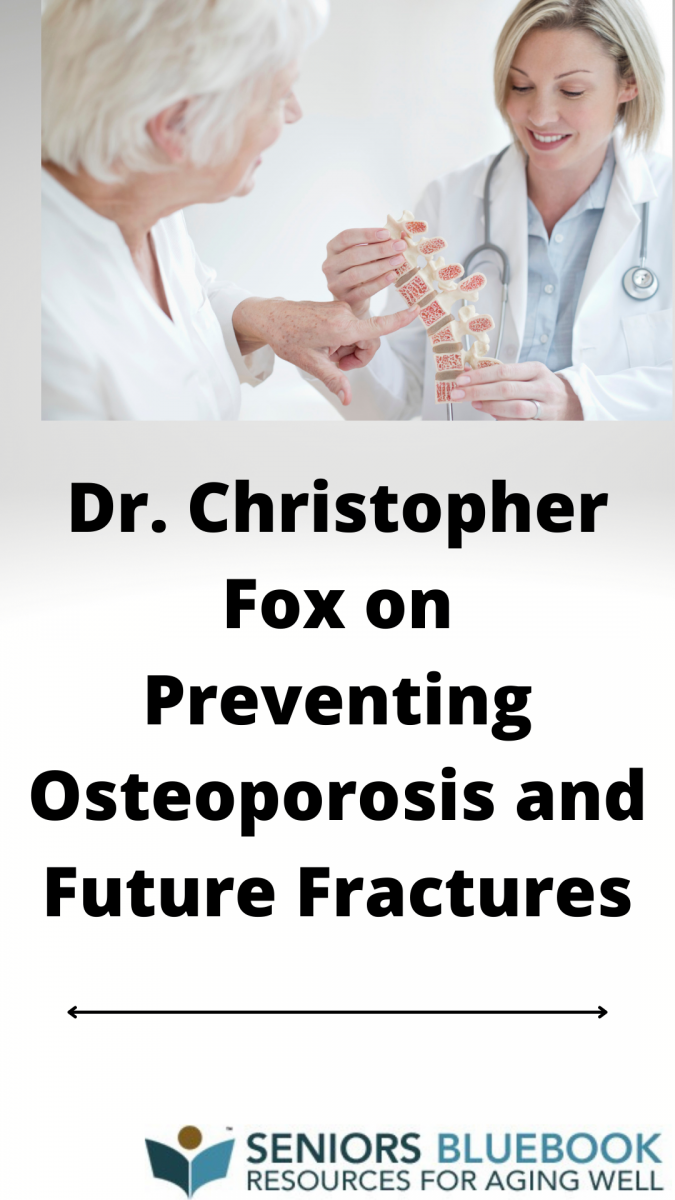
Dr. Christopher Fox on Preventing Osteoporosis and Future Fractures
Jul 29, 2021

Email US
Click to Email Us
Osteoporosis a bone-thinning disease is a major health threat for millions of Americans. In fact, about half of all women and a quarter of men will suffer a bone fracture because of osteoporosis. These fractures can be devastating and lead to chronic pain, loss of independence and, in some cases, death.
Fortunately, treatments are available to prevent and manage osteoporosis, endocrinologistChristopher Fox, MD, said during a free online health lecture.
Fragility Fractures: A Sign of Osteoporosis
According to Dr. Fox, osteoporosis is a disease that makes bones thin and weak. This predisposes our bones to fragility fractures, he explained. These type of fractures result from an event that would not ordinarily result in a fracture, such as a fall from standing height or less. They are a sign of underlying osteoporosis.
Fragility fractures can be painful and cause disability and loss of function. Dr. Fox said, The most feared is the hip fracture. Fifty percent of those who experience a hip fracture will not be able to return to their previous level of function and living the way they were before the fracture.
Osteoporosis Explained
Understanding osteoporosis begins with understanding how bones are made.
Dr. Fox stated, Bone is living. Its alive and continually being remodeled. He explained that during a process called bone resorption, special bone cells called osteoclasts break down and resorb old bone, digging out a cavity. Once this occurs, other bone cells called osteoblasts lay down new bone until the resorbed bone is completely replaced.
After about age 30, said Dr. Fox, we start to build less bone than we break down. For perimenopausal and post-menopausal women, the bone-breaking osteoclasts become more active and break down bones more quickly. The osteoblasts work to keep up, but the osteoclasts begin to remove more bone than the osteoblasts can create. Accelerated bone loss ends up occurring, increasing the risk of fragility fractures.
Preventing Fragility Fractures
There are four things we can do to prevent fragility fractures.
Calcium + Vitamin DBecause vitamin D helps our intestines absorb calcium from the food we eat, getting enough of both is important in helping to maintain our bone density. We know for postmenopausal women you should have at least 1,200 milligrams of calcium and 2,000 units of vitamin D each day, said Dr. Fox. Its best if your calcium comes from food versus supplements.
He said you can find calcium in dairy, leafy greens and small fish such as sardines. Exposure to sunlight is one way to obtain vitamin D. Additionally, fatty fish like salmon, tuna and mackerel, and beef liver, cheese and egg yolks have vitamin D. Milk and orange juice have vitamin D added. All of these are good to consider adding to your diet.
Magnesium, vitamin K, zinc and boron are also important. The best thing to do, said Dr. Fox, is simply eat a healthy diet.
Weight-bearing exerciseBones love when stress or force is applied. This means biking and swimming arent as beneficial for maintaining bone strength as weight-bearing excercise such as walking, hiking, dancing and aerobics, said Dr. Fox. He added however, Its also important to be able to maintain our balance and muscle mass, so that the muscles around our bones are also strong. This makes us strong enough to avoid falling. Resistance training is important to build and maintain this muscle mass.
Avoid tobaccoSmoking is never good for your overall health. Its also affects bone health.
Avoid excess alcoholRegularly consuming more than two drinks each day raises a persons risk of developing osteoporosis.
Assessing Osteoporosis Risk
Most people receive their osteoporosis diagnosis through a bone density analysis, said Dr. Fox. A T-score of -2.5 or less results in an osteoporosis diagnosis.
Dr. Fox recommends that the following groups have a bone density scan to understand their risk for osteoporosis:
Women age 65 and older
Men and younger women with increased risk of fracture including those:
With family history of osteoporosis/hip fracture.
Undergoing steroid therapy.
Who are using estrogen blocking medication.
With low body weight.
With a condition associated with increased risk (early menopause, low testosterone, diabetes, celiac disease, rheumatoid arthritis, etc.).
Its important to understand your risk for experiencing a fracture. If you have already have had an osteoporosis-related fracture, a hip, pelvic or humerus fracture, or you have a parent who has had a hip fracture, you have a substantially increased risk of having a fracture in the future, Dr. Fox stated.
Treatment for Osteoporosis
Treatment recommendations are typically based on an estimate of your risk of fracturing a bone in the next 10 years using information such as the bone density test.
Patients may want to consider medications if they have:
Had a prior fragility fracture
A T-score lower than -2.5
A high fracture risk.
Low bone mass and receiving steroid therapy.
Medications can help maintain or increase your bone density. Some medications can slow further bone loss if youve already been diagnosed with osteoporosis.
Other Articles You May Like
Why Having a Healthcare Advocate Can Make a Difference
Why Having a Healthcare Advocate Can Make a Difference in Your Medical Journey. Navigating the healthcare system can sometimes feel overwhelming, especially when dealing with a new diagnosis, managing a chronic condition, or making important decisions about medical treatment. Between scheduling appointments, understanding medical terminology, communicating with multiple healthcare providers, and keeping track of treatment plans, patients and their families can quickly become frustrated or confused. This is where a healthcare advocate can make a meaningful difference. A healthcare advocate serves as a knowledgeable support person who helps patients navigate the healthcare system, understand their medical options, communicate with healthcare professionals, and make informed decisions about their care. Whether someone is facing a serious diagnosis, preparing for surgery, managing a long-term illness, or simply trying to understand their treatment options, having an advocate can provide valuable guidance and reassurance throughout the medical journey. What Is a Healthcare Advocate? A healthcare advocate is someone who helps patients understand and navigate the often-complicated healthcare system. Their role is to support patients by helping them access information, communicate with medical professionals, coordinate care, and better understand their healthcare choices. Healthcare advocates may assist with a variety of needs, including: Helping patients understand medical diagnoses and treatment recommendations. Preparing questions for upcoming doctor appointments. Helping patients communicate concerns and symptoms to healthcare providers. Coordinating appointments with multiple specialists. Reviewing treatment options and helping patients understand the information provided by their medical team. Helping patients obtain and organize medical records. Supporting patients who are considering a second medical opinion. Helping families understand available healthcare resources and services. A healthcare advocate does not replace a physician or make medical decisions for the patient. Instead, they help patients become more informed, confident, and involved in their own healthcare decisions. Understanding Your Diagnosis and Treatment Options Receiving a medical diagnosis can be an emotional and confusing experience. Patients may leave a doctor's appointment with more questions than answers, especially when they are unfamiliar with medical terminology or are trying to process unexpected news. A healthcare advocate can help patients better understand the information they receive from their healthcare providers. For example, after receiving a diagnosis of cancer, heart disease, diabetes, or another serious medical condition, a patient may need to understand several aspects of their care, including treatment options, potential side effects, follow-up appointments, and lifestyle changes. An advocate can help organize this information, identify questions that need clarification, and encourage patients to discuss their concerns directly with their physicians. Having someone help explain complicated healthcare information can make it easier for patients and families to understand their situation and feel more prepared for the decisions ahead. Improving Communication Between Patients and Doctors Good communication between patients and healthcare providers is essential for effective healthcare. However, patients sometimes feel intimidated, rushed, or unsure about how to express their concerns during medical appointments. They may forget important questions, struggle to describe their symptoms, or leave without fully understanding their physician's recommendations. A healthcare advocate can help bridge this communication gap. Before an appointment, an advocate may help patients prepare a list of questions, organize medical information, and identify concerns they want to discuss. During an appointment, when authorized and welcomed by the patient and provider, an advocate may attend to help take notes, ask questions, and make sure important information is understood. After the appointment, an advocate can help patients review their notes, understand the next steps, and identify any follow-up questions. This additional support can be particularly helpful for older adults, individuals managing complex medical conditions, and patients who feel overwhelmed by the amount of information they receive. Coordinating Care Among Multiple Healthcare Providers Many patients receive care from several different healthcare professionals. Someone managing a chronic illness, for example, may see a primary care physician, cardiologist, neurologist, endocrinologist, or other specialists. Although each provider plays an important role, coordinating appointments, medical records, treatment recommendations, and follow-up instructions can become challenging. A healthcare advocate can help patients stay organized and navigate these different aspects of their care. Care coordination may include: Helping schedule appointments with specialists. Keeping track of upcoming medical visits and follow-up care. Organizing medical records and test results. Helping patients communicate information between healthcare providers. Identifying questions about conflicting or unclear treatment recommendations. Helping patients understand referrals and recommended next steps. When patients have multiple medical providers, having someone help organize their healthcare information can make the process less stressful and help reduce the likelihood of important details being overlooked. Helping Patients Make Informed Healthcare Decisions Medical decisions can have a significant impact on a person's health, independence, finances, and quality of life. Patients may be asked to consider medications, surgical procedures, treatment plans, rehabilitation services, or other medical interventions. Making these decisions can be difficult, particularly when patients are facing unfamiliar medical conditions or complicated treatment choices. A healthcare advocate helps patients understand the information available so they can have more productive conversations with their medical providers. An advocate may help patients: Understand the purpose of recommended treatments. Prepare questions about potential risks and benefits. Discuss alternative treatment approaches with their physicians. Understand what to expect during recovery. Explore whether a second medical opinion may be appropriate. Consider how different treatment options may affect daily life and personal goals. The goal is not to tell patients which treatment to choose. Instead, it is to make sure they have the information and support needed to participate in decisions about their healthcare. Ultimately, medical decisions should reflect the patient's needs, values, preferences, and conversations with qualified healthcare professionals. The Importance of a Second Medical Opinion When facing a serious or complicated diagnosis, patients may benefit from seeking a second medical opinion. Getting another professional perspective can help confirm a diagnosis, provide additional information about treatment options, or identify alternative approaches. However, knowing when and how to seek another opinion can be confusing. A healthcare advocate can help patients understand the process and prepare for a second opinion appointment. This may involve organizing medical records, collecting test results, identifying specialists, and preparing questions about the diagnosis and recommended treatment. Having additional information can help patients feel more confident about the decisions they make and better understand the options available to them. Seeking a second opinion does not mean a patient distrusts their current physician. It is simply another way to become informed and make thoughtful decisions about their health. Providing Support for Family Members and Caregivers A serious medical condition affects more than just the individual receiving care. Family members and caregivers often become involved in managing appointments, understanding treatment recommendations, communicating with physicians, and providing emotional support. These responsibilities can become overwhelming, especially when family members are balancing caregiving with their own personal and professional obligations. A healthcare advocate can help ease some of this burden by providing guidance and organizational support. With the patient's permission, an advocate can help family members understand the care plan, keep track of upcoming appointments, organize medical information, and identify questions that need to be addressed. This support can be particularly valuable when adult children are helping aging parents navigate healthcare decisions or when families live in different locations. Having an additional knowledgeable person involved can help families feel more supported while keeping the patient's preferences and needs at the center of care. When Should You Consider Hiring a Healthcare Advocate? There is no single time when everyone needs a healthcare advocate. Some people benefit from assistance during a major medical event, while others appreciate having ongoing support as they manage complicated healthcare needs. You may want to consider working with a healthcare advocate if: You have recently received a serious or unexpected medical diagnosis. You are managing multiple chronic health conditions. You have difficulty understanding medical terminology or treatment recommendations. You see several specialists and need help coordinating your care. You are preparing for surgery or a complicated medical procedure. You want assistance obtaining a second medical opinion. You feel rushed or uncomfortable during medical appointments. You are helping an aging parent or loved one navigate the healthcare system. You want someone to help organize medical records, appointments, and treatment information. Even patients who are generally comfortable managing their healthcare may benefit from having an advocate during particularly complicated or stressful medical situations. How to Choose the Right Healthcare Advocate Choosing a healthcare advocate is an important decision. You want someone who understands the healthcare system, communicates effectively, respects your preferences, and has your best interests in mind. When considering an advocate, look for someone who: Has experience navigating healthcare systems and working with patients. Communicates clearly and listens carefully to your concerns. Understands the importance of patient choice and confidentiality. Can help organize medical information and coordinate care. Is willing to explain complicated information in an understandable way. Respects your relationship with your physicians and other healthcare providers. Provides personalized guidance based on your individual needs. It is also important to understand what services are included, how the advocate works with healthcare providers, and whether services are available in person, remotely, or both. A good healthcare advocate should help you feel informed, respected, and empowered rather than pressured into making decisions. Take an Active Role in Your Healthcare Journey Your health is one of your most valuable assets, and you deserve to feel informed and supported when making decisions about your medical care. Unfortunately, navigating the healthcare system is not always easy. Complicated diagnoses, multiple specialists, confusing medical information, and difficult treatment decisions can leave patients feeling uncertain about what to do next. A healthcare advocate can help make the process more manageable by providing guidance, improving communication, organizing healthcare information, and helping patients understand their options. Most importantly, having an advocate can help patients become more confident participants in their own healthcare journey. You do not have to navigate complicated medical situations alone. With the right support, you can ask better questions, understand your choices, and work more effectively with your healthcare team. If you or someone you love is feeling overwhelmed by the healthcare system, consider reaching out to Vital Voice Healthcare Navigation. Having a knowledgeable advocate by your side can make a meaningful difference in understanding your care and moving forward with greater confidence.
How to Organize After the Holidays
Hey there! Do you already have your holiday decorations put away, or will your Christmas tree be up until February? To be honest, I can be either person, depending on the year. This year, Ive been a little slow to pack up my garlands and lights, but thats ok. Organization doesnt mean being perfect all the time.The holiday season can bring fun and joy, but it can also bring chaos to the systems in your home. Theres a proliferation of stuff -- cards, packages, gifts of all kinds, decorations, wrapping paper, social engagements, emotions. After all the partying is over, we can be left with a feeling of overwhelm. As a professional organizer, here are my tips for how to handle all of the stuff that came into your house over the holidays and bring (a little more) peace to your home and heart: Decide what to keepThis is really the first (and most critical) thing to do as soon as youre ready to move on from the holidays. Take a look at everything that came into your house during the season and keep only what you truly want to have. I dont recommend keeping anything you dont love, need, or want, even if it was a gift (more on that below). If you shove that ugly sweater in a closet, forget about it, and discover it two years later, youll still have to make the same decisions about what to do with it. Decide what to do as soon as you can. Find a home for everything youre keeping (and put it there right away). If you are keeping a newer/different version of something you already own (for example, you got a nicer coffee maker for Christmas), consider donating or discarding your old item. In other words, follow the one-in, one-out rule if its appropriate.Let go of unwanted gifts Something I hear all of the time from clients is I dont really like this, but it was a gift and I feel guilty about giving it away.I know that gifts can be tricky. I think honoring the intention of the gift given to us is actually more important than holding onto the actual physical object. Usually, someone gives you a gift to show you that they care about you or because they hope youll enjoy it, not because they expect you to become the permanent caretaker of that object. (And if someone gives you a gift receipt, they dont mind if you return it dont feel guilty!)So how do I handle gifts I dont love? I go out of my way to thank the giver in a way thats sincere. I dont tell someone I loved a particular gift if I didnt, but I do thank them for thinking of me and for their generosity. If I dont want or cant use a gift, I pass it on to someone who can enjoy it more than me. That may mean donating it to a charity, giving it away through my local Buy Nothing group, or regifting to someone who I know would appreciate it. Sort the trash and recyclingYou probably ended up with lots of boxes after Black Friday. Go through any extra packaging and recycle, throw away, or give away what you cant use immediately. My clients often have a ton of empty boxes they are saving for someday, but those boxes can take up a lot of space (and its likely that more will come into your home soon). Getting them out is one of the easiest ways you can make your home feel less cluttered immediately. If you have boxes in good condition, you can post them on your local Buy Nothing or neighborhood social media group for someone who is moving. Take another look at your holiday cardsBefore you shove them into a box, look at each card individually. Is this specific card something that will be meaningful to you in a year? 10 years? If its not, appreciate the person who sent it to you and recycle the card. If it truly is a keepsake, save it in an album or memory box. Evaluate your holiday decorMany of my clients struggle with accumulating and storing holiday decor. I recommend thinking about any decor you didnt put out this year will you put it out next year, or are you over it? Do you have more than you can use? Set aside anything you no longer love or want to donate next fall before the holidays (generally, thrift shops do not have space to store out-of-season items for long periods of time). And make sure to carefully store the items you do love and so you can enjoy them next year
Navigating Senior Care in Minnesota: Where Do You Begin?
When an aging parent begins needing additional assistance, families often find themselves entering unfamiliar territory.Perhaps Mom has recently returned home from the hospital and needs help managing daily activities. Dad is becoming less comfortable driving. Or a spouse is experiencing mobility challenges that make everyday routines more difficult.Suddenly, questions begin piling up.What type of care is available? How much assistance is really necessary? Does Medicare pay for home care? What programs are available in Minnesota? And perhaps most importantly, where should the family begin?For many families, navigating senior care can feel overwhelming, especially when decisions need to be made quickly.Understanding the available options is the first step toward making confident, informed decisions that support independence, safety, and quality of life.Understanding the Different Types of Senior CareOne of the most confusing aspects of senior care is understanding the terminology.Home care, home health care, assisted living, and skilled nursing are sometimes used interchangeably, but they provide different levels of support.Knowing the differences can help families identify services that best match their loved one's needs.Non-Medical In-Home CareNon-medical home care focuses on helping individuals manage everyday activities while remaining in their own homes.Depending on the provider's license and authorized services, assistance may include personal care, companionship, meal preparation, light housekeeping, transportation, and respite care.This type of support can be particularly beneficial for older adults who want to maintain independence but need help with certain daily routines.Services may be arranged for a few hours each week or more frequently as needs change.Skilled Home Health CareSkilled home health care involves medical services provided by appropriately licensed healthcare professionals.These services may include nursing care, physical therapy, occupational therapy, speech-language pathology, and certain medical treatments.Skilled home health services are often recommended following hospitalization, surgery, illness, or a significant change in health.Medicare may cover qualifying home health services when specific eligibility requirements are met.However, Medicare generally does not cover ongoing custodial assistance when that is the only care needed.Assisted Living CommunitiesAssisted living communities provide housing and supportive services for individuals who need help with daily activities but do not necessarily require continuous skilled nursing care.Services vary by community and may include meals, personal care assistance, medication-related services, housekeeping, and social activities.For some seniors, assisted living provides an appealing combination of independence, convenience, and available support.Others prefer to remain in their own homes with assistance from an in-home care provider.Skilled Nursing FacilitiesSkilled nursing facilities provide a higher level of medical and personal care for individuals with more complex needs.Some offer short-term rehabilitation following hospitalization, while others provide longer-term residential nursing care.The appropriate setting depends on the individual's medical condition, functional abilities, preferences, and available support.Start by Evaluating Your Loved One's NeedsBefore selecting a senior care provider, families should consider what assistance is actually needed.A thoughtful assessment begins with everyday activities.Can your loved one prepare meals independently? Are bathing and dressing becoming difficult? Is transportation a concern? Are medications being taken as prescribed?It's also important to consider social and emotional needs.Does your parent spend long periods alone? Have they stopped participating in favorite activities? Are family caregivers struggling to keep up with responsibilities?Discussing these questions with your loved one can help identify priorities and preferences.When medical concerns are involved, a healthcare professional can help determine whether a clinical evaluation or skilled services are appropriate.The goal should be to provide the right level of assistancenot more care than necessary, but enough support to address important needs.Understanding How Senior Care Is Paid ForCost is often one of the first concerns families raise when exploring care options.Unfortunately, payment arrangements can be complicated.Different services may be covered by Medicare, Medicaid, private insurance, long-term care insurance, or personal funds.MedicareMedicare may cover certain medically necessary home health services when eligibility requirements are satisfied.However, Medicare generally does not pay for long-term non-medical home care, routine housekeeping, or ongoing personal assistance when these are the only services required.Families should review their specific Medicare coverage before assuming a service will be reimbursed.Minnesota Medical AssistanceMinnesota's Medicaid program, known as Medical Assistance, may help eligible individuals pay for certain long-term services and supports.Programs such as the Elderly Waiver can help qualifying older adults receive services in community settings rather than nursing facilities.Eligibility depends on factors including age, financial circumstances, assessed care needs, and program requirements.Long-Term Care InsuranceSome long-term care insurance policies provide benefits for qualifying in-home care services.Coverage varies significantly depending on the policy.Families should review benefit limits, elimination periods, covered services, and requirements for receiving reimbursement.Private PayMany families pay directly for non-medical home care.Private-pay arrangements may offer flexibility in scheduling and selecting services.Before beginning care, ask providers about hourly rates, minimum visit requirements, cancellation policies, and any additional fees.Minnesota Resources That Can Help FamiliesFortunately, Minnesota offers several resources designed to help older adults and their families understand available services.Minnesota's Senior LinkAge LineThe Senior LinkAge Line is a free statewide resource that helps older adults and families explore Medicare questions, prescription drug coverage, community services, and long-term care options.It is operated through Minnesota's aging network and can be a helpful starting point for families unfamiliar with available programs.Minnesota Board on AgingThe Minnesota Board on Aging provides information and resources related to aging services, caregiver support, and programs that help older adults remain connected to their communities.Disability Hub MNFor individuals with disabilities, Disability Hub MN offers information about benefits, services, housing, employment, and community resources.These programs can help families better understand their options and identify additional support.Why Care Navigation Can Make a DifferenceEven after learning about available services, families may struggle to determine which options are appropriate.This is where care navigation can become especially valuable.Care navigation helps individuals and families understand their needs, identify relevant services, and explore available resources.For example, a family may need assistance coordinating non-medical home care after a hospitalization.Another may be trying to understand community-based support programs or determine whether additional caregiving assistance is necessary.A knowledgeable care navigator can help organize information, clarify options, and guide families toward appropriate resources.Care navigation does not replace medical advice or official eligibility determinations, but it can make the decision-making process more manageable.For adult children who live outside Minnesota, this additional guidance can be particularly reassuring.Planning Ahead Can Prevent Difficult DecisionsMany families begin researching senior care only after an unexpected event.A fall, hospitalization, or sudden decline in mobility may create an urgent need for assistance.While some situations cannot be anticipated, planning ahead can reduce confusion.Families can begin by discussing their loved one's preferences.Would they prefer to remain at home as long as possible? What activities are becoming difficult? Who should be involved in future care decisions?It's also helpful to organize important documents, review insurance coverage, and identify trusted healthcare professionals and community resources.These conversations may feel uncomfortable initially, but they can help preserve the older adult's voice in future decisions.How Northern Lights Living Helps Minnesota FamiliesBased in Savage, Minnesota, Northern Lights Living understands that navigating senior care involves more than selecting a caregiver.Families often need guidance, reassurance, and a clear understanding of their options.Northern Lights Living provides personalized, non-medical in-home care services designed to support seniors and individuals with disabilities who wish to remain in familiar surroundings.The company emphasizes caregiver compatibility, individualized routines, meaningful companionship, and communication with families.In addition to home care, Northern Lights Living offers care navigation services to help families better understand available support options and community resources.Whether a family is beginning to explore assistance for an aging parent or adjusting to changing care needs, having a compassionate and knowledgeable partner can make the process less overwhelming.Taking the First Step Toward Better SupportThere is no single solution that works for every senior or family.Some older adults benefit from a few hours of companionship each week. Others need regular assistance with personal care or daily household activities.Still others may require skilled medical services or a different living arrangement.The most important step is understanding the individual's needs, respecting personal preferences, and exploring available options before making major decisions.Senior care doesn't have to be navigated alone.With reliable information, thoughtful planning, and the right support, Minnesota families can make decisions that protect independence, promote dignity, and provide greater peace of mind.About Northern Lights LivingNorthern Lights Living is a Savage, Minnesota-based provider of personalized, non-medical in-home care and care navigation services for seniors, adults with disabilities, and their families throughout the Twin Cities metropolitan area.The company focuses on individualized caregiving, caregiver compatibility, family communication, and helping individuals navigate changing care needs.Northern Lights LivingSavage, MinnesotaPhone: 651-329-3526Website: www.northernlightsliving.comHelping Minnesota Families Find the Right Care, Support, and Peace of Mind.