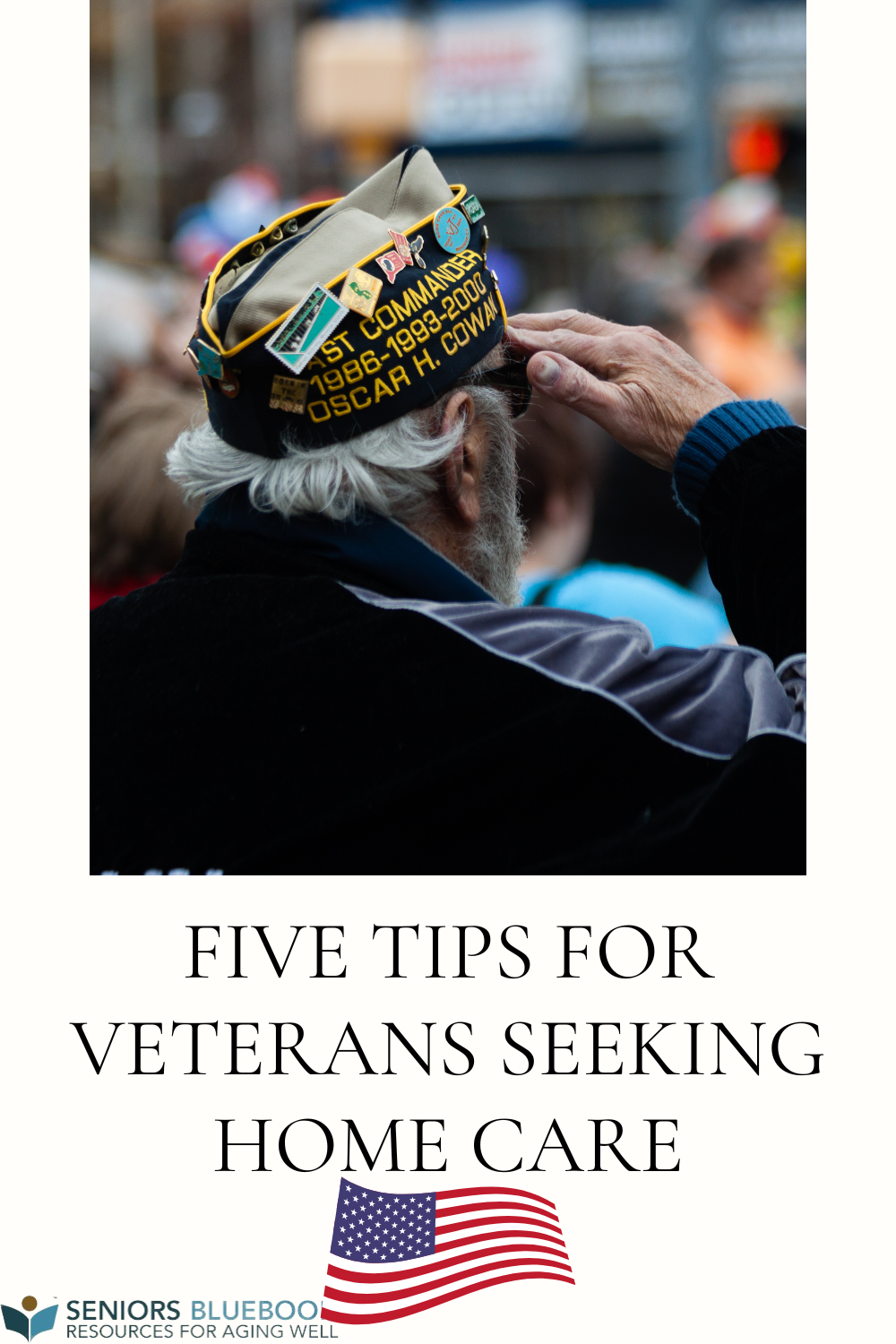
Five Tips for Veterans Seeking Home Care


Did you know that as a veteran, you may be eligible for benefits that help cover the expense of home care services? If you or your spouse need assistance with activities of daily living like dressing, bathing, eating or mobility, memory care, or other support for disability or illness, your Veteran Affairs benefits may cover services like personal care, memory care and disability support.
Several VA benefits may cover the expense of home care, and, in many cases, veterans are eligible for more than one program.
Here are five tips for veterans to take to connect with a home care provider:
Learn about your options. Not all veterans have access to the same benefits. You’ll need to inquire about what programs you’re eligible for in order to make sure you take the path that’s best for you. The VA website, https://www.va.gov, provides information on the various benefits and how to determine if you’re eligible. Look through these descriptions and get a general understanding of what you might be eligible for.
Go to your local VA clinic. Here, you can get registered to receive VA benefits. Tell the VA doctor your reason for visiting and what you’re trying to accomplish. Even though you only need to spend a small amount of time at the VA clinic to get the information you want, it’s still best to develop a personal relationship with at least one doctor there. Stay in touch and keep them up to date with your current situation.
Get help accessing your benefits. Navigating your VA benefits can be daunting, which is why there are a number of outside organizations designed to help veterans navigate their benefits. Foundations like the Wounded Warrior Project, the Veterans of Foreign Wars organization, AidandAttendance.com and other consultation services exist to make the process a little easier. Programs like VetAssist and AVCC (American Veterans Care Connection) are also specifically intended to help veterans apply for the Aid and Attendance pension.
Find a home care provider that is contracted with the VA. SYNERGY HomeCare is a good option; many of our agencies are contracted with the VA, making it easy to use your VA benefits to get the quality in-home support you deserve. Several SYNERGY HomeCare locations are also owned and operated by veterans themselves, who are eager to serve those who served.
Prioritize specific qualities when choosing a home care provider. Look for three qualities from a home care provider: They should be passionate, offer personalized care and be your partner in your care. Finding the right care provider is a critical step and you should never settle for less than what you deserve.
As a veteran, you may be entitled to home care services that can enhance your quality of life. Talk to a SYNERGY HomeCare representative today. We are honored to serve you.
For More Information:
Department of Veteran Affairs (VA)
Va.gov or (800) 698-2411
The VA is the federal agency responsible for providing VA benefits and services to eligible U.S. military veterans and family members. Visit va.gov for more information about the Aid and Attendance benefit and Housebound allowance well as the Homemaker and Home Health Aide Care benefit.
VA Caregiver Support Program
https://www.caregiver.va.gov/ or (855) 260-3274
The VA Caregiver Support Program offers clinical services to caregivers of eligible and covered Veterans enrolled in the VA health care system. The program’s mission is to promote the health and well-being of family caregivers who care for our Nation’s veterans, through education, resources, support and services.
Other Articles You May Like
Falls Are Rising Among Older Adults
Falls Are Rising Among Older Adults. Heres How to Lower Your Risk at HomeAccidental fall deaths in the U.S. have roughly tripled since 2000, according to CDC data analyzed by USAFacts. For adults 65 and older, falls are now the leading cause of both fatal and non-fatal injury, and the increase shows up in every older age group.Several factors seem to be adding up: more prescription medication use, more drinking among older adults, and higher obesity rates. Fear of falling plays a part too. People who worry about falling often move less, and over time that can weaken strength and balance. Know your riskCommon risk factors include limited mobility, chronic conditions such as diabetes or arthritis, certain medications, changes in vision or hearing, and home hazards. The National Council on Agings free Falls CheckUp is a quick way to see where you stand. Build everyday habitsWear glasses and hearing aids as prescribed and keep up with regular eye and hearing exams.Review your medications with your doctor or pharmacist.Use a sturdy step stool, not a chair, to reach high places.Take your time, especially when standing up or changing direction. Make your home work for youFor stairs and steps, a stairlift, wheelchair ramp, home elevator or platform lift can make it easier to move between levels.Install grab bars and consider a shower seat or an accessible walk-in shower.Clear clutter, secure or remove loose rugs, and keep cords out of walkways.Add brighter lighting and nightlights. A few small changes can help you stay active and comfortable at home. Adapted from Deaths from Falls Are Rising. How Can You Reduce Your Fall Risk at Home? by Lifeway Mobility.Contact Person: Eric Rubel | Marketing [email protected]: 847.403.0132
Veterans Benefits for Seniors FAQs
Many older veterans and surviving spouses qualify for benefits they never claim. These answers outline the major options.What VA benefits are available to senior veterans?Senior veterans may qualify for VA health care, disability compensation, VA pension, Aid and Attendance or Housebound allowances, home-based care, and burial benefits. Eligibility depends on service history, disability status, income and assets.What is VA Aid and Attendance?Aid and Attendance is an additional monthly amount added to a VA pension for veterans or surviving spouses who need help with daily activities or are bedridden, in a nursing home, or have very limited eyesight. It can help pay for in-home care or assisted living.Who qualifies for the VA pension?Generally, a veteran must have served at least 90 days of active duty with at least one day during a wartime period, have a discharge other than dishonorable, and meet limits on income and net worth. Age or disability requirements also apply. Check current limits on VA.gov.Can the VA help pay for assisted living?The VA does not directly pay for assisted living, but Aid and Attendance benefits can help cover the cost. The VA also offers community living centers, State Veterans Homes and home-based programs.Does the VA offer caregiver support?Yes. The Program of General Caregiver Support Services serves caregivers of veterans of all eras, and the Program of Comprehensive Assistance for Family Caregivers offers stipends and training for eligible caregivers. Respite care may also be available.How do I apply for VA benefits?Apply online at VA.gov, by mail, or in person at a regional office. A Veterans Service Officer (VSO) can help for free. Gather your discharge papers (DD-214), financial records and medical documentation first.Can surviving spouses receive benefits? Yes. Surviving spouses may qualify for Survivors Pension, Dependency and Indemnity Compensation (DIC), health care through CHAMPVA in some cases, and Aid and Attendance.
Social Security and the New Senior Tax Deduction
Social Security and the New Senior Tax DeductionBy Senior Tax Advisory GroupTax law changes may help retirees keep more of their income. However, headlines about no tax on Social Security can create confusion. We want seniors to understand what has changed and how the new rules fit their retirement plans.The One Big Beautiful Bill Act created a temporary additional deduction for people age 65 and older. For tax years 2025 through 2028, eligible individuals may deduct up to $6,000. Married couples filing jointly may deduct up to $12,000 when both spouses qualify. There could be a ROTH conversion opportunity at No Additional Tax Cost!This deduction is available whether you itemize or take the standard deduction. Married taxpayers must file jointly to claim it, and each person claiming the deduction must have a qualifying Social Security number.Income limits matter. The deduction begins phasing out when Modified Adjusted Gross Income exceeds $75,000 for an individual or $150,000 for a married couple filing jointly. Taxable IRA withdrawals, capital gains, or Roth conversions may reduce the deduction available.The law did not repeal federal taxation of Social Security benefits. Depending on your combined income, up to 85% of benefits may still be included in taxable income. The new deduction reduces taxable income; it does not change the formula determining how much Social Security is taxable. Eligibility also does not require receiving Social Security.For example, a qualifying couple with both spouses age 65 or older could receive the full $12,000 deduction. If that entire deduction offsets income otherwise taxed at 12%, their federal tax savings would be $1,440. Actual savings depend on their tax situation.Before making withdrawals or changing withholding, review your income and eligibility. Social Security claiming decisions still deserve coordination with taxes, savings, and survivor needs. We believe retirement planning begins with understanding people. Contact Senior Tax Advisory Group at 719-596-4844 or visit www.springstax.com for help evaluating these changes within your retirement plan.