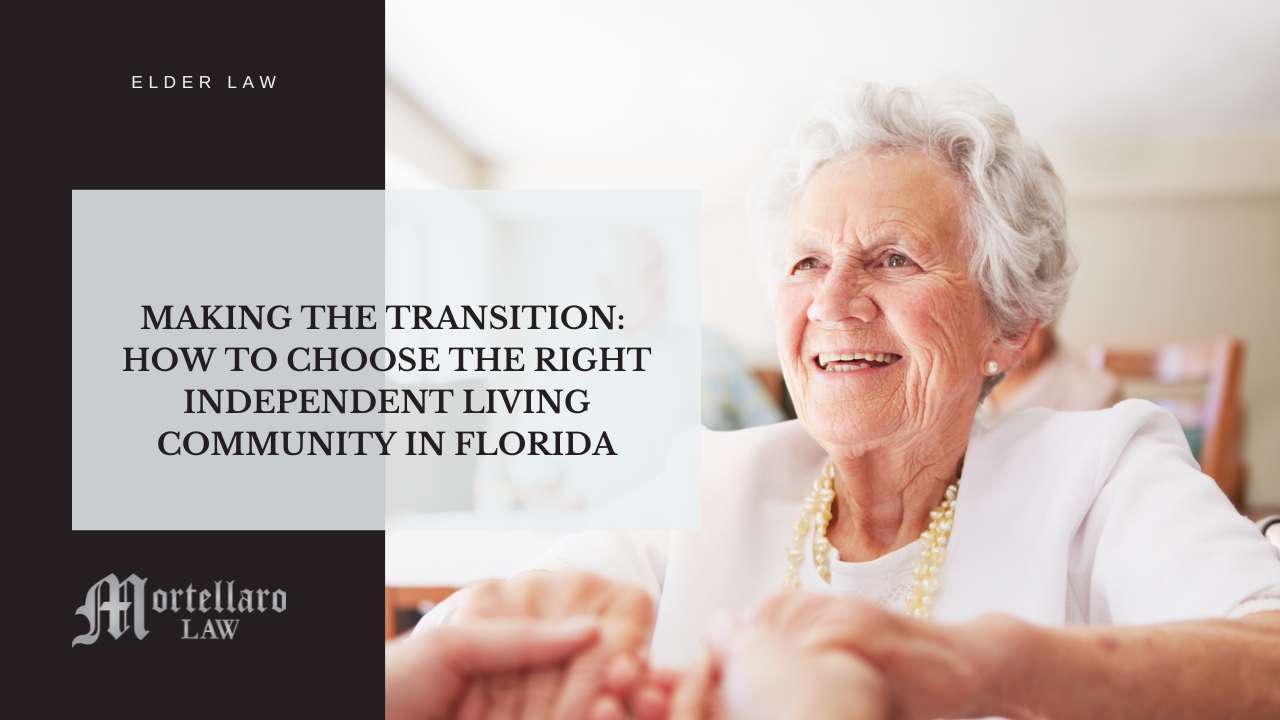
Making the Transition: How to Choose the Right Independent Living Community in Florida
Mortellaro Law Firm
For more information about the author, click to view their website: Mortellaro Law Firm
Jul 26, 2024
Florida - Sarasota, Bradenton & Charlotte Counties

Email US
Click to Email Us
Moving to a new place is never easy, and it is even harder for our elders. The thought of leaving their home and familiar surroundings can be overwhelming. However, sometimes, it’s necessary for them to move into an independent living community to ensure their safety, comfort, and well-being. There are multiple independent living communities in Florida, making it challenging to choose the best one for your loved one. This blog post guides how to choose the right independent living community in Florida that meets your loved one’s needs.
An Initial Step: Identifying Your Loved One’s Personal Needs
Assess Your Loved One’s Needs: Before choosing an independent living community, assess your loved one’s needs, including their health, mobility, social life, and budget. Speak to their doctor and caregiver to get a clear understanding of their medical needs. Find out how independent they want to be and what activities they are interested in.
Importance of Location: Proximity and Convenience
The next crucial thing to consider is the location of the independent living community. Ensure the community’s location is convenient for you and your loved one. Inquire about the community’s proximity to hospitals, grocery stores, and other essential services. The availability of transportation services is also an important consideration.
Variety of Amenities: Catering to Specific Preferences
Different Independent living communities offer varied amenities. It’s essential to compile a list of amenities crucial to your loved one’s well-being and compare different communities’ offerings. These amenities may range from a fitness center, spa, swimming pool, and wellness programs. Ensure that the community can cater to all your loved one’s needs.
Staff Quality and Services: Ensuring Professional Care
The quality of staff and services offered in the community is also an important consideration. The community should have professional caregivers who are available 24/7 and a personalized care plan for each resident. It’s essential to inquire how the community ensures the safety and security of its residents. Check on the ratio of staff to residents to ensure they provide adequate care.
The Power of Reviews: Leveraging Experiences of Others
Finally, research and read online reviews of each independent living community you are considering. These reviews can help you gauge how happy the residents are, the standard of care and professionalism, and other critical aspects. A community with multiple positive reviews is likely to be a good fit for your loved one.
Conclusion: Navigating the Selection Process with Confidence and Assistance
The process of finding the perfect independent living community in Florida for your loved one can undoubtedly seem daunting. However, it’s crucial to remember that the primary goal is ensuring their happiness, security, and well-being. With a clear understanding of their needs, preferences, and the essential factors to consider, such as location, amenities, staff and services, and reviews, you’re well-equipped to make an informed decision.
But you don’t have to navigate this challenging process alone. Involving an experienced elder law attorney can provide invaluable assistance, from long-term care planning to estate planning. They can guide you on leveraging government benefits like Medicaid Long-Term Care to cover nursing home costs, preserving your loved one’s assets for their heirs, and avoiding probate. Armed with all these resources and knowledge, you can help your loved one transition seamlessly into a new stage in life that offers comfort and security and caters to their specific needs and preferences.
At Mortellaro Law, we practice elder law and offer personalized services designed to provide peace of mind to you and your family. We will take the time to understand your unique situation and help you meet all of your needs. Our team of experienced attorneys and staff can help; schedule a free consultation today to learn more.
If you’re in the Tampa Bay area and are interested in estate planning, long-term care planning, or asset protection, consider joining our free monthly seminars. While part of our focus is on guiding you in finding the ideal independent living community in Florida for a loved one, we also provide valuable insights into a wide array of topics. These include general estate planning, strategies for long-term care, and effective methods for asset protection. Don’t miss this chance to broaden your understanding and make informed decisions. Click here to sign up for our next seminar.
- To view the original version of this article visit mortellarolaw.com/making-the-transition-how-to-choose-the-right-independent-living-community-in-florida/
- Seniors Blue Book was not involved in the creation of this content.
Other Articles You May Like
Time to Downsize? A Guide to Right-Sizing Your Home in Ocean County
For many adults approaching retirement or entering their 50s and 60s, the family home represents decades of memories. It may be where children grew up, holidays were celebrated, and neighbors became lifelong friends. Yet as life changes, the home that once fit perfectly may begin to feel like more responsibility than freedom.For homeowners in Ocean County, New Jersey, deciding whether to stay, sell, or move to a smaller property can open the door to a new chapter. From the coastal communities of Long Beach Island (LBI) to Manahawkin, Barnegat, Stafford Township, and beyond, there are many lifestyle factors to consider when choosing where to live next.Working with a knowledgeable local real estate professional such as Carol Grinbaum, Realtor with Better Homes and Gardens Real Estate Murphy & Co., can help homeowners evaluate their options and make informed decisions about their next move.What Does Downsizing Really Mean?Downsizing is often associated with moving into a smaller house. However, for today's active adults over 50, the process is better understood as right-sizing: choosing a home that better matches current priorities, financial goals, and plans for the future.That might mean moving from a four-bedroom colonial to a two-bedroom ranch, trading a large yard for a condominium, or relocating closer to shopping, healthcare providers, family, and recreational activities.Some homeowners may even decide that a smaller property is not the right choice. They may prefer to remain in their current home and make practical improvements instead.The goal is not necessarily to have less space. It is to have a home that supports the life you want to live.Why Ocean County Homeowners Consider a Move After 50Less maintenance, more freedomA large property can require considerable time and money. Lawn care, snow removal, exterior painting, roof repairs, and landscaping may become increasingly burdensome when homeowners would rather spend their time traveling, golfing, visiting family, or enjoying the Jersey Shore.A smaller home may reduce some of those responsibilities, although maintenance obligations vary by property type and community.A different financial pictureSelling a longtime residence may provide an opportunity to access home equity, reduce monthly housing costs, or redirect money toward retirement priorities.However, the financial outcome depends on more than the sale price. Buyers should account for closing costs, moving expenses, property taxes, homeowners insurance, association fees, and potential renovations. Coastal properties may also require additional attention to flood insurance and storm-related risks.A real estate agent can help estimate a property's market value and compare potential alternatives. Financial, legal, and tax professionals can provide guidance on the broader implications of selling.A location that fits the next chapterSome residents want to remain close to the beaches and familiar neighborhoods they love. Others may want to move closer to adult children or choose a community with convenient access to daily services.Manahawkin offers a useful starting point for exploring the mainland near Long Beach Island, while Barnegat, Waretown, Toms River, and other Ocean County communities offer different property types and lifestyles.The best location depends on individual priorities, including transportation, social activities, healthcare access, and the amount of driving a homeowner is comfortable doing.What Housing Options Should You Explore?Ocean County offers several types of homes worth considering. Ranch-style homes: Single-level living may reduce the need to navigate stairs and can make daily routines more convenient. Condominiums: Some offer shared exterior maintenance, although buyers should carefully review association fees, rules, reserves, and responsibilities. Adult communities: Depending on the community, residents may find organized activities, recreational amenities, and opportunities to connect with neighbors. Age requirements and services differ. Smaller single-family homes: These can provide privacy and outdoor space without the upkeep of a larger property. Coastal properties: A home near LBI may support a beach-oriented lifestyle, but buyers should investigate flood exposure, insurance costs, evacuation considerations, and seasonal traffic. No single housing choice works for everyone. Touring different options can help clarify what feels comfortable and practical.How a Realtor Can Help You Make the TransitionSelling a longtime home is both a financial transaction and a personal milestone. A local Realtor can help break the process into manageable steps.Carol Grinbaum can be a starting point for discussing the local real estate market, evaluating a potential sale, and identifying properties that align with a homeowner's goals.A thoughtful moving plan should include: Clarifying priorities. Decide what matters most: fewer stairs, less maintenance, proximity to family, a particular community, or access to coastal recreation. Understanding the property's value. Review comparable sales and current competition rather than relying solely on online estimates. Estimating the full cost of moving. Consider selling expenses, purchasing costs, taxes, insurance, repairs, and monthly carrying costs. Planning the timeline. Determine whether you need to sell before buying, whether temporary housing might be necessary, and how much time you need to sort belongings. Preparing the property. Focus on repairs, decluttering, and presentation that make sense for the home's likely market. Suggested quote for Carol's approval: Downsizing is about finding the right fit for the next stage of life. Understanding what matters most to you helps guide the search toward a home that supports your lifestyle, comfort, and long-term plans.Don't Overlook the Emotional Side of DownsizingLeaving a family home can bring unexpected emotions. A dining room may hold memories of celebrations, while a backyard may represent years of watching children play.Rather than rushing the process, homeowners can begin by identifying the belongings they most want to preserve. Family photographs, heirlooms, and meaningful furniture can be prioritized while duplicate items and things no longer needed are gradually sorted.Adult children may want to help, but the homeowner should remain central to decisions whenever possible. The process is more likely to feel positive when it reflects the person's own preferences.For homeowners who need additional support, professional organizers, movers, and trusted family members can help make the transition more manageable.Frequently Asked QuestionsWhen should I start planning to downsize in Ocean County?Starting several months or even a year before a desired move can give you time to understand the market, compare housing options, organize belongings, and coordinate finances. The right timeline depends on your circumstances.Is Manahawkin a good place to consider when moving closer to LBI?Manahawkin is located on the mainland near Long Beach Island and may appeal to people who want access to Shore activities without living directly on the barrier island. Individual commute times, property costs, and lifestyle preferences should guide the decision.Should I buy my next home before selling my current one?That depends on your finances, available equity, lending options, and local market conditions. Discuss the risks and logistics with your real estate agent and lender before deciding.Are adult communities the same as assisted living?No. Adult communities generally provide residential housing, sometimes with age restrictions and shared amenities. Assisted living provides support services for eligible residents who need help with daily activities. Confirm the specific services and requirements of any property.How do I find a Realtor familiar with Ocean County?Review the agent's service area, communication approach, and experience with the property type and transaction you are considering. Carol Grinbaum's Seniors Blue Book listing provides a place to start.Take the First Step Toward Your Next ChapterWhether you are preparing to sell a longtime family home, exploring a smaller property, or considering a move closer to the Jersey Shore, thoughtful planning can make the transition easier.Visit Carol Grinbaum, Realtor's Seniors Blue Book listing to learn more about her real estate services and explore whether she is the right resource for your Ocean County housing plans. More information: Carol Grinbaum, Realtor Seniors Blue Book Listing
Housing Placement & Resource Specialists in Fairhope, AL
A family searching for senior housing can quickly accumulate a long list of names without feeling any closer to a decision. One community may suit the budget but not the assistance needed. Another may look appealing online yet be inconvenient for visits or appointments. Comparing those details takes time, especially during a sudden change in circumstances.Housing placement and resource specialists in Fairhope, AL help families organize that search. Prime Senior Placement Mobile and Baldwin County provides local senior living guidance, including support with identifying options and navigating a move. The value of the process begins with a clear description of the person who will live in the community.What housing placement specialists doA placement specialist helps turn preferences, budget, location, and support needs into a more focused housing search. Families can use that assistance to identify questions, arrange visits, and compare the information they receive.The specialist does not replace a communitys admission assessment or make every decision for the family. Ask how information is gathered, what options are considered, and how the final choice remains with the older adult and the authorized decision-makers.Identify the decision before choosing the addressStart by clarifying whether the person wants a different lifestyle, needs more daily help, or is facing a care transition. Those are related concerns, but they do not necessarily lead to the same setting.Describe the current routine, what has become difficult, and which priorities are nonnegotiable. A useful search brief might include proximity to family, an accessible bathroom, a comfortable monthly budget, and the assistance the person needs now.Prime Senior Placement serving FairhopePhone: 251-277-3338A process built around the householdPrimes official local page describes beginning with preferences, budget, lifestyle, and community fit. It then outlines narrowing the search, helping coordinate introductions and tours, supporting comparisons, and assisting through the transition and later questions. Ask how that process would apply to your situation. If there is a short timeline, explain the deadline. If you are planning ahead, ask which steps can be completed now without committing to a move.The local page identifies Jennifer Scott as a senior placement specialist serving Baldwin and Mobile counties. When calling, ask who will handle the search and how the family will receive updates.Understanding the no-cost servicePrime describes its placement guidance as free to families. That refers to the guidance, not the cost of housing or care.Ask how the service is compensated, which communities are included in its referral network, and whether options outside that network will be discussed. Request a clear explanation before sharing information or arranging tours so the family understands the scope of the recommendations.Turn recommendations into a useful comparisonAfter receiving suggested communities, request the reasons each option was included. Ask what has been confirmed directly and what still needs to be established through a tour or admission assessment.Useful comparison points include:Ability to meet the persons current support needsWritten costs and potential additional chargesAvailable apartment or room layoutLocation and transportation arrangementsPolicies for changing needs or a future moveThe residents own comfort with the settingKeep notes using the same questions for each visit. A consistent comparison makes it easier to see meaningful differences rather than choosing solely on first impressions.Why local placement guidance matters in FairhopeFor families on the Eastern Shore, a housing choice can affect how often relatives visit and how appointments are managed. A Fairhope location may be important, but some households may want to compare options in Daphne, Spanish Fort, or another part of Baldwin or Mobile County.Discuss those boundaries early. Explain which trips the family can realistically make, whether the resident relies on someone else to drive, and what connections they want to maintain.Local guidance is most useful when it translates those preferences into questions about actual daily life. Ask how a suggested community fits the persons routines, budget, and support network instead of relying only on a broad description of amenities.How to get started1. Prepare a short summary of current needs, preferred location, budget, and timeline.2. Call Prime Senior Placement at the Seniors Blue Book number, 251-277-3338.3. Explain who is involved in the decision and how the prospective resident wants to participate.4. Ask about the services scope, compensation, community network, and communication process.5. Review recommendations, visit appropriate communities, and request written costs directly.6. Confirm admission suitability with the selected community and review its agreement before committing.7. Ask what transition support and follow-up Prime will provide.Practical tip: Separate essential requirements from preferences. That helps the specialist narrow the search while preserving the features that matter most to the resident. Related categoriesAssisted Living in Fairhope Independent Living in Baldwin County
55+ Communities in Monmouth and Ocean: What Should Seniors Look For?
55+ Communities in Monmouth and Ocean Counties: What Seniors Should Look For Beyond the AmenitiesA swimming pool.A clubhouse.A fitness center.A golf course.Those features may appear prominently in advertisements for 55+ communities across New Jersey, but choosing the right community involves much more than checking off a list of amenities.For older adults considering an active-adult or 55+ community in Monmouth or Ocean County, the most important question may be:Will this community fit the way I actually want to live?That requires looking beyond the brochure.Start With Your LifestyleImagine an ordinary Tuesday rather than a Saturday afternoon open house.Where will you have coffee?Where will you grocery shop?How far will you drive to see your children?Will you participate in clubs?Do you want neighbors who are socially active?Would you use a pool or fitness center?How important is golf?Do you want easy access to restaurants?These questions can reveal more than a list of amenities.Monica Reddin specializes in working with buyers age 55 and older and holds the Seniors Real Estate Specialist designation.Not All 55+ Communities Are the SameThe term 55+ community covers a wide variety of housing environments.Some are large developments with extensive amenities and hundreds or thousands of residents.Others are smaller neighborhoods.Some emphasize golf.Others focus on clubs, pools, fitness or social activities.There are communities where homeowners own single-family homes, while others offer condominiums, villas or attached residences.Homeowners should compare the details carefully.Five Questions to Ask Before Buying1. What Are the Monthly Costs?The purchase price is only one piece of the financial picture.Ask about: HOA fees Community fees Property taxes Special assessments Maintenance responsibilities Recreation fees Transfer fees Other recurring expenses Understand what is included before making a decision.2. What Does the HOA Cover?A lower-maintenance lifestyle can be a major reason for moving to an active-adult community.But low maintenance can mean different things in different communities.Find out who handles landscaping, exterior maintenance, snow removal, roofs, roads and other responsibilities.3. What Is the Community Actually Like?Visit when residents are actually there.Talk to people.Observe whether neighbors gather outdoors.Ask about clubs and activities.Look at community calendars.A community can have dozens of amenities, but if they do not align with your interests, they may not add much value to your lifestyle.4. How Close Is Everything Else?A clubhouse may be five minutes away, but what about the grocery store?What about restaurants?Healthcare?Family?Places of worship?Golf?The beach?Shopping?Theater?Location outside the community matters just as much as what is inside it.5. What Happens If Your Needs Change?No one can predict exactly what life will look like 10 years from now.That does not mean buyers should make decisions based on worst-case scenarios.But it is reasonable to consider future flexibility.Is the home easy to navigate?Are there stairs?Could a first-floor bedroom work?How accessible are bathrooms?Could the home accommodate changing mobility needs?Monmouth and Ocean County Offer Different Lifestyle ChoicesThe Central Jersey and Jersey Shore region gives prospective buyers many options.A senior who loves Red Bank's restaurants, shops and cultural atmosphere may have different priorities from someone who wants a quieter community near golf.Someone who wants to remain near Middletown may prioritize proximity to family and familiar services.Another buyer may prefer Freehold, Howell, Toms River, Brick or Jackson.Monica's professional experience throughout Monmouth and Ocean Counties can help buyers compare communities based on both property characteristics and lifestyle priorities.Consider the Social SideOne of the potential benefits of an active-adult community is having built-in opportunities to meet people.That can matter significantly after retirement or following a move.Look at the actual activities available: Card groups Fitness classes Pickleball Golf Walking groups Book clubs Arts and crafts Volunteer opportunities Dining groups Holiday events Educational programs But remember that a schedule on a website does not necessarily tell the whole story.Ask residents what they actually participate in.A REALTOR Can Help Compare the Whole PictureSearching online can provide a tremendous amount of information, but it can also make the process confusing.A senior-focused real-estate professional can help organize the search around the buyer's priorities.Monica's professional background includes extensive experience in business and finance, followed by her real-estate career. Her current professional credentials include SRES and ABR designations.Her approach is centered on understanding the client's needs rather than simply matching a buyer with a property.As Monica says:Understanding the challenges that come with moving to a new town, not just a new home, I work closely with my clients to ensure their transition is smooth and enjoyable.Frequently Asked QuestionsWhat should seniors look for in a 55+ community?Look beyond amenities. Consider monthly costs, maintenance responsibilities, location, social opportunities, home design, accessibility and proximity to family and services.Are all 55+ communities in New Jersey the same?No. Communities vary substantially in size, housing styles, amenities, HOA structures, fees, activities and location.Is a 55+ community appropriate for someone who wants to stay active?It can be an option for people seeking an active-adult lifestyle, but each community should be evaluated individually based on its amenities and social environment.What questions should I ask before buying in a 55+ community?Ask about HOA fees, maintenance, taxes, assessments, community rules, amenities, activities, resale considerations and what is included in the monthly costs.How can I find a REALTOR who understands 55+ communities?Look for a REALTOR with experience working with older adults and specialized credentials such as the Seniors Real Estate Specialist designation.Learn MoreThinking about a move to a 55+ or active-adult community? Learn more about Monica Reddin's senior real-estate services through her Seniors Blue Book Listing: Homepage - MonicaReddin
Local Services By This Author
Mortellaro Law Firm
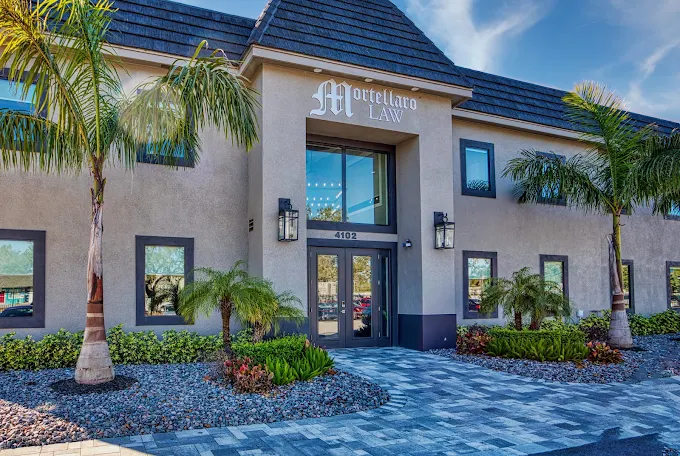
Elder Law 4102 West Linebaugh Avenue, Tampa, Florida, 33624Mortellaro Law, Elder Law AttorneyFloridas Highest-Rated Elder Law and Estate Planning AttorneyELDER LAWNavigating the complexities of elder law can be challenging. From Medicaid benefits to VA benefits, our firm specializes in providing the legal guidance necessary to ensure that you or your loved one receives the care and support needed.ESTATE PLANNINGPlanning for the future is essential. Our comprehensive estate planning services include drafting wills, setting up trusts, and preparing healthcare directives to ensure your wishes are respected and your assets are protected.ASSET PROTECTIONProtecting your assets is crucial. We offer strategies to safeguard your wealth from potential risks, ensuring that your legacy is preserved for future generations.PROBATE LAWThe probate process can be daunting. Our experienced attorneys will guide you through the administration of estates, providing the expertise needed to resolve matters efficiently and effectively.RESOURCESMedicaid BenefitsMedicaid PlanningQualified Income TrustVA BenefitsSCHEDULE A FREE CONSULTATIONGive us a call at (813) 367-1500 or fill out the following form to get in touch with one of our representatives. Well get back to you as soon as possible.
Mortellaro Law Firm
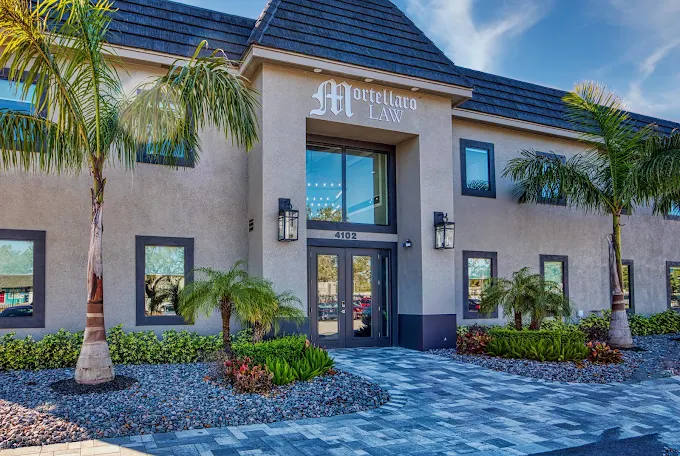
Estate Planning 4102 West Linebaugh Avenue, Tampa, Florida, 33624Mortellaro Law, Elder Law AttorneyFloridas Highest-Rated Elder Law and Estate Planning AttorneyELDER LAWNavigating the complexities of elder law can be challenging. From Medicaid benefits to VA benefits, our firm specializes in providing the legal guidance necessary to ensure that you or your loved one receives the care and support needed.ESTATE PLANNINGPlanning for the future is essential. Our comprehensive estate planning services include drafting wills, setting up trusts, and preparing healthcare directives to ensure your wishes are respected and your assets are protected.ASSET PROTECTIONProtecting your assets is crucial. We offer strategies to safeguard your wealth from potential risks, ensuring that your legacy is preserved for future generations.PROBATE LAWThe probate process can be daunting. Our experienced attorneys will guide you through the administration of estates, providing the expertise needed to resolve matters efficiently and effectively.RESOURCESMedicaid BenefitsMedicaid PlanningQualified Income TrustVA BenefitsSCHEDULE A FREE CONSULTATIONGive us a call at (813) 367-1500 or fill out the following form to get in touch with one of our representatives. Well get back to you as soon as possible.
Mortellaro Law Firm
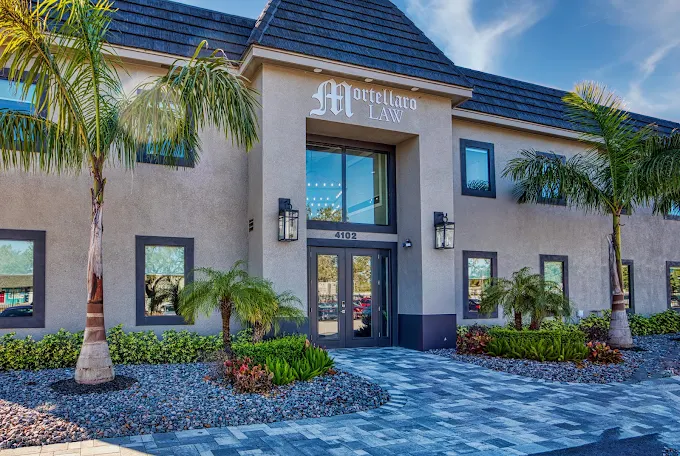
Probate 4102 West Linebaugh Avenue, Tampa, Florida, 33624Mortellaro Law, Elder Law AttorneyFloridas Highest-Rated Elder Law and Estate Planning AttorneyELDER LAWNavigating the complexities of elder law can be challenging. From Medicaid benefits to VA benefits, our firm specializes in providing the legal guidance necessary to ensure that you or your loved one receives the care and support needed.ESTATE PLANNINGPlanning for the future is essential. Our comprehensive estate planning services include drafting wills, setting up trusts, and preparing healthcare directives to ensure your wishes are respected and your assets are protected.ASSET PROTECTIONProtecting your assets is crucial. We offer strategies to safeguard your wealth from potential risks, ensuring that your legacy is preserved for future generations.PROBATE LAWThe probate process can be daunting. Our experienced attorneys will guide you through the administration of estates, providing the expertise needed to resolve matters efficiently and effectively.RESOURCESMedicaid BenefitsMedicaid PlanningQualified Income TrustVA BenefitsSCHEDULE A FREE CONSULTATIONGive us a call at (813) 367-1500 or fill out the following form to get in touch with one of our representatives. Well get back to you as soon as possible.