Tax diversification: A tax strategy to help your assets last
Kotler Law Firm P.L.
For more information about the author, click to view their website: Siena Wealth Advisory
Jul 22, 2023
Florida - Southwest

Email US
Click to Email Us
Your retirement could last several decades, so it’s important to not let taxes diminish your savings more than necessary. One way to safeguard against this is through implementing a strategy called tax diversification that spreads out your investments across various tax treatments over a long period.
Here’s how tax diversification can potentially help you keep more of your hard-earned retirement savings:
What is tax diversification?
Tax diversification is a strategy that takes into consideration various tax treatments across the investment accounts you will eventually use for income in retirement. Because different types of accounts and investments offer specific tax advantages, you can gain more control over your taxes by placing your investments in a variety of accounts. When coupled with a tax-efficient withdrawal strategy, tax diversification may help your assets last longer in retirement. Taxation is just one consideration when making investment decisions.
How tax diversification works
There isn’t a one-size-fits-all approach for tax diversification. An Ameriprise financial advisor can work with you to make personalized recommendations based on your financial goals, time horizon, account mix and tax situation.
An Ameriprise financial advisor can review your investment accounts through the lens of the three different types of tax treatments — taxable, tax-free and tax-deferred — and decide how to strategically allocate your assets among them.
The idea is to diversify your retirement funds among different account types during your working years as you save for retirement. There are a couple ways to achieve this: You can diversify as you save, and you can also move investments in and out of the different types of accounts after you have saved into them. However, moving investments in and out of a taxable account can have tax consequences, while moving investments in retirement accounts, like traditional or Roth IRAs, generally won’t.
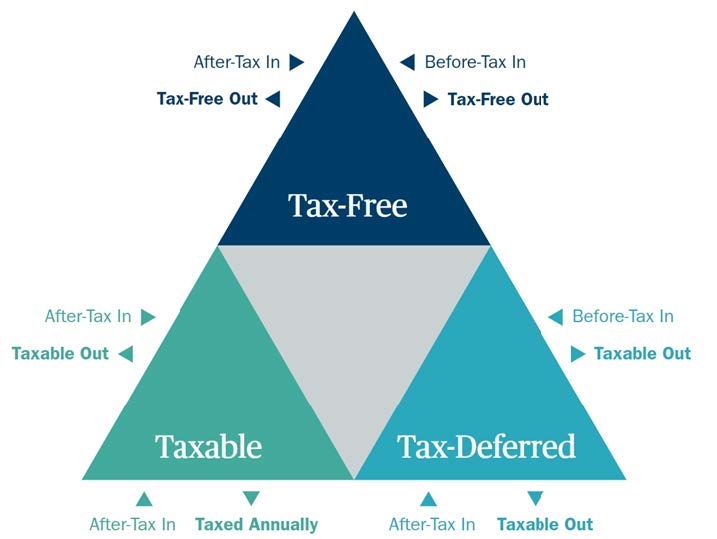
Breaking down the different tax treatments:
What are key benefits of tax diversification?
In general, many investors gravitate toward tax-deferred accounts — such as a 401(k) — and thus, tend to be overweighted in investments that will be taxed in retirement.
By diversifying your investments across all tax treatments, you can:
- Take more control of your financial picture, now and in retirement. Taxable and tax-free accounts, other than the Roth 401(k), do not have distribution requirements, allowing you to control when and how much you take. Tax-deferred qualified accounts generally require distributions at age 73,9 but you control distributions from tax-deferred accounts before age 73 and amounts you take over the RMD.9
- Potentially fuel savings over time and help your assets last longer. Being able to choose which assets are used to create your income could allow you to spread your taxable distributions over more years so you pay less in taxes and keep more of your savings.
- Gain flexibility in how you access retirement income in the future. Life events are likely to change your savings and income needs in the future. Diversifying your savings among these different tax treatments will give you greater flexibility as life events, both expected and unexpected, occur.
When should an investor consider tax diversification?
Some opportunities may exist to diversify your tax situation during retirement, but in many cases tax diversification should be done over time. The sooner you consider how and when your retirement assets are taxed, the more time you have to make adjustments and accrue any potential benefits.

- To view the original version of this article visit www.ameriprise.com/financial-goals-priorities/taxes/tax-diversification-retirement
- Seniors Blue Book was not involved in the creation of this content.
Other Articles You May Like
Financial Services in Vestavia Hills, AL
A parent may know exactly which purchases would improve a loved ones life, which routines bring comfort, and whom to call when something changes. The harder question is who will carry that knowledge forward.Choosing a trustee involves thinking about both financial administration and continuity. Families need to understand who will manage the arrangement, how information will be shared, and how the beneficiarys needs will remain visible over time.For families in Vestavia Hills, AL, Alabama Family Trust is one resource to explore when the planning need involves a special needs trust. The conversation should address the practical experience of working with a trustee as carefully as the initial paperwork.What Does Choosing a Trustee Involve?A trustee administers a trust under its terms and applicable requirements. Before selecting someone, families should identify the responsibilities the arrangement will require.These may include communication, recordkeeping, review of financial requests, coordination with professionals, and continuing administration through changes in family circumstances.Who Should Be Part of the Discussion?Consider including: The beneficiary, when appropriate. Family members who understand daily needs. The attorney advising on the arrangement. The proposed trust representative. Relevant tax and financial professionals. Keep the conversation manageable by assigning one person to collect questions and document answers.Alabama Family Trust as an Administrative ResourceAlabama Family Trust provides information for trust representatives as well as families and attorneys. Its website identifies support for representatives carrying out their responsibilities. Ask How the Relationship WorksA family should understand how it will interact with the administrator after the account is established.Ask: Who will be our main contact? Which matters require written requests? What information should we keep current? How do we report a change in the beneficiarys circumstances? What happens if our designated contact becomes unavailable? How are questions escalated when additional review is needed? The answers should give the family a realistic picture of ongoing participation.Review the Setup ProcessAlabama Family Trusts current document collection includes materials for different trust arrangements. Its third-party setup documents include confidential information, investment selection, and other supporting forms. Ask which packet applies after obtaining appropriate legal advice. Then request a checklist showing what must be completed, signed, and submitted.Avoid rushing through forms simply because some questions appear repetitive. Consistent information helps everyone understand the same arrangement.Understand Reporting and Investment InformationAlabama Family Trusts investment materials identify professional money management through Waverly Advisors and options with varying levels of risk. For trustee selection, the practical question is how the family will understand and monitor the arrangement.Ask who can access statements, how to request an explanation, and how a change in expected expenses should be communicated.Review Costs Before Making a DecisionAsk for the full current schedule rather than comparing only the opening fee.Discuss how costs may affect the anticipated account and which services are included. Request an explanation of any separate administrative, investment, or tax-related charges.The goal is a clear understanding of the ongoing relationship.Preserving Knowledge About the BeneficiaryFinancial records tell only part of the story. Families should also document the persons preferences and daily circumstances.Create a Personal Information SummaryInclude: Preferred communication methods. Important relationships. Typical routines. Interests and activities. Relevant care contacts. Transportation arrangements. Goals the person wants help pursuing. Explain where the current version will be kept and who will update it.This summary should support professional communication. It should not be treated as a substitute for legal documents or formal instructions.Plan for Changes in Family AvailabilityAn arrangement should remain understandable if the primary caregiver becomes ill, moves, or can no longer participate.Identify a backup contact and ask how a representative change would be documented. Make sure important records are accessible to authorized people.Why This Matters Locally in Vestavia HillsFamilies in Vestavia Hills may have longstanding relationships with local professionals and care providers. That knowledge can support continuity when it is documented clearly.At the same time, relatives may live outside Alabama or have different levels of involvement. A shared process reduces dependence on one persons memory.A local provider meeting is an opportunity to discuss how communication will work across distance, schedules, and changing responsibilities.How to Get Started1. Define the Role You Need FilledExplain whether the need concerns special needs trust administration, a future arrangement, or review of an existing plan.2. Prepare a Question ListInclude communication, requests, reporting, fees, investment coordination, and representative changes.3. Speak With an AttorneyReview the proposed structure and the responsibilities of everyone involved.4. Contact Alabama Family TrustCall 205-883-8333 to discuss its process and request current information.5. Document the Agreed ResponsibilitiesKeep a concise record of contacts, procedures, and follow-up tasks.Expert TipAsk someone who was not involved in the meetings to read your responsibility sheet. If they cannot tell whom to contact or where records are kept, revise it before relying on it.Related Categories Fiduciary Services Special Needs Trusts Estate Planning
Financial & Payment FAQs for Seniors
1. How Do Seniors Pay for Long-Term Care?Seniors pay for long-term care through personal savings and income, long-term care insurance, Medicaid, Veterans benefits, home equity, and family support. Medicare does not cover most long-term custodial care, so planning early matters.Common Ways to Pay Personal savings and income: Retirement accounts, pensions, Social Security, and investments. This is the most common source of payment. Long-term care insurance: Policies that reimburse care costs after a waiting period. Medicaid: A joint federal and state program for people with limited income and assets. Veterans benefits: Programs such as Aid and Attendance for eligible veterans and surviving spouses. Home equity: Selling the home, renting it out, or using a reverse mortgage. Life insurance and annuities: Some policies can be converted, sold, or paired with long-term care riders. Family contributions: Informal care or shared costs, ideally documented in a care agreement. Why Planning Early HelpsInsurance is cheaper and easier to qualify for in your 50s and early 60s. Medicaid planning also involves a five-year look-back on asset transfers in most states, so last-minute moves can trigger penalties. 2. What Does Medicare Cover for Senior Care?Medicare covers short-term skilled nursing after a qualifying hospital stay, part-time home health care, hospice, and medically necessary services. It does not cover long-term custodial care such as help with bathing, dressing, or assisted living room and board.What Medicare Covers Skilled nursing facility care: Up to 100 days per benefit period after a qualifying hospital stay of at least three days. Days 1 to 20 are fully covered; days 21 to 100 require a daily copayment. Home health care: Part-time skilled nursing and therapy for people who are homebound and under a doctor's care. Hospice: Comfort-focused care for those with a terminal illness and a life expectancy of six months or less. Medical equipment: Items such as walkers and hospital beds when medically necessary. What Medicare Does Not Cover Long-term custodial care in a nursing home Assisted living costs Non-medical, ongoing home care such as housekeeping and personal care Most adult day care Medicare Advantage PlansSome Medicare Advantage (Part C) plans add limited benefits such as meal delivery, transportation, or in-home support. Coverage varies by plan, so review the details. 3. Does Medicaid Cover Assisted Living or Home Care?Medicaid covers nursing home care in every state, and many states also help pay for home care and some assisted living services through waiver programs. It usually does not pay for room and board in assisted living, and availability varies by state.How Medicaid Helps Nursing homes: Covered nationwide for eligible individuals. Home and community-based services (HCBS) waivers: Help with personal care, adult day services, and in some states assisted living services. State plan personal care: Some states offer in-home help through regular Medicaid. Assisted Living and Room and BoardEven when a state covers assisted living services, residents typically pay for room and board from their own income. Waiver slots can be limited, and waiting lists are common. 4. What Is Long-Term Care Insurance, and Is It Worth It?Long-term care insurance pays for services like home care, assisted living, and nursing homes once you cannot perform certain daily activities or have cognitive impairment. It can be worth it for people with moderate assets who want to protect savings, but premiums can be high and may rise.How It Works Benefit trigger: Typically needing help with two or more activities of daily living, or having cognitive impairment. Daily or monthly benefit: The maximum the policy pays. Benefit period: How long payments last, such as two to five years. Elimination period: A waiting period, often 30 to 90 days, before benefits begin. Inflation protection: An option that helps benefits keep pace with rising care costs. Traditional vs. Hybrid PoliciesTraditional policies are stand-alone and pay only for care, and premiums can increase. Hybrid policies combine life insurance or an annuity with a long-term care benefit, often with fixed premiums and a death benefit if care is never needed. 5. How Much Should I Budget Monthly for Senior Care?Monthly senior care costs vary widely by location and level of care. As a rough guide, home care can run a few thousand dollars, assisted living about $5,000 or more, and nursing home care $9,000 to $11,000 or more. Always get local quotes.Typical Monthly Cost Ranges (U.S., Approximate) Type of care Rough monthly cost Adult day program $1,500 to $2,500 Home health aide or homemaker (44 hours a week) $5,000 to $6,500 Assisted living $5,000 to $6,000 Memory care $6,000 to $8,000 or more Nursing home (semi-private to private) $9,000 to $11,000 Figures are approximate and drawn from industry cost surveys; local prices can differ significantly.How to Build Your Budget Assess care needs: Ask a doctor or care manager what level of help is required. Get local quotes: Call several providers and ask exactly what is included. List all income: Social Security, pensions, retirement withdrawals, and benefits. Add hidden costs: Medications, supplies, transportation, entrance or community fees, and annual rate increases. Plan for increases: Care needs and prices tend to rise over time. Build a cushion: Set aside an emergency fund for unexpected changes. 6. Are There Financial Assistance Programs Available?Yes. Seniors may qualify for Medicaid, PACE, Veterans benefits, Medicare Savings Programs, SSI, food and energy assistance, and local Area Agency on Aging services. Eligibility depends on income, assets, location, and care needs.Programs to Explore Medicaid: Covers long-term care for those who meet income and asset rules. PACE (Program of All-Inclusive Care for the Elderly): Combines medical care and support services for eligible adults who qualify for nursing home level care and live in a service area. VA Aid and Attendance: An added monthly benefit for eligible veterans and surviving spouses who need help with daily activities. Medicare Savings Programs: Help pay Medicare premiums and sometimes cost-sharing. Supplemental Security Income (SSI): Monthly payments for people with very limited income and resources. SNAP and LIHEAP: Help with food and home energy bills. Area Agencies on Aging: Local meals, transportation, respite, and caregiver support. National Family Caregiver Support Program: Counseling, training, and respite for family caregivers. Application Tips Gather ID, income statements, bank records, and medical documentation. Apply to several programs at once. Ask about waiting lists and re-apply or follow up regularly. Disclaimer: This content is for educational purposes and is not legal or financial advice. Consult an elder law attorney, financial planner, or benefits counselor about your situation.
Assets Under Management Strategies in Lancaster, PA
As you amass assets during the course of a lifetime, its easy to forget about how much you have and what its worth. Art in the attic, classic cars in storage, retirement accounts across multiple employers: if youre not aware of it all, your portfolio can lose value quickly. A financial advisor who offers assets under management services does so to protect your portfolio from the inevitable changes that your assets can undergo over time.Assets Under Management Strategies in Lancaster, Pa.The first asset you acquire in life, whether its a beatup car or a few shares of a brandnew company, is usually a gamechanging event. Its the first step on what is hopefully a journey toward a lucrative portfolio. Leveraging your assets to build your wealth is more than just financial jargon, its a path that can increase your wealth over time, so you can accomplish everything on your list.A financial advisor at a boutique retirement firm can take the time to get to know who you are and how you invest. At Bodnar Financial Group, Len Bodnar, RICP (R), is there to help his clients get a handle on their assets, so he can help you strategize them for better margins.For instance, a failing asset may need to be either sold or converted, depending on details behind the investment. A middlerange asset may need to be adjusted to optimize its performance. Finally, your strongest assets may need to be carefully watched, so a financial advisor can capitalize during the best of times and protect your wealth if and when it bottoms out.Theres a lot to be said for how assets change while you own them, and its not always easy to know when to cut and run from a property or when to stick with it. If you dont have the time or the inclination to spend on managing it all, the right financial advisor can help mitigate the stress. Its just one less thing to worry about as you get closer to your last day on the job.