How to use the Seniors Blue Book
Kathleen Warshawsky, BSN, RN
Mar 25, 2024

Email US
Click to Email Us
You've picked up a copy of the seniors Blue Book. Perhaps you're worried about your aging parents and you need some guidance on how to keep them safe at home or maybe you're considering downsizing or moving into a senior housing community and you just feel completely overwhelmed with where to begin. No matter the reason, searching for this kind of information can often be very intimidating and very confusing
Seniors Blue Book is
your trusted resource to help you navigate through all of this information and
more. Our goal is to help you find options and information so that you can make
educated and informed decisions for yourself and your loved ones our guides are
designed to help you find the specific information that you need very quickly.
If I flip the book on
its side see here how there's three colors that jump out on the cut Edge – blue,
purple, and green
The blue section is
where you will find local area Community Resources and services. This section
is laid out very similar to an old school directory. If you refer to the table
of contents you will find more than 80 categories listed in alphabetical order
to help you find the services that you need. The majority of the services in
this blue section are offered either free or at low cost to most seniors and
caregivers and includes many government services and non-profit agencies.
The purple section is
where we provide the different Home Health, hospice and home care agencies.
The green section is
where we provide a listing of senior housing communities in the area. We sort
them into the levels of care that they provide. They include retirement
communities, independent living, Assisted Living, Memory Care and skilled
nursing.
To keep the book
manageable, we also provide resources on our website at seniorsbluebook.com or
sbbdallas.com
To access the Greater
Dallas Page information. you'll want to click on SBB markets up in the right
hand corner select greater dallas and from here you can sort and filter through
all of the services and resources available.
Our website offers even
more for you. You have access to our educational library which contains thousands
of videos and articles just for you. We also have an events calendar filled
with local senior fairs, educational webinars, Live Events and so much more.
My name is Kathleen
Warshawsky, I'm the Seniors Blue Book publisher here in the Dallas Fort Worth
area and I would love to hear from you.
Have a great day!
Other Videos You May Like
The Truth About Wills, Trusts and Estate Planning
An indepth educational discussion explores the fundamentals of wills, trusts, and estate planning, offering practical guidance for professionals and individuals seeking to better understand how planning decisions affect families, assets, and longterm outcomes. The material is led by Marty Mascerary of the North Central Texas Area Agency on Aging and the North Central Texas Aging and Disability Resource Center, with estate planning attorney Susan Barnett of Hogue Barnett providing legal insight and realworld experience.The discussion emphasizes that estate planning is relevant for everyone, not just those with significant wealth. An estate is defined broadly to include common assets such as a home, bank accounts, vehicles, retirement funds, and personal property. Estate planning is framed as a comprehensive process that addresses both what happens during a persons lifetimeparticularly in cases of incapacityand how assets are managed and distributed after death.Key planning approaches are examined, including wills, joint ownership, beneficiary designations, powers of attorney, and living trusts. Particular attention is given to the risks of failing to plan, including intestate succession under Texas law, which can produce outcomes that conflict with personal wishes. Blended families, in particular, face heightened risks when no plan is in place, often leading to unexpected shared ownership, disputes, and costly court involvement.A central theme is the distinction between wills and living trusts. Living trusts are highlighted as powerful tools for avoiding guardianship and probate, maintaining privacy, and ensuring continuity of asset management if someone becomes incapacitated. The limitations of powers of attorney are also discussed, including the reality that financial institutions may refuse to honor them, leaving families with no option but to pursue guardianship through the courts. In contrast, trustees acting under a trust typically face fewer barriers and clearer authority.The discussion also cautions against doityourself estate planning solutions and online legal document services. These options often lack personalization, legal accountability, and coordination with statespecific laws, which can result in documents that fail when they are needed most. Common reasons estate plans break down include outdated documents, improperly titled assets, lack of coordination among professional advisors, failure to plan for longterm care, and changes such as remarriage or relocation to another state.An extensive questionandanswer segment addresses reallife concerns, including special needs planning, Medicaid considerations, probate requirements, tax implications, beneficiary designations, joint tenancy pitfalls, transferondeath deeds, and misconceptions about asset protection. Special emphasis is placed on planning for incapacity, protecting vulnerable beneficiaries, and ensuring clarity to reduce family conflict. Overall, the content underscores that estate planning is not merely a legal exercise, but a crucial step in protecting independence, preserving privacy, minimizing stress, and safeguarding loved ones. Thoughtful, proactive planning can prevent unnecessary court involvement, reduce financial and emotional burdens, and provide peace of mind for individuals and families alike.
Welcome to Your Healthcare Nurse Advocates
Hello everyone Im Deidra Kindred, RN and Owner of Your HealthCare Nurse Advocates, based in DallasFort Worth, Texas. Were excited to announce that were now accepting and onboarding new clients!Many people ask, What is an Independent Patient Advocate? Unlike hospital or insurance advocates, we work directly for younot a healthcare facility or insurance company. Our mission is to help you navigate the healthcare system, understand your options, and feel confident making medical decisions. Heres how we help: Navigate complex healthcare systems and care transitions Clarify your goals, needs, and available resources Coordinate care between doctors, specialists, and facilities Provide education, advocacy, and peace of mind for you and your loved ones Ready to take the next step? Visit www.yourhealthcarenurseadvocates.com to learn more, view helpful resources, or schedule your consultation. Or call 817-854-3240 Serving patients and families across Dallas, Fort Worth, and surrounding North Texas communities.#IndependentPatientAdvocate #NurseAdvocate #HealthcareNavigation #DallasHealthcare #FortWorthCare #PatientSupport #CareCoordination #SeniorAdvocacy #MedicalGuidance #YourHealthcareNurseAdvocates
Local Services By This Author
STAP (Specialized Telephone Assistive Program)
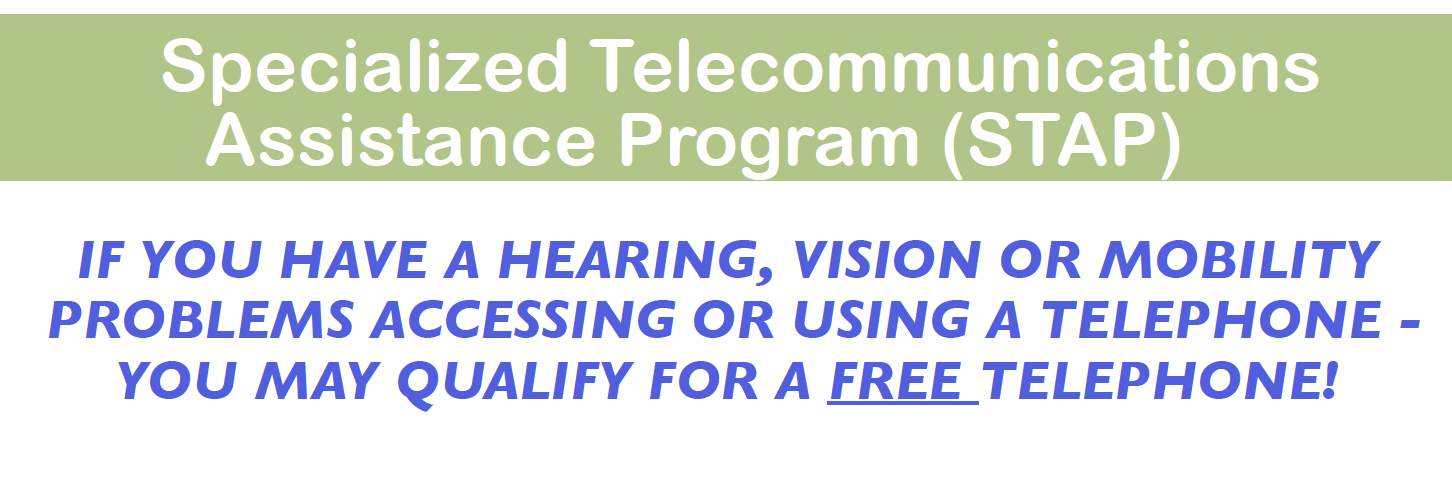
Hearing/Deaf Products , , Texas,If You Have A Hearing, Vision Or Mobility Problems Accessing Or Using A Telephone - You May Qualify For A Free Telephone! 4 out of 5 Americans over the age of 60 have some hearing, vision or mobility loss. There is help however and it is paid for by you through a government program called STAP, Specialized Telecommunications Assistance Program, by a small charge each month on your telephone bill. Why not take advantage of a benefit youre paying for already? Contact Laura Carr, STAP to learn more about this program and show you what equipment youre eligible to receive FREE OF CHARGE! To qualify, you must be a Texas resident with a problem with vision, hearing or mobility. You are entitled to one FREE phone every 5 years. You can get a cell phone, landline, smartphone or tablet, depending on your disability. Must provide proof of residency. Acceptable forms of residency include:* Texas Drivers License* ID card with address* Voters Registration card* Letter from facility on their stationery* Utility Bill (current - showing address)* Vehicle registration card* Medicaid ID* Medicare Summary This program is for any Texas Resident that has a Vision, Hearing, Mobility- including cognitive problems. They are entitled to FREE telephone equipment (just the device) and they have to pay their monthly charges to their telephone service provider. Depending on their impairment, they may qualifiy for a Landline Telephone with a medical alert system; a Regular Cell Phone (where they can make calls, text, take photos including a medical alert button on the back. If they have a hearing problem, they can receive a 2-way texting device - an Android Smart Phone or Android Tablet. They have to provide their proof of residency for the State of Texas: a current drivers license, Texas ID, Voters Registration Card or a Utility bill showing their name & current address & date. Laura can assist with completing an application, take a photo of their proof of residency - attach to their signed application & send it to STAP headquarters in Austin, Texas. The State processes their application & mails the Voucher for the equipment, directly to the Resident. Once they receive the Voucher, they contact Laura and she will deliver the equipment that is authorized on the voucher to the Resident. NO MONEY CHANGES HANDS. Laura Carr, STAP Specialist has worked with this program for 16 years.Contact Laura at 214-388-0088 or [email protected]
Lifeline Screening
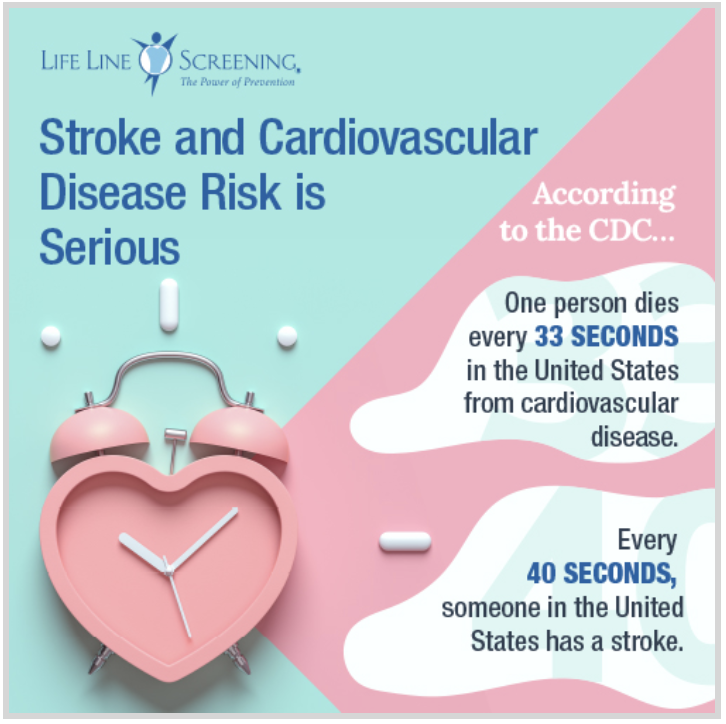
Medical & Wellness , , ,Dont Let a Stroke Ruin Your RetirementYour risk of stroke and cardiovascular disease increases as you age. But the good news is 80% of stroke and cardiovascular disease CAN be prevented.1 If you are age 50 or older, you should be screened.Often there arent any symptoms of a stroke before it occurs, in fact for 4 out of 5 people who have a stroke the first symptom of any illness is the actual stroke.2 But, you can take steps to find out if youre at risk.Life Line Screening is a premier provider of preventive screenings for stroke and cardiovascular disease risk. A simple appointment can identify your risk factors and provide peace of mind or early detection.Screenings are easy, painless, non-invasive and dont require any messy prep work.Life Line Screening has over 14,000 locations across the United States so you can find one close to you.Getting screened is affordable. The most popular package at Life Line Screening includes 5 screenings in 1 appointment for $149.Get the most out of your life! Find out your stroke and cardiovascular disease risk with Life Line Screening so you can be in control and do something about it.***CLICK HERE*** to schedule your appointment! A simple screening can be worth a lifetime.1 American Heart Association https://www.heart.org/en/get-involved/advocate/federal-priorities/cdc-prevention-programs2 Hackam DG, Karpral MK, et al. Most stroke patients do not get a warning, a Population Based Cohort Study. Sept. 2009. Neurology, 73, 1074-1075.