Act FAST For a Stroke
Dignity Care, LLC
For more information about the author, click to view their website: Dignity Care
Dec 04, 2024
Colorado - Boulder County


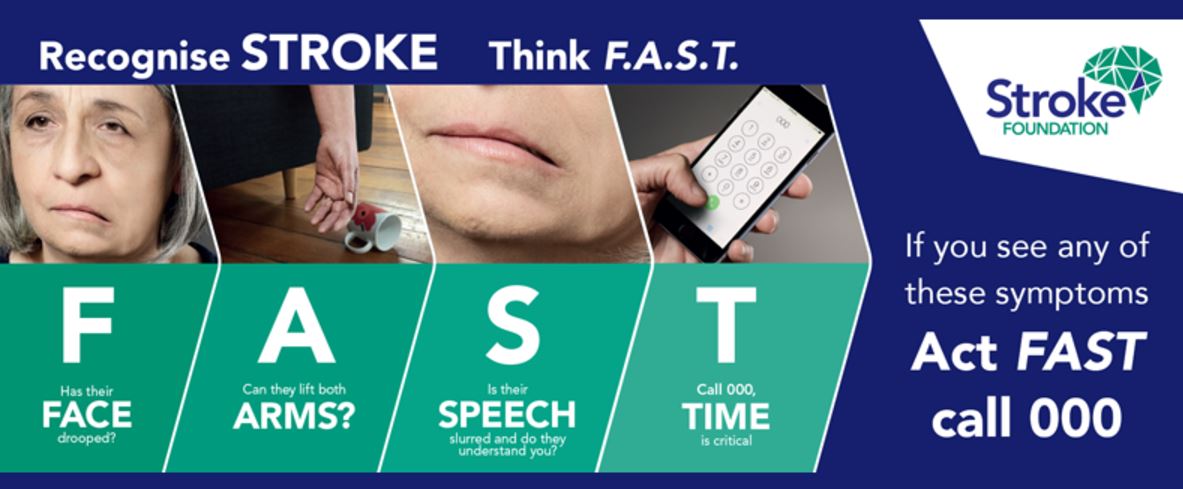
Act FAST For a Stroke! Stroke is an emergency and a brain attack. Learn how to act FAST and call 911 at the first sign of stroke.
Recognizing stroke symptoms can be easy if you remember to think FAST. Use FAST to remember the warning signs:
F= Face Ask the person to smile. Does one side of the face droop?
A= Arms Ask the person to raise both arms. Does one arm drift downward?
S= Speech Ask the person to repeat a simple phrase. Does the speech sound slurred or strange?
T= Time If you observe any of these signs, it’s time to call 911
May is Stroke Awareness Month. The National Stroke Association has easy ways for you to learn more about stroke before it happens to you or someone else. If you have any questions, please call us at 303-444-4040.
- To view the original version of this article visit dignitycare.com/2014/06/02/act-fast-for-a-stroke/
- Seniors Blue Book was not involved in the creation of this content.
Other Articles You May Like
Stroke Rehabilitation in Sarasota, FL
A stroke can change everyday life in a matter of minutes.Someone who was walking, cooking, driving, and speaking independently may suddenly need help standing, swallowing, communicating, remembering instructions, or completing everyday tasks.Recovery often continues long after the emergency treatment is over.Stroke rehabilitation in Sarasota, FL can take place in several settings depending on medical stability, functional ability, and how much therapy the individual can tolerate.What Is Stroke Rehabilitation?Stroke rehabilitation is a coordinated process designed to help a survivor regain as much function and independence as possible.A stroke can affect: Walking Balance Arm and hand function Speech Language Swallowing Memory Attention Problem-solving Vision Activities of daily living The exact rehabilitation plan depends on which areas of the brain were affected and the severity of the resulting deficits.Physical Therapy After StrokePhysical therapy may work on: Walking Balance Transfers Strength Coordination Mobility devices The goal may range from returning to independent walking to safely using a walker or wheelchair.Occupational Therapy After StrokeOccupational therapy can help survivors relearn everyday activities such as: Dressing Bathing Toileting Grooming Meal preparation Household tasks Therapists may also recommend adaptive strategies or equipment.Speech-Language TherapySpeech-language pathologists may address: Aphasia Speech production Cognition Memory Problem-solving Swallowing A stroke can affect communication even when the person's intelligence and awareness remain intact.Encompass Health Rehabilitation Hospital of Sarasota Address: 6400 Edgelake Drive, Sarasota, FL 34240Phone: 941-921-8600The Sarasota hospital provides inpatient medical rehabilitation for stroke as well as brain injury, spinal cord injury, orthopedic conditions, and other complex diagnoses.Hospital-Level RehabilitationEncompass Health Sarasota provides: Three hours of therapy per day Five days per week 24/7 rehabilitation nursing Frequent physician visits Interdisciplinary rehabilitation care This makes it appropriate for patients who still need hospital-level medical oversight while participating in intensive therapy.Stroke Therapy DisciplinesThe hospital provides: Physical therapy Occupational therapy Speech therapy Stroke rehabilitation is personalized according to the patient's physical, cognitive, communication, and swallowing needs.Functional Assessment and Goal SettingSeniors Blue Book's Encompass Health stroke profile explains that the rehabilitation team uses functional assessments to establish a baseline and then sets individualized recovery goals.Progress is monitored throughout the stay and the treatment plan can be adjusted as the patient improves or needs change.Advanced Rehabilitation TechnologyEncompass Health's stroke program uses rehabilitation technology that may support: Mobility Balance Walking Speech Swallowing Transfers Examples listed by Encompass include technologies such as LiteGait, Vector, VitalStim Plus, and other rehabilitation systems.Technology does not replace therapyit supports the clinician's treatment plan.Family and Discharge PlanningRehabilitation is ultimately intended to prepare the patient for the next setting.The care team may include: Physicians Nurses Therapists Dietitians Pharmacists Case managers Family members may be included in training when they will be assisting after discharge.FOX RehabilitationPhone: 854-222-4766FOX Rehabilitation is a clinician-operated therapy practice built around its Geriatric House Calls model.The practice provides: Physical therapy Occupational therapy Speech-language pathology primarily to older adults in their homes and senior living communities.A Different Stage of Stroke RecoveryFOX is not an inpatient rehabilitation hospital.Its model can be particularly useful after someone has returned: Home To independent living To assisted living To another senior residence and still needs skilled therapy.FOX describes its services as outpatient therapy delivered through Medicare Part B in the patient's living environment.Physical Therapy at HomeA FOX physical therapist may address: Walking Balance Strength Endurance Fall risk Mobility The advantage of home-based therapy is that the therapist can work with the individual's actual: Stairs Furniture Bathroom Hallways Outdoor walking environment rather than simulating those conditions in a clinic.Occupational Therapy in the HomeOccupational therapy can be especially relevant after stroke because the therapist can observe how the individual actually performs daily activities.Treatment may address: Dressing Bathing Grooming Meal preparation Home management Safety Adaptive equipment FOX's current SBB profile also highlights home-safety assessment and caregiver education as parts of occupational therapy.Speech-Language TherapyFOX speech-language pathologists can address: Speech Language Cognition Memory Problem-solving Swallowing This may be important for stroke survivors who have returned home but continue to experience aphasia, cognitive deficits, or swallowing difficulties.Medicare Part B ModelFOX's Geriatric House Calls model is structured as outpatient therapy under Medicare Part B rather than traditional Medicare home health.That distinction can matter because patients do not necessarily need to be homebound simply because therapy is delivered in the residence.Families should verify coverage with FOX and the individual's insurance plan.Encompass Health Versus FOX RehabilitationThese providers are not competing versions of the same service.Encompass Health May Fit WhenThe patient: Needs inpatient rehabilitation Needs 24-hour nursing Requires frequent physician involvement Can participate in an intensive therapy program Is not yet ready to return home FOX Rehabilitation May Fit WhenThe patient: Has already returned home or to senior living Needs ongoing PT, OT, or speech therapy Benefits from treatment in the real-life home environment Does not need hospital-level inpatient rehabilitation A person could potentially use both at different stages of recovery.For example, a survivor might complete inpatient rehabilitation at Encompass Health and later receive outpatient-style therapy from FOX after returning home, if medically appropriate and covered.Why Stroke Rehabilitation Matters Locally in SarasotaSarasota County's large older population means stroke recovery is a significant local healthcare concern.Approximately 38.8% of Sarasota County residents are age 65 or older.For older stroke survivors, rehabilitation may determine whether they can safely: Walk Live at home Prepare meals Communicate Manage daily routines Participate in community life Local access to both intensive inpatient rehabilitation and home-based therapy gives families multiple levels of support as recovery progresses.How to Get Started1. Begin Rehabilitation Planning in the HospitalAsk what setting is appropriate before discharge.2. Ask About Inpatient RehabilitationIf the patient needs intensive therapy and hospital-level medical oversight, request an evaluation.3. Contact Encompass HealthThe SBB-listed number is 941-921-8600.4. Plan for Therapy After DischargeRecovery often continues after the inpatient stay.5. Contact FOX RehabilitationThe SBB-listed stroke rehabilitation phone is 854-222-4766.6. Ask About All Three Therapy DisciplinesSome survivors benefit from PT, OT, and speech therapy at the same time.7. Involve Family and CaregiversCaregiver education can improve safety and consistency between therapy visits.
Stroke Recovery Timeline: What to Expect in the First Year
Stroke recovery does not follow one exact schedule. The fastest gains often occur during the first three to four months, but improvement can continue throughout the first year and beyond. Learn what may happen during the first days, weeks, months, and year after a stroke, which rehabilitation services may be involved, and why every survivor's recovery looks different.The first question many families ask after a stroke is simple:"When will they get better?"Unfortunately, there is no calendar that can answer that question for every person.One stroke survivor may begin walking within weeks. Another may need months of physical therapy. Someone may regain speech quickly but continue struggling with memory or fatigue. Another person may make meaningful gains more than a year after the stroke.That is why a stroke recovery timeline should be viewed as a guide, not a deadline.The American Stroke Association reports that recovery is generally fastest during the first three to four months after a stroke. At the same time, some survivors continue making gains during the first and second years. NINDS notes that functional improvement can continue over months or years as the brain adapts and rehabilitation continues.So instead of asking, "Should recovery be finished by six months?" a more useful question is:"What progress is possible at this stage, and what support does this person need next?"Quick Answer: How Long Does Stroke Recovery Take?There is no single recovery period that applies to everyone.Why Is Every Stroke Recovery Different?Two people can both have strokes and leave the hospital with completely different needs. The American Stroke Association identifies the location and extent of brain injury, pre-stroke health, rehabilitation, and caregiver support among factors that can influence recovery.This is why comparing one survivor's progress with another person's can be misleading.The First 24 to 72 Hours: Stabilizing the EmergencyThe earliest stage is not primarily about rehabilitation.It is about treating the stroke and protecting the brain.During this period, the medical team may work to: Determine whether the stroke is ischemic or hemorrhagic Stabilize the patient's condition Restore blood flow when appropriate Address bleeding when appropriate Monitor neurological changes Manage complications Begin evaluating what functions were affected The American Stroke Association describes the first 24 to 72 hours as the hyperacute phase, with treatment focused on stabilizing the patient, restoring blood flow when possible, and reducing brain injury.The First Week: Rehabilitation Begins to Take ShapeOnce the person is medically stable, attention begins shifting toward recovery.Rehabilitation can begin in the hospital when appropriate and should continue after discharge if ongoing needs remain. The American Stroke Association says rehabilitation may begin as early as a day after stroke once the healthcare team determines that the patient is medically stable. The goal is to determine which abilities have been affected and what type of rehabilitation is appropriate.Where Does Someone Go After the Hospital?Not every stroke survivor follows the same path.Depending on medical and functional needs, the next setting might include: Inpatient rehabilitation Skilled nursing rehabilitation Home health Outpatient rehabilitation Another post-acute care setting The appropriate setting depends partly on disability level, medical needs, the person's ability to participate in rehabilitation, insurance coverage, and available services.Some people may be able to return directly home.Others need additional inpatient care before going home safely.Weeks 1 to 4: Early Recovery Can Move QuicklyThe first several weeks can be a period of noticeable change. Not everyone will experience all of these improvements.The American Stroke Association describes weeks 1 through 12 as the subacute phase, when much recovery tends to occur.Rehabilitation May Feel Like a Full ScheduleDepending on the setting and needs, rehabilitation may involve several disciplines.Physical TherapyPhysical therapy may address: Walking Balance Strength Transfers Mobility Stairs Occupational TherapyOccupational therapy may work on: Dressing Bathing Toileting Eating Daily routines Functional use of the arms and hands Speech-Language TherapySpeech-language pathology may address: Speech Language Communication Cognitive-communication Swallowing Stroke rehabilitation programs can include these therapies as well as nursing, nutritional care, counseling, social work, and patient and family education.Months 1 to 3: Often the Fastest Period of ProgressThis is an especially important phase in the stroke recovery timeline.The American Stroke Association says the most rapid recovery usually occurs during the first three months after stroke, while its caregiver guidance describes the first three to four months as the period when recovery is often fastest.NINDS has also reported that most motor and sensory recovery from impairment tends to occur during the first three months, while cognitive improvement can continue over much longer periods.That does not mean everything that will ever improve must improve by month three.It means the rate of change is often greatest early on.What Might Improve During the First Three Months? Progress may occur unevenly.Walking may improve before hand function.Speech may improve before reading.Someone may become physically stronger but continue struggling with fatigue or memory.Recovery is rarely a straight line.What If Progress Seems Slow?Slow progress does not necessarily mean rehabilitation has failed.Stroke severity varies enormously.Some abilities also recover differently than others.For example, cognitive and language improvements may continue for longer periods than some early motor recovery. Research on post-stroke aphasia has found meaningful language recovery throughout the first year, although recovery patterns depend heavily on the location and extent of brain injury. Months 3 to 6: Progress May Slow, but Recovery Is Not OverAround the three-month point, some families become worried.The dramatic weekly changes may become smaller.A survivor may still be improving, but progress could look more like: Walking a little farther Using a hand for one additional task Completing more of a morning routine independently Speaking in longer sentences Needing fewer reminders Improving endurance This slower pace can be frustrating.But slower does not mean finished.The American Stroke Association identifies three to six months and beyond as a later recovery period when improvements can continue even though the rate may slow.Months 6 to 12: Recovery Can Still ContinueThe six-month mark is often misunderstood.Families sometimes hear that recovery "ends" after six months.That is not accurate.NINDS states that the brain can continue adapting and improving function over months or years after stroke. The American Stroke Association likewise notes that some survivors continue recovering into the first and second year.Progress may be slower, but additional improvement remains possible.What Might Recovery Look Like Later in the First Year?Goals during months six through 12 may involve: Improving walking endurance Increasing independence at home Returning to hobbies Improving communication in social settings Refining hand or arm use Developing memory strategies Improving community mobility Returning to selected household responsibilities Adapting activities around lasting limitations Some survivors are working toward recovering an ability.Others are learning new ways to perform a task when full restoration is not possible.Both can be meaningful parts of rehabilitation.What Does "Full Recovery" Actually Mean?There is no single medical definition that means every stroke survivor should return to exactly the same abilities they had before the stroke.Some people make very substantial recoveries. NINDS notes that lasting disability depends largely on the size and location of brain injury, while rehabilitation aims to help people regain or compensate for lost abilities.That is why the statement "stroke survivors fully recover in six to 12 months" is too broad.A more accurate statement is:The fastest progress often happens during the first three to four months, but meaningful improvement can continue throughout the first year and beyond.Recovery After One Year Is Still PossibleThe first anniversary of a stroke is not an expiration date for rehabilitation.Some people continue improving after one year.Research has demonstrated that functional gains can occur during chronic stages after stroke, and NINDS recognizes that brain adaptation and rehabilitation-related improvement may continue for years.A survivor who is still experiencing limitations should not automatically assume:"It has been a year, so nothing else can improve."Ask the healthcare and rehabilitation team whether additional therapy, a new evaluation, adaptive strategies, or another rehabilitation approach might be appropriate. Progress Should Be Measured by Function, Not Just TimeInstead of asking only:"How many months has it been?"Also ask:"What can they do now that they could not do four weeks ago?"Progress might mean: Walking 20 more feet Dressing with less help Remembering a daily schedule Swallowing more safely Using a communication strategy Climbing three steps Preparing a simple meal Participating in a conversation Small improvements can have a large effect on independence.Warning: New Stroke Symptoms Are Always an EmergencyA person who has already had a stroke can experience another one.Do not assume sudden new symptoms are simply part of recovery.The American Stroke Association recommends remembering B.E. F.A.S.T.: B: Sudden balance loss E: Sudden vision changes F: Facial drooping A: Arm weakness S: Speech difficulty T: Time to call 911 Other warning signs can include sudden numbness or weakness, confusion, trouble seeing, trouble walking, or a severe unexplained headache. Even symptoms that disappear quickly need urgent medical attention.Frequently Asked Questions About Stroke RecoveryWhen does most stroke recovery happen?The fastest progress often occurs during the first three to four months after stroke, although recovery can continue well beyond that period.Does stroke recovery stop after six months?No. Progress can continue after six months and into the first and second years. NINDS notes that functional improvement may continue over months or years.Can someone completely recover from a stroke?Some people regain substantial or nearly all lost function, while others experience lasting disability. Recovery depends on factors including the size and location of the brain injury and the functions affected.When does rehabilitation start?Rehabilitation may begin in the hospital once the person is medically stable and should continue after discharge when ongoing rehabilitation is needed.What therapies might be needed after a stroke?Depending on individual needs, rehabilitation may involve physical therapy, occupational therapy, speech-language therapy, rehabilitation nursing, nutritional care, psychological support, social work, and other services.Can speech continue improving after several months?Yes. Language recovery can continue throughout the first year and potentially beyond, although the amount and pattern of recovery vary according to factors such as the extent and location of brain injury.Should rehabilitation continue after one year?There is no rule that meaningful rehabilitation must end after one year. Some survivors continue making gains during chronic stages, so ongoing difficulties can be discussed with the healthcare and rehabilitation team.Help Families Find Your Stroke Recovery ServicesAfter a stroke, families may suddenly need several different professionals at once.They may be searching for inpatient rehabilitation, skilled nursing, physical therapy, occupational therapy, speech therapy, home health, home care, medical equipment, senior living, or other senior-focused resources.Being visible when families begin that search matters.Your organization can begin with a free Seniors Blue Book listing, giving seniors and caregivers another way to discover the services you provide. Organizations looking for additional exposure can also explore upgraded visibility and marketing opportunities.Want more seniors, caregivers, and families to find your services? Contact Seniors Blue Book today.Email: [email protected] Phone: 800-201-9989
Big Boost for Boulders Seniors: Frasier Awards $100,000+ in Grants
BOULDER, Colo. (June 2026) Frasier, a nonprofit senior living community, has awarded $101,900 in grants to five local organizations that provide essential services for older adults in Boulder County. The funding, distributed through the Frasier Community Resource Fund, will support projects addressing food insecurity, housing instability and healthcare access for underserved seniors. Since the endowments inception in 2021, Frasier has awarded nearly $500,000 to 27 community agencies. The grantmaking process is led by Seniors for Seniors, a 10-member resident-led advisory team at Frasier that establishes funding criteria, reviews applications and visits agencies to learn about their impact. This year we received many more proposals than in the past. The change reflects the growing demand on nonprofit organizations and government agencies that provide support for underserved people of all kinds, including seniors, stated Frasier resident Marjorie McIntosh, chair of Seniors for Seniors. The 2026 grant recipients include:Boulder Housing Partners: The $17,450 grant will be used to upgrade and replace equipment in Golden Wests kitchen and also purchase and install emergency generators and battery storage systems at 6 affordable senior housing complexes.Circle of Care: The $25,000 grant will assist a program that brings disadvantaged seniors to concerts, using tickets donated by event organizers. For seniors with disabilities, the organization has an ADA Accessible van to transport them to concerts; this grant will pay for an ADA trained driver, insurance, fuel, and maintenance.Community Food Share: The $17,450 grant will support food purchasing for a program that delivers food to homebound seniors, helping to bridge the gaps in CFSs existing funding month-to-month. It will provide reliable access to quality protein along with seasonally fresh and organic vegetables from local farmsPresbyterian Manor: The $17,000 grant will help combat food insecurity of Presbyterian Manor residents by subsidizing the cost of three hot meals per week. The funds will partially replace lost funding from Boulder County and allow the continuation of their partnership with Community Table Kitchen, a program of Bridge House. TRU Community Care: The $25,000 grant will allow TRU to purchase 25 new GrandPad units for seniors with the greatest need. These easy-to-use devices bring personalized medical care to homebound seniors on Medicaid and lessen their social isolation. Joan Raderman, Founder and Program Director for Circle of Care added Our Culture Bus is now able to happenSeniors for Senior is providing the oxygen, and when you match the oxygen with passionate people who want to make a change, magic happens! The Seniors for Seniors program oversees the $2.1 million endowment, created to strengthen support for Boulder Countys aging population. McIntosh closed with, Frasier is part of the Boulder County community, and our values include a commitment to those around us. The Community Resource Program is one way we put that commitment into practice. The Seniors for Seniors team is grateful to be able to assist some of the nonprofits that are working so valiantly to help seniors in need. ###About FrasierAs a Life Plan community, Frasier is an independent, nonprofit, purpose-driven, senior living community dedicated to helping seniors enjoy vibrant and fulfilling lives since 1960. Located in Boulder, CO, the 20-acre campus features independent living, assisted living, memory support, long-term care, skilled nursing, rehabilitation services, a wellness center, and care for nearly 500 residents. About Seniors for SeniorsSeniors for Seniors is a resident-led advisory team at Frasier responsible for stewarding the Frasier Community Resource Endowment, originally established at $2.1 million. Since 2021, the team has awarded 27, one-year grants, ranging from $5,000 to $42,0000 to eight nonprofit organizations and six city/county agencies that serve older adults in Boulder County. Through an annual application and review process, Seniors for Seniors carefully evaluate submissions and distributes funding to support impactful, community-based senior services.
Local Services By This Author
Dignity Care
Non-Medical 567 Mount Evans Street, Longmont, Colorado, 80504Dignity Care provides non-medial home care, we are supporting, everyday assistance to help older adults and individuals with disabilities live safely and comfortably in their own homes. Core Services Personal Care: Helping with bathing, dressing, grooming and toileting, care after medical procedure., care after release from Rehabilitation Companionship: Social interaction, conversations, and activities to reduce isolation. Household Support: Light housekeeping, laundry, and meal preparation. Mobility Assistance: Safer transfer and walking support to prevent falls. Errands and Transit: Rides to appointments and help with grocery shopping. Medication Reminders: Verbal prompts to take pills on time, though caregivers do not administer mediations. Geriatric Care Management: Professional service that helps older adults and their families coordinate medical, personal and social care. Assesses Needs: Evaluates physical, emotional, and cognitive health during home visits. Create Care Plans: Designs short and long-term strategies for daily care or living arrangements. Coordinate Services: Schedules doctor visits, coordinates the home help, and over sees caregivers. Advocates and Communicate: Acts as a central hub for distant family members and medical teams.