Compensation After a Mesothelioma Death
Oct 01, 2026
Non-Book Market


Compensation After a Mesothelioma Death
Mesothelioma is an uncommon cancer in the U.S. In 2022, there were 2,669 new mesothelioma cases, as recorded by the CDC’s U.S. Cancer Statistics. The CDC reports that exposure to asbestos causes the majority of mesothelioma cases.
The American Cancer Society reports an estimated 3,000 new cases of mesothelioma annually. The long time between initial exposure to asbestos and the eventual onset of the cancer means that it disproportionately impacts older adults.
When a family loses a member to mesothelioma, they face financial and emotional burdens. If asbestos exposure was the reason for their family member’s mesothelioma, surviving family members may be able to pursue a claim for compensation.
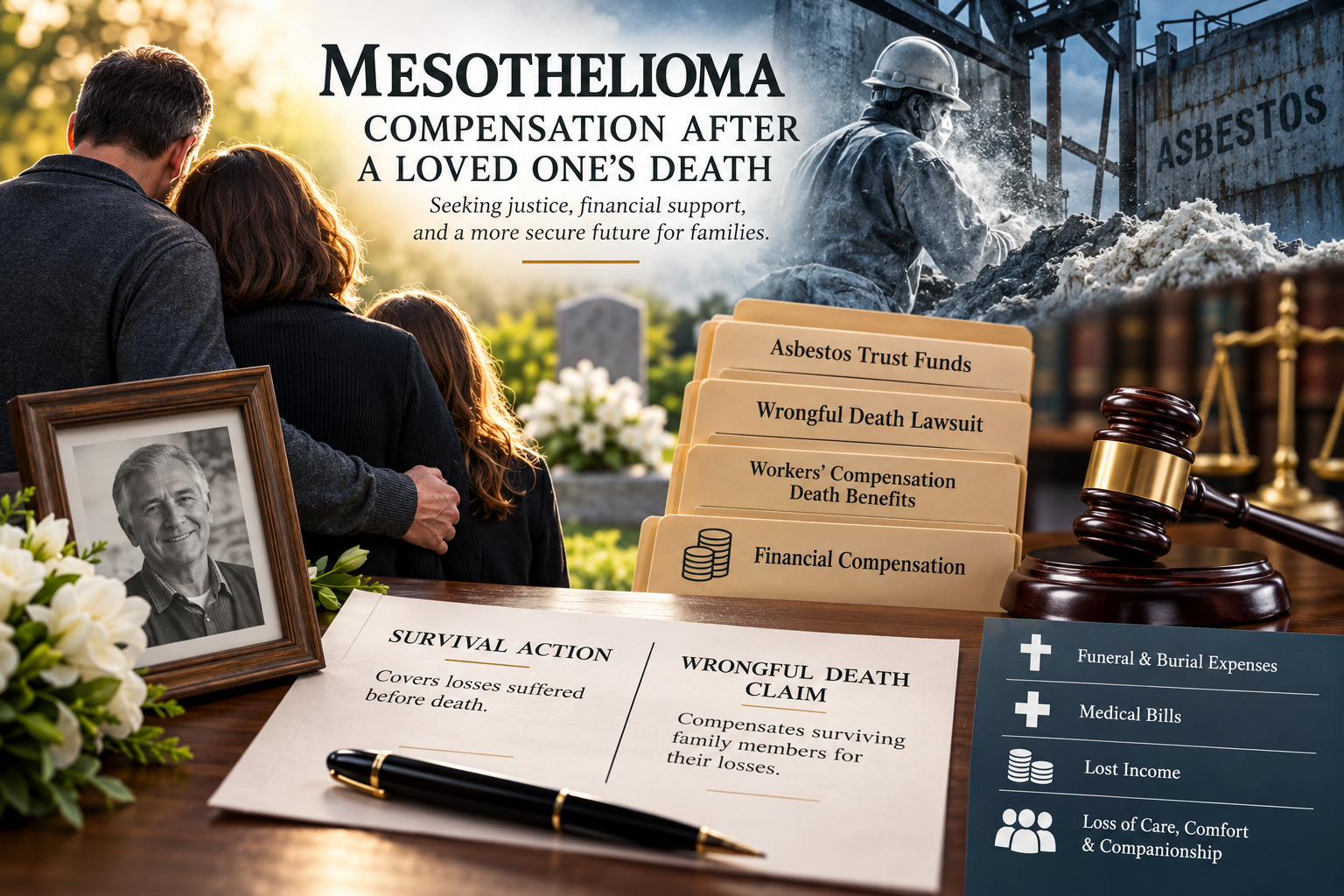
There are many ways in which financial compensation helps families. Depending on the claim, compensation may help cover funeral and burial expenses, lost income, and medical bills.
Mesothelioma compensation for family members may come from asbestos trust funds or a wrongful death lawsuit. If the exposure happened on the job, workers' compensation death benefits may also be available.
Two Different Claims, Two Different Purposes
In the event of a death from mesothelioma, families can file two different types of legal claims.
The first of these claims is called a survival action. It is brought on behalf of the deceased person’s estate. It covers losses suffered before death, like medical treatment and lost wages. In many states, it can also recover the person's pain and suffering from diagnosis until death, though some states, including California, have limited those damages.
Meanwhile, a wrongful death claim compensates the surviving relatives for the damages suffered due to the death, not for those suffered by the patient because of the disease.
Those damages typically fall into two categories. According to the law firm website https://www.eastonlawoffices.com/, families who depended on the person who died can recover both economic losses, like medical bills, lost income, and burial costs, and non-economic losses, like the loss of care, comfort, and companionship.
Who Actually Has the Right to File
Being eligible for bringing a claim for wrongful death differs from one state to another, and getting this wrong can end the claim before it starts.
In most cases, it is only a narrow category of people who have the right to bring such claims. This includes people like surviving spouses and surviving children or even surviving parents in certain states.
Some states also provide that any person who is eligible to inherit under intestate succession will be eligible to bring such a claim. Other states allow only the executor of the estate to bring these kinds of claims.
Where the Compensation Actually Comes From
Since mesothelioma is often the result of exposure to asbestos decades prior to the diagnosis, it often means that many of the companies involved have already gone bankrupt.
Many of those companies reorganized in bankruptcy by setting up trusts to pay asbestos victims. Those trusts hold billions of dollars for current and future claims.
It means that families of victims can often claim compensation from multiple funds without having to sue the company at all. Trust claims don't go through a lawsuit, so they often pay faster than court cases, but most trusts pay only a percentage of each claim's value.
Not every victim worked with asbestos directly. Some were exposed secondhand, like family members who handled a worker's dusty clothing. Secondary exposure cases can still qualify for compensation.
Why the Filing Deadline Is Easy to Miss
In most states, the statute of limitations for a wrongful death case begins on the date of death. There are some states that apply a discovery rule tied to when the family learned asbestos was the cause. Asbestos trust funds also set their own filing deadlines, which are separate from the court deadline and can be shorter.
Deadlines vary by state, usually from one year to several years. Missing the deadline typically bars the claim, no matter how strong the case might be.
This timeline is different from the statute of limitations for a personal injury case, which would have been applicable if the patient were still alive.
Why Acting With Care, Not Urgency, Still Matters
None of these factors changes the reality for the mourning family, and nothing can ever make up for their loss.
The time constraints and the number of potential defendants involved in mesothelioma cases make it advantageous for families to consult a lawyer who specializes in legal cases involving wrongful death and asbestos.
The article examines mesothelioma and asbestos-related fatalities from a legal and general perspective. Should you or someone you know be experiencing the loss of a loved one and having trouble coping with the situation, consulting a grief counselor or therapist may help.
Other Articles You May Like
The Best Time to Make an Estate Plan Is Before You Need One
Estate planning is easy to put off. Work is busy. The kids need something. The house needs attention. Everyone is healthy, and there is always something that feels more urgent. So you tell yourself, Ill get to it later. I understand that. Most people are not avoiding estate planning because they do not care about their families. They are busy taking care of those families right now. But that is also why I encourage people to begin before there is an emergency. When life is calm, you have time to ask questions, talk with the people you love, and make choices that feel right to you. At Bellomo & Associates, we want families to have that opportunity, instead of trying to figure everything out beside a hospital bed. Why Do So Many People Put Estate Planning Off?Sometimes people think they are too young. Sometimes they assume they do not own enough to need a plan. And sometimes they believe their spouse or children already know what they would want. Those thoughts are understandable. If you are feeling well and handling your own affairs, documents such as powers of attorney and healthcare directives may seem like something you will need years from now. The trouble is that we do not get to choose when life changes. Estate planning is easier when you can approach it with a clear head and enough time to consider your options. You can talk about what matters to you without asking your family to make every decision in the middle of a crisis. Estate Planning Is About More Than What Happens After DeathWhen people hear estate plan, they often think of a will and who will inherit the house. Those are important questions, but a plan can also help your family while you are living. What if an accident leaves you temporarily unable to manage your bills? What if an illness makes it difficult to speak with your doctors? Who would step in, and would that person have the authority they need? A financial power of attorney can address who may handle financial matters for you. A healthcare power of attorney can name someone to make healthcare decisions when you cannot. A living will can give direction about certain treatment choices. Pennsylvania recognizes these as distinct planning documents, each with its own requirements. These are deeply personal choices. Making them ahead of time gives your loved ones something far more useful than a guess. The Best Time to Choose Someone Is Before You Need ThemThink about the person you would trust to help if you could not manage your finances for a while. You probably have someone in mind. But have you asked whether they would be willing to take on that role? Do they know where to find your important information? Planning gives you time to have that conversation. You can choose someone who understands you, explain what matters most, and name a backup in case your first choice cannot serve. Without appropriate documents, a family may know exactly whom you would have chosen and still have trouble acting on your behalf. Depending on the circumstances, they may need to seek court involvement. That can be stressful for a spouse or child who is already worried about you. My Family Knows What I Want May Not Be EnoughI hear this often: Jeff, my family knows what I want. They might know a great deal about you. They know how you take your coffee, what you think about the holidays, and which stories you will tell whenever everyone is together. Still, a serious medical decision can be different from any conversation you have had before. Picture three adult children trying to decide what Mom would want. One remembers her saying she never wanted to be kept alive by machines. Another remembers her talking about doing everything possible to have more time with her grandchildren. Each believes they are honoring her wishes. A conversation and the right documents can help your family understand your preferences and know who should make decisions if you cannot. That guidance is a gift to the people who love you. Waiting for a Crisis Can Make Planning HarderEstate planning works best when you can take your time. You can ask what a document means, think about whom to name, and decide how the pieces of your plan should fit together. A sudden illness or a change in memory can make those conversations more difficult. A diagnosis alone does not necessarily mean someone can no longer make legal decisions, but capacity questions can arise, and options may become more limited as circumstances change. This is why I encourage people to plan while the choices are clearly theirs to make. There is comfort in knowing you had the chance to think them through. You Do Not Have to Be Wealthy to Need an Estate PlanEstate planning is about people as much as property. A young parent may want to name someone to care for their children. A single adult may want a trusted friend or relative to speak with doctors if needed. A grandparent may want to make sure an inheritance is handled thoughtfully for the next generation. You may also need to consider your home, personal belongings, pets, online accounts, or who would be responsible for settling your affairs. None of those questions depends on having a certain amount of money. If there are people you care about and decisions you would want to make for yourself, there is a reason to think about a plan. Your Will Is Only One Part of the PlanA will matters, but it may not control every asset you own. Retirement accounts and life insurance policies often have beneficiary designations. The way a home or account is owned may also affect what happens to it. That is why an old beneficiary form deserves attention. Perhaps it names someone who has since died. Perhaps your family has grown, but the form has not changed. A plan works better when you review how its parts fit together, rather than assuming the will answers every question. Your Plan Can Change as Your Life ChangesSome people wait because they want to get every decision perfect the first time. You do not need to predict the rest of your life. A plan should reflect your life now. Then, when life changes, you can review it. Marriage, divorce, a new child or grandchild, retirement, a move, or a change in a trusted relationship may all be reasons to take another look. Beginning today does not mean you can never make a different choice. It means your family has guidance based on what you want today. Give Your Family Instructions Instead of QuestionsWhen someone needs help unexpectedly, loved ones often want to do the right thing. They may simply be unsure what that is. Who can speak with the bank? Where are the documents? Who should make a medical decision? What did Dad want to happen to the house? An estate plan cannot spare a family every hard moment. It can give them direction through some of those moments, and it can let you choose the people you trust to help. When things are going well, estate planning may feel easy to postpone. That is also when you may have the most room to think, talk, and decide. Bellomo & Associates welcomes families who want to start that conversation before a crisis makes it urgent.
Planning for Aging Parents With Elder Law in Fairhope, AL
Planning for Aging Parents With Elder Law in Fairhope, ALHelping aging parents plan for the future can be one of the most meaningful responsibilities adult children undertake. However, conversations about finances, healthcare decisions, legal documents, and long-term care are not always easy to begin.A parent may be living independently, managing household expenses, and making personal decisions without difficulty. Then an unexpected illness, hospitalization, or change in cognitive ability may create questions the family has never discussed.Who can make medical decisions if a parent cannot communicate? Who has legal authority to manage financial accounts? What happens if assisted living or nursing home care becomes necessary? How can important assets be protected while ensuring appropriate care?For families in Fairhope, Alabama, these questions highlight the importance of proactive elder law planning.Elder law focuses on protecting older adults' rights, choices, financial security, and access to appropriate care throughout their lives.Unlike estate planning that focuses primarily on property transfers after death, elder law also addresses healthcare decision-making, incapacity planning, long-term care expenses, public benefits, and legal protection during a person's lifetime.Ashley Day Law, located on Gayfer Road Extension in Fairhope, provides elder law and estate planning services for older adults, individuals with disabilities, and their families.Led by attorney Ashley Day, the practice helps clients develop personalized plans involving powers of attorney, advance healthcare directives, Medicaid planning, asset protection, and other important legal matters.For families throughout Baldwin County, understanding these planning tools can help prevent avoidable complications while preserving the older adult's independence and personal wishes.What Is Elder Law?Elder law is a legal practice area focused on challenges that may arise as individuals grow older.It considers both immediate legal concerns and future circumstances that could affect an individual's health, finances, living arrangements, or decision-making ability.Common Elder Law ServicesThese may include:Durable powers of attorneyHealthcare directivesLiving willsLong-term care planningNursing home Medicaid planningAsset protection strategiesGuardianshipsConservatorshipsFinancial exploitation preventionSpecial needs trustsEstate planningProbate and trust administrationNot every family requires every service.The appropriate legal plan depends on the individual's goals, capacity, finances, family circumstances, and applicable Alabama law.Why Planning for Aging Parents MattersMany families postpone legal planning because their parents appear healthy and independent.However, legal documents are often most useful when prepared before an emergency.Protecting Personal ChoicesOlder adults should have meaningful opportunities to express their preferences concerning healthcare, finances, and living arrangements.Clarifying Family ResponsibilitiesA legal plan can identify who has authority to make certain decisions when assistance becomes necessary.Reducing Confusion During EmergenciesFamilies may experience difficulty accessing accounts or communicating with healthcare providers when important authorizations are missing.Preparing for Care ExpensesLong-term care can create substantial financial obligations.Planning allows families to evaluate potential payment arrangements and legal considerations.Preserving IndependenceAppropriate legal planning can help protect an older adult's autonomy while establishing safeguards for future needs.Ashley Day Law in Fairhope, AlabamaAshley Day Law, LLC is a law practice serving individuals and families in Baldwin County and Mobile County.The firm's principal practice areas include:Elder LawEstate PlanningSpecial Needs PlanningProbate and Trust AdministrationAshley Day founded her own practice in 2019 to focus on helping individuals and families facing complicated care and planning decisions.Her professional background includes special education and healthcare-related experience before entering legal practice.Ashley graduated from Saint Louis University School of Law in 2010 and earned a Health Law Certificate.She is licensed to practice law in Alabama, Illinois, and Missouri.A Personalized Approach to Legal PlanningAshley Day Law emphasizes developing legal strategies around individual circumstances.The firm considers factors such as:Current healthcare needsPotential future care requirementsFinancial resourcesFamily relationshipsPersonal preferencesExisting legal documentsLong-term objectivesThis approach recognizes that different families may need different arrangements.Elder Law PlanningThe firm helps older adults prepare for potential incapacity, care expenses, and changes in living arrangements.Estate PlanningAshley Day Law prepares documents intended to communicate personal wishes and support appropriate asset transfers.Special Needs PlanningThe practice assists families planning for loved ones with disabilities or special needs.Probate and Trust AdministrationThe firm provides guidance to executors, trustees, conservators, and other individuals serving in legal or fiduciary roles.Verified Ashley Day Law Contact InformationAshley Day Law, LLCAttorney: Ashley DayAddress: 8335 Gayfer Road Extension, Suite B, Fairhope, AL 36532County: Baldwin County, AlabamaPhone: 251-277-3377Website: https://ashleydaylaw.com/Practice Areas: Elder Law, Estate Planning, Special Needs Planning, Probate and Trust AdministrationCounties Served: Baldwin County and Mobile CountyAdditional Office: Edwardsville, IllinoisThe firm's website uses ZIP code 36533 for its Fairhope address, while its Seniors Blue Book profile and professional directory use 36532. Families should confirm the mailing ZIP code and appointment details directly with the office.Understanding Durable Powers of AttorneyA durable power of attorney is an important legal planning document.It generally allows an individual, called the principal, to appoint a trusted person to manage specified matters on their behalf.The individual receiving authority is commonly called an agent.What Can a Financial Power of Attorney Address?Depending on its terms, a document may authorize an agent to:Manage certain financial accountsPay billsAddress financial obligationsHandle authorized property transactionsCommunicate with financial institutionsManage selected legal or administrative mattersThe scope of authority depends on the document and applicable law.Why Durability MattersA durable power of attorney is designed to remain effective when the principal later becomes incapacitated, subject to the document's provisions and legal requirements.Choosing an AgentFamilies should consider whether the proposed agent is:TrustworthyOrganizedFinancially responsibleWilling to serveCapable of following instructionsPrepared to maintain appropriate recordsReviewing Existing DocumentsOlder powers of attorney may no longer reflect the individual's preferences or financial circumstances.Ashley Day Law provides planning services involving durable powers of attorney and related legal protections.Healthcare Directives and Medical Decision-MakingMedical decisions can become complicated when an individual cannot communicate or make informed decisions.An advance healthcare directive can help communicate healthcare preferences before that situation occurs.What Is an Advance Healthcare Directive?An advance directive may address preferences concerning certain medical treatments and the designation of a healthcare decision-maker.Why Communication MattersA written document should be supported by conversations with trusted relatives and healthcare professionals.Choosing a Healthcare AgentThe selected person should understand the individual's wishes and be prepared to communicate with medical providers.Questions to DiscussFamilies may want to explore:Preferred medical decision-makersPersonal healthcare valuesLife-sustaining treatment preferencesComfort-focused careReligious or spiritual considerationsCommunication with family membersKeep Documents AccessibleAppropriate healthcare providers and designated decision-makers should know how to locate important documents.Ashley Day Law identifies advance directives and healthcare powers of attorney among its elder law planning services.Preparing for Potential Long-Term Care NeedsLong-term care planning is an important part of elder law.Some older adults remain at home throughout their later years.Others eventually require assisted living, memory care, nursing facility services, or additional professional support.Different Types of Long-Term CareThese may include:In-home care: Assistance with personal routines and household activities.Assisted living: Residential support for individuals needing help with selected daily activities.Memory care: Specialized residential support for people living with Alzheimer's disease or other forms of dementia.Skilled nursing: Residential nursing services and rehabilitation for individuals with more extensive medical or functional needs.Understanding Financial ResponsibilitiesThe cost of care depends on the setting, services, and payment arrangement.Planning Before an EmergencyAdvance planning may provide additional time to understand financial and legal options.Reviewing Care PreferencesOlder adults should have opportunities to communicate where and how they would prefer to receive care.Legal planning does not guarantee a particular care setting will remain appropriate, but it can establish useful instructions and decision-making arrangements.Medicare, Medicaid, and Nursing Home CostsA common misunderstanding is that Medicare automatically pays for unlimited nursing home care.That is not generally the case.Medicare CoverageOriginal Medicare may cover a qualifying short-term skilled nursing facility stay when specific requirements are met.It generally does not pay for indefinite custodial nursing home care.Medicaid CoverageMedicaid may cover eligible long-term nursing facility services when financial and clinical requirements are satisfied.Why Medicaid Planning Requires CautionEligibility rules can involve:IncomeAssetsProperty ownershipFinancial transfersSpousal protectionsTrust arrangementsApplication documentationMedical eligibilityAvoid Unplanned Asset TransfersTransferring money or property without appropriate advice can affect eligibility and create other financial or legal consequences.How Ashley Day Law Can HelpThe firm identifies Medicaid planning and long-term care planning among its elder law services.An individualized legal review can help families evaluate applicable options.Protecting Older Adults From Financial ExploitationFinancial exploitation can involve the improper use of someone's money, property, or financial authority.Some older adults become vulnerable because of isolation, cognitive changes, or dependence on other individuals.Potential Warning SignsThese may include:Unexplained withdrawalsSudden changes in financial arrangementsMissing money or propertyPressure to sign documentsUnexpected changes to beneficiariesUnusual requests for financial assistanceNew individuals controlling financial communicationLegal Planning ToolsAppropriate powers of attorney, trusts, and other arrangements may provide safeguards.However, no document eliminates every risk.Respecting Personal RightsProtecting an older adult should not involve unnecessarily removing the person's independence.Legal interventions should respect individual capacity and applicable rights.When Exploitation Is SuspectedFamilies may need assistance from an attorney, financial institution, Adult Protective Services, or law enforcement, depending on the situation.Ashley Day Law specifically identifies protection against elder abuse and financial exploitation within its elder law practice.Guardianship and Conservatorship in AlabamaSome individuals lose the ability to make certain decisions because of illness, cognitive changes, or disability.When appropriate legal arrangements are not already in place, families may need to consider court-appointed decision-making authority.GuardianshipGuardianship generally concerns decisions involving personal welfare and care.ConservatorshipConservatorship generally addresses financial affairs and property.Court InvolvementA court determines whether an appointment is legally necessary and establishes the scope of authority.Considering AlternativesDepending on the circumstances, less restrictive arrangements may be available.Supported Decision-MakingAshley Day Law identifies supported decision-making as a potential alternative for certain individuals who can make decisions with appropriate assistance.The best approach depends on the individual's abilities, legal circumstances, and available support.Why Elder Law Matters in Baldwin CountyFamilies throughout Baldwin County experience different retirement and caregiving circumstances.Some older adults own longtime family homes.Others have relocated to Fairhope or surrounding communities to be closer to family or enjoy retirement.As care needs change, legal planning can become increasingly important.Protecting Family HomesProperty may represent a substantial part of an older adult's savings.Legal planning should consider ownership, long-term care expenses, and individual objectives.Supporting SpousesWhen one spouse needs extensive care, the financial needs of the other spouse also deserve consideration.Helping Adult ChildrenRelatives may need guidance about their authority and responsibilities.Planning for Care TransitionsA move into assisted living or nursing care can involve legal and financial decisions.Access to Local Legal ServicesAshley Day Law provides an opportunity for Fairhope families to seek guidance involving Alabama-specific elder law requirements.Estate Planning and Elder Law Work TogetherEstate planning and elder law are closely connected, but they address different priorities.Estate PlanningEstate planning often focuses on how property and assets should be managed or transferred.Elder LawElder law emphasizes healthcare, financial security, incapacity planning, and personal protection during life.WillsA will generally communicates instructions for the distribution of certain assets after death.TrustsDifferent types of trusts can serve different planning purposes.Beneficiary DesignationsCertain accounts and insurance policies transfer according to beneficiary designations.Coordinating the PlanDocuments should be reviewed together to reduce unintended conflicts.Ashley Day Law provides both estate planning and elder law services, allowing families to consider these issues as connected parts of a broader plan.Special Needs Planning for Multigenerational FamiliesSome older adults are also responsible for children, grandchildren, or other relatives with disabilities.This can create additional planning concerns.Protecting BenefitsCertain inheritance arrangements may affect eligibility for means-tested public benefits.Supplemental Needs TrustsSpecial needs trusts may be appropriate in certain circumstances to provide supplemental resources while protecting benefit eligibility.Planning for Future CaregiversFamilies may need to consider who will provide support when an aging parent or grandparent can no longer do so.Coordinating Legal DocumentsEstate and special needs planning should be reviewed together.Ashley Day Law identifies special needs planning as one of its principal practice areas.Five Mistakes Families Should AvoidWaiting Until Capacity Becomes a ConcernSome legal documents may no longer be available once the individual lacks the required legal capacity.Assuming Family Relationships Create Automatic AuthorityBeing a spouse or adult child does not automatically authorize every financial or healthcare decision.Using Unreviewed Legal FormsGeneric forms may not address complex financial or family circumstances.Giving Away Assets Without Understanding the ConsequencesUnplanned transfers can create problems involving taxes, Medicaid eligibility, or property rights.Failing to Review Existing DocumentsOld documents may name individuals who are no longer willing or able to serve.Professional legal guidance can help families evaluate these concerns.Expert Tip for Families Planning AheadExpert Tip: Schedule a family planning conversation while aging parents can still clearly express their preferences. Begin with three questions: Who should make decisions if help becomes necessary? Where would you prefer to receive care? What financial or personal priorities matter most?Use those answers to guide a legal consultation.The goal is to preserve the older adult's wishes, not make decisions on their behalf prematurely.How to Get Started With Ashley Day LawStep 1: Identify Your Main ConcernsConsider whether the immediate priorities involve powers of attorney, healthcare directives, long-term care, Medicaid, or financial protection.Step 2: Speak With Your Aging ParentWhen appropriate, discuss personal preferences and planning goals.Step 3: Contact Ashley Day LawCall 251-277-3377.Step 4: Arrange a ConsultationContact the Fairhope office to confirm scheduling, consultation terms, and fees.Step 5: Gather Existing DocumentsPrepare available wills, trusts, powers of attorney, advance directives, and other relevant records.Step 6: Review Financial and Care CircumstancesProvide accurate information about assets, income, insurance, care needs, and family responsibilities as requested.Step 7: Discuss Legal OptionsAsk how Alabama law applies to the individual's circumstances.Step 8: Maintain the PlanReview important documents when health, finances, family relationships, or personal preferences change.Frequently Asked Questions About Elder Law in Fairhope1. What elder law services does Ashley Day Law provide?Ashley Day Law provides elder law planning involving durable powers of attorney, advance healthcare directives, Medicaid planning, long-term care planning, guardianships, conservatorships, and financial exploitation protection. The firm also handles estate planning and special needs planning.2. Where is Ashley Day Law located?Ashley Day Law's Fairhope office is located at 8335 Gayfer Road Extension, Suite B, Fairhope, Alabama. Its phone number is 251-277-3377. Families should confirm the mailing ZIP code before sending documents.3. When should an older adult contact an elder law attorney?It is often beneficial to seek legal guidance before a medical emergency, particularly when preparing powers of attorney, healthcare directives, or long-term care plans. Families may also need assistance when circumstances change unexpectedly.4. Does Ashley Day Law help with nursing home Medicaid planning?Yes. Medicaid and long-term care planning are among the firm's elder law services. Eligibility and potential strategies depend on the individual's financial and medical circumstances.5. Can Ashley Day Law assist with guardianship and conservatorship?Yes. The firm identifies guardianships and conservatorships among its services and can provide guidance concerning legal decision-making responsibilities and potential alternatives.Plan Ahead While Protecting Independence and Family RelationshipsPlanning for aging parents involves more than deciding who will inherit property.It requires considering healthcare preferences, decision-making authority, long-term care needs, financial security, and personal independence.Families who begin these conversations early may have more time to evaluate options and prepare appropriate legal documents.A thoughtful elder law plan should reflect the individual's wishes while establishing practical safeguards for changing circumstances.For residents throughout Baldwin County, Ashley Day Law provides legal planning services focused on protecting older adults and helping families navigate important decisions.Led by attorney Ashley Day, the Fairhope practice assists with elder law, estate planning, special needs planning, and probate and trust administration.Whether your family is beginning proactive planning or responding to an immediate concern, understanding the available legal options can be an important step toward greater clarity.Contact Ashley Day Law to discuss your circumstances and learn how its legal services may help address your family's planning needs.Featured Seniors Blue Book ListingAshley Day LawRecommended Main SBB Category: Elder LawAttorney: Ashley DayAddress: 8335 Gayfer Road Extension, Suite B, Fairhope, AL 36532County: Baldwin County, AlabamaPhone: 251-277-3377Website: https://ashleydaylaw.com/Primary Services: Elder law planning, durable powers of attorney, advance healthcare directives, long-term care planning, Medicaid planning, guardianships, conservatorships, asset protection planning, and financial exploitation prevention.Additional Practice Areas: Estate Planning, Special Needs Planning, Probate and Trust AdministrationCounties Served: Baldwin County and Mobile CountyAttorney Licensing: Alabama, Illinois, and MissouriOffice Note: The firm's official website lists ZIP code 36533 while professional directories and Seniors Blue Book list 36532. Verify mailing details directly with the firm.Seniors Blue Book Business Profile: https://seniorsbluebook.com/listings/ashley-day-lawFind Ashley Day Law on Seniors Blue BookLooking for elder law assistance in Fairhope, Alabama?Explore Ashley Day Law through its Seniors Blue Book business listing.Learn about its elder law planning services, protection of decision-making rights, Medicaid-related planning, and legal guidance for older adults and families.Contact Ashley Day Law to discuss your legal planning needs and arrange an appropriate consultation.
Protecting Your Choices With Elder Law in Fairhope, AL
Protecting Your Choices With Elder Law in Fairhope, ALAging often brings important decisions about healthcare, finances, family responsibilities, and the future. While many older adults spend years planning for retirement, fewer prepare for the possibility that illness or changes in cognitive abilities could make everyday decisions more complicated.Who would manage your finances if you were temporarily unable to do so? Who could speak with healthcare professionals if you could not communicate your wishes? How could your family protect your property while addressing unexpected long-term care expenses?These questions are not always easy to discuss, but answering them early can help prevent confusion and unnecessary legal complications.For older adults and families in Fairhope, Alabama, elder law provides an opportunity to address these concerns before an emergency occurs.Unlike legal services focused exclusively on wills or inheritance, elder law considers the broader challenges associated with aging, including healthcare decision-making, disability planning, long-term care, government benefits, and protecting personal rights.Aging in Alabama, an elder law practice located on North Bancroft Street in Fairhope, helps older adults and caregivers navigate complicated legal and financial situations.The practice is led by Kyla G. Kelim, Esq., an attorney whose work focuses on legal issues affecting seniors, including Medicaid planning, guardianship, conservatorship, probate, and long-term care concerns.Understanding the purpose of elder law and preparing important documents can help families approach the future with greater clarity.What Is Elder Law?Elder law is an area of legal practice that focuses on issues commonly affecting older adults, people with disabilities, and their families.Its purpose is to help individuals plan for changing needs while protecting their legal rights and personal preferences.Common Elder Law ConcernsThese may include:Powers of attorneyAdvance healthcare directivesEstate planningWills and trustsGuardianshipConservatorshipMedicaid planningNursing home care expensesProbate mattersLong-term care planningFinancial exploitation concernsProtection of personal assetsLegal decision-making arrangementsNot every person needs every document or service.An elder law attorney can help evaluate which concerns require attention based on family circumstances and Alabama law.Why Elder Law Planning Should Begin EarlyMany families seek legal assistance only after a health crisis occurs.An older adult may be hospitalized unexpectedly, develop significant memory problems, or require immediate placement in a nursing facility.When important legal documents are missing, relatives may discover that they do not have the authority needed to make certain decisions.Planning While Decision-Making Capacity Is PresentLegal documents such as powers of attorney generally require the person signing them to have the necessary legal capacity.Waiting until significant cognitive impairment develops may limit available options.Reducing Family ConfusionClear legal instructions can help relatives understand who is authorized to handle important matters.Protecting Personal PreferencesAdvance planning allows older adults to express their preferences before a crisis.Preparing for Long-Term Care ExpensesNursing home and other long-term care costs can create financial challenges.Early legal advice may help families understand available payment options and planning considerations.Avoiding Unnecessary Court ProceedingsProperly prepared documents may reduce the need for certain guardianship or conservatorship proceedings.However, no legal document can guarantee that court involvement will never be necessary.Aging in Alabama in FairhopeAging in Alabama is an elder law practice serving older adults and families throughout Baldwin and Mobile Counties.Its Fairhope office is located at 68 North Bancroft Street.The practice is associated with attorney Kyla G. Kelim, whose work focuses on legal matters affecting older adults, individuals with disabilities, and their caregivers.The firm describes its services as addressing both proactive planning and urgent legal problems.Elder Law PlanningAging in Alabama helps clients evaluate legal arrangements designed to address future decision-making and long-term care concerns.Medicaid-Related Legal AssistanceThe practice advertises assistance with nursing home Medicaid qualification, discharge issues, appeals, and disputes.These matters can involve complicated eligibility and administrative requirements.Guardianship and ConservatorshipAging in Alabama addresses legal questions involving guardianship, conservatorship, and decision-making authority.Estate and Probate MattersThe firm also identifies estate planning and probate solutions among its services.Assistance During Healthcare CrisesSome clients contact an elder law attorney after an unexpected illness or change in care needs.Aging in Alabama describes its practice as helping families navigate legal concerns that arise during healthcare emergencies.ConsultationsThe Eastern Shore Chamber of Commerce lists free telephone consultations, with office appointments available during regular business hours.On-site and after-hours appointments may also be available by arrangement.Families should contact the practice to confirm current consultation arrangements, fees, and availability.Verified Aging in Alabama Contact InformationAging in AlabamaAttorney: Kyla G. Kelim, Esq.Address: 68 North Bancroft Street, Fairhope, AL 36532Phone: 251-281-8120Toll-Free: 855-ELD-RLAWWebsite: https://www.elderconsults.com/Facebook: https://www.facebook.com/AginginalabamaOffice Hours: Monday through Friday, 9:00 AM to 5:00 PM, by appointmentService Area: Baldwin County and Mobile County, AlabamaContact the office to confirm appointment arrangements and the type of legal assistance needed.Understanding Powers of AttorneyA power of attorney is a legal document that authorizes another individual, commonly called an agent, to act on someone's behalf within the authority established by the document.This can be especially important when an older adult becomes unable to manage certain responsibilities independently.Financial Powers of AttorneyA financial power of attorney may authorize an agent to handle matters such as:BankingPaying billsManaging certain property transactionsHandling financial accountsCommunicating with financial institutionsCompleting other specifically authorized transactionsThe agent's authority depends on the document and applicable law.Durable Powers of AttorneyA durable power of attorney is designed to remain effective if the principal later becomes incapacitated, subject to the document's terms and Alabama law.Durability is important because an ordinary power of attorney may not provide the same protection following incapacity.Choosing the Right AgentThe person selected should be trustworthy, dependable, and capable of understanding the responsibilities involved.Families should consider whether the individual can manage important decisions and maintain appropriate records.Why Generic Forms May Not Be EnoughA document downloaded from the internet may not address a family's particular circumstances.Financial institutions and government benefit programs may also have specific requirements.An Alabama elder law attorney can help determine whether the document provides appropriate authority.Healthcare Decisions and Advance DirectivesMedical emergencies can occur unexpectedly.An advance healthcare directive allows an individual to communicate certain healthcare wishes before becoming unable to make or express decisions.What Is an Advance Directive?An advance directive may address preferences involving medical treatment and end-of-life decisions.In Alabama, applicable laws govern the creation and use of advance healthcare directives.Choosing a Healthcare Decision-MakerAn individual may designate someone to make healthcare decisions when legally appropriate.This should be a person who understands the individual's wishes and can communicate with healthcare professionals.Discussing Personal PreferencesFamilies should consider discussing:Treatment prioritiesComfort and quality of lifePreferences involving life-sustaining treatmentReligious or personal valuesHealthcare decision-making responsibilitiesCommunication with physiciansSharing Documents With the Right PeopleAn advance directive is most useful when appropriate people know it exists.Copies may be shared with healthcare providers and designated decision-makers.Reviewing Documents Over TimePreferences and family circumstances may change.Periodic review can help ensure documents still reflect current wishes.Guardianship and Conservatorship in AlabamaSometimes an older adult becomes unable to make certain decisions and has not established appropriate legal arrangements.In those circumstances, a court proceeding may be necessary.What Is Guardianship?Guardianship generally involves court-appointed authority relating to an individual's personal welfare.Depending on the court order, responsibilities may involve healthcare or living arrangements.What Is Conservatorship?Conservatorship generally involves legal authority relating to financial affairs and property.A conservator may manage certain assets or financial responsibilities under court supervision.Why the Distinction MattersPersonal decisions and financial matters involve different responsibilities.One person may be appointed to both roles, or the court may appoint different individuals.Court OversightGuardians and conservators must act within the authority established by law and the court.These proceedings are significant because they can affect an individual's legal rights and independence.Alternatives to Court ProceedingsDepending on the person's capacity and circumstances, properly prepared powers of attorney or other planning tools may reduce the need for court intervention.An attorney can explain whether alternatives remain available.Protecting Older Adults From Financial ExploitationFinancial exploitation can occur when someone improperly uses an older adult's money, property, or financial authority.Potential perpetrators may include strangers, acquaintances, caregivers, or even trusted individuals.Warning Signs May IncludeUnexplained withdrawalsSudden changes in financial arrangementsUnusual requests for moneyMissing financial documentsPressure to sign legal papersUnexpected changes in property ownershipNew individuals attempting to control financial decisionsUnexplained account activityOne unusual transaction does not automatically establish exploitation.However, concerning patterns deserve careful attention.Legal Planning as a SafeguardAn appropriate power of attorney can establish clear authority and responsibilities.Other planning arrangements may provide additional protections.Avoiding Unnecessary Loss of IndependenceThe goal of financial protection should not be to remove an older person's decision-making rights without justification.Legal arrangements should respect individual capacity, wishes, and applicable rights.When Abuse Is SuspectedFamilies may need to contact financial institutions, law enforcement, Adult Protective Services, or an attorney depending on the circumstances.Immediate threats to safety should be reported through appropriate emergency services.Long-Term Care Planning and MedicaidLong-term care can create significant financial challenges for older adults and families.Nursing facility expenses may continue for months or years.Understanding available resources before care is needed can make planning more manageable.Medicare Versus MedicaidMedicare generally does not cover indefinite custodial nursing home care.Medicaid may provide coverage for eligible long-term care services when medical and financial requirements are satisfied.Nursing Home Medicaid EligibilityEligibility involves detailed rules.These may include:Income limitsCountable assetsTransfers of assetsSpousal protectionsMedical necessityApplication documentationOther state-specific requirementsWhy Timing MattersCertain transfers made before applying for long-term care Medicaid may be reviewed under applicable look-back rules.Improper planning can create delays or penalties.Avoid Transferring Property Without AdviceGiving away money or transferring a home does not automatically make someone eligible for Medicaid.These actions can have legal, tax, financial, and benefits-related consequences.How Aging in Alabama HelpsThe firm specifically advertises assistance involving nursing home Medicaid qualification, applications, appeals, discharge matters, and disputes.An individualized legal review can help families understand available options.Why Elder Law Matters Locally in Baldwin CountyOlder adults throughout Baldwin County have different housing arrangements, family situations, and financial circumstances.Some residents own longtime family homes.Others have moved closer to relatives or live in retirement communities.As needs change, legal questions may become more complicated.Protecting Family PropertyHomeownership and other assets may require careful planning when long-term care becomes necessary.Supporting CaregiversAdult children and spouses often manage practical responsibilities for aging relatives.Legal documents can clarify what authority is available.Preparing for Residential CareAssisted living, memory care, and nursing facility decisions may involve contracts, financing, and legal obligations.Planning Across GenerationsOlder adults may wish to protect a spouse while also considering children, grandchildren, or other beneficiaries.Access to Local Legal GuidanceA Fairhope-based elder law practice provides families with a local point of contact for evaluating Alabama-specific legal requirements.Estate Planning as Part of Elder LawEstate planning involves preparing for the management and distribution of assets.However, elder law extends beyond deciding who inherits property.WillsA will can provide instructions for distributing property after death, subject to Alabama law and the probate process.TrustsSome individuals may benefit from trusts for specific estate planning purposes.Different types of trusts have different legal and tax consequences.Beneficiary DesignationsCertain financial accounts and insurance policies pass according to beneficiary designations.These should be reviewed alongside other planning documents.ProbateProbate is the legal process for administering certain estates after death.Aging in Alabama identifies probate matters among its services.Coordinating DocumentsLegal arrangements should work together rather than conflict.An elder law attorney can help review whether documents are consistent with the client's objectives.When Should Families Contact an Elder Law Attorney?Some situations call for immediate attention.Others provide opportunities for proactive planning.Before a Health CrisisAdults may want to establish powers of attorney and healthcare directives while they can make informed decisions.Following a New DiagnosisA diagnosis affecting future capacity may prompt a review of existing documents.When Long-Term Care Becomes LikelyFamilies can explore Medicaid planning and related financial questions.When a Loved One Cannot Manage AffairsAn attorney can explain whether existing authority is sufficient or whether court involvement may be required.When Financial Exploitation Is SuspectedLegal guidance may help identify protective steps.After a Major Family ChangeMarriage, divorce, death, or changes in family relationships may affect prior planning decisions.Preparing for an Elder Law ConsultationA useful consultation begins with a clear description of the problem.Identify Your Main ConcernDetermine whether the immediate issue involves decision-making authority, Medicaid, guardianship, estate planning, or another matter.Gather Existing Legal DocumentsBring available wills, powers of attorney, healthcare directives, trusts, and relevant court documents.Organize Financial InformationFor financial planning matters, prepare a summary of income, assets, insurance, and care expenses.Prepare Medical Information When RelevantSome legal decisions require understanding the individual's current functional or cognitive circumstances.List Important QuestionsQuestions may include:Which documents should be updated?What authority does an existing power of attorney provide?Could guardianship or conservatorship be necessary?How should long-term care expenses be evaluated?Are there important deadlines?What legal fees may apply?Clarify Who the Attorney RepresentsWhen adult children or caregivers arrange an appointment, they should understand who the attorney's client will be.This is important for confidentiality and professional responsibilities.Expert Tip for Families Planning AheadExpert Tip: Review your powers of attorney and healthcare directives before a medical emergency, not only after a serious diagnosis. Confirm that the people you selected are still willing and able to serve, and that your documents reflect your current wishes.Also make sure the appropriate individuals know where the documents are stored.A legally sound document is more useful when it can be located and presented when needed.How to Get Started With Aging in AlabamaStep 1: Identify the Legal ConcernDetermine whether assistance is needed with powers of attorney, healthcare decisions, Medicaid, guardianship, conservatorship, or probate.Step 2: Contact Aging in AlabamaCall 251-281-8120 to discuss consultation arrangements.Step 3: Schedule an AppointmentThe practice is located at 68 North Bancroft Street in Fairhope.Appointments are offered by arrangement.Step 4: Gather Relevant DocumentsPrepare existing legal papers, financial information, and any appropriate care-related records.Step 5: Explain Your ObjectivesDescribe what you want to protect, which responsibilities concern you, and what outcomes matter most.Step 6: Review Available Legal OptionsDiscuss how Alabama law applies to your circumstances.Step 7: Understand Costs and ResponsibilitiesAsk about legal fees, required documentation, timelines, and next steps.Step 8: Keep Your Plan UpdatedReview legal documents after major changes involving health, family relationships, or finances.Frequently Asked Questions About Elder Law in Fairhope1. What does Aging in Alabama help seniors with?Aging in Alabama provides elder law services involving Medicaid planning and disputes, guardianship, conservatorship, estate planning, probate, and other legal concerns affecting older adults and caregivers.2. Who is the attorney associated with Aging in Alabama?The practice is led by Kyla G. Kelim, Esq., an elder law attorney serving clients in Baldwin and Mobile Counties.3. Why should older adults have a power of attorney?A properly prepared power of attorney can authorize a trusted individual to handle specified matters when assistance becomes necessary. Its authority and effectiveness depend on the document and applicable law.4. What is the difference between guardianship and conservatorship?Guardianship generally concerns personal welfare decisions, while conservatorship focuses on financial matters and property. Both may involve court oversight when legally required.5. Can Aging in Alabama help with nursing home Medicaid?Yes. The practice specifically advertises legal assistance involving nursing home Medicaid qualification, appeals, disputes, and related planning matters. Eligibility and available strategies depend on each person's circumstances.Protecting Independence Through Thoughtful Legal PlanningElder law planning is not only about preparing for illness or distributing property.It is also about protecting decision-making rights, maintaining personal dignity, and giving families a clearer understanding of their responsibilities.Powers of attorney, healthcare directives, appropriate financial arrangements, and long-term care planning can help address situations that may otherwise become difficult during a crisis.For older adults and caregivers throughout Baldwin County, Aging in Alabama provides legal services focused on issues that frequently arise later in life.Led by attorney Kyla G. Kelim, the Fairhope practice assists clients with elder law planning, Medicaid concerns, guardianship, conservatorship, probate, and related legal matters.Whether you are planning for future needs or responding to an immediate concern, understanding your legal options is an important first step.Contact Aging in Alabama to discuss your situation and learn about available legal services.Featured Seniors Blue Book ListingAging in AlabamaRecommended Main SBB Category: Elder LawAttorney: Kyla G. Kelim, Esq.Address: 68 North Bancroft Street, Fairhope, AL 36532County: Baldwin County, AlabamaPhone: 251-281-8120Toll-Free: 855-ELD-RLAWWebsite: https://www.elderconsults.com/Facebook: https://www.facebook.com/AginginalabamaOffice Hours: Monday through Friday, 9:00 AM to 5:00 PM, by appointmentServices: Elder law planning, powers of attorney, guardianship, conservatorship, nursing home Medicaid qualification and disputes, estate planning, probate, and related legal assistance.Counties Served: Baldwin County and Mobile CountyConsultations: Contact the firm for current telephone and office consultation arrangements.Seniors Blue Book Business Profile: https://seniorsbluebook.com/senior-resources/aging-in-alabama-fairhope-al-109730Find Aging in Alabama on Seniors Blue BookLooking for elder law assistance in Fairhope, Alabama?Explore Aging in Alabama through its dedicated Seniors Blue Book listing on SeniorsBlueBook.com.Learn about the practice's elder law services, legal planning options, and support for older adults and caregivers.Contact Aging in Alabama to discuss powers of attorney, healthcare planning, Medicaid-related concerns, guardianship, conservatorship, or estate matters.