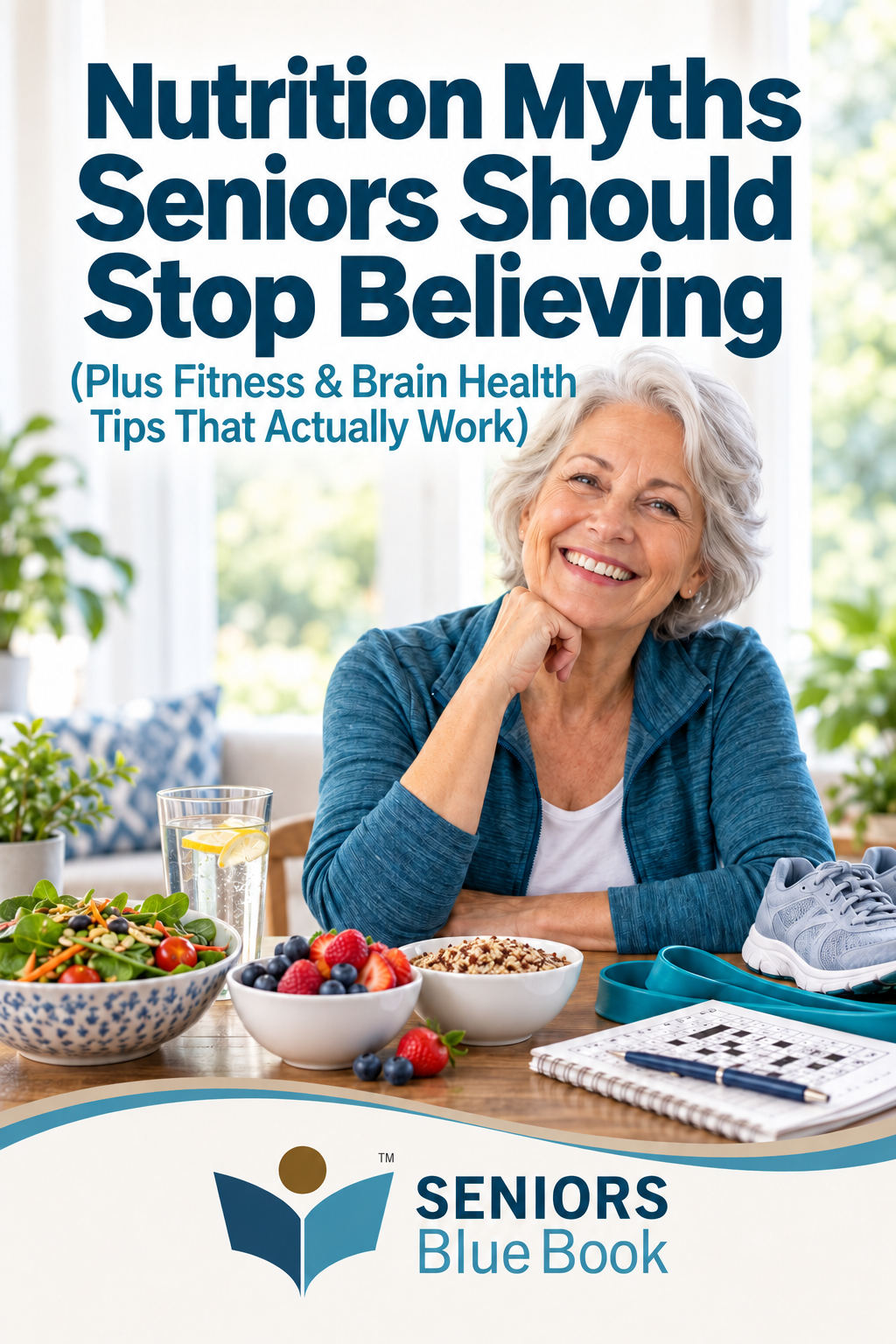
Nutrition Myths Seniors Should Stop Believing
Seniors Blue Book
For more information about the author, click to view their website: Seniors Blue Book
Sep 09, 2026
National

Email US
Click to Email Us
Plus Fitness & Brain Health Tips That Actually Work
When it comes to nutrition advice for older adults, there's
a lot of noise out there. One article says cut all fat, the next says load up
on supplements, and your neighbor swears eating less is just "part of
getting older." No wonder so many families and seniors feel confused about
what's true.
Here at Seniors Blue Book, we talk to families, caregivers,
and senior care providers every day who are looking for real, trustworthy
answers — not fads. So let's clear the air. Below, we're busting the most
common senior nutrition myths and sharing some simple, doable tips for
fitness and brain health along the way.
Myth #1: "Seniors Need Less Food as They Age"
This one is everywhere, and it's misleading. Yes, calorie
needs often go down slightly with age because muscle mass and activity levels
can decrease. But less food doesn't mean less nutrition.
In fact, many older adults need more of certain
nutrients like calcium, vitamin D, vitamin B12, and fiber — even while eating
fewer overall calories. That means every bite needs to work harder.
The takeaway: Focus on nutrient-dense foods (like
leafy greens, eggs, beans, and fatty fish) instead of just cutting portions
across the board.
Myth #2: "All Fat Is Bad Fat"
This myth has been debunked for years, but it still lingers.
Healthy fats — found in olive oil, avocados, nuts, and fish — actually support
heart health, brain function, and the absorption of important vitamins.
The fats to watch are the trans fats and heavily
processed oils found in fried and packaged foods — not the naturally occurring
fats in whole foods.
Myth #3: "Supplements Can Replace Real Meals"
Multivitamins and supplements can be helpful when a doctor
recommends them for a specific deficiency. But they're not a substitute for
real food.
Whole foods provide fiber, water content, and a mix of
nutrients working together — something a pill simply can't replicate.
Quick tip: Always check with a physician before
starting new supplements, especially if other medications are involved.
Myth #4: "Older Adults Don't Need Much Protein"
Actually, it's the opposite. As we age, our bodies become
less efficient at using protein, which means seniors often need more
protein (not less) to maintain muscle mass, mobility, and strength.
Good sources include:
- Eggs
- Greek
yogurt
- Beans
and lentils
- Fish
and poultry
- Cottage
cheese
Myth #5: "Thirst Will Tell You When You Need
Water"
As we age, our sense of thirst naturally declines — which
means many seniors are dehydrated without even realizing it. Dehydration can
contribute to confusion, fatigue, dizziness, and even increase fall risk.
How-to: Stay hydrated without overthinking it
- Keep
a water bottle within arm's reach throughout the day.
- Add
naturally hydrating foods like watermelon, cucumbers, and soups.
- Set
a phone reminder if remembering to drink water is a challenge.
- Limit
excess caffeine, which can be dehydrating.
Beyond Food: Fitness Tips for Healthy Aging
Nutrition is only part of the picture. Movement plays a huge
role in maintaining independence and quality of life.
Simple, Low-Impact Fitness Tips
- Walking
— even 15–20 minutes a day supports heart health and mood.
- Chair
exercises — great for building strength without joint strain.
- Stretching
or gentle yoga — improves flexibility and balance, reducing fall risk.
- Water
aerobics — easy on the joints, great for cardiovascular health.
Brain Health Activities Seniors Can Start Today
Just like the body, the brain benefits from regular
"exercise." Here are a few easy ways to keep the mind sharp:
- Puzzles
and word games (crosswords, Sudoku, jigsaw puzzles)
- Learning
something new — a language, an instrument, or a hobby
- Staying
social — conversation and connection are proven brain boosters
- Reading
regularly — even 20 minutes a day helps maintain cognitive function
FAQ: Senior Nutrition & Wellness
Q: What is the biggest nutrition mistake seniors make?
A: Undereating protein and nutrient-dense foods while assuming "less
food" is automatically healthier.
Q: Do seniors really need more protein than younger
adults? A: Yes — aging reduces the body's efficiency at processing protein,
so intake needs often increase to preserve muscle and strength.
Q: Can brain health really be improved through
activities? A: Yes. Mentally stimulating activities and social engagement
are linked to better cognitive health and slower memory decline.
Q: Is dehydration really a serious risk for older adults?
A: Absolutely. Reduced thirst signals can lead to dehydration, which raises the
risk of confusion, fatigue, and falls.
Healthy aging isn't about restriction; it's about giving the
body and mind what they truly need. A little truth-checking on nutrition myths,
paired with simple movement and mental engagement, can make a meaningful
difference in how seniors feel day to day.
Are you a senior care or home health provider? Get
discovered by the families searching for you. Seniors Blue Book offers a free
listing to help boost your visibility right where families are already
looking with the option to upgrade for
even greater reach and results.
Contact us today: [email protected] | Call us: 800-201-9989
Other Articles You May Like
More Than a Holiday Meal: How GIFT Is Bringing Purpose, Connection, an
Through its Thanksgiving To-Go Kits and year-round intergenerational programming, GIFT (Giving It Forward, Together) is changing the way Pittsburgh thinks about aging, social isolation, and the power of human connection.As the holiday season approaches, many families begin thinking about Thanksgiving traditions: gathering around the table, sharing a warm meal, exchanging stories, and spending time with the people they love. But for thousands of older adults, the holidays can look very different. For individuals who are homebound, living with physical or cognitive disabilities, immunocompromised, or experiencing social isolation, a holiday that traditionally celebrates togetherness can instead serve as a reminder of the connections they may be missing.This is where GIFT (Giving It Forward, Together) makes a meaningful difference.For 11 years, GIFT has been creating opportunities for connection, purpose, and belonging throughout the Pittsburgh community. Through its weekly intergenerational programming and annual holiday initiatives, GIFT has made a tremendous impact, serving close to 1,000 older adults and bringing together people of different ages and backgrounds through meaningful acts of service.At the heart of GIFT's mission is a simple but powerful belief: Everyone deserves to feel seen, valued, and connected, regardless of age or circumstance.Thanksgiving To-Go Kits: More Than a Meal, a Reminder That Someone CaresOne of GIFT's most meaningful initiatives each year is its Thanksgiving To-Go Kit program. Designed specifically for older adults who may otherwise have difficulty celebrating the holiday, these thoughtfully assembled kits provide more than just the necessities for a Thanksgiving meal. They deliver a message that someone in the community is thinking about them.Last year, GIFT distributed more than 800 Thanksgiving kits to older adults throughout the Pittsburgh area. Each kit included fresh, hot holiday food, handwritten cards, and small gifts carefully selected to bring comfort and joy. While the meal itself is important, the thought and intention behind each item are what make the experience especially meaningful.Every kit is curated by students in the Pittsburgh community and assembled by volunteers of all ages and stages of life. From students and families to older adults and community members, people come together with one shared purpose: ensuring that someone who might otherwise feel forgotten during the holidays knows they are remembered.The kits are designed to provide recipients with the essential components needed to celebrate Thanksgiving in the comfort of their own homes. For someone who cannot easily shop, prepare a meal, or participate in traditional holiday gatherings, receiving a complete holiday experience can be incredibly meaningful.But perhaps the most important part of the kit cannot be measured by what is inside the box. It is the feeling of opening the door and realizing that someone took the time to think of you. It is the handwritten card, the carefully chosen gift, and the knowledge that people who may never have met you wanted to make your holiday special.It is not simply a meal being delivered. It is a reminder that you matter.For individuals experiencing isolation, that message can make an extraordinary difference.The Power of Feeling Seen: Why Purpose and Connection Matter as We AgeSocial isolation and loneliness among older adults are increasingly recognized as important public health concerns. According to the Centers for Disease Control and Prevention (CDC), social isolation and loneliness are associated with increased risks of depression, anxiety, heart disease, stroke, cognitive decline, and premature death.Research from the National Academies of Sciences, Engineering, and Medicine has similarly identified social isolation and loneliness as significant risk factors affecting the health and well-being of older adults.But addressing isolation requires more than simply putting people in a room together. Meaningful connection happens when individuals feel that they have something to contribute, that their presence matters, and that they are part of something larger than themselves.This is the philosophy behind GIFT.Per the US Census Bureau, Allegheny County (home to Pittsburgh) ranks as one of the oldest U.S. counties by median and senior age distributionfrequently cited as the sixth-oldest or among the top 10 oldest counties in the U.S. by population percentage, with roughly 19% to 27% of its population aged 65 and older. Through opportunities to participate, volunteer, share experiences, and build relationships, GIFT creates an environment where older adults are not viewed simply as recipients of services, but as valued contributors to their communities.There is an important distinction between being cared for and being given the opportunity to give back. Both matter, but purpose can be just as important as support.Research on intergenerational engagement reinforces this idea. A 2021 systematic review published in Ageing Research Reviews, examining 44 studies, identified potential benefits of intergenerational participation for older adults, including improvements in social functioning, anxiety, and physical activity. A 2023 meta-analysis also found positive associations between intergenerational programs and older adults' quality of life, generativity (the feeling of contributing to future generations), and depressive symptoms.Although researchers continue to study the long-term effects of these programs, the findings support something GIFT sees in its community every day: meaningful relationships and opportunities to contribute can enrich the lives of both generations.Bridging the Generational Gap: Creating a More Empathetic FutureWhile GIFT is committed to improving the lives of older adults, its mission extends well beyond one generation.For many young people, their primary exposure to older adults may be limited to their own grandparents or family members. Without opportunities to interact with people from different generations, young adults may have limited insight into the challenges, experiences, abilities, and contributions of the broader senior population.GIFT works to change that.Through weekly intergenerational programming, students and older adults come together to share experiences, collaborate on meaningful projects, and learn from one another. These interactions create opportunities for students to develop empathy, communication skills, and a deeper understanding of aging.At the same time, older adults have opportunities to share their wisdom, life experiences, perspectives, and talents. They are reminded that their voices matter and that they continue to have an important role in shaping the world around them.The result is a relationship that benefits everyone involved.When younger generations have the opportunity to build genuine relationships with older adults, they begin to see aging differently. Rather than viewing older adults through stereotypes or assumptions, they begin to recognize individuals with unique stories, abilities, interests, and aspirations.This is how communities become more compassionate. It starts with creating opportunities for people to know one another.Rethinking Aging: Moving Beyond Traditional Senior ProgrammingGIFT believes that aging should not mean becoming disconnected from the community or losing a sense of purpose. Instead, it should be an opportunity to continue growing, contributing, learning, and building relationships.As life expectancy increases, the conversation surrounding aging needs to evolve. It is no longer enough to focus solely on living longer. We must also consider how we can support people in aging better.Regardless of cultural, ethnic, racial, or socioeconomic differences, aging is something every person shares. It is one of the few experiences that connects us all.GIFT is working to make that shared experience more meaningful by creating opportunities for intergenerational wellness, community involvement, and purposeful engagement.And this commitment does not end with Thanksgiving.In addition to Thanksgiving To-Go Kits, GIFT provides annual Passover To-Go and Winter Holiday Kits. Each initiative is thoughtfully curated and designed by students in the Pittsburgh community, with volunteers helping bring the kits to life. Whether providing the necessities for a Passover Seder, a warm and festive winter package, or a complete Thanksgiving celebration, each kit is created with the same intention: helping older adults feel remembered, included, and cared for.Together, these programs demonstrate how simple acts of kindness, when organized around a shared purpose, can create meaningful community impact.A Pittsburgh Community Where Everyone BelongsAfter 11 years, GIFT continues to demonstrate that addressing social isolation requires a community-wide commitment. It takes students willing to learn, volunteers willing to give their time, and community members willing to recognize that older adults deserve opportunities for connection just as much as anyone else.The Thanksgiving To-Go Kits are a beautiful example of what can happen when generations come together with a common purpose. A student thoughtfully selects the contents, volunteers assemble each package, and an older adult receives something that communicates far more than the value of the items inside.They receive a reminder that they are part of a community.As GIFT looks ahead, its vision remains focused on bridging generations, challenging the way society views aging, and creating a future where people of every age feel valued and connected.Because ultimately, the goal is not simply to add more years to life, but to add more life, meaning, and connection to those years.Do you know an older adult who would benefit from a Thanksgiving To-Go Kit or one of GIFT's annual holiday kits? Whether someone is homebound, isolated, living with a disability, or simply could use a little extra kindness this holiday season, GIFT wants to help make sure they are not forgotten.To learn more about GIFT, explore its programs, or inquire about holiday kit recipients and volunteer opportunities, visit www.giftpgh.org.Together, we can make sure that no one feels forgotten and that every generation has an opportunity to give, receive, and grow.
Nutrition in Bradenton FL
Eating well may sound simple, but maintaining good nutrition can become surprisingly difficult with age.An older adult who once enjoyed cooking may no longer feel steady enough to stand at the stove. Arthritis can make opening containers or chopping vegetables difficult. Someone who stops driving may struggle to shop for fresh groceries. A hospitalization can leave a person too weak to prepare meals, while memory changes may result in skipped meals or forgotten food in the refrigerator.For families, these changes can be easy to miss at first.A parent may say, I already ate, even when meals have become smaller and less frequent. A spouse may be able to prepare food but feel exhausted by the responsibility every day. Adult children living outside Florida may worry that a loved one is not eating properly but have no practical way to deliver meals themselves.Nutrition services can help fill that gap.In Bradenton and throughout Manatee County, nutrition resources range from home-delivered meals and congregate dining programs to fresh produce distributions and community food pantries.One of the area's longstanding resources is Meals on Wheels PLUS of Manatee, a nonprofit organization whose mission is to help individuals live independently through nutrition and supportive services. The organization began in 1972 and today operates several programs serving seniors, adults with disabilities, families, and others throughout Manatee County.What Are Senior Nutrition Services?Senior nutrition services help older adults obtain regular access to food when physical limitations, transportation, finances, health conditions, social isolation, or other circumstances make eating well more difficult.The National Institute on Aging recommends choosing a variety of nutrient-dense foods across food groups, including vegetables, fruits, grains, protein foods, dairy or appropriate alternatives, and healthy oils. NIA also notes that older adults can face practical barriers to healthy eating, including difficulty shopping, reduced appetite, limited budgets, and problems chewing or swallowing.Nutrition Is About More Than CaloriesFor older adults, a meal can support much more than hunger relief.Consistent access to food can help people maintain energy for everyday activities and avoid the stress of having to shop or prepare every meal independently.Nutrition programs may also provide something equally valuable: regular human contact.A home-delivered meal brings a person to the door.A community dining program creates a reason to leave the house.A produce distribution can connect someone with fresh foods that may otherwise be difficult to obtain.This connection between nutrition, independence, and social support is one reason community meal programs play such an important role in senior services.Meals on Wheels PLUS of Manatee in BradentonMeals on Wheels PLUS of Manatee is located at 811 23rd Avenue East, Bradenton, FL 34208.The organization's main phone number is 941-747-4655.Seniors Blue Book currently lists Meals on Wheels PLUS of Manatee under the Nutrition category, along with related categories such as Food Resources, Adult Day Services, and Volunteer Opportunities.The organization describes its mission as helping individuals live independently by providing nutrition and caring, supportive services.More Than a Meal-Delivery ProgramMeals on Wheels PLUS began in 1972 with the purpose of providing nutritious meals to older and disabled residents of Manatee County.As community needs expanded, so did the organization.Today its major programs include: Home-delivered Meals The Food Bank of Manatee Friendship Dining Centers Daybreak Adult Day Center The PLUS reflects this broader range of services.For families looking specifically for nutrition support, Home-delivered Meals, Friendship Dining, fresh produce programs, and The Food Bank of Manatee are particularly relevant.The Program's Local ImpactMeals on Wheels PLUS reported that in 2024: More than 190,000 meals were served to Home-delivered Meal clients. An average of 535 homebound and disabled seniors were served through the program each month. Nearly 19,500 pounds of fresh produce were delivered through Produce on Wheels. Supplemental food and pet food also reached eligible clients. More recently, a 2026 update from the organization reported that its Produce on Wheels program was reaching nearly 750 homebound and disabled residents with fresh produce each month.These figures show how nutrition assistance extends beyond a single prepared meal.Why Nutrition Services Matter in BradentonNutrition resources are particularly important in Bradenton because older adults represent a substantial share of the local population.According to current U.S. Census Bureau QuickFacts data, approximately 28.1% of Bradenton residents are age 65 or older.Bradenton's estimated population reached approximately 58,014 residents as of July 1, 2025.Across Manatee County, the numbers are even larger.The Census Bureau estimates that 29.4% of Manatee County residents are age 65 or older, while the county's population reached approximately 468,200 in 2025.That means nearly three out of every ten county residents are age 65 or older.Transportation Can Become a Nutrition BarrierBradenton and Manatee County cover a broad geographic area.An older adult who no longer drives may have difficulty getting to: Grocery stores Food pantries Community dining sites Farmers markets Medical appointments Transportation limitations can turn a manageable nutrition problem into a serious one.Home delivery and mobile food distributions help bring resources closer to the people who need them.How to Get Started With Nutrition Assistance in BradentonFamilies can take a few practical steps to identify the right program.1. Determine the Main Problem2. Consider Home-Delivered Meals for Someone Who Cannot Easily Prepare Food3. Ask About Funding and Eligibility4. Explore Friendship Dining for a Mobile Older Adult5. Use the Food Pantry Map When Food Access Is the Main Concern6. Ask About Fresh Produce Resources7. Talk With a Health-Care Professional About Medical Nutrition Concerns 8. Reassess Needs Over Time Nutrition Support Can Help Seniors Stay Connected to Home and CommunityFor many Bradenton seniors, the challenge is not knowing that nutritious food matters.It is making sure nutritious food is actually available every day.That may require someone to bring meals to the door.It may mean creating a reason to gather with other seniors for lunch.It may involve bringing fresh produce into neighborhoods where transportation is difficult.Or it may mean connecting a family with a nearby pantry when grocery costs become overwhelming.Meals on Wheels PLUS of Manatee addresses nutrition from several directions rather than relying on one program alone.For some older adults, that support may become one of the practical pieces that makes continued independence at home possible.Related Seniors Blue Book CategoriesNutrition often overlaps with other senior services. Consider adding internal links to these Bradenton-area Seniors Blue Book categories when publishing: Food Resources Home-Delivered Meals Adult Day Services
Tips for a Healthy Start to the Day
Starting your day on a positive and healthy note can set the tone for the rest of your day. Here are some tips to help you achieve a balanced and energizing morning routine. Practice GratefulnessBeginning your day with gratefulness can improve your mood and overall outlook on life. Here are a few ways to incorporate gratitude into your morning: Gratitude Journal: Spend a few minutes writing down three things you are grateful for. They can be as simple as a warm cup of coffee or a supportive friend. Mindful Reflection: Take a moment to reflect on the positive aspects of your life. This can be done during meditation or while enjoying a peaceful breakfast. Affirmations: Start your day with positive affirmations. Remind yourself of your strengths and the good things in your life. Eat a Healthy BreakfastA nutritious breakfast fuels your body and mind, helping you stay focused and energized throughout the morning. Consider these options for a balanced meal: Whole Grains: opt for whole-grain cereals, oatmeal, or whole-wheat toast for sustained energy. Protein: Include a source of protein such as eggs, Greek yogurt, or a handful of nuts to keep you full longer. Fruits and Vegetables: Add fresh fruits or vegetables to your breakfast for essential vitamins and fiber. A smoothie or fruit salad is a great way to include these. Hydration: Dont forget to drink water. Staying hydrated is crucial for optimal body function. Incorporate Physical ActivityEngaging in some form of physical activity in the morning can boost your energy levels and improve your mood. Here are some suggestions: Stretching: Spend a few minutes stretching your muscles to increase flexibility and reduce tension. Walking or Jogging: A brisk walk or jog can invigorate your body and mind, preparing you for the day ahead. Yoga or Pilates: These exercises can enhance your strength, balance, and mindfulness. Plan Your DayTaking a few moments to plan your day can increase productivity and reduce stress. Consider the following steps: To-Do List: Write down your tasks and prioritize them. This helps in organizing your time effectively. Set Goals: Identify your goals for the day, no matter how big or small, to keep you focused and motivated. Schedule Breaks: Remember to schedule short breaks to recharge throughout the day. Starting your day with these healthy habits can lead to improved well-being and a more positive outlook. Embrace each morning as a new beginning and an opportunity to nurture your body and mind. If you are a caregiver and need some personal time, please contact our staff at Danville to schedule some time for these breaks. 801 363-1521.