Amada Senior Care of Mobile
808 Downtowner Boulevard, Ste E, Mobile, Alabama, 36609
Counties Served: Alabama - Baldwin, Mobile
Non-Medical



About Amada Senior Care of Mobile
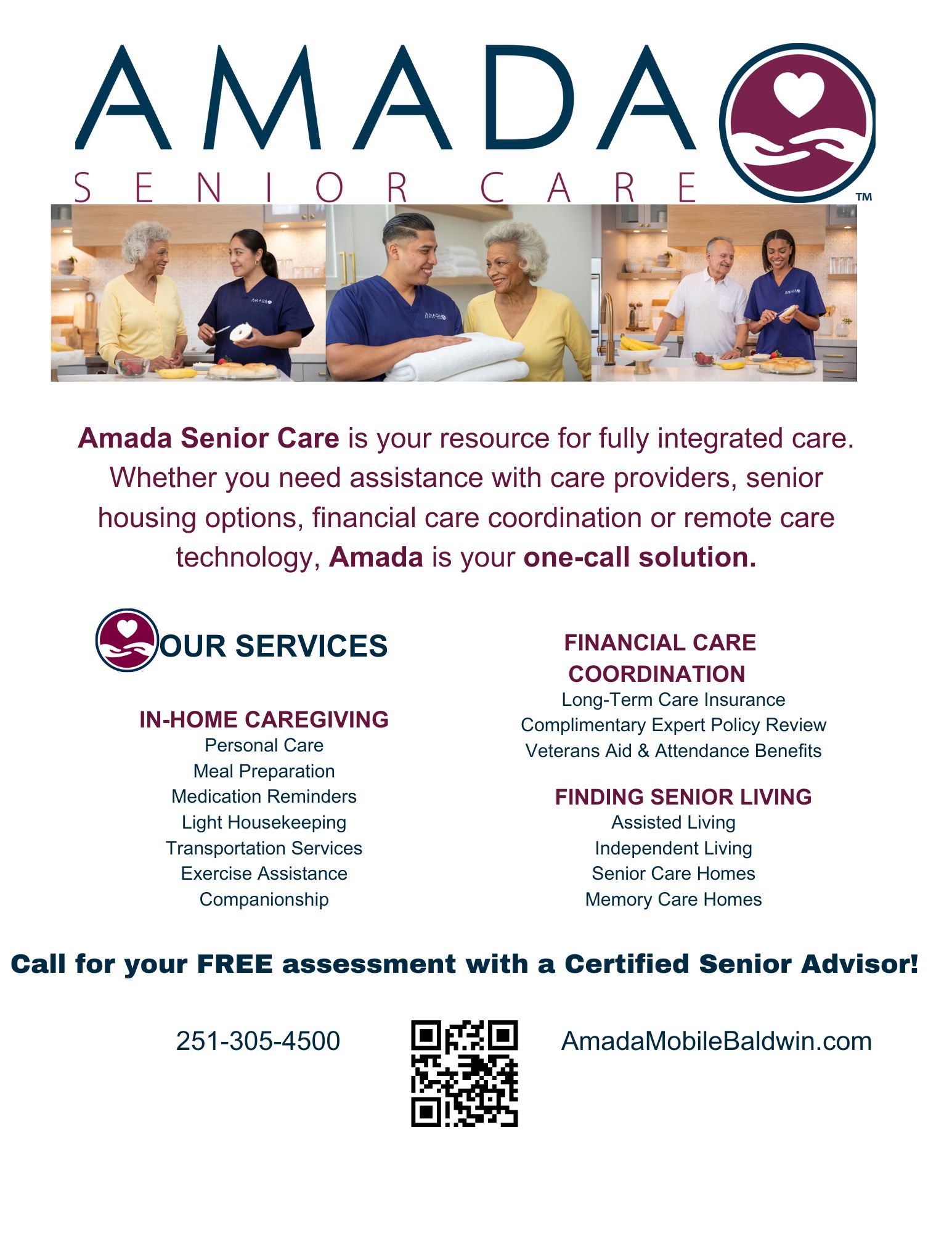
Welcome to Amada Senior Care of Mobile and Baldwin Compassionate, Reliable, and Personalized Home Care
Exceptional In-Home Care for Seniors in South Alabama
At Amada Senior Care of Mobile and Baldwin, we believe that every senior deserves to age with dignity, comfort, and joy in the familiarity of their own home. Led by Taura Domingue, our dedicated team provides compassionate, personalized, and award-winning home care services across Bay Minette, Daphne, Fairhope, Foley, Mobile, Orange Beach, Robertsdale, and Greater Baldwin and Mobile Counties.
As an accredited VA provider and long-term care insurance expert, we simplify the process of accessing financial assistance for in-home carebecause navigating senior care should never be overwhelming.
Call us anytime at 251-305-4500 to schedule a free consultation.
Why Choose Amada Senior Care?
Personalized, flexible care tailored to each clients needs and lifestyle.
No long-term contractscare adapts as needs change.
24/7 availability, from a few hours a week to full-time support.
Caregiver matching based on personality, skills, and preferences.
Fully licensed, insured, and bonded caregivers for your peace of mind.
At Amada, we go beyond just helping with daily taskswe build meaningful relationships with our clients and bring comfort, companionship, and joy into their lives.
Our Comprehensive Home Care Services
We offer a full range of non-medical in-home care services, including:
Personal Assistance Bathing, dressing, hygiene, mobility support
Companionship & Social Engagement Emotional support, hobbies, outings
Meal Preparation & Feeding Assistance Healthy meals, dietary monitoring
Light Housekeeping & Laundry Keeping the home clean and safe
Errands & Grocery Shopping Helping with daily responsibilities
Transportation to Appointments Medical visits, social outings
Medication Reminders Ensuring adherence to prescribed schedules
Exercise & Mobility Support Encouraging movement and strength
24/7 Care & Family Respite Support Around-the-clock assistance as needed
If you or your loved one could benefit from these services, reach out for a free Care Needs Consultation with our experienced team.
Long-Term Care Insurance ExpertsMaking Benefits Work for You
Understanding long-term care insurance (LTCi) can be complex, but our specialists are here to help. We assist with:
Policy Review & Benefit Verification Ensuring you maximize your benefits.
Claims Processing & Paperwork Submission Guiding you through the process.
Direct Carrier Advocacy Working with insurance providers on your behalf.
Benefit Assignments & Payment Monitoring Managing billing and claims.
Call us at 251-305-4500 for expert guidance on your LTCi benefits.
Senior Housing & Assisted Living Guidance
When in-home care is no longer the best option, our experts offer free assistance in finding the perfect senior living community. We help families navigate options such as:
Assisted Living Communities Support with daily activities in a secure environment.
Independent Living Communities A lifestyle-focused, maintenance-free setting.
Memory Care & Alzheimers/Dementia Communities Specialized care for cognitive needs.
Skilled Nursing Facilities Comprehensive medical support.
Adult Family Homes & Board & Care Homes Personalized, small-group environments.
Our team has in-depth knowledge of local senior care communities, ensuring your loved one finds the ideal placement based on care needs, budget, and personal preferences.
Our placement services are provided at no cost to families.
Honoring Our Veterans VA Benefits & Assistance
Many veterans and their families may qualify for financial assistance through the VA Aid & Attendance Benefit or other programs, yet remain unaware of these options. At Amada Senior Care, we are committed to helping eligible veterans access these life-changing benefits.
VA Aid & Attendance Eligibility
Military Service 90+ days of active duty, with at least one during wartime.
Care Needs Assistance required with daily activities (e.g., walking, dressing, eating).
Financial Eligibility Majority of income currently spent on care expenses.
Asset Limits VA evaluates assets based on age and need.
Contact us for a Free Veterans Care Needs Consultation to determine eligibility.
How VA Benefits Help:
Covers in-home care and assisted living services.
Provides tax-free monthly payments directly to veterans or surviving spouses.
Requires no repaymentbenefits are granted for care.
Let us guide you through the VA benefit process and help you receive the care you deserve.
A Commitment to Compassionate Care
For our team at Amada Senior Care of Mobile and Baldwin, caregiving is more than just a jobits a mission. We are deeply honored to care for our communitys seniors, ensuring they live their golden years with dignity, safety, and fulfillment.
Because seniors are the foundation of our families, our communities, and our hearts.
Call us anytime at 251-305-4500 for a free consultation.
Mobile Office: 808 Downtowner Blvd, Suite E, Mobile, AL 36609
Baldwin Office: 7801 AL-59, Suite F-2, Foley, AL 36535
We answer phones 24/7because care never stops, and neither do we.
Amada Senior Care Compassionate, Personalized Care That Feels Like Family.
Non-Medical
- https://www.amadaseniorcare.com/mobile-baldwin-senior-care/
- Private Pay, Long Term Care Insurance, Veterans Administration, Other
- 4
- Activities, Housekeeping, Meals/Meal Options, Transportation, Medication Reminders, 24 Hour Contact, Free Assessment
- 24 Hour Care, Doctor Visits, Home Care/Personal Assistance/Companion, Incontinence Care, CNA on Staff, RN on Staff, Alzheimer's/Dementia Care
- Bonded, Insured, Workmans Comp
Additional Levels of Care Offered
Amada Senior Care Of Baldwin
Non-Medical 7801 Alabama 59, Ste F-2, Baldwin County, Foley, Alabama, 36535Welcome to Amada Senior Care of Mobile and Baldwin Compassionate, Reliable, and Personalized Home CareExceptional In-Home Care for Seniors in South AlabamaAt Amada Senior Care of Mobile and Baldwin, we believe that every senior deserves to age with dignity, comfort, and joy in the familiarity of their own home. Led by Taura Domingue, our dedicated team provides compassionate, personalized, and award-winning home care services across Bay Minette, Daphne, Fairhope, Foley, Mobile, Orange Beach, Robertsdale, and Greater Baldwin & Mobile Counties.As an accredited VA provider and long-term care insurance expert, we simplify the process of accessing financial assistance for in-home carebecause navigating senior care should never be overwhelming. Call us anytime at 251-305-4500 to schedule a free consultation.Why Choose Amada Senior Care?Personalized, flexible care tailored to each clients needs and lifestyle.No long-term contractscare adapts as needs change.24/7 availability, from a few hours a week to full-time support.Caregiver matching based on personality, skills, and preferences.Fully licensed, insured, and bonded caregivers for your peace of mind.At Amada, we go beyond just helping with daily taskswe build meaningful relationships with our clients and bring comfort, companionship, and joy into their lives.Our Comprehensive Home Care ServicesWe offer a full range of non-medical in-home care services, including: Personal Assistance Bathing, dressing, hygiene, mobility support Companionship & Social Engagement Emotional support, hobbies, outings Meal Preparation & Feeding Assistance Healthy meals, dietary monitoring Light Housekeeping & Laundry Keeping the home clean and safe Errands & Grocery Shopping Helping with daily responsibilities Transportation to Appointments Medical visits, social outings Medication Reminders Ensuring adherence to prescribed schedules Exercise & Mobility Support Encouraging movement and strength 24/7 Care & Family Respite Support Around-the-clock assistance as needed If you or your loved one could benefit from these services, reach out for a free Care Needs Consultation with our experienced team.Long-Term Care Insurance ExpertsMaking Benefits Work for YouUnderstanding long-term care insurance (LTCi) can be complex, but our specialists are here to help. We assist with: Policy Review & Benefit Verification Ensuring you maximize your benefits. Claims Processing & Paperwork Submission Guiding you through the process. Direct Carrier Advocacy Working with insurance providers on your behalf. Benefit Assignments & Payment Monitoring Managing billing and claims. Call us at 251-305-4500 for expert guidance on your LTCi benefits.Senior Housing & Assisted Living GuidanceWhen in-home care is no longer the best option, our experts offer free assistance in finding the perfect senior living community. We help families navigate options such as: Assisted Living Communities Support with daily activities in a secure environment. Independent Living Communities A lifestyle-focused, maintenance-free setting. Memory Care & Alzheimers/Dementia Communities Specialized care for cognitive needs. Skilled Nursing Facilities Comprehensive medical support. Adult Family Homes & Board & Care Homes Personalized, small-group environments.Our team has in-depth knowledge of local senior care communities, ensuring your loved one finds the ideal placement based on care needs, budget, and personal preferences. Our placement services are provided at no cost to families.Honoring Our Veterans VA Benefits & AssistanceMany veterans and their families may qualify for financial assistance through the VA Aid & Attendance Benefit or other programs, yet remain unaware of these options. At Amada Senior Care, we are committed to helping eligible veterans access these life-changing benefits.VA Aid & Attendance Eligibility Military Service 90+ days of active duty, with at least one during wartime. Care Needs Assistance required with daily activities (e.g., walking, dressing, eating). Financial Eligibility Majority of income currently spent on care expenses. Asset Limits VA evaluates assets based on age and need. Contact us for a Free Veterans Care Needs Consultation to determine eligibility.How VA Benefits Help:Covers in-home care and assisted living services.Provides tax-free monthly payments directly to veterans or surviving spouses.Requires no repaymentbenefits are granted for care. Let us guide you through the VA benefit process and help you receive the care you deserve.A Commitment to Compassionate CareFor our team at Amada Senior Care of Mobile and Baldwin, caregiving is more than just a jobits a mission. We are deeply honored to care for our communitys seniors, ensuring they live their golden years with dignity, safety, and fulfillment. Because seniors are the foundation of our families, our communities, and our hearts. Call us anytime at 251-305-4500 for a free consultation. Mobile Office: 808 Downtowner Blvd, Suite E, Mobile, AL 36609 Baldwin Office: 7801 AL-59, Suite F-2, Foley, AL 36535We answer phones 24/7because care never stops, and neither do we.Amada Senior Care Compassionate, Personalized Care That Feels Like Family.
Videos
Continue Your Search! Explore More Local Options.
Start SearchingLet’s engage and get educated!
Browse through thousands of expert articles in over 100 different categories.
Browse NowArticles You May Like

Staying Safe in the Heat: A Guide for Seniors
Staying Safe in The Heat: A Guide for SeniorsWarm weather brings opportunities to enjoy family gatherings, outdoor activities, and longer days. However, for older adults, rising temperatures can also increase the risk of dehydration, heat exhaustion, and other heat-related health concerns. As we age, the bodys ability to regulate temperature changes, making it even more important to stay hydrated, eat nutritious foods, and recognize the early signs of overheating.By understanding these risks and taking a few preventive steps, seniors and their families can enjoy a safer, healthier summer.Why Older Adults Are More Vulnerable to HeatThe aging body responds differently to hot weather than it did in earlier years. Two common age-related changes make seniors more susceptible to heat illness:A Decreased Sense of ThirstAs people age, the bodys natural thirst response becomes less reliable. Many older adults do not feel thirsty until they are already mildly dehydrated, making it easier to lose too much fluid without realizing it.Reduced Ability to Cool the BodySweating is one of the bodys primary ways to lower its temperature. Older adults often sweat less efficiently, making it harder to cool down during periods of extreme heat.Certain medicationsincluding diuretics commonly prescribed for high blood pressure and heart conditionscan also increase fluid loss, further raising the risk of dehydration.Health Risks Associated With DehydrationEven mild dehydration can affect an older adults health. If left untreated, dehydration may contribute to: Urinary tract infections (UTIs) Kidney problems Heat exhaustion Heat stroke, a life-threatening medical emergencyRecognizing dehydration early can help prevent these serious complications.Staying Hydrated: More Than Just Drinking WaterWhile water remains one of the best ways to stay hydrated, fluids arent the only source of hydration. Many fruits and vegetables naturally contain high amounts of water and valuable nutrients that help replace fluids lost during hot weather.Hydrating Foods to Include in Your DietThese foods are excellent choices during the summer months: Food Approximate Water Content Benefits Cucumbers and celery About 95% Refreshing, low in calories, and naturally hydrating Tomatoes and bell peppers About 9294% Rich in vitamins and perfect for salads Watermelon and strawberries About 9192% Provide hydration along with antioxidants and natural sweetness Adding these foods to meals and snacks can help increase overall fluid intake.Make Water More AppealingSome seniors find plain water unappealing or forget to drink enough throughout the day.Simple ways to encourage hydration include: Add slices of lemon, cucumber, strawberries, or fresh mint to water. Enjoy unsweetened herbal iced teas such as chamomile or hibiscus. Drink diluted 100% fruit juice occasionally for added flavor.Family TipPlace a lightweight pitcher or water bottle in a visible location, such as on the kitchen counter or dining table. Seeing it throughout the day serves as a gentle reminder to drink more fluids.Choose Light Meals During Hot WeatherHeavy meals require more energy to digest, which can increase body heat and leave seniors feeling sluggish.Instead, consider lighter meal options such as: Chicken salad Yogurt with fresh fruit Chilled pasta salads Gazpacho or other cold soups Fresh vegetables with hummusIf a full meal feels overwhelming, offer smaller portions more frequently throughout the day. Healthy snacks like berries, cheese cubes, yogurt, or whole-grain crackers can provide important nutrition without feeling too heavy.Early Warning Signs of Heat-Related IllnessOlder adults may not immediately recognize when they are becoming overheated. Family members and caregivers should watch for subtle changes, including: Confusion or unusual sleepiness Dizziness or poor balance Dry mouth or cracked lips Dark-colored urine Headaches Muscle crampsIf these symptoms appear, move the person to a cool environment, encourage slow sips of water if they are alert, and place cool, damp cloths on the skin.If symptoms worsen or the individual cannot keep fluids down, seek medical attention promptly.Heat Stroke Requires Immediate Emergency CareHeat stroke is a medical emergency that requires calling 911 immediately.Warning signs include: Body temperature above 103F Hot, dry, or flushed skin Confusion or disorientation Slurred speech Loss of consciousness SeizuresDo not delay emergency treatment if these symptoms occur.Ways Families Can Help Seniors Stay Safe This SummerSimple daily habits can significantly reduce the risk of heat-related illness.Family members can help by: Encouraging fluids before thirst develops. Keeping a reusable water bottle nearby. Offering water-rich fruits and vegetables throughout the day. Checking that air conditioning is functioning properly. Closing blinds or curtains during the hottest hours. Planning outdoor activities during the early morning or evening. Dressing loved ones in lightweight, breathable clothing. Calling or visiting more frequently during heat waves. Discussing medications with healthcare providers to determine whether they increase heat sensitivity.Often, gentle reminders are all thats needed to help older adults maintain healthy hydration habits.How In-Home Care Can Help During the SummerMany families cannot be with an aging loved one throughout the day. Professional in-home caregivers can provide valuable non-medical support that helps reduce heat-related risks while promoting independence.Caregivers can assist with: Encouraging regular hydration Preparing balanced, nutritious meals Monitoring for signs of dehydration or heat exhaustion Grocery shopping and meal preparation Keeping the home comfortably cool Providing companionship and wellness checks Alerting family members to changes in health or behaviorThese daily services can help seniors remain safe and comfortable while continuing to live independently.Prevention Is the Best Way to Enjoy a Healthy SummerMost heat-related illnesses are preventable with proper planning and awareness. Drinking enough fluids, eating hydrating foods, staying indoors during extreme heat, and recognizing early symptoms can help older adults avoid serious medical complications.For seniors who live alone or need additional assistance, in-home care can provide extra support, peace of mind, and another layer of protection during the hottest months of the year. Learn MoreTo learn more about this business, visit their profile on SeniorsBlueBook.com. CLICK HERE FOR THE LINK TO LEARN MORE ABOUT AMADA SENIOR CARE OF MOBILE AND BALDWIN
Jul 23, 2026

Protecting Seniors from Holiday Scams
Protecting Seniors from Holiday Scams The holiday season is here, and with it comes the excitement of Black Friday deals and the rush to find the perfect gifts. However, while the season brings joy, it also attracts scammers looking to take advantage of vulnerable populations, especially seniors. Older adults lose an estimated $3 billion annually to scams, according to the Federal Trade Commission, with a spike seen during the holiday season due to fraudulent online shopping deals, fake charities, and even Medicare-related phishing schemes. Here are some of the newest holiday scams targeting seniors, tips to avoid them, and resources to stay informed. The Newest Scams Targeting Seniors 1. Fake E-Commerce Websites Scammers are getting better at creating realistic-looking websites that mimic well-known retailers or advertise exclusive limited-time deals. These fake sites lure seniors into entering personal and financial information, which is then stolen. What to Watch for: URLs that dont match the official retailers name. Unbelievably low prices on high-ticket items. Poor grammar or spelling errors in website text. How to Stay Safe: Use trusted retailers youve shopped with before. Look for https and a padlock symbol in the URL. Cross-check deals on the retailers official site. 2. Phishing Emails and Texts Fraudulent emails or texts promising massive discounts or alerting about account issues are common. These messages often direct recipients to fake login pages to steal their credentials. What to Watch for: Emails or texts that create a sense of urgency, such as Act Now! or Your account has been locked. Suspicious sender email addresses or phone numbers. How to Stay Safe: Avoid clicking on links in unsolicited messages. Contact the retailer or service provider directly to verify the issue. 3. Charity Scams The holidays inspire generosity, and scammers exploit this by pretending to represent charitable organizations. They often pressure seniors to donate immediately, using emotional appeals. What to Watch for: Pushy callers who wont provide detailed information about the charity. Requests for unusual payment methods, such as gift cards. How to Stay Safe: Verify the charitys legitimacy on sites like Charity Navigator. Donate directly through the charitys official website. 4. Delivery Scams Fake package delivery notifications are another growing scam. Seniors receive emails or texts claiming theyve missed a delivery and are asked to click a link to reschedule. These links often download malware or request sensitive information. What to Watch for: Messages with poor formatting or unusual requests for payment to reschedule. Notifications from companies the recipient hasnt ordered from. How to Stay Safe: Verify the tracking information by visiting the delivery companys official website. Do not click links in unsolicited delivery messages. Additional Tips for Protecting Seniors from Scams Educate and Communicate: Take time to discuss common scams with your loved ones. Share real-life examples and role-play how to handle suspicious situations. Use Technology Wisely: Help seniors set up strong, unique passwords for online accounts and enable two-factor authentication when possible. Monitor Financial Activity: Encourage seniors to regularly review their bank and credit card statements for unusual transactions. If theyre comfortable, offer to assist them with this task. Leverage Caller ID and Blocking Features: Scammers frequently use phone calls to target seniors. Ensure your loved ones phone is set up to block calls from unknown numbers and warn them not to share personal information over the phone. Learn More from a Helpful Resource: For more in-depth information on protecting seniors from scams, visit the Federal Trade Commissions Consumer Information page. This site offers the latest updates on scam tactics, tips for avoiding fraud, and steps to take if a scam occurs. How Amada Senior Care Can Help At Amada Senior Care, we are dedicated to the safety and well-being of seniors. Our caregivers are trained to provide companionship and safety guidance during the busy holiday season. By staying vigilant and informed, seniors can experience the joys of the season without falling victim to scams. Lets work together to make this holiday season merry, bright, and safe for all. Contact us today to learn more about how we can help protect your loved ones during the holidays and beyond. Amada Senior Care of Mobile and Baldwin is here to help. Contact us at 251-305-4500
Dec 06, 2024

Cyclospora Outbreaks: What Seniors and Their Families Need to Know
Cyclospora Outbreaks: What Seniors and Their Families Need to KnowRecent Cyclospora outbreaks reported across several states have highlighted the importance of food safety, especially during the summer months when fresh fruits and vegetables are in peak season. While this foodborne illness can affect people of any age, older adults face a greater risk of complications due to age-related changes in the immune system and the increased likelihood of chronic health conditions.Understanding what Cyclospora is, recognizing the symptoms, and knowing how to reduce your risk can help seniors and their caregivers stay healthy.Note: This article was created in response to recent Cyclospora outbreaks in the United States. Because food recalls and public health recommendations may change, always check your local health department or the Centers for Disease Control and Prevention (CDC) for the latest recall notices and outbreak information.What Is Cyclospora?Cyclospora is a microscopic parasite that causes an intestinal infection known as cyclosporiasis. People typically become infected after consuming contaminated food or water. In recent years, several outbreaks have been linked to fresh produce that is eaten raw, including certain fruits and vegetables.Unlike many other foodborne illnesses, Cyclospora does not spread directly from one person to another. The parasite must first mature outside the body before it becomes infectious, meaning most cases are traced to contaminated food or water rather than personal contact.Common Symptoms of Cyclospora InfectionSymptoms generally appear about one week after exposure, although they may develop anywhere from two days to two weeks later.Common signs of Cyclospora infection include:Frequent watery diarrheaStomach cramps or abdominal bloatingLoss of appetiteNauseaFatigue or unusual tirednessMild feverUnexplained weight lossMuscle achesWithout proper treatment, symptoms may improve temporarily before returning again. This cycle can continue for several weeks, making medical evaluation important if symptoms persist.Why Older Adults Face Higher RisksAlthough Cyclospora is rarely life-threatening, seniors are more susceptible to serious complications because the body's ability to recover from infections often declines with age.Older adults may experience greater health risks because:Ongoing diarrhea can quickly lead to dehydration.Dehydration increases the risk of dizziness, weakness, confusion, and falls.Chronic conditions such as diabetes, kidney disease, or heart disease can become more difficult to manage during illness.Certain medications may contribute to dehydration or electrolyte imbalances.Recovery often takes longer than it does for younger individuals.Seniors with weakened immune systemsincluding those undergoing cancer treatment, taking immunosuppressant medications, or living with chronic illnessesshould be especially cautious.Treatment for CyclosporaCyclospora infections are usually treated with a prescription antibiotic prescribed by a healthcare provider.If an older adult experiences persistent diarrhea for more than a day or two, it is important not to assume it is a routine stomach virus. Prompt medical evaluation can help prevent complications.During recovery, replacing lost fluids is essential. Drinking water, electrolyte solutions, and clear broths can help prevent dehydration.Seek immediate medical care if an older adult experiences:Severe dehydrationBloody diarrheaHigh feverConfusion or excessive sleepinessInability to keep fluids downFainting or extreme weaknessHow to Prevent Cyclospora InfectionAlthough no prevention strategy eliminates all risk, practicing good food safety habits can greatly reduce your chances of infection.Wash Fresh Produce CarefullyRinse all fruits and vegetables under clean running water before eating, peeling, or preparing them. Avoid using soap, bleach, or household cleaners on produce.Practice Proper HandwashingWash your hands thoroughly with soap and water:Before preparing mealsBefore eatingAfter using the restroomAfter gardeningAfter handling raw foodsKeep Food Preparation Areas CleanRegularly disinfect countertops, cutting boards, knives, and other kitchen surfaces to reduce the chance of cross-contamination.Stay Current on Food RecallsMonitor food recall announcements involving fresh produce. If a recalled item is in your home, discard it immediately rather than risking illness.Ask About Additional PrecautionsIndividuals with weakened immune systems should discuss personalized food safety recommendations with their healthcare provider.How Families Can Help Protect Aging Loved OnesFamily caregivers play an important role in helping seniors avoid foodborne illnesses.Simple ways to help include:Regularly checking refrigerators for spoiled or recalled foods.Purchasing fresh produce from reputable grocery stores.Inspecting fruits and vegetables for damage before purchasing.Preparing meals using safe food-handling practices.Encouraging older adults to drink fluids throughout the day, even if they don't feel thirsty.Watching closely for signs of dehydration, weakness, confusion, or prolonged diarrhea.Early recognition of symptoms can lead to faster treatment and a smoother recovery.How In-Home Care Can Support Food SafetyOlder adults who live independently may benefit from additional support during illness or recovery. Professional in-home caregivers provide non-medical assistance that can help reduce health risks while promoting independence.Caregivers can assist by:Preparing meals using safe food handling techniques.Encouraging adequate hydration throughout the day.Monitoring for symptoms that may require medical attention.Assisting with grocery shopping and removing recalled food items.Helping reduce fall risks if weakness or dizziness develops.Having a trusted caregiver available provides reassurance for both seniors and family members while helping older adults remain safely at home.Staying Healthy Starts With Food Safety AwarenessCyclospora infections are relatively uncommon, but recent outbreaks serve as an important reminder that food safety should remain a priorityespecially for older adults. Recognizing symptoms early, staying hydrated, following proper food handling practices, and seeking prompt medical care when needed can greatly improve recovery.For seniors who live alone or whose families live far away, additional in-home support can make managing illness easier while reducing the risk of complications and helping maintain independence.Learn MoreTo learn more about this business, visit their profile on SeniorsBlueBook.com.CLICK HERE FOR THE LINK
Jul 23, 2026

Building a Family Home Care Plan in Mobile, AL
Building a Family Home Care Plan in Mobile, ALCaring for an aging loved one often begins with a few simple favors.An adult daughter may stop by every weekend to help with groceries. A son might handle transportation to medical appointments. A spouse may begin preparing meals and organizing daily household responsibilities.At first, these arrangements may work well.Over time, however, an older adult's needs can become more complicated. Personal care may require additional assistance, transportation needs may increase, and household tasks may become difficult to complete.Family members may find themselves balancing caregiving responsibilities with employment, children, personal health, and other obligations.For families in Mobile, Alabama, this is often when an important question arises: How can we create a home care plan that supports our loved one without placing every responsibility on family members?Non-medical home care can provide an important part of the solution.Amada Senior Care of Mobile offers personalized in-home assistance for older adults throughout Mobile County and surrounding communities.Its caregivers help with bathing, dressing, meal preparation, light housekeeping, medication reminders, mobility, transportation, and companionship.The organization also provides guidance involving long-term care insurance claims and potential veterans benefits.For families who want to support an older relative's independence while managing caregiving responsibilities more effectively, a coordinated home care plan can help establish clear expectations and consistent support.What Is a Family Home Care Plan?A family home care plan is an organized approach to meeting an older adult's everyday needs.It identifies which activities require assistance, who will provide that assistance, and how care responsibilities will be coordinated.A useful plan considers:Personal care needsMedical appointmentsMeal preparationHousehold responsibilitiesTransportationMobility concernsCompanionshipFamily caregiver availabilityProfessional home care servicesEmergency contactsFinancial resourcesThe purpose is not to remove independence unnecessarily.Instead, a care plan should help the older adult continue participating in daily activities while receiving appropriate assistance.Why Planning MattersWithout a clear arrangement, caregiving responsibilities may become unevenly distributed.One family member may handle nearly every task while others are uncertain how to help.Important responsibilities may also be overlooked when everyone assumes someone else is managing them.A written plan can establish a more organized approach.When Should Families Consider Professional Home Care?There is no universal age when someone should begin receiving home care.The decision usually depends on daily functioning, personal preferences, and available family support.Personal Care Is Becoming DifficultAn older adult may begin needing help with bathing, dressing, or grooming.Meals Are Being SkippedDifficulty shopping or cooking may affect eating routines.Household Tasks Are Becoming OverwhelmingLaundry, light cleaning, and other responsibilities may require more effort.Transportation Is LimitedAn older adult may no longer drive or feel comfortable traveling independently.Social Interaction Has DecreasedSomeone living alone may benefit from regular companionship.Family Caregivers Are Frequently UnavailableRelatives may want to help but struggle to maintain a consistent schedule.Care Needs Are ChangingNew mobility limitations, cognitive changes, or recovery after hospitalization may create additional responsibilities.These situations do not always require residential care.In some circumstances, appropriate non-medical assistance may help an older adult remain at home.Amada Senior Care of MobileAmada Senior Care of Mobile is part of Amada Senior Care of Mobile and Baldwin, a local home care organization led by owner Taura Domingue.Its Mobile office is located at 808 Downtowner Boulevard, Suite E.The agency serves older adults throughout Mobile County and neighboring communities.Amada's approach emphasizes individualized care plans, caregiver matching, regular communication, and assistance with the practical and financial aspects of senior care.Personalized Non-Medical AssistanceAmada's caregivers provide help with activities of daily living and routine household responsibilities.Its published services include:BathingDressingToiletingWalking and ambulationMeal preparationFeeding assistanceLight housekeepingMedication remindersErrands and shoppingTransportationCompanionshipCare schedules and services are tailored to the individual's assessed needs.Customized Care PlansAmada works with clients and families to develop individualized care arrangements.The organization encourages families to share information about the older adult's routines, preferences, interests, and daily challenges.This helps determine which services are appropriate.Caregiver MatchingAmada states that it selects caregivers based on client needs, qualifications, personality, and compatibility.The relationship between a caregiver and an older adult can be important because assistance takes place in a personal environment.Ongoing CommunicationThe agency describes regular communication with clients, families, and caregivers.Care plans may be adjusted when needs or circumstances change.Long-Term Care Insurance GuidanceAmada provides assistance with understanding long-term care insurance benefits and submitting eligible claims.Veterans Benefits InformationThe organization also helps families explore potential veterans benefits that may contribute to care expenses.Senior Housing Advisory ServicesIf a client's needs eventually exceed what can be safely provided at home, Amada offers senior housing advisory services.These may help families evaluate appropriate residential care options.Verified Amada Senior Care of Mobile Contact InformationAmada Senior Care of MobileAddress: 808 Downtowner Boulevard, Suite E, Mobile, AL 36609Phone: 251-305-4500Website: https://www.amadaseniorcare.com/mobile-baldwin-senior-care/Mobile Home Care Information: https://www.amadaseniorcare.com/mobile-baldwin-senior-care/mobile-home-care/Office Hours: Monday through Friday, 8:00 AM to 5:00 PMPhone Availability: 24 hours a day, seven days a weekLocal Owner: Taura DominguePrimary Service: Non-Medical Home CareFamilies can contact Amada to request a free care needs consultation.Step One: Understand Your Loved One's Daily NeedsBefore arranging professional assistance, families should review the older adult's typical day.A useful assessment begins with the activities the person completes independently.Morning ActivitiesConsider whether assistance is needed with:Getting out of bedBathingDressingGroomingPreparing breakfastWalking safelyAfternoon ActivitiesReview:Lunch preparationShoppingTransportationHousehold choresSocial activitiesCompanionshipEvening ActivitiesConsider:Preparing dinnerChanging clothesGetting ready for bedHousehold organizationMedication remindersOvernight NeedsSome older adults experience mobility problems or require supervision overnight.Families should discuss these concerns with the agency to determine which arrangements are available and appropriate.Step Two: Divide Family Caregiving ResponsibilitiesFamily members may be able to continue providing certain types of assistance even when professional home care begins.The key is establishing realistic expectations.Identify Available HelpersDetermine which relatives can consistently provide support.Match Tasks With AvailabilityOne family member may handle appointments.Another may manage financial paperwork.A third may visit regularly for social interaction.Avoid Assuming Everyone Has the Same CapacityEmployment, distance, health, and household responsibilities can affect what each relative can reasonably provide.Establish a Communication MethodA shared calendar or regular family conversation can help keep everyone informed.Review Responsibilities PeriodicallyCaregiving needs and family circumstances may change.The plan should remain flexible.Step Three: Identify Where Professional Caregivers Can HelpProfessional non-medical caregivers can assist with selected daily activities that may be difficult for relatives to manage consistently.Personal CareAmada caregivers may assist with bathing, dressing, grooming, and toileting.These activities often require respectful, hands-on support.Meal PreparationCaregivers can help prepare meals and assist with appropriate eating-related tasks.Light HousekeepingMaintaining laundry and everyday household organization may become more manageable with assistance.Mobility SupportAmada advertises walking and ambulation assistance.Families should discuss specific mobility and transfer concerns during the care consultation.Transportation and ErrandsCaregivers may help with appropriate shopping, appointments, and everyday errands.CompanionshipSpending time in conversation or participating in familiar interests can be part of the care plan.The amount of assistance depends on the client's needs and agreed-upon schedule.Why Home Care Matters Locally in Mobile CountyMobile County includes older adults living in established neighborhoods, family homes, apartments, and retirement communities.Some residents have spent decades in the same neighborhood.Others live near adult children or extended family.Remaining at home may be an important personal goal.Maintaining Familiar SurroundingsAn older adult may prefer the comfort of a familiar home.Non-medical assistance can help address selected daily challenges without requiring an immediate move.Supporting Working FamiliesRelatives may work full-time while managing caregiving responsibilities.Scheduled professional assistance can help address gaps in availability.Reducing Transportation ChallengesTraveling to appointments and activities may become more difficult when driving abilities change.Caregiver transportation support can help with appropriate scheduled trips.Preparing for Gulf Coast WeatherMobile County families should consider heat, storms, and hurricane preparedness when developing care plans.Emergency supplies, evacuation arrangements, and communication procedures may become especially important for older adults with limited mobility.Connecting Care With Community LifeA personalized care plan may help older adults continue enjoying family visits, familiar activities, and appropriate local outings.Home Care and Family Caregiver FatigueProviding ongoing care can be physically and emotionally demanding.Some relatives gradually assume more responsibilities without recognizing how much time caregiving requires.Common ChallengesCaregivers may experience:Limited personal timeScheduling difficultiesInterrupted sleepPhysical fatigueEmotional stressDifficulty attending personal appointmentsConflicts between caregiving and employmentWhy Additional Help Can MatterScheduled professional assistance may reduce some daily responsibilities.For example, a caregiver could provide approved bathing and meal preparation assistance while a family member handles other obligations.Setting Realistic ExpectationsHome care does not automatically eliminate every caregiving responsibility.Families should understand the tasks included in the service agreement and the hours when a caregiver will be present.Discussing Respite ArrangementsAmada advertises respite-related support for family caregivers.Families should ask about available schedules, minimum hours, and whether temporary or recurring assistance is appropriate.Supporting Seniors Living With DementiaDementia can affect memory, judgment, communication, and everyday functioning.Families caring for someone with Alzheimer's disease or another form of dementia may need additional help maintaining routines.Amada advertises specialized support for individuals living with dementia and Alzheimer's disease.Consistent Daily RoutinesFamiliar schedules may help some individuals feel more comfortable.Personal Care AssistanceCaregivers may help with bathing, dressing, and grooming according to individual needs.Meaningful ActivitiesAppropriate familiar activities can encourage participation.CompanionshipCaregiver interaction may support social engagement.Communication With FamilyFamilies should discuss changes in behavior, safety concerns, and care needs.Understanding LimitationsNot every dementia-related need can be safely addressed through ordinary non-medical home care.Individuals requiring continuous supervision, skilled nursing, or specialized residential services may need additional arrangements.Amada's team can help families evaluate appropriate options.Non-Medical Assistance After HospitalizationSome older adults require additional personal assistance after returning home from a hospital stay.A person may be medically stable but still experience weakness or limited mobility.Help With Everyday TasksA caregiver may assist with meals, dressing, errands, or light housekeeping.TransportationFollow-up appointments may require transportation.Mobility AssistanceAppropriate walking support may help with daily activities.Family CommunicationRelatives should understand which tasks the professional caregiver will manage.Medical Services Remain SeparateAmada's non-medical caregivers do not replace nurses, physicians, or rehabilitation therapists.Individuals requiring wound care, injections, or other skilled procedures should receive those services from appropriately qualified medical professionals.Choosing a Caregiver Who Fits the HouseholdInviting a professional caregiver into the home involves trust.A successful arrangement should account for both practical needs and personal compatibility.Communication StyleSome older adults enjoy frequent conversation.Others prefer a quieter approach.Personal PreferencesEstablished habits involving meals, clothing, activities, and household routines should be discussed.ExperienceAsk whether the caregiver has relevant experience with the individual's needs.ReliabilityConsistency is important when assistance is scheduled around daily responsibilities.Respect for IndependenceCaregivers should encourage appropriate participation rather than automatically taking over every task.Procedures for ConcernsFamilies should know whom to contact if they have questions about the caregiver or wish to request adjustments.Amada describes caregiver matching and care plan communication as important elements of its service approach.Understanding Home Care Costs in MobileNon-medical home care is commonly paid for through private resources.However, some individuals may have insurance or benefits that help cover eligible services.Private PaymentFamilies can pay directly for scheduled care according to the agency's rates and policies.Long-Term Care InsuranceSome long-term care insurance policies cover non-medical home care when eligibility criteria are satisfied.Veterans BenefitsCertain veterans or surviving spouses may qualify for benefits that can help with long-term care expenses.Medicare CoverageOriginal Medicare generally does not pay for ongoing non-medical custodial care when that is the only assistance needed.Separate Medicare-covered medical home health services may be available when applicable eligibility requirements are met.Requesting a Personalized QuoteCare costs may depend on:Number of hoursFrequency of visitsTypes of assistanceScheduling requirementsCaregiver availabilityOther individual circumstancesFamilies should request current rates and ask about minimum visit requirements.Amada's Long-Term Care Insurance Claims AssistanceAmada identifies long-term care insurance claims advocacy as an important part of its services.Understanding policy requirements can be confusing.Reviewing the PolicyFamilies may need help identifying which benefits are available.Checking EligibilityPolicies may require certain functional limitations or cognitive criteria before benefits are payable.Understanding Elimination PeriodsSome policies have waiting periods before coverage begins.Preparing ClaimsAppropriate documents may be required to establish eligibility.Communicating With Insurance CompaniesAmada advertises assistance with claims-related communication and benefit access.The organization states that it files and manages long-term care insurance claims without a separate charge.Actual benefits remain subject to the insurance contract and insurer's decision.Helping Veterans Explore Care FundingAmada also provides guidance about potential financial assistance for qualifying veterans.Some veterans or surviving spouses may be eligible for VA programs that can help address long-term care needs.Important Eligibility ConsiderationsThese may include:Military serviceMedical and functional needsFinancial circumstancesProgram-specific requirementsAvoid Assuming Automatic EligibilityMilitary service alone does not guarantee payment for home care.Request Individual GuidanceFamilies can ask Amada about potential benefits and the relevant application process.The appropriate government agency determines final eligibility.Reviewing the Family Care Plan as Needs ChangeA care plan should not remain unchanged when an older adult's needs evolve.Changes in MobilityNew difficulty walking or transferring may require reassessment.Changes in MemoryIncreased confusion may affect supervision requirements.Changes in Family AvailabilityA relative may return to work or become unable to provide the same level of assistance.Changes in Medical ConditionNew illnesses or hospitalizations may create additional needs.Changes in PreferencesThe older adult may want to adjust daily schedules or activities.Amada states that its team regularly reviews care arrangements and modifies services when appropriate.Expert Tip for Coordinating Family Home CareExpert Tip: Create a simple weekly caregiving calendar before contacting a home care agency. Include the older adult's essential needs, each family member's availability, and the hours when no dependable help is available.Use those gaps to guide the initial home care consultation.This approach can help families purchase assistance where it is most needed while maintaining clear responsibilities for everyone involved.How to Get Started With Amada Senior Care of MobileStep 1: Review Your Loved One's NeedsIdentify challenges involving bathing, dressing, meals, mobility, housekeeping, and companionship.Step 2: Discuss Family ResponsibilitiesDetermine which tasks relatives can continue managing.Step 3: Contact AmadaCall 251-305-4500 to request information.Step 4: Schedule a Free ConsultationAmada advertises a free care needs consultation.Step 5: Develop a Personalized PlanDiscuss daily routines, preferences, schedules, and assistance requirements.Step 6: Review Caregiver MatchingAsk how the agency selects a caregiver for the client.Step 7: Discuss Costs and FundingReview current rates, long-term care insurance, veterans benefits, and other payment options.Step 8: Establish Communication ProceduresDetermine how family members will receive updates and request changes.Frequently Asked Questions About Home Care in Mobile1. What services does Amada Senior Care of Mobile provide?Amada provides non-medical in-home care, including bathing, dressing, toileting, meal preparation, light housekeeping, mobility assistance, medication reminders, errands, transportation, and companionship.2. Where is Amada Senior Care of Mobile located?Its Mobile office is located at 808 Downtowner Boulevard, Suite E, Mobile, AL 36609. The phone number is 251-305-4500.3. Can Amada help families who work full-time while caring for an older parent?Yes. Amada provides scheduled in-home caregiver assistance that may help families manage personal care, meals, errands, companionship, and other approved responsibilities. Families should discuss required hours and scheduling availability.4. Does Amada assist with long-term care insurance claims?Yes. Amada advertises long-term care insurance claims advocacy and assistance with reviewing benefits, preparing claims, and communicating with insurers. Coverage depends on the individual policy.5. Can Amada provide care for someone living with Alzheimer's disease?Amada offers Alzheimer's and dementia-related caregiving services. The agency develops individualized plans based on changing needs. Families should confirm whether the available care arrangements are appropriate for the person's condition and supervision requirements.Building a Care Plan That Works for the Entire FamilyHelping an older loved one remain at home often requires cooperation, planning, and flexibility.Family members may want to provide as much support as possible, but responsibilities can become difficult to manage without a clear system.A thoughtful home care plan identifies the older adult's needs, clarifies family roles, and establishes when professional assistance may be useful.It also preserves an important principle: the older adult should remain involved in decisions about their life whenever possible.For residents throughout Mobile County, Amada Senior Care of Mobile provides personalized non-medical assistance designed to support daily living and meaningful routines.Its caregivers help with practical responsibilities while the agency offers additional guidance involving insurance benefits and senior care options.Whether a family needs assistance for a few recurring responsibilities or a more comprehensive caregiving schedule, planning ahead can create a more organized and sustainable arrangement.Contact Amada Senior Care of Mobile to discuss your loved one's needs, explore care options, and request a personalized consultation.Featured Seniors Blue Book ListingAmada Senior Care of MobileRecommended Main SBB Category: Non-Medical Home CareAddress: 808 Downtowner Boulevard, Suite E, Mobile, AL 36609County: Mobile County, AlabamaPhone: 251-305-4500Office Hours: Monday through Friday, 8:00 AM to 5:00 PMPhone Availability: 24/7Local Owner: Taura DomingueServices: Personal care assistance, bathing, dressing, toileting, meal preparation, light housekeeping, walking and mobility assistance, medication reminders, errands, transportation, companionship, and individualized non-medical caregiving.Additional Support: Long-term care insurance claims advocacy, veterans benefits guidance, and senior housing advisory services.Service Area: Mobile County, Baldwin County, and surrounding communities within the agency's service area.Consultation: Free care needs consultation.Care Note: Service schedules, rates, and caregiver availability depend on individual circumstances and agency arrangements.Find Amada Senior Care of Mobile on Seniors Blue BookLooking for dependable non-medical home care in Mobile, Alabama?Explore Amada Senior Care of Mobile through its Seniors Blue Book business listing on SeniorsBlueBook.com.Learn about available caregiving services, personalized care planning, long-term care insurance assistance, and support for families navigating senior care decisions.Contact Amada to request a care needs consultation and discuss how professional assistance may fit your family's schedule.
Oct 22, 2026

Inspiring Seniors Who Are Redefining What It Means To Age
Inspiring Seniors Who Are Redefining What It Means to AgeYouve got to get to the stage in life where going for it is more important than winning or losing. Arthur AsheAging is not a limitation; its an opportunity to embrace life with wisdom, experience, and newfound purpose. Theres a survival benefit to resilience, Dr. Susan Friedman, director of geriatrics and aging at the University of Rochester School of Medicine told AARP. People can reframe their situation and make the best of it.Making the best of things, particularly as seniors age and live with a serious or chronic condition, is the message of AARP National Geographics Second Half of Life study. Given the rise in popularity of older influencers (aka granfluencers) on social media, younger generations (were looking at you, Millennials and Gen Z) are taking in their lessons of aging well and adopting their attitude that age is just a number.Members of our professional teams at Amada Senior Care franchise offices around the country have had the honor of witnessing countless older adults who shatter stereotypes and redefine what it means to grow older. Their stories inspire us all and challenge the outdated notions of aging as a period of decline.Who Are Super Agers?Super agers are individuals aged 80 and older who exhibit cognitive and physical abilities on par with people decades younger. Studies have shown that super agers often have thicker brain regions related to memory and attention, which helps them maintain sharpness as they age. These remarkable seniors prioritize mental and physical health, often engaging in challenging mental activities, staying socially connected, and leading physically active lives. Their resilience and commitment to lifelong growth serve as an inspiration for all generations.Embracing Lifelong LearningMany seniors are proving that curiosity and the desire to learn never fade with age. Take, for example, 75-year-old Marcia, who decided to pursue her lifelong dream of earning a degree in art history. Not only did she graduate with honors, but she also inspired her grandchildren to value education and chase their dreams fearlessly.Seniors like Marcia remind us that its never too late to start something new. More inspiration comes from famous lifelong learners like artist-scientist-sculptor Leonardo da Vinci and mother of modern physics and two-time Nobel Prize winner Marie Curie.Breaking Barriers in Health and FitnessAge is just a number for individuals like Harold, an 82-year-old marathon runner who competes in events worldwide. Harolds commitment to physical fitness and healthy living serves as a beacon of hope for others looking to prioritize their well-being.With tailored exercise routines and proper guidance, seniors can defy physical limitations and enjoy an active, vibrant lifestyle. In the news is Gwen McFarlan, a world-record-holder runner at 89 years old, who plans on running her 26th full marathon next year at age 90.Giving Back to the CommunityRetirement doesnt mean stepping away from purpose. For 68-year-old Eleanor, it marked the beginning of her philanthropic journey. After retiring from a successful career in education, she launched a community tutoring program to help underserved children improve their literacy skills. Her efforts have touched countless lives, proving that the golden years can be a time of giving back and making a difference.A lifelong philanthropist, investor Warren Buffet gives millions to foundations each year at during the Thanksgiving season, and instructed his children to distribute the rest of his holdings upon his death. He has encouraged fellow millionaires and billionaires to donate at least half of their wealth.Redefining CreativityA study by the National Endowment for the Arts found that seniors who made art or crafts and attended cultural arts events in tests showed higher cognitive functioning abilities, along with lower rates of hypertension.From painting to writing memoirs, seniors are exploring their creative sides in inspiring ways. At 103 years old, Louis continues to explore his passion for woodworking. His work has not only brought him joy but also provided a meaningful way to stay connected with his community.Building Strong ConnectionsStaying socially active is a cornerstone of aging well. Seniors who cultivate strong relationships and participate in group activities often report higher levels of happiness and fulfillment. Whether its joining a book club, attending dance classes, or traveling with friends, seniors are finding innovative ways to stay engaged and connected.Barriers to Aging WellWhile the opportunities for thriving in later years are abundant, some barriers can make aging challenging. Common obstacles include: Health Issues: Chronic illnesses, limited mobility, and cognitive decline can impact quality of life. Social Isolation: Loneliness is a significant concern for many seniors, especially those who live alone or far from family. Financial Constraints: Limited income or savings can restrict access to healthcare, nutritious food, and recreational activities. Access to Resources: Lack of transportation, inadequate community programs, or difficulty navigating technology can hinder seniors from staying engaged and supported. Addressing these barriers is critical to ensuring that all seniors have the opportunity to age with dignity and purpose. Support networks, including family, caregivers, and community organizations, play a vital role in overcoming these challenges.Aging in Place with SupportWhile independence is important, aging successfully often involves seeking the right support. At Amada Senior Care, we understand the value of compassionate care that empowers seniors to live their best lives. From personalized care plans to community resources, our mission is to help seniors embrace this chapter with confidence and dignity.Celebrate the Possibilities of AgingAging is not lost youth but a new stage of opportunity and strength. Betty FriedanAging at its best is about seeing the possibilities instead of the limitations. Its about finding joy in the journey, continuing to learn, and leaving a legacy that inspires future generations. To the seniors redefining what it means to grow olderwe salute you. Your stories remind us that aging is not an end but a beginning of new opportunities to thrive.Lets celebrate the achievements and contributions of seniors around us. If you or a loved one are looking for ways to embrace aging with support and inspiration, were here to help. Together, we can redefine what it means to age well. Contact Amada Senior Care serving Baldwin & Mobile Counties at 251-305-4500 for in-home caregiving, financial care coordination, and finding senior living.
Jan 22, 2025
Personalized Home Care Routines for Seniors in Foley, AL
Personalized Home Care Routines for Seniors in Foley, ALThe morning alarm goes off, and another day begins. For many older adults, the first few hours involve familiar activities: getting dressed, preparing breakfast, taking medications, and deciding how to spend the afternoon.These routines often feel so ordinary that their importance goes unnoticed.But what happens when arthritis makes buttoning a shirt difficult? When standing at the kitchen counter causes fatigue? Or when an older parent begins avoiding outings because walking and transportation have become challenging?For families in Foley, Alabama, these changes may signal that additional assistance is needed.Fortunately, receiving help does not always mean moving into a senior living community.Non-medical home care allows older adults to receive assistance with everyday activities while continuing to live in familiar surroundings.Amada Senior Care of Baldwin provides personalized in-home assistance for older adults throughout Foley and surrounding Baldwin County communities.The organization offers support with bathing, dressing, meal preparation, mobility, medication reminders, light housekeeping, transportation, and companionship.Amada also helps families explore long-term care insurance benefits and other potential ways to pay for care.For seniors who want to maintain their independence, a personalized home care routine can help make everyday life more manageable without unnecessarily changing the activities and preferences that matter most.What Is Non-Medical Home Care?Non-medical home care provides practical assistance with everyday activities that do not ordinarily require treatment from a licensed nurse or other medical professional.The goal is to help individuals manage daily routines when age-related changes, illness, disability, or mobility limitations make certain tasks difficult.Common Non-Medical Home Care ServicesThese may include:Bathing assistanceDressing and groomingMeal preparationAssistance with eatingToileting supportWalking and mobility assistanceMedication remindersLight housekeepingGrocery shopping and errandsTransportationCompanionshipSupport with hobbies and daily activitiesThe services provided depend on the individual's care needs and the home care agency's capabilities.Home Care Is Different From Home HealthNon-medical home care focuses on personal assistance and daily living support.Medical home health services typically involve skilled nursing or therapy ordered by a healthcare professional.For example, reminding someone to take prescribed medication is different from independently administering injections or performing complex wound care.Families should understand which services are appropriate for non-medical caregivers and when licensed medical professionals are needed.Why Daily Routines Matter for Older AdultsRoutines can provide predictability, comfort, and a sense of personal control.For someone who has followed familiar habits for decades, maintaining everyday preferences can be especially meaningful.Preserving IndependenceAn older adult may need help with some activities while remaining capable of managing others.Appropriate assistance can support independence instead of replacing it.Reducing Everyday FrustrationTasks that once required little effort may become exhausting.Receiving help with the most difficult parts can make the day less demanding.Supporting Personal PreferencesSome people prefer breakfast early in the morning.Others enjoy afternoon walks, reading, or spending time outdoors.A personalized care plan can account for these preferences.Maintaining Familiar SurroundingsRemaining at home allows older adults to stay connected to familiar belongings, neighbors, and routines.Supporting Family RelationshipsWhen professional caregivers assist with selected responsibilities, relatives may be able to spend more time together without focusing exclusively on household tasks.Amada Senior Care of Baldwin in FoleyAmada Senior Care of Baldwin serves Foley and other communities throughout Baldwin County.The agency is part of Amada Senior Care of Mobile and Baldwin, led locally by owner Taura Domingue.Its services emphasize individualized non-medical assistance, caregiver matching, and ongoing communication with clients and families.Personalized Care PlansAmada develops care plans based on the older adult's individual needs and preferences.The organization encourages families to share information about:Daily schedulesPersonal care requirementsFavorite activitiesMobility concernsMeal preferencesHousehold routinesCompanionship needsFamily expectationsRather than assuming every older adult needs the same assistance, the care plan is designed around the individual.Caregiver MatchingAmada describes a caregiver selection process that considers a client's needs, personality, and preferences.This can be important because home care involves regular interaction in a personal environment.A suitable caregiver should understand the responsibilities of the assignment while respecting the client's comfort and independence.Ongoing Care Plan ReviewsCare needs may change over time.Amada states that it regularly communicates with caregivers, clients, and families and adjusts care plans as appropriate.Families should ask how often reviews occur and how to request changes.CompanionshipAmada emphasizes companionship alongside assistance with practical tasks.Caregivers may spend time listening to stories, discussing interests, looking through photographs, or accompanying clients during appropriate activities.Meaningful interaction can be an important part of the home care experience.Support Beyond In-Home CareAmada also provides assistance with long-term care insurance claims, information about potential veterans benefits, and senior housing advisory services.These resources may help families evaluate current and future care arrangements.Verified Amada Senior Care of Baldwin Contact InformationAmada Senior Care of BaldwinBaldwin County Office: 7801 Alabama 59, Suite F-2, Foley, AL 36535Phone: 251-305-4500Website: https://www.amadaseniorcare.com/mobile-baldwin-senior-care/Local Foley Home Care Information: https://www.amadaseniorcare.com/mobile-baldwin-senior-care/foley-home-care/Office Hours: Monday through Friday, 8:00 AM to 5:00 PMTelephone Availability: Phones answered 24 hours a day, seven days a weekService Area: Foley, Daphne, Fairhope, Bay Minette, Robertsdale, Orange Beach, Mobile, and surrounding communities within the agency's coverage area.Primary Service: Non-Medical In-Home CareFamilies can contact the agency to request a free care needs consultation.Building a Personalized Morning RoutineThe morning is often one of the busiest parts of an older adult's day.A caregiver may help make this period safer and more manageable.Getting Out of BedSome individuals experience stiffness or weakness after sleeping.Appropriate mobility assistance may help with standing or walking.Bathing and GroomingBathing may become difficult because of balance limitations, arthritis, or fatigue.A caregiver can assist with approved personal care activities while respecting privacy.Getting DressedFastening clothing, reaching feet, or putting on shoes may require assistance.Preparing BreakfastA caregiver may help prepare meals according to the person's preferences and dietary instructions.Medication RemindersSome older adults benefit from reminders to follow their established medication schedule.Non-medical caregivers should not independently change prescriptions or provide skilled medication services outside their authorized responsibilities.Supporting Comfortable Afternoon ActivitiesAfternoons may involve errands, household tasks, appointments, or personal interests.A care plan can be structured around the person's preferred routine.Grocery ShoppingA caregiver may assist with shopping or errands.Light HousekeepingApproved household tasks may help maintain a more manageable living environment.TransportationAmada advertises transportation services.These may help eligible clients attend appointments or participate in activities.HobbiesCaregivers may help clients continue activities they enjoy, such as reading, crafts, conversation, or other appropriate interests.CompanionshipSocial interaction can be especially valuable for individuals who spend substantial time alone.Creating a More Manageable Evening RoutineEvening routines may involve preparing dinner, getting ready for bed, or completing household responsibilities.Meal PreparationAssistance with dinner can reduce the physical demands of cooking.Personal CareSome older adults require help with changing clothes or preparing for bed.Household OrganizationA caregiver may assist with approved light housekeeping tasks.Medication RemindersWhen included in the care plan, reminders may help the client follow prescribed routines.Preparing for the Next DayOrganizing clothing or everyday supplies may make the following morning easier.Families should confirm which evening services and scheduling arrangements are available.Why Non-Medical Home Care Matters Locally in Baldwin CountyBaldwin County includes established residential neighborhoods, retirement communities, and older adults who have chosen to remain near the Alabama Gulf Coast.For many residents, staying at home means maintaining connections to family, neighbors, and familiar surroundings.Supporting Aging in PlaceSome older adults require assistance with daily activities but do not need residential nursing care.Non-medical home care may help bridge that gap.Reducing Transportation ChallengesDriving can become difficult because of medical conditions, vision changes, or reduced mobility.Caregiver transportation support may help clients remain connected to appropriate community activities.Helping Families Coordinate CareRelatives may live in different Baldwin County communities or have demanding work schedules.A home care agency can provide scheduled assistance when family members cannot be present.Planning for Gulf Coast WeatherFoley and surrounding communities experience periods of high heat, humidity, and severe weather.Families receiving home care should maintain appropriate emergency plans, particularly during hurricane season.Respecting Local LifestylesSome residents enjoy gardening, neighborhood activities, church gatherings, or spending time with relatives.A personalized care plan may help accommodate familiar interests when safe and appropriate.Understanding Activities of Daily LivingHealthcare and caregiving professionals often refer to essential personal tasks as activities of daily living, or ADLs.These activities help determine what assistance an individual requires.BathingA person may need help entering or exiting the bathing area or completing personal hygiene tasks.DressingDifficulty managing clothing may result from arthritis, limited mobility, or other physical concerns.ToiletingSome individuals require assistance with bathroom routines.EatingA caregiver may provide appropriate assistance during meals.TransferringMoving between a chair, bed, or another surface may require assistance.MobilityWalking safely around the home may become difficult.Amada identifies personal care and mobility-related assistance among its services.Families should discuss transfer and mobility needs carefully so the agency can determine which tasks caregivers can safely perform.Meal Preparation and Everyday NutritionFood preparation is an important part of daily independence.However, cooking may become challenging when an older adult experiences reduced endurance or mobility limitations.Common ChallengesThese may include:Standing for long periodsCarrying heavy groceriesReaching kitchen suppliesPreparing ingredientsCleaning after mealsMaintaining consistent meal routinesHow Caregivers Can HelpAmada caregivers provide meal preparation and feeding assistance when appropriate.A personalized care plan may consider the client's food preferences and existing dietary instructions.Medical Dietary NeedsPeople with diabetes, kidney disease, swallowing difficulties, or other conditions may require guidance from qualified healthcare professionals.Non-medical caregivers should follow the established care plan rather than independently prescribe diets.Companionship as Part of Home CareAn older adult may need little physical assistance but still benefit from regular companionship.Living alone can reduce opportunities for everyday conversation.Meaningful InteractionCaregivers may encourage conversation about familiar interests and experiences.Continuing HobbiesParticipation in favorite activities can help maintain a sense of normalcy.Community EngagementWhen appropriate, transportation or accompaniment may help clients participate in local activities.Respecting Quiet TimeNot every older adult prefers constant conversation.A personalized care plan should reflect individual preferences.Family ConnectionsProfessional companionship complements, rather than replaces, relationships with relatives and friends.Home Care After a Hospital StaySome older adults need additional practical assistance after returning home from a hospital.A person recovering from illness may have difficulty cooking, dressing, or completing household tasks.Amada advertises support for post-discharge individuals with non-medical care needs.Preparing the HomeBefore discharge, families should consider whether everyday essentials are accessible.Reviewing Mobility NeedsThe hospital team can help identify limitations that require professional rehabilitation or other services.Establishing Personal AssistanceA non-medical caregiver may help with approved bathing, dressing, meals, and household tasks.Coordinating Medical Follow-UpFamilies should understand which medical appointments, medications, and therapy recommendations remain necessary.Understanding the Limits of Non-Medical CareAmada's caregivers do not replace licensed nursing or rehabilitation professionals.Patients needing skilled medical treatment should receive care from appropriately qualified providers.Home Care for Individuals Living With DementiaAmada advertises dementia and Alzheimer's-related caregiving support.Individuals living with memory changes may require assistance maintaining routines and completing everyday tasks.Predictable RoutinesFamiliar schedules may reduce confusion for some individuals.Personal Care RemindersSome clients benefit from reminders and assistance with hygiene or dressing.CompanionshipMeaningful interaction may support engagement.Household SafetyFamilies should discuss potential concerns involving wandering, cooking, medications, or other daily activities.Individualized AssessmentThe amount and type of supervision necessary vary.Families should ask whether the agency can meet the person's current care needs and what arrangements would be appropriate if those needs increase.Understanding the Cost of Non-Medical Home CareCost is an important consideration when arranging ongoing assistance.Amada's Mobile and Baldwin FAQ page publishes a general regional estimate of approximately $26 to $36 per hourfor licensed agency-provided non-medical home care.This is a regional estimate, not a guaranteed quote for Amada's services.Factors That May Affect PricingThese can include:Number of scheduled hoursFrequency of visitsLevel of personal assistance neededCaregiver scheduling requirementsService locationOvernight or extended care arrangementsOther individual care considerationsAsk About Minimum HoursSome agencies require a minimum number of hours for visits or weekly schedules.Families should confirm Amada's current policies.Request a Written EstimateA personalized quote should explain:Hourly ratesScheduling minimumsApplicable feesPayment arrangementsCancellation policiesServices includedProcedures for changing the care scheduleLong-Term Care Insurance and Home CareAmada identifies long-term care insurance claims advocacy as one of its distinguishing services.Some older adults have policies that may help pay for qualifying home care.However, coverage depends on the individual contract.What Is Long-Term Care Insurance?Long-term care insurance is designed to help cover certain expenses associated with extended personal care needs.Policies vary considerably.Understanding EligibilityA policy may require documentation of functional limitations or cognitive impairment.Reviewing Covered ServicesFamilies should determine whether the policy covers non-medical home care provided by an agency.Understanding Elimination PeriodsSome policies require a waiting or elimination period before benefits become payable.Claims Assistance Through AmadaAmada advertises assistance with understanding benefits, submitting claims, and navigating long-term care insurance requirements.Its website states that it provides long-term care insurance claims advocacy without a separate charge.However, claim approval and benefit payments are determined by the insurer under the policy's terms.Veterans Benefits and Home CareAmada also provides guidance about potential benefits for qualifying veterans and their families.Some veterans or surviving spouses may be eligible for VA-related financial assistance.Eligibility FactorsThese can include:Military service historyMedical or functional needsIncomeAssetsApplicable program requirementsAvailable GuidanceAmada advertises assistance identifying potential benefits and understanding application considerations.Important ClarificationNot every veteran automatically qualifies for home care financial assistance.Eligibility must be determined by the appropriate benefits program.Choosing the Right CaregiverA caregiver may become a regular part of an older adult's life.Selecting a suitable match requires attention to more than basic availability.ExperienceAsk whether the caregiver has experience with the client's type of care needs.CommunicationThe caregiver should be able to communicate respectfully with the client and appropriate family members.ReliabilityConsistent scheduling is important for maintaining routines.Personal CompatibilityPersonality and preferred communication styles can affect the working relationship.TrainingAsk about caregiver training and which tasks staff members are authorized to perform.Backup CoverageFamilies should understand what happens if a scheduled caregiver becomes unavailable.Amada states that it considers caregiver compatibility when matching clients with staff.Questions to Ask Before Starting Home CareA care consultation should help families understand exactly what they are purchasing.About Personal CareCan caregivers assist with bathing and dressing?Is mobility support available?What medication reminders are permitted?Are dementia-related services appropriate for the client's needs?About SchedulingWhat is the minimum visit length?Are weekend visits available?How are schedule changes handled?What happens during caregiver absences?About CostsWhat is the hourly rate?Are additional fees charged?Can long-term care insurance benefits be used?What payment arrangements are accepted?About CommunicationWho supervises the care plan?How are concerns reported?How often is the care plan reviewed?How can family members request changes?Expert Tip for Families Choosing Home CareExpert Tip: Before requesting a home care consultation, write down your loved one's normal daily schedule and mark the tasks that have become difficult.For example, identify whether help is needed during morning bathing, lunchtime meal preparation, afternoon errands, or evening routines.This makes it easier to request a care schedule that addresses actual needs instead of purchasing more or less assistance than necessary.How to Get Started With Amada Senior Care of BaldwinStep 1: Identify Daily Assistance NeedsReview bathing, dressing, meals, mobility, transportation, and companionship needs.Step 2: Discuss Personal PreferencesAsk the older adult which routines and activities they want to maintain.Step 3: Contact AmadaCall 251-305-4500 to request information.Step 4: Schedule a Free Care Needs ConsultationThe agency advertises a free initial consultation to discuss potential services.Step 5: Review Caregiver MatchingAsk how caregivers are selected and what happens if the match needs adjustment.Step 6: Discuss Scheduling and PricingConfirm current hourly rates, minimum visit requirements, and available schedules.Step 7: Review Funding OptionsAsk whether long-term care insurance, veterans benefits, or private payment may apply.Step 8: Establish and Revisit the Care PlanWork with the agency to develop a schedule and request updates as needs change.Frequently Asked Questions About Non-Medical Home Care in Foley1. Does Amada Senior Care of Baldwin provide non-medical home care in Foley?Yes. Amada provides non-medical in-home care for older adults in Foley and surrounding Baldwin County communities. Services include personal care, meals, light housekeeping, mobility assistance, medication reminders, transportation, and companionship.2. Where is Amada Senior Care of Baldwin located?Its Baldwin County office is listed at 7801 Alabama 59, Suite F-2, Foley, AL 36535. Families can contact the agency at 251-305-4500.3. Does Amada help with long-term care insurance claims?Yes. Amada advertises long-term care insurance claims assistance, including help understanding coverage, verifying benefits, and submitting claims. Actual benefit eligibility is determined by the insurance policy and insurer.4. Can Amada caregivers help older adults living with dementia?Amada advertises dementia and Alzheimer's-related home care. Families should request an individualized assessment to determine whether the agency's available services and staffing can meet the person's needs.5. How much does non-medical home care cost in Foley?Amada publishes a general Mobile and Baldwin regional estimate of approximately $26 to $36 per hour for agency-provided non-medical home care. Actual Amada rates, minimum hours, and additional charges should be confirmed through a personalized quote.Keep Familiar Routines With the Right In-Home SupportGrowing older does not necessarily mean giving up a familiar home or changing every part of daily life.Sometimes, a relatively small amount of assistance can make a meaningful difference.Help with bathing, dressing, meals, household tasks, or transportation may allow an older adult to focus more energy on the activities they enjoy.The goal is to provide appropriate support while continuing to respect individual routines, preferences, and independence.For seniors and families in Foley and surrounding Baldwin County communities, Amada Senior Care of Baldwinoffers personalized non-medical home care designed around everyday needs.The agency also provides long-term care insurance claims guidance and information about potential veterans benefits to help families understand available financial resources.Whether a loved one needs occasional assistance or a more consistent caregiving schedule, beginning with a personalized care assessment can help identify appropriate options.Contact Amada Senior Care of Baldwin to discuss services, caregiver availability, scheduling, and current pricing.Featured Seniors Blue Book ListingAmada Senior Care of BaldwinRecommended Main SBB Category: Non-Medical Home CareAddress: 7801 Alabama 59, Suite F-2, Foley, AL 36535County: Baldwin County, AlabamaPhone: 251-305-4500Foley Service Information: https://www.amadaseniorcare.com/mobile-baldwin-senior-care/foley-home-care/Office Hours: Monday through Friday, 8:00 AM to 5:00 PMTelephone Availability: 24/7Local Owner: Taura DomingueServices: Bathing, dressing, grooming, toileting, meal preparation, feeding assistance, walking and mobility support, medication reminders, light housekeeping, errands, transportation, companionship, and personalized daily care.Additional Resources: Long-term care insurance claims advocacy, veterans benefit guidance, and senior housing advisory services.Published Regional Home Care Cost Estimate: Approximately $26 to $36 per hour, subject to an individualized quote.Service Area: Foley, Fairhope, Daphne, Bay Minette, Robertsdale, Orange Beach, Mobile, and surrounding service communities.Consultation: Free care needs consultation.Find Amada Senior Care of Baldwin on Seniors Blue BookLooking for non-medical home care in Foley, Alabama?Explore Amada Senior Care of Baldwin through its dedicated Seniors Blue Book listing on SeniorsBlueBook.com.Learn about personalized in-home assistance, available caregiving services, and resources for understanding long-term care insurance or veterans benefits.Contact the agency to discuss your loved one's routines, request a care needs consultation, and explore appropriate home care options.
Oct 22, 2026

What to Do If Long-Term Care Insurance Doesn't Cover All Costs
What to Do If Long-Term Care Insurance Doesnt Cover All CostsA Practical Guide for Families to Identify Funding Solutions for Home CareOne of the most common and unexpected challenges aging seniors and their families face is realizing that their long-term care insurance (LTCI) doesnt cover everything. While LTCI is an important financial safety net, policies often come with daily or lifetime caps, elimination periods, or limits on the type of care covered. This can leave families who are policyholders scrambling to fill financial gapsoften while juggling emotional stress and caregiving responsibilities.The good news is there are many strategies to help manage these uncovered costs, say experts like Michael Banner, the host of 62 Who Knew podcast that focuses on educating seniors and their adult children about long-term care, Medicare, elder law, and other topics related to retirement planning. Whether youre just beginning to plan or facing care expenses right now, its never too late to reassess and adjust your approach. Here are several options that can provide support when long-term care insurance falls short.Hybrid Life Insurance with Long-Term Care RidersHybrid life insurance policies offer both a death benefit and a long-term care benefit. If you never use the LTC portion, your beneficiaries still receive a payout. If care is needed, a portion of the death benefit is used to cover services like in-home care, assisted living, or nursing facilities.These policies can be especially attractive because: Premiums are typically guaranteed and wont increase over time. Underwriting is often more flexible than traditional LTCI. You get peace of mind knowing the funds will be used, one way or another. This option is great for families who are planning in advance and want to ensure that their investment doesnt go to waste.Annuities with Long-Term Care BenefitsAnnuities that include long-term care riders can be another viable solution, especially for individuals with significant retirement savings. These products allow you to invest a lump sum and receive monthly incomeenhanced if used for qualified care expenses.Key benefits: No need to qualify with medical underwriting for some options. Funds grow tax-deferred. If long-term care isnt needed, the annuity still provides income. This is ideal for retirees who want to protect against longevity risk and the rising cost of care.Health Savings Accounts (HSAs)If youre still working and enrolled in a high-deductible health plan, contributing to an HSA is a tax-advantaged way to prepare for future health-related expensesincluding some long-term care costs.Advantages include: Contributions are tax-deductible. Growth is tax-free. Withdrawals for qualified medical expenses, including LTC services, are also tax-free. Funds roll over year to year and can be a powerful savings tool when planned early.Medicaid PlanningWhen private funds and insurance arent enough, Medicaid becomes a vital safety netbut qualifying isnt simple. Medicaid is means-tested, meaning you must meet strict income and asset thresholds. Fortunately, with proper legal guidance, its possible to spend down assets in a way thats compliant with Medicaid rules.Why its important: Medicaid covers the full cost of nursing home care and, in some states, in-home or assisted living support. Planning early (ideally five years before care is needed) can preserve some assets for a spouse or heirs. An elder law attorney can help navigate this complex system and avoid costly mistakes. Family Care AgreementsWhen a family member provides caregiving services, a written agreement ensures transparency and allows for potential Medicaid reimbursement. These agreements can: Help justify compensation for caregiving, especially if one family member is giving up work. Protect family relationships by establishing clear roles and expectations. Provide documentation for tax or Medicaid eligibility purposes. Formalizing informal care arrangements can also bring peace of mind and fairness to all involved.Life SettlementsA life settlement involves selling a life insurance policy to a third-party investor for more than its cash surrender value but less than its death benefit. The buyer continues paying premiums and collects the death benefit when the policyholder passes.Consider this if: You no longer need the life insurance policy. You need immediate funds for care. Youre ineligible for more traditional forms of care financing. Be sure to consult with a financial advisor or attorney, as this option can affect taxes and estate planning.Cohousing and Shared Living ArrangementsSenior cohousing is a growing trend in which older adults live in a community designed for shared support and resources. Residents often share meals, caregiving responsibilities, and social activities.Benefits include: Lower costs compared to institutional care. Built-in companionship and reduced isolation. Informal support networks that ease the caregiving burden. This lifestyle is especially appealing to seniors who value independence but also want access to a community.Emergency Savings and Liquid AssetsEven a modest emergency fund can make a big difference when unexpected care costs arise. While many retirees live on fixed incomes, its important to set aside funds specifically for healthcare and long-term support.Recommendations: Keep at least 612 months of essential expenses easily accessible. Regularly reassess your budget to adjust savings needs. Consider placing emergency savings in a high-yield savings account or money market fund. An emergency fund can serve as your first line of defense before tapping into investments or family resources.Plan Proactively, Not ReactivelyLong-term care costs can be overwhelmingbut they dont have to catch you off guard. If your LTCI doesnt cover everything, you have more options than you might think. Whether you choose a financial product, government program, or community support model, the most important step is to plan ahead.At Amada Senior Care of Mobile & Baldwin County, we specialize in providing compassionate, non-medical care services that help seniors live safely and comfortably in their own homes. We understand how stressful it can be to manage the cost of care, and were here to work with youwhether its helping you build a care plan, navigating resources, or offering flexible support options.Need help figuring out the next step? Contact us today at 251-305-4500 for a free consultation. As experts in long-term care insurance claims management and other funding solutions, our senior care advisors are here to support you and your familyevery step of the way.
Jun 24, 2025

Caring Gifts Enhance Senior Comfort and Joy
Caring Gifts Enhance Senior Comfort and Joy Holiday gifting is more than just an exchange of itemsit can profoundly impact the well-being of seniors. Thoughtful presents can bring emotional joy, improve mental health, and even contribute to physical well-being. Whether youre showing appreciation or providing support, here are some holiday gift ideas that truly resonate with care needs and provide physical and mental benefits to seniors: Emotional Connection and Reduced Loneliness in SeniorsReceiving a gift, especially one chosen with care, can remind seniors that they are loved and valued. This emotional boost can: Reduce feelings of isolation: Gifts that encourage interaction, like video-calling devices or visit-focused items, help strengthen social bonds. Foster a sense of belonging: Personalized or nostalgic gifts often stir positive memories and provide a sense of continuity and connection. Promote happiness: Even small gestures, like a handwritten note or a bouquet of flowers, can uplift their mood and combat feelings of depression. Aromatherapy diffusers that distribute essential oils like lavender or eucalyptus can create a calming environment. Enhanced Cognitive Engagement for Aging AdultsSome gifts encourage mental stimulation, which is vital for maintaining cognitive health. These include: Puzzles, games, and brain-training tools: Engaging in these activities keeps the mind active and sharp. Books and music: Exploring new ideas or enjoying old favorites can rekindle interests and improve focus. Streaming service subscriptions: Provide access to movies, shows, and documentaries for relaxation or bonding time. Physical Comfort and Well-Being for Senior HealthGifts designed for comfort or physical support can ease everyday challenges, contributing to a seniors overall health. For example: Comfort items like blankets and ergonomic pillows: These provide warmth and support, reducing aches and pains. Lightweight but warm blankets can help keep seniors comfortable without feeling heavy. Health tools like fitness trackers or massage devices: They encourage physical activity and promote relaxation, improving circulation and mobility. Slippers with non-slip soles: Safe and cozy footwear ensures comfort while reducing the risk of falls. Boosted Self-Worth and Senior IndependencePractical gifts can empower seniors by making daily tasks easier, giving them a renewed sense of control and independence. For instance: Adaptive clothing: Simplifies dressing and enhances confidence. Medication organizers: Helps seniors manage their health independently, fostering self-reliance. Meal Delivery Services: Nutritious, ready-to-eat meals can ease the burden of cooking for both seniors and caregivers. Voice-controlled assistants: Smart home devices can assist with reminders, weather updates, or music, making life easier. Strengthened Family Ties with EldersReceiving gifts from family members is a tangible reminder of love and care, creating opportunities for: Quality time together: Items like board games or meal kits can spark shared activities. Meaningful conversations: Nostalgic gifts or those tied to shared memories often lead to storytelling and bonding. User-friendly tablets or phones: Devices with simplified interfaces help seniors stay connected with family and friends. The Holistic Value of Gifting to Senior Loved OnesGifts are not just material objectsthey symbolize thoughtfulness and care, carrying emotional weight that resonates long after the unwrapping. For seniors, this can mean renewed joy, increased motivation to stay engaged in life, and better mental and physical health.When choosing gifts for seniors, remember its not the cost that matters most, but the meaning behind the gesture. A well-chosen gift can provide emotional comfort, foster physical ease, and remind them they are cherished, making an enduring impact on their well-being.By choosing items that cater to their specific needs, youre giving them more than a present; youre giving them a sense of support and acknowledgment. How Amada Senior Care Can HelpAt Amada Senior Care, we are dedicated to the safety and well-being of seniors. Our caregivers are trained to provide companionship and safety guidance during the busy holiday season. By staying vigilant and informed, seniors can experience the joys of the season without falling victim to scams. Lets work together to make this holiday season merry, bright, and safe for all.Contact us today to learn more about how we can help protect your loved ones during the holidays and beyond. Amada Senior Care of Mobile and Baldwin is here to help. Contact us at 251-305-4500