For almost 40 years the Seniors Blue Book has been the trusted source for all things Senior. Whether you are a Senior or Caregiver looking for information or a Service Provider looking to connect with Seniors and other local Professionals, you have found the right place. Contact Us directly for any questions you may have. Enjoy!

Browse through the most recent copy of your local SBB!
Click to view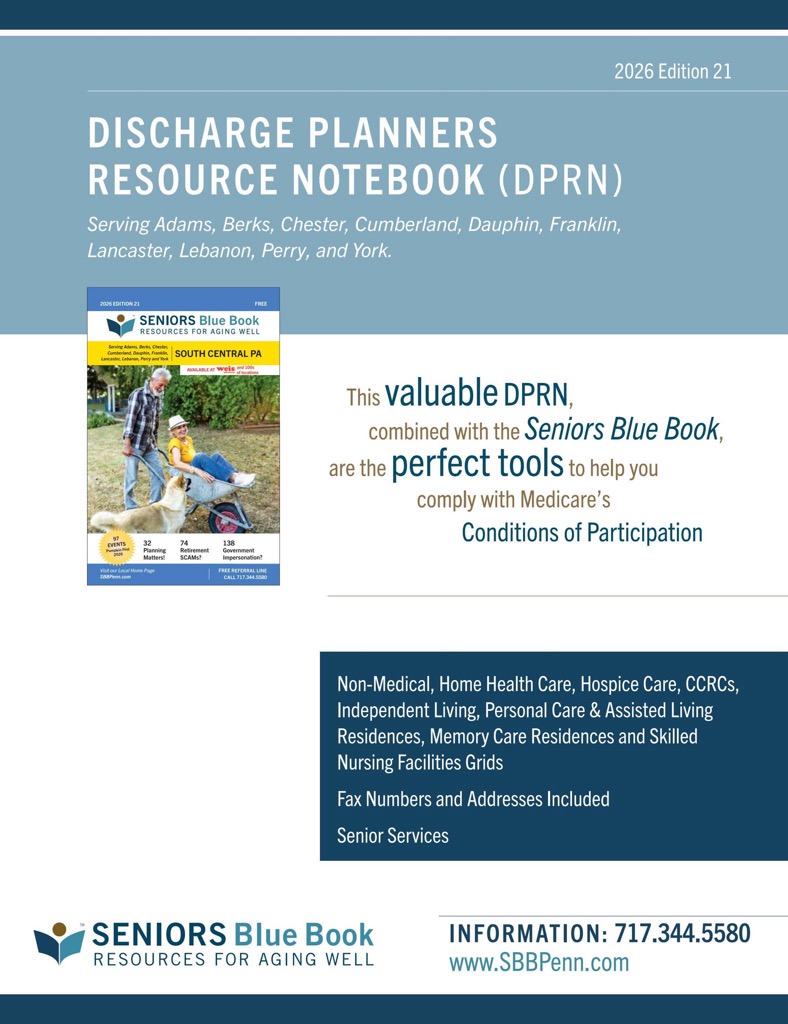
Browse through the most recent copy of your local DPRN!
Click to view
.png)
.png)

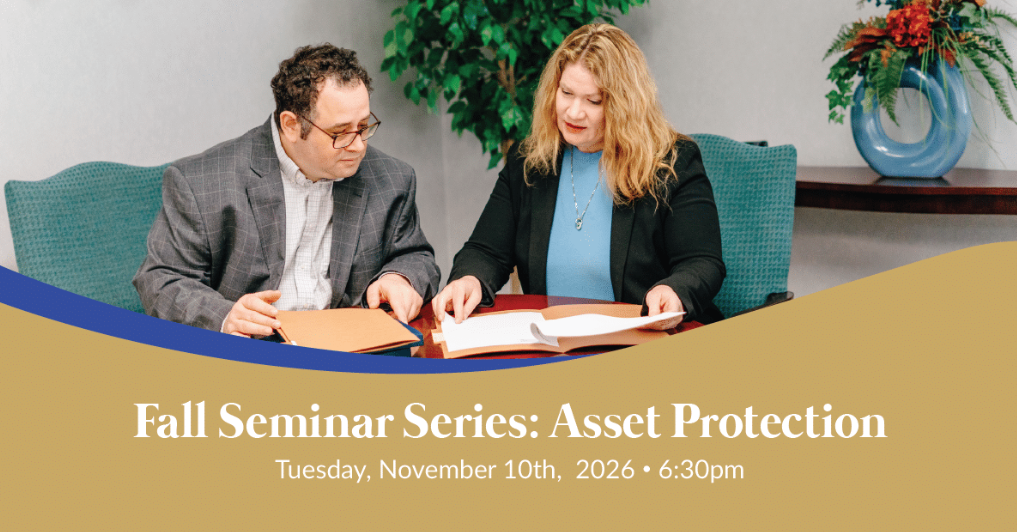
Nov 10, 2026 06:30 PM - 07:30 PM
Join us November 10th, 2026 at 6:30 pm at the Wyomissing Library Community Room for a free seminar covering asset protection andlong-term care.Russell E. Farbiarz, Esq. and Alexa S. Antanavage, Esq. will be discussing the real costs of long-term care, the differences betweenMedicare vs. Medicaid, how to protect your home and savings, and much more. This seminar is free, but spaces are limited. Register today.Click to Register OnlineOrCall our Office to Register at 610-562-2000

Nov 02, 2026 06:30 PM - 07:30 PM
Join us November 2nd, 2026 at 6:30 pm at the Wyomissing Library Community Room for a free seminar covering estate planning basics.Russell E. Farbiarz, Esq. and Alexa S. Antanavage, Esq. will be reviewing the documents that protect you, what happens to Pennsylvanianswithout an estate plan, the difference between probates and trusts, and how Pennsylvanias taxes factor in.This seminar is free, but spaces are limited. Register today.Click to Register OnlineorCall our Office to Register at 610-562-2000

Oct 29, 2026 02:00 PM - 04:00 PM
Proper estate planning is about more than documents; itsabout giving you and your family clarity, confidence, and peace of mind forthe future. With the right plan, you can protect your assets, reduce familydisputes, avoid unnecessary delays and expenses, and help keep your loved onesout of court. In this complimentaryEstate Planning Workshop, well explain the Three Secrets of EstatePlanning and share what you should and shouldnt do to protect yourself,your loved ones, and the legacy youve worked hard to build. Wellanswer common questions like: What is estate planning? What are the Three Secrets? What is probate, and why should I avoid it? What happens if I dont have a plan? Whats the difference between a Will and a Trust? When should I update my Estate Plan? Can I do my own estate planning? At Bellomo& Associates, weve spent years helping families navigate estateplanning with greater understanding and confidence. Joinus, bring your questions, and take the first step toward protecting whatmatters most.

Oct 27, 2026 10:30 AM - 11:30 AM
Join us October 27th, 2026 at 10:30 at the Wyomissing Library Community Room for a free seminar covering estate planning basics.Russell E. Farbiarz, Esq. and Alexa S. Antanavage, Esq. will be reviewing the documents that protect you, what happens to Pennsylvanianswithout an estate plan, the difference between probates and trusts, and how Pennsylvanias taxes factor in.This seminar is free, but spaces are limited. Register today.Click to Register Online orCall our Office to Register at 610-562-2000
Messiah Lifeways is a nonprofit, faith-based 62+ senior living organization in Mechanicsburg, PA, serving older adults throughout south central Pennsylvania for more than 130 years. Guided by its mission to serve older adults with Christ-like love, Messiah Lifeways provides high-quality retirement living, senior care, and aging services that help individuals live with purpose, dignity, and peace of mind.As a continuing care retirement community (CCRC), Messiah Lifeways offers a full continuum of services, including independent living, personal care, memory care, skilled nursing, rehabilitation, home care, adult day services, and home and community-based services. Residents and clients receive compassionate, personalized care designed to meet their needs throughout lifes journey.Messiah Lifeways offers two vibrant senior living communities in south central Pennsylvania: Messiah Village in Mechanicsburg, PA, and Fernecrest in New Cumberland, PA. Both communities provide maintenance-free retirement living, access to wellness programs, lifelong learning opportunities, on-campus dining, modern amenities, and the confidence of access to comprehensive care through Messiah Lifeways. Messiah Lifeways newest campus, Fernecrest, offers a new approach to 62+ retirement living with thoughtfully designed cottages and apartments, beautiful natural surroundings, and opportunities for connection, engagement, and an active lifestyle.As a nonprofit organization rooted in Christian values, Messiah Lifeways is dedicated to serving older adults with compassionate care and support. Through meaningful relationships, innovative services, and a commitment to excellence, Messiah Lifeways creates communities where individuals can continue to grow, connect, and live fulfilling lives with purpose.
The Seniors BlueBook for South Central PA provides seniors, caregivers, adult children and senior professionals a comprehensive source of educational information on available services, senior housing options, resources and information that enrich the lives of our older population. Our guide covers Adams, Cumberland, Dauphin, Franklin, Lancaster, Lebanon, Perry and York counties as well as some information for Chester and Berks counties. We offer free guides, a free referral line, free seniors activity calendar, free professionals activity and CEUs calendars, and free job boards. Our free guides are available for individual and agency use. Each guide comes with many educational articles of interest to seniors, their caregivers, and the professionals that serve them.
UPMC Senior Care provides both in-office and at-home consultations and primary care to older adults with complex health care needs. For patients with multiple health issues, our geriatric specialists co-manage care with their primary care provider. Our goal is to help older patients stay independent, optimize self-care ability, and maintain quality of life. Our providers will diagnose, treat, and manage a variety of conditions including impaired memory (with or without behavioral issues), falls and mobility issues, social and safety concerns (unable to drive, living alone, or being homebound), weight loss, declining health, and serious illness requiring palliative care.
Messiah Lifeways is a nonprofit, faith-based 62+ senior living organization in Mechanicsburg, PA, serving older adults throughout south central Pennsylvania for more than 130 years. Guided by its mission to serve older adults with Christ-like love, Messiah Lifeways provides high-quality retirement living, senior care, and aging services that help individuals live with purpose, dignity, and peace of mind.As a continuing care retirement community (CCRC), Messiah Lifeways offers a full continuum of services, including independent living, personal care, memory care, skilled nursing, rehabilitation, home care, adult day services, and home and community-based services. Residents and clients receive compassionate, personalized care designed to meet their needs throughout lifes journey.Messiah Lifeways offers two vibrant senior living communities in south central Pennsylvania: Messiah Village in Mechanicsburg, PA, and Fernecrest in New Cumberland, PA. Both communities provide maintenance-free retirement living, access to wellness programs, lifelong learning opportunities, on-campus dining, modern amenities, and the confidence of access to comprehensive care through Messiah Lifeways. Messiah Lifeways newest campus, Fernecrest, offers a new approach to 62+ retirement living with thoughtfully designed cottages and apartments, beautiful natural surroundings, and opportunities for connection, engagement, and an active lifestyle.As a nonprofit organization rooted in Christian values, Messiah Lifeways is dedicated to serving older adults with compassionate care and support. Through meaningful relationships, innovative services, and a commitment to excellence, Messiah Lifeways creates communities where individuals can continue to grow, connect, and live fulfilling lives with purpose.
We Thought We Were Doing the Right Thing. That is how these conversations almost always begin. A daughter sits across from our team, frustrated and confused. A few years earlier, she helped her mother by moving money into her own account for safekeeping. It felt responsible. It felt protective. But now her mother needs nursing home care, and Medicaid is reviewing that transfer. What seemed like a simple act of helping may now delay the very benefits her mother depends on. This situation is far more common than most people realize. Families do not set out to break Medicaid rules. They make thoughtful, well-intentioned decisions without understanding how those decisions will be viewed later. And unfortunately, Medicaid does not evaluate intent. It evaluates transactions. To understand how families accidentally disqualify themselves from Medicaid, you first need to understand how the system actually works. The Rules Most Families Never See ComingMedicaid has become the primary payer for long-term care in the United States. With nursing home costs often reaching thousands of dollars each month, many families eventually rely on Medicaid to help cover the expense. What surprises people is that Medicare, which many assume will step in, typically only covers short-term skilled care under limited conditions. Long-term custodial care is almost always a Medicaid issue. Because of the scale of this responsibility, Medicaid enforces strict eligibility rules. These rules are designed to ensure that benefits go to those who truly need them. But in practice, they often catch families off guard. People who have spent years saving, helping loved ones, or making practical financial decisions suddenly find themselves facing penalties for actions they never realized could be a problem. The Five-Year Look-BackAt the center of this is the Medicaid look-back period. In most states, this period covers the five years leading up to a Medicaid application. During that time, the state reviews financial records to determine whether assets were transferred for less than fair market value. This includes gifts, property transfers, changes in ownership, and even informal financial arrangements within a family. From Medicaids perspective, the question is simple: Were assets given away or moved in a way that reduced what was available to pay for care? From a familys perspective, the answer is rarely that straightforward. Everyday Decisions That Create Big ProblemsThink about the decisions families make every day. A parent helps a grandchild with tuition. A car is sold to a family member at a discounted price. A child is added to a bank account to make bill-paying easier. A daughter receives occasional payments for helping care for a parent. Each of these choices feels normal. In many cases, they feel necessary. But without the right structure and documentation, Medicaid may view these actions as gifts or uncompensated transfers. One of the most common misunderstandings involves gift rules. Many families believe that as long as a gift falls within the IRS annual exclusion, it is safe. It is not. Medicaid does not follow IRS guidelines. A gift that is perfectly acceptable for tax purposes can still create a penalty when it comes to Medicaid eligibility. When Good Intentions BackfireOther issues show up in ways families never expect. Assets may be sold without clear documentation. A family may believe they received fair value, but without proof like an appraisal or written agreement, Medicaid may see it differently. Trusts can also create confusion. Many people hear that trusts protect assets from Medicaid. While that can be true, timing and structure matter. Transfers made during the look-back period can still trigger penalties. Even paying a family member for care can create problems if there is no formal caregiver agreement in place. What was meant as support can be treated as a gift. This is where the disconnect becomes clear. Families act out of care, trust, and responsibility. Medicaid evaluates those same actions through a strict financial lens. The Cost of Getting It WrongWhen a disqualifying transfer is identified, Medicaid imposes a penalty period. This does not mean someone is permanently denied benefits. Instead, coverage is delayed based on the value of the transfer. The result can be devastating. During that penalty period, the individual may otherwise qualify for Medicaid but receives no assistance. The family is left covering the cost of care out of pocket, often during an already stressful and emotional time. The Good News: This Is PreventableWhat makes this especially frustrating is that many of these situations could have been avoided. The difference between a smooth Medicaid approval and a costly delay often comes down to three things: timing, documentation, and proper planning. When families plan ahead, they have options. They can structure decisions correctly, protect assets, and avoid unnecessary penalties. When planning is delayed until a crisis, those options become much more limited. At Bellomo & Associates, we see both sides of this every day. And we know how much easier this journey can be when families have the right guidance in place early. A Simple Step That Can Make All the DifferenceBefore you move money, add someone to an account, sell property, or try to help a loved one qualify for care, take a moment to consider how that decision might be viewed years from now. Because when it comes to Medicaid, the smallest decisions can have the biggest consequences. If you are not completely confident that your current plan would hold up under Medicaid rules, this is a great time to get clarity. We invite you to register for a workshop with Bellomo & Associates, where you can learn how to protect what you have worked so hard for and make things easier for your family when it matters most.
Read MoreAs you amass assets during the course of a lifetime, its easy to forget about how much you have and what its worth. Art in the attic, classic cars in storage, retirement accounts across multiple employers: if youre not aware of it all, your portfolio can lose value quickly. A financial advisor who offers assets under management services does so to protect your portfolio from the inevitable changes that your assets can undergo over time.Assets Under Management Strategies in Lancaster, Pa.The first asset you acquire in life, whether its a beatup car or a few shares of a brandnew company, is usually a gamechanging event. Its the first step on what is hopefully a journey toward a lucrative portfolio. Leveraging your assets to build your wealth is more than just financial jargon, its a path that can increase your wealth over time, so you can accomplish everything on your list.A financial advisor at a boutique retirement firm can take the time to get to know who you are and how you invest. At Bodnar Financial Group, Len Bodnar, RICP (R), is there to help his clients get a handle on their assets, so he can help you strategize them for better margins.For instance, a failing asset may need to be either sold or converted, depending on details behind the investment. A middlerange asset may need to be adjusted to optimize its performance. Finally, your strongest assets may need to be carefully watched, so a financial advisor can capitalize during the best of times and protect your wealth if and when it bottoms out.Theres a lot to be said for how assets change while you own them, and its not always easy to know when to cut and run from a property or when to stick with it. If you dont have the time or the inclination to spend on managing it all, the right financial advisor can help mitigate the stress. Its just one less thing to worry about as you get closer to your last day on the job.
Read MoreAs we grow older, our desire to support our children often intensifies. A trend that is becoming more prevalent is parents choosing to give their adult children an advance on their inheritance while they are still alive. Essentially, this means gifting a sum of money to the child during the parents lifetime and including in their estate planning documents that if the gift is not repaid, it will be considered an advance, affecting the childs share of the estate. While there are several concerns I have with this approach, two major ones stand out: the potential impact on Medicaid eligibility due to the gift being considered, and the risk of unequal distribution of assets among the children. One significant issue arises if the parent requires long-term care. Medicaid, the government program that assists with long-term care costs, imposes a five-year look-back period to assess any gifts made during that time. If a gift is identified, a penalty is calculated, which could prevent the person from qualifying for Medicaid until the penalty period is served. Providing an advance during your lifetime is indeed considered a gift and may significantly affect your eligibility for long-term care assistance. Additionally, we cannot predict the financial demands that may arise toward the end of our lives, especially when it comes to potential long-term care needs. Giving away money during your lifetime with the expectation that everything will be equalized may be risky, as theres no guarantee of how much money will be left in your estate. For instance, if an advance of $300,000 is given to one child, deemed an advance, and after paying debts, funeral expenses, and legal bills, there is insufficient remaining to reimburse the other children, an unfair situation arises. As a general rule, we advise against providing advances during your lifetime. While there may be specific exceptions based on individual circumstances, seeking counsel before making such decisions is crucial. Without professional guidance, we do not recommend this course of action. Join our free educational workshop to delve deeper into estate planning and inheritance strategies. By attending, youll gain valuable insights to make informed decisions about your assets and your familys future. Reserve your spot now!
Read MoreWhat It Means to Be a Power of AttorneyBeing a Power of Attorney (POA) for anyone is a huge responsibility. Serving as POA for a senior adds an even deeper layer of trust, focus, and accountability. Handling this role correctly and for the right reasons is critical to the well-being of the person you are helping.Your responsibility as a POA is to the principal the person who appointed you. Whenever possible, there should also be a backup POA in place as a safeguard.Legally, a POAs role is to carry out the wishes of the principal, not replace them with their own decisions. If the individual is of sound mind, their wishes must always remain the priority. In most cases, seniors are mentally capable but may be physically unable to manage certain tasks on their own.Because laws vary by state, this article is for educational purposes only and does not constitute legal advice. Always consult an experienced elder law attorney.A Real-Life Example: When POA Authority Is MisusedWhy This Happens Far Too OftenSadly, we see situations like this more often than most people realize.Seniors are not children. They are not a burden. They are capable, deserving of dignity, and able to express what they want.When a POA removes someones rights for their own convenience, the result is often anger, heartbreak, and damaged relationships that can never be repaired. What should be an exciting new chapter becomes a painful and traumatic experience.Serving as a POA financial or medical requires research, preparation, and a true understanding of the responsibility involved.The damage caused by a mismanaged POA can be devastating and long-lasting. Financial POA: Responsibilities, Limits, and Legal RiskA Financial POA helps manage: Banking and bill paying Investments and income Insurance policies Financial coordination with advisors Their job is to assist and protect, not control.Elder financial abuse is heavily investigated in most states and for good reason. Taking a seniors money is not just theft. It removes their security, dignity, and future.A POA: Is not paid Does not get to spend freely Cannot make major decisions without the principals input If Medicaid is ever needed, there is a five-year lookback period. Poor financial decisions or missing records can result in denied benefits and catastrophic consequences for the senior.A Healthcare POA must honor the seniors wishes even when those choices are difficult or emotionally challenging.Their role is to: Enforce medical directives Advocate when the person cannot speak for themselves Ensure facilities follow written instructions When no family or trusted friend can serve, there are state-licensed professional fiduciary services that can act as POA, Executor, or Trustee. These organizations are often used by elder law attorneys, courts, and healthcare systems.They are an excellent option when: Family lives far away Family relationships are complicated The senior prefers independence No suitable advocate is available Healthcare POA: Advocacy, Not ControlPlanning Ahead Protects EveryoneEducation Is the Best ProtectionMore and more seniors in the U.S. have limited or no family support.Family members who live far away often underestimate how much their parents have declined until a crisis occurs. Even well-meaning families can unintentionally leave loved ones unprotected.Pride also plays a role. Many older adults do not recognize how much has changed until something goes wrong.Every senior should: Work with an elder law attorney Have financial and healthcare directives in writing Understand long-term care options Know that Medicare does not cover everything Have a plan before something happens Planning creates clarity and security, not fear.At Complete Senior Transitions, our mission has always been to educate, empower, and protect seniors.Knowledge and planning are the strongest safeguards we can offer.You can also find free educational content through our Smart Seniors radio show, available on our Media page.Youth is a gift of nature, but age is a work of art.
Read MoreMediConnect Insurance breaks down Medicare Part B. What does it cover, how much does it cost, when do I need to enroll? We cover all of this, and more!
No Minimum Hours Required for Caregiving 24Hour Care Wherever You Call Home Care looks different for every individual, and your support should reflect that. Thats why we provide flexible, nominimumhour caregiving, designed to meet you exactly where you are. Whether you need a quick checkin, a few hours of companionship, or continuous **24hour care**, our team is ready to step in with compassion, skill, and reliability. *Care That Fits Your Life Not the Other Way Around* Many agencies require strict scheduling commitments, forcing families to choose more hours than they truly need. We believe care should be accessible, adaptable, and centered on your comfort. With us, you decide how much support you want and when you want it. Need help just for the morning? Were there. Prefer overnight assistance? Weve got you covered. Want roundtheclock care? We can provide a dedicated team to ensure safety and peace of mind every hour of the day. Wherever You Call Home Home is personal. It might be a private residence, a senior living community, or a temporary recovery space. No matter the setting, our caregivers bring stability, dignity, and warmth to your daily routine. We support you in maintaining independence while ensuring you never feel alone or overwhelmed. A Team You Can Trust Our caregivers are trained to provide attentive, respectful, and individualized care. From mobility support and medication reminders to meal preparation and meaningful companionship, we tailor every moment to your needs. You receive consistent, highquality care delivered with empathy and professionalism. Your Schedule. Your Comfort. Your Home. Care shouldnt be complicated. It should feel natural, supportive, and empowering. With *no minimum hours required* and **24hour availability**, you gain the freedom to build a care plan that truly works for you and your family.
Episode 28. Understanding Property Ownership Types and DeedsJeff addresses listeners questions about property ownership and deeds. He explains different types of ownership arrangements, some of which are implied on the deed while others must be specifically listed. With this understanding, it becomes clear that your deed should explicitly name the type of ownership arrangement that best suits your needs. Jeffrey R. Bellomo, the founder of Bellomo & Associates, is a licensed and certified elder law attorney with a masters degree in taxation and a certificate in estate planning. He explains complex legal and financial topics in easy-to-understand language.Don't forget to Follow, Like, and Subscribe for upcoming podcast episodes: Apple: https://podcasts.apple.com/us/podcast/understanding-property-ownership-types-and-deeds/id1634278675?i=1000597660690 YouTube: https://youtu.be/aUHrxgXKY_E Spotify: https://open.spotify.com/episode/5kVb2f3sida1Pff3WSO9pE?si=XJ0fGweMTm6dfozyqcmZAg
The transition home after a hospital stay or rehabilitation can be overwhelming. Our structured recovery services help clients rebuild strength and stability while reducing the risk of readmission. We help with: . Medication management and follow-up care . Nutrition and mobility support . Progress monitoring and caregiver updates . Strengthening routines and safe transitions back to daily life We collaborate with your care team to ensure a smooth, well-supported recovery journey. DYNAMIC Neuro-WELL at Home Our signature, specialty-informed care model for older adults living with neurological conditions such as Parkinsons, stroke recovery, dementia, and more. Its an integrated wellness approach designed to support brain health, body strength, and emotional well-beingall in the comfort of the place that you call HOME. This comprehensive service includes: . Disease-specific care-giving by trained professionals . Functional fitness and restorative therapy . Neuro-cognitive stimulation and memory care . Emotional support, family education, and coordinated care navigation Ideal for clients with movement disorders, progressive neurological illnesses, or cognitive challenges seeking specialized support at home.
The VNA of Hanover & Spring Grove is seeking a full-time, day shift Licensed Practical Nurse (LPN) to provide nursing care to Home Health patients in their home under the direction of the RN Case Manager. A graduate of an accredited practical nursing program, an active PA LPN license, and a minimum of one-year of general work experience in nursing is required. Ability to work in a home health setting and reliable transportation are also required. Must be able to participate in the weekend rotation.
Read MoreFull job descriptionThis is a part-time position with up to full-time hours available depending on flexibility, availability, and demand.Are you seeking a rewarding role that fits your schedule?Enjoy the flexibility you need with Visiting Angels of YorkAsk About Our $500 New Hire Bonus!We serve clients in York, Dover, Shrewsbury and Wrightsville, PAJob Benefits:$500 sign-on bonus and referral bonuses availableCompetitive Starting PayFlexible Scheduling - choose from days, evenings, or night shiftsWeekend wage premiums, for eligible shifts401K plans, with company matchVoluntary supplemental health care plansCaring office staff, who value individual employee contributions24/7 support during shiftsone-on-one care environmentReady to get started? Apply easily online now!Caregiver Responsibilities:Assist with bathing, getting dressed, toileting, and incontinence careHelp with light housekeeping and other quiet household tasksPerform transfers, ambulation, and mobility assistance as neededMonitor the client to ensure their safety and comfort throughout the nightProvide all other non-medical assistance as assignedRequirements:Must be 18+ years to apply1 year of professional caregiving experience preferredCNA license preferred, but not requiredAble to pass a criminal background check and drug screenMust have valid Drivers License, reliable transportation, and proof of current auto insuranceWe cant wait to hear from you!Our office is located in York, PA, and we serve seniors in Hanover, Dover, Red Lion, Spring Grove, and the surrounding areas of York County. This position may require travel.
Read More