Cherry Heights Family Clinic
1560 North Crestmont Drive, Suite A, Meridian, Idaho, 83642
Counties Served: Idaho - Ada,Canyon,Elmore,Gem,Owyhee,Payette,Twin Falls,Valley,Washington
Family Health Clinics


About Cherry Heights Family Clinic
Cherry Heights Medical Clinic is a renowned healthcare facility located in Meridian, Idaho, dedicated to providing comprehensive and compassionate medical services to the community. Established with a commitment to excellence, the clinic has become a trusted healthcare partner for individuals and families in the region.
The clinic's prime focus is on delivering high-quality, patient-centered care across a wide range of medical specialties. From primary care and preventive services to specialized treatments, Cherry Heights Medical Clinic ensures that patients receive personalized attention tailored to their unique health needs.
One of the key features that sets Cherry Heights apart is its team of highly skilled and experienced healthcare professionals. The clinic boasts a roster of board-certified physicians, nurses, and support staff who are dedicated to upholding the highest standards of medical care. This team collaborates seamlessly to provide a holistic approach to healthcare, addressing not only the symptoms but also the underlying causes of health issues.
Cherry Heights Medical Clinic is equipped with state-of-the-art facilities and cutting-edge medical technology, ensuring that patients have access to the latest advancements in healthcare. The clinic's commitment to innovation is reflected in its modern infrastructure, creating a comfortable and welcoming environment for patients seeking medical attention.
The clinic offers a comprehensive suite of services, including routine check-ups, preventive screenings, vaccinations, and management of chronic conditions. Patients can also benefit from specialized services such as dermatology, cardiology, pediatrics, and women's health. The breadth of services provided ensures that Cherry Heights is a one-stop destination for all healthcare needs.
Accessibility and convenience are prioritized at Cherry Heights Medical Clinic. Located in the heart of Meridian, the clinic is easily accessible to residents in the surrounding areas. The facility is designed to accommodate the diverse needs of the community, with flexible scheduling options, extended hours, and efficient appointment management systems.
Cherry Heights places a strong emphasis on fostering a patient-friendly environment. The staff is trained to prioritize clear communication and active patient engagement, ensuring that individuals feel informed and empowered in their healthcare decisions. The clinic's commitment to patient education extends beyond the examination room, with resources and informational sessions aimed at promoting a healthier lifestyle.
In addition to its commitment to individual patients, Cherry Heights Medical Clinic actively engages with the community through various outreach programs. Health and wellness workshops, vaccination drives, and community health fairs are just a few examples of the clinic's efforts to contribute to the overall well-being of Meridian and its residents.
As a pillar of healthcare excellence in Meridian, Cherry Heights Medical Clinic stands out for its unwavering dedication to providing quality, compassionate, and accessible healthcare services. With a focus on patient well-being, a talented team of healthcare professionals, and a commitment to community engagement, Cherry Heights continues to be a trusted partner in the journey towards optimal health for the residents of Meridian, Idaho.
See More
Continue Your Search! Explore More Local Options.
Start SearchingLet’s engage and get educated!
Browse through thousands of expert articles in over 100 different categories.
Browse NowArticles You May Like
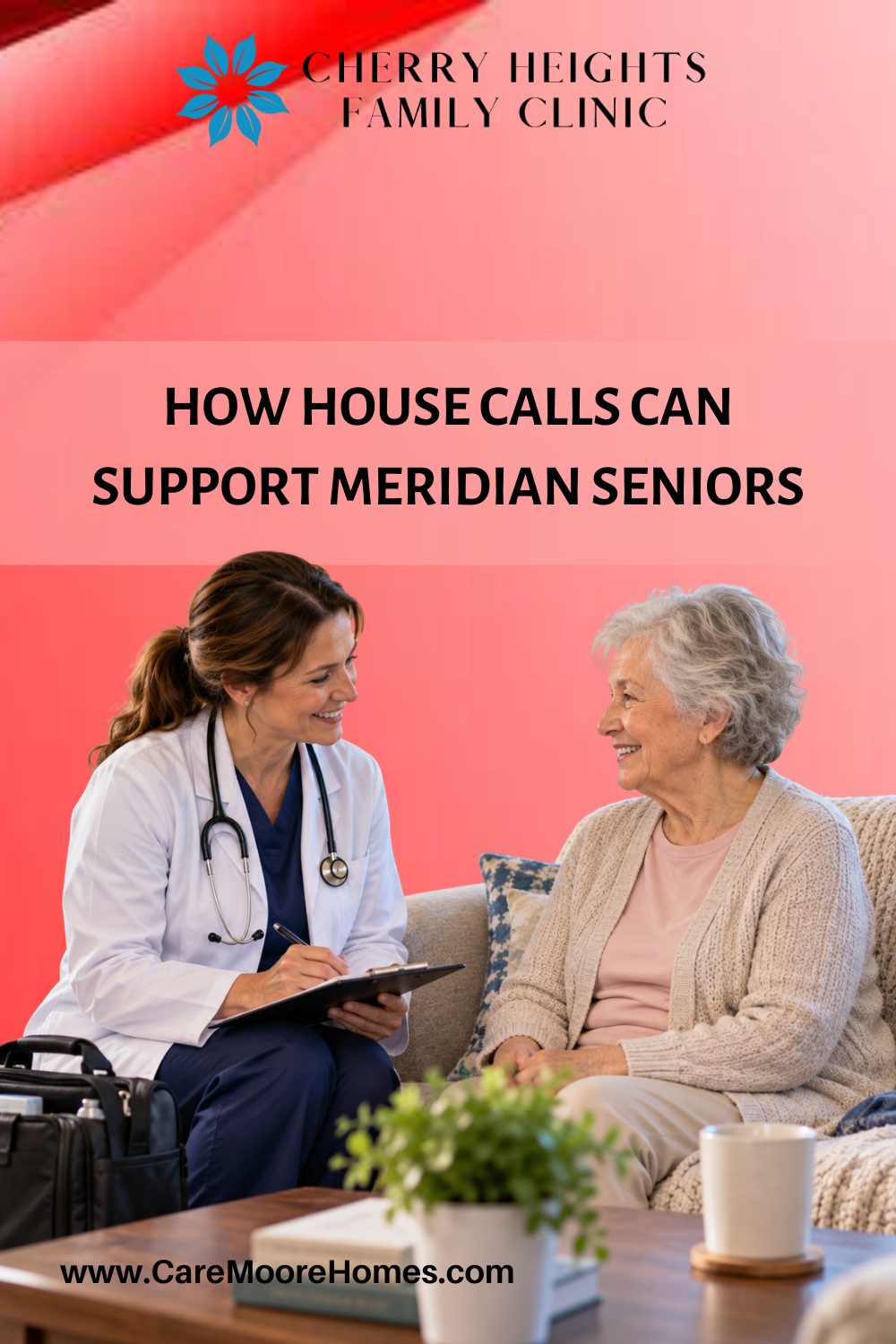
How House Calls Can Support Meridian Seniors
How House Calls Can Support Meridian SeniorsGetting to a medical appointment can seem like a simple taskuntil it is not.For many older adults, the challenge is not deciding whether healthcare is important. The challenge is physically getting there.A senior may no longer drive. Arthritis may make getting in and out of a vehicle uncomfortable. Someone recovering from an illness may feel too weak to spend time traveling to and from an appointment. Family members may be available to help, but their work schedules do not always line up with medical visits.For adults and seniors in Meridian and Ada County, Idaho, access to primary care becomes increasingly important as health needs become more complex.Cherry Heights Family Clinic provides family and primary healthcare in Meridian and currently lists house calls among its services. The clinic describes these visits as patient-centered primary healthcare delivered at a patient's residence, offering another option for people who may find traditional office visits difficult.Home-based primary care does not replace emergency services or every type of medical appointment. But for appropriate patients, house calls may help reduce one of the biggest barriers to staying connected with routine healthcare: transportation.Meridian's Growing Senior Population Makes Healthcare Access ImportantMeridian is one of Idaho's rapidly growing communities.According to the U.S. Census Bureau, Meridian's estimated population reached 142,988 residents in 2025, an increase of 21.4% from its 2020 population estimates base. Approximately 14.8% of Meridian residents are age 65 or older.That represents thousands of older adults with very different healthcare needs.Some are active and independent.Others may be managing arthritis, chronic disease, reduced mobility, medication changes, or recovery following hospitalization.As people age, transportation can become an increasingly important part of healthcare access.An appointment may require much more than simply driving to the clinic.A family may need to:Arrange time away from workHelp the patient dressAssist with stairsTransfer someone into a vehicleBring mobility equipmentWait during the appointmentPick up prescriptions afterwardReturn the patient home safelyFor some households, what appears to be a 30-minute medical visit can consume much of the day.That is where home-based healthcare may become worth exploring.Senior Healthcare Tip: If getting to routine medical appointments is becoming consistently difficult, mention the problem to the healthcare provider. Transportation and mobility challenges are practical health concerns, not simply inconveniences.What Is a Medical House Call?A house call brings an appropriate healthcare provider to the patient's place of residence instead of requiring the patient to travel to the office.Cherry Heights Family Clinic describes its house-call program as providing primary healthcare where the patient lives, emphasizing familiar surroundings and patient-centered care.The exact services appropriate for a house call depend on the patient and the clinic.Not every test, procedure, or medical concern can be handled at home.Families should contact the clinic directly to confirm:Whether the patient qualifies for house-call servicesWhich locations are currently servedWhat conditions can be evaluated at homeWhat services require an office visitHow appointments are scheduledWhether insurance covers the visitWhat out-of-pocket costs may applyHome-based care is best viewed as another tool within a broader healthcare plan.Who Might Benefit From House Calls?Several situations can make home-based primary care worth discussing.Seniors Who No Longer DriveGiving up driving can dramatically affect healthcare access.Even when family members are available, coordinating rides for every appointment may be difficult.A house call can sometimes reduce the need to arrange transportation for routine primary care.People With Mobility LimitationsArthritis, balance problems, weakness, disability, or difficulty using stairs may make office visits physically demanding.Even reaching the car can be challenging.Adults Recovering From IllnessSomeone recovering from surgery, hospitalization, or a significant illness may temporarily struggle with travel.A home visit may be worth discussing if routine follow-up is needed and the clinic determines that home-based care is appropriate.Family Caregivers Managing Complex SchedulesCaregivers frequently coordinate appointments while also balancing employment, children, errands, and their own healthcare needs.Reducing travel for selected appointments may make a caregiving plan more manageable.Older Adults Who Feel More Comfortable at HomeSome seniors simply feel more relaxed in familiar surroundings.Being at home may also give the provider an opportunity to better understand aspects of the patient's everyday environment.Home Visits Can Reveal Details That Are Easy to Miss in an OfficeA healthcare provider sees only one part of a patient's life during a traditional office appointment.A home environment can sometimes provide additional context.For example, a provider may better understand:How easily the patient moves through the homeWhether stairs are difficultHow medications are organizedWhether the person appears to have difficulty preparing mealsWhat mobility equipment is being usedWhether family members or caregivers are regularly involvedThis does not mean every house call includes a formal home-safety assessment.But the patient's environment can provide useful context for conversations about independence, health management, and daily function.For older adults, function is often just as important as laboratory numbers.A patient may have relatively stable test results but still struggle to get dressed, climb stairs, or remember medications.Those concerns deserve attention too.Primary Care Still Matters When Someone Is Homebound or Less MobileReduced mobility does not reduce the importance of preventive care.In some cases, it makes ongoing healthcare even more important.Cherry Heights Family Clinic lists services that include geriatric medicine, primary care, chronic-condition management, preventive services, laboratory coordination, medication prescribing, and specialist referrals.A primary care provider can help patients keep track of the bigger picture.That may include:Reviewing chronic conditionsDiscussing new symptomsReviewing medicationsMonitoring blood pressure or other concernsCoordinating laboratory testingDetermining whether specialist care is appropriateDiscussing preventive servicesFollowing up after hospitalizationThe appropriate plan varies from person to person.Chronic Conditions Do Not Pause Because Transportation Is DifficultConditions such as arthritis, asthma, hypertension, diabetes, and other long-term health concerns may require ongoing attention.When getting to appointments becomes difficult, patients may begin postponing routine follow-up.That can create gaps in care.Cherry Heights Family Clinic identifies chronic-condition management as part of its primary care services and describes its broader approach as patient-centered care that places individual patient needs first.Patients should let their healthcare provider know when transportation or mobility is interfering with recommended follow-up.The solution may involve a house call, a different appointment schedule, another care resource, or a combination of approaches.The important thing is not simply disappearing from routine care because traveling has become difficult.Medication Review Is Especially Important for Older AdultsMany older adults take several prescriptions.Some also use over-the-counter medications, vitamins, or supplements.After a hospitalization or specialist visit, the medication list may change quickly.A primary care visit provides an opportunity to review what the patient is actually taking.For a home visit, families can make that conversation easier by gathering all current medications in advance.Create a list that includes:Medication nameDosageTime of day takenPrescribing providerOver-the-counter medicationsVitaminsSupplementsRecently discontinued prescriptionsDo not independently stop or change prescription medications without discussing the decision with an appropriate healthcare professional.The goal is to help the provider work from accurate information.Caregivers Can Help Prepare for a House CallA little preparation can make home-based medical visits more productive.Write Down the Main QuestionsAppointments can move quickly.Write down the most important concerns beforehand.Examples might include:Recent changes in balanceIncreased fatigueNew painAppetite changesMedication questionsSleep problemsChanges in memoryDifficulty completing daily tasksHave Medical Information ReadyKeep recent hospital paperwork, specialist information, medication lists, and relevant test results available when needed.Include the Patient in the ConversationFamily caregivers often have valuable observations, but the older adult should remain part of the conversation whenever possible.Speak with the patient, not only about them.Make Space for the VisitA quiet, comfortable place with adequate lighting can make the appointment easier.Ask About Next StepsBefore the visit ends, make sure the patient or caregiver understands:Any medication changesFollow-up instructionsRecommended testingReferralsWhen another appointment is neededHouse Calls Can Support Family Caregivers TooFamily caregivers often spend significant time coordinating healthcare.A single appointment may involve transportation, waiting, paperwork, pharmacy stops, and follow-up calls.For someone caring for an aging spouse or parent, that workload can become substantial.Home-based primary care may reduce some logistical pressure when it is clinically appropriate.It can also allow another family member to participate without managing the physical process of transporting the patient.That does not mean families should avoid in-person clinic visits whenever possible.Some medical needs are better addressed in an office or other healthcare setting.The value of house calls is having another option.When a House Call Is Not EnoughHome-based primary care is not appropriate for every medical situation.A house call should not delay emergency treatment.Symptoms such as severe chest pain, major difficulty breathing, signs of stroke, uncontrolled bleeding, severe injury, loss of consciousness, or other potentially life-threatening concerns require emergency evaluation.Families should use emergency services when appropriate rather than waiting for a routine primary care visit.Similarly, certain procedures, imaging, advanced testing, or specialist services may require a clinic, hospital, or diagnostic facility.A healthcare provider can help determine the appropriate setting.Geriatric Primary Care Looks Beyond a Single DiagnosisCherry Heights Family Clinic specifically lists geriatric medicine among its services, with a focus on preventing and treating health concerns and disabilities affecting older adults.Geriatric-focused care may include conversations about several areas at once:Chronic diseaseMobilityMedicationsNutritionDaily functionPreventive careCaregiver involvementSpecialist coordinationOlder adults often benefit from this broader view because health conditions can interact.For example, arthritis may affect walking.Reduced walking may affect activity level.Lower activity can influence strength and independence.Medication side effects may add dizziness or fatigue.Looking at the whole situation can be more useful than considering each issue separately.Healthcare Should Be Patient-CenteredCherry Heights Family Clinic identifies patient-centered care as its primary value and states that patient needs come first. The clinic also emphasizes respect, dignity, teamwork, and sensitivity toward patients and families.That approach can be particularly important when older adults rely on caregivers.A senior should still have the opportunity to ask questions and express preferences whenever possible.Families can help without taking over.Instead of immediately answering every question for a parent, give them an opportunity to respond.If hearing or memory problems make communication difficult, caregivers can add useful information afterward.The goal is collaboration.Insurance Coverage Should Be Confirmed Before CareCherry Heights Family Clinic currently lists Medicare, Medicare Advantage plans, Idaho Medicaid, Blue Cross Blue Shield, SelectHealth, UnitedHealthcare/AARP, PacificSource, Regence, TriCare, private pay, and additional plans among its accepted insurance options.Insurance participation does not necessarily mean every service, including every type of house call, is covered the same way.Patients should confirm:Whether their plan is currently acceptedWhether home visits are coveredCopaysDeductiblesReferral requirementsAny location or eligibility restrictionsChecking in advance can prevent unexpected costs.What If the Patient Can Still Visit the Office?House calls are not only relevant when someone is completely unable to leave home.A patient may still be physically capable of attending the clinic but find the process increasingly exhausting.The best care arrangement does not have to be all or nothing.Some visits may occur at Cherry Heights Family Clinic's Meridian office, while home-based care may be discussed for other circumstances if the clinic determines it is appropriate.The office is located at 1560 Crestmont Drive, Suite A, Meridian, Idaho 83642, and the clinic lists 208-650-4888 as its main telephone number.Families should speak directly with the clinic about which option best fits the patient's needs.Frequently Asked Questions About House Calls and Primary Care in MeridianDoes Cherry Heights Family Clinic provide house calls?Yes. Cherry Heights Family Clinic currently advertises house calls and describes the service as patient-centered primary healthcare delivered at the patient's residence. Families should contact the clinic for current availability and eligibility.Are house calls only for seniors?The clinic's website does not describe house calls as exclusively limited to seniors. Eligibility depends on the patient's situation and the clinic's current policies, so patients should contact Cherry Heights directly.Does Cherry Heights Family Clinic provide geriatric care?Yes. Geriatric medicine is among the clinic's listed services, with care focused on health concerns affecting older adults.Does Cherry Heights Family Clinic accept Medicare?Yes. Medicare and several Medicare Advantage plans are included on the clinic's current accepted-insurance list. Patients should verify their specific plan and benefits before receiving care.Where is Cherry Heights Family Clinic located?Cherry Heights Family Clinic is located at 1560 Crestmont Drive, Suite A, Meridian, Idaho 83642. The clinic's main phone number is 208-650-4888.Making Primary Care More Accessible in MeridianHealthcare can become harder to manage when transportation, mobility, fatigue, or caregiving schedules create barriers.But difficulty reaching a medical office should not automatically mean losing access to routine primary care.For adults and seniors in Meridian and Ada County, Cherry Heights Family Clinic offers family and primary healthcare that includes geriatric medicine, preventive care, chronic-condition management, referrals, laboratory coordination, and house-call services.For some older adults, the clinic may remain the best setting for care.For others, a home visit may provide a useful alternative when getting out of the house becomes difficult.Families can begin by discussing the patient's needs honestly.Is transportation becoming unreliable?Is mobility worsening?Are routine appointments being postponed?Would a home-based visit make continued primary care more manageable?Those questions can help guide the next conversation with the healthcare team.To learn more about local family health services and available primary care options, connect with Cherry Heights Family Clinic through their SeniorsBlueBook.com business profile: [SBB Listing URL].Access to healthcare is not only about having medical services nearby. It is also about making sure people can realistically receive that care as their needs, mobility, and circumstances change.
Sep 23, 2026

Family-Centered Care in Meridian: Cherry Heights Family Clinic
Family-Centered Care in Meridian: Cherry Heights Family ClinicFinding the right healthcare provider for your entire family is one of the most important decisions you can make. From annual checkups and preventive screenings to managing chronic conditions, families need trusted providers who understand their health history and their unique goals. In Meridian, Idaho, many turn to Cherry Heights Family Clinica place where compassionate providers deliver personalized care for patients of all ages.Family health clinics like Cherry Heights are at the heart of community well-being. They are designed to provide accessible, comprehensive care, making them an invaluable resource for seniors, parents, and children alike.What Is a Family Health Clinic?A family health clinic is a medical practice that provides care for patients across all stages of life. Unlike specialty clinics that focus on a single area of medicine, family health clinics offer a wide range of services, including: Preventive care and annual wellness exams Chronic disease management (diabetes, hypertension, arthritis, etc.) Immunizations and vaccinations Pediatric care and senior health services Womens health and mens health screenings Minor urgent care needs The goal is to create a one-stop resource for healthcare, where families can build long-term relationships with providers who know their medical history and care preferences.Why Meridian Families Rely on Family Health ClinicsMeridian is Idahos second-largest city, with more than 137,000 residents and one of the fastest-growing populations in the state. Families are drawn to the citys mix of suburban comfort and access to healthcare resources. Seniors represent about 12% of Meridians population, and as the community continues to grow, the demand for family-centered healthcare has increased.Family health clinics meet this need by ensuring patientsfrom young children to older adultscan access preventive care, screenings, and ongoing treatment under one roof. For seniors in particular, family clinics provide the continuity of care that helps manage long-term health goals while maintaining independence and quality of life.The Cherry Heights Family Clinic DifferenceAt Cherry Heights Family Clinic, the focus is on building lasting relationships with patients. Their team believes that healthcare isnt just about treating illnessits about supporting wellness and preventing future health challenges.Heres what makes Cherry Heights stand out: Comprehensive services for all ages, from pediatrics to geriatrics Patient-centered approach, where care plans are tailored to individual needs Convenient location in Meridian, serving the local community with accessible healthcare Preventive health focus, encouraging screenings and early detection Compassionate providers who take time to listen and educate patients about their health The heart of family medicine is trustwe want our patients to feel heard, supported, and empowered to live healthier lives, shares Cody Freston from the Cherry Heights Family Clinic team. Services Available at Cherry Heights Family ClinicPreventive Care Annual wellness exams Immunizations and flu shots Health screenings (blood pressure, cholesterol, cancer screenings) Chronic Disease Management Diabetes education and treatment Heart disease and hypertension management Arthritis and mobility support Family & Senior Care Pediatric checkups and developmental screenings Womens and mens health services Senior-focused care, including fall risk assessments and medication reviews Urgent and Same-Day Needs Minor injury treatment (sprains, cuts, etc.) Cold, flu, and infection care Telehealth options for added convenience This wide range of services ensures that families can rely on one trusted clinic for most of their healthcare needs.Why Family Health Clinics Matter for SeniorsFor seniors in Meridian, family health clinics provide something especially valuable: continuity of care. As people age, managing multiple health conditions often requires coordination among providers. Family health clinics: Offer a single point of care for many medical needs Maintain long-term health records for accurate decision-making Provide preventive screenings to detect issues early Build trusted relationships that reduce stress during medical visits This holistic approach is one of the reasons so many families choose family clinics over fragmented care systems.Frequently Asked Questions About Family Health Clinics1. Do family health clinics treat both children and seniors? Yes. Family health clinics are designed to care for patients across the lifespanfrom newborns to older adults.2. What is the difference between a family clinic and a walk-in urgent care? Urgent care clinics are primarily for same-day needs and emergencies. Family health clinics provide comprehensive, ongoing care, including preventive services and chronic condition management.3. Can I see the same provider at every visit? Most family clinics, including Cherry Heights, encourage continuity by connecting patients with the same provider whenever possible.4. Do family health clinics accept Medicare? Yes. Many family health clinics, including those in Meridian, accept Medicare along with a wide range of insurance plans.5. How do family health clinics help with preventive care? They provide screenings, wellness exams, vaccinations, and education to help patients reduce their risk of illness and detect conditions early.Local Insight: Healthcare in MeridianMeridian is recognized as one of the best places to live in Idaho due to its balance of safety, growth, and quality of life. With new neighborhoods and senior communities being built each year, access to local healthcare is more important than ever.Cherry Heights Family Clinic helps meet this need by offering accessible, family-focused medical care that keeps the community healthier as a whole. For seniors in Meridian, having a reliable local clinic provides both peace of mind and convenience.Why Families Choose Cherry Heights Family ClinicFamilies consistently highlight Cherry Heights for its welcoming atmosphere, approachable providers, and emphasis on education. Patients appreciate the time providers take to answer questions and the personalized attention they receive.In a rapidly growing city like Meridian, Cherry Heights Family Clinic is a reliable anchor for families looking to stay proactive about their health.Take the Next StepIf youre looking for a trusted family health clinic in Meridian, Idaho, Cherry Heights Family Clinic is here to help. Their team is dedicated to providing compassionate, personalized care for every stage of life. Learn more about Cherry Heights Family Clinic by visiting their Seniors Blue Book profile. Whether you need preventive care, chronic disease management, or support for senior health, Cherry Heights is ready to be your partner in family-centered healthcare.
Oct 02, 2025
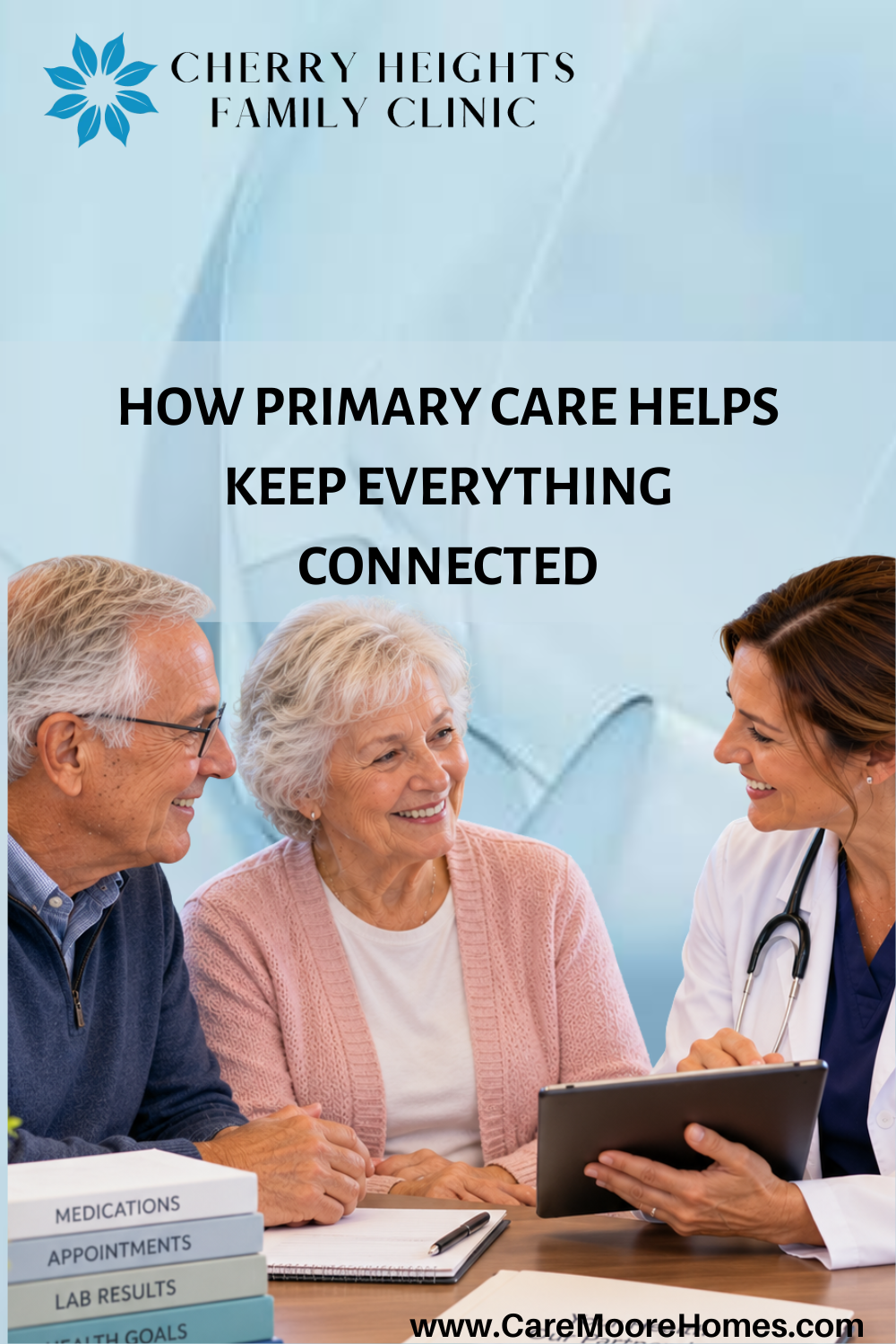
How Primary Care Helps Keep Everything Connected
How Primary Care Helps Keep Everything ConnectedHealthcare often becomes more complicated over time.Someone who once visited a doctor only for an occasional illness may eventually find themselves managing blood pressure, arthritis, medications, preventive screenings, specialist appointments, laboratory testing, and follow-up after a hospital visit.None of those needs may feel overwhelming by themselves.The challenge is keeping everything connected.For adults and older adults in Meridian and Ada County, Idaho, having a consistent primary care provider can provide an important central point for organizing healthcare.Cherry Heights Family Clinic, located at 1560 Crestmont Drive, Suite A in Meridian, provides family and primary healthcare that includes primary care, geriatric medicine, preventive services, laboratory coordination, medication prescribing, referrals to specialists, women's health, and house calls. The clinic states that when serving as a patient's primary care provider, its team can coordinate laboratory services and manage referrals to other healthcare professionals when needed.For patients managing several health concerns at once, that coordination can be just as important as treating any one diagnosis.Healthcare Needs Often Become More Connected With AgeA health concern rarely exists completely on its own.Consider an older adult experiencing arthritis.Joint pain may make walking harder.Reduced activity may affect strength and mobility.Difficulty walking may make grocery shopping more challenging.Changes in activity or diet may influence other health conditions.A medication prescribed for one issue may also need to be considered alongside medications prescribed by another specialist.This is why primary care can become increasingly valuable as health needs grow more complex.Rather than looking only at one symptom, primary care offers an opportunity to consider the broader picture.Care Coordination Tip: Keep one current list of medications, specialists, diagnoses, recent tests, and hospital visits. Bringing that information to primary care appointments can help providers understand how the different pieces of your healthcare fit together.Meridian's Growth Makes Ongoing Primary Care an Important Local ResourceMeridian has experienced substantial population growth.According to the U.S. Census Bureau, Meridian's estimated population reached 142,988 residents in 2025, up about 21.4% from its 2020 population estimates base. Approximately 14.8% of Meridian residents are age 65 or older.As Meridian and the broader Treasure Valley continue growing, more local adults and families will need healthcare resources that can follow patients through different stages of life.For older adults, that may mean finding a clinic that can help with:Preventive careChronic conditionsMedication reviewReferralsFollow-up after specialist visitsGeriatric concernsMobility changesLifestyle and nutrition questionsHouse-call options when getting to the office becomes difficultPrimary care can provide continuity while those needs evolve.What Does Care Coordination Actually Mean?Care coordination does not mean one provider performs every type of medical service.It means helping connect the different professionals, tests, treatments, and health concerns involved in a person's care.A patient might see:A primary care providerCardiologistOrthopedistDermatologistPhysical therapistPharmacistMental health professionalOther specialistsEach professional focuses on a different area.Primary care can help serve as a central point where those pieces come together.Cherry Heights Family Clinic states that its PCP services include laboratory coordination, medication prescribing, and referrals to specialists and other healthcare professionals when necessary.That can help patients avoid feeling as though every medical appointment exists in isolation.Keep Your Primary Care Provider Updated After Specialist VisitsOne of the easiest ways healthcare becomes fragmented is when patients assume every office automatically knows what happened elsewhere.Sometimes records are shared quickly.Other times they are not.Patients can help keep information connected by telling their primary care provider about:New specialistsNew diagnosesProceduresNew medicationsMedications that were stoppedEmergency-room visitsHospital staysNew laboratory testsChanges in symptomsBring paperwork when useful.Even a short discharge summary or updated medication list can help clarify what changed.This becomes especially important when several providers are involved.Medication Lists Can Become Complicated QuicklyMany older adults take more than one medication.That does not automatically create a problem, but it can create confusion.A person may receive one prescription from a primary care provider and another from a specialist.A medication may be changed after hospitalization.An over-the-counter product may be added without appearing on the clinic's medication list.Supplements may also be used.Over time, the list can become difficult to track.A primary care visit is a useful opportunity to review what the patient is actually taking.Bring a list that includes:Prescription nameDoseHow often it is takenWhich provider prescribed itOver-the-counter medicationsVitaminsSupplementsRecently discontinued medicationsPatients should not stop or adjust prescription medications without appropriate medical guidance.The goal of a medication review is to make sure the healthcare team is working from accurate information.Chronic Conditions Need Long-Term Follow-UpChronic health conditions are different from short-term illnesses.They often require ongoing monitoring rather than one-time treatment.Cherry Heights Family Clinic describes its primary care services as including chronic-condition management as part of broader family and geriatric care.Follow-up may involve conversations about:SymptomsMedication effectivenessSide effectsLaboratory resultsPhysical activityNutritionChanges in weightMobilitySleepWhether specialty care is neededThe specific plan depends on the condition and the individual patient.A person may feel well even when a chronic condition still needs monitoring.That is one reason routine follow-up remains important.Geriatric Care Looks at More Than DiagnosisOlder adults may have health goals that are different from those of younger patients.A laboratory result matters.So does whether someone can continue climbing stairs.Blood pressure matters.So does whether dizziness is making a patient afraid to drive.Medication management matters.So does whether the medication schedule has become too complicated to follow.Cherry Heights Family Clinic lists geriatric medicine among its services, describing care focused on preventing and treating diseases and disabilities affecting older adults.For seniors, geriatric-focused primary care may include discussion of:MobilityIndependenceChronic diseaseMedicationsNutritionPreventive careDaily functionFamily or caregiver involvementThe broader goal is not simply treating disease.It is helping the patient maintain health and function as circumstances change.Mobility Changes Are Worth MentioningOlder adults sometimes assume mobility changes are simply part of aging and do not need to be discussed.But changes in mobility can affect many parts of health.A patient may start walking less because of knee pain.They may avoid stairs.They may stop shopping independently.Eventually, reduced mobility can change daily routines and independence.Tell your primary care provider if you notice:Increased difficulty walkingNew balance problemsJoint pain affecting daily tasksTrouble getting out of a chairDifficulty with stairsReduced activity because of discomfortRecent falls or near fallsA provider can help determine whether further evaluation, treatment, or referral is appropriate.Laboratory Testing Is One Piece of the Bigger PictureLaboratory testing can help healthcare professionals monitor certain conditions and investigate symptoms.However, laboratory results are most useful when considered alongside the patient's medical history, medications, symptoms, and overall condition.Cherry Heights Family Clinic states that its PCP services include coordinating laboratory services as part of ongoing primary care.Patients should ask questions when results are unclear.For example:What does this result mean for me?Does anything need to change?When should this test be repeated?Does this affect one of my medications?Clear communication can make medical information easier to use.Preventive Care Should Not Disappear When Chronic Conditions DevelopPeople managing several medical conditions sometimes become so focused on those problems that preventive care receives less attention.Preventive healthcare still matters.Depending on the patient's age, history, and risk factors, primary care may include discussion of:ImmunizationsBlood pressureCholesterolBlood sugarCancer screeningNutritionPhysical activityWomen's healthBone healthSleepEmotional well-beingCherry Heights Family Clinic offers preventive services and annual wellness-related examinations as part of its broader family healthcare services.Which preventive services are appropriate depends on the individual.Patients should discuss recommendations with their healthcare provider rather than relying on a one-size-fits-all checklist.Women's Health Can Be Part of Long-Term Primary CareWomen's health continues to evolve throughout adulthood.Cherry Heights Family Clinic lists services related to heart health, nutrition, weight management, thyroid concerns, menopause, cancer-related concerns, and preventive examinations.For older women, healthcare conversations may shift toward:Cardiovascular riskBone healthMenopause-related concernsThyroid healthPreventive screeningWeight or nutrition changesMedication reviewAgain, the appropriate recommendations depend on age, history, prior testing, and individual risk factors.Lifestyle Conversations Can Support Medical CarePrimary care is not limited to medications and testing.Daily habits affect many health conditions.Patients may benefit from conversations about:NutritionPhysical activitySleepWeight changesStressTobacco useAlcohol useSustainable routinesCherry Heights Family Clinic's broader healthcare approach includes patient education and individualized care, and its stated core values place patient needs first.Lifestyle recommendations should be realistic.A plan someone can follow consistently is often more useful than a dramatic change that cannot be maintained.House Calls May Help Keep Care ConnectedWhen mobility or transportation becomes difficult, patients may begin postponing appointments.Cherry Heights Family Clinic offers house-call services and describes them as primary healthcare delivered at the patient's place of residence.For appropriate patients, home visits may help maintain continuity when:Driving is no longer comfortableGetting into a vehicle is difficultRecovery from illness limits mobilityA caregiver cannot easily transport the patientLeaving home is especially tiringFamilies should contact the clinic directly to confirm current eligibility, scheduling, service area, and insurance coverage.Not every medical concern can be managed at home, but house calls may provide another option when access becomes difficult.Patient-Centered Care Means Speaking UpCherry Heights Family Clinic identifies patient-centered care as its primary value and states that the needs of the patient come first. It also emphasizes respect, teamwork, dignity, and sensitivity toward patients and families.Patients can support that relationship by asking questions.If something is unclear, say so.If a medication is causing problems, mention it.If cost is preventing you from following a treatment plan, tell the provider.If a new symptom affects daily life, explain how.Healthcare plans are more useful when providers understand what patients are actually experiencing outside the exam room.Family Caregivers Can Help Without Taking OverAdult children, spouses, and caregivers can be extremely helpful during appointments.They may notice changes the patient has forgotten to mention.They can take notes.They can help maintain medication lists.But the patient should still remain part of the conversation whenever possible.Family members can support by:Preparing questions togetherBringing updated recordsTaking notesClarifying medication instructionsHelping schedule follow-up visitsSharing observations when appropriateThe goal is partnership rather than replacing the patient's voice.A Simple Care Coordination ChecklistBefore your next primary care appointment, consider reviewing this checklist.Update Your Medication ListInclude prescriptions, supplements, vitamins, and over-the-counter products.List Current SpecialistsWrite down who you are seeing and why.Note Recent Medical EventsInclude hospitalizations, urgent-care visits, surgeries, or new diagnoses.Bring Important Test ResultsIf you are not sure whether the clinic received outside records, bring copies when possible.Write Down Changes in Daily FunctionMention changes involving mobility, sleep, appetite, memory, energy, driving, or normal routines.Prepare QuestionsChoose your most important concerns before the appointment.Confirm Follow-UpBefore leaving, make sure you understand the next steps.Insurance and Coverage Are Worth ConfirmingCherry Heights Family Clinic currently lists multiple insurance options, including Medicare, Medicare Advantage plans, Idaho Medicaid, Blue Cross Blue Shield, SelectHealth, PacificSource, Regence, TriCare, UnitedHealthcare/AARP, and private-pay options, among others.Insurance networks and benefits can change.Patients should verify their specific plan, coverage, referrals, deductibles, copays, and service-specific benefits when needed.Frequently Asked Questions About Primary Care Coordination in MeridianCan Cherry Heights Family Clinic serve as a primary care provider?Yes. The clinic states that it welcomes patients seeking a PCP and can coordinate laboratory services, prescribe medications when appropriate, and manage referrals to specialists and other healthcare professionals.Does Cherry Heights Family Clinic provide geriatric care?Yes. Geriatric medicine is listed among the clinic's services and focuses on healthcare needs affecting older adults.Can the clinic help coordinate specialists?Yes. Cherry Heights Family Clinic states that specialist referrals and coordination are part of its primary care services when needed.Does Cherry Heights Family Clinic offer house calls?Yes. The clinic advertises house-call primary care delivered at a patient's place of residence. Patients should contact the clinic for current availability and eligibility.Where is Cherry Heights Family Clinic located?Cherry Heights Family Clinic is located at 1560 Crestmont Drive, Suite A, Meridian, Idaho 83642. The clinic lists 208-650-4888 as its main phone number.Keep Your Healthcare Connected as Needs ChangeManaging healthcare becomes more challenging when several conditions, medications, specialists, and appointments are involved.Patients should not have to feel as though they are managing each part completely on their own.For adults and older adults in Meridian and Ada County, Cherry Heights Family Clinic provides family and primary healthcare with geriatric medicine, preventive care, chronic-condition support, laboratory coordination, referrals, house calls, and other services intended to help patients navigate changing health needs.A strong primary care relationship can help patients understand how different pieces of healthcare connect.It can provide a place to review medications.Discuss new symptoms.Follow up after specialist appointments.Talk about mobility.Keep preventive care on the radar.And ask questions when a healthcare plan becomes confusing.To learn more about Cherry Heights Family Clinic, connect with the practice through its SeniorsBlueBook.com business profile: [SBB Listing URL].Good care coordination is not about having fewer healthcare professionals involved. It is about making sure the different parts of care work together around the person receiving it.
Sep 23, 2026

A Guide for Meridian Adults and Seniors
A Guide for Meridian Adults and SeniorsMany people think about healthcare only when something goes wrong.A painful joint, persistent cough, unusual fatigue, or sudden illness may be what finally prompts someone to schedule an appointment. But primary care is also valuable during the stretches when a person feels relatively well.Regular preventive care gives adults and older adults an opportunity to look ahead rather than simply react to illness.For residents of Meridian and Ada County, Idaho, Cherry Heights Family Clinic provides family-oriented primary care that includes preventive medicine, comprehensive physical examinations, chronic-condition management, immunizations, geriatric care, lifestyle management, nutrition education, laboratory coordination, and referrals when specialty care is appropriate.For older adults especially, staying connected with a primary care provider can help bring together many pieces of health that otherwise become fragmented.Preventive Care Matters in a Growing Meridian CommunityMeridian continues to experience substantial growth.According to the U.S. Census Bureau, the city's estimated population reached 142,988 residents in 2025, representing growth of approximately 21.4% from its 2020 population estimates base. About 14.8% of Meridian residents are age 65 or older.That means thousands of local residents are navigating health decisions associated with middle age, retirement, and older adulthood.Some are managing their first chronic health condition.Others are balancing several medications.Some may feel healthy but want to stay current on preventive care.Others have recently moved to Meridian and need to establish a relationship with a new primary care clinic.Preventive medicine gives patients an opportunity to discuss these needs before a health concern becomes more difficult to manage.Preventive Care Is More Than an Annual AppointmentThe phrase "preventive care" sometimes sounds like it refers only to one yearly physical.In reality, prevention can involve many different conversations and services.Depending on a person's age, medical history, family history, lifestyle, medications, and individual risk factors, primary care may involve discussions about:Blood pressureCholesterolBlood sugarImmunizationsNutritionPhysical activityWeight changesSleepTobacco or alcohol useCancer screeningHeart healthBone healthMental well-beingMedication safetyChanges in mobility or balanceCherry Heights Family Clinic lists preventive health services as part of its primary care practice and includes comprehensive histories and physical examinations, immunizations, lifestyle management, nutrition and health education consultations, and geriatric care among its services.The exact services recommended for one person may be very different from those recommended for someone else.That is why individualized primary care matters.Preventive Care Tip: Before an appointment, write down any health changes you have noticedeven if they seem minor. Changes in energy, balance, sleep, appetite, memory, pain, or daily function may be worth discussing with your healthcare provider.Annual Wellness Visits Can Help Organize the Bigger PictureFor older adults, a preventive visit can be a useful opportunity to review more than one health issue at a time.Cherry Heights Family Clinic lists both an Initial Preventive Physical Examination and Subsequent Annual Wellness Visit among exams offered through its women's health and preventive services.A wellness-focused visit may help patients and providers step back and ask:What has changed during the past year?Are current medications still appropriate?Are preventive screenings up to date?Has mobility changed?Are there new concerns about sleep, nutrition, or daily activities?Does the patient need a referral to another healthcare professional?Preventive visits are especially useful when patients arrive prepared.Bring an updated medication list and information about recent hospital stays, specialist appointments, or major health changes.Medication Reviews Become More Important With AgeMany adults begin with one prescription.Over time, that number may increase.One medication may be prescribed for blood pressure, another for cholesterol, another for pain, and another for a different condition.Patients may also take vitamins, supplements, and over-the-counter medications.That can become difficult to manage.A primary care visit provides an opportunity to make sure the clinic has an accurate medication list.Consider bringing:Prescription namesDosagesHow often each medication is takenOver-the-counter medicationsVitaminsHerbal products or supplementsInformation about medications recently stopped or changedDo not stop or change prescription medications without discussing the decision with an appropriate healthcare professional.The goal is to make sure all members of the healthcare team have accurate information.Chronic Conditions Need Follow-Up Even When You Feel FineOne challenge with chronic health conditions is that symptoms may not always reflect what is happening inside the body.Someone with high blood pressure, for example, may feel completely normal.Other conditions can fluctuate.Symptoms may be manageable for months and then gradually become more disruptive.Cherry Heights Family Clinic lists ongoing management of chronic conditions such as asthma and arthritis among its primary care services. Its provider team also includes clinicians whose areas of focus include adult and geriatric primary care, chronic disease management, preventive medicine, and health promotion.Regular follow-up can help patients discuss:New symptomsMedication effectivenessSide effectsChanges in mobilityPain levelsLaboratory resultsLifestyle challengesWhether specialist care may be neededManaging a chronic condition is usually a process rather than a one-time treatment.Healthy Aging Includes Mobility and Everyday FunctionHealthcare is not only about test results.For many older adults, one of the most important questions is:Can I continue doing the things I want and need to do?That may include:Walking comfortablyDrivingShoppingCookingExercisingUsing stairsCaring for a homeTravelingParticipating in hobbiesChanges in mobility or joint discomfort can affect independence long before someone thinks of themselves as having a serious medical problem.Cherry Heights Family Clinic provides geriatric medicine focused on preventing and treating diseases and disabilities affecting older adults. The clinic also lists joint-health and mobility-related services among its broader offerings.If movement is becoming harder, mention it.A healthcare provider may help determine whether further evaluation, lifestyle changes, treatment, or referral to another professional is appropriate.Nutrition Is Part of Preventive HealthcareNutrition needs can change throughout adulthood.A diet that worked well at age 40 may not fit the same person's health situation decades later.Changes in appetite, medications, dental problems, chronic conditions, activity level, or weight can all affect nutritional needs.Cherry Heights Family Clinic includes nutrition and health education consultations among its primary care services and emphasizes lifestyle management as part of its approach.Rather than focusing only on short-term diets, older adults may benefit from discussing sustainable habits that support their individual health goals.Questions worth asking may include:Am I eating enough protein?Has my weight changed unexpectedly?Could a medication be affecting my appetite?Should I change my diet because of a chronic condition?Are supplements necessary?How much physical activity is appropriate for me?Nutrition recommendations should reflect the individual's health history rather than generic advice.Women's Preventive Health Continues Through Later LifeWomen's preventive healthcare does not end after the reproductive years.Cherry Heights Family Clinic provides women's health services addressing areas that include heart health, nutrition, weight management, thyroid concerns, menopause, breast exams, Pap exams, and other preventive services.As women age, the focus of healthcare may change.Conversations may increasingly involve:Cardiovascular healthBone healthMenopause-related concernsThyroid conditionsCancer screeningWeight changesNutritionMedication useWhich screenings remain appropriate depends on age, medical history, prior results, and individual circumstances.Patients should discuss those decisions with their healthcare provider rather than assuming every recommendation applies indefinitely.Mental and Emotional Health Belong in Primary Care ConversationsHealthy aging is not only physical.Retirement, caregiving, loss, changes in independence, chronic illness, and family transitions can affect emotional well-being.Cherry Heights Family Clinic's provider team includes expertise in both primary care and behavioral or mental health support. One current provider, Dr. Joan Fraino, is board certified as both a Family Nurse Practitioner and Psychiatric Mental Health Nurse Practitioner and provides adult and geriatric primary care along with preventive and chronic-disease services.Patients should feel comfortable mentioning changes such as:Persistent sadnessAnxietyDifficulty sleepingLoss of interest in usual activitiesIncreased irritabilityDifficulty coping with caregivingEmotional changes following illness or retirementThese concerns are part of overall health and deserve attention.Primary Care Can Help Coordinate SpecialistsAs health needs become more complex, patients may see several different professionals.A person might be receiving care from a cardiologist, orthopedist, dermatologist, therapist, pharmacist, and primary care provider at the same time.Cherry Heights Family Clinic states that when serving as a patient's primary care provider, its team can coordinate laboratory services, prescribe medications when appropriate, and arrange referrals to specialists or other healthcare professionals.Patients can make coordination easier by informing their PCP about:New specialistsNew diagnosesRecent proceduresHospital visitsMedication changesNew laboratory testingMaintaining one updated health summary can also help.House Calls May Help When Getting to the Clinic Is DifficultTransportation can become a barrier to healthcare.An older adult may stop driving.Mobility limitations may make getting in and out of a vehicle difficult.Someone recovering from illness may be temporarily unable to comfortably travel.Cherry Heights Family Clinic currently offers house calls, describing them as patient-centered primary healthcare delivered at the patient's place of residence.Families interested in this service should contact the clinic directly to discuss current availability, service areas, scheduling, insurance coverage, and whether a house call is appropriate for the patient's needs.For some older adults, home-based primary care can remove a practical obstacle that might otherwise cause them to delay follow-up.A Preventive Care Visit Works Best When Patients ParticipateHealthcare is most useful when patients feel comfortable asking questions.Cherry Heights Family Clinic identifies patient-centered care as a primary value and says it emphasizes respect, teamwork, integrity, and attention to patients and families.Patients do not need to understand every medical term before arriving.Ask for clarification.If instructions seem difficult to follow, say so.If cost is making a medication difficult to afford, mention it.If you are unsure why a test is being recommended, ask.Preventive care should be a conversation rather than simply a checklist.How to Prepare for Your Next Primary Care AppointmentA simple appointment checklist can make visits more productive.Bring Your Medication ListInclude prescriptions, over-the-counter drugs, vitamins, and supplements.Write Down Your Main QuestionsChoose the concerns that matter most so they are not forgotten during the appointment.Mention Changes in Daily LifeDifficulty walking, sleeping, eating, driving, concentrating, or completing normal tasks may provide important context.Share Recent Healthcare UpdatesTell your primary care provider about hospitalizations, urgent-care visits, new specialists, or prescription changes.Know Your Family HistoryFamily history can affect discussions about certain health risks and screenings.Bring Support if NeededSome older adults find it helpful to have a spouse, adult child, or caregiver attend important appointments.That person can take notes and help remember follow-up instructions.Does Cherry Heights Family Clinic Accept Medicare?Cherry Heights Family Clinic currently lists Medicare, several Medicare Advantage plans, Idaho Medicaid, Blue Cross Blue Shield, SelectHealth, UnitedHealthcare/AARP, PacificSource, Regence, TriCare, and multiple other insurance options among accepted plans.Insurance networks and benefits can change.Patients should confirm their specific coverage with both the clinic and their insurer before care when necessary.Frequently Asked Questions About Preventive Care in MeridianDoes Cherry Heights Family Clinic provide preventive primary care?Yes. The clinic lists comprehensive physical exams, preventive health services, immunizations, lifestyle management, nutrition education, geriatric care, chronic-condition management, and other family medicine services.Does the clinic care for seniors?Yes. Cherry Heights Family Clinic lists geriatric medicine among its core services, and its current provider team includes adult and geriatric primary care expertise.Can Cherry Heights Family Clinic coordinate specialist referrals?Yes. The clinic states that when acting as a patient's primary care provider, its team can manage referrals to specialists and other healthcare professionals when appropriate.Does Cherry Heights Family Clinic offer house calls?Yes. The clinic advertises house-call primary care for patients who may benefit from receiving services at their residence. Availability and eligibility should be confirmed directly with the clinic.Where is Cherry Heights Family Clinic located?Cherry Heights Family Clinic is located at 1560 Crestmont Drive, Suite A, Meridian, Idaho 83642. The clinic lists 208-650-4888 as its main phone number.Make Preventive Care Part of Healthy Aging in MeridianHealthy aging is rarely the result of one appointment, one screening, or one lifestyle change.It is usually built through many small decisions made over time.Keeping appointments.Asking questions.Reviewing medications.Managing chronic conditions.Paying attention to changes in mobility.Discussing nutrition.Keeping preventive care current.For adults and seniors in Meridian and Ada County, Cherry Heights Family Clinic provides locally based primary and family healthcare that includes preventive services, chronic-condition management, geriatric medicine, health education, lifestyle support, specialist coordination, and house-call options.The goal of preventive healthcare is not to predict every future health concern. It is to create regular opportunities to identify risks, notice meaningful changes, and make informed decisions with a healthcare professional who understands the patient's broader history.To learn more about local family and primary care services, connect with Cherry Heights Family Clinic through their SeniorsBlueBook.com business profile: [SBB Listing URL].Aging well does not require perfect health. It means staying involved in your healthcare, understanding your changing needs, and having trusted resources available as those needs evolve.
Sep 23, 2026
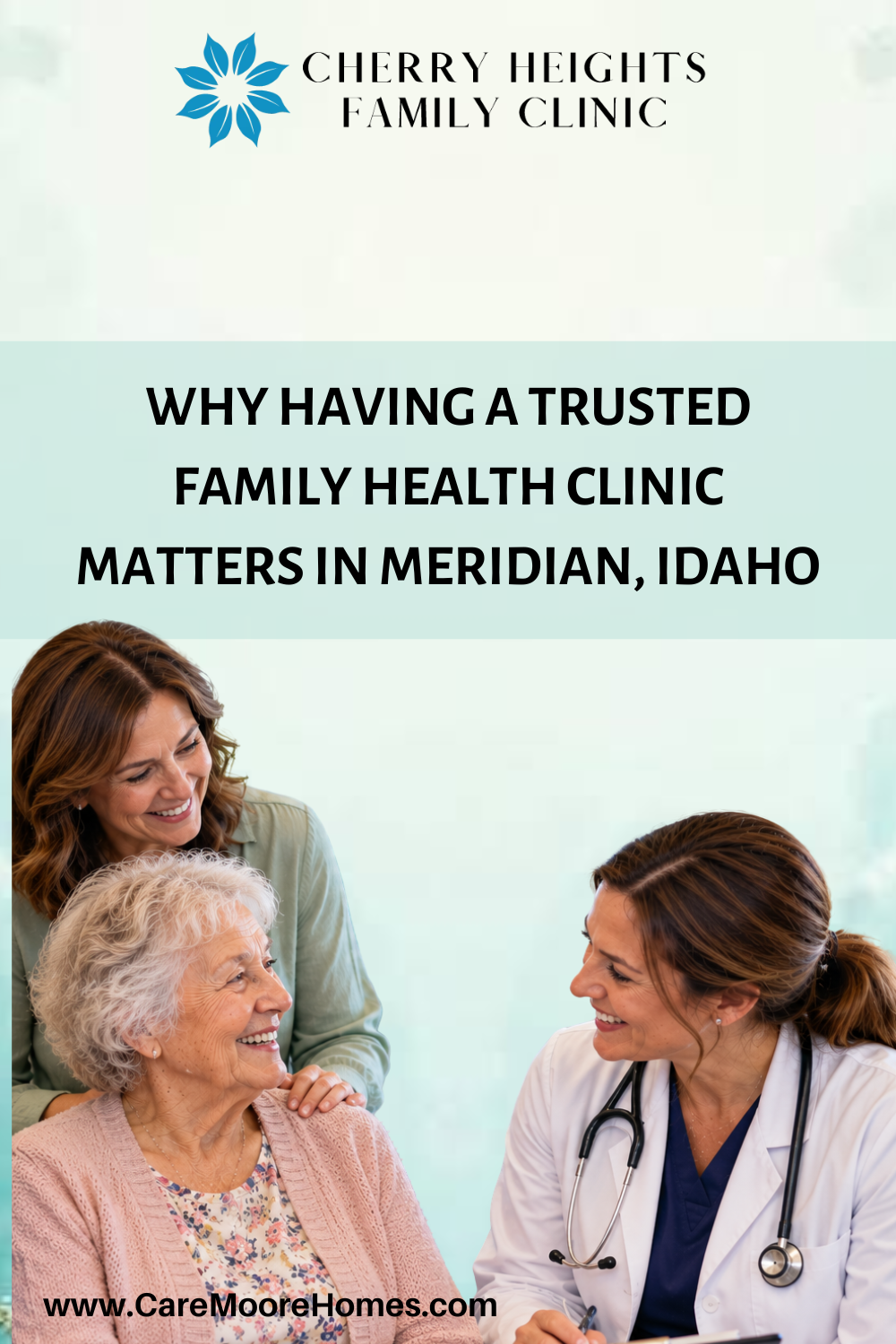
Why Having a Trusted Family Health Clinic Matters in Meridian, Idaho
Why Having a Trusted Family Health Clinic Matters in Meridian, IdahoHealthcare can become more complicated as life changes.A young adult may need an annual physical and preventive screenings. A parent may be managing high blood pressure or arthritis. An older adult may be taking several medications, seeing multiple specialists, and wondering which provider should help coordinate everything.In each of these situations, having a familiar primary care clinic can provide an important starting point.For individuals and families in Meridian and Ada County, Idaho, Cherry Heights Family Clinic provides family-oriented primary care with services that include preventive care, adult and geriatric medicine, chronic disease management, women's health, laboratory coordination, specialist referrals, health education, and house calls. The clinic is located at 1560 Crestmont Drive, Suite A, in Meridian.A strong relationship with a family healthcare provider is not only useful when someone becomes sick. Regular primary care can also help patients stay informed about their health, address concerns earlier, and coordinate care as their needs change over time.Meridian Is Growingand So Is the Need for Accessible HealthcareMeridian has experienced significant growth over the past several years.According to the U.S. Census Bureau, the city's estimated population reached 142,988 residents in 2025, compared with a 2020 population estimates base of 117,810. That represents growth of approximately 21.4% in five years. About 14.8% of Meridian residents are age 65 or older.That combination of overall population growth and an established older-adult population creates an ongoing need for healthcare resources that can serve people through different stages of life.For older adults in particular, healthcare often becomes less about treating one isolated issue and more about looking at the complete picture.Someone may be managing arthritis while also monitoring blood pressure.Another person may be experiencing changes in sleep, mobility, nutrition, or medications.Having a primary care provider who understands the patient's history can make those conversations more connected.What Does a Family Health Clinic Do?A family health clinic provides care for many of the health concerns people experience throughout adulthood.Rather than focusing on a single medical specialty, primary care can serve as a central point for prevention, evaluation, ongoing management, and referrals when more specialized care is needed.Cherry Heights Family Clinic describes its primary care services as including pediatric and adult medical care, comprehensive health histories and physical examinations, chronic-condition management, preventive health services, women's health, immunizations, geriatric care, lifestyle management, and nutrition and health education.The clinic also states that, when serving as a patient's primary care provider, its team can coordinate laboratory services, prescribe medications when appropriate, and make referrals to specialists or other healthcare professionals.For patients, that coordination can be valuable because healthcare rarely happens in only one office.A primary care provider may help connect information from laboratory testing, specialists, medications, screenings, and ongoing health concerns into a more complete picture.Preventive Care Is About Looking AheadMany people visit a healthcare provider only when something hurts.Preventive care takes a different approach.Instead of waiting for a problem to become obvious, preventive visits give patients and providers an opportunity to review health risks, discuss changes, and determine which screenings or other preventive measures may be appropriate.Preventive care might involve conversations about:Blood pressureCholesterolDiabetes riskImmunizationsNutritionPhysical activityCancer screeningsMedication useSleepMental and emotional well-beingChanges in mobility or balanceWhich screenings or services are appropriate depends on the individual's age, medical history, risk factors, medications, and recommendations from their healthcare provider.Cherry Heights Family Clinic includes preventive medicine and routine screenings among its primary care focus areas, including preventive services for adults and geriatric patients.Health Tip: A primary care appointment is more useful when patients bring an updated medication list, recent specialist information, and questions they want to discuss. Preparing ahead can make it easier to cover the most important concerns during the visit.Primary Care Becomes Especially Important With AgeAging does not automatically mean poor health.Many older adults remain active, independent, and involved in their communities for years.However, health needs can become more complex with age.An older adult may be managing several conditions at once, using multiple medications, or seeing more than one specialist.Cherry Heights Family Clinic specifically lists geriatric medicine among its services and states that its approach is focused on preventing and treating diseases and disabilities affecting older adults.The clinic's provider information also identifies adult and geriatric primary care, chronic disease management, preventive medicine, and health promotion among services available through its clinical team.For seniors and their families, geriatric-focused primary care may involve discussing issues such as mobility, chronic conditions, medication routines, nutrition, preventive screenings, or changes in daily functioning.The specific approach should always be individualized.Two people who are both 75 may have completely different healthcare needs.Managing Chronic Conditions Takes Ongoing AttentionChronic conditions are different from short-term illnesses.A cold may resolve within days.Conditions such as arthritis, asthma, high blood pressure, or diabetes may require ongoing monitoring and adjustments over many years.Cherry Heights Family Clinic lists chronic-condition management among its primary care services, including care related to conditions such as asthma and arthritis.Successful chronic-condition care often depends on consistency.A provider may monitor changes over time, review medications, discuss lifestyle factors, order appropriate laboratory testing, and recommend specialty care when needed.Patients can also play an active role by keeping track of symptoms and asking questions.For example, someone with arthritis may want to discuss how pain affects walking or household activities.A person managing several prescriptions may want to review whether their medication list is still current.The purpose of regular visits is not simply to repeat the same appointment every few months. It is to notice what has changed.Healthcare Coordination Can Reduce ConfusionAs people age, their healthcare team may expand.A patient might have:A primary care providerA cardiologistAn orthopedistA dermatologistA pharmacistA physical therapistOther specialistsEach professional has a different role.The challenge for patients and families is making sure important information does not feel fragmented.Cherry Heights Family Clinic states that its primary care team can coordinate laboratory services and referrals to specialists and other healthcare professionals as needed.Patients can support that process by keeping their healthcare team informed.Bring updated medication lists to appointments.Tell the primary care provider about new specialists.Mention emergency-room visits or hospitalizations.Share new diagnoses or medication changes.The more complete the information, the easier it is for providers to understand the patient's overall situation.House Calls Can Make Primary Care More AccessibleGetting to a medical office is easy to take for granted until transportation or mobility becomes difficult.An older adult may stop driving.Someone recovering from an illness may find it difficult to leave home.A family caregiver may struggle to coordinate transportation around work.Cherry Heights Family Clinic lists house calls among its services, bringing primary healthcare to a patient's place of residence and describing the service as a way to provide care in familiar surroundings.For some adults and seniors, that can reduce one of the practical barriers to receiving primary care.Families interested in house calls should contact the clinic directly to determine current availability, service areas, scheduling requirements, insurance coverage, and whether home-based care is appropriate for the patient's specific needs.Women's Health Can Remain Important Throughout AdulthoodWomen's healthcare needs change over time.Cherry Heights Family Clinic provides women's health services addressing areas such as nutrition, heart health, thyroid concerns, menopause, reproductive health, preventive examinations, Pap exams, breast exams, and other health concerns.For older women, preventive care does not simply stop after menopause.Health conversations may shift toward areas such as bone health, cardiovascular risk, medications, cancer screening decisions, nutrition, and overall quality of life.Recommendations vary depending on age and individual medical history, which is another reason ongoing communication with a primary care provider is valuable.Nutrition and Lifestyle Are Part of the Bigger Health PictureMedical care often involves more than prescriptions and tests.Daily habits can influence many aspects of health.Cherry Heights Family Clinic lists lifestyle management and nutrition and health education consultations among its primary care services.Lifestyle conversations may include topics such as:Food choicesPhysical activityWeight managementSleep habitsStressAlcohol or tobacco useMaintaining mobilityBuilding sustainable routinesThe goal should not be creating a perfect lifestyle overnight.Small, realistic changes are usually easier to maintain.Patients should discuss new exercise routines, major dietary changes, supplements, or weight-management approaches with an appropriate healthcare professional, particularly when chronic conditions or medications are involved.Feeling Heard Is Part of Good Primary CareMany people have experienced an appointment where they left with unanswered questions.A strong primary care relationship should create room for communication.Cherry Heights Family Clinic describes patient-centered care as a core value and states that the needs of the patient come first. The clinic also emphasizes respect, integrity, teamwork, and treating patients and families with sensitivity.Patients can help make appointments more productive by speaking openly.If something is unclear, ask.If a treatment is difficult to follow, mention it.If cost is affecting whether medications are taken, tell the provider.If a new symptom is interfering with everyday life, explain how.Healthcare works best when the patient and provider can have an honest conversation rather than simply exchanging information.What to Bring to a Primary Care AppointmentA little preparation can help patients make better use of appointment time.Consider bringing:A current list of prescriptions and over-the-counter medicationsVitamins or supplements being usedNames of current specialistsRecent test results if the clinic does not already have access to themA short list of symptoms or changesQuestions about medicationsInformation about recent hospital or urgent-care visitsInsurance informationA family member or caregiver when helpfulFor older adults managing multiple health conditions, maintaining an updated medication list can be particularly useful.Insurance and Payment Options Are Worth Checking Before a VisitHealthcare coverage varies widely, so patients should verify benefits directly with both the clinic and their insurance plan.Cherry Heights Family Clinic currently lists a range of insurance options, including Medicare, multiple Medicare Advantage plans, Idaho Medicaid, Blue Cross Blue Shield, SelectHealth, UnitedHealthcare/AARP, PacificSource, Regence, TriCare, and private-pay options, among others.Insurance networks and individual plan coverage can change.A clinic accepting a particular insurer does not necessarily mean every service is covered under every plan.Patients should confirm current network participation, copays, deductibles, referrals, and service-specific coverage before receiving care when those details matter.When Should You Schedule a Primary Care Visit?People often wonder whether a concern is "important enough" to discuss.Primary care visits can be appropriate for many reasons, including preventive care, ongoing health management, or changes that are affecting everyday life.Consider contacting a healthcare provider when there is:A new or persistent symptomA meaningful change in mobility or energyQuestions about medicationsDifficulty managing an ongoing health conditionA need for preventive screenings or a wellness visitA recent hospital or emergency-room visit requiring follow-upA need for specialist coordinationA significant change in weight, appetite, sleep, or daily functioningUrgent or emergency symptoms require a different level of care. Patients experiencing a medical emergency should seek emergency services rather than waiting for a routine primary care appointment.Frequently Asked Questions About Family Health Clinics in MeridianWhat does Cherry Heights Family Clinic offer?Cherry Heights Family Clinic provides family and primary medical care in Meridian. Its listed services include preventive care, adult and geriatric medicine, chronic-condition management, women's health, laboratory coordination, referrals, health education, sports physicals, house calls, and additional clinical services.Does Cherry Heights Family Clinic provide care for older adults?Yes. The clinic lists geriatric medicine and geriatric care among its services. Its provider team also includes adult and geriatric primary care and chronic disease management.Does the clinic make house calls?Cherry Heights Family Clinic advertises house-call services that bring primary healthcare to the patient's residence. Families should contact the clinic to confirm current service availability and whether house calls are appropriate for the patient's situation.Does Cherry Heights Family Clinic accept Medicare?The clinic's current insurance information lists Medicare as well as several Medicare Advantage options among accepted plans. Patients should verify their specific coverage with the clinic and insurance carrier before an appointment.Where is Cherry Heights Family Clinic located?Cherry Heights Family Clinic is located at 1560 Crestmont Drive, Suite A, Meridian, Idaho 83642. The clinic lists 208-650-4888 as its main telephone number.Build a Stronger Connection to Your Health in MeridianPrimary care can serve as a foundation for managing health throughout adulthood.It provides a place to ask questions before they become crises, review changing health concerns, keep preventive care on the radar, manage chronic conditions, and coordinate specialty services when necessary.For adults and older adults in Meridian and Ada County, Cherry Heights Family Clinic offers locally based family medicine with primary care, geriatric services, preventive healthcare, chronic-condition management, women's health, health education, laboratory coordination, referrals, and house-call options.Healthcare decisions should always reflect the individual patient's medical history and needs. Rather than waiting until something feels seriously wrong, regular conversations with a healthcare provider can help patients better understand changes and make informed decisions about their care.To learn more about Cherry Heights Family Clinic and connect with this Meridian healthcare resource, visit their SeniorsBlueBook.com business profile: [SBB Listing URL].A trusted healthcare relationship is not only about treating illness. It can also help patients and families navigate prevention, aging, changing health needs, and the many everyday decisions that support long-term well-being.