5 Breathing Exercises For Emotional Regulation That Work
Beacon Therapy of Utah
For more information about the author, click to view their website: Beacon Therapy of Utah
Sep 02, 2026
Utah - Utah


Your heart races. Your thoughts spiral. You know you should
calm down, but “just relax” feels impossible when emotions run high. Here’s
what most people don’t realize: breathing exercises for emotional
regulation aren’t just wellness trends, they’re evidence-based
tools that directly influence your nervous system and can shift your
emotional state within minutes.
At Beacon Therapy, we teach these techniques to clients in
Salt Lake City and across Utah because they work when you need them most.
Whether you’re navigating grief, managing anxiety, or helping your teen through
a difficult season, controlled breathing offers immediate relief and
builds long-term resilience. The best part? You can practice these methods
anywhere, no appointment required.
In this guide, you’ll learn five specific breathing methods,
including 4-7-8 breathing, box breathing, and cyclic sighing. You’ll also
understand the science behind why they calm your body and mind, so
you can use them with confidence when stress hits hardest.
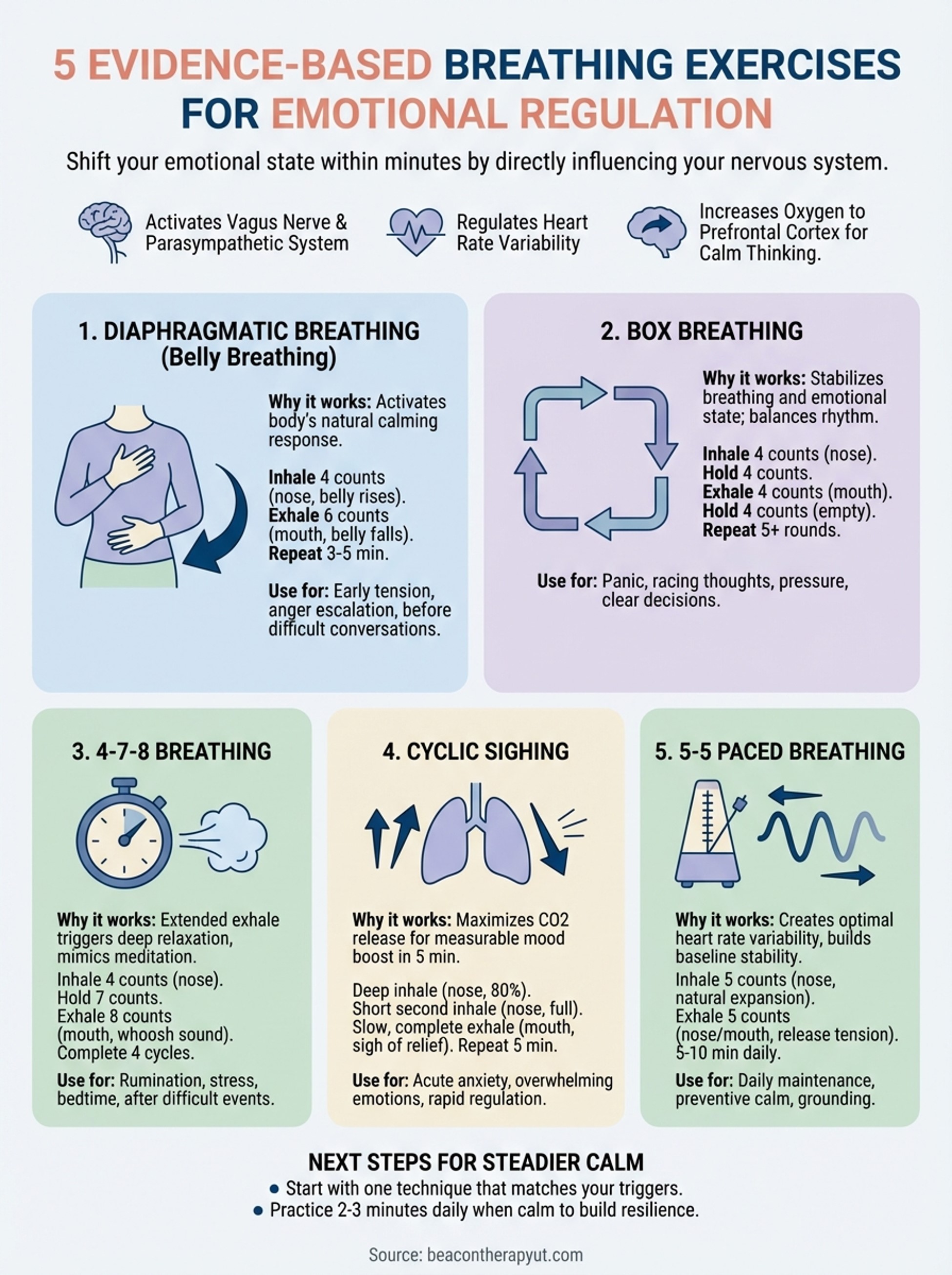
1. Diaphragmatic breathing with Beacon Therapy
Diaphragmatic breathing sits at the core of nearly every
breathing practice because it activates your body’s natural calming
response. When you breathe deeply into your belly instead of your chest,
you engage the vagus nerve, which tells your nervous system to
shift out of fight-or-flight
mode. This foundational technique is one of the first breathing exercises
for emotional regulation we teach clients at Beacon Therapy because it works
across nearly every emotional trigger.
Why belly breathing calms the nervous system
Your diaphragm is a dome-shaped muscle that sits below your
lungs. When you breathe into your belly, you stimulate the
parasympathetic nervous system, which lowers heart rate and
blood pressure. Chest breathing, by contrast, keeps you in a
sympathetic stress state, even when the immediate danger has passed. This
is why you feel tense after a stressful day even though nothing is actively
threatening you.
Belly breathing sends a direct signal to your brain that you
are safe, which allows your body to finally stand down.
How to do it step by step
Place one hand on your chest and the other on your
belly. Inhale slowly through your nose for 4 counts, letting only
your belly rise while your chest stays relatively still. Exhale through
your mouth for 6 counts, feeling your belly fall. Repeat this cycle for 3
to 5 minutes, maintaining a steady rhythm without forcing the breath.
When to use it for anxiety, anger, and overwhelm
Use diaphragmatic breathing when you first notice
tension building in your shoulders, jaw, or chest. It works well
before difficult conversations, after
receiving bad news, or when anger starts to escalate. Parents
of teens often find it helpful during emotional standoffs when both parties
need to reset before continuing a conversation.
Common mistakes that keep it from working
Many people force the breath or breathe too quickly,
which creates more tension instead of releasing it. Others give up
after 30 seconds because they don’t feel instant relief. Effective
regulation takes 2 to 3 minutes of consistent practice to shift your
nervous system. Avoid shallow breathing or holding your breath between cycles.
How a therapist can tailor it to your triggers
At Beacon
Therapy, we help you identify your specific emotional patterns and
adjust the rhythm to match your needs. Some clients need longer exhales for
anxiety, while others need shorter cycles to prevent lightheadedness.
A therapist can also integrate this technique with trauma-informed care if past
experiences make deep breathing feel unsafe.
2. Box breathing
Box breathing creates a perfectly balanced rhythm that
stabilizes both your breathing rate and your emotional state. Military
personnel and first responders use this method to stay focused under
extreme pressure because it gives your mind a concrete task while
calming your body. Among breathing exercises for emotional regulation, box
breathing stands out for its simplicity and immediate effectiveness during
acute stress.
What box breathing changes in your body
The equal counts in box breathing regulate your
heart rate variability, which improves your body’s ability to adapt to
stress. This technique increases oxygen flow to your prefrontal cortex,
the part of your brain responsible for rational thinking and emotional control.
When panic clouds your judgment, box breathing restores cognitive function
within 2 to 3 minutes.
How to do it step by step using a 4-4-4-4 count
Inhale through your nose for 4 counts, feeling your
lungs fill completely. Hold your breath for 4 counts without
tension. Exhale through your mouth for 4 counts, releasing all the
air. Hold empty for 4 counts before beginning the next cycle.
Repeat this pattern for at least 5 rounds.
Equal breathing creates equal emotions, which means your
nervous system shifts from chaos to control.
When to use it for panic, racing thoughts, and
frustration
Practice box breathing when you feel your thoughts
spiraling or when anger makes you want to react impulsively. It works
during panic
attacks, before public speaking, or when you need to make a clear
decision under pressure. Parents find it helpful during bedtime
battles with teens when emotions run high on both sides.
How to adjust the count if 4 seconds feels too long
Start with a 3-3-3-3 count if 4 seconds creates
strain or makes you feel breathless. You can also try 5-5-5-5
for deeper regulation once the basic pattern feels comfortable. The
key is maintaining equal counts across all four phases rather than hitting a
specific number.
Common mistakes and quick fixes
Holding your breath too tightly causes tension instead of
relaxation. Keep the holds gentle and natural, not forced. Some
people rush through the counts when anxiety spikes, which defeats the
purpose. Use a visual timer or count slowly in your head to
maintain the rhythm even when your mind races.
3. 4-7-8 breathing
The 4-7-8 method uses an extended exhale to trigger
deep relaxation faster than most other breathing exercises for
emotional regulation. Created by Dr. Andrew Weil, this technique mimics
the calming effect of meditation without requiring years of practice.
When you need to shift from high alert to genuine rest, this pattern delivers
results in under 2 minutes.
Why longer exhales help you downshift
Your exhale activates the parasympathetic nervous
system more powerfully than your inhale. By making your exhale nearly
twice as long as your inhale, you force your body to release tension it
might otherwise hold. This creates a natural sedative effect without
medication.
How to do it step by step
Inhale through your nose for 4 counts, keeping your
tongue resting behind your upper teeth. Hold your breath for 7 counts without
strain. Exhale completely through your mouth for 8 counts, making a
gentle whooshing sound. Complete 4 full cycles.
The extended exhale tells your body the threat has passed
and it’s safe to rest.
When to use it for stress, bedtime, and rumination
Practice 4-7-8 breathing when your mind won’t stop
replaying stressful
events or when you need to fall asleep despite racing thoughts. It
works well after difficult therapy sessions or when worry keeps you
awake past midnight.
Modifications for beginners and sensitive breathers
Shorten the pattern to 2-3-4 if the full count feels
uncomfortable or makes you dizzy. You can gradually increase the
duration as your lung capacity improves.
Signs you should switch to a gentler technique
Stop immediately if you feel dizzy, anxious, or more
activated instead of calm. Some people with trauma histories
find breath holds triggering, which means diaphragmatic breathing may suit
you better.
4. Cyclic sighing
Cyclic sighing leverages your body’s natural stress-relief
mechanism to deliver measurable mood improvements in just 5
minutes. Stanford researchers found that this technique reduced anxiety
and improved positive mood more effectively than meditation when
practiced daily. Unlike other breathing exercises for emotional regulation,
cyclic sighing focuses on the exhale as the primary release point for tension.
What research suggests about cyclic sighing and mood
A 2023 Stanford study showed that participants who practiced
cyclic sighing for 5 minutes daily experienced greater reductions in
anxiety and negative emotions compared to mindfulness meditation. The
technique works by maximizing carbon dioxide release, which signals
your nervous system to relax. You get measurable results because the double
inhale followed by an extended exhale creates physiological changes your body
cannot ignore.
How to do it step by step
Take a deep breath through your nose, filling your
lungs about 80% full. Add a second shorter inhale through your nose to
completely fill your lungs. Exhale slowly and completely through your
mouth as if you are sighing with relief. Repeat this pattern for 5
minutes without pausing between cycles.
When to use it for acute anxiety and tension
Practice cyclic sighing when anxiety feels physical
and overwhelming or when tension locks your chest and shoulders. It
works immediately before stressful events or when you need rapid
emotional regulation during a crisis moment.
Sighing is your body’s built-in pressure valve, and cyclic
sighing teaches you to use it intentionally.
What it should feel like and what it should not
You should feel your shoulders drop and your jaw
soften with each exhale. Your breathing should become easier
and deeper as you continue. Avoid forcing the breath or creating
tension in your throat during the exhale.
Safer alternatives if sighing makes you lightheaded
Switch to diaphragmatic breathing if you feel dizzy,
tingly, or more anxious after a few rounds. Some people need gentler
techniques when their nervous system is highly activated, which means box
breathing may serve you better until you stabilize.
5. 5-5 paced breathing
Paced breathing at a 5-5 rhythm creates optimal
heart rate variability, which means your body becomes more adaptable to
stress over time. Unlike techniques designed for crisis intervention, this
method builds baseline emotional stability when practiced
consistently. Among breathing exercises for emotional regulation, this one
works best as daily preventive maintenance rather than emergency response.
How paced breathing supports steady regulation
The 5-5 pattern matches your natural resonance
frequency, which is the breathing rate where your heart rate variability
reaches its peak. This creates a synchronized relationship between your
cardiovascular and nervous systems that strengthens your stress
resilience. Regular practice makes emotional regulation easier because your
body learns to maintain balance automatically.
How to do it step by step using a 5-5 rhythm
Inhale through your nose for 5 counts, allowing your
belly to expand naturally. Exhale through your nose or mouth for 5
counts, releasing tension from your shoulders. Continue this equal pattern
for 5 to 10 minutes daily, ideally at the same time each day to build
consistency.
Equal breathing trains your nervous system to stay centered
even when life gets chaotic.
When to use it for daily maintenance and in-the-moment
calm
Practice this technique every morning to set your
emotional baseline for the day or during your commute to work. You can
also use it when stress starts building but hasn’t peaked yet,
giving you control before emotions escalate.
How to pair it with grounding for stronger results
Combine paced breathing with physical grounding by pressing
your feet firmly into the floor or holding a cold object in your
hands. This combination anchors both your body and breath, creating
dual pathways for regulation.
How to build a realistic practice you will stick with
Start with just 2 minutes daily rather than attempting
10-minute sessions that feel overwhelming. Attach the practice to an
existing habit like your morning coffee or evening wind-down routine,
which makes consistency automatic rather than reliant on motivation.
Next steps if you want steadier, calmer
You now have five proven breathing exercises for emotional
regulation that work when stress hits hardest. The techniques you learned
(diaphragmatic breathing, box breathing, 4-7-8, cyclic sighing, and 5-5 paced
breathing) give you immediate tools for managing anxiety, anger, and
overwhelm without relying on medication or waiting for a
crisis to pass on its own.
Start with one technique that matches your specific
triggers rather than trying to master all five at once. Practice your
chosen method for 2 to 3 minutes daily when you feel calm, which
makes it accessible when emotions spike. Your nervous system learns fastest
through consistent repetition in low-stress moments.
Some emotional patterns need more than breathing techniques alone. If you still feel stuck after practicing these methods consistently, professional support can identify what’s blocking your progress and help you develop a personalized regulation strategy. Beacon Therapy in Salt Lake City offers both in-person and mobile therapy services tailored to your specific emotional needs and life circumstances.
- To view the original version of this article visit beacontherapyut.com/5-breathing-exercises-for-emotional-regulation-that-work/
- Seniors Blue Book was not involved in the creation of this content.
Other Articles You May Like
Personal Care Assistance for Seniors in Ocean County, NJ
Personal Care Assistance for Seniors in Ocean County, NJMaintaining independence is an important priority for many older adults. From choosing what to wear each morning to following a familiar bedtime routine, everyday activities help people feel comfortable, confident, and in control of their lives.As people age, however, some personal care tasks may gradually become more challenging.Changes in balance can make stepping into a shower difficult. Arthritis may complicate fastening buttons or handling grooming tools. Reduced strength can make standing, walking, or transferring between furniture more demanding.For families, recognizing these changes can raise important questions.How can an older adult continue living at home when bathing becomes difficult? What assistance is available for someone who struggles to get dressed? How can personal care be provided while respecting privacy and dignity?For seniors throughout Ocean County, New Jersey, professional in-home personal care assistance offers an option for addressing these everyday needs without immediately changing living arrangements.Home Instead Serving Ocean County provides personalized home care services designed to support older adults who need assistance with activities of daily living.Through appropriately qualified caregivers and individualized care arrangements, Home Instead helps seniors receive practical assistance with bathing, grooming, dressing, mobility, and personal routines in familiar surroundings.Understanding the role of professional personal care can help families make informed decisions about the support their loved ones need.What Is Personal Care Assistance?Personal care assistance focuses on helping individuals complete essential daily activities that may become difficult because of age-related changes, illness, disability, or reduced mobility.These activities are commonly described as activities of daily living, or ADLs.Common Activities of Daily LivingPersonal care assistance may include support with:Bathing and showeringDressing and undressingGroomingToiletingPersonal hygieneWalking and mobilityTransferring between positionsEating and drinkingMorning routinesBedtime routinesThe appropriate level of assistance depends on the individual's functional abilities, preferences, and care plan.Personal Care Is Different From Household AssistanceLight housekeeping, grocery shopping, and general companionship are valuable home care services.However, personal care focuses more directly on assistance with the individual's body, hygiene, physical movement, and daily self-care activities.These tasks may require specific caregiver training or certification.Why Personalization MattersOne older adult may need only steadying assistance while dressing.Another may require more extensive support with bathing and transfers.An effective care plan reflects those differences.Personal Care Services From Home Instead Serving Ocean CountyHome Instead provides in-home support for older adults who want to continue living in familiar surroundings.Its Ocean County services include assistance with personal care activities, mobility, and daily routines.Available Areas of SupportDepending on the individualized care plan, services may include:Bathing assistanceShower supportDressingGroomingToileting assistanceMobility supportTransfersPersonal hygieneMeal-related assistanceMorning and evening routinesAppropriately Qualified CaregiversHome Instead Serving Ocean County employs caregivers with New Jersey Certified Home Health Aide qualifications for assignments requiring that level of personal care.These qualifications are important because personal care tasks must be performed within applicable professional requirements.Care That Respects Individual PreferencesPersonal care involves sensitive activities.A thoughtful approach considers the person's comfort, privacy, abilities, and established routines.Caregivers should encourage participation whenever appropriate rather than automatically taking over every task.Bathing Assistance for Older AdultsBathing is an essential part of personal hygiene, but it can become physically demanding.Wet surfaces, awkward movements, and the need to step over bathtub edges can create additional challenges.Some seniors begin avoiding showers because they worry about losing their balance.Others experience difficulty washing certain areas because of limited flexibility.How Bathing Assistance May HelpDepending on the care plan, assistance may include:Preparing bathing suppliesHelping with safe movement into the bathing areaAssistance with washingProviding appropriate physical supportHelping with dryingAssisting with clean clothingSupporting established hygiene routinesRespecting Personal ComfortSome older adults feel embarrassed about needing assistance with bathing.Caregivers should explain what they are doing, request permission when appropriate, and maintain privacy.Consider the Bathroom EnvironmentFamilies may benefit from reviewing bathroom safety features, including lighting, grab bars, nonslip surfaces, and appropriate bathing equipment.A qualified occupational therapist or other appropriate professional can recommend modifications based on individual needs.Dressing Assistance While Preserving IndependenceGetting dressed may seem simple until arthritis, weakness, limited flexibility, or coordination difficulties make clothing difficult to manage.Buttons, zippers, socks, and shoes can present everyday challenges.Dressing Support May IncludeSelecting appropriate clothingOrganizing garmentsAssisting with buttons and fastenersHelping with socks and shoesSupporting clothing changesManaging seasonal clothing needsAssisting with dressing after bathingEncourage Personal ChoiceClothing is part of individual identity.Older adults should have opportunities to choose their outfits, colors, and preferred styles whenever possible.Adaptive Clothing and AccessoriesSome individuals benefit from clothing with easier fasteners, comfortable fabrics, or footwear designed for stability.Families can seek recommendations from qualified professionals when specific adaptations are needed.Assistance Should Match AbilitiesSomeone who can put on a shirt independently may only need help with shoes.Providing targeted assistance can help maintain existing skills and personal confidence.Grooming and Daily Hygiene SupportGrooming routines contribute to personal comfort and self-expression.Activities such as brushing hair, shaving, and caring for teeth may become difficult when hand strength or coordination changes.Common Grooming ActivitiesPersonal care assistance may involve:Hair brushingHair stylingFace washingOral hygiene assistanceDenture-related routinesShaving assistanceBasic skin hygieneNail care within the caregiver's permitted scopePreparing personal grooming suppliesWhy Familiar Routines MatterAn older adult may have followed the same grooming routine for decades.Maintaining preferred products and habits can help preserve a sense of normalcy.Observe ChangesCaregivers may notice skin irritation, discomfort, or other concerns during everyday assistance.Potential medical issues should be communicated to the appropriate healthcare professional rather than independently diagnosed or treated.Toileting and Incontinence AssistanceToileting assistance is another important area of personal care.Changes in mobility, bladder control, or physical strength may make bathroom routines difficult.Support May IncludeDepending on the individual's needs:Assistance reaching the bathroomHelp with clothingAppropriate toileting supportHygiene assistanceIncontinence product changesMaintaining a comfortable bathroom routineHelping the person return safely to an appropriate positionProtecting DignityToileting is a private activity.Caregivers should approach assistance respectfully, communicate clearly, and avoid unnecessary exposure.When Medical Evaluation Is NeededNew or worsening incontinence, pain, bleeding, or other concerning symptoms should be discussed with a healthcare professional.Personal care assistance supports hygiene and daily routines but does not replace medical evaluation.Mobility Assistance at HomeMoving comfortably through the home is essential for many daily activities.Reduced strength, balance problems, pain, or a recent illness may affect walking and standing.Mobility Support May IncludeAssistance with walkingMoving between roomsAppropriate supervisionHelping maintain clear pathwaysSupporting use of prescribed mobility aidsAssistance with standingTransfers within the caregiver's authorized scopeWhy Mobility Needs Should Be AssessedSome individuals require minimal assistance.Others need more extensive support or specialized equipment.A physical therapist or other qualified healthcare professional can assess functional limitations and recommend appropriate mobility techniques.Avoid Unsafe LiftingCaregivers should not attempt transfers beyond their training, qualifications, available equipment, or the established care plan.Families should communicate significant mobility changes promptly.Safe Transfers Between PositionsA transfer involves moving between positions or surfaces, such as from a bed to a chair.Transfers can become challenging when an older adult has weakness, balance limitations, or reduced coordination.Common Transfer SituationsThese may include:Bed to chairChair to standingWheelchair to another surfaceToilet transfersGetting into or out of bedWhy Proper Techniques MatterIncorrect transfer methods may create risks for both the older adult and caregiver.Appropriate techniques depend on the individual's abilities and the equipment available.Professional Guidance Is ImportantFamilies should seek professional assessment when an older adult requires substantial physical assistance.Caregivers should follow approved care plans and relevant training.Morning Personal Care RoutinesThe first part of the day can involve several activities requiring physical effort.An older adult may need assistance moving out of bed, using the bathroom, getting dressed, and preparing for breakfast.A Morning Care Plan May IncludeAssistance getting upToiletingWashing and groomingDressingMobility supportPreparing for breakfastMaintaining familiar morning habitsWhy Routines Should Be IndividualizedSome seniors prefer an early start.Others feel more comfortable getting ready later in the morning.Care schedules should reflect the person's needs and preferences where practical.Encourage ParticipationA caregiver may prepare supplies or provide physical support while the older adult performs tasks they can still manage.This approach can help preserve everyday involvement.Evening and Bedtime AssistanceEvening routines can be challenging when an older adult experiences fatigue or reduced mobility.Some individuals need assistance preparing for bed but remain comfortable alone during other parts of the day.Evening Support May InvolveChanging into sleepwearWashing and groomingToiletingPreparing the sleeping areaTransferring into bedOrganizing frequently used personal itemsHelping maintain a familiar bedtime routineConsider AccessibilityItems such as glasses, water, telephones, and mobility aids should be positioned appropriately for the individual's needs.When Overnight Support May Be NeededSome older adults require assistance beyond the evening routine.Families should discuss available overnight or extended care options with the provider.Personal Care After HospitalizationReturning home after a hospital stay can bring temporary or ongoing changes in physical functioning.An older adult may feel weaker, tire more quickly, or require help with self-care.Possible Personal Care NeedsThese may include:Bathing assistanceDressingToileting supportMobility supervisionTransfersMorning and evening assistanceHelp maintaining established routinesFollow Discharge InstructionsHospital discharge plans may include activity restrictions, rehabilitation recommendations, or equipment needs.Home care arrangements should be compatible with those instructions.Clinical Care Is SeparateWound treatment, medication administration, medical monitoring, and rehabilitation therapies may require licensed healthcare professionals.Families should clarify which tasks are appropriate for personal care aides and which require separate clinical services.Preserving Dignity During Personal CareAccepting help with bathing or dressing can be emotionally difficult.Older adults who have managed independently for decades may feel uncomfortable relying on someone else.Why Dignity MattersPersonal care involves the body, privacy, and deeply established routines.A supportive caregiver should respect the person's preferences and communicate before assisting.Ways to Encourage ComfortThese may include:Explaining each stepAsking about preferencesMaintaining appropriate privacyAllowing adequate timeAvoiding unnecessary rushingEncouraging independent participationRespecting preferred clothing and grooming habitsBuilding Trust Takes TimeA new care arrangement may require an adjustment period.Families should communicate concerns and preferences so the plan can be refined.Supporting Seniors With Arthritis or Reduced DexterityArthritis and other conditions affecting the hands can interfere with daily self-care.Tasks that require gripping, twisting, or fine movements may become frustrating.Common ChallengesThese may include:Fastening buttonsHandling toothbrushesUsing grooming toolsPulling on socksOpening containersManaging clothing fastenersPractical AssistanceCaregivers can help with tasks the individual finds difficult while allowing them to complete manageable steps independently.Adaptive EquipmentAn occupational therapist may recommend tools such as adapted handles, dressing aids, or other equipment.Such recommendations should match the individual's abilities.Personal Care for Seniors With DementiaDementia can affect the ability to organize and complete personal care activities.A person may forget the order of steps involved in bathing or become confused about dressing.Some individuals may resist care because they do not understand what is happening.Helpful Care ApproachesDepending on individual needs, strategies may include:Maintaining familiar routinesUsing simple explanationsPresenting one step at a timeAllowing additional timeOffering limited clothing choicesReducing unnecessary distractionsRespecting personal preferencesAvoid Unnecessary ConfrontationIf a person becomes distressed, the caregiver should respond according to the established care plan and applicable training.Communicate ChangesNew or worsening confusion, agitation, or physical symptoms should be reported to appropriate healthcare professionals.Home Instead offers dementia-related home care services, and families can discuss how personal care support may fit into an individualized arrangement.Recognizing When Personal Care Assistance May Be NeededSome older adults ask for help directly.Others may minimize difficulties because they worry about losing independence.Families can look for patterns that suggest daily self-care is becoming difficult.Possible IndicatorsThese may include:Difficulty entering or exiting the showerWearing the same clothing repeatedlyTrouble managing buttons or footwearReduced attention to groomingIncreased difficulty walkingNeeding assistance standingConcerns about toiletingFatigue during daily routinesIncreased risk during transfersBegin With Respectful QuestionsRather than focusing only on what the older adult can no longer do, ask which activities would be easier with a little assistance.Avoid Assuming a DiagnosisChanges in self-care may have different causes.A healthcare evaluation can help identify medical or functional concerns.Working With Family CaregiversSpouses and adult children frequently assist with personal care.However, these responsibilities can become physically demanding or emotionally difficult.Common Family ChallengesThese may include:Helping with transfersManaging bathing routinesBalancing care and employmentMaintaining privacyHandling increasing physical needsFinding time for other responsibilitiesProfessional Personal Care SupportScheduled caregivers may help share some of these responsibilities.This can allow family members to focus on companionship and personal relationships.Family Involvement Remains ImportantProfessional caregiving does not eliminate the value of family participation.Clear communication can help everyone understand the care plan and changing needs.Developing a Personalized Personal Care PlanA personal care arrangement should be based on the older adult's actual functional needs.A plan may need to consider physical abilities, personal preferences, mobility, and daily routines.Questions to DiscussWhich bathing tasks require assistance?Can the person dress independently?Are transfers difficult?Is toileting support needed?Does the individual use a walker or wheelchair?Are there cognitive concerns?What time of day is help most important?Does the individual have preferred routines?Are there current medical restrictions?Match Caregiver Qualifications to TasksSome personal care activities require specific training or certification under New Jersey requirements.Families should confirm that the provider assigns appropriately qualified caregivers.Review the Plan When Needs ChangeCare requirements may increase, decrease, or change following illness, recovery, or new mobility concerns.Reassessment can help keep services aligned with the person's needs.Choosing a Personal Care ProviderWhen comparing providers, families should look beyond general descriptions of home care.It is important to understand exactly how hands-on assistance is delivered.Questions to AskAre caregivers qualified to provide hands-on personal care?How are bathing and transfer needs assessed?How is the care plan developed?Can the schedule accommodate morning or evening care?What happens if the regular caregiver is unavailable?How are care changes communicated?Which tasks are outside the caregiver's scope?Are overnight arrangements available?How are personal preferences addressed?What are the service rates and minimum hours?Verify Current DetailsScheduling, staffing, and services may change.Home Instead Serving Ocean County can provide current information about care arrangements and availability.Understanding Personal Care CostsThe cost of personal care assistance depends on factors such as the frequency, duration, and complexity of services.Factors That May Influence PricingThese may include:Number of care hoursDays per weekMorning or evening schedulingOvernight assistanceWeekend coverageMobility-related needsCaregiver qualificationsOther service requirementsInsurance and Benefit ConsiderationsOriginal Medicare generally does not cover ongoing custodial personal care as a standalone service.Certain qualifying home health services may be covered under separate requirements.Other possible funding sources depend on eligibility and policy terms.These may include long-term care insurance, certain public programs, or applicable veterans' benefits.Ask for Clear Written InformationFamilies should request information about costs, minimum visit requirements, cancellations, and service agreements before arranging ongoing care.Expert Tip: Focus on What the Senior Can Still DoPersonal Care Tip: When developing a care plan, identify not only the tasks requiring assistance but also the activities the older adult can complete independently. Ask caregivers to support those abilities whenever appropriate. Helping with a difficult step while preserving the person's participation can promote confidence and respect personal independence.Personal care should provide assistance where needed without unnecessarily taking away choice.Frequently Asked Questions About Personal Care Assistance1. What personal care services does Home Instead Serving Ocean County provide?Home Instead provides assistance with activities of daily living, including bathing, dressing, grooming, toileting, mobility, and transfers, according to individual care needs and caregiver qualifications.2. Can Home Instead help an older adult with bathing and showering?Yes. Bathing assistance is among the personal care services provided by Home Instead. The appropriate level of assistance depends on the person's mobility, care plan, and individual needs.3. Are Home Instead caregivers qualified to provide hands-on personal care?Home Instead Serving Ocean County employs New Jersey Certified Home Health Aides for assignments requiring personal care qualifications. Families should confirm the assigned caregiver's credentials and authorized services.4. Can personal care services help seniors remain in their own homes?Personal care assistance may help older adults manage daily self-care activities while continuing to live at home. Whether remaining at home is appropriate depends on the person's overall health, supervision needs, and available support.5. How can families arrange personal care assistance with Home Instead Serving Ocean County?Families can contact the local Home Instead office to discuss bathing, grooming, dressing, mobility, and other daily living needs. The provider can explain assessment procedures, available care arrangements, staffing, and current costs.Helping Seniors Maintain Comfort, Confidence, and IndependencePersonal care needs can change gradually as older adults experience differences in strength, balance, coordination, or mobility.Activities such as bathing, dressing, grooming, and moving safely through the home may begin to require additional assistance.For many families, professional personal care offers a practical way to address these challenges while preserving familiar surroundings.The goal is not simply to complete tasks.Effective personal care should also respect privacy, maintain dignity, support personal preferences, and encourage independence whenever appropriate.For seniors throughout Ocean County, New Jersey, Home Instead Serving Ocean County provides in-home personal care assistance based on individual needs and daily routines.Its services include help with bathing, dressing, grooming, toileting, and mobility, delivered by appropriately qualified caregivers according to the care arrangement.Families can work with the provider to discuss what assistance is needed and develop a practical schedule.By understanding personal care options and recognizing when additional support may be useful, older adults and their families can approach changing needs with greater confidence.Learn More About Home Instead Serving Ocean CountyLooking for personal care assistance for an older loved one in Ocean County, New Jersey?Visit Home Instead Serving Ocean County on SeniorsBlueBook.com to explore its personal care assistance listing and learn more about services for seniors who need help with everyday activities.Personalized assistance can help older adults maintain familiar daily routines while receiving the support they need to remain comfortable in their own homes.
Why Social Connection Is So Important for Seniors
As we age, staying socially connected can become just as important as staying physically active. Friendships, family relationships, community involvement, and regular social activities can bring joy and purpose to everyday life.Retirement and other life changes can sometimes reduce opportunities for social interaction. Children may live farther away, friends may move or pass away, and health or mobility changes may make it harder to participate in activities outside the home.For these reasons, finding meaningful ways to stay connected is an important part of healthy aging. Social connection can support emotional well-being, encourage an active lifestyle, and help seniors continue to feel a strong sense of belonging.Social Connection Can Help Reduce LonelinessLoneliness can affect anyone, but older adults may experience changes in their social networks as they age. Spending too much time alone can leave a senior feeling disconnected from family, friends, and the community around them.Regular social interaction provides opportunities to talk, laugh, share experiences, and simply enjoy another person's company.Even simple activities such as having coffee with a friend, eating a meal with others, attending a group activity, or taking a walk together can help a senior feel more connected.Friendships Give Seniors a Sense of BelongingFriendships remain important throughout life. Having people to talk with and share experiences with can provide comfort and companionship.Senior living communities can provide opportunities to develop new friendships while maintaining existing relationships. Shared meals, social gatherings, clubs, classes, and recreational activities give residents natural opportunities to meet people with similar interests.Making new friends can help a senior feel that they are part of a community rather than living in isolation.Social Activities Can Provide a Sense of PurposeHaving something to look forward to can make a meaningful difference in a person's daily life. Social activities give seniors opportunities to participate, contribute, and remain involved.For example, a senior might: Volunteer in the community Participate in a hobby group Attend an educational class Help organize an activity Join an exercise or walking group Enjoy music, games, or crafts with others Participate in community events These activities can provide structure while encouraging seniors to continue exploring their interests.Staying Connected Can Encourage Physical ActivitySocial interaction and physical activity often go hand in hand. Seniors may be more motivated to take a walk, attend an exercise class, or participate in an outdoor activity when they know friends will be joining them.Being active with others can make exercise more enjoyable and less like a chore.Regular movement is an important part of maintaining strength, balance, mobility, and independence as we age. Social activities that incorporate movement can provide both physical and social benefits.Social Engagement Keeps the Mind ActiveConversations, games, classes, hobbies, and other social activities can provide opportunities for seniors to think, learn, communicate, and solve problems.Trying something new or participating in a discussion with others can help keep everyday life interesting and mentally stimulating.Lifelong learning can also be an enjoyable way for older adults to meet people while exploring new interests or continuing to develop existing ones.Family Connections Remain ImportantWhile friendships and community involvement are valuable, family relationships can also provide an important source of social connection.Regular phone calls, video chats, visits, shared meals, and family activities can help seniors maintain close relationships with children, grandchildren, siblings, and other loved ones.When family members live nearby, visiting in person can be especially meaningful. When distance makes regular visits difficult, technology can help families stay connected between visits.Senior Living Communities Can Create Opportunities for ConnectionOne benefit of a senior living community is the opportunity to live among other people in a similar stage of life.Instead of having to arrange every social interaction, seniors may have activities and opportunities for connection close to home. Dining areas, common spaces, walking paths, fitness programs, educational opportunities, clubs, and community events can make socializing a natural part of daily life.Residents can choose the level of participation that feels right for them. Some may enjoy a busy schedule filled with activities, while others may prefer smaller gatherings and quiet conversations with friends.Staying Connected Can Help Seniors Maintain IndependenceSocial connection is also part of maintaining an active and fulfilling lifestyle. Seniors who remain engaged with others may be more likely to continue participating in hobbies, community activities, exercise, and other interests.Having friends and neighbors nearby can also provide an informal support network. Someone may notice when a friend isn't feeling well, offer encouragement, or simply check in after a difficult day.This sense of community can be especially valuable as circumstances change.It's Never Too Late to Build New RelationshipsSome seniors may hesitate to meet new people after moving to a new community or experiencing major changes in their lives. It can take time to feel comfortable in a new environment.Starting small can help. Saying hello to a neighbor, joining one activity, having a meal with others, or attending a class based on a personal interest can be a good first step.Over time, these small interactions can develop into meaningful friendships.How Families Can Encourage Social ConnectionFamily members can play an important role in helping an older loved one remain socially active.Consider encouraging a senior to: Stay in regular contact with family and friends Participate in activities they enjoy Explore new hobbies Attend community events Volunteer when possible Join an exercise or walking group Try a class or educational program Consider a senior living community if living alone has become isolating Most importantly, listen to what the senior wants. Social connection should be meaningful to the individual rather than simply adding more activities to their schedule.A Connected Life Can Be a Fulfilling LifeGrowing older brings many opportunities to enjoy new experiences, relationships, hobbies, and interests. Staying socially connected can help seniors maintain a sense of belonging and purpose while making everyday life more enjoyable.Whether through family, friendships, volunteering, lifelong learning, hobbies, or a senior living community, there are many ways older adults can remain connected.At Landis Homes, opportunities for community, friendship, wellness, learning, and meaningful engagement can be an important part of the senior living experience. Finding the right environment can help older adults continue living an active and connected life while building relationships and enjoying each new chapter.
How Better Hearing Can Help Seniors Stay Socially Connected
Staying socially connected is an important part of healthy aging. Spending time with family, talking with friends, attending community events, and participating in hobbies can help seniors maintain meaningful relationships and enjoy a greater sense of purpose.However, hearing loss can sometimes make social activities more difficult. When conversations become challenging to follow, a senior may begin avoiding restaurants, family gatherings, clubs, religious services, or other activities they once enjoyed.The good news is that addressing hearing loss may make it easier for seniors to communicate, participate, and remain connected with the people and activities that matter most.Hearing Loss Can Make Conversations More DifficultOne of the most noticeable effects of hearing loss is difficulty following conversations. This can be especially challenging when several people are talking at once or when there is background noise.A senior may hear that someone is speaking but has trouble understanding the words. They may frequently ask others to repeat themselves or worry that they are responding incorrectly.Over time, these challenges can make everyday conversations frustrating and exhausting.Social Situations Can Become OverwhelmingMany popular social activities take place in environments where hearing clearly can be difficult. Restaurants, family celebrations, community centers, and sporting events may all have background noise that makes conversation harder to understand.Someone experiencing hearing loss may begin to think: "It's too noisy for me to hear." "I don't want to keep asking people to repeat themselves." "I'm afraid I'll miss something important." "It's easier to stay home." When these feelings lead a senior to participate less often, they can gradually become less socially active.Better Hearing Can Make Family Time More EnjoyableFamily relationships are an important source of connection for many older adults. Being able to comfortably hear conversations can make visits with children, grandchildren, siblings, and other loved ones more enjoyable.Better hearing can help seniors participate in conversations instead of simply listening from the sidelines. It can also make it easier to hear grandchildren's stories, enjoy jokes, discuss family news, and stay involved in everyday conversations.These seemingly small interactions can make a big difference in maintaining close relationships.Hearing Can Help Seniors Stay Involved in Their CommunitiesSocial connection extends beyond family. Seniors may have friendships and relationships through volunteer activities, senior centers, clubs, classes, faith communities, exercise groups, or other organizations.When hearing difficulties interfere with participation, a senior may gradually stop attending.Addressing hearing loss may help make these activities more comfortable. Being able to follow conversations and interact with others can encourage seniors to continue participating in the communities they enjoy.Better Hearing May Increase ConfidenceHearing loss can sometimes affect a person's confidence in social situations. A senior may worry about misunderstanding a question, giving an inappropriate response, or missing an important part of a conversation.These concerns can cause someone to become quieter or withdraw from conversations.Improving hearing may provide greater confidence. When seniors can hear and understand what is being said, they may feel more comfortable speaking up, asking questions, and participating in conversations.Staying Socially Active Is Important as We AgeMaintaining social connections can contribute to overall quality of life. Friends and family can provide companionship, encouragement, emotional support, and opportunities to stay engaged with the world around us.Social activities also give seniors opportunities to laugh, share experiences, learn new things, and maintain a sense of belonging.Hearing well can make it easier to take advantage of these opportunities.Hearing Aids May Help Seniors Participate More FullyFor seniors with hearing loss, hearing aids may be one option for improving communication. Modern hearing aids are designed to amplify sounds and can be selected and adjusted based on an individual's hearing needs and lifestyle.A hearing professional can evaluate a person's hearing and discuss whether hearing aids may be appropriate.It is important to remember that hearing aids are not necessarily an instant solution. Seniors may need time to adjust to hearing sounds differently, and follow-up appointments can help ensure that the devices are working comfortably and effectively.Family Members Can Help, TooFamily and friends can make communication easier for someone experiencing hearing loss.Simple changes can include: Getting the person's attention before speaking Facing them during conversations Speaking clearly and at a comfortable pace Reducing unnecessary background noise Moving to a quieter area when possible Avoiding shouting Being patient when something needs to be repeated These strategies can help make conversations more comfortable for everyone.Don't Let Hearing Loss Lead to IsolationHearing loss does not have to mean giving up the activities and relationships a senior enjoys. If communication has become increasingly difficult, it may be time to have hearing evaluated.Some common signs that a hearing evaluation may be helpful include: Frequently asking others to repeat themselves Turning the television volume higher than others prefer Having difficulty understanding conversations in restaurants or groups Struggling to hear on the telephone Feeling that people are mumbling Avoiding social gatherings because hearing is difficult Relying heavily on watching people's faces or lips when they speak Recognizing these signs and seeking professional guidance can be an important first step toward staying socially engaged.Better Hearing Can Help Seniors Stay ConnectedSocial connection is an important part of enjoying life at any age. For seniors experiencing hearing loss, improving communication may make it easier to participate in conversations, spend time with loved ones, maintain friendships, and continue enjoying favorite activities.If you or someone you love is having difficulty hearing, consider scheduling a professional hearing evaluation. Understanding the cause and degree of hearing loss can help determine what options may be available.Darrell M. Sipe Opticians & Hearing Aids is committed to helping patients with their hearing and vision needs. Better hearing can be about much more than hearing sounds, it can help seniors remain involved, confident, and connected to the people and activities that make life meaningful.
Local Services By This Author

Beacon Therapy of Utah
Mental Health & Counseling 5677 South Redwood Road Unit 18, Taylorsville, Utah, 84123At Beacon Therapy of Utah, we strive to provide the light on the shore and be the calm, soothing voice of direction, especially since weve experienced our storms and appreciated the beacons that helped us.Is Senior Mental Health Therapy Right for Your Loved One?Who this service helps: Seniors living in skilled nursing facilities or single-family homesOlder adults struggling with depression, anxiety, isolation, or griefIndividuals experiencing emotional difficulties due to physical decline or loss of independenceFamilies seeking peace of mind and coordinated care with facility staffWho it may not be a fit for:Seniors requiring primarily physical or occupational therapy rather than mental health supportIndividuals needing emergency medical interventionThose who do not reside in the service area for mobile visitsServing: Salt Lake City, Taylorsville & all of Utah via telehealth.