5 Stress Management Tips for Caregivers Who Feel Burned Out
Beacon Therapy of Utah
For more information about the author, click to view their website: Beacon Therapy of Utah
Aug 18, 2026
Utah - Utah


Caring for a loved one is one of the most meaningful things
you can do, and one of the most exhausting. If you’ve landed here searching
for stress management for caregivers, chances are you’re running on
empty. You might be skipping meals, losing sleep, or feeling like your
own needs have completely disappeared from the priority list.
Caregiver burnout doesn’t happen overnight. It builds
slowly, through missed doctor’s appointments of your own, through saying “I’m
fine” when you’re not, through the guilt that creeps in whenever you consider
taking a break. The exhaustion becomes your normal, and at some
point, you realize that pushing through isn’t working anymore. Your patience
wears thin. Your body aches. The person you used to be feels distant.
The good news: burnout isn’t a dead end. With the right
strategies, and sometimes the right support, you can reclaim your energy and
sense of self. In this article, we’ll walk through five practical tips to help
you manage stress without abandoning the person who depends on you. At Beacon
Therapy, we work with caregivers across Utah who are navigating this exact
struggle, offering concrete tools rather than empty advice. Whether
you’re caring for an aging parent, a spouse, or a child with special
needs, these strategies can help you find balance again.
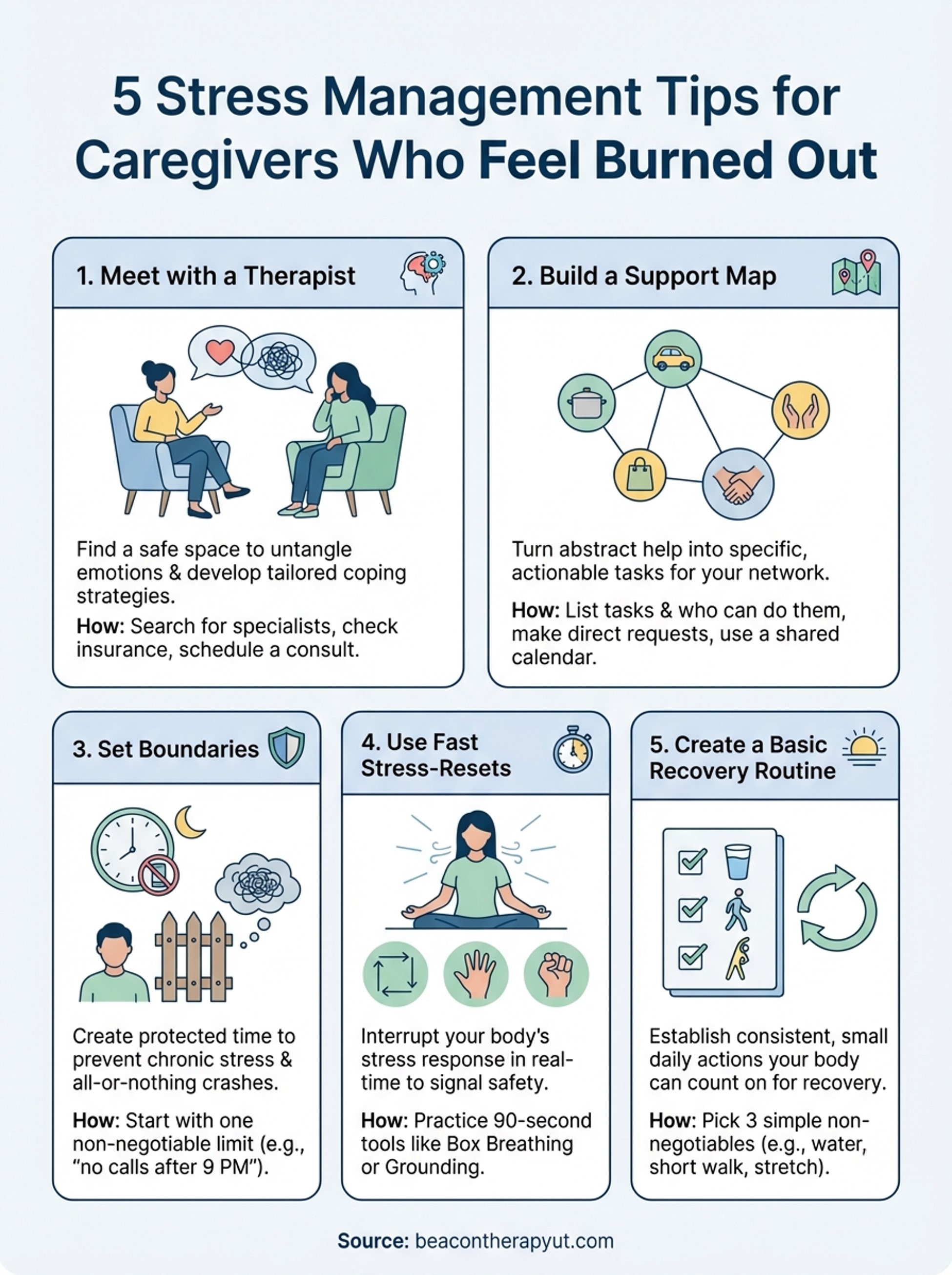
1. Meet with a therapist who understands caregiving
Working with a
therapist who specializes in caregiver stress gives you a safe
space to be honest about feelings you might not share anywhere else.
Many caregivers struggle with guilt, resentment, or anger toward the person
they’re helping, and those emotions need somewhere to go. A
therapist doesn’t just listen. They help you untangle complicated feelings,
identify patterns that drain you, and develop coping strategies tailored to
your situation.
Why this works
Therapy offers structure that your daily life might lack
right now. When you’re constantly reacting to someone else’s needs, you lose
the ability to reflect on your own emotional state. A trained
therapist helps you recognize warning signs before you hit a crisis point. They
teach you practical skills like cognitive reframing, stress
tolerance techniques, and boundary setting that apply directly to caregiving
challenges. Research also shows that caregivers who work with mental health
professionals experience lower rates of depression and anxiety compared to
those who try to manage alone.
Professional support isn’t a sign you’re failing. It’s a
tool that helps you show up as the caregiver you want to be.
How to do it in real life
Start by looking for therapists who list caregiver stress,
family systems work, or grief counseling among their specialties. Check
your insurance coverage first to understand what’s included, then
search provider directories or ask your primary care doctor for referrals. At
Beacon Therapy in Salt Lake City, we offer both in-person and telehealth
sessions across Utah, making stress management for caregivers accessible
even when leaving home feels impossible. Schedule a consultation call before
committing to see if the therapist understands your specific caregiving
situation.
Watch-outs and when to get extra help
If you notice thoughts of harming yourself or the person you
care for, reach out immediately to a crisis line or emergency
services. Therapy works best when you attend consistently, but don’t force
yourself to stick with a therapist who doesn’t feel right. Finding the
right match matters more than loyalty to the first person you try.
When your caregiving role involves medical decisions or legal complexity,
consider asking your therapist to coordinate with social workers or case
managers who can address those practical layers.
2. Build a support map and ask for specific help
Most caregivers try to handle everything alone because
asking for help feels like admitting defeat. You might worry about burdening
others or feel guilty for not being able to do it all yourself. Creating
a support map breaks caregiving tasks into specific pieces that
different people in your life can actually handle. Instead of vague requests
like “I need help,” you identify concrete tasks like picking up prescriptions,
cooking one meal per week, or sitting with your loved one for two hours on
Saturday afternoons.
Why this works
Specific requests remove the guesswork that makes people
hesitate to offer help. When someone says “let me know if you need anything,”
they genuinely mean it, but they don’t know what would actually be
useful. A support map turns abstract goodwill into actionable support.
Research shows that caregivers with reliable help networks experience lower
stress levels and better physical health compared to those who work in
isolation. People want to help but need clear direction about what matters
most.
Asking for specific help isn’t weakness. It’s the most
practical form of stress management for caregivers who want to sustain their
role long term.
How to do it in real life
Write down every caregiving task you handle in a week, from
medication management to meal prep to transportation. Next to each task, note
who in your life could realistically help with that specific thing.
Then reach out with direct requests: “Could you drive Mom to her Tuesday
appointment?” or “Would you be able to bring dinner every other
Thursday?” Keep a shared calendar or group chat where helpers
can see what’s covered and what’s still needed.
Watch-outs and when to get extra help
Some people will say yes and then disappear when you need
them. Build backup options for critical tasks so you’re never
left scrambling. If your entire support network lives far away or nobody steps
up, contact local caregiver resource centers or Area Agencies on Aging for
information about respite care programs and volunteer services.
3. Set boundaries that protect your time and energy
Saying no feels impossible when someone depends on you for
their daily
needs. You might answer every phone call, agree to every request, or stay
available around the clock because you believe that’s what good
caregiving requires. Boundaries aren’t about caring less. They’re
about creating space for you to function as a person who has needs beyond
caregiving, which ultimately makes you more capable when your loved one
genuinely requires your attention.
Why this works
Your body and mind weren’t designed for constant
availability. Chronic stress without breaks leads to physical
illness, emotional numbness, and decision fatigue that makes you less effective
as a caregiver. When you protect specific hours for sleep, personal
appointments, or recovery time, you create predictable rest periods that
your nervous system can count on. This approach to stress management
for caregivers prevents the all-or-nothing crash that happens when you
finally hit your limit after months of ignoring warning signs.
Boundaries let you care for someone else without
disappearing from your own life.
How to do it in real life
Start with one non-negotiable boundary this week, like no
caregiving calls after 9 PM except for emergencies. Communicate this
limit clearly to your loved one and anyone else involved in their care. Use
“I can’t” instead of “I’ll try” when you need to refuse a request that
conflicts with your protected time. Turn off notifications during designated
breaks, and redirect non-urgent questions to specific check-in times rather
than responding immediately every time.
Watch-outs and when to get extra help
Expect pushback at first, especially if you’ve trained
others to expect constant availability. Guilt will show up, but
consistency matters more than comfort in the early stages. If your loved one’s
safety genuinely requires 24-hour monitoring, contact adult protective services
or hospital discharge planners about care arrangements that split
responsibility rather than placing everything on your shoulders.
4. Use fast stress-reset skills during the day
Waiting until bedtime to deal with stress means you carry
tension through every interaction with the person you’re caring for. Quick
reset techniques that take five minutes or less help you manage stress in the
moment rather than letting it accumulate. These aren’t about fixing
everything. They’re about interrupting your body’s stress response before
it escalates into physical symptoms or emotional outbursts that you regret
later.
Why this works
Your nervous system responds to stress in real time,
flooding your body with cortisol and adrenaline that prepare you for
danger. Brief interventions signal safety to your brain, triggering
a shift from fight-or-flight mode back to baseline functioning. Physical
techniques like breathing exercises or grounding methods work faster than
trying to think your way out of stress because they target the body’s
automatic responses directly. Research shows that even 90 seconds of
focused breathing can lower heart rate and blood pressure, making these tools
especially valuable for stress management for caregivers who
can’t step away for extended breaks.
Small resets throughout the day prevent the total collapse
that happens when you ignore stress until you can’t anymore.
How to do it in real life
Keep three simple techniques memorized that you can do
anywhere. Box breathing (inhale for four counts, hold for
four, exhale for four, hold for four) works in bathrooms, parking lots, or
while sitting next to someone who’s sleeping. The 5-4-3-2-1 grounding
method pulls you back to the present by naming five things you see,
four you can touch, three you hear, two you smell, and one you taste. Progressive
muscle tension (squeeze your fists tight for five seconds, then
release) helps when anger or frustration builds. Practice these during calm
moments so your body recognizes them as stress signals when you actually need
them.
Watch-outs and when to get extra help
These techniques work for everyday stress, not crisis
situations. If your stress includes chest pain, difficulty breathing
that doesn’t improve, or thoughts of harming yourself or others, seek
immediate medical attention. Reset skills also don’t replace sleep, nutrition,
or proper treatment for anxiety disorders. When you notice yourself using these
tools constantly just to make it through basic tasks, that’s a sign you
need more substantial support rather than better coping
mechanisms.
5. Create a basic recovery routine you can keep
Most stress management for caregivers advice
pushes elaborate self-care rituals that require time you don’t have. A
recovery routine works differently. It’s not about bubble baths or
meditation apps. It’s about three to five specific actions you repeat daily
that help your body recover from chronic
stress, even when your schedule stays chaotic. This routine becomes
automatic, requiring no decision-making energy when you’re
already exhausted.
Why this works
Consistency matters more than perfection when you’re
fighting burnout. Your body needs predictable signals that
recovery time exists, even if it’s brief. Small daily actions compound over
weeks, gradually lowering baseline stress levels instead of waiting for a
vacation that might never come. Recovery routines target specific
stress symptoms like poor sleep, tension headaches, or digestive
issues rather than trying to solve everything at once.
Repeating the same small actions daily creates recovery your
body can count on.
How to do it in real life
Pick three non-negotiable actions you’ll do every day,
like drinking water before coffee, taking a ten-minute walk, and
stretching before bed. Schedule these at times when interruptions are least
likely. Keep supplies ready so you don’t waste energy
gathering what you need. Track your routine for two weeks to identify patterns
where you consistently skip steps, then adjust timing rather than abandoning
the practice.
Watch-outs and when to get extra help
Your routine will break sometimes. Return to it the
next day without guilt or catching up. If you can’t maintain even
three small actions consistently, that signals you need immediate
professional support or respite care arrangements. Physical symptoms
that worsen despite a recovery routine require medical evaluation, not just
better self-care.
A calmer next week
You don’t need to master all five strategies at once. Pick
one approach that matches your current situation, whether that’s scheduling
a therapy appointment or asking your neighbor for one specific task. Change
happens through small, repeated actions rather than dramatic overhauls
when you’re already exhausted.
Burnout builds slowly, and recovery works the same way. The
techniques in this article for stress management for caregivers target
the daily patterns that drain you rather than promising instant transformation.
Some days you’ll manage stress effectively. Other days you’ll barely
survive. Both outcomes are normal when you’re carrying this
much responsibility.
If you’re ready to work with someone who understands the specific challenges of caregiving, Beacon Therapy offers both in-person sessions in Salt Lake City and telehealth appointments throughout Utah. We focus on practical tools rather than generic advice, helping you find direction when everything feels overwhelming. You deserve support that recognizes caregiving as the demanding role it actually is.
- To view the original version of this article visit beacontherapyut.com/5-stress-management-tips-for-caregivers-who-feel-burned-out/
- Seniors Blue Book was not involved in the creation of this content.
Other Articles You May Like
When Seniors Need Behavioral Health Care in Bay Minette, AL
When Seniors Need Behavioral Health Care in Bay Minette, ALAging can bring meaningful opportunities for personal growth, family connections, and new experiences. However, later life may also involve difficult transitions that affect emotional well-being.An older adult may be adjusting to retirement, grieving the loss of a spouse, managing chronic medical conditions, or experiencing changes in memory and independence.Sometimes these challenges lead to emotional distress that improves with family support, counseling, or other outpatient services. In other situations, symptoms become severe enough to interfere with daily functioning and require a more intensive level of treatment.For families in Bay Minette, Alabama, understanding the difference can help them make appropriate healthcare decisions.Senior behavioral health services focus on assessing and treating mental, emotional, and behavioral conditions that affect older adults.These services may involve psychiatric evaluations, psychotherapy, medication management, or hospital-based treatment, depending on the individual's needs.North Baldwin Infirmary Senior Behavioral Health, part of Infirmary Health, offers specialized inpatient psychiatric care for adults age 55 and older.Located at North Baldwin Infirmary in Bay Minette, the program provides clinical assessments, individualized treatment planning, individual and group therapy, medication-related care, and support for families.For residents throughout Baldwin County, knowing when professional behavioral health treatment may be appropriate is an important part of supporting an older loved one's overall health.Understanding Senior Mental Health and CounselingMental health affects how people think, feel, communicate, and respond to everyday experiences.Mental health conditions can occur at any age, including later adulthood.Some conditions develop gradually, while others appear following a major event or medical change.Common Concerns Affecting Older AdultsThese may include:DepressionAnxietyPersistent emotional distressGrief and lossMood changesSignificant social withdrawalSleep disturbancesBehavioral changes associated with dementiaDifficulty managing everyday activitiesSuicidal thoughtsNot everyone experiencing these concerns requires hospitalization.The appropriate treatment depends on symptom severity, medical factors, personal safety, and clinical evaluation.When Emotional Changes May Require Professional EvaluationEveryday emotions naturally change.Feeling sad after a loss or worried about an important decision does not automatically indicate a psychiatric disorder.However, persistent symptoms or meaningful changes in functioning deserve attention.Withdrawal From Familiar ActivitiesA previously social individual may stop attending family gatherings or participating in hobbies.Persistent SadnessAn older adult may appear consistently discouraged or lose interest in activities they previously enjoyed.Increasing AnxietyExcessive worry may interfere with sleep, concentration, or everyday responsibilities.Changes in EatingSome people experience substantial changes in appetite.Sleep DisturbancesAn individual may sleep unusually long hours or experience ongoing insomnia.Neglecting Personal NeedsChanges in grooming, nutrition, hygiene, or household responsibilities may indicate that additional assessment is appropriate.Concerning StatementsExpressions of hopelessness, wanting to die, or suicidal thoughts should be taken seriously.A qualified healthcare professional can assess these symptoms and help determine appropriate care.North Baldwin Infirmary Senior Behavioral HealthNorth Baldwin Infirmary Senior Behavioral Health is a specialized psychiatric treatment program located within North Baldwin Infirmary.The hospital is part of Infirmary Health, which provides senior behavioral health services in Bay Minette and Mobile.North Baldwin Infirmary serves residents of Baldwin County and surrounding areas.Its senior behavioral health unit focuses on older adults experiencing emotional, psychiatric, and behavioral concerns requiring inpatient evaluation and treatment.Specialized Care for Adults 55 and OlderInfirmary Health states that its senior behavioral health programs serve adults age 55 and older.Psychiatric EvaluationsThe program begins with an assessment intended to identify the causes and contributing factors behind changes in behavior or emotional functioning.Inpatient TreatmentNorth Baldwin Infirmary provides 24-hour inpatient behavioral health care.Individualized Care PlansTreatment is developed around each patient's psychiatric, medical, and personal needs.Individual and Group TherapyTherapeutic services may help patients address emotional concerns and develop coping strategies.Medication ManagementQualified professionals evaluate medication-related treatment as appropriate.Social Work and EducationThe program includes social work monitoring, education, and assistance addressing related needs.Family ParticipationInfirmary Health emphasizes involving appropriate family members in treatment and recovery planning.Verified Contact InformationNorth Baldwin Infirmary Senior Behavioral HealthOrganization: Infirmary HealthAddress: 1815 Hand Avenue, Bay Minette, AL 36507Senior Behavioral Health Phone: 251-580-1770North Baldwin Infirmary Main Phone: 251-937-5521Website: https://www.infirmaryhealth.org/services/senior-behavioral-health/Hospital Information: https://www.infirmaryhealth.org/locations/north-baldwin-infirmary/Primary Category: Mental Health & CounselingProgram Type: Hospital-based inpatient senior behavioral healthAge Group: Adults age 55 and olderAdmissions: Infirmary Health advertises 24-hour admissions and clinical assessments.Families should contact the dedicated program number to discuss assessment procedures, clinical eligibility, insurance requirements, and current availability.Outpatient Counseling Versus Inpatient Behavioral HealthMental health services are provided in different settings.Understanding these differences helps families identify an appropriate starting point.Outpatient CounselingOutpatient counseling generally involves scheduled appointments with a qualified mental health professional.The individual continues living at home and attends appointments according to a treatment plan.This may be appropriate for certain emotional concerns that can be managed safely outside a hospital.Psychiatric Outpatient CareSome individuals require evaluation or follow-up with a psychiatrist or another qualified prescribing clinician.Treatment may involve medication management and psychotherapy.Inpatient Behavioral HealthInpatient care involves hospital admission for a period of structured psychiatric treatment and supervision.This level of care may be appropriate when symptoms are severe or when a person cannot be managed safely through a less intensive arrangement.North Baldwin's RoleNorth Baldwin Infirmary Senior Behavioral Health is primarily an inpatient psychiatric program.It should not be presented as a routine walk-in counseling center.Families seeking ordinary outpatient counseling should ask about appropriate community providers and current follow-up services.Depression in Later AdulthoodDepression can affect older adults and may be overlooked when symptoms are attributed to aging.It can involve more than sadness.Emotional SymptomsA person may experience persistent hopelessness, discouragement, or reduced enjoyment.Physical SymptomsFatigue, changes in sleep, and changes in appetite may occur.Thinking and ConcentrationSome individuals experience difficulties concentrating or making decisions.Behavioral ChangesWithdrawal from relationships and everyday responsibilities may become noticeable.Medical ConsiderationsDepression may occur alongside chronic illness, pain, grief, or medication-related factors.TreatmentDepending on the diagnosis, treatment may involve psychotherapy, medication, or other evidence-based approaches.North Baldwin Infirmary identifies depression among the conditions evaluated through its senior behavioral health program.Anxiety, Life Stress, and Changes in RoutineAnxiety may develop or worsen when older adults experience health concerns, financial stress, caregiving responsibilities, or significant changes in independence.Common SymptomsThese may include:Persistent worryRestlessnessDifficulty sleepingIrritabilityTrouble concentratingAvoidance of certain activitiesPhysical tensionMedical Causes Should Be ConsideredSome medical conditions and medications can produce symptoms resembling anxiety.Individualized TreatmentA qualified healthcare professional should determine whether counseling, medication, medical evaluation, or another approach is suitable.Family SupportRelatives can help by listening, respecting the person's concerns, and encouraging appropriate professional care.Grief and Loss in Older AdulthoodLoss is an experience many older adults encounter.Some individuals grieve the death of loved ones, while others struggle with changes in health, independence, or familiar routines.Grieving does not automatically mean someone has a mental health disorder.However, certain symptoms may require additional attention.Persistent Difficulties With Daily FunctioningSomeone may struggle to eat, sleep, or manage everyday responsibilities.Severe WithdrawalA person may stop interacting with relatives or friends.Feelings of HopelessnessPersistent hopelessness deserves professional assessment.Suicidal ThoughtsStatements about wanting to die require urgent attention.Supportive TreatmentCounseling and appropriate psychiatric services may help when grief is complicated by a mental health condition.North Baldwin Infirmary identifies grief and loss as concerns addressed by its senior behavioral health services.When Memory Changes and Behavioral Health OverlapMemory loss and behavioral health symptoms can sometimes appear together.For example, a person living with dementia may develop anxiety, depression, or behavioral distress.However, cognitive changes can also have other causes.Depression and ConcentrationDepression may affect memory and the ability to concentrate.Dementia-Related SymptomsSome individuals experience changes in judgment, communication, orientation, or behavior.Medication EffectsMedication-related problems may affect alertness and thinking.DeliriumA sudden change in attention or awareness can indicate a medical condition requiring prompt evaluation.Why Accurate Assessment MattersThese conditions should not automatically be treated as interchangeable.A professional assessment helps determine whether psychiatric, neurological, or other medical services are needed.Understanding the Program's RoleNorth Baldwin's inpatient behavioral health unit can address appropriate psychiatric and behavioral concerns in older adults.It is not the same as permanent residential memory care or skilled nursing.When Sudden Behavioral Changes Are an EmergencySome symptoms should not be managed through an ordinary appointment request.Seek Immediate Medical Assistance forSudden confusion or major changes in alertnessFacial droopingNew weakness on one sideDifficulty speakingSevere unexplained headacheLoss of consciousnessChest painSevere breathing difficultiesThese symptoms may indicate serious medical conditions.Immediate Safety ConcernsIf someone has made a suicide attempt, is in immediate danger of self-harm, or cannot be kept safe, call 911 or seek emergency medical care.In the United States, individuals experiencing a suicide-related or emotional crisis can also call or text 988.A routine behavioral health telephone inquiry is not a substitute for emergency assessment.What Happens During a Senior Behavioral Health Assessment?North Baldwin Infirmary describes an assessment process that considers both emotional and medical contributors.Reviewing SymptomsClinicians ask about changes in mood, behavior, thinking, sleep, and daily functioning.Considering Medical HistoryExisting diagnoses and current medical concerns may affect evaluation.Reviewing MedicationsThe care team may examine prescribed medications and potential medication-related concerns.Assessing SafetyClinicians consider whether the individual requires hospital-level psychiatric treatment.Determining an Appropriate Care PlanThe treatment team decides which services are clinically indicated.Admission DecisionsHospital admission depends on professional evaluation and applicable requirements.Not every individual contacting the program will require or qualify for inpatient care.Individualized Treatment During HospitalizationA person admitted to senior behavioral health may receive several forms of treatment.Psychiatric CareQualified professionals assess mental health conditions and guide treatment.Individual TherapyOne-on-one sessions may address emotional concerns and treatment goals.Group TherapyGroup activities may provide structured therapeutic interaction.Medication ManagementClinicians may prescribe, review, or adjust medication as medically appropriate.Lifestyle EducationPatients may receive education addressing coping strategies and general health needs.Social Work SupportSocial workers may assist with family communication and discharge-related concerns.Ongoing ReassessmentTreatment may be adjusted as the patient's condition changes.The actual services depend on the individualized clinical plan.Why Family Involvement MattersOlder adults often have important relationships with spouses, adult children, siblings, and other trusted individuals.Families may provide useful information during an assessment.Sharing Behavioral HistoryRelatives may describe changes that occurred before hospitalization.Communicating Personal PreferencesUnderstanding familiar routines and individual interests can help inform care planning.Reviewing Medical HistoryFamily members may help organize relevant medical information.Understanding Treatment GoalsAppropriate participation can help relatives understand the clinical plan.Preparing for DischargeFamilies may need to coordinate transportation, appointments, and home support.Respecting Patient RightsParticipation and access to medical information depend on consent, legal authorization, and applicable privacy requirements.Why Senior Behavioral Health Matters in Baldwin CountyBaldwin County includes older adults living independently, with spouses, or with family caregivers.Some residents have established relationships with local physicians, while others may need referrals for specialized services.Access to Specialized Inpatient CareNorth Baldwin Infirmary offers hospital-based psychiatric treatment in Bay Minette.Support for Family CaregiversRelatives may need professional guidance when emotional or behavioral symptoms become severe.Understanding Treatment OptionsKnowing the differences between outpatient counseling, emergency evaluation, and inpatient care can help families take more appropriate action.Coordinating Local HealthcareHospital-based services may help patients receive appropriate assessment and discharge recommendations.Planning Beyond HospitalizationFollow-up care and family support remain important after inpatient treatment ends.Preparing for a Conversation With the ProgramFamilies can organize relevant information before contacting North Baldwin Senior Behavioral Health.Describe the ConcernExplain the emotional or behavioral changes that prompted the inquiry.Identify the TimelineRecord when symptoms began and whether they changed suddenly or gradually.Review Daily FunctioningConsider whether the person is eating, sleeping, maintaining hygiene, or managing everyday responsibilities.Prepare Medical InformationGather diagnoses, current medications, recent hospitalizations, and physician contact information.Identify Safety ConcernsCommunicate concerns involving suicidal thoughts, severe confusion, or inability to manage basic needs.Review InsurancePrepare current insurance details for verification.Ask About Next StepsConfirm whether an evaluation, referral, or another service is recommended.In an emergency, seek immediate help rather than delaying care to collect records.Understanding Visiting HoursInfirmary Health publishes separate visiting policies for its different hospital departments.For North Baldwin Infirmary Senior Behavioral Health, the current guest information identifies:Monday through Friday: 3:00 PM to 4:00 PMSaturday and Sunday: 2:00 PM to 4:00 PMThe unit generally limits visits to two visitors at a time.Behavioral health visitation may be modified according to clinical circumstances or hospital policies.Families should contact the program to confirm current rules, age restrictions, permitted belongings, and visiting arrangements.Planning for Care After DischargeDischarge planning helps identify services and support that may be needed after inpatient treatment.Follow-Up AppointmentsA patient may need continued psychiatric or other healthcare appointments.Medication InstructionsThe patient and appropriate caregivers should understand prescribed medication changes.CounselingSome individuals may benefit from continued psychotherapy.Family SupportRelatives may need information about warning signs and ways to support the care plan.Daily Living NeedsCertain individuals require additional assistance with transportation, meals, or household responsibilities.Appropriate HousingDischarge planning may consider whether returning home is suitable.Ongoing CommunicationFamilies should know whom to contact if symptoms recur or concerns develop.North Baldwin Infirmary describes continued support and outpatient-related planning, but specific services and availability should be confirmed with the team.Understanding Insurance and PaymentBehavioral health coverage depends on the patient's insurance plan, clinical eligibility, and treatment setting.MedicareOriginal Medicare may cover medically necessary inpatient psychiatric hospital treatment subject to applicable coverage rules and cost-sharing requirements.Medicare AdvantageMedicare Advantage plans have their own network and authorization procedures.MedicaidCoverage depends on eligibility and applicable program rules.Private InsuranceBenefits differ according to the insurer and policy.Questions to AskFamilies should confirm:Whether the program accepts the specific insurance planWhether authorization is requiredWhich inpatient services are coveredExpected deductibles or other expensesCoverage limitationsHow treatment and discharge decisions affect billingRequest clarification from both the program and insurer before a planned, nonemergency admission.Expert Tip for Families Concerned About Mental HealthExpert Tip: When contacting a senior behavioral health provider, explain how symptoms have changed the older adult's ability to function.Instead of saying only that someone seems anxious or withdrawn, describe specific examples, such as missing meals, staying in bed, declining appointments, or no longer participating in familiar activities.These details can help professionals assess severity and determine whether outpatient care, urgent medical evaluation, or inpatient treatment may be appropriate.How to Get Started With North Baldwin Infirmary Senior Behavioral HealthStep 1: Identify the Main ConcernReview changes in mood, thinking, behavior, sleeping, eating, or daily functioning.Step 2: Check for Immediate Safety IssuesSeek emergency medical assistance when symptoms suggest an urgent medical or psychiatric crisis.Step 3: Contact the ProgramCall 251-580-1770.Step 4: Ask About Clinical AssessmentDiscuss symptoms, age eligibility, referral requirements, and assessment procedures.Step 5: Gather Relevant InformationPrepare medication lists, medical history, clinician contacts, and insurance details.Step 6: Review Recommended TreatmentThe clinical team determines whether inpatient behavioral healthcare is appropriate.Step 7: Discuss Family ParticipationAsk about treatment communication, visiting hours, and involvement in discharge planning.Step 8: Plan for Follow-UpUnderstand the recommended next steps after hospitalization.Frequently Asked Questions About Senior Behavioral Health in Bay Minette1. What conditions does North Baldwin Infirmary Senior Behavioral Health treat?The program evaluates and treats appropriate psychiatric and behavioral concerns in older adults, including depression, anxiety, grief-related difficulties, social withdrawal, suicidal thoughts, and behavioral symptoms associated with dementia.2. Where is North Baldwin Infirmary Senior Behavioral Health located?The program is located at 1815 Hand Avenue, Bay Minette, AL 36507. Its dedicated telephone number is 251-580-1770.3. Does the program provide inpatient psychiatric treatment?Yes. North Baldwin Infirmary Senior Behavioral Health provides a 24-hour inpatient psychiatric treatment program for eligible older adults, with individualized evaluation and treatment planning.4. What age group does North Baldwin Senior Behavioral Health serve?Infirmary Health states that its senior behavioral health services focus on adults age 55 and older. Admission depends on clinical assessment and other program requirements.5. Can family members visit someone receiving treatment?Yes, subject to hospital policies and clinical considerations. Current published visiting hours are Monday through Friday, 3:00 PM to 4:00 PM, and Saturday and Sunday, 2:00 PM to 4:00 PM. Families should confirm current arrangements before visiting.Help Older Loved Ones Access the Right Behavioral Health SupportChanges in mood, thinking, or behavior can be difficult for older adults and their families to understand.Some concerns may improve with outpatient counseling and medical follow-up. Others may require more intensive psychiatric care.Recognizing the difference begins with paying attention to symptoms, changes in daily functioning, and immediate safety needs.North Baldwin Infirmary Senior Behavioral Health provides specialized inpatient psychiatric evaluation and treatment for older adults in Bay Minette and surrounding Baldwin County communities.Through its individualized approach, clinical assessment, therapy, medication management, and family-centered planning, the program helps address complex emotional and behavioral concerns.Families who are worried about an older loved one's mental health can contact the program to discuss appropriate evaluation and treatment options.Featured Seniors Blue Book ListingNorth Baldwin Infirmary Senior Behavioral HealthRecommended Main SBB Category: Mental Health & CounselingOrganization: Infirmary HealthAddress: 1815 Hand Avenue, Bay Minette, AL 36507County: Baldwin County, AlabamaSenior Behavioral Health Phone: 251-580-1770Hospital Main Phone: 251-937-5521Website: https://www.infirmaryhealth.org/services/senior-behavioral-health/Hospital Website: https://www.infirmaryhealth.org/locations/north-baldwin-infirmary/Program Type: Inpatient Senior Behavioral HealthAge Group: Adults 55 and olderServices: Psychiatric assessment, 24-hour inpatient treatment, individualized care plans, individual and group therapy, medication management, education, social work support, family-centered treatment, and discharge planning.Concerns Addressed: Depression, anxiety, grief, social withdrawal, medication-related psychiatric concerns, suicidal thoughts, memory-related symptoms, and behavioral changes associated with dementia.Visiting Hours: Monday through Friday, 3:00 PM to 4:00 PM; Saturday and Sunday, 2:00 PM to 4:00 PM, subject to hospital policies.Admissions: 24-hour admissions and assessment services, subject to clinical evaluation.Insurance: Contact the program to confirm Medicare, Medicaid, Medicare Advantage, and private insurance requirements.Important Care Distinction: The program provides hospital-based inpatient psychiatric treatment and is not a permanent memory care residence or general walk-in counseling service.Seniors Blue Book Business Profile: https://seniorsbluebook.com/listings/north-baldwin-infirmary-senior-behavioral-healthFind North Baldwin Infirmary Senior Behavioral Health on Seniors Blue BookLooking for mental health and counseling resources for older adults in Bay Minette, Alabama?Explore North Baldwin Infirmary Senior Behavioral Health through its dedicated Seniors Blue Book listing.Learn about psychiatric assessment, inpatient behavioral healthcare, individualized treatment, and family-centered support.Contact the program at 251-580-1770 to discuss evaluation procedures and available services.
Recognizing Senior Mental Health Changes in Mobile, AL
Recognizing Senior Mental Health Changes in Mobile, ALGrowing older brings many changes, including retirement, evolving family relationships, medical concerns, and adjustments to everyday routines. While some transitions are welcome, others can create emotional challenges that deserve attention.An older adult who once enjoyed spending time with friends may begin avoiding social activities. Someone who previously slept well may experience ongoing insomnia. Another individual may become unusually anxious, irritable, withdrawn, or confused.Families sometimes assume these changes are simply a normal part of aging. However, persistent emotional, behavioral, or cognitive changes may signal a condition that requires professional evaluation.For older adults and families in Mobile, Alabama, understanding the importance of senior mental health can help identify concerns before they become more serious.Mental health conditions can affect people at any age, and older adults deserve access to appropriate evaluation, treatment, and emotional support.Conditions such as depression and anxiety may occur alongside chronic illness, medication changes, grief, or memory-related disorders. Determining the underlying cause can be complicated, particularly when several factors affect a person's health.Mobile Infirmary Senior Behavioral Health, part of Infirmary Health, provides specialized psychiatric and behavioral healthcare for older adults.The program offers 24-hour inpatient care, psychiatric assessment, individualized treatment planning, therapy, medication management, education, and family-centered support.For families throughout Mobile County, learning when professional behavioral health services may be necessary is an important step toward supporting an older loved one's well-being.What Is Senior Behavioral Health?Senior behavioral health focuses on identifying and treating mental, emotional, and behavioral conditions affecting older adults.These conditions may influence mood, thinking, sleeping, daily functioning, relationships, and overall quality of life.Common Behavioral Health ConcernsOlder adults may experience:DepressionAnxietyPersistent emotional distressSignificant changes in behaviorGrief-related difficultiesMood instabilityPsychiatric symptoms associated with cognitive disordersChanges in sleep or appetiteDifficulty managing everyday responsibilitiesThoughts of self-harmSome symptoms can also result from physical illness, medication effects, or other medical conditions.A professional evaluation helps identify possible causes and determine appropriate treatment.Why Mental Health Changes Should Not Be Dismissed as AgingGrowing older does not automatically cause depression, severe anxiety, or substantial behavioral changes.Unfortunately, symptoms may be overlooked when families attribute them to retirement or declining health.Changes Can Develop GraduallyAn older adult may become less interested in hobbies or social interaction over several weeks.Physical Symptoms May Be PresentMental health conditions can sometimes involve fatigue, sleep difficulties, appetite changes, or unexplained physical complaints.Medical Conditions May Complicate SymptomsChronic pain, illness, and other medical conditions may influence emotional well-being.Medication Effects May ContributeCertain medications or interactions may affect mood, alertness, or behavior.Cognitive Conditions May OverlapDementia, delirium, depression, and other conditions may produce some similar symptoms but require different treatment approaches.Early Evaluation MattersRecognizing a change and discussing it with a qualified healthcare professional may help identify appropriate services.Mobile Infirmary Senior Behavioral HealthMobile Infirmary Senior Behavioral Health is a specialized program within Infirmary Health.Located on the Mobile Infirmary hospital campus, the program serves older adults experiencing significant psychiatric, behavioral, or emotional concerns.It operates as an inpatient behavioral health service rather than an ordinary drop-in counseling office.Specialized Psychiatric EvaluationThe program provides assessments to help determine whether behavioral changes are associated with psychiatric, emotional, medical, or other contributing factors.24-Hour Inpatient CareMobile Infirmary Senior Behavioral Health provides hospital-based inpatient care with professional staffing.Individualized Treatment PlansThe clinical team develops treatment recommendations based on each patient's circumstances.Individual and Group TherapyTherapeutic approaches may involve individual or group sessions when clinically appropriate.Medication ManagementPsychiatric and medical professionals evaluate medications and determine appropriate treatment.Social Work SupportSocial workers may assist with emotional concerns, family communication, and care planning.Family-Centered TreatmentInfirmary Health emphasizes helping relatives participate appropriately in treatment and recovery planning.Discharge PlanningThe team works to develop follow-up recommendations and an ongoing care plan.Verified Contact InformationMobile Infirmary Senior Behavioral HealthOrganization: Infirmary HealthAddress: 5 Mobile Infirmary Circle, Mobile, AL 36607Senior Behavioral Health Phone: 251-435-5153Mobile Infirmary Main Phone: 251-435-2400Website: https://www.infirmaryhealth.org/services/senior-behavioral-health/Hospital Location: https://www.infirmaryhealth.org/locations/mobile-infirmary/Category: Mental Health & CounselingProgram Type: Hospital-based inpatient senior behavioral health servicesAdmissions: The program describes 24-hour admissions and assessments.Published Senior Behavioral Health Visiting Hours: Daily, 12:00 PM to 1:00 PM and 5:00 PM to 6:00 PM.Families should confirm admission procedures, visitation arrangements, eligibility, and insurance coverage directly with the program.Recognizing Depression in Older AdultsDepression is a medical condition that can affect mood, physical functioning, concentration, and daily activities.It is not an inevitable consequence of aging.Emotional SymptomsPossible signs include:Persistent sadnessHopelessnessLoss of motivationIrritabilityFrequent tearfulnessFeelings of worthlessnessBehavioral SymptomsAn individual may withdraw from friends or lose interest in familiar activities.Physical ChangesSleep, appetite, energy, and activity levels may change.Changes in ThinkingDepression may affect concentration, memory, and decision-making.When to Seek HelpPersistent symptoms or meaningful changes in everyday functioning deserve professional evaluation.A medical or behavioral health professional can assess possible causes and recommend appropriate treatment.Understanding Anxiety in Later LifeSome older adults experience anxiety associated with medical conditions, finances, personal safety, caregiving responsibilities, or major life transitions.Occasional worry is common.However, anxiety that becomes persistent or interferes with daily life may need clinical attention.Possible SymptomsThese can include:Excessive worryRestlessnessDifficulty sleepingIrritabilityTrouble concentratingPhysical tensionAvoidance of everyday situationsAnxiety and Medical ConditionsCertain physical illnesses or medications can cause symptoms that resemble anxiety.Treatment OptionsDepending on the diagnosis, treatment may involve psychotherapy, medications, lifestyle strategies, and other clinical interventions.The Role of FamilyRelatives can provide reassurance and encourage appropriate professional evaluation without dismissing the person's concerns.Grief, Loss, and Emotional Well-BeingOlder adults may experience significant losses, including the death of a spouse, changing independence, retirement, or separation from familiar activities.Grief is a natural human response.However, some individuals experience persistent distress that interferes with daily functioning.Different Grief ExperiencesThere is no universal timetable for grieving.Changes in Daily LifeA person may struggle to establish new routines following a major loss.Recognizing Additional ConcernsPersistent hopelessness, severe withdrawal, or thoughts of self-harm require professional attention.Seeking SupportCounseling, support networks, and other services may help people process difficult transitions.Professional AssessmentA qualified clinician can help distinguish grief from depression or other conditions requiring treatment.Infirmary Health identifies grief and loss among the concerns addressed through its senior behavioral health services.Behavioral Changes Associated With DementiaDementia can affect memory, communication, judgment, and behavior.However, not every behavioral change in an individual with dementia is caused directly by dementia.Pain, infection, medication effects, delirium, and other conditions may contribute.Potential ChangesFamilies may notice:Increased agitationAnxietySleep disruptionEmotional distressConfusionChanges in behaviorDifficulty communicating needsUnderstanding Underlying CausesProfessional evaluation is important when symptoms are new, worsening, or affecting safety.Individualized TreatmentBehavioral health care may address psychiatric symptoms while considering the individual's cognitive and medical conditions.Family CommunicationRelatives can help clinicians understand the patient's usual behavior, personal history, and recent changes.Important DistinctionSenior behavioral health hospitalization is not the same as long-term residential memory care.Inpatient psychiatric treatment focuses on assessment, stabilization, and an appropriate treatment plan.Sudden Confusion Requires Special AttentionA sudden change in awareness or thinking should never be assumed to represent normal aging.Acute confusion may indicate delirium or another urgent medical condition.Possible Warning SignsThese may include:Abrupt confusionDifficulty maintaining attentionSignificant changes in alertnessNew disorientationSudden behavioral changesRapidly worsening symptomsPotential Medical CausesInfections, dehydration, medication effects, metabolic problems, and other conditions can contribute.Why Medical Evaluation Is ImportantA sudden change may require prompt medical assessment rather than routine counseling.When to Seek Emergency HelpIf a person develops sudden confusion with symptoms such as facial drooping, weakness, speech difficulty, or other signs of a stroke, call 911.Families should not delay emergency evaluation while arranging a behavioral health consultation.How Inpatient Senior Behavioral Health Treatment WorksMobile Infirmary describes a structured assessment and treatment process.Initial ContactThe family, patient, or appropriate healthcare professional contacts the behavioral health program.AssessmentClinical professionals evaluate psychiatric symptoms and potential medical contributors.Admission DeterminationThe care team determines whether inpatient treatment is clinically appropriate.Individualized Treatment PlanningThe treatment team develops a plan based on the assessment.Therapeutic ServicesDepending on the patient's needs, treatment may include:Individual therapyGroup therapyMedication managementLifestyle educationSocial work supportClinical monitoringAdditional assessment and care coordinationFamily ParticipationAppropriate family involvement may support treatment and discharge planning.Transition PlanningThe team develops recommendations for care after hospitalization.What Makes Inpatient Behavioral Health Different From Counseling?The category Mental Health & Counseling includes several types of care.However, not every service provides the same level of support.Outpatient CounselingA person may attend scheduled therapy appointments while continuing to live at home.Psychiatric Medication ManagementA qualified prescriber may evaluate medications used to treat psychiatric symptoms.Inpatient Behavioral HealthHospital-based inpatient services provide more intensive assessment and care for individuals whose condition warrants admission.Emergency Psychiatric CareA person experiencing an immediate psychiatric or medical emergency may need emergency department evaluation.Choosing the Appropriate ServiceA qualified healthcare professional can help determine which level of care is appropriate.Mobile Infirmary Senior Behavioral Health specializes in inpatient treatment rather than serving as a general outpatient counseling center.Why Senior Behavioral Health Matters Locally in Mobile CountyFamilies throughout Mobile County may need help identifying appropriate mental health services for aging relatives.Some older adults live alone.Others live with spouses, adult children, or caregivers who recognize changes in behavior.Access to Specialized AssessmentBehavioral health services designed for older adults can help evaluate psychiatric symptoms while considering aging-related medical concerns.Supporting Family CaregiversRelatives may need guidance when changes in mood, thinking, or behavior become difficult to manage.Coordinating Medical TreatmentHospital-based programs can assess behavioral symptoms alongside relevant healthcare concerns.Supporting Appropriate TransitionsSome patients need continued treatment or community support after discharge.Maintaining Family InvolvementLocal services may make participation in treatment discussions more practical for nearby relatives.The Role of Family During TreatmentFamily members may provide information that helps clinicians understand the patient's history.Describe Recent ChangesExplain when symptoms began and how they have affected daily life.Share Medical InformationProvide relevant diagnoses and medication information.Discuss Previous BehaviorClinicians may benefit from knowing the individual's usual routines, personality, and functioning.Identify Sources of StressRecent losses, changes in living arrangements, or medical events may provide useful context.Participate AppropriatelyFamilies can ask how they may be involved in care discussions and discharge planning.Respect PrivacyClinical information sharing must follow patient consent and applicable privacy requirements.Preparing for a Senior Behavioral Health AssessmentFamilies can organize information before contacting the program.SymptomsDocument changes in mood, sleep, appetite, thinking, or behavior.TimelineRecord when the changes began and whether symptoms appeared suddenly or gradually.Medical HistoryPrepare relevant information about chronic conditions and recent hospitalizations.Medication ListInclude prescription drugs, over-the-counter products, and supplements.Recent ChangesNote new prescriptions, illnesses, injuries, or major life events.Safety ConcernsExplain any concerns involving self-harm, inability to care for basic needs, or dangerous behavior.Insurance InformationHave current insurance details available for coverage verification.A family should not delay urgent medical or emergency psychiatric care simply to complete this information.Treatment and Recovery PlanningBehavioral health treatment should consider what will happen after the patient leaves the hospital.Clinical Follow-UpA psychiatrist, therapist, or other healthcare professional may be involved in ongoing treatment.Medication InstructionsThe patient and appropriate caregivers should understand the prescribed medication plan.Family SupportRelatives may need guidance about symptoms that require follow-up.Community ResourcesSome individuals benefit from support services outside the hospital.Monitoring ChangesFamilies should understand when to contact a healthcare professional if symptoms recur or worsen.Appropriate Living ArrangementsDischarge plans should consider whether the individual can return home safely or needs another level of support.Infirmary Health describes outpatient and day-hospital options in its overall continuing-care approach, but families should confirm current availability and eligibility for any specific service.Understanding Insurance CoverageMental health coverage depends on the patient's insurance plan, clinical needs, and admission requirements.MedicareMedicare Part A may cover eligible inpatient psychiatric hospital care subject to applicable rules, deductibles, and coinsurance.Medicare AdvantageMedicare Advantage plans provide Medicare-covered benefits but may have additional network and authorization procedures.MedicaidCoverage depends on eligibility and program-specific requirements.Private InsuranceBenefits vary by plan, network, and medical necessity rules.Questions to AskBefore a nonemergency admission, confirm:Whether the facility accepts the insurance planWhether prior authorization is necessaryExpected deductibles and copaymentsWhich services are coveredHow coverage decisions are madeWhether follow-up care is coveredCoverage should be verified directly with the insurer and admissions team.Supporting Mental Health After DischargeRecovery does not always end when inpatient treatment is complete.Some individuals need continued outpatient care, medication follow-up, or family support.Follow the Discharge PlanReview written recommendations before leaving the hospital.Attend Follow-Up AppointmentsOngoing evaluation may help clinicians assess treatment response.Take Medications as PrescribedMedication changes should be discussed with the appropriate prescriber.Maintain Daily RoutinesConsistent meals, sleep schedules, and appropriate activities may help support general well-being.Encourage Social ConnectionMeaningful relationships can remain an important part of daily life.Recognize Concerning ChangesFamilies should know when to request routine follow-up and when urgent evaluation is necessary.Expert Tip for Families Noticing Behavioral ChangesExpert Tip: When an older loved one begins acting differently, write down the specific changes rather than describing the behavior only as "not acting like themselves."Record changes in sleep, appetite, mood, memory, medication routines, and daily functioning.Also note whether symptoms developed suddenly or gradually.This information can help healthcare professionals evaluate possible medical and psychiatric causes and recommend the appropriate level of care.How to Get Started With Mobile Infirmary Senior Behavioral HealthStep 1: Identify the ConcernReview changes in mood, behavior, thinking, sleep, or daily functioning.Step 2: Determine Whether Emergency Care Is NeededIf someone is in immediate danger, call 911 or seek emergency medical assistance.For a suicide or emotional crisis in the United States, call or text 988.Step 3: Contact the ProgramCall 251-435-5153 for Mobile Infirmary Senior Behavioral Health information.Step 4: Discuss Assessment ProceduresAsk how clinical evaluations and admission decisions are arranged.Step 5: Gather Relevant InformationPrepare medication lists, medical history, recent symptoms, and insurance details.Step 6: Review the Recommended Care LevelThe clinical team determines whether inpatient behavioral health services are appropriate.Step 7: Discuss Family InvolvementAsk about communication, visitation, and participation in care planning.Step 8: Plan for Follow-UpUnderstand how ongoing care needs will be addressed after hospitalization.Frequently Asked Questions About Senior Mental Health in Mobile1. What does Mobile Infirmary Senior Behavioral Health treat?The program evaluates and treats significant psychiatric, emotional, and behavioral concerns in older adults, including depression, anxiety, grief-related difficulties, suicidal thoughts, and behavioral symptoms associated with dementia.2. Where is Mobile Infirmary Senior Behavioral Health located?The program is located at 5 Mobile Infirmary Circle, Mobile, AL 36607. Families can call 251-435-5153 for information.3. Does Mobile Infirmary Senior Behavioral Health provide inpatient care?Yes. The program provides 24-hour inpatient behavioral health treatment, including assessment, individualized treatment planning, psychiatric care, therapy, and related support.4. Can family members participate in treatment?Infirmary Health emphasizes family-centered treatment and appropriate involvement in the patient's care plan. Participation depends on patient consent, clinical considerations, and privacy requirements.5. What are the visiting hours for Senior Behavioral Health?Mobile Infirmary publishes Senior Behavioral Health visiting hours daily from 12:00 PM to 1:00 PM and 5:00 PM to 6:00 PM. Families should confirm current visitation procedures before arriving.Mental Health Care Is an Important Part of Healthy AgingEmotional well-being deserves the same attention as physical health.Persistent sadness, severe anxiety, significant behavioral changes, or difficulty managing everyday responsibilities should not automatically be dismissed as ordinary aging.These symptoms may reflect treatable psychiatric concerns, underlying medical conditions, medication effects, or a combination of factors.A professional evaluation can help identify the appropriate next steps.For older adults and families throughout Mobile County, Mobile Infirmary Senior Behavioral Health provides specialized hospital-based psychiatric assessment and treatment through Infirmary Health.Its inpatient program combines clinical evaluation, individualized therapy, medication management, family involvement, and discharge planning.Families who are concerned about an older loved one's emotional or behavioral health can contact the program to discuss assessment procedures and available services.Seeking appropriate care can be an important step toward improving comfort, functioning, and quality of life.Featured Seniors Blue Book ListingMobile Infirmary Senior Behavioral HealthRecommended Main SBB Category: Mental Health & CounselingOrganization: Infirmary HealthAddress: 5 Mobile Infirmary Circle, Mobile, AL 36607County: Mobile County, AlabamaSenior Behavioral Health Phone: 251-435-5153Hospital Main Phone: 251-435-2400Website: https://www.infirmaryhealth.org/services/senior-behavioral-health/Service Type: Inpatient Senior Behavioral HealthServices: Psychiatric assessment, individualized behavioral health treatment, inpatient care, group therapy, individual therapy, medication management, social work involvement, patient and family education, and discharge planning.Conditions Addressed: Depression, anxiety, mood and behavioral changes, grief-related distress, suicidal thoughts, and psychiatric or behavioral symptoms associated with cognitive disorders.Admissions: 24-hour admissions and assessment availability described by Infirmary Health; admission is subject to clinical evaluation.Visiting Hours: Daily, 12:00 PM to 1:00 PM and 5:00 PM to 6:00 PM, subject to current hospital policies.Payment: Verify Medicare, Medicaid, Medicare Advantage, and private insurance participation for the individual patient.Important Care Distinction: This is a hospital-based inpatient behavioral health program, not a long-term memory care residence or routine walk-in counseling center.Seniors Blue Book Business Profile: https://seniorsbluebook.com/listings/mobile-infirmary-senior-behavioral-healthFind Mobile Infirmary Senior Behavioral Health on Seniors Blue BookLooking for senior mental health and counseling resources in Mobile, Alabama?Explore Mobile Infirmary Senior Behavioral Health through its dedicated Seniors Blue Book listing.Learn about specialized inpatient behavioral healthcare, psychiatric assessment, individualized treatment, and family-centered support.Contact Mobile Infirmary Senior Behavioral Health at 251-435-5153 to discuss evaluation procedures and available services.
Mental Health & Counseling in Bay Minette, AL
An older parent stops answering calls. A spouse becomes increasingly anxious, sleeps poorly, or loses interest in familiar activities. Families may notice that something has changed without knowing whether to call a primary care clinician, look for counseling, or ask about a more intensive level of care.For people seeking mental health and counseling in Bay Minette, AL, understanding the available care settings can make the next step clearer. North Baldwin Infirmary Senior Behavioral Health provides a hospital-based option for older adults who need psychiatric assessment and inpatient treatment. Understanding Mental Health and Counseling ServicesMental health care addresses emotional, behavioral, and psychological concerns. Depending on a persons needs, care may involve counseling, psychiatric evaluation, medication management, or hospital treatment. The appropriate setting depends on a professional assessment of symptoms, functioning, medical needs, and safety.For older adults, emotional concerns deserve the same attention as physical health concerns. The National Institute on Aging emphasizes that depression is not a normal part of aging and that treatment can help. Families should not dismiss persistent distress simply because someone has experienced illness, retirement, or a loss. When to Ask for an EvaluationChanges worth discussing with a healthcare professional can include persistent sadness, loss of interest, altered sleep or appetite, difficulty concentrating, or withdrawal from activities and relationships. These signs can have different explanations and do not establish a diagnosis on their own. When describing a concern, use specific observations. Instead of saying a parent is not acting right, explain what has changed, when it began, and how it affects everyday life. A short record can help the clinician understand the pattern.Include the older adults perspective. Ask what feels difficult and what kind of help they would welcome. A conversation might begin with, Ive noticed you havent wanted to do the things you usually enjoy. How have you been feeling?Outpatient Counseling and Inpatient CareOutpatient counseling generally involves appointments while the person continues living at home. Inpatient behavioral health involves admission to a hospital program for treatment and around-the-clock care.North Baldwin Infirmary Senior Behavioral Health is an inpatient program. Families looking for routine counseling appointments should ask which outpatient resources are appropriate and available. An inpatient unit should not be assumed to function as a walk-in counseling office. North Baldwin Infirmary Senior Behavioral HealthNorth Baldwin Infirmary is located at 1815 Hand Avenue, Bay Minette, AL 36507. The hospital identifies senior behavioral health among its services, and Seniors Blue Book lists the program under Mental Health & Counseling in Baldwin County. Infirmary Health describes its senior behavioral health services as serving adults age 55 and older. The program provides 24-hour inpatient care, with admissions occurring around the clock following the required review and arrangements. Contact 251-580-1770 to confirm eligibility, referral requirements, and current availability. An Assessment Before a Treatment PlanThe program describes an initial evaluation that considers emotional and biomedical causes of behavioral changes. Treatment is individualized following that assessment, with psychiatrists, physicians, and mental health professionals involved.Families can prepare by gathering a current medication list, relevant medical history, recent discharge information, and a timeline of changes. Tell the team about the persons usual abilities and routines as well as the current concern. That comparison can provide useful context.Ask what the evaluation involves, whether medical clearance is required, and how records should be sent. Do not assume that a particular symptom automatically qualifies someone for admission or that a bed is immediately available. Family Involvement and CommunicationThe provider describes a family-centered approach that encourages loved ones to participate in the treatment process. Ask how involvement works with the patients consent and applicable privacy requirements. Identify the appropriate family contact and clarify what authorizations are needed for updates. If several relatives are helping, agree on how information will be shared within the family.Families can contribute practical knowledge about routines, recent stressors, and the support available at home. They can also describe what they are realistically able to manage after discharge. Sharing limitations early helps make planning more practical.Confirm current visiting arrangements directly with the unit before traveling. Ask about phone contact, permitted belongings, and anything the patient may need during the stay.Planning for Care After DischargeInfirmary Health describes ongoing care planning after hospitalization. Ask the Bay Minette team which follow-up services are appropriate, where they will take place, and how appointments will be arranged. Confirm local availability rather than assuming that every service described across the health system is offered at this location. Before discharge, request clear written instructions covering medications, appointments, care contacts, and concerns that should prompt another evaluation. Ask who will communicate with the patients regular healthcare clinician.If transportation, daily assistance, or caregiver availability could affect the plan, discuss those issues before the discharge date. Follow-up is easier to organize when responsibilities are assigned, and the patient understands the next steps. Sudden Changes Need Prompt Medical AttentionSudden confusion should not be treated as a routine counseling concern or assumed to be dementia. MedlinePlus explains that delirium can involve abrupt changes in brain function and may be associated with medical illness or medication effects. Call 911 for sudden unexplained confusion, a medical emergency, or immediate danger of harm to the person or someone else. Do not wait for a routine program callback in an emergency. For concerns that are not an immediate emergency, contact a healthcare professional to determine how urgently the person should be assessed. North Baldwin Infirmary Senior Behavioral Health can explain its program, but a phone inquiry does not replace an emergency evaluation. Why This Matters Locally in Bay MinetteFor Bay Minette and Baldwin County families, knowing that senior behavioral health treatment is available at North Baldwin Infirmary can make the search for an assessment more focused. Having the correct program number also helps families distinguish the unit from the hospitals general services.Local access still requires practical planning. Relatives may need to coordinate transportation, gather records from another healthcare system, and arrange participation in care discussions. Ask where to arrive and who will confirm the next step before bringing someone to the hospital for a planned admission.The choice should reflect the older adults needs and preferences, not simply the nearest location. Ask whether inpatient treatment is appropriate or whether another service would better fit the situation. Clear information can help families move from uncertainty to an organized plan. How to Get Started Describe the concern. Write down symptoms, timing, changes in daily functioning, and any immediate safety issues. Contact the appropriate clinician. For ongoing concerns, speak with the persons healthcare professional about an evaluation and suitable level of care. Call 251-580-1770. Ask North Baldwin Infirmary Senior Behavioral Health about assessment, age criteria, referral requirements, and admission availability. Prepare the information requested. Gather medications, medical history, clinician contacts, insurance details, and relevant legal authorization documents. Verify coverage. Ask the program and insurer about benefits, network participation, authorization, and expected charges for the proposed care. Confirm arrangements. Ask about arrival instructions, required records, family communication, visiting rules, and permitted belongings. Discuss follow-up early. Explain the home situation and ask how care will be coordinated after discharge. Related Categories to Explore Caregiver Support Services Senior Organizations & Services Memory Care
Local Services By This Author

Beacon Therapy of Utah
Mental Health & Counseling 5677 South Redwood Road Unit 18, Taylorsville, Utah, 84123At Beacon Therapy of Utah, we strive to provide the light on the shore and be the calm, soothing voice of direction, especially since weve experienced our storms and appreciated the beacons that helped us.Is Senior Mental Health Therapy Right for Your Loved One?Who this service helps: Seniors living in skilled nursing facilities or single-family homesOlder adults struggling with depression, anxiety, isolation, or griefIndividuals experiencing emotional difficulties due to physical decline or loss of independenceFamilies seeking peace of mind and coordinated care with facility staffWho it may not be a fit for:Seniors requiring primarily physical or occupational therapy rather than mental health supportIndividuals needing emergency medical interventionThose who do not reside in the service area for mobile visitsServing: Salt Lake City, Taylorsville & all of Utah via telehealth.