Compassionate Memory Support in Colorado Springs: The Retreat at Sunny Vista’s Personalized Approach to Living Well
The Retreat at Sunny Vista
For more information about the author, click to view their website: The Retreat at Sunny Vista
Oct 24, 2025
Colorado - Colorado Springs


Caring for a loved one with memory loss can be both an act of love and a journey filled with challenges. Families often face difficult decisions about how to ensure safety, dignity, and quality of life for their loved ones living with Alzheimer’s disease or dementia.
At The Retreat at Sunny Vista in Colorado Springs, memory support is more than a service — it’s a promise to provide compassionate, person-centered care that helps residents live each day with meaning, joy, and purpose.
Visit The Retreat at Sunny Vista on Seniors Blue Book
A Legacy of Compassionate Care in Colorado Springs
Part of the Sunny Vista community, The Retreat at Sunny Vista continues a legacy of serving seniors in Colorado Springs for over a century. Their reputation for excellence is built on a deep understanding of what families need most — a trusted, supportive environment where their loved ones receive expert memory support and genuine human connection.
Colorado Springs is home to a growing senior population — with nearly 17% of residents over age 60 — and an increasing number of families seeking professional memory support options. The Retreat at Sunny Vista meets that need by combining advanced dementia support practices with warmth, comfort, and a homelike setting designed for safety and serenity.
What Makes The Retreat at Sunny Vista’s Memory Support Unique
Memory loss affects each person differently. That’s why The Retreat at Sunny Vista’s approach to Memory Support is personalized, evidence-based, and compassion-driven.
Every resident receives an individualized plan that supports their physical, emotional, and cognitive health. From structured daily routines to meaningful activities, every aspect of care is designed to preserve dignity and foster connection.
Key Features of The Retreat at Sunny Vista’s Memory Support Program:
-
Secure, thoughtfully designed environment for comfort and safety
-
24-hour trained staff specializing in dementia and Alzheimer’s support
-
Personalized care plans based on each resident’s history, preferences, and abilities
-
Engaging activities that stimulate the mind and nurture the spirit
-
Family involvement and support to strengthen the circle of care
“Every resident has a story — a lifetime of memories, experiences, and accomplishments. Our goal is to honor that story while helping them create new moments of joy every day.”
— Faith Hopper, from The Retreat at Sunny Vista team
Creating a Home That Feels Like Family
From the moment you enter The Retreat at Sunny Vista, it feels less like a facility and more like home. The memory support neighborhood is purposefully designed to reduce stress, promote familiarity, and encourage social interaction.
Comfort and Connection in Every Detail
Residents enjoy:
-
Bright, open living spaces filled with natural light
-
Private and semi-private suites with personalized décor
-
Safe outdoor courtyards for fresh air and relaxation
-
Cozy community areas for dining, activities, and gatherings
These spaces are not only functional but also therapeutic — helping residents feel calm, secure, and connected to others.
The Power of Purposeful Engagement
At The Retreat, daily life revolves around connection, creativity, and care. Every activity is thoughtfully planned to promote cognitive stimulation, emotional well-being, and physical health.
Residents might participate in:
-
Music and art therapy, proven to evoke memories and reduce anxiety
-
Gentle fitness and movement programs to encourage mobility and strength
-
Reminiscence sessions that celebrate personal histories
-
Gardening, crafts, or cooking classes to spark creativity and engagement
-
Group events and social activities to maintain meaningful relationships
These moments bring a sense of normalcy and joy — helping residents feel valued, included, and purposeful each day.
Highly Trained, Heart-Led Caregivers
Caring for someone with memory loss requires not only skill but also empathy and patience. The Retreat at Sunny Vista’s team members are specially trained in dementia communication strategies and behavioral support techniques.
This ensures that residents receive professional, compassionate attention in every interaction — whether it’s assistance with daily routines or simply sharing a warm smile.
Families can rest assured that their loved ones are cared for by a team that treats them like family.
Supporting Families Through Every Step
The journey of memory loss affects the entire family — emotionally, physically, and mentally. The Retreat at Sunny Vista recognizes this and offers guidance, education, and emotional support to families navigating Alzheimer’s and dementia care.
Families are encouraged to stay involved, visit often, and participate in care planning and community events. The staff also provides resources to help families understand the progression of memory loss and strategies for maintaining connection and communication.
This collaborative approach ensures that both residents and families feel supported, informed, and empowered.
The Local Difference: Serving Seniors in Colorado Springs
Colorado Springs is a community known for its beauty, innovation, and heart — and The Retreat at Sunny Vista reflects those same values.
Local families choose The Retreat because it offers:
-
Convenient proximity to area hospitals like UCHealth Memorial and Penrose-St. Francis
-
Strong ties to the community, including partnerships with senior resources and health organizations
-
Trusted reputation built over decades of service to local families
With Colorado Springs’ senior population steadily increasing, The Retreat at Sunny Vista stands out as a leader in memory support excellence, combining advanced practices with compassionate, hometown care.
How Families Know It’s Time for Memory Support
Recognizing when a loved one needs specialized memory support can be difficult. Common signs include:
-
Increased confusion or disorientation
-
Difficulty managing daily activities or personal hygiene
-
Wandering or safety concerns
-
Withdrawal from social situations or favorite activities
-
Caregiver burnout or exhaustion
If these signs are familiar, it might be time to consider a supportive memory support community. The team at The Retreat can help families evaluate options and make a smooth transition with understanding and respect.
Frequently Asked Questions About Memory Support
Q1: What is Memory Support?
Memory Support is a specialized form of senior living designed for individuals with Alzheimer’s disease, dementia, or other cognitive impairments. It provides structured routines, secure environments, and trained staff focused on supporting memory, safety, and well-being.
Q2: How does Memory Support differ from Assisted Living?
While Assisted Living offers help with daily tasks like meals and medications, Memory Support adds an extra layer of security, structured programming, and dementia-specific care for cognitive challenges.
Q3: Can families visit loved ones in Memory Support?
Absolutely. Family involvement is encouraged and welcomed. The Retreat at Sunny Vista believes that regular family interaction plays a vital role in residents’ happiness and stability.
Q4: What activities are available for residents?
Residents enjoy personalized activities that stimulate memory, promote engagement, and provide joy — such as music therapy, fitness classes, social gatherings, and creative workshops.
Q5: How do I know if The Retreat at Sunny Vista is the right fit?
The best way is to schedule a visit. Touring the community allows families to experience the environment, meet the staff, and see firsthand the quality of care and compassion that make The Retreat so special.
The Bottom Line: Compassion, Dignity, and Connection
For families in Colorado Springs seeking a trusted, compassionate approach to memory support, The Retreat at Sunny Vista offers peace of mind and purpose-filled living for their loved ones.
From personalized support and meaningful engagement to family collaboration and community connection, every aspect of The Retreat’s program is designed to enhance quality of life and celebrate every moment — big or small.
“Our residents may be living with memory loss, but they still have so much to share. Every smile, every story, and every connection reminds us why we do what we do.”
— Faith Hopper, from The Retreat at Sunny Vista team
Take the Next Step Toward Compassionate Memory Support
If your loved one could benefit from specialized memory support in Colorado Springs, connect with The Retreat at Sunny Vista today. Their caring team is ready to answer questions, schedule tours, and help your family find the support and peace of mind you deserve.
Learn More: Visit their Seniors Blue Book Listing
Other Articles You May Like
Social Security and the New Senior Tax Deduction
Social Security and the New Senior Tax DeductionBy Senior Tax Advisory GroupTax law changes may help retirees keep more of their income. However, headlines about no tax on Social Security can create confusion. We want seniors to understand what has changed and how the new rules fit their retirement plans.The One Big Beautiful Bill Act created a temporary additional deduction for people age 65 and older. For tax years 2025 through 2028, eligible individuals may deduct up to $6,000. Married couples filing jointly may deduct up to $12,000 when both spouses qualify. There could be a ROTH conversion opportunity at No Additional Tax Cost!This deduction is available whether you itemize or take the standard deduction. Married taxpayers must file jointly to claim it, and each person claiming the deduction must have a qualifying Social Security number.Income limits matter. The deduction begins phasing out when Modified Adjusted Gross Income exceeds $75,000 for an individual or $150,000 for a married couple filing jointly. Taxable IRA withdrawals, capital gains, or Roth conversions may reduce the deduction available.The law did not repeal federal taxation of Social Security benefits. Depending on your combined income, up to 85% of benefits may still be included in taxable income. The new deduction reduces taxable income; it does not change the formula determining how much Social Security is taxable. Eligibility also does not require receiving Social Security.For example, a qualifying couple with both spouses age 65 or older could receive the full $12,000 deduction. If that entire deduction offsets income otherwise taxed at 12%, their federal tax savings would be $1,440. Actual savings depend on their tax situation.Before making withdrawals or changing withholding, review your income and eligibility. Social Security claiming decisions still deserve coordination with taxes, savings, and survivor needs. We believe retirement planning begins with understanding people. Contact Senior Tax Advisory Group at 719-596-4844 or visit www.springstax.com for help evaluating these changes within your retirement plan.
Dementia Day Care in Sarasota: When They Can't Be Left Alone
It often happens gradually. A pot left on the stove. A door found open in the middle of the afternoon. A phone call from a neighbor who found your husband walking down the street, unsure how to get home. And then one day you realize: he can't be left alone anymore.If you're caring for someone living with Alzheimer's disease or another form of dementia, this moment can feel overwhelming. You may still work. You may have doctor appointments of your own, errands to run, or grandchildren to see. And you may be exhausted. The good news is that you have more options than you might think."Not Ready for Memory Care" Is a Real StageMany families find themselves in the middle ground. Their loved one needs supervision during the day but isn't ready to move into a memory care community, and the family isn't ready for that step either. Staying at home, in familiar surroundings, is still the right choice. What's missing is safe, engaging support during the daytime hours.That's exactly what a dementia-focused adult day program provides.What to Look for in a Dementia Day ProgramTrained staff. Team members should understand how dementia affects communication, mood, and behavior, and respond with patience and redirection rather than correction.A secure environment. Doors, exits, and drop-off and pick-up procedures should be designed so no one wanders off unnoticed.Meaningful activities. Busywork isn't enough. Look for programs built around music, movement, art, and reminiscence, which research links to reduced anxiety and better engagement for people with memory loss.Nursing support. On-site nurses can manage medications and notice changes in health before they become emergencies.Support for you. The best programs care for the caregiver too, with support groups and education.How Town Square University Parkway Approaches Dementia CareTown Square University Parkway in Sarasota was designed with memory in mind. People living with dementia often hold on most strongly to memories from their teens and twenties. For many of today's seniors, that was the mid-1900s. So the center is built as a nostalgic town square, with 15 themed storefronts that spark conversation and recognition.Staff are trained and compassionate, and the team includes bilingual professionals experienced in dementia care. Medication management and nursing oversight are included in the daily rate, and on-site primary and psychiatric care can help with the behavioral and mood changes that often come with dementia. Many families say their loved one looks forward to going, which makes each morning's drop-off far easier.What It Means for CaregiversAdult day care doesn't just keep your loved one safe; it gives you back hours of your day. You can work, rest, see your own doctor, or simply sit in a quiet house with a cup of coffee. Many caregivers find that this regular break is what allows them to keep their loved one at home longer.Town Square also hosts weekly caregiver support groups and monthly education classes, free of charge, and offers free respite while you attend.You Don't Have to Figure This Out AloneIf your loved one can't safely be alone anymore, start with a conversation. Town Square University Parkway offers free assessments and tours for families in Sarasota, Bradenton, Lakewood Ranch, and throughout Manatee County.About Town Square University ParkwayTown Square University Parkway is an adult day center serving families in Sarasota, Lakewood Ranch, Bradenton, and throughout Manatee County. It offers a nostalgic setting, purposeful programming, nursing oversight, on-site medical services, and free caregiver support. Call today to schedule a tour or a free assessment.Town Square University Parkway8450 Lockwood Ridge Road, Unit 55, Sarasota, FL 34243Phone: 941-277-5048Web: seniorsbluebook.com/senior-resources/town-square-university-parkway
Memory Care Options for Seniors With Dementia
Seniors with dementia do not all need the same type of support. Some can continue living at home with the right help, while others benefit from the structure, supervision, and specialized environment of a memory care community. The right fit depends on safety concerns, daily functioning, behavior changes, and how much support family members can provide. This article explains the main types of memory care options and what to consider when deciding which option makes the most sense.What are memory care services?Memory care services offer specialized support for people with dementia, helping to maintain safety, decrease distress, and improve quality of life.Key memory care approaches include: Supervision and monitoring for safety. Safe and secure environments. Assistance with activities of daily living (ADLs), such as bathing and toileting. Medication management. Activities for cognitive engagement and social connection. Increased structure and routines to help reduce confusion. What makes memory care different from standard senior care is the dementia-specific approach. Caregivers use routines, cueing, redirection, and calm communication strategies designed for people with cognitive impairment. Activities are usually more structured and adapted to attention span, confusion, and sensory needs. The goal is to reduce distress, support function, and create a safer daily life.Now lets take a look at different memory care options that might be suitable for your situation.In-home memory care servicesWith in-home memory care services, seniors remain in their homes, and professionals come to them. This is a good option to supplement care if family members are also providing support. Care offeredIn-home memory care services provide supportive one-on-one care tailored to the individuals needs. The amount of care depends on your loved ones needs and your budget. Options include: A few hours of support each week. Full-time daily help. Daytime, evening, or overnight hours. Typical safety features and amenitiesWith in-home memory care, the senior receives supervision and assistance only when the professional caregiver is present. Family members are responsible for any additional support and for ensuring that the home is safe. Advantages of in-home memory servicesIn-home memory care can work well when a person with dementia is still able to stay at home with the right support. It offers a level of flexibility and familiarity that many families value.Advantages include: Flexible care schedule. One-on-one support. Lower cost when fewer hours are needed. Familiar home environment and routines. Disadvantages of in-home memory care servicesAs care needs increase and you need more hours of in-home memory care services, the cost can become unsustainable. Keeping the senior at home can also come with significant challenges, including safety concerns, isolation, caregiver burnout, and an unoptimized environment. The person with dementia may also get to the point where the home environment isnt safe or structured enough for them. Adult day care programAdult day care programs are nonresidential services that provide structured activities, assistance with activities of daily living, and social connection during daytime hours. Some programs are specifically designed for people with dementia.Certain programs are also classified as adult day health care, allowing them to include nursing oversight and health monitoring. Others have a social focus instead. Dementia-specific programs can fall into either category. They also have specially trained staff and dementia-specific activities. Care offeredAdult day care programs provide structured support during the day for older adults who are still living at home. The exact services vary by program. In adult day care, your older adult loved one will get: Daytime supervision. Structured activities. Social interaction. Meals and snacks. Help with daily tasks. Transportation (in some programs). Health monitoring (in some programs). Dementia-specific programs feature predictable activities and schedules, smaller groups, and repetition. Adult day care programs are best for seniors who are being supported at home but who need some supervision during the day or could benefit from socialization, particularly those in the early stages of dementia. Typical safety features and amenitiesAdult day care programs are often held in spaces like senior centers, community centers, and health care facilities. Because of this, many of the safety and supportive aspects come from staff rather than from the environment. However, programs often include simple modifications to support safety, such as controlled entrances and exits and simple layouts.Some programs are run by memory care providers and tend to have more dementia-friendly design features and staff with extensive training in caring for people with dementia.Advantages of an adult day care programAdvantages of adult day care include: Reduced loneliness and isolation. Respite for family caregivers. Potentially lower costs than full-time residential care. Reduced number of paid in-home care hours. Disadvantages of an adult day care programThe daytime nature of this care limits its usefulness for some families, and transportation to and from the program can be stressful if the program does not provide it. The program may also be unsuitable for people in the later stages of dementia or those with significant behavioral challenges.Memory care wing in a senior communityNursing homes and assisted living facilities often have wings dedicated to memory care. This wing has many of the features of the broader community but has also been carefully designed for residents with dementia.Care offeredSenior care communities provide 24/7 staffing and support. Their care includes assistance with activities of daily living, including walking, eating, and toileting. If the memory care wing is part of a nursing home, skilled nursing care is also available.Memory care wings in these communities provide this care in a dementia-friendly way. For example, staff know how to redirect and de-escalate behavioral symptoms when necessary. Typical safety features and amenitiesMemory care wings typically include safety features that keep people with dementia safe, such as: Secured entrances. Enclosed courtyards. Simplified layouts. Clear signage to support navigation. Staff trained to ensure resident safety and reduce distress. Advantages of a memory care wingFor an older adult who already lives in a senior care community, a memory care wing allows them to transition to memory care when necessary without having to find an entirely new community. This environment is best for people with moderate to late dementia, especially when they need 24-hour supervision. Memory care wings can typically support more cognitive and behavioral challenges than home care or day programs.Disadvantages of a memory care wingSome memory care wings can feel institutional. They may also be less specialized than a dedicated memory care community, especially if they follow the broader facilitys general structure and approach.Theres also variation to consider. While memory care tends to have more highly trained staff and a higher staff-to-resident ratio than other community types, the exact requirements vary considerably. As such, its crucial to research carefully and see what the place youre considering has to offer. Dedicated memory care communityDedicated memory care communities focus specifically on memory care. The dementia focus allows for more intentional and tailored design choices that address the symptoms of the disease. Care offeredCare in a dedicated memory care community is similar to that in a memory care wing, with 24/7 supervision and assistance with daily tasks. There is also considerable support for difficult dementia behaviors and differences in symptoms. Some communities are classified as nursing homes and can therefore provide nursing care, while others focus on support with daily living.Some communities have different levels of care and even different environments to account for dementia progression. This helps create a more comfortable environment throughout the dementia journey.Typical safety features and amenitiesCommon features of dedicated memory care communities often include: Specialized design features. Clear lines of sight for staff. High-contrast colors to help with visual confusion. Circular hallways to reduce confusion. Reduced noise. Some communities also use memory boxes, which are small displays of personal photos or familiar objects placed outside a residents room to support orientation and spark recognition.Staff tend to be well-trained in dementia care and able to respond to any challenges that arise. Programs are designed for dementia needs, often with variations for different levels of cognitive ability.Advantages of a memory care communityThese communities have the highest level of specialization, which can lead to a highly tailored dementia environment. There is often a high staff-to-resident ratio, plus considerable staff training. The environment is best for people with moderate to advanced dementia, particularly when the senior cant be safely cared for at home. Disadvantages of a memory care communityMoving to this type of community can be a major transition for seniors, especially if their dementia symptoms are significant. The communities can be expensive, too, which can make them an unrealistic choice for some people.
Local Services By This Author

The Retreat at Sunny Vista
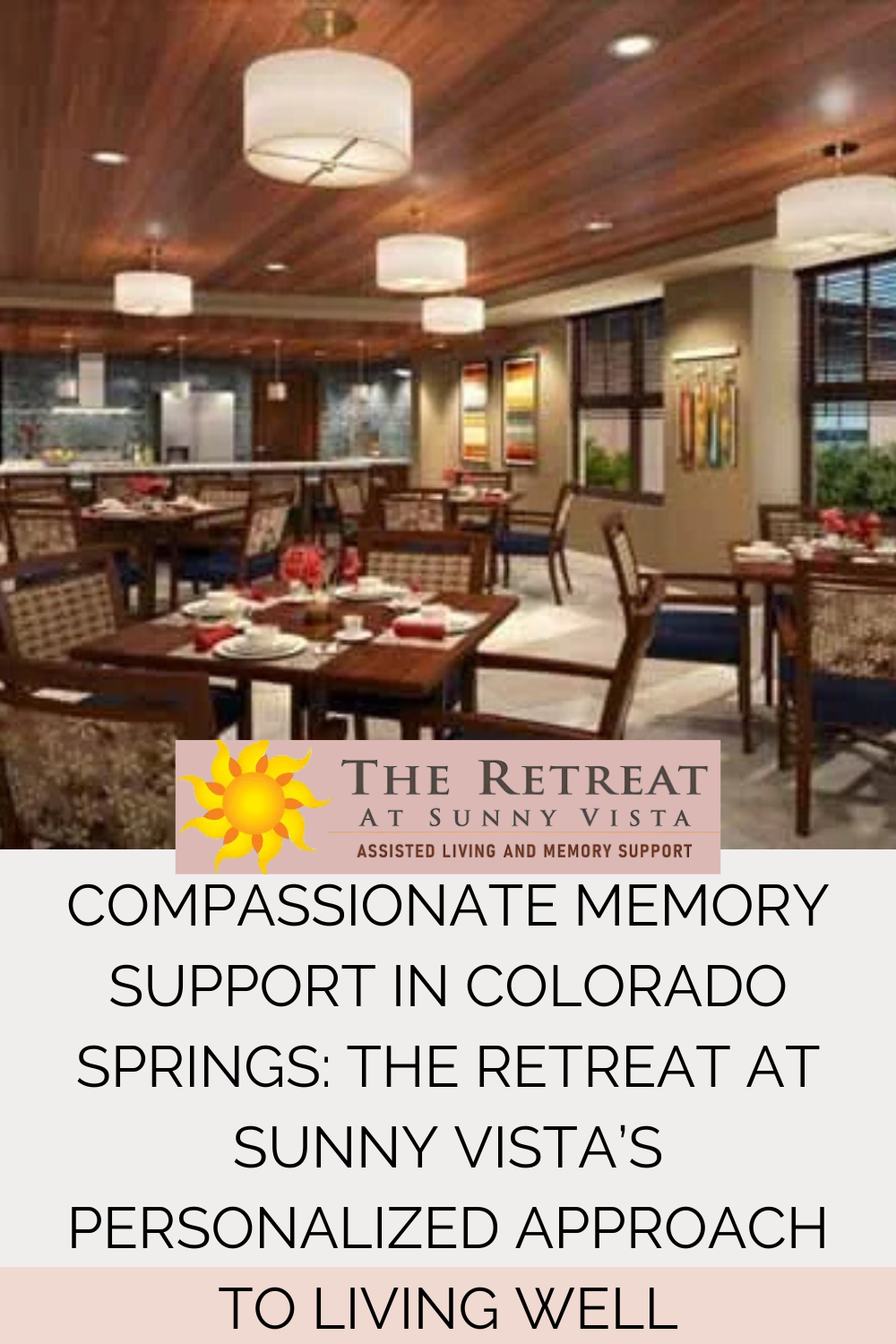
Memory Care 2450 East Cache La Poudre Street, Colorado Springs, Colorado, 80909Refresh. Renew. A place to be just You. Welcome to the Retreat at Sunny Vista Colorado Springs Assisted Living and Memory Support community.The Retreats fresh, contemporary design creates a warm and welcoming home for older adults to enjoy life on their own terms. With just the right amount of support, worries dwindle and life opens up to growth and possibilities.The Retreat at Sunny Vista will has well-appointed apartments and suites, as well as numerous light-filled and beautiful community spaces, including multiple dining venues, sun room, community life gathering areas, fireplace, outdoor patios, and walking paths. The latest technology will provide security and safety while preserving independence and dignity for each individual. Life at Sunny Vista is taking on a whole new meaning at The Retreat call us to learn more!
Sunny Vista - Living Center
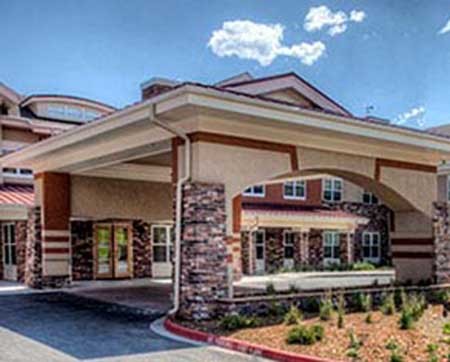
Skilled Nursing 2445 East Cache La Poudre Street, Colorado Springs, Colorado, 80909Since 1911, Sunny Vista Living Center has been serving the senior community of Colorado Springs. An independently owned and operated skilled nursing facility, Sunny Vista provides comfortable, quality accommodations and a variety services in the areas of rehabilitation, restorative therapy, and long-term care.
The Retreat at Sunny Vista
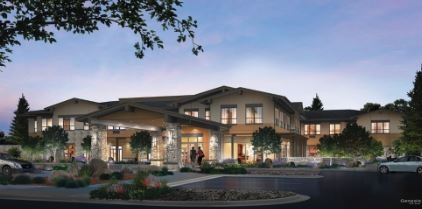
Assisted Living 2450 East Cache La Poudre Street, Colorado Springs, Colorado, 80909Refresh. Renew. A place to be just You. Welcome to the Retreat at Sunny Vista Colorado Springs Assisted Living and Memory Support community.The Retreats fresh, contemporary design creates a warm and welcoming home for older adults to enjoy life on their own terms. With just the right amount of support, worries dwindle and life opens up to growth and possibilities.The Retreat at Sunny Vista has well-appointed apartments and suites, as well as numerous light-filled and beautiful community spaces, including multiple dining venues, sun room, community life gathering areas, fireplace, outdoor patios, and walking paths. The latest technology will provide security and safety while preserving independence and dignity for each individual. Life at Sunny Vista is taking on a whole new meaning at The Retreat call us to learn more!