Homeowner’s Guide to Home Accessibility
Jun 11, 2026
Pennsylvania - Greater Pittsburgh Area


Homes hold memories that often make us want to remain in
them as long as possible. As homeowners age or face new mobility challenges,
maintaining comfort, independence and safety becomes increasingly important.
Accessibility is critical for those who want to remain in their homes as they
encounter physical limitations.
In this guide, we will explore the essentials of home
accessibility, discuss its benefits and highlight key areas of your home you
can adapt proactively or when mobility issues arise.
What Is Accessibility?
Home accessibility refers to modifications and designs that
make a living space safe and usable for people of all abilities. It includes
adaptations for those who use walkers or wheelchairs or have other mobility
challenges. These adjustments may involve structural changes like widening
doorways or adding ramps or minor modifications like adding bathroom grab bars
or improving lighting for better visibility.
Whether planning ahead so you can age in place or
responding to an unexpected need so you can function well with new limitations,
creating an accessible home ensures that you or your loved ones can live
safely, comfortably and independently in the home you love.
Benefits of Improving Home Accessibility
Improving home accessibility offers widespread advantages:
- Enhanced
safety. Reducing fall hazards and improving access to essential
areas minimizes the risk of injury.
- Independence. With
the right modifications, individuals can perform daily tasks without
relying heavily on others.
- Increased
home value. Accessible homes appeal to a broad market and
especially attract families with elderly members or with disabilities.
- Comfort
and convenience. Modifications such as zero-threshold showers,
accessible cupboards, or lever-style door handles can make everyday life
more comfortable.
- Future-proofing. Even
if you don’t need these adjustments now, incorporating accessibility
features ensures your home is safe and comfortable and will be
ready if your needs change.
Areas of the Home to Consider
Addressing home accessibility requires a comprehensive
approach. Here are important areas of your home to focus on:
Bathroom
The bathroom is one of the first areas to consider for
accessibility. Consider installing grab bars near the toilet and shower, a
raised toilet seat and a walk-in or roll-in shower. Non-slip flooring and
handheld showerheads also improve safety and ease of use.
Doorways
Narrow doorways can hinder entry for those using wheelchairs
or walkers. And older homes tend to have narrow door openings. Widening
doorways, installing offset hinges and replacing traditional doorknobs with
lever handles are practical solutions that boost accessibility and
independence.
Stairs
As homeowners age or face mobility issues, their home stairs
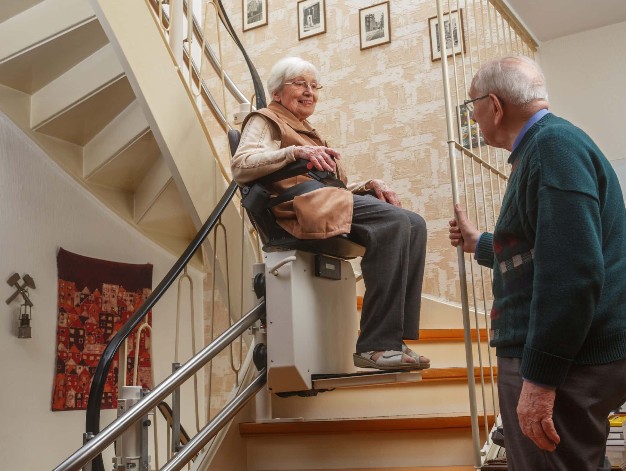
can become an obstacle to daily living. Solutions like stair lifts, ramps or
even residential elevators can provide safe and easy access to all levels of
your home. Handrails on both sides and well-lit steps further improve safety on
the stairs.
Kitchen
Accessible kitchens often feature lower countertops,
roll-under sinks and cabinets with pull-out shelves. Adjusting counter heights
and providing clear floor space increases functionality. Arranging the kitchen
so essential items like dishware and appliances are within easy reach also
makes a big difference.
Lighting
Proper lighting is essential for those with limited vision
or mobility. Bright, even lighting in hallways, stairwells and entryways
reduces fall risks. Consider installing motion-sensor lights for added
convenience and rocker switches that are easier to use than traditional ones.
Plumbing
Touchless or lever-style faucets and temperature controls
help prevent scalding and make sink usage easier for those with limited
dexterity. Adding anti-scald devices to shower and bathtub plumbing provides
additional safety.
Exterior
When making decisions about home accessibility, the exterior
of your home is just as important to consider. Accessible pathways, ramps and
handrails make entering and exiting safer. If stairs are unavoidable, consider
adding a ramp or a stair lift. A non-slip surface on stairs or your ramp can
also create smoother access.
Havenside Helps Make Homes Accessible
When it comes to home accessibility, Havenside is your
trusted partner. We understand that each homeowner’s needs are unique, and we
create customized solutions to prioritize safety, comfort and
independence. From bathroom upgrades to whole-home modifications, our team of
experts will guide you through every step, ensuring your home is beautiful and
accessible. Whether you need a minor adjustment or a major renovation, we can
help you achieve the perfect balance between style and functionality.
Havenside is here to provide the best mobility solutions. Contact us today
to arrange a free consultation. Our experts are here to assess your needs,
provide personalized recommendations and turn your vision of an accessible home
into a reality.
- To view the original version of this article visit havenside.com/homeowners-guide-to-home-accessibility/
- Seniors Blue Book was not involved in the creation of this content.
Other Articles You May Like
Facing a Cancer Diagnosis? How a Patient Advocate Can Help.
Facing a Cancer Diagnosis in Western Pennsylvania? How a Patient Advocate Can Help Understanding your diagnosis, navigating cancer treatment, and making important healthcare decisions can feel overwhelming. Discover how a healthcare patient advocate can help you find clarity, confidence, and support when you need it most. Hearing the words "You have cancer" can change your world in an instant. Suddenly, everyday life takes a back seat to medical appointments, unfamiliar terminology, treatment decisions, insurance questions, and concerns about what the future may hold. Whether you've recently received a cancer diagnosis, are undergoing treatment, or are helping a loved one navigate their healthcare journey, it's natural to feel overwhelmed. You may have excellent doctors and a supportive family, yet still find yourself wondering: Am I asking the right questions? Do I understand all my options? What if I'm missing something important? The good news is that you don't have to navigate a cancer diagnosis alone. A healthcare patient advocate can help you better understand medical information, prepare for important conversations, and feel more confident making decisions about your care. For individuals and families throughout Pittsburgh and Western Pennsylvania, Vital Voice, led by Wendy, provides personalized healthcare advocacy, clarity, and compassionate guidance during some of life's most challenging moments. Cancer in Pennsylvania: Why Patient Advocacy Matters More Than Ever Cancer affects thousands of Pennsylvania families every year. According to the American Cancer Society, an estimated 90,240 new cancer cases were projected to be diagnosed in Pennsylvania in 2025. Behind every statistic is a person trying to understand a diagnosis, a spouse worried about their partner, or an adult child helping an aging parent make important healthcare decisions. Western Pennsylvania is also home to a substantial population of older adults. According to the U.S. Census Bureau, approximately 21.9% of Allegheny County residents are age 65 or older. Because the risk of developing many types of cancer increases with age, older adults represent an important population when discussing cancer care, treatment decisions, and healthcare navigation. For seniors, a cancer diagnosis can bring additional challenges, particularly when they are already managing chronic health conditions, taking multiple medications, or trying to maintain their independence. And while the Pittsburgh region offers access to hospitals, oncology specialists, cancer treatment centers, and community resources, knowing where to turn and what questions to ask isn't always easy. That's why having someone who can help you navigate the healthcare system can be so valuable. What Is a Cancer Patient Advocate, and How Can One Help? A cancer patient advocate is someone who helps individuals better understand and navigate the medical, practical, and emotional challenges that can accompany a cancer diagnosis. Think of a healthcare advocate as an additional person in your corner. Your oncologist focuses on diagnosing and treating your cancer. Your nurses and other healthcare professionals provide essential medical care. A patient advocate helps you become a more informed, organized, and confident participant in the process. Healthcare advocacy isn't about replacing your medical team or making medical decisions for you. It's about helping you understand what's happening, identify the questions that matter, and feel comfortable speaking up about your needs and concerns. Depending on your situation, a healthcare advocate may help you: Understand medical information and unfamiliar terminology. Prepare questions for oncology appointments. Organize information about treatment options and recommendations. Identify concerns to discuss with your healthcare providers. Prepare for conversations about second opinions. Better understand the next steps in your care. Identify questions about insurance, treatment costs, or available resources. Feel supported during difficult healthcare decisions. Sometimes, simply having someone help you sort through everything can make an overwhelming situation feel much more manageable. Seven Ways a Healthcare Advocate Can Help During Your Cancer Journey 1. Understanding a New Cancer Diagnosis When you're first diagnosed with cancer, your mind may be racing. Your physician might explain pathology reports, imaging results, cancer staging, and recommended treatments, but absorbing that information while processing the emotional impact of a diagnosis can be difficult. You may leave the appointment realizing you didn't fully understand what was discussed. A healthcare advocate can help you review the information you've received, identify what needs clarification, and prepare questions for your medical team. For example: What type and stage of cancer do I have? Has the cancer spread? What additional tests are needed? What treatment options should I consider? How soon do I need to make a decision? What is the goal of the recommended treatment? Understanding your diagnosis is the first step toward feeling more empowered in your healthcare journey. You don't need to become a medical expert. You simply deserve information presented in a way you can understand. 2. Preparing for Oncology Appointments and Asking the Right Questions Have you ever walked out of a doctor's appointment and suddenly remembered everything you meant to ask? Now imagine doing that while navigating a cancer diagnosis. Oncology appointments often involve complicated conversations, unfamiliar information, and significant decisions. Even patients who are normally organized and confident may struggle to remember everything. A healthcare advocate can help you prepare by organizing your concerns, developing a list of questions, and identifying what information you need before your appointment. Keeping a notebook with your medications, symptoms, appointments, test results, and questions can also be helpful. You may want to bring a trusted family member, take notes, or ask your provider whether recording the conversation is permitted. Being prepared can help you leave appointments with a clearer understanding of what comes next. 3. Making Sense of Cancer Treatment Options Cancer treatment is rarely one-size-fits-all. Depending on the type and stage of cancer, your medical team may recommend surgery, chemotherapy, radiation therapy, immunotherapy, targeted therapy, hormone therapy, or a combination of treatments. Each approach can involve different benefits, risks, side effects, and schedules. For older adults, treatment decisions may also involve considerations such as existing medical conditions, mobility, medications, independence, and quality of life. You may wonder: What are the benefits and risks of this treatment? How will it affect my everyday activities? What side effects should I expect? Are there other treatment options worth discussing? Should I seek a second opinion? What happens if I choose not to pursue a particular treatment? A healthcare advocate can help you organize these questions and better understand the information provided by your medical professionals. The ultimate goal is to help ensure that your treatment decisions reflect your medical needs, personal preferences, and what matters most to you. 4. Helping Older Adults Maintain Independence During Cancer Treatment For many seniors in Pittsburgh and Western Pennsylvania, maintaining independence is a major concern when facing cancer treatment. Some older adults live alone. Others have spouses who may also be managing health challenges. Many worry about becoming a burden to their adult children. Cancer treatment can sometimes affect energy levels, mobility, appetite, and the ability to manage everyday responsibilities. In addition to medical treatment, patients may need to consider: Transportation to oncology appointments. Help with meals, housekeeping, or personal care. Home care or home health services when appropriate. Medication management and organization. Physical or occupational therapy. Nutrition support. Cancer support groups and counseling. Palliative care to help manage symptoms and improve quality of life. Palliative care is not the same as hospice care. It focuses on relief from symptoms and the stress of serious illness and can be provided alongside cancer treatment. A healthcare advocate can help patients and families recognize important support needs and prepare questions about available services. The earlier these conversations happen, the easier it may be to plan for changes before they become urgent. 5. Supporting Spouses, Adult Children, and Family Caregivers A cancer diagnosis doesn't affect only the person receiving treatment. It often changes the lives of everyone who loves them. Spouses may suddenly become primary caregivers. Adult children may find themselves coordinating appointments, managing paperwork, arranging transportation, and communicating with multiple healthcare providers. For families living in different parts of Western Pennsylvaniaor adult children living outside the regionthese responsibilities can become especially challenging. It's common for caregivers to feel overwhelmed, uncertain, or worried about making the wrong decision. A healthcare advocate can provide additional guidance by helping families organize their concerns, identify questions, and communicate more effectively with healthcare professionals. This support can be particularly helpful when family members have different opinions about treatment or when an older adult wants to maintain independence while accepting necessary assistance. The goal is to support the patient's wishes while helping loved ones feel better prepared for the journey ahead 6. Understanding Medicare, Insurance, and Cancer Treatment Costs A serious medical diagnosis often brings financial questions along with medical concerns. Patients may receive bills from hospitals, oncology specialists, laboratories, imaging centers, and treatment facilities. Even with Medicare or private health insurance, understanding deductibles, copayments, coinsurance, prior authorizations, and out-of-pocket expenses can be confusing. Some treatments or medications may require additional insurance approvals, and coverage can vary depending on the individual's plan. Important questions to ask include: Is my oncologist or cancer treatment center covered by my insurance? Does my treatment require prior authorization? What expenses might I be responsible for? Are financial assistance programs available? Does my cancer treatment center have a financial navigator or social worker? Who can help me understand an unexpected medical bill? A healthcare advocate can help you identify questions and determine which professionals or departments may be able to provide answers. For specialized insurance guidance, patients should also consult their insurance provider, hospital financial counselor, or a qualified Medicare counselor. Understanding potential costs and available resources early can help reduce unnecessary stress. 7. Having Someone to Turn to When Everything Feels Overwhelming Not every challenge associated with cancer involves a medical decision. Sometimes, it's simply the emotional weight of the experience. You may feel exhausted from appointments, frustrated by conflicting information, or anxious about what comes next. You may not want to worry your family with another question or concern. Even when surrounded by people who care about you, navigating a serious illness can feel isolating. This is where the personal side of healthcare advocacy becomes especially meaningful. Having someone who listens, helps you organize your thoughts, and encourages you to speak up can provide an important sense of support. You deserve to feel heard, respected, and involved in decisions about your own health. And sometimes, knowing you have someone in your corner can make a difficult day feel a little less overwhelming. Do You Need a Healthcare Advocate If You Already Have a Good Doctor? This is a question many patients and families ask. The answer is that even individuals with excellent physicians and compassionate medical teams may benefit from additional advocacy support. Doctors, nurses, oncology social workers, and hospital patient navigators play essential roles in cancer care. However, patients may still need help organizing information, preparing questions, or understanding what to do between appointments. An independent healthcare advocate can complement the support provided by your existing healthcare team. Think of it this way: Your medical team focuses on your cancer treatment. Your healthcare advocate helps you stay informed, organized, and confident as you navigate the experience. It's not about questioning the expertise of your physicians. It's about ensuring you feel comfortable participating in your care. Five Important Questions Every Cancer Patient Should Ask Whether you've recently been diagnosed or are already undergoing treatment, consider bringing these five questions to your next oncology appointment. 1. What is the goal of my treatment? Understanding whether treatment is intended to eliminate cancer, control its growth, relieve symptoms, or achieve another goal can help you evaluate your options. 2. What side effects should I expect, and when should I call my doctor? Ask which symptoms are common, which require a call to your treatment team, and which may require immediate medical attention. 3. How might treatment affect my daily life? Discuss fatigue, nutrition, transportation, mobility, caregiving responsibilities, and your ability to remain independent. 4. What additional support services are available? Ask about oncology social workers, nutrition specialists, financial counselors, rehabilitation services, support groups, and other community resources. 5. Who should I contact when I have questions between appointments? Knowing whom to call can provide reassurance when new symptoms, concerns, or questions arise. Remember, there is no such thing as a foolish question when it comes to your health. If something doesn't make sense, ask for clarification. If you need more time to understand your options, communicate that to your healthcare team. Your voice matters. When you're facing a serious health challenge, it's easy to feel like you're just another patient trying to make sense of a complicated healthcare system. Wendy, through Vital Voice, believes that every individual deserves personalized attention, clear information, and compassionate support throughout their healthcare journey. Based in Western Pennsylvania, Vital Voice provides individualized healthcare advocacy and guidance for people facing a wide range of medical challenges, including cancer diagnoses, upcoming surgeries, ongoing treatments, and uncertainty about their medical care. Wendy serves as a healthcare advocate, clarity coach, and supportive companion, helping individuals take a fresh look at their circumstances, organize their concerns, and feel more prepared to communicate with healthcare professionals. Her approach recognizes that no two healthcare journeys are exactly alike. Some individuals may need a conversation to help sort through their thoughts and prepare for an important appointment. Others may benefit from ongoing guidance while navigating a complicated medical situation. Whether you're an older adult facing cancer treatment, a spouse supporting a loved one, or an adult child helping an aging parent, Vital Voice provides personalized support based on your needs. For individuals searching for a cancer patient advocate in Pittsburgh or healthcare advocacy services in Western Pennsylvania, Vital Voice offers a local connection and a compassionate approach to navigating difficult healthcare experiences. Because behind every diagnosis is a real person with questions, concerns, hopes, and decisions that deserve thoughtful attention. You Have a Voice in Your Cancer Care. Don't Be Afraid to Use It. A cancer diagnosis can bring uncertainty, but it doesn't take away your right to ask questions, understand your options, express your preferences, and participate in decisions about your health. You don't have to understand every medical term. You don't have to remember every detail from every appointment. And you certainly don't have to pretend you have everything figured out. What matters is knowing that support is available. Whether you're newly diagnosed with breast cancer, prostate cancer, lung cancer, colorectal cancer, or another serious illness, or you're helping a loved one navigate treatment, a healthcare advocate can help you approach the next step with greater clarity and confidence. You Don't Have to Navigate Cancer Alone: If you or someone you love is facing a cancer diagnosis or another challenging healthcare situation in Pittsburgh or Western Pennsylvania, consider connecting with Wendy at Vital Voice to learn more about personalized healthcare advocacy and support. Because when it comes to your health, understanding your options, asking the right questions, and having someone in your corner can make all the difference. Your health matters. Your questions matter. Your voice matters. Vital Voice provides healthcare advocacy and guidance, not medical diagnosis or treatment. Always consult qualified healthcare professionals regarding medical decisions and treatment.
Building a Bucket Strategy for Your Retirement Income
Retirement income planning doesn't have to feel overwhelming and our bucket strategy can give you a powerful framework to make it manageable. In this course, we'll walk through how to design, fund, and maintain a customized bucket strategy that aligns asset allocation with your time horizons, spending priorities, and risk tolerance. You'll come away ready to address sequence-of-returns risk and the behavioral challenges that can derail even the best retirement income plans.For a quick, informative course click: https://tinyurl.com/NestEgg-Buckets .
Hearing Loss in Older Adults: What Families Should Know
Hearing loss is common as we get older, but that doesn't mean it should be ignored. For many older adults, hearing changes happen gradually. They may not realize how much their hearing has changed, or they may become accustomed to asking people to repeat themselves, turning up the television, or avoiding conversations in noisy environments.Family members are often among the first people to notice that an older loved one may be having difficulty hearing. Recognizing the signs and approaching the subject with patience and understanding can make it easier for a senior to receive the hearing care they need.Understanding Hearing Loss in Older AdultsAge-related hearing loss can develop slowly over time. Rather than suddenly losing the ability to hear, an older adult may gradually have more difficulty understanding certain voices, following conversations, or hearing higher-pitched sounds.Hearing loss can affect more than the ability to hear words. It can make communication more challenging and may cause an older adult to miss important information or feel frustrated during conversations.Because hearing loss often develops gradually, a person may not realize that others are speaking normally while their ability to hear and understand has changed.Signs Your Loved One May Have Hearing LossFamily members may notice signs of hearing loss before an older adult recognizes them.Some common signs include: Frequently asking others to repeat themselves Turning the television or radio volume up very high Having difficulty following conversations Struggling to hear in restaurants or other noisy environments Frequently misunderstanding what people say Having difficulty hearing on the telephone Watching people's faces closely while they speak Complaining that everyone seems to mumble Avoiding social gatherings or group conversations Responding inappropriately because they misunderstood a question If several of these behaviors sound familiar, it may be worthwhile to encourage your loved one to have their hearing evaluated.Hearing Loss Can Affect More Than CommunicationIt can be easy to think of hearing loss as simply a problem with hearing conversations. However, communication difficulties can affect many areas of an older adult's daily life.Someone who struggles to hear may become frustrated when talking with family and friends. They may stop participating in group conversations because they cannot follow what is being said.Over time, an older adult may begin avoiding restaurants, community activities, family gatherings, or other social situations where hearing is difficult.Helping a loved one address hearing difficulties can make it easier for them to remain engaged with the people and activities they enjoy.Why Some Seniors Resist Hearing CareIt isn't unusual for an older adult to be reluctant to acknowledge hearing loss.They may believe that their hearing is "good enough," feel embarrassed about needing hearing aids, or worry that others will view them differently. Some people may also assume that hearing loss is simply an unavoidable part of aging.Family members should approach the conversation with compassion rather than criticism.Instead of saying, "You can't hear anything anymore," try explaining how better hearing could make everyday conversations easier and help your loved one stay connected with family and friends.Start the Conversation With UnderstandingTalking about hearing loss can be sensitive. Choose a quiet, comfortable time to discuss your concerns rather than bringing up the subject during a frustrating conversation.You might explain that you've noticed they are having difficulty hearing and that you would like to help them find out why.It can also help to make the conversation about their quality of life rather than focusing on what they are doing wrong.For example, you can point out that a hearing evaluation could help them hear conversations more comfortably at family gatherings, restaurants, or other activities they enjoy.Encourage a Hearing EvaluationIf you or your loved one notices signs of hearing difficulty, the next step is a professional hearing evaluation.A hearing evaluation can help determine whether hearing loss is present and provide information about the type and degree of hearing difficulty.Depending on the results, a hearing professional can discuss available options and help determine what may be appropriate for the individual's hearing needs and lifestyle.It's important not to purchase hearing aids simply because someone else has had success with a particular model. Hearing needs vary from person to person, so professional guidance is valuable.Hearing Aids May HelpFor some people with hearing loss, hearing aids can make communication easier.Modern hearing aids come in a variety of styles and features. A hearing professional can help determine which options may be appropriate based on an individual's hearing loss, lifestyle, comfort, and personal preferences.It can take some time for a person to adjust to wearing hearing aids. Family members can support the process by being patient and encouraging their loved one as they become comfortable with their devices.How Family Members Can Improve CommunicationEven when an older adult is receiving treatment for hearing loss, family members can make conversations easier.Try these simple communication strategies:Get Their Attention FirstMake sure your loved one knows you are speaking to them before beginning a conversation.Face Them When You SpeakFacing the person can make communication easier and allows them to see your facial expressions and other visual cues.Reduce Background NoiseTurn off the television or move to a quieter area when having an important conversation.Speak ClearlySpeak at a natural pace and avoid shouting. Speaking louder does not always make speech easier to understand.Be PatientGive your loved one time to process what you've said and respond. If they don't understand, try rephrasing the statement rather than simply repeating the same words louder.Don't Ignore Sudden Hearing ChangesWhile gradual hearing loss is common, sudden changes in hearing should not be ignored.If an older adult experiences sudden hearing loss, particularly in one ear, they should seek prompt medical attention. Sudden hearing changes can have different causes and may require urgent evaluation.Other symptoms such as dizziness, severe ear pain, drainage, or sudden neurological symptoms should also be evaluated by a healthcare professional.Hearing Care Can Help Older Adults Stay ConnectedHearing is an important part of maintaining relationships and participating in everyday life. When an older adult has difficulty hearing, the effects can extend beyond conversations.Families can play an important role by recognizing potential signs of hearing loss, approaching the subject with compassion, and encouraging professional hearing care.If you suspect that a parent, grandparent, spouse, or another loved one is experiencing hearing loss, don't wait until communication becomes extremely difficult. A professional hearing evaluation can provide valuable information and help your loved one understand their options.Darrell M. Sipe Opticians & Hearing Aids provides hearing care services designed to help individuals better understand their hearing needs and explore appropriate solutions.Better hearing can mean more meaningful conversations, greater participation, and more opportunities to stay connected with the people who matter most.If you're concerned about a loved one's hearing, start the conversation today. A hearing evaluation can be an important first step toward better communication and a better quality of life.
Local Services By This Author
Havenside
Stair Lifts 171 Industry Drive, Pittsburgh, Pennsylvania, 15275Havenside Stairlift SolutionsSafe, Reliable Stairlifts for Aging in Place in Pittsburgh, PAFor many individuals and families, the ability to safely navigate stairs becomes one of the biggest challenges to remaining at home. At Havenside, stairlift solutions are designed to restore confidence, improve mobility, and make every level of the home accessible again. Serving the Greater Pittsburgh area, Havenside specializes in stairlift installation and mobility solutions for aging in place, helping individuals maintain independence without the need to relocate.Stairs are often one of the most overlooked barriers in a home until they become difficultor even dangerousto use. What was once a simple part of daily life can quickly turn into a source of stress, anxiety, or risk. Whether due to aging, injury, surgery, or a chronic condition, reduced mobility can limit access to bedrooms, bathrooms, or essential living spaces located on another floor. Havenside understands that when stairs become a problem, it affects not just convenience, but quality of life.A stairlift offers a practical and effective solution by allowing individuals to move safely between floors without strain or risk of falling. By installing a custom stairlift system, Havenside helps eliminate one of the most common causes of in-home injuries while making it possible to fully utilize the entire home again. This simple yet transformative upgrade can often be the difference between staying at home and needing to consider alternative living arrangements.Aging in place continues to be a top priority for seniors and their families, with most individuals expressing a strong desire to remain in their own homes as they age. However, multi-level homes can present significant challenges when mobility changes. Havensides stairlift solutions are designed to adapt the home to the individual, rather than forcing the individual to adapt to the home. By doing so, they create an environment that supports long-term independence and comfort.Every stairlift project begins with a personalized consultation and in-home assessment. Havensides team carefully evaluates the layout of the staircase, whether it is straight or curved, narrow or wide, and considers the specific mobility needs of the individual. This ensures that the recommended stairlift is not only functional but also seamlessly integrated into the home. Their goal is to provide a solution that feels natural, unobtrusive, and easy to use.Modern stairlifts are designed with both safety and comfort in mind. Smooth, quiet operation allows for a gentle ride between floors, while secure seating and intuitive controls make them easy to operate. Features such as swivel seats, safety sensors, and backup power systems add an additional layer of reliability, ensuring that users feel confident every time they use the lift. Havenside focuses on providing high-quality stairlift systems that are built for long-term performance and peace of mind.Safety is at the core of every stairlift installation. Falls on stairs are one of the leading causes of injury among older adults, and even a single incident can have lasting consequences. By installing a stairlift, Havenside significantly reduces this risk, allowing individuals to move freely throughout their home without fear. This not only enhances physical safety but also provides emotional reassurance for both users and their families.In addition to safety, stairlifts offer a level of independence that is often lost when mobility becomes limited. Rather than relying on assistance from family members or caregivers, individuals can maintain control over their daily routines. This sense of independence plays a crucial role in overall well-being, helping individuals feel more confident and empowered in their own space.Stairlifts are also an important consideration during recovery from surgery or injury. For individuals returning home after a hospital stay, navigating stairs can be one of the most difficult obstacles to overcome. Havenside frequently works with healthcare professionals and discharge planners to ensure that stairlift solutions are in place when needed, supporting a smoother transition from hospital to home. By addressing mobility challenges early, they help reduce the risk of complications and promote a safer recovery environment.From a financial perspective, installing a stairlift can be a cost-effective alternative to relocating or modifying an entire home layout. Moving to a single-level residence or assisted living community often comes with significant financial and emotional costs. A stairlift, on the other hand, provides a targeted solution that allows individuals to remain in the home they love while addressing a specific mobility challenge. Havenside helps families explore options that align with their budget and long-term goals, making aging in place more accessible.Havensides approach is centered on simplicity and support. From the initial consultation through installation, their team manages every step of the process with professionalism and care. They take the time to explain options, answer questions, and ensure that each client feels comfortable and informed. The result is a smooth, stress-free experience that prioritizes the needs of the individual.What sets Havenside apart is their commitment to personalized solutions and genuine care. They understand that every home and every situation is unique, and they approach each project with that mindset. By focusing on both functionality and user experience, they deliver stairlift solutions that are not only effective but also seamlessly integrated into everyday life.For families, caregivers, and individuals in the Pittsburgh area, Havenside provides a trusted resource for stairlift installation, mobility solutions, and aging-in-place support. Their expertise and dedication make it possible to overcome one of the most common barriers to independence, allowing individuals to safely access every part of their home.Choosing to install a stairlift is ultimately about preserving independence and maintaining the lifestyle that matters most. It is about ensuring that every room in the home remains accessible and that mobility challenges do not limit quality of life. With Havenside, that goal becomes achievable through thoughtful design, reliable solutions, and a commitment to helping people live safely and comfortably at home.By transforming the way individuals move within their homes, stairlifts provide more than just conveniencethey provide freedom. Havenside is proud to offer solutions that make that freedom possible, helping clients continue living where they feel most comfortable, supported by a home that works for them every step of the way.GET A QUOTE

Havenside
Ramps 171 Industry Drive, Pittsburgh, Pennsylvania, 15275Ramp & Home Safety SolutionsSafe, Accessible Entryways for Aging in Place in Pittsburgh, PAA safe home begins at the point of entry. For many individuals and families, navigating steps, uneven surfaces, or steep walkways can become one of the most challenging and dangerous parts of daily life. At Havenside, the focus is on creating secure, accessible pathways that allow individuals to enter and exit their homes with confidence. Serving the Greater Pittsburgh area, Havenside specializes in wheelchair ramps, entryway modifications, and home safety solutions for aging in place, helping people maintain independence while reducing the risk of injury.As mobility changes due to aging, injury, or health conditions, even a few steps at the front door can create a significant barrier. What was once a simple routine can become a source of stress or even prevent someone from leaving their home altogether. Havenside understands that accessibility is not just about convenienceit is about freedom, connection, and the ability to live life without unnecessary limitations.Ramps provide a practical and highly effective solution by eliminating the need to navigate stairs. By installing a custom-built wheelchair ramp or mobility ramp, Havenside transforms entryways into safe, usable spaces for individuals who use walkers, wheelchairs, or simply need a more stable surface. These ramps are thoughtfully designed to blend with the home while meeting the highest standards for safety and functionality.Aging in place continues to be a priority for seniors and their families, with most individuals preferring to remain in their own homes rather than move to assisted living. However, maintaining independence requires a home environment that supports safe movement both inside and outside. Entryways are often the first place where challenges arise, and addressing them early can prevent larger issues down the road. Havensides ramp and safety solutions are designed to adapt the home to the individual, ensuring that accessibility is never compromised.Every project begins with a personalized assessment of the home and the individuals needs. Havensides team evaluates factors such as the layout of the property, the height and number of steps, and how the space is used on a daily basis. This allows them to design a ramp that is not only functional but also comfortable to use and seamlessly integrated into the homes exterior. Whether the need is for a permanent structure or a more flexible option, their solutions are tailored to provide long-term reliability.Safety is the driving force behind every ramp installation. Falls on steps and entryways are a leading cause of injury, particularly among older adults. Even a small misstep can have serious consequences, leading to hospitalizations or a loss of independence. By creating a stable, gradual pathway, Havenside significantly reduces this risk and provides a safer way to navigate in and out of the home. This added level of security offers peace of mind not only for the individual but also for their family and caregivers.Beyond ramps, Havenside takes a comprehensive approach to home safety modifications, recognizing that true accessibility extends beyond a single solution. Entryways often include additional hazards such as poor lighting, uneven walkways, or lack of support. By addressing these elements together, Havenside creates a more complete and effective safety plan. Improved visibility, smoother transitions, and thoughtful design all contribute to a safer environment that supports daily living.One of the most important benefits of ramp installation is the restoration of independence. When individuals can safely leave their home without assistance, it opens the door to greater freedom and connection. Simple activities such as attending appointments, visiting family, or enjoying time outdoors become easier and more accessible. This sense of independence plays a vital role in overall well-being, helping individuals maintain an active and engaged lifestyle.Ramp solutions are also especially valuable during recovery from surgery or injury. For those returning home after a hospital stay, the ability to safely enter and exit the home is essential. Havenside frequently works alongside healthcare professionals and discharge planners to ensure that accessibility solutions are in place when needed, supporting a smoother and safer transition. By preparing the home environment in advance, they help reduce the risk of complications and promote a more successful recovery.From a financial perspective, installing a ramp and making targeted safety improvements can be a cost-effective alternative to more extensive renovations or relocation. Moving to a new home or transitioning into assisted living can be both expensive and emotionally challenging. By modifying the existing home, individuals can continue living in a familiar environment while addressing specific accessibility needs. Havenside helps families explore options that align with their budget and long-term plans, making aging in place more attainable.Havensides approach is centered on simplicity, reliability, and personalized care. From the initial consultation through installation, their team manages every step of the process with attention to detail and a commitment to quality. They take the time to understand each clients situation, ensuring that the final solution is both practical and meaningful. This hands-on approach creates a smooth and stress-free experience, allowing homeowners to move forward with confidence.What sets Havenside apart is their dedication to creating solutions that truly improve everyday life. They recognize that a ramp is not just a structural additionit is a pathway to independence, safety, and peace of mind. By focusing on both functionality and user experience, they deliver results that make a lasting difference for the individuals and families they serve.For seniors, caregivers, and families in the Pittsburgh area, Havenside provides a trusted resource for wheelchair ramp installation, entryway accessibility, and home safety solutions. Their expertise helps remove barriers, reduce risk, and create an environment where individuals can move freely and safely.Choosing to install a ramp and improve home safety is ultimately about preserving independence and maintaining quality of life. It is about ensuring that the home remains a place of comfort, not limitation. With Havenside, that goal becomes achievable through thoughtful design, expert craftsmanship, and a genuine commitment to helping people live safely at home.By transforming entryways and enhancing overall safety, Havenside helps individuals take control of their environment and continue living life on their own terms. Every step becomes more secure, every movement more confident, and every day a little easierbecause the home is designed to support the people who live there.GET A QUOTE

Havenside
Bath Safety 171 Industry Drive, Pittsburgh, Pennsylvania, 15275Havenside Bathroom Safety & RemodelingSafe, Accessible Bathrooms for Aging in Place in Pittsburgh, PACreating a safe and functional bathroom is one of the most important steps in supporting independence at home. At Havenside, the focus is on transforming traditional bathrooms into thoughtfully designed spaces that promote safety, accessibility, and comfort for older adults and individuals with mobility challenges. Serving the Greater Pittsburgh area, Havenside specializes in bathroom modifications for aging in place, helping individuals remain in their homes with confidence and peace of mind.For many families, the bathroom presents the highest risk for falls and injuries. Slippery surfaces, high tub walls, limited support, and tight layouts can quickly turn everyday routines into dangerous situations. Havenside understands that these challenges are not just inconvenientthey can directly impact a persons ability to live independently. That is why their team takes a proactive approach, identifying potential hazards and redesigning bathrooms to reduce risk while improving usability.Aging in place is more than a preference; it is a growing movement among seniors who want to maintain their independence and stay in familiar surroundings. However, most homes were not originally designed with long-term accessibility in mind. Bathrooms, in particular, often require modifications to meet changing physical needs. Havenside provides customized solutions that adapt to each individual, ensuring that the space evolves alongside them rather than becoming a limitation.The process begins with a comprehensive assessment of the current bathroom layout and the individuals specific needs. Havensides team takes into account mobility levels, balance concerns, and long-term goals to recommend solutions that will provide both immediate safety and lasting value. Their expertise in accessible bathroom design allows them to create spaces that are not only functional but also comfortable and visually appealing.One of the most impactful upgrades is the transition from a traditional bathtub to a walk-in shower. High tub walls can be one of the most significant fall risks in a home, especially for individuals with limited mobility. By installing a barrier-free or low-threshold shower, Havenside makes it easier and safer to enter and exit the bathing area. These showers are often paired with built-in seating and strategically placed grab bars, providing additional stability and support during use.Grab bars play a critical role in bathroom safety, offering reliable assistance for balance and movement. When installed correctly, they can significantly reduce the risk of falls and increase confidence during daily routines. Havenside ensures that every grab bar is placed with purpose, aligned with the users natural movements and needs rather than installed as a generic solution.Flooring is another essential component of a safe bathroom environment. Wet surfaces are a leading cause of slips, making non-slip flooring solutions a key part of any bathroom modification. Havenside incorporates materials that provide traction without sacrificing style, allowing homeowners to enjoy a space that feels both secure and welcoming.In addition to structural changes, Havenside also focuses on improving overall accessibility within the bathroom. This may include widening doorways to accommodate mobility devices, adjusting sink and vanity heights for easier use, and optimizing lighting to enhance visibility. Proper lighting is often overlooked, yet it plays a vital role in preventing accidents and supporting independence. By creating a well-lit environment, Havenside helps individuals navigate their space with greater confidence.Every bathroom modification project is guided by the principles of safety, accessibility, and independence. Havensides team includes professionals trained in aging-in-place design, ensuring that each solution is rooted in best practices and tailored to real-life needs. Their goal is not just to improve a bathroom but to create a space that supports a persons ability to live comfortably and independently for years to come.Beyond the physical benefits, a safe and accessible bathroom can have a profound emotional impact. When individuals feel confident in their ability to manage daily tasks without assistance, it enhances their sense of dignity and control. For families and caregivers, it provides peace of mind knowing that their loved one is in a safer environment. Havenside recognizes the importance of these outcomes and approaches every project with compassion and attention to detail.Bathroom modifications also play a key role in recovery and long-term health management. For individuals returning home after surgery or hospitalization, having a safe and accessible bathroom can significantly reduce the risk of complications and readmissions. Havenside frequently works alongside healthcare professionals and discharge planners to ensure that the home environment supports a smooth and successful transition.From a financial perspective, investing in bathroom safety and accessibility can be a cost-effective alternative to assisted living or long-term care. While the upfront investment in home modifications may vary, it is often far less than the ongoing monthly costs associated with residential care facilities. By enabling individuals to remain at home, Havenside helps families make decisions that are both practical and sustainable.Havensides approach is centered on collaboration and guidance. From the initial consultation through project completion, their team works closely with each client to ensure a seamless and stress-free experience. They manage every aspect of the project, from design and product selection to installation, allowing homeowners to focus on what matters most.What sets Havenside apart is their commitment to personalized care. No two clients are the same, and no two bathrooms should be either. By taking the time to understand each individuals needs, preferences, and goals, Havenside delivers solutions that are as unique as the people they serve. Their work reflects a balance of functionality, safety, and thoughtful design, resulting in spaces that truly support aging in place.For seniors, caregivers, and families in the Pittsburgh area, Havenside offers a trusted resource for bathroom safety, accessibility upgrades, and aging-in-place remodeling. Whether the need is immediate or part of a long-term plan, their team is ready to help create a bathroom that promotes independence, reduces risk, and enhances quality of life.Choosing to modify a bathroom is ultimately about choosing to stay home, stay safe, and stay independent. With Havenside, that choice becomes not only possible but practical. By transforming one of the most essential spaces in the home, they help individuals continue living where they feel most comfortablesurrounded by familiarity, supported by thoughtful design, and empowered to live life on their own terms.GET A QUOTE