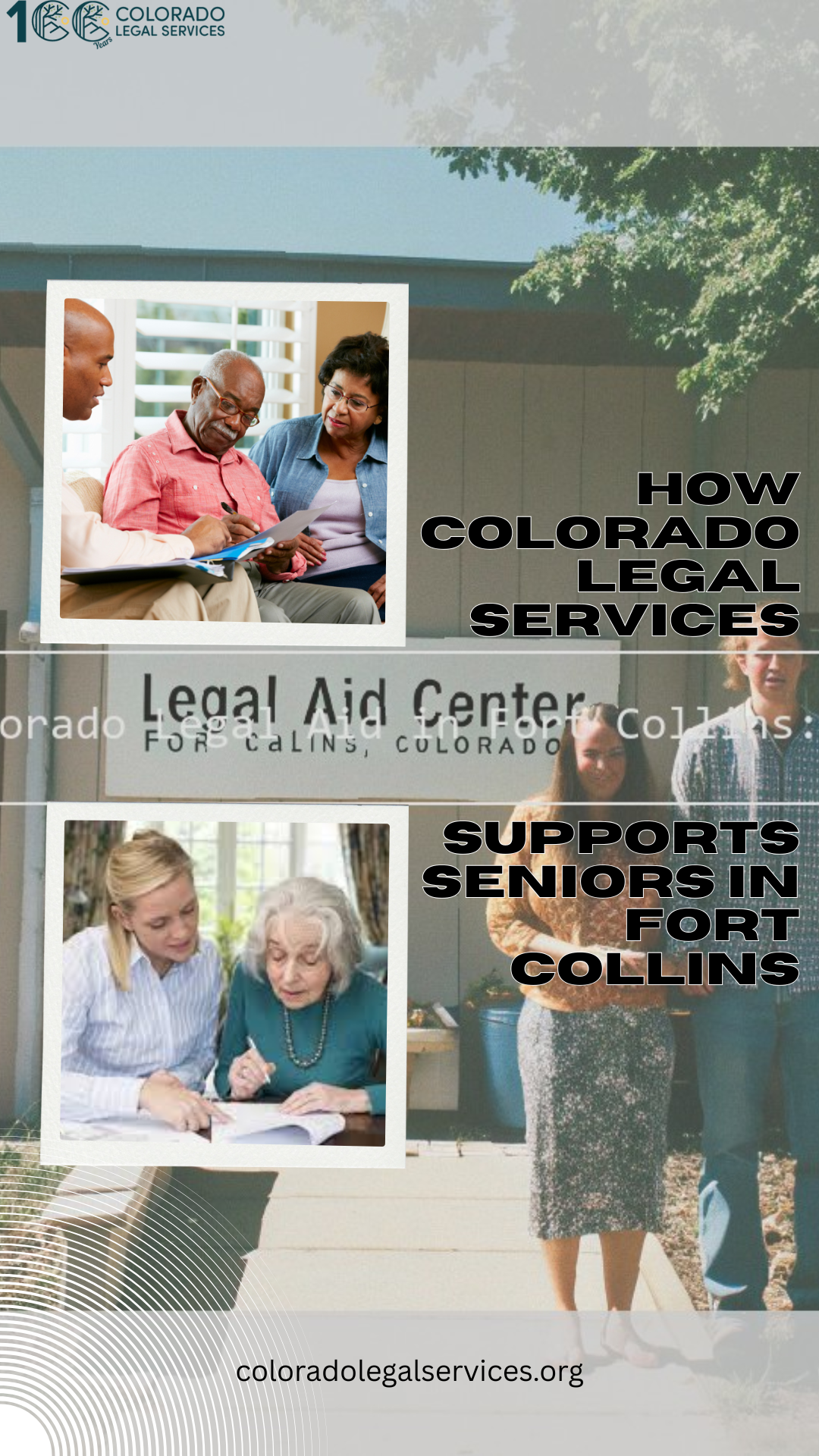
How Colorado Legal Services Supports Seniors in Fort Collins
Colorado Legal Services
For more information about the author, click to view their website: Colorado Legal Services
Dec 04, 2025
Colorado - Northern Colorado


How Colorado Legal Services Supports Seniors in Fort Collins
Navigating legal issues can be overwhelming at any age—but for older adults living on fixed incomes, managing health changes, or dealing with housing insecurity, legal challenges can quickly become urgent and complicated. From disputes with landlords to trouble accessing benefits, seniors often face unique barriers that require trusted, experienced legal guidance.
That’s where Colorado Legal Services (CLS) plays a vital role. Serving Fort Collins and communities across Northern Colorado, CLS provides free and low-cost civil legal assistance to older adults who need help protecting their rights, securing benefits, and preserving their independence. Their work ensures that vulnerable seniors do not face legal problems alone.
In a region where the senior population is growing rapidly, Colorado Legal Services is a lifeline—offering clarity, stability, and compassionate advocacy during some of life’s most stressful moments.
A Mission Built on Justice, Equity & Compassion
Colorado Legal Services exists for one core purpose: to help low-income Colorado residents access the legal support they need but cannot afford. For older adults, this support is especially critical.
“Our goal is to give seniors the legal tools they need to stay safe, stable, and independent,” says Cindi Hendrix. “Many of our clients feel scared or uncertain when they first contact us. We’re here to guide them, advocate for them, and make sure their rights are protected.”
CLS focuses on civil (non-criminal) legal matters—the types of issues that often hit seniors hardest.
Legal Challenges Common Among Northern Colorado Seniors
As Fort Collins and Larimer County continue to grow, many local seniors face evolving legal challenges. Some are the result of rising costs, while others stem from health changes or increased vulnerability to fraud.
Colorado Legal Services helps older adults navigate issues such as:
1. Housing & Eviction Defense
With rapidly rising rents and limited affordable housing, many seniors struggle to:
-
Respond to eviction notices
-
Negotiate with landlords
-
Understand lease agreements
-
Request repairs or accommodations
CLS works to prevent homelessness and ensure seniors are treated fairly under the law.
2. Public Benefits & Access to Healthcare
CLS assists with:
-
Medicaid applications and appeals
-
SNAP/Food Assistance
-
SSI/SSD issues
-
Medicare problems
-
Long-term care benefits
These benefits are essential for seniors who rely on fixed incomes.
3. Protection from Scams & Exploitation
Older adults are often targeted by:
-
Phone scams
-
Financial fraud
-
Abusive caregivers
-
Exploitative family members
CLS helps seniors understand their rights and take action when exploitation occurs.
4. Consumer Debt & Collections
Many seniors face unexpected debt from:
-
Medical bills
-
Credit cards
-
Predatory lending
-
Identity theft
CLS helps negotiate repayment plans, stop harassment, and protect income.
5. Advance Directives & Legal Planning
CLS can guide seniors through:
-
Powers of attorney
-
Living wills
-
Medical decision-making documents
This support gives families peace of mind.
Why Legal Support Is Essential for Aging in Place
Most older adults want to stay in their homes and communities as long as possible. Legal challenges can threaten that independence.
Colorado Legal Services helps seniors remain stable by:
-
Preventing unlawful evictions
-
Securing essential benefits
-
Protecting assets from fraud
-
Advocating for safe housing conditions
-
Handling paperwork that may feel overwhelming
By addressing these issues early, CLS helps seniors avoid crises and maintain control over their lives.
Accessible, Compassionate Help in Fort Collins
The Fort Collins CLS office understands the unique needs of local seniors—especially those living alone, those navigating disabilities, or those who lack transportation or computer access.
Their approach includes:
Clear, Patient Communication
Staff explain legal processes in everyday language, not complicated legal jargon.
Respect & Dignity
Every client is treated with kindness, confidentiality, and respect.
Collaboration with Local Agencies
CLS partners with:
-
Senior centers
-
Housing programs
-
Health organizations
-
Nonprofits serving older adults
These partnerships ensure seniors receive holistic support—not just legal help.
In-Person & Phone Consultations
Recognizing that many older adults prefer personal interaction, CLS offers multiple ways to receive guidance.
Helping Seniors Feel Heard & Protected
Legal issues can trigger significant emotional stress for older adults. Many seniors who call CLS are worried about losing their home, running out of money, or being taken advantage of.
Colorado Legal Services provides a sense of safety by offering:
-
A listening ear
-
Step-by-step support
-
Direct advocacy when needed
-
Empowerment through education
Seniors often describe feeling “relieved” or “hopeful” after connecting with the Fort Collins team.
Ensuring Equal Access to Justice
CLS is built on the belief that everyone deserves fair treatment under the law—regardless of age, ability, or income level. This mission is especially meaningful in Northern Colorado, where rapid growth has created more complex legal challenges for seniors.
Legal issues can quickly spiral, but with knowledgeable support, seniors can confidently navigate systems that once felt intimidating.
“Our work is about giving seniors a voice,” says Cindi Hendrix. “Nobody should have to face a legal problem alone—especially someone trying to age with dignity.”
Call to Action
If you or someone you love is an older adult in need of legal guidance in Fort Collins or Northern Colorado, Colorado Legal Services is ready to help.
Visit their listing on SeniorsBlueBook.com to learn more about eligibility, services offered, and how to request support.
Frequently Asked Questions (FAQs)
1. Do I need to pay for Colorado Legal Services?
CLS provides free or low-cost civil legal help to eligible clients, including seniors.
2. What legal issues can they help with?
CLS assists with housing, benefits, consumer issues, elder exploitation, and advance directive planning.
3. Do seniors need an appointment?
Appointments are recommended, but urgent issues may be prioritized.
4. Can CLS help with criminal cases?
No. CLS focuses exclusively on civil matters.
5. Does CLS work with caregivers or family members?
Yes, with the senior’s permission, CLS can coordinate with trusted caregivers or relatives.
Other Articles You May Like
Aging in Place in NJ: Is Your Loved One's Home Working for Them?
For many New Jersey seniors, home isn't just a building.It is where the grandchildren visit.It is where decades of family photographs are stored.It is the kitchen where holiday dinners were prepared, the backyard that has been tended for years, and the neighborhood where familiar faces still wave from across the street.That's why so many older adults want to age in place.Across Monmouth and Ocean countiesfrom Atlantic Highlands and Red Bank to Toms River, Brick, Manchester, and the barrier-island communitiesaging in place can be an attractive option.But staying home successfully requires more than wanting to stay home.It requires a plan.The Question Families Should AskInstead of asking, Can Mom stay home? consider asking:What would need to change for Mom to stay home safely?That small change in perspective can open up new possibilities.Maybe the answer is help with bathing.Maybe it's transportation.Maybe it is medication management, meal preparation, housekeeping, therapy, or simply someone checking in regularly.A professional home-care assessment can help families understand those needs.Senior Care Options by Parker provides home-care assessments as part of its broader aging-services approach.Start With the Home EnvironmentA home that worked perfectly for someone at 65 may be more challenging at 85.Look at everyday activities.Can your loved one: Safely enter and exit the home? Get into the shower? Navigate stairs? Prepare meals? Manage medications? Get to medical appointments? Handle laundry? Keep up with household tasks? Respond appropriately during an emergency? Get up safely after sitting or lying down?The answers don't necessarily mean a move is required.They help identify where support may be useful.Aging in Place Is a Team EffortOne of the biggest misconceptions about aging at home is that one family member can simply do more.That may work temporarily.It can become unsustainable over time.A daughter who lives 45 minutes away may be able to visit twice a weekbut not provide daily transportation.A son may manage financesbut not help with bathing.A spouse may provide companionshipbut struggle with physically demanding tasks.A successful aging-in-place plan matches responsibilities to the right resources.Local Resources Can Make a DifferenceSenior Care Options by Parker serves Ocean, Monmouth, and Middlesex counties, working with clients in homes, senior living communities, nursing facilities, and medical offices.That geographic focus is important because aging-in-place plans depend on what is actually available locally.Transportation in Toms River may look different from transportation in Atlantic Highlands.A family in Manchester may have different home-support needs than a senior living near downtown Red Bank.A care professional can help families think through those differences.The Emotional Side of Staying HomeAging decisions are rarely purely practical.An older adult may say:Im not leaving my house.The family may hear:Im afraid of losing my independence.Those are not necessarily the same thing.Sometimes the best response isn't to argue for a move.It is to ask what independence means to the person.Maybe independence means staying home.Maybe it means being able to continue making decisions.Maybe it means remaining close to neighbors.Maybe it means keeping a beloved pet.Understanding the emotional reason behind a preference can help families create a more successful plan.The Senior Care Options by Parker team emphasizes that its work is centered on creating a plan that helps an older adult remain comfortable, cared for, and safe.When Staying Home May Need to Be ReconsideredAging in place is not always the best answer.Families should reassess when: Falls become frequent Dementia progresses significantly A caregiver becomes exhausted Medical needs become complex The home cannot be modified adequately The senior becomes isolated Medication management becomes unsafe Emergencies occur repeatedlyThe goal should not be to keep someone home at all costs.The goal should be to find the safest and most appropriate environment.Frequently Asked Questions**1. What is a home-care assessment?** It is an evaluation of an older adult's needs and home environment to help determine what services or support may be appropriate.**2. Does Senior Care Options provide home care directly?** Senior Care Options provides care management and assessments and can help families identify and coordinate appropriate services.**3. What areas does Senior Care Options serve?** The organization currently serves Ocean, Monmouth, and Middlesex counties.**4. What if my parent lives alone?** A care assessment can help identify safety concerns, support needs, and possible resources.**5. Does aging in place always mean staying home permanently?** No. A care plan should be flexible and reassessed as needs change.Home Can Remain Part of the PlanFor many seniors, aging in place represents more than convenience.It represents identity, independence, familiarity, and connection.With the right planning and support, families may be able to help an older loved one remain at home safely for longer.And when needs eventually change, having professionals involved can help families recognize that transition before it becomes a crisis.Visit Senior Care Options by Parker on Seniors Blue Book. More information can be found on their Seniors Blue Book Listing Senior Care Options
Not All Senior Care Is One-Size-Fits-All: What Personalized Means
Search for senior care online and you'll see the word "personalized" everywhere. It shows up on brochures, websites, and sales calls so often that it starts to lose meaning. But there's a real difference between a provider who actually customizes care around a person, and one who just relabels a standard package.Here's how to tell the difference, and what to actually look for.What "Personalized" Should Actually MeanTrue personalized senior care starts with one thing: a real assessment of the individual, not a checklist of services a company already offers.Genuine personalization typically includes: An in-depth evaluation of physical, cognitive, and emotional needs Input from the senior themselves, not just family members Care plans that adjust over time as needs change Flexibility in scheduling, services, and caregiver matching Consideration of personal preferences, routines, and history If a plan looks nearly identical across different clients, it's probably not truly personalized, regardless of what the marketing says.The Warning Signs of "Fake" PersonalizationSome providers use the word loosely. Here's what to watch for:1. A Rigid, Pre-Set Package StructureIf every client is offered the same three tiers, "basic," "standard," and "premium," with no room for adjustment, that's a packaged service wearing a personalized label.2. No Initial In-Person AssessmentReal personalization requires actually meeting the person, observing their environment, and understanding their specific challenges. A plan built entirely over the phone or through a generic online form is a red flag.3. The Senior Isn't Part of the ConversationGenuine care planning includes the senior's voice, not just decisions made about them. If a provider only speaks with family members and never engages the senior directly, the resulting plan is missing a critical perspective.4. No Process for Adjusting the Plan Over TimeNeeds change. A truly personalized plan includes regular check-ins and the flexibility to adjust services as circumstances shift, not a locked-in agreement that stays static for a year.What Real Personalization Looks Like in PracticeIndividualized AssessmentA provider should evaluate mobility, cognitive function, medical needs, home environment, and personal preferences, not just check boxes on a form.Matching Based on Compatibility, Not Just AvailabilityCaregiver personality and communication style matter. A good provider considers compatibility, not just who's available on the schedule.Built-In FlexibilityCare needs during recovery from surgery look different than ongoing support for a chronic condition. Personalized care should flex accordingly, not force every situation into the same structure.Family and Senior CollaborationThe best care plans involve open communication between the senior, family members, and the care team, with everyone working from the same information.Questions to Ask a Provider to Test for Real PersonalizationUse these questions to separate genuine personalization from marketing language: How is the initial assessment conducted, and who's involved? Can the care plan change if needs shift? How often is it reviewed? How are caregivers matched to clients? What happens if the current plan or caregiver isn't the right fit? Can you show an example of how two different clients' plans might differ? A provider offering real personalization should answer these clearly and specifically, not with vague reassurances.Why This Distinction Actually MattersGeneric care can miss the details that matter most, a senior's specific mobility limitations, communication preferences, cultural background, or daily routines. Personalized care, done right, reduces the risk of mismatched services and creates a plan that actually fits the person, not just their diagnosis or age bracket.Finding Care That's Actually Built Around YouThe word "personalized" should mean something. The best way to know if it does is to ask direct questions and pay attention to how a provider responds, not just what their website promises.Let Seniors Blue Book Help You Find the Right FitEvery senior's needs are different, and finding the right provider shouldn't feel like guesswork. Seniors Blue Book connects families with trusted, local senior care providers who take the time to understand what "personalized" really means for each individual.If you're a provider committed to individualized care and looking to reach families who are searching for exactly that, we'd love to help you connect with them.Get listed and get connected. Contact Seniors Blue Book today.Email: [email protected] | Phone: 800-201-9989
How Does a Reverse Mortgage Affect a Seniors Children and Heirs
A reverse mortgage can help an older homeowner access part of the equity in a home. However, it also affects what happens to that home after the homeowner dies or permanently moves out.For seniors who hope to leave their home to their children, the most important point is simple: the home can still be inherited, but the reverse mortgage must be resolved.Discussing the loan with family members now can prevent confusion, rushed decisions, and missed deadlines later.What Is a Reverse Mortgage?A reverse mortgage is a loan secured by the borrowers home. The most common type is a Home Equity Conversion Mortgage, or HECM, which is insured by the Federal Housing Administration.The homeowner keeps the title to the property. The lender does not become the owner simply because a reverse mortgage was taken out.Unlike a traditional mortgage, the borrower generally does not make monthly principal-and-interest payments. Instead, interest and fees are added to the balance over time. The borrower must continue to: Live in the home as a principal residence Pay property taxes Maintain homeowners insurance Keep the property in reasonable condition The loan generally becomes due when the last borrower or eligible non-borrowing spouse dies, sells the home, or no longer uses it as a principal residence.Quick Answer: What Do the Heirs Inherit?Children and other heirs inherit the home subject to the reverse mortgage lien.They do not automatically receive the property free and clear. Once the loan becomes due, the heirs typically have three choices: Repay the required amount and keep the home. Sell the home and use the proceeds to repay the loan. Transfer the property to the lender when keeping or selling it is not practical. The heirs generally do not have to repay a HECM using their own money unless they choose to keep the property.Can Children Keep a Home With a Reverse Mortgage?Yes, but they must satisfy the reverse mortgage.For a federally insured HECM, heirs generally may keep the home by paying the lesser of: The full outstanding loan balance 95% of the homes current appraised value The heirs may use savings, other inherited assets, or a new mortgage to complete the payoff. They must qualify independently for any new financing they need.ExampleSuppose a parents reverse mortgage balance is $220,000, but the home is appraised at $200,000.The heirs may be able to keep the property by paying 95% of the appraised value, or $190,000. FHA mortgage insurance generally covers the remaining insured balance.This protection applies to eligible HECMs. Private or proprietary reverse mortgages may have different terms, so families should review the actual loan documents.What Happens If the Heirs Sell the Home?Selling the property is one of the most common ways to resolve a reverse mortgage after death.When the home is worth more than the loanThe heirs can sell the property, pay the reverse mortgage balance and selling expenses, and keep the remaining equity.For example, when a home sells for $350,000 and the reverse mortgage payoff is $240,000, the estate may retain the remaining amount after closing costs and other valid estate expenses.When the loan is larger than the homes valueHECMs are generally non-recourse loans. When the balance is greater than the homes value, the borrowers estate or heirs usually will not be required to pay the shortage from unrelated personal assets.The property may generally be sold for at least 95% of its appraised value, with FHA mortgage insurance covering the remaining eligible balance.How Much Time Do Heirs Have to Decide?Families need to act quickly after the borrowers death.After receiving a due-and-payable notice, heirs may initially have 30 days to indicate whether they plan to repay the loan, sell the home, or turn it over to the lender. Additional time may be available when the heirs are actively working to sell the property or obtain financing.Extensions may allow up to six months in some HECM cases, but they are not automatic. The servicer may require documentation showing that the property is listed for sale, financing is being pursued, or other progress is being made.Heirs should contact the loan servicer promptly and keep copies of every letter, email, appraisal, listing agreement, and financial document.Does Living in the Home Give a Child the Right to Stay?No. A child, grandchild, caregiver, or other relative does not gain the right to remain in the home simply by living there.After the last borrower dies or permanently leaves the property, relatives who are not co-borrowers generally must satisfy the reverse mortgage to stay in the home.The rules can be different for an eligible non-borrowing spouse, but that protection does not usually extend to children, other relatives, or dependents.This is an important planning issue when an adult child lives with the senior or has provided years of in-home care.What About a Surviving Spouse?A spouse who is also a co-borrower can generally remain in the home after the other borrower dies, provided the surviving borrower continues meeting the loan requirements.A spouse who is not listed as a borrower may qualify as an eligible non-borrowing spouse under HUD rules. Eligibility depends on factors that may include: The date of the reverse mortgage Whether the couple was married when the loan closed Whether the spouse was identified in the loan documents Whether the spouse has continuously used the home as a principal residence Whether property taxes, insurance, and maintenance obligations remain current An eligible non-borrowing spouse may be permitted to remain in the home during a deferral period. However, that spouse generally will not continue receiving reverse mortgage payments.Seniors should confirm how a spouse is listed before signing the loan rather than assuming the spouse will automatically be protected.Can a Move to Long-Term Care Affect the Heirs?A reverse mortgage can become due before the borrower dies.When the last borrower is absent from the home for more than 12 consecutive months because of a stay in a hospital, rehabilitation center, assisted living community, or nursing home, the property may no longer qualify as the borrowers principal residence.Unless a co-borrower or eligible non-borrowing spouse remains in the home, the loan may become due. Family members living in the property may then need to repay the balance, sell the home, or move out.Families considering long-term care should contact the reverse mortgage servicer before making permanent housing decisions.How Seniors Can Prepare Their Children and HeirsReverse mortgage estate planning does not need to be complicated, but it should be specific.Share the essential informationTell the executor and intended heirs: That the home has a reverse mortgage Which company services the loan Where the loan documents are stored The approximate current balance Whether a spouse is a borrower or eligible non-borrowing spouse Whether the family hopes to keep or sell the home Discuss whether anyone wants the propertyA senior may assume that the children want to keep the family home. The children may live elsewhere, be unable to afford the payoff, or prefer to sell it.Having the conversation early allows everyone to plan realistically.Keep property expenses currentUnpaid property taxes, lapsed homeowners insurance, or serious maintenance problems can cause a reverse mortgage to become due and may reduce the equity available to heirs.Organize the estate documentsKeep the following records accessible: Will or trust Reverse mortgage agreement Recent loan statements Property deed Homeowners insurance records Property tax statements Servicer contact information Instructions for the executor Consider professional guidanceBefore finalizing a reverse mortgage, seniors should speak with a HUD-approved housing counselor. An estate-planning attorney can also explain how the home, loan, will, trust, and state probate laws work together.Frequently Asked QuestionsDo children inherit reverse mortgage debt?Children do not usually inherit personal responsibility for an eligible HECM balance. However, the loan must be resolved before they can keep the property.Can heirs walk away from the home?Yes. When the heirs do not want or cannot afford the property, they may be able to transfer it to the lender or allow the estate process to address it. They should notify the servicer rather than ignore official notices.Will heirs receive any remaining equity?Yes. When the home sells for more than the reverse mortgage balance and related expenses, the remaining equity generally belongs to the estate or heirs.Can the lender take other inherited assets?A HECM is generally non-recourse. Repayment is normally limited to the home and its value, provided the loan requirements are followed.Should a reverse mortgage be included in a will?A will can identify who inherits the seniors interest in the home, but it does not remove the reverse mortgage lien. The loan must still be repaid or otherwise resolved.Seniors Blue Book connects older adults, families, and caregivers with local financial, legal, housing, healthcare, and aging-related resources. Organizations serving older adults can also contact us to learn about a free business listing and enhanced opportunities to reach families searching for trusted support.Contact Seniors Blue Book at [email protected] or call 800-201-9989. This article provides general educational information and is not a substitute for legal, financial, tax, or mortgage advice. Reverse mortgage terms and estate procedures may vary by loan and state.