How Emergency Response Systems Protect Seniors in Canon City and Color
Commstar Alarms
For more information about the author, click to view their website: Commstar Alarms
Mar 16, 2026
Colorado - Colorado Springs


How Emergency Response Systems Protect Seniors in Canon City and Colorado Springs
For many seniors, staying in the comfort of their own home is one of the most important goals of aging. Aging in place allows older adults to remain in familiar surroundings, maintain routines, and enjoy independence for as long as possible. However, safety concerns—particularly the risk of falls or medical emergencies—can make families feel uncertain about whether living at home is the best option.
This is where emergency response systems become an essential tool for senior safety. Companies like Commstar Alarms, led by Sandy Mullins, provide reliable emergency alert solutions that help seniors quickly access assistance when they need it most.
For seniors in Canon City, Colorado Springs, and surrounding communities, these systems offer both independence and peace of mind for families who want to ensure their loved ones are safe at home.
Why Emergency Response Systems Are Important for Seniors
According to the Centers for Disease Control and Prevention (CDC), falls are one of the leading causes of injury among adults aged 65 and older. A simple slip in the bathroom or misstep on the stairs can lead to serious injuries such as fractures or head trauma.
Unfortunately, one of the most dangerous aspects of a fall is when a senior cannot reach help.
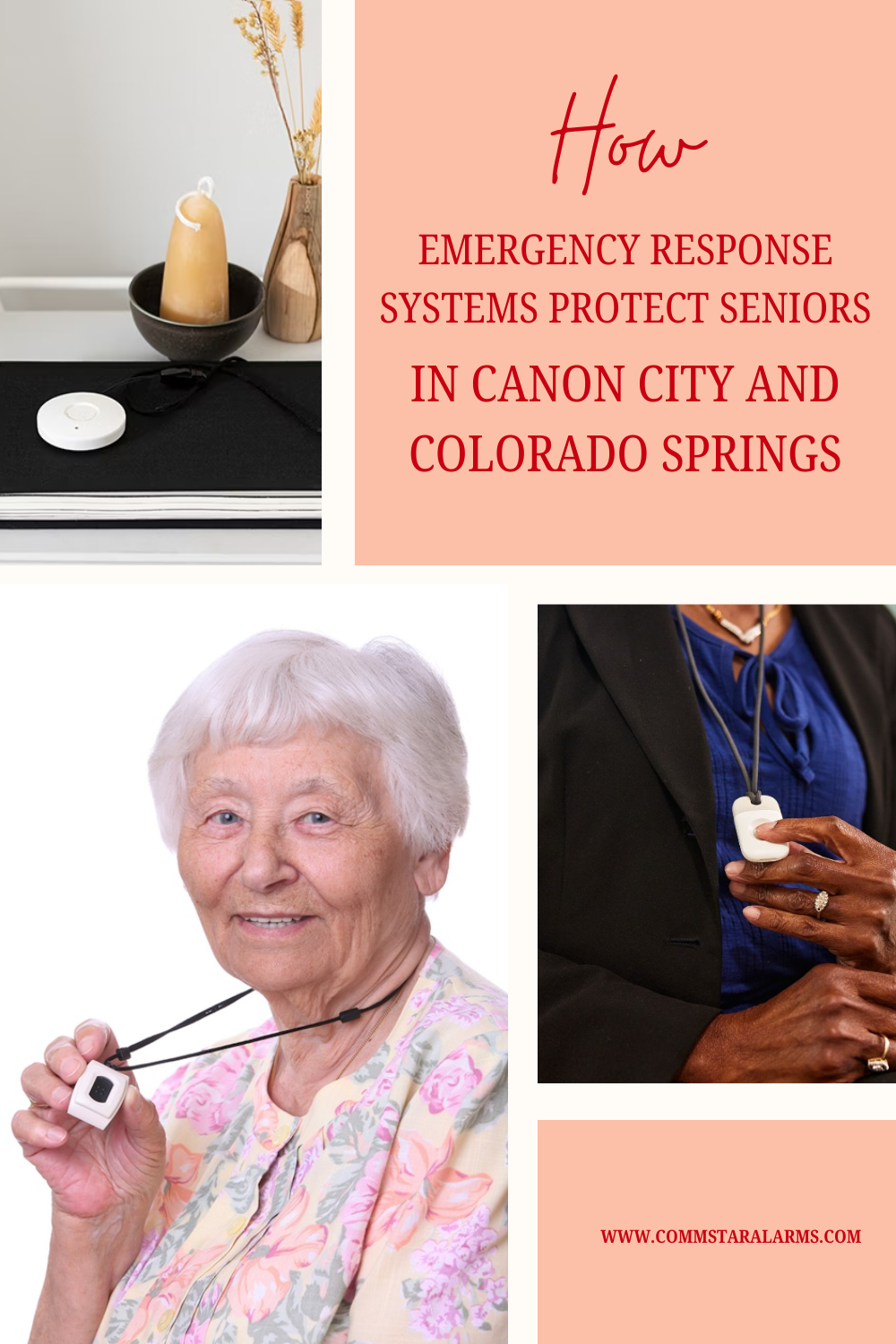
Emergency response systems provide a simple solution: a wearable device that allows seniors to instantly call for assistance at the push of a button.
These systems ensure that help can be reached quickly—even if the individual cannot access a phone.
What Is a Medical Alert System?
A medical alert system, also known as a personal emergency response system (PERS), is a device that connects seniors to emergency support services.
Most systems include:
-
A wearable pendant or bracelet with an emergency button
-
A base unit or cellular device connected to a monitoring center
-
24/7 emergency response support
If a senior experiences a fall or medical issue, pressing the emergency button immediately connects them with trained operators who can assess the situation and contact family members or emergency services.
Benefits of Emergency Response Systems
Emergency alert systems offer several important benefits that help seniors maintain independence.
Immediate Access to Help
One of the biggest advantages is the ability to call for help instantly, even if the individual cannot reach a phone.
Increased Confidence and Independence
Knowing help is available allows seniors to continue living at home without constant worry.
Peace of Mind for Families
Family members often feel reassured knowing their loved ones have access to emergency assistance at any time.
Faster Emergency Response
Quick access to emergency responders can significantly reduce the severity of injuries or medical complications.
Supporting Seniors in Canon City and Colorado Springs
The communities of Canon City and Colorado Springs are home to many older adults who value independence and an active lifestyle.
Residents enjoy local attractions such as:
-
Royal Gorge Bridge and Park near Canon City
-
Garden of the Gods in Colorado Springs
-
Scenic drives through the Rocky Mountains
-
Local community events and outdoor recreation
Emergency response systems allow seniors to continue enjoying these activities while maintaining safety at home.
A Local Perspective from Sandy Mullins
Professionals who work in senior safety understand that independence and security must go hand in hand.
Sandy Mullins of Commstar Alarms emphasizes that emergency response systems help seniors maintain their independence while ensuring help is always available.
“Our goal is to help seniors feel safe in their homes while giving families peace of mind,” says Sandy Mullins. “With a simple push of a button, seniors can quickly reach help whenever they need it.”
This combination of safety and independence makes emergency response systems an essential tool for aging in place.
Who Should Consider a Medical Alert System?
Emergency response systems are beneficial for many seniors, particularly those who:
-
Live alone
-
Have mobility challenges
-
Have experienced previous falls
-
Manage chronic health conditions
-
Recently returned home after hospitalization
Even seniors who are generally healthy may benefit from having access to emergency assistance.
These systems provide an added layer of protection for unexpected situations.
Features of Modern Emergency Alert Systems
Today’s emergency response systems are more advanced than ever. Many include features that enhance safety and convenience.
Modern systems may offer:
-
Fall detection technology
-
GPS tracking for mobile users
-
Waterproof wearable devices
-
Two-way communication with monitoring centers
-
Cellular connectivity without landlines
These features make it easier for seniors to remain active both inside and outside the home.
Helping Seniors Age Safely at Home
Aging in place requires thoughtful planning and the right safety tools. Emergency response systems are one of the simplest and most effective ways to protect seniors living independently.
When combined with other home safety measures—such as grab bars, improved lighting, and mobility aids—these systems help create a safer environment for older adults.
Families often find that emergency alert systems reduce anxiety and improve confidence for both seniors and caregivers.
A Smart Step Toward Senior Safety
As the senior population continues to grow in Colorado communities like Canon City and Colorado Springs, technologies that support safe aging are becoming increasingly important.
Emergency response systems provide reassurance that help is always within reach.
Commstar Alarms is dedicated to helping seniors and their families stay safe with reliable emergency alert solutions designed for independent living.
To learn more about available systems and services, visit the Seniors Blue Book listing for Commstar Alarms today.
Frequently Asked Questions
What is a medical alert system?
A medical alert system is a device that allows seniors to call for emergency assistance by pressing a button on a wearable pendant or bracelet.
Do emergency response systems work outside the home?
Many modern systems include GPS and cellular connectivity, allowing seniors to access help while away from home.
Is fall detection automatic?
Some systems include automatic fall detection that alerts monitoring centers even if the user cannot press the emergency button.
Do medical alert systems require a landline?
Not necessarily. Many modern devices use cellular networks and do not require a landline.
Who responds when the alert button is pressed?
Trained monitoring center staff evaluate the situation and contact emergency services, caregivers, or family members as needed.
Other Articles You May Like
Medicare/Medicaid/Insurance in Lafayette, CO
When an older adult needs help at home and sees several clinicians, a coverage decision can affect everything from prescription refills to rides. If youre considering TRU PACE in Lafayette, start by asking how enrollment would change the care and coverage you already use. How Medicare and Medicaid Fit Into PACEPACE is the Program of All-Inclusive Care for the Elderly. It coordinates healthcare and support for eligible adults who meet a state standard for nursing home-level care and can live safely in the community with PACE support at enrollment. Applicants must also be 55 or older and live in the programs service area. TRU PACE and Your Current CoveragePhone: 303-665-0115Medicare says people with Medicaid pay no monthly PACE premium. Medicare beneficiaries without Medicaid pay premiums for the long-term care portion and Medicare Part D drugs. Medicare also says participants owe no deductible, copayment, or coinsurance for drugs, services, or care approved by their PACE team. Ask TRU PACE for an estimate based on your individual coverage before enrolling. Doctors, Prescriptions, and Existing ServicesTRU PACE says it becomes the participants insurance provider at enrollment. Participants generally receive care through the programs provider network. Bring a list of your doctors, medications, and scheduled services. Ask which providers are in the network and how the team would coordinate any changes. Why This Matters in LafayetteIf you regularly see a clinician near home or have a specialist visit scheduled outside Lafayette, give the enrollment team the names and dates. Ask which appointments can continue and what to do about any refill due around the enrollment date. How to Get Started1. Gather Your Coverage InformationHave your Medicare and Medicaid information, if applicable, along with details of any current plan. List the appointments and prescriptions you rely on most.2. Ask for an Enrollment and Cost ReviewCall TRU PACE and ask for your expected monthly cost, when any coverage change would take effect, and who would help coordinate the transition. Related Seniors Blue Book CategoriesPACE Adult Day Services Care Management
Funeral Cremation & Mortuary Services in Lafayette, CO
After a death, families may have to make several decisions in a short time. Others prefer to talk through their wishes ahead of time. In either situation, it helps to separate the practical arrangements from the decisions about how to gather, remember, and say goodbye. What Funeral and Mortuary Services CoverA funeral home can help arrange transportation and care of the person who died, assist with paperwork, and coordinate burial or cremation. A family may also arrange a viewing, funeral, memorial, or private gathering. Ask which decisions need to be made immediately and which can wait. The Natural Funeral in LafayettePhone: 720-515-2344The Natural Funeral lists natural burial, flame cremation, water cremation, and terramation, also called natural organic reduction. Water cremation uses an alkaline water process, and terramation transforms remains into soil. If one of these options interests you, ask what the process involves, how long it typically takes, and what the family receives afterward. Planning a Gathering and Reviewing CostsThe Lafayette funeral home is at 102 W Chester Street in Old Town. Ask what can take place at the Lafayette location and which parts would involve another venue or a cemetery. Request a General Price List and a written breakdown of your choices so you can see which fees cover the funeral homes work and which come from outside providers. Why This Matters in LafayetteIf relatives are coming from out of town or some guests have limited mobility, ask about parking, step-free access, and how many people the gathering space can accommodate. If you plan to hold a service and burial at different locations, check how much time guests will need between them. How to Get Started1. Write Down the Persons WishesLook for written instructions and note any cultural or religious preferences. If youre planning ahead, tell a trusted person where you keep your instructions and whom to call.2. Ask for a Written PlanCall 720-515-2344 and ask what is needed on the first call. Once youve discussed options, request the expected timeline and itemized costs before approving arrangements. Related Seniors Blue Book CategoriesCounseling Hospice Advance Care Planning
Adult Day Services in Lafayette, CO
When an older adult spends most weekdays alone, families may need more than a place for them to go. They may also be juggling transportation, appointments, and help at home. TRU PACE in Lafayette offers a day center as part of a program that coordinates those needs for eligible older adults. What Are Adult Day Services?Adult day services offer daytime support outside the home. Depending on the program, participants may spend time with peers, eat a meal, take part in activities, or receive help with daily needs. Some centers accept people directly. The Lafayette TRU PACE center serves people enrolled in its broader Program of All-Inclusive Care for the Elderly. TRU PACE in LafayettePhone: 303-665-0115TRU PACEs Lafayette center is at 2593 Park Lane. The program coordinates medical and social services and arranges transportation to the day center and medical visits as needed. Ask the enrollment team what a typical center day includes, how often a participant might attend, and how the team decides what support to arrange at home. Who May QualifyPACE applicants must be at least 55, live in the programs service area, meet the states standard for nursing home-level care, and be able to live safely in the community with PACE support at enrollment. Ask how enrollment would affect access to current doctors and prescription coverage before making a decision. Why This Matters in LafayetteWhen family members already drive someone to several appointments a week, a coordinated schedule can change who needs to be available and when. Ask how pickup would work at the persons Lafayette address and who to call if a ride or appointment changes. How to Get Started1. Ask for an Eligibility ReviewCall TRU PACE. Have the participants ZIP code, current coverage, and a short list of the help they need. 2. Ask to Visit the CenterFind out what the participant might do on a center day, how transportation works, and what changes to their current care arrangements enrollment would involve. Related Seniors Blue Book CategoriesCare Management Transportation Respite Care