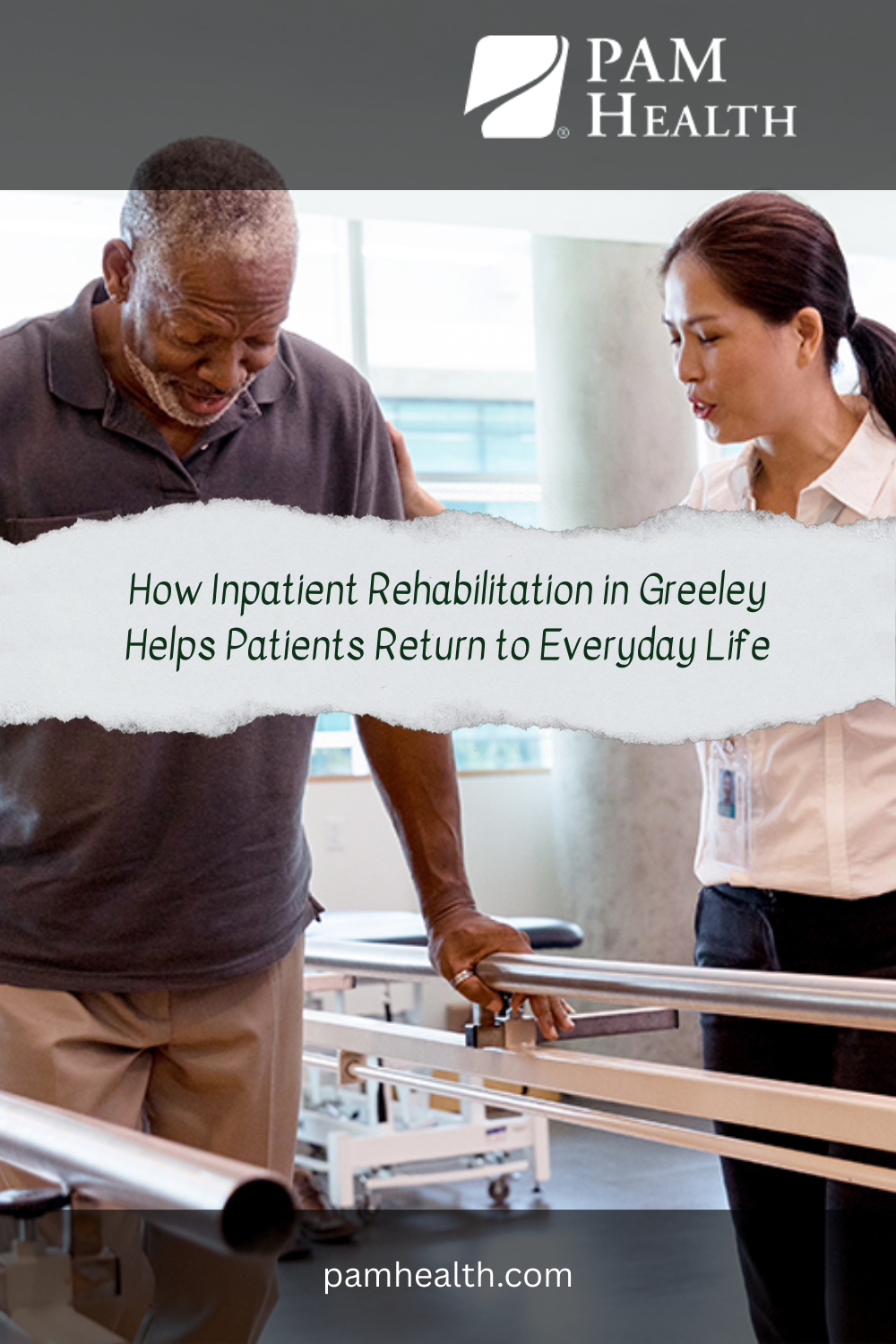
How Inpatient Rehabilitation in Greeley Helps Patients Return to Everyday Life
In Greeley, Northern Colorado, recovery often means more than healing an injury or stabilizing a condition—it means getting back to real life. Walking independently again. Regaining speech or swallowing. Relearning daily tasks after a stroke, surgery, or serious illness. For patients and families, the period after hospitalization can feel uncertain, exhausting, and overwhelming.
That’s where inpatient rehabilitation hospitals play a critical role.
PAM Rehabilitation Hospital, serving Greeley and Northern Colorado, specializes in intensive, hospital-level rehabilitation for individuals recovering from serious medical events. Their interdisciplinary approach focuses on restoring function, building strength, and helping patients transition safely back to home or the next level of care.
As Katherine Meyer from PAM Rehabilitation Hospital explains, “Rehabilitation is about helping patients reclaim their independence. Every therapy session is designed with one goal in mind—getting people back to the life they want to live.”
This article explores a practical, recovery-focused perspective: how inpatient rehabilitation hospitals help Greeley patients make meaningful progress after illness or injury—when timing, intensity, and expertise matter most.
Why Recovery Doesn’t End at Hospital Discharge
Acute hospitals save lives—but they’re not designed for long-term recovery. After a stroke, orthopedic surgery, spinal injury, or prolonged illness, patients often leave the hospital still needing significant support.
Common challenges include:
-
Weakness or loss of mobility
-
Difficulty with balance or coordination
-
Speech or swallowing issues
-
Cognitive changes
-
Pain management needs
-
Reduced ability to perform daily activities
Without structured rehabilitation, these challenges can delay recovery—or lead to setbacks.
Inpatient rehabilitation bridges the gap between hospital care and returning home.
What Makes an Inpatient Rehabilitation Hospital Different
Inpatient rehabilitation hospitals like PAM Rehabilitation Hospital provide intensive, coordinated therapy in a medical setting.
Key features typically include:
-
Physician oversight with rehabilitation specialists
-
Multiple therapy disciplines working together
-
Daily therapy sessions (often several hours per day)
-
Nursing care experienced in complex recovery
-
Individualized care plans based on functional goals
This level of intensity is especially important for patients who aren’t ready to go home—but are motivated and able to participate in active therapy.
Conditions Commonly Treated in Inpatient Rehabilitation
Patients come to rehabilitation hospitals for a wide range of conditions, including:
-
Stroke recovery
-
Brain injury
-
Spinal cord injury
-
Orthopedic surgery (hip, knee, joint replacement)
-
Neurological conditions
-
Cardiac or pulmonary deconditioning
-
Trauma-related injuries
Each patient’s rehabilitation plan is tailored to their diagnosis, abilities, and personal goals.
The Power of the Rehabilitation Team
One of the greatest strengths of inpatient rehab is the interdisciplinary team approach.
A typical care team may include:
-
Rehabilitation physicians
-
Nurses
-
Physical therapists
-
Occupational therapists
-
Speech-language pathologists
-
Case managers and social workers
Instead of working separately, the team collaborates daily—adjusting goals, tracking progress, and addressing challenges together.
Katherine Meyer notes, “When the entire care team is aligned, patients feel supported, motivated, and confident as they move through recovery.”
What Patients and Families Often Notice First
Families frequently say they see changes sooner than expected, such as:
-
Improved mobility or endurance
-
Greater confidence with walking or transfers
-
Better communication or swallowing
-
Increased independence with daily tasks
-
Reduced fear of falling
-
Renewed motivation and hope
Progress may be gradual—but it’s purposeful and measurable.
Why Location Matters for Greeley Families
Recovering close to home makes a difference. For Greeley-area families, local inpatient rehabilitation means:
-
Easier visitation and family involvement
-
Smoother transitions to home or outpatient care
-
Better coordination with local providers
-
Reduced stress during an already difficult time
Having rehabilitation services available locally supports both patients and caregivers throughout the recovery journey.
When Inpatient Rehabilitation Is the Right Choice
Inpatient rehabilitation may be appropriate when:
-
A patient needs intensive therapy multiple hours per day
-
Medical oversight is still required
-
Returning home immediately isn’t safe
-
Functional abilities have declined significantly
-
The goal is to regain as much independence as possible
A physician or discharge planner typically helps determine whether inpatient rehab is the right next step.
Supporting Families During Recovery
Rehabilitation affects the whole family—not just the patient. Rehab hospitals support families by:
-
Educating caregivers on safe mobility and care techniques
-
Preparing families for discharge and next steps
-
Coordinating equipment and services
-
Setting realistic expectations for recovery
This preparation helps families feel confident—not anxious—about what comes next.
FAQs: Inpatient Rehabilitation in Greeley, Northern Colorado
1) How is inpatient rehabilitation different from a skilled nursing facility?
Inpatient rehab provides more intensive therapy and physician oversight than most skilled nursing settings.
2) How long do patients typically stay in inpatient rehab?
Length of stay varies based on condition, progress, and goals—but is often shorter and more intensive than other rehab settings.
3) Do patients need to participate actively in therapy?
Yes. Inpatient rehab is best suited for patients who can tolerate and benefit from daily therapy.
4) Is inpatient rehabilitation covered by insurance?
Many insurance plans, including Medicare, cover inpatient rehab when criteria are met. Coverage details vary.
5) What happens after discharge from rehab?
Patients may transition home, to outpatient therapy, or to another level of care depending on progress and needs.
Recovery With Purpose and Direction
Rehabilitation is more than exercise—it’s a structured path back to independence. With the right environment, expert care, and personalized goals, patients can make meaningful strides toward recovery.
If you or a loved one is facing recovery after illness or injury in Greeley or Northern Colorado, visit the PAM Rehabilitation Hospital listing on Seniors Blue Book to learn more about inpatient rehabilitation options and take the next step toward healing.