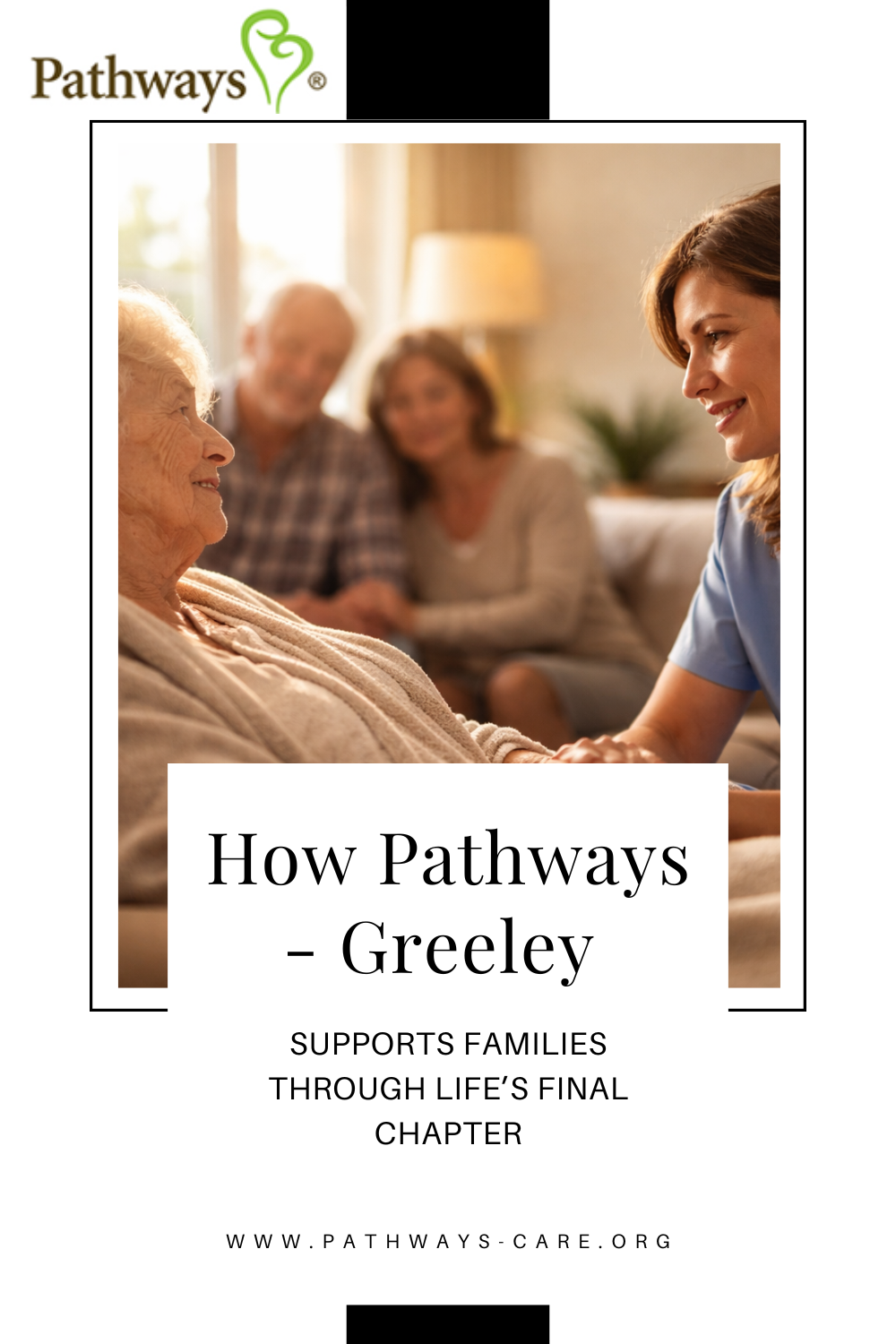
How Pathways - Greeley Supports Families Through Life’s Final Chapter
In a community like Greeley—where neighbors still wave, families put down roots, and relationships stretch across generations—how care is delivered matters just as much as what care is provided. When a loved one reaches a point where comfort, dignity, and peace become the priority, families often find themselves searching not only for medical expertise, but for reassurance, compassion, and guidance.
That’s where hospice plays a vital role. And for many families across Northern Colorado, Pathways – Greeley has become a trusted presence during some of life’s most personal and meaningful moments.
Rather than focusing solely on end-of-life care, Pathways takes a broader view: supporting the whole family, honoring individual wishes, and helping patients remain as comfortable and connected as possible—physically, emotionally, and spiritually.
Hospice Care Rooted in the Greeley Community
Greeley is a city shaped by resilience, agriculture, education, and a strong sense of togetherness. With a growing senior population and many families balancing work, caregiving, and multigenerational responsibilities, access to compassionate hospice care close to home is essential.
Pathways – Greeley serves individuals throughout Weld County and surrounding Northern Colorado communities, bringing hospice care directly to where patients feel safest—often at home, in assisted living, or in skilled nursing settings. This local presence allows care teams to respond quickly, collaborate with area providers, and build real relationships with patients and families.
Hospice is not about giving up—it’s about shifting the focus. For patients facing a life-limiting illness, hospice emphasizes comfort, symptom management, and quality of life, while also helping families navigate decisions, emotions, and day-to-day challenges.
A Team-Based Approach That Wraps Around the Family
One of the most meaningful aspects of hospice care is the team model. At Pathways – Greeley, patients and families are supported by an interdisciplinary group of professionals who work together seamlessly.
This care team may include:
-
Hospice nurses specializing in pain and symptom management
-
Physicians overseeing comfort-focused care plans
-
Certified nursing assistants providing hands-on personal care
-
Social workers offering emotional support and resource guidance
-
Chaplains addressing spiritual needs, regardless of faith tradition
-
Trained volunteers providing companionship and respite
Each role is designed to complement the others, ensuring that no one is navigating this journey alone.
As Evan Hyatt from Pathways shares, “Hospice is about meeting people where they are—emotionally and physically. Our goal is to support comfort and dignity while giving families confidence that their loved one is truly being cared for.”
That philosophy shapes every interaction, from the first conversation to ongoing support throughout care.
Helping Families Understand When Hospice Is the Right Choice
One of the biggest challenges families face is knowing when hospice is appropriate. Many people wait too long, often because of misunderstandings about what hospice actually offers.
Hospice care is typically available when a physician determines that a patient has a life-limiting illness and may have six months or less to live if the disease follows its natural course. However, choosing hospice earlier often allows patients to experience better symptom control, fewer hospitalizations, and more meaningful time with loved ones.
Pathways – Greeley helps families recognize hospice eligibility and walks them through the process step by step—answering questions, coordinating referrals, and easing fears along the way.
Comfort, Dignity, and Choice at the Center of Care
Every patient’s story is different, and hospice care should reflect that individuality. Pathways – Greeley emphasizes personalized care plans that respect each person’s wishes, values, and cultural background.
Hospice services may include:
-
Pain and symptom management
-
Medication coordination related to the terminal diagnosis
-
Medical equipment and supplies delivered to the home
-
Emotional and spiritual counseling
-
Education for family caregivers
-
24/7 on-call support for urgent concerns
Families often express relief knowing they can call anytime—day or night—and reach someone who knows their situation and can help immediately.
Supporting Caregivers Through an Emotional Journey
Caregiving can be deeply meaningful, but it can also be exhausting and overwhelming. Pathways – Greeley recognizes that caregivers need care, too.
Social workers and hospice staff help families navigate:
-
Emotional stress and anticipatory grief
-
Family dynamics and communication challenges
-
Advance care planning and decision-making
-
Community resources and support services
This guidance is especially valuable in Northern Colorado, where many adult children are caring for aging parents while balancing careers and families of their own.
Continuing Support Beyond the Final Goodbye
Hospice care doesn’t end at the moment of loss. Pathways – Greeley offers bereavement support for families for up to 13 months following a loved one’s passing. Grief counseling, resources, and follow-up services help families process loss and find healing in their own time.
This continued connection reflects Pathways’ long-standing commitment to the community—supporting families not just during care, but well beyond it.
Why Local Hospice Care Makes a Difference in Northern Colorado
Choosing a local hospice provider means choosing familiarity, responsiveness, and community connection. Pathways – Greeley understands the local healthcare landscape, collaborates with nearby providers, and respects the values of the families they serve.
For many Northern Colorado families, that local understanding makes all the difference during an incredibly personal time.
Frequently Asked Questions About Hospice Care in Greeley
Is hospice care covered by Medicare or insurance?
Yes. Hospice care is typically covered by Medicare, Medicaid, and most private insurance plans, including medications and equipment related to the hospice diagnosis.
Can hospice care be provided at home?
Absolutely. Most hospice care is delivered in the patient’s home, but services can also be provided in assisted living or skilled nursing communities.
Does choosing hospice mean stopping all treatments?
Hospice focuses on comfort rather than curative treatments. However, medications and therapies that improve comfort and quality of life are still provided.
How quickly can hospice services begin?
In many cases, hospice care can start within 24–48 hours after referral, sometimes even sooner depending on need.
Does Pathways support families after a loved one passes?
Yes. Bereavement services and grief support are available to families for up to a year following loss.
Find Compassionate Hospice Support Through Seniors Blue Book
If your family is exploring hospice care in Greeley or Northern Colorado, compassionate, local guidance matters. Pathways – Greeley offers experienced hospice care focused on comfort, dignity, and family support.
To learn more or connect directly, visit their Seniors Blue Book listing to explore services, contact information, and trusted local resources—all in one place.