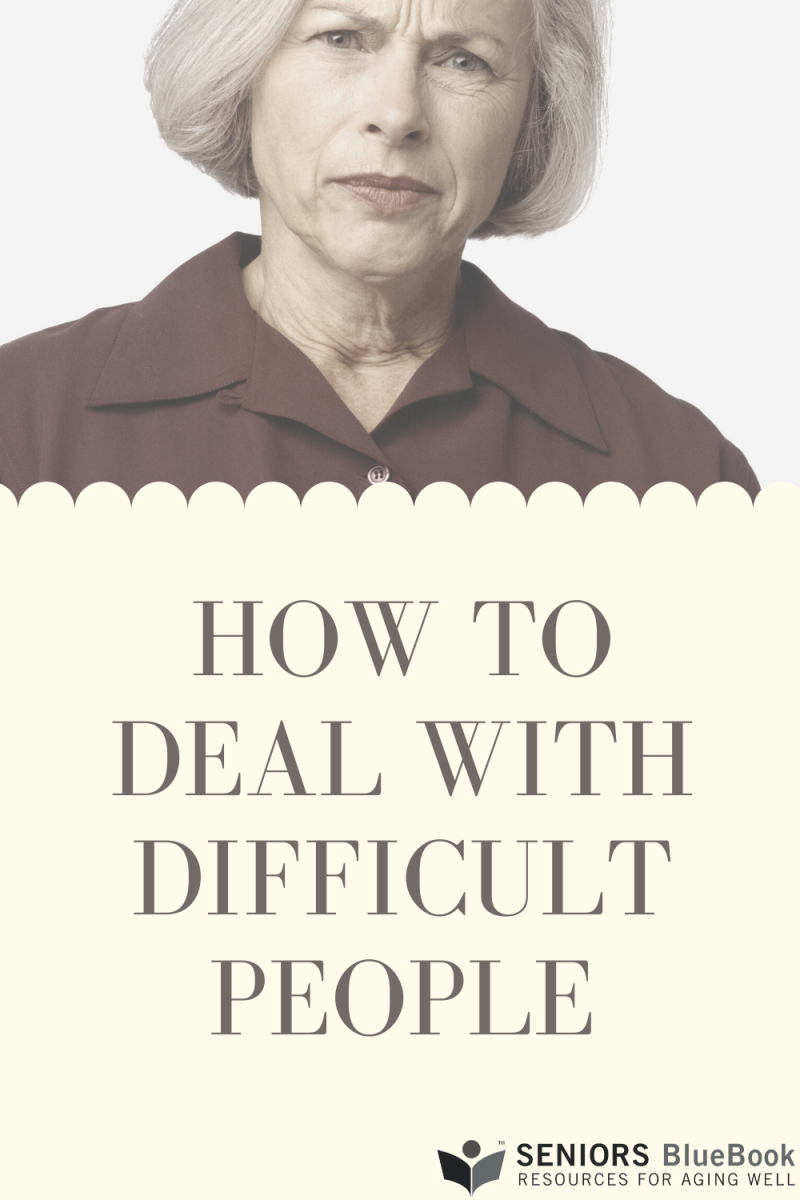
How to deal with difficult people
Encompass Health - Home Health, Sarasota (FL)
Mar 15, 2021
Florida - Sarasota, Bradenton & Charlotte Counties

Email US
Click to Email Us
They don't appreciate what I do. I try to be perfect and so should everyone else. I'm the professional here; I know best.
But the good news is that you can control your more irrational beliefs by finding the underlying thoughts, and do what psychology calls reframing. First change your thoughts, and as you do this repetitively, you will find your beliefs become more realistic. Then it becomes so much easier to focus on our patients and families belief systems and manage them. Notice the word is manage not control. It helps to ask every patient what they expect from the hospital stay or from your therapy. Remember this is actually different from setting goals with a patient, although it is clearly part of the same conversation. It also helps to clearly ask what the family expects. This is the time for active listening time, not an opportunity for you to tell someone what is going to happen. Seek first to understand.
Active listening
Most of us are not particularly good at listening. We tend to interrupt and direct the conversation where we want it to go. The first order of business in dealing with difficult people is:
Find a quiet place with no distractions.
Focus on understanding the other persons point of view.
Ask yourself, what did the person or you expect during that visit or hospitalization.
Ask yourself, Are these expectations realistic given the circumstances of the event?
Don't take it personally or be defensive.
In 2013, Aileen Pascual, MD, published a slide share on Dealing with Difficult Patients. In it she lists a terrific, straight forward strategy to Take Heart and deal with these difficult people.
Hear them out: This is the active listening part.
Empathize: Put yourself in their shoes. How would you feel? How does this injury/illness disrupt their life not just medically?
Acknowledge/Apologize: Express understanding of what was said. Ask for clarification. Make amends as needed and use blameless apologies.
Respond appropriately: Gently and carefully provide more realistic expectations, but never take away hope.
Take responsibility: For your thoughtlessness, for not understanding, for the medical system having limitations.
Thank the patient or family for being patient: Recognize that being in this situation is challenging and it can bring out the worst in all of us.
We don't learn these things in medical, nursing or therapy school. However, with time and practice you will get good at it and find that you are no longer anxious or stressed when you are faced with difficult people.
Written & Submitted By: Encompass Health- click for more information**
Other Articles You May Like
Rehabilitation Hospitals in Johnstown, CO
After a stroke, serious injury, or major illness, an older adult may be ready to leave the hospital but still need help getting out of bed, getting dressed, or communicating clearly. Families often have to make the next decision quickly. Ask the discharge team what the person needs to practice, what medical support they still need, and which rehabilitation setting can provide both. What Is an Inpatient Rehabilitation Hospital?An inpatient Rehabilitation Facilities provides intensive therapy during a hospital stay. It may be appropriate for someone who needs coordinated rehabilitation, medical supervision, and nursing care. Physical therapy may address movement and balance. Occupational therapy helps people practice everyday tasks, while speech-language therapy can address needs such as communication. The care team evaluates whether the person is ready for an inpatient program and what therapies fit their goals. Northern Colorado Rehabilitation HospitalPhone: 970-619-3400 Northern Colorado Rehabilitation Hospital in Johnstown provides inpatient rehabilitation for people recovering from conditions such as stroke, orthopedic injuries, brain injuries, and spinal cord injuries. The hospital describes 24-hour rehabilitation nursing and daily physician management. It offers physical, occupational, and speech therapy. Practicing for the Return HomeThe hospital has a therapy courtyard where patients can practice on surfaces and features such as ramps, stairs, and curbs as appropriate. If the person needs to cross gravel from the driveway to the front door or step up into the house, tell the therapy team early. The hospital also describes working with patients and families on discharge planning and providing written instructions for follow-up. It offers outpatient rehabilitation for people who need continued therapy without a hospital stay. Why This Matters in JohnstownThe hospital is on Union Street near the I-25 and U.S. 34 interchange. If relatives are coming from different parts of Northern Colorado, decide who can attend a care-planning conversation or join caregiver training. If the patient will recover at a relatives home, describe that layout and explain who can help during the first few days. How to Get Started1. Confirm the Referral and CoverageAsk the current care team why inpatient rehabilitation is recommended and who will send the referral. Call 970-619-3400 to ask what records the hospital needs and how to check availability. Confirm coverage and any authorization requirements with your insurer. 2. Share Two or Three Goals for HomeDescribe what the person wants or needs to do, such as getting from the bed to the bathroom or getting into a car. Ask how the team will measure progress and when a family caregiver can learn how to help.3. Clarify the First Week After DischargeBefore leaving, ask what equipment should be ready, who will schedule follow-up therapy, and whom to call if a service hasnt started. Keep the written instructions where everyone helping with recovery can find them. Related Seniors Blue Book Categories Skilled Nursing Home Health Physical Therapy
Understanding Your Digital Footprint
Digital what? Footprint? You may be thinking thats what you leave behind at the beach. While that may be correct, it is also what you leave behind every time you provide your email, set up a new online account, or allow your data to be tracked. Your digital footprint is the trail you leave behind with Location services on your phone. It is the data you leave behind when commenting on Aunt Sallys Facebook page, sharing your familys vacation pictures on Instagram, or traipsing around the internet to various sites looking for that cute Lladro figurine your mother wanted for Christmas. All of it tells something about you whether you realized it was happening or not.Most of the time, the sharing of your data what you do, how you do it, etc. may not be a big deal. Or is it? The reality is that your data supports big business every day. It is collected, bought and sold (mostly without your knowledge) by data brokers (i.e., Acxiom, Epsilon), credit and identity bureaus (i.e., Experian, Equifax, TransUnion), and Big Tech Companies (i.e., Google, Amazon, Meta, Microsoft, Apple) that share your data with their partners and ad networks.The danger to you is when there is a data breach at one of the many sites that has your data and your data is captured and posted on the dark web. This enables nefarious characters to better target you for scams and potentially steal your identity. Call Lily in the Details today 941-237-0157 and schedule Understanding Your Digital Footprint, Navigating the Online World Safely and Wisely for your community.
Serving America and our community
By Dr. David RiceSouthwest Florida is home to more than 100,000 veterans, according to the U.S. Department of Veterans Affairs.They own homes, manage businesses and pay taxes here. They volunteer at local nonprofits and donate to local causes. They are the core of our community.Nearly every day, at least one veteran walks into Advocate Radiation Oncology for treatment. Cancer impacts people from every background, including veterans. Even the most hardened veterans struggle with a cancer diagnosis, which is understandable; no one is invincible and cancer generates a wave of emotions shock, anxiety, frustration, fear and stress.Over the years, veterans in Charlotte and Sarasota counties have found an ally inside the treatment room Dr. Brian Lawenda. A board-certified, Harvard-trained physician who completed medical school at Temple University, Lawenda has all the credentials to help a patient feel confident that they're in good hands, medically speaking. Then they find out something else about their physician. He is a veteran, too, having served this country 13 years with the U.S. Navy and attaining the rank of commander."When I enlisted, I took an oath to serve this country and uphold the U.S. Constitution," Lawenda said. "When I became a doctor, I pledged to dedicate my practice to patients and the community I serve, and it's especially gratifying when those patients are fellow veterans."The best doctors don't just treat symptoms; they connect with patients, usually through shared experiences they're from the same state, cheer for the same sports team or attended the same university. Lawenda's military experience helps create an instant doctor-patient bond that continues during treatment and beyond. In fact, Lawenda has become the region's go-to radiation oncologist for veterans, not just Navy veterans, but those who have admirably served across all six branches of the military."When he told me he served in the Navy, it gave me comfort," said Ret. Command Master Chief Scott Fusco, a North Port resident who recently completed prostate cancer treatments at Advocate. "I had absolute trust in him from that point on."Lawenda wasn't the only veteran on Fusco's care team, either. His urologist also served in the Navy and referred Fusco to Dr. Lawenda for treatment."We served at different times and places, but we're all part of the same team," Fusco said. "They've been there, done that, just like me. There is instant respect, instant trust."Lawenda, who sees patients at Advocate's cancer treatment centers in Port Charlotte and Venice, specializes in the treatment of prostate, lung, breast, head and neck, rectal, liver, bone, cervical and other types of cancers. Although Lawenda doesn't technically specialize in the treatment of veterans, he is especially proud to support patients like Fusco on their cancer journey."A veteran may retire or end their military service, but he or she will never stop serving this country and their community," Lawenda said. "Being able to help local veterans beat cancer is extremely gratifying and certainly rewarding. The military is a brotherhood and a sisterhood, and I'll continue fighting for my brothers and sisters."About the AuthorDr. David Rice is a board-certified radiation oncologist who sees patients through Advocate Radiation Oncologys cancer treatment centers in Port Charlotte and Venice. Visit AdvocateRO.com for more information.