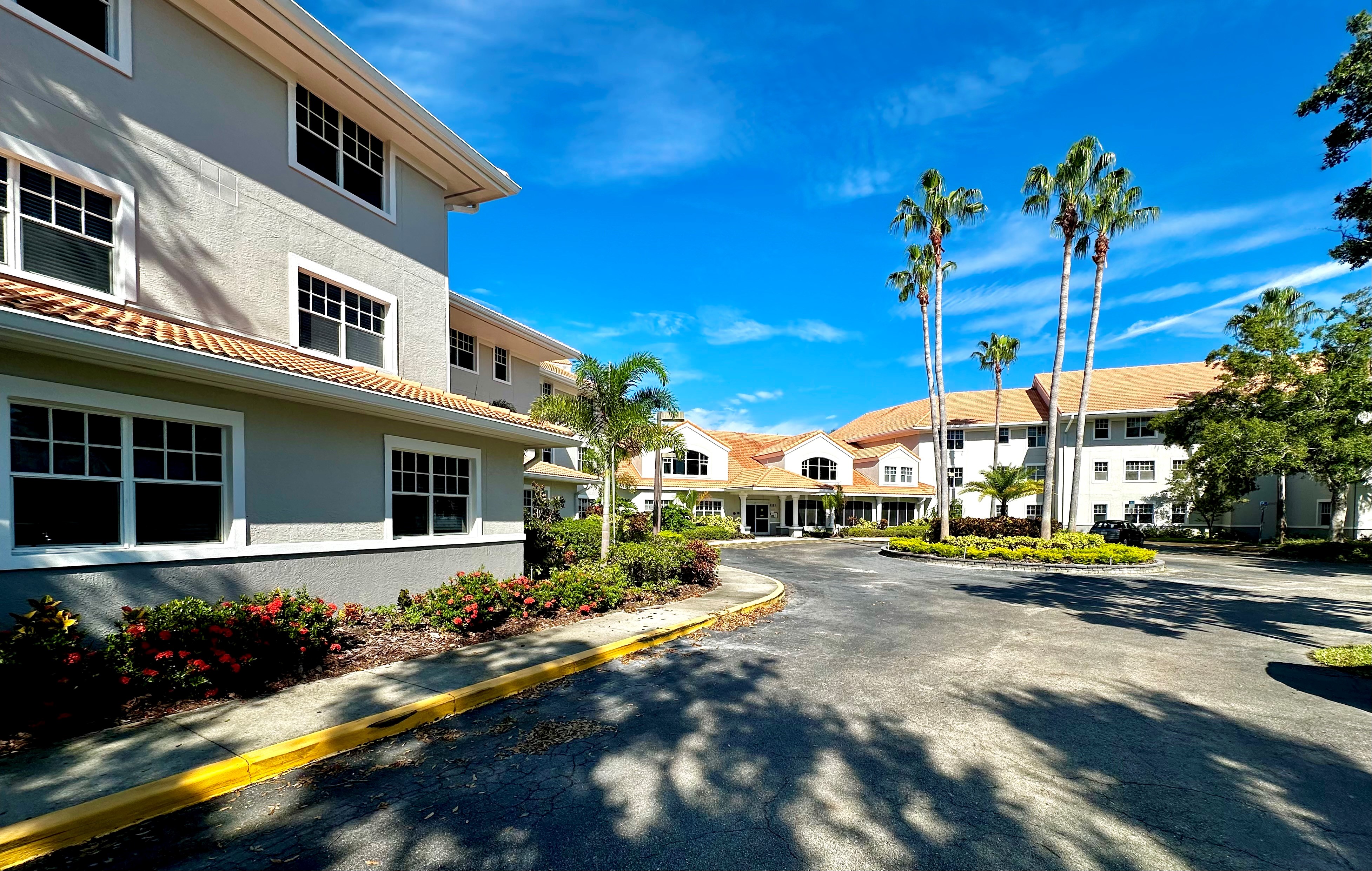
Independent Living at Venice Palms Senior Living in Venice, Florida
Venice Palms Senior Living, LLC
For more information about the author, click to view their website: Venice Palms Senior Living
Oct 20, 2025
Florida - Sarasota, Bradenton & Charlotte Counties

Email US
Click to Email Us
- Secured Garden & Courtyard for safe outdoor enjoyment
- Safe outdoor spaces for walking, relaxation, and social gatherings
- Specialized Activity Rooms for hobbies, fitness, and creative engagement
“Independent Living is about enhancing quality of life while reducing the stress of daily household responsibilities. The right community combines safety, amenities, and opportunities for engagement.”
- Providing structured social and recreational programs
- Maintaining secure, accessible outdoor and indoor spaces
- Reducing everyday household burdens, such as maintenance and cleaning
Enjoy serene outdoor spaces designed for walking, socializing, or quiet relaxation, all within a safe, secured environment.
Venice Palms offers spaces for fitness, arts and crafts, educational lectures, and group games, providing opportunities to connect with other residents.
While residents live independently, they benefit from communal dining options that offer healthy, chef-prepared meals in a social setting.
Although residents are independent, staff are available for assistance when needed, offering peace of mind to families.
- Social Engagement: Residents can participate in group activities and events, reducing isolation and enhancing mental wellness.
- Safety & Security: Secure access, monitored outdoor areas, and supportive staff create a safe environment.
- Maintenance-Free Living: Household chores like lawn care, repairs, and cleaning are handled by the community.
- Local Community Connection: Located in Venice, residents have easy access to local shops, parks, and healthcare services.
Those who want to maintain autonomy while enjoying social engagement and reduced household responsibilities.
Yes, Venice Palms offers Secured Garden & Courtyard and other safe outdoor spaces monitored for resident safety.
Residents can participate in fitness classes, arts and crafts, group games, and educational programs in Specialized Activity Rooms.
Many communities provide communal meals, promoting nutrition and social interaction, while allowing for flexible dining options.
Families can visit, participate in events, or coordinate with staff to support the resident’s lifestyle.
https://seniorsbluebook.com/senior-housing/Venice-Palms-Senior-Living-3
Other Articles You May Like
What Level of Senior Care Does My Parent Need?
The right level of senior care depends on what a person can safely do each day, the type of help they need, and how often that help must be available. Independent living may suit someone who manages personal care but wants fewer household responsibilities. Assisted living supports everyday tasks. Memory care is designed for people whose cognitive changes call for specialized support, while long-term nursing care serves people with more extensive ongoing care needs. A short-term rehabilitation stay serves a different purpose: recovery after illness, injury, or hospitalization. Families in Greeley, Colorado, often encounter these terms while making decisions under pressure. Understanding the differences can turn a confusing search into a more useful conversation about a loved ones actual needs. Independent Living: Fewer Chores, More Personal FreedomIndependent living is generally a good fit for an older adult who can bathe, dress, take medications, and manage most daily decisions independently. The appeal is a residential setting with opportunities for social connection and less responsibility for maintaining a home.At Grace Pointe Senior Care Community, independent living includes private apartments with nearby medical expertise and 24-hour emergency response systems. Families should still confirm which services are part of independent living and which require a different level of care. An emergency response system does not replace routine personal or nursing assistance. Assisted Living: Help with Daily ActivitiesAssisted living may be appropriate when someone needs ongoing help with bathing, dressing, moving around, medication routines, or getting to meals, but does not necessarily require continuous nursing care. It should support independence where possible, not take over every decision.For example, a parent who can enjoy activities and make personal choices but needs assistance with bathing and reminders about medication may benefit from a personalized assisted living plan. Ask how often staff check in, which services are available, and how the plan is updated after a health change. Memory Care: Support for Cognitive ChangesMemory care addresses needs associated with Alzheimers disease and other forms of dementia. Those needs can include difficulty finding the way around, changes in judgment, distress, or requiring frequent prompts to complete familiar activities. Not everyone with memory loss immediately needs memory care; an assessment should consider both cognition and day-to-day safety.Grace Pointe describes its memory care approach as care for the person rather than the diagnosis. Its team receives specialized training, and the program includes activities designed around residents interests and abilities. During a visit, ask how staff respond to confusion, communicate with families, adapt activities, and determine when a resident needs additional support. Long-Term Nursing Care: More Extensive Ongoing SupportA person may need long-term nursing care when medical needs or physical limitations exceed what assisted living can safely manage. Examples can include a need for close monitoring, substantial help with movement and personal care, or nursing support throughout the day and night. The appropriate setting depends on a clinical assessment, not simply a persons age.Grace Pointe offers long-term care with 24-hour monitoring and assistance from nurses and certified nursing assistants. Families should discuss the individuals medical needs, the available services, admission requirements, and payment arrangements directly with the community. Rehabilitation Is Often TemporaryRehabilitation is not another name for permanent senior housing. Following surgery, an injury, or a hospital stay, someone may need therapy and professional support to regain function before returning to their previous living arrangement. Grace Pointe has an on-site rehabilitation center that develops individualized therapeutic plans. Ask whether a particular rehabilitation program is appropriate for the patients goals and what the discharge plan would look like. What If My Parents Needs Change Later?A continuing care campus offers more than one kind of support in a shared location. That can simplify planning for families whose loved one may eventually need a different level of care. Grace Pointe provides independent living, assisted living, memory care, long-term care, and rehabilitation services on its Greeley campus. The ability to move between settings depends on clinical suitability, assessments, and availability, so it is worth discussing transitions before they become urgent. Five Questions to Help Narrow the ChoiceCan my parent consistently bathe, dress, eat, and move safely without help?Are medication mistakes, wandering, or confusion becoming safety concerns?Is the need for support occasional, daily, or available around the clock?Is this a temporary recovery period or an ongoing change?What does my parent want, and what does their healthcare team recommend? Write down concrete examples before talking with a community. A recent fall, missed medications, or new nighttime confusion tells the care team much more than saying a parent is slowing down. Include the older adult in decisions whenever possible and request a professional assessment when safety or medical needs are uncertain. Talk Through the Options with Grace PointeGrace Pointe Senior Care Community in Greeley can explain its different living and care options and help your family explore a personalized plan. Call (970) 304-1919 or visit https://gracepointegreeley.com/ to ask questions or schedule a tour.
What Families Should Look for Before Choosing a Community
When everyday tasks become harder but a senior still wants control over daily life, assisted living can offer a practical middle ground. In Greeley, Colorado, families comparing communities should look beyond apartment sizes and dining rooms. The most important questions concern the help a resident can receive, how that help changes over time, and whether the setting feels like somewhere they would want to live.What Assisted Living Usually IncludesAssisted living combines a residential setting with support for activities of daily living. Depending on the resident and community, that might include help getting dressed, bathing, moving safely, managing medications, or getting to meals. It is different from independent living, which generally suits adults who can manage daily personal care without regular hands-on assistance.Not every resident needs the same services. Someone may want a little help in the morning but otherwise keep a full schedule. Another person may need frequent reminders and closer supervision. Ask each community how it assesses needs and whether its care plan can change without requiring an immediate move.How to Compare Assisted Living Communities in GreeleyStart with the residents daily routineMake a short list of the tasks that are going well and those that cause difficulty. Consider bathing, dressing, walking, getting up at night, remembering medications, preparing meals, and keeping medical appointments. Bring that list to tours. Specific examples give staff a clearer picture than a general statement such as Mom needs a little help.Ask who provides assistance and whenFind out how residents request help, how nighttime needs are addressed, and what happens when someone has a sudden change in health. Ask whether the staff available and the services provided match the persons present needs. For a resident who falls often or needs extensive medical support, request a candid explanation of what the assisted living setting can and cannot safely provide.Understand the full monthly costAsk for a written breakdown of the apartment charge, included services, optional assistance, and any additional fees. Some communities offer bundled care levels; others price services according to what the resident actually uses. Clarify how fees are reviewed if the person begins needing more help. Medicare generally does not pay for room and board in assisted living, so families should also review savings, long-term care insurance, and any benefits for which they may qualify.Pay attention to ordinary momentsA tour during an activity is useful, but everyday interactions can be more revealing. Notice whether residents can make choices, whether common areas invite conversation, and whether staff answer questions clearly. Ask about meals, visitors, transportation, activities, and the process for raising concerns. If possible, involve the prospective resident in the tour and decision.A Local Option with Multiple Types of Senior CareGrace Pointe Senior Care Community is a family-owned senior living campus at 1919 68th Avenue in Greeley. Its assisted living residents work with a care coordinator to develop personalized plans, with assistance tailored to individual needs. Residents can furnish and arrange their own living spaces, helping a move feel less like giving up home and more like settling into a new one.The campus also offers independent living, memory care, long-term nursing care, and a rehabilitation center. This range matters to families planning ahead: if someones needs change, there may be another appropriate care setting on the same campus. A transition is not automatic, however. Families should ask about assessments, availability, costs, and criteria for each level of care.Questions Worth Asking on an Assisted Living TourWhat help is included today, and what would cost extra later?How will the care team communicate changes to family members?How are medications, falls, and overnight requests handled?Can residents bring personal furniture and maintain familiar routines?Under what circumstances would a higher level of care be recommended?How to Know When It Is Time to Explore Assisted LivingThere is no single age or diagnosis that determines the right time. More useful signs include skipped meals, difficulty with personal care, repeated medication mix-ups, increasing isolation, or a home routine that has become difficult to manage safely. A conversation with the older adult and their healthcare professional can help separate problems that may be addressed at home from needs that call for a different living arrangement.You do not need to make a final decision during the first tour. Comparing care plans, asking for written costs, and making a second visit can help everyone feel more comfortable with the choice.Visit Grace Pointe in GreeleyTo learn how assisted living could fit your familys needs, contact Grace Pointe Senior Care Community at (970) 304-1919 or visit https://gracepointegreeley.com/ to request a tour and discuss available care options.
Serving America and our community
By Dr. David RiceSouthwest Florida is home to more than 100,000 veterans, according to the U.S. Department of Veterans Affairs.They own homes, manage businesses and pay taxes here. They volunteer at local nonprofits and donate to local causes. They are the core of our community.Nearly every day, at least one veteran walks into Advocate Radiation Oncology for treatment. Cancer impacts people from every background, including veterans. Even the most hardened veterans struggle with a cancer diagnosis, which is understandable; no one is invincible and cancer generates a wave of emotions shock, anxiety, frustration, fear and stress.Over the years, veterans in Charlotte and Sarasota counties have found an ally inside the treatment room Dr. Brian Lawenda. A board-certified, Harvard-trained physician who completed medical school at Temple University, Lawenda has all the credentials to help a patient feel confident that they're in good hands, medically speaking. Then they find out something else about their physician. He is a veteran, too, having served this country 13 years with the U.S. Navy and attaining the rank of commander."When I enlisted, I took an oath to serve this country and uphold the U.S. Constitution," Lawenda said. "When I became a doctor, I pledged to dedicate my practice to patients and the community I serve, and it's especially gratifying when those patients are fellow veterans."The best doctors don't just treat symptoms; they connect with patients, usually through shared experiences they're from the same state, cheer for the same sports team or attended the same university. Lawenda's military experience helps create an instant doctor-patient bond that continues during treatment and beyond. In fact, Lawenda has become the region's go-to radiation oncologist for veterans, not just Navy veterans, but those who have admirably served across all six branches of the military."When he told me he served in the Navy, it gave me comfort," said Ret. Command Master Chief Scott Fusco, a North Port resident who recently completed prostate cancer treatments at Advocate. "I had absolute trust in him from that point on."Lawenda wasn't the only veteran on Fusco's care team, either. His urologist also served in the Navy and referred Fusco to Dr. Lawenda for treatment."We served at different times and places, but we're all part of the same team," Fusco said. "They've been there, done that, just like me. There is instant respect, instant trust."Lawenda, who sees patients at Advocate's cancer treatment centers in Port Charlotte and Venice, specializes in the treatment of prostate, lung, breast, head and neck, rectal, liver, bone, cervical and other types of cancers. Although Lawenda doesn't technically specialize in the treatment of veterans, he is especially proud to support patients like Fusco on their cancer journey."A veteran may retire or end their military service, but he or she will never stop serving this country and their community," Lawenda said. "Being able to help local veterans beat cancer is extremely gratifying and certainly rewarding. The military is a brotherhood and a sisterhood, and I'll continue fighting for my brothers and sisters."About the AuthorDr. David Rice is a board-certified radiation oncologist who sees patients through Advocate Radiation Oncologys cancer treatment centers in Port Charlotte and Venice. Visit AdvocateRO.com for more information.
Local Services By This Author
Venice Palms Senior Living
Memory CareCompassionate Memory Care at Venice Palms Senior LivingAt Venice Palms, we provide a safe, supportive, and enriching environment for individuals living with Alzheimers or other forms of dementia. Our all-inclusive Memory Care program is designed to promote dignity, comfort, and daily engagement.Included in our Memory Care community: Secured Garden & Courtyard Safe outdoor spaces for fresh air and tranquility Specialized Activity Rooms Purposeful programming to support cognitive and emotional wellness All Meals & Snacks Included Housekeeping & Personal Laundry Services Scheduled Transportation On-Site Therapy & Medical Services Daily Life-Enrichment ActivitiesOur caring team provides personalized attention in a secure and nurturing setting helping residents thrive each day.Discover peace of mind at Venice Palms Memory Care that feels like home.

Venice Palms Senior Living
Assisted LivingDiscover Assisted Living at Venice Palms Where Comfort Meets CareAt Venice Palms Senior Living, we offer all-inclusive assisted living at an affordable price, designed to simplify life while providing the support you need.Your monthly rate includes: All Utilities Chef-Prepared Meals Weekly Housekeeping & Laundry Scheduled Transportation Full Calendar of Engaging Activities Modern Amenities for Daily Enjoyment On-Site Therapy & Medical ServicesLive with peace of mind in a warm, supportive community where everything you need is right at your fingertips.Experience the ease of all-inclusive living visit Venice Palms today!