Palliative Care Helps Grand Junction Families Live Better With Serious
HopeWest
For more information about the author, click to view their website: HopeWest Hospice
Jul 16, 2026
Colorado - Western Slope


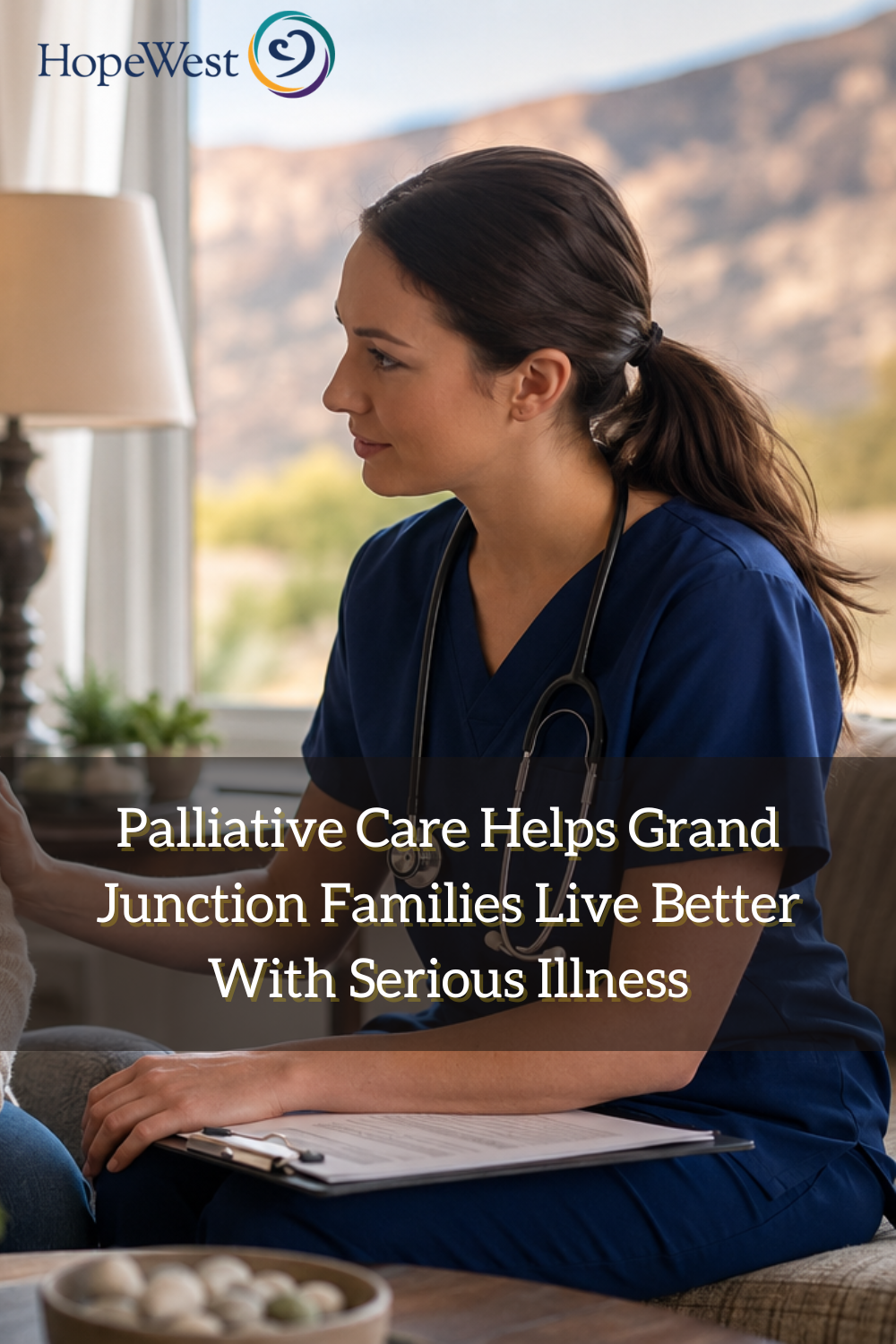
Palliative Care Helps Grand Junction Families Live Better With Serious Illness
A serious diagnosis can change the rhythm of everyday life almost overnight. Medical appointments begin filling the calendar. New medications create questions. Symptoms such as pain, fatigue, nausea, shortness of breath, or anxiety can make familiar activities more difficult. Meanwhile, family members may find themselves coordinating care while trying to keep up with work, household responsibilities, and their own emotions.
For families in Grand Junction and throughout Mesa County, palliative care can provide another layer of support during this demanding time. It is designed for people living with a serious illness, including those who are continuing treatments intended to manage or improve their condition.
HopeWest Hospice & PACE offers palliative care focused on reducing symptoms and stress so patients can devote more energy to healing, relationships, and the activities that matter to them. Unlike hospice, palliative care does not require a person to stop curative treatment or be in the final months of life.
Palliative Care Is About Living, Not Giving Up
One of the biggest barriers to receiving palliative care is misunderstanding the word itself. Some people assume it is another name for hospice or believe accepting additional support means they have lost hope.
In reality, palliative care can begin at any stage of a serious illness. It may be provided alongside chemotherapy, radiation, dialysis, heart treatments, rehabilitation, medications, or other disease-directed care. The goal is to help patients feel better and make sure their treatment plan reflects their priorities.
Hope may take many forms. A patient may hope to attend a grandchild’s graduation, spend an afternoon near the Colorado National Monument, return to a favorite church service, or simply have enough energy to enjoy dinner with family.
Palliative care helps turn those personal goals into meaningful parts of the care conversation.
What a Palliative Care Team Can Address
Serious illness rarely affects only one part of life. Physical symptoms may create emotional strain. Transportation difficulties may lead to missed appointments. Confusing medical information may make it harder for families to decide what to do next.
Palliative care takes a whole-person approach. Depending on the patient’s needs and program, support may address:
- Pain and other difficult physical symptoms
- Fatigue, weakness, nausea, or breathing discomfort
- Anxiety and emotional stress
- Medication questions
- Communication among doctors, patients, and caregivers
- Changing care needs at home
- Personal values and treatment preferences
- Family caregiver concerns
HopeWest explains that its palliative care program may benefit people experiencing frequent emergency room visits or hospitalizations related to frailty, pain, or complications from illness. Care may be provided in a patient’s home or assisted living community when appropriate.
Why Earlier Support Can Make a Difference
Families often wait until symptoms become overwhelming before asking for help. By then, the patient may already be exhausted, and caregivers may be struggling to keep up.
An earlier palliative care conversation can help identify concerns before they become emergencies. It also gives patients time to explain what quality of life means to them.
For one person, quality of life may mean staying mentally alert enough to visit with friends. For another, it may mean controlling pain well enough to walk into the backyard. Someone else may prioritize remaining at home while continuing treatment.
As Jenny Marquez shares in this draft quote for approval, “Palliative care begins by listening. When we understand what a person values, what symptoms are limiting them, and what their family is carrying, we can help create a plan that supports the life they still want to live.”
That listening process is essential because there is no single definition of a good day. The most effective plan is one built around the individual rather than the diagnosis alone.
Palliative Care and Hospice Are Not the Same
Palliative care and hospice share an important goal: improving comfort and quality of life. However, they are used in different circumstances.
Palliative Care
Palliative care is available to people with serious illnesses regardless of age, diagnosis, or stage of disease. It can be provided while a patient continues treatment intended to cure or control the illness.
Hospice Care
Hospice is intended for people approaching the end of life who meet specific medical eligibility requirements and have chosen comfort-focused care rather than treatment aimed at curing the terminal condition.
A person receiving palliative care does not automatically transition to hospice. However, if the illness progresses, an established care relationship may make future conversations feel more familiar and less frightening.
How HopeWest PACE Fits Into the Care Continuum
HopeWest also operates a Program of All-Inclusive Care for the Elderly, commonly called PACE. Although PACE and palliative care are different services, both reflect a coordinated approach to care.
HopeWest PACE is designed to provide medical and support services to eligible seniors so they can remain safely in their homes for as long as possible. Services may include primary care, medication management, rehabilitation, social support, transportation, and other coordinated assistance.
For Grand Junction families trying to understand the difference:
- Palliative care focuses on relieving the symptoms and stress of serious illness.
- PACE provides comprehensive, coordinated healthcare and support for eligible older adults who need a higher level of assistance to remain in the community.
- Hospice provides comfort-focused end-of-life care for people who meet medical eligibility requirements.
Speaking with HopeWest can help families understand which program best matches their current situation.
Questions to Ask at a Palliative Care Consultation
It can be difficult to know where to begin, especially when a family is already managing multiple appointments. Bringing a written list can make the first conversation more productive.
Consider asking:
- Which symptoms can the palliative care team help manage?
- Can care be coordinated with the patient’s current doctors?
- Can visits occur at home or in assisted living?
- How are caregivers included in the care plan?
- What insurance or payment options apply?
- Who should the family call when symptoms change?
- How often will the care plan be reviewed?
Patients should also bring an updated medication list, recent hospital or emergency room information, and notes about symptoms that interfere with daily life.
Why Palliative Care Matters in Grand Junction
Grand Junction is the regional healthcare center for much of Colorado’s Western Slope. Patients may travel from smaller Mesa County communities or surrounding rural areas for specialists, testing, and treatment.
Those distances can place added pressure on older adults and caregivers. A person may be balancing appointments with the realities of fatigue, limited mobility, winter driving, or a family member who lives several hours away.
Local, coordinated support can make care feel more manageable. HopeWest is a nonprofit organization serving communities across western Colorado through palliative care, hospice, PACE, dementia support, and grief programs. Its Grand Junction locations include the Mike & Kay Ferris Care Center and the HopeWest PACE center on Compass Drive.
When Should a Family Ask About Palliative Care?
A conversation may be helpful when a patient:
- Has received a serious or progressive diagnosis
- Is experiencing pain or other difficult symptoms
- Has repeated hospitalizations or emergency visits
- Is struggling with side effects from treatment
- Needs help understanding treatment choices
- Has several specialists involved in care
- Feels that illness has taken over daily life
- Has family caregivers who need more guidance
Families do not need to wait until every question has an answer. The purpose of the consultation is to begin identifying needs and exploring available support.
Learn More Through Seniors Blue Book
Living with serious illness is challenging, but patients and caregivers do not have to navigate every decision alone.
Visit the HopeWest Hospice & PACE listing on SeniorsBlueBook.com to find current contact information, explore available palliative care resources, and begin a conversation about support in Grand Junction.
Frequently Asked Questions About Palliative Care in Grand Junction
Can Someone Receive Palliative Care While Having Cancer Treatment?
Yes. Palliative care may be provided alongside chemotherapy, radiation, surgery, and other disease-directed treatments. It can help manage symptoms caused by the illness or its treatment.
Is Palliative Care Only for Older Adults?
No. Palliative care is based on a person’s needs rather than age. It may be appropriate for adults living with cancer, heart disease, lung disease, neurological conditions, kidney disease, or other serious illnesses.
Does Palliative Care Replace a Primary Doctor?
Usually not. A palliative care team generally works with the patient’s existing physicians and specialists, providing additional symptom management, communication, and care-planning support.
Can Palliative Care Be Provided at Home in Grand Junction?
HopeWest states that palliative care may be delivered in a patient’s home or assisted living setting, depending on the person’s circumstances and program availability.
Does Receiving Palliative Care Mean Hospice Is Next?
Not necessarily. Some patients receive palliative care for an extended period while continuing treatment. Hospice is a separate service with different goals and eligibility requirements.
Other Articles You May Like
What Makes a Nursing Care Residence Feel Like Home?
The word nursing home can bring very different images to mind.For some families, it suggests a large institutional building, long hallways, shared dining rooms, and a highly scheduled day.But modern long-term care is increasingly focused on a different question: What if a nursing care residence could feel more like a neighborhood home?That question is particularly relevant for families in Monroe Township and central New Jersey, where active adult communities, multigenerational families, and established neighborhoods have become an important part of the area's identity.Parker at Monroe Nursing Care Residence was designed around precisely that idea.Located on Schoolhouse Road, Parker at Monroe uses a Small Home model that creates smaller, more familiar living environments within a larger campus. The residence includes six Small Homes connected to a central Community Center.Why the Physical Environment Matters Where a person lives can influence how they experience each day.For an older adult who requires nursing care, a comfortable environment can help preserve familiarity and personal identity.At Parker at Monroe, each Small Home includes its own kitchen and dining area, living room, and spaces for residents to gather. Bedrooms and bathrooms are designed with accessibility and mobility needs in mind.That design creates opportunities for everyday activities that feel familiar.A resident might sit at the kitchen table, participate in a meal, spend time in the living room, or visit with family in a comfortable shared space.Those details matter.The Small Home ModelThe Small Home concept is one of Parker at Monroe's defining characteristics.Instead of treating 96 residents as one large population, the community creates smaller residential neighborhoods. Parker describes these homes as environments where residents with similar needs and cognitive levels can live together.This can create a more personal atmosphere.Staff have opportunities to know residents as individuals, while residents can develop familiarity with the people and surroundings around them.For families, that can change the experience of visiting.Rather than feeling like they are entering an institution, they may feel like they are visiting someone's home.Person-Directed Care Changes the ConversationThe physical environment is only one part of creating a sense of home.The other is culture.Parker follows a person-directed philosophy that emphasizes resident choice, dignity, purpose, and meaning. The organization is also an Eden Alternative registered home.Michael Brophy, Senior Director of Sales and Marketing, describes the philosophy this way: Families come to us during vulnerable moments. Our responsibility is not only to provide exceptional clinical care, but to truly know each resident their story, their preferences, and what makes them feel at home.That distinction is important.A person isn't simply a room 12 resident.They may be a retired teacher, a grandmother, a veteran, an avid gardener, a lifelong Mets fan, a former business owner, or someone who loves classical music.Good long-term care makes room for that story.What Does a Typical Day Look Like?There isn't one perfect routine for every resident.Parker's person-directed approach is designed to support individual preferences and abilities.Programming can include opportunities for: Social interaction Exercise and wellness Creative activities Dining and cooking experiences Family visits Educational programs Entertainment Spiritual services Outdoor timeThe Community Center also includes therapy services, a Health and Wellness Center, outdoor access, dining venues, and gathering spaces.Dementia Care Within a Familiar SettingFor people living with dementia, familiarity can be especially important.Parker at Monroe has different Small Homes serving people at different stages of dementia and physical need. The Oaks, for example, serves residents with early-to-mid-stage dementia, while The Willows is designed for residents with more advanced dementia and significant physical support needs.This specialized structure allows programming and support to be tailored to residents' abilities.Family Is Part of the CommunityA nursing care residence should not mean that family life stops.In fact, regular family involvement can become an important part of a resident's routine.For Monroe Township families, proximity can make that easier.Children and grandchildren living in nearby communities such as East Brunswick, Spotswood, Old Bridge, Jamesburg, or Princeton can build visits into their regular schedules.A Sunday afternoon visit. A birthday celebration. A cup of coffee. A grandchild's school project brought in to share.These moments help preserve relationships.What Should Families Look for When Touring?When evaluating a nursing care residence, look beyond the dcor.Pay attention to how residents appear.Ask yourself: Do residents seem engaged? Do staff members know residents by name? Are residents offered choices? Does the environment feel calm? Are families welcomed? Are activities meaningful? Are rooms and common areas comfortable? Does the community feel like somewhere your loved one could actually live?Frequently Asked Questions**1. What is the Small Home model?** Parker at Monroe organizes its campus into smaller residential homes connected to a central Community Center, creating a more intimate living environment.**2. Does Parker at Monroe offer private rooms?** The Seniors Blue Book listing indicates that both private and semi-private rooms are available.**3. Does the residence offer activities?** Yes. Parker emphasizes meaningful activities and opportunities for social connection, along with amenities and programs throughout the campus.**4. Is there memory care at Parker at Monroe?** Yes. Specialized Small Homes support residents with different stages of dementia.**5. Where can I learn more?** Families can explore Parker at Monroe's complete Seniors Blue Book listing.Rethinking What Long-Term Care Can BeLong-term care doesn't have to mean giving up the feeling of home.For many families, the right environment can provide something they cannot safely provide alone: professional nursing care combined with community, comfort, meaningful activity, and personal choice.That is the philosophy behind Parker at Monroe.Explore Parker at Monroe on Seniors Blue Book.More information can be found on their Seniors Blue Book Listing Visit Parker at Monroe
I Wish We Had Called Hospice Sooner
I Wish We Had Called Hospice Sooner A Caregivers Story About Modern-Day Hospice I used to think hospice meant the end. That calling hospice meant we were giving up. I was scared, and honestly, I just didnt understand what hospice really was. But after going through it with my husband, I see things so differently now. And if I could go back, I would have called hospice sooner no question. Hospice Helped More Than I Ever Expected When my husband got sick, everything felt overwhelming. But once hospice stepped in, everything changed. They didnt just care for him they cared for us, too. Nurses came to the house and kept him comfortable and taught me how to care for him Aides were available to help with bathing and other care needs when I didnt know how A chaplain visited just to listen and meet us where we were. I did not understand the depths of my spiritual frustrations A social worker helped with paperwork, support, resources and just listened. It was like we had a whole team backing us up. I wasnt alone anymore. Hospice Was About Living, Not Dying Hospice helped us focus on making memories, not just managing symptoms. My husband was at home, surrounded by his family and people who loved and cared for him, he was comfortable, peaceful, and had a say in what he wanted, and what was most important We laughed. We cried. We had time. Real, meaningful time. They Even Took Care of Me What I didnt expect was how much the hospice team helped me as the caregiver. I got breaks. I got answers to late-night questions and fears, I got support. And after he passed, they kept checking in just to make sure I was okay- we were okay. It wasnt just medical care. It was human care, and seeing me as a person, with all my flaws and hurt. I Tell Everyone Now: Dont Wait Hospice isnt about giving up its about getting support when you need it most. If someone you love is facing a serious illness, dont wait until the very end. Hospice can help sooner than you think. I wish I had known that earlier and been brave enough to pick up the phone and call them. Hospice Today is More Than You Might Think Modern-day hospice is not about giving up its about living well in the time that remains. Its about being heard, being cared for, and being surrounded by support, however that looks to you. It is different for all of us Whether a loved one is facing a serious illness, or you simply want to learn more, reach out! Todays hospice is modern, compassionate, and ready to help when your family needs it most. Ashley Copeland-Owner-Doctor's Hospice of Idaho
Palliative Care Services in Walsenburg CO
Living with a serious illness can affect nearly every part of daily life. Symptoms may become harder to manage, medical appointments can feel overwhelming, and family caregivers may struggle to understand what their loved one needs next. For residents of Walsenburg and the surrounding Huerfano County area, palliative care can provide an added layer of support during this challenging time.Palliative care focuses on comfort, symptom relief, communication, and quality of life. It is designed to work alongside a persons existing medical care, helping patients and families navigate serious illness with greater clarity and support.Sangre de Cristo Community Care provides palliative care services for patients and families in Walsenburg and communities throughout Southern Colorado. Its team helps individuals manage the physical and emotional effects of serious illness while continuing treatments recommended by their physicians.What Is Palliative Care?Palliative care is specialized medical support for people living with serious, chronic, or life-limiting health conditions. Its primary goal is to relieve symptoms and reduce the stress that can accompany an illness.Unlike care that focuses only on treating the underlying disease, palliative care considers the persons overall comfort and quality of life. It may address physical symptoms as well as emotional concerns, treatment decisions, caregiver stress, and communication between medical providers.Common symptoms that may be addressed through palliative care include: Pain or physical discomfort Shortness of breath Fatigue or weakness Nausea Loss of appetite Constipation Difficulty sleeping Stress related to treatment or diagnosis Palliative care may begin at diagnosis, during active treatment, or later as an illness progresses. Patients do not have to stop treatments intended to cure, slow, or manage their condition in order to receive palliative support.Who Can Benefit From Palliative Care?Palliative care may be appropriate for people of any age who are experiencing a serious illness. A person does not need to be in the final stage of an illness to ask for support.Conditions that may lead a patient or family to explore palliative care include: Cancer Heart disease or heart failure Chronic obstructive pulmonary disease Dementia Kidney disease Neurological disorders Other complex or life-limiting illnesses Someone may also benefit when symptoms remain difficult to control, hospital visits become more frequent, treatment decisions feel confusing, or caregiving responsibilities begin affecting the familys well-being.Sangre de Cristo Community Care identifies heart disease, COPD, cancer, dementia, and other life-limiting illnesses as conditions commonly supported through its palliative care program.Palliative Care Is Not the Same as HospiceFamilies sometimes hesitate to ask about palliative care because they associate it with end-of-life care. Palliative care and hospice share a commitment to comfort and quality of life, but they are not the same service.Palliative CarePalliative care: Can begin at any stage of a serious illness May be provided while a patient continues treatment Focuses on relieving symptoms and reducing stress Helps patients and families understand care options Can be introduced soon after diagnosis Hospice CareHospice care is intended for people who are approaching the end of life, typically when a physician believes the person may have six months or less to live if the illness follows its expected course. Hospice focuses primarily on comfort rather than curative treatment.A patient receiving palliative care may eventually transition to hospice when appropriate, but beginning palliative care does not automatically mean that hospice is needed.Sangre de Cristo Community Care in WalsenburgSangre de Cristo Community Care is a nonprofit organization that has served patients and families in Southern Colorado since 1985. Its continuum of services includes palliative care, hospice, home health, dementia care, grief support, and other assistance for people facing serious illness.The organization operates a local Walsenburg office at:Address: 615 Walsen Avenue, Walsenburg, CO 81089 Phone: (719) 569-4518Sangre de Cristo Community Care reports serving a geographic area of approximately 22,000 square miles, including rural communities that may otherwise have limited access to specialized care. Its current service information specifically includes Walsenburg among the Southern Colorado communities where palliative support is available.Personalized Support During Serious IllnessSangre de Cristo Community Care describes its palliative care program as an additional layer of care for people experiencing the symptoms, pain, and stress of serious illness.Care is personalized around the patients condition, current treatment plan, symptoms, concerns, and personal goals. The palliative team can work with the patients existing medical providers rather than replacing the doctors or specialists already involved.Support may help patients and families: Identify symptoms that need greater attention Discuss personal goals and care preferences Prepare questions for medical providers Better understand treatment choices Communicate concerns among family members Reduce some of the stress associated with serious illness Focus on comfort and meaningful daily activities The organization states that palliative support may begin at diagnosis and continue alongside treatment, with an emphasis on symptom management, guidance, emotional well-being, and improved quality of life.Support for Patients and FamiliesSerious illness affects more than the person receiving treatment. Spouses, adult children, friends, and other caregivers may also experience uncertainty, exhaustion, and emotional stress.Palliative care recognizes the family as an important part of the care process. It can create opportunities for patients and caregivers to discuss their concerns, clarify what matters most, and communicate more effectively with healthcare professionals.This guidance may be especially helpful when family members live outside Walsenburg, when several providers are involved, or when a caregiver is trying to balance medical responsibilities with work and household needs.Why Palliative Care Matters in WalsenburgAccess to locally based healthcare support is particularly important in rural Southern Colorado. Huerfano County covers approximately 1,591 square miles, and an estimated 36 percent of its residents are age 65 or older. These characteristics can make transportation, specialist appointments, care coordination, and ongoing symptom management more challenging for some families.Having a palliative care provider with a Walsenburg office gives area residents a local starting point for discussing serious illness. It may also reduce the confusion families experience when they are unsure whether symptoms should be handled by a primary care provider, specialist, emergency department, hospice program, or another service.Palliative care can be valuable for Walsenburg families because it encourages earlier conversations. Patients do not need to wait for a medical crisis or the final stage of an illness before asking for help with pain, breathing difficulties, fatigue, emotional stress, or care planning.How to Get Started1. Write Down the Main ConcernsBefore calling, make a brief list of the symptoms, care challenges, and questions that are most urgent. Include recent changes in pain, breathing, appetite, sleep, mobility, mood, or hospital use.2. Gather Basic Medical InformationHave the patients diagnosis, current medications, treating physicians, insurance information, and recent hospital or clinic details available. The provider can explain which records or referrals may be required.3. Contact Sangre de Cristo Community CareCall the Walsenburg office at (719) 569-4518 or the organizations main line at (719) 542-0032. Ask specifically about a palliative care consultation for someone living in Walsenburg or the surrounding Huerfano County area.4. Ask About Eligibility and PaymentCoverage for palliative services may depend on the patients health plan, diagnosis, location, and type of care recommended. Ask the provider to explain eligibility, referrals, insurance participation, and any possible out-of-pocket costs before services begin.5. Include the Patient in the ConversationWhenever possible, ask the patient what matters most to them. Their goals may include controlling pain, remaining at home, attending an important family event, sleeping better, continuing treatment, or reducing trips to the hospital.6. Keep the Primary Doctor InformedPalliative care is intended to complement existing treatment. Sharing information among the palliative team, primary care provider, and specialists can help everyone understand the patients goals and current care plan. Related Senior Care Categories Care Management Dementia Care Resources Caregiver Support Services This article was researched and written by Seniors Blue Book. Seniors Blue Book connects seniors, families, and caregivers with trusted local senior care resources nationwide. Browse local listings, read expert articles, and order a free printed guide at seniorsbluebook.com.
Local Services By This Author

HopeWest Hospice
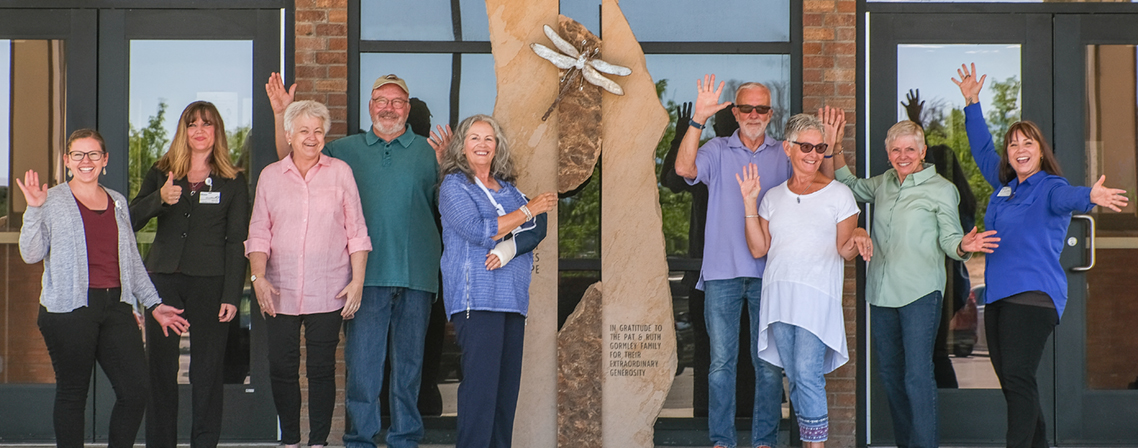
Palliative Care 2754 Compass Drive, Grand Junction, Colorado, 81506We are dedicated to profoundly changing the way our community experiences aging, serious illness, and grief one family at a time.