Planning To Sell in 2027? Start Prepping Now.
Denise Marasco, Realtor - Howard Hanna
For more information about the author, click to view their website: Denise Marasco, Realtor - Howard Hanna
Nov 16, 2026
Pennsylvania - Greater Pittsburgh Area


If selling your house is on your calendar for 2027, you may be thinking you've got plenty of time. Maybe you're aiming for January. Maybe you're waiting for spring. Either way, next year probably feels far enough away that getting ready can wait, too.
But waiting until 2027 to sell doesn't mean waiting until 2027 to get started.
Today's buyers have more homes to choose from than they've had in years. So, if you want your house to stand out when it's time to list, a little preparation now can make a big difference later.
How Early Should You Start Getting Ready?
As a general rule of thumb, Zillow recommends giving yourself about 2-3 months to get your house ready to list. And that makes sense when you consider that the vast majority of sellers (78%) did at least one home improvement project before their house hit the market.
That gives you plenty of time to decide what to fix, find contractors, get on their schedules, actually make the updates, and get everything ready for photos and showings.
But don’t worry - that doesn’t mean every seller had some big to-do. The most common? Interior painting (see graph below):
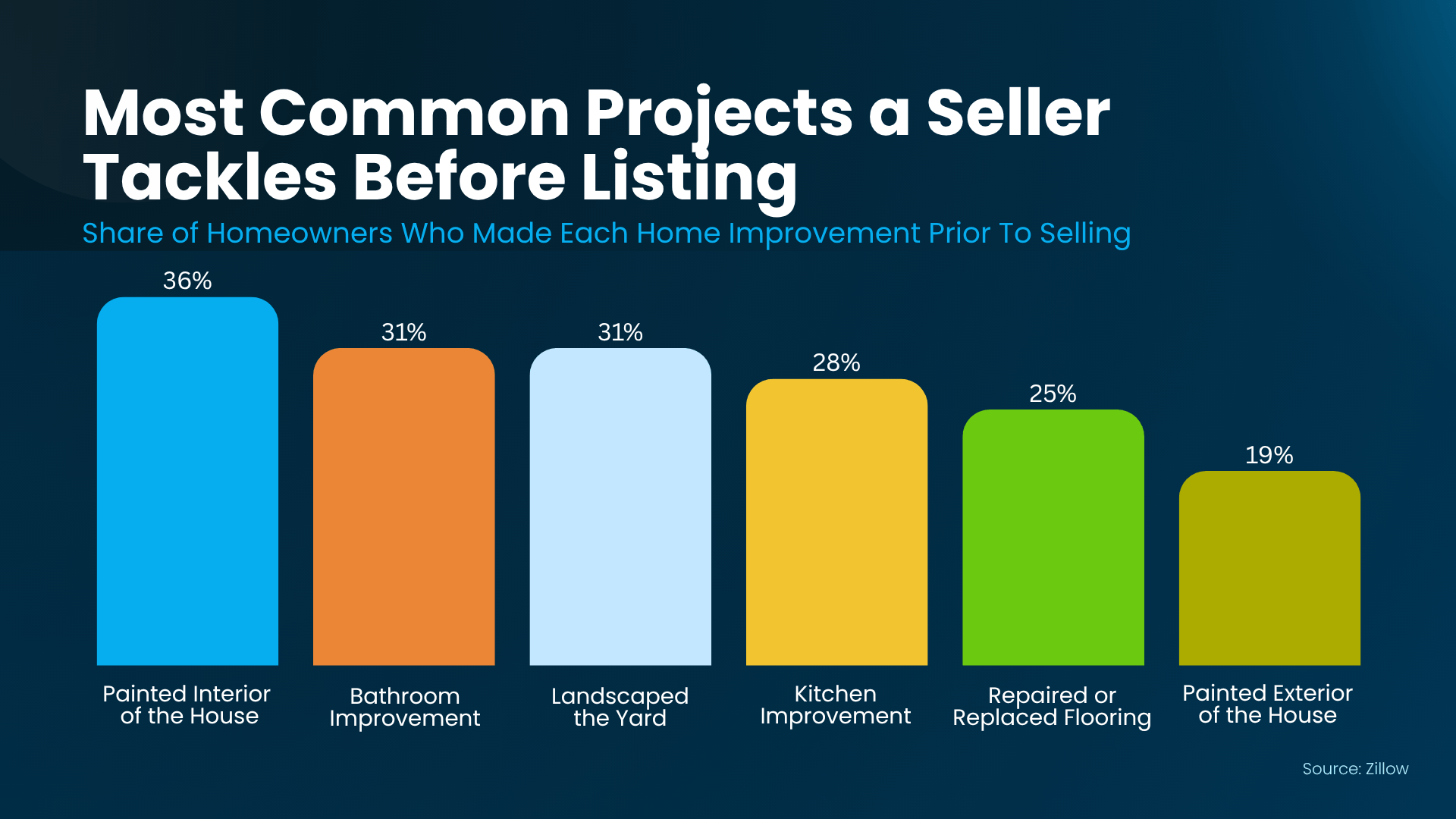
That certainly doesn't mean you need to tackle everything on this list. You may not need to do any of it. But odds are there’s at least one project you’ll want to do. And starting that conversation now gives you a leg up before next year.
Here’s how to tackle it.
1. Talk to an Agent Before Starting Any Projects
While you might have a long list of things you think need updating, that doesn't mean they're all worth the time, effort, or money. An agent will help you figure out which projects deserve a spot on your to-do list based on what buyers want most and what other sellers are doing. That way, you're not investing in updates that won't make much of a difference when you sell.
2. Get Ahead with a Pre-Listing Inspection
One thing your agent may recommend today is that you go ahead and get a pre-listing inspection. It’s basically your cheatsheet to what a buyer’s inspection may turn up later on. And now that buyers have more options, they’re pickier – and you don’t want anything popping up in an inspection that could put them off. For example, you know that HVAC system you've been hoping will make it through one more season? Now's a good time to give it some attention – along with anything else you know needs a little TLC. That way a repair you could've handled months ago won’t become a surprise in the middle of your sale.
According to Angi, a pre-listing inspection typically costs $300-600 and that can be money well spent. As the National Association of Realtors (NAR) explains:“An inspector will be able to give you a good indication of the trouble areas that will stand out to potential buyers, and you’ll be able to make repairs before open houses begin.” The advantage isn’t just knowing what may come up, but being able to get ahead of it and space out the projects on your own schedule. So you don’t feel stressed during go-time.
3. Save the Final Touches for Closer to Listing Day
But remember, not everything needs to happen right away. Some things are better saved for when you're closer to listing.
Think deep cleaning, staging, touching up paint, and tidying up the landscaping. Those are the finishing touches that'll help your house look its best when buyers walk through the door.
But there's one thing you can start anytime: decluttering. Go ahead and tackle the closets, garage, or storage room you've been avoiding. Future you will appreciate having a few less boxes to pack.
The idea isn't to get everything done today. It's to spread the work out so you're not scrambling when listing day arrives. As Redfin puts it “Smart preparation leads to a smoother sale, stronger offers, and fewer surprises during closing. . . Homes that are clean, well-staged, priced right, and professionally photographed tend to sell quickly.”
Bottom Line
You don't need to spend the rest of the year renovating your house or packing up your life. But you can start making a plan.
The earlier you figure out what needs to be done, the more time you'll have to do it right. And that means less rushing, fewer last-minute surprises, and a better chance to make a great first impression when you're ready to sell.
Thinking about selling in 2027? Let's talk about what your house needs, what it doesn't, and how to get everything ready on your timeline.

Other Articles You May Like
How Do You Downsize a Parents Home Before a Move to Senior Living?
The most effective way to downsize a parents home is to start with the space available in the new residence, involve your parent in decisions, and work through belongings in short, organized sessions. Then make a clear plan for items that will be kept, gifted, sold, donated, or discarded. Families in Englewood and across Southwest Florida can use this approach whether the move is to independent living, assisted living, or another smaller home. Begin With the Destination, Not the Clutter Ask the new community for a floor plan and measurements. Check whether the apartment comes furnished, what appliances are provided, and whether there are limitations on rugs or larger furniture. Measure furniture before committing to move it. A favorite chair may be worth keeping, while a large cabinet may block the safe path from the bedroom to the bathroom. Create a short list of items that matter most: a familiar bed or chair, photographs, a favorite lamp, artwork, and everyday kitchen or bathroom supplies. When people see that the new home will still contain recognizable belongings, decisions about other items may become easier. How Far in Advance Should Downsizing Start? If the move is planned, begin several weeks or months ahead, particularly when a home has decades of possessions. Start with low-emotion areas such as linens, extra dishes, or duplicate tools. Leave photographs, family collections, and important keepsakes for sessions when there is enough time for discussion. When a medical change requires a quick move, concentrate on the immediate essentials and make a separate plan for the remaining household. Use Five Clear Categories Set up clearly marked areas or lists for keep, family, sell, donate, and discard. Add a temporary decide later category, but give it a review date so it does not swallow the whole project. Take photos of items relatives may want and ask them to decide by a specific deadline. The older adult should retain control of personal decisions wherever possible. Protect Documents and Valuables Before arranging donations or estate sales, separate identification documents, insurance papers, financial records, legal documents, jewelry, medications, and sentimental photographs. Store them securely and assign a responsible person to transport them. Check drawers, coat pockets, books, and old boxes before anything is removed from the property. What If Your Parent Is Reluctant to Let Go of Things? A move may feel like losing a home, a routine, or control over everyday life. Avoid treating the process as simply getting rid of clutter. Ask questions such as Which pieces would make the new living room feel like yours? instead of Why do you still need this? Offer choices in manageable groups and allow time for stories attached to important objects. If decisions are becoming exhausting, shorten the sessions. Ask whether a trusted relative or professional organizer would be more helpful for a particular conversation. When memory loss or cognitive changes complicate decisions, involve the appropriate legal decision-maker and the familys care team rather than expecting the person to manage the process alone. Plan for the Items That Are Not Moving Estate sale management, donation pickup, recycling, and disposal all require coordination. Determine whether items have resale value and whether the time and expense of a sale make sense. Ask for an itemized explanation of any sale or clean-out service, including fees, timelines, and what happens to unsold goods. Keep receipts or records for significant transactions when appropriate. Remember that a home does not have to be completely emptied on moving day if a separate clean-out can occur later. That approach may reduce pressure, provided the family has a clear schedule and understands ongoing property costs. Make the New Home Functional Before the First Night Unpack the bedroom, bathroom, and basic kitchen supplies first. Put frequently used items where they are easy to reach, and check that walkways are free of boxes and loose cords. Make sure the bed is ready, the phone or alert system is accessible, and everyday essentials are easy to find. For a senior living move, coordinate delivery and setup with the community ahead of time. It can help to recreate familiar details: the same bedside photograph, the usual reading lamp, or a favorite throw blanket. The first few days of a move are less confusing when the new surroundings feel personal rather than temporary. When Is Professional Senior Move Help Worth Considering? Consider a senior move manager when adult children live far away, the home contains a large volume of belongings, the move has a short deadline, or family members cannot safely handle packing and furniture. A move manager can also provide continuity across sorting, floor planning, packing, transportation, and settling in. Ask whether the company performs the physical move itself and what tasks are included. In Englewood, WeCare Senior Relocation Services, LLC provides downsizing, packing, moving, settling-in, and estate management support. Owner Kathy Parrish brings experience in senior living transitions, and the company offers a free in-home consultation. To discuss an upcoming move in Southwest Florida, visit https://wecareseniorrelocation.com/ or call (941) 380-6683.
Senior Move Management in Englewood, FL
A move from a longtime home to a smaller residence or senior living community involves much more than loading a truck. Families must decide what will fit, protect important belongings, arrange transportation, and make the new space comfortable. Senior move management in Englewood, Florida, brings those steps into one plan, helping older adults remain involved in decisions without managing every physical task themselves. What Does a Senior Move Manager Do? A senior move manager helps organize the practical work before, during, and after a relocation. Unlike a company hired only to transport furniture, move management can include sorting possessions, preparing a floor plan, coordinating the moving schedule, packing, and arranging the new home. The level of help depends on the person, the residence, and the timeline. For a move to independent living, assisted living, memory care, or a continuing care retirement community, the new room or apartment may have less storage and different furniture requirements. A thoughtful plan begins with the destination, not with packing boxes at the old house. Steps That Make a Move More Manageable Start With an In-Home Consultation Walk through the existing home and talk about what needs to move. Identify furniture with personal meaning, items used every day, and belongings that may require special handling. Ask who will make final decisions, who will be present on moving day, and whether the residence has elevator reservations or delivery rules. A written timeline can help family members who live elsewhere participate without duplicating work. Measure the New Space and Plan Furniture Placement Get the new residences room dimensions and note doorways, closets, and access to electrical outlets. Before deciding to bring a large dining table or bedroom set, compare actual measurements. Floor planning can also help identify clear walking routes and space for mobility equipment. It is much easier to make these choices before furniture is on a truck. Sort and Downsize in Smaller Sessions Deciding what to keep is often the hardest part of relocating. Work by category or by room rather than emptying the entire house at once. Keep important documents, medications, hearing aids, eyeglasses, chargers, and a few days of clothing readily accessible. For items that will not move, discuss whether to give them to relatives, donate them, sell them, or arrange disposal. Do not discard personal items without the older adults agreement or appropriate legal authority. Pack With the First Week in Mind Label boxes with their destination room and an easy-to-read description. Prepare a separate essentials bag, and photograph the arrangement of cords or electronics when useful. If someone has hearing, vision, or mobility challenges, prioritize familiar items, clear labels, and a predictable setup. The goal is not only to deliver possessions but to make the first evening in the new home easier. WeCare Senior Relocation Services in Southwest Florida WeCare Senior Relocation Services, LLC, based in Englewood, provides senior move management across Southwest Florida. The company describes its work as a combination of downsizing, organizing, packing, moving, and settling in. It also helps with internal moves within senior living communities and estate-related belongings. Its service area includes Englewood and communities such as Venice, North Port, Port Charlotte, Sarasota, and Bradenton. Owner Kathy Parrish is a Certified Relocation and Transition Specialist with a background in senior living and geriatric care. A notable distinction is that WeCare says it operates its own moving team rather than outsourcing the move to a separate moving company. That means families can discuss planning and physical moving together, including who is responsible for handling items on moving day. Confirm the exact scope, scheduling, and costs in a written agreement. Questions to Ask Before Scheduling a Senior Move Find out which services are included in the estimate, whether packing materials are charged separately, and how changes in the moving date are handled. Ask about insurance coverage, care of fragile belongings, disposal and donation arrangements, and whether someone will unpack and arrange the destination home. If the move involves a senior living community, confirm access hours and any requirements the community has for movers. Families should also establish a single point of contact. A nearby relative, an adult child in another state, and the older adult may all have useful input, but unclear instructions can lead to last-minute problems. A simple decision list helps everyone understand which items must move and which decisions remain open. Getting Started in Englewood An early conversation is useful even if the move is several months away. WeCare Senior Relocation Services offers a free in-home consultation to discuss the household, destination, and services needed. To explore senior move management in Englewood and surrounding Southwest Florida communities, visit https://wecareseniorrelocation.com/ or call (941) 380-6683.
Real Estate in Longmont, CO
When youve lived in a home for years, deciding when to sell can be harder than deciding whether to sell. You might need time to sort belongings or wait for another home to become available. A real estate agent can help you work through the sale timeline before those dates start to overlap. What Do Senior Real Estate Services Cover?A real estate agent can help you compare recent sales, prepare a property for listing, review offers, and coordinate closing. For an older homeowner planning a move, the sale price is one part of the decision. Its also worth considering when youll need to leave, what preparing the property may cost, and how the sale fits with your next housing arrangement. Regan Sample at RE/MAX NexusPhone: 720-438-5585 Regan Sample is a Longmont REALTOR with RE/MAX Nexus. His brokerage profile lists the Seniors Real Estate Specialist designation and describes his work with buyers and sellers, including those who are downsizing or relocating. Call and share your preferred move date, any dates you cant change, and how much time you want for preparing the home. Compare Selling As-Is with Preparing the HomeAsk Sample to discuss recent comparable sales and walk through the property with you. If repairs or updates are on the table, ask how much time they could add and which ones he would prioritize. Request an estimate of what you could receive after expected selling costs so you can compare the options against your moving budget. Why This Matters in LongmontIf you want to stay in Longmont after selling, try the routes you use now from any address youre considering. A regular visit to the Senior Center, an appointment, or a standing lunch with friends can help you decide which locations belong on your list. If the next home has a firm move-in date, share it early so the agent can explain how it affects listing and closing. How to Get Started1. Make a Timeline with the HomeownerWrite down the target move date and the time youll need for sorting, packing, and arranging help. Ask the homeowner what they want to handle and which tasks theyd like family or professionals to take on.2. Ask for a Sale Plan and Written EstimatesCall 720-438-5585 to discuss the property. Ask about the proposed listing timeline, the brokerage agreement, expected selling costs, and what happens if the next home is delayed. Related Seniors Blue Book Categories Senior Move Management Independent Living House Cleaning Services