Preserving a Lifetime of Stories, Love, and Legacy
The Final Chapter Project
Oct 15, 2026
New Jersey - Ocean & Monmouth Counties

Email US
Click to Email Us
Every person carries a lifetime of stories.
Some are remembered through family photographs, meaningful keepsakes, and favorite traditions. Others live in everyday expressions, shared jokes, recipes, personal advice, and the ways someone has influenced the people around them.
When an individual begins thinking about the end of life, these experiences may take on renewed importance.
A parent may want children to understand the values that shaped their decisions. A grandparent may wish to record family history. Someone may want to express gratitude to a lifelong friend or leave a written message for future generations.
These wishes are part of what is often called legacy work.
Legacy does not have to involve financial assets, a formal memoir, or elaborate projects.
It can be as simple as a handwritten letter, a favorite photograph with a recorded story, or a conversation that someone has wanted to have for years.
For families throughout New Jersey, legacy planning can create meaningful opportunities for connection and reflection during the final chapter of life.
The Final Chapter Project: Kellie Larsen End of Life Doula and Advocate offers personalized, non-medical legacy and memory-keeping support.
Kellie Larsen helps individuals and loved ones explore meaningful stories, personal wishes, family traditions, and opportunities to create lasting memories.
Her approach emphasizes honoring each person's unique identity rather than following a predetermined idea of what a legacy should look like.
What Is End-of-Life Legacy Work?
Legacy work involves preserving or expressing the experiences, values, and relationships that make a person's life meaningful.
It may include written, recorded, visual, or symbolic projects.
Examples of Legacy Projects
- Personal letters
- Recorded family stories
- Photo albums
- Memory boxes
- Family recipes
- Audio messages
- Collections of meaningful objects
- Written reflections
- Personal rituals
- Messages for loved ones
Legacy Is Not Only About the Past
Someone may also wish to express hopes for family members or share what they have learned throughout life.
A Personal Process
Not everyone wants to create a formal keepsake.
For some individuals, sharing stories in conversation is enough.
Legacy Support at The Final Chapter Project
Kellie Larsen includes legacy and memory work among her services through The Final Chapter Project.
Her role is to help individuals identify what matters most and explore ways of expressing those values.
A Thoughtful Approach
Legacy work should respect the person's preferences, energy, and emotional comfort.
Family Participation
Some projects involve relatives.
Others may be private or intended for particular people.
Respecting Boundaries
Individuals should control what they wish to share and with whom, to the extent they are able.
Start With the Stories That Matter Most
A lifetime can contain too many stories to document completely.
Legacy work becomes more manageable when it begins with meaningful moments.
Story Prompts May Include
- What childhood memory still makes you smile?
- Who influenced your life most?
- What accomplishment are you proud of?
- Which tradition do you hope continues?
- What would you like younger relatives to know?
- What advice would you give your younger self?
Follow Natural Conversations
A brief story may lead to another memory.
The process does not need to follow a strict order.
Allow Difficult Memories
Not every meaningful experience is joyful.
Individuals may wish to acknowledge loss, hardship, growth, or reconciliation.
Writing Letters to Loved Ones
A letter can become a personal expression of love, gratitude, guidance, or reflection.
Letters May Be Written For
- Spouses or partners
- Children
- Grandchildren
- Siblings
- Friends
- Caregivers
- Other meaningful people
What Might a Letter Include?
The content may involve favorite memories, appreciation, words of encouragement, or a personal message.
Keep It Authentic
A letter does not need perfect grammar or elaborate language.
Simple, recognizable words often feel most personal.
Alternative Methods
If writing is physically difficult, an individual may prefer dictating a letter with appropriate assistance.
Recording Personal Stories
Audio or video recordings can preserve someone's voice, expressions, and storytelling style.
Possible Recording Topics
- How family members met
- Career experiences
- Childhood traditions
- Favorite celebrations
- Lessons learned
- Personal beliefs
- Memorable friendships
Keep Sessions Comfortable
Short recordings may be more manageable than lengthy interviews.
Permission and Privacy
Recordings should be made with appropriate consent and stored securely.
Technology Should Remain Simple
The value of a recording comes from the person's message, not professional production quality.
Creating a Family Memory Book
A memory book can combine photographs, stories, captions, and personal reflections.
Possible Sections
- Childhood
- Family relationships
- Important milestones
- Favorite places
- Celebrations
- Personal interests
- Words of advice
A Collaborative Project
Relatives may contribute photographs or ask questions.
Preserve the Individual's Voice
The person creating the legacy should have meaningful control over what is included.
It Does Not Need to Be Complete
A small collection of important memories can be valuable without documenting every stage of life.
Everyday Objects Can Carry Meaning
Certain belongings become meaningful because of the stories associated with them.
An old recipe card may remind family members of gatherings.
A well-used garden tool may represent years spent outdoors.
A favorite piece of artwork may reflect a lifelong interest.
Memory Objects May Include
- Jewelry
- Books
- Photographs
- Handmade items
- Letters
- Small souvenirs
- Recipes
- Personal keepsakes
Explain the Story
A short note describing why the item matters may be more valuable than the object alone.
Legal Ownership Is Separate
Giving away valuable property or changing ownership may involve legal or financial considerations.
An end-of-life doula does not replace estate planning professionals.
Honoring Favorite Traditions
Legacy can also involve experiences that families continue after someone's death.
Examples
- Preparing a favorite meal
- Playing meaningful music
- Continuing a holiday tradition
- Sharing a family story
- Planting a garden
- Supporting a cause the person valued
Choose What Feels Genuine
Not every family wants a formal remembrance ceremony.
A quiet tradition may be more appropriate.
Invite Participation Without Pressure
Relatives may experience different emotions about continuing traditions.
Their responses should be respected.
Meaningful Rituals and Personal Preferences
The Final Chapter Project offers assistance with personal rituals and memory-keeping experiences.
A ritual may be spiritual, cultural, symbolic, or entirely personal.
Ideas Families May Explore
- Reading a favorite poem
- Sharing photographs
- Listening to meaningful songs
- Lighting an appropriate symbolic candle where permitted
- Gathering for a family meal
- Creating a message book
- Sharing words of gratitude
Follow the Individual's Values
Rituals should reflect what the person wants rather than what others assume is meaningful.
Consider Facility Rules
Any activity should comply with healthcare, safety, and residential requirements.
Legacy Planning With Children and Grandchildren
Younger family members may appreciate having something personal to revisit over time.
Age-Appropriate Keepsakes
These may include:
- Short letters
- Family stories
- Favorite recipes
- Photographs
- Recorded greetings
- Stories about earlier generations
Avoid Pressure
Children should not be required to participate in emotionally difficult activities.
Explain the Purpose Gently
Age-appropriate communication can help younger relatives understand why stories and memories are being preserved.
Families may seek guidance from qualified counselors when needed.
What if Someone Does Not Want to Talk About Death?
Legacy work does not always require direct conversations about dying.
An individual may enjoy sharing memories without wanting to discuss prognosis or future loss.
Begin With Everyday Questions
Ask about a favorite vacation, a treasured friendship, or a meaningful accomplishment.
Respect the Answer
Some people may prefer not to participate.
Allow the Process to Change
A person may want to talk one day and rest the next.
Presence Still Matters
Legacy support can include simply listening when stories arise naturally.
The Role of Pets in Family Legacy
For many older adults, pets are important companions and family members.
The Final Chapter Project also recognizes the meaningful relationship between people and beloved animals.
Pet-Related Legacy Ideas
- Photographs together
- Stories about a pet's personality
- A favorite walking memory
- A small keepsake
- Written care preferences
- Family conversations about future pet care
Practical Pet Planning
If an individual's illness affects their ability to care for a pet, they may wish to discuss who will assume those responsibilities.
Legal arrangements or veterinary decisions should be addressed with the appropriate professionals.
Preserving Digital Memories
Family memories are increasingly stored on phones, computers, and online accounts.
Important Materials May Include
- Digital photographs
- Voice recordings
- Personal videos
- Emails
- Written reflections
- Family documents
Plan for Secure Storage
Families should consider privacy, appropriate consent, backups, and access arrangements.
Avoid Sharing Without Permission
Not every message or photograph is intended for public distribution.
Digital Estate Issues
Access to online accounts and digital assets may involve legal terms or estate planning questions beyond an end-of-life doula's role.
How Legacy Work Can Support Connection
A legacy project may create opportunities for conversations that otherwise would not happen.
Family members might discover previously untold stories or learn more about an individual's values.
Possible Benefits
- Shared attention
- Meaningful conversation
- Opportunities for gratitude
- Family history preservation
- Personal reflection
- Connection across generations
Avoid Promising Emotional Outcomes
Legacy work does not eliminate grief or guarantee closure.
Its value lies in the experiences and expressions meaningful to the participants.
Planning a Manageable Legacy Project
Large projects may become tiring during serious illness.
Starting small can help.
A Simple Approach
Choose one topic, one format, and one manageable session.
For example, record a short story about an important family tradition.
Later, the person may decide whether to continue.
Keep Expectations Flexible
Physical energy and emotional readiness can change.
Celebrate What Is Created
A single meaningful message may be enough.
Expert Tip: Capture the Meaning Behind the Memory
Legacy Planning Tip: When someone shares an important story, ask why that moment mattered to them. The meaning behind an experience often provides the most valuable insight for loved ones who will remember it.
Frequently Asked Questions About Legacy Work
1. Does The Final Chapter Project offer legacy and memory-keeping support?
Yes. Kellie Larsen identifies legacy work and memory projects among her non-medical end-of-life doula services.
2. What kinds of legacy projects can families create?
Projects may include letters, recordings, family stories, memory books, photographs, personal rituals, and meaningful keepsakes, depending on individual preferences.
3. Does legacy work require someone to be near death?
No. Individuals may begin preserving stories or sharing personal wishes well before the final stages of life.
4. Can family members participate in creating memories?
Yes, when the individual wishes. Relatives may help gather photographs, listen to stories, or participate in meaningful rituals.
5. Is legacy work the same as estate planning?
No. Legacy work focuses on personal memories, values, and relationships. Wills, trusts, property transfers, and other legal matters require appropriate legal guidance.
Keeping Meaningful Stories Close
A person's legacy is not measured only by financial achievements or the possessions they leave behind.
It also lives in stories, relationships, traditions, and the ways they have influenced other people.
Through The Final Chapter Project, Kellie Larsen helps individuals and families explore ways to preserve those connections.
For families throughout New Jersey, legacy work may provide an opportunity to celebrate a life while creating meaningful expressions for loved ones to cherish.
Learn More About The Final Chapter Project
Visit The Final Chapter Project: Kellie Larsen End of Life Doula and Advocate on SeniorsBlueBook.com to learn about personalized legacy support and non-medical end-of-life services.

Other Articles You May Like
Non-Medical in Broomfield, CO
When a parent says theyre managing at home, they may mean they can get through the day with some extra effort. Dinner might be whatever is easiest to reach, and a daughter who stops by on Sundays may be doing a weeks worth of laundry and errands. Non-medical home care can help with those tasks while giving the older adult a say in how the household runs. A good starting point is to find the part of the week that feels hardest and plan a visit around it. What Is Non-Medical Home Care?Non-medical home care provides practical help in someones own home. It can include personal care, such as help getting dressed or bathing, and homemaking, such as meal preparation or light housekeeping. A caregiver may also provide companionship or give a family caregiver a break.This kind of support can be useful when someone manages much of the day independently but needs help with a few activities. It can also work alongside skilled home health. For example, a physical therapist may handle rehabilitation exercises while a non-medical caregiver prepares lunch or helps the person get ready for the day. Griswold Home Care in BroomfieldPhone: 303-625-7503Griswold Home Cares Westminster, Broomfield & Boulder office lists personal care, homemaking, and companionship. A visit could focus on helping someone bathe and dress, preparing meals they enjoy, or doing a load of laundry while they spend time with a caregiver. The agency also lists respite and around-the-clock care options. Ask what is available for your address and the hours you need. A useful first conversation is about preferences. Does your parent want help choosing clothes, or just help with buttons? Would they like to cook alongside someone, or would having a meal ready to reheat be more useful? Those details give Griswold a clearer picture of what a visit should cover.Respite That Fits the Familys ScheduleRespite care gives a regular caregiver time away from their responsibilities. If a spouse needs a few hours for appointments or a family member wants to keep a regular work commitment, share the day and time when coverage would make the most difference. Ask Griswold about minimum visit lengths, whether you can request the same caregiver for recurring visits, and how the agency handles scheduling changes. Why This Matters in BroomfieldBroomfield Senior Services identifies Griswold Home Care as its contracted provider for two city programs. The Caregiver Respite Program offers temporary in-home care for eligible residents, while the Homemaker Services Program offers limited household help. The city describes both programs as no-cost for eligible Broomfield residents age 60 and older. Eligibility depends on factors including residency and the kind of assistance needed. For city-funded support, review the application and eligibility details on Broomfields website. For care arranged directly through Griswold, use the agency listing below. How to Get Started1. Choose a Visit That Would Make the Week EasierIdentify two or three tasks and when they need to happen. For example, a Wednesday afternoon visit could cover meal preparation and laundry so the person has clean clothes and a few dinners ready before the weekend.2. Ask About Availability and CostCall Griswold Home Care at 303-625-7503, the number on its Seniors Blue Book listing. Share the address, preferred schedule, and type of help needed. Ask for the hourly rate, minimum visit length, and any weekend or holiday charges. If you need a specific start date, ask when the agency can confirm it. 3. Review the Plan After the First Few VisitsAsk the older adult what felt helpful, what felt rushed, and what they want to keep doing themselves. Use that feedback to adjust the visit length, timing, or list of tasks with the agency. Related Seniors Blue Book Categories Home Health Hospice Independent Living
Non-Medical in Boulder, CO
A parent may still enjoy living at home even after grocery shopping, laundry, or getting ready for the day starts taking more effort. Non-medical home care can give families dependable help with those tasks. A good place to start is a specific time of day when help would make a noticeable difference. What Non-Medical Home Care IncludesNon-medical home care helps people manage their daily routines at home. Depending on the care plan, a caregiver may prepare meals, assist with bathing or dressing, provide companionship, or accompany someone on errands. It can also give family caregivers time to work, rest, or keep their own appointments. Comfort Keepers in BoulderPhone: 720-924-8007 Comfort Keepers Boulder office lists personal care, companion care, and senior transportation. Personal care can help with activities such as bathing and dressing. Companion care can involve conversation, shared activities, meal preparation, or light household tasks. Ask what a caregiver could accomplish in a typical visit and which tasks would be included in your plan. Respite and Support for Changing RoutinesThe Boulder office also lists respite care, dementia support, and overnight or extended care options. A family caregiver who needs a break every Thursday may want a different schedule from someone whose parent needs evening help every day. Share the days, times, and type of assistance you need. Ask about minimum visit lengths and how the agency handles a regular caregivers absence. Why This Matters in BoulderThink about the parts of Boulder life your loved one wants to keep. That might be a class at an Age Well Center, a weekly lunch with a friend, or errands they still like to do in person. If rides are part of the plan, ask whether the caregiver can stay during the activity, help with a walker, or bring groceries inside afterward. How to Get Started1. Choose a Routine to Support FirstPick a recurring time when help would matter most. For example, a morning visit might cover breakfast, dressing, and a short walk. An afternoon visit might give a spouse time to run errands while someone stays with their loved one.2. Explain How the Household WorksTell the agency about pets, stairs, mobility equipment, and any preferences around meals or personal care. If the person is uneasy about inviting a caregiver into the home, ask whether a family member can be present for the first visit.3. Review the Schedule After the First Few VisitsAsk the older adult which parts of the visit helped and which felt rushed. Use that feedback to adjust the schedule or clarify the tasks with the agency. Related Seniors Blue Book Categories Home Health Adult Day Programs Senior Transition Specialists
Building a Family Home Care Plan in Mobile, AL
Caring for an aging loved one often begins with a few simple favors.An adult daughter may stop by every weekend to help with groceries. A son might handle transportation to medical appointments. A spouse may begin preparing meals and organizing daily household responsibilities.At first, these arrangements may work well.Over time, however, an older adult's needs can become more complicated. Personal care may require additional assistance, transportation needs may increase, and household tasks may become difficult to complete.Family members may find themselves balancing caregiving responsibilities with employment, children, personal health, and other obligations.For families in Mobile, Alabama, this is often when an important question arises: How can we create a home care plan that supports our loved one without placing every responsibility on family members?Non-medical home care can provide an important part of the solution.Amada Senior Care of Mobile offers personalized in-home assistance for older adults throughout Mobile County and surrounding communities.Its caregivers help with bathing, dressing, meal preparation, light housekeeping, medication reminders, mobility, transportation, and companionship.The organization also provides guidance involving long-term care insurance claims and potential veterans benefits.For families who want to support an older relative's independence while managing caregiving responsibilities more effectively, a coordinated home care plan can help establish clear expectations and consistent support. What Is a Family Home Care Plan?A family home care plan is an organized approach to meeting an older adult's everyday needs.It identifies which activities require assistance, who will provide that assistance, and how care responsibilities will be coordinated.A useful plan considers:Personal care needsMedical appointmentsMeal preparationHousehold responsibilitiesTransportationMobility concernsCompanionshipFamily caregiver availabilityProfessional home care servicesEmergency contactsFinancial resourcesThe purpose is not to remove independence unnecessarily.Instead, a care plan should help the older adult continue participating in daily activities while receiving appropriate assistance.Why Planning MattersWithout a clear arrangement, caregiving responsibilities may become unevenly distributed.One family member may handle nearly every task while others are uncertain how to help.Important responsibilities may also be overlooked when everyone assumes someone else is managing them.A written plan can establish a more organized approach. When Should Families Consider Professional Home Care?There is no universal age when someone should begin receiving home care.The decision usually depends on daily functioning, personal preferences, and available family support.Personal Care Is Becoming DifficultAn older adult may begin needing help with bathing, dressing, or grooming.Meals Are Being SkippedDifficulty shopping or cooking may affect eating routines.Household Tasks Are Becoming OverwhelmingLaundry, light cleaning, and other responsibilities may require more effort.Transportation Is LimitedAn older adult may no longer drive or feel comfortable traveling independently.Social Interaction Has DecreasedSomeone living alone may benefit from regular companionship.Family Caregivers Are Frequently UnavailableRelatives may want to help but struggle to maintain a consistent schedule.Care Needs Are ChangingNew mobility limitations, cognitive changes, or recovery after hospitalization may create additional responsibilities.These situations do not always require residential care.In some circumstances, appropriate non-medical assistance may help an older adult remain at home. Amada Senior Care of MobileAmada Senior Care of Mobile is part of Amada Senior Care of Mobile and Baldwin, a local home care organization led by owner Taura Domingue.Its Mobile office is located at 808 Downtowner Boulevard, Suite E.The agency serves older adults throughout Mobile County and neighboring communities.Amada's approach emphasizes individualized care plans, caregiver matching, regular communication, and assistance with the practical and financial aspects of senior care.Personalized Non-Medical AssistanceAmada's caregivers provide help with activities of daily living and routine household responsibilities.Its published services include:BathingDressingToiletingWalking and ambulationMeal preparationFeeding assistanceLight housekeepingMedication remindersErrands and shoppingTransportationCompanionshipCare schedules and services are tailored to the individual's assessed needs.Customized Care PlansAmada works with clients and families to develop individualized care arrangements.The organization encourages families to share information about the older adult's routines, preferences, interests, and daily challenges.This helps determine which services are appropriate.Caregiver MatchingAmada states that it selects caregivers based on client needs, qualifications, personality, and compatibility.The relationship between a caregiver and an older adult can be important because assistance takes place in a personal environment.Ongoing CommunicationThe agency describes regular communication with clients, families, and caregivers.Care plans may be adjusted when needs or circumstances change.Long-Term Care Insurance GuidanceAmada provides assistance with understanding long-term care insurance benefits and submitting eligible claims.Veterans Benefits InformationThe organization also helps families explore potential veterans benefits that may contribute to care expenses.Senior Housing Advisory ServicesIf a client's needs eventually exceed what can be safely provided at home, Amada offers senior housing advisory services.These may help families evaluate appropriate residential care options. Verified Amada Senior Care of Mobile Contact InformationAmada Senior Care of MobileAddress: 808 Downtowner Boulevard, Suite E, Mobile, AL 36609Phone: 251-305-4500Website: https://www.amadaseniorcare.com/mobile-baldwin-senior-care/Mobile Home Care Information: https://www.amadaseniorcare.com/mobile-baldwin-senior-care/mobile-home-care/Office Hours: Monday through Friday, 8:00 AM to 5:00 PMPhone Availability: 24 hours a day, seven days a weekLocal Owner: Taura DominguePrimary Service: Non-Medical Home CareFamilies can contact Amada to request a free care needs consultation. Step One: Understand Your Loved One's Daily NeedsBefore arranging professional assistance, families should review the older adult's typical day.A useful assessment begins with the activities the person completes independently.Morning ActivitiesConsider whether assistance is needed with:Getting out of bedBathingDressingGroomingPreparing breakfastWalking safelyAfternoon ActivitiesReview:Lunch preparationShoppingTransportationHousehold choresSocial activitiesCompanionshipEvening ActivitiesConsider:Preparing dinnerChanging clothesGetting ready for bedHousehold organizationMedication remindersOvernight NeedsSome older adults experience mobility problems or require supervision overnight.Families should discuss these concerns with the agency to determine which arrangements are available and appropriate. Step Two: Divide Family Caregiving ResponsibilitiesFamily members may be able to continue providing certain types of assistance even when professional home care begins.The key is establishing realistic expectations.Identify Available HelpersDetermine which relatives can consistently provide support.Match Tasks With AvailabilityOne family member may handle appointments.Another may manage financial paperwork.A third may visit regularly for social interaction.Avoid Assuming Everyone Has the Same CapacityEmployment, distance, health, and household responsibilities can affect what each relative can reasonably provide.Establish a Communication MethodA shared calendar or regular family conversation can help keep everyone informed.Review Responsibilities PeriodicallyCaregiving needs and family circumstances may change.The plan should remain flexible. Step Three: Identify Where Professional Caregivers Can HelpProfessional non-medical caregivers can assist with selected daily activities that may be difficult for relatives to manage consistently.Personal CareAmada caregivers may assist with bathing, dressing, grooming, and toileting.These activities often require respectful, hands-on support.Meal PreparationCaregivers can help prepare meals and assist with appropriate eating-related tasks.Light HousekeepingMaintaining laundry and everyday household organization may become more manageable with assistance.Mobility SupportAmada advertises walking and ambulation assistance.Families should discuss specific mobility and transfer concerns during the care consultation.Transportation and ErrandsCaregivers may help with appropriate shopping, appointments, and everyday errands.CompanionshipSpending time in conversation or participating in familiar interests can be part of the care plan.The amount of assistance depends on the client's needs and agreed-upon schedule. Why Home Care Matters Locally in Mobile CountyMobile County includes older adults living in established neighborhoods, family homes, apartments, and retirement communities.Some residents have spent decades in the same neighborhood.Others live near adult children or extended family.Remaining at home may be an important personal goal.Maintaining Familiar SurroundingsAn older adult may prefer the comfort of a familiar home.Non-medical assistance can help address selected daily challenges without requiring an immediate move.Supporting Working FamiliesRelatives may work full-time while managing caregiving responsibilities.Scheduled professional assistance can help address gaps in availability.Reducing Transportation ChallengesTraveling to appointments and activities may become more difficult when driving abilities change.Caregiver transportation support can help with appropriate scheduled trips.Preparing for Gulf Coast WeatherMobile County families should consider heat, storms, and hurricane preparedness when developing care plans.Emergency supplies, evacuation arrangements, and communication procedures may become especially important for older adults with limited mobility.Connecting Care With Community LifeA personalized care plan may help older adults continue enjoying family visits, familiar activities, and appropriate local outings. Home Care and Family Caregiver FatigueProviding ongoing care can be physically and emotionally demanding.Some relatives gradually assume more responsibilities without recognizing how much time caregiving requires.Common ChallengesCaregivers may experience:Limited personal timeScheduling difficultiesInterrupted sleepPhysical fatigueEmotional stressDifficulty attending personal appointmentsConflicts between caregiving and employmentWhy Additional Help Can MatterScheduled professional assistance may reduce some daily responsibilities.For example, a caregiver could provide approved bathing and meal preparation assistance while a family member handles other obligations.Setting Realistic ExpectationsHome care does not automatically eliminate every caregiving responsibility.Families should understand the tasks included in the service agreement and the hours when a caregiver will be present.Discussing Respite ArrangementsAmada advertises respite-related support for family caregivers.Families should ask about available schedules, minimum hours, and whether temporary or recurring assistance is appropriate. Supporting Seniors Living With DementiaDementia can affect memory, judgment, communication, and everyday functioning.Families caring for someone with Alzheimer's disease or another form of dementia may need additional help maintaining routines.Amada advertises specialized support for individuals living with dementia and Alzheimer's disease.Consistent Daily RoutinesFamiliar schedules may help some individuals feel more comfortable.Personal Care AssistanceCaregivers may help with bathing, dressing, and grooming according to individual needs.Meaningful ActivitiesAppropriate familiar activities can encourage participation.CompanionshipCaregiver interaction may support social engagement.Communication With FamilyFamilies should discuss changes in behavior, safety concerns, and care needs.Understanding LimitationsNot every dementia-related need can be safely addressed through ordinary non-medical home care.Individuals requiring continuous supervision, skilled nursing, or specialized residential services may need additional arrangements.Amada's team can help families evaluate appropriate options. Non-Medical Assistance After HospitalizationSome older adults require additional personal assistance after returning home from a hospital stay.A person may be medically stable but still experience weakness or limited mobility.Help With Everyday TasksA caregiver may assist with meals, dressing, errands, or light housekeeping.TransportationFollow-up appointments may require transportation.Mobility AssistanceAppropriate walking support may help with daily activities.Family CommunicationRelatives should understand which tasks the professional caregiver will manage.Medical Services Remain SeparateAmada's non-medical caregivers do not replace nurses, physicians, or rehabilitation therapists.Individuals requiring wound care, injections, or other skilled procedures should receive those services from appropriately qualified medical professionals. Choosing a Caregiver Who Fits the HouseholdInviting a professional caregiver into the home involves trust.A successful arrangement should account for both practical needs and personal compatibility.Communication StyleSome older adults enjoy frequent conversation.Others prefer a quieter approach.Personal PreferencesEstablished habits involving meals, clothing, activities, and household routines should be discussed.ExperienceAsk whether the caregiver has relevant experience with the individual's needs.ReliabilityConsistency is important when assistance is scheduled around daily responsibilities.Respect for IndependenceCaregivers should encourage appropriate participation rather than automatically taking over every task.Procedures for ConcernsFamilies should know whom to contact if they have questions about the caregiver or wish to request adjustments.Amada describes caregiver matching and care plan communication as important elements of its service approach. Understanding Home Care Costs in MobileNon-medical home care is commonly paid for through private resources.However, some individuals may have insurance or benefits that help cover eligible services.Private PaymentFamilies can pay directly for scheduled care according to the agency's rates and policies.Long-Term Care InsuranceSome long-term care insurance policies cover non-medical home care when eligibility criteria are satisfied.Veterans BenefitsCertain veterans or surviving spouses may qualify for benefits that can help with long-term care expenses.Medicare CoverageOriginal Medicare generally does not pay for ongoing non-medical custodial care when that is the only assistance needed.Separate Medicare-covered medical home health services may be available when applicable eligibility requirements are met.Requesting a Personalized QuoteCare costs may depend on:Number of hoursFrequency of visitsTypes of assistanceScheduling requirementsCaregiver availabilityOther individual circumstancesFamilies should request current rates and ask about minimum visit requirements. Amada's Long-Term Care Insurance Claims AssistanceAmada identifies long-term care insurance claims advocacy as an important part of its services.Understanding policy requirements can be confusing.Reviewing the PolicyFamilies may need help identifying which benefits are available.Checking EligibilityPolicies may require certain functional limitations or cognitive criteria before benefits are payable.Understanding Elimination PeriodsSome policies have waiting periods before coverage begins.Preparing ClaimsAppropriate documents may be required to establish eligibility.Communicating With Insurance CompaniesAmada advertises assistance with claims-related communication and benefit access.The organization states that it files and manages long-term care insurance claims without a separate charge.Actual benefits remain subject to the insurance contract and insurer's decision. Helping Veterans Explore Care FundingAmada also provides guidance about potential financial assistance for qualifying veterans.Some veterans or surviving spouses may be eligible for VA programs that can help address long-term care needs.Important Eligibility ConsiderationsThese may include:Military serviceMedical and functional needsFinancial circumstancesProgram-specific requirementsAvoid Assuming Automatic EligibilityMilitary service alone does not guarantee payment for home care.Request Individual GuidanceFamilies can ask Amada about potential benefits and the relevant application process.The appropriate government agency determines final eligibility. Reviewing the Family Care Plan as Needs ChangeA care plan should not remain unchanged when an older adult's needs evolve.Changes in MobilityNew difficulty walking or transferring may require reassessment.Changes in MemoryIncreased confusion may affect supervision requirements.Changes in Family AvailabilityA relative may return to work or become unable to provide the same level of assistance.Changes in Medical ConditionNew illnesses or hospitalizations may create additional needs.Changes in PreferencesThe older adult may want to adjust daily schedules or activities.Amada states that its team regularly reviews care arrangements and modifies services when appropriate. Expert Tip for Coordinating Family Home CareExpert Tip: Create a simple weekly caregiving calendar before contacting a home care agency. Include the older adult's essential needs, each family member's availability, and the hours when no dependable help is available.Use those gaps to guide the initial home care consultation.This approach can help families purchase assistance where it is most needed while maintaining clear responsibilities for everyone involved.How to Get Started With Amada Senior Care of MobileStep 1: Review Your Loved One's NeedsIdentify challenges involving bathing, dressing, meals, mobility, housekeeping, and companionship.Step 2: Discuss Family ResponsibilitiesDetermine which tasks relatives can continue managing.Step 3: Contact AmadaCall 251-305-4500 to request information.Step 4: Schedule a Free ConsultationAmada advertises a free care needs consultation.Step 5: Develop a Personalized PlanDiscuss daily routines, preferences, schedules, and assistance requirements.Step 6: Review Caregiver MatchingAsk how the agency selects a caregiver for the client.Step 7: Discuss Costs and FundingReview current rates, long-term care insurance, veterans benefits, and other payment options.Step 8: Establish Communication ProceduresDetermine how family members will receive updates and request changes. Frequently Asked Questions About Home Care in Mobile1. What services does Amada Senior Care of Mobile provide?Amada provides non-medical in-home care, including bathing, dressing, toileting, meal preparation, light housekeeping, mobility assistance, medication reminders, errands, transportation, and companionship.2. Where is Amada Senior Care of Mobile located?Its Mobile office is located at 808 Downtowner Boulevard, Suite E, Mobile, AL 36609. The phone number is 251-305-4500.3. Can Amada help families who work full-time while caring for an older parent?Yes. Amada provides scheduled in-home caregiver assistance that may help families manage personal care, meals, errands, companionship, and other approved responsibilities. Families should discuss required hours and scheduling availability.4. Does Amada assist with long-term care insurance claims?Yes. Amada advertises long-term care insurance claims advocacy and assistance with reviewing benefits, preparing claims, and communicating with insurers. Coverage depends on the individual policy.5. Can Amada provide care for someone living with Alzheimer's disease?Amada offers Alzheimer's and dementia-related caregiving services. The agency develops individualized plans based on changing needs. Families should confirm whether the available care arrangements are appropriate for the person's condition and supervision requirements. Building a Care Plan That Works for the Entire FamilyHelping an older loved one remain at home often requires cooperation, planning, and flexibility.Family members may want to provide as much support as possible, but responsibilities can become difficult to manage without a clear system.A thoughtful home care plan identifies the older adult's needs, clarifies family roles, and establishes when professional assistance may be useful.It also preserves an important principle: the older adult should remain involved in decisions about their life whenever possible.For residents throughout Mobile County, Amada Senior Care of Mobile provides personalized non-medical assistance designed to support daily living and meaningful routines.Its caregivers help with practical responsibilities while the agency offers additional guidance involving insurance benefits and senior care options.Whether a family needs assistance for a few recurring responsibilities or a more comprehensive caregiving schedule, planning ahead can create a more organized and sustainable arrangement.Contact Amada Senior Care of Mobile to discuss your loved one's needs, explore care options, and request a personalized consultation.Additional Support: Long-term care insurance claims advocacy, veterans benefits guidance, and senior housing advisory services.Service Area: Mobile County, Baldwin County, and surrounding communities within the agency's service area.Consultation: Free care needs consultation.Care Note: Service schedules, rates, and caregiver availability depend on individual circumstances and agency arrangements. Find Amada Senior Care of Mobile on Seniors Blue BookLooking for dependable non-medical home care in Mobile, Alabama?Explore Amada Senior Care of Mobile through its Seniors Blue Book business listing on SeniorsBlueBook.com.Learn about available caregiving services, personalized care planning, long-term care insurance assistance, and support for families navigating senior care decisions.Contact Amada to request a care needs consultation and discuss how professional assistance may fit your family's schedule.
Local Services By This Author
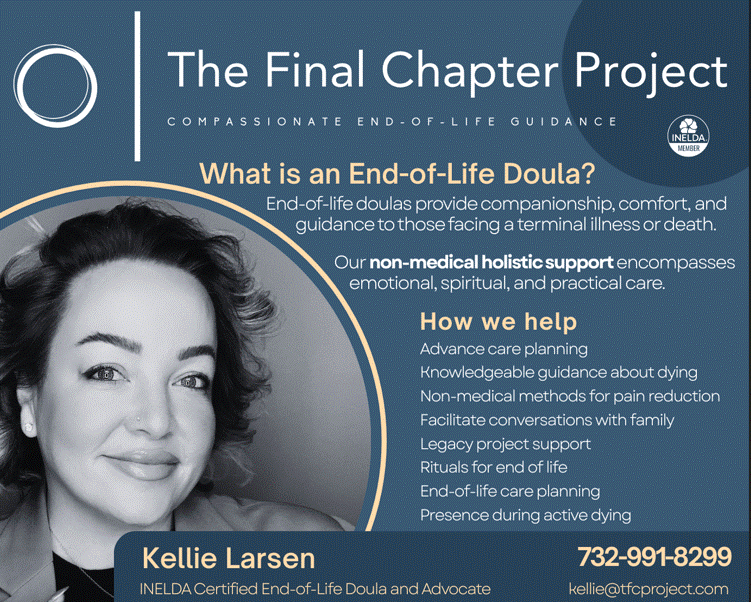
The Final Chapter Project: Kellie Larsen End of Life Doula and Advocate
Non-Medical , , ,Kellie is a compassionate EndofLife Doula dedicated to helping individuals and families navigate the emotional, practical, and spiritual aspects of lifes final chapter. Through The Final Chapter Project, she provides calm, grounded support that honors each persons unique story, values, and wishes. Kellies work centers on creating a peaceful, meaningful experience for both the individual and their loved ones, offering guidance that reduces fear, increases clarity, and brings comfort during one of lifes most vulnerable transitions.Kellies approach blends education, emotional support, legacy work, and personalized planning, ensuring families feel informed, empowered, and never alone. She assists with advance care planning, vigil support, family communication, and the creation of rituals or memorykeeping projects that reflect what matters most to the individual. Her presence is steady and reassuring, helping families navigate uncertainty with dignity and compassion. Kellie believes deeply in the importance of being seen, heard, and supported at the end of life, and she brings that philosophy into every interaction.Serving individuals and families throughout New Jersey, Kellie offers a safe, nonjudgmental space where questions are welcomed, emotions are honored, and each persons journey is respected. Whether providing guidance long before a diagnosis or offering bedside support in the final days, she helps families move through this time with greater peace, connection, and understanding. Learn more about her mission and services at The Final Chapter Project