Rethinking Acne Care: Beyond Over-the-Counter Solutions
Sunshine State Dermatology and Skin Cancer Center
For more information about the author, click to view their website: Sunshine State Dermatology and Skin Cancer Center
Mar 04, 2026
Florida - Sarasota, Bradenton & Charlotte Counties

Email US
Click to Email Us
Acne affects millions of people and can be as frustrating emotionally as it is physically. Over‑the‑counter (OTC) products help many, but moderate to severe acne often needs more than store‑shelf solutions. This guide explains why seeing a dermatologist matters, which prescription medicines and office procedures work best, and how a personalized plan improves long‑term skin health. Read on to recognize when to seek care and what to expect from professional treatment.
When should you see a dermatologist for acne?
Knowing when to move from OTC care to professional treatment makes a big difference. Severe acne can show up as painful cysts, deep nodules, or persistent breakouts that don’t clear with home remedies. If your acne is leaving scars, causing pain, or impacting your mood and confidence, it’s time to talk with a dermatologist. Early, appropriate treatment can reduce scarring and improve both skin and well‑being.
Signs your acne likely needs prescription medication
Persistent acne: Breakouts that don’t improve after several weeks or months of OTC use are a common sign you need a different approach.
Cystic acne: Painful, deep cysts usually require stronger, targeted medications to reduce inflammation and protect skin from scarring.
Scarring or emotional impact: If acne is creating visible scars or affecting your mental health, professional treatment can help limit damage and support recovery.
Spotting these signs early gives you the best chance for faster, lasting improvement.
Which prescription acne medications are most effective?
Prescription treatments target acne’s root causes—excess oil, bacteria, inflammation, and clogged pores—so they often outperform OTC options for moderate to severe cases. Common prescription categories include topical retinoids, oral antibiotics, hormonal treatments, and oral isotretinoin.
Topical retinoids: how they help
Topical retinoids like tretinoin and adapalene speed up skin cell turnover and keep pores clear. They reduce inflammation and help improve skin texture, which can lower the chance of scarring over time. Many patients see gradual improvement within a few weeks, but following your dermatologist’s directions helps manage common side effects like dryness or irritation.
How do oral medications treat severe or hormonal acne?
When acne is widespread, deep, or linked to hormonal changes, oral medicines can be very effective because they work throughout the body. They’re usually prescribed when topical treatments aren’t enough.
Benefits and risks of isotretinoin and hormonal therapies
Isotretinoin is a powerful oral retinoid reserved for severe nodulocystic acne or cases resistant to other therapies. It reduces oil production, inflammation, and pore blockage, often producing dramatic results—but it requires careful monitoring because of side effects like extreme dryness, increased sun sensitivity, and serious risks including birth defects if pregnancy occurs during treatment. Hormonal options—such as combined oral contraceptives or spironolactone—can be very helpful for people whose acne is tied to hormone fluctuations. Both approaches are effective when supervised by a dermatologist who will weigh benefits, risks, and monitoring needs.
Which in‑office procedures improve acne and scarring?
Office procedures can accelerate results and address scarring that topical or oral meds can’t fully fix. These treatments are chosen based on your skin type, scar pattern, and treatment goals.
Chemical peels and lasers: what they do for acne and scars
Chemical peels remove the top skin layers to encourage fresh, smoother skin and can soften atrophic scars. Laser therapies use focused light to reduce inflammation, target acne lesions, and remodel scar tissue for improved texture. When combined with medical therapy, these procedures often deliver clearer skin and a confidence boost.
Research supports the role of in‑office procedures—especially superficial chemical peels—in managing acne scarring.
Acne Scar Management: Isotretinoin & Minimally Invasive Procedures
Early use of isotretinoin to control lesions and inflammation can help prevent some scarring, but many patients still have noticeable scars. Despite advances in drugs and devices, scar treatment remains challenging and can carry risks. Some in‑office, minimally invasive procedures—such as chemical peels, dermabrasion, tissue augmentation, and punch excision—can offer improvement. Superficial chemical peels have been shown to be effective for atrophic scars with relatively few complications.
Management of acne scarring, part II: a comparative review of non-laser-based, minimally invasive approaches, 2012
How does personalized acne care support long‑term skin health?
Effective acne care is tailored to you. A dermatologist evaluates your skin type, acne pattern, medical history, and goals to build a plan that combines medication, procedures, and lifestyle changes. That personalized approach helps control acne over time while minimizing side effects.
Experts consistently recommend individualized treatment plans for managing acne as a chronic condition.
Personalized Acne Care Pathway: Expert Recommendations for Longitudinal Management
Acne is a chronic disease. The Personalised Acne Care Pathway offers practical guidance for ongoing management, helping clinicians choose treatments that match each patient’s needs and goals. This patient‑centered framework aims to improve long‑term control and reduce adverse effects by accounting for individual characteristics and preferences.
The personalised acne care pathway—recommendations to guide longitudinal management from the personalising acne: consensus of experts, J Tan, 2021
Lifestyle and skincare steps that support medical treatment
Diet: Cutting back on high‑glycemic foods and, for some people, dairy, can reduce flare‑ups.
Skincare routine: Stick with non‑comedogenic, gentle products and a consistent regimen to support treatment goals.
Stress management: Practices like mindfulness, yoga, or regular exercise can lower stress‑related flare‑ups and help overall skin health.
When these habits are combined with medical therapy, patients usually get better, longer‑lasting results.
How do you schedule an acne consultation at Sunshine State Dermatology?
Booking a consultation is the first step toward clearer skin. Sunshine State Dermatology and Skin Cancer Center provides comprehensive care—from medical therapies to in‑office procedures—tailored to your needs.
What to expect at your first dermatology appointment
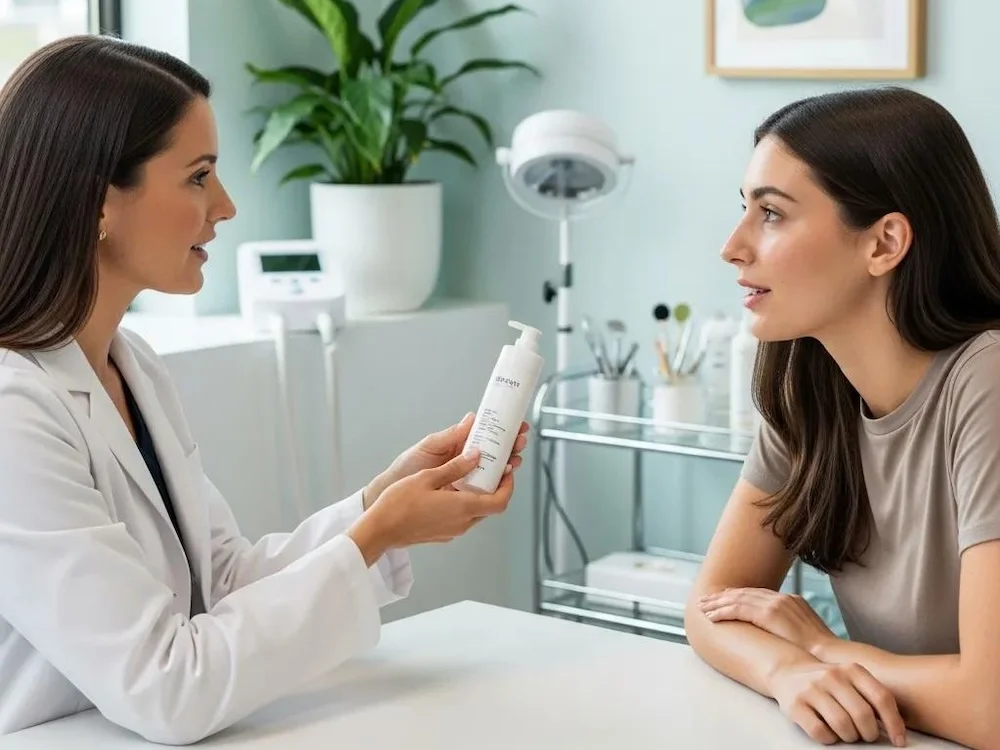
At your initial visit, the dermatologist will examine your skin, review your medical history, and ask about your current skincare routine and treatment goals. From there, they’ll recommend a personalized plan and explain follow‑up timing. Regular visits let your provider track progress and fine‑tune treatments as needed.
Medication Type | How it works | Common examples |
|---|---|---|
Topical Retinoids | Speed cell turnover and prevent clogged pores | Tretinoin, Adapalene |
Oral Antibiotics | Reduce acne‑causing bacteria and inflammation | Doxycycline, Minocycline |
Hormonal Therapies | Adjust hormone effects that trigger breakouts | Combined birth control pills, Spironolactone |
This table summarizes common prescription categories, how they work, and examples you may encounter in treatment planning.
Managing acne well usually requires a mix of medical care, occasional procedures, and a tailored at‑home routine. Recognizing when to seek professional help and understanding your options puts you on the path to clearer, healthier skin.
Frequently Asked Questions
What are the common side effects of prescription acne medications?
Side effects vary by medication. Topical retinoids often cause dryness, redness, and peeling at first. Oral antibiotics can upset the stomach and increase sun sensitivity. Isotretinoin can cause significant dryness, nosebleeds, and mood or lab changes—and it has strict pregnancy‑prevention requirements. Your dermatologist will review expected side effects and how we monitor for safety.
How long does it typically take to see results from acne treatments?
Expect a gradual process: many patients notice improvement within 4 to 12 weeks on prescription medications. Some in‑office treatments can speed visible improvement, but optimal results often need multiple sessions and steady adherence to your plan.
Can lifestyle changes really impact acne treatment outcomes?
Yes. Dietary tweaks, a consistent non‑comedogenic skincare routine, and stress‑reduction practices can all help treatments work better. While lifestyle changes aren’t a cure on their own for moderate to severe acne, they support medical therapy and long‑term skin health.
Are there natural remedies that can complement acne treatment?
Some natural ingredients—like tea tree oil for its antibacterial effects or aloe vera for soothing—can complement care, but they shouldn’t replace prescriptions. Always check with your dermatologist before adding new products so we can avoid interactions or irritation.
How often should I follow up with my dermatologist during treatment?
Follow‑ups are important. We typically see patients every 4 to 8 weeks during the early phase of treatment to evaluate response and side effects. Regular check‑ins help us adjust therapy so you get the best possible outcome.
What should I do if my acne worsens during treatment?
If your acne gets worse, contact your dermatologist. Some treatments cause an initial flare as the skin adjusts, but persistent or severe worsening may mean we need to change the plan. Prompt communication helps us respond quickly and safely.
- To view the original version of this article visit www.sunshinestatederm.com/blog/137-rethinking-acne-care-beyond-over-the-counter-solutions
- Seniors Blue Book was not involved in the creation of this content.
Other Articles You May Like
What to Look for When Choosing an Assisted Living Community
Finding the right support for an aging parent or loved one is one of the most significant decisions a family caregiver can make! For more than 70 years, Westminster Communities of Florida has helped countless families navigate this process and find the right option for their loved one. Our expert team is always here to provide guidance and ensure peace of mind. Weve compiled this guide to help you evaluate assisted living communities and choose a community where your loved one will receive high-quality, comprehensive support while maintaining their dignity, autonomy, and independence. Defining Assisted Living: Independence with a Helping HandAssisted living offers a supportive residential setting designed for older adults who want to maintain their independence but require help with activities of daily living (ADLs). Unlike nursing homes, assisted living communities focus on enhancing autonomy while providing personalized aid.When choosing an assisted living facility, families often balance immediate physical care needs with a desire to preserve their loved ones lifestyle. It is important to remember that most adults transitioning to assisted living remain sharp, active, and eager to participate in life. They may simply need extra support with day-to-day physical tasks or mobility due to managing chronic health conditions. For more on the difference between assisted living and nursing home care, read our article, Assisted Living vs. Nursing Home: What Are the Differences? A high-quality assisted living community usually includes these core services: Assistance With Activities of Daily Living (ADLs): Help with daily personal tasks such as bathing, dressing, grooming, and mobility.Medication Management: Reminding residents to take medication or professionally administering medication to ensure adherence and safety. .Household Support: Maintenance-free living to eliminate upkeep associated with home ownership. Many assisted living communities also offer housekeeping, linen services, and daily meal preparation.24-Hour Support: Trained staff on-site continuously for safety, emergencies, and peace of mind.Assessing Levels of Care for Seniors: The Life Plan Community AdvantageWhen evaluating assisted living communities, look beyond immediate needs. Your loved ones needs may change over time, and moving repeatedly to different care environments can be stressful for older adults and caregivers alike. This is where choosing a Life Plan Community (also known as a Continuing Care Retirement Community or CCRC) makes a vital difference. A Life Plan Community provides multiple levels of care for seniors on a single, unified campus: Independent Living: Active, maintenance-free apartment or single-family home living within a community for independent seniors.Assisted Living: Specialized personal care support tailored to physical needs while honoring personal independence.Memory Care: Dedicated environment and specialized programming for individuals living with Alzheimers disease or other forms of dementia or cognitive decline.Skilled Nursing: long-term care, staffed 24/7 by skilled, licensed medical professionals Senior Rehabilitation: short-term physical, occupational, and speech therapy to help seniors regain strength, mobility, and confidence. By choosing a Life Plan Community, families secure access to the care needed today while guaranteeing a smooth transition to additional levels of care on the same familiar campus if future needs evolve.The Value of a Full Continuum of CareA seamless continuum of care ensures that if a resident experiences an acute health change, such as surgery or a fall, they receive high-quality senior rehabilitation or skilled nursing care right where they live, without the disruption of relocating to an outside facility.Research consistently indicates that receiving integrated, on-site healthcare within senior living settings leads to improved health outcomes. According to findings published by the National Institute on Aging (NIA), coordinated care management and proximity to medical therapy reduce hospital readmission rates, support faster physical recovery, and lower overall caregiver stress.Healthcare Awards and AccreditationWhen evaluating the strength of an assisted living communitys health services, look for third-party accreditations. For example, Westminster Communities of Florida provides a spectrum of on-site care, from skilled nursing care to specialized physical, occupational, and speech rehabilitation therapy.Joint Commission Gold Seals for National Quality ApprovalGovernors Gold Seal Awards for Excellence in Long-Term Care5-Star Overall Ratings from the U.S. Centers for Medicare & Medicaid Services (CMS)U.S. News & World Report Best Nursing Homes honorsUnderstanding Costs: Tiered Care vs. All-Inclusive PricingFinancial clarity is critical when evaluating senior living contracts. As detailed in our previous article on the cost of assisted living in Florida, communities generally operate under two primary pricing models:Pricing ModelHow It WorksKey BenefitsTiered (Fee-for-Service) CareResidents pay a base rate for housing, with additional fees added as care needs increase (measured in tiers or levels).Lower initial monthly base fee for residents who require minimal personal physical assistance at move-in.All-Inclusive PricingA comprehensive monthly rate covers residence, amenities, dining, and extensive personal care support without escalating fees as care needs change.Predictability, budget security, and freedom from unexpected fee spikes as physical care needs evolve.While an all-inclusive model provides families with predictable monthly budgeting and peace of mind, a tiered model offers financial flexibility by ensuring residents only pay for the specific care services they actually use.Prioritizing Social Engagement and Quality of LifeSocial isolation poses significant health risks for aging adults. The U.S. Surgeon Generals Advisory on Social Connection reports that chronic loneliness increases the risk of heart disease by 29%, stroke by 32%, and dementia by 50% in older adults, making social connection a medical necessity.Assisted living communities combat social isolation by integrating daily opportunities for social, physical, and intellectual connection.Checklist: What to Ask Assisted Living CommunitiesUse this comprehensive checklist of questions to ask when looking for assisted living in Florida.1. Matching Care Levels & Future Needs[ ] Does the campus offer a full continuum of care (Independent Living, Assisted Living, Memory Care, Skilled Nursing)?[ ] What is the process for transitioning to a higher level of care if physical needs increase?[ ] Are short-term senior rehabilitation services available on-site?2. Staff Training & Qualifications[ ] What specialized certifications do direct care staff and nurses hold?[ ] How does the team handle emergencies or sudden changes in health status?[ ] Is staff available on-site 24/7, and what is the staff-to-resident ratio during day and night shifts?3. Amenities & Services Included[ ] What maintenance, housekeeping, and transportation services are included?[ ] Are dynamic dining options provided that accommodate specific nutritional guidelines?[ ] Does the community feature accessible outdoor gardens, fitness facilities, and creative spaces?4. Costs, Contracts & Pricing Structure[ ] Is the fee structure tiered or all-inclusive?[ ] What specific services trigger additional out-of-pocket expenses?[ ] Are refund policies and contract terms clearly defined in writing?5. Social Engagement & Quality of Life[ ] Does the social calendar offer diverse physical, intellectual, and spiritual programs?[ ] How are residents empowered to maintain their independence, daily schedules, and personal hobbies?[ ] How does the community help new residents connect with peers during their transition?Finding Local Support Across FloridaLocation plays a crucial role when staying close to family, trusted medical providers, and familiar neighborhoods. If you are exploring regional options across Florida, consider Westminster Communities outstanding residences in these areas:Central Florida: Search options for assisted living Orlando FL, including Westminster Towers, Westminster Winter Park and Westminster Baldwin Park. Plus explore historic neighborhood options for assisted living Lakeland FL, including Westminster Lakeland.Gulf Coast & Suncoast: Explore premier coastal environments offering assisted living St Petersburg FL, including Westminster Palms, Westminster Shores, and Westminster Suncoast, or community offerings in assisted living Bradenton, including Westminster Bradenton.North & East Coast Florida: Discover historic coastal living via assisted living Jacksonville and assisted living St Augustine, including Westminster Woods on Julington Creek and Westminster St. Augustine, or capital city care options at assisted living Tallahassee, including Westminster Oaks.Selecting the right community provides your loved one with an environment where they can thrive, combining physical support with independence, safety, and a vibrant social life.
Boosting Senior Cognitive Health Through Art, Culture, and Community
When thinking about ways to maintain cognitive health for seniors , solo brain games and puzzles often come to mind. While individual mental exercises certainly have value, research increasingly shows that engaging in creative arts, especially within a supportive group setting, delivers a more dynamic and comprehensive workout for the brain.Whether it is painting side-by-side in a studio, singing in a choral group, or collaborating on a woodworking project, artistic pursuits do more than fill an afternoon. They actively stimulate neural pathways, foster deep social connections, and support long-term cognitive resilience.At Westminster Communities of Florida, were dedicated to helping residents maintain cognitive wellness so they can continue to lead happier, healthier lives. Our Life Plan Communities provide a wide range of art programs for seniors to help residents stay engaged, foster social connections, and reap the proven benefits of creativity.The Science of Creativity and Brain HealthThe human brain possesses a remarkable capacity for neuroplasticitythe ability to form new neural connections and adapt over time. A 2025 study published in Nature found that creative experiences are linked to delayed brain aging and can enhance connectivity in regions of the brain associated with aging. Unlike routine daily tasks, creative expression engages cognitive function in several ways:Multisensory Neural Activation: Mediums like painting, ceramics, and sculpture demand spatial reasoning, planning, and fine motor coordination, engaging both the visual and motor cortex.Dual-Hemisphere Integration: Performing arts, music, and writing activate auditory processing, language recall, and emotional recognition across both sides of the brain.Stress Reduction and Cognitive Focus: Engaging in creative work lowers cortisol levels. Reducing stress directly supports memory retention, focus, and overall mental clarity.Reclaiming Time for Lifelong PassionsFully pursuing creative interests requires two essential components: dedicated time and accessible space.For many older adults living in traditional homes, daily household upkeep, including lawn care, roof maintenance, and routine repairs, consumes energy that could otherwise be spent pursuing personal growth.Life Plan Communities, such as Westminster Communities, address this by removing the burdens of home maintenance. With property upkeep fully managed, seniors can free up time to participate in workshops, explore new artistic mediums, or join group projects with neighbors.Creative Expression in Action: Community HighlightsThe multiple art programs offered at Westminster Communities of Florida locations illustrate how dedicating resources and providing cognitive stimulation activities for older adults can provide a greater sense of fulfillment and purpose to daily life.1. Bringing Regional Arts onto CampusProviding direct access to professional artists keeps creative programming dynamic. Westminster Winter Park served as a host site for the Winter Park Paint Out, held in partnership with the local Albin Polasek Museum & Sculpture Gardens. During the event, fine artist Cory Wright led a live outdoor painting demonstration along Lake Berry titled The Positive Aspects of Negative Space in Painting. Observing a professional artists process in real time provided residents with fresh insights into visual composition, lighting, and perspective.2. Statewide Resident ShowcasesExhibiting resident work provides a sense of goal-oriented accomplishment. The annual Westminster Communities Foundation Resident Art Show highlights this creative spirit on a broad scale, featuring more than 300 works submitted by residents and team members of Westminster Communities of Florida. The exhibition spans diverse disciplines, including fine woodworking, pottery, watercolors, acrylics, and mixed media. Watch this video to see the wide array of creative talent featured in the showcase.https://youtu.be/p2blpith9YY3. Purpose-Built Cultural InfrastructureAs part of our commitment to improving cognitive health for seniors, two new Cultural Enrichment Centers are currently under construction at Westminster Winter Park in Winter Park, FL, Westminster St. Augustine in St. Augustine, FL, and Westminster Woods on Julington Creek in St. Johns, FL. Heres a look at the exciting cultural infrastructure were building:Community LocationVenue Seating & Key FeaturesOperational HighlightsRelated ArticleWestminster Winter Park (Winter Park, FL)375 Seats High-caliber performance acoustics Advanced audiovisual technology Expansive reception hall & lakeview terraceDesigned for resident showcases, performing arts, and intergenerational cultural partnerships with local schools and arts organizations.Groundbreaking: Westminster Winter Park Senior Living Cultural Enrichment Center Elevates Arts & Lifelong LearningWestminster St. Augustine (St. Augustine, FL)300+ Seats Cutting-edge stage lighting Specialized acoustic designBuilt to host fine art shows, theatrical performances, concerts, and educational collaborations with Flagler College and UNF.Westminster St. Augustine Breaks Ground on Brand-New Cultural Enrichment CenterWestminster Woods on Julington Creek(St. Johns, FL)The Woodlands Expansion Integrated Cultural Enrichment Center Waterfront bistro & fitness centerPart of a major campus expansion adding 42 waterfront independent living residences along Julington Creek, dedicated to arts, culture, and lifelong learning.Construction Update: New Jacksonville Waterfront Senior Living Comes to Life4. Personal Perspectives from Resident ArtistsThe real value of these opportunities lies in the lived experience of the residents who participatemany of whom bring decades of professional mastery to our community studios.Among them is Beatrice Athanas, a resident at Westminster Winter Park and an accomplished representational painter. Born in Germany and trained in Hamburg, Beatrice has built a distinguished 30-year career bringing her vibrant oil and acrylic landscapes to juried venues across Florida, earning honors at prestigious events like the Winter Park Art Shows, ArtiGras, and Disneys Masters. Her works are held in notable collections, including Walt Disney World, the Orlando International Airport, and the Copelouzos Family Art Museum in Athens, Greece.For professional artists like Beatrice, as well as neighbors discovering their creative side for the first time, community living provides the ideal backdrop to create, teach, and stay connected.I have witnessed and felt how creativity keeps us vibrant, whole, and productive. A song can lift a weary spirit, a poem can spark a lively conversation, and a painting can open profound doors to memory. Beatrice Athanas, Resident & Professional ArtistTo hear more from Beatrice on how she found more time to dedicate to her passions at Westminster Winter Park, watch the video below.https://youtube.com/shorts/4aiAZe-ENXoSupporting Cognitive Wellness Through the ArtsMaintaining cognitive health is about more than routine mental drills, it is about cultivating curiosity, building strong social networks, and continuously discovering new interests. By removing the demands of home maintenance and investing in robust artistic environments, older adults are empowered to protect their brain health while fully enjoying the time to dedicate to their passions and creative pursuits.Find your ideal active lifestyle and explore artistic opportunities at one of our communities today!
What If Your Senior Client Owns a Luxury Home?
For professionals serving seniors, a home can sometimes be the biggest piece of the transition puzzle.But what happens when that home isn't an ordinary property?What if your client owns a $1 million, $2 million or multimillion-dollar luxury or waterfront home?A senior may be downsizing, transitioning to independent or assisted living, moving closer to family, settling an estate, or simply deciding that maintaining a large property no longer makes sense.For senior living professionals, elder law attorneys, estate planners, financial advisors, care managers, move managers and other professionals helping with that transition, there is an important option worth knowing about:The homeowner may be able to sell a luxury property privately and directly, without first putting it on the public market.Why Can Selling a Senior's Luxury Home Be Different?Luxury and waterfront properties can present challenges that aren't always present in a typical home sale.The property may be a waterfront estate on Casey Key, a residence on Bird Key, a condominium overlooking Sarasota Bay, or a distinctive home on Siesta Key or Longboat Key.The owner may have lived there for decades.The home may contain valuable possessions, artwork and deeply personal belongings. It may need updating. Adult children may live hundreds of miles away. And the family may already be coordinating a significant life transition.For some homeowners, maximum exposure to the real estate market is the priority. In that situation, publicly marketing the property may make sense.But other seniors have very different priorities:Privacy. Simplicity. Certainty. Flexibility.They may not want strangers repeatedly touring their home.They may not want photographs of their home's interior and possessions published online.They may not want to renovate, stage or prepare the property for the luxury market.And they may not want their move dependent upon months of marketing, inspections and a buyer obtaining financing.For those homeowners, a private direct sale may be another option worth considering.Can a Senior Sell a Luxury Home Without Publicly Listing It?Yes.A luxury homeowner can explore a direct sale without first broadly marketing the property.Private Luxury Home Sales considers select luxury, waterfront and distinctive properties throughout Sarasota and Florida's Gulf Coast for direct purchase. A homeowner can request a confidential property review before deciding whether a private sale or broader market exposure better fits their objectives.This can allow an owner to explore an offer without first going through the traditional process of preparing and publicly marketing the property.Why Might Privacy Matter to an Older Luxury Homeowner?For some affluent seniors, privacy isn't simply a preference.It can be an important part of the selling decision.Imagine a homeowner who has spent 25 or 30 years in the same waterfront residence.Inside may be family photographs, artwork, collections, jewelry, antiques and other personal possessions.A traditional luxury marketing campaign can involve professional photography, video, aerial photography, online advertising and numerous people entering the property.Some homeowners are completely comfortable with that exposure.Others aren't.A private direct sale provides another route. When Private Luxury Home Sales evaluates a property for potential direct purchase, broad public marketing isn't necessary merely to consider the home. For a senior who values discretion, that difference can matter.Does the Luxury Home Need to Be Renovated First?Not necessarily.One of the biggest misconceptions surrounding high-value real estate is that every luxury property must be extensively updated before it can be sold.A longtime owner may have an exceptional property in an exceptional location while the kitchen, bathrooms, flooring or other features are dated.Preparing that property for the retail luxury market could potentially involve substantial renovations, contractors, staging and months of work.A direct buyer evaluates the property differently.Private Luxury Home Sales considers properties as-is, including residences requiring updates or significant renovation. That can be particularly relevant when an older homeowner or the homeowner's family doesn't want to oversee a major renovation before selling.Which Senior Clients Might Benefit From Knowing About This Option?You don't need to determine whether a private sale is right for your client.You simply need to recognize situations where having another option could be valuable.Consider the homeowner who is:Downsizing from a large luxury residence. Transitioning into independent or assisted living. Moving closer to adult children. Managing a home after the death of a spouse. Selling an inherited luxury or waterfront property. Handling a property through an estate or trust. Living out of state while responsible for a parent's Florida property. Facing substantial deferred maintenance or renovation. Concerned about privacy and public exposure. Looking for greater certainty about the timing of the sale. Those are situations where understanding both the public-market and private-sale alternatives can help a family make a more informed decision.What's the Most Important Question to Ask Your Client?There is one question professionals can ask that may reveal a great deal:What matters most to you when the home is sold?Listen carefully to the answer.Is it achieving maximum exposure to the marketplace?Maintaining privacy?Avoiding repairs?Controlling the closing date?Avoiding repeated showings?Reducing uncertainty?Making the transition as simple as possible?There isn't one correct answer.The homeowner's priorities should help determine which selling strategy deserves consideration.Private Sale vs. Traditional Luxury ListingA private direct sale and a traditional luxury listing serve different objectives.Traditional public marketing provides broader exposure to potential buyers and may create greater price discovery and competition.A private direct sale can emphasize privacy, simplicity, convenience, an as-is transaction and greater certainty about the process.Neither approach should automatically be assumed to be right for every senior homeowner.The value to your client comes from understanding that there is more than one option.One More Resource for Your Professional ToolboxProfessionals serving seniors don't need to become real estate experts.But they are frequently the first people to recognize a problem.A senior living advisor may hear:Mom is ready to move, but we don't know what to do with the house.An elder law attorney may be helping a family deal with an estate containing a multimillion-dollar residence.A move manager may discover that preparing a 4,000-square-foot waterfront home for the market is becoming overwhelming.A financial advisor may have a client whose largest single asset is a luxury property.Knowing that a confidential direct-sale option exists gives you another resource to share with the family.Private Luxury Home Sales specializes in select luxury, waterfront and distinctive properties throughout Sarasota and Florida's Gulf Coast. Its Seniors Blue Book profile specifically includes waterfront estates, Gulf and bayfront homes, boating properties, inherited luxury homes, second homes and properties requiring substantial updating. When You Encounter the Right ClientIf you're working with a senior or family who owns a luxury or waterfront property, consider asking one additional question:Would they like to understand their private-sale option before deciding how to sell the property?There is no obligation to accept an offer simply because the property is evaluated.Sometimes the homeowner will determine that traditional market exposure is the better choice.Sometimes privacy, simplicity and certainty will matter more.Either way, knowing the options before making the decision is valuable.Private Luxury Home SalesSarasota & Florida Gulf CoastPrivate Direct As-Is Close on Your Timeline For more information, please contact Jeff Nemeth at 941-202-6957
Local Services By This Author

Sunshine State Dermatology and Skin Cancer Center
Medical Practices , , ,Sunshine State Dermatology and Skin Cancer Center is a physician-owned and operated dermatology practice dedicated to providing comprehensive, compassionate skin care to patients throughout Southwest Florida. Led by double board-certified dermatologist and Mohs Micrographic Surgeon Dr. Adam S. Greenberg, the practice blends advanced medical expertise with a patient-first philosophy, ensuring personalized care for every individual.Founded in 2001, Sunshine State Dermatology has built a strong reputation for excellence in medical, surgical, and cosmetic dermatology. The practice is supported by a highly trained team of board-certified providers, advanced practice clinicians, and licensed estheticians who work collaboratively to help patients achieve and maintain healthy, beautiful skin at every stage of life.Services OfferedMedical DermatologyThe practice provides comprehensive evaluation, diagnosis, and treatment of a wide range of skin conditions for patients of all ages, including:Full-body skin cancer screenings and early detectionDiagnosis and treatment of skin cancers, including basal cell carcinoma, squamous cell carcinoma, and melanomaManagement of chronic skin conditions such as psoriasis, eczema, acne, rosacea, and dermatitisPediatric dermatology servicesMole evaluation and monitoringWart treatments and care for common dermatologic concernsPhotodynamic therapy (PDT) for actinic keratoses and sun-damaged skinSurgical DermatologySunshine State Dermatology specializes in advanced surgical techniques with a focus on precision, safety, and optimal outcomes, including:Mohs Micrographic Surgery for the highest cure rates in skin cancer treatmentSurgical excisions and skin biopsiesCyst and lesion removalCosmetic DermatologyThe practice offers a full suite of cosmetic treatments designed to enhance appearance while supporting long-term skin health, such as:Neurotoxin injections, including Botox and DysportDermal fillers to restore volume and smooth wrinklesLaser and light-based treatmentsMicroneedling and chemical peelsHydraFacial treatments and other skin-rejuvenation servicesEsthetic ServicesLicensed estheticians provide customized skincare treatments that complement medical and cosmetic care, including:Professional facialsDermaplaningMicroneedlingChemical peelsWaxing and tinting servicesTwo Convenient LocationsSunshine State Dermatology and Skin Cancer Center proudly serves patients from two Florida locations:12497 Tamiami Trail South, Unit 1, North Port FL 342871415 East Venice Avenue, Venice FL 34292Both locations are committed to delivering high-quality dermatologic care in a welcoming, family-oriented environment, with a focus on integrity, transparency, and exceptional patient outcomes.
Sunshine State Dermatology and Skin Cancer Center
Skin Protection , , ,Sunshine State Dermatology and Skin Cancer Center is a physician-owned and operated dermatology practice dedicated to providing comprehensive, compassionate skin care to patients throughout Southwest Florida. Led by double board-certified dermatologist and Mohs Micrographic Surgeon Dr. Adam S. Greenberg, the practice blends advanced medical expertise with a patient-first philosophy, ensuring personalized care for every individual.Founded in 2001, Sunshine State Dermatology has built a strong reputation for excellence in medical, surgical, and cosmetic dermatology. The practice is supported by a highly trained team of board-certified providers, advanced practice clinicians, and licensed estheticians who work collaboratively to help patients achieve and maintain healthy, beautiful skin at every stage of life.Services OfferedMedical DermatologyThe practice provides comprehensive evaluation, diagnosis, and treatment of a wide range of skin conditions for patients of all ages, including:Full-body skin cancer screenings and early detectionDiagnosis and treatment of skin cancers, including basal cell carcinoma, squamous cell carcinoma, and melanomaManagement of chronic skin conditions such as psoriasis, eczema, acne, rosacea, and dermatitisPediatric dermatology servicesMole evaluation and monitoringWart treatments and care for common dermatologic concernsPhotodynamic therapy (PDT) for actinic keratoses and sun-damaged skinSurgical DermatologySunshine State Dermatology specializes in advanced surgical techniques with a focus on precision, safety, and optimal outcomes, including:Mohs Micrographic Surgery for the highest cure rates in skin cancer treatmentSurgical excisions and skin biopsiesCyst and lesion removalCosmetic DermatologyThe practice offers a full suite of cosmetic treatments designed to enhance appearance while supporting long-term skin health, such as:Neurotoxin injections, including Botox and DysportDermal fillers to restore volume and smooth wrinklesLaser and light-based treatmentsMicroneedling and chemical peelsHydraFacial treatments and other skin-rejuvenation servicesEsthetic ServicesLicensed estheticians provide customized skincare treatments that complement medical and cosmetic care, including:Professional facialsDermaplaningMicroneedlingChemical peelsWaxing and tinting servicesTwo Convenient LocationsSunshine State Dermatology and Skin Cancer Center proudly serves patients from two Florida locations:12497 Tamiami Trail South, Unit 1, North Port FL 342871415 East Venice Avenue, Venice FL 34292Both locations are committed to delivering high-quality dermatologic care in a welcoming, family-oriented environment, with a focus on integrity, transparency, and exceptional patient outcomes.
Sunshine State Dermatology and Skin Cancer Center
Dermatology , , ,Sunshine State Dermatology and Skin Cancer Center is a physician-owned and operated dermatology practice dedicated to providing comprehensive, compassionate skin care to patients throughout Southwest Florida. Led by double board-certified dermatologist and Mohs Micrographic Surgeon Dr. Adam S. Greenberg, the practice blends advanced medical expertise with a patient-first philosophy, ensuring personalized care for every individual.Founded in 2001, Sunshine State Dermatology has built a strong reputation for excellence in medical, surgical, and cosmetic dermatology. The practice is supported by a highly trained team of board-certified providers, advanced practice clinicians, and licensed estheticians who work collaboratively to help patients achieve and maintain healthy, beautiful skin at every stage of life.Services OfferedMedical DermatologyThe practice provides comprehensive evaluation, diagnosis, and treatment of a wide range of skin conditions for patients of all ages, including:Full-body skin cancer screenings and early detectionDiagnosis and treatment of skin cancers, including basal cell carcinoma, squamous cell carcinoma, and melanomaManagement of chronic skin conditions such as psoriasis, eczema, acne, rosacea, and dermatitisPediatric dermatology servicesMole evaluation and monitoringWart treatments and care for common dermatologic concernsPhotodynamic therapy (PDT) for actinic keratoses and sun-damaged skinSurgical DermatologySunshine State Dermatology specializes in advanced surgical techniques with a focus on precision, safety, and optimal outcomes, including:Mohs Micrographic Surgery for the highest cure rates in skin cancer treatmentSurgical excisions and skin biopsiesCyst and lesion removalCosmetic DermatologyThe practice offers a full suite of cosmetic treatments designed to enhance appearance while supporting long-term skin health, such as:Neurotoxin injections, including Botox and DysportDermal fillers to restore volume and smooth wrinklesLaser and light-based treatmentsMicroneedling and chemical peelsHydraFacial treatments and other skin-rejuvenation servicesEsthetic ServicesLicensed estheticians provide customized skincare treatments that complement medical and cosmetic care, including:Professional facialsDermaplaningMicroneedlingChemical peelsWaxing and tinting servicesTwo Convenient LocationsSunshine State Dermatology and Skin Cancer Center proudly serves patients from two Florida locations:12497 Tamiami Trail South, Unit 1, North Port FL 342871415 East Venice Avenue, Venice FL 34292Both locations are committed to delivering high-quality dermatologic care in a welcoming, family-oriented environment, with a focus on integrity, transparency, and exceptional patient outcomes.