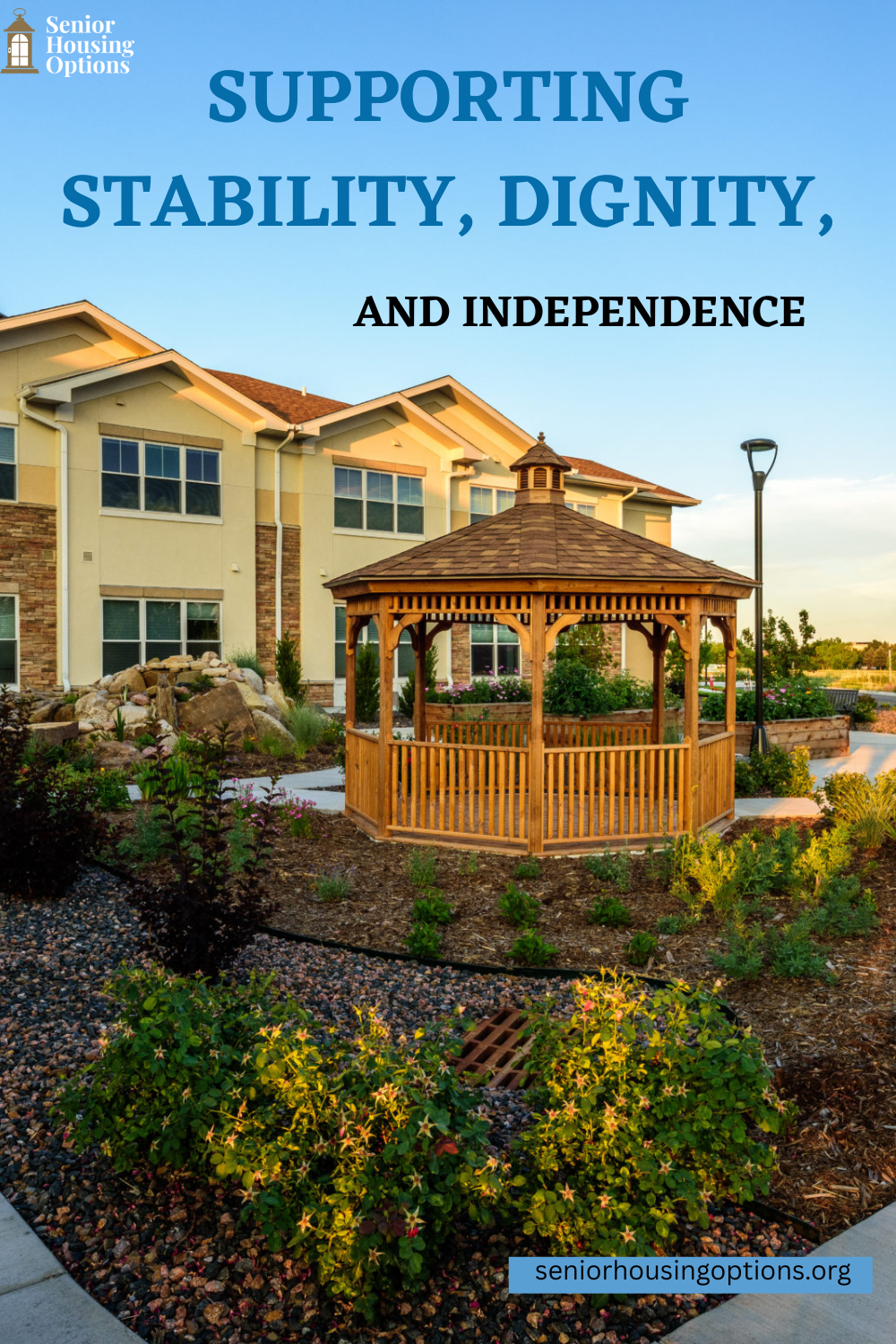
Supporting Stability, Dignity, and Independence
The Apartments at Cinnamon Park
For more information about the author, click to view their website: Cinnamon Park
Jan 02, 2026
Colorado - Northern Colorado


Supporting Stability, Dignity, and Independence
For many seniors in Longmont and across Northern Colorado, the need for assisted living is clear—but affordability is often the greatest barrier. Fixed incomes, rising healthcare costs, and limited housing availability can make it difficult for older adults to find supportive living options that fit both their needs and their budget.
Cinnamon Park offers affordable, subsidized assisted living, providing seniors with access to personal care, safety, and community without sacrificing financial stability. By combining supportive services with income-based affordability, Cinnamon Park helps older adults remain secure, independent, and connected within the Longmont community.
Why Affordable Assisted Living Matters
Affordable senior housing is more than a financial issue—it is a quality-of-life issue. Without access to subsidized options, seniors may delay needed care, rely heavily on family caregivers, or face unsafe living conditions.
Affordable assisted living helps seniors by:
-
Providing predictable, manageable housing costs
-
Reducing stress related to finances
-
Allowing earlier access to supportive services
-
Preventing unnecessary hospitalizations or crises
In communities like Longmont, where housing costs continue to rise, subsidized assisted living plays a critical role in supporting aging residents.
What Affordable Assisted Living Includes
Affordable or subsidized assisted living offers many of the same core services as traditional assisted living, while using income-based programs or subsidies to make care accessible.
Services often include:
-
Assistance with bathing, dressing, and grooming
-
Medication management
-
Daily meals and nutrition support
-
Housekeeping and laundry
-
24-hour staff availability
-
Social and wellness activities
At Cinnamon Park, affordability does not mean compromising dignity, safety, or respect.
A Community That Supports Independence
Assisted living should enhance independence, not limit it. Cinnamon Park emphasizes resident choice, encouraging seniors to maintain routines, make decisions about their day, and participate in community life at their own pace.
Trini Lopez shares the importance of this approach:
“Affordable housing should still feel like home. Our residents deserve respect, comfort, and the ability to live with independence and dignity.”
This philosophy ensures that residents are supported—not defined—by their need for assistance.
Stability Through Predictable Housing and Care
One of the greatest challenges for seniors on fixed incomes is uncertainty. Sudden rent increases or unexpected care costs can be destabilizing. Subsidized assisted living helps reduce this risk by offering more predictable expenses and structured support.
This stability allows residents to:
-
Budget with confidence
-
Focus on health and well-being
-
Remain in one community longer
-
Avoid disruptive housing moves
For many Longmont seniors, this consistency is essential to emotional and physical health.
Social Connection Without Financial Pressure
Social isolation is a growing concern among older adults, particularly those living alone or on limited incomes. Affordable assisted living communities provide built-in opportunities for connection, engagement, and companionship.
Residents benefit from:
-
Shared meals and common spaces
-
Group activities and events
-
Peer relationships
-
Daily interaction with supportive staff
These connections help reduce loneliness and support overall mental well-being.
Supporting Families and Caregivers
Affordable assisted living also supports families who may be struggling to provide care while balancing work and financial responsibilities. Knowing a loved one is safe, supported, and financially stable brings peace of mind.
Families often appreciate:
-
Reduced caregiving burden
-
Clear communication with staff
-
Confidence that care needs are being met
-
Financial transparency
This partnership allows families to focus on relationships rather than constant caregiving stress.
The Importance of Location in Affordable Senior Housing
Remaining close to familiar neighborhoods, healthcare providers, and family members is especially important for seniors transitioning into assisted living. Located in Longmont, Cinnamon Park allows residents to stay connected to the community they know.
Proximity to local services supports:
-
Continuity of medical care
-
Family visitation
-
Emotional comfort during transitions
This sense of place helps seniors adjust more easily to assisted living.
When Is Affordable Assisted Living the Right Choice?
Affordable assisted living may be appropriate when:
-
Daily activities become difficult to manage alone
-
Safety concerns arise at home
-
Income limitations restrict housing options
-
Family caregivers need additional support
-
Seniors want stability with built-in care
Early exploration of affordable options often leads to smoother transitions and better outcomes.
Finding Trusted Housing Information Through Seniors Blue Book
Navigating subsidized senior housing options can be confusing. Seniors Blue Book serves as a trusted, neutral resource for families exploring affordable assisted living in Longmont and Northern Colorado.
By visiting the Seniors Blue Book listing for Cinnamon Park, families can:
-
Learn about affordable assisted living options
-
Understand eligibility and services
-
Make informed housing decisions with confidence
This resource helps families identify supportive solutions without unnecessary stress.
Frequently Asked Questions
What makes assisted living “affordable” or “subsidized”?
Affordable assisted living often uses income-based programs or subsidies to reduce costs.
Does affordable assisted living still provide personal care?
Yes. Residents receive assistance with daily activities and medication management.
Are residents able to remain long-term?
Many affordable communities support long-term residency when needs are met.
Is there a waiting list for subsidized housing?
Availability varies; early inquiry is encouraged.
Can families stay involved in care?
Yes. Family involvement and communication are encouraged.
Supporting Aging with Security and Dignity in Longmont
Affordable assisted living provides more than housing—it offers stability, safety, and peace of mind. With subsidized support and a community-centered approach, Cinnamon Park helps seniors in Longmont live with confidence and dignity.
Families seeking affordable senior housing are encouraged to explore the Seniors Blue Book listing for Cinnamon Park and learn how supportive living can be both accessible and enriching.
Other Articles You May Like
Top 8 Affordable Subsidized Housing in Boulder, CO
Boulder is a wonderful place to grow older. It has mountain views, walkable neighborhoods, strong health care, and a community that cares about its seniors. It is also one of the most expensive housing markets in Colorado. For older adults on a fixed income, and for the families helping them plan, a rent increase can turn a comfortable retirement into a constant worry. That is where affordable and subsidized housing comes in. These communities keep rent within reach for people with limited incomes, and many add services that make daily life easier. The challenge is knowing where to look, who qualifies, and how the waitlists work. This guide walks through eight Boulder options, most of them run by Boulder Housing Partners, so you can compare them side by side and take the next step with confidence. What Is Affordable Subsidized Senior Housing? Affordable subsidized housing is rental housing with rents set below market rate, usually with help from federal, state, or local funding. Instead of paying whatever the market demands, residents pay a rent that is tied to their income or held to a capped level. In Boulder, the local public housing authority, Boulder Housing Partners (BHP), owns and manages many of these communities. BHP groups its senior apartments into programs, and the program determines how rent is calculated: Deeply Affordable communities: rent is generally around 30 percent of the residents income. Affordable communities: rent is set as a share of income within a range, or at a level that stays below market rates. Housing Choice Vouchers: rental assistance that helps eligible households pay rent in participating housing. Who It Is For These communities are designed for older adults, typically age 55 or older or age 62 or older depending on the property, who live independently and meet income limits. Some properties also welcome people with disabilities. Income limits are based on a percentage of Area Median Income and change from year to year, so always confirm the current numbers with BHP before you apply. Important to know: these are independent living apartments. They are not assisted living or memory care. Residents live on their own, with on-site resident service coordinators at several properties to help connect them with local resources. The 8 Affordable Subsidized Housing Options in Boulder 1. Canyon Pointe (Boulder Housing Partners) Phone: 303-449-0062 Canyon Pointe is a senior community in central Boulder with 82 apartments for adults age 62 and older. It is part of BHPs Deeply Affordable program, which means residents pay approximately 30 percent of their income toward rent. That predictable structure is a big relief for people whose income is limited or fixed. The community is close to downtown Boulder and has a resident service coordinator who can help with connections to local resources. Applicants join a waitlist, and the waitlist opens only for short windows when apartments are expected to become available. BHP has opened Canyon Pointe waitlists several times, including in May 2025, so it is worth checking for the next opening. 2. High Mar (Boulder Housing Partners) Phone: 303-449-0062 High Mar was built on the site of the former High Mar Swim Club in southeast Boulder, and its apartment homes are designed for independent living by adults age 55 and older. It sits in the Boulder Affordable Rentals program, where monthly rent is less expensive than market rent in Boulder. Unlike most of BHPs senior communities, High Mar does not use the same waitlist process, so it is a good place to ask about current availability. A resident service coordinator is also assigned to the property. 3. Northport (Boulder Housing Partners) Phone: 303-449-0062 Northport has 50 apartments at 1133 Portland Place and has long served older adults and people with disabilities. It is one of BHPs communities where applicants must live or work in Boulder County to qualify. Age thresholds are listed differently across BHP pages, with some showing 62 and older or people with disabilities and others showing 55 and older, so confirm the requirement for your situation when you call. Waitlists have opened periodically, including a July 2023 window, and resident service coordination is available on site. 4. Madison (Boulder Housing Partners) Phone: 303-449-0062 Madison is a 34-apartment community at 1130 35th Street. It is a little different from the others on this list because it serves seniors age 62 and older, people with disabilities, and families, so it can be a fit for a household with a mix of needs. Applicants must live or work in Boulder County. BHP has opened Madison waitlists in short windows, and the 2 and 3 bedroom list was last open in July 2023, so ask the leasing team which bedroom sizes are currently accepting applications. Resident service coordination is available. 5. Walnut Place (Boulder Housing Partners) Phone: 303-449-0062 Walnut Place is the largest of BHPs established senior buildings, with 95 apartments for adults age 55 and older near downtown Boulder. It is part of the Deeply Affordable program, with rent at approximately 30 percent of income, and applicants should live or work in Boulder County. A resident service coordinator is assigned to the property, which helps residents connect with health, food, and community resources. Waitlists for studio and one bedroom apartments have opened in the past, so call to learn about the next opening. 6. Golden West Senior Living Phone: 303-449-0062 Golden West has been part of Boulder since 1965 and is now managed by Boulder Housing Partners. The campus has about 253 independent living apartments in two towers for adults age 62 and older, and it is often described as providing close to 40 percent of the low-income senior housing in Boulder. BHP has renovated the North Tower and opened the Iris Bistro in June 2025, giving residents a full-service meal kitchen and dining space on campus. For seniors who want a larger, social setting with activities and meals close by, Golden West is a strong option. Rent increases are restricted under the propertys covenants. 7. Boulder Housing Partners Phone: 720-564-4610 Boulder Housing Partners is the public housing authority for the City of Boulder and the organization behind most of the communities in this guide. If you are not sure which property fits, this is the best place to begin. The team can explain the programs, income limits, open waitlists, and other options. BHP also administers Housing Choice Vouchers. Seniors age 62 and older and people with disabilities who live or work in Boulder County may be eligible to enter the voucher lottery when it opens. BHP also accepts requests for reasonable accommodations due to a disability at all of its communities. 8. Hilltop Senior Living (Boulder Housing Partners) Phone: 303-449-0062 Hilltop is BHPs newest senior community, built specifically for adults age 62 and older in South Boulder. It includes 60 permanently affordable apartments and was developed alongside the preservation and repurposing of the historic Mount Calvary sanctuary building. Fifteen apartments are reserved for seniors exiting homelessness, with supportive services on site. All residents have access to social gatherings, crafts, fitness and wellness programming, and health focused community partnerships. BHP lists rent at approximately 50 to 80 percent of income at Hilltop, with an income limit at 60 percent of Area Median Income. Why This Matters Locally Boulders housing costs are among the highest in Colorado, and seniors living on Social Security or a modest pension feel it the most. Many longtime residents raised families here, worked here, and want to stay near friends, doctors, and the community they know. Affordable senior communities make that possible. Supply is tight. Waitlists open for only a few days at a time, and BHPs own announcements show how quickly lists close. Golden West alone accounts for a large share of the citys low-income senior housing, which tells you how limited the overall inventory is. Families who start learning the options early, before a crisis, are in a much better position than those who start after a lease ends or a health event. Location is another advantage. BHPs communities are spread across Boulder, from near downtown to South Boulder, which keeps residents close to transit, grocery stores, medical care, and the senior activities this city is known for. How to Get Started Decide which age and location fit. Some communities start at 55 and others at 62. Make a short list based on the age, neighborhood, and apartment size that fit your situation. Gather income and household information. You will need to show household income and size. Pay stubs, Social Security award letters, and bank statements are common documents. Call to confirm current limits and openings. Call 303-449-0062 for community leasing questions or 720-564-4610 for Boulder Housing Partners directly. Income limits and waitlist status change, so ask what is open today. Get ready for a waitlist window. Most waitlists open online for a few days only. Check boulderhousing.org regularly, and be ready to apply right away when one opens. Apply to more than one community. Because demand is high, applying to every community you qualify for improves your chances. Ask about vouchers. If you are age 62 or older or have a disability and live or work in Boulder County, ask BHP when the next Housing Choice Voucher lottery opens. Request accommodations if needed. BHP accepts reasonable accommodation requests at all of its communities, including for accessible apartments. Keep a backup plan. Waitlists can be long. Ask about other options while you wait, including related housing types listed below. A quick note: information in this guide is based on public details from Boulder Housing Partners and other sources and can change. Call each community to verify current availability, income limits, and requirements before you apply. Related Categories Independent Living Assisted Living Housing - Other Types
Affordable-Subsidized Senior Housing in Theodore, AL
Finding a safe, comfortable place to live on a fixed income is one of the biggest worries families face as a loved one ages. Rent keeps climbing, Social Security checks do not stretch as far as they used to, and many older adults are left choosing between housing and other basics like groceries, prescriptions, and utilities. If you are helping a parent, grandparent, or neighbor in the Theodore, Alabama area, you may be wondering where to turn.Affordable-subsidized senior housing is one answer. This guide explains how it works, who qualifies, and what to know about two income-based senior apartment communities in Theodore: AHEPA 310 IX Apts and AHEPA 310 XI Apts.What Is Affordable-Subsidized Senior Housing?Affordable-subsidized housing is rental housing supported by government funding so that older adults with limited incomes can live independently without carrying a heavy rent burden. Instead of paying a flat market rate, residents typically pay a portion of their income toward rent.Who It Is ForThis type of housing is designed for seniors who: Are generally age 62 or older Have household income at or below limits set by the U.S. Department of Housing and Urban Development (HUD) or the Low-Income Housing Tax Credit (LIHTC) program Can live independently, or with services they arrange on their own, and can fulfill the terms of a leaseIt is important to know that this is independent living, not assisted living or nursing care. Residents have their own apartments. Many communities also offer supportive services coordination to help residents stay connected to resources as their needs change.How Rent WorksAt AHEPA Senior Living communities, apartments are subsidized by HUD, and rent is generally based on 30 percent of the resident's adjusted gross monthly income. That means the rent adjusts to what a household can realistically afford. Exact amounts depend on each applicant's income and circumstances, so the property's management office is the best source for a personal estimate.Affordable-Subsidized Options in Theodore, ALAHEPA 310 IX AptsAddress: 7560 Olympic Lane, Theodore, AL 36582Phone: 251-653-2294Property features and services include: Age-restricted community Controlled access and guest parking Handicap and wheelchair accessibility Fitness center Self-serve laundry Activities and social programs Pets: the listing indicates all pets are considered (confirm the current pet policy with the office)Safety and comfort features typical of AHEPA communities include smoke detectors and sprinklers, carbon monoxide detectors, well-lit parking with exterior motion lighting, an apartment-to-entrance intercom, an entrance camera monitor, emergency call systems, and grab bars in tubs and showers in accessible units.Common amenities typically include a community room with TV and cable, a computer room, a library, internet connectivity in common areas, landscaped grounds, and on-site management and maintenance Monday through Friday. Supportive services coordination and close proximity to public transportation are also part of the AHEPA model.A good fit for: Seniors who want a quiet, accessible, one-bedroom apartment with built-in safety features and a steady schedule of social activities.Learn more: https://seniorsbluebook.com/senior-housing/ahepa-310-ix-apts-mobile-alAHEPA 310 XI AptsAddress: 7560-A Olympic Lane, Theodore, AL 36582Phone: 251-653-9880Property features and services include: Age-restricted community Controlled access and guest parking Handicap and wheelchair accessibility Fitness center Self-serve laundry Activities and social programs Pets: the listing indicates all pets are considered, including small pets (confirm the current pet policy with the office)Like other AHEPA communities, AHEPA 310 XI is built with resident safety in mind, including emergency call systems, entrance monitoring, fire and carbon monoxide protection, and accessible bathroom features in designated units. Residents also have access to shared spaces such as a community room, library, and computer room.A good fit for: Seniors who want an affordable one-bedroom home, an accessible and secure building, and the option to keep a small pet. Comparing the Two CommunitiesBoth communities are subsidized by HUD, both offer one-bedroom floor plans, and both share the same address area and AHEPA management philosophy. The main differences are size (50 units versus 42 units) and the pet language in each listing. Because availability, waitlists, and policies can change, we recommend calling both offices.Why This Matters in TheodoreTheodore is a community in Mobile County where many older adults have deep roots. Families often want their loved ones to stay close to familiar churches, doctors, grocery stores, and friends rather than relocate to another city. Having two income-based senior communities right in Theodore makes that possible.Affordable housing for seniors is also in short supply across the country, and demand is often higher than the number of available apartments. That is why waiting lists are common in subsidized communities. Learning about your options early, before a crisis or a lease ending, gives your family time to apply and plan without pressure.Stable, affordable housing also supports better health. When rent is predictable, seniors are more likely to afford medications, nutritious food, and transportation to appointments. Communities with social activities and supportive services help reduce isolation, which matters just as much as a safe roof.How to Get StartedApplying for subsidized housing takes a little preparation. These steps can help you move forward with confidence.Step 1: Confirm EligibilityReview the basics. Generally, at least one head of household must be 62 or older, and household income must fall at or below HUD or LIHTC limits. The property office can tell you the current limits for your household size.Step 2: Gather Your DocumentsApplicants are usually asked for items such as photo ID, Social Security cards, proof of income (Social Security award letters, pension statements, or bank statements), and information about assets. Having these ready can speed up the process.Step 3: Call Both CommunitiesContact AHEPA 310 IX at 251-653-2294 and AHEPA 310 XI at 251-653-9880. Ask about current availability, waitlist length, application steps, and how to schedule a tour.Step 4: Submit an ApplicationResidency is based on acceptance of a submitted application. Fill it out completely and ask what happens next, including how you will be notified.Step 5: Ask Good QuestionsBefore you commit, consider asking about: Accessibility features in the specific unit Pet policy and any pet requirements Transportation options nearby Supportive services and activities offered Maintenance hours and emergency proceduresStep 6: Keep Your Information CurrentWhile you wait, let the office know if your phone number, address, or income changes so you do not lose your place on the list.Related CategoriesNot sure if subsidized independent living is the right level of support? These related categories may help: Independent Living Assisted Living Home Health
Affordable-Subsidized Senior Housing in Semmes, AL
Finding a safe, comfortable place to live on a fixed income is one of the biggest worries families face as a loved one ages. Rent keeps climbing, Social Security checks do not stretch as far as they used to, and many older adults are left choosing between housing and other basics like groceries, prescriptions, and utilities. If you are helping a parent, grandparent, or neighbor in the Semmes, Alabama area, you may be wondering where to turn.Affordable-subsidized senior housing is one answer. This guide explains how it works, who qualifies, and what to know about AHEPA 310 X Apts, an income-based senior apartment community in Semmes.What Is Affordable-Subsidized Senior Housing?Affordable-subsidized housing is rental housing supported by government funding so that older adults with limited incomes can live independently without carrying a heavy rent burden. Instead of paying a flat market rate, residents typically pay a portion of their income toward rent.Who It Is ForThis type of housing is designed for seniors who: Are generally age 62 or older Have household income at or below limits set by the U.S. Department of Housing and Urban Development (HUD) or the Low-Income Housing Tax Credit (LIHTC) program Can live independently, or with services they arrange on their own, and can fulfill the terms of a lease It is important to know that this is independent living, not assisted living or nursing care. Residents have their own apartments. Many communities also offer supportive services coordination to help residents stay connected to resources as their needs change.How Rent WorksAt AHEPA Senior Living communities, apartments are subsidized by HUD, and rent is generally based on 30 percent of the residents adjusted gross monthly income. That means the rent adjusts to what a household can realistically afford. Exact amounts depend on each applicants income and circumstances, so the propertys management office is the best source for a personal estimate.Affordable-Subsidized Option in Semmes, ALAHEPA 310 X AptsAddress: 9180 Hellenic Way, Semmes, AL 36575 Phone: 251-645-2405AHEPA 310 X is an income-based senior apartment community in Semmes and part of the AHEPA 310 network, which operates eleven locations across Mobile and Baldwin Counties. AHEPA Senior Living is a not-for-profit organization built on a commitment to service, philanthropy, and dignity for older adults. This community is a HUD Section 202 supportive housing property for the elderly, sponsored by the AHEPA National Housing Corporation. Public HUD records describe it as a three-story building of one-bedroom apartments on about four acres in the Semmes area of Mobile County.Property Features and ServicesAccording to its Seniors Blue Book listing, the community offers: Age-restricted housing for seniors 64 one-bedroom apartments Controlled access and guest parking Handicap and wheelchair accessibility Fitness center Self-serve laundry Activities and social programs Pets: the listing indicates all pets are considered, including small pets (confirm the current pet policy with the office) Safety FeaturesAHEPA affordable independent living communities are built with resident safety in mind. Typical features include: Smoke detectors and sprinklers Carbon monoxide detectors Well-lit parking with exterior motion lighting Emergency electric apartment door releases Apartment-to-entrance intercom and an entrance camera monitor Emergency call systems Grab bars in tubs and showers in accessible units Common AmenitiesAHEPA communities generally include on-site management and maintenance Monday through Friday, a community room with TV and cable, a computer room, a library, internet connectivity in common areas, coin-operated laundry, central trash collection, landscaped grounds, and supportive services coordination. Access to public transportation is also part of the AHEPA model, so ask the office what is available near the Semmes location.Eligibility BasicsResidency is based on acceptance of a submitted application. AHEPA lists these general requirements, which can vary by community: Age 62 or older for any type of unit In certain communities, ages 18 to 61 for a mobility-accessible unit For two people, one head of household must meet the minimum age requirement of 62 Ability to fulfill the lease on your own or with services you provide Income at or below levels established by HUD or LIHTC A Good Fit ForSeniors who want an affordable one-bedroom home with built-in safety features, an accessible and secure building, social activities close by, and, for many, the option to keep a small pet.Why This Matters in SemmesSemmes is a community in western Mobile County where many older adults have deep roots. Families often want their loved ones to stay close to familiar churches, doctors, grocery stores, and friends rather than relocate to another city. Having an income-based senior community right in Semmes makes that possible.Affordable housing for seniors is also in short supply across the country, and demand is often higher than the number of available apartments. That is why waiting lists are common in subsidized communities. With 64 units, AHEPA 310 X is a meaningful local resource, but openings can take time. Learning about your options early, before a crisis or a lease ending, gives your family time to apply and plan without pressure.Stable, affordable housing also supports better health. When rent is predictable, seniors are more likely to afford medications, nutritious food, and transportation to appointments. Communities with social activities and supportive services help reduce isolation, which matters just as much as a safe roof.How to Get StartedApplying for subsidized housing takes a little preparation. These steps can help you move forward with confidence.Step 1: Confirm EligibilityReview the basics. Generally, at least one head of household must be 62 or older, and household income must fall at or below HUD or LIHTC limits. The property office can tell you the current limits for your household size.Step 2: Gather Your DocumentsApplicants are usually asked for items such as photo ID, Social Security cards, proof of income (Social Security award letters, pension statements, or bank statements), and information about assets. Having these ready can speed up the process.Step 3: Call the CommunityContact AHEPA 310 X at 251-645-2405. Ask about current availability, waitlist length, application steps, and how to schedule a tour.Step 4: Submit an ApplicationFill out the application completely and ask what happens next, including how you will be notified when a unit becomes available.Step 5: Ask Good QuestionsBefore you commit, consider asking about: Accessibility features in the specific unit Pet policy and any pet requirements Transportation options near the community Supportive services and activities offered Maintenance hours and emergency procedures Step 6: Keep Your Information CurrentWhile you wait, let the office know if your phone number, address, or income changes so you do not lose your place on the list.Related CategoriesNot sure if subsidized independent living is the right level of support? These related categories may help: Independent Living Assisted Living Home Health
Local Services By This Author
The Apartments at Cinnamon Park
Affordable-SubsidizedBeautiful new affordable income-qualified apartments including FREE utilities and Wi-Fi for 62+, in a safe and quiet neighborhood near downtown Longmont. Bright and airy atmosphere with a gym, community room, free onsite laundry, onsite parking, and beautiful grounds.