Talking Reverse Mortgages with Aging Parents
Nathan Johnson
For more information about the author, click to view their website: Nathan Johnson - Reverse Mortgage Advisor
Jun 15, 2026
Colorado - Colorado Springs

Email US
Click to Email Us
Talking Reverse Mortgages with Aging Parents
Few conversations are as important—or as sensitive—as discussions about finances between aging parents and their adult children. As parents enter retirement and begin considering long-term financial strategies, questions often arise about income, healthcare costs, housing stability, and future planning.
One financial tool that frequently enters these conversations is the reverse mortgage. Unfortunately, misinformation and outdated assumptions can sometimes create confusion or hesitation.
Nathan Johnson, Owner of Nathan Johnson - Reverse Mortgage Advisor in Colorado Springs, believes that education and communication are key to helping families make informed decisions. By understanding how reverse mortgages work, adult children can better support their parents while respecting their independence and financial goals.
Why These Conversations Matter
For many seniors, their home represents more than just a place to live. It is often their largest financial asset, a source of memories, and a symbol of stability.
At the same time, retirement can bring new financial realities:
- Rising healthcare costs
- Increased home maintenance expenses
- Inflation
- Longer life expectancies
- Changes in investment performance
Adult children often become involved when parents begin evaluating ways to strengthen their financial security while remaining independent.
The challenge is balancing concern with respect for a parent's ability to make their own decisions.
Understanding Today's Reverse Mortgage
Many people still associate reverse mortgages with misconceptions from decades ago.
Modern reverse mortgage programs are heavily regulated and designed to protect borrowers.
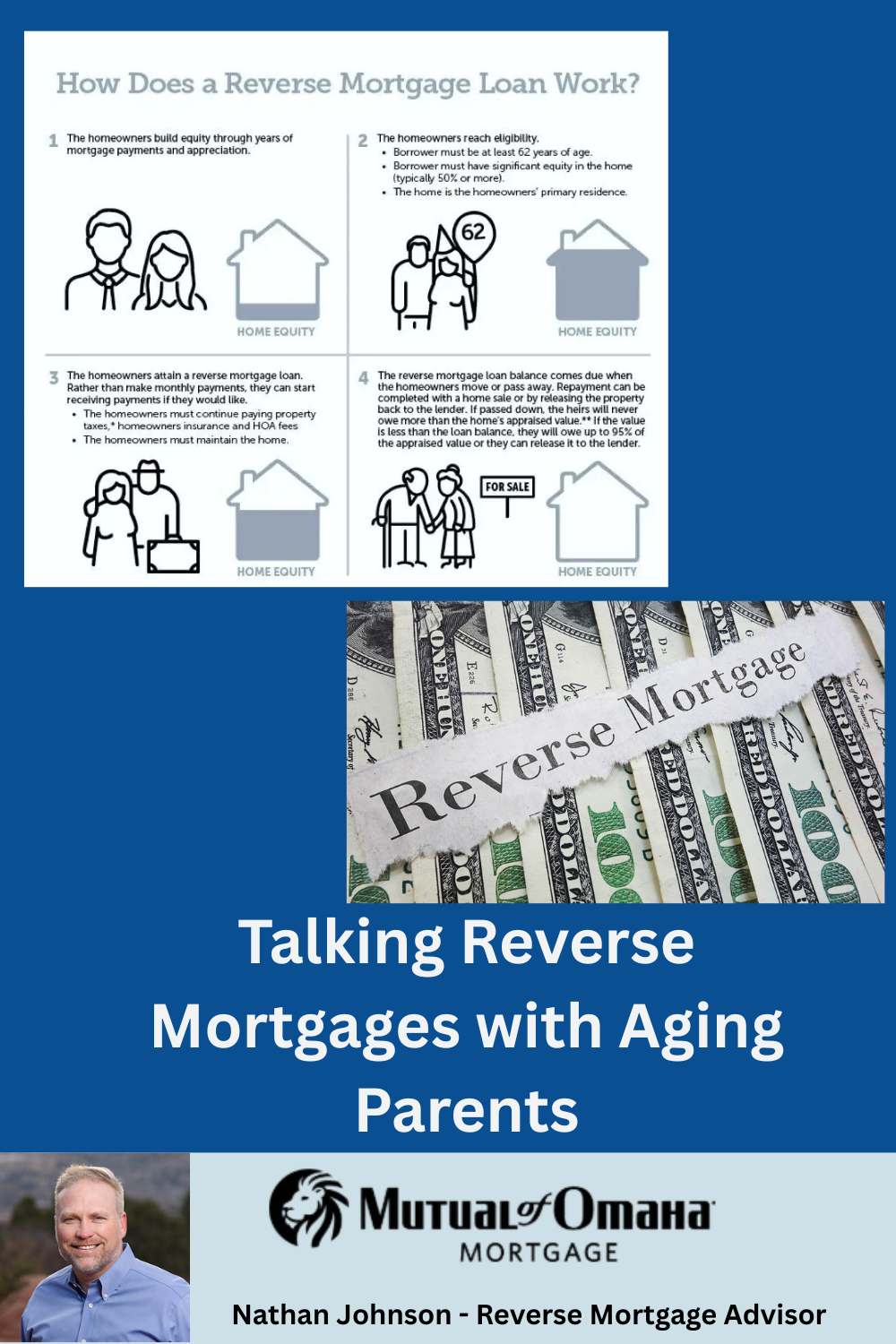
A reverse mortgage generally allows homeowners aged 62 and older to convert a portion of their home equity into accessible funds while continuing to live in their homes.
Homeowners remain responsible for:
- Property taxes
- Homeowners insurance
- Basic property maintenance
Funds may be received as:
- Monthly income
- A line of credit
- A lump-sum payment
- A combination of payment methods
The goal is often to create additional financial flexibility during retirement.
Why Colorado Springs Families Are Exploring Reverse Mortgages
Colorado Springs has become one of Colorado's most desirable retirement destinations.
The area offers:
- Exceptional natural beauty
- Access to healthcare resources
- Veteran-friendly services
- Active senior communities
- Strong family-oriented neighborhoods
Many longtime residents have also experienced significant growth in home values over the years.
As a result, seniors may have substantial equity available while still seeking ways to improve monthly cash flow.
A reverse mortgage can sometimes provide access to that wealth without requiring the homeowner to sell the property.
Common Questions Adult Children Ask
When families first discuss reverse mortgages, adult children often have understandable concerns.
"Will My Parents Lose Their Home?"
No. Borrowers continue to own the home as long as they meet program requirements.
"What Happens When My Parents Pass Away?"
Heirs generally have options that may include selling the property, refinancing the loan balance, or retaining the home depending on their circumstances.
"Will This Eliminate My Inheritance?"
Not necessarily. The remaining equity after loan repayment belongs to the estate. The amount depends on property value and loan balance at that time.
"Why Wouldn't They Just Sell the House?"
For many seniors, remaining at home offers emotional, social, and practical benefits that are difficult to replace.
The Emotional Side of Financial Planning
Reverse mortgage discussions are rarely just about money.
Parents may worry about:
- Becoming a burden
- Losing independence
- Outliving their savings
- Needing future care
Adult children may worry about:
- Their parents' safety
- Future caregiving responsibilities
- Estate planning implications
- Financial vulnerability
Successful conversations acknowledge both the emotional and financial aspects of retirement planning.
Listening often matters as much as providing solutions.
Signs It May Be Time for a Family Discussion
Certain situations often signal the need for a broader financial planning conversation.
These may include:
- Increasing healthcare expenses
- Difficulty managing monthly bills
- Deferred home maintenance
- Concerns about retirement income
- Interest in aging in place
- The need for home accessibility improvements
Discussing options early can help families make proactive decisions rather than reacting during a crisis.
Building a Retirement Strategy Around Independence
One reason reverse mortgages have gained attention in recent years is their potential to support aging in place.
Many Colorado Springs seniors want to remain close to:
- Family members
- Healthcare providers
- Faith communities
- Longtime friends
- Favorite local destinations
Remaining in familiar surroundings often contributes to emotional well-being and quality of life.
For homeowners who have spent decades building equity, a reverse mortgage may help support those goals.
Education Creates Better Outcomes
Nathan Johnson encourages families to focus on learning rather than assumptions.
"Every family's situation is different," says Nathan Johnson. "The most important step is understanding how a reverse mortgage actually works and evaluating whether it aligns with the homeowner's goals. Education gives families confidence to make the right decision for their unique circumstances."
When families approach the topic with accurate information, conversations tend to become more productive and less stressful.
Preparing for a Reverse Mortgage Consultation
Families considering a reverse mortgage may benefit from gathering information beforehand.
Helpful items include:
- Current mortgage details
- Property information
- Retirement income sources
- Healthcare expense estimates
- Long-term housing goals
Having a clear understanding of financial priorities can make consultations more productive.
Reverse Mortgages Are About Options
A reverse mortgage is not the right solution for every homeowner.
However, it can be a valuable option for seniors who:
- Have substantial home equity
- Plan to remain in their home
- Need additional financial flexibility
- Want to support long-term independence
- Are seeking alternatives to selling their property
The key is evaluating the option carefully within the context of an overall retirement plan.
Frequently Asked Questions
Should adult children attend reverse mortgage consultations?
Yes. Many families find it helpful to participate together so everyone understands the information being presented.
Can a reverse mortgage help fund in-home care?
In many cases, yes. Proceeds may be used for caregiving expenses, healthcare needs, or other retirement-related costs.
Is counseling required before obtaining a reverse mortgage?
Yes. Independent counseling is generally required for federally insured reverse mortgage programs.
Can a reverse mortgage be used as part of estate planning?
It may play a role in broader financial and retirement planning discussions. Families should consult appropriate professionals.
Why are reverse mortgages becoming more popular?
Many retirees are looking for ways to access home equity while maintaining independence and staying in their homes.
Learn More About Reverse Mortgage Solutions
If your family is exploring retirement planning options, understanding reverse mortgages can help you make informed decisions together.
Nathan Johnson - Reverse Mortgage Advisor provides educational guidance for seniors and families throughout Colorado Springs, helping them evaluate whether a reverse mortgage aligns with their long-term goals.
For more information about Nathan Johnson - Reverse Mortgage Advisor, visit their Seniors Blue Book listing
Other Articles You May Like
Falls Are Rising Among Older Adults
Falls Are Rising Among Older Adults. Heres How to Lower Your Risk at HomeAccidental fall deaths in the U.S. have roughly tripled since 2000, according to CDC data analyzed by USAFacts. For adults 65 and older, falls are now the leading cause of both fatal and non-fatal injury, and the increase shows up in every older age group.Several factors seem to be adding up: more prescription medication use, more drinking among older adults, and higher obesity rates. Fear of falling plays a part too. People who worry about falling often move less, and over time that can weaken strength and balance. Know your riskCommon risk factors include limited mobility, chronic conditions such as diabetes or arthritis, certain medications, changes in vision or hearing, and home hazards. The National Council on Agings free Falls CheckUp is a quick way to see where you stand. Build everyday habitsWear glasses and hearing aids as prescribed and keep up with regular eye and hearing exams.Review your medications with your doctor or pharmacist.Use a sturdy step stool, not a chair, to reach high places.Take your time, especially when standing up or changing direction. Make your home work for youFor stairs and steps, a stairlift, wheelchair ramp, home elevator or platform lift can make it easier to move between levels.Install grab bars and consider a shower seat or an accessible walk-in shower.Clear clutter, secure or remove loose rugs, and keep cords out of walkways.Add brighter lighting and nightlights. A few small changes can help you stay active and comfortable at home. Adapted from Deaths from Falls Are Rising. How Can You Reduce Your Fall Risk at Home? by Lifeway Mobility.Contact Person: Eric Rubel | Marketing [email protected]: 847.403.0132
Reverse Mortgages in Daphne, AL
A home can represent years of work and still leave its owner with a difficult monthly budget. For some older adults in Daphne, much of their financial value is tied to the property while everyday expenses must be paid from a limited cash flow. A reverse mortgage is one financing option to examine carefully in that situation. What a reverse mortgage isA reverse mortgage allows a homeowner to borrow against home equity. The most common type is a Home Equity Conversion Mortgage, or HECM, for eligible homeowners age 62 and older. Borrowers generally do not make monthly principal and interest payments, but interest and fees are added to the balance. The home remains collateral for the loan. Borrowers must continue meeting requirements such as paying property taxes and insurance, maintaining the property, and using it as their principal residence. Failure to meet requirements can put the home at risk. Consider the full ownership planA useful starting question is how long the homeowner expects to remain in the property. Also consider who lives there, what ongoing upkeep requires, and what would happen after a move or death.Do not evaluate the decision only by the amount of cash initially available. Ask how the balance could grow, how much equity might remain under different assumptions, and what happens if your circumstances change. Anchor Funding Inc serving Daphne homeownersPhone: 251-349-9891.Anchor Funding, Inc. as a reverse mortgage resource serving Baldwin, Escambia, and Mobile counties. Verified local contact informationThe companys linked local website, reversemortgagechecklist.com, describes a reverse mortgage focus and lists Nicole Cramers contact information. It publishes company NMLS number 236419 and her NMLS number 248768. The website lists an address in Silverhill, so call to confirm how consultations for Daphne residents are arranged. What to discuss with the providerAsk Anchor Funding which reverse mortgage products are currently available and whether a proposed loan is a HECM or another product. Request a written explanation of qualification, fees, interest, mortgage insurance where applicable, and available ways to receive funds.Bring details about any existing mortgage, property ownership, residents, and expected future moves. Ask what information is needed for a personalized estimate. General website descriptions cannot determine the amount a particular household could receive.If your goal is to fund home modifications or household support, take actual estimates to the consultation. That makes it easier to compare the likely proceeds with the expense you are trying to address. Questions that deserve independent reviewWhat will the loan cost over time?Ask for an illustration that separates upfront charges from ongoing interest and other financed costs. Discuss how different borrowing amounts and interest assumptions affect the future balance. Compare the proposal with alternatives appropriate to your situation.What happens to a spouse or another resident?Ask how each persons status is documented and what protections or obligations apply. A resident who is not a borrower should not assume they have the same rights as a borrower. Review the actual loan documents with an independent adviser if anything is unclear.What happens when the loan becomes due?Discuss repayment after a sale, permanent move, or death, including any applicable spouse provisions. Ask how heirs would be notified and what choices and deadlines may apply. Avoid relying on a general statement that the family will simply keep the home without further action.Why is counseling important?HECM borrowers must complete counseling with an approved counselor. Use that session to examine costs, alternatives, and the households ability to meet continuing obligations. Choose an independent HUD-approved counselor and bring the written proposal and your own questions. [4] Why this matters locally in DaphneFor a Daphne homeowner, remaining in the house requires a workable plan for the property itself. Include insurance, taxes, repairs, association expenses when applicable, and any needed accessibility changes in the budget.Ask an insurance professional about coverage for the specific address, including any separate wind or flood considerations. Access to equity does not remove those costs. It also does not replace a plan for managing the home if health or mobility changes.Family discussions can help clarify expectations. If a relative expects to inherit the property or move in later, talk about the proposed loan before signing. The homeowners preferences should guide the decision, supported by accurate information about the consequences. How to get started1. Define the expense or cash-flow problem you want to address.2. Gather mortgage statements, insurance and tax bills, ownership documents, and a realistic monthly budget.3. Contact Anchor Funding for a product-specific explanation and written estimate.4. Verify current licensing through official records.5. Complete required independent counseling for a HECM.6. Compare alternatives, including remaining with current financing or moving, before making a commitment.7. Review obligations, resident protections, repayment events, and family plans in writing.Practical tip: Ask yourself whether the plan would still work if maintenance or insurance expenses rose. Discuss the answer with the counselor before closing. Related categoriesMortgage Broker Elder Law Estate Planning
Social Security and the New Senior Tax Deduction
Social Security and the New Senior Tax DeductionBy Senior Tax Advisory GroupTax law changes may help retirees keep more of their income. However, headlines about no tax on Social Security can create confusion. We want seniors to understand what has changed and how the new rules fit their retirement plans.The One Big Beautiful Bill Act created a temporary additional deduction for people age 65 and older. For tax years 2025 through 2028, eligible individuals may deduct up to $6,000. Married couples filing jointly may deduct up to $12,000 when both spouses qualify. There could be a ROTH conversion opportunity at No Additional Tax Cost!This deduction is available whether you itemize or take the standard deduction. Married taxpayers must file jointly to claim it, and each person claiming the deduction must have a qualifying Social Security number.Income limits matter. The deduction begins phasing out when Modified Adjusted Gross Income exceeds $75,000 for an individual or $150,000 for a married couple filing jointly. Taxable IRA withdrawals, capital gains, or Roth conversions may reduce the deduction available.The law did not repeal federal taxation of Social Security benefits. Depending on your combined income, up to 85% of benefits may still be included in taxable income. The new deduction reduces taxable income; it does not change the formula determining how much Social Security is taxable. Eligibility also does not require receiving Social Security.For example, a qualifying couple with both spouses age 65 or older could receive the full $12,000 deduction. If that entire deduction offsets income otherwise taxed at 12%, their federal tax savings would be $1,440. Actual savings depend on their tax situation.Before making withdrawals or changing withholding, review your income and eligibility. Social Security claiming decisions still deserve coordination with taxes, savings, and survivor needs. We believe retirement planning begins with understanding people. Contact Senior Tax Advisory Group at 719-596-4844 or visit www.springstax.com for help evaluating these changes within your retirement plan.