The Bridge to Independence: A Story of Integrated Care in Colorado
ComForCare Home Care
For more information about the author, click to view their website: ComForCare Home Care
Feb 20, 2026
Colorado - Denver Metro


For years, home was a place that felt more like a memory
than a reality for one senior who spent most of his time moving between
hospitals and rehab centers. As someone relying on Health First Colorado, his
healthcare journey was often exhausting and repetitive until he found a way to
bridge the gap between needing help and wanting to stay in his own favorite
chair.
A
Lifeline through Colorado Medicaid Remote Support Services
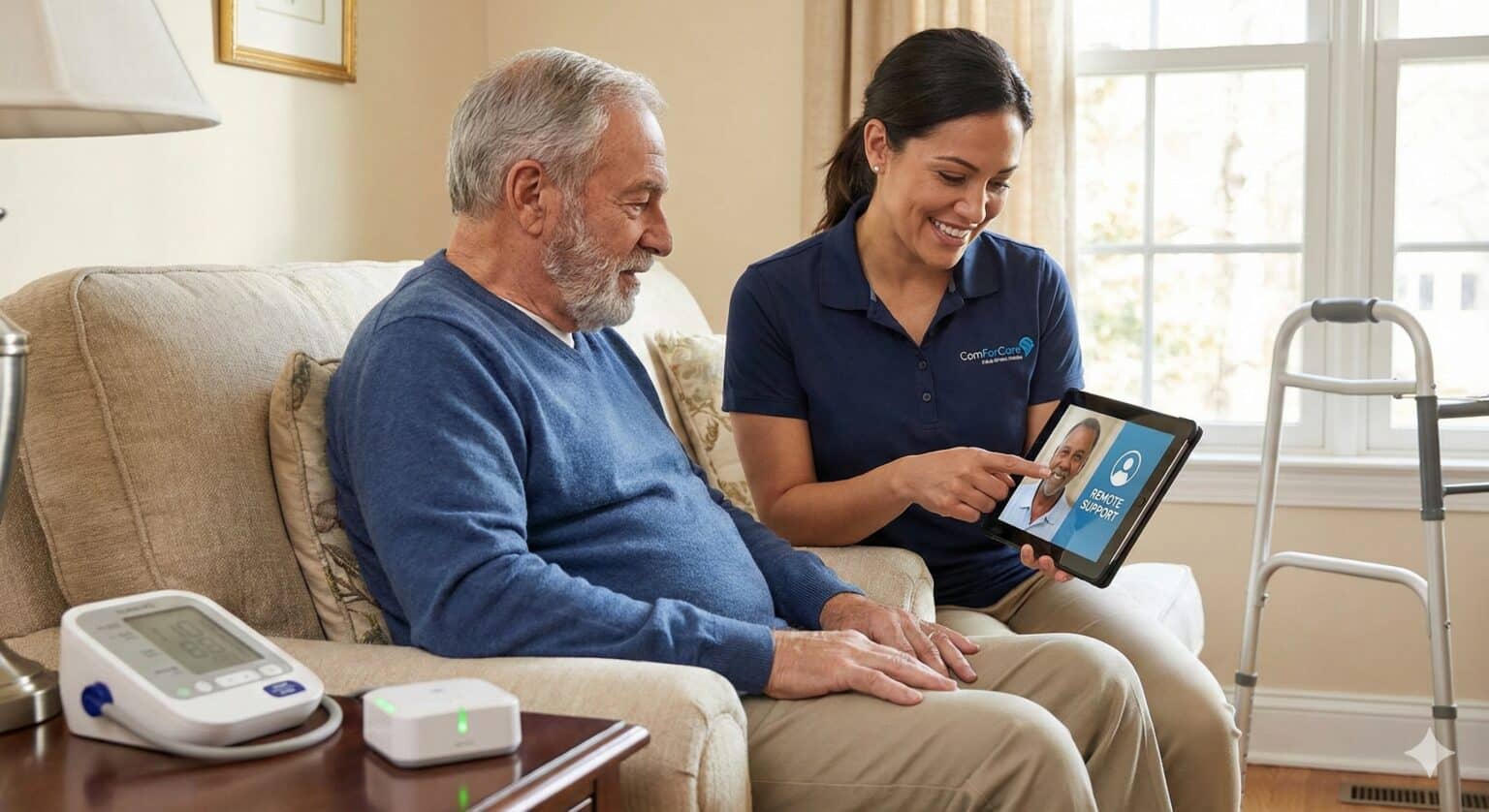
Everything changed when he started a new routine that
combined four hours of daily help from a caregiver with the around the clock
security of Colorado Medicaid remote support services. While his caregiver
focused on making sure his home was clean and his meals were delicious, the
remote support team acted like a quiet guardian watching over him through the
day and night. By using simple devices to check his blood pressure and oxygen
levels, he was never truly alone, and his remote coordinators became familiar
voices who checked in on him with a friendly call every single day.
Technology
that Catches the Small Details
The true value of this hybrid care became clear when his
daily vitals showed a trend that no one would have noticed otherwise. His
remote team saw his blood pressure was dropping to a level that made him feel
lightheaded, and they immediately coordinated with his doctor to adjust his
medication before he could have a dangerous fall. Even during a sudden bout
with an infection, he was able to use his emergency button to keep everyone
informed while he was being helped by paramedics, ensuring that his care team
was right there with him every step of the way.
Six
Months of Staying Home
After a lifetime of being told he needed to be in a
facility, he has now spent six months thriving in his own home with only one
very short hospital stay. This story proves that when we combine human heart
with the power of technology, staying home is not just a dream but a reality
that is accessible through programs like Colorado Medicaid.
- To view the original version of this article visit www.comforcare.com/colorado/ne-denver/resources/blog/colorado-medicaid-remote-support-success/
- Seniors Blue Book was not involved in the creation of this content.
Other Articles You May Like
How Marital Status Affects Medicaid Planning in Pennsylvania
Losing a spouse or going through a divorce changes more than your personal life. It can also change how your home, retirement savings, and other assets are treated if you eventually need nursing home care. For many Pennsylvania families, this is an overlooked part of planning for retirement and aging.While married couples have certain financial protections under Medicaid rules when one spouse needs long-term care, individuals who are widowed, divorced, or single generally do not qualify for those same spousal protections.That difference matters, particularly if you have spent decades building financial security and hope to preserve some of what you own for your family.A plan that made sense when you were married may no longer address your needs after a major life change.Understanding how marital status affects Medicaid eligibility, which assets may be protected, and when to review your estate plan can help you prepare for future care without making unnecessary financial decisions. Why Marital Status Matters for Medicaid Planning in PennsylvaniaMedicaid, known as Medical Assistance in Pennsylvania, may help eligible individuals pay for nursing home care and certain long-term services.Unlike Medicare, which generally provides limited coverage for qualifying skilled nursing facility stays, Medicaid can provide coverage for ongoing nursing facility care when an applicant meets the applicable medical and financial requirements.Financial eligibility involves reviewing income and resources, including bank accounts, investment accounts, retirement savings, and certain property.Pennsylvania's Medical Assistance long-term care eligibility guidelines explain how resources are evaluated and how special rules apply to married couples.The distinction between married and unmarried applicants is important because federal Medicaid law recognizes that one spouse may need nursing home care while the other continues living independently.Without special rules, the spouse remaining at home could face significant financial hardship.Those protections are commonly referred to as spousal impoverishment protections.They are designed to help prevent a spouse from becoming impoverished simply because their husband or wife needs Medicaid-covered long-term care.However, these rules do not provide the same allowances to someone who no longer has a spouse.That is why marriage, widowhood, and divorce can lead to substantially different Medicaid planning considerations.What Financial Protections Are Available to Married Couples?Consider a Pennsylvania couple who have been married for 45 years.They own their home, have retirement accounts, and maintain savings to support themselves throughout retirement.One spouse develops a medical condition that requires permanent nursing home care.The spouse who remains at home is known as the community spouse, while the spouse requiring nursing facility care is called the institutionalized spouse.Under federal Medicaid rules, the community spouse is entitled to certain financial protections.According to the Centers for Medicare and Medicaid Services' spousal impoverishment guidance, these protections can allow the spouse at home to retain certain resources and, depending on their financial circumstances, receive an allocation of income from the spouse receiving care.Protection for the Family HomeIn Pennsylvania, the primary residence is generally excluded from Medicaid's countable resources when the applicant's spouse continues living there.This distinction can be particularly reassuring for couples who have spent years paying off a mortgage.The spouse at home does not ordinarily need to sell the residence simply because their husband or wife requires nursing home care.Home ownership, however, must still be evaluated in the context of estate recovery, future care needs, and how the property will eventually transfer.Protection for a VehiclePennsylvania generally excludes one motor vehicle from countable resources when evaluating eligibility for Medicaid long-term care.This allows the community spouse to maintain transportation for daily activities, medical appointments, and visits with their spouse.Retirement Savings and Other Financial ResourcesCertain retirement accounts owned by the community spouse may receive favorable treatment under Pennsylvania Medicaid rules.The specific treatment depends on account ownership, account characteristics, and applicable eligibility requirements.Married couples may also qualify for a Community Spouse Resource Allowance, which permits the community spouse to retain a designated portion of the couple's countable resources.The amount is determined under applicable Medicaid rules and limits that may change annually.The spouse living at home may also qualify for an income allowance when the relevant requirements are met.These protections provide a meaningful financial safeguard. They do not guarantee that every asset will be protected or that the couple will avoid all nursing home expenses.What Changes When You Become Widowed?Now consider what happens when the spouse who was previously living at home becomes widowed.That person's financial circumstances may change immediately.They may become the sole owner of the family home, inherit additional retirement savings, or receive proceeds from life insurance policies.Although those assets may provide valuable financial security, they can also change the person's Medicaid eligibility picture if long-term care becomes necessary.Most importantly, there is no longer a community spouse whose financial needs would trigger the same spousal impoverishment protections.The individual is generally evaluated under the Medicaid rules applicable to an unmarried applicant.Your Home May Still Be Excluded, but the Rules Are DifferentBeing widowed does not automatically mean your house becomes a countable resource.Pennsylvania provides certain home exclusions for unmarried Medicaid applicants, including rules relating to home equity, residence, intent to return home, and qualifying family members.The applicable home equity limit can change annually, and exceptions may apply.The important distinction is that a home being excluded during Medicaid eligibility does not necessarily mean it will be protected from every future claim.That is why homeowners should evaluate both Medicaid eligibility and estate recovery when preparing for long-term care.Inherited Retirement Accounts and Savings Need Another LookAfter a spouse dies, retirement accounts and financial assets may pass to the surviving spouse through beneficiary designations or other arrangements.Those assets can affect future Medicaid planning.A retirement account that received particular treatment while belonging to a community spouse may be evaluated differently after ownership changes.The surviving spouse should understand what they now own, how each asset is titled, and how the applicable Medicaid rules may treat it.Beneficiary designations deserve particular attention because they can control where assets pass independently of a will.Our article explaining how beneficiary designations can override your will explores why reviewing these arrangements after the death of a spouse is so important.Why Divorce Can Create Similar Medicaid Planning ConcernsDivorce can also change a person's future long-term care planning needs.During a marriage, certain Medicaid spousal protections may apply if one spouse enters nursing home care while the other remains in the community.Once a divorce is finalized, each former spouse generally faces long-term care eligibility as an unmarried individual, unless they later remarry.The financial consequences depend on the property division, ownership of assets, retirement accounts, and other circumstances.For example, someone may retain the family home as part of a divorce settlement but have less available income to maintain it.Another individual might receive a substantial retirement account while giving up ownership of the residence.Neither arrangement is automatically better from a Medicaid planning perspective.The issue is whether the assets remaining after divorce will adequately support the individual's lifestyle, future care needs, and long-term financial goals.A divorce settlement should not be designed solely around possible Medicaid eligibility. Other important considerations include taxes, housing costs, retirement security, and the person's ability to access funds.When long-term care concerns already exist, coordination between family law and elder law counsel can help identify relevant issues. Why Being Single Requires a Different Long-Term Care StrategyIndividuals who have never married also need to consider how they would pay for care if they could no longer live independently.Unlike someone with a community spouse, a single individual generally cannot rely on a spouse-specific resource allowance or income allocation. Their financial eligibility is evaluated under the rules applicable to their own circumstances.Pennsylvania excludes certain resources from Medicaid eligibility calculations, including one motor vehicle and qualifying burial arrangements. A home may also qualify for an exclusion when the relevant requirements are satisfied.However, ordinary bank accounts, investments, and other available resources may count toward eligibility.For single individuals, the planning conversation often involves a different set of questions. Who would manage their finances if they became unable to make decisions? Would they prefer care at home if appropriate services were available? How would they pay for care before becoming eligible for Medicaid? Would they want any remaining assets to benefit children, grandchildren, relatives, or charitable organizations? An effective elder law plan considers these concerns together instead of focusing exclusively on Medicaid's financial limits.A Hypothetical Example: Two People With Similar Assets but Different ProtectionsConsider two Pennsylvania homeowners, both age 74.Each has a home, retirement savings, and money in the bank.The first homeowner is married. Her husband requires nursing home care, but she continues living in their home.Because she is the community spouse, certain Medicaid protections may allow her to retain the residence, a vehicle, a protected share of countable resources, and income available under the applicable rules.The second homeowner is widowed. She owns a similar home and has approximately the same amount of savings.If she requires nursing home care herself, she cannot rely on the protections reserved for a community spouse.Although some of her assets may still be excluded under Medicaid rules, the evaluation of her financial resources will be different. This does not mean the widowed homeowner will necessarily lose her home or all her savings.It means her planning opportunities, legal protections, and potential financial exposure are not identical to those of the married couple.The example illustrates why two people with similar finances can require very different long-term care plans.Why Estate Recovery Matters Even When Your Home Is ExcludedOne of the most important distinctions in Medicaid planning is the difference between qualifying for benefits and protecting assets after death.A residence may be excluded as a countable resource when someone applies for Medicaid long-term care.However, Pennsylvania has an Estate Recovery Program that may seek repayment from certain estates for Medical Assistance benefits paid on behalf of qualifying recipients age 55 or older.The Pennsylvania Department of Human Services Estate Recovery Program explains the recovery process and provides information about applicable exclusions and hardship waivers.Estate recovery generally concerns assets in the deceased recipient's probate estate under Pennsylvania's program rules.This means decisions about how the home is owned and transferred deserve careful attention.It is also important not to assume that placing a property into a trust, adding a family member to a deed, or naming a beneficiary automatically resolves every Medicaid concern.Different arrangements have different consequences.An estate plan should consider both the person's ability to qualify for care and their wishes for the property after death. Why Giving Your House to Your Children Can Be RiskySome families assume the simplest way to protect the home is to transfer ownership to an adult child.That decision may create complications.Pennsylvania generally reviews transfers of assets made within the 60 months preceding an application for Medicaid long-term care.Transfers for less than fair market value can result in a period during which Medicaid will not pay for otherwise qualifying long-term care services. Certain exceptions may apply, but the rules are specific.A transfer could also affect control of the property, expose it to certain risks involving the recipient, or produce unexpected tax consequences.Giving away a home should therefore never be treated as an automatic asset protection solution.Families considering transfers can learn more about the timing rules in our guide to understanding the Medicaid look-back period.Should You Consider a Medicaid Asset Protection Trust?An irrevocable trust designed for Medicaid planning may help some individuals prepare for future long-term care costs.However, it is not the right choice for every person.A properly structured trust can change how assets are owned and controlled. Depending on the trust terms, funding, timing, and applicable law, this may affect how assets are treated for Medicaid eligibility.Certain transfers into a trust can also trigger Medicaid transfer penalties if made during the applicable look-back period.These decisions require balancing asset protection goals against practical needs.For example, someone recently widowed may want to preserve resources for future care while also maintaining flexibility to sell their home or relocate closer to family.Another individual may have sufficient financial resources to pay privately for care and prefer not to restrict access to their assets.The right planning approach depends on the circumstances.Our article on why a Medicaid Asset Protection Trust may not be the right fit explains why evaluating personal goals should come before selecting a legal tool.When Should You Review Your Elder Law Plan After a Major Life Change?A change in marital status is a valuable opportunity to reassess an existing estate plan. Documents that were appropriate during marriage may need attention after widowhood or divorce.For example, your former spouse may still be named in financial documents, or your deceased spouse may have been the person authorized to handle important decisions.Even when existing documents remain legally valid, the people named in them and the instructions they contain may no longer reflect your wishes.A useful review generally includes the following areas.Powers of AttorneyA durable financial power of attorney authorizes another person to handle designated financial and legal matters.After a spouse dies or a marriage ends, it may be necessary to appoint someone else.That decision becomes particularly important if future illness affects your ability to manage banking, property, or long-term care arrangements. Health Care DirectivesYour health care power of attorney and living will should reflect whom you trust to make medical decisions and what care preferences you want communicated.If the person previously named is no longer available or appropriate, updating these documents can provide clearer direction.Wills, Trusts, and Beneficiary DesignationsMajor life changes can affect how you want property distributed and who should manage your estate.A review can help determine whether existing arrangements are still consistent with your family circumstances.Long-Term Care FundingYour current income, home ownership, retirement savings, and available insurance may differ substantially from what they were before the life change.A review can identify whether your financial plan still addresses the possibility of nursing home care.Entrusted Legacy Law offers a Medicaid Planning Checklist to help Pennsylvania families begin organizing the information relevant to their long-term care planning decisions.What if You Already Need Nursing Home Care?Early planning often provides more flexibility, particularly when strategies involve transfers of assets that are subject to Medicaid's look-back requirements.However, needing care now does not necessarily mean every planning opportunity has disappeared.An elder law attorney can review the person's income, countable resources, home ownership, prior transfers, family circumstances, and eligibility for available exclusions or allowances.For someone who is recently widowed, this may also involve reviewing an inheritance or assets that recently changed ownership.For someone who is divorced, it may involve reviewing the property settlement and current financial arrangements.For someone who has always been single, the discussion may focus on available resources, care costs, and lawful eligibility options.The purpose is not to promise a particular amount of asset protection. It is to understand the choices that remain available under Pennsylvania law and avoid making unnecessary or harmful financial decisions.Building an Elder Law Plan That Changes With Your LifeEstate planning should not remain unchanged while your circumstances evolve.Marriage, widowhood, divorce, retirement, declining health, and the death of a loved one can all affect how your assets should be managed and what protections may be appropriate.At Entrusted Legacy Law, we help individuals and families throughout Pittsburgh, Philadelphia, and Erie evaluate estate planning and elder law concerns with an emphasis on understanding their options and planning for the people and priorities that matter most.Whether you are married, recently widowed, divorced, or have always been single, your long-term care plan deserves to reflect your current life rather than assumptions based on your past circumstances.If you would like to understand how Pennsylvania Medicaid rules may affect your home, savings, or future care needs, schedule an introductory consultation with Entrusted Legacy Law.A thoughtful conversation can help you identify which questions matter most for your family and what planning steps may be appropriate. This article is provided for general educational purposes and does not constitute legal advice. Medicaid eligibility, asset protection, and estate recovery depend on individual circumstances and applicable law.
Medicaid Asset Protection Trust May Not Be the Right Fit
A Medicaid Asset Protection Trust can be a valuable estate planning tool. It can also be the wrong tool for a particular family.People often arrive at an estate planning meeting after doing their homework. They have read about irrevocable trusts, talked with friends, or heard that transferring assets into a trust can help protect savings from future long-term care costs. They may walk through the door already convinced that they know which document they need.A recent conversation at Entrusted Legacy Law was a good reminder of why the document should not come first.The clients initially believed they wanted a Medicaid Asset Protection Trust. Once we talked about what they were actually trying to accomplish, their priorities became much clearer. They wanted to make sure they could care for each other during their lifetimes, regardless of the level of care either spouse might eventually need. Just as importantly, they wanted the surviving spouse to continue to have the resources and flexibility needed for that person's own care.After looking at those goals, their family circumstances, and how they wanted to use their assets, the trust they originally requested was not the right fit.That does not mean there was anything wrong with a Medicaid Asset Protection Trust. It means good estate planning is not about selecting a popular tool and trying to make a family's life fit inside it. It is about understanding the family's life first.What Is a Medicaid Asset Protection Trust?A Medicaid Asset Protection Trust is generally an irrevocable trust used as part of advance long-term care and Medicaid planning. Properly designed and implemented, this type of trust may help protect certain assets while a person plans for the possibility of needing Medicaid-covered long-term care in the future.Pennsylvania's Medicaid long-term care rules consider a person's income, resources, medical eligibility, and certain transfers of assets. The Pennsylvania Department of Human Services explains that transfers made for less than fair market value during the 60 months before an application for Medicaid long-term care can affect eligibility. Readers who want to understand the state's basic financial rules can review the Commonwealth's official guidance on Medicaid and payment of long-term care.This five-year review period is one reason advance planning can be important. It is also one reason an irrevocable trust should never be treated as a simple paperwork decision.Assets placed into an irrevocable trust are subject to the terms of that trust. The strategy therefore needs to be evaluated in light of how much access, control, flexibility, and financial security the person creating the plan wants to retain.Entrusted Legacy Law's existing article on protecting assets from nursing home costs provides a broader look at long-term care asset protection. The important question for this discussion is narrower: even when a Medicaid Asset Protection Trust could potentially offer protection, does it fit the person's actual goals?Conversation Starts With Goals, Not a TrustConsider two Pennsylvania couples who are similar in age and have similar net worth.Both own their homes. Both have retirement savings. Both are concerned about the possibility of nursing home care.It might appear that they need the same estate plan.They may not.The first couple may feel strongly about protecting a particular asset for children or grandchildren. They may be comfortable giving up certain forms of direct control as part of an advance long-term care strategy.The second couple may have a very different priority. They may want the greatest possible flexibility to use their assets for either spouse during life. Their primary concern may be making sure the surviving spouse has access to resources for housing, health care, personal care, or changing circumstances. Those are different objectives.An estate planning attorney needs to understand those differences before recommending a specific legal structure.For families thinking about aging, incapacity, and long-term care together, Entrusted Legacy Law's elder law and Medicaid planning information explains how these issues can overlap with powers of attorney, health care planning, asset protection, and other estate planning concerns.Why Married Couples Require a Careful AnalysisLong-term care planning for a married couple is not simply a matter of protecting assets from a future nursing home bill.There are two people to consider.If one spouse requires significant care, the plan also needs to account for the spouse who remains in the community. That person's housing, income, savings, lifestyle, health, and future care needs still matter.Federal Medicaid rules include protections intended to prevent a spouse living in the community from becoming impoverished solely because the other spouse requires Medicaid-covered long-term services and supports. The Centers for Medicare and Medicaid Services explains that the spousal impoverishment rules allow certain resources to be protected for the community spouse and may also permit some income to be allocated for that spouse. The federal explanation of Medicaid spousal impoverishment protections provides additional detail.Pennsylvania also publishes annual figures and eligibility rules that affect how these protections are applied. Because those amounts can change, families should avoid building a plan around an old number found in an article, social media post, or internet forum.More importantly, eligibility is only one piece of the planning conversation.A technically available strategy does not automatically become the best strategy for a particular couple.An attorney may also need to consider questions such as: How much financial flexibility does each spouse want? Which assets are producing income? What resources might the surviving spouse need later? Are there children from a prior relationship? Does either spouse have existing health concerns? Are there assets the couple is particularly motivated to preserve? What happens if circumstances change five or ten years from now? That type of discussion is very different from starting with, "Which trust should we sign?"Control and Protection Are Not the Same GoalOne of the most important conversations in asset protection planning involves the relationship between control and protection.People understandably want both.They may want to protect an asset while continuing to treat it exactly as they always have. Depending on the strategy, those two objectives can conflict.An irrevocable trust is not the same thing as a revocable estate planning trust. The terms matter. Who serves as trustee matters. Which assets are transferred matters. What rights are retained matters. How income and principal may be handled matters.This is why a person should understand not only what a proposed trust may accomplish, but also what changes once assets are transferred into it.Entrusted Legacy Law discusses a wider range of considerations on its asset protection planning page. Asset protection can involve different risks and different planning tools, so the appropriate structure depends on what the client is actually trying to protect against.Medicaid Planning Is Broader Than One Type of TrustA common misconception is that Medicaid planning and a Medicaid Asset Protection Trust are essentially the same thing.They are not.Medicaid planning is a broader process.It can involve evaluating assets, income, long-term care needs, marital status, powers of attorney, existing trusts, beneficiary designations, insurance, property ownership, potential transfers, and the timing of planning decisions.Federal Medicaid guidance also makes clear that trusts do not receive one universal treatment. Depending on how a trust was established and funded, trust assets may be considered available when Medicaid eligibility is evaluated. Federal rules also address transfers for less than fair market value during the applicable look-back period. The Centers for Medicare and Medicaid Services summarizes these principles in its Medicaid eligibility policy guidance.For families who are beginning to think through the process, Entrusted Legacy Law also offers a Pennsylvania Medicaid Planning Checklist as an educational starting point.The checklist is not a substitute for individualized advice. It can help families identify questions they may want to discuss before a health crisis forces decisions to be made quickly.The Five-Year Look-Back Is Important, but It Should Not Drive Every DecisionThe Medicaid five-year look-back receives a great deal of attention, for good reason.Pennsylvania reviews certain transfers made within the 60 months before a person applies for Medicaid long-term care. A transfer during that period can affect eligibility when it is made for less than fair market value.That creates an understandable temptation to think, "I should move everything into a trust as soon as possible."The better question is whether doing so supports the rest of the family's goals.Planning early can create more options. Early planning does not require choosing a strategy before understanding its consequences.A person in their sixties with substantial independent income, a healthy spouse, and children they trust may have different planning priorities from someone with limited income, a spouse who may need future care, complicated family relationships, or assets that may need to remain accessible.Timing matters.So do the people involved.Estate Recovery Is Another Piece of the Long-Term Care ConversationMedicaid planning also does not stop when eligibility is approved.Pennsylvania operates a Medical Assistance Estate Recovery Program. According to the Department of Human Services, the Commonwealth may recover certain Medical Assistance payments for long-term care services from the estates of qualifying individuals who received those benefits after age 55. The state's Estate Recovery Program guidance explains the program and identifies the legal authorities governing recovery. Estate recovery is another reason that long-term care planning should be coordinated with the overall estate plan.A family's goals may include more than qualifying for benefits. They may also care about how a home passes, what happens after the death of the first spouse, whether probate will be required, who will manage finances during incapacity, and what ultimately reaches children or other beneficiaries.Those questions cannot be answered by looking at Medicaid eligibility alone.Long-Term Care Insurance May Also Be Part of the DiscussionSome families have additional resources available outside Medicaid planning.Pennsylvania participates in the Long-Term Care Partnership Program. The Pennsylvania Insurance Department explains that qualifying partnership policies can provide dollar-for-dollar asset protection based on benefits paid under the policy. Pennsylvania's long-term care insurance guidance provides additional information about long-term care coverage and the partnership program.That does not mean long-term care insurance is right for everyone. Eligibility, premiums, coverage terms, existing policies, age, and health can all affect the analysis.It does show why planning should be broader than a single trust. For one family, an irrevocable trust may be central to the strategy.For another, existing insurance, spousal protections, available resources, and a different estate planning structure may better support the family's objectives. Questions to Ask Before Creating a Medicaid Asset Protection TrustBefore deciding that a Medicaid Asset Protection Trust belongs in an estate plan, it can be helpful to explore a few fundamental questions. What am I trying to protect? Why is protecting that asset important to me? How much access to these assets might I need during my lifetime? What will my spouse need if I require care first? What happens if my spouse requires care first? How comfortable am I with the restrictions associated with an irrevocable trust? Who would be involved in managing the trust? Do I have sufficient resources outside the trust for changing needs? How does this strategy fit with my will, powers of attorney, other trusts, beneficiary designations, and property ownership? What happens if my family or financial circumstances change? There is no universally correct set of answers.That is the point.The answers help determine whether a particular strategy fits the family instead of forcing the family to fit the strategy.Sometimes the Best Legal Advice Is Not to Use the Tool You ExpectedPeople sometimes assume that visiting an estate planning attorney means being sold a trust.A thoughtful planning process can lead in the opposite direction.Sometimes a client comes in requesting a sophisticated legal strategy and learns that a simpler or different approach better supports what matters to them.That is not a missed opportunity.That is the planning process working properly.A Medicaid Asset Protection Trust can be an excellent solution for the right circumstances. It may help some families address long-term care risks while preserving assets they hope to leave to future generations.Another family may place a higher priority on lifetime flexibility, access to resources for a spouse, or a different combination of legal and financial protections.The name of the document matters less than whether the plan actually serves the people who will depend on it.Build the Plan Around Your LifeEstate planning works best when the conversation begins with your family, your concerns, and what you want your money and property to accomplish.If you are considering a Medicaid Asset Protection Trust, you do not need to determine on your own whether it is the right answer before speaking with an attorney. That is one of the questions the planning process is designed to answer.Entrusted Legacy Law works with Pennsylvania families to evaluate estate planning, elder law, Medicaid planning, and long-term care concerns in the context of their individual goals.This article is for general educational purposes only and is not legal advice. Medicaid eligibility and estate planning outcomes depend on individual circumstances and current federal and Pennsylvania law.A Medicaid Asset Protection Trust can help some Pennsylvania families plan for future long-term care costs, but it is not right for everyone. The decision depends on factors such as assets, marital status, access needs, long-term care goals, timing, and family circumstances. An individualized review can determine whether another strategy is more appropriate.
How High Interest Rates Are Slowing Home Sales in the Denver Metro Are
By Brandis Meeks Nov 2026 Quick answer: are high interest rates slowing home sales in Denver?Yes. With 30-year fixed mortgage rates sitting around 7.3% in October 2026, up from about 6.3% a year earlier, Denver metro buyers are pulling back and sellers are feeling it. The Colorado Association of Realtors reported that September 2026 closed sales in the Denver metro fell 18.7% from a year earlier and pending sales dropped 12.7%. The Denver metro housing market by the numbersHere is where the market stands as of late October 2026, using the most recent data released.What the numbers say: prices are drifting lower rather than collapsing, but volume is falling hard. Fewer buyers can qualify at 7%+ rates, so homes sit longer, sellers cut prices or pay concessions, and many listings expire with no sale at all.Figures reflect the latest published reports as of October 28, 2026. Market data is revised each month, so check the sources below for updates.Why high mortgage rates slow home salesThree forces are working together in the Denver metro.1. Monthly payments jump. On a home at the $565,000 metro median with 20% down ($452,000 loan), principal and interest at 7.32% is about $3,105 a month. At last year's 6.34% rate, the same loan was about $2,810. That is roughly $295 more per month, or about $3,500 a year, for the identical house. For buyers already stretched by Denver prices, that gap is often the difference between qualifying and not.2. The lock-in effect keeps sellers on the sidelines. Many Denver homeowners locked in mortgages at 3% to 4% during 2020 and 2021. Local agents quoted by the Denver Gazette have noted that moving to a similar home at today's rates can add $1,500 to $2,000 a month to the housing payment. Owners who don't have to sell stay put, which keeps inventory tight in some price ranges even while demand falls.3. Buyers get cautious and negotiate harder. When affordability shrinks, buyers wait, ask for repairs, and request concessions. In September, 64% of Denver metro sales included seller concessions and nearly half had price reductions. Homes that are dated, deferred-maintenance, or priced optimistically are hit hardest because they need a buyer who can both finance the purchase and absorb surprises at inspection.The result is a stalled market: fewer showings, longer days on market, and more listings that expire unsold.What this means for sellers in Denver and Surrounding CitiesThe slowdown is metro-wide, but it shows up differently depending on the home.Condos and townhomes are seeing the sharpest price pressure. The attached-home median fell 6.2% to $375,000 in September, and HOA dues make monthly payments even harder for buyers to absorb.Move-in-ready single-family homes in strong neighborhoods are still selling, but often with price cuts or concessions.Homes that need work in Aurora, Denver, Lakewood, Centennial, Littleton, Arvada, Thornton and other Front Range cities face the longest waits, because financed buyers and their lenders push back on condition.Inherited, tenant-occupied, hoarder, and storage-heavy properties are especially hard to list, since buyers must stomach cleanout costs on top of a 7% mortgage.If you list in this market, plan for a longer timeline, a possible price reduction, and repair negotiations after inspection. Carrying costs such as mortgage payments, property taxes, insurance, and utilities keep running the whole time. About 45% of listings that left the market in recent REcolorado data did so without selling, so a listing is not a guaranteed sale.Your options when the market is slow1. List on the MLS and wait. This can net the highest price for a turnkey home, but expect longer marketing time, buyer concessions, and repair requests. Costs include agent commissions, staging, and repairs.2. Cut the price or offer concessions. Many Denver sellers are doing this, with nearly half of September sales including a price reduction. It can speed things up but lowers your net.3. Rent the home out or hold it. This works only if the numbers cover your payment, taxes, insurance, and maintenance, and you are comfortable being a landlord.4. Sell as-is to a local cash home buyer. If you need certainty, a fast timeline, or you don't want to fix, clean, or stage the home, a direct sale removes the financing risk that high rates create. A cash buyer doesn't depend on a mortgage approval, so rate swings can't cancel the deal.How The Property Buyers can helpThe Property Buyers is a Colorado home buying company based in Aurora, founded in 2008. We have an A+ Rating with the Better Business Bureau. Plenty of 5 Star Google Reviews show why we are a trusted professional Cash Home Buyer. We buy houses throughout the Denver metro area:Get a No-Obligation Cash Offer for your homeAs-is condition. No repairs, no updates, no inspection haggling.No cleanout. Leave the furniture, belongings, and debris. We handle it.Close in as little as 10 business days, or on the date that fits your schedule.No agent commissions and no financing contingencies.Whether the house is inherited, tenant-occupied, in foreclosure trouble, or just not selling, call 720-650-7986 or visit thepropertybuyers.com to request a no-obligation cash offer. A cash offer may be lower than a fully renovated listing price, so compare it with your net after repairs, commissions, carrying costs, and time on the market.Frequently asked questionsAre high interest rates slowing home sales in Denver?Yes. Mortgage rates near 7.3% have cut buyer purchasing power, and the Colorado Association of Realtors reported Denver metro closed sales down 18.7% and pending sales down 12.7% year over year in September 2026.What is the mortgage rate in Colorado right now?Freddie Mac's national 30-year fixed average was 7.32% for the week of October 22, 2026, compared with 6.34% a year earlier. Colorado rates track the national average and vary by lender, credit score, and down payment.Are Denver home prices falling because of high rates?Prices are softening, not crashing. The Denver metro median price was $565,000 in September 2026, down 1.7% from a year earlier, and the attached-home median fell 6.2% to $375,000.Is it a good time to sell a house in Denver?It depends on your home and your timeline. Turnkey homes in good locations still sell, but sellers are giving more price reductions and concessions. If your home needs repairs or you need to sell quickly, selling as-is to a cash buyer can avoid the delays.Can I sell my Denver house as-is without cleaning it out?Yes. The Property Buyers buy houses as-is across the Denver metro with no cleanout required, so you can leave furniture and belongings behind.How fast can The Property Buyers close on a house?We can close in as little as 10 business days, or later if you need more time.How can I schedule a walk-through of my house?It's very easy: just call 720-650-7986 or visit thepropertybuyers.com to request a home walk-through and your no-obligation cash home offer.SourcesColoradoBiz: Colorado home sales fall as buyers pull back in the Denver metro (September 2026 data, Colorado Association of Realtors)Freddie Mac: Primary Mortgage Market SurveyMile High Title Guy: Denver metro expired listings, September 2026 (REcolorado data)Mortgage News Daily: NAR existing-home sales, September 2026Trading Economics: U.S. existing home salesDenver Gazette: Denver realtors say rates, not prices, are holding back the market (June 4, 2026)Denver Metro Association of Realtors market trendsPayment comparisons are our own calculation: 30-year fixed, 20% down on a $565,000 home, principal and interest only, excluding taxes, insurance, and HOA dues.
Local Services By This Author

ComForCare Home Care - Denver South
Non-Medical 1101 West Mineral Avenue, Littleton, Colorado, 80120ComForCare South Denver is a leading provider of non-medical home care services, dedicated to enhancing the quality of life for seniors and individuals needing assistance in the comfort of their own homes. With over 15 years of experience in the Denver area, we have built a strong reputation for compassionate, professional, and reliable care that allows our clients to maintain their independence while receiving the support they need.Our non-medical home care services are tailored to meet the unique needs of each client. Whether you require a brief two-hour shift for personal care, such as a shower visit, or around-the-clock 24/7 assistance, our highly trained and experienced caregivers are ready to provide exceptional support. We offer personalized care plans that are designed to address a wide range of needs, from daily companionship and meal preparation to mobility assistance and respite care for family caregivers.Comprehensive Non-Medical Home Care ServicesAt ComForCare, we understand that every client has different needs, and we take a personalized approach to home care. Our comprehensive services include:Personal Care Assistance: Our caregivers provide dignified assistance with activities of daily living (ADLs) such as bathing, dressing, grooming, toileting, and hygiene care.Companionship and Emotional Support: Social interaction is vital for emotional well-being. Our caregivers engage clients in meaningful conversations, activities, and outings to reduce feelings of isolation and loneliness.Meal Preparation and Nutrition Support: We ensure that clients receive balanced, nutritious meals that align with their dietary preferences and medical requirements.Medication Reminders: While we do not administer medications, our caregivers provide timely reminders to ensure adherence to prescribed medication schedules.Mobility Assistance and Fall Prevention: Safety is a priority, and we assist clients with mobility, transfers, and positioning to prevent falls and maintain independence.Light Housekeeping and Laundry: We help maintain a clean and organized living space by assisting with tasks such as vacuuming, dusting, laundry, and general tidying up.Transportation and Errands: Our caregivers provide safe transportation to medical appointments, grocery shopping, and social engagements to keep clients active and connected to the community.Respite Care for Family Caregivers: We offer temporary relief for family caregivers, allowing them to take a break while ensuring their loved one receives compassionate care.Experienced and Compassionate CaregiversAt ComForCare, our caregivers are the heart of our home care services. We carefully select, train, and match our caregivers to meet the specific needs of our clients. Our team members are dedicated, compassionate, and committed to providing the highest standard of care. Each caregiver undergoes rigorous background checks, ongoing training, and skill development to ensure the best possible support for our clients.Flexible Care Plans and 24/7 SupportWe understand that care needs can change over time, which is why we offer flexible care plans that can be adjusted as needed. Whether a client requires short-term assistance during recovery or long-term care for chronic conditions, we work closely with families to create customized plans that evolve with their needs. Our office staff is available 24/7 to provide support, answer questions, and make adjustments to care schedules as necessary.Payment Options and Insurance CoverageComForCare is a private-pay home care provider, accepting a variety of payment options to accommodate our clients' financial needs. We accept private pay, most Long-Term Care Insurance policies, and are VA-approved, helping veterans access the care they deserve.Choosing a home care provider is an important decision, and ComForCare South Denver stands out for the following reasons:Over 15 Years of Experience: We have a long-standing reputation for excellence in home care services within the Denver community.Personalized Care Plans: Every client receives a tailored care plan designed to meet their specific needs and preferences.Highly Trained Caregivers: Our compassionate and skilled caregivers are dedicated to providing exceptional service.24/7 Availability: We offer around-the-clock support and communication to ensure peace of mind for our clients and their families.Commitment to Client Satisfaction: We prioritize client happiness and well-being, ensuring the right caregiver match for each individual.At ComForCare, we are committed to making life easier for seniors and individuals in need of support. Whether you need assistance for just a few hours a week or continuous care, we are here to help. Contact us today to learn more about our non-medical home care services and discover how we can provide peace of mind.

ComForCare Home Care - Denver South
Home Health 1101 West Mineral Avenue, Littleton, Colorado, 80120ComForCare is a leading private-pay home health provider in the Denver area, serving families for over 15 years. We are committed to providing excellent service to our clients through caring staff. Whether you just need a 2 hour shift one day a week (most commonly used as a shower shift) or 24/7 fully assisted care, we can provide quality caregivers to assist you. Our clients have 24/7 access to our office staff. We don't rest until our clients are thrilled with the individual who comes to their home, and our clients' families have peace of mind that their loved-one is well taken care of. We accept private pay, most Long Term Care Insurances, and are VA approved.