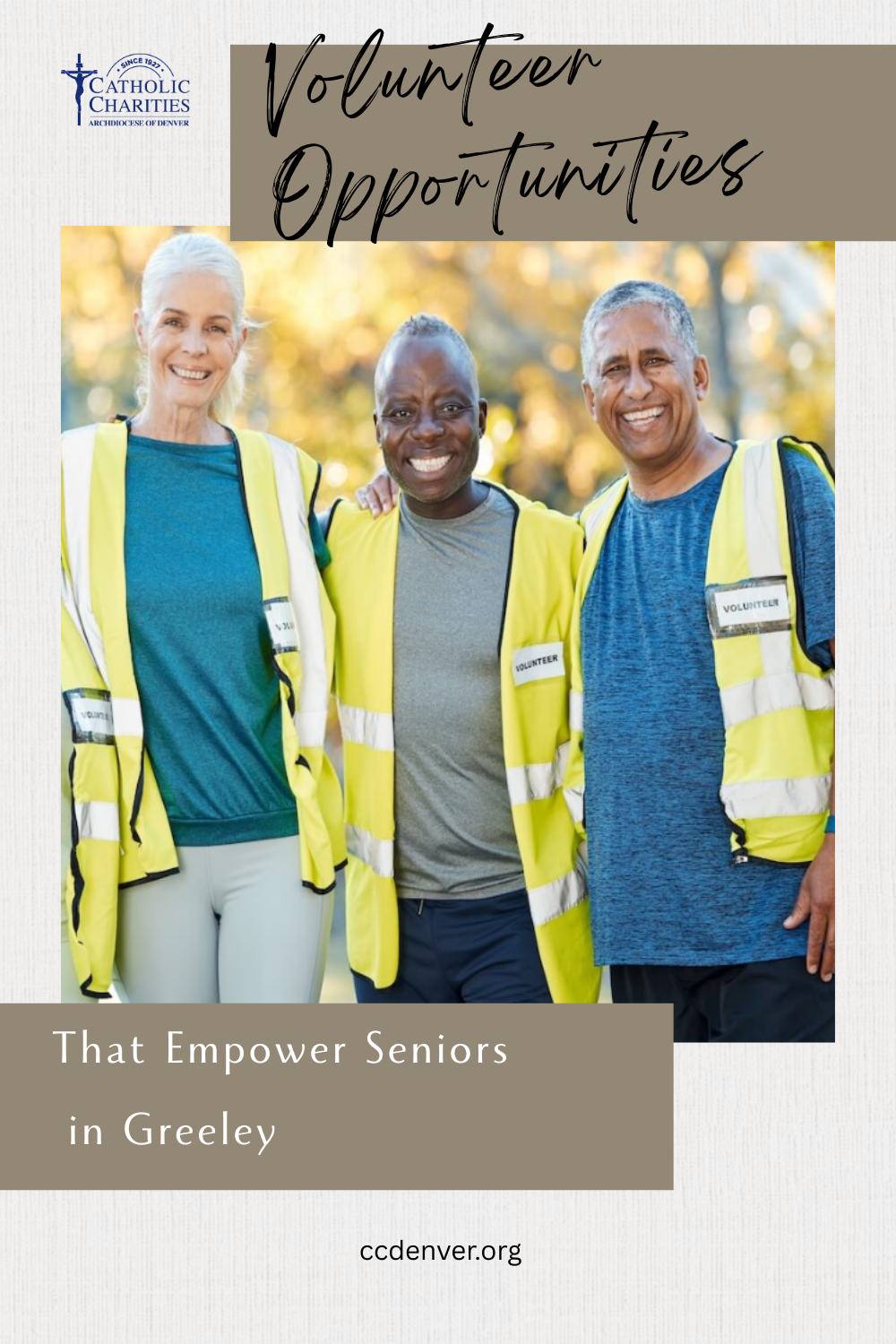
Volunteer Opportunities That Empower Seniors in Greeley
Catholic Charities
For more information about the author, click to view their website: Catholic Charities - Northern Colorado
Dec 09, 2025
Colorado - Northern Colorado


Volunteer Opportunities That Empower Seniors in Greeley
In Greeley, community involvement has always been a cornerstone of daily life. From neighborly interactions near Glenmere Park to long-standing service traditions rooted in faith and family, residents understand the value of helping one another. For many older adults, retirement opens the door to new ways of contributing—ways that are flexible, purposeful, and deeply rewarding.
Catholic Charities – Northern Colorado offers seniors in Greeley meaningful volunteer opportunities that go beyond simply lending a hand. These roles allow older adults to share their wisdom, build lasting connections, and make a direct, tangible impact on individuals and families throughout Weld County.
Why Volunteering Matters After Retirement
Retirement often brings freedom—but it can also bring uncertainty about how to stay connected and fulfilled. Volunteering helps bridge that gap by providing structure, social interaction, and a renewed sense of purpose.
For seniors, volunteer service can:
-
Reinforce identity and self-worth
-
Reduce loneliness and isolation
-
Keep minds engaged and spirits lifted
-
Create regular routines that support healthy aging
Catholic Charities – Northern Colorado understands that seniors are not stepping away from contribution—they’re stepping into a new chapter of service.
A Trusted Organization Serving Greeley and Beyond
Catholic Charities – Northern Colorado has a long-standing presence throughout the region, supporting individuals and families facing economic hardship, housing instability, food insecurity, and life transitions. In Greeley, the organization works closely with community partners to respond to local needs with compassion and care.
What makes Catholic Charities unique is its ability to combine professional services with the human touch—much of which comes from volunteers.
“Volunteers bring heart to everything we do,” says Lindsey Schwartz. “Our senior volunteers, in particular, offer empathy, patience, and perspective that make people feel seen and valued during difficult moments.”
Volunteer Roles Designed with Seniors in Mind
Catholic Charities – Northern Colorado recognizes that volunteers have different abilities, interests, and schedules. That’s why they offer a variety of roles that can accommodate physical comfort levels and personal preferences.
Volunteer opportunities may include:
-
Assisting with food programs and distribution efforts
-
Supporting administrative or clerical tasks
-
Helping with donation organization and outreach
-
Providing companionship and emotional support
-
Assisting staff with community-based programs
Many volunteer positions offer flexible scheduling, making it easy for seniors to participate without feeling overwhelmed.
The Power of Experience and Compassion
Seniors bring something uniquely valuable to volunteer service: lived experience. Years of problem-solving, caregiving, and navigating life’s challenges foster patience and understanding—qualities that are especially meaningful for those seeking help.
Senior volunteers often:
-
Listen without judgment
-
Offer calm reassurance
-
Build trust naturally
-
Provide consistency and dependability
These contributions help Catholic Charities – Northern Colorado create a welcoming environment where people feel respected and supported.
Building Community Through Service in Greeley
Volunteering doesn’t just help those receiving services—it strengthens the entire community. Seniors who volunteer often form close bonds with fellow volunteers, staff members, and program participants. These relationships foster belonging and connection, both of which are essential for aging well.
In Greeley’s diverse and growing population, volunteer service helps unite people across generations and backgrounds through shared goals of compassion and care.
Faith-Based Values with an Inclusive Mission
While Catholic Charities – Northern Colorado is grounded in faith-based principles, its volunteer opportunities are open to individuals of all beliefs and backgrounds. The focus is on service, dignity, and respect for every person.
Seniors can volunteer knowing their time contributes to a mission that values inclusion, integrity, and human connection.
Who Can Volunteer?
Catholic Charities – Northern Colorado welcomes:
-
Seniors and retirees seeking meaningful engagement
-
Individuals with a desire to help others
-
Volunteers looking for flexible, structured service
-
Those who value community-focused work
No specialized skills are required—training and guidance are provided for each role.
Getting Involved Is Simple
The process to begin volunteering is straightforward and supportive. Staff members work with each volunteer to identify interests and match them to current opportunities, ensuring a positive and fulfilling experience from the start.
Volunteers are never expected to do more than they’re comfortable with—balance and well-being are always respected.
Frequently Asked Questions (FAQs)
Do I need previous volunteer experience?
No. All necessary guidance and support are provided.
Is volunteering physically demanding?
Many roles are low-impact and adaptable to different abilities.
How often do volunteers serve?
Time commitments vary and can be flexible based on availability.
Are opportunities available specifically for seniors?
Yes. Many positions are well-suited for older adults.
Is volunteering open to non-Catholics?
Absolutely. Volunteers of all backgrounds are welcome.
Making an Impact—One Act of Service at a Time
Volunteering with Catholic Charities – Northern Colorado allows seniors in Greeley to remain engaged, valued, and connected while contributing to meaningful change in their community. Through empathy and service, older adults continue shaping a stronger, more compassionate Northern Colorado.
👉 To explore volunteer opportunities with Catholic Charities – Northern Colorado, visit their Seniors Blue Book listing and learn how your time and experience can make a difference.
Other Articles You May Like
Meaningful Volunteer Opportunities in Mobile, AL
Meaningful Volunteer Opportunities in Mobile, ALRetirement can open the door to a new chapter filled with freedom, flexibility, and opportunities to explore personal interests. For many older adults, it also creates an important question: What can I do with my time that feels meaningful?Some retirees look forward to traveling, gardening, or spending more time with family. Others want to continue contributing to their community, sharing professional experience, or building relationships with people who have similar interests.Volunteering offers an opportunity to do all three.Whether someone enjoys organizing events, working behind the scenes, helping with administrative projects, or supporting vulnerable community members, volunteer service can provide a meaningful connection to the people and places around them.For residents of Mobile, Alabama, nonprofit organizations offer different opportunities to participate in community life.VIA! Health Fitness and Enrichment Center, located on Dauphin Street in Mobile, provides volunteer opportunities that support senior programs, community outreach, fundraising, and organizational activities.The organization also coordinates a distinctive Volunteer Guardian Program, which helps protect vulnerable individuals who cannot make certain decisions independently and do not have an appropriate family member or friend to serve as guardian.Through these initiatives, VIA! offers ways for individuals to contribute their time, experience, and talents while supporting important community services.Why Volunteering Matters After RetirementRetirement changes everyday routines.For someone who spent decades working, raising a family, or managing professional responsibilities, suddenly having fewer structured obligations may feel unfamiliar.Volunteering can provide opportunities to establish a new routine while pursuing meaningful goals.Creating a Sense of PurposeMany volunteers enjoy knowing that their efforts contribute to something valuable.Helping organize an event, support a food drive, or complete office tasks can make a measurable difference to a nonprofit organization.Maintaining Social ConnectionsVolunteer projects often involve teamwork.Participants may meet people with different backgrounds, interests, and experiences.Sharing Professional ExperienceRetired educators, office professionals, business owners, healthcare workers, and others bring valuable skills.A person who spent years managing projects may enjoy helping coordinate a fundraiser.Someone with administrative experience may prefer clerical assistance.Learning New SkillsVolunteering can also introduce people to unfamiliar activities.A retiree may learn about nonprofit operations, event planning, technology, or community outreach.Creating a Regular RoutineScheduled volunteer assignments can provide structure and a reason to remain involved in community activities.The goal is not to replace retirement with another demanding job.Instead, volunteering offers opportunities to contribute at a personally appropriate pace.VIA! Health Fitness and Enrichment Center in MobileVIA! Health Fitness and Enrichment Center is a nonprofit community organization serving older adults and other community members throughout Mobile.The organization traces its history to Senior Citizens Services, established in 1970.Today, VIA! operates from the Arlene F. Mitchell Campus at 1717 Dauphin Street.Its mission emphasizes healthy, active, and independent living through fitness, education, social engagement, and community support.In addition to its member activities, the organization provides outreach programs, transportation-related services, community food assistance, adult day programming, and other resources.These initiatives create different opportunities for community participation.Why Volunteers Matter to VIA!Nonprofit organizations depend on a combination of professional staff, community partnerships, financial support, and volunteer assistance.VIA! identifies volunteers as important contributors to its programs.Some individuals support special events.Others assist with administrative work or outreach activities.Volunteers may also contribute specialized knowledge to help the organization complete projects.Who Can Volunteer?VIA! welcomes inquiries from community members interested in contributing their skills and time.The organization also offers formal and informal internship opportunities through local colleges and universities.Requirements vary by assignment.Its specialized Volunteer Guardian Program has additional eligibility and screening requirements.Prospective volunteers should contact VIA! to learn which opportunities are currently available.Volunteer Opportunities Available Through VIA!VIA!'s official volunteer information identifies several types of projects.These assignments allow individuals to contribute according to their experience, interests, and availability.Helping With Fundraising EventsFundraising activities support nonprofit services and community initiatives.Volunteers may help with event preparation, coordination, or other approved responsibilities.People who enjoy organizing activities or working with others may find these projects appealing.Supporting VIA!'s Annual CampaignVIA! conducts an annual giving campaign.Volunteers may be able to assist with organizational tasks related to fundraising and community outreach.Interested individuals should ask about current assignments.Providing Clerical AssistanceVIA! specifically identifies clerical work as a volunteer opportunity.Examples include:FilingBasic office tasksOrganizing informationSupporting administrative projectsRetirees with office experience may find these roles familiar and enjoyable.Administrative volunteering can also appeal to people who prefer quieter, behind-the-scenes assignments.Organizing Food DrivesVIA! operates community food distribution and emergency food pantry programs.Its volunteer opportunities include organizing canned food drives to help keep the emergency pantry stocked.Community members may assist by collecting donated food or coordinating an approved donation initiative.Volunteers should contact the organization about current pantry needs and acceptable items before organizing a drive.Supporting Community FundraisersVIA! invites supporters to host and plan fundraising events that benefit the organization.This may appeal to community groups, businesses, families, or individuals with event-planning experience.Any fundraising activity should be coordinated with VIA! before being advertised on the organization's behalf.Marketing, Research, and Social MediaVIA! also lists marketing, research, and social media among its volunteer opportunities.These assignments may suit individuals who enjoy:WritingResearchCommunicationsMarketingSocial mediaPromoting community eventsOrganizational projectsA retired marketing professional or someone comfortable with technology may enjoy applying existing skills in a nonprofit setting.Donating Event PrizesCommunity members can also contribute by donating door prizes for VIA! events.This can provide another way for individuals or businesses to support the organization.Prospective donors should confirm current needs and donation guidelines.Volunteering Through VIA!'s Community ProgramsVIA! operates several programs that support mature adults and other community members.Its internship information identifies opportunities to assist with activities and special events.GrandFriends Adult Day ProgramThe GrandFriends Adult Day Program provides supervised daytime services for participating adults.VIA!'s internship information identifies opportunities involving activity planning, interaction with participants, and assistance with daily routines.Because this program serves individuals who may have additional supervision or care needs, volunteers and interns must follow applicable requirements.Individuals interested in GrandFriends should ask about available roles, training, screening, and staff supervision.Community Food DistributionsVIA! hosts community food distribution initiatives.Its volunteer and internship information includes assistance with special events such as drive-through food distributions.These projects may involve organizational and logistical responsibilities.Specific assignments depend on current program needs.Holiday and Member EventsSpecial occasions provide opportunities for participants to gather and celebrate.VIA! identifies member events and holiday parties among activities supported through its volunteer and internship programs.Volunteers may be asked to assist with preparation or other event-related tasks.Computer and Library AssistanceVIA!'s internship information also identifies roles such as computer proctor and library assistant.These opportunities may be particularly interesting to individuals who enjoy technology, reading, organization, or helping others learn.Current availability should be confirmed directly.VIA!'s Volunteer Guardian ProgramOne of VIA!'s most distinctive initiatives is its Volunteer Guardian Program, often abbreviated VGP.This program serves vulnerable individuals who have been determined to need a court-appointed guardian and do not have an appropriate family member or friend available to fulfill that responsibility.The initiative operates through partnerships involving:VIA! Health Fitness and Enrichment CenterMobile County Probate CourtMobile County CommissionCity of MobileSouth Alabama Regional Planning Commission and Area Agency on AgingCommunity referral and support partnersUnlike general volunteering, guardianship involves formal legal responsibilities.What Does a Volunteer Guardian Do?A volunteer guardian may be appointed by the Probate Court to make certain decisions for an incapacitated person.These responsibilities are intended to protect the individual's health, safety, and welfare.Depending on the court order and applicable law, duties may involve:Monitoring living arrangementsSupporting appropriate medical decision-makingCommunicating with healthcare providersAddressing personal welfare concernsProtecting the individual's interestsUnderstanding the limits of court-appointed authorityA guardian's legal authority is determined by the court.Volunteer guardians are not automatically authorized to control every aspect of another person's life or finances.Why the Program MattersSome vulnerable individuals do not have family members or friends who can appropriately serve as guardians.Without suitable assistance, these individuals may face substantial difficulties with healthcare decisions, living arrangements, and personal safety.The Volunteer Guardian Program helps address this need through trained community volunteers and court oversight.Volunteer Guardian EligibilityVIA! publishes specific requirements for prospective volunteer guardians.Applicants must generally:Be at least 21 years oldHave access to a computerHave transportationBe willing to learn basic legal and medical informationSuccessfully complete a background checkBe able to commit approximately four to six hours per monthAdditional training, selection, and court appointment procedures apply.Training and ResourcesVIA! provides educational resources for its volunteer guardians.Topics include:Guardianship responsibilitiesCommunication with individuals who have disabilitiesUnderstanding medical issuesElder abuse awarenessLegal and ethical responsibilitiesDecision-making and personal welfareThese resources help volunteers understand the seriousness of the role.A Responsibility That Requires Careful ConsiderationBecoming a volunteer guardian is different from helping with a short-term event or food drive.It involves legal duties, ongoing communication, and decisions affecting another person's well-being.Individuals should review the requirements carefully before applying.Why Volunteer Opportunities Matter in Mobile CountyMobile County has numerous community organizations, service programs, and residents with different support needs.Volunteering creates connections between those who want to help and organizations working to address local challenges.Strengthening Community OrganizationsVolunteers contribute time and skills that can help nonprofit organizations maintain programs.Supporting Older ResidentsSenior-focused organizations often serve individuals with transportation, nutrition, social, or functional needs.Community volunteers can support approved activities that help these programs operate.Encouraging Intergenerational ConnectionsVolunteer projects may bring together retirees, working adults, and students.These interactions provide opportunities to exchange knowledge and experience.Using Local ExperienceLongtime Mobile County residents may bring valuable knowledge about the community and its resources.Encouraging Civic InvolvementCommunity service allows people to remain engaged with issues and causes that matter to them.Finding the Right Volunteer Role for Your InterestsVolunteering should reflect personal interests and practical abilities.A useful first step is identifying what type of contribution would feel rewarding.For People Who Enjoy OrganizationAdministrative assignments, filing, or event preparation may be a good fit.For People With Marketing ExperienceResearch, communications, and social media projects may provide an opportunity to share professional skills.For People Who Enjoy Community EventsFundraising initiatives and special activities may offer more interactive assignments.For People Interested in Food AssistanceOrganizing a canned food drive or supporting an approved food distribution project may be appealing.For People Seeking a Specialized Advocacy RoleThe Volunteer Guardian Program may be worth exploring for individuals prepared to undertake formal responsibilities.For StudentsVIA!'s internship opportunities may help students gain experience while contributing to community programs.All assignments depend on current organizational needs and individual eligibility.How to Volunteer Without OvercommittingA successful volunteer experience should be manageable.Review Your AvailabilityConsider how much time you can realistically contribute.Understand the AssignmentAsk what responsibilities are involved.Discuss Physical RequirementsSome assignments may involve standing, lifting, or moving supplies.Others may be desk-based.Ask About TrainingCertain positions may require orientation or specialized preparation.Start With a Manageable CommitmentA single event or limited assignment may be a useful starting point.Communicate ClearlyIf availability changes, inform the volunteer coordinator as early as possible.The Value of Professional Experience After RetirementOlder adults often bring decades of experience to volunteer positions.These skills may remain valuable long after someone retires from paid employment.Administrative ProfessionalsOffice experience may translate well to clerical or organizational work.Teachers and EducatorsEducational experience may be useful in approved learning and community activities.Business OwnersExperience with planning, budgeting, communications, or fundraising can be valuable.Marketing ProfessionalsSkills in writing, promotion, and social media may support nonprofit outreach.Healthcare and Social Service ProfessionalsRelevant experience may help individuals understand community needs, although specialized roles still require appropriate training and authorization.People Without Formal Professional ExperienceVolunteering is not limited to individuals with specialized credentials.Reliability, willingness to learn, and consistent participation can also make valuable contributions.Volunteering and Personal Well-BeingMany people find volunteer service personally rewarding.It may provide opportunities for purposeful activity, social interaction, and continued learning.A Sense of ContributionHelping with community projects can create satisfaction.Opportunities for ConnectionVolunteers may form relationships with staff members and other participants.Continued Mental EngagementLearning procedures or helping organize activities can provide opportunities to use different skills.Personal FulfillmentSupporting an organization with a meaningful mission may help individuals feel connected to their community.However, volunteering is not a treatment for loneliness, depression, or other health concerns.People experiencing persistent emotional distress should seek appropriate professional support.Volunteer Opportunities for Working AdultsNot everyone who volunteers is retired.Working adults may also want to contribute to community programs.Flexible AssignmentsSome projects may be event-based or limited in duration.Applying Existing SkillsProfessionals may be interested in research, administrative, or communications projects.Group VolunteeringBusinesses, clubs, and community groups may explore approved fundraising or food drive initiatives.Specialized ProgramsThe Volunteer Guardian Program requires a more defined commitment and formal eligibility process.Prospective volunteers should discuss scheduling expectations before applying.How Students Can Get InvolvedVIA! offers internship opportunities through local colleges and universities.The organization identifies both formal, for-credit internships and informal arrangements.Potential Internship ActivitiesDepending on availability, assignments may involve:GrandFriends program activitiesMember eventsFood distribution eventsFundraisingMarketing and researchSocial mediaComputer assistanceLibrary supportSkills VIA! Looks ForIts internship information emphasizes computer skills, strong communication, and interpersonal abilities.Students should ask about:Application requirementsAcademic credit arrangementsRequired hoursBackground screeningTrainingSupervisionSchedulingQuestions to Ask Before Becoming a VolunteerContacting an organization before committing can help establish realistic expectations.About the RoleWhat assignments are currently available?What does a typical volunteer shift involve?Is prior experience required?Can responsibilities be adjusted to individual abilities?About SchedulingHow frequently are volunteers needed?Are opportunities available during weekdays?Are event-based assignments offered?Is a minimum commitment required?About PreparationIs orientation provided?Are background checks necessary?What training is required?Who supervises volunteers?About Special RequirementsAre certain assignments limited by age?Are there physical requirements?Is transportation necessary?Does the position involve confidential information?For guardianship roles, applicants should also ask about legal duties, court appointment, and ongoing reporting responsibilities.Expert Tip for Choosing a Volunteer OpportunityExpert Tip: Begin by identifying one skill you enjoy using and one cause that matters to you. Then ask a nonprofit organization whether those two interests connect with a current volunteer need.For example, someone who enjoys organizing information and wants to support older adults might be well suited for an administrative assignment.Choosing a role that matches personal interests can make long-term volunteering more enjoyable and sustainable.How to Get Started With VIA! Volunteer OpportunitiesStep 1: Explore VIA!'s MissionReview the organization's senior programs, outreach services, and community activities.Step 2: Identify Your SkillsConsider whether you prefer administrative work, fundraising, communications, food drives, or more specialized service.Step 3: Review Current OpportunitiesVisit https://viamobile.org/get-involved/ to learn about volunteering.Step 4: Contact VIA!Call 251-478-3311 to ask which volunteer assignments are currently available.Step 5: Discuss Your AvailabilityExplain how often you can volunteer and which activities interest you.Step 6: Ask About RequirementsConfirm whether orientation, training, screening, or special qualifications apply.Step 7: Consider the Volunteer Guardian ProgramIf you are interested in court-appointed advocacy and meet the program's requirements, review https://viamobile.org/volunteer-guardian-program/.Step 8: Begin With an Appropriate AssignmentChoose a role that fits your schedule, abilities, and commitment level.Frequently Asked Questions About Volunteering in Mobile1. Does VIA! Health Fitness and Enrichment Center accept volunteers?Yes. VIA! lists volunteer opportunities involving fundraising, clerical assistance, food drives, special events, marketing, research, and other approved activities. Contact the center to confirm current openings.2. Do volunteers have to be senior citizens?No. VIA! welcomes community members interested in volunteering. Specific roles may have age requirements, and its Volunteer Guardian Program requires applicants to be at least 21.3. What is VIA!'s Volunteer Guardian Program?The Volunteer Guardian Program works with Mobile County partners and the Probate Court to help provide guardians for incapacitated individuals who do not have appropriate family members or friends available for the role.4. How much time does a volunteer guardian need to commit?VIA! states that applicants should generally be able to commit at least four to six hours per month. Additional training, screening, and legal responsibilities apply.5. Can college students volunteer or complete internships at VIA!?Yes. VIA! advertises formal and informal internships through local colleges and universities. Available assignments may involve events, community programs, administrative support, or marketing projects.Make a Difference Through Community ServiceVolunteering provides an opportunity to turn personal interests, professional experience, and available time into meaningful community contributions.For older adults, community involvement may also offer opportunities to establish routines, meet new people, and continue using valuable skills after retirement.For working adults and students, volunteering can provide practical experience and a closer connection to local nonprofit organizations.VIA! Health Fitness and Enrichment Center offers several ways to become involved in Mobile County.From fundraising and administrative assistance to food drives, internships, and its specialized Volunteer Guardian Program, the organization provides opportunities to support programs that serve older adults and vulnerable community members.Whether you have a few hours available for a community event or are interested in a more substantial volunteer commitment, contacting VIA! can help you explore which opportunities may be appropriate.Your experience, reliability, and willingness to contribute may help strengthen services that matter to the Mobile community.Featured Seniors Blue Book ListingVIA! Health Fitness and Enrichment CenterRecommended Main SBB Category: Volunteer OpportunitiesAddress: 1717 Dauphin Street, Mobile, AL 36604County: Mobile County, AlabamaPhone: 251-478-3311Development, Marketing and Special Events: 251-470-5229Website: https://viamobile.org/Volunteer Information: https://viamobile.org/get-involved/Volunteer Guardian Program: https://viamobile.org/volunteer-guardian-program/Organization Type: Nonprofit community organizationVolunteer Opportunities: Fundraising assistance, annual campaign support, clerical work, community food drives, event-related donations, community fundraisers, marketing, research, social media, and other available organizational projects.Additional Opportunities: College internships and the Volunteer Guardian Program.Volunteer Guardian Requirements: Age 21 or older, computer access, transportation, background check, willingness to learn legal and medical information, and approximately four to six hours of monthly availability.Participation Note: Volunteer opportunities, screening requirements, and assignments depend on current organizational needs.Seniors Blue Book Business Profile: https://seniorsbluebook.com/senior-resources/via-health-fitness-and-enrichment-center-4Find VIA! Volunteer Opportunities on Seniors Blue BookLooking for meaningful volunteer opportunities in Mobile, Alabama?Explore VIA! Health Fitness and Enrichment Center through its Seniors Blue Book listing on SeniorsBlueBook.com.Learn about the organization's community programs, volunteer initiatives, and opportunities to support services for older adults.Contact VIA! to discuss volunteer availability, internship opportunities, fundraising involvement, or the Volunteer Guardian Program.
Volunteer Opportunities in Mobile, AL
Many people want to support older adults but are unsure where their skills would be useful. Some can commit a few hours regularly; others can help with a project or event. Finding the right role begins with matching an organizations actual needs to the time and responsibilities a volunteer can sustain.For people exploring volunteer opportunities in Mobile, AL, VIA! Health Fitness and Enrichment Center publishes several ways to get involved. Its options range from office and fundraising support to a separate volunteer guardian program with formal responsibilities.What makes a volunteer role a good fitA useful match considers interests, availability, skills, physical demands, and training. A person who enjoys organizing records may contribute differently from someone comfortable helping with events or communications.Ask what the organization needs now. A published list is a starting point, not a guarantee of an immediate opening or an assignment suited to every applicant.Be specific about what you can offerWrite down the days and hours you can reliably provide, the tasks you enjoy, and any limitations. Include whether you prefer recurring work, a short project, or occasional events.Be candid about experience. You do not need to claim expertise you do not have. Ask what training and supervision are provided and which tasks require particular qualifications. VIA! Health Fitness and Enrichment CenterPhone: 251-478-3311VIA!s official volunteer page lists fundraising events, annual campaign assistance, clerical work, food drives, and marketing, research, or social media support. Explore general support rolesAsk which roles are currently available and what a typical shift involves. Clarify the location, expected commitment, supervisor, and how work is assigned.A person helping with an event should know the preparation and follow-up involved, not just the event date. Someone doing office work should understand the procedures for records and confidentiality before beginning.Questions for the first conversation include:Which roles are open now?What commitment and training are expected?Are screening or background checks required for this role?Who supervises the work and answers questions?How should I report an absence or change in availability?Ask about internships separatelyThe volunteer page also describes formal and informal internships through colleges and universities, with examples involving activities, member events, office or library support, and communications. Students should confirm placement requirements with both VIA! and their school. Ask who approves learning objectives, hours, supervision, and any academic credit. A general volunteer inquiry does not establish an approved internship.If a role involves participants or sensitive information, clarify boundaries before beginning. Volunteers should follow staff direction rather than taking on care or administrative responsibilities that have not been assigned.The Volunteer Guardian ProgramVIA!s separate Volunteer Guardian Program page describes a partnership involving Mobile County Probate Court and community organizations. Guardians are appointed by the court to make decisions for incapacitated people who lack appropriate family or friends to fulfill that role. A different level of commitmentThe published program information seeks applicants age 21 and older with transportation, computer access, the ability to learn relevant legal and medical information, a background check, and at least four to six hours per month available. Ask for current application and training requirements. Guardianship is a formal role with responsibilities defined through the court and program, not an informal extension of a social visit.Before applying, discuss the duties, reporting expectations, support, and boundaries in detail. Ask how a guardian receives guidance when a difficult decision arises and what happens if availability changes.Choose a role you can maintainA formal ongoing role may fit one persons circumstances while a short project fits anothers. Both require realistic commitments and clear communication.Do not choose a role solely because it sounds most urgent or impressive. Ask what dependable participation looks like and whether you can meet that expectation over time.Prepare for volunteering responsiblyOnce a role is offered, obtain the orientation details, start date, contact information, and any documents required. Ask how to handle questions, concerns, or situations outside the assignment.If the role involves older adults, respect privacy and preferences. Do not take photographs, share stories, make promises, or arrange outside contact without following the organizations procedures.Keep communication simple and reliableUse the agreed method to confirm shifts and report changes. If you cannot attend, give the required notice so staff can plan around the absence.Ask for feedback after the first few assignments. A small adjustment in task, schedule, or training may make the role more useful to the organization and more sustainable for you.Involve a group only after coordinationA workplace, club, or family group may want to help with a food drive or event. Contact VIA! before collecting items or announcing a project so it meets a current need.Confirm acceptable donations, delivery arrangements, deadlines, and the staff contact. An organized project is easier to use than a surprise collection that creates extra work or does not match program needs. Why volunteering matters locally in MobileLocal volunteering can connect peoples skills with specific community needs. VIA!s published address is 1717 Dauphin Street, Mobile, AL 36604. Confirm whether the proposed role occurs there or at another location.Consider travel and schedule reliability before committing. A regular role should fit the volunteers real circumstances, including work, caregiving, and transportation.Weather or event changes may affect assignments. Ask how updates are sent and keep the appropriate staff contact available rather than relying on an old calendar or social media announcement. How to get started1. Identify your interests, skills, and realistic availability.2. Call VIA! at 251-478-3311 to ask about current roles.3. Discuss duties, screening, training, and supervision.4. If considering guardianship, request that programs separate application information.5. Confirm the assignment and complete required orientation.6. Review the fit after beginning and communicate any changes promptly.Practical tip: Offer a clear commitment, such as a regular morning or a defined project, rather than saying you can help anytime. Specific availability helps staff match work to a dependable schedule. Related categoriesSenior Transition ServicesTransition Specialists Care Management
Volunteer Opportunities in Sarasota, FL
Retirement can provide something many people rarely had during their working years: time.For some older adults, that creates an opportunity to volunteer, share professional skills, build new friendships, and stay connected to the community. Other Sarasota residents may be looking for family volunteer projects, service opportunities through a church or civic group, or a meaningful way to help older adults who are isolated.For people searching for volunteer opportunities in Sarasota, FL, Lutheran Services Florida and Senior Friendship Centers provide two very different ways to serve.Lutheran Services Florida offers volunteer opportunities across a broad statewide human-services network, while Senior Friendship Centers focuses heavily on serving older adults throughout Southwest Florida.Why Volunteer?Volunteering can provide: Social connection Purpose Community involvement Opportunities to use existing skills Opportunities to develop new skills Intergenerational connection Volunteering does not need to become another full-time job.Some organizations can use people for: Occasional projects Monthly service Weekly commitments Group activities Special events The right role depends on the volunteer's interests, health, transportation, and available time.Lutheran Services Florida Sarasota Phone: 941-358-6330Sarasota adult-advocacy location:5104 N. Lockwood Ridge Road, Suite 307 Sarasota, FL 34234LSF is a nonprofit human-services organization with more than 60 programs across Florida. Current volunteer opportunities span refugee services, family support, child welfare, early childhood programs, food assistance, administrative support, and other community-service activities.Refugee and Immigrant SupportLSF volunteers may assist newly arriving refugees and immigrant families.Current volunteer examples include: Mentoring a family new to the United States Helping set up apartments Sorting donated household goods Administrative support These roles can be a good match for volunteers who enjoy helping families adjust to new surroundings.Administrative SupportMany nonprofit programs need behind-the-scenes assistance.LSF lists opportunities involving: Filing Organization Scheduling support Event preparation For retirees with administrative, office, business, or organizational experience, these tasks can provide a practical way to contribute professional skills.Children and Family ProgramsLSF volunteer opportunities also include working with family-resource and early-childhood programs.Examples may involve: Reading to children Supporting art activities Helping prepare events Teaching computer skills Assisting with classes Not every opportunity is available in every Florida location, so Sarasota residents should complete an interest form and ask which local roles are currently open.Flexible Individual VolunteeringLSF says individual volunteers may contribute anything from a few hours per month to many hours per week, depending on the available opportunity.The organization also accepts interest from: Students Groups Families in limited appropriate projects Group VolunteeringChurch groups, employers, civic organizations, and groups of friends can ask about projects that allow several people to serve together.LSF states that it participates in events throughout the year that can accommodate volunteer groups.Senior Friendship CentersPhone: 941-955-21221888 Brother Geenen Way Sarasota, FL 34236Senior Friendship Centers has relied on volunteers throughout its history and offers numerous roles supporting older adults across Sarasota and Southwest Florida.Activity Center VolunteersThe Sarasota Activity Center hosts: Classes Exercise Games Art Live music Dancing Educational activities Meals Volunteers can help make those programs possible.Senior Friendship Centers identifies volunteers serving as: Greeters Teachers Instructors Technology helpers Musicians Office assistants This can be an appealing option for older volunteers who want to share a hobby or professional skill with peers.Friendly Visitors for Homebound SeniorsOne particularly senior-focused opportunity is Friendship at Home.This program pairs isolated older adults with friendly visitors and supportive community connections.Senior Friendship Centers currently invites people interested in volunteering with Friendship at Home to contact its aging-resource program.For an isolated senior, a consistent visitor may provide something that cannot be replaced by a delivery or phone app: personal connection.Teaching and Lifelong LearningPeople with expertise in: Art Music Languages Technology Fitness Crafts Other subjects may find opportunities to teach or assist with activity-center programs.Retirement can be an opportunity to turn decades of experience into community education.Volunteer Application ProcessSenior Friendship Centers currently offers both: Online volunteer applications Printable applications Its current Sarasota County volunteer contact is the organization's Volunteer Specialist at 941-556-3223, while the main Seniors Blue Book listing uses 941-955-2122.After submitting an application, prospective volunteers can learn about current organizational needs before selecting a role.Why Volunteer Opportunities Matter Locally in SarasotaSarasota has a large population of retirees with decades of professional and life experience.At the same time, local nonprofits serve: Seniors Caregivers Children Refugees Families in crisis Vulnerable adults Volunteer service creates a bridge between those resources and community needs.Senior Friendship Centers notes that volunteers have been central to its work since 1973, while LSF says many of its more than 60 Florida programs depend on volunteer support.How to Get Started1. Decide Who You Want to Help 2. Decide How Much Time You HaveBe realistic about your availability.3. Contact Lutheran Services FloridaFor Sarasota-area questions, call the SBB-listed number 941-358-6330 and ask about currently available local volunteer roles.LSF also accepts volunteer-interest forms through its website.4. Contact Senior Friendship CentersCall the SBB-listed number 941-955-2122, or contact the Sarasota County Volunteer Specialist at 941-556-3223.5. Complete Required FormsProvide requested application and screening information.6. Attend Orientation or TrainingUnderstand the organization's policies and expectations.7. Start With a Manageable CommitmentIt is easier to increase volunteer hours later than to overcommit immediately.Related CategoriesSenior Organizations & Services Senior Centers Social Services
Local Services By This Author
Catholic Charities Northern
Volunteer Opportunities 1442 North 11th Avenue, Greeley, Colorado, 80631Catholic Charities extends the healing ministry of Jesus Christ to provide life-affirming services to the poor and those in need at every age and every stage of life. It is our goal to maintain a warm, welcoming, and safe environment for each client we serve. We operate a continuum of care model designed to help us walk with clients and meet them where they are. Our volunteers provide a diverse set of skills and services, including operational services and direct client assistance. We believe in a neighbor helping neighbor approach and empower our volunteers to provide a unique presence in our ministries while building an irreplaceable rapport with clients and staff. Our volunteer opportunities include:Kitchen VolunteerHelp provide nutritious meals to individuals and families utilizing shelter services. Volunteers can assist with meal preparation, serving, and cleanup or support our Sack Lunch Program, which provides meals to community members experiencing hunger.Donation Center VolunteerHelp turn generous community donations into essential resources for those in need. Volunteers assist with accepting, organizing, and sorting donations or help in our store area, where shelter guests and community members can access clothing and other basic necessities.Friendly VisitorMake a meaningful connection with an older adult in our community. Friendly Visitors are matched with older adults receiving case management services to provide companionship, conversation, and social connection while helping reduce isolation and loneliness.
Catholic Charities Northern
Senior Organizations & Services 1442 North 11th Avenue, Greeley, Colorado, 80631Catholic Charities extends the healing ministry of Jesus Christ to provide life-affirming services to the poor and those in need at every age and every stage of life. It is our goal to maintain a warm, welcoming, and safe environment for each client we serve. We operate a continuum of care model designed to helpus walk with clients and meet them where they are. Our volunteers provide a diverse set of skills and services, including operational services and direct client assistance. We believe in a neighbor helping neighbor approach and empower our volunteers to provide a unique presence in our ministries while building an irreplaceable rapport with clients and staff. OUR SERVICESCatholic Charities serving Weld County offers many services, both for people experiencing homelessness, as well as preventative services for those who are at risk of becoming unhoused. Extended Stay Program:Samaritan House Greeley offers 24/7 extended shelter for men, women and families seeking housing. Participants have access to laundry, shower, three meals every day and weekly case management. Emergency Shelter:Samaritan House Greeley on the Guadalupe Campus offers overnight shelter and three meals a day to women and families in need of immediate shelterassistance. Guests have access to laundry and shower facilities as needed. Samaritan House Greeley on the Guadalupe Campus offers overnight shelter and three meals a day to women and families in need of immediate shelter assistance. Guests have access to laundry and shower facilities as needed.Emergency Assistance: The Guadalupe Community Center runs a hotline that provides financial assistance to qualified candidates within Weld County. Once approved, candidates can receive funding to contribute to past-due rent and utility balances. Older Adults Case Management:Designed as a homelessness prevention initiative, this program helps seniors, both in the shelter and in the community. Case managers assist with paperwork, housing, budgeting and guidance with local resources.