Why Seniors Should Try Quinoa
Talem Home Care & Placement Services
For more information about the author, click to view their website: Talem Home Care & Placement Services
May 16, 2024
Colorado - Denver Metro


March is National Quinoa Month and now is the perfect time learn about this tasty superfood and how it can help you and your senior parent stay healthy. Quinoa is a grain, but most people aren’t as familiar with it as they are with grains like oats or wheat. Quinoa is considered a superfood because it’s packed with vitamins and essential nutrients. And it’s a very versatile grain that can be used in lots of different dishes.
Estimates are that more than 70% of seniors are malnourished, even seniors who eat regularly. Not eating, or not eating healthy foods, can contribute to poor health in seniors and can make existing medical conditions worse. That’s why seniors should learn about the many health benefits of quinoa.
In-home care can help seniors prepare healthy and tasty meals to help battle malnutrition. With the help of in-home care providers seniors can prepare and try lots of new healthy foods, including quinoa. Some of the reasons why seniors should try quinoa today are:
Essential Vitamins and Minerals
Quinoa is a nutrient-dense food, packed with essential vitamins and minerals. It is an excellent source of protein, containing all nine essential amino acids, making it a complete protein. Seniors who aren’t getting enough protein can add protein to salads or soups by adding quinoa to those dishes.
Full Of Fiber
Quinoa is a good source of dietary fiber, both soluble and insoluble. Fiber plays a crucial role in digestive health by promoting regular bowel movements, preventing constipation, and supporting a healthy gut microbiome. Eating more fiber can also lower the risk of chronic diseases like heart disease and diabetes.
It’s Gluten Free
Quinoa is naturally gluten-free, making it a suitable grain alternative for those with gluten sensitivity or celiac disease. It provides a safe and nutritious option for individuals who need to avoid gluten-containing grains.
Antioxidants
Quinoa is rich in antioxidants, including quercetin and kaempferol. These compounds help neutralize harmful free radicals in the body, protecting cells from oxidative stress. Antioxidants play a role in reducing inflammation and may contribute to overall health and disease prevention.
Heart Healthy
Quinoa is beneficial for heart health due to its high fiber content, which helps lower cholesterol levels. Additionally, it contains heart-healthy monounsaturated and polyunsaturated fats. The combination of fiber and healthy fats supports cardiovascular function and may reduce the risk of heart disease.
Blood Sugar Regulation
The complex carbohydrates and fiber in quinoa contribute to stable blood sugar levels. This is particularly beneficial for seniors with diabetes or those at risk of developing diabetes. Eating quinoa instead of pasta or rice is recommended for seniors with diabetes. Quinoa’s low glycemic index helps prevent rapid spikes and crashes in blood sugar.
Weight Management
The combination of protein, fiber, and complex carbohydrates in quinoa can contribute to a feeling of fullness and satiety. Including quinoa in meals may help control appetite, which can help seniors who are struggling to maintain a healthy weight.
Better Bone Health
Quinoa is a good source of important minerals for bone health, including magnesium, phosphorus, and manganese. These minerals play a crucial role in maintaining strong and healthy bones, preventing conditions like osteoporosis.
Rich in Essential Minerals
Quinoa is a notable source of essential minerals, including iron, magnesium, phosphorus, and zinc. These minerals are vital for various bodily functions, such as oxygen transport, energy production, and immune system function.
Versatility
Quinoa’s versatility makes it an easy and enjoyable addition to various dishes. It can be used in salads, soups, casseroles, and as a side dish. Its neutral flavor allows it to complement a wide range of ingredients, making it a flexible and nutritious ingredient in the kitchen.
Improved Digestive Health
The fiber in quinoa supports digestive health by promoting regular bowel movements and providing prebiotics for the growth of beneficial gut bacteria. A healthy digestive system is essential for nutrient absorption and overall well-being.
If you or an aging loved one are considering In-Home Care in Boulder, CO please contact the caring staff at Talem Home Care & Placement Services today. Call (720) 789-8529
At Talem Home Care of Broomfield, we provide passionate, understanding, and flexible caregivers in Broomfield, Arvada, Aurora, Boulder, Brighton, Commerce City, Denver, Erie, Firestone, Lafayette, Lakewood, Longmont, Louisville, Northglenn, Sherrelwood, Thornton, Welby, Westminster, Wheat Ridge and surrounding areas in Colorado.
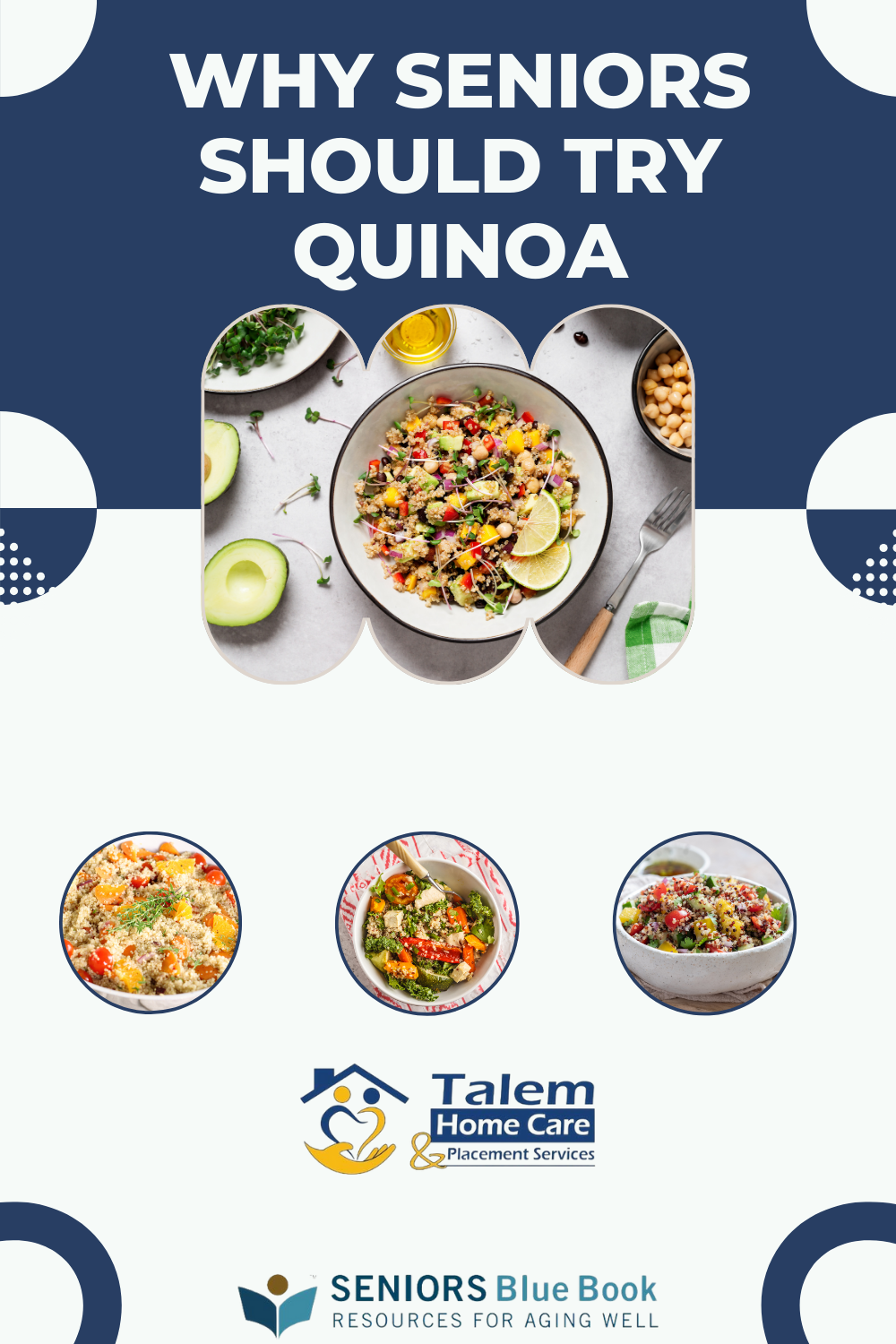
- To view the original version of this article visit www.talemhomecare.com/broomfield/why-seniors-should-try-quinoa/
- Seniors Blue Book was not involved in the creation of this content.
Other Articles You May Like
How to Organize After the Holidays
Hey there! Do you already have your holiday decorations put away, or will your Christmas tree be up until February? To be honest, I can be either person, depending on the year. This year, Ive been a little slow to pack up my garlands and lights, but thats ok. Organization doesnt mean being perfect all the time.The holiday season can bring fun and joy, but it can also bring chaos to the systems in your home. Theres a proliferation of stuff -- cards, packages, gifts of all kinds, decorations, wrapping paper, social engagements, emotions. After all the partying is over, we can be left with a feeling of overwhelm. As a professional organizer, here are my tips for how to handle all of the stuff that came into your house over the holidays and bring (a little more) peace to your home and heart: Decide what to keepThis is really the first (and most critical) thing to do as soon as youre ready to move on from the holidays. Take a look at everything that came into your house during the season and keep only what you truly want to have. I dont recommend keeping anything you dont love, need, or want, even if it was a gift (more on that below). If you shove that ugly sweater in a closet, forget about it, and discover it two years later, youll still have to make the same decisions about what to do with it. Decide what to do as soon as you can. Find a home for everything youre keeping (and put it there right away). If you are keeping a newer/different version of something you already own (for example, you got a nicer coffee maker for Christmas), consider donating or discarding your old item. In other words, follow the one-in, one-out rule if its appropriate.Let go of unwanted gifts Something I hear all of the time from clients is I dont really like this, but it was a gift and I feel guilty about giving it away.I know that gifts can be tricky. I think honoring the intention of the gift given to us is actually more important than holding onto the actual physical object. Usually, someone gives you a gift to show you that they care about you or because they hope youll enjoy it, not because they expect you to become the permanent caretaker of that object. (And if someone gives you a gift receipt, they dont mind if you return it dont feel guilty!)So how do I handle gifts I dont love? I go out of my way to thank the giver in a way thats sincere. I dont tell someone I loved a particular gift if I didnt, but I do thank them for thinking of me and for their generosity. If I dont want or cant use a gift, I pass it on to someone who can enjoy it more than me. That may mean donating it to a charity, giving it away through my local Buy Nothing group, or regifting to someone who I know would appreciate it. Sort the trash and recyclingYou probably ended up with lots of boxes after Black Friday. Go through any extra packaging and recycle, throw away, or give away what you cant use immediately. My clients often have a ton of empty boxes they are saving for someday, but those boxes can take up a lot of space (and its likely that more will come into your home soon). Getting them out is one of the easiest ways you can make your home feel less cluttered immediately. If you have boxes in good condition, you can post them on your local Buy Nothing or neighborhood social media group for someone who is moving. Take another look at your holiday cardsBefore you shove them into a box, look at each card individually. Is this specific card something that will be meaningful to you in a year? 10 years? If its not, appreciate the person who sent it to you and recycle the card. If it truly is a keepsake, save it in an album or memory box. Evaluate your holiday decorMany of my clients struggle with accumulating and storing holiday decor. I recommend thinking about any decor you didnt put out this year will you put it out next year, or are you over it? Do you have more than you can use? Set aside anything you no longer love or want to donate next fall before the holidays (generally, thrift shops do not have space to store out-of-season items for long periods of time). And make sure to carefully store the items you do love and so you can enjoy them next year
More Than a Holiday Meal: How GIFT Is Bringing Purpose, Connection, an
Through its Thanksgiving To-Go Kits and year-round intergenerational programming, GIFT (Giving It Forward, Together) is changing the way Pittsburgh thinks about aging, social isolation, and the power of human connection.As the holiday season approaches, many families begin thinking about Thanksgiving traditions: gathering around the table, sharing a warm meal, exchanging stories, and spending time with the people they love. But for thousands of older adults, the holidays can look very different. For individuals who are homebound, living with physical or cognitive disabilities, immunocompromised, or experiencing social isolation, a holiday that traditionally celebrates togetherness can instead serve as a reminder of the connections they may be missing.This is where GIFT (Giving It Forward, Together) makes a meaningful difference.For 11 years, GIFT has been creating opportunities for connection, purpose, and belonging throughout the Pittsburgh community. Through its weekly intergenerational programming and annual holiday initiatives, GIFT has made a tremendous impact, serving close to 1,000 older adults and bringing together people of different ages and backgrounds through meaningful acts of service.At the heart of GIFT's mission is a simple but powerful belief: Everyone deserves to feel seen, valued, and connected, regardless of age or circumstance.Thanksgiving To-Go Kits: More Than a Meal, a Reminder That Someone CaresOne of GIFT's most meaningful initiatives each year is its Thanksgiving To-Go Kit program. Designed specifically for older adults who may otherwise have difficulty celebrating the holiday, these thoughtfully assembled kits provide more than just the necessities for a Thanksgiving meal. They deliver a message that someone in the community is thinking about them.Last year, GIFT distributed more than 800 Thanksgiving kits to older adults throughout the Pittsburgh area. Each kit included fresh, hot holiday food, handwritten cards, and small gifts carefully selected to bring comfort and joy. While the meal itself is important, the thought and intention behind each item are what make the experience especially meaningful.Every kit is curated by students in the Pittsburgh community and assembled by volunteers of all ages and stages of life. From students and families to older adults and community members, people come together with one shared purpose: ensuring that someone who might otherwise feel forgotten during the holidays knows they are remembered.The kits are designed to provide recipients with the essential components needed to celebrate Thanksgiving in the comfort of their own homes. For someone who cannot easily shop, prepare a meal, or participate in traditional holiday gatherings, receiving a complete holiday experience can be incredibly meaningful.But perhaps the most important part of the kit cannot be measured by what is inside the box. It is the feeling of opening the door and realizing that someone took the time to think of you. It is the handwritten card, the carefully chosen gift, and the knowledge that people who may never have met you wanted to make your holiday special.It is not simply a meal being delivered. It is a reminder that you matter.For individuals experiencing isolation, that message can make an extraordinary difference.The Power of Feeling Seen: Why Purpose and Connection Matter as We AgeSocial isolation and loneliness among older adults are increasingly recognized as important public health concerns. According to the Centers for Disease Control and Prevention (CDC), social isolation and loneliness are associated with increased risks of depression, anxiety, heart disease, stroke, cognitive decline, and premature death.Research from the National Academies of Sciences, Engineering, and Medicine has similarly identified social isolation and loneliness as significant risk factors affecting the health and well-being of older adults.But addressing isolation requires more than simply putting people in a room together. Meaningful connection happens when individuals feel that they have something to contribute, that their presence matters, and that they are part of something larger than themselves.This is the philosophy behind GIFT.Per the US Census Bureau, Allegheny County (home to Pittsburgh) ranks as one of the oldest U.S. counties by median and senior age distributionfrequently cited as the sixth-oldest or among the top 10 oldest counties in the U.S. by population percentage, with roughly 19% to 27% of its population aged 65 and older. Through opportunities to participate, volunteer, share experiences, and build relationships, GIFT creates an environment where older adults are not viewed simply as recipients of services, but as valued contributors to their communities.There is an important distinction between being cared for and being given the opportunity to give back. Both matter, but purpose can be just as important as support.Research on intergenerational engagement reinforces this idea. A 2021 systematic review published in Ageing Research Reviews, examining 44 studies, identified potential benefits of intergenerational participation for older adults, including improvements in social functioning, anxiety, and physical activity. A 2023 meta-analysis also found positive associations between intergenerational programs and older adults' quality of life, generativity (the feeling of contributing to future generations), and depressive symptoms.Although researchers continue to study the long-term effects of these programs, the findings support something GIFT sees in its community every day: meaningful relationships and opportunities to contribute can enrich the lives of both generations.Bridging the Generational Gap: Creating a More Empathetic FutureWhile GIFT is committed to improving the lives of older adults, its mission extends well beyond one generation.For many young people, their primary exposure to older adults may be limited to their own grandparents or family members. Without opportunities to interact with people from different generations, young adults may have limited insight into the challenges, experiences, abilities, and contributions of the broader senior population.GIFT works to change that.Through weekly intergenerational programming, students and older adults come together to share experiences, collaborate on meaningful projects, and learn from one another. These interactions create opportunities for students to develop empathy, communication skills, and a deeper understanding of aging.At the same time, older adults have opportunities to share their wisdom, life experiences, perspectives, and talents. They are reminded that their voices matter and that they continue to have an important role in shaping the world around them.The result is a relationship that benefits everyone involved.When younger generations have the opportunity to build genuine relationships with older adults, they begin to see aging differently. Rather than viewing older adults through stereotypes or assumptions, they begin to recognize individuals with unique stories, abilities, interests, and aspirations.This is how communities become more compassionate. It starts with creating opportunities for people to know one another.Rethinking Aging: Moving Beyond Traditional Senior ProgrammingGIFT believes that aging should not mean becoming disconnected from the community or losing a sense of purpose. Instead, it should be an opportunity to continue growing, contributing, learning, and building relationships.As life expectancy increases, the conversation surrounding aging needs to evolve. It is no longer enough to focus solely on living longer. We must also consider how we can support people in aging better.Regardless of cultural, ethnic, racial, or socioeconomic differences, aging is something every person shares. It is one of the few experiences that connects us all.GIFT is working to make that shared experience more meaningful by creating opportunities for intergenerational wellness, community involvement, and purposeful engagement.And this commitment does not end with Thanksgiving.In addition to Thanksgiving To-Go Kits, GIFT provides annual Passover To-Go and Winter Holiday Kits. Each initiative is thoughtfully curated and designed by students in the Pittsburgh community, with volunteers helping bring the kits to life. Whether providing the necessities for a Passover Seder, a warm and festive winter package, or a complete Thanksgiving celebration, each kit is created with the same intention: helping older adults feel remembered, included, and cared for.Together, these programs demonstrate how simple acts of kindness, when organized around a shared purpose, can create meaningful community impact.A Pittsburgh Community Where Everyone BelongsAfter 11 years, GIFT continues to demonstrate that addressing social isolation requires a community-wide commitment. It takes students willing to learn, volunteers willing to give their time, and community members willing to recognize that older adults deserve opportunities for connection just as much as anyone else.The Thanksgiving To-Go Kits are a beautiful example of what can happen when generations come together with a common purpose. A student thoughtfully selects the contents, volunteers assemble each package, and an older adult receives something that communicates far more than the value of the items inside.They receive a reminder that they are part of a community.As GIFT looks ahead, its vision remains focused on bridging generations, challenging the way society views aging, and creating a future where people of every age feel valued and connected.Because ultimately, the goal is not simply to add more years to life, but to add more life, meaning, and connection to those years.Do you know an older adult who would benefit from a Thanksgiving To-Go Kit or one of GIFT's annual holiday kits? Whether someone is homebound, isolated, living with a disability, or simply could use a little extra kindness this holiday season, GIFT wants to help make sure they are not forgotten.To learn more about GIFT, explore its programs, or inquire about holiday kit recipients and volunteer opportunities, visit www.giftpgh.org.Together, we can make sure that no one feels forgotten and that every generation has an opportunity to give, receive, and grow.
How High Interest Rates Are Slowing Home Sales in the Denver Metro Are
By Brandis Meeks Nov 2026 Quick answer: are high interest rates slowing home sales in Denver?Yes. With 30-year fixed mortgage rates sitting around 7.3% in October 2026, up from about 6.3% a year earlier, Denver metro buyers are pulling back and sellers are feeling it. The Colorado Association of Realtors reported that September 2026 closed sales in the Denver metro fell 18.7% from a year earlier and pending sales dropped 12.7%. The Denver metro housing market by the numbersHere is where the market stands as of late October 2026, using the most recent data released.What the numbers say: prices are drifting lower rather than collapsing, but volume is falling hard. Fewer buyers can qualify at 7%+ rates, so homes sit longer, sellers cut prices or pay concessions, and many listings expire with no sale at all.Figures reflect the latest published reports as of October 28, 2026. Market data is revised each month, so check the sources below for updates.Why high mortgage rates slow home salesThree forces are working together in the Denver metro.1. Monthly payments jump. On a home at the $565,000 metro median with 20% down ($452,000 loan), principal and interest at 7.32% is about $3,105 a month. At last year's 6.34% rate, the same loan was about $2,810. That is roughly $295 more per month, or about $3,500 a year, for the identical house. For buyers already stretched by Denver prices, that gap is often the difference between qualifying and not.2. The lock-in effect keeps sellers on the sidelines. Many Denver homeowners locked in mortgages at 3% to 4% during 2020 and 2021. Local agents quoted by the Denver Gazette have noted that moving to a similar home at today's rates can add $1,500 to $2,000 a month to the housing payment. Owners who don't have to sell stay put, which keeps inventory tight in some price ranges even while demand falls.3. Buyers get cautious and negotiate harder. When affordability shrinks, buyers wait, ask for repairs, and request concessions. In September, 64% of Denver metro sales included seller concessions and nearly half had price reductions. Homes that are dated, deferred-maintenance, or priced optimistically are hit hardest because they need a buyer who can both finance the purchase and absorb surprises at inspection.The result is a stalled market: fewer showings, longer days on market, and more listings that expire unsold.What this means for sellers in Denver and Surrounding CitiesThe slowdown is metro-wide, but it shows up differently depending on the home.Condos and townhomes are seeing the sharpest price pressure. The attached-home median fell 6.2% to $375,000 in September, and HOA dues make monthly payments even harder for buyers to absorb.Move-in-ready single-family homes in strong neighborhoods are still selling, but often with price cuts or concessions.Homes that need work in Aurora, Denver, Lakewood, Centennial, Littleton, Arvada, Thornton and other Front Range cities face the longest waits, because financed buyers and their lenders push back on condition.Inherited, tenant-occupied, hoarder, and storage-heavy properties are especially hard to list, since buyers must stomach cleanout costs on top of a 7% mortgage.If you list in this market, plan for a longer timeline, a possible price reduction, and repair negotiations after inspection. Carrying costs such as mortgage payments, property taxes, insurance, and utilities keep running the whole time. About 45% of listings that left the market in recent REcolorado data did so without selling, so a listing is not a guaranteed sale.Your options when the market is slow1. List on the MLS and wait. This can net the highest price for a turnkey home, but expect longer marketing time, buyer concessions, and repair requests. Costs include agent commissions, staging, and repairs.2. Cut the price or offer concessions. Many Denver sellers are doing this, with nearly half of September sales including a price reduction. It can speed things up but lowers your net.3. Rent the home out or hold it. This works only if the numbers cover your payment, taxes, insurance, and maintenance, and you are comfortable being a landlord.4. Sell as-is to a local cash home buyer. If you need certainty, a fast timeline, or you don't want to fix, clean, or stage the home, a direct sale removes the financing risk that high rates create. A cash buyer doesn't depend on a mortgage approval, so rate swings can't cancel the deal.How The Property Buyers can helpThe Property Buyers is a Colorado home buying company based in Aurora, founded in 2008. We have an A+ Rating with the Better Business Bureau. Plenty of 5 Star Google Reviews show why we are a trusted professional Cash Home Buyer. We buy houses throughout the Denver metro area:Get a No-Obligation Cash Offer for your homeAs-is condition. No repairs, no updates, no inspection haggling.No cleanout. Leave the furniture, belongings, and debris. We handle it.Close in as little as 10 business days, or on the date that fits your schedule.No agent commissions and no financing contingencies.Whether the house is inherited, tenant-occupied, in foreclosure trouble, or just not selling, call 720-650-7986 or visit thepropertybuyers.com to request a no-obligation cash offer. A cash offer may be lower than a fully renovated listing price, so compare it with your net after repairs, commissions, carrying costs, and time on the market.Frequently asked questionsAre high interest rates slowing home sales in Denver?Yes. Mortgage rates near 7.3% have cut buyer purchasing power, and the Colorado Association of Realtors reported Denver metro closed sales down 18.7% and pending sales down 12.7% year over year in September 2026.What is the mortgage rate in Colorado right now?Freddie Mac's national 30-year fixed average was 7.32% for the week of October 22, 2026, compared with 6.34% a year earlier. Colorado rates track the national average and vary by lender, credit score, and down payment.Are Denver home prices falling because of high rates?Prices are softening, not crashing. The Denver metro median price was $565,000 in September 2026, down 1.7% from a year earlier, and the attached-home median fell 6.2% to $375,000.Is it a good time to sell a house in Denver?It depends on your home and your timeline. Turnkey homes in good locations still sell, but sellers are giving more price reductions and concessions. If your home needs repairs or you need to sell quickly, selling as-is to a cash buyer can avoid the delays.Can I sell my Denver house as-is without cleaning it out?Yes. The Property Buyers buy houses as-is across the Denver metro with no cleanout required, so you can leave furniture and belongings behind.How fast can The Property Buyers close on a house?We can close in as little as 10 business days, or later if you need more time.How can I schedule a walk-through of my house?It's very easy: just call 720-650-7986 or visit thepropertybuyers.com to request a home walk-through and your no-obligation cash home offer.SourcesColoradoBiz: Colorado home sales fall as buyers pull back in the Denver metro (September 2026 data, Colorado Association of Realtors)Freddie Mac: Primary Mortgage Market SurveyMile High Title Guy: Denver metro expired listings, September 2026 (REcolorado data)Mortgage News Daily: NAR existing-home sales, September 2026Trading Economics: U.S. existing home salesDenver Gazette: Denver realtors say rates, not prices, are holding back the market (June 4, 2026)Denver Metro Association of Realtors market trendsPayment comparisons are our own calculation: 30-year fixed, 20% down on a $565,000 home, principal and interest only, excluding taxes, insurance, and HOA dues.