Luna House
525 East Overland Road, Meridian, Idaho, 83642
Counties Served: Idaho - Ada,Canyon,Elmore,Gem,Owyhee,Payette,Twin Falls,Valley,Washington
Hospice


About Luna House
Personalized Care: With only 10 beds, our intimate setting allows us to offer individualized attention, ensuring each resident receives personal, tailored care.
Holistic Approach: We address not only the physical needs of our patients but also their emotional, spiritual, and social well-being, offering support to both the patient and their loved ones.
Experienced and Compassionate Team: Our staff is specialized in end-of-life care, bringing not only medical expertise but also empathy and kindness to every interaction.
Home-Like Environment: Unlike larger, impersonal facilities, our home-like setting creates a peaceful, comforting space that feels more like home than a medical facility.
Family Support: We extend our care beyond the patient, providing guidance, counseling, and resources for families during this difficult time.
Hospice
- https://www.lunahh.org/
- 1349
- Respite, Continuous Care
- Palliative Care
- Private Pay, Long Term Care Insurance
Continue Your Search! Explore More Local Options.
Start SearchingLet’s engage and get educated!
Browse through thousands of expert articles in over 100 different categories.
Browse NowArticles You May Like

Is a Smaller Assisted Living Home the Right Choice for Your Loved One
Is a Smaller Assisted Living Home the Right Choice for Your Loved One in Meridian?Not every older adult wants to live in a large senior community.Some people enjoy busy dining rooms, extensive activity calendars, multiple lounges, and a large number of neighbors.Others prefer something quieter.For a senior who has spent decades living in a private home, a smaller assisted living residence may feel more familiar and less overwhelming.Families searching for small assisted living in Meridian, Idaho may want to compare the experience of a residential-style setting with the larger campus communities available throughout Ada County.Luna House Hospice House & Assisted Living offers one local option for families interested in a more intimate care environment.Assisted Living Size Can Affect Daily ExperienceThe number of residents in a community does not determine quality by itself.Both small and large assisted living settings can provide excellent care.However, size can affect the way daily life feels.A large community may offer:Multiple dining choicesLarger activity programsMore amenitiesMore residents to socialize withLarger indoor and outdoor common spacesA smaller community may offer:A quieter atmosphereFewer unfamiliar facesMore residential-scale spacesSimpler navigationA routine that feels more like a householdWhat matters is the senior's personality.Who May Prefer a Smaller Assisted Living Environment?Seniors Who Feel Overwhelmed by Busy SpacesSome older adults become uncomfortable in large buildings with long hallways, multiple elevators, and constant activity.A smaller environment may feel easier to understand and navigate.Seniors Who Value FamiliaritySeeing a smaller group of caregivers and residents can help some people become comfortable more quickly.Familiar faces may make everyday routines feel less institutional.Seniors Who Prefer Quiet Social InteractionNot every person wants a packed activity calendar.Some seniors prefer conversation with a few people, quiet meals, television, reading, or visits with family.Families Seeking a Residential FeelingA smaller assisted living residence can sometimes feel closer to a private home than a large senior campus.For some families, that atmosphere is an important priority.Community Tip: When comparing assisted living communities, ask where your loved one would naturally spend most of the day. The answer often reveals more about fit than a list of amenities.Meridian Families Have More Housing Choices Than EverAs Meridian has grown, so has the range of senior living and care options available throughout Ada County and the Treasure Valley.Growth can be helpful because families have more choices.It can also make the process confusing.Online searches may produce dozens of communities that all appear similar.Instead of comparing every provider at once, start with a few priorities.For example:Small or large?Quiet or highly social?Private room preferences?Current care needs?Future hospice needs?Proximity to family?Budget?These filters can quickly make the search more manageable.Look at the Care Model, Not Just Building SizeA small assisted living home is not automatically more personalized.Families should still ask how care is organized.Questions may include:How is each resident's care plan developed?How often are needs reviewed?Who communicates with family?How are overnight needs handled?What happens if a resident becomes less mobile?How are medication changes managed?Are outside health professionals allowed to visit?Personalized care should be something a community can explain in concrete terms.The Value of a Home-Like AtmosphereLuna House emphasizes a residential, home-like care environment.That can matter during a transition.Moving away from a longtime home may already feel like a major loss.A smaller setting may feel less dramatically different from what the resident knows.Families can also help by personalizing the room with familiar belongings such as:Family photographsFavorite blanketsArtworkA familiar chairBooksReligious or spiritual itemsSmall decorative objectsThese details can help a new environment feel more personal.Small Communities Can Still Have Important Care CapabilitiesDo not assume that a smaller community offers only light assistance.The correct question is not how many residents live there.The correct question is:Can this community safely support my loved one's specific needs?That may include:Mobility assistancePersonal careMedication supportSupervisionMeal assistanceChronic illness managementCoordination with hospiceFamilies should ask about current limits of care before admission.Think About Family InvolvementLocation matters.A senior may receive excellent care but still benefit greatly from regular family contact.A Meridian location can be especially convenient for relatives living nearby in Boise, Eagle, Kuna, Star, or other parts of Ada County.Before choosing a community, families should realistically consider:How often can we visit?Is the drive manageable?Who can respond in an emergency?Can different relatives rotate visits?Will grandchildren be able to come comfortably?A community that supports family participation may feel more connected to the resident's previous life.How to Evaluate the Atmosphere During a VisitDo not focus only on the room you are shown.Observe the overall environment.Notice:Whether staff members greet residents by nameWhether residents appear relaxedWhether caregivers seem rushedWhether common spaces are actually being usedWhether the home smells clean and comfortableWhether the noise level fits your loved one's preferencesWhether questions are answered openlyTry to imagine an ordinary morning rather than a formal tour.Would your parent feel comfortable waking up there every day?Food and Routine Can Make a Big DifferenceFamilies often focus on care plans and forget that meals are among the most consistent parts of assisted living.Ask:What is typically served?Can residents request alternatives?Are snacks available?Can dietary restrictions be accommodated?Where are meals eaten?Also ask how flexible the daily routine is.Some seniors have followed the same habits for decades.A person who enjoys waking early may have different preferences from someone who has always slept late.Understand How Future Changes Are HandledAn assisted living decision should not focus only on today.Ask what happens if the resident later needs more help.Would additional care be available?Could hospice services be coordinated?Would the resident eventually need to move?Understanding these limits early can prevent difficult surprises.FAQ: Legal Questions Families Often AskCan an adult child make assisted-living decisions for a parent?Not automatically. An adult who has decision-making capacity generally makes their own choices. An adult child may have legal authority through a valid power of attorney, guardianship, or another appropriate arrangement.Does a financial power of attorney control health care?Not necessarily. Financial and health care authority may be addressed through separate legal documents. Families should review the specific documents with an Idaho attorney.When can conservatorship become relevant?Conservatorship may be considered when a person cannot adequately manage financial or property matters and no other appropriate legal authority is available.Is elder law only about wills?No. Elder law can include estate planning, powers of attorney, long-term care, guardianship, conservatorship, benefits, housing-related legal concerns, and other matters affecting older adults.Consider the Environment Your Loved One Would Actually EnjoyThe best assisted living community is not necessarily the largest or the one with the longest list of amenities.It is the setting where the senior's care needs, personality, routines, and family relationships can fit comfortably.For families looking for a smaller assisted living option in Meridian, Luna House Hospice House & Assisted Living offers a residential setting worth exploring.Visit Luna House through its Seniorsbluebook.com to learn more about its Meridian location, current availability, and care approach.
Read More
Sep 11, 2026
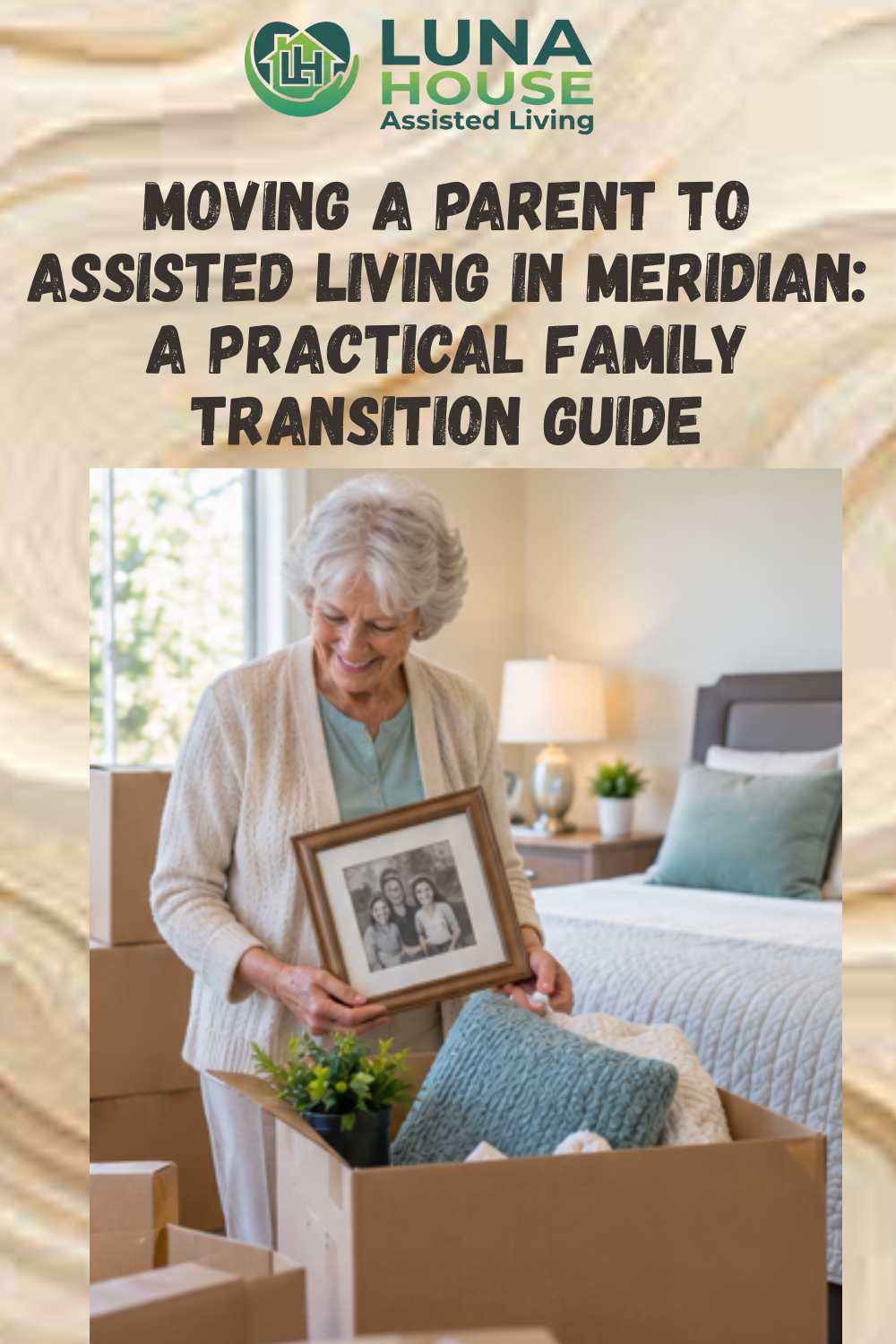
Moving a Parent to Assisted Living in Meridian
Moving a Parent to Assisted Living in Meridian: A Practical Family Transition GuideFinding an assisted living community is only part of the process.Then comes the move.For an older adult who has lived in the same home for decades, moving can represent far more than changing an address.It may mean leaving the kitchen where family holidays happened.A favorite chair.A longtime neighbor.A garden.A spouse's belongings.A familiar daily rhythm.Even when everyone agrees that assisted living is the right choice, the transition can still bring grief, anxiety, relief, uncertainty, and sometimes all four at once.For families preparing for an assisted living move in Meridian, Idaho, planning the transition carefully can make the experience less overwhelming.Luna House Hospice House & Assisted Living provides a local residential option in Meridian for families seeking additional support for an older loved one.Begin With the Emotional TransitionFamilies often focus immediately on furniture and paperwork.The emotional move starts before the physical one.A parent may worry about:Losing independenceLosing privacyBeing forgottenLeaving a spouse's memories behindHaving strangers provide careNot fitting inLosing control over daily routinesThese fears deserve to be heard.Avoid responding to every concern by explaining why assisted living is necessary.Sometimes the most helpful response is simply acknowledging that the change is significant.Transition Tip: Do not try to convince a parent to be excited about moving. Focus instead on helping them feel informed, respected, and involved.Decide What the New Room Should Feel LikeA new room can feel unfamiliar at first.Personal belongings help create continuity.Consider bringing:Family photographsFavorite artworkA familiar comforterA favorite chair if space allowsBooksA clockSmall decorative itemsReligious or spiritual objectsA familiar lampDo not overcrowd the space.Choose the items that most strongly communicate, This is my home.Downsizing Is Often the Hardest PartFamilies may underestimate how emotional belongings can be.An adult child may see unused furniture.The parent may see memories.Allow time whenever possible.Create categories:Moving with the residentGoing to familyDonatingSellingStoring temporarilyDiscardingAvoid forcing dozens of permanent decisions into one stressful weekend.If the family has enough time, downsizing in stages can reduce conflict.Prepare Important Documents Before Moving DayKeep essential records together.These may include:IdentificationInsurance informationMedication listsPhysician contactsPharmacy informationAdvance directivesPowers of attorneyEmergency contactsRecent health informationFinancial contact informationAsk the assisted living community which documents it requires before admission.Having them ready can prevent delays.Make a Medication ListCreate one current list showing:Medication nameDoseTime takenPrescribing providerPharmacyAllergiesMedication changes often occur after appointments or hospital stays.Make sure the list is current rather than relying on an old printout.Choose Moving Day CarefullyAvoid scheduling too many things at once.A long morning of packing, signing documents, meeting staff, organizing medications, and saying goodbye to a home can exhaust an older adult.When possible:Complete paperwork beforehandMove furniture before the resident arrivesSet up the room in advanceKeep the first day calmBring familiar food or comfort items if allowedThe goal is to make arrival feel like entering a prepared home rather than entering a construction project.Help Staff Learn Who the Resident IsCare plans contain medical information.They do not always capture personality.Create a short personal introduction.Include things like:Preferred nameCareer backgroundHobbiesFavorite musicFoods they dislikeUsual sleep scheduleImportant family membersSpiritual preferencesTopics they enjoy discussingThings that cause anxietyThis information can help caregivers build rapport.Do Not Expect Instant AdjustmentSome residents settle quickly.Others do not.A parent may repeatedly ask to go home.They may complain about food.They may dislike a roommate, schedule, or caregiver.Not every complaint means the move was a mistake.At the same time, concerns should not be dismissed.Families should monitor:EatingSleepingMoodParticipationPersonal careMedication changesCommunication with staffAdjustment can take time.Establish a Family Visiting RoutineFamilies sometimes visit constantly during the first week and then dramatically reduce visits once the crisis period ends.A predictable routine may be more reassuring.For example:One family member visits TuesdayAnother visits SaturdayGrandchildren call Sunday afternoonA sibling checks in by phone midweekConsistency can help the resident feel connected.Give the Senior Room to Build a New RoutineToo much family presence can sometimes slow adjustment.The resident also needs opportunities to:Learn staff namesMeet other residentsTry mealsEstablish routinesBecome comfortable asking for helpBalance family support with space to adapt.Know Who to ContactBefore move-in, identify:The primary care contactMedication contactBilling contactAfter-hours contactPerson responsible for care-plan updatesFamilies become frustrated when they do not know whom to call.Clarifying communication channels early can prevent confusion.Review Care After the First Few WeeksNeeds may look different after the move.Schedule a conversation with staff.Ask:Is Mom asking for more help than expected?Is Dad sleeping well?Is the current care plan accurate?Have medication concerns appeared?Is the resident participating socially?Are family expectations realistic?An assisted living care plan should evolve when the resident's needs change.Think About Long-Term Planning After the Immediate MoveOnce the move settles down, families can turn to longer-term questions.These may include:Selling the previous homeUpdating mailing addressesReviewing insuranceManaging financesEstate documentsFuture hospice preferencesFuneral or memorial planningLong-term-care expensesDo not try to solve all of this on moving day.Prioritize the resident's immediate comfort first.Meridian Location Can Make Family Involvement EasierFor families already living in Ada County, choosing a Meridian assisted living setting may make regular involvement more realistic.Instead of selecting a residence based only on appearance, consider whether relatives can actually maintain contact.A convenient local location can make it easier to attend care meetings, visit on ordinary weekdays, and respond when something changes.FAQ: Legal and Financial Questions During an Assisted Living MoveDoes an adult child automatically control a parent's money after the move?No. A move to assisted living does not transfer financial authority. The older adult generally retains control unless another person has authority through a legal document or court order.What should happen to a parent's house?The answer depends on finances, family goals, estate planning, long-term-care costs, ownership, and other circumstances. Families should consult qualified legal, tax, and financial professionals before making major property decisions.Can a power of attorney sign assisted-living paperwork?It depends on the authority granted in the specific document. Families should have the document reviewed if there is uncertainty.When might conservatorship become necessary?Conservatorship may be relevant when an individual cannot manage financial affairs and no other legally sufficient arrangement exists.Why consult an elder-law attorney during a transition?An elder-law attorney may help families understand legal authority, estate documents, property issues, long-term-care planning, guardianship, conservatorship, and related concerns.Make the Move About the Person, Not Just the AddressMoving to assisted living is a major transition, but thoughtful preparation can make it more manageable.Focus on familiarity.Keep the resident involved.Communicate with staff.Maintain family contact.Allow time for adjustment.For Meridian families preparing for this transition, Luna House Hospice House & Assisted Living offers a local residential option where individualized care and a home-like environment are central to the approach.Visit Luna House through its Seniorsbluebook.com to learn more about the Meridian community, ask about current availability, and begin planning a transition that respects your loved one's needs and preferences.
Read More
Sep 11, 2026

Assisted Living for Seniors With Serious Illness in Meridian
Assisted Living for Seniors With Serious Illness in Meridian: Planning for Changing Care NeedsChoosing assisted living becomes more complicated when a senior is also living with a serious or progressive illness.Families may not simply be asking:Does Mom need help dressing?They may also be wondering:What happens if her condition worsens?Can she receive hospice care here?Will we have to move her again?Who will help us through the final stages of illness?These questions are especially important when a family wants to avoid unnecessary transitions.For seniors in Meridian and Ada County, choosing an assisted living setting with experience supporting residents through changing health needs can provide additional peace of mind.Luna House Hospice House & Assisted Living is distinctive because its broader care philosophy places significant emphasis on both residential support and end-of-life comfort.Serious Illness Changes the Assisted Living SearchA senior with relatively stable care needs may be able to focus mainly on location, environment, meals, and personal assistance.A person with advanced illness requires additional questions.Families should understand:What medical needs the residence can supportWhether hospice can provide services on-siteWhat happens during rapid health changesHow symptoms are managedHow family is contactedWhether overnight support is availableWhen hospitalization might still be necessaryThese details can matter more than amenities.Assisted Living and Hospice Serve Different PurposesAssisted living provides housing, supervision, meals, and assistance with everyday needs.Hospice is specialized end-of-life care for eligible people with terminal illness.A person may receive both services at the same time.In that situation, the assisted living community remains the person's residence, while the hospice team provides specialized care associated with the terminal condition.This coordination requires clear communication.Why Care Coordination MattersImagine that an assisted living resident begins experiencing increased pain.Who should the family call?The assisted living nurse?Hospice?The physician?What if symptoms worsen overnight?What if new equipment is needed?These questions should be discussed before a crisis.Care Planning Tip: Ask each provider to explain its role in plain language. Families should understand who handles daily personal care, who manages hospice symptoms, who orders medications, and who responds after hours.Luna House's End-of-Life FocusLuna House's broader care philosophy emphasizes comfort, dignity, individualized attention, and family support.Its published approach includes areas such as:Pain and symptom managementEmotional supportSpiritual supportFamily involvementBereavement supportAround-the-clock specialized careFor families already anticipating hospice needs, that experience can be an important factor to investigate.Families should still confirm which services are provided directly by the assisted living residence and which are delivered by a licensed hospice organization.Why Avoiding Multiple Moves Can MatterRelocation can be stressful for anyone.For someone with advanced illness, another move may be particularly difficult.Moving requires:Physical transportationNew caregiversNew routinesNew medications systemsNew surroundingsNew paperworkAdditional family coordinationSome families therefore prioritize assisted living communities capable of supporting evolving needs for as long as safely possible.No residence can promise that a move will never become necessary.However, understanding a community's care limits can help families plan more realistically.Emotional Support Is Part of Quality CareSerious illness affects the entire family.The resident may feel fear, sadness, anger, uncertainty, or grief.Family members may experience:Caregiver exhaustionAnticipatory griefGuiltConflict over decisionsFear of making the wrong choiceUncertainty about what happens nextA supportive environment should recognize these emotional realities.Families should ask what resources are available for:Spiritual supportCounselingFamily communicationBereavementEnd-of-life educationComfort Can Be Very PersonalClinical symptom management is important, but comfort also includes ordinary preferences.A resident may want:Favorite musicA particular blanketFamily photosQuiet morningsReligious ritualsOutdoor timeVisits from grandchildrenA familiar television programFavorite foods when appropriateGood end-of-life support should still see the whole person.Meridian's Growing Senior Population Makes These Conversations Increasingly CommonAda County's older population continues to grow alongside the broader Treasure Valley.That means more local families are navigating serious illness while also balancing work, caregiving, and housing decisions.Families often assume hospice planning can wait.In reality, learning how hospice and assisted living can work together before an urgent need develops can make later decisions much easier.Questions to Ask Before AdmissionIf serious illness is already part of the picture, ask:What changes in condition can you manage here?The answer should be specific.Can my loved one use the hospice provider of their choice?Policies may vary.What happens overnight?Families should understand who is physically available.Can medical equipment be brought into the room?Ask about oxygen, hospital beds, wheelchairs, or other equipment.How involved can family be?Some families want to spend extensive time with a loved one near the end of life.What happens if symptoms cannot be managed in the residence?Know the transfer process ahead of time.When a Family Caregiver Is Reaching the LimitSerious illness can turn home caregiving into a 24-hour responsibility.A spouse may be waking several times each night.Adult children may be rotating shifts.Medication schedules may become increasingly complicated.The family may still deeply want to provide care.That does not mean the current arrangement is sustainable.Moving to assisted living can allow family members to return to being spouses, children, grandchildren, and friends rather than spending every visit performing care tasks.Advance Planning Can Reduce Stress LaterWhen serious illness is present, families should consider discussing:Advance directivesHealth care decision-makersFinancial powers of attorneyHospice preferencesFuneral or memorial wishesImportant accounts and documentsFamily communicationThese conversations can feel uncomfortable.They can also reduce uncertainty when decisions need to be made quickly.FAQ: Estate Planning and Legal Authority During Serious IllnessWhy does estate planning matter during serious illness?A serious diagnosis may prompt families to make sure legal documents accurately reflect the person's wishes. This can include health care directives, powers of attorney, wills, trusts, and beneficiary arrangements.What happens if someone loses the ability to make health care decisions?The answer depends on existing legal documents and Idaho law. A valid health care decision-making document may authorize another person to act. Families should seek legal guidance about their specific circumstances.Can a conservator make medical decisions?Conservatorship generally concerns financial and property matters. Personal or health care decisions are typically associated with guardianship or other legal authority.Should legal documents be created after a person loses capacity?Legal capacity requirements can affect whether a document may be validly signed. Families should consult an attorney before assuming a new power of attorney or estate document can be created.What can an elder-law attorney help coordinate?An elder-law attorney may assist with estate documents, decision-making authority, long-term-care planning, guardianship, conservatorship, and other legal concerns connected with serious illness and aging.Find a Care Setting That Can Support the JourneyWhen serious illness is involved, assisted living is not only about what someone needs today.Families also need to understand what may happen tomorrow.Luna House Hospice House & Assisted Living offers Meridian families a local option with an established focus on comfort, dignity, individualized support, and end-of-life care.Connect with Luna House through its Seniorsbluebook.com to ask about current care capabilities, hospice coordination, and whether the setting is appropriate for your loved one's needs.
Read More
Sep 11, 2026

When Is Assisted Living the Right Next Step for a Senior in Meridian
When Is Assisted Living the Right Next Step for a Senior in Meridian, Idaho?Families rarely wake up one morning knowing with complete certainty that assisted living is the next step.More often, the decision develops gradually.An older parent may still be living at home but relying on family for more meals, transportation, medication reminders, or personal care. A spouse may be providing increasing amounts of assistance and beginning to feel exhausted. Small concerns that once seemed manageable may start appearing more frequently.For families researching assisted living in Meridian, Idaho, the most useful question is often not, Can my loved one still live at home?A better question is:What level of help does it now take for my loved one to live safely and comfortably each day?That shift in perspective can make assisted-living conversations more practical and less emotional.Luna House Hospice House & Assisted Living is a local Meridian resource for families exploring residential support for older adults who need additional care in a smaller, home-like setting.Assisted Living Is Designed to Add Support, Not Take Away IndependenceAssisted living is intended for adults who can benefit from a residential environment where everyday assistance is available.A resident may need help with certain parts of the day while remaining independent in many others.Depending on individual needs and the services offered by the community, assistance may involve:Bathing and groomingDressingMobilityMealsMedication-related supportSupervisionPersonal routinesHousekeepingCoordination with health professionalsMoving into assisted living does not automatically mean someone can no longer make decisions or participate in daily life.Many residents continue choosing how they spend their day, what they wear, when they visit with family, and which activities they enjoy.The purpose of assisted living is to create a better balance between independence and available help.Five Changes Families Often Notice FirstNo single sign means a senior needs assisted living.Patterns matter more than isolated incidents.1. Everyday Tasks Require Much More EffortA parent who previously managed personal care without difficulty may start avoiding bathing because getting in and out of the shower feels exhausting.Laundry may pile up.Meals may become simpler and less nutritious because cooking feels like too much work.These changes may signal that daily responsibilities are consuming more energy than they should.2. Family Members Are Providing Care Almost Every DayFamily support can gradually become a full caregiving routine.An adult child may begin stopping by every morning.A spouse may be helping with dressing, medications, meals, and nighttime needs.When one person must be consistently available for daily life to function, it may be time to explore more structured support.3. The Senior Is Becoming Increasingly IsolatedLiving alone can become lonely even when basic needs are being met.An older adult may stop driving at night, lose touch with friends, or spend several days at a time without meaningful interaction.Assisted living can provide regular opportunities for conversation and companionship in addition to personal support.4. Safety Concerns Are Becoming More FrequentFamilies may notice falls, forgotten appliances, confusion, difficulty navigating stairs, or challenges getting around the home.One incident does not always indicate a need to move.Repeated concerns deserve closer attention.5. The Current Care Plan No Longer Feels SustainableSometimes the deciding factor is not a dramatic decline in the senior.It is the realization that the current combination of family caregiving, home services, appointments, and supervision is becoming too complicated to maintain.Family Tip: Look at the entire week rather than one good or bad day. A realistic seven-day picture often shows more clearly how much assistance a senior is actually receiving.Why Assisted Living Is an Important Conversation in MeridianMeridian is a rapidly growing community, and its senior population is part of that growth.The city has expanded significantly since 2020, while thousands of residents are now age 65 and older.That growth means more Ada County families are balancing careers, children, retirement planning, and caregiving responsibilities at the same time.It also means families have more reason to research local senior-care options before an emergency forces a rushed decision.Starting early allows time to:Compare residential settingsUnderstand costsDiscuss preferencesReview legal documentsVisit communitiesAsk about future care needsWhat Makes Luna House a Local Option to Consider?Luna House Hospice House & Assisted Living is located at 525 East Overland Road in Meridian.Its care philosophy emphasizes a smaller, residential environment and individualized attention.For seniors who may feel overwhelmed by a large campus-style community, a more intimate setting can be worth considering.Families should ask directly about:Current room availabilityAdmission criteriaPersonal-care servicesStaffingMedication supportMeal serviceHospice coordinationFamily visitationCosts and feesThe right assisted living community should match the resident's actual care needs rather than simply offering an attractive environment.Talk With Your Loved One Before Making DecisionsFamilies often delay the conversation because they are afraid it will upset the older adult.Waiting until a crisis can make the conversation much harder.Instead, start with questions.Ask:What is becoming harder at home?What help would make your day easier?What worries you about moving?What would you want your next home to feel like?Would you prefer a large community or something quieter?These questions keep the senior involved.Even if family members are worried about safety, involving the older adult can make the transition feel less like something being done to them.Assisted Living May Be One Part of a Broader Aging PlanHousing decisions are often connected to other planning issues.Families may also need to think about:TransportationHealth careFinancial managementPowers of attorneyLong-term-care costsEstate planningFamily caregiving rolesFuture hospice needsAddressing these topics together can reduce confusion later.FAQ: Estate Planning, Conservatorship and Elder LawShould a senior review an estate plan before moving into assisted living?A move can be a useful time to review existing documents, particularly if health, property ownership, finances, or family responsibilities have changed. An Idaho attorney can advise whether wills, trusts, powers of attorney, or health care documents should be updated.Does moving into assisted living mean someone needs a guardian?No. Assisted living residency does not automatically affect a person's legal right to make decisions. Guardianship is a court process used only when specific legal requirements are met.What is a conservator?A conservator is generally appointed by a court to manage finances or property for a protected person who cannot adequately handle those matters.When should a family speak with an elder-law attorney?Families may seek elder-law guidance when they have questions about estate planning, long-term-care planning, powers of attorney, benefits, guardianship, conservatorship, or other legal issues connected with aging.Explore Assisted Living in Meridian With ConfidenceThe decision to consider assisted living does not need to begin with a crisis.It can begin with a thoughtful assessment of what is becoming difficult and what kind of support would improve everyday life.For families exploring assisted living in Meridian and Ada County, Luna House Hospice House & Assisted Living offers a local option centered on individualized support and a residential atmosphere.Connect with Luna House through its Seniorsbluebook.com to ask about current services, availability, and whether the community may be appropriate for your loved one's needs.
Read More
Sep 11, 2026

Finding Comfort, Dignity and Support at the End of Life
Hospice Care in Meridian: Finding Comfort, Dignity and Support at the End of LifeFew conversations are more difficult for a family than discussing hospice care.A serious illness may have progressed despite treatment. A loved one may be returning to the hospital more often. Symptoms may be becoming harder to manage at home. A spouse or adult child may be providing care around the clock and wondering how much longer they can safely continue.During a time like this, families are often trying to make important decisions while also processing grief, uncertainty, and exhaustion.Hospice care can help shift the focus.Rather than centering care on curing a terminal illness, hospice focuses on comfort, dignity, symptom relief, emotional support, and quality of life. For families searching for hospice care in Meridian, Idaho and Ada County, understanding the options available can make an overwhelming situation easier to navigate.Luna House Hospice House & Assisted Living provides a local residential option for families seeking a home-like setting where end-of-life care and family support are central to the care philosophy. Seniors Blue Book lists Luna House at 525 East Overland Road in Meridian, Idaho.What Is Hospice Care?Hospice is specialized care for people approaching the end of life because of a terminal illness.The goal changes from trying to cure the underlying disease to helping the person remain as comfortable and supported as possible.Hospice care may address:PainShortness of breathNauseaAnxietyRestlessnessFatigueChanges in appetiteEmotional distressSpiritual concernsFamily educationCaregiver supportGrief and bereavementHospice does not mean that care stops.In many ways, it means the care becomes more focused on what matters most to the person.That may mean controlling pain well enough to enjoy a conversation with family, helping someone rest more comfortably, creating a peaceful environment, or giving family caregivers the guidance they need during unfamiliar changes.Hospice Is About Quality of LifeWhen families first hear the word "hospice," they may associate it only with someone's final days.Hospice is better understood as an approach to care.The question becomes less about how many procedures can still be performed and more about:What will make this person as comfortable and supported as possible?That can include physical care, but it also includes emotional and relational needs.A person nearing the end of life is still a parent, spouse, grandparent, friend, neighbor, or community member.They may still value:Favorite musicFamiliar foodsFamily photographsTime outdoorsSpiritual traditionsQuiet conversationVisits from grandchildrenA favorite blanketPrivacyFamiliar routinesGood hospice care recognizes the whole person rather than focusing only on the diagnosis.When Might a Family Begin Asking About Hospice?There is no single moment that looks the same for every family.However, certain changes may indicate that it is time to have a hospice conversation with the person's physician or health care team.These may include:Increasing HospitalizationsRepeated emergency-room visits or hospital stays may indicate that an illness is becoming harder to stabilize.Treatments Are No Longer HelpingThere may come a point when disease-directed treatment is no longer effective, is creating more burden than benefit, or is no longer consistent with the person's wishes.Daily Function Is DecliningThe person may be sleeping more, eating less, becoming weaker, or requiring increasing help with everyday activities.Symptoms Are Becoming Harder to ManagePain, breathing difficulty, anxiety, nausea, or other symptoms may require more specialized comfort-focused attention.Caregiving at Home Is Becoming UnsustainableA spouse or adult child may be providing nearly continuous supervision, waking throughout the night, managing medications, and helping with personal care.Recognizing that more support is needed is not a failure.It may simply mean the person's care needs have changed.Hospice Planning Tip: Families do not have to wait for an emergency to ask about hospice. Starting the conversation earlier can provide more time to understand options, ask questions, and focus on the person's wishes.What Is a Hospice House?Many families assume hospice is always delivered in someone's existing home.Hospice services can be provided in different settings depending on eligibility, medical needs, family circumstances, and the services available locally.A hospice house offers a residential environment where someone approaching the end of life can receive support outside of the family home.This can be especially valuable when:The home is not physically suited to the person's care needsA spouse can no longer safely provide around-the-clock supportAdult children live too far away to provide continuous careSymptoms are becoming increasingly difficult to manageThe person needs more supervisionThe family wants a peaceful residential setting rather than a hospital-like environmentFor some families, moving a loved one into a hospice-focused residence means they can spend more time simply being family.Instead of every visit revolving around medications, transfers, meals, laundry, or nighttime supervision, loved ones can focus more on conversation, presence, comfort, and meaningful time together.Luna House's Home-Like Approach to End-of-Life CareLuna House describes its care model as intentionally small and home-like, with an emphasis on individualized attention rather than an institutional atmosphere.Its published services include:Personalized carePain and symptom managementEmotional and spiritual support24/7 careBereavement and grief counselingSupport for family and friendsLuna House also describes a holistic approach that considers physical, emotional, spiritual, and social well-being while supporting loved ones throughout the process.That philosophy can be particularly important during end-of-life care.Comfort may involve medication and clinical support, but it can also involve having family nearby, maintaining dignity during personal care, creating calm surroundings, or making space for spiritual traditions.Why a Home-Like Environment Can MatterHospitals serve an essential role when someone needs acute medical treatment.But when the goals of care become comfort-focused, some families prefer an environment that feels less clinical.Luna House specifically describes its model as a dedicated home setting designed to make the end-of-life transition as comfortable as possible.A residential environment may allow families to focus on quieter moments.There may be less emphasis on alarms, hospital corridors, procedures, and constant movement.Instead, the environment can center around the person.For some families, that can change the emotional experience of a very difficult time.Hospice Also Supports the FamilyEnd-of-life care does not affect only the person who is ill.Family members may be carrying enormous emotional and physical burdens.A spouse may have been providing care for months.Adult children may be balancing work, children, travel, and caregiving.Family members may disagree about what should happen next.Some may feel guilt.Others may feel relief when additional care becomes available and then feel guilty about that relief.These reactions are human.Luna House specifically includes family support, grief counseling, and bereavement resources within its published approach.Families evaluating any hospice resource should ask what support extends to them as well as to the patient.Questions to Ask When Choosing Hospice Care in MeridianHospice decisions often happen quickly, but families should still ask questions.What Services Are Available Around the Clock?Ask who is physically present and whom the family should contact if symptoms change overnight.How Are Pain and Other Symptoms Managed?Ask how changes in pain, breathing, agitation, nausea, or other symptoms are communicated and addressed.How Does the Care Team Communicate With Family?Families should understand who provides updates and who serves as the primary point of contact.How Much Can Family Visit?For many families, being present is one of the most important priorities.Ask about visiting practices and whether loved ones can spend extended periods with the resident.What Happens if the Person's Condition Changes Suddenly?Understand when care can continue in the residence and when another level of medical care might be needed.What Emotional or Spiritual Support Is Available?Some people want clergy or spiritual support. Others prefer counseling, music, quiet companionship, or no spiritual involvement at all.Care should respect individual wishes.Why Hospice Resources Matter in Meridian and Ada CountyMeridian has grown rapidly over the past several years.The U.S. Census Bureau estimated Meridian's population at 142,988 in 2025, representing approximately 21.4% growth from its 2020 population estimates base. About 14.8% of Meridian residents are age 65 or older.As Meridian and the wider Treasure Valley continue growing, more families are also navigating aging, chronic illness, caregiving, and end-of-life planning.The need is not simply for additional health care services.Families need choices.Some people may prefer receiving hospice in their own home.Others may need a residential setting.Still others may already live in assisted living and need hospice services brought to them.Understanding these options before a crisis can help families make decisions based on values rather than fear.The Meridian Luna House LocationSeniors Blue Book currently lists Luna House Hospice House & Assisted Living at 525 East Overland Road, Meridian, Idaho 83642, with 208-460-5858 as its listed contact number.City of Meridian building records also identify the property as the Luna Hospice House, with expansion work associated with a hospice residence at that address.Because capacity, admission requirements, hospice arrangements, and availability may change, families should speak directly with Luna House about current services before making care decisions.Preparing for a Hospice ConversationFamilies do not need to have everything figured out before calling.Start with the basics.Be prepared to discuss:The person's diagnosisCurrent health changesRecent hospitalizationsCurrent medicationsMobilityPersonal-care needsCurrent hospice involvement, if anyFamily caregiving circumstancesWhat the person wantsWhat the family is most concerned aboutIt may also help to write down questions before the conversation.Emotional situations make it easy to forget important details.Honor the Person's Wishes Whenever PossibleEnd-of-life care should be centered on the person receiving it.If the individual can still communicate preferences, include them.Ask:Where would you feel most comfortable?Who do you want around you?What matters most right now?Are there treatments you would or would not want?Are there spiritual or cultural practices we should know about?What makes you feel safe?These conversations may be difficult, but they can also be deeply meaningful.They give the person an opportunity to guide the care they receive.Frequently Asked Questions About Estate Planning, Conservatorship and Elder LawShould estate planning be reviewed when someone begins hospice?It can be helpful to make sure important legal and financial documents reflect the person's current wishes. Depending on the circumstances, families may review wills, trusts, powers of attorney, advance directives, beneficiary designations, and other documents with an Idaho attorney.What happens if a hospice patient can no longer make financial decisions?The answer depends on what legal arrangements are already in place. A valid financial power of attorney may give another person authority to manage certain matters. If appropriate authority does not exist, families should obtain legal advice about available options.What is conservatorship?Conservatorship is generally a court-supervised arrangement in which someone is authorized to manage the financial affairs or property of another person who cannot adequately manage those matters themselves.Is conservatorship the same as making health care decisions?No. Conservatorship generally relates to finances and property. Health and personal decisions may involve a health care agent, guardian, or other legally authorized decision-maker depending on the circumstances.How can an elder-law attorney help a family facing hospice?An elder-law attorney may help families address estate planning, powers of attorney, health care directives, guardianship, conservatorship, long-term-care issues, property questions, and other legal concerns connected with serious illness and aging.Finding Comfort and Support During a Difficult SeasonChoosing hospice is not about giving up on a person.It is about recognizing when the goals of care have changed and making comfort, dignity, meaningful connection, and quality of life the priorities.For families looking for hospice care in Meridian, Idaho and Ada County, Luna House Hospice House & Assisted Living provides a local residential resource with a care philosophy built around personalized attention, symptom support, family involvement, and a peaceful home-like environment.Families can learn more and connect directly through the SeniorsBluebook.com listing.Seniors Blue Book helps older adults, families, caregivers, and professionals find hospice providers, senior housing, and aging resources throughout Meridian, Ada County, Boise, and the Treasure Valley.
Read More