
PHONE
Click to View NumberGeneral Property Features
- Private Rooms, Semi-Private Rooms, Guest Parking, Controlled Access
- Laundry Service - Provided, Nurse on Staff, Respite/Short Term Stay, Activities, Social Programs
- Assisted Living Community, Secured Memory Care Unit
Assisted Living
- 16
- $3,650.00
- Private Pay, Long Term Care Insurance, Veterans Administration
- Price Dependent Levels of Care
- Studio
- Adult Day Programs, Memory Care (Dementia)
- Yes
Additional Levels of Care Offered

The Cottages Of Nampa
Assisted Living 1047 Rising Sun Drive, Canyon County, Nampa, Idaho, 83686If you are looking for compassionate, personalized assisted living or memory care in Nampa, The Cottages of Nampa at Fall River offers a warm, home-like environment where residents feel safe, supported and truly known.Located in SW Nampa near Lake Lowell, our small-home setting provides a quieter, more personal alternative to large senior living communitiesideal for seniors who thrive in a close-knit, family-style environment.Located at: 1047 & 1085 Rising Sun Dr., Nampa, ID 83686 What Daily Life Looks LikeLife here is simple, structured, and comforting.Residents enjoy:Gentle morning routines with caregiver assistance availableShared meals in a family-style settingEngaging activities (music, fun games, crafts, art projects, outings, etc)Outdoor time in a secure courtyardQuiet evenings in a relaxed environmentThis consistency helps reduce anxiety and improve overall well-being.While we work to establish routines, we are also aware the each resident is an individual with their own needs, wishes and preferences. Because we are smaller, we are able to focus on each resident as a unique individual.Call NowCatina Jimenez,Executive DirectorMeet the Leader of our Care TeamCatina Jimenez is the Executive Director at The Cottages of Nampa. Catina is a seasoned leader who works with her team to provide amazing care for you or your loved one. She has worked in senior care for many years and has extensive experience working with those with Alzheimers and other forms of Dementia. Catina truly cares for those entrusted to her and is a fierce advocate for exceptional care. . Before you choose an Assisted Living or Alzheimers care home, make sure you stop by to visit with Catina. Before moving to Nampa, Catina was the leader at The Cottages Boise homes. Why Families Choose The Cottages of NampaChoosing senior care is one of the hardest decisions families make. What sets this location apart is simple:Small, boutique, residential-style home (not a large institutional facility)Higher caregiver-to-resident interactionPersonalized care plans tailored to each residentConsistent staff who truly know your loved onePeaceful Nampa neighborhood settingMany families tell us this location just feels different the moment they walk in.This area of Nampa is on the outskirts of developed communities and still has a rural feel with farms less than a mile away. The developments around the Cottages of Nampa are new and fresh with a great record for safety.Schedule a Tour! Assisted Living & Memory Care Services in NampaWe provide both assisted living and specialized memory care in Nampa, allowing residents to age in place with continuity of care.Assisted Living ServicesHelp with bathing, dressing, and daily routinesMedication managementHome-cooked meals and snacksHousekeeping and laundrySocial engagement and activitiesMemory Care (Alzheimers & Dementia Support)Secure, safe environmentStaff trained in dementia careStructured daily routinesGentle redirection and cognitive supportCalm, low-stimulation setting
The Cottages Of Meridian
Memory Care 3199 W Belltower Dr, Ada County, Meridian, Idaho, 83646Assisted Living & Memory Care at its best. Our commitment is to enhance the quality of life for each resident. This is possible because our smaller home-like communities allow our caregivers to develop a close relationship with each individual. We have homes in Boise, Emmett, McCall, Meridian, Middleton, Mountain Home, Nampa, Payette and Weiser. We also offer Adult Day Care and Respite. Schedule a tour today! The Cottages of Meridian is located on the western edge of BridgeTower residential community, just east of Ten Mile Road between McMillan and Ustick. The Cottages of Meridian has compassionate caregivers who are specially trained to care for seniors with Alzheimers and other types of dementia that require personalized care. Respite and adult day care are also available. Each of The Cottages assisted living homes is licensed by the State of Idaho.
The Cottages Of Nampa
Memory Care 1085 Rising Sun Drive, Canyon County, Nampa, Idaho, 83686If you are looking for compassionate, personalized assisted living or memory care in Nampa, The Cottages of Nampa at Fall River offers a warm, home-like environment where residents feel safe, supported and truly known.Located in SW Nampa near Lake Lowell, our small-home setting provides a quieter, more personal alternative to large senior living communitiesideal for seniors who thrive in a close-knit, family-style environment.Located at: 1047 & 1085 Rising Sun Dr., Nampa, ID 83686 What Daily Life Looks LikeLife here is simple, structured, and comforting.Residents enjoy:Gentle morning routines with caregiver assistance availableShared meals in a family-style settingEngaging activities (music, fun games, crafts, art projects, outings, etc)Outdoor time in a secure courtyardQuiet evenings in a relaxed environmentThis consistency helps reduce anxiety and improve overall well-being.While we work to establish routines, we are also aware the each resident is an individual with their own needs, wishes and preferences. Because we are smaller, we are able to focus on each resident as a unique individual.Call NowCatina Jimenez,Executive DirectorMeet the Leader of our Care TeamCatina Jimenez is the Executive Director at The Cottages of Nampa. Catina is a seasoned leader who works with her team to provide amazing care for you or your loved one. She has worked in senior care for many years and has extensive experience working with those with Alzheimers and other forms of Dementia. Catina truly cares for those entrusted to her and is a fierce advocate for exceptional care. . Before you choose an Assisted Living or Alzheimers care home, make sure you stop by to visit with Catina. Before moving to Nampa, Catina was the leader at The Cottages Boise homes. Why Families Choose The Cottages of NampaChoosing senior care is one of the hardest decisions families make. What sets this location apart is simple:Small, boutique, residential-style home (not a large institutional facility)Higher caregiver-to-resident interactionPersonalized care plans tailored to each residentConsistent staff who truly know your loved onePeaceful Nampa neighborhood settingMany families tell us this location just feels different the moment they walk in.This area of Nampa is on the outskirts of developed communities and still has a rural feel with farms less than a mile away. The developments around the Cottages of Nampa are new and fresh with a great record for safety.Schedule a Tour! Assisted Living & Memory Care Services in NampaWe provide both assisted living and specialized memory care in Nampa, allowing residents to age in place with continuity of care.Assisted Living ServicesHelp with bathing, dressing, and daily routinesMedication managementHome-cooked meals and snacksHousekeeping and laundrySocial engagement and activitiesMemory Care (Alzheimers & Dementia Support)Secure, safe environmentStaff trained in dementia careStructured daily routinesGentle redirection and cognitive supportCalm, low-stimulation setting
Continue Your Search! Explore More Local Options.
Start SearchingLet’s engage and get educated!
Browse through thousands of expert articles in over 100 different categories.
Browse NowArticles You May Like
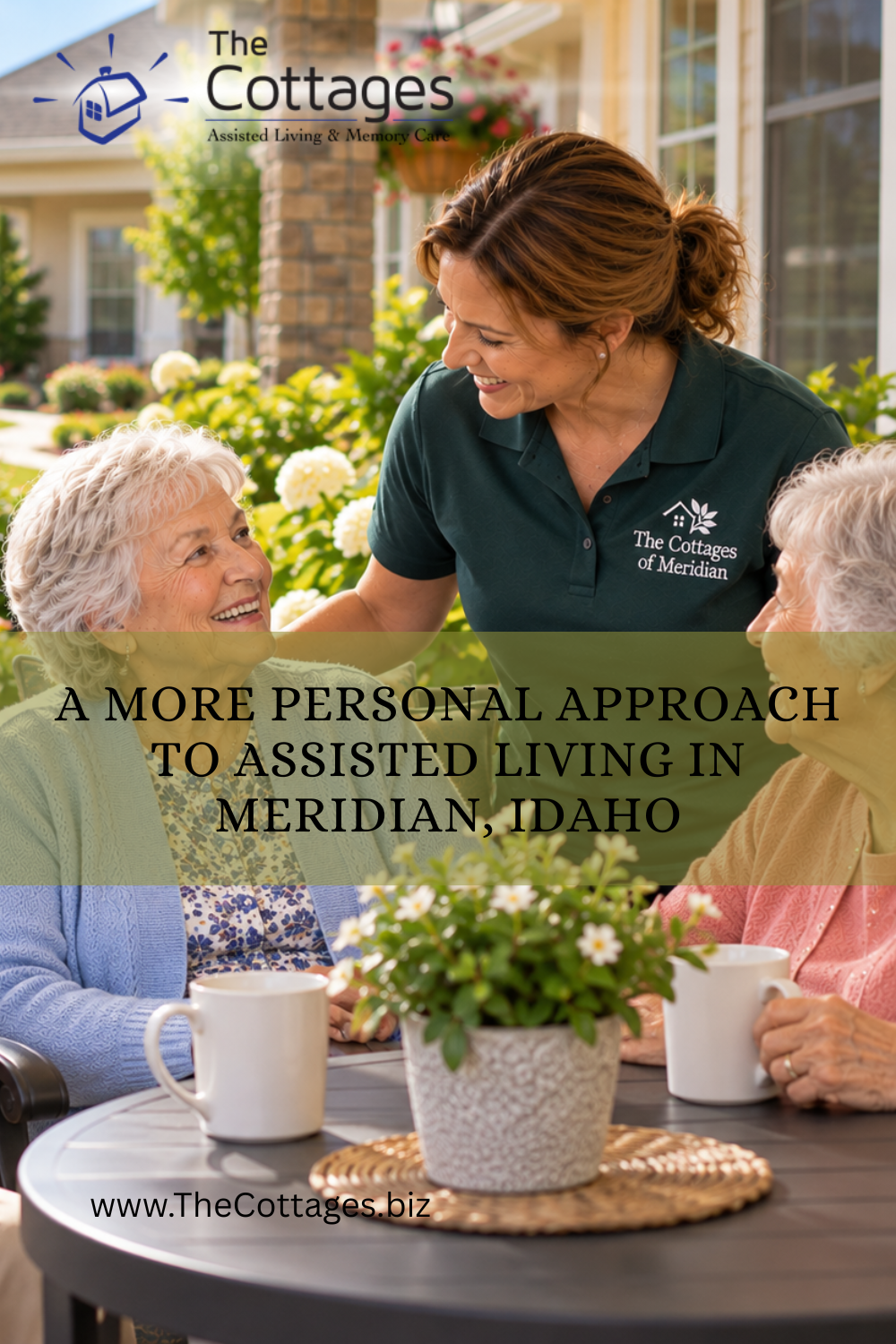
A More Personal Approach to Assisted Living in Meridian, Idaho
A More Personal Approach to Assisted Living in Meridian, IdahoChoosing assisted living is rarely just about finding a place where an older adult can receive help.Families are also searching for an environment where a parent, spouse, or loved one can feel comfortable, maintain familiar routines, build relationships, and continue making meaningful choices.For some seniors, a large retirement campus feels exciting. For others, a smaller residential environment feels more familiar and easier to navigate.That difference can become especially important when someone is transitioning from a longtime private home.For seniors and families exploring assisted living in Meridian and Ada County, Idaho, The Cottages of Meridian offers a smaller, home-like approach to senior care.Located at 3199 W. Belltower Drive in Meridian, The Cottages of Meridian currently provides Assisted Living and Memory Care, along with Adult Day Care and Respite services. The community is located on the western side of the BridgeTower residential area, east of Ten Mile Road between McMillan and Ustick roads.Senior Living Needs Are Growing Along With MeridianMeridian has experienced substantial growth over the past several years.According to the U.S. Census Bureau, the city's estimated population reached 142,988 residents in 2025, an increase of approximately 21.4% from its April 2020 population estimate base. Adults age 65 and older account for approximately 14.8% of Meridian's population.That means thousands of Meridian households are already navigating questions about aging, caregiving, senior housing, transportation, medications, memory concerns, and long-term support.Some older adults remain comfortably independent for many years.Others gradually begin needing assistance with:Bathing and dressingMedication routinesMeal preparationHousekeepingLaundryMobilityTransportationSocial engagementSafety monitoringFamilies often provide much of that support at first.An adult child may begin by helping with groceries. Later, that same person may be coordinating appointments, organizing medications, preparing meals, and visiting several times each week.At some point, families may begin asking whether assisted living could provide a more sustainable level of support.What Does Assisted Living Provide?Assisted living is generally intended for older adults who want to maintain as much independence as possible but benefit from help with certain activities of daily living.The Cottages currently lists services that include personal assistance with bathing, dressing, grooming, hygiene, and other daily activities as needed.Its broader service model also includes:Home-cooked mealsMedication managementPersonal laundryHousekeepingActivities and social opportunities24/7 awake staffingAround-the-clock RN oversightAdult day careRespite servicesThe amount of assistance should depend on the individual.One resident may need medication support and housekeeping while managing most personal care independently.Another may need regular assistance getting ready every morning.Someone else may mainly benefit from having meals, companionship, and caregivers nearby.Assisted living works best when it adds help where it is needed without unnecessarily taking over the things a resident can still comfortably do.Assisted Living Tip: When touring a senior living community, do not ask only, What services do you provide? Ask, How will you determine exactly which services my loved one needs, and how will that support change if their needs change?Why a Smaller Community May Feel DifferentThe Cottages describes its senior living model as intentionally smaller and home-like, allowing caregivers to develop closer relationships with individual residents.The current Seniors Blue Book profile for The Cottages of Meridian lists 16 assisted living units and identifies it as a residential home.For some older adults, a smaller environment may make daily life easier.There may be:Fewer neighbors to learnMore familiar caregiversShorter distances between rooms and common spacesA smaller dining environmentA more residential atmosphereGreater opportunity for caregivers to recognize individual routinesThat does not mean smaller is automatically better.Some seniors thrive in larger communities.Others may prefer a setting that feels more like a traditional home.The best choice depends on the individual's personality, care needs, and preferences.Meals Can Bring Structure and Connection to the DayCooking often becomes harder gradually.Grocery shopping takes energy.Ingredients need to be prepared.Meals need to be cooked.Dishes need to be washed.Someone who once enjoyed cooking may eventually begin relying more heavily on frozen meals, snacks, or takeout simply because the entire process has become tiring.The Cottages states that it provides home-cooked meals created by a registered dietitian, with menus that can be adapted for physician orders and personal preferences.For an assisted living resident, regular meals can remove a significant household responsibility.Meals can also become part of the social rhythm of the day.Instead of eating alone, residents may have opportunities to see neighbors, talk with caregivers, and enjoy a more communal dining experience.Families touring The Cottages of Meridian may want to ask:What does a typical menu look like?Can residents request alternatives?Are snacks available?How are dietary restrictions handled?What happens if a resident's appetite changes?These practical details can have a meaningful effect on everyday comfort.Medication Management Can Reduce Family WorryMedication schedules can become complicated quickly.A senior might take several medications at different times of day. A physician may change a dosage. A refill may be needed unexpectedly.Families may begin noticing:Missed dosesDuplicate dosesConfusion about prescription bottlesUncertainty about instructionsDifficulty managing refillsThe Cottages states that a registered nurse and certified medication technician oversee medication administration for residents.Families should still ask how the process works specifically at the Meridian location.Questions may include:How are new prescriptions received?How are medication changes documented?Who communicates with physicians?What happens if a medication is refused?How are families notified about concerns?Understanding the process can help reduce uncertainty for everyone involved.Personal Care Should Protect IndependenceBathing, dressing, grooming, and hygiene are deeply personal routines.For older adults who have spent decades caring for themselves, accepting assistance can take adjustment.A supportive assisted living environment should respect that.Help does not have to mean taking over.A resident may still choose their clothing.Someone may wash independently but need help getting safely in and out of the shower.Another resident may need assistance fastening buttons or managing footwear.The Cottages lists personal-care assistance among its available services while emphasizing individualized care within its smaller residential setting.The goal should be to help residents continue doing as much as they comfortably can.Activities Should Add Meaning, Not Simply Fill TimeA good assisted living day should involve more than meals and care tasks.The Cottages describes its activity program as providing opportunities for fun, socialization, and continued involvement.Families should look beyond whether a community has an activity calendar.Ask what residents actually enjoy doing.Some seniors may enjoy:GamesMusicCraftsExerciseSocial gatheringsOutdoor timeOutingsHoliday celebrationsQuiet activitiesOthers may prefer fewer structured events.The important thing is choice.A senior should be able to socialize without feeling pressured to participate in every activity.Adult Day Care and Respite Can Offer Additional FlexibilityNot every family is ready for permanent assisted living immediately.The Cottages of Meridian currently offers both Adult Day Care and Respite.The company's current adult day and respite program includes:24/7 supervisionCompanionshipHome-cooked meals and snacksActivitiesMedication managementAssistance with activities of daily livingThese services may be useful when:A caregiver needs temporary reliefA senior needs supervision during the dayFamily members are travelingSomeone needs temporary additional supportA family wants to experience the community before considering a permanent moveFor some families, respite or day services can serve as a bridge between completely independent living and longer-term senior care.Memory Care May Matter for Future PlanningThe Cottages of Meridian currently provides both Assisted Living and Memory Care.The company states that caregivers at the Meridian community receive training to support seniors living with Alzheimer's disease and other forms of dementia.Even when a senior currently needs only assisted living, families may want to ask about memory support.Questions might include:How is assisted living different from memory care?How are cognitive changes evaluated?What happens if memory needs increase?How are families involved?Can someone transition between programs?How does availability affect future transitions?Having both care types available may help families think about longer-term possibilities, although no future placement can be guaranteed.Location Can Make Family Involvement EasierThe Cottages of Meridian is located at 3199 W. Belltower Drive, Meridian, ID 83646. Its current phone number is 208-288-2220.The location sits within the BridgeTower area, near Ten Mile Road between McMillan and Ustick.For Meridian and Ada County families, choosing a local community may help residents remain closer to:Children and grandchildrenFriendsPhysiciansPharmaciesChurchesFamiliar shopping areasLocal community connectionsIt may also make regular family visits more convenient.Assisted living changes where someone lives.It does not have to disconnect them from the broader community they know.What Should Families Look for During a Tour?Websites are helpful for research.A tour provides another kind of information.Watch caregiver interactionsDo staff members speak directly to residents?Do conversations seem warm and respectful?Look at the environmentDoes the smaller residential layout feel comfortable?Could your loved one navigate it easily?Ask about staffingThe Cottages states that its service model includes 24/7 awake staff and around-the-clock RN oversight. Ask how this works specifically at the Meridian home.Ask about care changesFind out how support is adjusted if a resident begins needing more help.Review pricing carefullyThe Cottages of Meridian's official website currently lists a monthly base rate of $3,650 for Assisted Living. The Seniors Blue Book profile currently shows a lower starting figure of $3,500, so families should verify the most current rate and all care-level charges directly with the community before making financial decisions.Ask for a written explanation of what is included in the base price and what may cost extra.Frequently Asked Questions About Assisted Living in MeridianDoes The Cottages of Meridian offer assisted living?Yes. The Cottages of Meridian currently offers Assisted Living and Memory Care, as well as Adult Day Care and Respite services, at 3199 W. Belltower Drive.How many assisted living units does The Cottages of Meridian have?The current Seniors Blue Book profile lists 16 assisted living units and describes the property as a residential home.Does The Cottages provide medication management?Yes. The Cottages states that medication administration is overseen by a registered nurse and certified medication technician.Is staff available overnight?The Cottages states that its model includes 24/7 awake staffing with around-the-clock RN oversight. Families should confirm the specific staffing structure at the Meridian location during their tour.Where can families find The Cottages of Meridian on SeniorsBlueBook.com?Families can visit:https://seniorsbluebook.com/senior-housing/the-cottages-of-meridian-meridian-idThe Seniors Blue Book profile includes contact information, assisted living details, payment options, housing features, respite services, activities, meals, transportation, and other information about the Meridian community.Finding the Right Kind of Support in MeridianAssisted living is not simply about determining whether someone needs help.It is about determining what kind of help would make life better.Maybe an older adult is tired of maintaining a household.Maybe medication management has become stressful.Maybe family caregivers are struggling to keep up.Maybe living alone has become isolating.Or perhaps the senior would simply feel more comfortable knowing assistance is available whenever it is needed.For Meridian families, The Cottages of Meridian provides a local assisted living option built around a smaller residential environment. Its current services include personal-care assistance, home-cooked meals, medication management, housekeeping, laundry, activities, 24-hour awake staff, nursing oversight, respite, adult day care, and memory care support.Families should visit the community, ask detailed questions, discuss current and future care needs, review the latest pricing, and involve the older adult in the decision whenever possible.To continue your research, visit The Cottages of Meridian's profile on SeniorsBlueBook.com and connect directly with the community:https://seniorsbluebook.com/senior-housing/the-cottages-of-meridian-meridian-idThe right assisted living community should do more than provide care.It should create a place where an older adult can feel known, supported, comfortable, and still very much at home.
Sep 22, 2026

Creating Better Days Through Assisted Living in Meridian, Idaho
Creating Better Days Through Assisted Living in Meridian, IdahoWhen families think about assisted living, they often focus first on the practical reasons someone may need more support.Medication management.Help with bathing.Meals.Housekeeping.Safety.Those needs are important, but they are only part of the picture.Older adults still want days that feel meaningful. They want choices, familiar routines, conversations, hobbies, good meals, and opportunities to spend time with people they enjoy.For seniors in Meridian and Ada County, Idaho, assisted living can provide more than help with everyday tasks. The right environment may also make it easier to stay socially connected, maintain routines, conserve energy, and continue participating in the parts of life that matter.The Cottages of Meridian, located at 3199 W. Belltower Drive in Meridian, currently offers Assisted Living and Memory Care, along with Adult Day Care and Respite services. The community uses a smaller residential model designed to create a more home-like setting.Daily Life Matters as Much as CareA list of assisted living services can tell families what help is available.But it does not necessarily explain what living in the community feels like.Residents still wake up and decide how they want to spend their day.They eat breakfast.They talk with caregivers.They see neighbors.They may participate in an activity, spend time outside, work on a puzzle, watch television, call family, or simply enjoy a quiet afternoon.When comparing assisted living communities, families should therefore ask:What will an ordinary Tuesday look like for my loved one?That question can reveal a great deal about whether a community supports quality of life in addition to physical care.Meridian Continues to GrowMeridian's growth makes senior living resources increasingly important.According to the U.S. Census Bureau, Meridian's estimated population reached 142,988 residents in 2025, up approximately 21.4% from the 2020 population estimate base. Adults age 65 and older account for approximately 14.8% of the city's population.As more families make Meridian home, more households are also thinking about:Aging in placeFamily caregivingAssisted livingMemory supportTransportationLong-term careSocial isolationMedication managementFor some seniors, staying at home remains the right choice.For others, assisted living may provide a better balance between independence and available support.A Smaller Setting May Feel More FamiliarThe Cottages describes its model as a smaller, home-like environment intended to support closer relationships between caregivers and residents.The current Seniors Blue Book profile for The Cottages of Meridian lists 16 assisted living units and identifies the community as a residential home.For some seniors, this type of setting may feel easier to navigate than a larger campus.There may be fewer people to learn.Common areas may feel more familiar.Residents may encounter the same caregivers more regularly.Meals may happen in a smaller setting.That familiarity can help a new environment begin to feel less unfamiliar over time.Senior Living Tip: During a tour, pay attention to whether your loved one seems relaxed in the environment. Comfort with the people, layout, sounds, and pace of daily life can be just as important as the number of amenities.Familiar Routines Can Support IndependenceIndependence does not necessarily mean doing every task alone.Sometimes independence means continuing to make choices about how the day unfolds.An assisted living resident may still choose:What to wearWhen to relaxWhich activities to attendWho to spend time withHow much social interaction feels comfortableWhich hobbies to continueAt the same time, caregivers can assist with the tasks that have become difficult.The Cottages currently lists personal-care assistance with bathing, dressing, grooming, hygiene, and other activities of daily living.This allows support to become part of the resident's routine without necessarily replacing everything they can still do for themselves.For many families, that is the goal of assisted living: enough help to make life easier, without unnecessarily removing independence.Meals Can Provide Both Nutrition and ConnectionFood is a daily necessity, but meals are also social.For an older adult living alone, cooking may gradually become less appealing.Shopping takes energy.Preparing food takes time.Cleaning afterward becomes another chore.Eventually, a senior may begin relying more heavily on snacks, frozen meals, or takeout.The Cottages currently states that it provides home-cooked meals created by a registered dietitian, with menus that may be tailored for physician orders and personal preferences.Having meals available can remove one daily responsibility.But dining can also create an easy opportunity for interaction.Residents may see familiar neighbors at breakfast or talk with caregivers during lunch.These small interactions can become meaningful parts of the day.Families touring The Cottages of Meridian may want to ask:How are meals served?Are alternatives available?Are snacks provided?How are special diets handled?Can residents eat at different times?Can relatives occasionally join meals?Social Connection Does Not Have to Mean Constant ActivityOne of the benefits families often associate with senior living is increased social interaction.But social connection looks different for everyone.Some seniors love group activities.Others prefer a small conversation, a walk, or sitting with one or two familiar people.The Cottages describes its activity program as designed to provide fun, socialization, and opportunities for residents to remain active and involved.That may include activities such as:GamesMusicExerciseArts and craftsSeasonal celebrationsOutdoor activitiesSocial gatheringsOther resident-centered programsWhen touring, ask to see the current activity calendar.More importantly, ask how residents actually participate.A long activity list is less valuable if the options do not match a resident's interests.Caregivers Becoming Familiar Can MatterPersonal care requires trust.For someone who needs assistance bathing, dressing, or managing medication, seeing familiar caregivers can make daily routines feel more comfortable.The Cottages says its smaller environment is intended to allow caregivers to develop closer relationships with residents.Families should ask how staffing works at the Meridian location.Useful questions include:Do residents regularly see the same caregivers?How are personal preferences documented?How does staff learn a resident's normal routine?What happens when a resident wants something done differently?How does staff communicate changes to families?The answers can help families understand how individualized the experience really is.Medication Support Can Simplify the DayMedication routines often become more complicated with age.A senior may take several prescriptions at different times.Dosages may change.Refills may need coordination.Families may begin calling every morning or evening simply to ask whether medications were taken.The Cottages currently states that medication administration is overseen by a registered nurse and certified medication technician.Having this support available may reduce stress for residents and family members.Families should still ask specifically how The Cottages of Meridian handles:New prescriptionsDosage changesRefillsMissed medicationsMedication refusalsCommunication with physiciansFamily updatesHousehold Chores Can Take More Energy Than They Used ToAging can make routine household responsibilities surprisingly demanding.Laundry requires lifting and carrying.Vacuuming requires pushing and bending.Changing sheets can be difficult.Bathrooms require reaching and balance.The Cottages states that personal laundry and housekeeping are included in its base price.Removing these responsibilities may allow residents to use their energy differently.Instead of spending an afternoon cleaning, someone may spend that time:Visiting familyParticipating in an activityReadingTalking with neighborsRelaxingSpending time outdoorsFor some seniors, assisted living is not about losing independence.It is about deciding which tasks are no longer worth doing alone.Family Caregivers May Feel the Difference TooDaily caregiving can gradually reshape family relationships.An adult child may begin by helping with groceries.Then come medications.Appointments.Laundry.Meals.Housekeeping.Eventually, visits can become almost entirely focused on chores.When assisted living staff begin handling some of those everyday responsibilities, family members may have more opportunities to simply spend time together.A daughter may visit for lunch instead of doing laundry.A son may sit outside with his father instead of organizing medications.Grandchildren may come by without the entire visit revolving around household tasks.Professional assistance does not replace the family.It may allow family members to return to a different role.Adult Day Care and Respite Can Provide Flexible SupportNot every family is ready for a permanent assisted living move.The Cottages of Meridian currently offers both Adult Day Care and Respite services.The broader Cottages service model describes these programs as offering support without a minimum time requirement, and notes that day care and respite options are available for families needing temporary help.These services may be useful when:A caregiver needs a breakSomeone needs daytime supervisionFamily members are travelingA senior needs temporary additional supportA family wants to become familiar with the communityFor some seniors, using respite or day services can also make the environment more familiar before a longer-term move is considered.Memory Care Adds Another Level of SupportThe Cottages of Meridian currently provides both Assisted Living and Memory Care.The Meridian community states that its caregivers receive specialized training to support seniors living with Alzheimer's disease and other types of dementia requiring personalized care.Even if a senior currently needs only assisted living, families may want to understand the memory care program.Ask:How is memory care different from assisted living?How are cognitive changes identified?When is a reassessment completed?How are families involved?Can residents move between care levels if appropriate?How does availability affect transitions?Future care needs are impossible to predict completely, but understanding available options can help families plan.What Should Families Notice During a Visit?A tour is one of the best ways to judge whether a community's daily rhythm fits the senior.Watch interactionsDo caregivers speak directly to residents?Are conversations friendly and respectful?Observe the residentsDo people appear comfortable in shared spaces?Are they engaged in different ways?Look at the layoutCan your loved one easily understand where the dining area, bedroom, and common spaces are located?Ask about quiet timeNot everyone wants constant activity.Find out whether residents can comfortably spend time alone when they choose.Ask about staffingThe Cottages states that its broader service model includes 24/7 awake staff with around-the-clock RN oversight. Families should ask how that applies specifically to the Meridian residence.Frequently Asked Questions About Assisted Living in MeridianDoes The Cottages of Meridian offer assisted living?Yes. The Cottages of Meridian currently offers Assisted Living and Memory Care, along with Adult Day Care and Respite services.Where is The Cottages of Meridian located?The community is located at 3199 W. Belltower Drive, Meridian, Idaho. Its current phone number is 208-288-2220.How many assisted living units are listed?The current Seniors Blue Book profile lists 16 assisted living units and identifies the property as a residential home.Does The Cottages provide housekeeping and laundry?Yes. The company currently states that personal laundry and housekeeping are included in the base price.What is the current assisted living base rate?The official Meridian location currently lists an Assisted Living base rate of $3,650 per month. Pricing depends on individual care needs and may change, so families should confirm the complete current cost directly with the community.Better Days Often Come From the Small ThingsAssisted living is sometimes described in terms of big decisions.Moving.Care.Safety.Cost.But residents experience life in smaller moments.A familiar caregiver saying good morning.A meal shared with someone else.A favorite activity.A clean room.Medication no longer being a source of worry.A family visit that does not need to revolve around chores.For some seniors, those small changes can make daily life easier and more enjoyable.The Cottages of Meridian offers a smaller residential assisted living model in Meridian, with Assisted Living, Memory Care, Adult Day Care, and Respite services available. The current Seniors Blue Book profile lists the community at 3199 W. Belltower Drive and identifies features including nursing support, activities, social programs, laundry service, respite care, private and semi-private rooms, and a secured memory care unit.To continue your research, visit The Cottages of Meridian's profile on SeniorsBlueBook.com:https://seniorsbluebook.com/senior-housing/the-cottages-of-meridian-meridian-idFamilies should tour the community, observe everyday interactions, ask about current care and pricing, and involve the older adult in the decision whenever possible.The right assisted living environment should not simply make care easier.It should help make everyday life feel more manageable, familiar, connected, and meaningful.
Sep 22, 2026

Finding the Right Balance of Support and Independence
Finding the Right Balance of Support and IndependenceChoosing assisted living for yourself or someone you love is rarely a decision made overnight. For many families in Nampa and throughout Canyon County, the conversation begins gradually. Maybe Mom is having more difficulty keeping up with meals and housekeeping. Perhaps Dad has started missing medications, or getting dressed in the morning takes more energy than it used to. Sometimes the need becomes clear after a fall, hospitalization, or noticeable change in mobility.Whatever brings a family to the conversation, assisted living is about more than finding a new place to live. It is about finding the right amount of support while protecting independence, dignity, familiar routines, and quality of life.For seniors who prefer a smaller residential environment, The Cottages of Nampa offers assisted living in southwest Nampa near Lake Lowell. The community uses a small-home model designed to create a quieter, more familiar setting than a large senior living campus. The Nampa location provides both assisted living and memory care at 1047 and 1085 Rising Sun Drive.What Is Assisted Living?Assisted living is intended for older adults who may no longer want or be able to manage every part of daily life independently but who do not necessarily need continuous skilled nursing care.The amount of assistance varies from person to person. One resident may only need reminders and help managing medications. Another may need regular assistance with bathing, dressing, grooming, or mobility.Common assisted living services can include:Help with bathing, dressing, grooming, and personal careMedication managementMeals and snacksHousekeepingPersonal laundryAssistance with daily routinesSocial activities and opportunities for interactionStaff availability throughout the day and nightCoordination around changing personal care needsAt The Cottages, assisted living services include support with activities of daily living, medication management, home-cooked meals, housekeeping, laundry, activities, and around-the-clock staff availability. The organization also describes nursing oversight as part of its broader service model.The goal is not to take independence away. Ideally, assisted living fills the gaps that have become difficult while allowing a senior to continue doing as much as possible for themselves.Why Assisted Living Matters in a Growing Nampa CommunityNampa has changed considerably over the last several years.According to the U.S. Census Bureau, Nampa's estimated population reached 120,384 in 2025, compared with approximately 100,414 at the 2020 estimates base. About 14.5% of Nampa residents are age 65 or older.The surrounding Canyon County area has also experienced substantial growth. The county had an estimated population of 266,892 in 2024, representing a 15.5% increase from its April 2020 estimates base. Approximately 14.7% of Canyon County residents were age 65 or older.These numbers make senior care planning an increasingly relevant issue for local families. As parents and grandparents age, families may need to compare options that range from in-home assistance to assisted living, memory care, rehabilitation, or skilled nursing.For many people, the challenge is deciding when assisted living becomes appropriate.How Do You Know When It May Be Time for Assisted Living?There is no single event that automatically means a senior should move into assisted living. Instead, families often notice a collection of smaller changes.Daily Tasks Are Becoming More DifficultWatch for changes such as:Wearing the same clothing repeatedlyDifficulty bathing safelyTrouble preparing nutritious mealsUnopened or expired food accumulating at homeIncreasingly cluttered living areasLaundry or housekeeping becoming overwhelmingDifficulty getting in or out of bed or chairsNeeding help with these tasks does not automatically mean someone has lost their independence. In many cases, having the right assistance can actually help a person maintain independence longer.Medication Routines Are Becoming ConfusingMedication management can become complicated when someone takes several prescriptions at different times of the day.Missed doses, duplicate doses, confusion about prescriptions, or difficulty opening medication containers are all reasons for families to evaluate whether more support is needed.The Cottages of Nampa lists medication management among its assisted living services.Social Isolation Is IncreasingPhysical safety gets a great deal of attention when families discuss senior living, but emotional and social well-being matter too.Someone living alone may gradually stop seeing friends, participating in hobbies, attending community events, or preparing meals simply because doing those things alone has become harder.An assisted living environment can create natural opportunities to spend time with others without requiring someone to organize every interaction independently.At The Cottages of Nampa, residents may participate in activities such as music, games, crafts, art projects, outings, and outdoor time. Across The Cottages communities, activity programs may also include walking, gardening, physical exercise, puzzles, celebrations, field trips, and other social activities.Why the Size of an Assisted Living Community MattersOne feature families sometimes overlook when comparing assisted living communities is size.Large senior living communities can offer extensive amenities, multiple dining spaces, large activity calendars, and opportunities to meet many different people.That environment works very well for some seniors.Others prefer something smaller.The Cottages uses a residential-style model. The organization states that its homes are designed for a maximum of 16 residents per home, allowing for a more intimate setting than a large senior living campus.For some older adults, a smaller environment may make daily life feel easier to navigate. The dining room, living area, bedroom, caregivers, and neighbors can become familiar more quickly.That can be particularly valuable for someone who has spent most of their life living in a traditional house rather than an apartment-style community.From the care team: Because we are smaller, we are able to focus on each resident as a unique individual. Catina Jimenez, Executive DirectorA Look at Daily Life at The Cottages of NampaThe Cottages of Nampa is located in southwest Nampa near Lake Lowell. Its setting is described by the community as quieter and residential, with newer development nearby and rural surroundings not far away.Rather than trying to recreate the atmosphere of a hotel or medical facility, The Cottages emphasizes a home-like environment.Daily life may include caregiver-supported morning routines, shared meals, activities, outdoor time, and quieter evenings. The organization emphasizes consistency while also recognizing that each resident has individual preferences and needs.Help With Personal CareResidents can receive assistance with bathing, dressing, grooming, hygiene, and other activities of daily living based on their individual needs.This type of assistance can make everyday routines safer while allowing residents to participate in tasks they are still comfortable doing themselves.Meals Without the Work of CookingCooking for one can become difficult for older adults, especially when shopping, meal preparation, cleanup, mobility, or appetite becomes a challenge.The Cottages provides home-cooked meals and snacks. The organization states that its menus are created with registered dietitian involvement and can be adjusted according to physician orders and personal preferences.Meals can also provide an important social routine. Sitting down with familiar people each day creates connection that can be difficult to maintain when someone lives alone.Housekeeping and Laundry SupportMaintaining a home requires physical effort. Vacuuming, changing bedding, carrying laundry, cleaning bathrooms, and other household tasks can become challenging even when a senior remains independent in many other areas.The Cottages includes housekeeping and personal laundry among its services.Removing those responsibilities can allow residents to use their time and energy for activities they actually enjoy.Personalized Care Should Begin With an AssessmentTwo people of the same age may need completely different kinds of assistance.One 82-year-old may walk independently and manage most personal tasks but need help with medications and meals. Another may need regular support with mobility, bathing, dressing, and other daily activities.That is why families should look beyond a community's basic list of services.Ask how the provider determines a resident's care needs, how often those needs are reassessed, and what happens when they change.The Cottages of Nampa states that personalized care plans are tailored to individual residents. Its current information also explains that additional assistance needs are determined through a personalized assessment before admission.Care TipDo not evaluate an assisted living community only by its lobby, dining room, or activity calendar. Ask how the team will support your loved one's ordinary Tuesday morning. Daily routines often tell you more about whether a community is a good fit than amenities alone.Assisted Living and Memory Care Under One OrganizationFamilies sometimes begin looking for assisted living while also wondering what might happen if a loved one develops significant cognitive changes later.The Cottages of Nampa provides both assisted living and specialized memory care. Its memory care services include a secure environment, structured routines, dementia-trained staff, redirection and cognitive support, and a lower-stimulation setting.The availability of both levels of support can be worth discussing when families are thinking about longer-term care planning.However, every resident's needs are different. Families should ask directly whether a community can continue meeting someone's needs as health, mobility, behavior, or cognition changes.What to Ask During an Assisted Living TourA tour is one of the best opportunities to move beyond websites and brochures.Instead of focusing only on what the building looks like, pay attention to how daily life feels.Consider asking:How are care needs assessed before move-in?How often are care plans reviewed?Who helps residents with medications?What happens if mobility needs increase?How are nighttime needs handled?What activities are available during a typical week?Can meals be adapted for dietary needs?How does the community communicate with family members?What services are included in the base rate?Which services may create additional charges?What happens if a resident begins showing signs of dementia?How are emergency situations handled?Can families visit at different times of day?Most importantly, observe how staff and residents interact.Do caregivers know residents by name? Does conversation feel natural? Are residents being spoken to respectfully? Does the environment feel comfortable rather than rushed?Those observations can be just as meaningful as a checklist.Frequently Asked Questions About Assisted Living in Nampa1. Who is a good candidate for assisted living?Assisted living may be appropriate for an older adult who wants to remain as independent as possible but needs regular help with activities such as medication management, bathing, dressing, meals, housekeeping, or other daily routines.A professional assessment can help determine the appropriate level of support.2. Is assisted living the same as a nursing home?No. Assisted living generally supports people who need help with everyday activities but do not require the level of continuous clinical care typically associated with a skilled nursing facility.Because individual needs vary, families should discuss medical and mobility requirements directly with the community before making a decision.3. What should families bring when touring an assisted living community?Bring a list of medications, current health concerns, mobility needs, dietary requirements, preferred routines, hobbies, and questions about costs or services.It can also help to write down what matters most to the prospective resident before the visit.4. Can couples move into assisted living together?Policies and accommodations differ by community. Families should ask about available room arrangements and whether both spouses' care needs can be supported, particularly when one spouse requires more assistance than the other.5. What happens if care needs change?Assisted living needs often change over time. Ask how frequently the community reassesses residents and whether additional assistance, memory care, or another level of care can be provided if circumstances change.The Cottages of Nampa provides both assisted living and memory care, but families should always discuss a prospective resident's specific current and anticipated needs directly with the care team.Finding Assisted Living in Nampa That Feels RightChoosing assisted living involves practical considerations: safety, medication support, personal care, meals, staffing, cost, location, and available services.But there is another question that matters just as much:Can the person living here imagine calling it home?For seniors who prefer a smaller, residential-style environment, The Cottages of Nampa provides an alternative to larger assisted living campuses. Its Nampa community combines personal-care assistance, medication management, meals, housekeeping, activities, and 24-hour staff availability within a small-home model.Families exploring assisted living in Nampa, Canyon County, or the surrounding Treasure Valley can use Seniors Blue Book to compare resources, prepare questions, and learn more about local senior living options.Connect With The Cottages of NampaIf you are beginning the assisted living conversation for yourself, a parent, spouse, or another loved one, consider learning more about The Cottages of Nampa through its Seniors Blue Book business profile.The profile includes the community's location, contact information, assisted living services, and additional care options.Explore The Cottages of Nampa on SeniorsBlueBook.com: The Cottages of Nampa Senior Housing ProfileYou can also contact the Nampa community at (208) 229-0830 to ask about current availability, care needs, tours, services, and what daily life may look like for your loved one.Making a senior living decision takes time. Start by gathering information, asking detailed questions, and looking for the environment where support and independence can comfortably exist together.
Sep 18, 2026

Staying Independent With the Right Assisted Living Support in Nampa
Staying Independent With the Right Assisted Living Support in NampaIndependence means different things to different people.For one older adult, independence may mean choosing what time to get up each morning. For another, it may mean deciding what to wear, spending time outdoors, enjoying favorite hobbies, or calling family whenever they choose. Someone may need help managing medications or getting safely into the shower while still making dozens of decisions independently throughout the day.That is why moving to assisted living does not necessarily mean giving up independence. In many cases, having reliable support can help an older adult continue doing the things they can and want to do without becoming overwhelmed by the parts of daily life that have become difficult.For seniors and families exploring assisted living in Nampa, Idaho, understanding this balance can make the transition to senior living feel less intimidating.Located in southwest Nampa near Lake Lowell, The Cottages of Nampa provides assisted living in a smaller, residential-style environment. The community combines assistance with everyday activities with familiar routines, meals, social opportunities, housekeeping, medication management, and around-the-clock staff availability.Independence Does Not Mean Doing Everything AloneOlder adults sometimes resist assisted living because they associate accepting help with losing independence.Families may hear:"I can still take care of myself.""I don't want people doing everything for me.""I don't want someone telling me what to do all day."Those concerns deserve to be taken seriously.But independence and assistance are not opposites.A senior who has difficulty carrying laundry downstairs might still independently select their clothing and organize their belongings. Someone who needs help with medication administration may still plan their own day. A resident who receives assistance bathing may still choose when they want to participate in activities or spend quiet time in their room.The purpose of good assisted living is to identify where support is helpful while respecting the abilities and preferences a resident still has.The Cottages of Nampa describes its approach as personalized, with individual care plans designed around each resident's needs, wishes, and preferences.Why This Conversation Matters in NampaSenior living is becoming an increasingly important topic throughout Nampa and Canyon County as the area continues to grow.The U.S. Census Bureau estimated Nampa's population at 120,384 in 2025, up from an April 2020 estimates base of 100,414. That represents approximately 19.9% growth over that period. About 14.5% of Nampa residents are age 65 or older.Behind those statistics are thousands of local families making decisions about aging.Some seniors will continue living independently for many years. Others may rely on relatives, neighbors, or home care services. Some will eventually benefit from an environment where assistance is available throughout the day.The goal should not simply be determining whether someone "can still live alone."A more useful question is:What environment will help this person live safely, comfortably, and meaningfully while maintaining as much independence as possible?Small Changes Can Signal a Need for More SupportThe transition to assisted living is not always triggered by a major emergency.Sometimes the signs appear slowly.A normally tidy home becomes harder to maintain. Meals become simpler and less frequent. Medications are occasionally missed. A senior stops participating in activities because transportation or mobility has become difficult.Families may also notice that everyday tasks take much more energy than they once did.Possible signs that additional support could be useful include:Difficulty bathing safelyWearing the same clothing repeatedlyTrouble keeping up with laundryIncreasing difficulty preparing mealsMissed or confused medication dosesProblems getting in and out of chairs or bedMore frequent falls or balance concernsIncreasing lonelinessHousehold responsibilities becoming overwhelmingFamily caregivers providing more and more daily assistanceOne issue by itself may not mean assisted living is necessary.However, when several challenges begin affecting safety, nutrition, personal care, or quality of life, it may be time to explore available options.How Assisted Living Can Support Everyday IndependenceThe most effective assisted living support often happens quietly in the background.Instead of taking over someone's entire routine, caregivers can assist with specific tasks that have become difficult.Personal Care AssistanceActivities such as bathing, dressing, grooming, and personal hygiene can become physically demanding because of arthritis, balance problems, reduced strength, or other age-related changes.The Cottages offers help with these activities based on residents' individual needs.A resident may need help preparing for a shower but remain able to perform much of the routine independently. Another person may need more extensive assistance.That flexibility matters.Personal care should address the individual's needs rather than assuming every older adult requires the same level of help.Medication Management Without the Daily WorryMedication schedules can become one of the most stressful parts of living independently.A senior may need to remember:Which medication to takeWhat dose to takeWhat time it should be takenWhether it should be taken with foodWhen the prescription needs to be refilledWhether instructions changed after a medical appointmentThe Cottages states that its medication administration is overseen by registered nursing and certified medication personnel.For families, having a medication-management system can reduce the need for constant phone reminders or repeated visits just to check whether medications were taken.It can also allow family time to return to being family time rather than focusing every interaction on care tasks.Freedom From Household ChoresMaintaining a home requires considerable physical effort.Laundry, vacuuming, cleaning bathrooms, changing bedding, grocery shopping, cooking, and washing dishes can gradually consume much of an older adult's available energy.The Cottages includes personal laundry and housekeeping in its service model.Removing those responsibilities does not reduce independence.For some residents, it creates more of it.Instead of spending an afternoon struggling with laundry or housework, a resident may have the energy to visit with family, participate in an activity, spend time outside, listen to music, or simply relax.Meals Can Provide Nutrition and ConnectionPreparing three meals every day can become challenging even for seniors who remain largely independent.The problem may not be cooking ability itself.Shopping may become exhausting. Standing at the counter may cause discomfort. Carrying groceries may be unsafe. Cooking for one person may simply stop feeling worthwhile.Over time, meals can become repetitive or may be skipped altogether.The Cottages provides home-cooked meals and snacks and states that menus are created with registered dietitian involvement. Menus may also be adapted for physician orders and individual preferences.Meals also offer something that nutrition labels cannot measure: connection.Sharing breakfast or dinner with familiar people can create a predictable social routine.For someone who previously ate most meals alone, that everyday companionship can make a meaningful difference.Why Routine Can Be ReassuringIndependence does not require every day to be unpredictable.In fact, many people enjoy familiar routines as they age.Morning coffee. Breakfast at a familiar time. A walk after lunch. A favorite television program in the evening. A phone call with family on Sunday.The Cottages of Nampa describes daily life as structured while also recognizing that individual residents have their own preferences. Residents may experience caregiver-supported morning routines, shared meals, activities, outdoor time in a secure courtyard, and quieter evenings.That combination of predictability and personalization can be important.A routine gives the day structure without requiring every resident to live exactly the same way.Care Tip: When considering assisted living, write down five routines your loved one values most. During a tour, ask how the community could help preserve those routines. Maintaining familiar habits can make a new environment feel much more like home.Staying Social Is Part of Staying IndependentIndependence is often discussed in physical terms, but social independence matters too.A senior may be physically capable of living alone while becoming increasingly isolated.Perhaps they no longer drive after dark. A close friend may have moved away. Walking long distances may make community events difficult. Family members may live across town and have work or parenting responsibilities.Eventually, days can become very quiet.Assisted living can place opportunities for connection closer to home.The Cottages of Nampa lists activities such as music, games, crafts, art projects, outings, and outdoor time among its residents' options.Residents can still choose when and how much they want to participate.Someone who enjoys activities every day may want a busy schedule, while another resident may prefer occasional events mixed with plenty of quiet time.Personal choice remains important.The Value of a Smaller Assisted Living EnvironmentThe size of an assisted living community can significantly affect how it feels.Some seniors enjoy large campuses with extensive amenities and many people.Others prefer a quieter residential environment.The Cottages of Nampa follows a small-home model. According to the community, this approach is intended to support more caregiver-to-resident interaction, consistent staff relationships, individualized care plans, and a calmer residential atmosphere.For a senior accustomed to living in a traditional house, a smaller environment may feel easier to understand and navigate.It can also make everyday faces more familiar.That familiarity may help residents feel comfortable asking for assistance when they need it.Who Might Prefer a Smaller Community?A smaller assisted living setting may appeal to someone who:Prefers quiet environmentsEnjoys smaller groupsValues familiar caregiversBecomes tired in busy surroundingsWants residential-style shared spacesPrefers predictable routinesLikes knowing the people around themA larger community may be a better fit for someone who enjoys extensive amenities, large gatherings, and a wider variety of social environments.The important thing is matching the environment to the person.Ask What Residents Can Continue Doing for ThemselvesWhen families tour assisted living communities, questions often focus on what staff members will do.Try turning that question around.Ask:What will my loved one still be encouraged to do independently?This can reveal a great deal about a community's care philosophy.Useful questions include:Can residents choose their morning routines?Are they encouraged to participate in personal care when able?Can they decide which activities to attend?Can they spend time outdoors?How are individual food preferences handled?Can they decorate their rooms with personal belongings?How does the community learn residents' preferences?How are families involved when care needs change?The Cottages of Nampa says its smaller setting allows the team to focus on residents as individuals with their own needs, wishes, and preferences.These details are worth discussing during an in-person tour.Assisted Living Can Also Support Family RelationshipsFamily caregivers often help because they want to.But over time, the relationship between parent and adult child can become dominated by responsibilities.Visits may become a checklist:Did you take your medicine?Did you shower?What did you eat?Is the laundry done?Did you remember your appointment?Did you fall again?When professional support begins handling some of these daily responsibilities, families may have more opportunities simply to spend time together.Visits can become conversations, meals, celebrations, walks, and shared experiences again.That benefit is difficult to quantify, but it matters.Planning for Future Care NeedsIndependence today does not guarantee that needs will remain unchanged.Families should ask prospective communities what happens if mobility decreases, medication needs become more complex, or cognitive changes occur.The Cottages of Nampa provides both assisted living and specialized memory care. Its memory care services include a secure environment, trained staff, structured routines, cognitive support, and a lower-stimulation setting.Having both options available can be useful when families are thinking about long-term planning, although every person's needs must be assessed individually.Before moving in, ask what changes the community can accommodate and under what circumstances another level of care might be necessary.Frequently Asked Questions About Assisted Living in NampaDoes moving to assisted living mean giving up independence?No. Assisted living is designed to provide help with specific daily needs while allowing residents to maintain as much independence as their abilities and circumstances permit.The amount of assistance varies by resident.What services does The Cottages of Nampa provide?The Nampa community lists assistance with bathing, dressing, daily routines, medication management, home-cooked meals and snacks, housekeeping, laundry, social engagement, and activities among its assisted living services.Is staff available overnight?The Cottages states that its service model includes 24/7 awake staff with nursing oversight. Families should discuss the Nampa home's exact staffing arrangements and their loved one's individual needs during the assessment process.Does The Cottages of Nampa also provide memory care?Yes. The Nampa location provides both assisted living and memory care. Memory care is intended for residents who require more specialized dementia-related support and a secure environment.What should families consider before choosing assisted living?Look at the senior's personal-care needs, mobility, medication routine, nutrition, social life, preferred environment, finances, and future care needs. Touring several communities and involving the older adult in the decision whenever possible can also help determine the best fit.Finding the Right Balance in NampaThe goal of assisted living should not simply be to provide more care.It should be to provide the right amount of care.Too little support can leave an older adult struggling with tasks that affect safety and quality of life. Too much unnecessary assistance can make someone feel as though their abilities are being overlooked.Personalized senior care aims for the middle ground.For older adults who prefer a smaller residential setting, The Cottages of Nampa offers assisted living near Lake Lowell with individualized care planning, daily assistance, meals, housekeeping, medication management, activities, and 24-hour staff support.The community is located at 1047 and 1085 Rising Sun Drive in Nampa, Idaho, and its current Nampa contact number is (208) 229-0830.Connect With The Cottages of Nampa Through Seniors Blue BookFamilies researching assisted living in Nampa and Canyon County, Idaho can find The Cottages of Nampa directly through SeniorsBlueBook.com.Its Seniors Blue Book profile provides the community's assisted living information, location, contact number, website, and additional care options.Explore The Cottages of Nampa on SeniorsBlueBook.com and connect with the community to ask questions, discuss care needs, and learn about current availability.The Cottages of Nampa Seniors Blue Book ProfileChoosing assisted living is ultimately about creating the right balance between help and independence. When daily support takes care of the tasks that have become difficult, older adults may have more time, energy, and confidence to focus on the parts of life that continue to bring meaning, connection, and enjoyment.
Sep 18, 2026

Making the Transition Easier
Making the Transition EasierMoving a parent, spouse, or other loved one into memory care can bring a complicated mix of emotions.There may be relief because more support will finally be available.There may also be guilt, sadness, uncertainty, and concern about how the person will adjust to a new environment.For families caring for someone with Alzheimer's disease or another form of dementia, the transition itself can feel almost as difficult as deciding that memory care is needed.A new bedroom.Different caregivers.Unfamiliar routines.Another dining room.New sounds.New faces.For someone already experiencing changes in memory, judgment, or orientation, too many changes at once can feel overwhelming.That is why thoughtful preparation matters.For families in Nampa and Canyon County, Idaho, The Cottages of Nampa at Fall River offers a small residential memory care model designed around familiar routines, personalized care, dementia-trained caregivers, secure surroundings, family-style meals, and a calmer home-like environment. The Nampa location consists of two residences at 1047 and 1085 Rising Sun Drive and provides both assisted living and specialized memory care.Start Preparing Before Moving DayFamilies sometimes spend so much energy choosing a community that the actual transition receives little planning.Once a room is available, everything suddenly moves quickly.Furniture needs to be selected.Medications and records need to be organized.Clothing has to be packed.Family members are deciding what belongings should come.Meanwhile, the older adult may not fully understand why the move is happening.Beginning preparation early can make the process less chaotic.A current Seniors Blue Book guide for Nampa memory care recommends gathering information such as:Current medicationsDiagnosesPhysician contactsInsurance informationEmergency contactsLegal documentsAdvance directivesbefore admission.Families should also document the person's daily habits.What time do they usually wake up?What foods do they enjoy?Do they prefer a shower in the morning or evening?What activities calm them?What tends to cause anxiety?These details can help caregivers establish familiarity more quickly.Transition Tip: Write a one-page About Me sheet for the care team. Include favorite foods, former occupation, family names, hobbies, music preferences, daily routines, common worries, and the best ways to provide reassurance.Familiar Belongings Can Help a New Room Feel More Like HomeA memory care room does not have to look temporary.Bringing familiar items can make the environment feel more recognizable.Families might consider bringing:A favorite chairFamiliar beddingFamily photographsA favorite blanketMeaningful artworkA familiar clockBooksDecorative itemsOther personal belongings that are safe for the roomThe Cottages emphasizes creating a residential atmosphere rather than an institutional environment. Its broader small-home model uses private bedrooms and bathrooms alongside common living, dining, and kitchen spaces designed to feel more like a traditional home.That home-like setting can make personal belongings feel especially natural.Keep the Move SimpleA long, highly emotional moving day may be difficult for someone with dementia.Whenever possible, families can prepare much of the room in advance.Furniture can be arranged.Clothing can be put away.Photographs can be displayed.Then, when the resident arrives, the room already feels more established.Families should ask The Cottages team for current recommendations about move-in timing and which items work best in the residence.Too many belongings can also create clutter.The goal is familiarity without making the environment harder to navigate.Maintain Familiar RoutinesThe Cottages of Nampa describes daily life as simple, structured, and comforting, with gentle morning routines, shared meals, activities, secure outdoor time, and quieter evenings.Structure can be especially helpful when other aspects of life are changing.If Dad always drinks coffee immediately after waking, tell the care team.If Mom enjoys listening to a particular kind of music before dinner, mention it.If showers in the evening tend to cause anxiety, caregivers should know that too.Routines do not eliminate dementia.But predictability can make a new environment feel less confusing.Share What Works at HomeFamily caregivers often know small techniques that help their loved one through difficult moments.Perhaps Mom becomes anxious when given too many choices.Maybe Dad responds better when someone says, Let's go have lunch, rather than asking, Do you want lunch?These details matter.The Cottages specifically identifies gentle redirection and cognitive support as part of its Nampa memory care approach. The community also emphasizes personalized care plans and consistent caregivers who become familiar with residents individually.Families can make that process easier by telling caregivers:Which words tend to workWhich topics create distressHow the person expresses painWhat calms agitationWhat routines feel familiarWhich activities are most enjoyableThe care team should not have to learn everything through trial and error.Expect an Adjustment PeriodFamilies may hope their loved one will immediately feel comfortable after moving.Sometimes that happens.Often, adjustment takes time.The person may:Ask to go homeSeem more confused temporarilyBecome emotionalSearch for familiar belongingsRepeat questions about the moveWithdraw from activities at firstThese reactions do not automatically mean the move was a mistake.Changing environments can be difficult for someone living with dementia.A smaller, calmer setting may help reduce stimulation while the person becomes familiar with new routines.The Cottages specifically promotes its Nampa location as a quieter residential setting with fewer residents and more consistent caregiver interaction.Family Visits May Need to Change During the TransitionFamilies understandably want to visit frequently after a move.But the right visiting pattern depends on the individual.For some residents, frequent visits are comforting.For others, every goodbye may restart the distress of the move.Families should ask the care team what they are observing.Questions might include:How does Mom respond after we leave?Is Dad participating in meals when we are not here?Does our visit help him feel settled or increase anxiety?Would a different time of day be better?There is no universal visiting schedule.The best approach should reflect the person's response.Give Caregivers Space to Build RelationshipsOne of the advantages The Cottages emphasizes is the opportunity for consistent staff to know residents personally.Those relationships take time.A family caregiver may be accustomed to being the person who handles every need.After the move, allowing the professional care team to develop their own relationship with the resident can be important.That does not mean family involvement should disappear.It means caregiving responsibility becomes shared.The resident can begin learning which caregivers assist with meals, personal care, activities, and bedtime routines.The caregivers, in turn, learn the resident's personality and preferences.Dementia Training Can Make Difficult Moments EasierTransitions can sometimes lead to increased confusion or resistance.The Cottages states that it has developed a systematized Alzheimer's and dementia training program for caregivers and continually updates that training. Its memory care program also incorporates therapeutic activities and specialized approaches for residents living with dementia.Families should feel comfortable asking:How does staff respond when someone refuses care?How are behavioral changes documented?When are families contacted?How does the team handle nighttime confusion?What happens if a resident repeatedly asks to go home?These questions can reveal more about dementia care than a simple amenities list.Personal Care Needs Should Be Discussed Before AdmissionThe Cottages of Nampa provides assistance with activities such as:BathingDressingDaily routinesMedication managementand develops personalized care based on the resident's assessed needs.Families should be specific about what the person currently needs.For example:Does Mom need reminders to shower, or hands-on assistance?Can Dad dress himself once clothing is laid out?Does the person need help toileting?Do they require assistance walking?A clear assessment helps reduce surprises after move-in.Understand How Pricing Changes With Care NeedsThe Cottages of Nampa currently publishes a memory care base rate of $4,800 per month. The provider states that additional care charges may apply based on medication management, personal care, behavioral assistance, and other needs identified during a personalized assessment.Families should request a written explanation of:Base monthly rateAdditional care-level chargesMedication feesPersonal-care feesHow reassessments workWhether rates change as dementia progressesPricing can change, so current rates should always be confirmed directly.Meals Can Become Part of the New RoutineFood can provide familiarity during transition.The Cottages includes home-cooked meals and snacks in its Nampa care model.Its broader approach uses residential kitchens and family-style dining to create a more home-like atmosphere.Families should tell the team about:Favorite mealsFoods the resident dislikesAllergiesDietary restrictionsEating routinesShared meals can gradually become another recognizable part of the person's new day.Activities Can Help the Community Become FamiliarThe Cottages of Nampa currently offers activities such as:MusicGamesCraftsArtOutingsGardeningExerciseOutdoor activitiesFamilies can help the staff identify which activities are likely to appeal to the resident.Someone who never enjoyed crafts may not suddenly enjoy them because they moved into memory care.A person who loved music, gardening, or conversation may respond better when those familiar interests remain part of the routine.The goal is meaningful engagement, not merely filling time.Secure Outdoor Space Can Support a Sense of FreedomThe Nampa community includes a secure courtyard as part of its memory care environment.For someone accustomed to spending time outside, access to fresh air can be an important part of adjustment.Families might ask:How often can residents use the courtyard?Are activities held outdoors?Can family members visit outside with residents?A secure environment should protect residents while still allowing opportunities for movement and choice.Family Caregiver Emotions Are Part of the Transition TooThe move affects more than the resident.A spouse who has provided care every day may suddenly return to an empty home.An adult child may feel guilty even though caregiving had become unsustainable.Another family member may question whether the move happened too early or too late.These reactions are common.The Alzheimer's Association Idaho Chapter offers caregiver support groups, education, and a 24/7 Helpline at 800-272-3900 for families living with dementia.Idaho currently has more than 29,900 people living with Alzheimer's disease, supported by approximately 66,000 unpaid caregivers providing 105 million hours of care.Families navigating memory care are not alone.Nampa Families Benefit From Staying LocalThe U.S. Census Bureau estimates Nampa's population at 120,384 in 2025, with approximately 14.5% of residents age 65 or older.Choosing memory care locally can make it easier for families to:Visit regularlyParticipate in care meetingsMaintain relationships with local physiciansBring familiar belongingsRespond when care needs changeThe Cottages of Nampa is located in South Nampa near Lake Lowell, giving Canyon County families another locally based memory care option.The Cottages of Nampa Contact InformationThe Cottages of Nampa at Fall River1047 & 1085 Rising Sun DriveNampa, Idaho 83686Phone: 208-229-0830The current Seniors Blue Book Memory Care profile uses 1085 Rising Sun Drive for the memory care listing and includes the same local phone number.The Nampa community provides:Assisted livingSpecialized memory careSecure surroundingsDementia-trained caregiversStructured routinesPersonalized care planningMeals and snacksHousekeeping and laundryActivities and social engagementFamilies should confirm current availability, rates, room choices, care-level fees, and admission requirements directly with the community.What Families Should Bring to the First Care-Planning ConversationConsider bringing:Current medication listMedical diagnosesPhysician informationEmergency contactsAdvance directive informationInsurance informationList of daily routinesPersonal-care needsFavorite foodsActivity preferencesSleep patternsKnown triggersStrategies that help reduce anxietyThe more caregivers understand before move-in, the easier it can be to personalize the transition.Frequently Asked Questions About Moving to Memory CareHow can families make a memory care move easier?Prepare the room in advance when possible, bring familiar belongings, share detailed routines with caregivers, and avoid overwhelming the resident with too many changes at once.Does The Cottages of Nampa offer structured routines?Yes. The provider describes daily life as structured and comforting, with gentle morning routines, shared meals, activities, outdoor time, and quieter evenings.Are staff trained in dementia care?Yes. The Cottages states that its caregivers participate in a systematized Alzheimer's and dementia training program that is continually updated.Is The Cottages of Nampa secured for residents with memory loss?Yes. The Nampa location describes a secure memory care environment and secure courtyard, while The Cottages' broader memory care program uses coded locks and gates.How can families stay involved after the move?Families can continue visiting, sharing information with caregivers, attending care-plan discussions, bringing familiar items, and providing feedback as the resident's needs or preferences change.Find The Cottages of Nampa Through Seniors Blue BookFamilies comparing memory care in Nampa, Idaho can review The Cottages of Nampa on SeniorsBlueBook.com.The current Seniors Blue Book profile describes the community's smaller residential environment, personalized care plans, consistent caregivers, dementia-trained staff, structured routines, gentle redirection, and secure memory support.A September 2026 Seniors Blue Book guide to Nampa memory care also includes The Cottages among local options and recommends that families compare staffing, dementia programming, safety, pricing, outdoor access, medication management, and how communities respond when needs increase.A Successful Transition Takes TimeMoving to memory care is rarely easy.The person is leaving something familiar.The family is changing a caregiving routine that may have existed for years.Caregivers are learning a new resident's personality, needs, and history.Everyone needs time to adjust.At The Cottages of Nampa, the small-home model, structured routines, consistent caregivers, dementia training, secure environment, family-style meals, and personalized care planning are designed to create greater familiarity and individual attention.For families, the goal should not be expecting the first day to feel perfect.The goal is helping the new environment gradually become recognizable.The same caregiver at breakfast.A favorite photograph beside the bed.A familiar song during the afternoon.A regular place at the dining table.A routine that begins to make sense.Over time, those small points of familiarity can help a memory care community begin to feel less like somewhere new and more like home.
Sep 18, 2026

A Family Guide
A Family GuideFinding the right assisted living community for a parent, spouse, or other loved one can feel overwhelming. Families are often balancing several concerns at once: safety, independence, medications, meals, personal care, social connection, finances, and the seniors own preferences.For families searching for assisted living in Nampa, Idaho, the good news is that there are different types of senior living environments available. Some are larger communities with many residents and amenities. Others follow a smaller residential model designed to feel more like a traditional home.The Cottages of Nampa is one example of the smaller-home approach. Located in southwest Nampa near Lake Lowell, the community provides assisted living and memory care in a residential-style setting. The Nampa location is at 1047 and 1085 Rising Sun Drive and focuses on personalized care, familiar routines, meals, activities, medication management, and assistance with everyday needs.Understanding what to look for before touring assisted living communities can help families make a more informed and comfortable decision.Assisted Living Is About Finding the Right Level of SupportAssisted living is generally designed for older adults who can still participate in many parts of everyday life but need regular support with certain activities.That support can look very different from one resident to another.One person may need help remembering medications and preparing meals. Another may require assistance with bathing, dressing, grooming, mobility, and other personal routines.The goal is usually not to replace independence. Instead, assisted living can provide support where it is needed so seniors can use their energy for the activities, relationships, and routines that are still important to them.The Cottages lists services such as assistance with bathing, dressing, grooming, hygiene, medication management, housekeeping, personal laundry, meals, and activities. Its service information also states that staff are available around the clock.Why Assisted Living Is an Important Conversation in NampaNampa is one of Idaho's growing communities.According to the U.S. Census Bureau, Nampa had an estimated 120,384 residents in 2025, compared with an April 2020 estimates base of 100,414. That represents estimated population growth of about 19.9% during that period.Approximately 14.5% of Nampa residents are age 65 or older.As the community grows, more families will find themselves discussing how to support older parents and relatives while allowing them to remain connected to familiar areas, healthcare providers, friends, churches, and family members.For some seniors, remaining at home with occasional assistance may continue to work well.For others, assisted living may become helpful when everyday responsibilities begin creating stress or safety concerns.The key is recognizing that assisted living does not have to be a last-minute decision made during a crisis.Families can begin exploring communities before an emergency occurs.When Should Families Start Looking at Assisted Living?There is no single sign that means it is automatically time to move.Instead, families often notice several smaller changes.Personal Care Is Becoming DifficultA loved one may begin struggling with tasks that were previously routine, including:Bathing safelyDressingGroomingToiletingGetting in and out of bedWalking safely around the homeManaging laundryKeeping the home cleanSometimes seniors will not directly say they need help.Changes may show up as wearing the same clothes repeatedly, avoiding showers, letting household chores accumulate, or becoming exhausted by everyday activities.Meals Are Becoming Less ConsistentCooking requires planning, shopping, standing, lifting, cleaning, and remembering what food is available.For someone experiencing reduced mobility or energy, those tasks can become difficult.Families may notice:Skipped mealsWeight changesExpired foodMostly snack-based mealsDifficulty grocery shoppingLess interest in cookingThe Cottages provides home-cooked meals and snacks, and its organization states that menus are developed with registered dietitian involvement and can be adjusted for physician orders and personal preferences.Medications Are Becoming ConfusingMedication routines can become complicated quickly, especially after a hospital visit or when several prescriptions are involved.Warning signs may include missed doses, medications taken twice, prescriptions not refilled, or uncertainty about which medications should be taken and when.Medication management is one of the assisted living services offered by The Cottages. The organization states that registered nursing and certified medication personnel oversee medication administration.Isolation Is IncreasingPhysical safety is important, but quality of life matters too.A senior who once attended activities, met friends, went to church, or visited neighbors may gradually become more isolated because driving, mobility, or transportation has become difficult.Assisted living can create opportunities for everyday interaction without requiring the senior to arrange every social activity independently.The Cottages of Nampa describes resident activities that may include music, games, crafts, art projects, outings, shared meals, and time outdoors in a secure courtyard.What Makes a Small-Home Assisted Living Community Different?Families exploring senior living in Nampa may encounter several types of communities.Some assisted living residences are large campuses with many apartments, multiple dining rooms, and extensive amenities.Others are intentionally smaller.The Cottages describes its Nampa location as a small, residential-style home designed to provide a quieter setting with more caregiver-to-resident interaction and personalized care plans.A smaller environment may appeal to seniors who prefer:Familiar surroundingsFewer people at one timeSmaller shared spacesMore consistent routinesRegular interaction with familiar caregiversA residential rather than institutional atmosphereHowever, community size should always be considered alongside the senior's personality.Someone who enjoys large gatherings and many amenities may prefer a bigger senior living campus. Someone who becomes tired or uncomfortable in busy environments may appreciate a smaller setting.Neither choice is automatically right for everyone.Look Beyond the Building During an Assisted Living TourFamilies naturally notice the physical environment first.Is the building attractive?Are the rooms bright?Does the dining area look welcoming?Is there outdoor space?Those questions matter, but they should not be the only things families evaluate.When touring assisted living, pay attention to everyday interactions.Observe whether staff members greet residents by name. Notice whether residents appear comfortable approaching caregivers. Listen to how staff members communicate with older adults.Ask yourself whether the community feels like a place where your loved one could settle into an ordinary routine.Questions About Personal CareAsk:How do you determine how much assistance a resident needs?How often are care needs reassessed?Who helps with bathing and dressing?Can care increase if mobility changes?What happens after a fall or hospitalization?Questions About StaffingConsider asking:Is staff available overnight?Who is available if a resident needs assistance after bedtime?Will residents see many of the same caregivers regularly?How are changes in a resident's condition reported?How do family members communicate with staff?The Cottages states that its communities provide 24-hour awake staff and nursing oversight. Families should still ask specifically how staffing is structured at the Nampa location and how it relates to their loved one's individual needs.Questions About Daily LifeAsk what a typical day actually looks like.Do not settle for only seeing an activity calendar.Ask:What happens after breakfast?Can residents choose whether to participate in activities?What happens during quieter parts of the day?Are residents able to spend time outdoors?How are individual interests incorporated into activities?Can family members participate in events?At The Cottages of Nampa, the community describes daily life as including caregiver-supported morning routines, shared meals, activities, outdoor time, and quieter evenings.Care Tip: Ask the tour guide to describe a resident's typical Tuesday, not just special events. Ordinary days often provide the clearest picture of what life in a community will actually feel like.Think About Your Loved One's PersonalityCare needs are only part of the decision.Personality matters too.A senior who enjoys quiet mornings, familiar people, gardening, music, and smaller gatherings may want a very different environment from someone who enjoys busy social calendars and larger groups.Before touring communities, sit down with your loved one and discuss what makes a place feel comfortable.Ask questions such as:Do you prefer quiet or busy environments?Would you rather eat with a small group or in a large dining room?What activities would you actually enjoy?How important is outdoor space?Would you prefer a residential atmosphere?What daily routines do you want to maintain?What personal belongings would make a new room feel familiar?These conversations help families compare communities based on the senior rather than simply choosing the newest building or longest amenities list.Consider What Happens if Care Needs ChangeOne important question is often overlooked during the initial assisted living search:What happens later?An older adult's needs may change over time.Mobility may decline. Medication routines may become more complex. A resident may develop increasing cognitive impairment or eventually need memory care.The Cottages of Nampa currently offers both assisted living and specialized memory care. Its memory care program includes a secure environment, structured routines, staff trained in dementia care, cognitive support, and a lower-stimulation setting.Families should still ask how transitions between levels of care work.Find out:What changes would trigger a new assessment?Can additional assistance be added without moving?When might memory care become appropriate?Would the resident need to change rooms or buildings?How would the family be involved in the decision?Are there circumstances in which the community could no longer meet the resident's needs?Planning for future possibilities does not mean assuming they will happen. It simply helps families avoid surprises later.Understanding Assisted Living CostsCost is another important part of planning.Assisted living pricing often depends on several factors, including the type of room and the amount of personal care required.The Cottages of Nampa currently publishes an assisted living base rate of $4,300, while noting that additional care charges may apply based on the resident's assessed needs. The published base rate includes a private accessible room, utilities, meals and snacks, laundry, housekeeping, activities, internet, an emergency call system, and other listed services. Rates can change, so families should confirm current pricing directly before making financial decisions.When comparing prices, ask for a written explanation of:Base monthly rentPersonal care chargesMedication management feesDepositsMove-in feesTransportation costsAdditional service chargesRate increase policiesWhat happens when care needs increaseComparing only the advertised base rate can make two communities appear more similar than they actually are.Frequently Asked Questions About Assisted Living in NampaWhat is assisted living best suited for?Assisted living is generally appropriate for older adults who need regular help with daily activities but do not require continuous skilled nursing care. Assistance may include personal care, medication management, meals, housekeeping, and daily supervision.Can someone still make their own choices in assisted living?Yes. Assisted living is intended to provide support while helping residents maintain as much independence as possible. Residents may still make everyday choices about clothing, activities, meals, routines, visitors, and how they spend their personal time, depending on community policies and individual needs.How should families compare assisted living communities?Compare more than appearance and amenities. Consider care planning, staffing, medication procedures, meals, activities, communication, community size, location, future care options, costs, and how comfortable the senior feels during the visit.Does The Cottages of Nampa provide memory care too?Yes. The Nampa community provides both assisted living and memory care. Families considering long-term needs should ask how the two services differ and what would happen if a resident eventually required additional memory support.Where is The Cottages of Nampa located?The Seniors Blue Book listing identifies The Cottages of Nampa at 1047 Rising Sun Drive, Nampa, Idaho 83686, while the provider identifies its Nampa homes at 1047 and 1085 Rising Sun Drive. The current contact number is (208) 229-0830.Making the Assisted Living Decision With ConfidenceChoosing assisted living does not have to be about finding a perfect community.It is about finding a community that can appropriately support the individual.Start with the senior's current needs. Think about personality, routines, preferences, safety concerns, and the amount of daily assistance required.Then tour communities and ask detailed questions.For families who prefer a smaller residential environment, The Cottages of Nampa offers an assisted living model centered around personalized care, familiar routines, meals, activities, household support, medication management, and caregiver interaction.Connect With The Cottages of Nampa Through Seniors Blue BookFamilies researching assisted living in Nampa, Idaho and Canyon County can learn more about The Cottages of Nampa through its Seniors Blue Book profile.The listing provides current contact information, location details, assisted living information, and access to additional information about the community.Visit the The Cottages of Nampa profile on SeniorsBlueBook.com to learn more and connect with the community.Families can also call (208) 229-0830 to ask about current availability, pricing, care assessments, services, and tours.Taking time to compare options now can help families make a decision based on care, comfort, and personal fit rather than urgency alone.
Sep 18, 2026

What Families Should Know Before Choosing Assisted Living in Meridian
When Is It Time to Consider Assisted Living in Meridian, Idaho?Most families do not receive a clear signal telling them exactly when it is time to consider assisted living.Instead, small changes begin adding up.An older parent may stop preparing full meals. A once-organized medication routine becomes confusing. Laundry takes longer. Driving becomes stressful. Family members start visiting more often to help with groceries, appointments, housekeeping, or personal care.None of these changes automatically means someone needs to leave home.But when everyday responsibilities begin requiring more assistance, it may be worth asking whether the current arrangement is still providing the safest and most comfortable quality of life.For seniors and families in Meridian and Ada County, Idaho, researching assisted living before a crisis can provide more time to compare options and involve the older adult in the decision.The Cottages of Meridian, located at 3199 W. Belltower Drive in Meridian, currently offers Assisted Living and Memory Care as well as Adult Day Care and Respite services. The community's current assisted living base rate is listed at $3,650 per month, although individual care needs and current pricing should always be confirmed directly.Why Planning Ahead Matters in MeridianMeridian continues to grow rapidly.The U.S. Census Bureau estimated the city's population at 142,988 residents in 2025, approximately 21.4% higher than its April 2020 population estimate base. Adults age 65 and older represent about 14.8% of Meridian residents.As the community grows, more local families are also navigating questions about aging, caregiving, transportation, senior housing, memory changes, and long-term support.Some older adults remain independent at home with little or no assistance.Others gradually depend on relatives for:Grocery shoppingTransportationMedication remindersMeal preparationLaundryHousekeepingPersonal careMedical appointmentsHome maintenanceThe important question is not simply, "Can Mom or Dad still live at home?"A better question may be:"Is living at home still providing the independence, comfort, safety, and quality of life they want?"Assisted Living Does Not Have to Begin With an EmergencyMany families start researching assisted living only after something significant happens.A fall.A hospitalization.A medication mistake.A family caregiver becoming ill.A sudden decline in mobility.Those events can make assisted living necessary more quickly than expected.Unfortunately, they can also make the decision more stressful.Families may suddenly have only days to research communities, compare costs, tour locations, arrange assessments, and discuss the transition with the older adult.Planning earlier creates more options.Exploring assisted living does not mean someone has committed to moving.It simply means the family understands what support is available if circumstances change.Family Planning Tip: Start researching assisted living when you notice repeated challenges in daily life, not only after an emergency. Early research can give your loved one more opportunity to participate in the decision.Sign 1: Medication Management Is Becoming DifficultMedication routines can become complicated quickly.An older adult may take several prescriptions throughout the day. Some need to be taken with meals. Others may have different instructions depending on the day.Families may notice:Missed dosesDuplicate dosesUnopened prescription bottlesExpired medicationsDifficulty requesting refillsConfusion after dosage changesUncertainty about whether medication has already been takenThe Cottages currently states that medication administration is overseen by a registered nurse and certified medication technician.For families considering The Cottages of Meridian, medication support may remove one of the most common sources of daily worry.During a tour, ask how prescriptions are received, how medication changes are documented, and when family members are contacted if concerns arise.Sign 2: Meals Are Becoming Less ConsistentCooking involves more than turning on the stove.Someone must plan meals, shop for groceries, carry bags, prepare ingredients, cook, clean dishes, and keep track of what food is still fresh.An older adult may still technically be capable of cooking while increasingly choosing not to because the process has become exhausting.Families may begin noticing:Snacks replacing mealsVery little food in the refrigeratorFrequent frozen mealsHeavy reliance on takeoutDifficulty shoppingUnplanned weight changesLess interest in food preparationThe Cottages currently describes its meals as home-cooked and created by a registered dietitian, with menus that can be adjusted to accommodate physician orders and personal preferences.Having meals provided can remove a significant responsibility while also creating opportunities for residents to eat with others rather than spending every mealtime alone.Sign 3: Personal Care Is Becoming HarderBathing, dressing, grooming, and hygiene are highly personal routines.Changes in these areas can be difficult for an older adult to acknowledge or discuss.Families might notice:Wearing the same clothing repeatedlyLess frequent bathingFear of using the showerTrouble fastening buttonsDifficulty putting on shoesReduced groomingIncreasingly long morning routinesThe Cottages lists assistance with bathing, dressing, grooming, hygiene, and other activities of daily living among its current personal-care services.The goal should not be to take over everything.Instead, assisted living can provide help with the parts of personal care that have become difficult while allowing residents to continue doing what they can independently.Sign 4: Household Tasks Are Taking Too Much EnergyHomes require constant work.Vacuuming.Laundry.Changing bed linens.Cleaning bathrooms.Taking out trash.Managing repairs.Even when a senior can still complete these tasks, doing so may consume most of their energy.The Cottages currently states that personal laundry and housekeeping are included in its base price.For some residents, removing household chores from the weekly routine can create more time and energy for activities that are actually enjoyable.Instead of spending the afternoon cleaning, a senior may be able to:Visit familySpend time outdoorsParticipate in an activityReadTalk with neighborsRest without worrying about unfinished choresAssisted living can sometimes preserve independence by eliminating the responsibilities that are draining it.Sign 5: Social Isolation Is IncreasingAn older adult can live in a busy Meridian neighborhood and still become socially isolated.Friends may move away.A spouse may pass away.Driving becomes harder.Mobility issues can make attending community events more difficult.Family members may visit regularly but still have work, children, and responsibilities of their own.The Cottages describes its activity program as providing opportunities for fun, socialization, and continued involvement. Its broader services include structured activities designed to help residents remain active and engaged.The goal does not have to be constant activity.Some seniors love group events.Others prefer smaller conversations or quiet activities.The value is having opportunities available when the resident wants them.Sign 6: Family Caregiving Is Becoming UnsustainableCaregiving often begins gradually.A daughter starts taking Mom grocery shopping.A son begins handling appointments.Another family member organizes medication.Eventually, family visits may become focused almost entirely on tasks.Ask:Is caregiving affecting someone's work?Is one person carrying most of the responsibility?Are relatives losing sleep?Are family members worried constantly?Has the relationship become centered mainly on caregiving?Can the current arrangement realistically continue for another year?Needing additional help does not mean the family has failed.It may simply mean the older adult's needs have changed.Professional support can allow family members to remain involved while sharing some of the daily responsibilities with caregivers.Why The Cottages Uses a Smaller Home-Like ModelOne distinctive feature of The Cottages is its emphasis on smaller residential communities.The company states that its smaller, home-like environment allows caregivers to develop closer relationships with residents and supports a higher staff-to-resident ratio than its stated industry comparison.For some older adults, this may make the transition from home easier.A smaller setting can mean:Fewer neighbors to get to knowFamiliar caregiversShorter distances between roomsSmaller shared spacesA more residential daily rhythmThere is no universally ideal community size.Some people prefer a larger campus with extensive amenities.Others feel more comfortable somewhere smaller and easier to navigate.Families should pay attention to the senior's personality rather than assuming one environment is best for everyone.The Cottages of Meridian Offers More Than Assisted LivingThe Meridian location currently offers Assisted Living and Memory Care, with Respite and Adult Day Care also available.This may give families several ways to access support.Adult Day CareAdult day services may be useful for someone who still lives at home but needs supervision, companionship, activities, meals, or personal assistance during part of the day.Respite CareRespite can help when a caregiver needs temporary relief, is traveling, or needs additional support for a limited period.Memory CareThe Cottages of Meridian also provides care for seniors living with Alzheimer's disease and other forms of dementia. The current Meridian page states that its caregivers receive specialized training for residents with dementia who require individualized care.Families should contact the community directly to discuss which program best matches their circumstances.Memory Changes Deserve Early AttentionMemory loss does not automatically mean someone needs memory care.Occasional forgetfulness can occur for many reasons.However, families may want to seek additional guidance when changes begin affecting daily safety or decision-making.Examples may include:Getting lost in familiar placesForgetting medications frequentlyLeaving appliances onIncreasing confusion about timeRepeatedly missing important appointmentsBecoming unable to manage familiar routinesWandering or leaving home unexpectedlyBecause The Cottages of Meridian offers both Assisted Living and Memory Care, families can ask how the community determines which setting is appropriate.They may also want to understand how cognitive changes are monitored after a resident moves into assisted living.What Should Families Ask During a Tour?A tour should involve more than looking at bedrooms.Families should try to understand everyday life.How is care assessed?Ask who determines the resident's needs and how often those needs are reviewed.What happens overnight?The Cottages states that its service model includes 24/7 awake staff with around-the-clock RN oversight. Ask how staffing is structured specifically at the Meridian location.How are medications managed?Ask how new prescriptions, discontinued medications, refills, and physician changes are handled.What happens if care needs increase?Find out whether additional personal assistance can be added and how increased needs affect pricing.What do residents actually do?Ask to see the current activity calendar.How do meals work?Ask about menus, dietary restrictions, alternatives, and snacks.How much does assisted living cost?The official Meridian location page currently lists a $3,650 monthly base rate for Assisted Living and a $4,800 monthly base rate for Memory Care. Pricing can change and additional care may affect the total amount, so families should request a current written fee schedule.Location Can Help Preserve Familiar ConnectionsThe Cottages of Meridian is located at:3199 W. Belltower Dr.Meridian, IDThe community's current phone number is 208-288-2220.The location is on the western edge of the BridgeTower residential community, just east of Ten Mile Road between McMillan and Ustick.For local seniors, remaining in Meridian may help preserve connections with:Adult childrenGrandchildrenFriendsPhysiciansPharmaciesChurchesFamiliar storesCommunity organizationsA move to assisted living is already a major transition.Keeping the larger community familiar may help make that change feel less disruptive.Frequently Asked Questions About Assisted Living in MeridianWhen should families begin considering assisted living?There is no universal age.It may be worth researching assisted living when difficulties with medications, meals, personal care, housekeeping, mobility, transportation, or isolation are becoming more frequent.Starting early gives families more time to compare options.Does The Cottages of Meridian provide assisted living?Yes. The Cottages of Meridian currently provides Assisted Living and Memory Care at 3199 W. Belltower Drive, along with Adult Day Care and Respite services.Is staff available around the clock?The Cottages states that its service model includes 24/7 awake staffing with around-the-clock RN oversight. Families should confirm the specific staffing arrangement at the Meridian location during their tour.Does The Cottages help with medications?Yes. Medication administration is currently overseen by registered nursing and certified medication personnel.Does The Cottages of Meridian offer memory care?Yes. Memory Care is one of the current services offered at the Meridian community, and the location states that caregivers receive specialized dementia-care training.Starting Earlier Can Create More ChoiceFamilies understandably want older loved ones to remain independent for as long as possible.But independence is not necessarily defined by doing every task alone.Sometimes the right amount of assistance can protect independence.Having meals available may mean a senior has more energy.Medication management can remove daily anxiety.Help with bathing may improve safety.Housekeeping can free up time.A smaller community may provide companionship without feeling overwhelming.For families in rapidly growing Meridian, where the population has increased significantly since 2020 and thousands of residents are already age 65 or older, understanding senior living options before they are urgently needed can make future decisions easier.The Cottages of Meridian offers one local option built around a smaller, home-like model with Assisted Living, Memory Care, Respite, and Adult Day Care services.Families should tour the community, ask detailed questions, review current pricing, discuss care needs, and include the older adult in the decision whenever possible.To continue your research, visit The Cottages of Meridian's business profile on SeniorsBlueBook.com [SBB Listing URL] and connect directly with the community about current availability and care options.Beginning the conversation about assisted living does not mean a move has to happen immediately.It simply gives families more information, more preparation, and more opportunity to make a thoughtful choice when additional support is eventually needed.
Sep 22, 2026

How to Choose the Right Assisted Living Community in Meridian, Idaho
How to Choose the Right Assisted Living Community in Meridian, IdahoChoosing assisted living for a parent, spouse, or loved one is about much more than finding an available room.Families are choosing where someone will wake up each morning, eat meals, receive personal care, spend free time, meet neighbors, and ask for help when it is needed.That makes the decision deeply personal.For families comparing assisted living in Meridian and Ada County, Idaho, the number of options can also make the process feel overwhelming. Communities may differ in size, staffing, pricing, dining, activities, personal-care services, memory support, and overall atmosphere.The best approach is to focus first on the senior rather than the building.What help does the person need today? What does an enjoyable day look like for them? How much social interaction do they prefer? What could change over the next several years?The Cottages of Meridian, located at 3199 W. Belltower Drive in Meridian, currently offers Assisted Living and Memory Care, with Adult Day Care and Respite services also available. The community uses a smaller residential-style approach rather than a large institutional model.Understanding what to compare can help families determine whether this type of environment matches their loved one's needs.Start With the Senior's Everyday RoutineBefore touring assisted living communities, write down what a normal day currently looks like.Think about morning through bedtime.Does the senior need help getting dressed?Are medications becoming difficult to manage?Is cooking still enjoyable, or has it become exhausting?Does someone else handle laundry and housekeeping?Is the senior still driving?How often does family need to stop by?A simple needs list might include:Medication managementBathing assistanceDressing and groomingMeals and snacksHousekeepingLaundryMobility assistanceTransportationSocial activitiesOvernight supervisionMemory supportThis creates a much better foundation for comparing assisted living than beginning with amenities alone.Family Tip: Ask every community how it would support the same typical day. Using consistent questions makes it easier to compare care approaches instead of being distracted by dcor or marketing materials.Consider Whether a Smaller Community Fits the PersonCommunity size can shape daily life.Some seniors enjoy large campuses with multiple dining spaces, large events, and many neighbors.Others feel more comfortable in smaller surroundings.The Cottages describes its communities as smaller, home-like settings intended to allow closer caregiver-to-resident interaction. Its current Seniors Blue Book profile lists 16 assisted living units at The Cottages of Meridian and identifies it as a residential home.For some older adults, a smaller setting may mean:Fewer people to learnFamiliar caregiversEasier-to-navigate common areasA smaller dining environmentLess overwhelming activityA more residential daily rhythmThat can be particularly appealing to someone moving from a longtime family home.However, smaller is not automatically better.The goal is to choose an environment that fits the senior's personality.Someone who enjoys constant activity may prefer a very different setting from someone who values calm surroundings and familiar faces.Ask How Personal Care Is ProvidedAssisted living residents do not all need the same level of help.One person may manage bathing and dressing independently but need medication support.Another may need assistance with several activities of daily living.The Cottages currently lists help with bathing, dressing, grooming, hygiene, and other activities of daily living among its available personal-care services.Families should ask how that care is personalized.Useful questions include:Who evaluates the resident before admission?How are personal preferences documented?How frequently are needs reassessed?Can support increase gradually?What happens after a hospitalization?Can residents continue doing tasks independently when possible?Good assisted living should not automatically take over everything.The goal should be providing help where needed while encouraging residents to maintain abilities, choices, and familiar routines.Understand Medication ManagementMedication support can be one of the most important assisted living services.Schedules can become complicated when someone takes several prescriptions.Medications may change after physician appointments. Refills need to be ordered. Instructions may differ depending on the time of day or whether medication should be taken with food.The Cottages states that medication administration is overseen by a registered nurse and certified medication technician.When comparing communities, ask:Who administers medications?How are medications stored?How are prescription changes handled?Who coordinates with pharmacies?What happens if medication is refused?When is family contacted?Are medication-management charges included in the quoted price?Families should understand the process before move-in rather than waiting until a medication issue arises.Ask Who Is Available OvernightCare needs do not follow business hours.An older adult may need help getting to the bathroom at 2 a.m.Someone may feel unwell.A resident may activate an emergency call system.The Cottages currently states that its broader service model includes 24/7 awake staff with around-the-clock RN oversight.Families should ask how that model works specifically at The Cottages of Meridian.Find out:How many staff members are typically present overnight?Is someone awake at all times?How is an RN reached?How are emergencies handled?How quickly are family members contacted?Specific staffing questions usually provide more useful information than simply asking whether the community has "24-hour care."Compare Meals and DiningMeals are an important part of everyday quality of life.For someone who has been living alone, meal preparation may have become a significant burden.The Cottages currently states that it provides home-cooked meals created by a registered dietitian, with menus that can be tailored according to physician orders and personal preferences.When touring, ask:What does a typical week's menu look like?Are alternatives available?Are snacks included?How are allergies addressed?Can special diets be accommodated?What happens if someone's appetite changes?Can family members occasionally join meals?Dining is about more than nutrition.Eating with familiar people may become an important source of social connection.Housekeeping and Laundry Can Make a Big DifferenceHousehold chores often become difficult slowly.An older adult may still be capable of vacuuming but need the rest of the afternoon to recover.Changing sheets may become challenging.Laundry baskets become difficult to carry.Bathrooms require bending and balance.The Cottages currently states that personal laundry and housekeeping are included in its base price.That may allow residents to spend more energy on things they enjoy.Instead of cleaning, they might:Talk with neighborsAttend an activitySpend time outdoorsVisit familyReadRestFamilies should still ask how frequently housekeeping occurs and how laundry is handled at the Meridian residence.Look Beyond the Activity CalendarAssisted living should involve more than personal care and meals.The Cottages describes a robust activity program designed to support socialization and resident involvement.During a tour, ask to see a current calendar.Then go a step further.Ask which activities residents actually enjoy.Consider whether there are opportunities for:GamesExerciseMusicCraftsSocial gatheringsOutdoor activitiesOutingsQuiet recreationNot everyone wants a packed calendar.A quieter senior may value casual conversations or a peaceful place to read more than large group activities.The important thing is having choices.Understand Current Pricing Before Comparing CommunitiesAssisted living pricing can be confusing because not every community structures fees the same way.The Cottages of Meridian currently lists an Assisted Living base rate of $3,650 per month and a Memory Care base rate of $4,800 per month on its official Meridian page.The current Seniors Blue Book profile also lists the assisted living starting price as $3,650 and notes that pricing depends on levels of care.Families should not assume the base rate represents the final monthly cost.Ask for a written breakdown covering:HousingPersonal-care chargesMedication managementMealsHousekeepingLaundryTransportationCommunity feesAdditional care levelsOther optional servicesRates and individual care charges can change, so current pricing should always be confirmed directly before making a financial decision.Think About What Happens if Memory Needs ChangeThe Cottages of Meridian currently offers both Assisted Living and Memory Care.This may be relevant even if a loved one currently has no significant memory concerns.Cognitive needs can change over time.Ask:How does Memory Care differ from Assisted Living?What changes would trigger a reassessment?Who evaluates cognitive needs?How are families involved?Can residents transition between programs if appropriate?What happens if Memory Care is full?Having both levels of support available may help with planning, but families should never assume a future transfer will automatically be available.Explore Adult Day Care and RespiteNot every family needs permanent assisted living immediately.The Cottages of Meridian also currently offers Adult Day Care and Respite services.The company's current respite information lists companionship, supervision, meals and snacks, activities, medication management, and assistance with activities of daily living among the available supports.These programs may be useful when:A caregiver needs temporary reliefFamily members are travelingSomeone needs daytime supervisionAdditional short-term help is requiredA family wants to experience the community before considering a moveThe Cottages currently publishes day-care and respite rates on its website, but families should confirm current Meridian availability and pricing directly.Observe Staff and Residents During Your TourSome of the most important information cannot be found on a website.Watch what happens around you.Do caregivers greet residents by name?Do residents appear comfortable asking staff for help?Does the atmosphere feel calm?Are common spaces being used?Do staff speak directly to residents rather than only speaking to visiting relatives?These everyday interactions can tell families a great deal about community culture.A smaller home-like setting may create opportunities for familiarity, but it is still worth observing how that familiarity appears in practice.Location Can Affect Family InvolvementThe Cottages of Meridian is located at:3199 W. Belltower DriveMeridian, Idaho 83646The current phone number is 208-288-2220.The community is located on the western edge of the BridgeTower residential area, east of Ten Mile Road between McMillan and Ustick.For families throughout Meridian and Ada County, location may influence how frequently relatives can visit.Remaining close to familiar physicians, pharmacies, churches, friends, and family can also help make a transition to assisted living feel less disruptive.Frequently Asked Questions About Assisted Living in MeridianWhat should families compare when choosing assisted living?Compare personal-care services, staffing, medication management, meals, housekeeping, activities, costs, community size, location, and the ability to respond if care needs change.The senior's comfort with the environment should also be part of the decision.Does The Cottages of Meridian provide assisted living?Yes. The Cottages of Meridian currently offers Assisted Living and Memory Care, along with Adult Day Care and Respite services.How large is The Cottages of Meridian?The current Seniors Blue Book profile lists 16 assisted living units and identifies the community as a residential home.Does The Cottages provide nursing and medication support?The Cottages states that a registered nurse and certified medication technician oversee medication administration and that its service model includes around-the-clock RN oversight.What is the starting assisted living price?The Cottages of Meridian currently lists a monthly assisted living base rate of $3,650. The Seniors Blue Book profile also lists $3,650 as the lowest monthly price while noting that pricing depends on levels of care. Families should verify the full current cost based on individual needs.Choosing Based on the Whole PersonThe right assisted living community is not necessarily the newest building or the community with the longest amenities list.It is the one that fits the person.Think about personality.Daily habits.Care needs.Family involvement.Finances.Social preferences.Potential future needs.For some Meridian seniors, a smaller residential environment may feel more familiar and manageable than a large senior living campus.The Cottages of Meridian currently combines Assisted Living, Memory Care, Adult Day Care, and Respite services with a home-like model. Its services include personal-care assistance, medication management, meals, housekeeping, laundry, resident activities, and 24/7 awake staffing with RN oversight.Families should visit the community, ask detailed questions, review current pricing, understand how care changes are handled, and involve the older adult in the decision whenever possible.To continue your research, visit The Cottages of Meridian's business profile on SeniorsBlueBook.com:https://seniorsbluebook.com/senior-housing/the-cottages-of-meridian-meridian-idThe current Seniors Blue Book listing includes information about the Meridian location's assisted living, secured memory care, respite stays, nursing support, activities, social programs, private and semi-private rooms, and payment options.Choosing assisted living is ultimately about more than finding somewhere to receive help.It is about finding an environment where an older adult can feel comfortable, supported, respected, connected, and able to continue making meaningful choices every day.
Sep 22, 2026

What Personalized Assisted Living Looks Like in Nampa, Idaho
What Personalized Assisted Living Looks Like in Nampa, IdahoFor many older adults, moving into assisted living is not about giving up independence. It is about getting the right help with the parts of daily life that have become harder while continuing to make choices, follow familiar routines, and remain involved in the things that matter.That distinction is important for families searching for assisted living in Nampa, Idaho.A senior may still enjoy choosing their own clothing, chatting over breakfast, tending to plants, listening to favorite music, or spending time outdoors. At the same time, they may need help managing medications, bathing safely, keeping up with laundry, or preparing meals.Personalized assisted living is designed to meet residents somewhere between complete independence and higher-level nursing care.For families in Nampa and throughout Canyon County, The Cottages of Nampa provides assisted living in a small residential-style environment near Lake Lowell. The community offers personal care assistance, medication management, meals, housekeeping, laundry, activities, and staff support around the clock.Assisted Living Should Not Look the Same for EveryoneOne of the most important ideas families can understand about assisted living is that two residents may live in the same community while receiving very different amounts of help.Consider two older adults.One resident may walk independently, dress without assistance, and participate actively in social events but struggle to remember medications or prepare balanced meals.Another resident may need help getting out of bed, bathing, dressing, and navigating daily routines safely.Both could potentially benefit from assisted living, but their care plans should not be identical.That is where personalized care becomes important.The Cottages of Nampa states that its assisted living model uses individualized care plans based on each resident's needs. The community provides assistance with bathing, dressing, daily routines, medication management, meals, housekeeping, laundry, and social engagement.Rather than assuming that every senior requires the same schedule or level of assistance, families should look for communities that evaluate what the person can still do independently and where additional support would genuinely help.Why Personalized Senior Care Matters in NampaNampa is growing quickly.The U.S. Census Bureau estimated Nampa's population at 120,384 in 2025, nearly 20% higher than its April 2020 population estimates base. Approximately 14.5% of Nampa residents are age 65 or older.Growth is also occurring across Canyon County. The Census Bureau estimated the county's population at 275,123 in 2025, representing a 19% increase from its April 2020 estimates base. Approximately 14.9% of Canyon County residents are age 65 or older.These numbers matter because a growing region also needs a range of senior care options.Some older adults will continue living independently.Others may receive help from family caregivers or home care providers.Still others may reach a point where having daily support available in the same place they live offers greater safety, convenience, and peace of mind.For families throughout Nampa, Caldwell, and neighboring Canyon County communities, understanding what personalized assisted living actually provides can make the search less overwhelming.What Does Personalized Assisted Living Include?Personalized care begins with understanding a resident's everyday life.What can they do independently?Where are they struggling?What routines are important to them?What health or mobility concerns should staff understand?What activities do they enjoy?The answers help shape a care plan that supports the individual rather than simply fitting them into a standard routine.Help With Activities of Daily LivingActivities of daily living, often called ADLs, include basic tasks people perform every day.Examples include:BathingDressingGroomingPersonal hygieneToiletingMobilityGetting in and out of bed or chairsEatingA resident may need assistance with only one or two of these activities or may need more regular support.The Cottages lists bathing, dressing, grooming, hygiene care, and assistance with activities of daily living among its available personal care services.The important question for families is not simply, "Do you provide personal care?"Ask how much assistance is provided and how the community determines what each person needs.Medication Support Can Reduce Everyday StressManaging medications can become surprisingly complicated.A senior might take one prescription in the morning, another with food, another in the evening, and an additional medication only on certain days.Changes after a hospital stay can make the routine even harder to follow.Missed medication, duplicate doses, confusion about refill instructions, or trouble remembering whether a dose was already taken can all create concern.The Cottages identifies medication management as part of its service offerings and states that registered nursing and certified medication personnel oversee medication administration within its broader communities.For families comparing assisted living options, useful questions include:Who administers or assists with medications?How are medication changes documented?What happens when a prescription runs out?How are families notified about medication concerns?How does the community coordinate with pharmacies and healthcare providers?Understanding the process before moving in can prevent confusion later.Meals Are About More Than NutritionFood plays several roles in senior living.It provides nutrition, but it also creates routine, comfort, familiarity, and social connection.For an older adult living alone, meal preparation may gradually become difficult. Grocery shopping can require significant energy. Cooking may feel unsafe. Cleanup can become physically tiring.As a result, seniors sometimes begin relying on simple snacks or skipping meals.Assisted living can remove much of that burden.The Cottages provides home-cooked meals and snacks. Its service information states that menus are created with registered dietitian involvement and can be adjusted for physician orders and individual preferences.At The Cottages of Nampa, shared meals are also part of the community's described daily routine.That social element should not be overlooked.Having breakfast or dinner with familiar neighbors can turn meals into something residents look forward to rather than another task they must manage alone.A Small-Home Assisted Living ModelAssisted living communities come in many shapes and sizes.Some resemble apartment buildings or large senior campuses. Others operate on a smaller residential model.Neither format is automatically better for every person.The right fit depends on personality, care needs, preferences, and comfort level.The Cottages describes its approach as a smaller, home-like model intended to allow caregivers to develop closer relationships with residents. The Nampa location is positioned as a quieter alternative for seniors who prefer a close-knit residential environment rather than a larger senior living setting.Why Some Seniors Prefer Smaller CommunitiesA smaller environment may appeal to someone who:Has lived in a traditional home for most of their lifeBecomes uncomfortable in large or busy settingsPrefers seeing the same caregivers regularlyLikes smaller-group activitiesValues familiar daily routinesWants shared spaces that feel residentialFinds large hallways or campuses difficult to navigateFor other seniors, a larger community with more amenities and a bigger social environment may be more appealing.The goal is not to identify one model as universally superior. It is to determine which environment helps the individual feel comfortable and supported.Care Tip: When touring assisted living, ask yourself whether the environment fits your loved one's personality, not just whether the building looks impressive. The place that feels most comfortable to the resident is often different from the place family members initially expect.What Daily Life May Look Like at The Cottages of NampaThe Cottages of Nampa describes daily life as structured while still recognizing residents' individual preferences.Residents may have caregiver assistance with morning routines, share meals, participate in activities, spend time outdoors, and enjoy quieter evenings. The Nampa location also includes access to a secure courtyard.Activities may include:MusicGamesArts and craftsGardeningWalkingExercisePuzzlesCelebrationsOutingsSocial visitsCurrent-events activitiesThe Cottages states that its communities have activity programming intended to encourage socialization and involvement, with local activity coordination based on residents' interests.The purpose of activities should not simply be to fill the calendar.Good senior living programming gives residents reasons to participate, connect with others, use familiar skills, try something new, or simply enjoy the day.Maintaining Independence With the Right Amount of SupportOne concern seniors commonly have about assisted living is losing control.They may worry that someone else will determine when they wake up, what they eat, where they go, and how they spend every hour.Families can help reduce this fear by framing assisted living differently.Support should ideally focus on making difficult tasks easier while preserving the resident's abilities.For example, a senior may need help getting safely into the shower but can still wash independently afterward.Someone may need medications organized and administered but still choose how to spend the rest of the morning.Another resident may no longer cook but can still decide what foods they prefer.Independence does not always mean doing everything without help.Sometimes it means having enough help to continue making meaningful choices.Housekeeping and Laundry Can Make a Bigger Difference Than Families ExpectSmall household tasks can gradually become significant burdens.Changing bedding requires lifting and bending.Laundry involves carrying clothes, moving loads between machines, folding, and putting items away.Vacuuming and cleaning bathrooms require balance and stamina.Even seniors who are relatively independent may find themselves exhausted by these responsibilities.The Cottages includes personal laundry and housekeeping services in its broader assisted living model.Removing these chores gives residents more time and energy for activities, socializing, rest, family visits, or personal interests.For families, it can also eliminate the weekly cycle of trying to catch up on household tasks during visits.The Importance of Familiar CaregiversConsistency matters in senior care.When caregivers spend time with the same residents, they can become familiar with personal routines and preferences.They may learn that someone likes coffee before breakfast, prefers a particular sweater, enjoys sitting outside after lunch, or becomes tired later in the afternoon.The Cottages of Nampa specifically emphasizes consistent staff and caregiver-to-resident interaction as features of its smaller residential model.Families touring a community should ask about staffing patterns.Questions may include:Will my loved one regularly see the same caregivers?How does staffing differ during evenings and weekends?Who is available overnight?How do caregivers learn resident preferences?How are changes in a resident's behavior or physical condition communicated?These practical questions often reveal more about daily care than a brochure does.When Should Families Start Looking at Assisted Living?There is no perfect age or exact moment.However, families may want to begin exploring assisted living when they notice patterns such as:Repeated medication mistakesDifficulty maintaining hygieneIncreasing falls or mobility concernsUnintentional weight lossDifficulty preparing mealsIsolation or lonelinessHousehold chores becoming unmanageableFamily caregivers becoming overwhelmedFrequent calls for help throughout the dayIncreased concern about leaving the senior alone overnightStarting the conversation early can be helpful.When families wait until a hospitalization, serious fall, or caregiver crisis occurs, they may need to make decisions quickly.Touring assisted living communities before an emergency allows the senior to participate more fully in choosing where they may eventually live.Questions to Ask During an Assisted Living AssessmentBefore choosing a community, consider asking:What assistance is included in the standard monthly rate?How is my loved one's level of care determined?Are care needs reassessed regularly?What happens if care needs increase?How is medication management handled?Is staff awake and available overnight?How are families kept informed?What types of activities are offered?Can dietary preferences or restrictions be accommodated?What additional charges should we expect?Does the community also provide memory care?Under what circumstances would a resident need to move elsewhere?The Cottages of Nampa currently offers both assisted living and memory care at its Nampa location.Families should still discuss the prospective resident's specific medical, cognitive, behavioral, and mobility needs directly with the community.Frequently Asked Questions About Assisted Living in NampaHow much help does someone need before assisted living makes sense?There is no minimum number of tasks a person must struggle with before considering assisted living. It may be appropriate whenever regular support with personal care, medications, meals, household tasks, or safety would make everyday life easier and more secure.An individual assessment can help determine the appropriate level of care.Can residents still be independent in assisted living?Yes. Assisted living is generally intended to support independence rather than replace it. Residents can continue completing tasks they are capable of doing while receiving assistance in areas where they need help.What is the difference between assisted living and memory care?Assisted living primarily supports everyday activities such as bathing, dressing, medications, meals, and housekeeping. Memory care provides additional structure and security for individuals living with Alzheimer's disease or other forms of dementia.The Cottages of Nampa offers both assisted living and memory care.Should families tour several assisted living communities?Usually, yes. Comparing communities can help families understand differences in size, staffing, environment, services, activities, pricing, and care philosophy.Touring also gives the prospective resident an opportunity to decide where they feel most comfortable.How can families prepare for an assisted living tour?Bring information about medications, mobility needs, medical conditions, dietary requirements, daily routines, and personal preferences. Write down questions in advance so important details are not forgotten during the visit.Finding Personalized Assisted Living in Nampa, IdahoChoosing assisted living involves much more than comparing buildings.Families are choosing the people who may help their loved one get ready each morning, manage medications, sit down for meals, participate in activities, and navigate everyday challenges.That makes the quality and personalization of daily care especially important.For seniors who prefer a smaller residential-style environment, The Cottages of Nampa offers assisted living near Lake Lowell in southwest Nampa. Its current services include personal care assistance, medication management, home-cooked meals, housekeeping, laundry, activities, and ongoing staff support.The best next step is to learn more, ask questions, and determine whether the community's care model matches the individual's personality and support needs.Connect With The Cottages of Nampa Through Seniors Blue BookFamilies searching for assisted living in Nampa, Idaho can learn more about The Cottages of Nampa through its dedicated SeniorsBlueBook.com profile.The listing includes the community's location, contact information, service category, and additional information about its assisted living and memory care options.Visit the The Cottages of Nampa Seniors Blue Book profile to explore the community and connect directly with the care team.The Cottages of Nampa is located at 1047 and 1085 Rising Sun Drive, Nampa, Idaho 83686, and the community can be reached at (208) 229-0830.A thoughtful assisted living decision begins with understanding the person first. By focusing on daily routines, independence, care needs, comfort, and meaningful relationships, families can look beyond amenities and find the type of support that truly fits.
Sep 18, 2026
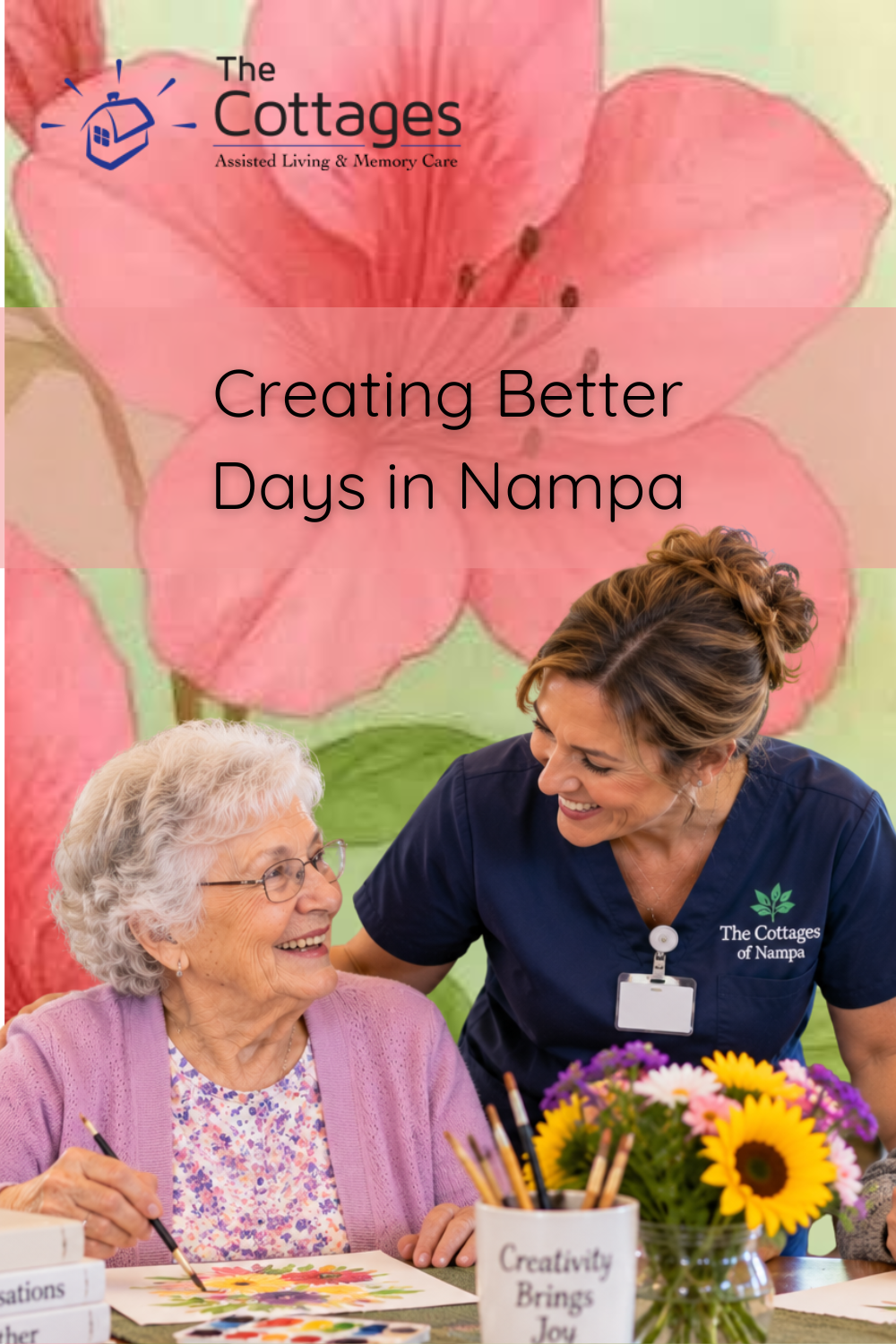
Creating Better Days in Nampa
Creating Better Days in NampaWhen families compare memory care communities, they often begin with the essentials.Is the environment secure?Are caregivers trained in dementia care?How much help is available with bathing, dressing, and medications?What does the monthly cost include?Those questions are important.But families should also ask another one:What will my loved one actually do during the day?For someone living with Alzheimer's disease or another form of dementia, meaningful activity can provide much more than entertainment. A familiar song, a simple gardening project, a walk outside, a puzzle, or a conversation with a caregiver can create structure, social connection, and enjoyable moments.At The Cottages of Nampa at Fall River, activities are part of a broader small-home memory care approach built around familiar routines, individualized care, dementia-trained caregivers, family-style living, and a calmer residential environment. The Nampa community currently offers activities such as music, games, crafts, art projects, outings, gardening, exercise, and secure outdoor time.Activity in Memory Care Should Have a PurposeA busy activity calendar does not automatically mean a memory care program is effective.The goal should not simply be keeping residents occupied.Meaningful engagement can help residents:Maintain familiar interestsSpend time with other peopleUse remaining abilitiesExperience accomplishmentCreate a predictable daily rhythmEnjoy the present momentThe Cottages says each of its locations has a Quality of Life Coordinator who develops activities intended to stimulate the mind and body while encouraging social interaction. Its broader programming includes games, music, walking, gardening, puzzles, exercise, arts and crafts, guest musicians, celebrations, and outings.That variety matters because no two residents enjoy exactly the same things.Family Tip: Tell the memory care team what your loved one enjoyed before dementia. A former gardener, musician, teacher, cook, mechanic, or sports fan may respond more positively to activities connected to familiar interests than to a generic schedule.Familiar Activities Can Help Someone Feel More Like ThemselvesDementia changes memory and cognition, but a person's identity is much broader than what they can remember on demand.Someone may still respond warmly to music they enjoyed decades ago.A lifelong gardener may still enjoy touching soil or watering plants.A person who always enjoyed puzzles may find satisfaction in completing simpler versions.A resident who spent years cooking for family may enjoy sitting near the kitchen while meals are prepared.The Cottages emphasizes individualized activities and states that its activity coordinators adapt programming around residents' interests and preferences.This personalized approach can make activities feel less like scheduled programming and more like ordinary life.Music Can Create Connection Without Requiring Perfect MemoryMusic is one of the activities currently offered across The Cottages communities, including sing-alongs and guest musical performances.For residents living with dementia, music can be especially approachable because participating does not require remembering names, dates, or instructions.Someone may:Tap along with a familiar rhythmSing part of a favorite songSmile when hearing a recognizable melodyDance or move gently to musicEnjoy listening alongside other residentsThe value is in the experience itself.A resident does not need to remember the event afterward for the moment to have been enjoyable.Games and Puzzles Can Be Adapted to the IndividualThe Cottages currently lists games, puzzles, bingo, and similar activities within its broader activity program.These activities can provide opportunities for:ConcentrationConversationHand-eye coordinationSocial interactionA sense of accomplishmentHowever, memory care activities should not feel like tests.If a puzzle is too difficult, the resident may become frustrated.If the activity is too easy, it may feel childish or uninteresting.Good dementia programming adjusts the task to the person's current abilities.The goal is participation and enjoyment, not proving what someone can still remember.Gardening Can Connect Residents With Familiar ExperiencesGardening is another activity included in The Cottages' programming.For someone who spent years caring for a backyard or vegetable garden, even simple tasks may feel familiar.A resident might:Water flowersTouch herbsHelp arrange plantsSit outside near the gardenTalk about plants they used to growThe Cottages of Nampa also offers outdoor time in a secure courtyard as part of its daily memory care environment.That allows outdoor activity to take place within a protected setting.Physical Activity Can Remain Part of the DayMemory care residents still benefit from opportunities to move according to their abilities.The Cottages' activity program currently includes walking and physical exercise.Movement might include:Short walksSeated exercisesGentle stretchingGroup movement activitiesOutdoor walking in secured areasThe exact activity should reflect the resident's mobility and any recommendations from healthcare professionals.For some residents, physical movement may also create a natural transition between different parts of the day.A morning walk.Lunch.A quieter afternoon activity.Dinner.Predictable sequences can make daily life easier to follow.Celebrations Can Preserve Familiar TraditionsBirthdays and holidays have often been part of someone's life for decades.The Cottages includes birthday and holiday celebrations among its recurring activities.These occasions can provide:Familiar musicSeasonal decorationsFavorite foodsOpportunities for family visitsShared traditionsFamilies can help by sharing meaningful details.Maybe Dad always loved Christmas music.Perhaps Mom always baked a particular dessert for birthdays.Small pieces of personal history can help staff make celebrations more relevant to individual residents.Outings Can Keep Residents Connected Beyond the HomeThe Cottages' broader activity program also includes field trips and community outings.Depending on the resident's cognitive and physical abilities, outings may offer:A change of scenerySocial connectionFamiliar community experiencesOutdoor enjoymentNot every resident will be comfortable leaving the community.For someone with more advanced dementia, an unfamiliar environment may be confusing.That is why outings should be individualized rather than treated as a requirement.Residents who prefer staying close to home can still participate in meaningful activities within the community.A Smaller Environment May Make Activities Feel More PersonalThe Cottages of Nampa uses a small residential model rather than a large campus-style setting.The provider currently operates two homes in Nampa, with each Cottages residence designed for a relatively small number of residents. The Nampa page emphasizes fewer residents, stronger caregiver relationships, greater one-on-one interaction, and a calmer environment.This scale may make it easier for staff to notice:Who enjoys musicWho prefers gardeningWho likes quiet conversationWho becomes overwhelmed in larger groupsWho needs encouragement to participateA small group can also allow activities to feel more like something happening naturally in a household.Daily Routine Matters Alongside ActivitiesMeaningful engagement works best when it fits into a predictable rhythm.The Cottages of Nampa describes daily life as simple, structured, and comforting, including gentle morning routines, shared meals, activities, outdoor time, and quiet evenings.For someone experiencing memory loss, that structure can help reduce the number of decisions they need to make.They may begin to recognize that breakfast is followed by an activity.Lunch is followed by outdoor time.Evening becomes quieter.The routine itself can become familiar even when the resident cannot describe it later.Activities Should Match Energy LevelsResidents living with dementia can have different levels of energy throughout the day.Some may be more alert in the morning.Others may prefer activity after lunch.Someone may become tired quickly in a group setting.Families should ask whether activities are flexible.A good program should allow residents to:Participate for shorter periodsObserve without joiningChoose quieter alternativesRest when neededThe Cottages emphasizes that each Nampa resident has individual needs, wishes, and preferences even within its structured routine.That balance is important.Structure should support the person rather than force the person into the schedule.Social Interaction Can Happen NaturallyFormal activities are not the only source of engagement.The small-home model means residents also spend time in shared living rooms, dining areas, kitchens, and other common spaces.The Cottages' broader model is built around residential-style homes with shared kitchens, dining rooms, and living areas.That may create opportunities for ordinary social interaction:Talking before a meal.Watching food being prepared.Sitting with another resident.Chatting with a caregiver.For someone living with dementia, these everyday moments can be just as important as scheduled programming.Meals Can Become Part of the Social RoutineThe Cottages of Nampa includes home-cooked meals and snacks in its current base services.Shared meals provide predictable opportunities for residents to gather.The broader Cottages model emphasizes family-style dining within the residential homes.That can make meals part of both nutrition and social engagement.Residents hear conversations.They see familiar caregivers.They experience regular routines surrounding breakfast, lunch, and dinner.These ordinary patterns can help a new environment gradually become more recognizable.Dementia Training Supports Better EngagementActivities in memory care require caregivers who understand dementia.Someone may lose interest suddenly.A resident may become confused about the activity.Another person may repeat the same action many times.The Cottages states that its caregivers participate in a systematized Alzheimer's and dementia training program that is continually updated. The program includes training in techniques for supporting people living with dementia as well as providing therapeutic activities.This can help staff adapt when an activity is not working.Rather than insisting the resident continue, a trained caregiver can redirect attention or offer another option.Respite and Adult Day Care Can Introduce Families to the EnvironmentThe Cottages also offers adult day care and respite services across its program, subject to availability and individual location approval. Current published services include supervision, companionship, meals, activities, medication management, and assistance with activities of daily living.For some families, a temporary stay or day program may provide another way to experience the Cottages environment.The current organization-wide respite pricing lists memory care respite at $250 per day with a five-day minimum, although availability and rates should be confirmed directly with the Nampa location because they may change.Why Engagement Matters for Idaho FamiliesThe Alzheimer's Association reports that more than 29,900 people in Idaho are living with Alzheimer's disease, while approximately 66,000 caregivers provide 105 million hours of unpaid care.Those numbers show that dementia affects far more than the individual with the diagnosis.It changes family routines.Social relationships.Caregiver responsibilities.Daily activities.Memory care communities therefore need to address more than physical safety.They also need to help residents continue experiencing connection, purpose, and meaningful interaction.Nampa's Growing Senior PopulationNampa's population was estimated at 120,384 in 2025, representing approximately 19.9% growth from the 2020 estimates base. About 14.5% of Nampa residents are age 65 or older, according to the U.S. Census Bureau.As Nampa continues growing, more families will need local resources for:Dementia careAssisted livingFamily caregiver supportRespiteLong-term planningThe Cottages of Nampa gives Canyon County families a smaller residential memory care option within their local community.The Cottages of Nampa at Fall RiverThe Cottages of Nampa at Fall River1047 & 1085 Rising Sun DriveNampa, Idaho 83686Phone: 208-229-0830The Nampa community currently provides:Assisted livingMemory careDementia-trained caregiversPersonalized care plansStructured daily routinesSecure surroundingsHome-cooked mealsHousekeeping and laundryIndoor and outdoor activitiesMedication managementPersonal-care assistanceFamilies should contact the Nampa office directly to confirm current availability, pricing, respite options, and activity schedules.Questions to Ask About Memory Care ActivitiesAre Activities Personalized?Ask how staff learn about the resident's former hobbies, career, interests, and preferences.Is Participation Optional?Residents should not be forced into activities that cause discomfort.How Large Are Activity Groups?Smaller groups may work better for some people with dementia.What Happens if a Resident Does Not Enjoy Group Activities?Ask about individual engagement.Are Outdoor Activities Available?The Cottages of Nampa currently offers secure courtyard time.Do Caregivers Participate?Caregiver involvement can make activities feel more comfortable for residents who need reassurance or redirection.Frequently Asked Questions About Activities at The Cottages of NampaWhat kinds of activities does The Cottages offer?Current examples across The Cottages include music, games, puzzles, walking, gardening, physical exercise, arts and crafts, celebrations, guest musicians, and field trips.Does The Cottages of Nampa offer outdoor activities?Yes. The Nampa location lists outdoor time in a secure courtyard as part of its daily routine.Are activities adapted for people with dementia?The Cottages states that its memory care program includes therapeutic activities and dementia-trained caregivers, with individualized support for residents.Are residents required to participate?The Nampa community emphasizes individual needs, wishes, and preferences, so families should discuss preferred participation levels during care planning.Does The Cottages provide respite or adult day care?The organization currently offers adult day care and overnight respite care at participating locations, subject to availability. Families should confirm availability specifically with The Cottages of Nampa.Find The Cottages of Nampa Through Seniors Blue BookFamilies researching memory care in Nampa and Canyon County can also find The Cottages of Nampa through SeniorsBlueBook.com.The current memory care listing highlights the community's smaller residential setting, dementia-trained caregivers, secure environment, personalized care, structured routines, and gentle redirection.Families should use the listing alongside an in-person tour and direct conversation with the care team when comparing memory care options.A Good Day in Memory Care Is Built From Small MomentsMeaningful dementia care is not always defined by a major event.Often, it is built from ordinary moments.A familiar song.A short walk outside.A puzzle completed with someone nearby.Watering a flower.Laughing during a game.Sitting at the table while lunch is prepared.At The Cottages of Nampa, activities are integrated into a smaller residential model where structured routines, personalized care, dementia training, and familiar household spaces are intended to make daily life feel calmer and more personal.For families searching for memory care, it is worth looking beyond the number of activities listed on a brochure.Ask whether those activities will actually mean something to the person you love.Because in memory care, a successful day is not necessarily one a resident can describe tomorrow.It can simply be a day that contained comfort, connection, movement, familiar experiences, and moments of genuine enjoyment today.
Sep 18, 2026

A Smaller, More Personal Approach to Memory Care in Nampa
A Smaller, More Personal Approach to Memory Care in NampaChoosing memory care for a parent, spouse, or other loved one involves much more than finding an available room.Families are often trying to answer deeper questions.Will my loved one feel comfortable there?Will caregivers really get to know them?Will the environment be too busy or confusing?How will staff respond when memory loss affects bathing, meals, communication, or behavior?And perhaps most importantly, will the person still be treated as an individual rather than simply as someone with dementia?For families in Nampa and Canyon County, Idaho, The Cottages of Nampa at Fall River offers a smaller residential approach to assisted living and memory care.Located at 1047 and 1085 Rising Sun Drive in South Nampa, The Cottages uses two home-style residences designed to accommodate up to 32 residents in total. The location provides both assisted living and specialized memory care in a neighborhood setting near Lake Lowell.For someone living with Alzheimer's disease or another form of dementia, the scale and atmosphere of a community can make an important difference.Why a Smaller Memory Care Setting May Appeal to FamiliesLarge senior living communities can offer extensive amenities and broad social opportunities.That can work very well for some older adults.For others, especially those experiencing memory loss, a larger and busier environment may feel overwhelming.The Cottages of Nampa intentionally uses a small-home residential model rather than a large institutional layout. The provider describes this approach as creating more opportunities for personalized interaction, consistent caregiver relationships, and a quieter environment.Across The Cottages organization, each individual home is designed for no more than 16 residents, with residential-style kitchens, dining areas, living rooms, and private bedrooms and bathrooms.For a person living with dementia, fewer unfamiliar faces and a simpler physical environment may make daily routines easier to navigate.Family Tip: When touring memory care, pay attention to how the environment feels at an ordinary time of day. Is it calm? Can residents easily see where meals and activities happen? Do staff seem to know residents personally? These observations can tell you as much as an amenities list.Memory Care Should Be PersonalizedPeople with dementia do not all need the same type or amount of assistance.One resident may walk independently but need repeated reminders.Another may need help bathing and dressing.Someone else may become anxious when their routine changes.The Cottages of Nampa states that residents receive personalized care plans tailored to individual needs, while its broader memory-care program emphasizes individualized treatment based on each resident's needs and preferences.That individual focus can include understanding:Daily routinesPersonal-care needsFood preferencesCommunication styleInterestsMobilityBehaviors associated with dementiaActivities that provide comfort or enjoymentMemory care works best when caregivers know more than a diagnosis.They should also learn the person's story.Structured Routines Can Make the Day More PredictableDementia can make sequencing and decision-making harder.A routine that once happened automatically may become confusing.The Cottages of Nampa describes daily life as simple, structured, and comforting, including gentle morning routines, shared meals, activities, outdoor time, and quieter evenings.That consistency can help create a recognizable rhythm.A resident may become accustomed to:Morning personal care.Breakfast.Activities.Lunch.Outdoor time.A quieter evening routine.The schedule does not need to be rigid.The Cottages emphasizes that residents remain individuals with their own wishes, needs, and preferences even while the community establishes predictable routines.The goal is structure without treating every resident exactly the same.Dementia-Trained Caregivers MatterMemory care requires more than locking exterior doors.The way caregivers communicate and respond to dementia-related changes is extremely important.The Cottages says it has developed a systematized Alzheimer's and dementia training program for its caregivers and that the training is continually updated. Its memory-care approach also incorporates therapeutic and life-enriching activities.At the Nampa location, memory-care services currently include:Dementia-trained staffStructured daily routinesGentle redirectionCognitive supportA calmer, lower-stimulation environmentFamilies comparing communities should ask specifically what dementia education staff receive rather than relying on the phrase memory care alone.Gentle Redirection Can Be More Helpful Than CorrectionSomeone living with dementia may repeat a question.They may believe they need to leave for work even though they retired years ago.They may become worried about something that does not appear logical to another person.Constantly correcting the person can sometimes create frustration.The Cottages of Nampa specifically identifies gentle redirection as part of its dementia support approach.This type of support may involve calmly shifting attention, offering reassurance, or guiding someone toward another activity rather than turning every misunderstanding into an argument.That approach recognizes an important principle of memory care:The objective is not always proving what is factually correct.Sometimes it is helping the person feel safe and supported in the moment.Safety Is Built Into the Memory Care EnvironmentDementia can affect judgment and awareness.Someone may attempt to leave home unexpectedly or become unable to recognize unsafe situations.The Cottages' broader memory-care program uses coded locks and gates to create a more secure environment for residents living with memory impairment.The Nampa community also describes its memory-care environment as secure and includes a secure courtyard where residents can spend time outdoors.This combination can allow residents to move through appropriate areas without requiring families to provide constant supervision themselves.Families touring should still ask:How are exits secured?How is wandering addressed?How often are residents checked?What happens during emergencies?Can residents access outdoor areas safely?Personal Care Can Be Added According to NeedMemory loss can gradually interfere with bathing, dressing, grooming, mobility, and other daily tasks.The Cottages of Nampa provides assistance with bathing, dressing, and everyday routines as part of its care services. The community also provides medication management when indicated by the resident's assessed care needs.Additional care charges are determined following a personalized assessment and may reflect needs such as:Medication managementPersonal careBehavioral assistanceOther individualized supportThis allows the care plan to reflect how much assistance the person actually requires rather than applying exactly the same package to everyone.Medication Support Can Reduce a Major Family ConcernMedication routines often become difficult as dementia progresses.A person may forget a dose.They may accidentally take the same medication twice.They may struggle to understand why a medication is needed.The Cottages of Nampa includes medication management within its available care services and lists quarterly nursing and medication reviews among services included in its current base offering.Medical decisions still belong with appropriate healthcare professionals, but having a structured medication routine can reduce one of the daily responsibilities that family caregivers often manage at home.Home-Cooked Meals Create FamiliarityFood can be one of the strongest connections to routine and home.The Cottages' residential model places the kitchen close to resident living and dining spaces. The organization describes meals as being prepared in a residential-style kitchen where residents can see and smell food being made before eating together in a family-style dining environment.The Nampa community includes home-cooked meals and snacks as part of its services.For someone with dementia, familiar sensory experiences can help make an environment feel less institutional.The smell of breakfast cooking.People gathering around a dining table.A kitchen that looks more like one found in a home.These details can matter.Activities Can Provide Purpose and ConnectionA diagnosis of dementia does not mean someone stops enjoying activities.The activity may simply need to match the person's current abilities.The Cottages of Nampa currently lists activities including:MusicGamesCraftsArt projectsOutingsOutdoor activitiesGardeningExerciseThe broader Cottages program also emphasizes activities designed to keep residents social, active, and involved.Activities in memory care should not feel like tests.The purpose is not asking someone to prove what they remember.It is giving them opportunities to enjoy the present.A Calm Environment Can Be ImportantNoise and activity can sometimes become overwhelming for someone experiencing cognitive changes.The Cottages of Nampa describes its memory-care setting as calm and low stimulation, with quieter evenings and a more intimate residential environment.That does not mean residents spend the day without activity.Rather, the goal is to balance meaningful engagement with an atmosphere that does not constantly overwhelm the senses.Families should consider the individual's personality.Some people enjoy a busy social environment.Others thrive in something smaller and quieter.Neither model is automatically right for everyone.Consistent Caregivers Can Help Build FamiliarityThe Cottages emphasizes caregiver continuity as one advantage of its smaller model.Its Nampa page specifically highlights consistent staff who know residents personally and greater opportunities for caregiver-to-resident interaction.For residents with dementia, repeated interactions with familiar caregivers may make daily care more comfortable.A caregiver may learn:How the resident prefers to get ready in the morningWhich activities they enjoyFoods they dislikeWhat tends to cause anxietyWhat helps calm themHow they communicate when something is wrongThese details can be difficult to capture on a checklist.They develop through relationships.The Nampa Community Has Two Residential HomesThe new Nampa location consists of two homes designed to accommodate up to 32 residents total.The two addresses are:1047 Rising Sun Drive1085 Rising Sun DriveNampa, Idaho 83686The current memory-care listing on SeniorsBlueBook.com identifies 1085 Rising Sun Drive for the memory-care profile.The community is located in South Nampa near Lake Lowell and the Deer Flat National Wildlife Refuge. The provider describes the surrounding neighborhood as quieter and more residential while still providing convenient access to shopping, restaurants, medical offices, and St. Luke's Nampa Medical Center.Leadership Experience in Dementia CareThe current Executive Director of The Cottages of Nampa is Catina Jimenez.The provider states that she has spent many years working in senior care and has extensive experience supporting people living with Alzheimer's disease and other forms of dementia. She previously led The Cottages' Boise homes before moving into leadership at the Nampa location.Families touring a memory-care community may benefit from meeting leadership directly.Ask how administrators stay involved in daily operations and what happens when families have concerns.Understanding Current CostsThe Cottages of Nampa currently publishes a memory-care base rate of $4,800 per month.According to the provider, that base rate currently includes services and amenities such as:Private accessible roomUtilitiesHome-cooked meals and snacksSatellite televisionPersonal laundryHousekeepingIndoor and outdoor activitiesWireless internet24-hour companionship and staffingEmergency call systemQuarterly nursing and medication reviewAdditional care charges may apply based on the amount of assistance the resident requires, with the final level determined after an assessment.Because pricing can change, families should request a current written estimate before making a decision.Ask specifically:What is included in the base rate?What creates additional care charges?How often is the care level reassessed?Can rates increase if dementia progresses?Are there one-time move-in fees?Why Memory Care Is Increasingly Important in NampaNampa continues to grow rapidly.The U.S. Census Bureau estimated 120,384 residents in Nampa in 2025, an increase of approximately 19.9% from the 2020 estimates base. About 14.5% of Nampa residents are age 65 or older.As Nampa's population grows and ages, more Canyon County families will face decisions involving:Alzheimer's diseaseOther forms of dementiaFamily caregiver stressSafetyResidential careRespiteLong-term planningHaving multiple styles of memory care available gives families the ability to compare environments rather than assuming every community operates the same way.The Cottages Has Provided Senior Care Since 2001The broader Cottages organization began serving Idaho seniors in 2001.Its small-home model has expanded to multiple communities across Idaho while retaining an emphasis on more intimate assisted living and memory-care residences.The current Nampa development represents a return to Nampa after the provider's earlier local community closed in 2021 during COVID-era staffing shortages. The newly developed Nampa location was announced for 2026 with two new residential homes.The Cottages of Nampa Contact InformationThe Cottages of Nampa at Fall River1047 & 1085 Rising Sun DriveNampa, Idaho 83686Phone: 208-229-0830Families should contact the Nampa team directly to confirm:Current availabilityRoom optionsMemory-care pricingCare-level chargesRespite availabilityAdult day servicesAdmission criteriaQuestions to Ask During a Memory Care TourHow Many Residents Live in Each Home?The Cottages' broader model is designed for up to 16 residents per home.What Dementia Training Does Staff Receive?Ask what training is required initially and how frequently staff receive continuing education.How Consistent Are the Caregivers?Familiar caregivers may be especially valuable for residents experiencing memory loss.How Does the Community Respond to Anxiety or Agitation?Ask specifically about redirection and behavioral support.What Is Included in the Monthly Price?Get a written explanation of base charges and additional care rates.How Are Families Kept Informed?Ask how changes in health, behavior, eating, or mobility are communicated.What Activities Are Offered?Review an actual activity calendar rather than relying only on a general list.Frequently Asked Questions About The Cottages of Nampa Memory CareDoes The Cottages of Nampa specialize in dementia care?Yes. The Nampa location provides specialized memory care for people living with Alzheimer's disease, dementia, and cognitive decline.Is the memory-care environment secured?Yes. The Cottages' memory-care program uses security measures such as coded locks and gates, and the Nampa community includes secure outdoor space.Are caregivers trained in dementia care?Yes. The Cottages states that caregivers complete a systematized Alzheimer's and dementia training program that is continually updated.Does the Nampa community provide help with bathing and dressing?Yes. Assistance with bathing, dressing, medication management, and other daily routines is available based on the resident's individualized care needs.What is the current memory-care base rate?The Cottages of Nampa currently publishes a memory-care base rate of $4,800 per month, with additional care charges depending on the resident's assessed needs. Families should confirm current pricing directly before admission.Find The Cottages of Nampa Through Seniors Blue BookFamilies researching memory care in Nampa, Idaho can also review The Cottages of Nampa on SeniorsBlueBook.com.The current Seniors Blue Book memory-care profile lists the community at 1085 Rising Sun Drive, Nampa, Idaho 83686 and highlights its secure environment, dementia-trained staff, structured routines, gentle redirection, cognitive support, and smaller residential model.Families can use the listing as another resource while comparing local memory-care options and should contact the community directly for current pricing, availability, and admission information.Memory Care Should Feel PersonalMoving someone with dementia into memory care is a major transition.Families naturally worry about safety.But they also worry about something more personal.Will anyone really know Mom?Will they understand why Dad gets anxious in the evening?Will someone remember which music makes him smile?Will she still have choices?For some residents, a smaller memory-care model can provide an environment where those individual details are easier to recognize.At The Cottages of Nampa, the approach combines dementia-trained caregivers, structured routines, personalized care, secure surroundings, family-style meals, activities, outdoor access, and residential homes with fewer residents.For families searching for memory care in Nampa and Canyon County, the most important question may not be which community has the longest list of amenities.It may be:Where will my loved one feel understood, comfortable, secure, and known as a person?That is ultimately what memory care should help preserve, even as memory itself changes.
Sep 18, 2026

When Is It Time for Memory Care in Nampa?
When Is It Time for Memory Care in Nampa?One of the hardest questions a family can ask is:Can we still safely care for Mom or Dad at home?There is rarely a single moment when the answer becomes obvious.Dementia usually changes family life gradually.At first, a spouse may provide reminders.Then someone begins helping with medications.Meals require more supervision.Bathing becomes difficult.A parent who once stayed home alone comfortably now needs someone nearby most of the day.Nighttime becomes unpredictable.Family members begin rearranging work schedules and taking turns providing supervision.Eventually, what started as occasional assistance can become round-the-clock caregiving.For families in Nampa and Canyon County, Idaho, recognizing when home care is becoming unsustainable can help prevent a crisis and provide more time to thoughtfully explore memory care.The Cottages of Nampa at Fall River, located at 1047 and 1085 Rising Sun Drive in Nampa, provides specialized memory care in a smaller residential environment. Its current program includes dementia-trained staff, structured routines, secure surroundings, personalized care, medication management, personal-care assistance, meals, activities, and 24-hour staffing.A Dementia Diagnosis Alone Does Not Mean Someone Needs Memory CareMany people with early-stage dementia remain at home successfully.Family support, home care, medical treatment, transportation assistance, and community resources may allow someone to continue living in familiar surroundings.Memory care becomes worth considering when the person's care needs, safety concerns, or supervision requirements begin exceeding what the current home arrangement can reliably provide.The Alzheimer's Association recommends considering factors such as whether the caregiver is becoming stressed or impatient, whether other family and work responsibilities are being neglected, and whether the person with dementia may benefit from the greater structure and social interaction available in a residential care setting.The decision should therefore consider both people:The person living with dementia.And the person providing most of the care.Family Tip: Do not wait for one dramatic event before evaluating memory care. Keep a record of the assistance, supervision, nighttime interruptions, behavioral changes, and safety concerns occurring during an ordinary week. The pattern often reveals more than one isolated incident.Increasing Supervision Can Be an Important SignOne of the biggest changes in dementia caregiving is the gradual loss of unsupervised time.A family may notice that their loved one can no longer safely be left alone because they might:Leave the house unexpectedlyForget that food is cookingBecome confused about where they areFall without being able to summon helpTake medications incorrectlyLet unfamiliar people into the homeBecome frightened when no one is nearbyWhen someone requires near-constant supervision, the care plan changes significantly.A spouse who once ran errands freely may begin feeling unable to leave the house.Adult children may need to coordinate schedules just to ensure someone is always present.The Cottages of Nampa currently provides 24/7 staffing, an emergency call system, dementia-trained care, and a secure memory care setting designed specifically for residents with cognitive impairment.Wandering Can Change the Safety EquationWandering is one of the concerns families frequently associate with dementia.A person may believe they need to go to work.They may try to return to a childhood home.They may simply walk outside and become unable to find the way back.The concern is not that the person wants to walk.Walking and movement can still be valuable.The problem is when cognitive changes make it difficult to recognize danger or return safely.The Cottages' memory care program uses secured environments, and the Nampa location currently includes a secure courtyard where residents can spend time outside within a protected area.Families touring a community should ask how staff balance safety with appropriate freedom of movement.Nighttime Care Can Exhaust Families QuicklyDementia does not always follow normal daytime schedules.Some people become increasingly confused in the evening.Others wake repeatedly.A spouse may find themselves listening for movement all night because they worry their loved one will fall or leave the home.Sleep disruption can gradually affect the caregiver's own health and ability to function.The Alzheimer's Association identifies sleeplessness, exhaustion, anxiety, irritability, social withdrawal, and health problems among common signs of significant dementia caregiver stress.If the caregiver is sleeping only lightly because they feel responsible for monitoring another person throughout the night, the current care arrangement deserves serious review.The Cottages states that its broader senior care model provides 24/7 up-and-awake staffing with around-the-clock registered nurse oversight.Families should confirm exactly how nighttime supervision operates at the Nampa location when discussing admission.Personal Care May Become More DifficultBathing and dressing can become challenging as dementia progresses.A person may physically be able to shower but forget the sequence.They may resist assistance.They may no longer recognize why clothing needs to be changed.A spouse or adult child may find themselves helping with increasingly private daily routines.The Cottages of Nampa currently provides assistance with:BathingDressingDaily routinesMedication managementOther personal-care needs based on assessmentNeeding help with these activities does not automatically require residential memory care.But when several daily activities require hands-on assistance and the family caregiver is also providing constant supervision, memory care may become more practical.Medication Problems Deserve AttentionMedication routines may become unsafe when someone forgets:Whether a dose was already takenWhich medication belongs to which timeWhy a prescription is necessaryWhether a medication was discontinuedFamily members often take over the process.That may work successfully for some time.But as other caregiving responsibilities increase, medication management can become another major daily obligation.The Cottages of Nampa includes medication management within its available care services, while The Cottages' broader program states that medication administration is overseen by registered nurses and certified medication technicians.Family Caregiver Exhaustion Is a Real Care IssueFamilies sometimes evaluate the situation entirely from the older adult's perspective.They ask:Can Dad still stay home?But another question matters:Can Mom continue providing this level of care?The Alzheimer's Association notes that dementia caregivers frequently report high stress and recommends taking symptoms such as exhaustion, sleeplessness, anxiety, irritability, withdrawal, and declining health seriously.Caregiver health is not separate from the care plan.If the primary caregiver becomes ill or physically unable to continue, the entire arrangement can collapse suddenly.Planning before that happens can give families more choices.Respite Care May Help Families Evaluate the Next StepConsidering memory care does not necessarily mean a permanent move must happen immediately.Respite can provide temporary relief while families evaluate longer-term needs.The Cottages currently offers adult day services and overnight respite care. Its published program includes:24/7 supervisionCompanionshipMeals and snacksActivitiesMedication managementAssistance with activities of daily livingThe organization's current published memory care respite rate is $250 per day with a five-day minimum, although families should confirm availability and current pricing specifically with the Nampa location.Respite can serve several purposes.It can give the family caregiver genuine time off.It may allow the older adult to become familiar with receiving care from someone else.It can also help families understand whether a residential setting might better meet increasing needs.Memory Care Can Add Structure to the Entire DayAt home, family caregivers may spend much of their time trying to create routine.Wake up.Get dressed.Take medications.Prepare breakfast.Find an activity.Prepare lunch.Supervise the afternoon.Make dinner.Prepare for bed.The Cottages of Nampa describes daily life as simple, structured, and comforting, with gentle morning routines, shared meals, engaging activities, secure outdoor time, and quieter evenings.That structure can reduce the number of responsibilities family members have to recreate from scratch every day.For the resident, predictable routines may also make the environment easier to navigate.A Calm Environment May Help When Home Life Becomes ChaoticHome is familiar.But familiar does not always mean calm.If family members are rotating through caregiving shifts, appointments happen frequently, and every part of the day requires negotiation, home life can become stressful for everyone.The Cottages of Nampa describes its memory care environment as calm and low stimulation, with fewer residents, more consistent caregivers, and a smaller residential setting.For some people with dementia, this may be easier to navigate than a larger, busier setting.Families should still compare several communities because personality matters.Some residents enjoy more activity.Others respond better to quieter surroundings.Caregiver Familiarity Can Become More Important as Dementia ProgressesPeople living with dementia may have difficulty remembering names while still responding positively to familiar faces.The Cottages emphasizes consistent caregivers who know residents personally as part of its small-home model.Over time, staff may learn:What helps a resident relaxTheir preferred morning routineFavorite foodsHow they communicate discomfortWhich activities they enjoyWhat triggers anxietyWhether they prefer quiet conversation or group engagementThat knowledge can be especially useful when verbal communication becomes more difficult.Memory Care Can Allow Family Members to Become Family AgainOne of the less discussed effects of dementia caregiving is how relationships change.A spouse becomes a supervisor.A daughter becomes the medication manager.A son becomes the transportation coordinator.Every visit becomes a task.When professional caregivers assume more of the daily care responsibilities, family members may have more opportunities to return to their original roles.A daughter can visit instead of spending the entire afternoon cleaning.A husband can sit with his wife rather than monitoring every medication.A grandchild can share a meal instead of arriving only when something has gone wrong.Moving to memory care does not end caregiving.It changes how caregiving is shared.Feeling Guilty Does Not Automatically Mean the Decision Is WrongFamilies often feel guilty when considering residential care.They may remember promises to never put Mom somewhere.But those promises may have been made years before dementia progressed to the point where 24-hour care was needed.The Alzheimer's Association notes that guilt and uncertainty are common when families move someone into long-term care and emphasizes that the central question remains whether the person is receiving the care they need.A memory care decision should be based on current needs, not only on expectations formed before anyone knew what those needs would become.Financial Planning Should Be Part of the DecisionMemory care represents a major financial commitment.The Cottages of Nampa currently publishes a memory care base rate of $4,800 per month.The listed base rate includes:A private accessible roomUtilitiesMeals and snacksPersonal laundryHousekeepingActivitiesWireless internet24/7 staffing and companionshipEmergency call systemQuarterly nursing and medication reviewAdditional care charges may apply based on medication management, personal care, behavioral assistance, and other individualized needs determined through an assessment.Families should request a written estimate reflecting the prospective resident's actual needs.Do not compare communities using only advertised starting rates.Tour Before the Situation Becomes an EmergencyWaiting until a hospitalization, wandering event, or caregiver health crisis can dramatically reduce the amount of time a family has to choose a community.A current Seniors Blue Book guide to Nampa memory care recommends documenting concerns, calling communities, requesting a care assessment, gathering important medical and legal records, and touring potential communities before making a decision.During a tour, ask:How many residents live in each home?How are caregivers trained in dementia?What happens when someone wanders?How are nighttime needs handled?How does staff respond when someone refuses care?How are families informed when needs change?What happens if mobility declines?Which additional fees may be added?Planning ahead does not obligate a family to move immediately.It simply prevents the first serious crisis from becoming the only reason a decision gets made.Why This Conversation Matters in NampaNampa continues to grow.The U.S. Census Bureau estimated the city's population at 120,384 in 2025, representing 19.9% growth from its 2020 estimates base. Approximately 14.5% of Nampa residents are age 65 or older.As Nampa and Canyon County grow, more local families will encounter questions involving:DementiaFamily caregivingHome safetyRespiteMemory careLong-term planningHaving local residential options allows families to keep loved ones closer to familiar communities and relatives when memory care becomes appropriate.The Cottages of Nampa at Fall RiverThe Cottages of Nampa at Fall River1047 & 1085 Rising Sun DriveNampa, Idaho 83686Phone: 208-229-0830The community currently provides both assisted living and specialized memory care, with memory services including:Secure surroundingsDementia-trained staffStructured daily routinesGentle redirectionCognitive supportPersonal-care assistanceMedication managementMealsHousekeepingActivities24-hour staffingFamilies should confirm current room availability, pricing, care-level charges, respite options, and admission requirements directly with the Nampa team.Frequently Asked Questions About When to Consider Memory CareWhat are signs that dementia care at home may no longer be sustainable?Increasing supervision needs, wandering, nighttime disruption, medication problems, greater personal-care needs, safety concerns, and severe family caregiver exhaustion can all indicate that the current plan should be reassessed. The Alzheimer's Association specifically encourages families to consider caregiver stress and whether greater structure and social interaction would benefit the person living with dementia.Does needing 24-hour supervision mean memory care is required?Not automatically. Some families provide care at home with professional support. However, the cost, reliability, safety, and impact on family caregivers should all be considered when supervision becomes continuous.Does The Cottages of Nampa provide 24-hour staffing?Yes. Its current Nampa information lists around-the-clock staffing, while The Cottages' broader service model describes 24/7 up-and-awake staff and registered-nurse oversight.Can families try respite care first?Potentially. The Cottages currently offers adult day and overnight respite services at participating locations. Families should confirm availability directly with the Nampa community.How much does memory care currently cost at The Cottages of Nampa?The current published base rate is $4,800 per month, with additional care charges based on individual needs. Pricing should be confirmed before admission.Find The Cottages of Nampa Through Seniors Blue BookFamilies comparing memory care in Nampa, Idaho can also use SeniorsBlueBook.com as a local research resource.A current September 2026 Seniors Blue Book guide identifies The Cottages of Nampa at 1047 and 1085 Rising Sun Drive and recommends comparing communities based on safety needs, cognitive symptoms, mobility, personality, preferred routines, budget, and family involvement.Families can use the guide as a starting point and then contact communities directly to verify current pricing, openings, care levels, licensing, and tour availability.The Right Time Is When the Current Plan Stops Working WellThere is rarely a perfect day to move someone into memory care.Families may always wonder whether they acted too soon or waited too long.A more practical approach is to evaluate the current reality.Is the person safe?Are their daily needs consistently being met?Does someone have to remain nearby almost constantly?Can the primary caregiver still sleep, work, attend medical appointments, and maintain their own health?Would a structured environment with trained caregivers provide something the family can no longer reliably recreate at home?At The Cottages of Nampa, memory care is provided within a smaller residential model with dementia-trained staff, predictable routines, personalized assistance, secure surroundings, meals, activities, and continuous staffing.Choosing memory care does not mean a family stopped caring.In many situations, it means recognizing that dementia has reached a point where caring well requires more people, more structure, and more support than one household can reasonably provide.The goal is not simply to keep someone at home for the longest possible time.The goal is to make sure they are receiving the level of care they need while protecting the wellbeing of everyone involved.