You're At Home Residential Assisted Living
2811 N Ridge Haven Way, Meridian, Idaho, 83646
Assisted Living$4,200/month


About You're At Home Residential Assisted Living
You're At Home is a luxurious 6-bed private home licensed by the State of Idaho to provide care for individuals needing help with daily activities and personal care. We offer choice, independence, and dignity in a safe, affordable, home environment. You're At Home is a family-owned business, with ties to the Treasure Valley of over 30 years. Our licensed home providers have the necessary training and experience to care for our residents.General Property Features
- Private Rooms, Semi-Private Rooms, Wanderguard
Assisted Living
- www.youre-at-home.com
- 6
- $4,200.00
- Price Dependent Levels of Care
- Wanderguard
- Yes
Continue Your Search! Explore More Local Options.
Start SearchingLet’s engage and get educated!
Browse through thousands of expert articles in over 100 different categories.
Browse NowArticles You May Like

Signs Meridian Families Should Watch For
Is It Time for Assisted Living? Signs Meridian Families Should Watch ForFamilies rarely receive a clear announcement that says:Today is the day Mom needs assisted living.Instead, the change usually happens gradually.A parent starts needing more help with groceries.Bathing becomes difficult.Medications are missed.The house becomes harder to maintain.Family members begin checking in more frequently.Eventually, what once felt like occasional assistance becomes daily caregiving.For families in Meridian and Ada County, recognizing these patterns early can create more time to explore assisted living before an emergency forces a rushed decision.Youre At Home Residential Assisted Living provides a small residential option in Meridian for people who need assistance with daily activities and personal care while maintaining as much choice and independence as possible.Assisted Living Is Not Only for People Who Need Constant CareOne common misconception is that someone should not consider assisted living until they can no longer do anything independently.That is not how assisted living is designed.Idaho describes assisted living as a senior living option for adults who have minimal needs for assistance with daily living and care, with the goal of helping residents remain as independent as possible in a safe environment.Some residents need help with several daily activities.Others need much less.The question is not whether someone can do everything alone.The question is whether the current arrangement continues to work safely and realistically.Sign 1: Personal Care Is Becoming DifficultPay attention to changes in:BathingDressingGroomingToiletingOral hygieneMobilityA parent may begin bathing less frequently because stepping into the shower feels unsafe.Clothing may become more difficult to manage.Shoes may remain unchanged because bending is painful.These changes deserve attention.Sometimes in-home assistance is enough.In other situations, the combined need for help throughout the day makes assisted living more practical.Sign 2: Meals Are Becoming InconsistentCheck what is actually being eaten rather than whether food exists in the house.Possible warning signs include:Weight lossSpoiled foodSkipped mealsReliance on snacksDifficulty cooking safelyRepeated takeout because cooking feels exhaustingAssisted living commonly provides regular meals as part of the residential environment.Current directory information for Youre At Home lists three daily meals among its services.Sign 3: Medication Is Becoming ConfusingMultiple prescriptions can create complicated schedules.Families may discover:Missed dosesDuplicate dosesExpired medicationOld prescriptions mixed with current onesUncertainty about what medication is forMedication concerns should be discussed with health professionals.They can also be one indication that additional daily structure may be useful.Sign 4: The Home Is Becoming Too Much to ManageA house that was easy to maintain at 55 can become exhausting at 80.Families may notice:Laundry piling upDishes sitting for daysBathrooms becoming difficult to cleanTrash not being removedYard work being neglectedMail accumulatingThis does not necessarily mean cognitive decline.The physical effort of maintaining a home may simply exceed the person's available energy.Current assisted living information for Youre At Home includes housekeeping and laundry support.Sign 5: Mobility Problems Are IncreasingFalls are not the only concern.Watch for:Holding onto furnitureAvoiding stairsDifficulty standing from chairsTrouble transferring in and out of bedReduced walkingFear of fallingFear itself can shrink a person's life.Someone who is afraid of falling may stop going outside or walking through the house.Assisted living may provide an environment where support is more readily available.Sign 6: Social Isolation Is GrowingSometimes a senior is technically safe at home but spends nearly every day alone.Driving may have stopped.Friends may have died or moved.Adult children may be busy with work.A spouse may have passed away.The senior may no longer participate in activities that once gave the week structure.Residential living can provide everyday human interaction without requiring the person to organize every outing.Sign 7: Family Caregiving Is Becoming UnsustainableFamily caregivers often adapt so gradually that they do not realize how much they are doing.An adult child may handle:GroceriesPrescriptionsTransportationCleaningMealsBillsAppointmentsPersonal careA spouse may provide help from morning until night.Ask:Could this care arrangement continue safely for another year?If the answer is clearly no, it may be time to explore other options.Family Tip: Do not judge the situation based on your parent's best day. Look at the entire week, including evenings, weekends, meals, medications, personal care, and how much assistance family members are already providing.Why Meridian Families Benefit From Planning EarlyMeridian has experienced remarkable population growth.The U.S. Census Bureau estimates that the city's population reached 142,988 in 2025, up 21.4% from the 2020 estimates base.About 14.8% of residents are age 65 or older.As the city grows, senior housing choices continue to matter.Planning before a crisis gives families time to compare:LocationSizeCare optionsCostRoom typesAtmosphereStaffingFamily accessWhen a hospital is preparing to discharge someone tomorrow, there is far less time for thoughtful comparison.Youre At Home Offers a Residential AlternativeYoure At Home Residential Assisted Living is located at 2811 N Ridge Haven Way in Meridian.Seniors Blue Book describes the community as a small private-home setting licensed in Idaho to care for people who need assistance with daily activities and personal care.Its profile emphasizes:ChoiceIndependenceDignitySafetyA home environmentIt also lists private and semi-private room options.For families who believe a large senior campus may be overwhelming, a smaller residential setting offers another type of assisted living to explore.How to Start the Conversation With a ParentAvoid beginning with:You can't live alone anymore.That statement can immediately turn the discussion into an argument about independence.Instead, ask questions.What is hardest around the house now?Are there things you wish someone else handled?What worries you about living alone?Would you be willing to visit a few places before making any decisions?What would you want your next home to feel like?The goal is to understand the senior's perspective.Visit Before There Is an EmergencyA tour does not commit anyone to moving.It simply provides information.Visit assisted living communities while the older adult can participate actively.Compare environments.A person may be surprised by what they like.Someone who thought assisted living meant a hospital may respond differently after visiting a residential home.Ask About Current and Future NeedsDo not evaluate only today's needs.Ask what happens if:Walking becomes harderToileting needs increaseMedication routines become more complicatedCognition changesHospice is eventually neededThe resident returns from a hospital stayUnderstanding care limitations helps families avoid surprises later.Frequently Asked QuestionsDoes moving to assisted living require changing a will?Not necessarily. However, a move may be a useful time to review estate documents if finances, property, health, or family circumstances have changed.Can someone with mild memory loss still make their own decisions?Possibly. Memory loss does not automatically mean someone lacks decision-making capacity. Legal capacity depends on individual circumstances and the specific decision involved.What is the difference between guardianship and conservatorship?Guardianship generally concerns personal or health-related decisions, while conservatorship generally involves finances or property. Both are formal legal arrangements rather than automatic consequences of moving into assisted living.Should families consult an elder-law attorney before a crisis?Early planning can be helpful, particularly for powers of attorney, estate documents, long-term-care financing, property matters, guardianship, and conservatorship questions.Start Exploring Before You Have to DecideAssisted living decisions are easier when families have time.Watch the patterns.Listen to the senior.Consider the caregiver.Look realistically at whether the current arrangement remains sustainable.For Meridian families ready to explore a smaller assisted living option, Youre At Home Residential Assisted Living provides a residential setting centered on personal care, independence, dignity, and a familiar home environment.Visit the Youre At Home Residential Assisted Living profile on SeniorsBlueBook.com to learn more and contact the community regarding current availability and care options.
Sep 14, 2026

What Personalized Senior Care Should Look Like
Independence and Dignity in Assisted Living: What Personalized Senior Care Should Look LikeOne of the biggest fears seniors have about assisted living is losing control.They may imagine someone else deciding when they wake up, what they eat, what they wear, where they sit, and how they spend the day.That fear is understandable.Older adults have spent decades making their own decisions.Needing assistance with bathing, medications, meals, or mobility should not erase personal preferences or identity.For families researching assisted living in Meridian, Idaho, one of the most important questions is not simply:What care is available?It is:How will this community help my loved one remain themselves?Youre At Home Residential Assisted Living specifically describes its approach around choice, independence, and dignity within a safe private-home environment.Independence Does Not Mean Doing Everything AloneIndependence is often misunderstood.A person can receive help and still remain independent.Someone who uses a walker is still independent.A person who receives help with bathing can still make decisions.A senior who no longer cooks can still choose what foods they enjoy.Idaho's own description of assisted living emphasizes helping adults live as independently as possible while providing necessary supervision, personal assistance, meals, and lodging.Good assisted living should therefore ask:What can the resident still do?not only:What can the resident no longer do?Personalized Care Begins With Daily PreferencesImagine two residents who both need assistance getting dressed.One wakes at 6:30 every morning and prefers breakfast early.The other has never been a morning person and prefers sleeping until 9.Their physical care needs may be identical.Their preferred routines are not.Personalized care should recognize differences like these.Preferences may include:Wake-up timeBedtimeBathing routineClothingFoodRoom temperatureTelevision programsMusicSocial interactionQuiet timeSpiritual practicesFamily visitsThe more care can safely respect these preferences, the more the resident remains connected to their identity.Dignity Matters During Personal CareReceiving help with intimate tasks can feel vulnerable.Bathing, dressing, toileting, and incontinence care should be handled with respect.Caregivers should:Explain what they are doingProtect privacyEncourage the resident to do what they canAvoid unnecessary rushingSpeak directly to the residentRespect preferences where possibleFamilies should observe how staff members communicate during a tour.Tone matters.A Small Setting May Make Individual Routines Easier to UnderstandYoure At Home is described by Seniors Blue Book as a small private-home assisted living environment.For some seniors, fewer residents can make the setting feel more familiar.In a small household-style environment, families may want to ask how caregivers learn residents' preferences and how information is passed between staff.Do caregivers know:How Dad likes his coffee?Which chair Mom prefers?Whether a resident enjoys conversation during breakfast?Which television program someone never misses?What makes a resident anxious?Which family member should be called first?These ordinary details contribute to quality of life.Choice Can Continue in Assisted LivingResidents may need assistance, but wherever possible they should still have meaningful choices.Examples include:What shirt would you like?Would you like to eat now or in 20 minutes?Would you like to sit outside?Do you want company or some quiet time?Small decisions reinforce autonomy.They also communicate respect.Care Tip: When evaluating assisted living, listen for language that focuses on what residents can do. Strength-based care supports independence better than care that defines someone only by their limitations.Privacy Is Part of DignitySeniors Blue Book lists private and semi-private rooms as property options at Youre At Home.Room choice can affect privacy significantly.Families should ask:Can doors remain closed?How is privacy handled during personal care?Can residents decorate?Are family visits private?How are roommate issues addressed?A resident's room is their home.Staff access may be necessary for safety and care, but the resident should still be treated as someone living in their own space.Relationships With Family Should ContinueMoving into assisted living does not end family caregiving.The role changes.Instead of spending every visit cleaning, cooking, or managing personal care, relatives may have more opportunity simply to be family.They can:Share mealsBring photographsWatch a favorite programGo on an outing when appropriateCelebrate birthdaysAttend care meetingsTalk with caregiversFamilies should ask how the community communicates changes in health or behavior.Meals Are About More Than NutritionFood is personal.It can represent culture, family history, comfort, celebration, and daily routine.Current directory information for Youre At Home includes three daily meals among its services.When touring, ask:What are typical meals?Are residents offered alternatives?Can preferences be accommodated?How are dietary restrictions handled?Are snacks available?Do residents eat together?Someone who has cooked and chosen their own meals for decades may find food an especially important part of maintaining control.Independence Also Includes Safe MobilityAssistance should not automatically mean doing everything for a resident.If someone can walk safely with support, encouraging appropriate movement may help maintain function.If the resident can participate in dressing, caregivers can allow the extra time.The balance is important.Too little help may be unsafe.Too much help may unnecessarily reduce independence.Meridian's Senior Population Is Part of a Rapidly Growing CityMeridian's population reached an estimated 142,988 in 2025.Approximately 14.8% of the city's population is age 65 or older.Ada County overall has an even larger share of older residents, with approximately 18.1% age 65 or older.As more residents age, families will need senior housing options that reflect different personalities and care preferences.Some people want active large communities.Others want smaller residential environments.Choice itself is an important part of senior care.Family-Owned Residential CareSeniors Blue Book describes Youre At Home as family-owned and notes ties to the Treasure Valley extending more than 30 years.HAPPEN, a local senior-healthcare networking organization, identifies Shayne Burr as owner/administrator of Youre At Home Residential Assisted Living and notes her long experience in health care.Families should still evaluate the community based on current care, licensing, staffing, and fit, but knowing who operates a small residential home can be helpful.Questions That Reveal Whether Care Is Truly PersonalizedAsk:How do you learn each resident's routine?Listen for specific processes.Can schedules vary?Rigid schedules may not suit every resident.How are families involved?Good communication supports continuity.What happens when a resident refuses assistance?The response can reveal much about the care philosophy.How are changes documented?Care should evolve as needs change.Frequently Asked Questions About Legal IndependenceDoes assisted living take away financial independence?No. Moving to assisted living does not automatically transfer control of finances. A resident generally retains financial authority unless another legal arrangement exists.Can someone in assisted living still update an estate plan?Potentially, yes. Residence in assisted living does not itself determine legal capacity. An attorney can evaluate whether a person has the capacity required for a particular document.What is conservatorship?Conservatorship generally involves court-appointed authority over finances or property for someone who cannot appropriately manage those matters.What does an elder-law attorney do?Elder-law attorneys may assist with estate planning, powers of attorney, long-term-care issues, guardianship, conservatorship, property matters, and other legal concerns connected with aging.Does a family member automatically become a legal decision-maker after someone enters assisted living?No. Family relationship alone does not automatically provide authority over a competent adult's finances or medical decisions.Care Should Support the Person Behind the Care PlanAssisted living residents are not simply collections of medical needs.They are parents, spouses, veterans, teachers, business owners, neighbors, gardeners, travelers, grandparents, and friends.They have preferences.They have habits.They have stories.For families searching for a smaller assisted living community in Meridian, Youre At Home Residential Assisted Living offers a residential model that emphasizes choice, independence, dignity, safety, and personal care.Learn more through the Youre At Home Residential Assisted Living profile on SeniorsBlueBook.com and contact the community directly to discuss current services, room availability, and individual care needs.
Sep 14, 2026

When a Home-Like Setting Makes Sense
Small Residential Assisted Living in Meridian: When a Home-Like Setting Makes SenseWhen families begin researching assisted living, they often discover two very different types of communities.Some are large senior living campuses with dozens or even hundreds of residents, expansive dining rooms, multiple activity spaces, and long hallways. Others are much smaller residential homes designed to provide care in an environment that feels closer to everyday family living.Neither model is automatically better.The right choice depends on the older adult.For seniors who value familiar surroundings, fewer people, and a quieter daily rhythm, small residential assisted living in Meridian, Idaho may be worth considering.Youre At Home Residential Assisted Living, located at 2811 N Ridge Haven Way in Meridian, is listed by Seniors Blue Book as a small private-home assisted living setting. The community emphasizes choice, independence, dignity, and care within a safe residential environment. Seniors Blue Book also identifies private and semi-private room options.What Is Residential Assisted Living?Idaho describes Residential Assisted Living Facilities as group living arrangements that provide supervision, personal assistance, meals, and lodging to adults who need support with daily living.The state's stated purpose for assisted living is to help adults remain as independent as possible while living in a safe environment. Idaho also conducts licensing surveys, regular inspections, and complaint investigations for these facilities.That broad definition can include communities of very different sizes.A small residential assisted living home may serve only a handful of residents.A larger community may accommodate dozens.The services residents need may be similar, but the everyday experience can feel quite different.Why Some Seniors Prefer a Smaller Assisted Living HomeFor some older adults, moving into a very large senior community feels overwhelming.After decades in a private home, suddenly navigating long hallways, large dining rooms, elevators, multiple staff shifts, and many unfamiliar residents can be a major change.A small residential setting may feel more manageable.Fewer Faces to LearnA smaller resident population can make it easier for some seniors to become familiar with the people around them.Instead of trying to learn dozens of names, residents may interact repeatedly with a smaller group.That can be comforting for someone who values consistency.A More Residential AtmosphereLarge communities often resemble hotels or apartment buildings.Residential assisted living may feel more like living in a traditional neighborhood home.For some families, that atmosphere can make the transition feel less institutional.Quieter Daily LifeSome seniors enjoy constant activity.Others do not.A quieter setting may appeal to someone who prefers:ReadingConversationTelevisionFamily visitsRelaxed mealsTime outdoorsFamiliar daily routinesThe best environment depends on personality.Family Tip: Do not choose assisted living based only on which building looks most impressive. Ask where your loved one is most likely to feel comfortable on an ordinary Tuesday afternoon.Youre At Home Offers a Small Residential ModelSeniors Blue Book describes Youre At Home Residential Assisted Living as a private-home assisted living environment in Meridian and notes that the business is family-owned with long-standing ties to the Treasure Valley. Its profile emphasizes choice, independence, dignity, and care in a safe home setting.Another current assisted living directory identifies the location as a licensed residential assisted living setting at 2811 N Ridge Haven Way and lists services including personal-care assistance, medication management, meals, housekeeping, laundry, social and recreational activities, transportation, and 24-hour staffing. Families should confirm current services and licensed capacity directly with the community because directory information can change over time.Meridian's Growth Makes Senior Housing Choices Increasingly ImportantMeridian continues to grow rapidly.The U.S. Census Bureau estimated Meridian's population at 142,988 in 2025, representing approximately 21.4% growth from its 2020 population estimates base.About 14.8% of Meridian residents are age 65 or older.Across Ada County, the population reached an estimated 546,141 in 2025, with approximately 18.1% of residents age 65 and older.That growth matters because senior housing preferences vary widely.Some families want a large community with extensive amenities.Others specifically search for smaller assisted living homes where daily life feels more residential.Having both kinds of options helps families choose based on the person rather than settling for a one-size-fits-all model.Who Might Thrive in a Residential Assisted Living Home?A smaller setting may appeal to seniors who:Prefer quieter environmentsFeel overwhelmed by large crowdsHave lived in a private home for decadesAppreciate familiar routinesWant fewer people around themPrefer smaller dining and social settingsValue a neighborhood-style atmosphereNeed personal assistance but do not want a large campusHowever, a smaller community may not fit everyone.Someone who wants multiple restaurants, large group activities, extensive fitness facilities, or dozens of neighbors may prefer a larger assisted living community.The goal is not to decide whether small or large is better.The goal is to understand which environment fits the resident.Personalized Care Should Be More Than a PhraseMany assisted living communities use the phrase "personalized care."Families should ask what it actually means.A personalized plan should consider things such as:Normal wake-up timeBathing preferencesFood preferencesMobilityMedication routinesFavorite activitiesCommunication stylePersonal-care needsFamily involvementSleep patternsHealth conditionsAn older adult should not have to abandon every lifelong preference simply because they move into assisted living.Good care adapts wherever practical.What to Ask When Touring a Small Assisted Living HomeBecause small residential communities operate differently from large senior living campuses, families should ask detailed questions.How Many Residents Live Here?Understanding the size helps families picture everyday life.How Is Staffing Handled?Ask how many caregivers are present during the day and overnight.What Happens if Care Needs Increase?A resident who needs light assistance today may need more support later.Ask what changes can be accommodated.How Are Medications Managed?Understand who assists with medication and how changes are communicated.What Meals Are Provided?Ask how menus work and how dietary preferences are handled.What Happens During an Emergency?Families should understand the response process.Can Family Visit Often?Regular family involvement remains important after a move.Look at the Home Through the Resident's EyesDuring a tour, try not to evaluate the property like a real estate purchase.Instead, imagine daily life.Where would Mom eat breakfast?Where would Dad sit after lunch?Can the resident get outside?Is the bathroom easy to navigate?Does the home feel calm?How do staff members speak to residents?Do residents seem comfortable?These observations can reveal more than a brochure.Private and Semi-Private Room ConsiderationsSeniors Blue Book currently lists both private and semi-private rooms among the property features at Youre At Home.A private room may be a priority for someone who values quiet and personal space.A semi-private arrangement may work for someone comfortable sharing.When reviewing rooms, ask:What furniture is included?Can residents bring personal furniture?Can rooms be decorated?How much storage is available?Is there space for family photographs?What bathroom arrangements are available?Familiar belongings can make a new room feel more like home.Family-Owned Can Be Worth Asking AboutYoure At Home describes itself as a family-owned business with longstanding Treasure Valley ties.Family ownership does not automatically determine the quality of a community, but families may appreciate understanding who operates the home and who is responsible for day-to-day decisions.Ask:Who is the administrator?How often is ownership involved?Who should family contact with concerns?How long have caregivers worked there?Clear communication is an important part of assisted living.Frequently Asked Questions About Estate Planning and Elder LawShould estate documents be reviewed before moving into assisted living?A move to assisted living can be a useful time to review wills, trusts, powers of attorney, health care directives, property arrangements, and beneficiary designations. An Idaho attorney can advise whether updates are appropriate.Does someone lose independence when entering assisted living?No. Assisted living does not automatically remove a person's right to make decisions. Idaho describes assisted living as supporting adults so they can remain as independent as possible in a safe environment.What is conservatorship?Conservatorship is a legal arrangement in which a court appoints someone to manage financial or property matters for a protected person. It is not automatically required because someone moves into assisted living.Can an elder-law attorney help compare long-term care choices?An elder-law attorney may help with legal issues related to long-term-care planning, powers of attorney, estate planning, guardianship, conservatorship, and other aging-related concerns.Explore a Smaller Assisted Living Option in MeridianAssisted living does not have to mean moving into a large senior campus.For some older adults, a smaller residential environment may feel closer to the type of home they have known for years.Youre At Home Residential Assisted Living offers Meridian families a small residential alternative focused on independence, dignity, choice, and personal care.Families can learn more through the Youre At Home Residential Assisted Living profile on SeniorsBlueBook.com and contact the community directly about current availability, services, and pricing.Seniors Blue Book helps families throughout Meridian, Ada County, Boise, and the Treasure Valley compare senior housing and care options based on the needs of the individual.
Sep 14, 2026

Discover Comfort, Dignity, and Care: Assisted Living at Youre At Home Residential Assisted Living in Meridian, Idaho
Discover Comfort, Dignity, and Care: Assisted Living at Youre At Home Residential Assisted Living in Meridian, IdahoWhen its time to find the right support for an aging loved one, families want more than just a place to live they want a home that feels safe, personal, and genuinely caring. Thats what makes Youre At Home Residential Assisted Living in Meridian, Idaho so special.This close-knit, locally operated community is more than an assisted living home its a family environment where residents receive personalized care in a comfortable residential setting. For seniors who want the security of 24-hour assistance with the warmth of a true home, Youre At Home offers the perfect blend of compassion, comfort, and community.What Is Assisted Living?Assisted Living is designed for older adults who are mostly independent but may need help with daily activities such as bathing, dressing, medication reminders, or meal preparation. It bridges the gap between living completely independently and needing full-time nursing care.At Youre At Home Residential Assisted Living, residents receive the right amount of support never too little, never too much ensuring that independence and dignity are always preserved.Typical assisted living services include:Personal care assistance (bathing, grooming, mobility support)Medication management and health monitoringHomemade meals and snacks tailored to residents preferencesHousekeeping and laundry24-hour caregiver availabilitySocial activities and meaningful engagementThe goal is to provide peace of mind for families and a fulfilling, worry-free lifestyle for seniors.Why Assisted Living Is Growing in Meridian, IdahoMeridian is one of Idahos fastest-growing cities, offering small-town friendliness with all the conveniences of the Treasure Valley. With easy access to Boise, top-rated healthcare, and a vibrant community, its no wonder many retirees choose to make Meridian their home.According to the U.S. Census Bureau, more than 12% of Meridians population is aged 65 or older, and that number continues to climb as more families settle in the area. The citys growth has sparked a demand for personalized, small-scale assisted living options that feel less like institutions and more like home exactly what Youre At Home Residential Assisted Living provides.Tip from the Team:We believe assisted living should truly feel like family, says Janine Reyna from Youre At Home Residential Assisted Living. Our residents dont just receive care theyre loved, valued, and treated like the individuals they are.Life at Youre At Home: A Warm, Residential ApproachUnlike larger facilities, Youre At Home Residential Assisted Living offers an intimate, homelike environment where every resident is known personally. This smaller setting allows caregivers to provide attentive, customized supportwhile fostering close relationships among residents and staff.Home-Cooked MealsNutrition and enjoyment go hand-in-hand at Youre At Home. Residents enjoy home-cooked meals prepared with care, often featuring local produce and family-style dining that encourages conversation and connection.Personalized Care PlansEach residents needs are unique. Care plans are carefully developed and regularly updated to reflect changes in health, preferences, or mobility. This ensures consistent, high-quality care every single day.Safety and AccessibilityThe home is thoughtfully designed with safety features and accessibility in mind from handrails and wide walkways to an open layout that promotes comfort and confidence.Companionship and ConnectionLoneliness can be one of the biggest challenges for seniors. At Youre At Home, residents share daily life together celebrating birthdays, enjoying activities, and forming genuine friendships that feel like family.24/7 Professional SupportWhether its early morning or late at night, caregivers are always on-site and ready to assist. This round-the-clock support provides reassurance for both residents and their families.The Benefits of Assisted LivingChoosing assisted living is not about giving up independence its about gaining support, community, and security.Here are some of the key benefits families notice at Youre At Home Residential Assisted Living:1. Personalized AttentionWith a small resident-to-caregiver ratio, seniors receive highly individualized care that adapts to their daily routines and preferences.2. Peace of Mind for FamiliesFamilies can relax knowing their loved one is safe, well-cared for, and surrounded by compassionate professionals.3. Improved Health and HappinessAccess to nutritious meals, medication management, and social activities helps residents stay physically and emotionally well.4. Safe, Home-Like EnvironmentYoure At Home truly feels like home a quiet residential setting where residents can relax, garden, or sit by the window and enjoy Meridians sunshine.5. Continuity of CareAs residents needs change, care plans can be adjusted without uprooting them from the comfort of their familiar surroundings.Meridian, Idaho: A Great Place to Call HomeMeridian offers a beautiful blend of small-town charm and modern amenities. With St. Lukes Meridian Medical Center, numerous parks, and a growing network of senior-friendly programs, its an ideal community for older adults seeking both independence and connection.Residents at Youre At Home often enjoy outings to nearby attractions like Kleiner Park, local coffee shops, or seasonal farmers markets. These opportunities for engagement enrich daily life and keep seniors connected to the vibrant Meridian community.Frequently Asked Questions About Assisted Living1. How is assisted living different from a nursing home?Assisted living focuses on helping with daily activities not medical treatments. Residents live in a home-like environment and receive support with personal care, meals, and companionship, whereas nursing homes provide skilled medical care for those with more complex needs.2. What types of care do residents receive?Residents receive customized care based on their needs such as bathing, dressing, medication reminders, mobility assistance, and meal support. At Youre At Home, care is always respectful, compassionate, and personal.3. Can couples live together in assisted living?Yes. Youre At Home Residential Assisted Living welcomes couples who want to stay together while receiving care and support in a shared home setting.4. How do families know when its time for assisted living?If your loved one struggles with daily tasks, experiences isolation, or has safety concerns living alone, it may be time to explore assisted living. Many families find peace of mind knowing their loved one is cared for in a supportive environment.5. Is visiting allowed?Absolutely. Families are encouraged to visit often. Youre At Home values family involvement and welcomes visits, celebrations, and shared meals whenever possible.Why Families Choose Youre At Home Residential Assisted LivingFamilies throughout Meridian and the Treasure Valley choose Youre At Home because it combines professional care with genuine warmth. The caregivers treat every resident with compassion and respect, and the smaller home environment creates a sense of belonging that larger facilities simply cant match.Its this personal touch along with the staffs unwavering dedication that makes Youre At Home a trusted choice for assisted living in Meridian.Take the Next Step Toward Quality CareWhen its time to consider assisted living for yourself or a loved one, choose a place that feels like home. At Youre At Home Residential Assisted Living, residents receive exceptional care in a loving environment that fosters independence, friendship, and peace of mind. Learn more or schedule a visit through their Seniors Blue Book profile:Youre At Home Residential Assisted Living Meridian, IdahoBecause when youre here, youre not just living youre at home.
Oct 13, 2025
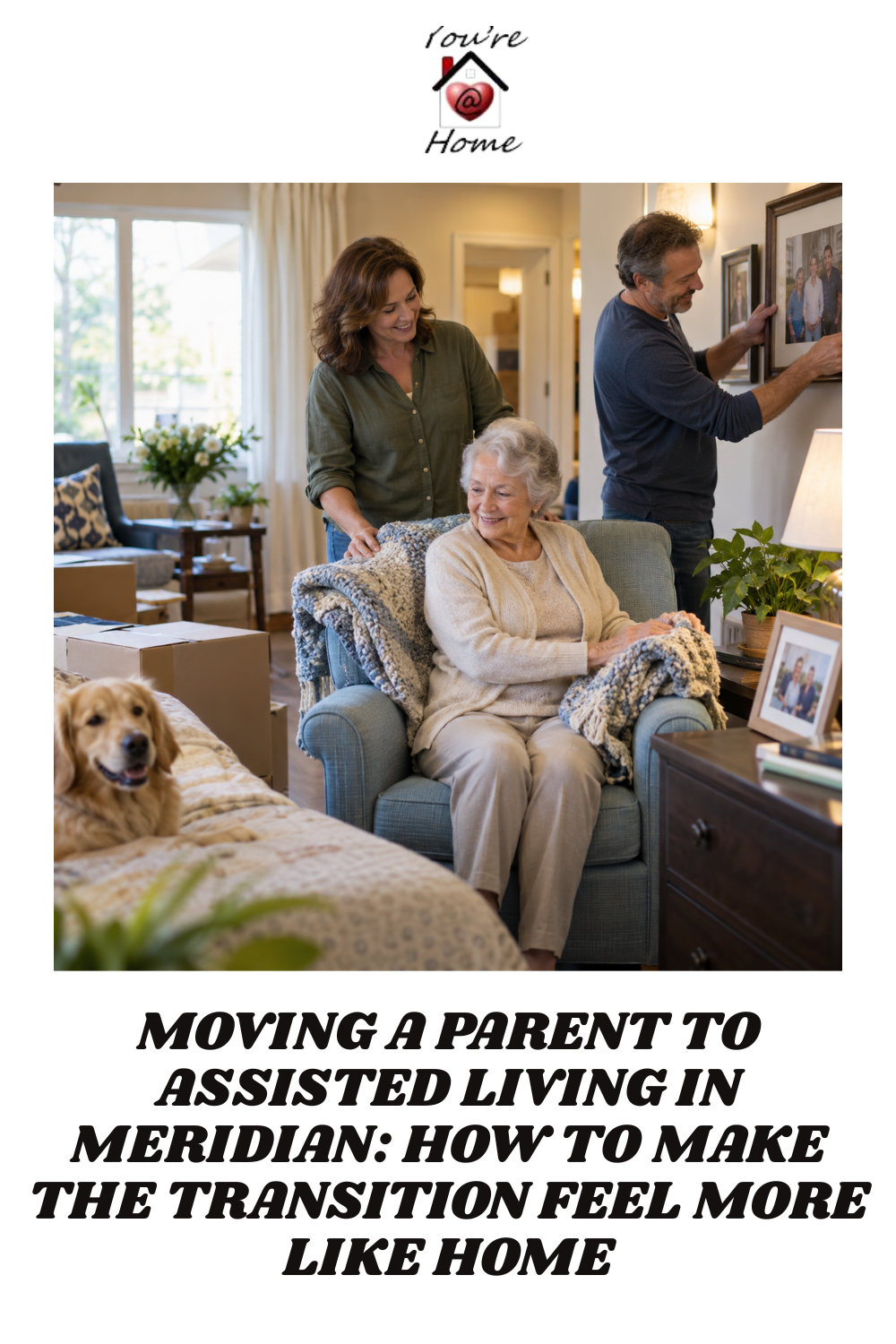
How to Make the Transition Feel More Like Home
Moving a Parent to Assisted Living in Meridian: How to Make the Transition Feel More Like HomeChoosing an assisted living community is only the beginning.Then comes the move.For an older adult who has lived in the same home for 20, 30, or even 50 years, moving is rarely just a practical change.It may mean leaving the dining room where every Thanksgiving happened.The garden they planted.The chair where a spouse always sat.Neighbors they have known for decades.Even when everyone agrees that assisted living is the safest and most practical decision, the transition can bring grief, anxiety, relief, uncertainty, and hope at the same time.For Meridian families preparing for an assisted living move, thoughtful planning can help the new residence begin to feel like home rather than simply a place where care is provided.Youre At Home Residential Assisted Living, located in Meridian, offers a small private-home assisted living environment that Seniors Blue Book describes as centered on choice, independence, dignity, and safe personal care.Start With the Emotional MoveFamilies naturally focus on logistics.Furniture.Paperwork.Medications.Clothing.But the emotional transition may be harder.A parent may worry:Will my family still visit?Will I have privacy?Will someone tell me what to do all day?Will I ever see my house again?These concerns should not be dismissed.Do not try to convince a parent that they should be excited.Instead, acknowledge that the change is significant.Moving Tip: The goal is not to make an older adult love the idea of moving immediately. The goal is to help them feel respected, prepared, and involved in decisions whenever possible.Let the Senior Make ChoicesMoving can create a feeling of losing control.Restore control through decisions the resident can still make.Ask:Which chair should we bring?Which photographs matter most?What bedding do you want?Which clothes should go with you?What artwork should be on the wall?Which family keepsakes belong in the room?Choice is especially important because Youre At Home identifies independence and dignity as central to its residential approach.Bring Familiar BelongingsA room feels different when it contains recognizable pieces of a person's life.Depending on space and community policies, consider:Family photographsFavorite blanketsArtworkA familiar lampBooksA clockA comfortable chairReligious itemsSmall collectionsFavorite toiletriesAvoid overcrowding.Choose items with emotional meaning.Private or Semi-Private?Seniors Blue Book lists both private and semi-private options at Youre At Home.Room selection may affect the transition.A senior who has lived alone for years may strongly prefer privacy.Another person may enjoy companionship.Ask about:Current availabilityStorageFurnitureBathroom accessDecorating rulesVisitor spaceFamilies should confirm room options directly because availability changes.Create a Moving-Day PlanDo as much as possible before the resident arrives.If permitted:Move furniture firstMake the bedHang photosPut clothing awaySet up televisionBring toiletriesPlace familiar objects around the roomWalking into a prepared space feels very different from arriving in a room filled with boxes.Bring Important Health InformationOrganize:Current medication listAllergiesPhysician informationPharmacyInsurance cardsEmergency contactsRecent hospital informationAdvance directivesPower-of-attorney documents when applicableMobility equipment informationAsk the assisted living community what documentation it requires before admission.Explain the Resident to the Care TeamMedical forms describe diagnoses.They do not describe the person.Give staff information such as:Dad taught high school for 35 years.Mom loves country music.She dislikes being rushed in the morning.He drinks coffee before breakfast.She gets anxious when too many people speak at once.He prefers to be called Bill, not William.These details can help staff build relationships.Maintain Familiar RoutinesMoving changes enough already.Preserve routines where practical.If Mom has always watched the evening news, set up the television.If Dad talks with his brother every Sunday morning, keep the phone call.If a resident enjoys coffee at a certain time, ask whether the routine can continue.Familiarity creates continuity between the previous home and the new one.Do Not Expect Immediate AdjustmentSome seniors settle quickly.Others need weeks or months.A resident may say:I want to go home.That does not automatically mean the placement is wrong."Home" may represent:FamiliarityIndependenceMarriageParenthoodIdentityMemoriesListen carefully.At the same time, monitor whether there are actual care or safety concerns that need attention.Keep VisitingFamily involvement remains important.Create a realistic schedule.For example:Daughter visits Tuesday eveningSon comes Saturday morningGrandchildren visit twice a monthSiblings call regularlyConsistency can be more reassuring than visiting continuously during the first week and then disappearing.Allow Space to Develop New RelationshipsThere is also such a thing as too much family presence during adjustment.Residents need opportunities to become familiar with caregivers and other residents.Balance contact with space for a new routine to develop.A Small Home Can Change the Feel of the TransitionYoure At Home is described by Seniors Blue Book as a small private assisted living residence.For someone leaving a traditional house, moving into another residential-style environment may feel different from entering a large multi-story senior campus.That may appeal particularly to seniors who value:Smaller groupsFamiliar surroundingsQuietResidential neighborhoodsFewer peopleA household-style atmosphereAgain, the right model depends on personality.Meridian Offers a Convenient Location for Ada County FamiliesMeridian's growth has made it a major center of the Treasure Valley.The Census Bureau estimated the population at 142,988 in 2025, up 21.4% from its 2020 estimates base.For families living in Meridian, Boise, Eagle, Kuna, or nearby communities, choosing a local assisted living setting may make regular visits and participation easier.Location should not be the only factor in choosing care, but proximity can significantly affect family involvement.Review the Financial Agreement CarefullySeniors Blue Book currently displays pricing for Youre At Home beginning at $4,200 per month, but rates and care charges can change and should be confirmed directly before making a decision.Ask:What is included in the base rate?Are care levels charged separately?Are there move-in fees?Are medications extra?What happens when care needs increase?How often can rates change?What is the notice requirement for moving out?Get important financial information in writing.Check Idaho Licensing InformationIdaho licenses Residential Assisted Living Facilities and conducts regular surveys and complaint investigations.The Department of Health and Welfare provides a way for consumers to search facilities and review available survey information.Families may want to include this step alongside tours, references, and conversations with community staff.Do Not Try to Solve Every Future Problem Before Moving DayFamilies sometimes combine the assisted living move with:Selling the houseUpdating the estate planDividing belongingsChanging banksUpdating insuranceFuneral planningThat can become emotionally overwhelming.Handle urgent matters first.The resident's immediate transition deserves attention.Other planning can continue after things settle.Frequently Asked Questions About Estate Planning During an Assisted Living MoveShould the family sell the senior's house immediately?Not necessarily. Property decisions can have financial, legal, tax, Medicaid, and estate-planning implications. Families should consult appropriate professionals before making major decisions.Can an adult child sign the assisted living agreement?That depends on whether the parent signs personally or the adult child has appropriate legal authority, such as a valid power of attorney or court appointment.Does power of attorney mean the parent loses control?Not necessarily. The scope and timing of authority depend on how the document is written and applicable law. An Idaho attorney can explain a specific document.What is conservatorship used for?Conservatorship generally involves court-appointed authority to manage another person's property or finances when appropriate.Why review estate planning after the move?Housing, property, care costs, health, and family circumstances may all change. Reviewing documents can help ensure the person's current wishes are accurately reflected.Make the New Home Feel PersonalA successful assisted living move is not measured by how quickly the boxes disappear.It is measured by whether the older adult begins to feel safe, known, respected, and comfortable.Preserve familiar routines.Bring meaningful belongings.Stay involved.Give adjustment time.For families considering a smaller residential assisted living environment in Meridian, Youre At Home Residential Assisted Living offers a home-based option centered on choice, independence, dignity, and personal support.Families can find additional information through the Youre At Home Residential Assisted Living listing on SeniorsBlueBook.com and contact the community at its Meridian location to discuss current availability, pricing, room options, and care needs.Seniors Blue Book helps seniors and families throughout Meridian, Ada County, and the Treasure Valley compare assisted living communities and plan confidently for the next stage of care.