
PHONE
Click to View NumberSee More
Additional Services Offered

Chayet & Danzo, LLC
Elder Law 650 South Cherry Street, Suite 710, Denver County, Denver, Colorado, 80220Chayet & Danzo LLC is a client focused elder law and estate planning practice serving families and individuals throughout the state of Colorado. At our firm, we have a dedicated team of highly skilled attorneys who will work hard to ensure that you receive the best legal services possible combined with professional courtesy. We specialize in the needs of seniors, disabled individuals and their families and offer products and services that go beyond the conventional legal offerings. From counselling and representation to planning and education, it is our goal to assist you through lifes critical stages.Elder law is at the core of what we do at Chayet & Danzo LLC. Elderly people and disabled individuals and their families often face many legal and financial issues that we can help clarify and solve. We assist seniors and their families with:Long Term Care: If you or a loved needs in home care, assisted living or skilled nursing facility we can help to put a plan in place for quality of life as well as preservation of assets.Medicaid Planning: It can be difficult to understand the rules of Medicaid eligibility and the services that are available. We work with you to identify potential strategies that will allow you to receive maximum Medicaid benefits while still preserving your financial independence.Guardianships and Conservatorships: When a loved one is mentally incompetent and cannot make decisions on his or her own, we assist families in seeking for guardianship or conservatorship to protect the interest of the patient.Special Needs Planning: We assist families in the creation of trusts and other legal vehicles in order to meet the needs of loved ones with disabilities without jeopardizing government benefits.Elder Abuse and Exploitation: Our attorneys defend vulnerable seniors and represent them in cases of elder abuse, neglect, or financial exploitation, to protect them and preserve their dignity.Through the legal and financial issues that come with aging or disability, we ensure that families have the information they need to make the right decisions for their loved ones and their resources.Chayet & Danzo LLC also provides individualized estate planning services in conjunction with our elder law expertise. We realize that estate planning is about more than preparing the documents; it is about guaranteeing a sound future for you and your family. Our estate planning services include:Wills and Trusts: We also ensure that your wills and trusts are properly worded and executed in a manner that is suitable for your case and will ensure that your wishes are met, as well as your properties go as you wish.Powers of Attorney: Our attorneys assist in the execution of durable power of attorney for financial and healthcare powers of attorney so that you dont have to worry about who will take care of your affairs in case you are incapacitated.Advance Directives and Living Wills: We help people prepare advance directives to document their treatment choices in the event that they are unable to make decisions for themselves.Probate and Estate Administration: It is never easy to lose a loved one. We offer comforting instructions on how to navigate through the probate and estate administration process and help families to conclude the processes quickly and properly.Asset Protection Strategies: We assist clients in protecting their assets from a variety of potential risks including lawsuits, long term care, estate taxes and more to ensure that wealth is passed down to future generations.We ensure that we understand your specific objectives and family situation before recommending any estate plans to you.At Chayet & Danzo LLC, we pride ourselves in offering our clients quality services. We know that every client is unique and needs individual attention and real solutions to his or her problems.Our team works hard to provide affordable legal services and at the same time, maintains high standards of professionalism and compassion.Elder law and estate planning can be confusing and expensive; it can also be emotionally difficult. That is why we pride ourselves in forming strong relationships with our clients and being their legal advisors throughout the process.Chayet & Danzo LLC is based in Denver, CO and serves clients statewide. No matter if you are in the middle of the city or in a rural area, our team is ready to provide legal assistance that is close and reliable.Our attorneys at Chayet & Danzo LLC have substantial experience in elder law and estate planning and are well-placed to protect the rights of seniors, disabled individuals and their families. We always proceed with caution when handling any case because we understand the emotional and personal issues that are often involved. We are a law firm that does not only provide legal documents but also provides information, information and legal representation to ensure that all your concerns are addressed. Furthermore, we are committed to offering legal services that are of high quality and yet reasonably priced. If you are interested in planning for your future and the future of your loved ones, then do not hesitate to contact us at 1-866-873-6596 or visit our website at coloradoelderlaw.com to schedule a consultation.We are here to provide the comfort of having expert elder law and estate planning services. At Chayet & Danzo LLC, your familys future is our familys future.
Chayet & Danzo, LLC
Guardianship/Conservatorship 650 South Cherry Street, Suite 710, Denver County, Denver, Colorado, 80220We are a client-focused elder law and estate planning firm serving all of Colorado. Our attorneys provide the highest quality legal services and professionalism, while representing our clients in a cost-effective manner. Meeting the needs of our elder law clients depends on moving beyond conventional legal work to offering practical assistance in planning, counseling, educating, and advocating for the senior or disabled client and their families. Call Toll Free 1-866-873-6596.
Chayet & Danzo, LLC
Power of Attorney 650 South Cherry Street, Denver County, Denver, Colorado, 80220We are a client-focused elder law and estate planning firm serving all of Colorado. Our attorneys provide the highest quality legal services and professionalism, while representing our clients in a cost-effective manner. Meeting the needs of our elder law clients depends on moving beyond conventional legal work to offering practical assistance in planning, counseling, educating, and advocating for the senior or disabled client and their families. Call Toll Free 1-866-873-6596.
Chayet & Danzo, LLC
Fiduciary Services 650 South Cherry Street, Suite 710, Denver County, Denver, Colorado, 80220We are a client-focused elder law and estate planning firm serving all of Colorado. Our attorneys provide the highest quality legal services and professionalism, while representing our clients in a cost-effective manner. Meeting the needs of our elder law clients depends on moving beyond conventional legal work to offering practical assistance in planning, counseling, educating, and advocating for the senior or disabled client and their families. Call Toll Free 1-866-873-6596.
Continue Your Search! Explore More Local Options.
Start SearchingLet’s engage and get educated!
Browse through thousands of expert articles in over 100 different categories.
Browse NowArticles You May Like

Why Powers of Attorney Are Important
A power of attorney document, if drafted and used properly, can prevent the need for the court system to become involved in your medical and/or financial affairs. Executing power of attorney documents should be done well in advance of when one may be needed.While there are resources online in and in stores where forms can be purchased, when one is simply plugging a few names and details into a form, you have little control over what that document does, and you might not even understand what it says. Creating your own power of attorney document that is not a form and using specific terms offers you far more protection.The scope of the power of attorney can be broad or it can be very narrow. It can also be for specific for specific accounts and/or specific transactions and purposes. If there is a concern about someone abusing the power of attorney document, the more detailed and restrictive your terms are, the harder it will be for someone to misuse the authority granted to them in a power of attorney for financial gain.Talking about your assets and what protection you need from a power of attorney with a lawyer can help you create documents well-suited for your needs. While there is more cost involved up front, the end product is something that protects you and your interests without leaving you vulnerable the way that broadly worded documents might.Editor's Note: This article was submitted by Tamara E. Trujillo, Esq and Marco D. Chayet, Esq. Tamara is the Senior Managing Associate Attorney at Chayet & Danzo, LLC and the 2020-2021 Chair of the Elder Law Section for the Colorado Bar Association. Marco isthe founder of the law firm Chayet & Danzo, LLC, and the Public Administrator for the 18th Judicial District. They can be reached at 303-355-8500 and by email at [email protected] and [email protected] is a brief overview of the topic and should not be considered legal advice
Apr 22, 2021

3 Basic Steps That Help Protect You as the Executor of an Estate
Agreeing to serve as the executor of an estate is like taking on another part-time job in addition to whatever work you do and your responsibilities for your family. The testator whose estate you handle will likely have made arrangements to compensate you with some property from the estate, but such reimbursements are often a pittance compared to the amount of work involved.When you take on the responsibility of carrying out someone else's estate plan, you take on some risk as well. There are a few important steps you can take to minimize your financial and legal vulnerability as an executor.Secure and inventory property as soon as is reasonably possibleWhen someone dies, family members may try to take certain assets out of the home before estate administration begins. Jewelry, deeds and family heirlooms are all at risk of misappropriation before you even begin your job.To avoid accusations that you took any property and to protect as many assets as possible for the beneficiaries of the estate, you should secure the property and inventory it as soon as you have the authority to take such actions.Handle all the financial liabilities before handing out propertyOne of the biggest risks an executor has is personal accountability for certain unpaid taxes and debts. You don't have to repay everything that the deceased individual would not have repaid with their own assets.However, any property that you distribute before taking care of outstanding financial responsibilities could be held against you later.Document everything that you doDid you call the electrical company and get the bill put in the name of the estates trust? Keep a note about that. Did you pay the mortgage for the month? You want to retain the statement and voided checks that prove you have handled financial responsibilities for the estate.It's also crucial to maintain records about any assets to distribute, both to creditors and to beneficiaries or family members. Having each family member sign a receipt or documents affirming that they received specific property will protect you from claims that you didnt give people their inheritance or otherwise mismanaged the assets in an estate. The more documentation you have about the actions you take, the easier it will be for you to push back against claims of incompetence or misconduct.Learning about the risks involved in estate administration can protect you from mistakes that could cost you money or your role as executor.
Oct 07, 2021

Why Would I Consider a Trust for My Estate Planning In 2025?
In 2025, everyone needs an estate plan, regardless of their socio-economic circumstances. A simple estate plan will typically contain at least three documents; a durable medical power of attorney and a durable financial power of attorney. These documents give the authority to a person of your choice, to speak on your behalf on your medical and financial issues if youre not able to make necessary decisions due to health issues. The third document, a will, is a way to pass your property upon death to whom you wish. A trust might be an option in your estate planning instead of or in addition to a will. Trusts are useful estate planning tools that can accomplish a variety of goals. They can help avoid probate, minimize taxes, and be used to give property to minor or disabled loved ones. Trusts can be created during a person's lifetime (Living Trusts) or at the person's death (Testamentary Trusts). Some different types of Trusts from both categories are: Living TrustA person can transfer their assets to a Living Trust and as a trustee continue using their assets as needed during their lifetime.Tax Planning TrustsSeveral different types of Living Trusts provide flexible alternatives for minimizing capital gains and estate taxes, including the Charitable Remainder Trust, Irrevocable Life Insurance Trust, Qualified Personal Residence Trust, Grantor Retained Annuity Trust, and Grantor Retained Unitrust. Testamentary TrustsA person can create a Trust under a Will, called a Testamentary Trust, which does not take effect until they are deceased. Disability Trusts (also known as Special Needs Trusts)A Disability Trust is a type of Living Trust that allows a disabled person under the age of 65 to use his/her own assets, other than for food and shelter, for their special needs and keep public benefits, such as Medicaid and Supplemental Security Income (SSI). 3 reasons you may need a trust as part of your estate plan Are you concerned about protecting a gift from creditors or litigation? Does a loved one need nursing home care or Medicaid eligibility? Do you want to provide for children, grandchildren or charitable organizations? The types of assets you own is another important consideration. Three typical reasons you might need a trust: 1. A loved one cannot be trusted with a large financial gift or has special needsIf you have concerns that a child does not have the financial skills to manage a financial gift, or the loved one receives government benefits. 2. You want to transfer complex assets in a thoughtful manner Trusts can be effective for keeping a vacation home or a closely held business in the family. For large charitable donations, a trust allows you to leave a vision for how you would like the gift used. 3. Limiting the potential for relationship-damaging fights is important When you have worked hard and been successful, a trust may be able to limit conflict, and the legal fees associated with litigation. Editors Note: This article was submitted by Marco D. Chayet, Esq. Marco is a partner in the law firm Chayet & Danzo, LLC, and the Public Administrator for the 18th Judicial District; he may be reached at 303-355-8500 or by email at [email protected] This is a brief overview of the topic and should not be considered legal advice.
Jul 12, 2022
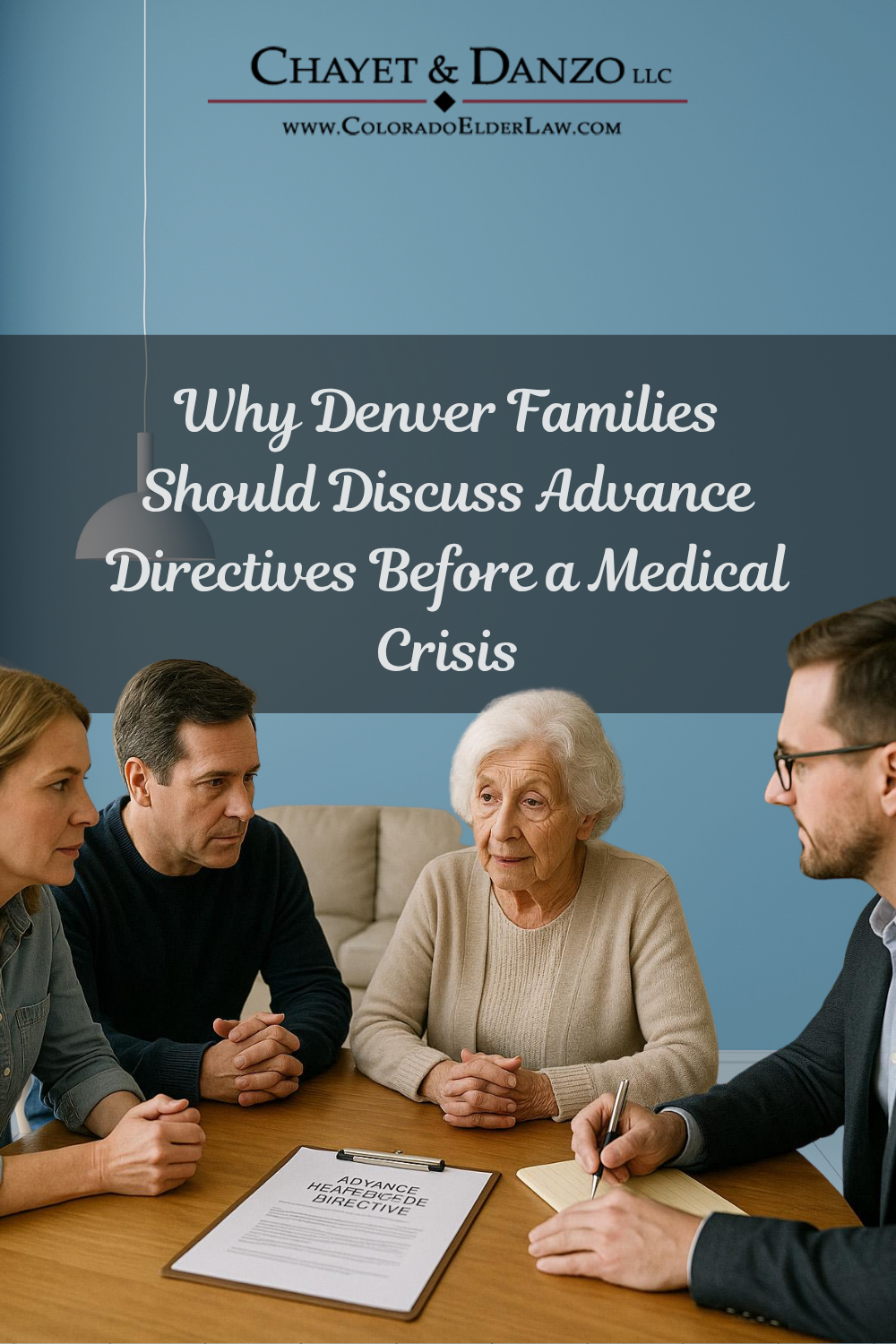
Why Denver Families Should Discuss Advance Directives Before a Medical
Why Denver Families Should Discuss Advance Directives Before a Medical CrisisMany families avoid conversations about healthcare wishes because they feel uncomfortable or emotional. Yet unexpected medical emergencies happen every day, and without clear legal documents in place, loved ones may face confusion, conflict, and difficult decisions during already stressful moments.In Denver, elder law attorneys are helping seniors create advance directives and healthcare planning documents that ensure personal wishes are respected if illness or incapacity occurs.Chayet & Danzo, LLC helps families navigate these sensitive conversations while preparing legal protections that reduce uncertainty and provide peace of mind.Advance care planning is not only about medical decisionsit is about preserving dignity, protecting family relationships, and ensuring seniors maintain a voice in their future care.What Are Advance Directives?Advance directives are legal documents that communicate healthcare wishes if someone becomes unable to make decisions independently.These documents may include: Living wills Medical powers of attorney Healthcare directives End-of-life care preferences Advance directives help families and medical professionals understand a persons wishes regarding medical treatment and healthcare decisions.Advance care planning gives families clarity during difficult situations, says Sue Stroud or Marco Chayet of Chayet & Danzo, LLC. It allows seniors to maintain control over important healthcare decisions even if they cannot communicate later.Why Families Often Delay These ConversationsMany people avoid advance care planning because: They believe they are still healthy The topic feels emotionally difficult They assume family members already know their wishes They are unsure where to begin Unfortunately, emergencies such as strokes, accidents, or sudden illness can happen unexpectedly.Without legal directives in place, families may struggle making critical healthcare decisions without knowing exactly what their loved one would have wanted.Healthcare Powers of Attorney Protect Decision-MakingA healthcare power of attorney allows a trusted individual to make medical decisions if someone becomes incapacitated.Without this document, family members may face: Delays in decision-making Court involvement Family disagreements Confusion among medical providers Healthcare powers of attorney help ensure decisions can be made quickly and according to the seniors wishes.Choosing the right healthcare agent is an important part of the planning process.Living Wills Clarify Medical PreferencesLiving wills communicate preferences regarding life-sustaining treatment and end-of-life care.These documents may address: Artificial nutrition or hydration Ventilator support Resuscitation preferences Comfort-focused care decisions Having clear written instructions often relieves emotional pressure for family members during medical crises.Denver Families Face Complex Caregiving DecisionsMany Denver-area families are balancing multiple caregiving responsibilities while navigating busy professional and personal lives.Medical emergencies can quickly create emotional and logistical challenges, particularly when adult children live in different cities or states.Advance care planning helps families avoid unnecessary confusion while creating a clear framework for healthcare decisions.Communication Is Just as Important as Legal DocumentsCompleting advance directives is only one part of the process.Families should also have open discussions about: Medical treatment preferences Quality-of-life priorities Spiritual beliefs Caregiving expectations Long-term care wishes These conversations help ensure loved ones fully understand and respect the seniors preferences.Why Advance Planning Reduces Family ConflictFamily disagreements often arise when healthcare wishes are unclear.Advance directives reduce uncertainty by clearly documenting: Who makes decisions What treatments are desired What care preferences exist This clarity can prevent misunderstandings and emotional conflict during stressful medical situations.Questions Families Should Ask an Elder Law AttorneyFamilies exploring advance care planning should ask: What documents are recommended? How often should documents be updated? Who should serve as healthcare agent? How do state laws affect directives? What happens if no directives exist? How can families prepare for future care needs? Experienced elder law attorneys can help families create legally sound plans tailored to individual circumstances.Planning Ahead Is an Act of CareAdvance care planning is not about expecting the worstit is about protecting loved ones and preserving personal wishes during uncertain moments.Families in Denver seeking elder law guidance are encouraged to learn more about Chayet & Danzo, LLC and their compassionate approach to healthcare planning and elder law services.Visit their Seniors Blue Book listing today to explore available legal resources and connect with their team.Frequently Asked QuestionsWhat is an advance directive?An advance directive is a legal document outlining healthcare wishes if someone becomes unable to communicate decisions independently.Why is a healthcare power of attorney important?It allows a trusted individual to make medical decisions during incapacity.What is the difference between a living will and power of attorney?A living will outlines treatment preferences, while a power of attorney appoints someone to make decisions.When should seniors complete advance directives?As early as possible before medical emergencies occur.Can advance directives be updated later? Yes. Documents should be reviewed and updated periodically as circumstances change.
May 13, 2026

What is Elder Law and What Does an Elder Law Attorney Do
An Elder Law Attorneys practice generally encompasses all aspects of planning, counseling, educating, and advocating for the senior or disabled client. Rather than being defined by technical legal distinctions, an Elder Law Attorney is defined by the client to be served. In other words, when an Elder Law Attorney practices Elder Law, we handle a wide range of issues but have a specific type of client - seniors, incapacitated adults, or people with disabilities and their families, friends or trusted advisors. Generally an Elder Law Attorney follows a more holistic approach in their practice in handling general estate planning issues and we will, for example, counsel clients about planning for incapacity with alternative decision-making documents. Elder Law Attorneys also assist the client in planning for possible long-term care needs, including nursing home care and Medicaid. Locating the appropriate type of care, coordinating private and public resources to finance the cost of care, and working to ensure the client's right to quality care, are all just a small part of an Elder Law Attorneys practice. The needs of the elder law client depend on moving beyond conventional legal work to offering practical assistance. The following is a partial list of Elder Law practice areas:Guardianships and Conservatorships. We provide counsel to guardians and conservators and we also represent individuals who are objecting to the establishment or continuation of a guardianship and conservatorship.Medicaid, Medicare, Social Security, and Veterans Benefits. We assist clients with navigating the complexities of the various government benefit programs available to our clients.Long-Term Care Planning. We advise on accessing resources for your needs arising out of a disability, incapacity or advancing age to help families or individuals prepare for the future.Estate Planning. We help clients plan for the future and that of their family through preparing estate planning instruments. These include wills, trusts, durable powers of attorney, medical powers of attorney, and living wills.Estate, Probate and Trust Litigation and Administration. We assist by providing counsel and representation to the personal representatives, trustees, heirs, and beneficiaries of an estate during the normal course of administration and probate litigation. Representation of Fiduciaries. The roles of agent, conservator, guardian, personal representative, and trustee have tremendous duties and often require legal representation to complete transactions, interpret documents, and deal with creditors and beneficiaries. Peace of mind can be achieved through proper elder law planning before a crisis presents itself to you or your loved one. Marco Chayet is an Elder Law attorney with the office of Chayet & Danzo, LLC, and the past Chair of the Elder Law Section of the Colorado Bar Association. Marco can be reached at 303-355-8500 or [email protected] and www.ColoradoElderLaw.com.
Oct 19, 2011

Is an Incentive Trust a Good Idea?
You can use many different types of trusts when doing your estate planning. One is an incentive trust. It is not nearly as common as other types of trusts, but does it bear considering?An incentive trust essentially works by connecting an inheritance to a specific goal. For instance, a person may only get their inheritance if they graduate from college or if they maintain a full-time job. You can help to guide the course of their life, and the money in the trust gives them financial incentive to do what you have deemed wise.The downsides of such a trustThis certainly can work, but there are some downsides to consider. One is just that it's hard to be specific enough to address everything that may happen.For example, say that you want your heir to hold down a job. Seems simple, right? But what if your heir wants to leave their job to volunteer the medical field in a third-world country? They want to save lives and give back which you would have supported but does the trust now mean they have to give up their inheritance to do so? Or, what if they get sick, become disabled, go back to school or have to help a sick or injured loved one?Another downside is that your heir may resent the fact that the trust forces them to live a certain way. Even if they do it, is a legacy of resentment one you want to leave?Making your estate planIf you're considering trusts and other tools for your estate plan, carefully go over your legal options to determine what will be best for your family.
Oct 07, 2021
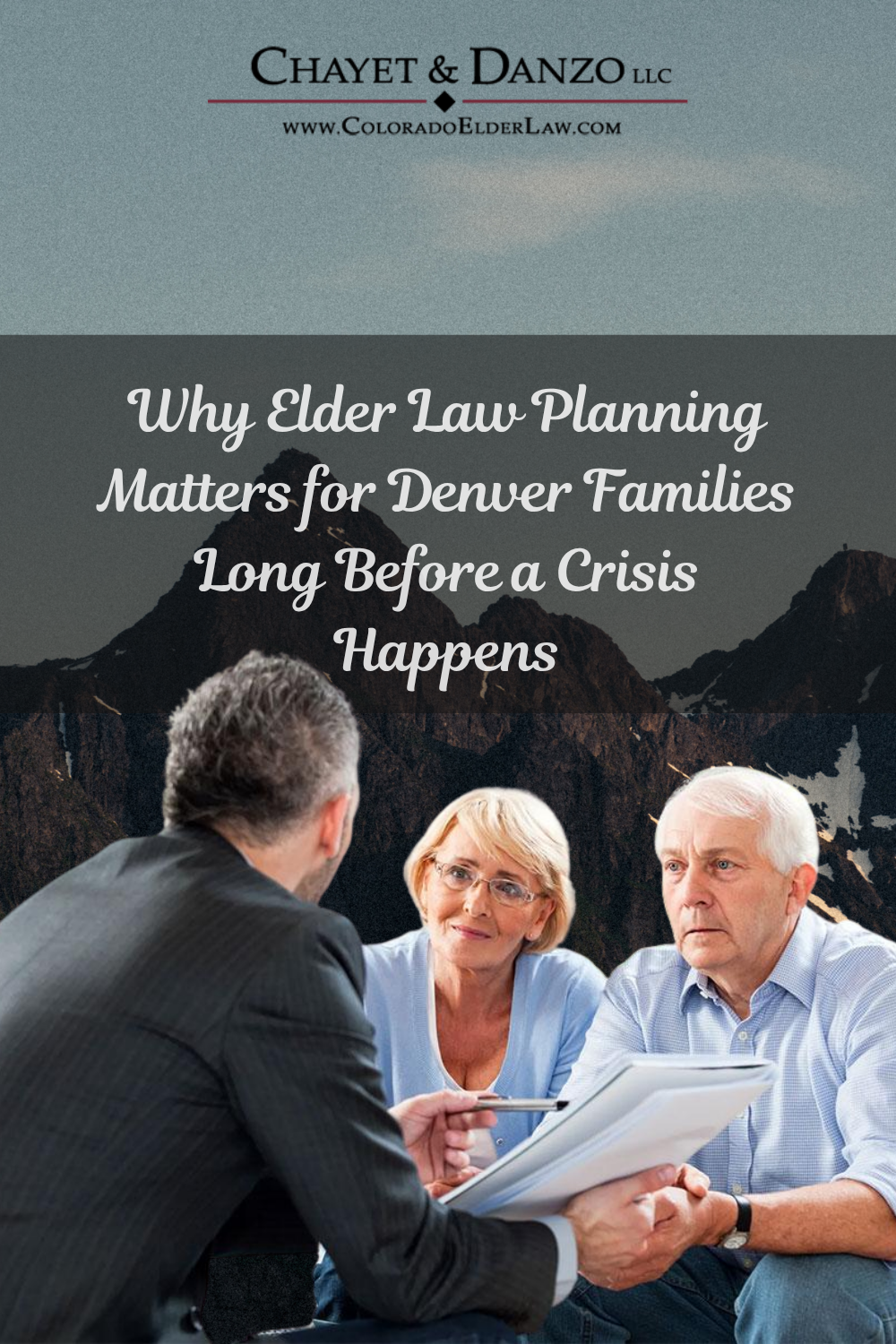
Why Elder Law Planning Matters for Denver Families Long Before a Crisi
Why Elder Law Planning Matters for Denver Families Long Before a Crisis HappensMany families delay conversations about legal planning because they believe it is something that can wait until a health issue arises. Unfortunately, unexpected illnesses, cognitive decline, long-term care needs, or medical emergencies often happen without warning. When important legal documents and financial plans are missing, families may face unnecessary stress, confusion, and expensive court involvement during already emotional situations.In Denver, elder law attorneys are helping seniors and their families prepare for the future with legal strategies designed to protect assets, preserve independence, and ensure personal wishes are honored.Chayet & Danzo, LLC focuses on elder law planning that helps older adults navigate complex legal, financial, and long-term care decisions with greater confidence and peace of mind.As Colorados senior population continues growing, proactive elder law planning has become increasingly important for families hoping to avoid future legal complications and financial uncertainty.What Is Elder Law?Elder law is a specialized area of legal practice focused on issues affecting older adults and their families.Unlike traditional estate planning alone, elder law often addresses: Long-term care planning Medicaid planning Estate planning Powers of attorney Guardianship issues Probate matters Asset protection Special needs planning Advance healthcare directives Elder law attorneys help families prepare for both expected and unexpected life changes associated with aging.Families often think legal planning is only about distributing assets after death, says Sue Stroud or Marco Chayet of Chayet & Danzo, LLC. In reality, elder law is about protecting quality of life, preserving choices, and reducing stress during difficult transitions.Why Waiting Too Long Can Create ProblemsOne of the biggest mistakes families make is postponing legal planning conversations until a crisis occurs.When seniors experience sudden cognitive decline, strokes, or medical emergencies without proper documents in place, families may encounter serious challenges involving: Healthcare decisions Financial management Long-term care planning Court intervention Family disagreements Without powers of attorney or advance directives, loved ones may need to pursue guardianship proceedings through the court system, which can be expensive and emotionally draining.Planning early gives seniors greater control over future decisions while simplifying matters for family members.Long-Term Care Costs Can Affect Retirement SecurityLong-term care expenses are one of the biggest financial concerns facing aging families today.Many people underestimate the cost of: Skilled nursing care Assisted living Memory care In-home caregiving Without proper planning, these expenses can quickly deplete retirement savings.Elder law attorneys help families explore strategies that may protect assets while preparing for future care needs.This planning often becomes especially important in metro areas like Denver, where healthcare and senior living costs continue rising.Powers of Attorney Protect Families During EmergenciesPowers of attorney are among the most important legal documents older adults can create.These documents allow trusted individuals to make financial or healthcare decisions if a senior becomes unable to do so independently.Without these protections, families may face delays and legal barriers during medical emergencies.Properly prepared powers of attorney can help ensure: Medical wishes are respected Bills and finances are managed Legal matters continue smoothly Families avoid unnecessary court involvement These documents provide clarity and reassurance during stressful situations.Advance Directives Help Seniors Maintain ControlAdvance healthcare directives allow seniors to communicate medical preferences before a crisis occurs.These documents may address: Life-sustaining treatment preferences End-of-life wishes Healthcare decision-makers Medical intervention preferences While these conversations can feel uncomfortable, they often provide families with tremendous peace of mind.Clear communication reduces uncertainty and emotional conflict during difficult healthcare decisions.Denver Families Face Unique Planning ChallengesDenvers growing senior population, rising housing costs, and evolving healthcare landscape create unique legal and financial planning concerns for older adults.Many Denver-area families are balancing: Multigenerational caregiving Rising healthcare expenses Long-distance caregiving Retirement planning Housing transitions Elder law attorneys help families navigate these complexities while protecting long-term financial stability and legal preparedness.Why Family Conversations MatterLegal planning is not only about paperworkit is also about communication.Families who openly discuss aging, healthcare wishes, and financial planning often experience fewer conflicts later.Important conversations may involve: Healthcare preferences Future living arrangements Caregiving responsibilities Financial management End-of-life wishes These discussions help families make informed decisions together.Questions Families Should Ask an Elder Law AttorneyWhen meeting with an elder law attorney, families should ask thoughtful questions such as: What legal documents should every senior have? How can long-term care costs affect retirement savings? What Medicaid planning options exist? How often should estate plans be updated? How can families avoid probate complications? What happens if someone becomes incapacitated unexpectedly? Choosing an attorney experienced in elder law can help families better prepare for the future.Planning Today Helps Protect TomorrowAging often brings unexpected legal, medical, and financial decisions. Elder law planning helps seniors and families prepare proactively rather than reacting during emergencies.Families in Denver seeking guidance on elder law, long-term care planning, and asset protection are encouraged to learn more about Chayet & Danzo, LLC and their compassionate approach to helping older adults navigate complex legal matters.Visit their Seniors Blue Book listing today to explore available resources and connect with their legal team.Frequently Asked QuestionsWhat does an elder law attorney do?Elder law attorneys help seniors and families with legal planning related to aging, healthcare, long-term care, estate planning, and asset protection.Why are powers of attorney important?Powers of attorney allow trusted individuals to make healthcare or financial decisions if someone becomes incapacitated.When should seniors begin elder law planning?Planning should begin as early as possible before medical or cognitive issues arise.Does elder law include Medicaid planning?Yes. Many elder law attorneys help families prepare for future long-term care expenses and Medicaid eligibility.Why are advance directives important? Advance directives communicate healthcare wishes and reduce family uncertainty during medical emergencies.
May 13, 2026

Why Would I Consider Trust for My Estate Planning In 2022?
In 2022, and after living through the pandemic, everyone needs an estate plan, it doesnt matter what your socio-economic circumstances are. A simple estate plan will typically contain at least three documents. This will generally include a durable medical power of attorney and a durable financial power of attorney. The other document typically found is a way to pass your property upon death such as a will. However, there are times when a trust might be an option in your estate planning instead of or in addition to a will. So why should you consider a trust? Trusts are useful estate planning tools that can accomplish a variety of goals. They can help avoid probate, minimize taxes, and be used to give property to minor or disabled loved ones. Trusts can be created during a person's lifetime (Living Trusts) or at the person's death (Testamentary Trusts). Some different types of Trusts from both categories are discussed below.Living TrustA person can transfer their assets to a Living Trust and, as trustee, continue using their assets as they always have.Tax Planning TrustsSeveral different types of Living Trusts provide flexible alternatives for minimizing capital gains and estate taxes, including the Charitable Remainder Trust, Irrevocable Life Insurance Trust, Qualified Personal Residence Trust, Grantor Retained Annuity Trust, and Grantor Retained Unitrust.Testamentary TrustsA person can create a Trust under a Will, called a Testamentary Trust, which does not take effect until they are deceased.Disability Trusts (also known as Special Needs Trusts)A Disability Trust is a type of Living Trust that allows a disabled person under the age of 65 to use her own assets for her special needs, other than food and shelter, and keep public benefits, such as Medicaid and Supplemental Security Income (SSI).3 reasons you may need a trust as part of your estate plan Are you concerned about protecting a gift from creditors or litigation?Does a loved one need nursing home care or Medicaid eligibility?Do you want to provide for children, grandchildren or charitable organizations?The types of assets you own is another important consideration. Here are three typical reasons you might need a trust. 1. A loved one cannot be trusted with a large gift or has special needs If you have concerns that a child does not have the financial skills to manage a gift or the loved one receives government benefits. 2. You want to transfer complex assets in a thoughtful manner Trusts can be effective for keeping a vacation home or a closely held business in the family. For large charitable donations, a trust allows you to leave a vision for how you would like the gift used. 3. Limiting the potential for relationship-damaging fights is important When you have worked hard and been successful, a trust may be able to limit conflict and the legal fees associated with litigation. Editors Note: This article was submitted by Marco D. Chayet, Esq.Marco is a partner in the law firm Chayet & Danzo, LLC, and the Public Administrator for the 18th Judicial District; he may be reached at 303-355- or 866-873-6596 and by email at [email protected] This is a brief overview of the topic and should not be considered legal advice.
Sep 13, 2022

How Colorado Families Can Protect Assets While Planning for Long-Term
How Colorado Families Can Protect Assets While Planning for Long-Term Care For many Denver families, one of the greatest retirement concerns isn't market volatility or inflationit's the rising cost of long-term care. A lifetime of saving, investing, and responsible financial planning can be significantly impacted by unexpected healthcare needs later in life. Whether care is needed in the home, an assisted living community, a memory care residence, or a skilled nursing facility, costs can accumulate quickly. Many families are surprised to learn that long-term care expenses are generally not covered by traditional health insurance and that Medicare coverage is often limited. As a result, individuals may face difficult decisions about how to pay for care while protecting the assets they have worked hard to build. This is where elder law planning becomes essential. Through proactive legal strategies, families can prepare for future care needs while preserving financial resources for spouses, children, charitable causes, and future generations. For Denver-area families seeking guidance, Chayet & Danzo, LLC helps clients navigate the complex intersection of elder law, asset protection, and long-term care planning. Understanding the Cost of Long-Term Care The need for long-term care can arise from a variety of situations: Alzheimer's disease Parkinson's disease Stroke recovery Mobility limitations Chronic illnesses Serious injuries Age-related cognitive decline Care needs often increase gradually, beginning with occasional assistance and eventually requiring more comprehensive support. Potential care settings may include: In-Home Care Many seniors prefer remaining in their homes for as long as possible. However, professional caregiving services can become expensive when multiple hours of support are required daily. Assisted Living Assisted living communities provide help with daily activities while maintaining a residential environment. Memory Care Specialized memory care programs are designed for individuals living with Alzheimer's disease or other forms of dementia. Skilled Nursing Care Skilled nursing facilities offer around-the-clock medical supervision and clinical services for individuals with complex healthcare needs. Each of these options carries financial considerations that should be addressed well before care becomes necessary. The Myth That Asset Protection Is Only for the Wealthy One of the biggest misconceptions about elder law planning is that asset protection strategies are reserved for affluent families. In reality, middle-income families often have the most to lose. Assets commonly affected by long-term care costs include: Retirement accounts Savings accounts Family homes Investment portfolios Real estate holdings Small businesses Even modest savings accumulated over decades can be impacted without proper planning. Asset protection focuses on preserving financial stability while ensuring access to appropriate care when needed. Why Denver Families Are Planning Earlier Colorado's growing senior population has increased awareness of long-term care planning. Many Denver retirees have substantial home equity, retirement savings, and investment assets they wish to preserve. Communities throughout Cherry Creek, Highlands Ranch, Lowry, Washington Park, and the surrounding metro area are seeing more families proactively addressing elder law concerns before a healthcare crisis develops. Planning early provides opportunities that may not be available later. Understanding Medicaid Planning Many families are unfamiliar with Medicaid's role in long-term care funding. Unlike Medicare, Medicaid may help cover certain long-term care expenses for eligible individuals. However, qualification requirements can be complex and involve detailed financial considerations. This is where experienced elder law attorneys can provide guidance. Proper Medicaid planning may help families: Preserve assets legally Protect spouses Avoid unnecessary spending Prepare for future care expenses Navigate application requirements Attempting to navigate these rules without professional guidance can lead to costly mistakes. Protecting the Family Home For many older adults, the family home represents more than a financial asset. It symbolizes: Family memories Financial security Stability Legacy One of the most common questions families ask is whether a home can be protected while planning for future care needs. The answer depends on numerous factors, including: Ownership structure Marital status Financial circumstances Timing of planning Because every situation differs, individualized legal advice is essential. Planning for Married Couples Long-term care planning often presents unique challenges for married couples. Many spouses worry that one person's healthcare needs could jeopardize financial security for the other. A comprehensive elder law strategy may help address concerns such as: Income Protection Ensuring the healthy spouse has adequate financial resources. Housing Security Helping protect housing stability for the spouse remaining at home. Asset Preservation Reducing the risk of unnecessary financial losses. Care Coordination Preparing for future healthcare transitions. These protections can provide valuable peace of mind during difficult periods. Common Asset Protection Mistakes Families frequently make decisions based on misinformation or incomplete advice. Some common mistakes include: Waiting Too Long The best planning opportunities often occur before care is needed. Gifting Assets Without Guidance Improper transfers can create unintended consequences. Assuming Medicare Covers Long-Term Care Many families discover coverage limitations only after a health event occurs. Relying on Generic Online Documents Asset protection strategies require personalized legal planning. Failing to Update Older Estate Plans Legal documents should be reviewed regularly to reflect current laws and family circumstances. A Comprehensive Approach to Elder Law Asset protection is only one piece of a broader elder law strategy. Comprehensive planning often includes: Wills Trusts Powers of attorney Advance healthcare directives Long-term care planning Estate administration Guardianship avoidance When these components work together, families gain greater confidence and flexibility. Preserving Family Harmony Financial concerns often create stress among family members. Clear legal planning can help reduce misunderstandings by documenting intentions and establishing decision-making authority before problems arise. Families frequently report greater peace of mind when they know: Wishes are documented Responsibilities are clearly assigned Financial plans are established Care preferences are understood Planning helps shift conversations away from uncertainty and toward solutions. According to Sue Stroud of Chayet & Danzo, LLC: "Families are often relieved to discover there are proactive steps they can take. Asset protection planning is about creating options, preserving dignity, and helping people maintain control over important decisions." Why Local Elder Law Experience Matters Colorado's laws and regulations regarding elder care planning can be complex. Working with a Denver-based elder law firm offers advantages such as: Knowledge of Colorado regulations Familiarity with local care resources Understanding of regional housing and retirement trends Experience with Colorado-specific Medicaid planning considerations Local insight helps ensure strategies align with both legal requirements and practical realities. Preparing Today for Tomorrow's Needs No one can predict future healthcare challenges. However, families can take steps today to prepare for them. By addressing long-term care planning early, seniors can protect assets, preserve options, and reduce future stress for loved ones. Chayet & Danzo, LLC helps Denver families create personalized elder law strategies designed to safeguard financial security while preparing for life's next chapter. To learn more about asset protection, Medicaid planning, and elder law services, visit their Seniors Blue Book listing today. Frequently Asked Questions What is asset protection planning? Asset protection planning uses legal strategies to help preserve financial resources while preparing for future healthcare and long-term care needs. Does Medicare pay for nursing home care? Medicare generally provides limited short-term coverage and does not typically cover extended custodial long-term care. When should families begin long-term care planning? The earlier planning begins, the more options are usually available. Can a family home be protected? Depending on individual circumstances, legal strategies may help protect a home and other assets. Professional guidance is recommended. Why should I work with an elder law attorney instead of a general attorney? Elder law attorneys focus specifically on aging-related legal issues, including long-term care planning, Medicaid strategies, estate planning, and asset protection.
Jun 15, 2026
Use of Trusts in Elder Law and Disability Planning
Several different types of trusts can be used to enhance the quality of life for an individual with special needs who receives public assistance, such as Supplemental Security Income (SSI) and Medicaid. Some examples of how funds in a properly created special needs trusts can be used are for education expenses, travel, and entertainment. A disability trust is created for a trust beneficiary under the age of 65 who is disabled under Social Security's criteria and is funded with the beneficiary's own assets. The disability trust is established by the beneficiary's parent, grandparent, or legal guardian, or by a court and must contain a provision to reimburse the state medical assistance program for benefits paid during the beneficiary's lifetime. A pooled trust is available to Medicaid recipients who are over or under the age of 65 and are disabled. It is funded with the beneficiary's own assets. The trust is established by the individual, a parent, grandparent, or legal guardian, or by the court. The pooled trust is comprised of separate accounts for many disabled individuals, which are pooled for investment and management purposes. The trustee of a pooled trust must be a non-profit organization. Funds remaining in the individual's account at his death must be used to reimburse the state Medicaid agency up to the amount of medical assistance provided on the individual's behalf, to the extent that those funds are not retained by the pooled trust. A third-party discretionary trust (TPDT) is commonly established by a relative, such as a parent or grandparent. A TPDT does not contain a payback provision to reimburse the state Medicaid agency. There are no restrictions on the beneficiary's age. A testamentary special needs trust (TSNT) can be created by anyone under their will. This trust is generally used by parents of a special needs child. A TSNT can also be used by the spouse of a disabled person who receives certain types of Medicaid benefits. However, there are limitations on the amount of the spouses' assets that can be used to fund the trust. An income trust is necessary for an individual who requires long-term care and whose income exceeds 300% of the SSI limit. For 2010, the 300% limit is $2,022. If the individual resides in a long-term care facility, most of his income, minus a small personal needs allowance, will be paid to the facility each month as his patient payment. There a several different ways of creating a special needs trust to enhance the quality of life for the trust beneficiary. You should work closely with an elder law attorney who is experienced with these types of trusts as well as the different public benefits programs to decide which trust works best for your situation.Marco Chayet is a partner, and Dawn Hewitt is an associate, in the law firm Chayet & Danzo, LLC, (303) 355-8500. Their practice emphasizes elder law, guardianships, conservatorships, public benefits, probate, estate planning, and long-term care planning. They can be reached online at www.ColoradoElderLaw.com or by e-mail at [email protected] or [email protected].
Jun 03, 2010

Legal Planning Steps Denver Families Should Take Early
Legal Planning Steps Denver Families Should Take EarlyReceiving a dementia diagnosis for a loved one can feel overwhelming. Families often find themselves balancing emotional concerns with practical questions about healthcare, finances, living arrangements, and future decision-making. While medical care is understandably the immediate focus, legal planning is equally important and can significantly impact a family's ability to provide support in the years ahead.Across Denver and the Front Range, more families are confronting Alzheimer's disease and other forms of dementia as the population ages. According to healthcare professionals, early planning remains one of the most important steps families can take after a diagnosis. By addressing legal matters before cognitive decline progresses, seniors can maintain greater control over their future while reducing stress for loved ones.For families navigating these challenges, Chayet & Danzo, LLC provides elder law guidance focused on helping individuals and families prepare for the legal and financial realities that often accompany dementia-related conditions.Why Early Action Makes a DifferenceOne of the most common mistakes families make is waiting too long to begin planning.In the early stages of dementia, many individuals still have the legal capacity to make decisions about their healthcare, finances, and future wishes. As the condition progresses, those opportunities may become more limited.Acting early allows seniors to: Express personal preferences Designate trusted decision-makers Create or update legal documents Protect assets Discuss long-term care goals Reduce family conflicts Early planning is not about expecting the worst. It is about preserving choices while those choices can still be made independently.Understanding Dementia Beyond Memory LossMany people associate dementia solely with forgetfulness. In reality, dementia affects a variety of cognitive functions, including: Decision-making Reasoning Communication Problem-solving Financial management Judgment As these abilities change over time, important legal and financial matters may become increasingly difficult to manage without assistance.This is why elder law planning is often recommended soon after a diagnosis.Denver's Growing Need for Dementia PlanningDenver's senior population continues to expand, creating increased demand for memory care services, caregiving resources, and legal planning assistance.Many older adults choose Denver because of its active lifestyle, healthcare access, cultural attractions, and family-friendly communities. Neighborhoods such as Lowry, Washington Park, Cherry Creek, and Central Park have become home to many retirees who wish to age in place.However, aging in place successfully often requires preparation when cognitive changes occur.Families who plan proactively typically have more flexibility when deciding: Where care will be provided How healthcare decisions will be made How finances will be managed What resources will be used to pay for care Essential Legal Documents Every Family Should ReviewFollowing a dementia diagnosis, several legal documents should be reviewed or established.Durable Power of AttorneyA durable power of attorney allows an individual to appoint someone they trust to manage financial matters if they become unable to do so independently.This document can help avoid expensive court involvement later.Medical Power of AttorneyThis document authorizes a trusted individual to make healthcare decisions when the person is no longer able to communicate or understand medical information.Advance Healthcare DirectiveAdvance directives provide guidance regarding medical treatment preferences and end-of-life care.These instructions can help family members make decisions confidently while honoring their loved one's wishes.Estate Planning DocumentsExisting wills and trusts should be reviewed to ensure they still reflect the individual's intentions and current circumstances.The Financial Impact of Dementia CareMany families are surprised by the long-term financial implications of dementia care.Costs may include: In-home caregiving Adult day programs Memory care communities Skilled nursing services Medical equipment Transportation assistance Over time, these expenses can place significant pressure on retirement savings.Long-term planning allows families to explore strategies that may help preserve assets while preparing for future care needs.Protecting Seniors from Financial ExploitationUnfortunately, individuals with cognitive decline can become vulnerable to financial abuse and exploitation.Warning signs may include: Unusual bank withdrawals New financial relationships Unpaid bills Changes to estate documents Confusion regarding financial transactions Legal safeguards established early can provide protection and oversight while preserving dignity and independence.Creating a Care Plan That Evolves Over TimeDementia is a progressive condition, meaning care needs often change gradually.Families benefit from discussing:Current Support NeedsWhat assistance is needed today?Future Care PreferencesWould the individual prefer home care, assisted living, or memory care if additional support becomes necessary?Family ResponsibilitiesWho will coordinate medical appointments, finances, and caregiving decisions?Emergency PlanningWhat happens if a primary caregiver becomes unavailable?Having these conversations early often reduces uncertainty later.The Human Side of PlanningLegal documents are important, but meaningful planning goes beyond paperwork.Families should also discuss: Personal values Spiritual preferences Quality-of-life priorities Family traditions Social connections These conversations help create care plans that reflect the individual rather than simply addressing legal requirements.According to Sue Stroud of Chayet & Danzo, LLC:"Families often feel overwhelmed after a dementia diagnosis. We encourage people to focus on planning while their loved one can still participate in the process because those conversations provide clarity and peace of mind for everyone involved."Common Myths About Dementia PlanningMyth 1: We Can Wait Until Symptoms WorsenWaiting may limit legal options if cognitive capacity declines.Myth 2: Only Wealthy Families Need Elder Law PlanningEvery family benefits from having legal authority and healthcare instructions clearly established.Myth 3: A Will Is EnoughA will alone does not address healthcare decisions, incapacity planning, or long-term care concerns.Myth 4: Planning Means Losing IndependenceProper planning often helps preserve independence by ensuring trusted support systems are in place.How Elder Law Attorneys Help FamiliesElder law attorneys provide guidance that extends beyond document preparation.They help families: Understand legal options Coordinate care planning Review asset protection strategies Address long-term care concerns Update estate plans Navigate complex family situations This comprehensive approach helps families prepare for future challenges while maintaining focus on quality of life.Taking the First StepNo family wants to receive a dementia diagnosis, but proactive planning can make the journey significantly more manageable.By addressing legal, financial, and healthcare considerations early, families gain greater confidence and flexibility while ensuring their loved one's wishes remain at the center of future decisions.Chayet & Danzo, LLC has helped Denver-area families navigate these important conversations with compassion, experience, and a deep understanding of elder law.To learn more about dementia planning, elder law services, and long-term care strategies, visit their Seniors Blue Book listing today.Frequently Asked QuestionsWhen should legal planning begin after a dementia diagnosis?Ideally, planning should begin as soon as possible while the individual can actively participate in decisions.Can someone with early-stage dementia still create legal documents?In many cases, yes. Legal capacity depends on the individual's ability to understand and make informed decisions at the time documents are created.What happens if no power of attorney exists?Families may need to pursue guardianship or conservatorship through the court system, which can be costly and time-consuming.Does Medicare cover long-term dementia care?Medicare generally does not cover extended custodial care. Families often need additional planning for long-term support services.Why is elder law important for dementia planning? Elder law addresses healthcare directives, financial authority, asset protection, long-term care planning, and other issues commonly associated with cognitive decline.
Jun 15, 2026

Why Proactive Elder Law Planning Matters More Than Ever
Why Proactive Elder Law Planning Matters More Than EverAs Denver continues to attract retirees seeking an active lifestyle, beautiful mountain views, and access to world-class healthcare, many families are discovering that retirement planning involves much more than financial investments. Protecting assets, preparing for long-term care needs, establishing legal directives, and ensuring family members understand future wishes are all essential components of aging with confidence.Unfortunately, many seniors wait until a health crisis occurs before addressing these critical legal matters. By that point, options may be limited, costs may be higher, and families often find themselves making difficult decisions under stress.This is where elder law becomes invaluable. Elder law attorneys help older adults and their families prepare for life's transitions while preserving dignity, independence, and financial security. In Denver, Chayet & Danzo, LLC has built a reputation for helping seniors navigate the complex legal issues associated with aging, long-term care planning, estate administration, and asset protection.Understanding Elder Law: More Than Just Estate PlanningMany people assume elder law only involves writing a will. In reality, elder law is a comprehensive legal specialty focused on helping seniors address a wide range of age-related concerns.An elder law attorney may assist with: Estate planning Trust creation and administration Medicaid planning Long-term care planning Guardianships and conservatorships Powers of attorney Advance healthcare directives Asset protection strategies Probate matters Special needs planning Because these issues often overlap, working with an experienced elder law firm allows families to create a coordinated strategy rather than addressing problems one at a time.Why Denver Families Are Planning EarlierDenver's senior population continues to grow as more adults choose Colorado for retirement. Communities throughout Lowry, Cherry Creek, Washington Park, Highlands Ranch, Stapleton, and surrounding areas are seeing increased demand for senior services.With longer life expectancies comes a greater need for thoughtful planning.Many families today are asking: How can we pay for long-term care? What happens if a loved one develops dementia? How do we protect family assets? Who will make healthcare decisions if I cannot? How can we avoid unnecessary probate complications? The earlier these conversations occur, the more options are typically available.The Importance of Long-Term Care PlanningOne of the most significant financial risks facing older adults is the potential cost of long-term care.Whether care is provided at home, in assisted living, memory care, or a skilled nursing facility, expenses can quickly impact retirement savings.Long-term care planning allows families to:Protect AssetsProper legal planning can help preserve assets while preparing for future healthcare needs.Reduce Family StressWhen legal documents and care plans are already established, family members can focus on supporting their loved one instead of scrambling to make decisions.Improve Care OptionsAdvance planning often provides greater flexibility when selecting care settings and services.Prevent Crisis Decision-MakingLegal strategies implemented early can help families avoid costly mistakes during emergencies.Estate Planning Is About More Than MoneyMany people view estate planning as a process for wealthy individuals. In reality, every adult benefits from having a comprehensive estate plan.A well-designed estate plan can help ensure: Assets are distributed according to your wishes Healthcare decisions are honored Financial matters are handled properly Loved ones avoid unnecessary legal complications Family disputes are minimized Estate planning is ultimately about maintaining control over your future and protecting those you care about most.Special Considerations for Colorado SeniorsColorado has unique legal considerations that affect older adults and their families.These may include:Medical Decision-MakingAdvance directives allow individuals to specify healthcare preferences before a crisis occurs.Powers of AttorneyDesignating trusted individuals to handle financial and legal matters can prevent significant complications later.Probate ProceduresProper planning may help simplify estate administration and reduce burdens on surviving family members.Medicaid EligibilityLong-term care planning often requires a detailed understanding of Medicaid regulations and qualification requirements.Navigating these areas successfully requires experienced legal guidance.Supporting Families Through Difficult TransitionsMany elder law matters arise during emotionally challenging periods.Adult children may suddenly find themselves helping aging parents after: A stroke A dementia diagnosis A fall A hospitalization The loss of a spouse During these moments, families need clear guidance and practical solutions.According to Marco Chayet of Chayet & Danzo, LLC:"The best time to plan is before a crisis occurs. Thoughtful legal planning provides families with options, protection, and peace of mind when life's unexpected challenges arise."This proactive philosophy has helped many Colorado families approach aging with greater confidence.Protecting Independence Through Legal PreparationOne of the biggest misconceptions about elder law is that it focuses solely on end-of-life issues.In reality, much of elder law is centered on preserving independence.Legal planning can help seniors: Remain in control of healthcare decisions Maintain financial oversight Protect retirement assets Prepare for future care needs Reduce dependence on court intervention Rather than limiting choices, proper planning often expands them.How Families Can Start the Planning ProcessBeginning the conversation can feel overwhelming, but a few simple steps can make a significant difference.Gather Important DocumentsOrganize: Existing wills Trust documents Insurance policies Financial account information Property records Identify Key Decision MakersDiscuss who may be responsible for future healthcare or financial decisions if necessary.Review Current PlansMany estate plans created years ago may no longer reflect current circumstances.Consult an Elder Law ProfessionalAn experienced elder law attorney can identify gaps and recommend strategies tailored to individual needs.Why Local Expertise MattersDenver's healthcare systems, senior housing communities, and legal environment create unique planning considerations.Working with a local elder law firm provides familiarity with: Colorado-specific regulations Regional healthcare resources Local court systems Community-based senior services This localized knowledge often helps families make more informed decisions.Taking the Next Step Toward Peace of MindAging is a natural part of life, but uncertainty does not have to be.Whether you're planning for retirement, helping aging parents, preparing for long-term care needs, or reviewing an existing estate plan, proactive legal guidance can provide valuable protection for the future.Chayet & Danzo, LLC helps Denver-area seniors and families navigate the legal complexities of aging with compassion, experience, and a commitment to preserving independence and security.To learn more about their elder law services and connect with their team, visit their listing on Seniors Blue Book today.Frequently Asked QuestionsWhen should seniors begin elder law planning?Ideally, planning should begin before any major health issues arise. Earlier planning typically provides more legal and financial options.What is the difference between elder law and estate planning?Estate planning focuses primarily on asset distribution, while elder law addresses broader aging-related issues including long-term care, Medicaid planning, healthcare directives, and asset protection.Can elder law help with dementia planning?Yes. Elder law attorneys frequently assist families in preparing legal and financial strategies following a dementia diagnosis.Does Medicaid cover long-term care in Colorado?Medicaid may help cover certain long-term care expenses for eligible individuals. Proper planning is often necessary to meet eligibility requirements.Why should Denver families review older estate plans? Changes in laws, finances, family circumstances, and healthcare needs may make older plans outdated or incomplete. Regular reviews help ensure plans remain effective.
Jun 15, 2026

How Elder Law Attorneys Help Denver Seniors Protect Their Assets and F
How Elder Law Attorneys Help Denver Seniors Protect Their Assets and Future CareMany older adults spend decades building financial security through homeownership, retirement savings, investments, and careful planning. However, long-term care costs and unexpected health events can quickly place those hard-earned assets at risk if families are unprepared.In Denver, elder law attorneys are helping families understand how legal planning can protect both financial stability and future healthcare choices as they age.Chayet & Danzo, LLC works with seniors and their loved ones to create personalized legal strategies focused on asset protection, long-term care planning, and peace of mind.As healthcare costs continue rising across Colorado, proactive planning has become increasingly important for older adults who want to preserve resources while preparing for future care needs.Why Long-Term Care Planning MattersMany families underestimate the cost of long-term care.Expenses related to: Skilled nursing Assisted living Memory care In-home caregiving can quickly become financially overwhelming.Without legal planning, families may deplete savings far faster than expected.Planning early gives families more options and greater control, says Sue Stroud or Marco Chayet of Chayet & Danzo, LLC. The goal is to protect quality of life while helping seniors prepare financially for future care needs.Understanding Asset Protection StrategiesAsset protection planning involves legal strategies that help seniors preserve financial resources while preparing for future healthcare expenses.This may involve: Medicaid planning Trust creation Estate planning Long-term care planning Property protection strategies Proper planning helps families better understand how assets may be affected by future medical or long-term care costs.Medicaid Planning Can Be ComplexMany people assume Medicare covers long-term care indefinitely. In reality, Medicare coverage for long-term care is limited.Medicaid often becomes an important resource for seniors needing extended nursing care, but qualification rules can be highly complex.Elder law attorneys help families understand: Medicaid eligibility rules Asset limits Look-back periods Income planning strategies Legal asset protection options Early planning is especially important because some strategies require advance preparation.Estate Planning Is About More Than InheritanceEstate planning is not only about distributing property after death.Comprehensive estate plans may also help address: Healthcare decisions Financial management Guardianship concerns Probate avoidance Family conflict prevention Important documents often include: Wills Trusts Powers of attorney Advance directives Keeping these documents updated helps ensure wishes are honored and families are protected.Denver Families Often Balance Multiple ResponsibilitiesMany Denver-area adults are simultaneously managing careers, children, and aging parents.These caregiving pressures can create emotional and financial stress.Elder law planning helps families prepare proactively rather than making rushed decisions during emergencies.This preparation can reduce: Family conflict Court involvement Financial uncertainty Emotional strain Why Powers of Attorney MatterUnexpected illness or cognitive decline can leave seniors unable to make healthcare or financial decisions independently.Powers of attorney allow trusted individuals to step in when necessary.Without these documents, families may face guardianship proceedings through the court system.Proper powers of attorney help ensure: Bills are managed Healthcare decisions continue smoothly Legal matters are addressed promptly Seniors wishes remain protected Conversations Families Should Have EarlyMany families avoid discussions about aging because the topics feel uncomfortable.However, early communication can help avoid confusion later.Important discussions may involve: Future care preferences Financial planning Healthcare wishes Living arrangements Caregiving responsibilities These conversations often create greater clarity and emotional preparedness for everyone involved.Questions Families Should Ask During Legal PlanningWhen meeting with an elder law attorney, families should ask questions such as: What happens if long-term care becomes necessary? How can assets be protected legally? Are trusts appropriate for our situation? What legal documents should be updated? How can probate be minimized? What Medicaid planning options exist? Choosing an attorney experienced in elder law helps families better navigate these complex decisions.Protecting the Future Starts with PlanningLegal planning allows seniors to maintain greater control over healthcare, finances, and long-term care decisions while reducing stress for loved ones.Families in Denver seeking elder law guidance are encouraged to learn more about Chayet & Danzo, LLC and their personalized approach to long-term care planning and asset protection.Visit their Seniors Blue Book listing today to connect with their team and explore available resources.Frequently Asked QuestionsWhat is elder law?Elder law focuses on legal issues affecting older adults, including estate planning, Medicaid planning, and long-term care preparation.Why is Medicaid planning important?Medicaid planning helps families prepare financially for future nursing care or long-term care expenses.What legal documents should seniors have?Most seniors should have wills, powers of attorney, advance directives, and updated estate plans.Can elder law attorneys help avoid probate?Yes. Proper planning strategies may help reduce probate complications.When should families begin legal planning? Planning early often provides more options and better financial protection.
May 13, 2026
When Do You Need A Guardianship Or Conservatorship In Colorado ?
Too often, individuals do not plan for illness or incapacity and have not executed proper medical or financial directives such as a durable medical power of attorney or a durable financial power of attorney.A power of attorney is a document that is executed by a competent person which gives a nominated agent the authority to manage all or some of a persons medical or financial affairs. A power of attorney is durable if it is able to be used when that person no longer has the capacity to make a financial or medical decision. In the absence of planning, and when the individual is too ill or no longer competent to name an agent to help manage financial and medical affairs, court intervention such as a guardianship or a conservatorship is often necessary. Other times when a guardianship or conservatorship may be necessary include when an individual never had or formed the ability to name a decision-maker for them, where there are conflicts between nominated decision makers, when there are concerns that an agent for someone is inappropriately influencing the incapacitated person, or in the case of a true emergency where a court appointed guardian or conservator is the only way to get a decision made.Guardianships and conservatorships for adults are established through a Colorado probate court for those incapacitated people who need a representative to assist them in making a decision. An incapacitated person in Colorado is defined as an individual who is unable to effectively receive or evaluate information or make or communicate decisions to such an extent that the individual lacks the ability to satisfy essential requirements for physical health, safety, or self-care even with appropriate and reasonably available technological assistance.Guardianships and conservatorships can generally be avoided if you or your loved one has executed a good estate plan. Remember the authority to make decisions for an incapacitated person must be given before that person becomes incapacitated. A basic estate plan should include a will or a trust, a durable medical power of attorney and a durable financial power of attorney. With an increase in the aging population and advances in medical technology, people are living longer. Therefore, it is likely that you or your loved one will face a period of incapacity. Planning for your incapacity is just as important as planning for the distribution of your estate upon your death and a basic estate plan could help to avoid the expense and time of a guardianship or conservatorship proceeding.Editors Note: This article was written & submitted by Marco D. Chayet . Mr. Chayet is a partner with Chayet & Danzo, LLC. We are elder law attorneys who concentrate our practice on complex probate, trust and estate litigation and estate planning. Mr. Chayet can be contacted at 303-355-8500 or [email protected]
Apr 30, 2018
Study on Alzheimers Demonstrates Need for Elder Law Planning
For Elder Law Planning Every 70 seconds someone in the United States develops Alzheimer's. A report entitled 2009 Alzheimer's Disease Facts and Figures indicates that an estimated 5.1 million Americans over 65 have Alzheimer's. The report goes on to indicate that about 2.7 million people over age 85 have the disease, but by the time the Baby Boomers reach 85 in 2031, an estimated 3.5 million boomers that age and older will have Alzheimer's. In people over age 65, Alzheimer's and dementia-related deaths are the fifth leading cause of death for people in the USA. And while deaths from heart disease, stroke and breast and prostate cancers dropped from 2000-2006, deaths from Alzheimer's disease increased by 47.1%.The statistics in this timely report are stunning. Individuals and their families who face a diagnosis of Alzheimer's will quickly become overwhelmed with the legal, medical and financial requirements and realities of coping with this debilitating disease. The emotional effect of this disease is not just relegated to the client who is diagnosed but is often felt more deeply by surrounding family and friends.The work of an elder law attorney encompasses all aspects of planning, counseling, educating and advocating for the senior or disabled client, either directly, or with their family, friends or trusted professionals. More specifically, elder law attorneys will assist you and your loved ones with many different issues related to estate planning, incapacity planning, disability planning, long-term care planning and public and private benefits. This includes the areas of guardianship, conservatorship, probate, Medicaid, Medicare, Social Security, Veterans Benefits, Special Needs Trusts and estate and trust administration. An elder law attorney can also work with you if you are a fiduciary and need guidance and support in making decisions for a loved one when they cannot make a decision for themselves. You are a fiduciary if you are acting as an agent under medical power of attorney, financial power of attorney, guardian, conservator, trustee, executor or personal representative.With the average cost of nursing home care in Metro Denver reaching over $85,000 per year for Alzheimer patients, the time for you and your loved ones to consult with an elder law attorney to make sure your legal affairs are in order is now. Peace of mind can be achieved through proper elder law planning before a crisis presents itself to you or your loved one.As reported in USA Today March 24, 2009.Editors Note: This article was submitted by Marco Chayet, an Elder Law attorney with the office of Chayet & Danzo, LLC, and the past Chair of the Elder Law Section of the Colorado Bar Association. Marco can be reached at 303-355-8500 or [email protected] and www.ColoradoElderLaw.com
Nov 02, 2010

4 reasons Why Estate Planning Isnt Just for Older People
Society often conditions us to believe that estate planning is just something senior citizens do. Thats definitely a misconception. Every adult, no matter whether they just turned 18 years of age or 80 years of age, should take part in this process. It involves much more than drafting a will.While there are some documents that everyone should have in their estate planning arsenal, others are specific to an individual's life stage. Do you know which ones are most appropriate for where you're at in your life?For newly minted adultsYour parents generally have a right to make medical and legal decisions on your behalf up until your 18th birthday. Once you reach the age of majority, you'll have to sign a health care power of attorney if you wish for your parents to make such decisions for you if you become incapacitated.As you start your careerUpon launching your career, you also need to select the beneficiaries you want to receive any proceeds belonging to your insurance or retirement plan if something unexpected happened to you.When you just got marriedOnce you marry, you may need to update any beneficiary designation forms to your spouse's name. You may also want to draft a joint tenancy with rights of survivorship to ensure that your property would seamlessly transfer to your spouse if something happened to you.When you have a childNew parents should take time soon after the birth of their baby to name a guardian that would be able to step in and care for their child if they couldn't do so themselves. New parents can also benefit from funding a trust to provide for their child's financial needs if they aren't present to raise them.Many people don't like to engage in estate planning because it makes them anxious or sad. Having a plan in place, however, ensures that your loved ones will be taken care of once you're gone. It should give you some reassurance in knowing that would be the case.
Oct 07, 2021

Legal and Financial Planning for Independent Seniors
Legal and Financial Planning for Independent Seniors Denver has become one of the most attractive cities in the country for active older adults. From enjoying concerts at Red Rocks and walking trails along Cherry Creek to participating in community programs throughout the metro area, many seniors are embracing retirement on their own terms. Yet a growing segment of older adults faces a unique challenge: aging without a spouse, nearby children, or a strong family support network. Known as "solo agers," these individuals are redefining retirement. They value independence, self-sufficiency, and personal freedom. However, aging alone requires careful legal and financial planning to ensure that future healthcare, housing, and financial decisions can be handled effectively when assistance becomes necessary. For Denver seniors navigating retirement independently, elder law planning provides an important framework for maintaining control while preparing for the unexpected. Chayet & Danzo, LLC helps solo agers create legal strategies designed to protect their interests, preserve assets, and ensure their wishes are honored throughout every stage of life. The Rise of Solo Aging in America The number of older adults aging without immediate family support continues to increase nationwide. Many solo agers fall into one of these categories: Never married Widowed Divorced Child-free by choice Family members living far away Limited family relationships While independence can be empowering, it also means important decisions may fall to professionals, friends, or trusted advisors if proper planning is not established beforehand. Without legal preparation, healthcare providers and courts may have difficulty determining who should act on an individual's behalf during a crisis. Why Denver Is a Popular Destination for Independent Seniors Denver offers many advantages for retirees who value an active lifestyle. The city provides: Access to leading healthcare systems Walkable neighborhoods Cultural attractions Outdoor recreation opportunities Lifelong learning programs Volunteer opportunities Diverse housing options Communities such as Lowry, Capitol Hill, Washington Park, and Cherry Creek attract retirees who appreciate both urban amenities and proximity to Colorado's natural beauty. However, even healthy and active retirees benefit from planning for future circumstances that may affect their independence. The Question Every Solo Ager Must Answer One of the most important questions solo agers should consider is: "Who will speak for me if I cannot speak for myself?" Without a spouse or adult children readily available, seniors need legally designated decision-makers who can assist when necessary. This may involve selecting: Trusted friends Professional fiduciaries Financial representatives Healthcare advocates Attorneys Identifying these individuals before a crisis occurs is a critical step toward protecting personal wishes. Building a Legal Safety Net A comprehensive elder law plan creates a safety net that allows seniors to maintain control while preparing for future uncertainties. Durable Financial Power of Attorney This document authorizes a trusted person to handle financial matters if the individual becomes unable to manage them independently. Responsibilities may include: Paying bills Managing investments Handling insurance matters Coordinating property maintenance Without this authority, loved ones may need court intervention to gain decision-making rights. Medical Power of Attorney Healthcare decisions can become complicated during emergencies. A medical power of attorney designates someone to communicate with physicians and make healthcare choices when necessary. Advance Directives Advance directives provide guidance regarding medical treatment preferences. These instructions help ensure that personal values remain central to healthcare decisions. Estate Planning Documents A well-designed estate plan provides clarity regarding asset distribution and charitable wishes while minimizing future complications. Housing Planning for the Future Many solo agers intend to remain in their homes for as long as possible. Aging in place may be achievable, but it requires planning. Important considerations include: Home accessibility Transportation options Emergency contacts Home maintenance support Caregiver availability Some seniors eventually choose retirement communities, independent living residences, or continuing care retirement communities that provide additional support as needs evolve. Planning early provides more flexibility when evaluating these options. The Importance of Long-Term Care Planning One of the greatest concerns for solo agers is how care will be managed if health conditions change. Questions often include: Who will coordinate care? How will services be paid for? What happens if I can no longer live alone? How can I protect my savings? Long-term care planning helps address these concerns before they become urgent. An elder law attorney can help seniors evaluate strategies that support future care needs while preserving financial resources. Choosing Your Personal Team Many people assume legal planning is solely about documents. For solo agers, it is equally important to build a trusted support network. This team may include: Healthcare Professionals Primary care physicians and specialists who understand long-term health goals. Financial Advisors Professionals who help manage investments and retirement income. Elder Law Attorneys Attorneys who provide guidance regarding legal protection, incapacity planning, and asset preservation. Trusted Friends Individuals who understand personal wishes and can provide support during emergencies. Professional Fiduciaries In some cases, professional fiduciaries may be appointed to assist with decision-making responsibilities. Avoiding Common Solo Aging Mistakes Many independent seniors postpone planning because they feel healthy and active. Unfortunately, waiting often creates additional complications. Common mistakes include: Not naming decision-makers Failing to update estate plans Ignoring long-term care costs Assuming friends automatically have legal authority Avoiding conversations about future healthcare Addressing these issues proactively often provides greater peace of mind. Maintaining Independence Through Planning Some seniors worry that legal planning means giving up control. In reality, the opposite is true. Effective planning allows individuals to: Define future preferences Select trusted decision-makers Preserve financial security Reduce uncertainty Protect personal independence The goal is not to anticipate worst-case scenarios but to prepare thoughtfully for life's natural transitions. According to Marco Chayet of Chayet & Danzo, LLC: "The most successful plans are created before they're needed. Solo agers often have unique concerns, and thoughtful legal planning allows them to remain in control while preparing for future possibilities." Why Elder Law Matters for Solo Agers Elder law combines legal knowledge with practical planning for aging-related challenges. For independent seniors, it provides guidance regarding: Estate planning Healthcare decision-making Asset protection Long-term care preparation Guardianship avoidance Future financial management This comprehensive approach helps seniors build confidence while protecting their future. Start Planning While Options Are Open Aging independently can be rewarding, fulfilling, and empowering. However, independence is best supported by a solid legal foundation. Whether you're newly retired, approaching retirement, or already enjoying your later years in Denver, now is an ideal time to review your plans and ensure they align with your goals. Chayet & Danzo, LLC helps solo agers throughout Denver create personalized legal strategies designed to preserve independence, protect assets, and provide peace of mind. Visit their Seniors Blue Book listing to learn more about their elder law services and begin building a plan for the future. Frequently Asked Questions What is a solo ager? A solo ager is an older adult who does not have a spouse, nearby children, or close family members available to provide support as they age. Can a friend serve as my healthcare decision-maker? Yes. A trusted friend may be designated through a medical power of attorney if they are willing to serve in that role. Why is elder law important for seniors without children? Elder law helps establish legal authority, healthcare instructions, and financial protections when family support may be limited. What happens if I don't create a power of attorney? Without a power of attorney, court proceedings may be necessary to appoint someone to manage your affairs if you become incapacitated. When should solo agers begin planning? The best time to begin is while you are healthy and fully capable of making important decisions regarding your future.
Jun 15, 2026

How Elder Law Helps Denver Seniors Navigate Long-Term Care Decisions
How Elder Law Helps Denver Seniors Navigate Long-Term Care DecisionsPlanning for long-term care is one of the most importantand often most emotionalparts of aging. Many families are unprepared for the financial, legal, and healthcare decisions that can arise when a loved one begins needing additional support.Whether a senior eventually requires in-home care, assisted living, memory care, or skilled nursing services, legal preparation can help families protect assets, reduce stress, and make more informed choices.In Denver, elder law attorneys are helping families proactively prepare for long-term care needs while preserving financial stability and personal wishes.Chayet & Danzo, LLC works closely with older adults and families to create legal strategies focused on aging, healthcare planning, and future care protection.Why Long-Term Care Planning Is Increasingly ImportantAmericans are living longer than ever before, which also means many people will eventually need some level of supportive care.Long-term care may include: Home caregiving Assisted living Memory care Skilled nursing services These services can be extremely expensive, particularly without advance planning.Long-term care planning allows families to make decisions from a position of preparation rather than crisis, says Sue Stroud or Marco Chayet of Chayet & Danzo, LLC. That preparation often protects both emotional and financial well-being.Many Families Underestimate Long-Term Care CostsOne of the most common misconceptions is that Medicare will fully cover long-term care expenses.In reality, Medicare coverage is limited and often temporary.Long-term care costs may quickly impact: Retirement savings Home equity Investments Family finances Elder law attorneys help families understand potential future expenses while exploring strategies that may help preserve assets legally.Medicaid Planning Requires Careful Legal GuidanceMedicaid can become an important resource for seniors who eventually need extended nursing care.However, Medicaid qualification rules can be highly complex.Important factors may include: Income limits Asset restrictions Look-back periods Transfer penalties Proper legal planning can help families avoid costly mistakes while preparing for future care needs responsibly.Estate Planning Supports Long-Term Care GoalsEstate planning and long-term care planning often work together.Important legal documents may include: Wills Trusts Powers of attorney Advance healthcare directives These documents help families manage finances, healthcare decisions, and legal responsibilities if incapacity occurs.Keeping plans updated is especially important as health conditions or family circumstances change over time.Denver Families Face Unique Aging ChallengesDenvers rising healthcare and housing costs make long-term care planning increasingly important for retirees and adult children alike.Families often juggle: Caregiving responsibilities Career demands Financial concerns Housing decisions Medical coordination Elder law attorneys help families create organized legal strategies that reduce uncertainty and improve preparedness.Communication Helps Prevent Future ConflictLong-term care discussions can feel emotionally difficult, but avoiding them often creates greater stress later.Families should discuss: Future care preferences Financial planning Housing wishes Healthcare directives Caregiver expectations Open communication helps ensure everyone understands the seniors goals and values.Questions Families Should Ask About Long-Term Care PlanningFamilies meeting with elder law attorneys should ask: What happens if long-term care becomes necessary? How can assets be protected legally? What Medicaid options exist? How should legal documents be updated? What planning should occur before a health crisis? Professional guidance helps families better understand both legal and financial implications of aging-related care decisions.Planning Early Creates More OptionsOne of the greatest advantages of early planning is flexibility.Families who begin legal planning before medical crises occur often have: More financial protection strategies available Greater control over decisions Reduced stress during emergencies Better communication among family members Waiting too long can significantly limit available options.Supporting Families Through Lifes TransitionsElder law planning provides seniors and families with valuable tools for navigating aging, healthcare changes, and long-term care decisions more confidently.Families in Denver seeking guidance on elder law and long-term care planning are encouraged to learn more about Chayet & Danzo, LLC and their compassionate approach to protecting seniors and their futures.Visit their Seniors Blue Book listing today to connect with their legal team and explore available resources.Frequently Asked QuestionsWhat is long-term care planning?Long-term care planning helps families prepare legally and financially for future caregiving or medical support needs.Does Medicare cover long-term care?Medicare coverage for long-term care is limited and often temporary.Why is Medicaid planning important?Medicaid planning helps families prepare for future nursing care expenses while understanding eligibility rules.What legal documents are important for seniors?Wills, trusts, powers of attorney, and advance directives are commonly recommended.When should families begin long-term care planning? Planning early provides more legal and financial options before emergencies occur.
May 13, 2026
Different Types of Trusts
Trusts are useful estate planning tools that can accomplish a variety of goals. They can help avoid probate, minimize taxes, and be used to give property to minor or disabled loved ones. Trusts can be created during a persons lifetime (living trusts) or at the persons death (testamentary trusts). Some different types of trusts from both categories are discussed below.Living Trust A person can transfer their assets to a living trust and, as trustee, continue using their assets as they always have. If the trust is revocable, the person can amend or terminate the trust. If they become incapacitated or die, the successor trustee of their choice will continue to manage their assets the same way and will distribute the property remaining in the trust at their death to whomever they choose without the need for court involvement. Tax Planning Trusts Several different types of living trusts provide flexible alternatives for minimizing capital gains and estate taxes, including the charitable remainder trust (CRT), irrevocable life insurance trust (ILIT), qualified personal residence trust (QPRT), grantor retained annuity trust (GRAT), and grantor retained unitrust (GRUT). The specific type of trust involved determines how it is funded, used during the persons lifetime, and distributed at the persons death.Testamentary Trusts A person can create a trust under a will, called a testamentary trust, which does not take effect until they are deceased. A will can contain a marital or family trust for tax planning. A person can also create a testamentary trust for the support and education of a beneficiary who is a minor. Finally, a person can create a testamentary special needs trust (TSNT) for a disabled beneficiary to pay for special needs that are not covered by public benefits programs, such as Medicaid, without affecting the beneficiary's eligibility for programs like Medicaid.Disability Trusts A disability trust is a type of living trust that allows a disabled person under the age of 65 to use her own assets for her special needs, other than food and shelter, and keep public benefits, such as Medicaid and Supplemental Security Income (SSI). The trust can be established by the persons parent, grandparent, legal guardian, or a court. If there are any funds remaining in the trust at the persons death or when they no longer require medical assistance from the state, those funds must be used to pay back the state medical assistance program up to the amount of assistance provided for the person. Similar to a disability trust, a third party discretionary trust (TPDT) allows people to give money to a disabled person without jeopardizing the persons Medicaid or SSI. The difference is that the assets remaining in the TPDT at the beneficiary's death do not have to be paid back to the state medical assistance program. Instead, they are distributed however the person who created the trust desires.Conclusion These are just a few of the trusts that can assist in accomplishing specific estate planning goals, including minimizing taxes, qualifying for public benefits, or avoiding probate administration. Trust planning can be complex, and an attorney can help you choose the right kind of trust to meet your needs. Marco Chayet is a partner, and Dawn Hewitt is an associate, in the law firm Chayet, Dawson & Danzo, LLC, (303) 355-8500. Their practice emphasizes elder law, guardianships, conservatorships, public benefits, probate, estate planning, and long-term care planning. They can be reached online at www.ColoradoElderLaw.com or by e-mail at [email protected] or [email protected].