Complete Senior Transitions
Downsizing and Relocation


About Complete Senior Transitions
At Complete Senior Transitions, were passionate about helping seniors and their families navigate lifes big changes with ease.
With over 20 years of experience in senior services, real estate, and downsizing, we provide a complete, stress-free solution for every stage of the process.
In other words, one call connects you with everything you need expert guidance, trusted resources, and a caring team that understands the challenges of senior transitions.
Dont let lifes changes overwhelm you. Instead, trust Complete Senior Transitions to guide you confidently from start to finish.
Continue Your Search! Explore More Local Options.
Start SearchingLet’s engage and get educated!
Browse through thousands of expert articles in over 100 different categories.
Browse NowArticles You May Like
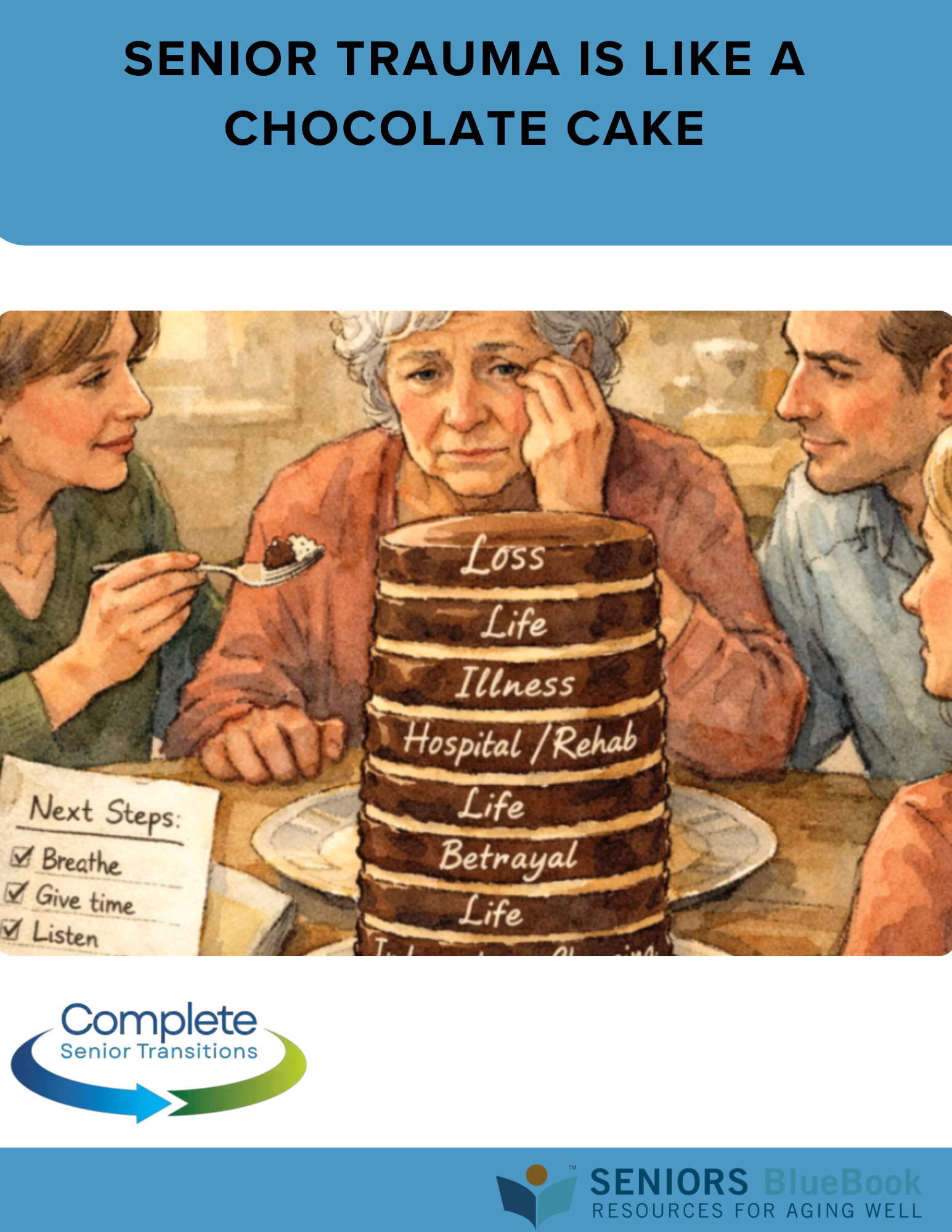
Senior Trauma is Like a Chocolate Cake
I have been helping families for over 15 years as a specialist in the senior downsizing field. Most clients truly struggle with the process of downsizing. It is a stressful and overwhelming process to navigate and is also often a traumatic step int their lives. Seniors have lived a long time and have often experienced traumas throughout life that most dont understand. I hope this analogy helps families to understand more about aging and how senior trauma affects so much. Lets talk about Trauma A client a few years ago, lost her husband in April, ended up in the hospital in May, and rehab for months. Then went home with private caregivers, that proceeded to steal from her, use her credit cards for purchases sent to their homes, stole things out of her home and garage for their benefit and then tried to steal her home from under her, before we stepped in and stopped them. She was faced not only with incredible losses and trauma, but ongoing health issues that forced her to give up her home she had built with her husband. Her only option was to move into assisted living. Every single one of these events was physically or emotionally traumatic, all in under a year. She had no children, a difficult and traumatic childhood with siblings as well, and some extended family that were pushing her into what they needed her to do in their time frame. Adding yet, more trauma to her life so they could get her needs off their plates. No compassion for her at all. Behaving like only their lives were being impacted. It was difficult to observe. Another client, who, after 42 years of marriage and raising kids, had her husband out of the blue want a divorce. No warning. Three years earlier, her son took his own life. She was then diagnosed with a rapidly changing neurological disorder that affects her gait, thought process, social skills, memory, and driving ability. Forced to move from the new home she had purchased and loved, in a neighborhood she had found renewed happiness in. Her kids were very helpful but had lives, jobs, and kids of their own, and, understandably, running back and forth constantly added stress to them. They were overwhelmed with the amount of time they had to invest living an hour away and were pushing her to decide on an Assisted Living community (she didnt want to go to) and told her to JUST get it over with. Just, Just, Just... Trauma is very much like a chocolate layer cake. One trauma on top of another and another, with life as the icing between traumas, until we have a whole cake before us. Sadly, we live in a society that tells us to suck it up and move on, get over it. Never really dealing with the psychological, emotional, and physical toll it takes on them. The cake just keeps getting bigger, making it more difficult to bake, navigate life, and making decisions as each of these traumas increases the difficulty to slice the cake. Throw in the need to downsize, giving up the things and homes they love, and feeling pushed out the door, and it can be a recipe for disaster. Many times, the stress of traumas brings on health issues, falls, and recurring hospital visits. Trauma and loss create a deep emotional spiral that is difficult for most to control or emotionally walk through. Spouses pass, they are getting older, health declines, friends pass, social lives change, sometimes losing the ability to be independent, loss of mobility or abilities like driving, going places, and living their lives. Obviously, as they age, these things are even harder to bounce back from. Many seniors then dig in their heels and refuse to go anywhere, mostly out of fear and, understandably, from having already lost so much. Seniors with dementia walk an even more difficult path, and so do their families, as this is combined with losing memories as well. More Seniors Navigating the Future Alone A growing population of seniors has limited families nearby, or no kids, and little to no support system. Fear and depression become the norm for many. Stress of finances increases due to the cost of living, health issues, medical costs, and needs, but incomes dont change. It is not easy getting older, and younger people have no clue what they are going through because they have not yet experienced these things. Many times, children see their parents as parents rather than as individuals. They often dont notice the aging process, or choose not to see it, because they dont want to accept that their parents are getting old, or that they may have to take on more responsibilities with them. They see what they have always seen, just mom or dad. Moving is a perfect example. It may still be stressful for younger, more able-bodied people, but it adds a different layer of trauma for seniors. Losing neighbors and neighborhoods they love, lifestyles they have built over many years, local activities, friends, churches, and community. Our own children are slowly learning to understand why we can no longer jump in a car and drive 15 hours like we used to. The physical toll it takes on our bodies driving long distances is hard. They dont consider the difficulties we have to haul luggage through the airport, with a disabled husband navigating walking issues and COPD, both of us with bad backs, through huge terminals, dragging luggage or carrying bags. Sitting on cramped planes barely able to move is no picnic for younger people; its even worse for seniors. Understanding How Needs and Life Changes for Seniors I point this out so families might begin to understand. To view your parents with openness and acceptance of meeting them where they are, not with disdain, because it might add to the sacrifice in your lives. So many seem unwilling to sacrifice for their parents, even though their parents sacrificed for them. It is our job to lovingly take care of our parents. What I see so often is heartbreaking. I see children so wrapped up in life and careers that they dont even come to see their parents. Parents have become unimportant and invisible. Seniors say, I dont want to be a burden on my kids. I must tell them that being an aging parent shouldnt feel like a burden. It should be ok to tell your kids when you need help. Kids either cant see or choose to overlook the loneliness and trauma of aging. Often, they ignore what their parents or family members are going through, or have gone through, because they dont experience it the same way. It is hard to understand, but we must stop and think about what it is like to be in the seniors shoes. How much loss have they weathered and in what time frame? Have they had counseling or grief programs made available to them? Stop thinking of them as your upcoming inheritance; that is also heartbreaking for them. I write this in the hopes that families approach these changes with patience, calm reflection, understanding, and compassion for the things their loved one may have experienced and its effects on them. I remind them that, sooner or later, they will experience the same things in life. If you need to assist a loved one who may need to transition to a new lifestyle, by choice or by force, please stop shoving their face in the cake! Remember small bites Stop and think about what they may have been through recently. Stop adding stress to their trauma. Stop pushing them to make decisions swiftly, because your time to help is limited. Be patient. Stop treating them like children who cant think for themselves. They are adults and deserve respect; they dont need to be told what to do. They need to be educated and informed. Stop being frustrated with them and share a hug or a visit instead. Allow them to process the upcoming changes slowly. Stop being self-focused and give them grace and kindness. Spend loving moments with them as often as possible, rather than making them feel like a burden. Remember, they need a bit more time, patience, and understanding as they age than they ever have. Help them take a bite of cake. To process it. To relish it. To digest it. To embrace the next bite as it comes. To have a chance to love every bite as they get through each slice. Over time, they will get through the cake. If a family member is battling grief, trauma, or loss, here is a resource link. David Brinker is there to help us heal by providing tools for recovery through the Healing Hearts Grief Recovery program.
May 20, 2026

A Joyous Baptism by Fire
How I Found My Calling Serving SeniorsFifteen years ago, I never would have imagined that I would find my lifes purpose in the senior industry. My professional journey began in fashion and retail buying before transitioning into construction and design. Looking back, no one, including me, could have predicted where that path would ultimately lead.Ive experienced plenty of transitions in my own life, moving 24 times in 26 years. Yet none of those moves prepared me for the incredible people I would meet and the profound impact they would have on my life. The older adults Ive been privileged to serve have been among my greatest teachers, and knowing them has been one of my lifes greatest blessings.In the BeginningMy journey into senior services began in 2007 through my renovation and design business. I was helping homeowners prepare, repair, and renovate their properties for sale. Many of those clients were older adults preparing to move, and I quickly noticed a common challenge.They werent just selling a house; they were leaving a home filled with decades of memories, milestones, and meaning.Many struggled to sort through their belongings, decide what to keep, and determine how to clear out a lifetime of possessions. The emotional weight of those decisions was often overwhelming. I saw stress, fear, uncertainty, and grief as they prepared for a move they werent always sure they wanted to make.Having moved so many times myself, I understood the anxiety that comes with transition. While my concerns had often centered around helping my children adjust to new schools, neighborhoods, and friendships, I recognized the same feelings of uncertainty in my senior clients. The difference was that they were facing an entirely different chapter of life.Without realizing it, I began doing more than preparing homes for sale. I started helping people navigate one of the most significant transitions they would ever experience.I guided them through sorting, organizing, and deciding what would accompany them into their next chapter. I helped them let go of belongings with dignity and identify resources that could make the process easier.Back then, downsizing was still a relatively new concept. There were very few services available to support seniors through the entire process. Families often found themselves managing complicated decisions alone while balancing careers, caregiving responsibilities, and geographic distance.I couldnt help but wonder: There has to be a better way. My Baptism by FireAbout six months later, I received a phone call that would change everything.A close friend, an only child who spent much of her time traveling internationally for work, called me in a panic late one night. Her 80-year-old mother had fallen and was being taken to the hospital. Unable to get there immediately herself, she asked if I would go so her mother wouldnt be alone.Of course, I went.That night opened my eyes to an entirely new reality. As doctors assessed a broken hip and possible heart complications, I found myself relaying information to my friend and helping her navigate a frightening situation from thousands of miles away.I remember wondering: What happens to seniors who have no one? What do families do when they live far away and cant immediately step in?Within days it became clear that her mother would not be able to return home alone. My friend faced impossible decisions while juggling work obligations and caring for her mothers future.At the time, I knew very little about senior living options. My own family had always embraced a multi-generational approach to care-giving, so independent living, assisted living, rehabilitation facilities, and skilled nursing communities were unfamiliar territory.What followed was a crash course in the senior care industry.I researched options, toured communities, coordinated services, and helped develop a plan. When my friend returned home, she wasnt facing a complete crisis. She had information, resources, and a path forward.Most importantly, she had someone helping her carry the burden. The Big DecisionMonths later, after helping her mother transition successfully, my friend took me to dinner as a thank-you.At the end of the meal, she handed me a check and said something that would forever change my life:This needs to be a business.I laughed and reminded her that I already had a business.But her words stayed with me.Soon afterward, I found myself helping another client, a widow, as she tried to prepare her home for sale while navigating grief, repairs, and countless decisions. Her son wanted to help but traveled frequently and simply didnt know where to begin.Thats when everything clicked.What I loved most wasnt renovating homes.What brought me joy was helping people.I loved reducing stress, creating solutions, and guiding families through overwhelming transitions. I loved seeing relief replace anxiety and confidence replace uncertainty.So I asked myself one simple question:Why not?And with that, Complete Senior Transitions was born.A Beautiful JourneyOver the years, I have had the privilege of serving extraordinary people from every walk of life.Ive worked with retired military leaders, educators, physicians, engineers, artists, authors, business owners, first responders, farmers, immigrants, and community leaders. Ive helped individuals with remarkable stories, incredible accomplishments, and fascinating lives.Yet regardless of their titles or achievements, they all shared something in common: they were facing a major life transition and needed support.Every sigh of relief, every grateful smile, and every successful move reminds me why we do this work.At Complete Senior Transitions, we treat our clients like family. This work has never been simply a business transaction. It is a deeply human experience built on trust, compassion, dignity, and care.It is an honor to serve the generation that helped build our communities through hard work, sacrifice, and resilience.Our mission remains simple:Do Good. Be Good.Everything we do is guided by a commitment to educate, empower, protect, and advocate for older adults and their families.Giving BackOne of the greatest privileges of this journey has been the opportunity to educate our community.Through our radio program, Smart Seniors on WHYF AM 720, speaking engagements, community partnerships, and educational events, we strive to provide valuable information that helps seniors and their families make informed decisions.
Aug 10, 2026

Power of Attorney for Seniors: When Good Intentions Go Wrong
What It Means to Be a Power of AttorneyBeing a Power of Attorney (POA) for anyone is a huge responsibility. Serving as POA for a senior adds an even deeper layer of trust, focus, and accountability. Handling this role correctly and for the right reasons is critical to the well-being of the person you are helping.Your responsibility as a POA is to the principal the person who appointed you. Whenever possible, there should also be a backup POA in place as a safeguard.Legally, a POAs role is to carry out the wishes of the principal, not replace them with their own decisions. If the individual is of sound mind, their wishes must always remain the priority. In most cases, seniors are mentally capable but may be physically unable to manage certain tasks on their own.Because laws vary by state, this article is for educational purposes only and does not constitute legal advice. Always consult an experienced elder law attorney.A Real-Life Example: When POA Authority Is MisusedWhy This Happens Far Too OftenSadly, we see situations like this more often than most people realize.Seniors are not children. They are not a burden. They are capable, deserving of dignity, and able to express what they want.When a POA removes someones rights for their own convenience, the result is often anger, heartbreak, and damaged relationships that can never be repaired. What should be an exciting new chapter becomes a painful and traumatic experience.Serving as a POA financial or medical requires research, preparation, and a true understanding of the responsibility involved.The damage caused by a mismanaged POA can be devastating and long-lasting. Financial POA: Responsibilities, Limits, and Legal RiskA Financial POA helps manage: Banking and bill paying Investments and income Insurance policies Financial coordination with advisors Their job is to assist and protect, not control.Elder financial abuse is heavily investigated in most states and for good reason. Taking a seniors money is not just theft. It removes their security, dignity, and future.A POA: Is not paid Does not get to spend freely Cannot make major decisions without the principals input If Medicaid is ever needed, there is a five-year lookback period. Poor financial decisions or missing records can result in denied benefits and catastrophic consequences for the senior.A Healthcare POA must honor the seniors wishes even when those choices are difficult or emotionally challenging.Their role is to: Enforce medical directives Advocate when the person cannot speak for themselves Ensure facilities follow written instructions When no family or trusted friend can serve, there are state-licensed professional fiduciary services that can act as POA, Executor, or Trustee. These organizations are often used by elder law attorneys, courts, and healthcare systems.They are an excellent option when: Family lives far away Family relationships are complicated The senior prefers independence No suitable advocate is available Healthcare POA: Advocacy, Not ControlPlanning Ahead Protects EveryoneEducation Is the Best ProtectionMore and more seniors in the U.S. have limited or no family support.Family members who live far away often underestimate how much their parents have declined until a crisis occurs. Even well-meaning families can unintentionally leave loved ones unprotected.Pride also plays a role. Many older adults do not recognize how much has changed until something goes wrong.Every senior should: Work with an elder law attorney Have financial and healthcare directives in writing Understand long-term care options Know that Medicare does not cover everything Have a plan before something happens Planning creates clarity and security, not fear.At Complete Senior Transitions, our mission has always been to educate, empower, and protect seniors.Knowledge and planning are the strongest safeguards we can offer.You can also find free educational content through our Smart Seniors radio show, available on our Media page.Youth is a gift of nature, but age is a work of art.
May 06, 2026
We Dont Plan to Get Old: Why Making a Plan Early Matters
Why Planning for Aging Is So ImportantMost of us plan carefully for major life milestoneseducation, military service, buying a home, raising a family, building a career, and even retirement. But after retirement planning is complete, many people stop planning altogether.Heres the truth: planning for aging is just as importantif not more sothan planning for retirement.Aging is the one thing none of us can control, yet its the stage of life that often receives the least preparation. Downsizing or rightsizing later in life can become overwhelming for seniors and their families, especially when there is no clear plan. Without preparation, urgent decisions lead to stress, chaos, and unnecessary financial strain.I regularly work with clients who are caught off guard by life changes. The lack of planning creates emotional overwhelm for everyone involved. My goal with this series is to change that through education. The earlier you start planning for aging, the more choicesand peace of mindyoull have.Planning Now for Later: When Should You Start?The best time to start planning for aging is as early as possible.Understanding your future needs and lifestyle preferences helps you stay in control of your choices. Whether youve been retired for years or are just beginning to think about retirement, proactive planning can make a significant difference.Ask yourself: Do I love the home Im currently living in? Will it become harder to maintain the interior and exterior as I age? What are the long-term costs of hiring help for maintenance and upkeep? Am I budgeting for updates to maintain my homes value? Is my home larger than I realistically use?Hiring help for tasks you can no longeror no longer want todo can add up quickly. Could that money be better spent on travel, experiences, or a more manageable home? For many seniors, downsizing or rightsizing offers both financial relief and an improved quality of life. Where Are You Going Next?One of the most important questions in aging and retirement planning is: Where do you want to live next?This decision influences everything that follows. Once you have a vision, the next step is creating a roadmap to get there. Waiting too long can result in being forced to move due to health issues, leaving you with fewer options and higher costs.Emergency moves are stressfulnot only for you, but also for family members trying to help. Planning ahead reduces emotional strain and helps protect your budget. Exploring Housing Options for Aging WellThere is no one-size-fits-all solution when it comes to aging.Some people dream of full-time RV living and travel. While exciting, this option requires letting go of nearly 90% of your belongings, since only about 10% will fit.Others choose to keep a smaller home as a base and renovate it for aging in place. Common updates include zero-entry showers, pull-down kitchen shelving, wider doorways, and space for walkers or wheelchairs.Many seniors prefer age-restricted or independent living communities, such as 55+ neighborhoods. These often eliminate snow removal, yard work, and heavy maintenanceallowing residents to focus on enjoying life.Assisted Living or Personal Care communities offer another option for those who need some help but still value independence. Housing choices may include studio apartments, one-bedroom units, or larger spaces.For some, the dream is relocatingperhaps a cottage near the beach or closer to grandchildren and friends. Wherever your vision leads, research is a critical first step.Identifying Your Lifestyle PrioritiesSuccessful aging plans begin with clearly defined priorities.Consider: One-bedroom vs. two-bedroom living House, condo, apartment, or community setting Staying local, moving out of state, or relocating abroadStart with this mindset: If money were not the deciding factor, what would my ideal lifestyle look like? From there, determine whats feasible and how to adapt that vision to your budget.If you own a home, it can be a valuable asset in funding your next chapter. If you dont, early financial planning becomes even more essential.Location also matters. Think about access to: Healthcare and medical providers Activities you enjoygolf, hiking, fishing, dining out, shopping Social connections, churches, and community groupsThese factors all contribute to long-term comfort and happiness.The Foundation: Why You Need an Elder Law AttorneyOne of the most important steps in planning for aging is meeting with an elder law attorneynot a general practice attorney.Even if you already have a will or trust, elder law attorneys take a comprehensive approach to aging and asset protection. They evaluate how all pieces work together, including: Estate planning documents Financial assets and income Medicare and Medicaid planning Long-term care planningElder law uses specialized legal strategies to protect your assets and ensure your wishes are honored as circumstances change.Once your plan is established, share it with a trusted family member or friend. Bring all legal documents, financial statements, and insurance policies to your appointmentsevery detail matters.Understanding Downsizing vs. RightsizingDownsizingDownsizing involves moving to a smaller living space that better supports your future needs. This may include: A smaller home or apartment Independent or assisted living Moving in with familyThe process includes thoughtfully selecting what to keep and redistributing the rest through family gifts, donations, auctions, or disposal. When done intentionally, downsizing benefits you, your loved ones, and the community.RightsizingRightsizing means choosing a homelarger or smallerthat best fits your lifestyle. Some seniors move from a large home with extensive yard work into a low-maintenance condo. Others upsize to accommodate family gatherings or multigenerational living. Rightsizing focuses on quality of life rather than square footage.CleanoutsCleanouts are typically unplanned and crisis-driven. Belongings are quickly discarded with little consideration for reuse or value.Many companies market cleanouts as downsizing, but they are not the same. Cleanouts should be a last resort, not the starting point.Estate SalesEstate sales are another option but require significant preparation. They often involve weeks of advertising, sorting, and staging, along with commission fees.In many cases, estate sales produce modest returns. In todays housing market, selling a home directly with the right strategy often results in greater financial benefit.Final Thoughts: Planning Gives You ControlWhich option is right for you? That question alone highlights why planning for aging is essential. This series begins with the most important step: creating a clear, thoughtful plan.Aging well requires looking beyond the present and preparing for whats ahead. While no plan can predict everything, preparation gives you options, flexibility, and peace of mind.Whether you choose to age in place, relocate, or downsize to a more manageable lifestyle, the decision should be yoursnot one forced by crisis. Failing to plan can lead to unnecessary stress, higher costs, and limited choices.Planning early allows you to age with dignity, confidence, and control.