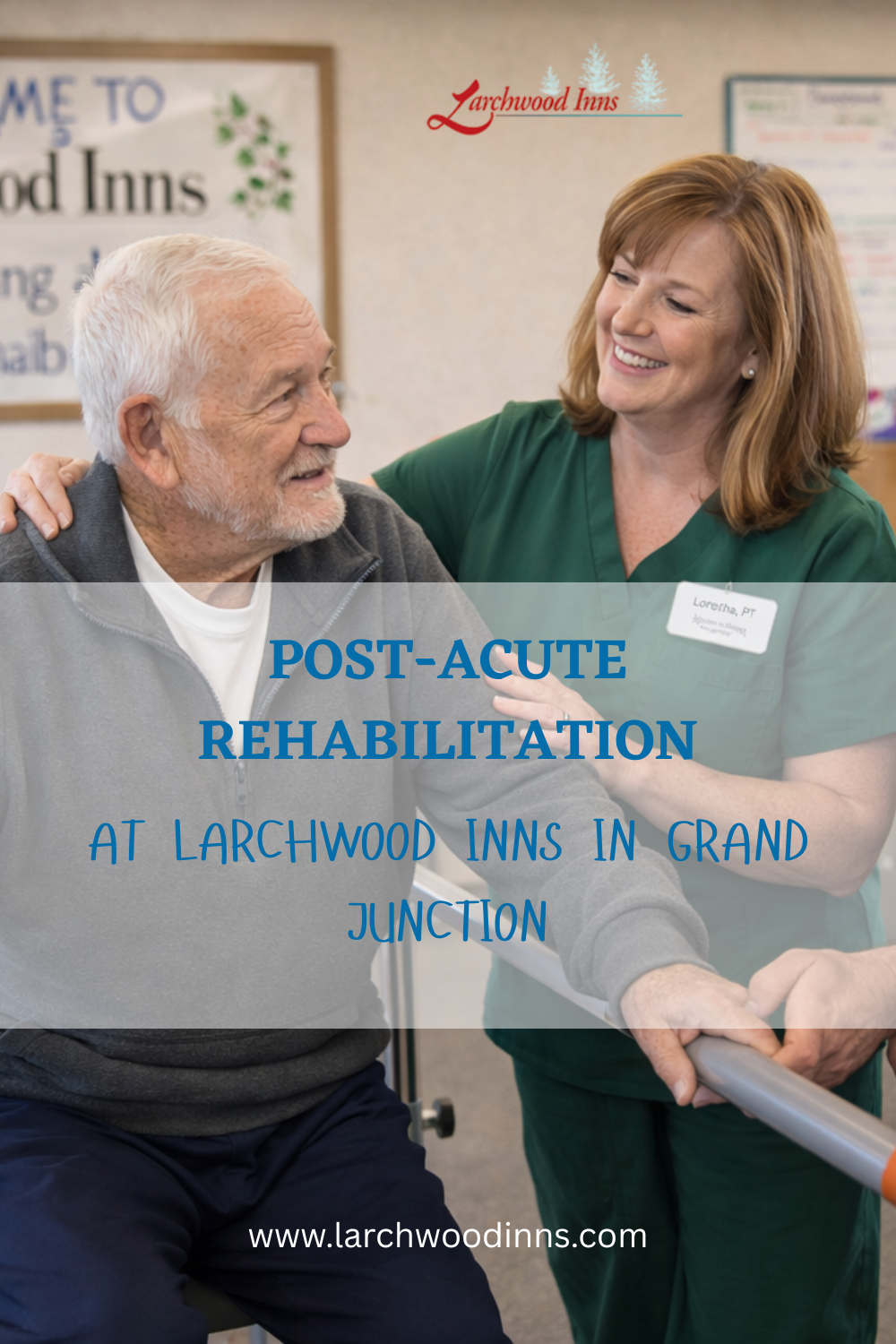
Expert Post-Acute Rehabilitation at Larchwood Inns in Grand Junction
Larchwood Inns and The PARC Skilled Nursing
For more information about the author, click to view their website: Larchwood Inns Skilled Nursing and Post-Acute Rehab Facility
Feb 26, 2026
Colorado - Western Slope

Email US
Click to Email Us
Expert Post-Acute Rehabilitation at Larchwood Inns in Grand Junction
When a hospital stay ends, recovery is often just beginning.
Whether following joint replacement surgery, a stroke, cardiac complications, or a serious illness, many Western Slope residents are not quite ready to return home safely — even though they are medically stable enough to leave the hospital.
That’s where Larchwood Inns Skilled Nursing and Post-Acute Rehab Facility in Grand Junction, under the leadership of Loretha Rolf, provides structured rehabilitation designed to restore independence and rebuild confidence.
“Post-acute rehab is about progress,” Loretha says. “We focus on helping residents regain strength, mobility, and the ability to return home safely whenever possible.”
Understanding Post-Acute Rehabilitation
Post-acute rehabilitation is short-term, goal-oriented care provided after hospitalization.
Residents may arrive at Larchwood Inns following:
-
Hip or knee replacement
-
Fracture repair
-
Stroke
-
Cardiac procedures
-
Pneumonia or respiratory illness
-
Extended hospital stays
The primary objective is to support recovery through coordinated nursing and therapy services.
A Structured Path to Recovery
Post-acute rehab typically includes:
-
Skilled nursing oversight
-
Physical therapy
-
Occupational therapy
-
Speech therapy (when needed)
-
Pain management
-
Medication monitoring
Each resident receives an individualized care plan designed to target specific functional goals.
In Grand Junction, where many seniors value independence and aging in place, regaining mobility and daily living skills is essential.
Physical Therapy: Restoring Mobility
Physical therapy focuses on rebuilding:
-
Strength
-
Balance
-
Endurance
-
Gait stability
Therapists work closely with residents to improve mobility and reduce fall risk.
For Western Slope seniors eager to return to hiking local trails or simply walking safely around their home, structured therapy makes a measurable difference.
Occupational Therapy: Regaining Daily Function
Occupational therapy helps residents relearn everyday tasks such as:
-
Dressing
-
Bathing
-
Meal preparation
-
Using assistive devices
-
Navigating stairs
The goal is not just medical recovery — it’s restoring practical independence.
Speech and Swallowing Support
After stroke or neurological illness, some residents may experience:
-
Speech difficulties
-
Cognitive challenges
-
Swallowing issues
Speech therapists provide targeted interventions to improve communication and safety.
Skilled Nursing Support During Recovery
Rehabilitation success depends on medical stability.
Skilled nursing services at Larchwood Inns include:
-
24-hour nursing supervision
-
Wound care
-
IV therapy management
-
Medication administration
-
Monitoring for complications
This clinical oversight ensures that therapy progress is not disrupted by medical setbacks.
Preparing for a Safe Return Home
Discharge planning begins early.
The care team works with families to assess:
-
Home environment safety
-
Equipment needs
-
Follow-up appointments
-
Home health coordination
-
Caregiver education
The goal is a smooth transition back to the community.
“Recovery doesn’t stop at discharge,” Loretha explains. “We prepare families for the next phase.”
Why Local Rehabilitation Matters
Grand Junction serves as a healthcare hub for surrounding communities including:
-
Fruita
-
Palisade
-
Clifton
-
Delta
-
Montrose
Having post-acute rehab locally allows families to visit frequently and remain involved in the recovery process.
Proximity strengthens both emotional support and communication.
Frequently Asked Questions About Post-Acute Rehab in Grand Junction
How long does post-acute rehab last?
Length of stay varies depending on medical condition and therapy goals. Many residents stay several weeks.
Is rehab covered by Medicare?
Medicare may cover qualifying post-hospital rehabilitation stays under specific guidelines.
Can family members attend therapy sessions?
Family involvement is often encouraged to support continuity of care.
What happens if a resident needs longer-term care?
Care plans can transition to long-term skilled nursing if medically necessary.
Do residents have private rooms?
Room availability varies. Families can inquire directly about accommodations.
Recovery with Professional Support
Rehabilitation requires patience, structure, and skilled guidance.
Larchwood Inns Skilled Nursing and Post-Acute Rehab Facility provides:
-
Coordinated therapy services
-
24-hour nursing care
-
Individualized recovery plans
-
Safe discharge preparation
-
Compassionate Western Slope care
For Grand Junction families navigating recovery after hospitalization, structured post-acute rehabilitation offers the support needed to rebuild strength and independence.
👉 Visit Larchwood Inns Skilled Nursing and Post-Acute Rehab Facility on SeniorsBlueBook.com to connect with Loretha Rolf and learn more about available rehabilitation services.
Other Articles You May Like
Protecting Disability Benefits With Trusts in Fairhope, AL
Protecting Disability Benefits With Trusts in Fairhope, ALFor parents and grandparents of individuals living with disabilities, planning for the future often involves questions that go far beyond ordinary inheritance decisions.How will a loved one pay for personal needs when family caregivers are no longer available? What happens if a grandparent leaves money directly to a family member receiving government benefits? Who will manage financial resources, and how can those funds improve quality of life without unintentionally disrupting essential assistance?These concerns can become especially important when a person relies on Supplemental Security Income, commonly called SSI, or Medicaid.For families in Fairhope, Alabama, special needs trusts may provide a way to plan for financial support while addressing the rules governing means-tested public benefits.Unlike an ordinary inheritance, a properly structured special needs trust holds and manages assets for the benefit of an individual with disabilities.The trust can help provide resources for appropriate supplemental expenses while protecting eligibility for certain government programs when applicable legal requirements are satisfied.Ashley Day Law, located in Fairhope, provides special needs planning services for families throughout Baldwin County and Mobile County.Led by attorney Ashley Day, the firm assists with special needs trusts, government benefit planning, guardianship and conservatorship matters, and trust administration.Understanding these arrangements before an inheritance, financial settlement, or major family transition occurs can help families avoid costly mistakes and establish a more thoughtful plan for the future.What Is a Special Needs Trust?A special needs trust, also called a supplemental needs trust, is a legal arrangement designed to hold assets for a beneficiary with a disability.A trustee manages those assets according to the terms of the trust and applicable law.When properly established and administered, certain special needs trusts may allow beneficiaries to receive supplemental financial support without having trust assets automatically treated as available resources for means-tested benefit programs.Why Families Consider Special Needs TrustsA special needs trust may help families:Provide financial resources for a loved one with disabilitiesConsider continued eligibility for SSI and MedicaidEstablish long-term financial managementPlan for future care and personal expensesProtect assets from inappropriate useCoordinate inheritance arrangementsSelect a trusted person or organization to manage fundsPrepare for changes in family caregiving responsibilitiesNot every individual needs the same type of trust.The appropriate arrangement depends on the source of funds, the beneficiary's circumstances, benefit requirements, and long-term goals.Why Ordinary Inheritances Can Create ProblemsAn inheritance intended to help someone with a disability may create unexpected financial consequences.Certain government programs have strict income and resource eligibility rules.Supplemental Security IncomeSSI provides financial assistance to eligible individuals who are aged, blind, or have qualifying disabilities and meet other requirements.For many individual applicants, the general countable resource limit is $2,000, subject to exclusions and applicable rules.MedicaidMedicaid provides healthcare coverage and may provide access to certain long-term services and supports for eligible individuals.Eligibility rules vary by program and circumstances.The Problem With Direct GiftsA direct inheritance or substantial financial gift may increase the recipient's countable assets.This can affect eligibility for certain means-tested programs.Why Planning MattersA properly drafted and administered special needs trust may help protect eligibility while providing additional financial resources.However, simply naming an account a special needs trust does not automatically make it compliant.The trust must satisfy applicable legal and program requirements.Ashley Day Law in Fairhope, AlabamaAshley Day Law, LLC is a legal practice focusing on special needs planning, elder law, estate planning, and probate and trust administration.Attorney Ashley Day founded her practice in 2019 and brings professional experience involving special education and healthcare-related work.Before entering legal practice, she taught high school students in special education and worked in the healthcare industry.These experiences contributed to her focus on helping families navigate legal planning for individuals with disabilities and additional care needs.Special Needs Trust PlanningAshley Day Law assists families with preparing special needs trusts designed around individual circumstances.Trust Provisions in Estate PlansThe firm also offers living trusts and wills containing specialized provisions for beneficiaries with disabilities.Government Benefits PlanningAshley Day Law provides guidance concerning government benefit eligibility, including SSI and Medicaid considerations.Planning for Age 18The practice helps families understand the legal changes that occur when children with disabilities reach adulthood.Guardianships and ConservatorshipsThe firm advises families about protective court proceedings and appropriate decision-making arrangements.Trust AdministrationAshley Day Law also works with trustees who need guidance managing and distributing trust assets.A Personalized Planning ApproachThe firm emphasizes reviewing each family's financial situation, care needs, personal preferences, and future goals before recommending legal arrangements.Verified Ashley Day Law Contact InformationAshley Day Law, LLCAttorney: Ashley DayAddress: 8335 Gayfer Road Extension, Fairhope, AlabamaPhone: 251-277-3377Website: https://ashleydaylaw.com/Special Needs Planning Information: https://ashleydaylaw.com/special-needs-planning/Practice Areas: Special Needs Planning, Elder Law, Estate Planning, Probate and Trust AdministrationCounties Served: Baldwin County and Mobile CountyMailing Address Note: The firm's official website lists ZIP code 36533, while its Seniors Blue Book listing and professional directories list 36532. Confirm the correct mailing ZIP code and suite information directly with the practice.Understanding Third-Party Special Needs TrustsA third-party special needs trust is generally funded with assets belonging to someone other than the beneficiary.For example, parents or grandparents may establish a trust to provide resources for a child or grandchild with a disability.Common Funding SourcesThese may include:Cash giftsInvestmentsInheritancesLife insurance proceedsCertain real estate interestsOther appropriate family assetsWhy Families Use Third-Party TrustsParents may want to provide financial support without leaving assets directly to a beneficiary receiving means-tested public assistance.Planning for Future GenerationsGrandparents and other relatives may also want their estate plans coordinated with an existing special needs trust.Remaining Trust AssetsWhen structured appropriately, a third-party special needs trust may allow the person creating it to designate how remaining assets are distributed after the beneficiary's death.This differs from certain first-party trusts subject to Medicaid payback requirements.Legal Requirements MatterThe trust must be drafted and administered correctly to achieve the intended benefits.Families should obtain individualized legal guidance before transferring assets.Understanding First-Party Special Needs TrustsA first-party special needs trust generally holds assets belonging to the person with a disability.This arrangement may become relevant when the beneficiary receives:A personal injury settlementAn inheritance paid directly to themCertain financial awardsOther assets in their own nameWhy the Distinction MattersFirst-party and third-party trusts operate under different rules.Certain first-party trusts must satisfy federal statutory requirements, including applicable disability, age, establishment, and Medicaid reimbursement provisions.Medicaid Payback RequirementsQualifying first-party special needs trusts generally contain a provision addressing repayment to Medicaid from remaining trust assets, as required by applicable law.The exact requirements depend on the trust structure.Age and Eligibility ConsiderationsSpecial rules may apply to particular first-party trust arrangements, including when and how they are established.Avoid Acting Without GuidanceA family should not transfer a settlement or inheritance into a trust without confirming that the proposed arrangement meets the applicable requirements.Special Needs Trusts Versus ABLE AccountsFamilies exploring disability-related financial planning may encounter another option known as an ABLE account.ABLE stands for Achieving a Better Life Experience.An ABLE account is a tax-advantaged savings account available to eligible individuals whose disability began before the applicable age threshold.As of 2026, federal eligibility rules generally allow qualifying individuals whose disability began before age 46 to establish an ABLE account, subject to other requirements.Potential Uses of ABLE AccountsQualifying disability expenses may include:EducationHousingTransportationHealthcareAssistive technologyEmployment-related supportOther eligible expensesHow an ABLE Account Differs From a TrustAn ABLE account has contribution limits, account rules, and program-specific requirements.A special needs trust is a separate legal arrangement administered by a trustee.Can Families Use Both?In some circumstances, an ABLE account and a special needs trust may work together.Why Professional Guidance HelpsThe most appropriate arrangement depends on the beneficiary's resources, eligibility, spending needs, and long-term plans.How Special Needs Trust Funds May Be UsedOne important purpose of a special needs trust is to improve the beneficiary's quality of life.However, distributions must comply with the trust agreement and applicable benefit program rules.Possible Supplemental ExpensesDepending on the circumstances, appropriate expenses may include:Educational programsRecreational activitiesTravelPersonal technologyAssistive devicesCertain transportation expensesHobbiesEntertainmentOther approved goods or servicesWhy Payment Methods MatterDistributions can affect benefits differently depending on how funds are paid and what they purchase.Cash payments to beneficiaries may create particular concerns.Housing and Living ExpensesSpecial rules can apply to distributions involving housing and other living expenses.Trustees should understand the benefit rules before making these payments.Maintaining Appropriate RecordsTrustees should document expenditures and retain supporting information.No Automatic GuaranteeEven a properly drafted special needs trust can create problems if it is administered incorrectly.Ongoing legal and benefits guidance may be important.Choosing the Right TrusteeA trustee is responsible for managing trust assets and carrying out the trust's instructions.Selecting the right trustee is one of the most important special needs planning decisions.Understanding the Beneficiary's NeedsA trustee should appreciate the individual's personal circumstances, preferences, and long-term goals.Financial ResponsibilityThe trustee must manage assets carefully and make appropriate decisions.Knowledge of Benefits RulesSpecial needs trust distributions can affect public benefits.The trustee should understand relevant requirements or obtain qualified guidance.Record-KeepingTrustees may need to maintain detailed records, accountings, and tax information.CommunicationThe trustee may need to communicate with family members, caregivers, financial institutions, and benefit agencies.Considering Professional TrusteesSome families prefer an experienced professional or institutional trustee.Others select trusted relatives.Naming SuccessorsA plan should address who will manage the trust if the original trustee becomes unable or unwilling to serve.Ashley Day Law provides trust administration guidance and has published educational resources on selecting trustees.Why Special Needs Planning Matters Locally in Baldwin CountyFamilies throughout Baldwin County may be caring for children, adults, or older relatives living with intellectual, developmental, physical, or cognitive disabilities.Some individuals live independently with support.Others require substantial assistance with housing, medical care, or daily activities.Planning for Long-Term Family SupportParents and grandparents may want to ensure that financial resources remain available when they can no longer provide direct support.Protecting Access to HealthcareMedicaid eligibility may be important for individuals receiving certain healthcare or long-term support services.Coordinating Family InheritancesA will or life insurance designation may require special planning when a beneficiary receives means-tested benefits.Supporting CaregiversClear legal arrangements may help define financial responsibilities and decision-making roles.Access to Local Legal GuidanceAshley Day Law's Fairhope practice serves Baldwin County and Mobile County, providing local families with a resource for discussing Alabama-specific legal questions.Planning for a Child Turning 18Parents of children with disabilities often face important changes when their child reaches adulthood.At age 18, legal adulthood generally changes parents' authority to make decisions for their child.A disability diagnosis alone does not automatically mean the adult lacks legal decision-making capacity.Reviewing Decision-Making AbilitiesFamilies should consider which decisions the young adult can make independently and where assistance may be useful.Exploring Less Restrictive AlternativesAppropriate powers of attorney, supported decision-making, and other arrangements may be considered depending on capacity and applicable law.Guardianship and ConservatorshipSome individuals may require court-appointed support.These arrangements should be evaluated carefully because they can affect legal rights.Planning for BenefitsTurning 18 may also affect how certain government benefit eligibility rules apply.Coordinating Financial SupportFamilies may want to establish trusts or other arrangements before substantial gifts or inheritances are received.Ashley Day Law specifically identifies planning for age 18 as part of its special needs practice.Special Needs Trusts and Estate PlanningAn estate plan should account for the needs of every intended beneficiary.However, leaving identical types of inheritance arrangements to all family members may not always produce the intended results.Wills With Special Needs ProvisionsA will may include provisions establishing a trust for a beneficiary with disabilities.Living TrustsA revocable living trust may include special needs provisions that take effect under specified circumstances.Life InsuranceFamilies sometimes use life insurance proceeds to help fund long-term support.Beneficiary designations must be reviewed carefully.Retirement AccountsRetirement asset transfers may involve specialized tax and benefits considerations.Family CoordinationParents, grandparents, and other relatives should understand whether their plans are consistent.An uncoordinated gift or inheritance can undermine otherwise thoughtful planning.Avoiding Common Special Needs Trust MistakesLeaving Assets Directly to the BeneficiaryAn inheritance may affect eligibility for means-tested programs.Naming the Wrong Beneficiary on Insurance PoliciesLife insurance or retirement assets may pass directly to someone when a trust was intended.Using an Ordinary Trust Without Special ProvisionsNot every trust protects benefit eligibility.Choosing a Trustee Without Understanding the ResponsibilitiesTrust administration can involve complex financial and legal duties.Making Improper DistributionsCertain payments may affect SSI or other assistance.Failing to Fund the TrustA trust may not achieve the family's goals if intended assets are never properly transferred.Failing to Review the PlanBenefit rules, family circumstances, and individual needs can change.When Should Families Review a Special Needs Trust?Special needs planning should evolve alongside the beneficiary's circumstances.Changes in Government BenefitsNew program rules or eligibility changes may affect planning considerations.Receiving an Inheritance or SettlementSubstantial assets should be reviewed before they are distributed or transferred.Changes in Care NeedsHousing, healthcare, or support arrangements may change.A Trustee Becomes UnavailableSuccessor trustee arrangements may require review.Family ChangesMarriage, divorce, death, or other changes can affect estate planning.Changes in Financial ResourcesNew investments, insurance policies, or property acquisitions may require coordination.Periodic legal review helps families determine whether the trust remains appropriate.Preparing for a Special Needs Planning ConsultationFamilies can make the consultation more productive by organizing relevant information.Identify the Beneficiary's NeedsConsider current and anticipated healthcare, housing, transportation, education, and daily support.Review Government BenefitsPrepare information about existing SSI, Medicaid, or other public assistance.Gather Estate Planning DocumentsBring available wills, trusts, powers of attorney, and beneficiary designations.Identify AssetsList financial resources that may be intended for the beneficiary.Consider Trustee OptionsThink about who could manage trust funds responsibly.Review Long-Term GoalsDiscuss how the beneficiary's quality of life and personal preferences should guide planning.Prepare QuestionsAsk about the type of trust, funding, costs, administration, reporting, and future reviews.Expert Tip for Families Considering Special Needs TrustsExpert Tip: Before naming a loved one with disabilities as a direct beneficiary of a will, retirement account, or life insurance policy, review whether the inheritance could affect SSI, Medicaid, or other means-tested benefits.Ask a qualified special needs planning attorney whether a properly structured trust would better support your goals.The trust document and beneficiary designations should be coordinated before funds are transferred.How to Get Started With Ashley Day LawStep 1: Identify Your Planning ConcernsConsider inheritance, benefit eligibility, long-term support, trustee responsibilities, and decision-making needs.Step 2: Contact Ashley Day LawCall 251-277-3377.Step 3: Arrange a ConsultationAsk about appointment availability, consultation procedures, and legal fees.Step 4: Gather Existing RecordsPrepare estate planning documents, financial information, and relevant benefit details.Step 5: Discuss Trust OptionsAsk whether a first-party, third-party, or another planning arrangement may be appropriate.Step 6: Review Trustee ResponsibilitiesDiscuss trustee selection, successor appointments, record-keeping, and administration.Step 7: Coordinate FundingWork with qualified professionals to understand how assets and beneficiary designations should be arranged.Step 8: Maintain the PlanReview legal documents when family circumstances, resources, or benefit requirements change.Frequently Asked Questions About Special Needs Trusts in Fairhope1. What is a special needs trust?A special needs trust is a legal arrangement that holds and manages assets for a person with a disability. When properly structured and administered, certain trusts may provide supplemental resources while preserving eligibility for means-tested government benefits.2. Does Ashley Day Law prepare special needs trusts?Yes. Ashley Day Law offers Special or Supplemental Needs Trusts, special needs provisions in wills and living trusts, benefits planning, and trust administration guidance.3. Can a special needs trust help protect SSI and Medicaid eligibility?A properly structured and administered special needs trust may help protect eligibility for applicable means-tested programs. The outcome depends on the trust type, beneficiary circumstances, funding, distribution practices, and legal requirements.4. What is the difference between a first-party and third-party special needs trust?A first-party trust generally uses assets belonging to the beneficiary and may require Medicaid reimbursement provisions. A third-party trust is typically funded by parents, grandparents, or other individuals and follows different rules for remaining assets.5. Where is Ashley Day Law located?Ashley Day Law is located at 8335 Gayfer Road Extension in Fairhope, Alabama, serving clients in Baldwin and Mobile Counties. The office can be reached at 251-277-3377.Create a Financial Plan That Protects Future OpportunitiesPlanning for someone living with a disability involves more than setting aside an inheritance.It requires understanding public benefits, financial management, appropriate legal structures, and the person's long-term care and quality-of-life goals.A special needs trust can be an important part of that plan when established and administered correctly.For families in Baldwin County, Ashley Day Law offers legal services focused on helping individuals with disabilities and their loved ones prepare for future needs.The firm's special needs planning services include supplemental needs trusts, benefits planning, guardianship and conservatorship guidance, and trust administration.Whether you are planning for a child's future, preparing an inheritance, or reviewing an existing trust, professional legal guidance can help clarify available options.Contact Ashley Day Law to discuss special needs trust planning and how appropriate legal arrangements may support your family's long-term goals.Featured Seniors Blue Book ListingAshley Day LawRecommended Main SBB Category: Special Needs TrustsAttorney: Ashley DayAddress: 8335 Gayfer Road Extension, Fairhope, AL 36532County: Baldwin County, AlabamaPhone: 251-277-3377Website: https://ashleydaylaw.com/Special Needs Planning: https://ashleydaylaw.com/special-needs-planning/Services: Special or Supplemental Needs Trusts, special needs provisions in wills and living trusts, SSI and Medicaid planning, government benefits advisement, planning for age 18, guardianships, conservatorships, trust administration, and related legal services.Additional Practice Areas: Elder Law, Estate Planning, Probate and Trust AdministrationCounties Served: Baldwin County and Mobile CountyOffice Note: The Seniors Blue Book listing identifies ZIP code 36532, while the firm's website lists 36533. Confirm mailing information directly with the office.Seniors Blue Book Business Profile: https://l2.seniorsbluebook.com/senior-resources/ashley-day-law-special-needsFind Ashley Day Law on Seniors Blue BookLooking for special needs trust planning in Fairhope, Alabama?Explore Ashley Day Law through its dedicated Special Needs Trusts listing.Learn about special needs trusts, eligibility planning for SSI and Medicaid, trustee responsibilities, and financial arrangements for individuals living with disabilities.Contact Ashley Day Law to discuss your family's planning priorities and available legal services.
Estate Planning Beyond a Will in Fairhope, AL
Estate Planning Beyond a Will in Fairhope, ALWhen people think about estate planning, the first document that often comes to mind is a will. While a will can be an essential part of preparing for the future, a complete estate plan involves much more than deciding who receives property after death.Consider a homeowner who wants to leave the family home to adult children. What happens if the homeowner becomes unable to manage financial decisions before passing away? Will the property need to go through probate? Are the beneficiary designations on retirement accounts consistent with the will?These questions illustrate why estate planning should address both lifetime needs and the eventual transfer of assets.For individuals and families in Fairhope, Alabama, a thoughtful estate plan can help clarify legal responsibilities, protect personal wishes, and reduce unnecessary confusion during difficult circumstances.Ashley Day Law, located on Gayfer Road Extension in Fairhope, provides comprehensive estate planning services for individuals and families throughout Baldwin County and Mobile County.Led by attorney Ashley Day, the firm helps clients prepare wills, trusts, powers of attorney, healthcare directives, beneficiary arrangements, and other legal documents.Its approach emphasizes understanding each family's goals and developing personalized plans that address both expected and unexpected circumstances.Whether someone is preparing a first estate plan, reviewing existing documents, or planning for the needs of future generations, understanding the different elements of estate planning is an important starting point.What Is Estate Planning?Estate planning is the process of preparing legal and financial arrangements that communicate how an individual's affairs and property should be managed.A comprehensive estate plan can address what happens during a person's lifetime, in the event of incapacity, and after death.Common Estate Planning DocumentsDepending on the individual's circumstances, an estate plan may include:Last will and testamentRevocable living trustIrrevocable trustDurable power of attorneyAdvance healthcare directiveHealthcare power of attorneyHIPAA authorizationBeneficiary designationsSupplemental needs trustOther asset transfer arrangementsNot every family requires every document.The appropriate combination depends on personal goals, assets, relationships, and applicable law.Why Estate Planning Is About More Than InheritanceMany people assume estate planning is primarily for wealthy families.However, legal planning can be valuable for individuals with different income levels and property arrangements.Preparing for IncapacityAn unexpected illness or injury may affect someone's ability to manage financial or healthcare decisions.Protecting Personal WishesLegal documents can communicate preferences about property, healthcare, and decision-making authority.Supporting Loved OnesClear instructions may reduce confusion among relatives.Planning for Property TransfersEstate planning helps determine how different assets should pass to beneficiaries.Addressing Unique Family CircumstancesBlended families, minor children, relatives with disabilities, and family-owned businesses may require specialized arrangements.Reducing Administrative ComplicationsAppropriate planning may simplify certain legal processes and reduce unnecessary expenses, depending on the situation.Ashley Day Law in Fairhope, AlabamaAshley Day Law is a legal practice focusing on estate planning, elder law, special needs planning, and probate and trust administration.Attorney Ashley Day provides personalized planning services designed to help individuals and families prepare for changing circumstances.The firm emphasizes that an effective estate plan should reflect each client's goals instead of relying on a standard set of documents.Comprehensive Estate PlanningAshley Day Law offers assistance with:Drafting willsCreating living trustsEstablishing irrevocable protection trustsReviewing beneficiary designationsPlanning non-probate transfersPreparing healthcare directivesDrafting powers of attorneyDeveloping family and caregiver agreementsAdvising executors and trusteesPost-death estate planning and administrationIndividualized PlanningThe firm works with clients to understand family relationships, financial arrangements, and personal objectives.When appropriate, it also coordinates with other professional advisors, including accountants and financial planners.Trust Funding GuidanceAshley Day Law specifically identifies trust funding as part of comprehensive estate planning.This is an important distinction because creating a trust document does not automatically transfer assets into the trust.Planning for Changing CircumstancesThe firm also reviews existing estate plans and recommends changes when family, financial, or personal priorities evolve.Verified Ashley Day Law Contact InformationAshley Day LawAttorney: Ashley DayAddress: 8335 Gayfer Road Extension, Fairhope, ALPhone: 251-277-3377Website: https://ashleydaylaw.com/Estate Planning Information: https://ashleydaylaw.com/estate-planning/Practice Areas: Estate Planning, Elder Law, Special Needs Planning, Probate and Trust AdministrationCounties Served: Baldwin County and Mobile CountyZIP Code Note: The firm's official website uses 36533, while its Seniors Blue Book listing uses 36532. Confirm the correct mailing ZIP code before sending documents.Contact the firm to verify consultation arrangements, legal fees, and appointment availability.Understanding the Role of a Last Will and TestamentA will is a foundational estate planning document.It provides instructions concerning the distribution of certain assets after death.Naming BeneficiariesA will can identify individuals or organizations intended to receive property.Choosing a Personal RepresentativeAn individual may nominate someone to administer the estate according to applicable law.Addressing Family CircumstancesA will may include provisions involving family members, property, and other estate planning goals.Understanding ProbateA will typically must be submitted through the appropriate probate process when probate administration is required.Recognizing the LimitationsA will generally does not control assets transferred automatically through valid beneficiary designations, survivorship arrangements, or certain trusts.It also does not ordinarily give someone authority to manage the testator's finances during incapacity.These limitations explain why additional documents may be appropriate.What Is a Revocable Living Trust?A revocable living trust is a legal arrangement in which assets may be held and managed under the terms of a trust.The person creating the trust generally retains the ability to modify or revoke it during life while legally capable, subject to its terms.Potential BenefitsA properly designed and funded revocable trust may help with:Managing selected assetsProviding continuity if the creator becomes incapacitatedEstablishing distribution instructionsCoordinating property transfersAvoiding probate for assets properly held in the trustMaintaining greater privacy for certain estate arrangementsTrust Funding MattersOne common misunderstanding is that signing a trust document automatically places all property into the trust.Assets generally must be properly titled or otherwise coordinated with the trust arrangement.What a Revocable Trust Does Not Automatically DoA revocable living trust does not automatically eliminate taxes, protect the creator's assets from creditors, or establish Medicaid eligibility.Families should discuss these issues with a qualified attorney before relying on a trust for a particular objective.Irrevocable Trusts and Specialized PlanningAshley Day Law also offers irrevocable protection trusts.Unlike revocable trusts, irrevocable arrangements generally involve greater restrictions on modification or control.These trusts may be considered for specific planning objectives.Possible UsesDepending on the legal structure, specialized trusts may address:Asset managementBeneficiary protectionCertain long-term care considerationsTax planningSpecial needs planningOther family or financial objectivesImportant ConsiderationsIrrevocable trusts can have substantial legal, tax, and financial consequences.A trust that is appropriate for one family may be unsuitable for another.Families should not transfer property into an irrevocable arrangement without understanding its effect on control, access, taxation, and benefit eligibility.Why Beneficiary Designations Deserve AttentionAn estate plan can become inconsistent when beneficiary designations are overlooked.Certain accounts and insurance policies transfer property according to named beneficiaries.Accounts to ReviewThese may include:Life insuranceRetirement accountsCertain annuitiesPayable-on-death bank accountsTransfer-on-death arrangements where legally availableA Common Estate Planning ProblemSomeone may update a will but forget to change an outdated beneficiary designation.The account may then pass according to the beneficiary instruction rather than the new will.Life Changes That MatterBeneficiary designations should be reviewed after major events such as marriage, divorce, death, or changes in family circumstances.Coordinating DocumentsAshley Day Law specifically offers beneficiary designation reviews and non-probate transfer planning.This helps clients evaluate whether different asset transfer instructions support the same overall goals.Powers of Attorney as Part of Estate PlanningEstate planning should also address situations that may arise before death.A durable power of attorney can authorize a trusted agent to handle specified matters.Potential Financial ResponsibilitiesDepending on the document, an agent may be authorized to:Pay billsManage accountsHandle authorized property transactionsCommunicate with financial institutionsManage certain administrative responsibilitiesChoosing an AgentThe individual selected should be trustworthy, willing to serve, and capable of managing the responsibilities involved.Reviewing the Scope of AuthorityNot every power of attorney provides identical powers.Documents should be tailored to the individual's needs and applicable law.Planning Before a CrisisCreating appropriate documents while legal capacity is present may reduce future difficulties.Healthcare Directives and Personal WishesMedical decision-making is another important part of comprehensive planning.An advance healthcare directive can help communicate preferences concerning certain medical treatments and decision-making authority.Healthcare AgentsA person may designate someone to make healthcare decisions under appropriate circumstances.Personal ValuesThe document may reflect preferences about treatment and other important considerations.Communicating With FamilyRelatives should understand the individual's wishes rather than making assumptions.Keeping Documents AccessibleRelevant healthcare professionals and designated decision-makers should know where important documents are located.Ashley Day Law prepares healthcare directives and related planning documents as part of its estate planning services.Estate Planning for Families With Special NeedsSome families have children or adult relatives with disabilities who may require ongoing support.Traditional inheritance arrangements may not always address these needs appropriately.Supplemental Needs TrustsA properly designed supplemental needs trust may help provide additional resources while considering eligibility for means-tested public benefits.Choosing a TrusteeFamilies should consider who is qualified to manage assets and comply with trust requirements.Planning for Future ResponsibilitiesParents and caregivers may need to establish arrangements for support after they are no longer available.Coordinating With Other DocumentsSpecial needs planning should be reviewed alongside wills, beneficiary designations, and other financial arrangements.Ashley Day Law identifies special needs planning as a principal practice area.Why Estate Planning Matters Locally in Baldwin CountyBaldwin County includes homeowners, retirees, business owners, and families with property and relationships extending across generations.For residents of Fairhope and surrounding communities, legal planning can help address issues involving property ownership, inheritance, and future family responsibilities.Protecting Family PropertyA home may represent an important financial and personal asset.Families should understand how ownership and transfer arrangements affect estate plans.Planning for Retirement AssetsRetirement accounts and life insurance may require beneficiary reviews.Supporting Multigenerational FamiliesSome older adults want to provide for children, grandchildren, or other relatives.Addressing Family-Owned BusinessesBusiness succession may require planning beyond an ordinary will.Coordinating Across State LinesProperty ownership or family relationships in multiple states can create additional legal considerations.Ashley Day Law's experience across several jurisdictions may be relevant, but specific legal representation and requirements should be confirmed directly.Understanding Probate in AlabamaProbate is the legal process used to administer certain estates.The process may involve identifying assets, addressing claims, and distributing property according to applicable legal requirements.The Role of a Personal RepresentativeA court-authorized personal representative may have responsibilities involving estate administration.Property That May Require ProbateSome assets owned individually at death may become part of the probate estate.Assets That May Transfer Outside ProbateCertain property may transfer through beneficiary designations, survivorship arrangements, or properly funded trusts.Why Planning MattersAppropriate planning may reduce probate-related complications.However, avoiding probate is not always possible or necessarily the primary goal for every family.Professional GuidanceAshley Day Law provides probate and trust administration assistance, including guidance for executors and trustees.Common Estate Planning MistakesAssuming a Will Controls Every AssetBeneficiary designations and other transfer arrangements may operate separately.Creating a Trust Without Funding ItA trust may not achieve its intended objectives if assets are not properly coordinated.Failing to Update BeneficiariesOutdated designations may create unintended results.Choosing Decision-Makers Without Discussing ResponsibilitiesAn individual named as an executor or agent should understand the appointment.Using Generic Documents Without Legal ReviewStandard forms may not reflect complicated family or financial circumstances.Failing to Review the Estate PlanA plan drafted years ago may no longer reflect current priorities.When Should an Estate Plan Be Updated?Estate planning should not be viewed as a one-time activity.Important life changes may require a review.Marriage or DivorceChanges in marital status may affect planning goals and legal arrangements.Birth or AdoptionNew family members may change inheritance priorities.Death of a Beneficiary or Decision-MakerDocuments may need updated appointments or distribution instructions.Significant Financial ChangesPurchasing property, selling a business, or receiving an inheritance may affect the estate plan.RetirementChanging income and financial circumstances may create new planning considerations.Moving to Another StateDifferent state laws may affect the validity, interpretation, or usefulness of certain documents.Changes in HealthA new diagnosis or care need may prompt a review of decision-making arrangements.Preparing for an Estate Planning ConsultationA consultation can be more useful when clients organize relevant information beforehand.List Your AssetsPrepare a general inventory of:Real estateBank accountsRetirement accountsInvestmentsLife insuranceBusiness interestsValuable personal propertyReview Existing DocumentsLocate current wills, trusts, powers of attorney, and healthcare directives.Gather Beneficiary InformationReview available beneficiary designations.Identify Important PeopleConsider potential executors, trustees, agents, and beneficiaries.Clarify Your GoalsDetermine whether the priorities involve probate planning, incapacity protection, family inheritance, or other objectives.Prepare QuestionsAsk about legal fees, necessary documents, timelines, and how plans will be implemented.Expert Tip for Estate PlanningExpert Tip: Review beneficiary designations and trust funding at the same time you review your will. A carefully drafted estate plan may not function as intended when account beneficiaries, property titles, and trust documents are inconsistent.Keep an updated inventory of important accounts and identify which documents control each asset.This can make future reviews easier and help reduce confusion for the people responsible for carrying out your wishes.How to Get Started With Ashley Day LawStep 1: Identify Your Estate Planning GoalsConsider how you want property, finances, and decision-making responsibilities handled.Step 2: Contact Ashley Day LawCall 251-277-3377.Step 3: Arrange a ConsultationConfirm appointment availability, consultation requirements, and legal fees.Step 4: Gather Financial InformationPrepare an asset summary and available beneficiary information.Step 5: Review Existing DocumentsBring previous wills, trusts, powers of attorney, or healthcare directives.Step 6: Discuss Appropriate Planning ToolsAsk which arrangements are suitable for your circumstances.Step 7: Complete and Implement the PlanFollow appropriate legal procedures for signing documents, funding trusts, and updating designations.Step 8: Review the Plan PeriodicallyRevisit documents after major changes in family, finances, health, or personal preferences.Frequently Asked Questions About Estate Planning in Fairhope1. What estate planning services does Ashley Day Law provide?Ashley Day Law offers wills, living trusts, irrevocable protection trusts, beneficiary planning, powers of attorney, healthcare directives, special needs planning, and probate and trust administration guidance.2. Where is Ashley Day Law located?Ashley Day Law is located at 8335 Gayfer Road Extension, Fairhope, Alabama. The firm's phone number is 251-277-3377. The published ZIP codes differ between its official website and directory listing, so confirm mailing details directly.3. Do I need a trust if I already have a will?Not necessarily. Whether a trust is appropriate depends on assets, family circumstances, and planning goals. A trust can offer certain advantages, but a will may remain an important part of the estate plan.4. Does a living trust automatically avoid probate?A properly created and funded living trust may help avoid probate for assets held in the trust. Assets that remain outside the trust may still require other transfer arrangements or probate administration.5. How often should an estate plan be reviewed?Estate plans should be reviewed after important life changes and periodically to ensure that documents, beneficiary designations, and planning instructions continue to reflect current circumstances.Preserve Your Wishes With a Complete Estate PlanEstate planning involves more than preparing documents for the distribution of property.It also helps individuals establish decision-making arrangements, protect family relationships, and communicate personal wishes before unexpected circumstances arise.Wills, trusts, beneficiary designations, powers of attorney, and healthcare directives serve different purposes.When coordinated properly, these planning tools can work together to support a family's goals.For individuals and families throughout Baldwin County, Ashley Day Law provides estate planning services that address both lifetime concerns and future property transfers.Led by attorney Ashley Day, the Fairhope practice helps clients create and review legal arrangements based on their circumstances.Whether you are preparing your first will, considering a trust, updating beneficiary designations, or reviewing an existing estate plan, professional guidance can help clarify your options.Contact Ashley Day Law to discuss your estate planning priorities and learn about the services available.Featured Seniors Blue Book ListingAshley Day LawRecommended Main SBB Category: Estate PlanningAttorney: Ashley DayAddress: 8335 Gayfer Road Extension, Fairhope, AL 36532County: Baldwin County, AlabamaPhone: 251-277-3377Website: https://ashleydaylaw.com/Estate Planning Services: https://ashleydaylaw.com/estate-planning/Services: Wills, living trusts, irrevocable protection trusts, beneficiary designations, non-probate transfers, durable powers of attorney, advance healthcare directives, HIPAA authorizations, family agreements, and estate planning reviews.Additional Practice Areas: Elder Law, Special Needs Planning, Probate and Trust AdministrationCounties Served: Baldwin County and Mobile CountyImportant Address Note: The Seniors Blue Book listing identifies ZIP code 36532; the firm's official website identifies 36533. Confirm the correct mailing ZIP code directly.Seniors Blue Book Business Profile: https://seniorsbluebook.com/senior-resources/ashley-day-law-estateFind Ashley Day Law on Seniors Blue BookLooking for estate planning assistance in Fairhope, Alabama?Explore Ashley Day Law through its dedicated Estate Planning listing.Learn about wills, trusts, powers of attorney, beneficiary arrangements, and other legal planning tools.Contact Ashley Day Law to discuss your family's estate planning goals and request consultation information.
Finding Your Place at a Senior Center in Mobile, AL
Finding Your Place at a Senior Center in Mobile, ALRetirement can bring welcome changes, including more personal time, fewer work responsibilities, and greater freedom to pursue interests. However, adjusting to a different daily routine is not always easy.Some older adults miss the social connections they once enjoyed at work. Others have recently relocated and want to meet people in their new community. A senior who has lived alone for several years may simply be looking for something enjoyable to do during the week.For older adults in Mobile, Alabama, finding a place to connect with others can make retirement more engaging and fulfilling.Senior centers provide opportunities to build friendships, participate in activities, learn new skills, and access community resources.Unlike traditional recreational facilities that focus mainly on exercise, many senior centers provide a combination of educational programs, wellness activities, social events, and practical support.VIA! Health Fitness and Enrichment Center, also known as the VIA! Community Center, is a nonprofit organization located on Dauphin Street in Mobile.The center offers more than 40 health, fitness, and enrichment programs, along with community outreach services, transportation resources, and adult day programming.For older adults looking to establish a more active and connected lifestyle, VIA! offers opportunities to make community involvement part of everyday life.What Is a Senior Center?A senior center is a community organization or facility that provides programs and services designed around the interests and needs of older adults.The activities offered vary, but many centers encourage social participation, physical activity, lifelong learning, and access to community resources.Common Senior Center ProgramsThese may include:Social gatheringsFitness classesEducational workshopsArts and craftsRecreational activitiesGroup gamesCommunity eventsHealth educationVolunteer opportunitiesTransportation resourcesInformation and referralsSpecial interest programsSome centers also provide specialized services such as adult day care, food assistance, or caregiver-related resources.Participation requirements, age eligibility, fees, and schedules vary by organization.Why Senior Centers Matter After RetirementLeaving the workforce can change much more than a person's schedule.Daily interactions with coworkers may become less frequent. Familiar responsibilities may end, and some retirees may need time to discover new interests.Senior centers provide opportunities to develop meaningful activities outside the home.Building New FriendshipsRegular participation allows older adults to meet people who share similar interests.A casual conversation during an activity may develop into a lasting friendship.Creating Weekly RoutinesHaving a favorite class or regularly scheduled activity can provide structure throughout the week.Encouraging Continued LearningRetirement can be an excellent time to explore subjects that previously received little attention.Supporting Physical ActivityAppropriate movement helps support mobility, strength, and general wellness.Staying Involved in the CommunityCommunity events and volunteer opportunities can help older adults maintain an active role in local life.Discovering Practical ResourcesSenior centers may connect participants with programs addressing transportation, nutrition, and other everyday concerns.VIA! Health Fitness and Enrichment Center in MobileVIA! Health Fitness and Enrichment Center is a nonprofit organization dedicated to promoting healthy, active, and independent living.The organization traces its history to 1970, when Senior Citizens Services began supporting older residents in Mobile.Today, VIA! operates at the Arlene F. Mitchell Campus at 1717 Dauphin Street.Its programs combine recreation, education, health and fitness, community outreach, and opportunities for social participation.Although the center specializes in serving mature adults, membership is available to adults age 21 and older.More Than a Traditional Senior CenterVIA! combines several types of services in one location.Members can explore fitness activities, enrichment classes, recreational programs, and opportunities to connect with others.The organization also operates community support programs intended to assist eligible residents with selected everyday challenges.An Established Nonprofit OrganizationVIA! describes itself as a private nonprofit organization.The center receives funding through a combination of membership revenue, grants, donations, events, and other sources.Community support helps maintain facilities and provide outreach services.A Focus on Active AgingVIA!'s mission emphasizes helping older adults maintain active, healthy, and independent lifestyles.Its programs encourage people to participate according to their interests and abilities.Verified VIA! Contact InformationVIA! Health Fitness and Enrichment CenterAlso Known As: VIA! Community CenterAddress: 1717 Dauphin Street, Mobile, AL 36604Phone: 251-478-3311Website: https://viamobile.org/Published Center Hours:Monday: 7:00 AM to 6:00 PMTuesday: 7:00 AM to 6:00 PMWednesday: 7:00 AM to 6:00 PMThursday: 7:00 AM to 6:00 PMFriday: 7:00 AM to 1:00 PMSaturday: 8:00 AM to 12:00 PMSunday: ClosedCommunity Needs Services: 251-470-5222Transportation: 251-470-5238GrandFriends Adult Day Program: 251-470-5228Schedules may change during holidays, special events, or other circumstances.Finding Activities That Match Your InterestsOne advantage of a senior center is the opportunity to explore different activities without committing to a single hobby.Fitness and MovementSome participants enjoy regular exercise.VIA! offers specialized fitness programming, including classes designed for varying ability levels.Examples include senior fitness, stretching, yoga, tai chi, and other movement-based activities.Participants should review the current schedule and choose classes appropriate for their abilities.Recreational ActivitiesGroup activities can provide a relaxed environment for meeting people.VIA! offers recreational programming, including games and other scheduled events.Educational EnrichmentLearning opportunities encourage participants to explore interests and develop skills.The center advertises enrichment programming alongside its fitness and recreational activities.Creative InterestsActivities involving art, music, or other forms of creativity may appeal to seniors who enjoy personal expression.Community EventsSpecial events provide opportunities to participate in community life and meet other residents.Program availability changes throughout the year, so visitors should consult the center's current activity calendar.A Senior Center Can Help Create a Weekly RoutineSome retirees find that having too much unstructured time makes the week feel repetitive.A senior center can help participants establish activities they look forward to.Monday: Begin With MovementAn appropriate fitness class may provide an energetic beginning to the week.Tuesday: Explore a New InterestTry an educational or enrichment program.Wednesday: Connect With OthersParticipate in a scheduled social or recreational activity.Thursday: Maintain a Favorite HobbyChoose an activity that feels enjoyable and familiar.Friday: Review Upcoming EventsExplore the calendar and select activities for the following week.This is an illustrative schedule, not VIA!'s actual weekly calendar.Participants should select programs according to current availability, personal interests, and individual abilities.Why Social Connection Matters for Older AdultsSocial relationships can change throughout adulthood.Retirement, relocation, caregiving responsibilities, and the loss of loved ones may affect opportunities for regular interaction.For some older adults, these changes contribute to feelings of isolation.Having Regular ConversationsCommunity activities provide opportunities for everyday interaction.Meeting People With Shared InterestsParticipants may connect through exercise, learning, recreation, or volunteer projects.Developing a Sense of BelongingReturning to familiar activities and seeing recognizable faces can create a greater sense of community.Encouraging ParticipationAn older adult may feel more motivated to leave home when there is an enjoyable activity to attend.Supporting Emotional Well-BeingPositive social connections can contribute to quality of life.However, senior center participation does not replace medical or mental health treatment when professional care is needed.Why Senior Centers Matter Locally in Mobile CountyMobile County includes older adults with different retirement lifestyles, transportation needs, and family circumstances.Some residents enjoy independent living and want additional social opportunities.Others may need community support because of transportation limitations or changing household responsibilities.Maintaining Community ConnectionsA local senior center provides a familiar gathering place.Supporting Active RetirementRetirees may use community programs to explore interests and maintain regular routines.Encouraging Lifelong LearningEducational opportunities can help residents remain engaged.Connecting Families With SupportSome family caregivers need information about community services or supervised daytime programs.Improving Access to ActivitiesA center that combines several programs in one location may be convenient for eligible participants.VIA! Membership and ParticipationVIA! offers Fit Pass memberships, with published rates based on age.Published Membership Rates for Adults Age 50 and OlderThree months: $60Six months: $120Twelve months: $240Published Membership Rates for Adults Ages 21 to 49Three months: $70Six months: $140Twelve months: $280These are published membership rates and may change.Insurance-Sponsored MembershipsVIA! states that certain insurance plans may cover membership costs.Participants should confirm eligibility with both their insurer and the center.Income-Based ScholarshipsVIA! advertises income-based membership scholarships for qualifying individuals.Availability and eligibility requirements should be confirmed directly.Understanding Program CostsNot every VIA! program necessarily follows the same membership or fee structure.Community outreach services, special events, and adult day programming may have separate requirements.Ask which services are included before enrolling.Community Outreach Services Through VIA!In addition to activities for members, VIA! provides community needs outreach.These programs address practical concerns affecting some older adults.Food ResourcesVIA! identifies community food distributions and an emergency food pantry among its services.Eligible residents should contact the organization to learn about current availability and requirements.Information and AssistanceThe center provides information and assistance to help individuals connect with appropriate community resources.Neighbor-to-Neighbor Check-InsVIA! lists a Neighbor-to-Neighbor check-in service among its outreach programs.Individuals should contact the community needs department to confirm eligibility and how the service operates.Outreach to Senior Housing CommunitiesThe organization also provides outreach involving seniors living in income-based housing.Veterans ProgramsVIA! identifies veterans-related programs within its community services.Program details and eligibility should be confirmed directly.Transportation and Senior Center ParticipationTransportation can influence whether an older adult participates regularly in community activities.Someone may want to attend classes but no longer drive.VIA! includes transportation among its outreach services.Transportation inquiries: 251-470-5238Questions to AskWho is eligible?Which locations are served?Is transportation available to the VIA! Center?Are reservations required?What are the current fees?Can the service accommodate mobility aids?Transportation availability should be confirmed before making activity plans.GrandFriends Adult Day ProgramVIA! also operates the GrandFriends Adult Day Program.This specialized service is different from ordinary senior center membership.GrandFriends provides structured daytime activities and supervision for qualifying adults age 50 and older who need additional support.The program serves individuals living with dementia or certain physical limitations.Services and ActivitiesGrandFriends advertises:Supervised daytime programmingSocial activitiesRecreationEnrichmentBreakfastA hot lunchAn afternoon snackCaregiver SupportAdult day services may provide family caregivers with scheduled periods of relief from caregiving responsibilities.Eligibility and AssessmentGrandFriends has specific participation and assessment requirements.It is not an unrestricted drop-in program.Program ScheduleThe official webpage lists GrandFriends hours as Monday through Friday, 7:30 AM to 5:30 PM, excluding holidays.GrandFriends inquiries: 251-470-5228Families should confirm current admission requirements, availability, and fees.Volunteer Opportunities at VIA!Some older adults are interested in contributing to their community rather than participating exclusively in recreational activities.VIA! offers volunteer opportunities supporting the organization and its programs.These may involve:Fundraising eventsAdministrative assistanceCommunity food drivesMarketing and researchSpecial eventsOther approved projectsThe organization also offers formal and informal internship opportunities.Volunteers should contact VIA! to discuss current assignments and requirements.Making the First Visit More ComfortableVisiting a new senior center can feel unfamiliar, especially for someone who has not participated in organized activities for several years.A few practical steps can make the experience easier.Contact the Center Before VisitingAsk about membership, schedules, and available activities.Choose One ActivityStarting with one interesting program may feel more manageable than exploring the entire calendar.Invite a FriendAttending with someone familiar can make a first visit more comfortable.Ask About AccessibilityDiscuss mobility needs or other accommodations before arrival.Meet the StaffStaff members can explain where activities take place and how registration works.Give Yourself TimeFinding the right group or activity may take several visits.Expert Tip for Choosing a Senior CenterExpert Tip: Before joining a senior center, decide what you want most from the experience: friendships, fitness, learning, community involvement, or practical resources.Then review the activity calendar and choose two programs that match those priorities.A center becomes more valuable when its activities fit your personal interests and lifestyle.How to Get Started With VIA! Community CenterStep 1: Identify Your InterestsConsider whether you are looking for recreation, fitness, education, social activities, or community support.Step 2: Contact VIA!Call 251-478-3311 to learn about programs and membership.Step 3: Review the Activity CalendarVisit https://viamobile.org/schedules/ to explore current programming.Step 4: Ask About MembershipConfirm the current Fit Pass rates and available insurance benefits or scholarships.Step 5: Discuss TransportationCall 251-470-5238 if transportation assistance may be necessary.Step 6: Visit the CenterThe VIA! Community Center is located at 1717 Dauphin Street in Mobile.Step 7: Select an ActivityBegin with a class or program that matches your interests.Step 8: Explore Additional OpportunitiesAs you become familiar with the center, consider other activities, community events, or volunteering.Frequently Asked Questions About Senior Centers in Mobile1. What is VIA! Health Fitness and Enrichment Center?VIA! is a nonprofit community center in Mobile offering fitness, educational, recreational, and outreach programs, with an emphasis on healthy and active aging.2. Where is VIA! Community Center located?VIA! is located at 1717 Dauphin Street, Mobile, AL 36604. Its main telephone number is 251-478-3311.3. Do you have to be 65 or older to join VIA!?No. VIA! states that membership is available to adults age 21 and older. It offers published membership rates for adults age 50 and older and separate rates for younger adults.4. Does VIA! offer services beyond senior recreation?Yes. VIA! also offers community food resources, information and assistance, transportation services, veterans programs, volunteer opportunities, and GrandFriends Adult Day Services.5. How much does a VIA! membership cost?Published Fit Pass rates for adults age 50 and older are $60 for three months, $120 for six months, and $240 annually. Insurance-sponsored memberships or income-based scholarships may be available to qualifying individuals. Contact VIA! to confirm current rates.Discover New Connections at VIA! in MobileRetirement can be a time for new experiences, personal growth, and community involvement.However, maintaining an engaging routine often requires access to activities and opportunities that match individual interests.Senior centers can provide that connection.Whether someone wants to become more active, develop a hobby, make friends, or learn about available community resources, a welcoming environment can make participation easier.For adults throughout Mobile County, VIA! Health Fitness and Enrichment Center offers a combination of recreation, education, wellness, outreach programs, and community engagement.Its nonprofit approach provides opportunities for mature adults to remain involved in activities that support independence and quality of life.Contact VIA! to review current programs, explore membership options, and discover opportunities to become part of the community.Featured Seniors Blue Book ListingVIA! Health Fitness and Enrichment CenterAlso Known As: VIA! Community CenterRecommended Main SBB Category: Senior CentersAddress: 1717 Dauphin Street, Mobile, AL 36604County: Mobile County, AlabamaPhone: 251-478-3311Website: https://viamobile.org/Community Needs Services: 251-470-5222Transportation: 251-470-5238GrandFriends Adult Day Program: 251-470-5228Center Hours: Monday through Thursday, 7:00 AM to 6:00 PM; Friday, 7:00 AM to 1:00 PM; Saturday, 8:00 AM to 12:00 PMServices: Senior center activities, fitness and wellness programs, educational enrichment, recreational events, social activities, food resources, transportation-related services, adult day programming, and volunteer opportunities.Organization Type: Private nonprofit community organizationMembership Eligibility: Adults age 21 and older, with specialized programming for mature adults.Published Membership Rate for Ages 50+: $60 for three months, $120 for six months, or $240 annually.Additional Information: Certain insurance plans may cover membership. Income-based scholarships may be available.Seniors Blue Book Business Profile: [SBB Listing URL]Find VIA! Community Center on Seniors Blue BookLooking for senior centers in Mobile, Alabama?Explore VIA! Health Fitness and Enrichment Center through Seniors Blue Book.Discover recreational activities, educational opportunities, wellness programs, and community resources that help older adults maintain active and connected lifestyles.Contact VIA! to discuss membership, current programs, schedules, and available senior services.
Local Services By This Author

Larchwood Inns and The PARC Skilled Nursing and Post Acute Rehab
Skilled Nursing 2845 North 15th Street, Grand Junction, Colorado, 81506At Larchwood Inns our goal is to encourage and motivate each person to achieve and maintain their highest level of independence in a caring and warm environment. We offer skilled rehabilitation with the latest cutting-edge equipment bringing a new type of rehabilitation and skilled care to Grand Junction, Colorado. Our caring staff is here to ensure the highest level of support to our guests. At Larchwood Inns we provide many opportunities for individuals to make choices, to stay active, and to interact with residents, families, staff, and the community. We are 1 of 6 centers in Colorado to receive the 2017 Bronze Commitment to Quality Award for our dedication to improving the lives of residents through quality care. You can feel the difference the moment you walk through our doors!