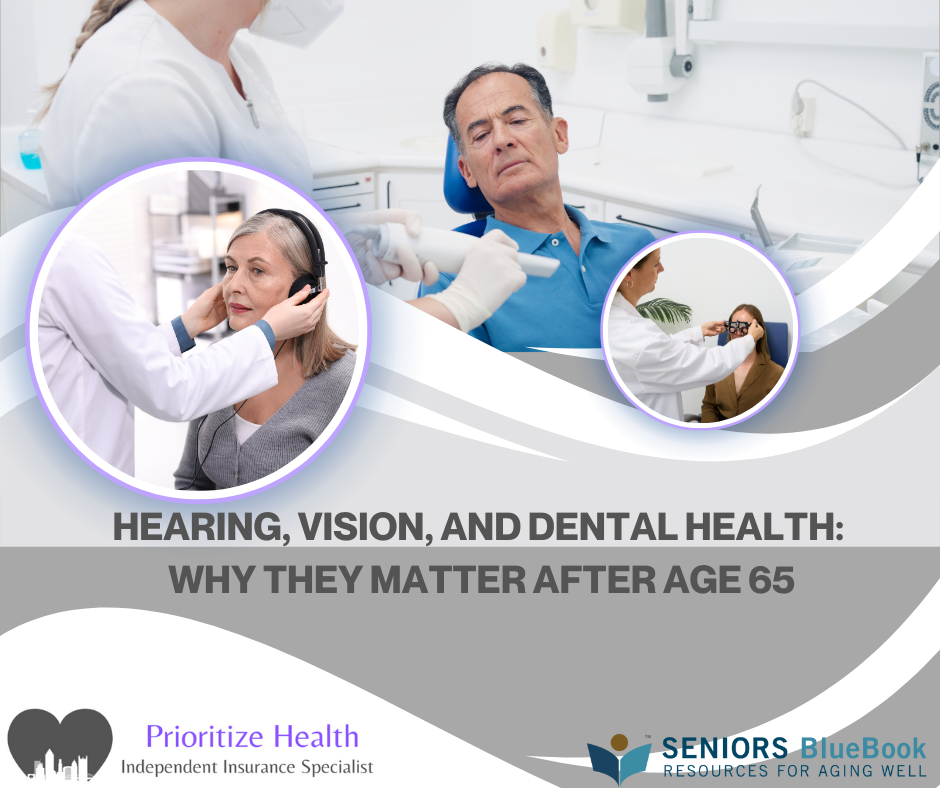
Hearing, Vision, and Dental Health: Why They Matter After Age 65
PRIORITIZE HEALTH - Carleen Lachman, Independent Insurance Specialist
For more information about the author, click to view their website: https://www.prioritizehealthpa.com/
Feb 09, 2026
Pennsylvania - Greater Pittsburgh Area


Hearing, Vision, and Dental Health:
Why They Matter After Age 65
As we age, taking care of our hearing, vision, and dental
health becomes just as important as managing blood pressure, cholesterol, or
diabetes. These three areas of health play a major role in communication,
independence, safety, nutrition, and overall quality of life—yet they are often
overlooked. Staying proactive can help older adults remain active, confident,
and connected.
Hearing Health: Staying Connected and Safe
Hearing loss is common with aging, affecting nearly one in
three adults over 65. It often happens gradually, making it easy to miss early
warning signs.
Why hearing health matters
- Difficulty
hearing can lead to social isolation and withdrawal.
- Untreated
hearing loss has been linked to cognitive decline and increased risk of
falls.
- Hearing
clearly improves communication with family, friends, and healthcare
providers.
Signs of hearing changes
- Frequently
asking others to repeat themselves
- Turning
up the TV or radio louder than others prefer
- Trouble
hearing in crowded or noisy environments
- Ringing
in the ears
Tips for maintaining hearing health
- Have a
hearing test every 1–3 years, or sooner if changes are noticed.
- Protect
ears from loud noises when possible.
- Use
hearing aids or assistive devices if recommended—they can significantly
improve daily life.
Vision Health: Protecting Independence and Preventing Falls
Vision changes are also common with age and may include
difficulty reading, glare sensitivity, or trouble seeing at night. Conditions
such as cataracts, glaucoma, macular degeneration, and diabetic eye disease
become more common after age 65.
Why vision health matters
- Good
vision supports safe driving, reading, and daily activities.
- Poor
vision increases the risk of falls and injuries.
- Early
detection of eye disease can prevent vision loss.
Tips for maintaining vision health
- Schedule
a comprehensive eye exam at least once a year.
- Update
glasses or contact lens prescriptions as needed.
- Manage
chronic conditions like diabetes and high blood pressure, which can affect
eye health.
- Wear
sunglasses that block UV rays when outdoors.
Dental Health: More Than Just a Smile
Oral health plays a vital role in nutrition, speech, and
overall health. Gum disease, tooth decay, dry mouth, and tooth loss are more
common in older adults, especially for those taking multiple medications.
Why dental health matters
- Poor
oral health can make chewing difficult, affecting nutrition.
- Gum
disease has been linked to heart disease, diabetes, and infections.
- Dental
pain or missing teeth can impact confidence and social interaction.
Tips for maintaining dental health
- Brush
twice daily with fluoride toothpaste and floss once a day.
- Visit
the dentist at least once a year, even if you have dentures.
- Address
dry mouth with proper hydration and dental products if needed.
- Ensure
dentures fit properly to avoid sores or infections.
Taking a Whole-Health Approach
Hearing, vision, and dental care are essential parts of
healthy aging. Regular checkups, early treatment, and preventive care can help
adults 65 and older maintain independence, reduce health risks, and enjoy a
better quality of life.
If you or a loved one notices changes in hearing, vision, or oral health, don’t ignore them. A simple exam or adjustment can make a meaningful difference in daily comfort, safety, and well-being.
Other Articles You May Like
Better Hearing and Clearer Conversations in Foley, AL
Better Hearing and Clearer Conversations in Foley, ALA family dinner should be an opportunity to share stories, enjoy conversation, and spend meaningful time together. But for someone experiencing hearing loss, even a familiar gathering can become frustrating.Background conversations may blend together. A family member's voice may sound unclear. Someone sitting across the table may be difficult to understand, especially when several people speak at once.At first, these challenges may seem minor.An older adult might turn up the television, ask others to repeat themselves, or avoid telephone conversations. Over time, communication difficulties can begin affecting relationships, social activities, and everyday confidence.For older adults and families in Foley, Alabama, recognizing hearing changes and seeking professional assistance can help improve daily communication.Audiologists specialize in evaluating hearing, identifying hearing-related concerns, and recommending appropriate hearing healthcare solutions.Modern hearing care involves more than purchasing a hearing aid. It begins with understanding the type and degree of hearing loss, evaluating speech comprehension, and identifying technology that matches the person's lifestyle.Naro Audiology & Hearing Solutions Foley provides diagnostic hearing evaluations, hearing aid consultations, device selection and fitting, live speech mapping, hearing aid repairs, and other audiology services.Located on West Peachtree Avenue, the practice serves patients throughout Baldwin County and surrounding communities.For individuals who have noticed changes in their hearing, a professional evaluation can help clarify available options and support more comfortable communication.Understanding Hearing Loss in Older AdultsHearing loss can develop gradually or occur suddenly.Some individuals first notice difficulty understanding conversations in noisy environments. Others experience trouble hearing certain voices or sounds.Common Signs of Hearing LossThese may include:Frequently asking people to repeat themselvesIncreasing television volumeDifficulty understanding telephone conversationsTrouble following group discussionsHearing speech but struggling to understand wordsDifficulty recognizing higher-pitched soundsWithdrawing from conversationsMisunderstanding questions or instructionsExperiencing ringing or buzzing in the earsHearing loss does not affect everyone in the same way.The type, severity, and cause influence which treatments or hearing solutions may be appropriate.Why Hearing Changes Deserve Professional AttentionIt can be tempting to dismiss hearing difficulties as a normal part of getting older.However, not every hearing problem has the same cause.Age-Related Hearing LossPresbycusis is a common form of hearing loss associated with aging.It often develops gradually and affects the ability to hear certain sounds clearly.Noise ExposureLong-term exposure to loud machinery, music, recreational noise, or other sources can damage hearing.Earwax BuildupExcess earwax may interfere with hearing or hearing aid performance.Ear ConditionsInfections and other ear disorders may affect hearing.Medication EffectsCertain medications can damage hearing or contribute to auditory symptoms.Other Medical CausesSome hearing changes require evaluation by a physician or ear, nose, and throat specialist.Sudden Hearing LossSudden hearing loss, especially in one ear, should be treated as an urgent medical concern. Prompt medical evaluation is important because some causes require time-sensitive treatment.Naro Audiology & Hearing Solutions in FoleyNaro Audiology & Hearing Solutions is an Alabama audiology practice providing professional hearing healthcare for children, adults, and older adults.The practice serves patients in Foley, Fairhope, Bay Minette, Brewton, and surrounding communities.Its services focus on identifying hearing difficulties and recommending individualized solutions.Diagnostic Hearing EvaluationsNaro provides professional assessments to determine how well a patient hears different sounds and understands speech.Hearing Aid Evaluation and SelectionPatients can discuss available hearing aid styles, technology levels, features, and expected benefits.Hearing Aid FittingDevices are programmed according to the individual's hearing test results and listening needs.Live Speech MappingNaro offers a fitting method that uses real-time speech measurements to help evaluate and adjust hearing aid performance.Hearing Aid RepairsThe practice provides assistance when hearing aids require troubleshooting, adjustments, or repairs.Custom EarmoldsCustom earmolds can be made to fit the contours of an individual's ears.Hearing ProtectionNaro offers specialized hearing protection, including custom musician's earplugs.Additional Audiology ServicesThe practice also advertises earwax removal, tinnitus-related hearing evaluations, industrial screenings, and vestibular services.Its balance-related services are separate from the primary hearing aid focus of this article.Verified Contact InformationNaro Audiology & Hearing Solutions FoleyAddress: 149 West Peachtree Avenue, Foley, AL 36535Phone: 251-970-3277Fax: 251-970-3270Website: https://naroaudiology.com/Foley Location Information: https://naroaudiology.com/consumersguide-1-1Primary Category: Hearing-Audiologists / Hearing AidsCounty: Baldwin County, AlabamaOffice Hours: Commonly listed as Monday through Friday, 8:00 AM to 5:00 PM. Confirm current hours when scheduling.Services: Diagnostic audiological evaluations, hearing aid consultations, hearing aid fitting, live speech mapping, hearing aid repairs, custom earmolds, earwax removal, hearing protection, and related services.Contact Naro Audiology to confirm appointment availability, insurance participation, and current fees.What Happens During a Hearing Evaluation?A professional hearing evaluation involves more than determining whether someone can hear a sound.Audiologists examine different aspects of hearing to understand how well a person receives and interprets auditory information.Discussing Hearing ConcernsThe appointment may begin with questions about:When hearing difficulties beganWhether symptoms affect one or both earsDifficulty understanding conversationsExposure to loud noiseEar-related medical historyTinnitusExisting hearing aid useCommunication challengesExamining the EarsA hearing healthcare professional may examine the ear canal and visible structures to identify possible concerns.Hearing Threshold TestingThe patient listens to sounds at different frequencies and volumes.These results help identify the degree and pattern of hearing loss.Speech TestingNaro evaluates how well patients recognize and understand spoken words.Reviewing ResultsThe audiologist explains the findings and discusses appropriate next steps.Developing RecommendationsDepending on the results, recommendations may include hearing aids, further medical evaluation, monitoring, or other hearing-related services.Why Speech Understanding MattersHearing a sound is not the same as understanding speech.Someone may recognize that another person is talking but struggle to identify individual words.Conversations in Quiet EnvironmentsSpeech may be easier to understand when background noise is limited.Conversations in RestaurantsMultiple voices, music, and other sounds can make communication difficult.Telephone ConversationsThe absence of visual cues may make speech comprehension more challenging.Group DiscussionsFollowing several speakers may require additional listening effort.Speech TestingAudiologists use speech assessments to help determine how hearing difficulties affect everyday communication.Personalized RecommendationsThe results can help guide hearing aid selection and programming.Choosing the Right Hearing AidModern hearing aids come in different shapes, sizes, and technology levels.There is no single device that works best for everyone.Degree of Hearing LossSome devices are designed for mild hearing loss, while others can accommodate more significant difficulties.LifestyleA person who spends time in quiet environments may have different needs from someone who regularly attends social gatherings.DexteritySmall batteries, buttons, and maintenance tasks can be challenging for individuals with limited hand movement.ComfortThe physical fit of a hearing aid can influence whether it is worn consistently.ConnectivitySome hearing aids connect with smartphones and other compatible devices.BudgetTechnology, included services, and device features can affect overall cost.Professional EvaluationNaro Audiology provides consultations to help patients compare appropriate options.Understanding Common Hearing Aid StylesHearing aids are available in several styles.Each has advantages and considerations.Behind-the-Ear Hearing AidsA behind-the-ear device rests behind the outer ear and delivers amplified sound through an appropriate earpiece.Receiver-in-Canal Hearing AidsA small device sits behind the ear, with a receiver positioned in the ear canal.In-the-Ear Hearing AidsThese devices are custom-designed to fit within the outer ear.In-the-Canal Hearing AidsSmaller custom instruments fit partly inside the ear canal.Completely-in-Canal Hearing AidsThese devices are designed to fit more deeply within the ear canal.Invisible-in-Canal Hearing AidsCertain instruments are positioned discreetly within the canal.Choosing a StyleVisibility should not be the only consideration.Hearing requirements, ear anatomy, comfort, maintenance, and desired features are also important.Not every device is appropriate for every type of hearing loss.How Hearing Aids Are FittedSelecting a hearing aid is only one step in the process.Proper fitting and programming help determine how effectively the device supports communication.Reviewing Hearing Test ResultsThe hearing healthcare professional considers the patient's measured hearing needs.Programming the DeviceHearing aids are adjusted according to the audiological assessment.Evaluating ComfortThe physical fit should be comfortable and appropriate.Testing Listening PerformanceThe patient may listen to speech and other sounds during the fitting process.Making AdjustmentsThe audiologist may adjust device settings according to the fitting results and feedback.Learning Proper UsePatients should understand insertion, removal, cleaning, charging or batteries, and basic troubleshooting.Follow-Up CareAdditional adjustments may be useful as the patient becomes accustomed to amplified sound.Live Speech Mapping at Naro AudiologyOne specialized service offered by Naro Audiology is live speech mapping.This method uses small probe microphones to measure sound in the ear canal while the hearing aid is operating.What Is the Purpose?It helps the hearing healthcare professional evaluate how amplification is delivered.Why It MattersHearing aid settings should be based on individual hearing needs rather than relying only on default programming.Real-Time MeasurementsThe process allows the clinician to observe hearing aid performance using speech-related sounds.Patient FeedbackPatients may be able to provide immediate feedback about clarity and comfort.Family InvolvementNaro describes live speech mapping as a process that can help patients and family members understand fitting adjustments.Setting Appropriate ExpectationsLive speech mapping supports fitting, but it does not guarantee perfect hearing or eliminate every communication difficulty.Adjusting to New Hearing AidsHearing aids may require an adjustment period.Someone who has experienced gradual hearing loss may be surprised by the number of everyday sounds they begin noticing again.Start With Professional GuidanceFollow the audiologist's instructions about device use.Practice ListeningUse the devices in different appropriate environments.Expect DifferencesSome sounds may initially seem unfamiliar.Communicate ProblemsIf speech sounds distorted or the devices are uncomfortable, contact the audiologist.Attend Follow-Up VisitsProgramming changes may improve comfort and performance.Keep Expectations RealisticHearing aids improve access to sound but do not restore natural hearing or guarantee perfect understanding in noisy environments.Hearing Aid Maintenance and RepairsHearing aids are electronic devices exposed to moisture, earwax, and everyday wear.Routine maintenance can help support performance.CleaningFollow the manufacturer's instructions and professional guidance.Earwax ManagementExcess earwax can affect certain hearing aid components.Batteries and ChargingConfirm that devices are charged or have functioning batteries.Moisture ProtectionAvoid exposing hearing aids to conditions outside their recommended specifications.Proper StorageStore devices safely when they are not being worn.Professional RepairsNaro Audiology provides hearing aid repair services.Some problems may be resolved in the office, while others require manufacturer service.Why Hearing Healthcare Matters Locally in Baldwin CountyBaldwin County is home to older adults who enjoy family gatherings, community organizations, recreational activities, and retirement living.Clear communication helps people remain involved in many of these activities.Family ConversationsHearing difficulties can make family gatherings frustrating.Community ParticipationMeetings, group activities, and social events often involve multiple speakers.Healthcare AppointmentsUnderstanding healthcare instructions is important for managing medical needs.Telephone CommunicationSome older adults rely on telephone conversations to stay connected with relatives.Everyday SafetyRecognizing alarms, announcements, and other important sounds can support awareness.Independent LivingAppropriate hearing healthcare may help individuals communicate more comfortably in everyday situations.Hearing Loss and Social IsolationHearing difficulties can make conversations tiring or discouraging.Some individuals gradually avoid gatherings because they cannot follow discussions comfortably.Reduced ParticipationAn older adult may decline invitations to restaurants or social events.Communication FrustrationRepeated misunderstandings can affect relationships.Increased Listening EffortTrying to interpret unclear speech may require additional concentration.Family SupportRelatives can make communication easier by speaking clearly and reducing unnecessary background noise.Professional Hearing AssistanceAn audiological evaluation can help determine whether hearing aids or other communication strategies may be beneficial.Hearing treatment can support communication, but it does not guarantee prevention of depression, dementia, or other medical conditions.Practical Communication Tips for FamiliesProfessional hearing healthcare is important, but everyday communication habits also matter.Face the PersonVisual information can help with understanding.Speak ClearlyUse a natural, clear speaking style.Reduce Background NoiseTurn down televisions or other competing sounds during important conversations.Avoid ShoutingShouting may distort speech and make it harder to understand.Rephrase When NecessaryIf a sentence is misunderstood, try expressing the message differently.Check UnderstandingFor important information, confirm that the message was understood.Encourage EvaluationIf communication difficulties persist, schedule a professional hearing assessment.Understanding Hearing Aid Costs and InsuranceHearing aid expenses vary according to devices, technology, and included services.Naro Audiology does not publish a universal price for every device.Factors Affecting CostThese may include:Hearing aid technology levelDevice styleSpecial featuresCustom earmoldsFitting servicesFollow-up appointmentsWarranty termsRepairs and maintenanceMedicare CoverageOriginal Medicare generally does not cover routine hearing aids or the examinations performed solely to fit them.Certain diagnostic hearing and balance examinations may be covered when Medicare requirements are met.Medicare AdvantageSome Medicare Advantage plans include hearing benefits.Coverage varies by plan.Private InsuranceSome plans include hearing-related benefits or discounts.MedicaidCoverage depends on eligibility and applicable state program rules.FinancingNaro Audiology advertises CareCredit financing options.Request a Written EstimateAsk which services, follow-ups, warranties, and accessories are included in the quoted price.When Should Someone Schedule a Hearing Test?Not everyone needs hearing aids, but certain symptoms should prompt evaluation.Difficulty Following ConversationsRepeatedly misunderstanding speech may suggest a hearing concern.Increased Television VolumeFrequent volume adjustments may indicate changing hearing ability.TinnitusPersistent ringing or buzzing deserves assessment.Changes in One EarAsymmetric hearing difficulties may require medical follow-up.Hearing Aid ProblemsExisting users may need updated testing or adjustments.Sudden SymptomsSudden hearing loss requires urgent medical evaluation.An audiologist can help identify the appropriate next steps for many hearing-related concerns.Expert Tip for Choosing Hearing AidsExpert Tip: Before a hearing aid consultation, write down three situations where you have the most difficulty understanding speech.Examples might include family dinners, telephone calls, or conversations in restaurants.Share these situations with the audiologist during your evaluation.This helps the clinician understand your communication goals and discuss hearing aid technology and fitting options that match your lifestyle.How to Get Started With Naro Audiology & Hearing Solutions FoleyStep 1: Identify Hearing ConcernsMake a list of situations where communication has become difficult.Step 2: Contact Naro AudiologyCall 251-970-3277.Step 3: Schedule a Hearing EvaluationAsk about diagnostic testing and any necessary referral or insurance requirements.Step 4: Complete the AssessmentThe audiologist evaluates hearing thresholds and speech understanding.Step 5: Review the ResultsDiscuss the type and degree of hearing loss.Step 6: Explore Treatment OptionsAsk whether hearing aids, medical evaluation, hearing protection, or other services are appropriate.Step 7: Discuss Device CostsReview pricing, insurance benefits, financing, follow-up services, and warranty terms.Step 8: Arrange Fitting and Follow-UpIf hearing aids are selected, schedule appropriate fitting and adjustment appointments.Frequently Asked Questions About Audiology in Foley1. What services does Naro Audiology & Hearing Solutions provide in Foley?Naro Audiology offers diagnostic hearing evaluations, hearing aid consultations, hearing aid fitting, live speech mapping, hearing aid repairs, custom earmolds, earwax removal, and additional audiology services.2. Where is Naro Audiology & Hearing Solutions Foley located?The Foley office is located at 149 West Peachtree Avenue, Foley, AL 36535. The telephone number is 251-970-3277.3. Does Naro Audiology help patients choose hearing aids?Yes. The practice provides hearing aid evaluation, selection, dispensing, and fitting. Patients can discuss device styles, technology, comfort, and communication needs.4. What is live speech mapping?Live speech mapping is a professional hearing aid fitting method that measures sound in the ear canal during amplification. It helps clinicians assess and adjust device settings according to individual hearing needs.5. Does insurance cover hearing evaluations or hearing aids?Coverage depends on the insurance plan and service. Original Medicare generally does not cover routine hearing aids, while some Medicare Advantage or private insurance plans may offer hearing benefits. Naro states that it accepts many insurance plans and offers financing options. Patients should confirm current eligibility and costs before treatment.Reconnect With Everyday Conversations Through Better HearingClear communication plays an important role in relationships, healthcare, independence, and everyday enjoyment.When hearing loss begins interfering with conversations, seeking professional evaluation can help clarify what is happening and which solutions may be appropriate.Hearing healthcare involves more than choosing a device.It includes diagnostic testing, understanding speech comprehension, selecting appropriate technology, personalized fitting, and ongoing support.For residents of Foley and surrounding Baldwin County communities, Naro Audiology & Hearing Solutions provides audiology services focused on individualized hearing needs.Its offerings include hearing evaluations, hearing aid selection and fitting, live speech mapping, repairs, and preventive hearing services.Whether you are scheduling your first hearing test or considering updated hearing aid technology, a professional consultation can help you explore appropriate options.Contact Naro Audiology & Hearing Solutions Foley to discuss your hearing concerns and request an appointment.Featured Seniors Blue Book ListingNaro Audiology & Hearing Solutions FoleyRecommended Main SBB Category: Hearing-Audiologists / Hearing AidsCompany: Naro Audiology & Hearing SolutionsAddress: 149 West Peachtree Avenue, Foley, AL 36535County: Baldwin County, AlabamaPhone: 251-970-3277Fax: 251-970-3270Website: https://naroaudiology.com/Services: Diagnostic hearing evaluations, speech understanding assessments, hearing aid evaluation and selection, hearing aid dispensing and fitting, live speech mapping, hearing aid repairs, custom earmolds, earwax removal, hearing protection, and other audiological services.Additional Specialty: Vestibular services for dizziness and balance concerns.Hearing Technology: Various digital hearing aid styles and technology levels selected according to individual needs.Insurance: Many insurance plans accepted; verify plan-specific coverage.Financing: CareCredit financing advertised, subject to eligibility.Office Hours: Generally Monday through Friday, 8:00 AM to 5:00 PM. Confirm directly.Appointments: Contact the Foley office for scheduling and current evaluation fees.Seniors Blue Book Business Profile: https://seniorsbluebook.com/senior-resources/naro-audiology-hearing-solutions-foleyFind Naro Audiology on Seniors Blue BookLooking for an audiologist or hearing aids in Foley, Alabama?Explore Naro Audiology & Hearing Solutions Foley through its dedicated Seniors Blue Book listing.Learn about diagnostic hearing evaluations, hearing aid fittings, hearing technology, and personalized audiology services.Contact Naro Audiology to schedule a hearing consultation and explore options for clearer everyday communication.
Top 3 Vision Services in Mobile, AL
When reading becomes tiring, faces seem less clear, or glare makes familiar activities harder, it can be difficult to know where to begin. An older adult may need an updated prescription, an eye health evaluation, or follow-up for an existing condition. The first step is finding an office that can arrange the right appointment.This guide compares three featured Premier Medical Group locations offering vision services in Mobile, AL: East, Providence, and West. They are offices within the same practice. Top 3 identifies the featured listings in this guide rather than a ranking of clinical quality or individual doctors.The most useful choice depends on the reason for your visit, clinician availability, insurance, and the location you can reach comfortably. Use this guide to prepare questions and confirm the details before scheduling.Why an examination matters as people ageThe National Eye Institute explains that regular comprehensive dilated eye exams can help detect age-related eye diseases early. Some eye conditions may develop before a person notices a significant change in sight. Ask your eye-care professional how often you should be examined based on your health and history. Tell the clinician about difficulties with reading, steps, recognizing faces, or other daily tasks. Include any existing eye diagnoses, diabetes, prior eye procedures, and family history when preparing for the visit.Changes that need immediate attentionA sudden increase in floaters, flashes of light, or a curtain-like shadow across vision can be symptoms of retinal detachment. The National Eye Institute advises seeing an eye doctor or going to an emergency room right away for these symptoms. Do not wait for a routine appointment. For other new symptoms, describe what changed and when it started so the office can advise on appropriate timing. Premier Medical Group-EastPhone: 251-473-1900Address: 2880 Dauphin Street, Mobile, AL 36606The East location page lists both MD and OD eye-care professionals. Listed clinicians include Mark J. Douglas, MD; Richard J. Duffey, MD; John H. Friend IV, MD; and Gregory R. Jackson, OD, among others. Confirm current schedules directly. Premier's East clinician directory describes retinal care associated with Dr. Douglas, cataract and corneal services associated with Dr. Duffey, and primary eye care and low-vision evaluation associated with Dr. Jackson. These published profiles can help you ask for the appropriate consultation, but they are not a substitute for individual assessment. If an existing diagnosis prompted the visit, tell scheduling staff its name and ask which records should be sent in advance. If the main concern is difficulty with daily activities, explain those effects rather than trying to select a procedure yourself.Questions for the East officeWhich clinician should evaluate my concern?Should I use the dedicated eye appointment line for follow-up?Do you need previous examination records or imaging before my visit?Will the consultation and any recommended testing be at this address?What should I expect regarding preparation, visit length, and costs? Premier Medical Group-ProvidencePhone: 251-635-0919Location: 610 Providence Park Drive, Building 1, Suite 101, Mobile, AL 36695The practice has a separate ENT office at the Providence location. When arranging vision care, confirm Building 1, Suite 101 in your appointment instructions. Sharing the complete address with a driver or caregiver can prevent an unnecessary trip between buildings.An office with ophthalmology and optometry listingsThe Providence page lists eye doctors including Stuart R. Ball, MD; John H. Friend IV, MD; Charles F. Jones, MD; Alinda Guynes McGowin, MD; and Edmond Wright, MD. Its published roster also includes optometrists Ronni Ferris-Metzger, OD; Jeffery A. Morrow, OD; and Timothy B. White, OD. Verify clinician availability before making plans. Ask the team to help match the appointment to your concern. A routine prescription question, a new symptom, and follow-up for a known eye condition may require different scheduling arrangements.If you receive care from another Premier office, ask whether records are available to the Providence team and where follow-up should occur. Do not assume the same clinician, equipment, or appointment type is available at every location.Questions for the Providence eye officeWhich doctor is available for the type of visit I need?Can the recommended evaluation be completed at the Providence eye office?What entrance and parking arrangements should I use?Should prior records be transferred before the appointment?Will follow-up visits be here or at another office?Premier Medical Group-WestPhone: 251-341-3300 Location: 3701 Dauphin Street, Mobile, AL 36608The West office's eye-care roster includes Ronni Ferris-Metzger, OD; Curtis M. Graf, Jr., MD; Charles S. Mosteller, MD; Matthew W. Mosteller, MD; C. Drew Salisbury, MD; Andrew P. Terry, MD; Christopher J. Walton, MD; and Edmond Wright, MD. Ask which clinician evaluates your concern and whether that clinician is accepting new patients. For an older adult managing ongoing care, ask how frequently follow-up is expected and whether visits can remain at West. If a different location is recommended, request a clear explanation of where to go and what will happen there.Premier also offers ENT care, but an eye-care appointment does not automatically include evaluation of hearing or balance concerns. Mention overlapping symptoms and ask how the treating clinician would coordinate any additional assessment.Questions for the West officeWhich eye-care clinician is appropriate for my symptoms or diagnosis?Is a referral required before scheduling?Can I continue follow-up with the same clinician at West?Who will explain any test results and next steps?Which number should I use if I have a question after the visit? Why Vision Care Access Matters LocallyMobile families may need to coordinate a ride, caregiver availability, or time away from work for an examination. Compare the trip to each office with the patient and the person providing transportation. Ask about accessible entry and check-in assistance when needed.If the visit may include dilation, ask about temporary effects on vision and whether to arrange a driver. The National Eye Institute notes that dilation can cause blurred vision and sensitivity to light for several hours. Local access also matters after the first appointment. Clarify how results will be communicated, where follow-up will occur, and who handles questions between visits. A complete plan helps when several healthcare professionals are involved. How to Get StartedDescribe the reason for the visitChoose the appropriate scheduling contactCheck benefits for the actual visitConfirm preparation and transportationKeep the follow-up instructions Practical tip: Bring a short list of three vision tasks that have become harder. Examples such as reading medication labels or seeing steps can help the clinician understand your priorities.
Hearing-Audiologists / Hearing Aids in Foley, AL
When conversations become harder to follow, people often adapt before they seek help. They turn up the television, choose quieter tables, or let someone else handle phone calls. Those changes can be easy for a family to notice but difficult to discuss without making the person feel pressured.Hearing-audiologists and hearing aids in Foley, AL offer a place to begin with an evaluation and a conversation about communication needs. The first step is understanding the hearing concern before deciding whether a device is appropriate.What audiology and hearing aid services involveAudiologists assess hearing and help identify suitable next steps. An evaluation may clarify the type and extent of hearing difficulty and how speech is understood. Naros diagnostic information emphasizes testing before considering hearing aids or other treatment. A hearing aid discussion should connect the findings with everyday priorities. The goal might be following family conversations, using a phone, or hearing more comfortably during meetings. Different needs call for an individualized discussion rather than a single preferred model for everyone.Begin with the situations that matterBefore the appointment, list several examples of difficult listening situations. Note whether the concern involves one ear, both ears, background noise, or particular settings.If the patient wants a relative involved, ask what support would be useful. A companion can help remember questions, but the person receiving care should remain central to the discussion and decisions. Naro Audiology & Hearing Solutions serving FoleyPhone: 251-970-3277Address: 149 West Peachtree Avenue, Foley, AlabamaDiagnostic hearing evaluationsNaro describes hearing evaluation by an audiologist, using a combination of tests to assess hearing capability and speech detection and understanding. Its preparation information asks patients to discuss noise exposure, tinnitus, balance concerns, and medications and supplements. Ask which tests are planned and how the results will be explained. If a medical referral is recommended, clarify why and how it fits with the next step. An evaluation is not a commitment to buy hearing aids.Hearing aid selection and fittingAsk how a recommended device fits the test results, the persons listening goals, and their ability to manage it. Discuss comfort, controls, charging or batteries, phone compatibility, and the situations where limitations may remain.If live speech mapping is proposed, ask how it will be used to review the fitting. Request a clear explanation of what verification and follow-up are included rather than comparing devices only by a feature list.Follow-up and practical supportThe practices main website describes training in hearing aid use and care, accessories, assistive listening devices, and communication counseling. Discuss how follow-up appointments are arranged and whom to contact if a device is uncomfortable or not working as expected. Ask about cleaning, repairs, warranties, and any services billed separately.A useful fitting plan should explain how the patient will learn to use the device and how concerns will be addressed over time. Write down the instructions and ask to practice important tasks before leaving.Compare costs and service terms clearlyBefore making a purchase, request a written explanation of the proposed device and service package. Ask which charges relate to evaluation, equipment, fitting, verification, follow-up, and later maintenance.Questions to review include:What is included in the quoted price?What trial, return, or adjustment terms apply?Are there fees that remain if a device is returned?Which warranty and repair arrangements apply?How are future appointments charged?What does the patients specific insurance plan cover?Check benefits with the insurer as well as the practice. Do not assume that coverage for a diagnostic hearing evaluation means coverage for a hearing aid purchase.Why hearing care matters locally in FoleyFor older adults in Foley, listening goals often involve ordinary community life: visiting family, participating in worship, talking during meals, or managing appointments. Bring those examples to the consultation so recommendations connect with the persons actual day.Follow-up convenience also matters. Someone traveling from Gulf Shores, Robertsdale, or another Baldwin County community should ask how many visits are anticipated and whether service is available at the preferred office.If a caregiver helps manage appointments or technology, discuss that role. The plan should remain usable when the patient returns home, including knowing where supplies and instructions are kept and whom to call for help.How to get started1. Write down the listening situations that are most difficult.2. Call Naro at 251-970-3277 to request the appropriate Foley evaluation.3. Ask about referral requirements, preparation, and insurance.4. Bring requested records, medication information, and existing hearing devices.5. Review the findings before discussing suitable options.6. If choosing a hearing aid, obtain the service and financial terms in writing and schedule follow-up.Practical tip: Bring an existing hearing aid even if it is not being used. Explain what made it difficult to use so the clinician can consider those concerns.Frequently asked questionsDoes Naro offer diagnostic hearing testing?Yes. Its official website describes evaluations conducted by an audiologist. Does an appointment require buying hearing aids?An evaluation is intended to assess hearing and discuss appropriate next steps. Ask about any separate consultation or device charges before proceeding.Are repairs and adjustments described?Yes. The Foley profile lists both. Confirm current terms and which devices the office can service. Can the practice help with device use?Naro describes fitting, use-and-care training, and communication support. Ask what is included in the proposed plan. Related categoriesDizziness and Balance Testing in FoleyEar Nose and Throat Physicians Assistive Devices and Communication Resources
Local Services By This Author

Prioritize Health - Carleen Lachman, Independent Insurance Specialist
Medicare/Medicaid/Insurance , , Pennsylvania,Medicare can be confusing. Do you have questions about Medicare? I provide personalized consultation and guidance for your Medicare coverage needs. Contact me today for a FREE one-on-one consultation.As an experienced Medicare broker, I'm here to simplify the complex world of Medicare and help you find the perfect coverage for your unique needs. With so many plans available, Medicare can be overwhelming. That's where I come in. I offer personalized guidance to:- Analyze your healthcare needs and budget- Compare plans for multiple insurance carriers- Explain coverage options in plain language- Find potential cost savings opportunities- Assist with enrollment and paperwork Best of all, my services come at no cost to you. I am paid by the insurance companies, not by you. Why work with me?- Save time and reduce stress by having an expert do the research for you- Gain confidence that you are making informed decisions about your healthcare- Access ongoing support for questions or issues that may arise- Stay up-to-date on Medicare changes that could affect your coverageLet's work together to find the best Medicare plan that gives you peace of mind and comprehensive coverage. Call me today!