How a Safer Home Setup Helps Westminster Seniors Stay Independent Longer
Savvy Resources
For more information about the author, click to view their website: Savvy Resources
Jan 13, 2026
Colorado - Boulder County , Colorado - Northern Colorado


How a Safer Home Setup Helps Westminster Seniors Stay Independent Longer
For many older adults in Westminster, “home” is more than an address—it’s comfort, familiarity, and independence. It’s the kitchen where they know where everything is, the hallway they’ve walked a thousand times, the favorite chair by the window. But as mobility, vision, or memory changes, the very home that once felt effortless can quietly become risky. Clutter builds up. Pathways narrow. Stairs feel steeper. Cabinets become harder to reach. And suddenly, daily routines feel like obstacles.
The good news: you don’t always need a major remodel to make a home safer.
Savvy Resources provides move management and organizing services in Westminster, helping seniors and families create a home environment that supports aging in place. Thoughtful organization can reduce falls, lower stress, and make everyday life smoother—often with simple, practical changes.
Why Home Organization Is a Senior Safety Strategy
When people hear “organizing,” they often think of aesthetics. But for seniors, organization is deeply connected to safety and independence. Many falls happen because of:
-
Items left on stairs or in walkways
-
Rugs that shift or curl at the edges
-
Cluttered rooms that force awkward navigation
-
Poor lighting or blocked switches
-
Reaching too high or bending too low to access essentials
-
Overstuffed closets that cause trips or strain
A home that is organized for safety makes daily movement easier—and reduces the risk of accidents that can lead to hospital stays or sudden care transitions.
The “Flow” Test: Can You Move Through the Home Easily?
A simple way to evaluate an aging-in-place setup is to walk through the home and ask:
-
Can a walker or cane pass easily through hallways?
-
Are there clear pathways between bedroom, bathroom, and kitchen?
-
Are commonly used items stored within easy reach?
-
Are there obstacles that require stepping around or squeezing through?
-
Is the bathroom setup safe for daily use?
If movement feels tight or complicated, the home is signaling a need for safer flow.
Organizing for Mobility: The Three High-Risk Zones
Most aging-in-place safety work starts with three areas: entryways, bathrooms, and kitchens.
1) Entryway
-
Clear shoes, bags, and mail piles away from walk paths
-
Add a simple landing zone (bench, hooks, tray)
-
Improve lighting and reduce tripping hazards near the door
2) Bathroom
-
Remove unnecessary items from floors and tub edges
-
Store daily toiletries within easy reach
-
Reduce bending and reaching
-
Keep towels and essentials in predictable spots
3) Kitchen
-
Move daily-use items to waist-to-shoulder height
-
Reduce heavy lifting from low cabinets
-
Create clear countertop space for safe meal prep
-
Organize pantry for visibility (so food doesn’t “disappear” and expire)
These changes aren’t glamorous—but they reduce stress and prevent accidents.
Memory-Friendly Organizing: Helping Seniors Feel Oriented
For seniors experiencing early memory changes, organizing isn’t about “perfect.” It’s about predictability. A consistent home setup reduces anxiety and supports independence.
Memory-friendly organizing strategies can include:
-
Keeping commonly used items in the same location
-
Using open bins or clear containers for visibility
-
Creating simple “zones” (coffee station, mail station, medication station)
-
Reducing duplicates that cause confusion (“Which one do I use?”)
-
Limiting clutter that makes rooms feel visually overwhelming
The goal is to make the home feel easier to navigate—and easier to remember.
The Emotional Side: Decluttering Without Feeling “Erased”
Downsizing and decluttering can feel like losing pieces of identity, especially for older adults who have collected items over a lifetime. A respectful organizing process honors that.
A supportive approach often looks like:
-
Starting with low-emotion categories first (expired pantry items, old towels)
-
Keeping meaningful items while reducing excess
-
Creating “memory displays” for photos or keepsakes rather than storing everything
-
Involving seniors in decisions at a comfortable pace
-
Avoiding rushed, high-pressure sorting sessions
Organization should feel empowering—not like someone is taking over.
A Local Perspective: Organizing That Supports Independence
Liz Austen, who works closely with families supported by Savvy Resources, often emphasizes that the goal is safety and ease—not perfection:
“A safer home is a calmer home. When we organize with aging in place in mind, seniors can move more confidently through their routines—and families worry less.”
That confidence is key. Seniors often feel more independent when they know the home is set up to support them.
A Simple “Aging-in-Place Reset” Checklist
If you’re helping a loved one in Westminster, here are quick, high-impact changes:
-
Clear pathways in bedroom → bathroom → kitchen
-
Remove loose rugs or secure them firmly
-
Place a nightlight in hallways/bathroom route
-
Move daily-use items to easy-reach shelves
-
Create a single “drop zone” for keys/mail/glasses
-
Reduce clutter on stairs and near doorways
-
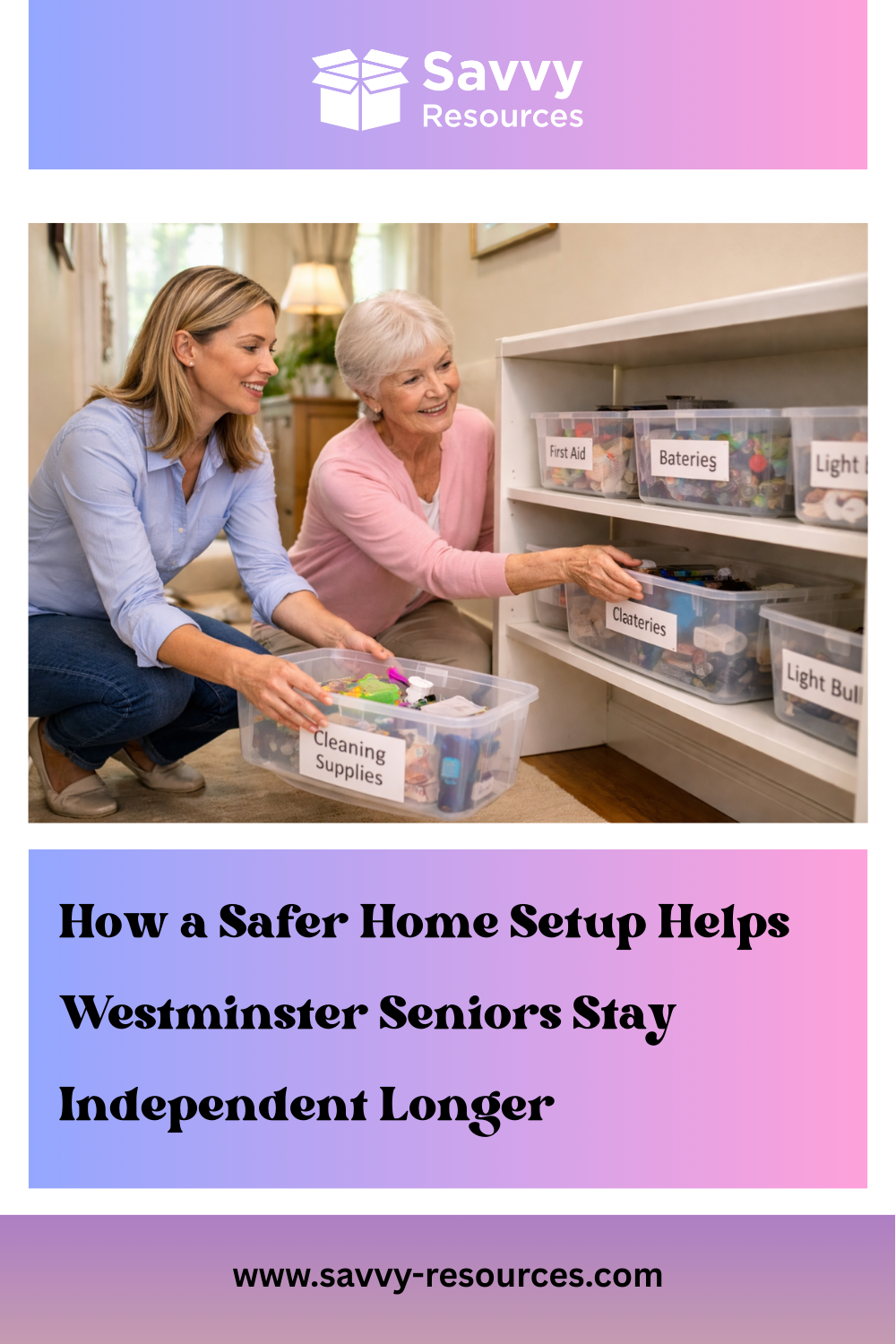
Use bins to group categories (batteries, first aid, cleaning supplies)
-
Label storage areas lightly if helpful (without overwhelming signage)
These small changes often reduce accidents and stress immediately.
FAQs: Organizing and Aging in Place in Westminster
1) Do seniors need to get rid of everything to be safer?
No. The goal is safe flow and easy access to essentials—not eliminating meaningful belongings.
2) What areas should we organize first?
Start with entryways, bathrooms, and kitchens—these are high-risk zones for falls and daily stress.
3) Can organizing help someone with early dementia?
It can help by creating predictable zones, reducing clutter, and improving visibility of essentials.
4) How can families avoid conflict during decluttering?
Work in small zones, avoid pressure, respect emotional attachment, and consider professional support for neutral guidance.
5) Is organizing part of fall prevention?
Yes. Clear pathways, reduced clutter, and easier access to essentials can significantly reduce fall risk.
A Safer Home Can Mean More Years at Home
Aging in place often comes down to practical details: clear pathways, accessible storage, and routines that feel easy instead of exhausting. With thoughtful organizing and home setup support, Westminster seniors can stay independent longer—and families can feel more confident about safety.
To learn more about organizing and move-management support through Savvy Resources, visit their Seniors Blue Book listing and connect with a trusted Westminster resource.
Other Articles You May Like
Medicare/Medicaid/Insurance in Lafayette, CO
When an older adult needs help at home and sees several clinicians, a coverage decision can affect everything from prescription refills to rides. If youre considering TRU PACE in Lafayette, start by asking how enrollment would change the care and coverage you already use. How Medicare and Medicaid Fit Into PACEPACE is the Program of All-Inclusive Care for the Elderly. It coordinates healthcare and support for eligible adults who meet a state standard for nursing home-level care and can live safely in the community with PACE support at enrollment. Applicants must also be 55 or older and live in the programs service area. TRU PACE and Your Current CoveragePhone: 303-665-0115Medicare says people with Medicaid pay no monthly PACE premium. Medicare beneficiaries without Medicaid pay premiums for the long-term care portion and Medicare Part D drugs. Medicare also says participants owe no deductible, copayment, or coinsurance for drugs, services, or care approved by their PACE team. Ask TRU PACE for an estimate based on your individual coverage before enrolling. Doctors, Prescriptions, and Existing ServicesTRU PACE says it becomes the participants insurance provider at enrollment. Participants generally receive care through the programs provider network. Bring a list of your doctors, medications, and scheduled services. Ask which providers are in the network and how the team would coordinate any changes. Why This Matters in LafayetteIf you regularly see a clinician near home or have a specialist visit scheduled outside Lafayette, give the enrollment team the names and dates. Ask which appointments can continue and what to do about any refill due around the enrollment date. How to Get Started1. Gather Your Coverage InformationHave your Medicare and Medicaid information, if applicable, along with details of any current plan. List the appointments and prescriptions you rely on most.2. Ask for an Enrollment and Cost ReviewCall TRU PACE and ask for your expected monthly cost, when any coverage change would take effect, and who would help coordinate the transition. Related Seniors Blue Book CategoriesPACE Adult Day Services Care Management
Funeral Cremation & Mortuary Services in Lafayette, CO
After a death, families may have to make several decisions in a short time. Others prefer to talk through their wishes ahead of time. In either situation, it helps to separate the practical arrangements from the decisions about how to gather, remember, and say goodbye. What Funeral and Mortuary Services CoverA funeral home can help arrange transportation and care of the person who died, assist with paperwork, and coordinate burial or cremation. A family may also arrange a viewing, funeral, memorial, or private gathering. Ask which decisions need to be made immediately and which can wait. The Natural Funeral in LafayettePhone: 720-515-2344The Natural Funeral lists natural burial, flame cremation, water cremation, and terramation, also called natural organic reduction. Water cremation uses an alkaline water process, and terramation transforms remains into soil. If one of these options interests you, ask what the process involves, how long it typically takes, and what the family receives afterward. Planning a Gathering and Reviewing CostsThe Lafayette funeral home is at 102 W Chester Street in Old Town. Ask what can take place at the Lafayette location and which parts would involve another venue or a cemetery. Request a General Price List and a written breakdown of your choices so you can see which fees cover the funeral homes work and which come from outside providers. Why This Matters in LafayetteIf relatives are coming from out of town or some guests have limited mobility, ask about parking, step-free access, and how many people the gathering space can accommodate. If you plan to hold a service and burial at different locations, check how much time guests will need between them. How to Get Started1. Write Down the Persons WishesLook for written instructions and note any cultural or religious preferences. If youre planning ahead, tell a trusted person where you keep your instructions and whom to call.2. Ask for a Written PlanCall 720-515-2344 and ask what is needed on the first call. Once youve discussed options, request the expected timeline and itemized costs before approving arrangements. Related Seniors Blue Book CategoriesCounseling Hospice Advance Care Planning
Adult Day Services in Lafayette, CO
When an older adult spends most weekdays alone, families may need more than a place for them to go. They may also be juggling transportation, appointments, and help at home. TRU PACE in Lafayette offers a day center as part of a program that coordinates those needs for eligible older adults. What Are Adult Day Services?Adult day services offer daytime support outside the home. Depending on the program, participants may spend time with peers, eat a meal, take part in activities, or receive help with daily needs. Some centers accept people directly. The Lafayette TRU PACE center serves people enrolled in its broader Program of All-Inclusive Care for the Elderly. TRU PACE in LafayettePhone: 303-665-0115TRU PACEs Lafayette center is at 2593 Park Lane. The program coordinates medical and social services and arranges transportation to the day center and medical visits as needed. Ask the enrollment team what a typical center day includes, how often a participant might attend, and how the team decides what support to arrange at home. Who May QualifyPACE applicants must be at least 55, live in the programs service area, meet the states standard for nursing home-level care, and be able to live safely in the community with PACE support at enrollment. Ask how enrollment would affect access to current doctors and prescription coverage before making a decision. Why This Matters in LafayetteWhen family members already drive someone to several appointments a week, a coordinated schedule can change who needs to be available and when. Ask how pickup would work at the persons Lafayette address and who to call if a ride or appointment changes. How to Get Started1. Ask for an Eligibility ReviewCall TRU PACE. Have the participants ZIP code, current coverage, and a short list of the help they need. 2. Ask to Visit the CenterFind out what the participant might do on a center day, how transportation works, and what changes to their current care arrangements enrollment would involve. Related Seniors Blue Book CategoriesCare Management Transportation Respite Care