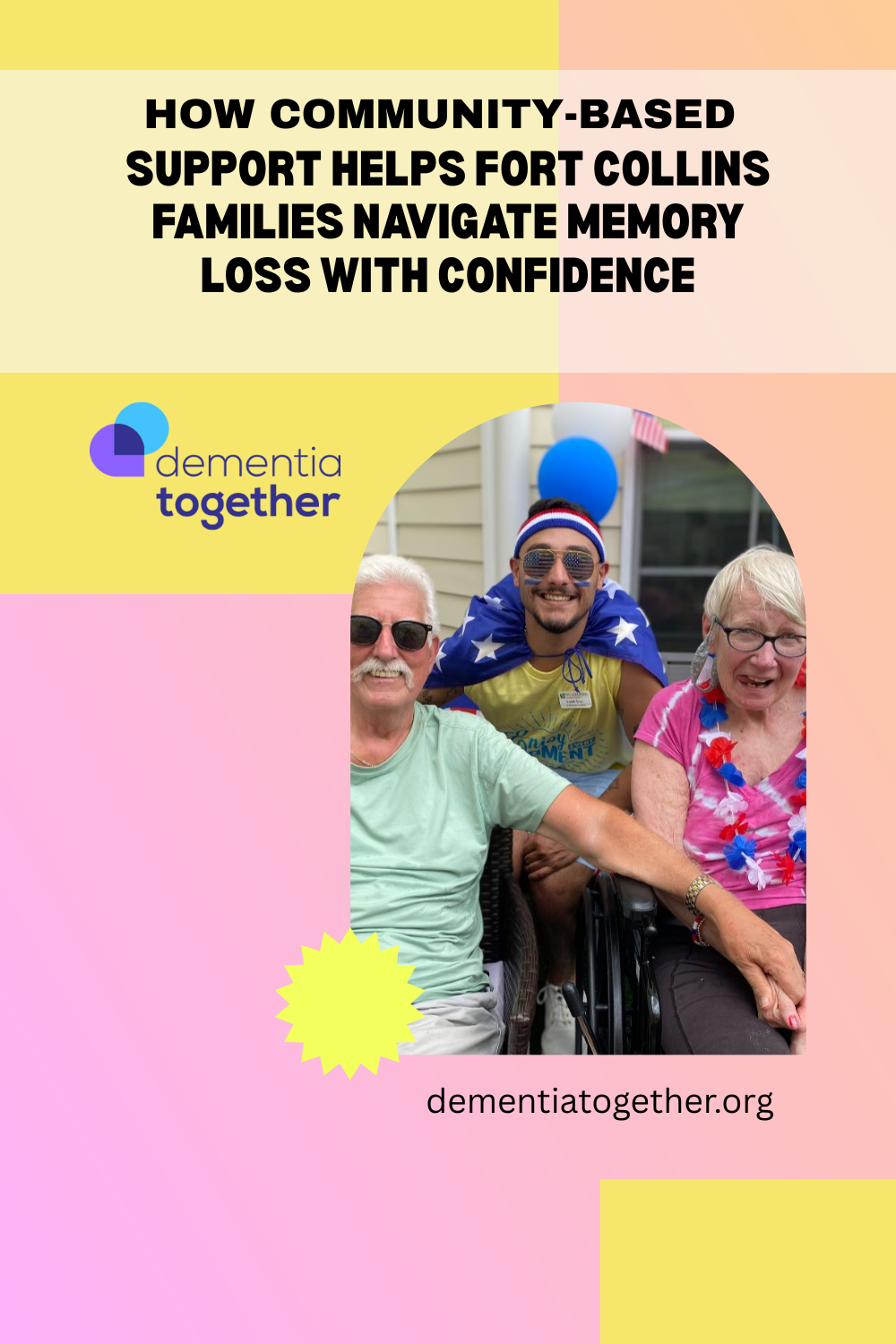
How Community-Based Support Helps Fort Collins Families Navigate Memory Loss with Confidence
Dementia Together
For more information about the author, click to view their website: Dementia Together
Jan 12, 2026
Colorado - Northern Colorado


How Community-Based Support Helps Fort Collins Families Navigate Memory Loss with Confidence
In Fort Collins, Northern Colorado, community is a way of life. From neighborhood gatherings in Old Town to quiet walks along the Poudre River Trail, connection matters—especially for families facing the challenges of dementia. When memory loss enters the picture, it can feel isolating, confusing, and overwhelming for both individuals and those who love them.
That’s where Dementia Together plays a powerful role. Through education, support, and community connection, Dementia Together helps Fort Collins families understand dementia, reduce fear, and build confidence—so no one has to navigate the journey alone.
Understanding Dementia Beyond the Diagnosis
Dementia is not a single disease but a broad term describing conditions that affect memory, thinking, communication, and daily functioning. Alzheimer’s disease is the most common type, but many families are surprised to learn how varied dementia experiences can be.
Beyond medical symptoms, dementia affects:
-
Relationships and family dynamics
-
Emotional well-being
-
Communication and behavior
-
Caregiver stress and burnout
Education and support are essential—not just for those living with dementia, but for caregivers, friends, and the broader community.
Why Community Support Is Essential in Fort Collins
Fort Collins has a growing population of older adults, many of whom value independence, outdoor activity, and staying socially connected. Dementia can quietly disrupt those connections, leading to isolation if support isn’t readily available.
Community-based dementia programs help by:
-
Creating safe spaces for connection
-
Reducing stigma around memory loss
-
Offering practical tools for daily challenges
-
Supporting caregivers before burnout occurs
Dementia Together focuses on meeting families where they are, emotionally and practically.
Education That Empowers Families
One of the greatest fears families face is not knowing what comes next. Dementia Together provides education that replaces uncertainty with understanding.
Educational programs often address:
-
What dementia is (and isn’t)
-
How dementia progresses
-
Communication strategies that reduce frustration
-
Behavior changes and how to respond compassionately
-
Planning for future care needs
“Knowledge changes everything,” says Claire Richardson of Dementia Together. “When families understand dementia, fear decreases and compassion increases—for their loved one and for themselves.”
Education empowers families to respond thoughtfully rather than react out of stress.
Support Groups That Reduce Isolation
Caregiving can be deeply meaningful—but also emotionally exhausting. Many caregivers feel they must “hold it together” alone. Dementia Together creates supportive environments where caregivers can connect with others who truly understand.
Support groups offer:
-
Emotional validation
-
Practical advice from peers
-
A safe place to share challenges
-
Relief from isolation
For many Fort Collins caregivers, these connections become lifelines.
Programs That Foster Connection and Dignity
Dementia Together emphasizes strengths, not just losses. Programs are designed to support remaining abilities, encourage engagement, and honor dignity.
Community-centered programs may include:
-
Memory cafés or social gatherings
-
Educational workshops
-
Care partner activities
-
Community awareness events
These initiatives help individuals with dementia remain active participants in their communities.
Supporting the Whole Care Network
Dementia doesn’t affect just one person—it affects families, friends, and caregivers. Dementia Together supports the entire care network by:
-
Providing guidance during transitions
-
Encouraging self-care for caregivers
-
Connecting families to local resources
-
Promoting realistic expectations
This holistic approach strengthens long-term resilience.
Reducing Stigma Through Awareness
Misunderstanding dementia often leads to stigma and withdrawal. Dementia Together actively works to educate the broader community—helping neighbors, businesses, and organizations become more dementia-aware.
Greater awareness leads to:
-
Increased patience and empathy
-
Safer, more inclusive public spaces
-
Stronger community support systems
Fort Collins becomes a more compassionate place for everyone.
Planning Ahead with Confidence
Early education and support allow families to plan thoughtfully rather than react in crisis. Dementia Together encourages proactive conversations about:
-
Legal and financial planning
-
Care preferences
-
Safety and supervision
-
Community resources
Planning ahead preserves choice and dignity.
When Should Families Seek Dementia Support?
Dementia support is helpful at any stage—not just when symptoms become severe. Families may benefit when:
-
Memory changes are first noticed
-
A diagnosis is received
-
Caregiving stress begins to build
-
Social isolation increases
Early support often leads to better long-term outcomes.
Frequently Asked Questions (FAQs)
Q1: Do you have to have a dementia diagnosis to participate?
No. Many families seek education and support before or during the diagnostic process.
Q2: Are programs only for caregivers?
No. Programs support individuals with dementia, caregivers, and families.
Q3: Are services only available in Fort Collins?
While based in Northern Colorado, some resources may be available regionally or virtually.
Q4: Is there a cost to participate?
Many programs are free or low-cost to encourage accessibility.
Q5: Can early education really make a difference?
Yes. Early understanding reduces stress and improves quality of life for everyone involved.
Building a More Dementia-Friendly Community
Dementia changes life—but it doesn’t erase connection, purpose, or dignity. Through education, support, and compassionate community engagement, Dementia Together helps Fort Collins families face memory loss with understanding instead of fear.
👉 Looking for support, education, or connection?
Visit Dementia Together’s Seniors Blue Book listing to learn how dementia-focused community programs can support you and your loved ones—every step of the way.
Other Articles You May Like
Medicare/Medicaid/Insurance in Lafayette, CO
When an older adult needs help at home and sees several clinicians, a coverage decision can affect everything from prescription refills to rides. If youre considering TRU PACE in Lafayette, start by asking how enrollment would change the care and coverage you already use. How Medicare and Medicaid Fit Into PACEPACE is the Program of All-Inclusive Care for the Elderly. It coordinates healthcare and support for eligible adults who meet a state standard for nursing home-level care and can live safely in the community with PACE support at enrollment. Applicants must also be 55 or older and live in the programs service area. TRU PACE and Your Current CoveragePhone: 303-665-0115Medicare says people with Medicaid pay no monthly PACE premium. Medicare beneficiaries without Medicaid pay premiums for the long-term care portion and Medicare Part D drugs. Medicare also says participants owe no deductible, copayment, or coinsurance for drugs, services, or care approved by their PACE team. Ask TRU PACE for an estimate based on your individual coverage before enrolling. Doctors, Prescriptions, and Existing ServicesTRU PACE says it becomes the participants insurance provider at enrollment. Participants generally receive care through the programs provider network. Bring a list of your doctors, medications, and scheduled services. Ask which providers are in the network and how the team would coordinate any changes. Why This Matters in LafayetteIf you regularly see a clinician near home or have a specialist visit scheduled outside Lafayette, give the enrollment team the names and dates. Ask which appointments can continue and what to do about any refill due around the enrollment date. How to Get Started1. Gather Your Coverage InformationHave your Medicare and Medicaid information, if applicable, along with details of any current plan. List the appointments and prescriptions you rely on most.2. Ask for an Enrollment and Cost ReviewCall TRU PACE and ask for your expected monthly cost, when any coverage change would take effect, and who would help coordinate the transition. Related Seniors Blue Book CategoriesPACE Adult Day Services Care Management
Funeral Cremation & Mortuary Services in Lafayette, CO
After a death, families may have to make several decisions in a short time. Others prefer to talk through their wishes ahead of time. In either situation, it helps to separate the practical arrangements from the decisions about how to gather, remember, and say goodbye. What Funeral and Mortuary Services CoverA funeral home can help arrange transportation and care of the person who died, assist with paperwork, and coordinate burial or cremation. A family may also arrange a viewing, funeral, memorial, or private gathering. Ask which decisions need to be made immediately and which can wait. The Natural Funeral in LafayettePhone: 720-515-2344The Natural Funeral lists natural burial, flame cremation, water cremation, and terramation, also called natural organic reduction. Water cremation uses an alkaline water process, and terramation transforms remains into soil. If one of these options interests you, ask what the process involves, how long it typically takes, and what the family receives afterward. Planning a Gathering and Reviewing CostsThe Lafayette funeral home is at 102 W Chester Street in Old Town. Ask what can take place at the Lafayette location and which parts would involve another venue or a cemetery. Request a General Price List and a written breakdown of your choices so you can see which fees cover the funeral homes work and which come from outside providers. Why This Matters in LafayetteIf relatives are coming from out of town or some guests have limited mobility, ask about parking, step-free access, and how many people the gathering space can accommodate. If you plan to hold a service and burial at different locations, check how much time guests will need between them. How to Get Started1. Write Down the Persons WishesLook for written instructions and note any cultural or religious preferences. If youre planning ahead, tell a trusted person where you keep your instructions and whom to call.2. Ask for a Written PlanCall 720-515-2344 and ask what is needed on the first call. Once youve discussed options, request the expected timeline and itemized costs before approving arrangements. Related Seniors Blue Book CategoriesCounseling Hospice Advance Care Planning
Adult Day Services in Lafayette, CO
When an older adult spends most weekdays alone, families may need more than a place for them to go. They may also be juggling transportation, appointments, and help at home. TRU PACE in Lafayette offers a day center as part of a program that coordinates those needs for eligible older adults. What Are Adult Day Services?Adult day services offer daytime support outside the home. Depending on the program, participants may spend time with peers, eat a meal, take part in activities, or receive help with daily needs. Some centers accept people directly. The Lafayette TRU PACE center serves people enrolled in its broader Program of All-Inclusive Care for the Elderly. TRU PACE in LafayettePhone: 303-665-0115TRU PACEs Lafayette center is at 2593 Park Lane. The program coordinates medical and social services and arranges transportation to the day center and medical visits as needed. Ask the enrollment team what a typical center day includes, how often a participant might attend, and how the team decides what support to arrange at home. Who May QualifyPACE applicants must be at least 55, live in the programs service area, meet the states standard for nursing home-level care, and be able to live safely in the community with PACE support at enrollment. Ask how enrollment would affect access to current doctors and prescription coverage before making a decision. Why This Matters in LafayetteWhen family members already drive someone to several appointments a week, a coordinated schedule can change who needs to be available and when. Ask how pickup would work at the persons Lafayette address and who to call if a ride or appointment changes. How to Get Started1. Ask for an Eligibility ReviewCall TRU PACE. Have the participants ZIP code, current coverage, and a short list of the help they need. 2. Ask to Visit the CenterFind out what the participant might do on a center day, how transportation works, and what changes to their current care arrangements enrollment would involve. Related Seniors Blue Book CategoriesCare Management Transportation Respite Care
Local Services By This Author


Dementia Together
Dementia CareAt Dementia Together, we cultivate joy while building stronger connections for those living with dementia, their care partners, and the community.We offer our family/care partner education and life enrichment programming at no charge to participants so that cost is never a barrier to connection and support.The leadership team at Dementia Together continues to believe that being together is essential, especially when the dementia journey too often (and unnecessarily) pulls us toward isolation and loneliness. We are focused on our challenge to meet the growing need for our services, do more of what we uniquely do and do it better.Were committed to listening to the experts those living with dementia. We continue to cultivate joy and build stronger connections for people living with dementia, their care partners, and our communities.Our mission remains clear: No one has to walk the dementia journey alone. No one has to walk the dementia journey alone.