How Statewide Senior Advocacy and Activities Strengthen Aging in Colorado
Colorado Commission on Aging
For more information about the author, click to view their website: COLORADO COMMISSION ON AGING
Jan 12, 2026
Colorado - Boulder County , Colorado - Northern Colorado

Email US
Click to Email Us
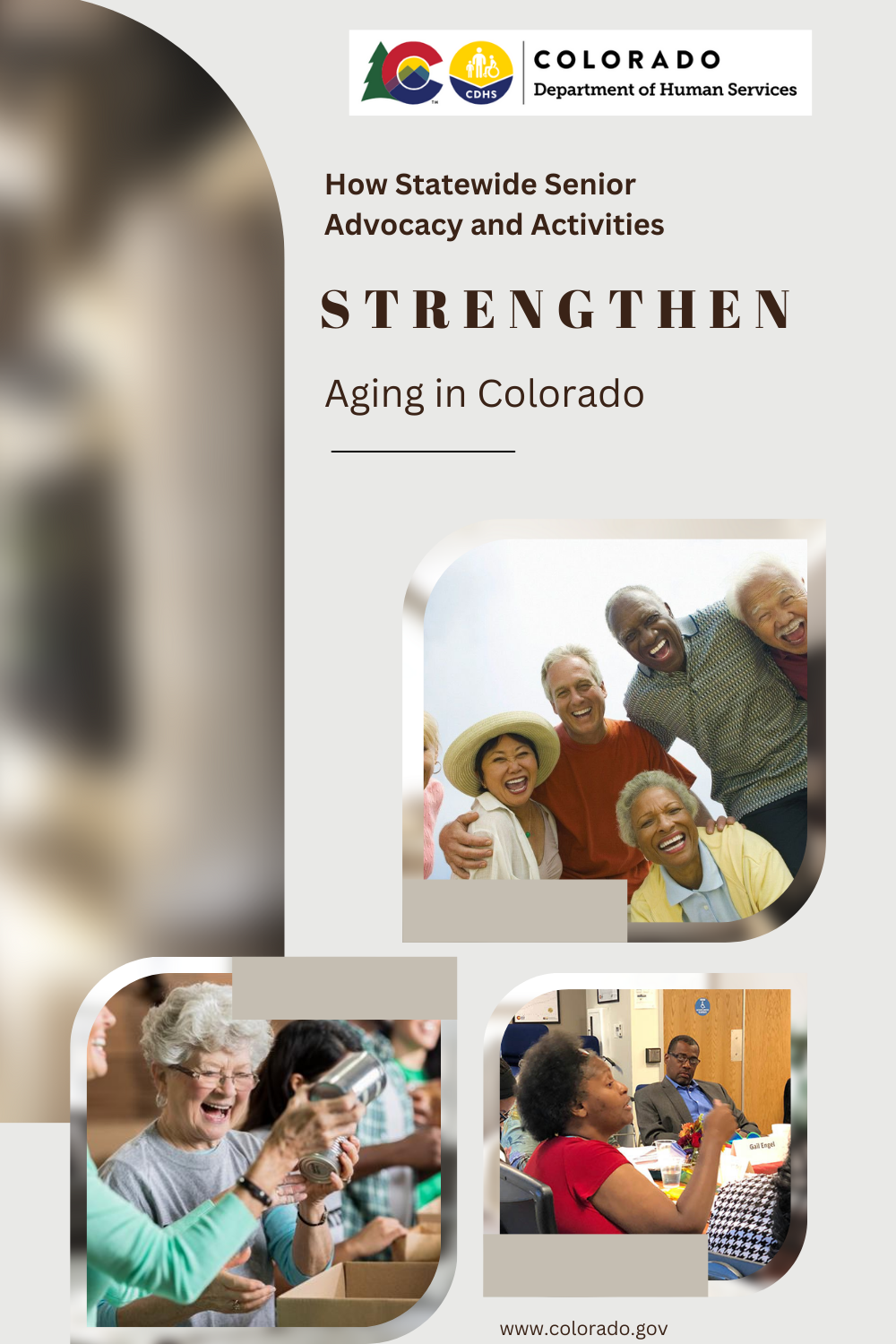
How Statewide Senior Advocacy and Activities Strengthen Aging in Colorado
Across Colorado, older adults are redefining what it means to age well. From staying active in their communities to advocating for policies that support independence and dignity, today’s seniors want more than services—they want a voice. In a state as diverse as Colorado, with urban centers like Denver and close-knit Northern Colorado communities, coordinated advocacy and engagement play a critical role in shaping a positive aging experience.
The Colorado Commission on Aging (CCOA) serves as a vital link between older adults, state leadership, and community organizations. By elevating senior voices and supporting meaningful engagement, the Commission helps ensure that aging in Colorado is not only supported—but respected.
What the Colorado Commission on Aging Does
The Colorado Commission on Aging is a governor-appointed advisory body that focuses on the needs, concerns, and opportunities facing older Coloradans. Its work is centered on listening, advising, and advocating rather than providing direct services.
Core focus areas include:
-
Advising state leaders on aging-related issues
-
Elevating senior voices in public policy discussions
-
Supporting awareness of senior programs and resources
-
Encouraging community engagement and education
-
Addressing equity and access for diverse aging populations
Through meetings, public input, and collaboration with partners statewide, the Commission ensures that senior perspectives are part of Colorado’s decision-making process.
Why Senior Engagement Matters—Especially in Northern Colorado
Northern Colorado continues to see steady growth in its senior population. Communities like Longmont, Boulder, and surrounding areas are home to older adults who want to remain active, informed, and connected.
Engagement through education, advocacy, and community involvement helps seniors:
-
Stay socially connected
-
Maintain a sense of purpose
-
Understand available resources and rights
-
Influence policies that affect their lives
When seniors are informed and engaged, communities become stronger and more responsive to aging-related needs.
Advocacy That Reflects Real-Life Aging Challenges
Aging brings opportunities, but it also brings challenges—housing affordability, transportation access, health care navigation, and social isolation, to name a few. The Colorado Commission on Aging helps bring these real-life issues to the forefront.
Kristine Burrows, who works closely with statewide aging initiatives, emphasizes the importance of representation:
“When older adults are included in conversations at the state level, policies become more practical, more compassionate, and more effective. Listening to seniors leads to better outcomes for everyone.”
This advocacy ensures that decisions are informed by lived experience, not assumptions.
Connecting Seniors to Activities, Education, and Awareness
While the Commission itself does not host entertainment or activities, it plays a key role in supporting awareness of programs and initiatives that keep seniors engaged. From educational forums to community-based events, staying informed helps older adults remain active participants in society.
Senior-focused activities and engagement opportunities often support:
-
Mental and emotional well-being
-
Social connection and reduced isolation
-
Lifelong learning
-
Civic participation
By promoting awareness and collaboration, the Commission helps amplify opportunities available across Colorado.
Supporting Equity and Inclusion in Aging
Colorado’s senior population is diverse, and aging does not look the same for everyone. The Colorado Commission on Aging places emphasis on inclusion, ensuring that voices from rural areas, communities of color, and underserved populations are heard.
Equitable aging advocacy considers:
-
Language and cultural access
-
Rural transportation and service gaps
-
Economic disparities among older adults
-
Access to technology and information
By addressing these disparities, the Commission helps promote aging with dignity for all Coloradans—not just those with easy access to resources.
Why State-Level Advocacy Complements Local Services
Local senior centers, nonprofits, and care providers deliver hands-on support, but state-level advocacy ensures systems work together effectively. The Colorado Commission on Aging helps align local insights with statewide planning and policy.
This collaboration benefits seniors by:
-
Improving coordination across programs
-
Highlighting service gaps
-
Encouraging sustainable funding and planning
-
Ensuring long-term aging strategies
Together, local action and state advocacy create a more supportive environment for older adults.
How Seniors and Families Can Stay Involved
Staying informed and involved doesn’t require formal advocacy experience. Seniors and families can engage by:
-
Attending public meetings or forums
-
Submitting public comments on aging issues
-
Staying informed about aging-related initiatives
-
Connecting with local senior organizations
Participation helps ensure that policies and programs reflect real needs rather than assumptions.
Frequently Asked Questions
Does the Colorado Commission on Aging provide direct services?
No. The Commission is an advisory and advocacy body rather than a direct service provider.
Who can participate in Commission-related discussions?
Public input is encouraged, and seniors, caregivers, and advocates can share perspectives.
Is the Commission only focused on Denver?
No. The Commission represents older adults across the entire state, including Northern Colorado.
How does advocacy benefit individual seniors?
Advocacy helps shape policies that improve access, equity, and quality of life for older adults.
Can caregivers benefit from the Commission’s work?
Yes. Policies supporting seniors often also support family caregivers and care systems.
A Statewide Voice for Colorado’s Older Adults
Aging well requires more than individual effort—it requires systems that listen, adapt, and support. The Colorado Commission on Aging plays a crucial role in ensuring that older adults across Denver, Northern Colorado, and beyond are seen, heard, and valued.
To learn more about senior advocacy, engagement, and statewide aging initiatives, visit the Seniors Blue Book listing for the Colorado Commission on Aging and explore how informed voices help shape a better future for aging in Colorado.
Other Articles You May Like
Medicare/Medicaid/Insurance in Lafayette, CO
When an older adult needs help at home and sees several clinicians, a coverage decision can affect everything from prescription refills to rides. If youre considering TRU PACE in Lafayette, start by asking how enrollment would change the care and coverage you already use. How Medicare and Medicaid Fit Into PACEPACE is the Program of All-Inclusive Care for the Elderly. It coordinates healthcare and support for eligible adults who meet a state standard for nursing home-level care and can live safely in the community with PACE support at enrollment. Applicants must also be 55 or older and live in the programs service area. TRU PACE and Your Current CoveragePhone: 303-665-0115Medicare says people with Medicaid pay no monthly PACE premium. Medicare beneficiaries without Medicaid pay premiums for the long-term care portion and Medicare Part D drugs. Medicare also says participants owe no deductible, copayment, or coinsurance for drugs, services, or care approved by their PACE team. Ask TRU PACE for an estimate based on your individual coverage before enrolling. Doctors, Prescriptions, and Existing ServicesTRU PACE says it becomes the participants insurance provider at enrollment. Participants generally receive care through the programs provider network. Bring a list of your doctors, medications, and scheduled services. Ask which providers are in the network and how the team would coordinate any changes. Why This Matters in LafayetteIf you regularly see a clinician near home or have a specialist visit scheduled outside Lafayette, give the enrollment team the names and dates. Ask which appointments can continue and what to do about any refill due around the enrollment date. How to Get Started1. Gather Your Coverage InformationHave your Medicare and Medicaid information, if applicable, along with details of any current plan. List the appointments and prescriptions you rely on most.2. Ask for an Enrollment and Cost ReviewCall TRU PACE and ask for your expected monthly cost, when any coverage change would take effect, and who would help coordinate the transition. Related Seniors Blue Book CategoriesPACE Adult Day Services Care Management
Funeral Cremation & Mortuary Services in Lafayette, CO
After a death, families may have to make several decisions in a short time. Others prefer to talk through their wishes ahead of time. In either situation, it helps to separate the practical arrangements from the decisions about how to gather, remember, and say goodbye. What Funeral and Mortuary Services CoverA funeral home can help arrange transportation and care of the person who died, assist with paperwork, and coordinate burial or cremation. A family may also arrange a viewing, funeral, memorial, or private gathering. Ask which decisions need to be made immediately and which can wait. The Natural Funeral in LafayettePhone: 720-515-2344The Natural Funeral lists natural burial, flame cremation, water cremation, and terramation, also called natural organic reduction. Water cremation uses an alkaline water process, and terramation transforms remains into soil. If one of these options interests you, ask what the process involves, how long it typically takes, and what the family receives afterward. Planning a Gathering and Reviewing CostsThe Lafayette funeral home is at 102 W Chester Street in Old Town. Ask what can take place at the Lafayette location and which parts would involve another venue or a cemetery. Request a General Price List and a written breakdown of your choices so you can see which fees cover the funeral homes work and which come from outside providers. Why This Matters in LafayetteIf relatives are coming from out of town or some guests have limited mobility, ask about parking, step-free access, and how many people the gathering space can accommodate. If you plan to hold a service and burial at different locations, check how much time guests will need between them. How to Get Started1. Write Down the Persons WishesLook for written instructions and note any cultural or religious preferences. If youre planning ahead, tell a trusted person where you keep your instructions and whom to call.2. Ask for a Written PlanCall 720-515-2344 and ask what is needed on the first call. Once youve discussed options, request the expected timeline and itemized costs before approving arrangements. Related Seniors Blue Book CategoriesCounseling Hospice Advance Care Planning
Adult Day Services in Lafayette, CO
When an older adult spends most weekdays alone, families may need more than a place for them to go. They may also be juggling transportation, appointments, and help at home. TRU PACE in Lafayette offers a day center as part of a program that coordinates those needs for eligible older adults. What Are Adult Day Services?Adult day services offer daytime support outside the home. Depending on the program, participants may spend time with peers, eat a meal, take part in activities, or receive help with daily needs. Some centers accept people directly. The Lafayette TRU PACE center serves people enrolled in its broader Program of All-Inclusive Care for the Elderly. TRU PACE in LafayettePhone: 303-665-0115TRU PACEs Lafayette center is at 2593 Park Lane. The program coordinates medical and social services and arranges transportation to the day center and medical visits as needed. Ask the enrollment team what a typical center day includes, how often a participant might attend, and how the team decides what support to arrange at home. Who May QualifyPACE applicants must be at least 55, live in the programs service area, meet the states standard for nursing home-level care, and be able to live safely in the community with PACE support at enrollment. Ask how enrollment would affect access to current doctors and prescription coverage before making a decision. Why This Matters in LafayetteWhen family members already drive someone to several appointments a week, a coordinated schedule can change who needs to be available and when. Ask how pickup would work at the persons Lafayette address and who to call if a ride or appointment changes. How to Get Started1. Ask for an Eligibility ReviewCall TRU PACE. Have the participants ZIP code, current coverage, and a short list of the help they need. 2. Ask to Visit the CenterFind out what the participant might do on a center day, how transportation works, and what changes to their current care arrangements enrollment would involve. Related Seniors Blue Book CategoriesCare Management Transportation Respite Care
Local Services By This Author

Colorado Department of Human Services-Veterans Homes
Senior Organizations & Services 1575 North Sherman Street, Denver, Colorado, 80203
Colorado Commission on Aging
Senior ActivitiesColorado Commission on Aging: Championing the Well-Being of Older ColoradansColorado is home to a growing and vibrant population of older adults who enrich communities across the state through their wisdom, experience, and continued contributions. As this population grows, it becomes increasingly important to ensure that older adults have access to the services, resources, and opportunities needed to age with dignity and independence. The Colorado Commission on Aging (CCOA) plays a vital role in supporting this mission. As the states primary advisory body on aging-related issues, the CCOA works to guide policies, programs, and initiatives that enhance the lives of older Coloradans.What Is the Colorado Commission on Aging?The Colorado Commission on Aging is a governor-appointed, citizen-led, multidisciplinary commission dedicated to advising state leadership on issues that affect older adults. Members of the commission come from a wide range of professional backgrounds and personal experiences, representing both the public and private sectors. The commission also reflects the geographic and cultural diversity of communities across Colorado.By bringing together experts, advocates, community leaders, and professionals who work closely with older adults, the CCOA is able to examine aging-related challenges from multiple perspectives. Members often include individuals with expertise in healthcare, housing, social services, transportation, caregiving, financial planning, and community engagement.This diverse representation ensures that the needs of older adults are thoughtfully considered and that recommendations reflect the realities faced by seniors and their families throughout the state.A Mission Focused on Healthy and Dignified AgingThe mission of the Colorado Commission on Aging is to promote the well-being, independence, and dignity of older adults throughout Colorado. The commission works closely with the Governors office, the Colorado General Assembly, and multiple state agencies to help shape policies that support aging populations.Through research, collaboration, and public engagement, the CCOA contributes to guiding programs, services, policies, procedures, and resources related to aging. Its work touches many aspects of life that are essential for older adults, including:Health and long-term care accessHousing and community living optionsTransportation and mobilityNutrition and food security programsCaregiver support and educationFinancial stability and retirement securitySocial connection and community engagementProtection from elder abuse, neglect, and exploitationBy helping coordinate these areas, the CCOA ensures that Colorado remains a place where older adults can continue living active, meaningful lives.Advising State Leaders and PolicymakersA key responsibility of the Colorado Commission on Aging is advising policymakers about emerging issues affecting older adults. The commission studies demographic trends, community needs, and service gaps that may impact seniors across the state.These insights help guide legislative decisions, funding priorities, and statewide initiatives aimed at improving the quality of life for older adults. The CCOA also provides recommendations on how existing programs can be strengthened and expanded to better meet community needs.Through this advisory role, the commission ensures that the voices of older Coloradans are represented in important conversations about public policy and community planning.Guiding the Lifelong Colorado Plan for AgingOne of the most significant responsibilities of the Colorado Commission on Aging is helping guide the implementation of the Lifelong Colorado Plan for Aging. This strategic statewide action plan serves as a roadmap for improving services and opportunities for older adults.The Lifelong Colorado Plan focuses on creating a state where people can live well at every stage of life. The plan addresses several key areas that impact aging, including health, housing, transportation, community inclusion, economic security, and caregiving support.By collaborating with state agencies, community organizations, and local governments, the CCOA helps ensure that the plans goals are implemented in meaningful ways across Colorado communities.Historical BackgroundThe Colorado Commission on Aging was originally established in the 1960s through the Older Coloradans Act. The legislation recognized the importance of creating a dedicated body to focus on the needs of older residents and to provide guidance to state leaders.Since its creation, the commission has worked to strengthen aging programs, advocate for older adults, and promote collaboration among organizations serving seniors. Over time, the needs of Colorados aging population have evolved, leading to new initiatives and expanded responsibilities for the commission.Modernization of the Older Coloradans ActIn 2022, the Colorado legislature passed House Bill 22-1035, known as the Modernization of the Older Coloradans Act. This legislation reorganized the Colorado Commission on Aging and introduced important changes designed to strengthen Colorados approach to aging services.The modernization effort included several key improvements:Expanded Commission MembershipThe number of commission members increased from 17 to 19, allowing for broader representation from communities across the state. This expansion ensures a wider range of perspectives and expertise within the commission.Colorado Department of Human Services LiaisonA liaison from the Colorado Department of Human Services (CDHS) was appointed to serve as the primary contact for the commission. This role strengthens communication and collaboration between the CCOA and state government.Technical Advisory CommitteeThe legislation also created a technical advisory committee composed of representatives from key state agencies. This committee provides subject-matter expertise and helps ensure that programs impacting older adults are coordinated across departments.Creation of the Lifelong Colorado InitiativeHouse Bill 22-1035 also established the Lifelong Colorado Initiative, which supports the implementation of the Lifelong Colorado Plan for Aging and promotes long-term strategies that help communities become more age-friendly.Celebrating and Recognizing Older ColoradansIn addition to advising policymakers and guiding statewide initiatives, the Colorado Commission on Aging also recognizes and celebrates the contributions of older adults throughout the state.Celebrating a Lifetime Centenarian CelebrationOne of the commissions most inspiring initiatives is the Celebrating a Lifetime Centenarian Celebration, which honors Coloradans who reach the remarkable milestone of turning 100 years old or more.This annual recognition program celebrates the lives, achievements, and contributions of centenarians throughout Colorado. Each honoree receives a certificate signed by the Governor in recognition of their lifetime of experience and service to their communities.The event highlights the stories of individuals who have witnessed a century of history and change, while continuing to inspire younger generations with their resilience and wisdom.Families, friends, and community members are encouraged to nominate their favorite centenarian for recognition. For more information or to submit a centenarian for this special celebration, individuals can call 720-724-3177.Excellence in Aging Allen Buckingham Senior Leadership Legacy AwardThe Colorado Commission on Aging also recognizes individuals who have made extraordinary contributions to improving the lives of older adults through the Excellence in Aging Allen Buckingham Senior Leadership Legacy Award.This award honors individuals who demonstrate exceptional leadership, compassion, and dedication in serving older adults in Colorado. Recipients may be professionals, volunteers, caregivers, advocates, or community leaders who have made a meaningful impact in the field of aging.The award is presented annually during the CCOA Excellence in Aging event, where the selected recipient receives the Allen Buckingham Senior Leadership Legacy Award in recognition of their commitment to improving the lives of seniors across the state.Those interested in submitting a nomination or requesting a nomination form can contact the commission at 720-724-3177Strengthening Communities Across ColoradoThe work of the Colorado Commission on Aging has a statewide impact. From urban centers like Denver and Colorado Springs to rural mountain communities and small towns, the commissions efforts help ensure that older adults have access to essential resources and opportunities.By fostering collaboration among government agencies, nonprofit organizations, healthcare providers, and community groups, the CCOA strengthens the network of services that support older Coloradans.Looking Toward the FutureColorados population of older adults continues to grow rapidly. By 2030, adults aged 60 and older are expected to make up a significant portion of the states population. This demographic shift makes the work of the Colorado Commission on Aging more important than ever.Through strategic planning, policy guidance, and community engagement, the commission is helping prepare Colorado for a future where aging is supported, respected, and celebrated.By promoting thoughtful policies, recognizing community leadership, and celebrating the achievements of older adults, the Colorado Commission on Aging helps ensure that Colorado remains a place where people can live full and meaningful lives at every stage of aging.