How Support Groups Build Connection, Confidence, and Community
Center for Independence
For more information about the author, click to view their website: Center for Independence
Feb 12, 2026
Colorado - Western Slope

Email US
Click to Email Us
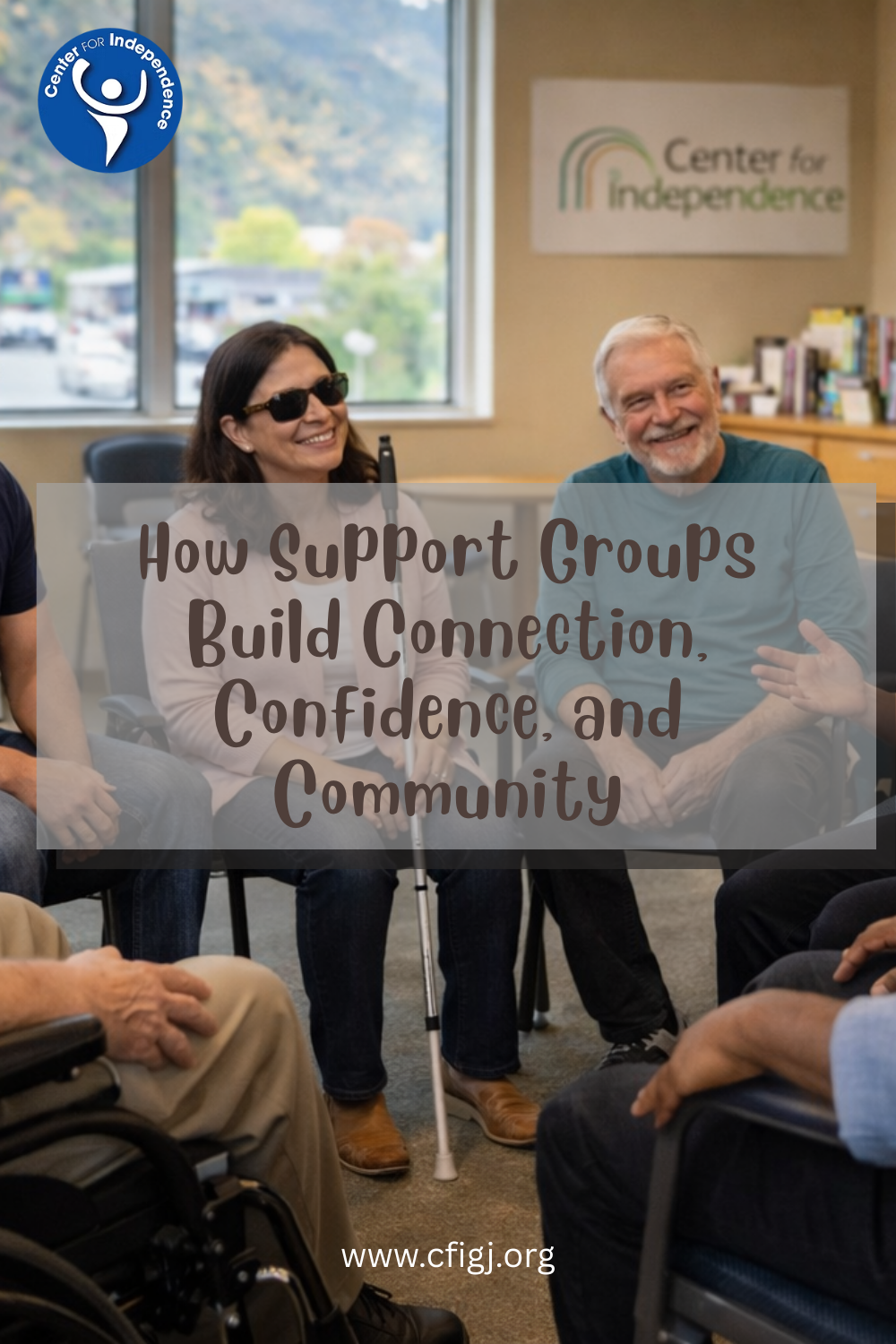
How Support Groups Build Connection, Confidence, and Community
Nestled along the Roaring Fork River and framed by mountain peaks, Glenwood Springs is known for its healing hot springs, outdoor adventure, and tight-knit community spirit. But even in a place filled with natural beauty and recreation, life’s challenges can feel isolating — especially for individuals living with disabilities or navigating major life transitions.
Connection changes everything.
At the Center for Independence in Glenwood Springs, support groups and community-based services offer something essential: a safe place to share experiences, learn practical strategies, and build meaningful relationships.
For many Western Slope residents, these groups become lifelines — offering understanding, empowerment, and renewed confidence.
Why Support Groups Matter
Living with a disability, chronic illness, or sudden life change can create emotional and logistical challenges. Even with strong families, individuals often benefit from connecting with others who truly understand their experiences.
Support groups provide:
-
Shared understanding
-
Emotional validation
-
Problem-solving strategies
-
Peer encouragement
-
Resource sharing
Katherine Lopez of the Center for Independence highlights the impact:
“When people realize they’re not alone in their journey, something shifts,” says Katherine Lopez. “Support groups give individuals a space where they can speak openly, learn from one another, and build real community.”
That sense of belonging is powerful.
Unique Challenges on the Western Slope
Rural and mountain communities like Glenwood Springs come with distinctive dynamics.
While the town offers exceptional outdoor beauty and strong local identity, geographic isolation can amplify challenges such as:
-
Limited specialized services
-
Transportation barriers
-
Smaller healthcare networks
-
Distance from extended family
Support groups reduce that isolation by bringing people together locally.
In smaller communities, relationships often grow deeper — creating bonds that extend beyond scheduled meetings.
Types of Support Groups and Services Offered
The Center for Independence may offer support groups and services tailored to diverse needs, including:
Disability Support Groups
Safe spaces for individuals living with physical, sensory, or cognitive disabilities to share experiences and advocacy strategies.
Peer Mentorship
One-on-one connections with individuals who have lived experience navigating similar challenges.
Youth Transition Groups
Helping young adults with disabilities prepare for independence, employment, or higher education.
Caregiver Support
Providing guidance and emotional support for family members supporting loved ones with disabilities.
Life Skills Workshops
Covering topics such as budgeting, employment readiness, and self-advocacy.
Each group is structured to encourage participation and empowerment.
Building Confidence Through Shared Experience
Support groups aren’t just about conversation — they’re about growth.
Participants often gain:
-
Improved communication skills
-
Greater self-advocacy
-
Increased knowledge of rights and resources
-
Renewed confidence in social settings
For individuals who may feel overlooked or misunderstood in broader society, these groups create space for authentic self-expression.
Mental Health and Emotional Wellness
Living with a disability or major life adjustment can increase the risk of:
-
Anxiety
-
Depression
-
Social withdrawal
-
Loss of confidence
Regular group interaction promotes emotional resilience.
Simply hearing, “I’ve experienced that too,” can reduce the weight of isolation.
In a community like Glenwood Springs — where outdoor adventure and social activity are central to culture — staying emotionally connected supports overall well-being.
Accessibility and Inclusion
The Center for Independence prioritizes accessible meeting environments.
This includes:
-
ADA-compliant facilities
-
Clear communication support
-
Transportation coordination when possible
-
Hybrid or virtual options when needed
Accessibility ensures participation is never limited by logistics.
Empowerment Through Education
Support groups often integrate educational components, such as:
-
Understanding disability rights
-
Navigating Social Security benefits
-
Accessing local transportation resources
-
Planning for employment accommodations
Education strengthens independence.
Participants leave not only feeling supported — but informed.
Community Engagement Beyond Meetings
Support groups often spark additional community involvement.
Participants may:
-
Volunteer locally
-
Attend community events
-
Advocate for accessibility improvements
-
Mentor others
These ripple effects expand inclusion throughout Glenwood Springs.
Responding to Life Transitions
Disability and life changes don’t always follow predictable timelines. Some individuals acquire disabilities due to injury, illness, or aging.
Support groups help individuals process:
-
Sudden mobility changes
-
Vision or hearing loss
-
Chronic condition diagnoses
-
Major lifestyle adjustments
Early connection to peer support reduces long-term emotional strain.
Caregiver Support: Strengthening the Entire Network
Family caregivers play an essential role, but they also need support.
Caregiver-focused groups provide:
-
Stress management strategies
-
Resource education
-
Shared problem-solving
-
Emotional encouragement
Stronger caregivers create stronger support systems.
When Should You Reach Out?
Consider exploring support services if you or a loved one:
-
Feels isolated
-
Has experienced a recent disability diagnosis
-
Is navigating a major life transition
-
Wants to connect with peers
-
Needs guidance navigating resources
Support groups are not only for crisis — they’re for growth.
A Welcoming Community Resource in Glenwood Springs
The Center for Independence offers more than programming — it offers connection.
In a mountain town where community identity is strong, inclusive support services ensure everyone has the opportunity to thrive.
Independence doesn’t mean going alone. It means having the right support.
Take the Next Step Toward Connection
If you or someone you care about in Glenwood Springs or the surrounding Western Slope is seeking support, peer connection, or disability services, help is available.
Visit Center for Independence’s listing on Seniors Blue Book to learn more about local support groups and services led by Katherine Lopez and her team.
Stronger communities begin with shared understanding.
Frequently Asked Questions About Support Groups in Glenwood Springs
Are support groups free?
Many groups are offered at little or no cost, depending on program funding and eligibility.
Do I need a formal diagnosis to attend?
Not always. Contact the Center to learn about eligibility guidelines for specific groups.
Are caregivers welcome?
Yes. Caregiver support groups and resources may be available.
Are meetings in person or virtual?
Options may vary based on scheduling and participant needs.
How do I register?
Reach out through the Center’s Seniors Blue Book listing to inquire about upcoming meetings.
Other Articles You May Like
Medicare/Medicaid/Insurance in Lafayette, CO
When an older adult needs help at home and sees several clinicians, a coverage decision can affect everything from prescription refills to rides. If youre considering TRU PACE in Lafayette, start by asking how enrollment would change the care and coverage you already use. How Medicare and Medicaid Fit Into PACEPACE is the Program of All-Inclusive Care for the Elderly. It coordinates healthcare and support for eligible adults who meet a state standard for nursing home-level care and can live safely in the community with PACE support at enrollment. Applicants must also be 55 or older and live in the programs service area. TRU PACE and Your Current CoveragePhone: 303-665-0115Medicare says people with Medicaid pay no monthly PACE premium. Medicare beneficiaries without Medicaid pay premiums for the long-term care portion and Medicare Part D drugs. Medicare also says participants owe no deductible, copayment, or coinsurance for drugs, services, or care approved by their PACE team. Ask TRU PACE for an estimate based on your individual coverage before enrolling. Doctors, Prescriptions, and Existing ServicesTRU PACE says it becomes the participants insurance provider at enrollment. Participants generally receive care through the programs provider network. Bring a list of your doctors, medications, and scheduled services. Ask which providers are in the network and how the team would coordinate any changes. Why This Matters in LafayetteIf you regularly see a clinician near home or have a specialist visit scheduled outside Lafayette, give the enrollment team the names and dates. Ask which appointments can continue and what to do about any refill due around the enrollment date. How to Get Started1. Gather Your Coverage InformationHave your Medicare and Medicaid information, if applicable, along with details of any current plan. List the appointments and prescriptions you rely on most.2. Ask for an Enrollment and Cost ReviewCall TRU PACE and ask for your expected monthly cost, when any coverage change would take effect, and who would help coordinate the transition. Related Seniors Blue Book CategoriesPACE Adult Day Services Care Management
Funeral Cremation & Mortuary Services in Lafayette, CO
After a death, families may have to make several decisions in a short time. Others prefer to talk through their wishes ahead of time. In either situation, it helps to separate the practical arrangements from the decisions about how to gather, remember, and say goodbye. What Funeral and Mortuary Services CoverA funeral home can help arrange transportation and care of the person who died, assist with paperwork, and coordinate burial or cremation. A family may also arrange a viewing, funeral, memorial, or private gathering. Ask which decisions need to be made immediately and which can wait. The Natural Funeral in LafayettePhone: 720-515-2344The Natural Funeral lists natural burial, flame cremation, water cremation, and terramation, also called natural organic reduction. Water cremation uses an alkaline water process, and terramation transforms remains into soil. If one of these options interests you, ask what the process involves, how long it typically takes, and what the family receives afterward. Planning a Gathering and Reviewing CostsThe Lafayette funeral home is at 102 W Chester Street in Old Town. Ask what can take place at the Lafayette location and which parts would involve another venue or a cemetery. Request a General Price List and a written breakdown of your choices so you can see which fees cover the funeral homes work and which come from outside providers. Why This Matters in LafayetteIf relatives are coming from out of town or some guests have limited mobility, ask about parking, step-free access, and how many people the gathering space can accommodate. If you plan to hold a service and burial at different locations, check how much time guests will need between them. How to Get Started1. Write Down the Persons WishesLook for written instructions and note any cultural or religious preferences. If youre planning ahead, tell a trusted person where you keep your instructions and whom to call.2. Ask for a Written PlanCall 720-515-2344 and ask what is needed on the first call. Once youve discussed options, request the expected timeline and itemized costs before approving arrangements. Related Seniors Blue Book CategoriesCounseling Hospice Advance Care Planning
Adult Day Services in Lafayette, CO
When an older adult spends most weekdays alone, families may need more than a place for them to go. They may also be juggling transportation, appointments, and help at home. TRU PACE in Lafayette offers a day center as part of a program that coordinates those needs for eligible older adults. What Are Adult Day Services?Adult day services offer daytime support outside the home. Depending on the program, participants may spend time with peers, eat a meal, take part in activities, or receive help with daily needs. Some centers accept people directly. The Lafayette TRU PACE center serves people enrolled in its broader Program of All-Inclusive Care for the Elderly. TRU PACE in LafayettePhone: 303-665-0115TRU PACEs Lafayette center is at 2593 Park Lane. The program coordinates medical and social services and arranges transportation to the day center and medical visits as needed. Ask the enrollment team what a typical center day includes, how often a participant might attend, and how the team decides what support to arrange at home. Who May QualifyPACE applicants must be at least 55, live in the programs service area, meet the states standard for nursing home-level care, and be able to live safely in the community with PACE support at enrollment. Ask how enrollment would affect access to current doctors and prescription coverage before making a decision. Why This Matters in LafayetteWhen family members already drive someone to several appointments a week, a coordinated schedule can change who needs to be available and when. Ask how pickup would work at the persons Lafayette address and who to call if a ride or appointment changes. How to Get Started1. Ask for an Eligibility ReviewCall TRU PACE. Have the participants ZIP code, current coverage, and a short list of the help they need. 2. Ask to Visit the CenterFind out what the participant might do on a center day, how transportation works, and what changes to their current care arrangements enrollment would involve. Related Seniors Blue Book CategoriesCare Management Transportation Respite Care
Local Services By This Author
Center for Independence
Support Groups & ServicesCenter for Independence promotes community solutions and empowers individuals with disabilities to live independently. CFI is governed by people with disabilities and upholds the independent living philosophy that people with disabilities have the right to live their lives independently and with dignity to their fullest potential. CFI provides information to individuals and businesses about the Americans with Disabilities Act(ADA), accessibility guidelines, and other technical assistance. The Independent Living Philosophy recognizes that; all people with disabilities face many barriers in seeking to achieve personal goals, community acceptance and integration. The goal of the Center for Independence is to help consumers overcome those barriers.
Center for Independence
Disability Services 740 Gunnison Avenue, Grand Junction, Colorado, 81501Center for Independence promotes community solutions and empowers individuals with disabilities to live independently. CFI is governed by people with disabilities and upholds the independent living philosophy that people with disabilities have the right to live their lives independently and with dignity to their fullest potential. CFI provides information to individuals and businesses about the Americans with Disabilities Act (ADA), accessibility guidelines, and other technical assistance. The Independent Living Philosophy recognizes that; all people with disabilities face many barriers in seeking to achieve personal goals, community acceptance and integration. The goal of the Center for Independence is to help consumers overcome those barriers.