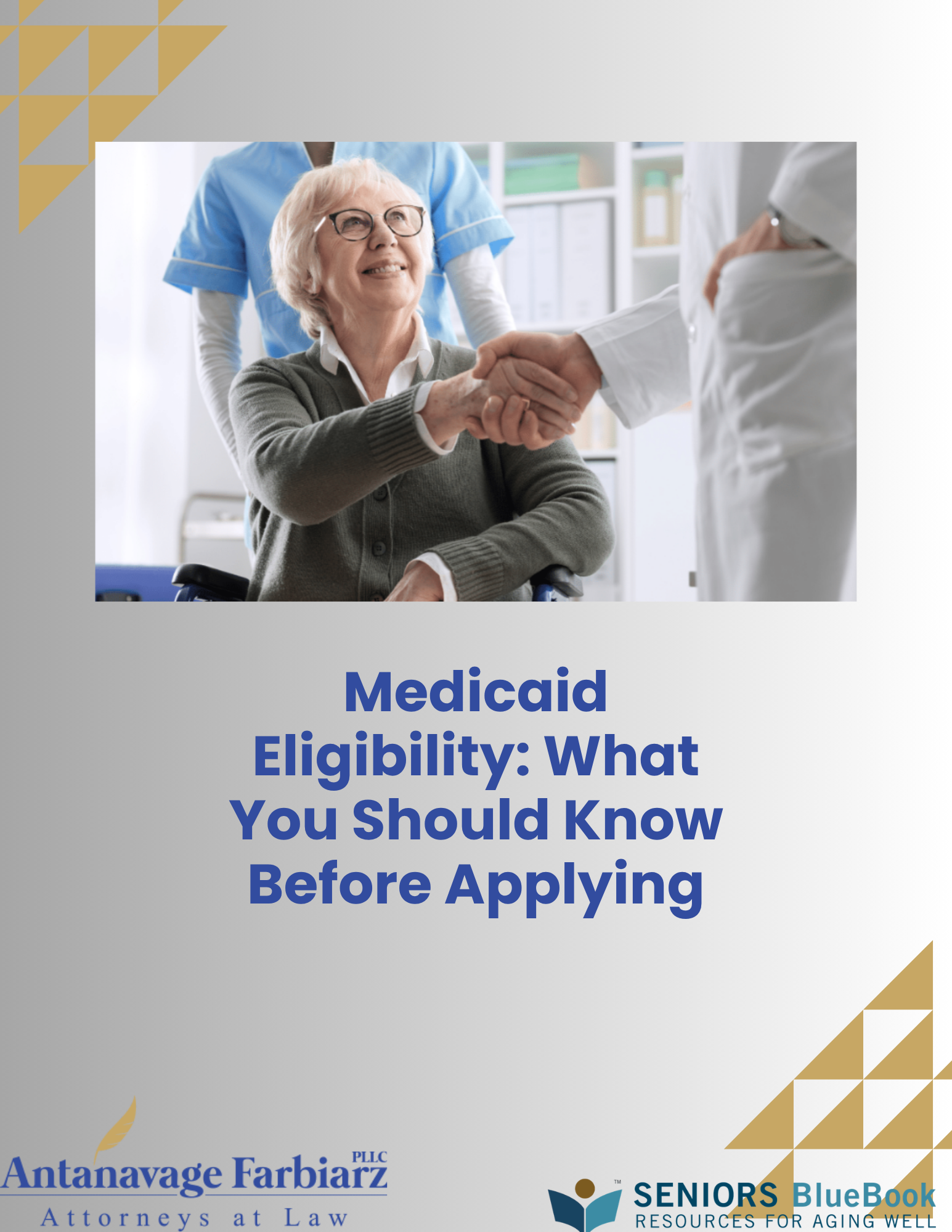
Medicaid Eligibility: What You Should Know Before Applying
Antanavage Farbiarz PLLC
For more information about the author, click to view their website: Antanavage Farbiarz PLLC
Jun 11, 2026
Pennsylvania - South Central PA


Planning for long-term care is an important step for many
families. As people begin to consider future care needs, questions about costs
and available programs often arise. One of the most discussed programs is
Medicaid, which provides assistance with healthcare and long-term care for
individuals who meet certain financial and medical requirements. Understanding Medicaid
eligibility before applying helps families approach the process with confidence
and clarity.
Medicaid rules can seem complex at first, but with the right
information, families can better understand how the program works and what
steps may be involved. Preparing ahead of time allows individuals to organize
their finances, review their options, and feel more comfortable navigating the
application process.
Understanding Medicaid and Long-Term Care
Medicaid is a government program that helps provide
healthcare coverage for individuals who meet certain income and asset
guidelines. One of its most important roles is helping cover the cost of
long-term care services, such as nursing home care or certain types of in-home
support.
Because long-term care costs can be significant, many
families look to Medicaid as part of their planning strategy. Understanding Medicaid
eligibility is the first step in determining whether the program may help cover
future care needs.
Medicaid programs are administered at the state level, which
means specific rules can vary. However, the core principles of eligibility
remain similar across most states.
Financial Requirements for Medicaid Eligibility
One of the primary components of Medicaid eligibility
involves financial guidelines. The program reviews both income and assets to
determine whether an applicant qualifies.
Income limits generally consider sources such as Social
Security benefits, retirement income, or other recurring payments. Asset limits
may include bank accounts, investments, and other financial resources.
Certain assets may be excluded depending on the situation.
For example, personal belongings and some forms of property may not count
toward eligibility calculations. Understanding these guidelines helps families
prepare documentation and organize their finances before applying.
The Role of Asset Limits
Asset limits are another important part of Medicaid
eligibility. These limits determine how much property or financial resources an
individual can have while still qualifying for benefits.
Assets commonly reviewed may include savings accounts,
investment accounts, and other financial holdings. Some assets may be treated
differently depending on how they are structured or owned.
Families often find that learning about these limits early
helps them make thoughtful financial decisions and avoid confusion during the
application process.
Income Considerations
Income plays a significant role in Medicaid eligibility as
well. When evaluating an application, Medicaid reviews the applicant’s monthly
income and compares it to established guidelines.
Income may include Social Security benefits, pensions,
retirement account distributions, or other recurring payments. Depending on the
state and the type of coverage requested, certain adjustments or planning
strategies may apply.
Understanding how income is evaluated can help applicants
prepare accurate records and feel confident about the information they provide.
Medical Requirements
In addition to financial considerations, Medicaid
eligibility may also include medical requirements. For long-term care coverage,
applicants often must demonstrate a level of care need that qualifies them for
assistance.
This assessment may involve medical evaluations or
documentation showing that the individual requires ongoing support with daily
activities or health management.
These requirements help ensure that benefits are directed
toward individuals who need them most.
The Five-Year Look-Back Rule
One important concept related to Medicaid eligibility is the
five-year look-back rule. This rule allows Medicaid to review certain financial
transactions made during the five years prior to applying.
The purpose of the rule is to ensure that assets were not
transferred solely to qualify for benefits. Understanding how the look-back
rule works helps families approach planning thoughtfully and avoid unexpected
delays.
Preparing ahead of time can make navigating this part of the
process much smoother.
Planning Ahead for Medicaid Eligibility
Many families begin thinking about Medicaid eligibility when
planning for retirement or considering long-term care options. Early
preparation allows individuals to review their financial situation and explore
planning tools that align with program requirements.
Planning ahead may include reviewing assets, organizing
documentation, and coordinating with other estate planning tools such as wills
or trusts. Taking time to prepare often helps reduce stress and ensures that
applications are completed accurately.
Medicaid Eligibility and Married Couples
Medicaid rules recognize that married couples often face
unique planning considerations. When one spouse requires long-term care, the
other spouse may continue living at home.
In these situations, Medicaid eligibility guidelines often
include protections for the spouse who remains at home. These protections are
designed to help maintain financial stability for both individuals while still
allowing access to necessary care.
Understanding these provisions helps couples approach
planning together with greater confidence.
The Application Process
Applying for Medicaid involves submitting documentation that
verifies financial and medical information. This process may include providing
bank statements, income records, identification documents, and healthcare
evaluations.
Because the application requires detailed information,
preparing ahead of time can make the process more efficient. Gathering
documents early and understanding Medicaid eligibility guidelines helps
applicants avoid delays and feel more comfortable navigating the system.
Why Organization Matters
The Medicaid application process often requires clear
documentation and careful review of financial information. Keeping records
organized helps ensure that the information submitted is accurate and complete.
Families who take time to prepare documents and review Medicaid
eligibility requirements often find that the process feels more manageable.
Common Questions Families Have
Many families have similar questions when learning about Medicaid
eligibility. They may wonder which assets count, how income is calculated, or
how long the application process takes.
While the rules can seem detailed, learning about them early
helps families approach planning with confidence. Asking questions and
gathering reliable information are important steps in preparing for future care
needs.
The Value of Professional Guidance
Because Medicaid rules are detailed and can change over
time, many families benefit from professional guidance when exploring Medicaid
eligibility. Legal professionals who work in elder law and estate planning
often help families understand how Medicaid rules apply to their individual
situation.
Professional guidance can provide clarity about
documentation, timelines, and planning options. This support helps families
make informed decisions and approach the process with reassurance.
Preparing for the Future
Understanding Medicaid eligibility before applying allows
families to take thoughtful steps toward long-term care planning. With clear
information and preparation, individuals can approach the application process
with confidence.
Planning ahead helps ensure that financial decisions align with personal goals and that families feel supported when care needs arise. By learning about eligibility requirements early, individuals can create a plan that brings peace of mind for the future.
- To view the original version of this article visit www.antanavagefarbiarz.com/2026/04/medicaid-eligibility-know-this/
- Seniors Blue Book was not involved in the creation of this content.
Other Articles You May Like
The Best Time to Make an Estate Plan Is Before You Need One
Estate planning is easy to put off. Work is busy. The kids need something. The house needs attention. Everyone is healthy, and there is always something that feels more urgent. So you tell yourself, Ill get to it later. I understand that. Most people are not avoiding estate planning because they do not care about their families. They are busy taking care of those families right now. But that is also why I encourage people to begin before there is an emergency. When life is calm, you have time to ask questions, talk with the people you love, and make choices that feel right to you. At Bellomo & Associates, we want families to have that opportunity, instead of trying to figure everything out beside a hospital bed. Why Do So Many People Put Estate Planning Off?Sometimes people think they are too young. Sometimes they assume they do not own enough to need a plan. And sometimes they believe their spouse or children already know what they would want. Those thoughts are understandable. If you are feeling well and handling your own affairs, documents such as powers of attorney and healthcare directives may seem like something you will need years from now. The trouble is that we do not get to choose when life changes. Estate planning is easier when you can approach it with a clear head and enough time to consider your options. You can talk about what matters to you without asking your family to make every decision in the middle of a crisis. Estate Planning Is About More Than What Happens After DeathWhen people hear estate plan, they often think of a will and who will inherit the house. Those are important questions, but a plan can also help your family while you are living. What if an accident leaves you temporarily unable to manage your bills? What if an illness makes it difficult to speak with your doctors? Who would step in, and would that person have the authority they need? A financial power of attorney can address who may handle financial matters for you. A healthcare power of attorney can name someone to make healthcare decisions when you cannot. A living will can give direction about certain treatment choices. Pennsylvania recognizes these as distinct planning documents, each with its own requirements. These are deeply personal choices. Making them ahead of time gives your loved ones something far more useful than a guess. The Best Time to Choose Someone Is Before You Need ThemThink about the person you would trust to help if you could not manage your finances for a while. You probably have someone in mind. But have you asked whether they would be willing to take on that role? Do they know where to find your important information? Planning gives you time to have that conversation. You can choose someone who understands you, explain what matters most, and name a backup in case your first choice cannot serve. Without appropriate documents, a family may know exactly whom you would have chosen and still have trouble acting on your behalf. Depending on the circumstances, they may need to seek court involvement. That can be stressful for a spouse or child who is already worried about you. My Family Knows What I Want May Not Be EnoughI hear this often: Jeff, my family knows what I want. They might know a great deal about you. They know how you take your coffee, what you think about the holidays, and which stories you will tell whenever everyone is together. Still, a serious medical decision can be different from any conversation you have had before. Picture three adult children trying to decide what Mom would want. One remembers her saying she never wanted to be kept alive by machines. Another remembers her talking about doing everything possible to have more time with her grandchildren. Each believes they are honoring her wishes. A conversation and the right documents can help your family understand your preferences and know who should make decisions if you cannot. That guidance is a gift to the people who love you. Waiting for a Crisis Can Make Planning HarderEstate planning works best when you can take your time. You can ask what a document means, think about whom to name, and decide how the pieces of your plan should fit together. A sudden illness or a change in memory can make those conversations more difficult. A diagnosis alone does not necessarily mean someone can no longer make legal decisions, but capacity questions can arise, and options may become more limited as circumstances change. This is why I encourage people to plan while the choices are clearly theirs to make. There is comfort in knowing you had the chance to think them through. You Do Not Have to Be Wealthy to Need an Estate PlanEstate planning is about people as much as property. A young parent may want to name someone to care for their children. A single adult may want a trusted friend or relative to speak with doctors if needed. A grandparent may want to make sure an inheritance is handled thoughtfully for the next generation. You may also need to consider your home, personal belongings, pets, online accounts, or who would be responsible for settling your affairs. None of those questions depends on having a certain amount of money. If there are people you care about and decisions you would want to make for yourself, there is a reason to think about a plan. Your Will Is Only One Part of the PlanA will matters, but it may not control every asset you own. Retirement accounts and life insurance policies often have beneficiary designations. The way a home or account is owned may also affect what happens to it. That is why an old beneficiary form deserves attention. Perhaps it names someone who has since died. Perhaps your family has grown, but the form has not changed. A plan works better when you review how its parts fit together, rather than assuming the will answers every question. Your Plan Can Change as Your Life ChangesSome people wait because they want to get every decision perfect the first time. You do not need to predict the rest of your life. A plan should reflect your life now. Then, when life changes, you can review it. Marriage, divorce, a new child or grandchild, retirement, a move, or a change in a trusted relationship may all be reasons to take another look. Beginning today does not mean you can never make a different choice. It means your family has guidance based on what you want today. Give Your Family Instructions Instead of QuestionsWhen someone needs help unexpectedly, loved ones often want to do the right thing. They may simply be unsure what that is. Who can speak with the bank? Where are the documents? Who should make a medical decision? What did Dad want to happen to the house? An estate plan cannot spare a family every hard moment. It can give them direction through some of those moments, and it can let you choose the people you trust to help. When things are going well, estate planning may feel easy to postpone. That is also when you may have the most room to think, talk, and decide. Bellomo & Associates welcomes families who want to start that conversation before a crisis makes it urgent.
Planning for Aging Parents With Elder Law in Fairhope, AL
Planning for Aging Parents With Elder Law in Fairhope, ALHelping aging parents plan for the future can be one of the most meaningful responsibilities adult children undertake. However, conversations about finances, healthcare decisions, legal documents, and long-term care are not always easy to begin.A parent may be living independently, managing household expenses, and making personal decisions without difficulty. Then an unexpected illness, hospitalization, or change in cognitive ability may create questions the family has never discussed.Who can make medical decisions if a parent cannot communicate? Who has legal authority to manage financial accounts? What happens if assisted living or nursing home care becomes necessary? How can important assets be protected while ensuring appropriate care?For families in Fairhope, Alabama, these questions highlight the importance of proactive elder law planning.Elder law focuses on protecting older adults' rights, choices, financial security, and access to appropriate care throughout their lives.Unlike estate planning that focuses primarily on property transfers after death, elder law also addresses healthcare decision-making, incapacity planning, long-term care expenses, public benefits, and legal protection during a person's lifetime.Ashley Day Law, located on Gayfer Road Extension in Fairhope, provides elder law and estate planning services for older adults, individuals with disabilities, and their families.Led by attorney Ashley Day, the practice helps clients develop personalized plans involving powers of attorney, advance healthcare directives, Medicaid planning, asset protection, and other important legal matters.For families throughout Baldwin County, understanding these planning tools can help prevent avoidable complications while preserving the older adult's independence and personal wishes.What Is Elder Law?Elder law is a legal practice area focused on challenges that may arise as individuals grow older.It considers both immediate legal concerns and future circumstances that could affect an individual's health, finances, living arrangements, or decision-making ability.Common Elder Law ServicesThese may include:Durable powers of attorneyHealthcare directivesLiving willsLong-term care planningNursing home Medicaid planningAsset protection strategiesGuardianshipsConservatorshipsFinancial exploitation preventionSpecial needs trustsEstate planningProbate and trust administrationNot every family requires every service.The appropriate legal plan depends on the individual's goals, capacity, finances, family circumstances, and applicable Alabama law.Why Planning for Aging Parents MattersMany families postpone legal planning because their parents appear healthy and independent.However, legal documents are often most useful when prepared before an emergency.Protecting Personal ChoicesOlder adults should have meaningful opportunities to express their preferences concerning healthcare, finances, and living arrangements.Clarifying Family ResponsibilitiesA legal plan can identify who has authority to make certain decisions when assistance becomes necessary.Reducing Confusion During EmergenciesFamilies may experience difficulty accessing accounts or communicating with healthcare providers when important authorizations are missing.Preparing for Care ExpensesLong-term care can create substantial financial obligations.Planning allows families to evaluate potential payment arrangements and legal considerations.Preserving IndependenceAppropriate legal planning can help protect an older adult's autonomy while establishing safeguards for future needs.Ashley Day Law in Fairhope, AlabamaAshley Day Law, LLC is a law practice serving individuals and families in Baldwin County and Mobile County.The firm's principal practice areas include:Elder LawEstate PlanningSpecial Needs PlanningProbate and Trust AdministrationAshley Day founded her own practice in 2019 to focus on helping individuals and families facing complicated care and planning decisions.Her professional background includes special education and healthcare-related experience before entering legal practice.Ashley graduated from Saint Louis University School of Law in 2010 and earned a Health Law Certificate.She is licensed to practice law in Alabama, Illinois, and Missouri.A Personalized Approach to Legal PlanningAshley Day Law emphasizes developing legal strategies around individual circumstances.The firm considers factors such as:Current healthcare needsPotential future care requirementsFinancial resourcesFamily relationshipsPersonal preferencesExisting legal documentsLong-term objectivesThis approach recognizes that different families may need different arrangements.Elder Law PlanningThe firm helps older adults prepare for potential incapacity, care expenses, and changes in living arrangements.Estate PlanningAshley Day Law prepares documents intended to communicate personal wishes and support appropriate asset transfers.Special Needs PlanningThe practice assists families planning for loved ones with disabilities or special needs.Probate and Trust AdministrationThe firm provides guidance to executors, trustees, conservators, and other individuals serving in legal or fiduciary roles.Verified Ashley Day Law Contact InformationAshley Day Law, LLCAttorney: Ashley DayAddress: 8335 Gayfer Road Extension, Suite B, Fairhope, AL 36532County: Baldwin County, AlabamaPhone: 251-277-3377Website: https://ashleydaylaw.com/Practice Areas: Elder Law, Estate Planning, Special Needs Planning, Probate and Trust AdministrationCounties Served: Baldwin County and Mobile CountyAdditional Office: Edwardsville, IllinoisThe firm's website uses ZIP code 36533 for its Fairhope address, while its Seniors Blue Book profile and professional directory use 36532. Families should confirm the mailing ZIP code and appointment details directly with the office.Understanding Durable Powers of AttorneyA durable power of attorney is an important legal planning document.It generally allows an individual, called the principal, to appoint a trusted person to manage specified matters on their behalf.The individual receiving authority is commonly called an agent.What Can a Financial Power of Attorney Address?Depending on its terms, a document may authorize an agent to:Manage certain financial accountsPay billsAddress financial obligationsHandle authorized property transactionsCommunicate with financial institutionsManage selected legal or administrative mattersThe scope of authority depends on the document and applicable law.Why Durability MattersA durable power of attorney is designed to remain effective when the principal later becomes incapacitated, subject to the document's provisions and legal requirements.Choosing an AgentFamilies should consider whether the proposed agent is:TrustworthyOrganizedFinancially responsibleWilling to serveCapable of following instructionsPrepared to maintain appropriate recordsReviewing Existing DocumentsOlder powers of attorney may no longer reflect the individual's preferences or financial circumstances.Ashley Day Law provides planning services involving durable powers of attorney and related legal protections.Healthcare Directives and Medical Decision-MakingMedical decisions can become complicated when an individual cannot communicate or make informed decisions.An advance healthcare directive can help communicate healthcare preferences before that situation occurs.What Is an Advance Healthcare Directive?An advance directive may address preferences concerning certain medical treatments and the designation of a healthcare decision-maker.Why Communication MattersA written document should be supported by conversations with trusted relatives and healthcare professionals.Choosing a Healthcare AgentThe selected person should understand the individual's wishes and be prepared to communicate with medical providers.Questions to DiscussFamilies may want to explore:Preferred medical decision-makersPersonal healthcare valuesLife-sustaining treatment preferencesComfort-focused careReligious or spiritual considerationsCommunication with family membersKeep Documents AccessibleAppropriate healthcare providers and designated decision-makers should know how to locate important documents.Ashley Day Law identifies advance directives and healthcare powers of attorney among its elder law planning services.Preparing for Potential Long-Term Care NeedsLong-term care planning is an important part of elder law.Some older adults remain at home throughout their later years.Others eventually require assisted living, memory care, nursing facility services, or additional professional support.Different Types of Long-Term CareThese may include:In-home care: Assistance with personal routines and household activities.Assisted living: Residential support for individuals needing help with selected daily activities.Memory care: Specialized residential support for people living with Alzheimer's disease or other forms of dementia.Skilled nursing: Residential nursing services and rehabilitation for individuals with more extensive medical or functional needs.Understanding Financial ResponsibilitiesThe cost of care depends on the setting, services, and payment arrangement.Planning Before an EmergencyAdvance planning may provide additional time to understand financial and legal options.Reviewing Care PreferencesOlder adults should have opportunities to communicate where and how they would prefer to receive care.Legal planning does not guarantee a particular care setting will remain appropriate, but it can establish useful instructions and decision-making arrangements.Medicare, Medicaid, and Nursing Home CostsA common misunderstanding is that Medicare automatically pays for unlimited nursing home care.That is not generally the case.Medicare CoverageOriginal Medicare may cover a qualifying short-term skilled nursing facility stay when specific requirements are met.It generally does not pay for indefinite custodial nursing home care.Medicaid CoverageMedicaid may cover eligible long-term nursing facility services when financial and clinical requirements are satisfied.Why Medicaid Planning Requires CautionEligibility rules can involve:IncomeAssetsProperty ownershipFinancial transfersSpousal protectionsTrust arrangementsApplication documentationMedical eligibilityAvoid Unplanned Asset TransfersTransferring money or property without appropriate advice can affect eligibility and create other financial or legal consequences.How Ashley Day Law Can HelpThe firm identifies Medicaid planning and long-term care planning among its elder law services.An individualized legal review can help families evaluate applicable options.Protecting Older Adults From Financial ExploitationFinancial exploitation can involve the improper use of someone's money, property, or financial authority.Some older adults become vulnerable because of isolation, cognitive changes, or dependence on other individuals.Potential Warning SignsThese may include:Unexplained withdrawalsSudden changes in financial arrangementsMissing money or propertyPressure to sign documentsUnexpected changes to beneficiariesUnusual requests for financial assistanceNew individuals controlling financial communicationLegal Planning ToolsAppropriate powers of attorney, trusts, and other arrangements may provide safeguards.However, no document eliminates every risk.Respecting Personal RightsProtecting an older adult should not involve unnecessarily removing the person's independence.Legal interventions should respect individual capacity and applicable rights.When Exploitation Is SuspectedFamilies may need assistance from an attorney, financial institution, Adult Protective Services, or law enforcement, depending on the situation.Ashley Day Law specifically identifies protection against elder abuse and financial exploitation within its elder law practice.Guardianship and Conservatorship in AlabamaSome individuals lose the ability to make certain decisions because of illness, cognitive changes, or disability.When appropriate legal arrangements are not already in place, families may need to consider court-appointed decision-making authority.GuardianshipGuardianship generally concerns decisions involving personal welfare and care.ConservatorshipConservatorship generally addresses financial affairs and property.Court InvolvementA court determines whether an appointment is legally necessary and establishes the scope of authority.Considering AlternativesDepending on the circumstances, less restrictive arrangements may be available.Supported Decision-MakingAshley Day Law identifies supported decision-making as a potential alternative for certain individuals who can make decisions with appropriate assistance.The best approach depends on the individual's abilities, legal circumstances, and available support.Why Elder Law Matters in Baldwin CountyFamilies throughout Baldwin County experience different retirement and caregiving circumstances.Some older adults own longtime family homes.Others have relocated to Fairhope or surrounding communities to be closer to family or enjoy retirement.As care needs change, legal planning can become increasingly important.Protecting Family HomesProperty may represent a substantial part of an older adult's savings.Legal planning should consider ownership, long-term care expenses, and individual objectives.Supporting SpousesWhen one spouse needs extensive care, the financial needs of the other spouse also deserve consideration.Helping Adult ChildrenRelatives may need guidance about their authority and responsibilities.Planning for Care TransitionsA move into assisted living or nursing care can involve legal and financial decisions.Access to Local Legal ServicesAshley Day Law provides an opportunity for Fairhope families to seek guidance involving Alabama-specific elder law requirements.Estate Planning and Elder Law Work TogetherEstate planning and elder law are closely connected, but they address different priorities.Estate PlanningEstate planning often focuses on how property and assets should be managed or transferred.Elder LawElder law emphasizes healthcare, financial security, incapacity planning, and personal protection during life.WillsA will generally communicates instructions for the distribution of certain assets after death.TrustsDifferent types of trusts can serve different planning purposes.Beneficiary DesignationsCertain accounts and insurance policies transfer according to beneficiary designations.Coordinating the PlanDocuments should be reviewed together to reduce unintended conflicts.Ashley Day Law provides both estate planning and elder law services, allowing families to consider these issues as connected parts of a broader plan.Special Needs Planning for Multigenerational FamiliesSome older adults are also responsible for children, grandchildren, or other relatives with disabilities.This can create additional planning concerns.Protecting BenefitsCertain inheritance arrangements may affect eligibility for means-tested public benefits.Supplemental Needs TrustsSpecial needs trusts may be appropriate in certain circumstances to provide supplemental resources while protecting benefit eligibility.Planning for Future CaregiversFamilies may need to consider who will provide support when an aging parent or grandparent can no longer do so.Coordinating Legal DocumentsEstate and special needs planning should be reviewed together.Ashley Day Law identifies special needs planning as one of its principal practice areas.Five Mistakes Families Should AvoidWaiting Until Capacity Becomes a ConcernSome legal documents may no longer be available once the individual lacks the required legal capacity.Assuming Family Relationships Create Automatic AuthorityBeing a spouse or adult child does not automatically authorize every financial or healthcare decision.Using Unreviewed Legal FormsGeneric forms may not address complex financial or family circumstances.Giving Away Assets Without Understanding the ConsequencesUnplanned transfers can create problems involving taxes, Medicaid eligibility, or property rights.Failing to Review Existing DocumentsOld documents may name individuals who are no longer willing or able to serve.Professional legal guidance can help families evaluate these concerns.Expert Tip for Families Planning AheadExpert Tip: Schedule a family planning conversation while aging parents can still clearly express their preferences. Begin with three questions: Who should make decisions if help becomes necessary? Where would you prefer to receive care? What financial or personal priorities matter most?Use those answers to guide a legal consultation.The goal is to preserve the older adult's wishes, not make decisions on their behalf prematurely.How to Get Started With Ashley Day LawStep 1: Identify Your Main ConcernsConsider whether the immediate priorities involve powers of attorney, healthcare directives, long-term care, Medicaid, or financial protection.Step 2: Speak With Your Aging ParentWhen appropriate, discuss personal preferences and planning goals.Step 3: Contact Ashley Day LawCall 251-277-3377.Step 4: Arrange a ConsultationContact the Fairhope office to confirm scheduling, consultation terms, and fees.Step 5: Gather Existing DocumentsPrepare available wills, trusts, powers of attorney, advance directives, and other relevant records.Step 6: Review Financial and Care CircumstancesProvide accurate information about assets, income, insurance, care needs, and family responsibilities as requested.Step 7: Discuss Legal OptionsAsk how Alabama law applies to the individual's circumstances.Step 8: Maintain the PlanReview important documents when health, finances, family relationships, or personal preferences change.Frequently Asked Questions About Elder Law in Fairhope1. What elder law services does Ashley Day Law provide?Ashley Day Law provides elder law planning involving durable powers of attorney, advance healthcare directives, Medicaid planning, long-term care planning, guardianships, conservatorships, and financial exploitation protection. The firm also handles estate planning and special needs planning.2. Where is Ashley Day Law located?Ashley Day Law's Fairhope office is located at 8335 Gayfer Road Extension, Suite B, Fairhope, Alabama. Its phone number is 251-277-3377. Families should confirm the mailing ZIP code before sending documents.3. When should an older adult contact an elder law attorney?It is often beneficial to seek legal guidance before a medical emergency, particularly when preparing powers of attorney, healthcare directives, or long-term care plans. Families may also need assistance when circumstances change unexpectedly.4. Does Ashley Day Law help with nursing home Medicaid planning?Yes. Medicaid and long-term care planning are among the firm's elder law services. Eligibility and potential strategies depend on the individual's financial and medical circumstances.5. Can Ashley Day Law assist with guardianship and conservatorship?Yes. The firm identifies guardianships and conservatorships among its services and can provide guidance concerning legal decision-making responsibilities and potential alternatives.Plan Ahead While Protecting Independence and Family RelationshipsPlanning for aging parents involves more than deciding who will inherit property.It requires considering healthcare preferences, decision-making authority, long-term care needs, financial security, and personal independence.Families who begin these conversations early may have more time to evaluate options and prepare appropriate legal documents.A thoughtful elder law plan should reflect the individual's wishes while establishing practical safeguards for changing circumstances.For residents throughout Baldwin County, Ashley Day Law provides legal planning services focused on protecting older adults and helping families navigate important decisions.Led by attorney Ashley Day, the Fairhope practice assists with elder law, estate planning, special needs planning, and probate and trust administration.Whether your family is beginning proactive planning or responding to an immediate concern, understanding the available legal options can be an important step toward greater clarity.Contact Ashley Day Law to discuss your circumstances and learn how its legal services may help address your family's planning needs.Featured Seniors Blue Book ListingAshley Day LawRecommended Main SBB Category: Elder LawAttorney: Ashley DayAddress: 8335 Gayfer Road Extension, Suite B, Fairhope, AL 36532County: Baldwin County, AlabamaPhone: 251-277-3377Website: https://ashleydaylaw.com/Primary Services: Elder law planning, durable powers of attorney, advance healthcare directives, long-term care planning, Medicaid planning, guardianships, conservatorships, asset protection planning, and financial exploitation prevention.Additional Practice Areas: Estate Planning, Special Needs Planning, Probate and Trust AdministrationCounties Served: Baldwin County and Mobile CountyAttorney Licensing: Alabama, Illinois, and MissouriOffice Note: The firm's official website lists ZIP code 36533 while professional directories and Seniors Blue Book list 36532. Verify mailing details directly with the firm.Seniors Blue Book Business Profile: https://seniorsbluebook.com/listings/ashley-day-lawFind Ashley Day Law on Seniors Blue BookLooking for elder law assistance in Fairhope, Alabama?Explore Ashley Day Law through its Seniors Blue Book business listing.Learn about its elder law planning services, protection of decision-making rights, Medicaid-related planning, and legal guidance for older adults and families.Contact Ashley Day Law to discuss your legal planning needs and arrange an appropriate consultation.
Financial Services in Vestavia Hills, AL
A parent may know exactly which purchases would improve a loved ones life, which routines bring comfort, and whom to call when something changes. The harder question is who will carry that knowledge forward.Choosing a trustee involves thinking about both financial administration and continuity. Families need to understand who will manage the arrangement, how information will be shared, and how the beneficiarys needs will remain visible over time.For families in Vestavia Hills, AL, Alabama Family Trust is one resource to explore when the planning need involves a special needs trust. The conversation should address the practical experience of working with a trustee as carefully as the initial paperwork.What Does Choosing a Trustee Involve?A trustee administers a trust under its terms and applicable requirements. Before selecting someone, families should identify the responsibilities the arrangement will require.These may include communication, recordkeeping, review of financial requests, coordination with professionals, and continuing administration through changes in family circumstances.Who Should Be Part of the Discussion?Consider including: The beneficiary, when appropriate. Family members who understand daily needs. The attorney advising on the arrangement. The proposed trust representative. Relevant tax and financial professionals. Keep the conversation manageable by assigning one person to collect questions and document answers.Alabama Family Trust as an Administrative ResourceAlabama Family Trust provides information for trust representatives as well as families and attorneys. Its website identifies support for representatives carrying out their responsibilities. Ask How the Relationship WorksA family should understand how it will interact with the administrator after the account is established.Ask: Who will be our main contact? Which matters require written requests? What information should we keep current? How do we report a change in the beneficiarys circumstances? What happens if our designated contact becomes unavailable? How are questions escalated when additional review is needed? The answers should give the family a realistic picture of ongoing participation.Review the Setup ProcessAlabama Family Trusts current document collection includes materials for different trust arrangements. Its third-party setup documents include confidential information, investment selection, and other supporting forms. Ask which packet applies after obtaining appropriate legal advice. Then request a checklist showing what must be completed, signed, and submitted.Avoid rushing through forms simply because some questions appear repetitive. Consistent information helps everyone understand the same arrangement.Understand Reporting and Investment InformationAlabama Family Trusts investment materials identify professional money management through Waverly Advisors and options with varying levels of risk. For trustee selection, the practical question is how the family will understand and monitor the arrangement.Ask who can access statements, how to request an explanation, and how a change in expected expenses should be communicated.Review Costs Before Making a DecisionAsk for the full current schedule rather than comparing only the opening fee.Discuss how costs may affect the anticipated account and which services are included. Request an explanation of any separate administrative, investment, or tax-related charges.The goal is a clear understanding of the ongoing relationship.Preserving Knowledge About the BeneficiaryFinancial records tell only part of the story. Families should also document the persons preferences and daily circumstances.Create a Personal Information SummaryInclude: Preferred communication methods. Important relationships. Typical routines. Interests and activities. Relevant care contacts. Transportation arrangements. Goals the person wants help pursuing. Explain where the current version will be kept and who will update it.This summary should support professional communication. It should not be treated as a substitute for legal documents or formal instructions.Plan for Changes in Family AvailabilityAn arrangement should remain understandable if the primary caregiver becomes ill, moves, or can no longer participate.Identify a backup contact and ask how a representative change would be documented. Make sure important records are accessible to authorized people.Why This Matters Locally in Vestavia HillsFamilies in Vestavia Hills may have longstanding relationships with local professionals and care providers. That knowledge can support continuity when it is documented clearly.At the same time, relatives may live outside Alabama or have different levels of involvement. A shared process reduces dependence on one persons memory.A local provider meeting is an opportunity to discuss how communication will work across distance, schedules, and changing responsibilities.How to Get Started1. Define the Role You Need FilledExplain whether the need concerns special needs trust administration, a future arrangement, or review of an existing plan.2. Prepare a Question ListInclude communication, requests, reporting, fees, investment coordination, and representative changes.3. Speak With an AttorneyReview the proposed structure and the responsibilities of everyone involved.4. Contact Alabama Family TrustCall 205-883-8333 to discuss its process and request current information.5. Document the Agreed ResponsibilitiesKeep a concise record of contacts, procedures, and follow-up tasks.Expert TipAsk someone who was not involved in the meetings to read your responsibility sheet. If they cannot tell whom to contact or where records are kept, revise it before relying on it.Related Categories Fiduciary Services Special Needs Trusts Estate Planning
Local Services By This Author
Antanavage Farbiarz PLLC
Elder Law 64 North 4th Street, Hamburg, Pennsylvania, 19526We are experienced.Our firm has been serving local families for over 70 years. With a long history of providing high-quality legal services, our team has the knowledge, skills, and expertise to give you peace of mind. We have seen almost everything and have trained a team to keep you in the know every step of the way. When you have questions, we have solutions.We make it easy.We understand that life is stressful and confusing enough. That is why we make it easy for you to get the help you need when you need it. Our two office locations are conveniently located, and our virtual services make it easy to access our team from anywhere. We also have a mobile notary we can provide if needed. So no matter your situation or tech-savviness, we will make it easy to work with our team.We are your neighbors.We believe it is important to give back and support the communities in which we live and work. We are proud to be involved in various local charities and organizations, and we are committed to positively impacting the lives of those around us. If you would like to learn more about the other businesses we have connected with, check out our show NOT Minding My Own Business.