What Is High-Functioning Depression? Signs You May Be Struggling
Twin Rivers Pathways
For more information about the author, click to view their website: Twin Rivers Pathways
Jun 11, 2026

Email US
Click to Email Us
This article explores the nuances of high-functioning depression, a form of persistent low-grade sadness that often goes unnoticed because individuals remain productive and meet their daily obligations. It examines the common symptoms and triggers of this condition, emphasizing that while those affected may appear to be "fine" from the outside, they deserve professional support to move beyond simply functioning and begin truly thriving.
Every day, you wake up, get dressed, show up for work or the day’s obligation, respond to some texts and emails, and even smile at the right moments (at least most of the time). From the outside, everything appears just fine.
That, however, is the issue.
High-functioning depression doesn’t look like “depression.” Deadlines are reached. Breakdowns. None (or at least none that are visible). There are no “obvious” signs that something’s not quite right. Yet on the inside, it feels very different. Something persistently feels, well, off. Perhaps it’s a subtle feeling of sadness, exhaustion, or emptiness. And it doesn’t go away, no matter how much you get done or how “together” you appear.
If that all sounds vaguely familiar—or too on point—it’s not your imagination. And you’re definitely not alone.
It is true that “high-functioning depression” isn’t an official clinical diagnosis, but that doesn’t make it any less of a real experience that mental health professionals recognize and have tools to support. It’s most closely aligned with a condition known as Persistent Depressive Disorder or PDD, which is also known as dysthymia disorder. It’s a form of low-grade, lasting depression that quietly shapes your life for years as you never quite feel “bad enough” to seek support.
That’s also why it’s so tricky.
Many people living with high-functioning depression don’t seek help, often because they don’t feel like they’ve reached a low enough low. They may also have the mistaken impression that they don’t deserve support or that others need help more acutely. After all, they’re still able to function and get through life. But functioning and thriving are very different. And you deserve to thrive.
Not sure if what you’re feeling could be depression? Take our free depression self-assessment quiz to better understand what you’re experiencing.
What Is High-Functioning Depression?
The term high-functioning depression is used to describe a pattern of persistent, low-grade depression that exists beneath the surface. You may appear to be living a perfectly “normal” life. Able to hold down a job, maintain relationships, and meet responsibilities.
Beneath it all, though, there’s a quiet sadness or even misery that you may not be able to fully understand. You may not even know what to call it.
Again, clinically, it maps most closely to PDD. And according to the National Institute of Mental Health, PDD is characterized by a depressed mood that lasts for years—at least two—in adults. It may be less intense than Major Depressive Disorder (MDD), but its chronic nature can make it just as, if not more, disruptive to your quality of life.
What makes the condition particularly hard to identify is how well it can hide. It doesn’t look like the depression portrayed in the movies or explained in pamphlets. Not at all. There’s no inability to get out of bed. No obvious crisis. No disconnect from life and obligations. Instead, it just makes you feel like your life’s flat and grey. You’re able to go through the motions, but the things that used to bring you joy no longer do. Often, it’s a quiet sadness in the background that you’ve just learned to work around.
From the outside, it can be barely noticeable, if visible at all.
Research highlights how chronic, lower-intensity depression is frequently underdiagnosed precisely because those dealing with it appear—and often believe themselves to be—“fine.”
It’s important to realize that high-functioning depression isn’t something you can simply push through with “positive thinking” or new productivity techniques. This mental health condition, like any health condition, deserves attention, care, and proper support.
What Are the Symptoms of High-Functioning Depression?
One of the most confusing things about high-functioning depression is how easy it is to rationalize away the symptoms.
Feeling fatigued? Well, you do have a very busy schedule or a hectic deadline.
Decreased levels of joy? Must be due to increased stress levels. Everyone probably feels this way.
You may even give your inner critic credit for keeping you on track to accomplish ambitious goals.
Over time, those experiences can feel so normal, it’s hard to imagine life any other way.
Some of the most common signs of high-functioning depression to watch for include:
Persistent low mood. That doesn’t necessarily mean you’re crying. More often, it feels emotionally heavy or quietly sad just under the surface—even on days when everything is going well, and in the past, you would have felt happier or more at peace.
Fatigue that can’t be fixed with enough sleep. You’re getting to bed at a decent hour, sleeping well enough, but you still wake up feeling drained, unmotivated, or like you’re pushing through fog.
Going through the motions. Sure, you still show up for work, social engagements, and home responsibilities. Yet you feel detached or emotionally absent while doing it—even if you wear the right mask to smile and respond normally or as expected.
Loss of interest or pleasure. Hobbies, work, relationships, and activities you once loved, or that once felt truly meaningful, now feel either flat or like obligations.
A relentless inner critic. Everyone has an inner critic, but persistent self-doubt, feelings of inadequacy, or a sense that you’re never quite doing or being enough—even when others see you succeeding.
Overworking as a coping mechanism. Staying consistently busy can be a way of avoiding the stillness where those harder feelings tend to surface.
Irritability or low frustration tolerance. Depression doesn’t always look like sadness. For many people, it’s a shorter fuse, increased cynicism, or a general sense of being worn down by small things.
Social withdrawal—while still showing up. You may be physically present—at work, in relationships, and in social situations—but you feel emotionally disconnected or like you’re “performing.”
The Hidden Signs
Some symptoms are even easier to miss, such as:
Emotional numbness
Feeling flat or one-dimensional
Feeling like you’re viewing your own life rather than participating in it
Difficulty feeling excitement—even when you’ve accomplished a goal, had a great experience, or have something to celebrate
A vague, lingering sense that something’s wrong—without being able to name exactly what that is
Quietly dreading ordinary experiences—from mornings to social events to the week ahead.
If several of these sound all too familiar, it may be worth exploring further. Recognizing signs of depression—even its quieter forms—can help you get the support you need.
How Is High-Functioning Depression Different from MDD?
When most people think of depression, they picture Major Depressive Disorder (MDD)—the kind that makes it feel nearly impossible to get out of bed in the morning, maintain relationships—even those that are most important to you—and keep up with daily responsibilities.
High-functioning depression, in contrast, operates differently. It’s described as less of a wave crashing over you and weighing you down, and more of a constantly-pulling current toward deeper waters, slowly pulling you under.
Understanding the difference isn’t about minimizing one over the other; it’s about ensuring it not only doesn’t go unaddressed but gets addressed properly.
Major Depressive Disorder (MDD) | High-Functioning Depression / PDD | |
Duration | Episodes lasting weeks to months | Chronic—often over two years |
Intensity | Often severe | Mild to moderate |
Daily Functioning | Frequently impaired | Mostly maintained |
Visibility | More noticeable to others | Easy to miss—even by the person experiencing it |
Risk of Going Untreated | Often prompts help-seeking | Frequently minimized, normalized, or dismissed |
It’s also important to realize that these two conditions aren’t mutually exclusive. People with PDD can experience episodes of MDD layered on top of their baseline. This pattern is sometimes called “double depression.” It can feel like suddenly hitting a wall after months or even years of quietly struggling yet managing.
The “Not Bad Enough” Barrier
One of the most common, and heartbreaking, patterns with high-functioning depression is the belief that your suffering isn’t serious enough to seek help. Because you’re still able to get through life, still show up day after day, still manage your responsibilities, reaching out for help can feel like an overreaction. You may even dismiss it as self-indulgent.
It isn’t.
Just because there isn’t a crisis doesn’t mean there isn’t a problem. Chronic low-grade depression can erode quality of life, relationships, and even your sense of self over the years. Often, the changes happen so gradually that you don’t notice much has shifted until the waves start crashing over you.
Another issue worth noting: depression and anxiety frequently travel together. If you’ve noticed that worry, tension, or anxious thoughts are part of your experience with low mood, you’re not imagining it. The combination is incredibly common. Our Anxiety Quiz can help you explore whether anxiety is also playing a role in how you feel.
What Triggers High-Functioning Depression
Figuring out what triggers high-functioning depression can help individuals develop self-awareness and compassion for why they’re feeling the way they do. It allows them to let go of looking for something or someone to blame.
Of course, depression rarely has a single cause. It is typically the result of a combination of biological, psychological, and environmental factors that have built up over time. That said, there are some common experiences that frequently contribute, including:
Chronic stress, such as long-term pressure from work, finances, caregiving, or simply trying to keep up with too much for too long can gradually wear away emotional reserves. Because the conditions are persistent, you may not even notice the increasing effects until the toll is significant.
Unresolved grief or loss from the end of a relationship, a career shift, a move, or even the loss of who you thought you’d become.
Major life transitions—even positive changes from a new job to a new baby to retirement—can be destabilizing and stir up underlying vulnerabilities.
Adversity or trauma, such as neglect, instability, or emotional pain, even from early life, can shape the nervous system in ways that can increase susceptibility to depression later in life.
Social isolation or disconnection can create a chronic emotional hunger that can feed depression. Humans are, after all, wired for meaningful connections and need more than just surface-level, strained, or absent relationships.
Physical health challenges, from chronic illness to hormonal shifts to sleep disruptions, can trigger or make depressive symptoms worse.
For many folks, it’s not one event that tips the scales. It’s the accumulation after months or years of taking on stress, dealing with loss, or experiencing disconnection without release or adequate support.
If these feel relevant to your personal experience, you may also want to look at how depression may be showing up in your relationships—especially those that are most important. Depression can create distance even when you don’t want it. Our Relationship Dynamics Quiz may help you better explore that connection (or lack thereof).
What Is the #1 Trigger for Depression?
Even though depression is shaped by many factors, as discussed above, chronic stress is widely recognized as the most significant and consistent trigger. That’s especially true with the kind of long-term, lower-grade depression associated with high-functioning depression.
Biologically, this makes sense. A body under prolonged pressure produces elevated levels of cortisol. One of the primary stress hormones. Chronically high levels of cortisol can interfere with the body’s ability to regulate mood. It can also disrupt sleep, blunt motivation, and affect emotional processing. What starts as stress can gradually build into depression. Often silently in the background.
Research suggests there’s a strong relationship between chronic stress and the development of persistent depressive conditions, especially in people who don’t express the obvious markers of struggle. Once again, this makes the connection easier to overlook.
Insidiously, another issue is how normalized stress is in our society. In our busy hustle culture, overwhelm and exhaustion are so common that many people don’t even recognize these are warning signs. They just assume this is what adulting looks like. After running on empty for so long, many just chalk it up to having “a lot going on.”
If your life feels stressful, it’s worth pausing and taking a longer look to ask if chronic stress has quietly crossed into something deeper. This self-examination can be empowering by shifting the question from “what’s wrong with me?” to “what have my mind and body been carrying?” This allows you to reframe the situation and let healing begin.
Should High-Functioning Depression Be Treated?
Absolutely and unequivocally, the answer is yes. And sooner rather than later.
As previously discussed, one of the most common barriers to treatment for high-functioning depression is the belief that because you can manage, you don’t really need help. However, managing, healing, and thriving are very different things. If left unaddressed, low-grade depression can deepen over time, increasing the risk of developing Major Depressive Disorder, straining relationships, and quietly robbing you of years of well-being.
Especially as depression—in all forms—is one of the most treatable mental health conditions according to the National Institute of Mental Health. With the right support, most people experience meaningful improvement.
How Is High-Functioning Depression Treated
Common treatments may include:
Therapy, such as Cognitive Behavioral Therapy (CBT) and other approaches, has been found to be effective for many individuals as it helps them identify and shift thought patterns and behaviors that lead to persistent low moods.
Medication, such as antidepressants, can play an important supportive role for some people, especially if there’s a strong biological component. A qualified mental health professional or physician can help determine whether this is the right fit for you.
Lifestyle support, such as improving sleep (not too much, not too little), regular movement, healthy nutrition, and meaningful social connections, all have well-documented impacts on mood. These aren’t replacements for professional care, but they are powerful complements.
Reflective tools, such as journaling, symptom tracking, mental health quizzes, and other self-awareness tools, can help you clarify what you’re experiencing.
SAMHSA also offers a range of resources, including a national helpline and treatment locator (free and confidential), to help you find mental health support.
Finding Help When You Need It
If any of the symptoms in this article have resonated with you—the gray flatness, going through the motions, or the general sense that something’s just off, you don’t need to quietly keep carrying on. What you’re feeling is real and valid, and support is available.
High-functioning depression is one of the most commonly missed and underreported forms of depression because of how convincing it is to mask. But beneath that mask, it can take a real toll on your energy, joy, relationships, and even your sense of self.
The first step: understanding what you’re actually experiencing. That’s where our free Depression Self-Assessment Quiz comes in. In just a few short minutes, it can help you get a clearer picture of what’s been going on beneath the surface—and what kind of support might help.
You don’t have to have it all figured out before reaching out. You just have to take the first small step.
Start here. Then contact us for more information or to schedule an appointment.
- To view the original version of this article visit dmhbh.org/blog/what-is-high-functioning-depression/
- Seniors Blue Book was not involved in the creation of this content.
Other Articles You May Like
Veterans Benefits for Seniors FAQs
Many older veterans and surviving spouses qualify for benefits they never claim. These answers outline the major options.What VA benefits are available to senior veterans?Senior veterans may qualify for VA health care, disability compensation, VA pension, Aid and Attendance or Housebound allowances, home-based care, and burial benefits. Eligibility depends on service history, disability status, income and assets.What is VA Aid and Attendance?Aid and Attendance is an additional monthly amount added to a VA pension for veterans or surviving spouses who need help with daily activities or are bedridden, in a nursing home, or have very limited eyesight. It can help pay for in-home care or assisted living.Who qualifies for the VA pension?Generally, a veteran must have served at least 90 days of active duty with at least one day during a wartime period, have a discharge other than dishonorable, and meet limits on income and net worth. Age or disability requirements also apply. Check current limits on VA.gov.Can the VA help pay for assisted living?The VA does not directly pay for assisted living, but Aid and Attendance benefits can help cover the cost. The VA also offers community living centers, State Veterans Homes and home-based programs.Does the VA offer caregiver support?Yes. The Program of General Caregiver Support Services serves caregivers of veterans of all eras, and the Program of Comprehensive Assistance for Family Caregivers offers stipends and training for eligible caregivers. Respite care may also be available.How do I apply for VA benefits?Apply online at VA.gov, by mail, or in person at a regional office. A Veterans Service Officer (VSO) can help for free. Gather your discharge papers (DD-214), financial records and medical documentation first.Can surviving spouses receive benefits? Yes. Surviving spouses may qualify for Survivors Pension, Dependency and Indemnity Compensation (DIC), health care through CHAMPVA in some cases, and Aid and Attendance.
Veterans Adult Day Care in Sarasota & Bradenton: Honoring Service
Sarasota and Manatee counties are home to a large population of veterans, many of whom served in Korea, Vietnam, and beyond. As these veterans age, some face memory loss, chronic health conditions, or isolation, and their spouses and families often become their caregivers.Adult day care can be a meaningful source of support for veteran families, and for many, VA benefits may help cover the cost.What Is VA Adult Day Health Care?The U.S. Department of Veterans Affairs offers Adult Day Health Care as part of its home and community-based services. It's designed for veterans who need help with daily activities, supervision, or companionship, and whose caregivers need support.The program can be provided at VA facilities or through community adult day centers that work with the VA. Eligibility depends on factors such as enrollment in VA health care and clinical need. A veteran's VA care team or social worker is usually the best place to start.Why Adult Day Care Works Well for VeteransCamaraderie. Veterans often connect most easily with others who served. Shared experiences create instant common ground.Structure. A predictable daily routine can be comforting, especially for veterans living with dementia.Health support. On-site nursing and medication management help manage chronic conditions.Relief for spouses. Caregiving spouses, often aging themselves, get dependable time to rest and take care of their own health.Veterans Are Honored at Town Square University ParkwayTown Square University Parkway in Sarasota honors VA benefits and makes veterans feel especially welcome. The center hosts a veterans group that meets weekly, giving members a chance to share service stories and enjoy the company of fellow veterans. Veteran members are also recognized on the center's Veterans Honor Wall, a point of real pride for many who attend.Beyond the veterans group, members enjoy a full day of activities across 15 themed storefronts set in a nostalgic, mid-century town square, a setting that often brings back memories from the years many of these veterans served. The daily rate includes meals, snacks, medication management, and nursing oversight, and on-site primary care, psychiatric care, and therapy services are available through insurance.Support for Veteran CaregiversCaring for a veteran, particularly one living with dementia or the lasting effects of service, can be demanding. Town Square offers free weekly caregiver support groups and monthly education classes, with free respite provided while caregivers attend.How to Get StartedTalk with the veteran's VA primary care team or social worker about Adult Day Health Care eligibility.Call Town Square University Parkway to ask how the center works with VA benefits.Schedule a tour so the veteran can see the center, and the veterans group, firsthand.Thank You for Your ServiceOur veterans gave so much. Helping them age with dignity, purpose, and friendship is one way our community can give back. Veteran families in Sarasota, Bradenton, Lakewood Ranch, and throughout Manatee County are invited to reach out to Town Square University Parkway to learn more. (Eligibility for VA programs is determined by the VA; please confirm details with your VA care team.)About Town Square University ParkwayTown Square University Parkway is an adult day center serving families in Sarasota, Lakewood Ranch, Bradenton, and throughout Manatee County. It offers a nostalgic setting, purposeful programming, nursing oversight, on-site medical services, and free caregiver support. Call today to schedule a tour or a free assessment.Town Square University Parkway8450 Lockwood Ridge Road, Unit 55, Sarasota, FL 34243Phone: 941-277-5048Web: seniorsbluebook.com/senior-resources/town-square-at-university-parkway
Why Sleep Quality Matters More as We Age (and How to Improve It)
Ever notice how a bad night's sleep hits differently as you get older? Maybe it's waking up at 3 a.m. and staring at the ceiling or feeling groggy no matter how many hours you clocked. If that sounds familiar, either for yourself or someone you care for. Sleep changes are one of the most common (and most overlooked) parts of aging. At Seniors Blue Book, we hear from families all the time who assume restless nights are just "something that happens" with age. The truth is, sleep quality for seniors matters more than ever, and small adjustments can make a real difference.Why Sleep Changes as We AgeAging naturally affects sleep patterns, but that doesn't mean poor sleep should be accepted as the norm. Several biological and lifestyle factors play a role: Reduced deep sleep older adults often spend less time in deep, restorative sleep stages Changes in circadian rhythm many seniors naturally feel sleepy earlier and wake earlier Increased nighttime waking often linked to discomfort, medication timing, or bathroom trips Underlying health conditions such as arthritis, sleep apnea, or anxiety Common Sleep Disruptions in Older AdultsUnderstanding why sleep gets disrupted is the first step toward improving it. Some of the most common culprits include:Physical Factors Chronic pain or joint stiffness Frequent urination at night Sleep apnea (more common with age) Lifestyle Factors Less physical activity during the day Excess screen time before bed Irregular sleep schedules Emotional Factors Stress or anxiety Loneliness or grief Depression, which can significantly affect sleep patterns Why Sleep Quality Impacts More Than Just Energy LevelsPoor sleep doesn't just cause grogginess, it's connected to several important areas of health: Brain health: Sleep plays a critical role in memory consolidation and cognitive function Heart health: Poor sleep is linked to increased blood pressure and cardiovascular risk Immune function: Restorative sleep supports a stronger immune response Mood regulation: Sleep and mental health are closely connected, especially in older adults How to Improve Sleep Quality: A Practical Nighttime RoutineThe good news? Small, consistent habits can meaningfully improve sleep over time.How-To: Build a Better Nighttime Routine Set a consistent bedtime and wake time even on weekends. Dim the lights an hour before bed to support natural melatonin production. Avoid screens (TV, phones, tablets) at least 3060 minutes before sleep. Keep the bedroom cool, dark, and quiet for optimal rest. Limit caffeine after early afternoon. Try a calming pre-bed activity, like light stretching, reading, or deep breathing. Fitness Tips That Support Better SleepDaytime movement plays a bigger role in nighttime rest than most people realize. Morning or afternoon walks help regulate circadian rhythm Gentle stretching or chair yoga reduces physical tension before bed Avoid vigorous exercise close to bedtime, which can be overstimulating Brain Health Activities That Support Restful SleepA calm, engaged mind during the day often leads to better rest at night. Puzzles or reading earlier in the day to reduce evening mental stimulation Journaling before bed to clear lingering thoughts Relaxation techniques, such as guided breathing or meditation apps designed for seniors Nutrition Guidance for Better SleepWhat (and when) seniors eat can directly impact sleep quality. Avoid heavy meals close to bedtime Limit alcohol, which can disrupt deep sleep cycles Consider sleep-supportive foods like warm milk, bananas, or a small serving of nuts Stay hydrated during the day, but reduce fluids in the hour before bed to minimize nighttime waking FAQ: Sleep and AgingQ: Is it normal for older adults to sleep less? A: Sleep patterns often shift with age, but chronic poor sleep isn't something to simply accept, it's worth addressing with healthy habits or a doctor's input.Q: How many hours of sleep do seniors need? A: Most older adults still need 79 hours per night, even if sleep feels lighter or more fragmented.Q: Can poor sleep affect memory? A: Yes. Sleep plays a key role in memory consolidation, and ongoing sleep issues can impact cognitive function over time.Q: When should sleep issues be discussed with a doctor? A: If sleep disruptions are frequent, worsening, or affecting daily functioning, it's worth a conversation, especially to rule out conditions like sleep apnea.Good sleep isn't a luxury, it's a foundation for physical health, mental clarity, and emotional well-being at every age. With a few consistent adjustments to routine, environment, and daily habits, better rest is absolutely achievable. Looking for Support in Building Healthier Habits?At Seniors Blue Book, we connect families and caregivers with trusted senior care and home health providers, because quality rest, nutrition, and daily support all work together for better overall health.Contact us today: [email protected] Call us: 800-201-9989
Local Services By This Author
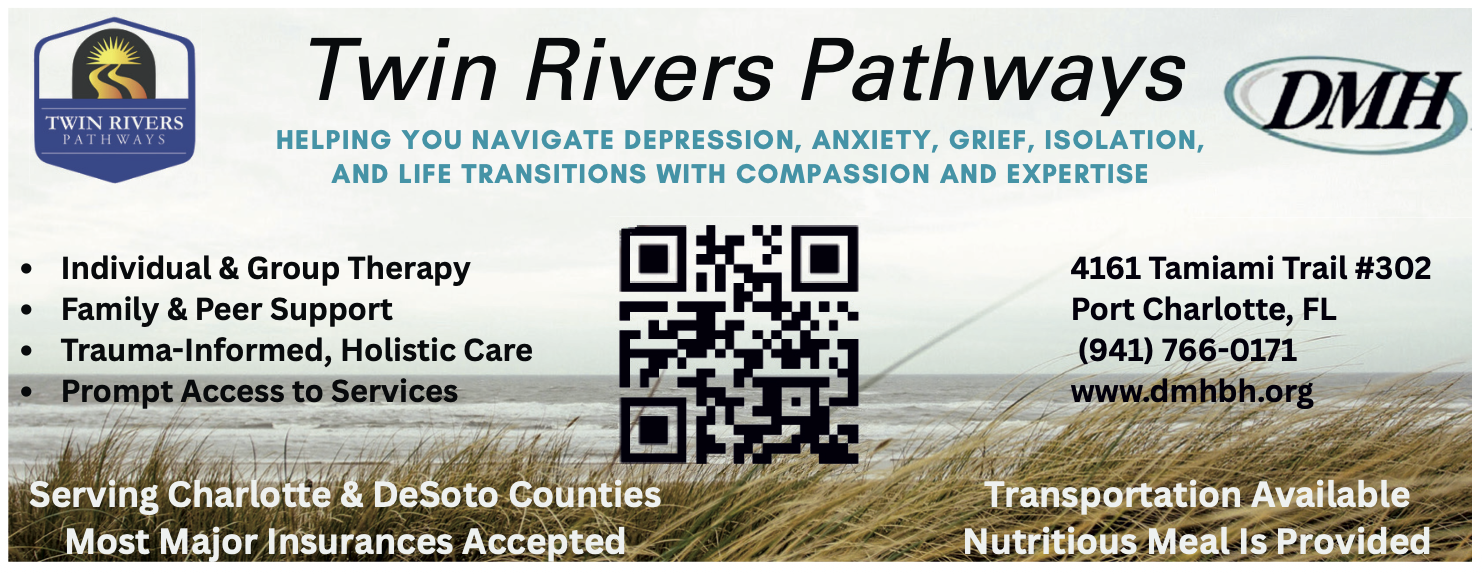
Twin Rivers Pathways
Mental Health & Counseling 4161 Tamiami Trail, Port Charlotte, Florida, 33952DeSoto Memorial Hospital Behavioral Healths Twin Rivers Pathways is an outpatient behavioral health center in Port Charlotte, Florida, providing compassionate, evidence-based mental health and addiction treatment services for individuals and families throughout Southwest Florida. The program specializes in Intensive Outpatient Programs (IOP), outpatient psychiatric care, individual counseling, group therapy, family therapy, and medication management, allowing clients to receive structured support while continuing their daily responsibilities. Twin Rivers Pathways focuses on personalized, whole-person care for conditions including anxiety, depression, PTSD, bipolar disorder, substance abuse, grief, trauma, and co-occurring disorders. Their experienced behavioral health team is committed to helping clients build coping skills, restore emotional stability, and achieve long-term wellness in a supportive and confidential environment.
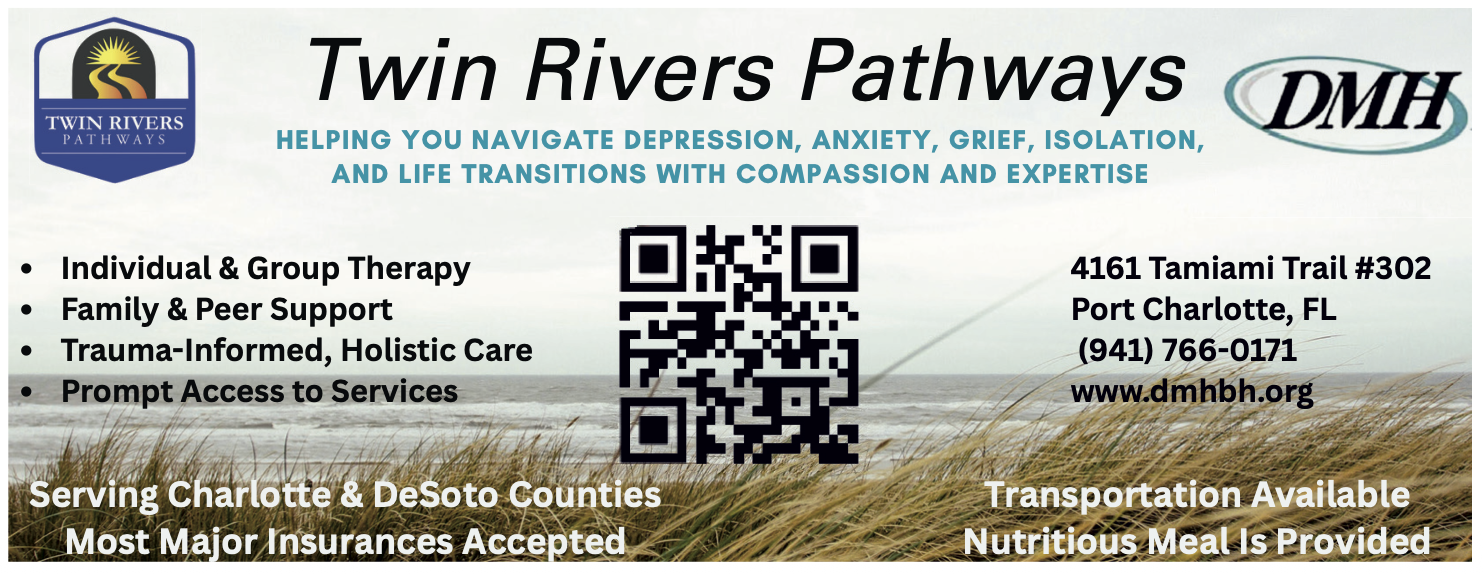
Twin Rivers Pathways
Behavioral Health 4161 Tamiami Trail, Port Charlotte, Florida, 33952DeSoto Memorial Hospital Behavioral Healths Twin Rivers Pathways is an outpatient behavioral health center in Port Charlotte, Florida, providing compassionate, evidence-based mental health and addiction treatment services for individuals and families throughout Southwest Florida. The program specializes in Intensive Outpatient Programs (IOP), outpatient psychiatric care, individual counseling, group therapy, family therapy, and medication management, allowing clients to receive structured support while continuing their daily responsibilities. Twin Rivers Pathways focuses on personalized, whole-person care for conditions including anxiety, depression, PTSD, bipolar disorder, substance abuse, grief, trauma, and co-occurring disorders. Their experienced behavioral health team is committed to helping clients build coping skills, restore emotional stability, and achieve long-term wellness in a supportive and confidential environment.
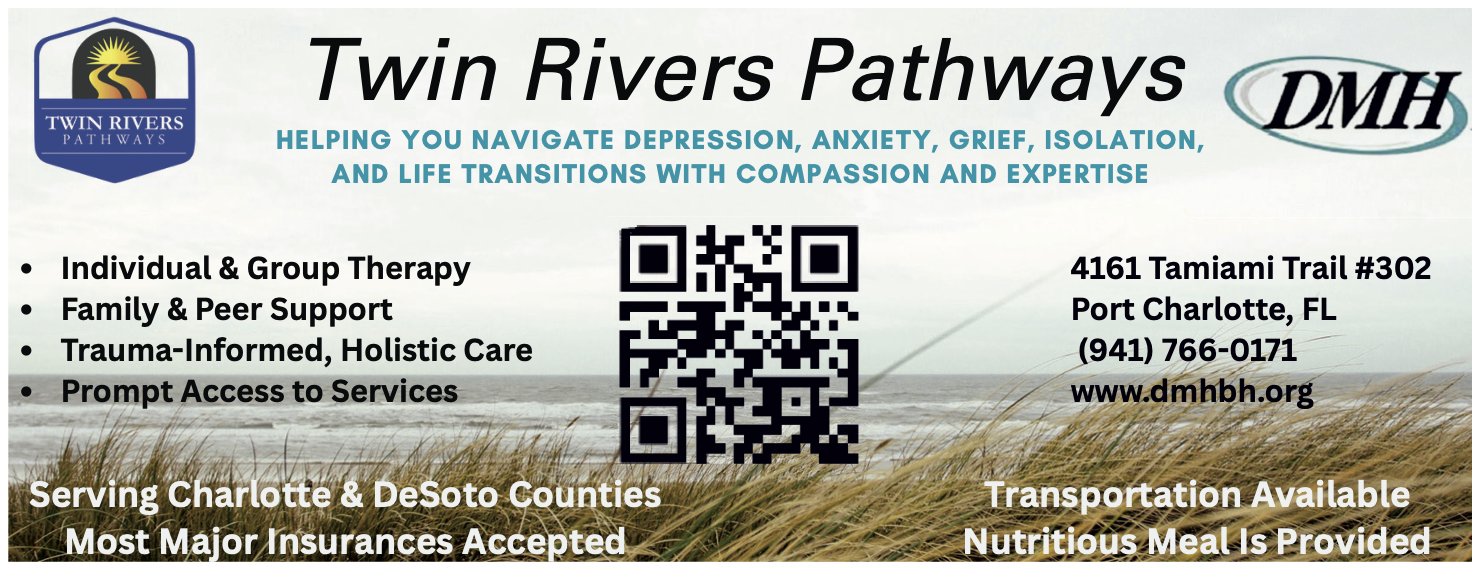
Twin Rivers Pathways
Substance Abuse Programs 4161 Tamiami Trail, Port Charlotte, Florida, 33952DeSoto Memorial Hospital Behavioral Healths Twin Rivers Pathways is an outpatient behavioral health center in Port Charlotte, Florida, providing compassionate, evidence-based mental health and addiction treatment services for individuals and families throughout Southwest Florida. The program specializes in Intensive Outpatient Programs (IOP), outpatient psychiatric care, individual counseling, group therapy, family therapy, and medication management, allowing clients to receive structured support while continuing their daily responsibilities. Twin Rivers Pathways focuses on personalized, whole-person care for conditions including anxiety, depression, PTSD, bipolar disorder, substance abuse, grief, trauma, and co-occurring disorders. Their experienced behavioral health team is committed to helping clients build coping skills, restore emotional stability, and achieve long-term wellness in a supportive and confidential environment.