When Organizing Tips and Tricks Aren’t Enough
So Simple Organization
For more information about the author, click to view their website: So Simple Organization
Nov 09, 2026
Pennsylvania - Greater Pittsburgh Area


Have you ever clicked on an article or bought a book hoping
to find that little nugget that will help you finally get organized?
When I started on my own personal organizing journey in
2015, I bought every organizing magazine and book I could find. While I learned
some helpful things, nothing I read was a real game-changer for me. Sometimes
the organizing advice even felt overly simple and frustrating.
If you’ve ever felt frustrated or underwhelmed with the
organizing tips and tricks you’ve found, you’re not alone. As a professional
organizer, I frequently see this happening with my clients.
After working with 100+ clients, I now understand why
organizing tips and tricks fall short for so many people. For most people, it’s
one (or more) of the 5 common reasons I’ll discuss below.
The good news is that once you understand why the standard
advice isn’t working for you, you can start to find the right support to help
you finally get organized.
Reason 1: You have more complex organizing challenges.
Since becoming a professional organizer, I’ve learned that
some people experience significant, ongoing challenges with organization — we
call this “chronic disorganization.” This is common among people with ADHD,
people with hoarding disorders, and senior citizens.
If you have experienced a long-term struggle with
organization, basic organizing tips aren’t going to address the complexity of
your situation. You may need to address physical and mental health issues,
relationships, and other challenges alongside your home environment.
Working with a therapist or mental health professional, a
professional organizer experienced in chronic disorganization, and establishing
a strong personal support system can make a difference.
Reason 2: You need structure and accountability, not just
information.
Many of my clients know what they need to do to get
organized, but they struggle to carve out the time and complete to the
sometimes-tedious tasks that organization requires.
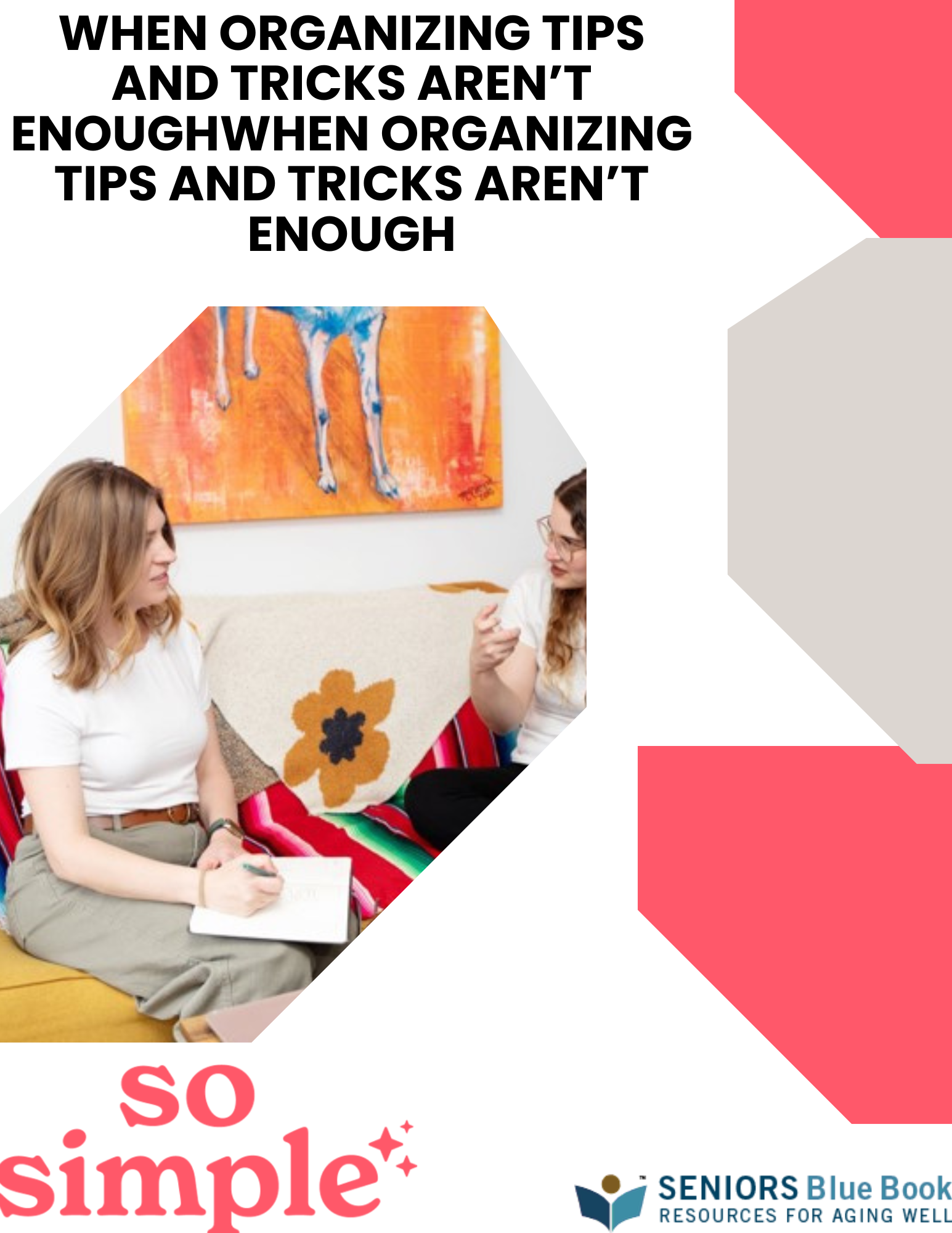
This is why in-person support is key. So many of my clients
tell me “I just get so much more done when you’re here.”
I think of it like working out with a personal trainer.
Sure, I could go to the gym and work out by myself, but if I’ve booked a
session with a personal trainer, I’m much less likely to skip my session or
give it a half-hearted effort.
Having an accountability buddy or trusted professional
working alongside you can help you keep going, even when you’d rather plop on
the couch and binge Netflix than organize your pantry.
Reason 3: You just don’t have time.
Even the best organizing systems require regular
maintenance. If you are in a busy season of life, you may be struggling to find
time to keep your home in order.
I always encourage my clients to look at the whole picture:
- What
are your work responsibilities?
- What
are your care-giving responsibilities?
- What
routine chores are you responsible for (laundry, dishes, cleaning, meal
prep, shopping)?
- Are
you managing scheduling, planning, and logistics for your household?
- Are
you responsible for other types of home maintenance (lawn care,
renovations, repairs)?
- What
activities/organizations are you active in outside of work?
- Do you
have enough downtime and time with your family?
Often, people don’t have as much time to dedicate to home
organizing as they would like. If this is the case for you, simplifying,
delegating tasks, and bringing in outside support can help you stay organized
if you’re time-pressed.
Reason 4: You have a physical or health challenge.
Home organizing is often physical — it can involve a lot of
lifting, reaching, climbing, and standing.
If you have a physical challenge — like an injury, a health
condition that limits your energy or mobility, or a physical disability — it
may be difficult to stay organized. Finding a trusted, non-judgmental partner
who can assist with physical tasks while you make decisions is your key to
staying organized.
Reason 5: You need a bigger lifestyle change.
While working together, sometimes my clients realize there
is something bigger beneath disorganization. Maybe their family is over-scheduled,
and they decide to cut back on some obligations. Or they acknowledge they have
a shopping addiction and consider talking to a therapist. Or they reconsider
their priorities and choose to simplify so they have more time for travel and
hobbies.
All these realizations go beyond organization — they require
a lifestyle change that organizing can support, but on its own won’t completely
address.
If you’ve tried the standard organizing tips and tricks
you’ve read, and they just don’t seem to be helping, consider if something else
in your lifestyle needs to change before you can get organized.
What does this mean for you?
Getting organized can be complex and challenging, and if you
haven’t cracked it yet, don’t be hard on yourself. If any of this resonated
with you, my top recommendations are:
- Take
the organizing tips you hear with a grain of salt. They may work for some,
but they won’t work for everyone (and that’s ok!)
- Consider
how you can add caring, non-judgmental support to reach your goals. That
could be a therapist, coach, trusted friend/family member, body double, or
professional organizer.
- If you
have ADHD or another complex organizing challenge, look for an organizer
with experience working with chronic disorganization. I have my Level I
certificates of study in chronic disorganization and ADHD from the
Institute for Challenging Disorganization (ICD), and you can search their website for professionals in your area.
If you’d like to talk in more detail about your organizing challenges, I’m here for you. Sign up for a free consultation or contact me at 412-503-7604. I’d love to help you get moving in the right direction!
- To view the original version of this article visit www.sosimpleorganization.com/blog/when-organizing-tips-and-tricks-arent-enough
- Seniors Blue Book was not involved in the creation of this content.
Other Articles You May Like
Moving? A Professional Organizer Can Help
I have moved a whopping 13 times since graduating from college. Some of those moves were small, and some of them were big cross-country moves. Most involved tears and frustration, but many also involved joy and important memories. Each time I moved, moving became easier and harder. It got easier because I learned more about how to manage the process. It got harder because I had accumulated more stuff for my first cross-country move, I was able to move everything I owned from Boston to San Francisco in my Ford Focus. For my second cross-country move, I needed a professional mover, someone to crate a large painting so it could be shipped safely, auto transport to move 2 cars, and an RV to drive my dog across the country (because there was no way she was getting on a plane). We all know how stressful moving can be. There are so many tasks to check off your list, on top of the emotions you may feel about leaving your old home behind. It can also be tedious (hello, packing another moving box.) But what you may not know is that you dont have to manage your move alone. As a professional organizer, Ive helped dozens of clients move with less stress. If you have a move coming up, heres how an organizer can help: Move planning A lot of my clients feel overwhelmed when they realize a move is coming. I help them make a plan for what they need to accomplish and when, breaking the move down into small chunks to make it more manageable. I also help them prioritize what has to be done before the move, and what can be done after the move. Once we come up with a plan, some of the stress of the unknown starts to go away. Space planning for downsizing If you are downsizing into a smaller home, it can be hard to know what to move into your new space. I take measurements and create floor plans so clients know which pieces of furniture and belongings can go to their new home, and what wont fit. And then we can make a plan for what to do with everything theyre not taking that could include selling, donating, or coordinating with a junk hauler to remove extra items.Mindful declutteringYou might have heard that you should always declutter or get rid of things before you move. But the truth is that there are pros and cons to decluttering when you are preparing for a move. The pros: you wont spend money moving things you dont want and youll get a fresh, uncluttered start in your new space. If you are moving into a smaller home, decluttering before you move will help you avoid overcrowding your new home with too many boxes. But there are times when pre-move decluttering doesnt make sense. If you are highly stressed about your move, you may not be in the best state of mind to be making decisions about letting things go, especially when it comes to sentimental items or photos. Or if you have to move unexpectedly, you may not have enough time to deal with decluttering before you have to vacate your home. If you are considering pre-move decluttering, I can help you decide if, when, and what to declutter for your move. If you do decide to declutter, I can help you drop off donations or sell items you are not moving with you. PackingPacking is a time-suck, but its also really important to do it right. If you dont pack your belongings properly, you risk having them arrive broken. I can help you get the right packing materials and securely pack your belongings. Additionally, Ill pack your belongings in an organized way instead of just dumping your drawers into boxes. Youll know whats in every box so its easier to put things away when you unpack. UnpackingI cant tell you how many clients contact me and say I moved into my house two years ago, but I still have a bunch of unpacked boxes. And I completely understand why. Moving is so exhausting. Youve put so much effort into getting out of your old place, and you now have to set up a whole new house. At this point, many of us just run out of steam. If you want a hand setting up your new place, I can help you get to done so much faster. Unpacking isnt simply taking your belongings out of your boxes - its organizing your new home from the start. I take the time to find the right places for everything so its smooth and easy for you. (Ill also get all of the boxes and packing material you dont need anymore out of your hair.) And if we find that you packed more than comfortably fits in your new space, we can start thinking about storage solutions or work on more decluttering so you dont have lots of unopened boxes lurking in your new spot. Emotional support and accountabilityWith all of the decisions and changes involved in a move, its easy to get physically and emotionally exhausted when you are moving. Remember, you dont have to do it on your own. If youre planning a move, I invite you to schedule a free consultation with me to learn more about how I can help.
Give the Gift of a Clutter-Free Home
This is a loaded topic, but since its December, Im going to take on holiday gift-giving. Gulp. My approach to gift giving has dramatically changed since Ive become a professional organizer. Why? Because gifts are one of the biggest clutter challenges for my clients.I dont really like this, but it was a gift and I feel guilty about letting go of it. I dont want this, but my Mom gave it to me and Im afraid shell ask about it the next time she comes over. Someone bought me this expensive item, but its just not my style. These are sentiments I hear from clients over and over. After I saw how often gifts the clients not only didnt give them joy, they actually created a negative effect of adding guilt, stress, and clutter, I realized I needed to change my personal approach to holiday gifting. I want to shared what Ive learned with you in the hopes that youll feel more confident both as a gift-giver and recipient. Sooo many giftsHow did we get here?First of all, I want to say that this post isnt about being a Grinch or not giving gifts. I love giving gifts and a world without gifts would be a sad one.At the same time, we live in a culture where there is an incredible pressure to buy lots of gifts, particularly around Christmas. So much so that 47% of Americans surveyed expect to go into debt for holiday gift-giving, travel, or both, this year. And so many people are already overwhelmed with belongings. Eleven percent of Americans rent storage units to store extra stuff. Now that I see much stress gifts create for both givers and receivers, I think its time for a different approach to gifts. Realize the change starts with youBefore we get into strategies, its important to acknowledge that you only have control over your own gift giving behavior. Yup, thats right. You cant stop your mother-in-law or your aunt Suzy from wrapping up LOL dolls or vanilla-scented candles if thats the way they are hell-bent on showing their love. I often hear my younger clients say things like I ask my parents to gift my kids experiences like museum tickets, but they just keep buying plastic toys. Honestly, Im not surprised by that. Buying tons of stuff to show our families that we love them at certain times of the year has become so culturally ingrained that many people feel its mandatory. And for gift givers, gifting something intangible is a change from the tradition of handing someone a wrapped box. Its going to take a bigger cultural change before more people feel comfortable gifting differently. Over the years, Ive realized that although I cant change other peoples behaviors around gifting, I can change the way I give gifts. How Ive changed my approach to giftingBefore I became an organizer, I felt obligated to buy holiday gifts for every party and event I went to. At times, I fell into the trap of buying things I liked or that seemed really nice to me (like an expensive pair of earrings or bottle of wine) but the recipient didnt actually care about. Other times, I found gifts that I knew were lame, but I bought them anyway because I didnt want to show up empty-handed, or I couldnt afford what the person really wanted. I dont do those things anymore. Ive tried to be a more mindful gift-giver by: Opting out of gift exchanges that are less meaningful to me, or where I cant gift a specific recipient, like office Secret Santas or Yankee Swaps. Pausing and asking Am I picking this item to impress the recipient, or because they will really love it? If Im picking something to show off my own taste, I rein myself in. Buying and giving gifts whenever I find the right one, regardless of if theres a holiday or occasion. That way, I dont feel pressure to buy something thats not great just because its a holiday. Giving cash in a nice greeting card. Its not the most exciting gift to give, but Ive never heard someone say they didnt like cash. More ideas for clutter-free giftingIf you love giving gifts, but the people on your list already seem to have everything (or say I dont need anything), you can still gift in a way thats clutter-free. My fellow NAPO organizer Kimberly Corey recently wrote a great blog post full of clutter-free gift ideas, including everything from concert tickets to car detailing (Santa, if youre reading this, Id love to have someone detail my truck :) In addition to all of Kimberlys great ideas, another intangible gift I love is a gift subscription to an online publication so your loved one can read articles without the paywall. What about gift cards? Gift cards can be tricky. Some people love them, but many of them go unused or end up with a balance. I think a gift card to a retailer you know the recipient regularly shops with or to a restaurant you know they love (or would love to try) is a great gift. Otherwise, I would go with cash. I have had more and more clients ask for organizing gift cards over the years, so I do offer several organizing gift cards. These are a great option if your loved one already works with me, or has expressed interest in working with a professional organizer. (Otherwise, it might seem passive aggressive.) The greatest giftIt may seem cliche, but never underestimate the gift of your time and presence. Calling a friend, spending an afternoon with your parents, engaging in something silly with your kidsthese are the gifts they will truly cherish. I wish you a wonderful and joyful holiday season!
Should You Put Your House in Your Childs Name?
For many Pennsylvania homeowners, the family house represents decades of hard work, financial sacrifice, and memories. It may also be one of the most valuable assets they hope to leave to their children.When the possibility of nursing home care enters the conversation, a seemingly simple idea often comes up: Why not transfer the house into an adult child's name now, so it will be protected later?The reasoning is understandable. Parents want to preserve their home, avoid unnecessary expenses, and make life easier for their children. An adult child may be happy to help, especially if the family has a close relationship and everyone agrees about what should happen to the property.The problem is that transferring ownership changes much more than the name on a deed.It can affect taxes, property rights, exposure to creditors, and eligibility for Medicaid long-term care benefits. In some circumstances, parents may even find themselves depending on their children to make decisions about the home where they have lived for years.At Entrusted Legacy Law, this is an important distinction we encourage families to understand before making decisions about their property. Protecting a home is not the same thing as giving it away.For Pennsylvania families considering long-term care planning, understanding the consequences of a deed transfer can help prevent costly and potentially irreversible mistakes. Why Parents Consider Transferring Their House to Their ChildrenThe idea often begins with a conversation between family members.A parent has heard that nursing home care can become expensive. Someone suggests transferring the house into a child's name so it will no longer belong to the parent if Medicaid becomes necessary.The child agrees to the arrangement, and the family assumes the problem has been solved.There may be no intention to sell the property or change the parent's living arrangements. Everyone expects things to continue as they always have.Unfortunately, the legal consequences of ownership do not depend entirely on what family members intend.When a parent executes and delivers a deed transferring a house outright to an adult child, the child generally becomes its legal owner. Unless the parent has retained legally enforceable rights, the parent's ability to make decisions about the property changes.Even when family relationships are strong, unexpected circumstances can arise. A child's financial situation may change. A marriage may end. A creditor may pursue collection. A child may die before the parent.These possibilities are among the reasons that elder law and Medicaid planning should consider the family's financial needs, property rights, and long-term goals together.The Hidden Risks of Adding an Adult Child to Your House DeedNot every property transfer creates the same risks. A complete transfer, the addition of a co-owner, and a transfer involving retained property rights can have different legal and tax consequences. Still, several issues deserve attention before making any change to a Pennsylvania deed.Your Child's Financial Problems May Become Your Property ProblemsConsider a parent who transfers a house outright to an adult daughter.The arrangement works well for several years. The daughter helps maintain the property, and the parent continues living there.Later, the daughter experiences financial difficulties.Because the daughter owns the house, her interest in the property may be exposed to creditor claims, judgments, or other legal proceedings, depending on the circumstances.The parent may have no personal responsibility for the daughter's debts, yet the house could still become part of a financial dispute involving its legal owner.The same concern can arise when an adult child owns only a portion of the property. Their ownership interest may create complications that did not exist before the deed was changed.Parents sometimes assume their home will remain separate from their children's financial lives because everyone understands that it is still the family home.That understanding does not necessarily provide legal protection. Divorce Can Complicate Property OwnershipA child's divorce can also affect property planning.Under Pennsylvania law, property received by gift from a third party is generally excluded from marital property for equitable distribution, subject to statutory rules and exceptions. That does not mean a home transferred to an adult child is automatically insulated from every issue arising during a divorce.Questions can develop around appreciation, improvements, jointly held property interests, financial arrangements, or the way the property has been used.If the child has added a spouse to the deed, the situation may become more complicated.A parent who intended only to simplify an inheritance may now have to deal with legal and financial questions involving another household.The important point is not that every divorce places a parent's former home at risk. It is that transferring ownership can introduce legal interests and complications that the parent did not originally anticipate. Parents Can Lose Control Over Their Own HomeFor many families, this is the most personal consequence.Imagine living in a home for 40 years, paying off the mortgage, raising children, and planning to remain there throughout retirement.After transferring the property, however, you discover that decisions you previously made independently now require the legal owner's cooperation.Depending on the transfer, you may no longer have the unilateral authority to sell the house, refinance it, or decide what happens to it.If the new owner dies, their interest may pass according to their estate plan or applicable inheritance laws rather than returning automatically to the parent. A verbal promise that a parent can live in the house forever does not necessarily create an enforceable lifetime right to occupy it.Some property arrangements can preserve occupancy rights, but they require careful drafting and have their own Medicaid, tax, and ownership implications.For parents who value independence, these details deserve as much consideration as potential asset protection. Giving Your House Away Can Create Unexpected Tax ConsequencesThe tax implications of transferring a home are frequently overlooked because families focus primarily on nursing home costs.One particularly important issue involves the property's tax basis.Tax basis generally determines how much gain is recognized when an asset is sold. In many cases, a homeowner's basis starts with the original purchase price and is adjusted for qualifying improvements and other factors. When someone receives real estate as a gift, the recipient generally takes the giver's adjusted basis for purposes of calculating a gain, subject to certain exceptions.By contrast, inherited property generally receives a basis based on its fair market value at the owner's death, subject to applicable tax rules.The Internal Revenue Service's guidance on tax basis for homeowners explains these distinctions.An Example of How a Gift Can Affect Capital Gains TaxesSuppose a Pennsylvania parent purchased a home for $100,000 many years ago.The property is now worth $350,000, and for simplicity, assume the parent's adjusted tax basis remains $100,000.The parent decides to give the property outright to an adult child.If the child later sells the home for $350,000, the starting point for calculating gain may be the parent's $100,000 adjusted basis.That could produce a $250,000 gain before considering selling expenses, additional basis adjustments, or any available exclusions.Now consider a different situation in which the child inherits the property at the parent's death.If the applicable federal tax rules establish a basis of $350,000 and the child sells it for approximately that amount, there may be little or no capital gain.This is a simplified illustration, not a prediction of anyone's tax liability. The actual result depends on ownership, timing, basis adjustments, eligibility for exclusions, and other circumstances.Nevertheless, it illustrates why a deed transfer that appears helpful for Medicaid planning could produce an unwanted tax result.Does Giving Your Child a House Automatically Create Gift Tax?Not necessarily. A transfer may be considered a gift for federal tax purposes and may create a gift tax reporting obligation. Whether any federal gift tax is actually owed depends on the value transferred, available exclusions, prior gifts, and other factors.A common misunderstanding is that a transfer qualifying for a federal gift tax exclusion is automatically acceptable for Medicaid.These are separate legal systems with different rules.Pennsylvania inheritance tax considerations can also be relevant when comparing lifetime gifts, retained interests, trusts, and inheritances.Before changing ownership, it is worth evaluating Medicaid planning and tax planning together rather than treating them as unrelated decisions. How Pennsylvania's Five-Year Medicaid Look-Back Affects Home TransfersPerhaps the most important misconception is that transferring a house into a child's name immediately protects it from nursing home expenses.Pennsylvania's Medicaid long-term care rules do not work that way.The Pennsylvania Department of Human Services reviews certain asset transfers made during the 60 months before the applicable Medicaid long-term care eligibility determination.When assets are transferred for less than fair market value during that period, the transfer can create a period of ineligibility for Medicaid payment of long-term care services.The Commonwealth explains these requirements in its official Medical Assistance and long-term care eligibility guidance. For example, a parent might transfer a home to an adult child at age 78 and need nursing home care at age 80.Even though the house is no longer titled in the parent's name, the transfer may still affect Medicaid eligibility.Importantly, the five-year look-back is not a rule that automatically protects every transfer once five years have passed. Other Medicaid requirements still apply, and the specific ownership arrangement and retained rights must be evaluated.Certain transfers may qualify for exceptions under Medicaid law, including specific circumstances involving spouses, qualifying children, or other protected individuals. Those exceptions are narrowly defined and should not be assumed to apply merely because the recipient is a family member.Families should also understand that a transfer of a home and a transfer of money into a trust can both have Medicaid consequences.Changing a deed is not a substitute for understanding Medicaid eligibility rules. Does Medicaid Automatically Require You to Sell Your Home?Another reason families rush to transfer property is the belief that Medicaid will automatically require them to sell their house to pay for nursing home care.That is not universally true. Under Pennsylvania's Medicaid long-term care rules, a primary residence may be excluded from countable resources when applicable requirements are met. Ownership, intent to return home, equity limits, and the presence of certain family members can affect the analysis.This means a person may sometimes remain an owner of a home while receiving Medicaid-covered long-term care.However, an excluded home is not necessarily protected from every later claim.Pennsylvania operates a Medical Assistance Estate Recovery Program. Under applicable rules, the Commonwealth may seek reimbursement from a deceased recipient's estate for certain covered long-term care benefits provided after age 55.The Pennsylvania Department of Human Services' Estate Recovery Program describes the program, applicable services, and recovery process.Commonwealth of PennsylvaniaEstate recovery has important statutory limitations, exemptions, and hardship provisions. It is not accurate to say that the state simply takes every Medicaid recipient's house.The distinction between eligibility during a person's lifetime and estate recovery after death is important when deciding how a home should be owned.For a broader explanation of these issues, Entrusted Legacy Law's article on protecting assets from nursing home costs discusses long-term care planning considerations beyond transferring a house. Why an Irrevocable Trust May Be a Better AlternativeFor some Pennsylvania families, a properly structured irrevocable trust may provide a more appropriate way to approach long-term care asset protection than transferring a house outright to an adult child.An irrevocable trust is a legal arrangement in which assets are held and managed under the terms of a trust document.A trustee manages the assets according to those terms, while beneficiaries have the interests established by the trust.Unlike giving a house outright to a child, a trust can provide a detailed legal framework for how the property is managed, used, and eventually distributed.A properly designed trust may help separate the property from an adult child's direct ownership while addressing the parent's lifetime housing needs and the family's inheritance goals.The specific protections depend on the trust's provisions, how it is funded, the rights retained by the person creating it, and applicable law.The Trust Can Establish How the Home Is ManagedWith an outright gift, a parent may rely on a child's goodwill to honor informal expectations about the property. A trust can instead establish legally enforceable provisions addressing management and permitted uses of the property.Depending on the design, these provisions may address who has authority over the property, who may occupy it, what happens if it is sold, and how the property is handled after the parent's death.Some trusts are designed to preserve certain occupancy rights while limiting other powers.These details matter because a trust that allows the person creating it unrestricted access to assets may not accomplish the intended Medicaid planning objective.The trust must be designed around both the family's goals and the legal requirements governing the strategy.A Trust May Reduce Risks Associated With a Child's Direct OwnershipA parent who gives a house to an adult child transfers ownership into that child's personal financial and legal circumstances.A properly structured trust can create a different arrangement.Rather than making the child the outright owner, the trust holds title under its governing terms. Depending on the trust design and applicable law, this may help reduce certain risks related to a beneficiary's creditors or changes in family circumstances.It is important not to confuse this with guaranteed protection.Trusts do not eliminate every potential claim, and legal protections depend on the trust structure and the circumstances.This is why asset protection planning involves much more than choosing a document and transferring ownership. An Irrevocable Trust Still Requires Careful Tax PlanningMoving a house into an irrevocable trust is not automatically tax-neutral.Some trust arrangements are designed so that assets may qualify for a basis adjustment at death under applicable federal tax rules. Others may produce different results.The answer depends on how the trust is structured, whether assets are included in the taxable estate for relevant purposes, and other tax provisions. Income taxes, federal gift tax reporting, Pennsylvania inheritance tax, and real estate transfer tax considerations may also need review.A trust should therefore be evaluated as part of a coordinated estate planning and tax strategy, not simply as a way to change the name on a deed. Why Not Every Irrevocable Trust Protects a House From Nursing Home CostsThe word "irrevocable" is important, but it does not guarantee that a trust will achieve Medicaid asset protection.A trust's treatment under Medicaid rules depends on factors that include how it was created, whose assets funded it, what distributions are permitted, and the rights retained by the person who established it.An improperly designed or funded trust may leave assets available for Medicaid eligibility purposes or create transfer-related penalties.A revocable living trust, while potentially useful for estate administration and probate planning, generally does not provide the same Medicaid asset protection as a properly structured irrevocable trust. Families also need to consider what happens if they later want to sell the house, move closer to adult children, downsize, or use equity to meet unexpected expenses.Those practical concerns can become more important with age.Entrusted Legacy Law explores the importance of matching a trust to family priorities in Medicaid Asset Protection Trust May Not Be the Right Fit.A sound plan should address more than whether an asset could be protected. It should also account for how the parent intends to live and what resources may be needed in the future.What Happens If You Have Already Transferred Your House To Your Child's Name?Families sometimes begin exploring Medicaid planning only after completing a deed transfer.Perhaps the transfer happened several years ago. Maybe a parent was advised to add an adult child to the deed. In other situations, the family acted quickly because a health concern made nursing home care seem likely.Discovering potential problems does not necessarily mean the family has no options.However, it is important not to make another transfer without understanding the consequences of the first one.Transferring the property back to the parent, selling it, or moving it into a trust may produce additional legal, tax, or Medicaid consequences. The effect depends on the original transfer, subsequent events, and the timing of any Medicaid application.A review of the deed and related documents can help establish what ownership rights currently exist.Families should gather the recorded deed, information about the property's original cost and improvements, any written agreements concerning occupancy, and details about the transfer date.If Medicaid eligibility is already a concern, financial and medical circumstances should be reviewed as well.The goal is to understand the existing arrangement before deciding whether changes are appropriate.Questions Pennsylvania Homeowners Should Ask Before Signing a DeedBefore transferring a home to an adult child, it helps to think beyond the immediate goal of reducing assets.Consider how the arrangement would work if circumstances changed.Would you still have an enforceable right to live in the home? Could the legal owner sell or mortgage the property without your consent? What would happen if that person died, divorced, experienced financial difficulties, or became unable to manage their affairs?It is equally important to consider your own future.You may eventually prefer a smaller house, a retirement community, or a home closer to family members. You may need additional money for private care, home modifications, or other expenses that Medicaid does not cover.A plan that appears effective for protecting a house could become restrictive if it does not account for those possibilities.Consider, too, how the arrangement affects other children and beneficiaries. Transferring the house to one child may create unintended differences between family members or complicate the intended inheritance.Finally, ask whether the proposed deed transfer addresses the actual problem.If the goal is long-term care planning, the answer may involve Medicaid eligibility, trust planning, existing insurance, marital protections, tax considerations, or a combination of strategies.A deed change should follow that analysis rather than replace it.Protecting Your Home Starts With Understanding Your OptionsYour house may be the place where you raised your family, celebrated holidays, and built a life together. Protecting it is a reasonable goal, especially when future care expenses feel uncertain.Yet giving that home to an adult child is a significant legal decision with consequences that may extend well beyond Medicaid planning. An irrevocable trust may provide a more thoughtful solution for some families. Others may benefit from a different approach that preserves greater flexibility or addresses immediate long-term care needs.At Entrusted Legacy Law, we help Pennsylvania families understand their options and create estate plans that reflect their priorities, relationships, and long-term financial needs.Whether you are planning ahead or reconsidering a property transfer you have already made, a conversation about your circumstances can help you make an informed decision.Schedule an introductory consultation with Entrusted Legacy Law to explore the next steps for protecting your home and your family's legacy. This article provides general educational information about Pennsylvania estate planning and Medicaid rules. It does not constitute individualized legal or tax advice.
Local Services By This Author

So Simple Organization
Downsizing and Relocation 2640 Monterey Drive, Pittsburgh, Pennsylvania, 15241So Simple Organization: Senior Downsizing & Relocation Services in PittsburghHelping Seniors and Families Navigate Life Transitions with Clarity, Care, and ConfidenceSo Simple Organization is a trusted Pittsburgh-based service specializing in senior downsizing, relocation support, and home organization, designed to make life transitions smoother for older adults and their families. Serving Allegheny County, Washington County, and South Hills communities including Bethel Park, Upper St. Clair, Mt. Lebanon, and Peters Township, the company provides hands-on guidance for seniors preparing to move, simplify, or transition into a new living environment.Moving later in life is more than a logistical taskit is an emotional journey. Whether transitioning to a smaller home, independent living, assisted living, or moving closer to family, seniors are often faced with decades of belongings and difficult decisions. So Simple Organization provides the structure, support, and compassion needed to move forward without feeling overwhelmed.Downsizing Services for Seniors in PittsburghDownsizing is often the first and most challenging step in any senior move. So Simple Organization offers professional downsizing services in Pittsburgh that help seniors and families sort through belongings in a thoughtful, manageable way.Rather than rushing decisions, the process is broken into simple, guided steps. Clients are supported in determining what to keep, what to pass along to loved ones, what to donate, and what to let go of. Every decision is handled with respect, recognizing the memories and meaning behind personal belongings. This approach not only reduces stress but also ensures that the next living space is filled with items that truly mattercreating a comfortable and intentional new beginning.Senior Relocation Support from Start to FinishRelocating can feel overwhelming without the right support system in place. So Simple Organization provides comprehensive senior relocation services, helping manage every phase of the move with clarity and organization. From the initial planning stages to the final setup in a new home, the focus is on simplifying each step. This includes preparing the current home, organizing belongings, and ensuring everything is aligned with the layout and needs of the new space. For seniors moving within Pittsburgh and the South Hills, this service creates a seamless experiencereducing confusion, minimizing stress, and allowing for a more positive transition overall.Decluttering Before the Move: A Smarter ApproachOne of the most valuable aspects of working with So Simple Organization is their focus on decluttering before relocation. Instead of packing everything and sorting later, they help clients simplify firstmaking the entire moving process more efficient.By reducing unnecessary items before packing begins, seniors and families benefit from: Fewer boxes and lower moving costs Easier unpacking and organization A cleaner, more manageable new living space This proactive approach transforms moving from a chaotic experience into a structured and thoughtful process.Organized Packing with PurposePacking is more than placing items into boxesit is about preparing for a successful transition. So Simple Organization provides organized packing services designed to make unpacking simple and stress-free. Items are grouped logically, labeled clearly, and packed with intention. Daily essentials are easily accessible, and important belongings are handled with extra care. This level of detail ensures that nothing feels lost or out of place during the move. For caregivers and families, this means fewer questions, less confusion, and a smoother overall experience.Unpacking & New Home Setup for Immediate ComfortArriving in a new home should feel comfortingnot overwhelming. Thats why So Simple Organization offers unpacking and home setup services that help seniors settle in quickly and confidently. Each space is thoughtfully arranged to reflect familiarity and ease of use. Kitchens are organized for daily routines, closets are simplified, and personal items are placed in meaningful ways. The goal is to create a home that feels comfortable from day one. This service is especially valuable for seniors transitioning into smaller spaces, where organization plays a key role in maintaining comfort and independence.Supporting Seniors, Caregivers, and FamiliesDownsizing and relocation often impact more than just the individualthey affect entire families. So Simple Organization provides support not only to seniors but also to caregivers and adult children navigating these transitions. For those balancing work, family, and caregiving responsibilities, having a trusted professional manage the details of downsizing and moving can make a significant difference. The process becomes more manageable, timelines stay on track, and seniors feel supported every step of the way. For families who live out of town, this service provides peace of mind knowing that a loved ones move is being handled with care and attention.Local Expertise in Pittsburgh & South Hills CommunitiesAs a locally owned business, So Simple Organization understands the unique needs of seniors in the Pittsburgh area. With experience working in South Hills communities such as Bethel Park, Upper St. Clair, Mt. Lebanon, and Peters Township, they bring valuable local knowledge to every project. This includes familiarity with housing styles, senior living communities, and the emotional considerations that come with leaving a long-time home. Their local presence allows them to provide personalized, responsive service tailored to each clients situation.A Thoughtful, Respectful Approach to Every TransitionWhat sets So Simple Organization apart is their commitment to a respectful and personalized approach. Downsizing and relocation are handled at a pace that feels comfortable for the client, without pressure or urgency. Every interaction is grounded in patience, understanding, and clear communication. Seniors remain in control of decisions, while families receive the guidance they need to move forward confidently. This balance creates a positive experience during what is often a major life transition.Why Choose So Simple Organization for Downsizing & RelocationFamilies throughout Pittsburgh choose So Simple Organization for their expertise in senior downsizing, relocation services, and home organization. Their ability to combine practical solutions with compassionate support makes them a valuable partner during times of change. By focusing on simplifying the process, reducing overwhelm, and creating functional living spaces, they help seniors transition into their next chapter with ease and confidence.Start Your Next Chapter with SimplicityIf you or a loved one is preparing for a move, considering downsizing, or feeling overwhelmed by the thought of relocation, So Simple Organization is here to help. With a focus on senior relocation, downsizing services, and organized moving support in Pittsburgh, they provide the tools, guidance, and hands-on assistance needed to make the process smoother from beginning to end. Take the first step toward a simpler, more manageable futureone that feels organized, supported, and ready for what comes next.
So Simple Organization
Clutter Clean Up 2640 Monterey Drive, Pittsburgh, Pennsylvania, 15241So Simple Organization: Clutter Support, Senior Downsizing & ADHD-Friendly Home Organization in Pittsburgh So Simple Organization is a compassionate, locally trusted home organizing and senior transition service helping individuals and families across the Pittsburgh area move from overwhelm to clarity. Serving Allegheny County, Washington County, and South Hills communities including Bethel Park, Upper St. Clair, Mt. Lebanon, and Peters Township, So Simple Organization specializes in decluttering, senior downsizing, move preparation, and ADHD-friendly organizing solutions designed to make everyday life easier and more manageable. At the heart of So Simple Organization is a simple belief: clutter is not just about stuff. It often reflects life changes, emotional attachments, health challenges, or simply not having the right systems in place. For seniors, caregivers, and individuals living with ADHD, clutter can quickly become overwhelmingimpacting safety, stress levels, and overall quality of life. Thats why So Simple Organization focuses on gentle, judgment-free support that meets people where they are. Clutter HappensAnd Its More Common Than You Think Many of the insights shared through So Simple Organizations educational content and articles highlight an important truth: clutter is not a personal failure. It can be the result of busy lives, major transitions, grief, health conditions, or neurodiversity such as ADHD. For seniors, clutter may build over time simply because theyve lived full, meaningful lives. For caregivers, it may come from juggling too many responsibilities. And for individuals with ADHD, clutter often stems from challenges with focus, decision-making, and maintaining systems. So Simple Organization approaches every home with empathy and understandingnever judgment. Their goal is to create simple, realistic systems that actually work for the way people live, not against them. ADHD-Friendly Organizing That Works in Real Life One of the unique strengths of So Simple Organization is its focus on ADHD-friendly organizing strategies. Traditional organizing methods dont always work for individuals who struggle with attention, executive function, or decision fatigue. Thats why the approach here is different. Instead of rigid systems, So Simple Organization creates flexible, easy-to-maintain solutions that reduce overwhelm and support daily routines. This might include simplifying categories, creating visual organization systems, or setting up spaces that require fewer steps to maintain. For seniors who may be experiencing cognitive changesor for adult children helping parents who struggle with organizationthese strategies can make a meaningful difference. The result is a home that feels calmer, more functional, and easier to navigate day-to-day. Senior Decluttering & Home Organization Services So Simple Organization provides professional decluttering and home organizing services in Pittsburgh designed specifically for seniors and older adults. Whether the goal is to improve safety, prepare for a future move, or simply regain a sense of control, each project is approached with care and patience. By reducing clutter, the team helps create safer living environmentsminimizing fall risks and making it easier to move freely throughout the home. Frequently used items are placed within reach, unnecessary obstacles are removed, and spaces are simplified for comfort and ease. For seniors choosing to age in place, this type of organization can significantly improve independence and confidence at home. Downsizing Support with a Gentle, Step-by-Step Approach Downsizing can be one of the most emotionally challenging experiences for seniors and their families. Letting go of belongings often means letting go of memories, which is why So Simple Organization takes a thoughtful, supportive approach to senior downsizing in Pittsburgh. Rather than rushing the process, they guide clients step-by-stephelping them sort items into clear, manageable categories while honoring what matters most. Their approach reduces decision fatigue and provides clarity during what can otherwise feel overwhelming. This service is especially helpful for seniors moving from long-time homes in South Hills communities into smaller residences, independent living, or assisted living environments. Clutter-to-Move: Preparing for a Simpler Transition Before any move, there is often a critical first step: clearing the clutter. So Simple Organization bridges the gap between organizing and moving by helping clients declutter before they pack. This clutter-to-move process ensures that only meaningful, necessary items make it into the next home. It reduces moving costs, simplifies packing, and creates a more intentional transition overall. For families, this means less stress, fewer decisions during the move, and a smoother experience from start to finish. Organized Packing, Unpacking & Home Setup Once the home has been decluttered and organized, So Simple Organization provides packing and unpacking services designed with clarity and ease in mind. Items are packed in a way that makes sensegrouped logically, labeled clearly, and prioritized for easy access. This eliminates confusion during unpacking and helps seniors settle in quickly. In the new home, the team thoughtfully sets up each space to feel familiar, comfortable, and functional. Kitchens are organized for daily use, closets are simplified, and personal items are placed with intentioncreating a true sense of home from day one. Support for Caregivers and Families For caregivers and adult children, managing clutter or coordinating a move for a loved one can feel overwhelming. So Simple Organization provides hands-on support that lightens the load. Whether youre local to Pittsburgh or supporting a parent from out of town, having a trusted professional manage the details of organizing, downsizing, and moving can bring tremendous peace of mind. Their approach keeps projects moving forward while ensuring that seniors feel respected, involved, and supported throughout the process. Local Expertise in Pittsburgh & South Hills Communities As a locally owned and operated business, So Simple Organization understands the needs of seniors and families in the Pittsburgh region. Their experience in Allegheny County, Washington County, and South Hills communities allows them to provide highly personalized service tailored to local homes, lifestyles, and transitions. This local connection also means they understand the emotional side of leaving a long-time homeand the importance of making the next space feel just right. Why Families Trust So Simple Organization Families choose So Simple Organization because of their compassionate approach to clutter, expertise in senior transitions, and understanding of ADHD-friendly organizing methods. They dont just organize spacesthey create systems that support real life. Every project is handled with patience, respect, and a focus on reducing overwhelm. Whether helping a senior declutter a home, supporting an ADHD client with organization, or guiding a family through a move, their goal is always the same: to simplify the process and create a sense of calm. Simplify Your Space, Simplify Your Life If you or a loved one in the Pittsburgh area is feeling overwhelmed by clutter, preparing for a move, or struggling to create an organized home that actually works, So Simple Organization is here to help. With expertise in decluttering, ADHD-friendly organizing, senior downsizing, and move support, they provide thoughtful solutions that make life easierone step at a time. Reach out today and take the first step toward a simpler, more peaceful home.
So Simple Organization
Move Management & Organizing Services 2640 Monterey Drive, Pittsburgh, Pennsylvania, 15241So Simple Organization: Senior Moving, Downsizing & Home Organization Services in PittsburghSo Simple Organization is a trusted, locally focused senior moving and home organization service helping older adults and their families throughout the Pittsburgh area simplify lifes transitions with confidence, dignity, and ease. Proudly serving Allegheny County, Washington County, and South Hills communities including Bethel Park, Upper St. Clair, Mt. Lebanon, Peters Township, and surrounding neighborhoods, So Simple Organization specializes in senior downsizing, relocation support, move preparation, and home organization services designed specifically for aging adults and their caregivers. When it comes to moving later in life, the process is rarely simple. It often involves yearssometimes decadesof belongings, memories, and emotional attachments. For seniors and their families, this can feel overwhelming. Thats where So Simple Organization steps inwith a compassionate, step-by-step approach that transforms a stressful move into a manageable and even meaningful experience.Senior Moving Services Designed for a Smooth TransitionSo Simple Organization offers personalized senior moving services in Pittsburgh that support every stage of the relocation process. Whether moving to a smaller home, independent living community, assisted living residence, or closer to family, their goal is to reduce stress while maintaining a sense of control and comfort for the senior. Their process begins with thoughtful planning. They work closely with seniors and caregivers to understand the new living space, helping determine what will fit, what is needed, and what can be let go. This ensures that the new home is not only functional but also familiar and comforting from day one.From there, the team assists with sorting, organizing, and preparing for the move, always honoring the clients pace and preferences. Every item is handled with care, and decisions are guidednot rushed. This level of support is especially valuable for adult children managing a parents move while balancing work and family responsibilities.Downsizing Support with Compassion and ClarityDownsizing is one of the most importantand often most emotionalparts of a senior move. So Simple Organization provides expert downsizing services for seniors in Pittsburgh, helping families navigate this transition with clarity and confidence. Their approach focuses on simplifying the decision-making process. They help clients sort belongings into clear categories: keep, donate, gift, or discard. More importantly, they provide emotional support throughout the process, recognizing that every item may carry memories and meaning. By gently guiding seniors through downsizing, they help reduce overwhelm and create a more manageable, organized living space in the next chapter of life. This service is especially beneficial for those moving from larger homes in South Hills communities into more compact residences or senior living communities.Organized Packing & Move PreparationOne of the biggest challenges during any move is packingand for seniors, it can be physically demanding and mentally exhausting. So Simple Organization offers organized packing services that go far beyond simply placing items in boxes. Each box is carefully labeled, categorized, and packed with intention to ensure an easy unpacking process. Essential items are clearly identified, helping seniors settle into their new space quickly without confusion or frustration. Their detailed, organized approach reduces the risk of lost items and ensures that everything arrives in its proper place. For caregivers, this means fewer follow-up tasks and a smoother overall experience.Unpacking & New Home Setup for Immediate ComfortWhat truly sets So Simple Organization apart is their commitment to making a new space feel like home right away. Their unpacking and home setup services ensure that seniors are not left surrounded by boxes and uncertainty after the move. They thoughtfully arrange furniture, organize belongings, and recreate familiar environments within the new home. From setting up kitchens and closets to arranging personal items and dcor, every detail is handled with care. The result is a space that feels comfortable, functional, and welcoming from the very beginninghelping seniors adjust more easily to their new surroundings.Home Organization for Safer, Simpler LivingIn addition to moving services, So Simple Organization provides professional home organizing for seniors who wish to stay in their current homes. This is especially valuable for those choosing to age in place. Clutter can quickly become a safety concern for older adults, increasing the risk of falls and making daily tasks more difficult. Through thoughtful organization and decluttering, the team creates spaces that are easier to navigate, safer to live in, and more enjoyable overall. They focus on improving accessibility, simplifying routines, and creating systems that are easy to maintain. Whether organizing a single room or an entire home, their work supports independence and peace of mind.Supporting Caregivers and Families Every Step of the WayFor caregivers and adult children, coordinating a move or organizing a loved ones home can feel overwhelming. So Simple Organization acts as a trusted partner, providing hands-on support that reduces stress and keeps everything moving forward. Their services are especially helpful for families who live out of town or have limited time. By managing the details of organizing, downsizing, and moving, they allow families to focus on what matters mostsupporting their loved one emotionally during the transition. This partnership approach makes a meaningful difference during what can otherwise be a challenging time.Local Expertise in Pittsburgh & South Hills CommunitiesAs a Pittsburgh-based business, So Simple Organization understands the unique needs of local seniors and families. Their experience working in communities such as Bethel Park, Upper St. Clair, Mt. Lebanon, and Peters Township allows them to provide highly relevant, personalized service. They are familiar with local senior living options, housing layouts, and the logistical considerations that come with moving within the region. This local expertise ensures a smoother, more efficient experience for every client.Why Choose So Simple Organization?Families choose So Simple Organization because of their compassionate approach, attention to detail, and commitment to making every transition as smooth as possible. Their services are not just about organizing or movingthey are about helping seniors and families move forward with confidence. By combining senior move management, downsizing services, packing and unpacking support, and home organization, they provide a complete solution tailored to the needs of older adults. Every project is handled with patience, respect, and a genuine understanding of the emotional side of moving later in life.Begin Your Next Chapter with ConfidenceIf you or a loved one in the Pittsburgh area is preparing for a move, considering downsizing, or simply looking to create a more organized and manageable home, So Simple Organization is here to help. With specialized expertise in senior moving services, home organization, and downsizing support, they make it possible to simplify the process while preserving what matters most. Reach out today to discover how So Simple Organization can turn a stressful transition into a smooth, supported, and positive experiencefor both seniors and the families who care for them.