
PHONE
Click to View NumberSee More
Additional Services Offered
Larimer County Human Services
Food Resources 1501 Blue Spruce Dr, Larimer County, Fort Collins, Colorado, 80524
ADRC (Aging And Disability Resource Center)
Disability Services 1501 Blue Spruce Drive, Larimer County, Fort Collins, Colorado, 80524
Claim This Business Listing
- Are you the owner of this business listing? If so, please click the button below to take control of it today.
- This feature enables businesses to update their information and become part of the Seniorsbluebook.com network. It is a simple, yet effective way for businesses to connect with seniors and their families who are looking for senior related services.
Continue Your Search! Explore More Local Options.
Start SearchingLet’s engage and get educated!
Browse through thousands of expert articles in over 100 different categories.
Browse NowArticles You May Like

Support for Grandparents Raising Grandchildren
Retirement was supposed to bring a different pace of life. Instead, mornings now involve preparing school lunches, finding missing homework, arranging transportation, and getting children ready for another busy day.For grandparents raising grandchildren, later adulthood can include responsibilities they never anticipated taking on again.These older caregivers often provide stability during difficult family circumstances while managing their own healthcare needs, financial responsibilities, and changing physical abilities.The Larimer County Office on Aging in Fort Collins, Colorado, recognizes the unique challenges faced by these households through its Grandfamily Respite Voucher Program.This specialized program helps qualifying older relative caregivers access temporary childcare and household assistance, creating opportunities to attend to their own needs.Understanding What It Means to Be a GrandfamilyA grandfamily is a household in which grandparents or other relatives assume primary responsibility for raising children.These arrangements may develop because of family illness, parental absence, military obligations, substance use challenges, or other circumstances that affect a parent's ability to provide care.Every household has a different story.Some grandparents become caregivers unexpectedly, while others gradually assume increasing responsibilities until they are providing full-time care.Although raising grandchildren can create meaningful relationships, it can also introduce considerable practical demands.Older relatives may find themselves coordinating school schedules, attending medical appointments, managing childcare expenses, and navigating educational systems while adjusting their retirement plans.The Challenges of Parenting During Later AdulthoodGrandparents raising children often experience circumstances that differ from those of younger parents.Their financial resources may be structured around retirement rather than employment. Physical abilities may have changed, and existing healthcare needs can require regular attention.At the same time, children need supervision, emotional support, transportation, educational assistance, and recreational opportunities.Balancing these responsibilities can become particularly demanding when the caregiver has limited assistance from other relatives.Financial ResponsibilitiesRaising a child introduces ongoing expenses involving food, clothing, school supplies, transportation, and childcare.Grandparents living on fixed incomes may find it difficult to absorb these costs.Families can benefit from exploring public assistance programs, kinship caregiver resources, and other services for which they may qualify.Eligibility varies according to the individual program and household circumstances.Managing Personal HealthOlder caregivers may have regular medical appointments, chronic health conditions, or physical limitations that require attention.Finding someone to supervise children during appointments can become an obstacle.Without dependable assistance, grandparents may postpone personal responsibilities because childcare arrangements are difficult to coordinate.Adjusting to Changes in ParentingEducational technology, communication tools, school expectations, and parenting resources may differ considerably from those grandparents encountered when raising their own children.Learning to navigate these changes can require time and additional support.Connecting with other relative caregivers may provide opportunities to exchange experiences and discover practical solutions.How the Grandfamily Respite Voucher Program WorksThe Larimer County Office on Aging offers its Grandfamily Respite Voucher Program through the Family Caregiver Support Program.Its purpose is to give eligible grandparents and other older relative caregivers temporary relief from ongoing caregiving responsibilities.Approved voucher expenses may include babysitting, household assistance, childcare programs, summer camps, and after-school programs.This flexibility recognizes that caregivers may benefit from different kinds of assistance.One grandparent might need childcare while attending a medical appointment. Another may benefit from household cleaning assistance that reduces the physical demands of maintaining a busy family home.Approved services depend on eligibility, program requirements, and available funding.Who Qualifies for the Grandfamily Respite Voucher?According to the county's published eligibility guidelines, applicants must generally meet four requirements:Reside in Larimer County.Be at least 55 years old.Serve as the child's full-time primary guardian.Be related to a child aged 17 or younger through blood, marriage, or adoption.Qualifying caregivers may include grandparents, step-grandparents, aunts, uncles, and other eligible older relatives.The amount of assistance available depends on assessment and funding.Priority may be given to households experiencing greater economic or social need, rural caregivers, and families raising children with significant disabilities.Contact the Office on Aging to discuss individual circumstances before making financial arrangements based on anticipated voucher assistance.Choosing Childcare That Fits Your HouseholdUnlike some assistance programs that require a specific professional provider, the Grandfamily Respite Voucher allows qualifying families to consider different childcare arrangements.Depending on program approval, caregivers may hire a professional childcare provider or pay a trusted friend, neighbor, or relative who does not reside in the same household.Families should evaluate potential caregivers according to the child's needs, appropriate supervision requirements, and their own preferences.Discuss proposed services with the Office on Aging before arranging paid assistance.Voucher reimbursement applies only to approved services provided within the authorized period.Understanding these requirements in advance can help prevent unexpected out-of-pocket expenses.Respite Is About More Than Taking a BreakFor grandparents raising children, temporary assistance can create opportunities to complete responsibilities that are otherwise difficult to schedule.An afternoon of approved childcare might allow someone to attend a healthcare appointment, meet with a financial advisor, complete household errands, or participate in an educational program.It may also provide time for rest or reconnecting with friends.These opportunities are valuable because an older caregiver's health and well-being influence their ability to continue providing dependable care.Respite assistance is not intended to replace the caregiver's role. It provides temporary support within an existing family arrangement.Finding Grandfamily Resources in Fort CollinsFort Collins is home to Colorado State University, community recreation programs, public libraries, and organizations serving children and older adults.Colorado State University Extension's GRANDcares initiative provides educational resources developed to strengthen the well-being of grandfamilies.The program emphasizes caregiver self-care, parenting skills, communication, and the needs of children being raised by grandparents.Families can also explore resources through Larimer County Human Services, school family support personnel, and community organizations serving kinship caregivers.For households living in rural areas around Wellington, Livermore, or other parts of Larimer County, transportation and access to childcare may require additional planning.The Office on Aging can serve as a starting point for identifying appropriate resources and understanding available assistance.Frequently Asked Questions About Grandfamily Support in Fort CollinsCan grandparents younger than 60 apply for a Grandfamily Respite Voucher?Yes. The program's minimum caregiver age is 55, provided all other eligibility requirements are met.Can an older aunt or uncle qualify for the program?Yes. Eligible older relatives who meet the program's relationship, guardianship, age, and residency requirements may apply.Can the voucher help pay for summer camp or after-school care?Yes. These are among the potentially approved services. Applicants should obtain authorization before incurring expenses.Can I pay a family member to supervise my grandchildren?Potentially, provided the family member does not live in the same household and the arrangement meets applicable program requirements.Is grandfamily assistance available outside Fort Collins?Yes. Qualifying caregivers throughout Larimer County can inquire about the program through the Office on Aging.Find Support for the Family You Are Raising TodayGrandparents and other older relatives who assume responsibility for raising children provide an important foundation for their families.Their own health, financial circumstances, and personal needs deserve attention alongside the responsibilities of caregiving.The Larimer County Office on Aging offers its Grandfamily Respite Voucher Program to help qualifying older caregivers access temporary assistance and maintain more manageable household arrangements.If you are raising a grandchild or another young relative, explore the support available to your family.For more information about Grandfamily Respite Vouchers, kinship caregiver resources, and specialized family assistance, visit the Larimer County Office on Aging Seniors Blue Book Listing
Nov 28, 2026
How Household Assistance Vouchers Help Seniors Manage Their Homes
The lawn needs mowing. Snow has accumulated on the sidewalk. The bathroom needs cleaning, and a burned-out lightbulb is located just beyond comfortable reach.For many older adults, maintaining a home becomes increasingly challenging long before they need extensive personal care.Hiring professional assistance may be an option, but recurring household expenses can become difficult to manage on a fixed retirement income.The Larimer County Office on Aging in Fort Collins, Colorado, offers two specialized voucher programs that address these concerns: the In-Home Services Voucher Program and the Chore Voucher Program.These programs provide different forms of assistance for eligible older adults experiencing physical or cognitive limitations that affect their ability to maintain their homes.When Household Maintenance Becomes a Physical ChallengeHomeownership and independent apartment living both involve ongoing responsibilities.Although many older adults remain capable of managing their personal decisions and daily schedules, physically demanding household activities may become more difficult.Reduced endurance, arthritis, balance difficulties, and changes in mobility can influence someone's ability to complete essential tasks.An individual who previously maintained a large yard may struggle to operate lawn equipment. Someone experiencing shoulder discomfort might find cleaning windows or changing overhead lightbulbs increasingly difficult.These challenges do not automatically indicate a need for residential senior care.Instead, targeted household assistance may address specific responsibilities that have become difficult to manage.Understanding the Two Voucher ProgramsThrough its Aging and Disability Resource Center, the Larimer County Office on Aging administers two programs for qualifying county residents aged 60 and older.Although both programs support community living, they serve different purposes.The Chore Voucher ProgramThe Chore Voucher Program helps eligible older adults pay for physically demanding maintenance activities they can no longer complete comfortably or safely.Examples of potentially qualifying projects include:Lawn mowing and snow removalGutter cleaningWashing hard-to-reach windowsTrimming trees and shrubsMinor repairs to fences or porch stepsCarpet cleaningMoving heavy furniture or appliancesThis program operates through reimbursement rather than automatically assigning a worker to complete the requested project.Applicants are responsible for obtaining estimates, arranging an approved service, paying the provider, and submitting the required documentation.The In-Home Services Voucher ProgramThe In-Home Services Voucher Program addresses more routine household and personal care responsibilities.It is designed for older adults who have difficulty maintaining their living environment or completing personal care activities because of physical or cognitive limitations.The Office on Aging works with professional home care agencies to deliver approved assistance.Services may include light housekeeping and qualifying personal care activities.Unlike the Chore Voucher Program, which focuses on physically demanding household projects, this program can provide recurring assistance based on assessed needs.Choosing the Appropriate Household Assistance ProgramConsider an older adult living in an established Fort Collins neighborhood who remains capable of preparing meals and managing personal hygiene but can no longer shovel snow.The Chore Voucher Program may address that particular concern.Another resident might experience difficulty cleaning the bathroom, vacuuming, or completing personal care activities regularly. The In-Home Services Voucher Program may be more relevant.Understanding the distinction helps applicants communicate their needs more clearly.The Office on Aging can explain program requirements and help determine which options may be appropriate.How Chore Voucher Reimbursement WorksOne of the most important things to understand about the Chore Voucher Program is that approval must occur before the work begins.Hiring a contractor and requesting reimbursement afterward may result in an ineligible expense.Under the county's published guidelines, qualifying households may receive up to $250 during a six-month voucher period, subject to approval and available funding.Applicants generally need to obtain an estimate for the requested project and intend to complete the work within 90 days of requesting assistance.Family members cannot be paid through this particular voucher program, even if they live outside the applicant's household.After the approved service is completed, the participant submits the necessary payment documentation to request reimbursement.Because participants initially pay the service provider themselves, families should consider whether they can manage that expense while awaiting reimbursement.Why Seasonal Household Assistance Matters in Fort CollinsNorthern Colorado's climate creates household responsibilities that change considerably throughout the year.Winter snow and freezing temperatures can make exterior maintenance particularly demanding. Spring brings landscaping responsibilities, while autumn often requires gutter cleaning, leaf removal, and preparation for colder weather.For older adults experiencing reduced mobility or endurance, these activities may become increasingly difficult.Fort Collins residents living in older neighborhoods may also encounter maintenance concerns involving mature trees, aging fences, and established landscaping.Planning seasonal assistance before a task becomes urgent gives households more time to obtain estimates, explore eligibility, and arrange suitable services.Residents should also understand that voucher availability may be limited, making early inquiries especially useful.Preparing for an In-Home Services AssessmentOlder adults interested in recurring household assistance should be prepared to describe the activities they find difficult.Rather than simply explaining that maintaining the house has become challenging, identify specific responsibilities and how often assistance is needed.For example, explain whether cleaning requires frequent rest periods, whether reaching certain areas has become difficult, or whether personal hygiene activities require physical assistance.These details can help the Office on Aging understand the applicant's circumstances.The county's published program information describes homemaker assistance as commonly involving two hours of service weekly or every other week, with possible additional personal care support when approved.Actual service arrangements depend on individual assessment, eligibility, provider availability, and funding.Do You Need to Have a Low Income to Apply?The Larimer County Office on Aging indicates that its individual voucher programs are not restricted exclusively to low-income residents.However, financial need and other program priorities may influence how limited resources are allocated.Both programs are popular, and waiting lists may apply.Older adults should contact the Office on Aging directly rather than assuming they are ineligible based on retirement income or homeownership.Frequently Asked Questions About Senior Household Assistance in Fort CollinsWho qualifies for household assistance vouchers in Larimer County?Applicants generally must reside in Larimer County, be at least 60 years old, and meet the applicable functional requirements for the requested program.Can the Chore Voucher Program help pay for snow removal?Yes. Snow removal is among the types of assistance that may qualify. Approval must be obtained before the work begins.Can I hire a relative to complete chores using the voucher?No. The county's Chore Voucher Program does not reimburse payments to family members.Does the In-Home Services Voucher cover full-time home care?No. The program provides limited assistance according to approved needs and available resources. It is not intended to replace comprehensive around-the-clock care.Are these programs available outside Fort Collins?Yes. Eligible residents throughout Larimer County, including Loveland, Wellington, Berthoud, and Estes Park, can inquire about these programs.Get Help With the Household Tasks That Have Become DifficultMaintaining a home should not require an older adult to undertake physically demanding activities beyond their current abilities.The Larimer County Office on Aging provides targeted assistance through its Chore Voucher and In-Home Services Voucher programs, helping qualifying residents address household maintenance and everyday personal care needs.If you or someone you love is struggling with household responsibilities, contact the Office on Aging to learn about eligibility, application procedures, and current availability.For more information about senior household assistance, voucher programs, and aging resources in Fort Collins, visit the Larimer County Office on Aging Seniors Blue Book Listing
Nov 28, 2026
Understanding Your Rights as a Long-Term Care Resident
Moving into an assisted living community or nursing home does not mean giving up the right to privacy, personal choice, respectful treatment, or participation in decisions about your care.Yet many older adults and their families are uncertain about what to do when concerns arise within a residential care setting.Some residents hesitate to speak up because they depend on staff for daily assistance. Family members may worry that raising a complaint could affect their relationship with the community.Knowing where to turn can make these conversations less intimidating.The Larimer County Office on Aging in Fort Collins, Colorado, offers assistance through its Long-Term Care Ombudsman Program, which advocates for residents of assisted living residences and nursing facilities throughout the county.What Are Long-Term Care Residents' Rights?Residents of licensed long-term care facilities have protections established under applicable state and federal laws.Although specific requirements vary depending on the type of facility, these protections recognize that receiving residential care does not eliminate an individual's dignity or personal autonomy.Residents should understand their rights concerning:Respectful treatment and personal dignityPrivacy during personal careParticipation in decisions affecting their careCommunication with family members and representativesProtection from abuse, neglect, and exploitationRaising concerns without retaliationAccess to information about applicable services and policiesPersonal preferences and daily choicesUnderstanding these protections can help residents recognize when something deserves further discussion.It also allows families to approach concerns with clearer expectations rather than relying on assumptions about how residential care should operate.What Is a Long-Term Care Ombudsman?An ombudsman is an advocate who helps individuals address concerns and understand their rights within a particular system.In senior care, long-term care ombudsmen focus on the experiences and rights of residents living in assisted living residences and nursing facilities.The Larimer County Office on Aging administers its local Long-Term Care Ombudsman Program to assist residents, families, and other concerned individuals.An ombudsman can investigate complaints, support communication between residents and facility staff, and provide education about residential care requirements.The program also assists individuals who are researching long-term care communities before making a residential decision.Importantly, an ombudsman is not a facility employee or a replacement for a medical provider. The role centers on resident advocacy and resolving concerns.When Should Someone Contact an Ombudsman?Families sometimes assume that an ombudsman should only become involved when a serious incident occurs.However, questions about residents' rights, quality of care, and everyday living conditions may also deserve attention.Concerns About Personal CareA resident may experience ongoing difficulties receiving assistance with bathing, dressing, toileting, or other daily activities.If discussions with facility staff do not resolve these concerns, an ombudsman may help clarify appropriate next steps.Concerns About CommunicationResidents and families may feel that important information about care arrangements, service changes, or facility policies has not been communicated clearly.An ombudsman can help facilitate discussions and explain relevant rights.Concerns About Quality of LifeResidential care involves more than meeting physical needs.A resident's preferences, social relationships, daily schedule, and opportunities for meaningful activities also deserve consideration.Concerns involving these aspects of residential life may be appropriate for discussion with the program.How the Larimer County Office on Aging Helps Resolve ConcernsAs the designated Area Agency on Aging for Larimer County, the Office on Aging connects older adults with services that address their well-being and community needs.Its Long-Term Care Ombudsman Program focuses specifically on advocacy within residential care facilities.Complaint Investigation and CommunicationWhen a concern is brought forward, the ombudsman can gather relevant information and work toward understanding the circumstances.Depending on the situation, this may involve communicating with residents, family members, or facility representatives.The objective is to address the resident's concerns while respecting their preferences and applicable confidentiality requirements.Education for Residents and Care ProvidersUnderstanding residential care regulations can be challenging for individuals unfamiliar with the long-term care system.The program provides educational assistance concerning residents' rights and facility responsibilities.It also works with care providers to encourage practices that recognize residents' individual needs and preferences.How to Prepare Before Raising a Care ConcernA clear description of the issue can make conversations with facility staff or an ombudsman more productive.Write down the date, what occurred, who was involved, and whether similar incidents have happened previously.Document any conversations that have already taken place and describe the outcome you would like to achieve.Whenever possible, include the resident in these discussions. Their perspective should guide decisions about the assistance they receive.The Larimer County Office on Aging encourages individuals to communicate concerns directly with facility staff when appropriate.However, residents and families can contact the ombudsman when they need additional guidance or assistance.Understanding the Difference Between Advocacy and Emergency ReportingThe Long-Term Care Ombudsman Program serves an important advocacy function, but it does not replace emergency services or regulatory investigations.Immediate threats to someone's health or safety should be reported to the appropriate emergency authorities.Concerns requiring a formal facility licensing investigation may be directed to the Colorado Department of Public Health and Environment.Contacting an ombudsman does not fulfill applicable mandatory reporting obligations.Understanding these distinctions helps residents and families seek the appropriate assistance based on the circumstances.Why Local Resident Advocacy Matters in Fort CollinsLarimer County includes diverse communities, from the residential neighborhoods of Fort Collins and Loveland to Wellington, Berthoud, and Estes Park.Families may have loved ones receiving residential care in different parts of the county while managing employment, transportation, and other responsibilities.Access to a local advocacy program provides an important point of contact when concerns arise.The Larimer County Office on Aging also maintains educational resources to help individuals compare long-term care communities.Families researching residential care can use these materials to develop questions about staffing, services, accessibility, resident involvement, and complaint procedures before selecting a facility.Learning about residents' rights before moving can be just as valuable as understanding them after a concern occurs.Frequently Asked Questions About Long-Term Care Advocacy in Fort CollinsWho can contact the Larimer County Long-Term Care Ombudsman?Residents, family members, and other concerned individuals can contact the program with questions or concerns involving assisted living residences or nursing facilities.Can an ombudsman help me choose a nursing home in Fort Collins?The program provides educational resources and guidance to help individuals evaluate long-term care communities according to their needs and preferences.Does contacting an ombudsman replace filing a formal complaint?No. Ombudsman advocacy and formal regulatory reporting serve different purposes. Concerns requiring a licensing investigation should be directed to the appropriate regulatory agency.Can I contact the Office on Aging before moving into assisted living?Yes. Prospective residents and their families can request information about long-term care communities, residents' rights, and questions to consider when evaluating facilities.Know Your Rights and Know Where to TurnReceiving long-term care should never prevent someone from expressing concerns, making personal choices, or participating in decisions about their daily life.The Larimer County Office on Aging provides local advocacy through its Long-Term Care Ombudsman Program, helping residents and families better understand their rights and navigate residential care concerns.Whether you are evaluating assisted living options in Fort Collins or seeking assistance with an existing nursing home concern, professional guidance is available.For more information about long-term care advocacy, residents' rights, complaint resolution, and available senior resources, visit the Larimer County Office on Aging Seniors Blue Book Listing
Nov 28, 2026
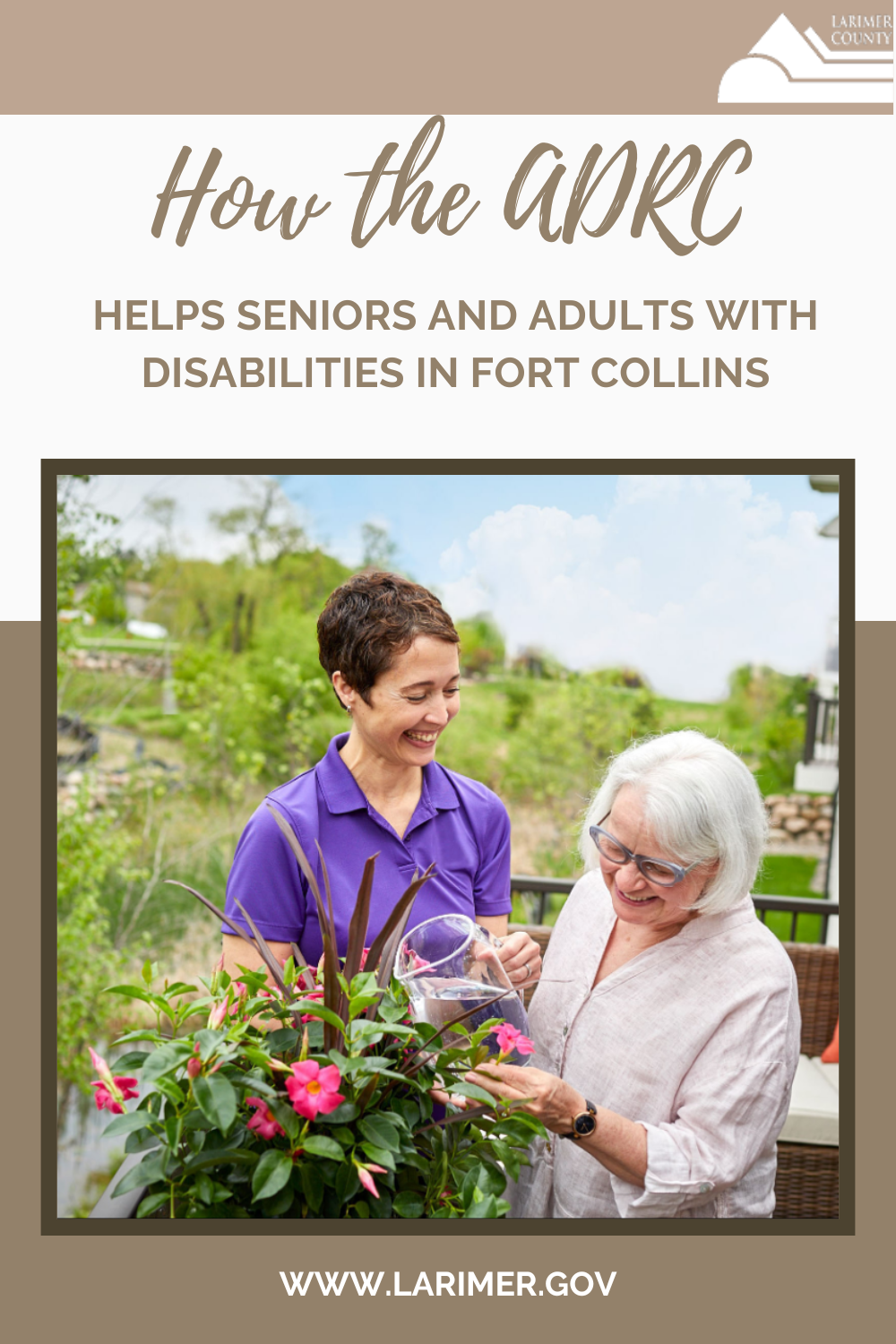
How the ADRC Helps Seniors and Adults With Disabilities in Fort Collins
How the ADRC Helps Seniors and Adults With Disabilities in Fort CollinsNavigating aging- and disability-related services can feel overwhelming, especially during times of transition or crisis. For older adults, adults with disabilities, and their caregivers in Fort Collins, knowing where to start is often the hardest part. Questions about benefits, housing, long-term care, transportation, or in-home support can pile up quickly and finding clear, trustworthy answers isnt always easy.Thats exactly why the Aging and Disability Resource Center (ADRC) exists. Serving Northern Colorado, the ADRC acts as a single, trusted entry point for information, referrals, and personalized guidance, helping individuals make informed decisions that support independence and quality of life.What Is the Aging and Disability Resource Center?The ADRC is designed to simplify access to long-term services and supports. Rather than sending seniors and caregivers from agency to agency, the ADRC brings information together in one place, offering unbiased guidance tailored to each persons unique situation.In Fort Collins and surrounding communities, the ADRC supports: Older adults planning for current or future needs Adults with physical, developmental, or cognitive disabilities Family caregivers seeking guidance and relief Professionals assisting clients with aging or disability concerns This no wrong door approach ensures that individuals receive help regardless of where they begin.Why a Central Resource MattersAs people age or experience disability, services often intersect healthcare, housing, transportation, financial assistance, and caregiving supports all overlap. Without coordination, navigating these systems can become confusing and stressful.The ADRC helps by: Providing clear explanations of available programs Offering personalized options counseling Connecting individuals to vetted local resources Empowering people to make choices aligned with their goals Rather than pushing one solution, the ADRC focuses on education, choice, and empowerment.Services and Support Offered Through the ADRCThe ADRC does not replace existing service providers it connects people to them. Support may include guidance related to: In-home care and supportive services Long-term care planning and options Medicare, Medicaid, and benefits navigation Housing and accessibility resources Transportation and mobility services Caregiver support and respite options By understanding both public and private resources, the ADRC helps individuals identify realistic, appropriate solutions.Supporting Aging in Place in Fort CollinsFort Collins is known for its active lifestyle, vibrant neighborhoods, and strong sense of community. Many older adults want to remain in their homes as long as possible, surrounded by familiar places and people.The ADRC supports aging in place by helping seniors: Identify in-home support services Explore home modification and accessibility options Connect with transportation and meal programs Plan ahead for changing needs Proactive planning can prevent crises and help seniors remain independent longer.A Local Perspective on Guidance and ChoiceErin Alt, who works closely with individuals and families through the ADRC, emphasizes the importance of accessible, unbiased information: People often come to us feeling overwhelmed or unsure of their next step. Our role is to listen first, provide clear information, and help them make choices that feel right for their situation and their future. Erin Alt Her words reflect the ADRCs person-centered philosophy supporting decisions, not directing them.Helping Caregivers Navigate Complex DecisionsCaregivers frequently juggle multiple responsibilities while trying to advocate for a loved one. The ADRC serves as a valuable partner by offering clarity and reassurance during complex decision-making processes.Caregivers can benefit from: One-on-one guidance and referrals Education about care options and benefits Support during hospital discharges or transitions Help planning for future needs By reducing confusion, the ADRC helps caregivers focus on what matters most supporting their loved ones well-being.Local Context: Connecting Northern Colorado CommunitiesNorthern Colorado includes a diverse mix of urban centers and rural communities. The ADRC understands the regional landscape and works to connect residents with services that are realistic and accessible within their specific location.This local knowledge is especially valuable for seniors who may face transportation barriers or limited service availability.When to Contact the ADRCIts never too early or too late to reach out. The ADRC can help if: Youre unsure what services are available A health change has created new care needs Youre planning for aging or disability in the future Youre helping a loved one navigate options You need unbiased, reliable information Early guidance often leads to better outcomes and reduced stress.Frequently Asked Questions About the ADRCIs the ADRC only for seniors?No. The ADRC serves both older adults and people with disabilities of all ages.Does the ADRC provide direct care?No. The ADRC provides information, counseling, and referrals not hands-on services.Is there a cost for assistance?No. ADRC services are free and unbiased.Can caregivers contact the ADRC?Yes. Caregivers are encouraged to reach out for support and guidance.Do I need an appointment?Some services may require scheduling; contacting the ADRC directly is recommended.Find Trusted Guidance Through Seniors Blue BookIf you or a loved one are navigating aging or disability-related decisions in Fort Collins or Northern Colorado, the Aging and Disability Resource Center is an excellent place to start. Visit their Seniors Blue Book listing to learn more about available support and how to connect. When the path feels unclear, having a knowledgeable local guide can make all the difference.
Dec 16, 2025
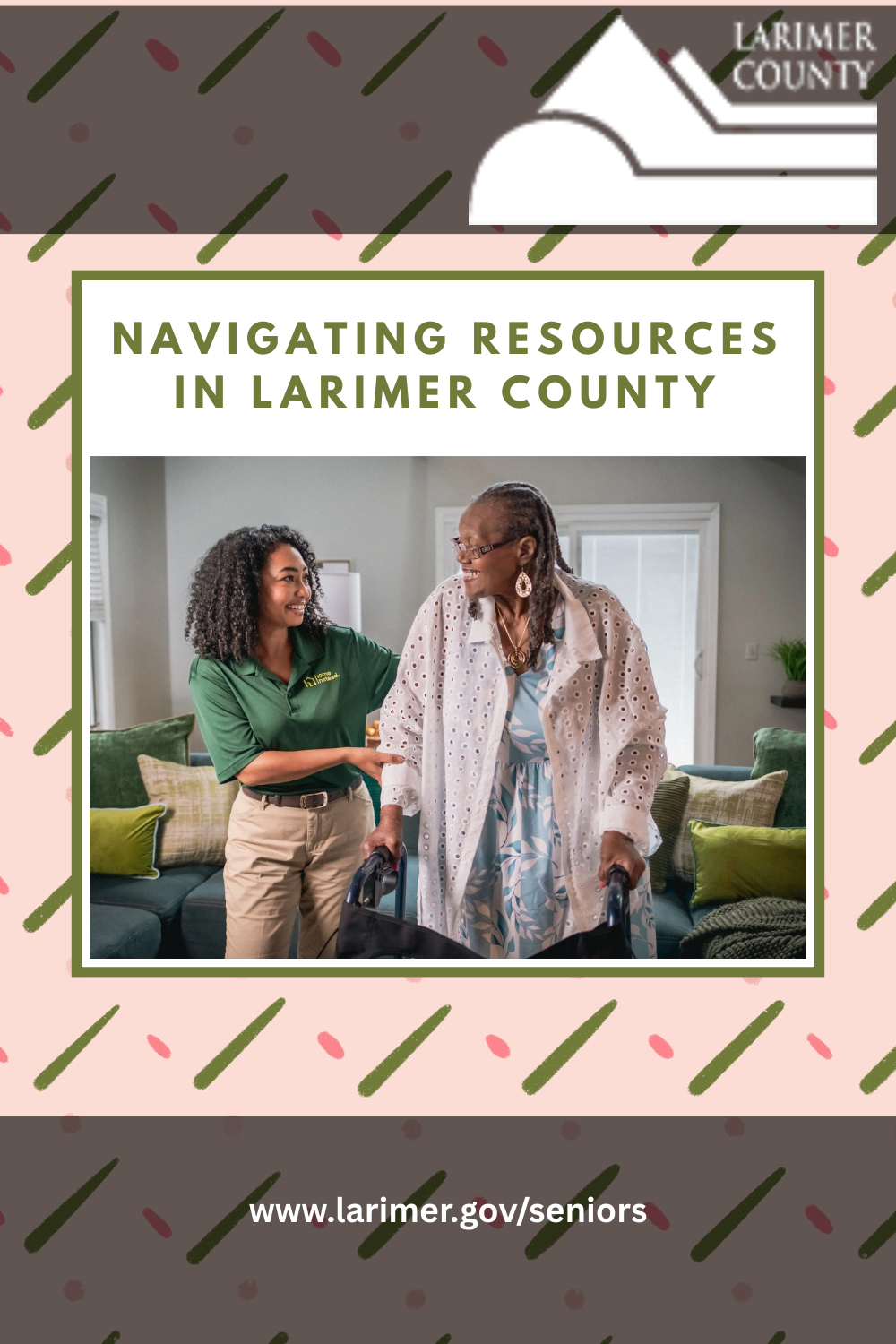
Navigating Resources in Larimer County
Navigating Resources in Larimer CountyAging well isnt just about healthits about access, connection, and knowing where to turn when needs change. For older adults and caregivers in Fort Collins and across Northern Colorado, finding accurate information at the right time can make the difference between feeling overwhelmed and feeling supported.Thats where a trusted public resource becomes essential.Larimer County Office on Aging serves as a central hub for older adults, caregivers, and families seeking guidance, services, and advocacy. As part of the Area Agencies on Aging network, the Office on Aging helps residents navigate the complex landscape of aging with clarity, dignity, and local expertise.Why Area Agencies on Aging Matter in Northern ColoradoLarimer County is home to a rapidly growing older adult population. Many residents are aging in place, while others are supporting parents, spouses, or relatives through new stages of care. With this growth comes complexityhousing options, benefits, caregiving support, transportation, nutrition, and long-term planning.Area Agencies on Aging exist to simplify that complexity.Rather than families having to piece together information from multiple sources, the Larimer County Office on Aging provides: A single point of entry for aging-related resources Reliable, unbiased information Local coordination with service providers and community partners This structure ensures that help is not only availablebut accessible and understandable.A Community-Focused Approach to Aging ServicesWhat sets the Larimer County Office on Aging apart is its deep integration into the local community. The team understands the realities of aging in Northern Coloradofrom rural access challenges to the needs of urban and suburban seniors in Fort Collins.Services and support often include: Information and referral for aging-related programs Caregiver support and education Guidance on benefits, long-term care options, and planning Advocacy for older adults independence and well-being This community-centered approach helps ensure that services reflect real local needs, not one-size-fits-all solutions.Supporting Caregivers as Well as Older AdultsCaregivers are often the invisible backbone of aging support. Adult children, spouses, and family members step in gradually, often without training or a roadmap. Over time, responsibilities growand so does stress.The Larimer County Office on Aging recognizes caregivers as clients too.Support for caregivers may include: Education about available resources and options Connections to respite and support services Help navigating complex systems during high-stress moments As Erin Alt from the Larimer County Office on Aging shares: Caregivers are essential partners in aging well. When we support caregivers with information and resources, we strengthen outcomes for older adults and families alike. That recognition helps families feel less aloneand more capable.Helping Older Adults Age in PlaceAging in place is a priority for many Larimer County residents. Staying in ones home and community preserves independence, familiarity, and quality of lifebut it often requires planning and support.The Office on Aging helps older adults: Understand in-home support options Access community-based services Plan ahead before a crisis occurs By offering guidance early, the Office helps residents remain independent longer and avoid unnecessary disruptions.Navigating Transitions With ConfidenceNot all aging journeys follow a straight path. Health changes, hospitalizations, or safety concerns can trigger sudden decisions about care, housing, or support services.During these moments, families often need clear, trustworthy guidancequickly.The Larimer County Office on Aging plays a critical role by: Explaining care options in plain language Connecting families to appropriate next steps Reducing confusion during emotionally charged transitions This clarity helps families move forward with confidence rather than panic.Experience, Expertise, and Public TrustAs a public agency serving older adults, the Larimer County Office on Aging operates with accountability, professionalism, and transparency. Their work is guided by evidence-based practices, community input, and a commitment to equity.Residents value: Unbiased information without sales pressure Staff who understand aging systems and policies A mission focused on dignity and independence This trust is especially important when decisions affect long-term well-being and financial security.Collaboration Across Northern ColoradoAging services work best when organizations collaborate rather than operate in silos. The Larimer County Office on Aging partners with healthcare providers, nonprofits, housing organizations, and local agencies to strengthen the overall aging network.These partnerships help: Fill service gaps Improve coordination across systems Ensure older adults dont fall through the cracks For families, this means fewer dead ends and more meaningful solutions.Who Benefits Most From the Office on Aging?The Larimer County Office on Aging serves a wide range of individuals, including: Older adults seeking information or support Family caregivers navigating care decisions Seniors planning proactively for the future Residents facing sudden changes in health or independence Reaching out early often leads to better outcomes and more choices.Frequently Asked Questions About the Larimer County Office on AgingWhat does an Area Agency on Aging do?It provides information, referrals, advocacy, and support services for older adults and caregivers.Do I need to be in crisis to contact the Office on Aging?No. Many people reach out proactively to plan or learn about available resources.Are services only for seniors?No. Caregivers and family members are also supported.Is the Office on Aging connected to local services?Yes. They work closely with community providers throughout Larimer County.Is there a cost to access information and referrals?Many services focus on guidance and referrals and are designed to be accessible to the community.A Trusted Starting Point for Aging SupportAging well starts with knowing where to turn. For residents of Fort Collins and Northern Colorado, the Larimer County Office on Aging offers a reliable, compassionate starting pointhelping older adults and caregivers navigate aging with knowledge, confidence, and community support. Visit their Seniors Blue Book listing to learn more about the Larimer County Office on Aging and explore local aging resources available to you.
Jan 29, 2026

A Fort Collins Guide to Getting Senior Support Through the Larimer County Office on Aging
A Fort Collins Guide to Getting Senior Support Through the Larimer County Office on AgingWhen youre trying to help an older loved one in Fort Collins, the hardest part is often not the care itselfits figuring out where to start. Families may be juggling doctor visits, medication changes, home safety worries, and the emotional weight of watching a parent struggle with tasks that used to be easy. Seniors may feel overwhelmed by paperwork, transportation, or confusing benefit systems. Caregivers may feel stretched thin, trying to be the case manager of everything.Thats why the Larimer County Office on Aging is such an essential resource for Northern Colorado families. It acts as a hubconnecting older adults and caregivers to information, programs, and services that support independence, safety, and quality of life. In a community as active and diverse as Fort Collins, having a trusted place to call for aging resources can be the difference between feeling lost and feeling supported.Whether you need help understanding options, finding caregiver resources, locating nutrition or transportation support, or simply learning whats available in Larimer County, the Office on Aging provides guidance that helps families move from stress to a plan.What the Larimer County Office on Aging Does (In Plain Language)The Larimer County Office on Aging helps older adults (typically 60+) and their caregivers navigate services that support aging well. Think of it as a starting point and a connector. Families often call because they need answers such as: What services are available for seniors in Fort Collins? How do we get help at home? What programs can support my parents independence? Where can I get caregiver resources or respite? How do I access benefits or find local support? Services and supports often include: Information and referral to local programs and providers Caregiver support and education Options counseling (help understanding care choices) Nutrition and meal programs guidance Transportation resource connections Benefits assistance and community resource support Supportive services navigation for aging at home Not every family needs the same solution. The power of an Office on Aging is that it helps you find the right path for your specific situation.Why This Matters in Fort Collins and Larimer CountyFort Collins is known for its healthy lifestyle and strong community networks, but aging challenges still ariseoften suddenly. A single hospitalization can change everything. A fall can trigger safety concerns. A spouse caregiver can burn out. Adult children may live outside Northern Colorado and need coordination help.Larimer County also includes a range of living situationsfrom seniors in walkable Fort Collins neighborhoods to those in more rural areas who have transportation barriers. The Office on Aging can help connect families to supports that make life workable, even when distance or mobility makes it harder to access resources.Common Situations Where the Office on Aging Can HelpFamilies often reach out when they are experiencing:Caregiver BurnoutCaregivers may be exhausted, stressed, or unsure how to keep going. The Office on Aging can connect caregivers to education, support, and respite resources.Aging at Home ChallengesWhen daily tasks become hardbathing, meal prep, medication routines, mobilitythe Office on Aging can guide families toward supportive services and community options.Confusing Benefits and PaperworkMany seniors struggle to navigate programs, forms, and eligibility requirements. Supportive guidance can reduce missed opportunities and frustration.Food and Nutrition ConcernsIf a senior is skipping meals, losing weight, or having trouble shopping and cooking, the Office on Aging can connect families to nutrition-related resources.Transportation BarriersWhen driving becomes unsafe or impossible, seniors can become isolated quickly. The Office on Aging can help identify local transportation supports or alternatives.Safety and Resource PlanningFamilies may need guidance on fall prevention resources, home modifications, or supportive services that reduce risk at home.A First Steps Checklist for FamiliesIf youre unsure what to ask or how to begin, heres a helpful approach before contacting the Office on Aging: Identify the biggest concern: safety, isolation, meals, transportation, caregiver stress, memory issues, etc. List whats currently working (family support, neighbors, routines). List whats not working (missed meals, falls, confusion, caregiver burnout). Gather basic info: age, living situation, any diagnoses that affect daily life. Write 3 goals: e.g., stay at home safely, reduce caregiver stress, get reliable transportation. The clearer your goals, the easier it is for resource professionals to guide you.The Value of Options Counseling: Making Decisions With ClarityOne of the most stressful moments for families is deciding between support at home versus transition to a higher level of care. Options counseling helps families understand realistic choices: What services can help someone remain at home longer? When is assisted living or memory care more appropriate? What signs suggest a safety threshold has been crossed? What resources can reduce caregiver strain? Options counseling doesnt force a decisionit helps families make informed decisions with less fear.As Erin Alt shares: Families often dont realize how many resources exist until they know where to look. Our goal is to help seniors and caregivers feel supported, informed, and connectedso they can make decisions with confidence. That reassurance is often exactly what families need in the middle of uncertainty.Reducing Isolation: Community Connections MatterLoneliness is a real health risk for older adults, and it can increase quickly when transportation decreases or mobility changes. The Office on Aging can help families find community supports that keep seniors connectedbecause connection supports mood, brain health, and overall wellbeing.In Fort Collins, where many seniors want to stay active and involved, being connected to the right resources can keep life fuller and safer.Caregiver Support: Taking Care of the Whole SystemCaregiver stress affects everyone. When caregivers are overwhelmed, seniors often feel it too. Support can include education, practical resources, and connections that help caregivers keep going without burning out.Even a small amount of respiteconsistent breaks, reliable help, resource guidancecan change the emotional tone of a family.A Strong Starting Point for Fort Collins FamiliesIf you feel like youve been trying to figure it out alone, you dont have to. The Larimer County Office on Aging exists to help older adults and caregivers navigate real-life challenges and find the right supports.Call to Action: To learn more about resources available in Fort Collins and throughout Larimer County, visit the Larimer County Office on Aging listing on Seniors Blue Book and reach out. One call can lead to a planand a plan can bring real relief.FAQs (Fort Collins / Larimer County)1) Who can contact the Larimer County Office on Aging? Older adults, caregivers, and family members can reach out for information, referrals, and support.2) Do you have to be in crisis to call? No. Many families call early to prevent emergencies and understand available resources.3) Can the Office on Aging help with caregiver support? Yes. Caregiver resources, education, and referrals are common services.4) Can they help with transportation and nutrition resources? Often, yes. They can connect families to local programs and options. 5) What should I prepare before calling? Have a short summary of your loved ones situation, the main concern, and what youre hoping to accomplish.
Jan 21, 2026
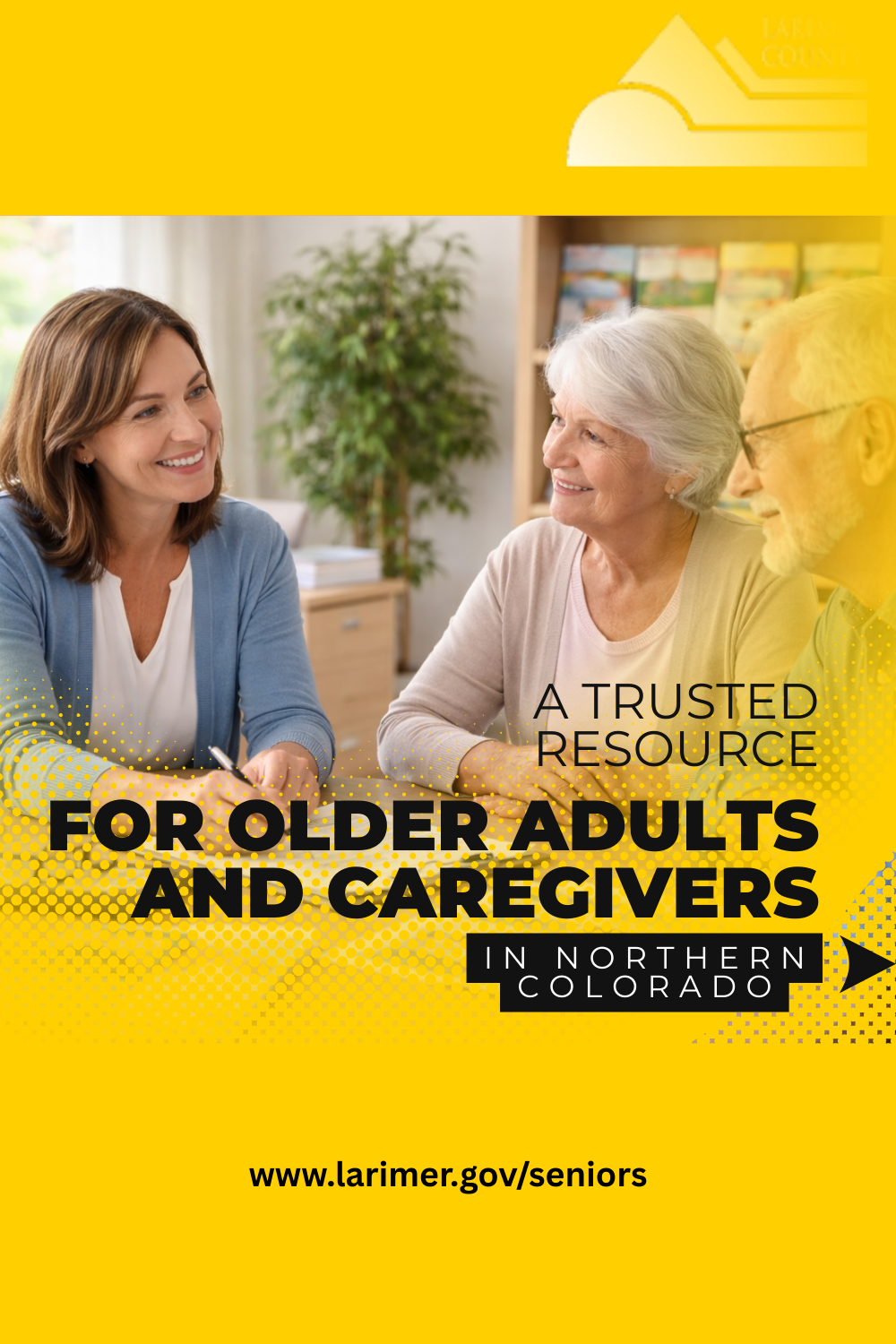
A Trusted Resource for Older Adults and Caregivers in Northern Colorado
A Trusted Resource for Older Adults and Caregivers in Northern ColoradoAging comes with questions about healthcare, housing, finances, transportation, and long-term planning. For many older adults and caregivers in Fort Collins and across Northern Colorado, knowing where to start can be the hardest part.Thats where the Larimer County Office on Aging plays a critical role.As part of the nationwide Area Agencies on Aging network, the Larimer County Office on Aging serves as a central, trusted resource for older adults, caregivers, and families. Their mission is simple but powerful: help people age with dignity, independence, and access to the services they need to thrive.What the Area Agency on Aging Does and Why It MattersArea Agencies on Aging (AAAs) were created to ensure that older adults have access to essential services, accurate information, and advocacy regardless of income or background. The Larimer County Office on Aging fulfills this mission locally by connecting residents to programs that support safety, independence, and well-being.Rather than providing just one service, the Office on Aging helps individuals navigate the entire aging system.This includes guidance related to: In-home support and caregiving resources Nutrition and meal programs Transportation options Caregiver support and education Benefits counseling and long-term planning For many families, this office becomes a lifeline during times of transition or uncertainty.Serving Fort Collins and All of Larimer CountyBased in Fort Collins, the Larimer County Office on Aging serves older adults throughout Larimer County and the surrounding Northern Colorado region. Their reach extends to urban, suburban, and rural communities ensuring equitable access to aging services.This local presence allows the Office on Aging to: Understand regional needs and challenges Coordinate with local providers and nonprofits Offer culturally and geographically appropriate resources For residents, it means help is close to home and tailored to the community.Empowering Older Adults to Remain IndependentOne of the core goals of the Larimer County Office on Aging is to help older adults remain independent for as long as possible. That doesnt mean doing everything alone it means having the right support at the right time.The Office on Aging helps individuals: Identify services that support aging in place Understand eligibility for local, state, and federal programs Make informed decisions before a crisis occurs Many people dont realize how many resources are available to support them as they age, says Erin Alt of the Larimer County Office on Aging. Our role is to help older adults and caregivers understand their options and feel confident navigating the system.This proactive guidance often prevents small challenges from becoming major obstacles.A Vital Resource for Family CaregiversCaregivers are the backbone of the aging system yet many dont identify themselves as caregivers until theyre overwhelmed. The Larimer County Office on Aging provides critical support to family caregivers at every stage.Caregiver-focused resources may include: Education and training Support groups and counseling referrals Respite care options Help navigating complex care systems By supporting caregivers, the Office on Aging helps sustain the entire care network around older adults.Connecting Residents to Nutrition and Wellness ProgramsAccess to proper nutrition is essential for healthy aging, yet it can become challenging due to mobility, health, or financial barriers. The Office on Aging helps connect residents to meal programs and nutrition services that promote health and stability.These programs often support: Older adults living alone Individuals with limited mobility Seniors recovering from illness or hospitalization Nutrition services not only support physical health, but also reduce isolation and improve quality of life.Navigating Benefits, Insurance, and Long-Term PlanningUnderstanding benefits and long-term care options can be overwhelming, especially as needs change with age. The Larimer County Office on Aging provides unbiased information to help residents make informed decisions.This includes guidance on: Medicare and related benefits Long-term care planning Public assistance programs Local and state aging resources Rather than selling services, the Office on Aging focuses on education and advocacy ensuring decisions are based on facts, not pressure.Advocacy and Protection for Older AdultsBeyond services and referrals, the Larimer County Office on Aging plays an important advocacy role. They work to protect the rights, safety, and dignity of older adults throughout the county.This advocacy helps ensure: Older adults voices are heard Services remain accessible and equitable Vulnerable populations receive support For families, this advocacy adds an extra layer of reassurance during difficult situations.How the Office on Aging Fits Into the Local Care ContinuumThe Larimer County Office on Aging works closely with healthcare providers, nonprofits, senior living communities, and local agencies. This collaboration helps create a more coordinated and responsive aging system.By serving as a central point of connection, the Office on Aging reduces fragmentation and helps families find answers faster.When Should You Contact the Larimer County Office on Aging?The Office on Aging can help if you or a loved one: Are unsure what aging resources are available Need help navigating caregiving responsibilities Want to plan ahead for aging in place Are facing a sudden change in health or independence You dont need to be in crisis to reach out early guidance often leads to better outcomes.Frequently Asked Questions About Area Agencies on AgingDo I have to be low-income to receive help? No. Many services and referrals are available regardless of income.Is there a cost to contact the Office on Aging? No. Information and assistance services are typically free.Do they provide direct caregiving? They primarily connect individuals to services rather than provide hands-on care.Can family members call on behalf of a loved one? Yes. Caregivers are encouraged to reach out.Is help available in multiple languages or formats? The Office on Aging works to provide accessible services whenever possible.Start With Knowledge, Support, and Local GuidanceIf you or a loved one in Fort Collins or Northern Colorado is navigating aging-related questions, the Larimer County Office on Aging offers trusted guidance rooted in advocacy, education, and community connection.Their work helps older adults remain informed, supported, and empowered at every stage of aging. Visit the Larimer County Office on Agings Seniors Blue Book listing to explore services, resources, and ways to connect with their team. When it comes to aging well, having the right information at the right time can make all the difference.
Feb 02, 2026

Supporting Seniors Through Advocacy, Resources & Community Connection in Northern Colorado
Supporting Seniors Through Advocacy, Resources & Community Connection in Northern Colorado Northern Colorado is home to a rapidly growing population of older adults who bring history, culture, and vitality to the region. With its blend of outdoor recreation, community-centered neighborhoods, and active lifestyle, Larimer County has become a place where many seniors want to age in placestaying connected to the homes and communities they love. But as aging needs evolve, many families discover they arent sure where to turn for help. Questions about caregiving support, Medicare benefits, transportation, respite, food assistance, or long-term planning can feel overwhelming without guidance. Thats where the Larimer County Office on Aging (LCOA) becomes an essential lifeline. Serving Fort Collins, Loveland, Wellington, Estes Park, and communities across the county, the Office on Aging provides accessible, reliable, and compassionate support designed to help older adults live safely, independently, and with dignity. A Mission Centered on Advocacy & Empowerment The Office on Aging is dedicated to informing, supporting, and empowering seniorsand the families who care for them. Their programs ensure that older adults have access to the resources they need for health, wellbeing, and independence. Erin Alt, a respected leader within the department, emphasizes the heart behind the work: Our goal is to make sure no older adult in Larimer County feels alone in navigating aging. Were here to provide guidance, support, and programs that help people thriveno matter their circumstances. Erin Alt This commitment to dignity and advocacy is woven into every service they offer. Key Programs & Services for Seniors and Their Families The LCOA offers a broad network of support, designed to meet seniors where they are and connect them to practical resources. 1. Information & Referral Services Aging can bring up complicated questions. The Office on Aging helps families understand and access: Housing resources Transportation services Nutrition programs Senior centers and activity programs In-home support options Medicare and benefit programs This guidance prevents families from feeling overwhelmed and helps them make informed decisions. 2. Caregiver Support & Respite Caregiving is an act of lovebut also an immense responsibility. The Office on Aging provides: Respite care assistance Caregiver grants Caregiver education and training Support groups and peer connection These supports help reduce burnout and increase confidence. 3. Long-Term Care Ombudsman Program A crucial advocacy service within the community, ombudsmen help seniors living in nursing homes, assisted living, and memory care communities by: Protecting resident rights Addressing concerns and complaints Ensuring quality of care Supporting families through transitions This program ensures that seniors in long-term care settings are treated with dignity and respect. 4. Options Counseling Aging decisions can feel overwhelming. Options Counselors guide seniors through: Housing choices In-home care decisions Safety planning Community resources Financial and benefit considerations This personalized support helps families create clear, realistic plans for aging. 5. Transportation & Mobility Assistance For older adults no longer driving, transportation is essential. LCOA connects seniors with: Dial-a-Ride programs Paratransit services Volunteer driver networks Accessible mobility resources Lack of transportation shouldnt prevent seniors from accessing healthcare, shopping, or social activities. Rooted in the Northern Colorado Community The Office on Aging is deeply integrated into Northern Colorados senior resource network, collaborating with: UCHealth Senior centers in Fort Collins & Loveland Meals on Wheels Local nonprofits Housing communities Dementia support organizations Veterans services Because of these strong partnerships, seniors receive comprehensive support tailored to local challenges and opportunities. Whether its helping an Estes Park resident secure transportation to medical appointments, supporting a Wellington caregiver through respite resources, or guiding a Fort Collins senior through Medicare enrollment, the Office on Aging is committed to being a steady, trusted resource. Why Seniors Trust the Larimer County Office on Aging Families across Northern Colorado rely on the LCOA for its: Compassionate, knowledgeable staff Commitment to equity and accessibility Personalized support Strong community partnerships Holistic approach to aging Their mission is simple yet powerful: help every senior live with dignity, safety, and independence. Call to Action To explore resources, programs, and support available through the Larimer County Office on Aging, visit their Seniors Blue Book listing for contact details and service information. FAQs 1. Is there a cost for Office on Aging services? Most services are free or low-cost, funded by county and federal aging programs. 2. Do I need to be low-income to qualify? Noresources are available to all Larimer County seniors regardless of income. 3. Can caregivers request support directly? Yes. Caregivers can access respite grants, education, and support groups. 4. Do they help with Medicare questions? Absolutelytrained counselors assist with Medicare, benefits, and supplemental plans. 5. What areas does the Office on Aging serve? They support all of Larimer County, including Fort Collins, Loveland, Timnath, Windsor, Wellington, and Estes Park.
Nov 26, 2025
Returning Home From a Skilled Nursing Facility
What would it take for you to return home?For someone living in a skilled nursing facility, this question can introduce possibilities they may not have considered for months or even years.Perhaps their previous residence requires accessibility modifications. They may need personal care assistance, medical equipment, transportation, or help identifying an entirely different place to live.Although returning to community living is not appropriate for everyone, some nursing facility residents may be able to make this transition with suitable services and support.The Larimer County Office on Aging in Fort Collins, Colorado, provides Transition Services that help qualifying individuals explore and prepare for community-based living following a skilled nursing facility stay.Nursing Facility Placement Does Not Always Have to Be PermanentPeople enter skilled nursing facilities for many different reasons.Some require rehabilitation following surgery or injury. Others need extensive assistance because of chronic health conditions, disabilities, or changes in physical functioning.Over time, an individual's circumstances may change.Their physical abilities might improve, community-based services may become available, or alternative housing arrangements may provide opportunities that did not previously exist.Determining whether someone can return to community living requires careful assessment.The decision must account for healthcare requirements, personal preferences, available housing, and the services necessary to support everyday life outside the facility.What Are Transition Services?Transition Services help eligible individuals explore moving from institutional care into community-based living arrangements.The Larimer County Office on Aging and its Aging and Disability Resource Center work under an agreement with the Colorado Department of Health Care Policy and Financing to provide this assistance.The program serves qualifying Long-Term Care Medicaid members residing in skilled nursing facilities in Larimer, Weld, and Boulder counties.Its purpose is to support individuals who want to explore returning to the community and need assistance coordinating the necessary arrangements.Unlike a standard discharge process, transition planning may involve addressing longer-term housing and supportive service requirements.Begin With the Individual's Own GoalsA successful transition begins with understanding what the person wants.Some individuals hope to return to their previous residence. Others may prefer an accessible apartment, a different housing arrangement, or a location closer to relatives.Their reasons for wanting to move may include increased privacy, greater control over daily routines, proximity to familiar community resources, or opportunities to participate in preferred activities.Family members and professionals can provide valuable guidance, but the individual's preferences should remain central to the discussion.Returning home should be an informed choice supported by realistic planning rather than an expectation imposed by others.Identifying the Barriers to Community LivingA person may be interested in leaving a nursing facility but uncertain about how their needs could be addressed outside that environment.Transition planning helps identify these barriers.Housing and AccessibilityThe previous residence may no longer be suitable.Stairs, narrow doorways, inaccessible bathrooms, and limited space for mobility equipment can create challenges.Some individuals may no longer have access to their former residence because of financial circumstances or changes in household arrangements.Identifying appropriate housing is therefore an important part of transition planning.Accessibility assessments and professional recommendations may help determine whether modifications or alternative accommodations are necessary.Personal Care and Household AssistanceSomeone who receives regular nursing facility assistance may require substantial support after returning to the community.Care planning should consider bathing, dressing, meal preparation, mobility, toileting, and other activities that affect everyday functioning.The appropriate level of assistance depends on individual assessment and available benefits.Medical and Rehabilitation NeedsMoving out of a nursing facility does not eliminate ongoing medical requirements.Individuals may still need skilled nursing, rehabilitation, prescription medications, medical equipment, or regular healthcare appointments.These services must be coordinated with appropriately qualified professionals.Transition Services help address coordination needs but do not replace clinical discharge decisions or medical treatment.How the Larimer County Office on Aging Supports Transition PlanningThrough its Aging and Disability Resource Center, the Office on Aging helps eligible individuals understand long-term service options and navigate community resources.Transition planning can involve reviewing current circumstances, identifying potential barriers, and coordinating with relevant service providers.Depending on the individual's needs, planning discussions may address:Suitable and accessible housingCommunity-based long-term care servicesPersonal assistance requirementsMedical equipment and household necessitiesTransportation arrangementsAvailable Medicaid benefitsCommunity resource connectionsCoordination with existing healthcare professionalsThe services available to each participant depend on program eligibility, individual assessment, and applicable authorizations.Families should discuss specific funding and assistance questions with the transition team.Understanding the Role of Health First ColoradoHealth First Colorado is the state's Medicaid program.For eligible individuals requiring long-term services and supports, Medicaid may fund approved community-based services under applicable programs.These services can help address some of the needs that might otherwise require institutional care.However, Medicaid eligibility does not automatically mean every requested service will be approved.Individuals must meet applicable financial, functional, and program-specific requirements.The Larimer County Office on Aging also offers application assistance and options counseling through its Aging and Disability Resource Center.These services can help individuals understand available pathways, although final eligibility and authorization decisions remain with the appropriate agencies.Preparing for Community Living in Fort CollinsReturning to a Northern Colorado community involves considerations beyond the residence itself.Fort Collins offers public transportation, healthcare facilities, recreational programming, libraries, and community-based aging services.Transfort provides local public transportation, while eligible individuals may explore accessible transportation services according to applicable requirements.The Fort Collins Senior Center offers opportunities for recreation and social interaction, depending on individual abilities and preferences.For someone returning to community living after an extended nursing facility stay, gradually reconnecting with these resources may become an important part of everyday life.Residents relocating to Loveland, Wellington, Estes Park, or other communities may need different transportation and service arrangements.A transition plan should reflect the actual destination rather than assume every Northern Colorado community offers identical resources.Plan Beyond the First Day at HomeMoving day represents only one stage of the transition.Before leaving a skilled nursing facility, individuals and their support teams should understand how ongoing needs will be addressed.Important considerations include who will provide scheduled assistance, how medications will be obtained, which healthcare appointments are necessary, and what procedures apply when unexpected concerns arise.The plan should also consider what happens if a scheduled caregiver becomes unavailable or the person's assistance requirements increase.Regular communication among the individual, service providers, and authorized family members can help identify concerns requiring additional attention.Frequently Asked Questions About Nursing Facility Transition Services in Fort CollinsWho can receive Transition Services through the Larimer County Office on Aging?The program serves qualifying Long-Term Care Medicaid members residing in skilled nursing facilities in Larimer, Weld, and Boulder counties who are interested in community living.Does everyone living in a nursing facility qualify to return home?No. Transition suitability depends on individual healthcare needs, housing circumstances, available services, eligibility requirements, and the person's preferences.Can Transition Services help identify community-based assistance?Yes. The program helps eligible individuals explore and coordinate resources relevant to returning to community living.Does the program replace medical discharge planning?No. Transition Services complement appropriate medical discharge planning and ongoing healthcare arrangements.Can family members inquire about the program?Yes. Relatives can contact the Office on Aging for information while respecting the resident's consent, privacy, and decision-making rights.Explore the Possibility of Returning to Community LivingA nursing facility stay does not necessarily determine where someone must live for the remainder of their life.For qualifying individuals interested in returning to the community, thoughtful transition planning can help identify realistic housing options and appropriate supportive services.The Larimer County Office on Aging provides Transition Services that help eligible nursing facility residents throughout Northern Colorado explore these possibilities.For more information about nursing facility transitions, Long-Term Care Medicaid resources, and community-based support, visit the Larimer County Office on Aging Seniors Blue Book Listing
Nov 28, 2026
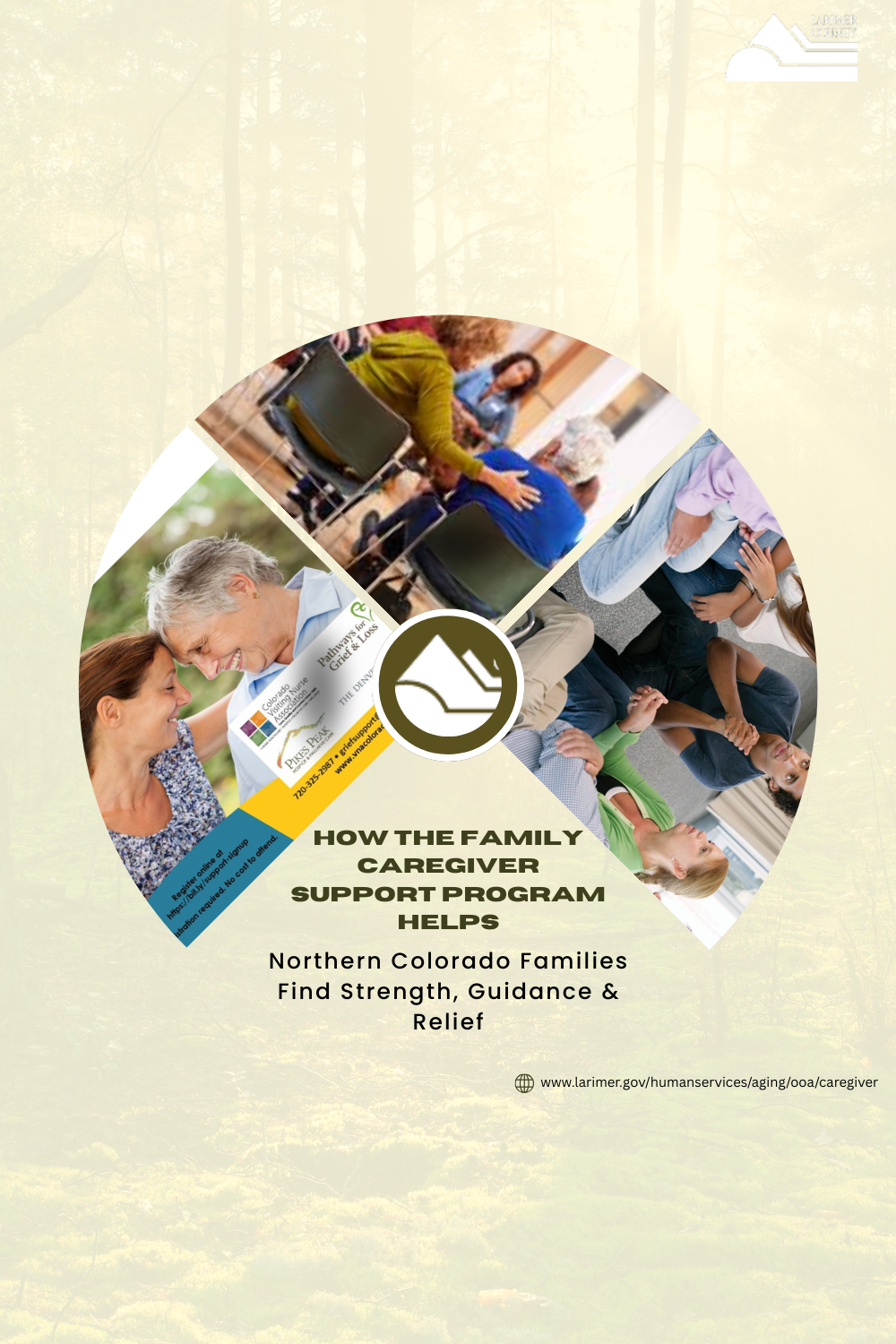
How the Family Caregiver Support Program Helps Northern Colorado Families Find Strength, Guidance & Relief
How the Family Caregiver Support Program Helps Northern Colorado Families Find Strength, Guidance & ReliefCaregiving is one of the most meaningful acts of lovebut it can also be one of the most overwhelming. In Northern Colorado, thousands of family members quietly provide daily support to aging parents, spouses, neighbors, and loved ones living with chronic illness, dementia, disabilities, and health challenges. Many juggle caregiving with full-time jobs, parenting responsibilities, and their own health needs.The Family Caregiver Support Program (FCSP), offered through the Larimer County Office on Aging, exists to make sure caregivers do not shoulder that responsibility alone. Through emotional support, education, respite options, and practical tools, FCSP helps caregivers stay strong, supported, and connected.For caregivers in Fort Collins, Loveland, Windsor, Wellington, and rural Larimer County, this program is often a turning pointhelping families move from burnout and confusion to confidence and resilience.Why Caregivers Need Support More Than EverAs the number of older adults in Northern Colorado increases, family caregivers are filling more roles than ever before. Many caregivers: Assist with bathing, dressing, and personal care Manage medication, appointments, and transportation Prepare meals and oversee household tasks Handle financial and legal responsibilities Provide emotional support and supervision Navigate dementia-related changes The work is constant, and often unrecognized. Without support, caregivers face higher risks of exhaustion, depression, social isolation, and declining physical health.The caregivers in our community give so much of themselves, says the Aging and Disability Resource Center. Our mission is to help them feel supported, valued, and empowered. No one should have to do this alone.What the Family Caregiver Support Program OffersThe FCSP provides a wide range of services designed to reduce stress, increase knowledge, promote health, and strengthen the caregiving relationship.1. One-on-One Consultation & GuidanceCaregivers receive personalized support to: Understand their role Access community resources Develop care plans Navigate long-term care options Locate respite services This guidance helps families make informed decisions about home care, medical systems, aging services, and community supports.2. Emotional & Peer Support GroupsRegular support groups create safe, compassionate environments where caregivers can: Share experiences Reduce isolation Receive encouragement Learn coping strategies Build friendships with others who get it Many caregivers describe these groups as essential to their emotional well-being.3. Education & Skill-Building WorkshopsWorkshops help caregivers understand: Dementia and cognitive decline Mobility and safety techniques Medication management Stress reduction and self-care Legal and financial planning Communication strategies These classes provide practical tools that make day-to-day caregiving easier.4. Respite Care AssistanceCaring for a loved one is rewarding but exhausting. FCSP connects caregivers with respite caretemporary relief that allows caregivers to rest, recharge, and take care of their own needs.Respite may include: In-home care Adult day programs Short-term facility-based care This break is essential for long-term caregiving sustainability.5. Resource NavigationCaregivers often feel lost in a maze of programs and services. FCSP helps connect families to: Medicaid & Medicare support Nutrition programs Transportation resources Home modification services Disability services Alzheimers & dementia organizations Mental health providers Supporting the Entire Family UnitCaregiving affects the whole family. FCSP supports: Spouses caring for spouses Adult children caring for parents Grandparents caring for grandchildren Neighbors and friends providing informal support This family-centered approach recognizes that caregiving roles vary widelyand each deserves tailored support.Serving an Entire Region: Fort Collins, Loveland & Rural AreasNorthern Colorado includes both bustling cities and remote rural communities. The Family Caregiver Support Program provides services across: Fort Collins Loveland Estes Park (with partner agencies) Windsor & Severance Wellington Berthoud Unincorporated Larimer County Virtual workshops and phone consultations ensure access for caregivers who cannot attend in person.Reducing Burnout & Strengthening Caregiver ResilienceCaregiver burnout happens slowly. Fatigue builds, stress rises, and emotional strain increases. The Family Caregiver Support Program helps caregivers regain balance through: Self-care coaching Break planning Supportive accountability Encouragement to seek help Education on recognizing burnout Caregivers report feeling calmer, more organized, and more connected after engaging with the program.Helping Caregivers Navigate Dementia-Related CareDementia caregiving is uniquely challenging. FCSP offers specialized support for those caring for individuals with Alzheimers disease or other dementias.This includes: Behavioral communication strategies Safety planning Wandering prevention tips Daily structure ideas Emotional reassurance Access to dementia-friendly partners across Larimer County Caregivers learn that meaningful connection is still possibleand that they have a community behind them.A Compassionate, Relationship-Based ApproachThe Family Caregiver Support Program emphasizes dignity, empathy, and shared humanity. Staff members understand that every caregivers situation is differentand they meet families exactly where they are.We are here to listen first, says the Aging and Disability Resource Center. Our goal is to walk alongside caregivers, provide clarity during difficult moments, and help them rediscover hope.Call to ActionIf you or someone you love is supporting an older adult in Fort Collins or Larimer County, the Family Caregiver Support Program is here to help. Visit their listing on SeniorsBlueBook.com to learn about support groups, respite options, and caregiver education programs.Frequently Asked Questions (FAQs)1. Do I need to live in Larimer County to receive services?Most services are available to Larimer County residents, but some workshops may be open to a broader area.2. Is there a cost for caregiver support?Many services are free or low-cost through the Office on Aging.3. Do I need to be a legal caregiver?No. Anyone providing careformal or informalcan receive support.4. Can caregivers bring the person they care for?Some programs accommodate care recipients, while others are caregiver-only.5. Does the program offer help with dementia-related care? Yes. Specialized education and navigation are available for dementia caregivers.
Dec 05, 2025

What the Larimer County Office on Aging Can Do for You (and How to Use It)
What the Larimer County Office on Aging Can Do for You (and How to Use It)When families in Fort Collins begin navigating aging-related decisions, they often start with a simple question: Where do we even begin? Maybe its a parent who is trying to stay at home but needs more help. Maybe its a spouse who is overwhelmed by caregiving. Maybe its an older adult who has stopped driving and is suddenly cut off from appointments, errands, and community life. Or maybe its a family trying to understand benefits, plan for the future, and avoid crisis-driven decisions.In Northern Colorado, there is an entire network designed to helpbut most people dont realize it exists until theyre already under stress.That network often starts with your local Area Agency on Aging (AAA).The Larimer County Office on Aging in Fort Collins helps older adults, caregivers, and families connect with services, benefits information, and local resources that support independence and well-being. Instead of families having to piece everything together alone, the Office on Aging serves as a guidehelping people understand whats available, what they may qualify for, and how to take the next step.Erin Alt of the Larimer County Office on Aging describes the mission in practical terms: People dont need to navigate aging alone. Our role is to connect older adults and caregivers to resources that support safety, independence, and quality of liferight here in Larimer County.What Is an Area Agency on Aging (AAA)?Area Agencies on Aging are community-based organizations that help coordinate services and supports for older adults, typically age 60+. They are part of a nationwide network created under the Older Americans Act, but services are delivered locallyby people who understand local needs, transportation realities, and community resources.In Fort Collins and Larimer County, the Office on Aging helps: Connect seniors with community services Provide caregiver support and education Help families understand benefits and options Coordinate in-home supports and aging resources Reduce isolation and promote wellness Think of it as a starting pointespecially when families feel overwhelmed.The Fort Collins Reality: Aging in Place Is Popular, but Support Is NeededFort Collins is a place where many people want to stay long-term. Seniors often have deep roots in neighborhoods, faith communities, and social networks. They may enjoy the citys trails, parks, cultural events, and community feel. But aging in place becomes harder when needs changeespecially if: Driving becomes unsafe Mobility decreases A spouse passes away Caregiver fatigue builds Medical needs increase Social connection fades The Office on Aging helps bridge the gap between wanting to stay home and having the supports to do it safely.What the Larimer County Office on Aging Can Help WithServices and resources vary depending on needs and eligibility, but families often turn to the Office on Aging for help in key areas.1) Information and Referral: A Clear Starting PointSometimes the most valuable service is simply helping families understand their options.The Office on Aging can help you: Identify what services exist locally Understand eligibility guidelines Find reputable providers and programs Clarify next steps (who to call, what paperwork matters, what to expect) This reduces the time families spend Googling and guessing.2) Caregiver Support: Help for the HelperCaregivers often carry a silent burdenmanaging schedules, medications, appointments, finances, and emotional support. Many dont identify as caregivers until burnout hits.Caregiver resources may include: Education and training Support groups Respite information Coaching and planning tools Resource navigation for complex situations In a community like Fort Collins, where many caregivers balance work and family, these supports can be lifesaving.3) In-Home Support Navigation: Staying Safe at HomeAging at home often requires layered support. The Office on Aging may help families explore: Meal support Transportation resources In-home services and safety supports Care coordination and referrals This is especially helpful after a hospitalization or fall, when families need a plan quickly.4) Benefits and Program GuidanceMany families arent sure what programs exist or how to apply. The Office on Aging can often help people understand: Available public benefits Community programs for older adults Options that reduce out-of-pocket expenses Where to find trustworthy information This guidance can prevent missed opportunities for support.5) Wellness, Connection, and Community EngagementIsolation is a growing concern among older adults. The Office on Aging supports well-being not just through services, but through connectionhelping seniors stay engaged and active.That may include guidance to: Community programs Senior-focused activities and resources Local events and engagement opportunities Fort Collins has strong community resourcesbut many seniors need help finding and accessing them.The Aging Map: How Families Can Use the Office on Aging StrategicallyFamilies often call only when theres an emergency. But the Office on Aging can also support proactive planning. Heres a practical way to use the resource:Stage 1: Early Planning (Before Crisis)Best time to call if: Youre noticing small changes You want to plan for aging in place You want to understand local resources early This stage supports prevention and reduces future stress.Stage 2: Transition Support (After a Change)Call if: There has been a fall or hospitalization A spouse caregiver is overwhelmed Driving has stopped New memory concerns have emerged This stage supports stabilization and resource coordination.Stage 3: Ongoing Support (Sustaining the Plan)Call if: Needs are increasing Caregiver burnout is rising A seniors safety at home is changing Services need adjustment This stage helps families adapt without panic.Erin Alt emphasizes proactive connection: Its easier to build a plan early than to rebuild after a crisis. We encourage families to reach out sooner, so support can grow with changing needs.Why Local Matters: Larimer County Knowledge Makes a DifferenceNational websites can provide general information, but local services can be hard to find without a community guide. The Larimer County Office on Aging understands: Regional transportation realities Local resource availability Community organizations and partners The Fort Collins-Loveland corridor support landscape Where families typically get stuck in the process That local knowledge turns information into actionable steps.How Seniors Blue Book Supports Resource NavigationSeniors Blue Book is designed to help older adults and families find local senior-focused services in one place. It complements the work of local agencies by making it easier to explore providers and options.To learn more about aging resources and support in Fort Collins, visit the Seniors Blue Book listing for Larimer County Office on Aging. Its a helpful starting point for families who want clarity, local guidance, and a better plan for aging.Local FAQs: Larimer County Office on AgingDo I need to be low-income to get help from the Office on Aging?Not necessarily. Many services begin with information, referral, and resource guidance that can benefit a wide range of families.Is this only for people age 65+?Many programs focus on age 60+ (depending on program guidelines), and caregiver resources may be available regardless of age.Can the Office on Aging help caregivers too?Yes. Caregiver support is a major part of what AAAs provideeducation, resources, and guidance.What should I have ready when I call?Basic information about the seniors needs, living situation, and any major concerns (mobility, memory, safety, caregiver stress).Is the Office on Aging the same as a senior center?Not exactly. The Office on Aging connects people to services and supports, including community programs. Senior centers are often activity-based community hubs.A Better Starting Point for Aging Support in Fort CollinsIf youre caring for a loved oneor planning ahead for your own futureknowing where to start can change everything. The Larimer County Office on Aging helps Fort Collins families find real, local support that makes aging safer, healthier, and less overwhelming. Strong CTA: Visit the Seniors Blue Book listing for Larimer County Office on Aging to learn more and connect with local aging resources in Fort Collins and Larimer County.