$7,200/month




.png)



About Assured Senior Living 20
Assured Senior Living - 20 Denver Homes
Our Denver assisted living facilities are carefully and thoughtfully designed to serve people with varying ability levels. Apartment-style homes have professional elderly services staff available 24/7. Our mission is to help your loved one feel safe, secure and supported while maintaining their independence for as long as possible.
Assured Senior Living is a unique alternative for assisted living services. Our residential homes service only 7 to 9 residents, allowing each individual more personal attention, nurturing and supervision than is available in larger communities. At the same time, we are fully committed to providing our residents with a full array of social and recreational activities.
Assisted Living was designed for the people were honored to servenot the other way around.
Instead of expecting your loved one to conform to how we do things, we tailor everything we offer to themfrom our home-like community design, to our meals, to our wonderful activities, programs, and events!
Whatever we do, we never lose sight of our deeply rooted company mission to enhance the quality of life of our valued residentsby fostering positivity, joy, peace, and security.
While many assisted living communities seek to control costs with high patient to staff ratiosat Assured Senior Living, we believe in building relationships and caring deeply for our community membersso we ensure our expert staff is abundant, available, and always willing to assist our residents with any needs.
We also work to promote bonding between our residents and staff, assigning team members to specific communities to encourage lasting, trusting relationships, and personalized care.
But our dedicated staff isnt where the unique qualities of Assured Senior Living end.
Our residential home-based community model also sets us apart from other assisted living facilities you may have encountered.
In factthe word facility doesnt even apply to our communities at all.
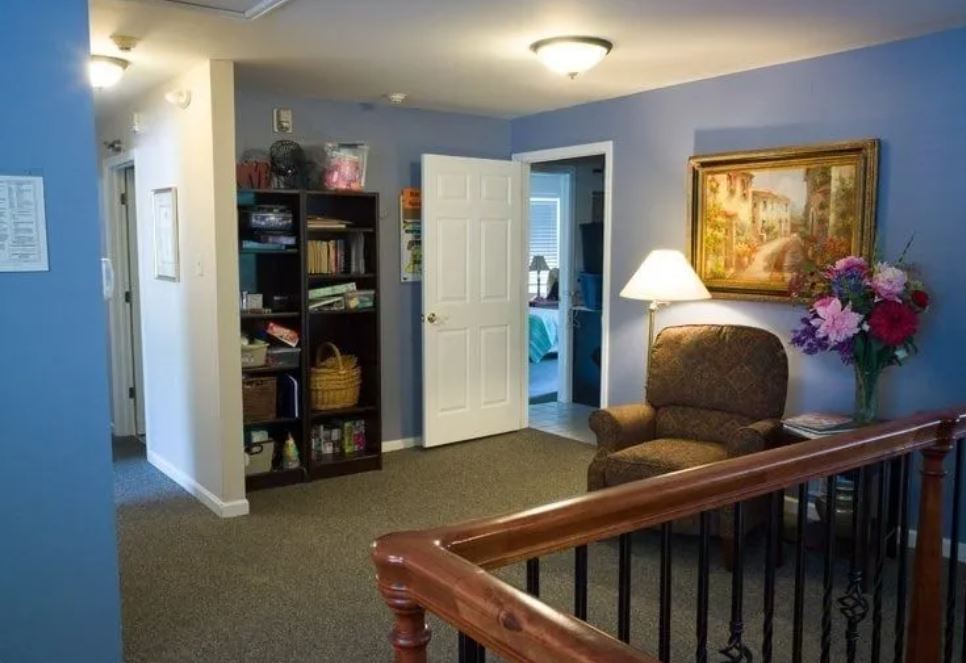
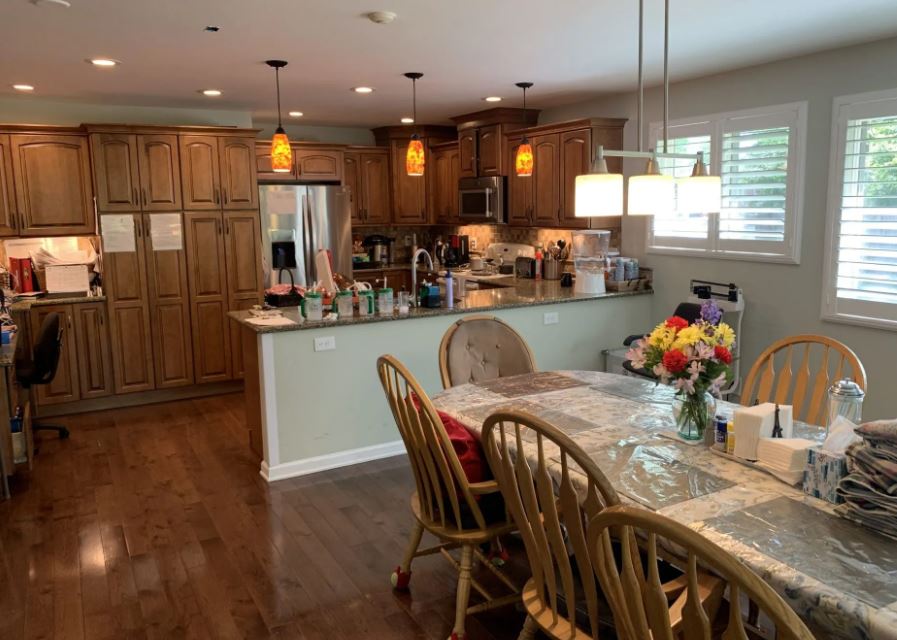
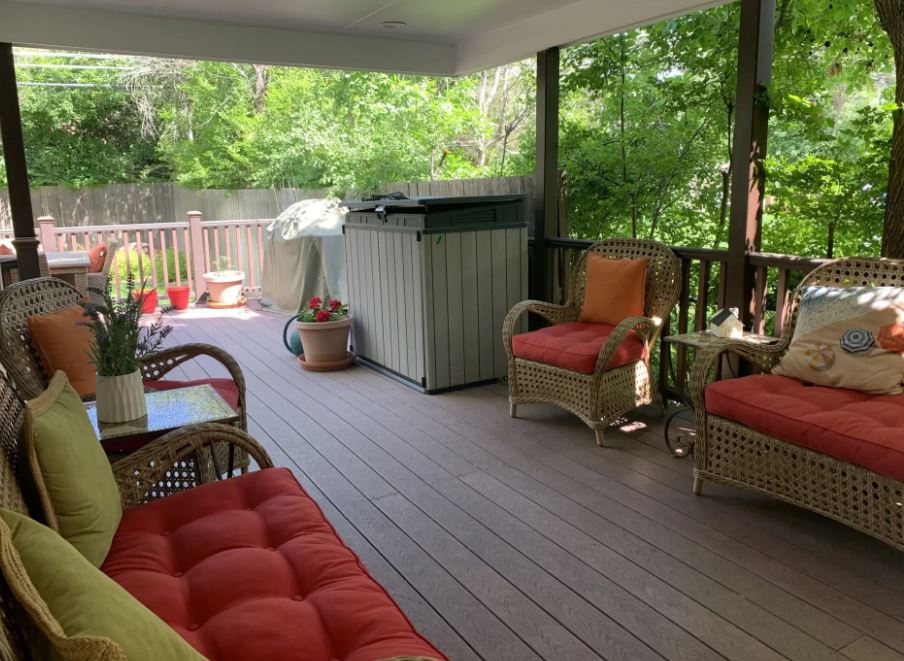
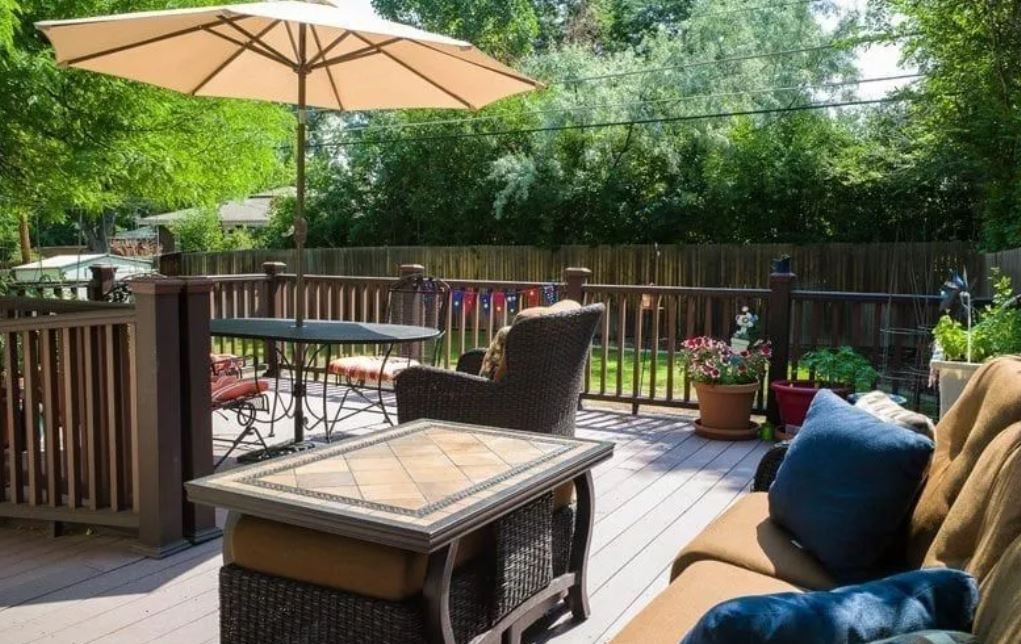
Our Assured Senior Living communities are housed in beautifully-appointed homes. Each welcoming residence is part of a quiet, friendly neighborhood, where residents feel safe to engage and explore life outside our community walls.
Inside, our assisted living residences embody the comfort and familiarity of home, offering our residents peace, ease, and independence.
Our locations are located in quiet residential communities in the Denver area.
General Property Features
- Private Rooms, Semi-Private Rooms
- Nurse on Staff, Respite/Short Term Stay, Scheduled Transportation, Transportation, Activities
- Assisted Living Community, Secured Memory Care Unit
- Small Pets
Assisted Living
- https://www.AssuredAssistedLiving.com
- 8
- $7,200.00
- Medicaid Waiver
- Alzheimer/Dementia Residents Only,
- Yes
Continue Your Search! Explore More Local Options.
Start SearchingLet’s engage and get educated!
Browse through thousands of expert articles in over 100 different categories.
Browse NowArticles You May Like
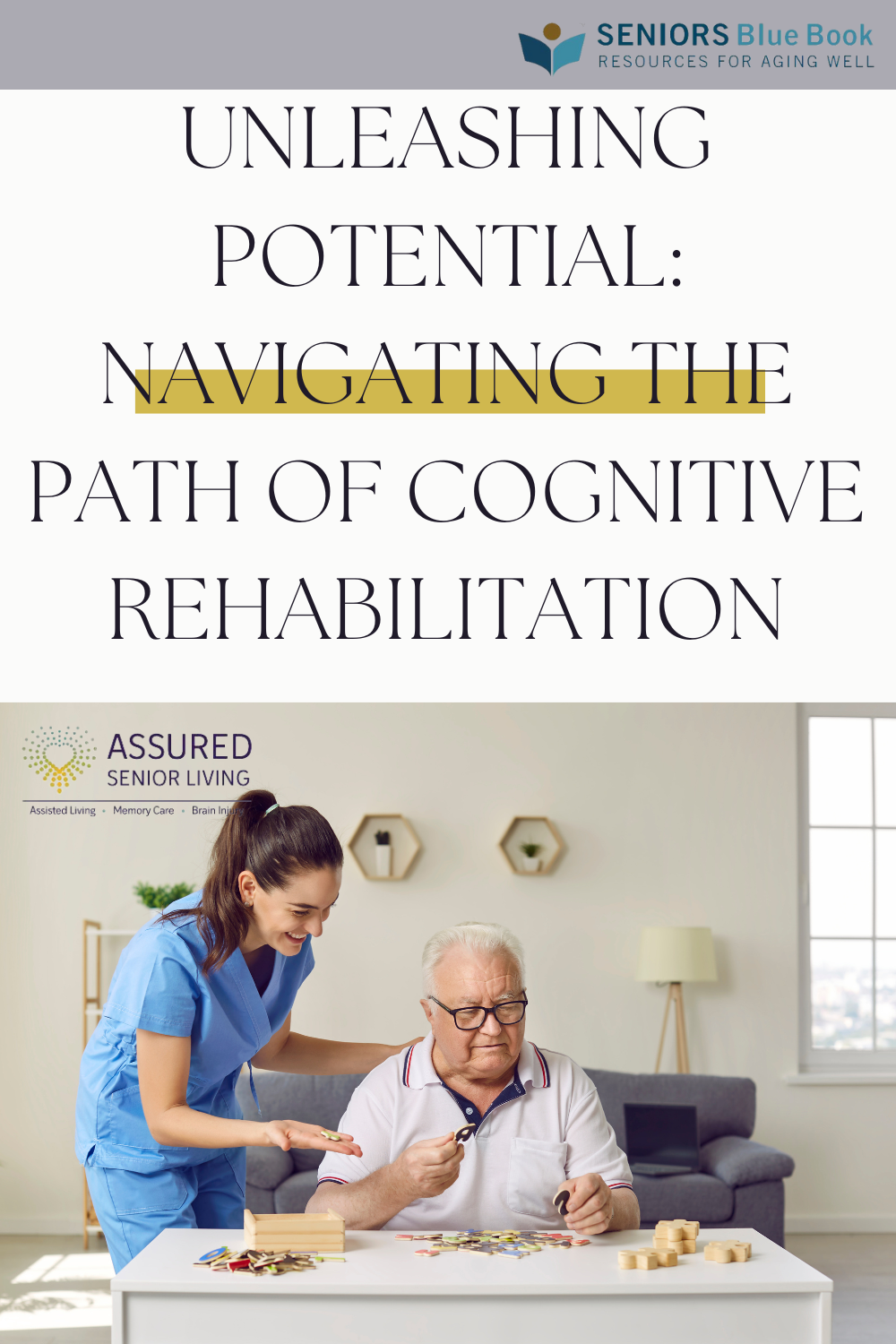
Unleashing Potential: Navigating the Path of Cognitive Rehabilitation
From individuals grappling with Alzheimer's disease and dementia to those recovering from traumatic brain injuries, cognitive rehabilitation plays a pivotal role in enhancing daily functioning and overall quality of life. By looking at evidence-based techniques, supportive resources, and future innovations, we can gain a comprehensive understanding of the significance and potential of cognitive rehabilitation in the context of memory care and assisted living.This exploration aims to shed light on the practical implications and empowering effects of cognitive rehabilitation, ultimately unveiling its potential to positively shape the lives of those in need.EVIDENCE-BASED TECHNIQUES IN COGNITIVE REHABILITATIONEvidence-based techniques form the cornerstone of effective programs, harnessing the latest research and proven methods to empower individuals with memory care needs. By looking at specific cognitive exercises, therapeutic approaches, and innovative technologies, the path to cognitive rehabilitation becomes clearer and more impactful.Cognitive ExercisesEngaging individuals in targeted cognitive exercises, such as memory games, problem-solving tasks, and attention-building activities, forms a fundamental aspect of cognitive rehabilitation. These exercises are designed to stimulate cognitive functions, enhance memory retention, and improve overall mental acuity.Therapeutic ApproachesLeveraging therapeutic approaches, including cognitive behavioral therapy and reminiscence therapy, provides individuals with a supportive framework for addressing emotional and cognitive challenges. These evidence-based interventions aim to promote emotional well-being, reduce anxiety, and enhance cognitive resilience.Innovative TechnologiesEmbracing innovative technologies, such as virtual reality platforms and interactive cognitive training tools, opens new frontiers in cognitive rehabilitation. These cutting-edge solutions offer immersive experiences and personalized cognitive training, catering to the unique needs of individuals with memory care requirements.By navigating these evidence-based techniques, cognitive rehabilitation programs can effectively address the diverse cognitive and emotional needs of individuals, fostering a holistic approach to memory care and assisted living.IMPACT OF COGNITIVE REHABILITATION ON DAILY FUNCTIONINGCognitive rehabilitation plays a pivotal role in enhancing the daily functioning of individuals with memory care needs, fostering a positive and purposeful lifestyle within the context of memory care and assisted living.Activities of Daily LivingBy addressing cognitive impairments and promoting mental acuity, cognitive rehabilitation empowers individuals to independently engage in activities of daily living, such as personal hygiene, meal preparation, and household tasks. This fosters a sense of autonomy and self-reliance, contributing to an enhanced quality of life.Social EngagementThrough targeted cognitive exercises and therapeutic interventions, cognitive rehabilitation facilitates improved social engagement, enabling individuals to participate in communal activities, interact with peers, and maintain meaningful social connections. This social integration fosters a sense of belonging and emotional well-being.Overall Quality of LifeThe practical implications of cognitive rehabilitation extend to the overall quality of life for individuals with memory care needs, promoting a sense of purpose, independence, and fulfillment. By enhancing cognitive abilities and emotional resilience, it contributes to a holistic and enriching living experience.By empowering daily functioning in this way, individuals with memory care needs can embrace a lifestyle that prioritizes independence, social connection, and a meaningful sense of purpose within the supportive environment of memory care and assisted living communities.MULTIDISCIPLINARY SUPPORTA comprehensive array of supportive resources is instrumental in optimizing the journey for individuals with memory care needs. This multidisciplinary approach encompasses personalized care, therapeutic interventions, and community engagement, fostering a holistic and empowering environment.Personalized CareTailoring care plans to the unique cognitive and emotional needs of each individual forms the bedrock of success. Personalized care ensures that interventions are precisely aligned with the individual's cognitive strengths and challenges, maximizing the effectiveness of the rehabilitation process.Therapeutic InterventionsEmbracing therapeutic interventions, including cognitive behavioral therapy, occupational therapy, and speech therapy, provides individuals with a diverse toolkit for addressing cognitive impairments and enhancing daily functioning. These evidence-based interventions are tailored to the specific needs of each individual, promoting targeted cognitive and emotional growth.Community EngagementFostering community engagement within memory care and assisted living communities creates a supportive and enriching environment for individuals. By participating in communal activities, social events, and group therapies, individuals can cultivate meaningful connections and a sense of belonging, contributing to their overall well-being.By leveraging these supportive resources, individuals can embark on a transformative journey towards enhanced cognitive abilities, improved daily functioning, and a fulfilling lifestyle within the nurturing embrace of memory care and assisted living communities.As we look to the future of cognitive rehabilitation, it is ripe with emerging innovations and progressive developments that hold the potential to redefine memory care and assisted living. Technological advancements, such as virtual reality platforms and interactive cognitive training tools, are poised to revolutionize these practices, offering personalized and immersive experiences for individuals with memory care needs.Furthermore, ongoing research breakthroughs are paving the way for enhanced therapeutic interventions and a deeper understanding of cognitive functioning, promising a future where cognitive rehabilitation continues to empower individuals, optimize daily functioning, and enrich lives. For more information, visit https://www.assuredassistedliving.com/ to explore the transformative possibilities.
Jul 08, 2024
How Personalized Memory Care Helps Seniors Thrive in Castle Rock
How Personalized Memory Care Helps Seniors Thrive in Castle RockFamilies caring for a loved one with Alzheimers disease or another form of dementia quickly discover that no two experiences are exactly alike. Every senior has unique routines, preferences, life experiences, and emotional needs. Because of this, personalized memory care has become one of the most important factors families consider when searching for support.In Castle Rock, memory care communities are helping seniors maintain comfort, stability, and meaningful daily experiences through individualized approaches to care. Assured Senior Living 1 understands that compassionate support begins by getting to know each resident as a person first.Understanding the Value of Personalized CareMemory loss affects everyone differently. Some seniors may need gentle reminders throughout the day, while others require hands-on support with daily activities.Personalized memory care focuses on:Individual preferencesFamiliar routinesEmotional comfortPhysical wellnessSocial engagementCognitive supportFamily involvementThis type of care allows residents to receive assistance tailored specifically to their needs rather than following a one-size-fits-all approach.For seniors experiencing cognitive decline, consistency and familiarity often create greater confidence and reduce stress.Daily Routines MatterRoutine plays a significant role in dementia care. Familiar schedules can reduce confusion and help residents feel more secure.Simple daily patterns such as regular meal times, favorite activities, and familiar interactions often provide reassurance.At Assured Senior Living 1, caregivers recognize the importance of consistency. Personalized support can help residents maintain a greater sense of independence while minimizing frustration.The Marketing Team at Assured Senior Living 1 shares, Taking time to understand a residents background, personality, and routines helps create stronger relationships and more meaningful care experiences.Creating Meaningful EngagementSeniors living with memory loss still benefit greatly from social interaction, creativity, and purposeful activities.Meaningful engagement can support emotional wellness by helping residents:Feel connected to othersMaintain self-esteemReduce boredom and isolationExperience joy and accomplishmentStimulate memory and communicationActivities may include:Music and EntertainmentMusic often triggers positive memories and emotional responses, even in later stages of dementia.Creative ExpressionPainting, crafting, and sensory projects encourage creativity while supporting fine motor skills.Gentle Physical MovementWalking groups, stretching, and chair exercises can improve mobility and mood.Reminiscence ActivitiesSharing stories, looking through photographs, or discussing familiar topics can encourage communication.Personalized activity programs often create stronger participation because they reflect residents interests and life experiences.The Importance of Small Community EnvironmentsMany families in Castle Rock are seeking memory care communities that feel warm and welcoming rather than overwhelming.Smaller community settings may offer:More individualized attentionStronger caregiver relationshipsQuieter environmentsReduced overstimulationGreater familiarity among residents and staffThese features can be especially beneficial for seniors who become anxious in busy or unfamiliar surroundings.Castle Rocks peaceful atmosphere further supports residents who benefit from calm environments and slower-paced living.Supporting Nutrition and WellnessNutrition is another important component of memory care. Seniors with dementia may experience appetite changes, difficulty remembering meals, or challenges using utensils.Supportive dining programs can help residents maintain healthy eating habits while creating enjoyable social experiences.Communities that emphasize nutrition often provide:Balanced mealsHydration remindersAssistance during mealsFamiliar dining routinesComfortable dining settingsPhysical wellness also includes medication management, mobility assistance, and coordination with healthcare providers.Helping Families Feel SupportedFamily members often carry emotional stress while caring for a loved one with dementia. They may struggle with guilt, uncertainty, or burnout.Compassionate memory care communities understand that supporting families is just as important as supporting residents.Families benefit from:Regular communicationCare updatesEmotional reassuranceOpportunities for visits and involvementGuidance during care transitionsProfessional support can allow family members to focus more on meaningful moments rather than caregiving stress.Why Castle Rock Continues to Grow as a Senior Care DestinationCastle Rock has become an increasingly popular community for retirees and aging adults. Families appreciate the areas combination of scenic beauty, welcoming neighborhoods, and access to healthcare resources.For seniors requiring memory care, remaining close to loved ones can provide additional emotional comfort.Castle Rock families often value:Easy access to Denver-area healthcareQuiet residential neighborhoodsCommunity-oriented atmosphereOutdoor beauty and walking spacesFamily-friendly environmentChoosing a nearby memory care community also allows loved ones to remain actively involved in daily life.Compassion Creates Better Care ExperiencesProfessional training and safety measures are essential in memory care, but compassion remains equally important.Residents living with dementia deserve patience, kindness, and emotional understanding. Caregivers who take time to connect personally can help residents feel more comfortable and valued.At Assured Senior Living 1, the goal is to create supportive experiences centered around dignity and respect.Planning Ahead Can Ease TransitionsFamilies often wait until a crisis occurs before exploring memory care options. Beginning the conversation earlier can make transitions smoother and less stressful.Touring communities, asking questions, and understanding available resources can help families make informed decisions with greater confidence.Memory care communities provide more than assistance. They offer opportunities for comfort, safety, and meaningful connection.Families looking for compassionate memory care services in Castle Rock can visit Assured Senior Living 1s Seniors Blue Book listing to learn more.FAQsWhat makes personalized memory care important?Every senior experiences dementia differently, so individualized support helps meet emotional, cognitive, and physical needs.Are memory care residents able to participate in activities?Yes. Communities often provide customized activities designed around residents interests and abilities.Why are routines important in dementia care?Consistent schedules help reduce anxiety and confusion while promoting comfort and familiarity.Can family members stay involved after moving into memory care?Absolutely. Many communities encourage visits, communication, and family participation.Is Castle Rock a good place for senior care?Castle Rock offers a peaceful atmosphere, healthcare access, and strong community connections that many families appreciate.
May 21, 2026
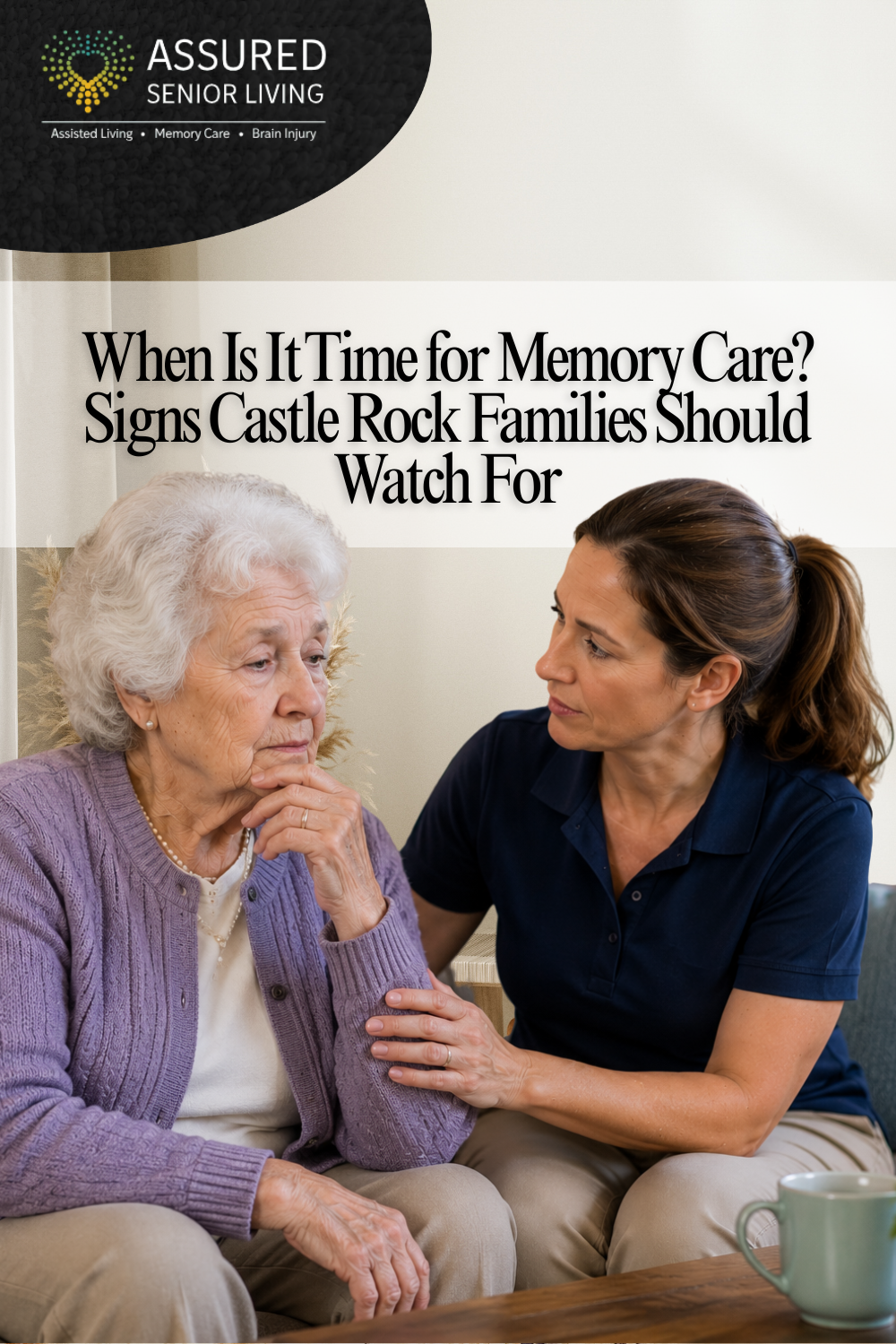
When Is It Time for Memory Care? Signs Castle Rock Families Should Wat
When Is It Time for Memory Care? Signs Castle Rock Families Should Watch ForKnowing when a loved one needs memory care is one of the most emotional and difficult decisions a family can face.There is rarely a single moment when the answer becomes obvious.Instead, the need for memory care often develops gradually. Families may first notice subtle changesforgotten appointments, repeated questions, confusion about familiar routines, or unusual behavior. At first, these changes may seem manageable.But over time, memory loss can affect nearly every part of daily life.For families in Castle Rock, recognizing the signs early can make a meaningful difference. Understanding when additional support is needed helps families make informed decisions before a crisis occurs.Communities like Assured Senior Living 1 provide specialized memory care designed to support seniors living with Alzheimers disease, dementia, and other cognitive conditions in a safe and compassionate environment.The right timing can significantly improve quality of life for both seniors and their families.Understanding the Progression of Memory LossMemory loss does not affect everyone the same way.Some individuals experience gradual cognitive decline over many years, while others progress more quickly.Early symptoms often begin with mild changes such as: Forgetfulness Misplacing items Difficulty remembering names Missing appointments Repeating questions As dementia progresses, these challenges often become more significant.Over time, memory-related conditions can affect: Safety Judgment Communication Daily routines Emotional regulation Physical wellbeing These changes increase the need for specialized care.Why Families Often Delay Memory CareMany families wait longer than they should before exploring memory care.This happens for many understandable reasons.Families may feel: Guilt Fear Uncertainty Emotional resistance Hope that things will improve Many loved ones also want to keep caring for family members at home for as long as possible.That dedication is admirable.But dementia care becomes increasingly complex over time.There often comes a point when professional support provides better safety and improved quality of life.Recognizing that point can be difficult.Signs It May Be Time for Memory CareThere is no universal timeline.However, several warning signs often indicate that memory care may be the safest and most supportive option.Increased Confusion and DisorientationFrequent confusion is one of the clearest warning signs.A loved one may: Forget familiar names Lose track of time Become confused about location Forget important daily routines Disorientation often becomes more concerning as symptoms progress.Confusion can increase anxiety and create safety risks.Wandering or Getting LostWandering is one of the biggest concerns for families caring for someone with dementia.A senior may leave home unexpectedly or become disoriented in familiar places.Even short periods of wandering can create serious safety concerns.Secure memory care environments help reduce these risks.Difficulty Managing Daily ActivitiesTasks that once felt routine may become difficult or impossible.Common struggles include: Dressing Bathing Eating Taking medications Using the bathroom Household routines As daily functioning declines, additional support becomes necessary.Behavioral and Personality ChangesDementia often affects emotional regulation.Families may notice significant changes such as: Increased agitation Mood swings Anxiety Suspicion Aggression Withdrawal These changes can be distressing for everyone involved.Specialized memory care staff are trained to respond compassionately to these behaviors.Poor Nutrition or HygieneChanges in eating habits or personal care often indicate increased support needs.A loved one may forget to eat, skip meals, or neglect hygiene routines.Warning signs may include: Weight loss Dehydration Missed medications Unclean living conditions These issues can affect both physical and cognitive health.Growing Caregiver BurnoutSometimes the clearest sign isnt about the seniorits about the caregiver.Family caregivers often carry enormous physical and emotional stress.Warning signs of burnout include: Constant exhaustion Anxiety Sleep disruption Chronic stress Emotional fatigue When caregiving becomes overwhelming, both the caregiver and loved one are affected.Support becomes essential.Why Waiting Too Long Can Be RiskyDelaying memory care can increase safety risks and emotional stress.Without appropriate support, seniors may face: Falls Wandering Medication errors Poor nutrition Social isolation Household accidents Families may also experience higher stress levels and worsening burnout.Early intervention often creates better outcomes.Transitioning before a crisis allows families to make thoughtful decisions.This creates smoother transitions.How Memory Care HelpsMemory care communities provide specialized support designed specifically for cognitive decline.Key benefits include: Secure environments 24-hour supervision Structured daily routines Personalized care plans Cognitive engagement Specialized dementia care This level of support improves safety while helping residents maintain comfort and dignity.How Assured Senior Living 1 Supports FamiliesAssured Senior Living 1 offers compassionate memory care designed to meet the unique needs of seniors living with dementia.Their care model focuses on creating a safe, supportive environment where residents receive personalized attention and meaningful daily support.Every residents journey with memory loss is unique.Thats why individualized care matters.Support is tailored to each residents: Cognitive needs Preferences Abilities Daily routines This personalized approach helps improve comfort and quality of life.Memory Care Benefits Families TooOne of the biggest benefits of memory care is peace of mind.Families gain reassurance knowing their loved one is receiving professional care in a secure environment.This reduces constant worry about: Safety Wandering Medication management Daily care Families also gain the opportunity to focus less on caregiving tasks and more on spending meaningful time together.That emotional shift matters.The Marketing Team at Assured Senior Living shares: Families often wait until they feel overwhelmed. Early support can create safer, more positive outcomes for everyone involved.That insight is important.Why Castle Rock Families Value Local Memory CareCastle Rock is a community where families prioritize quality care and strong support systems.Having trusted memory care close to home allows families to stay actively involved in their loved ones care journey.Local access helps families remain connected and engaged.That connection provides comfort during difficult transitions.Final ThoughtsDeciding when memory care is needed is never easy.But recognizing the signs early can help families make safer, more thoughtful decisions.Memory care provides specialized support that improves safety, comfort, and quality of life for seniors living with dementia.For families in Castle Rock, Assured Senior Living 1 offers compassionate care designed to support both residents and loved ones through every stage of the journey.The right support at the right time can make all the difference.Visit Their Seniors Blue Book Listing TodayLooking for trusted memory care in Castle Rock? Visit Assured Senior Living 1s Seniors Blue Book listing to learn more about their care services.FAQsWhat are signs someone needs memory care?Common signs include wandering, confusion, safety concerns, poor hygiene, and caregiver burnout.Is memory care only for Alzheimers patients?No. Memory care supports individuals with many forms of dementia and cognitive decline.When should families consider memory care?When safety, daily functioning, or caregiving demands become difficult to manage at home.Does memory care improve quality of life?Yes. Specialized care, routine, and safe environments often improve wellbeing.Why is early planning important? Planning early helps families make informed decisions before emergencies arise.
Jun 29, 2026
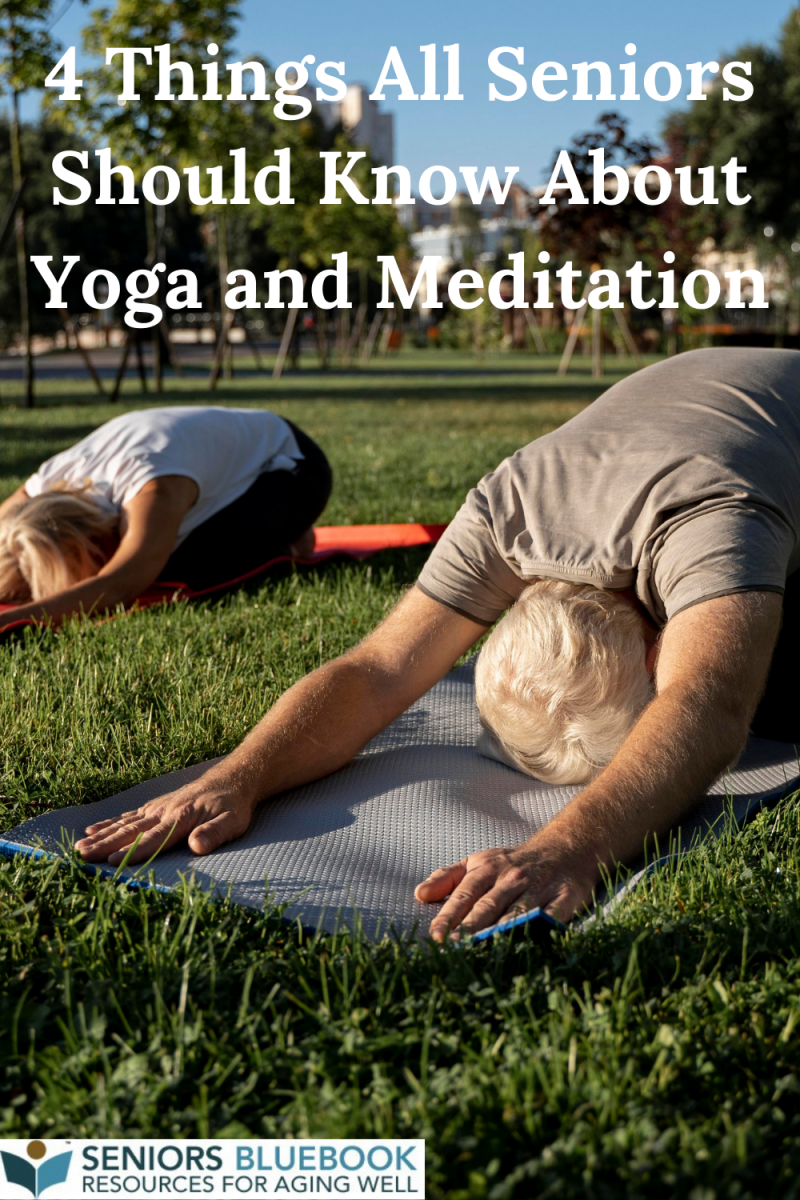
4 Things All Seniors Should Know About Yoga and Meditation
By now, everyone has probably already been told they should try yoga and meditation. These two ancient practices are often touted for their incredibly long list of proven health benefits and are constantly gaining new devoted practitioners.However, some groups of people may still be reluctant. Older adults, for instance, may wonder whether yoga and meditation are not just passing fads or if it is for them. The answer is that yoga and meditation are for everyone, but seniors could actually be especially suited for them. To start, as a result of its many benefits-- from increasing blood flow to boosting balance to lowering blood sugar -- it has been shown to increase health span.Read on to learn more from Assured Assisted Living about how yoga can benefit seniors:Yoga Can Help You Live Better for LongerYoga is a full-body workout that can go a long way in helping seniors maintain mobility later in life. It does this by improving balance, which reduces the chance of falls and serious injuries. Flexibility, which helps maintain a fuller range of movement, and strength, which helps fight age-related muscle mass, are also key components of yoga.It also has a host of other health benefits. It relieves stress, which helps fight anxiety and many diseases. It helps you breathe better. As a form of exercise, it could even boost your gut health, which can definitely affect your moods if it gets out of balance. More proof that yoga can boost your health span to meet your lifespan!Meditation Is an Incredible Mind BoosterMeditation is an invaluable tool when it comes to preventing senior cognitive decline. According to the Conversation, a regular meditation practice as little as10 minutes a day can have a significant impact on focus and memory.Meditation is also extremely effective as a tool for positive mental health. AUK study showed that senior patients being treated for depression recovered much faster when also provided with mindfulness meditation. This is just one of many exciting studies pointing to the potential power of meditation to cure senior depression and anxiety.Yoga Is the Ideal Senior WorkoutAs well as being an extremely healthy and well-rounded form of exercise, yoga is perfect for seniors in many other ways. For one, it is easy to do at home with very little equipment, making it an extremely cost-effective workout for seniors on a tight budget. It is also extremely adaptable. There are hundreds of poses and movements, each with variations you can use to make them easier for you. Contrary to popular belief, there is not a correct way to do yoga you just focus, breathe, and work with what your body can do.There are also many gentle forms of yoga that are closer to meditation than to a workout, which can be incredibly beneficial for seniors. Restorative yoga, which focuses on slow movement and holding easy poses for longer periods of time, is a great example.It's Easy (and Safe) to Get StartedIf you want the structure of a yoga classroom, you can easily find yoga classes designed for seniors. If you prefer to do at-home yoga, there are plenty of free lessons online that are senior-friendly try this yoga for all ages by popular YouTube channel Yoga with Adriene. You should also keep in mind that you don't have to try to become a master yogi overnight. As Zen Business explains, incorporating a healthy change into your life requires a continuous commitment, meaning you can start with a 10-minute daily yoga practice, if that's what you're comfortable with, and work your way up from there. When a change is gradual, it's more likely to be sustainable.As for meditation, there are loads of free apps available to guide you through it, and even more videos on YouTube and other sites. Just search guided meditation and try a few out, or refine your search to something specific, like a morning meditation or a meditation to help you sleep.Both yoga and meditation will be easier to practice if you are relaxed. Try to create a soothing environment for your practices or invest in a calming supplement like CBD oil to help you get in the right headspace. Do consult with your doctor before taking CBD, but if they approve, look up online guides to find the best CBD oil for you.There is a reason why the world won't shut up about yoga and meditation. Like any hobby or exercise, they may not be for everyone, but there are so many varieties of yoga and meditation that chances are you can find one that works for you. Once you do, you may be amazed at how much they can make your golden years happier, healthier, and more enjoyable.
Jan 17, 2022
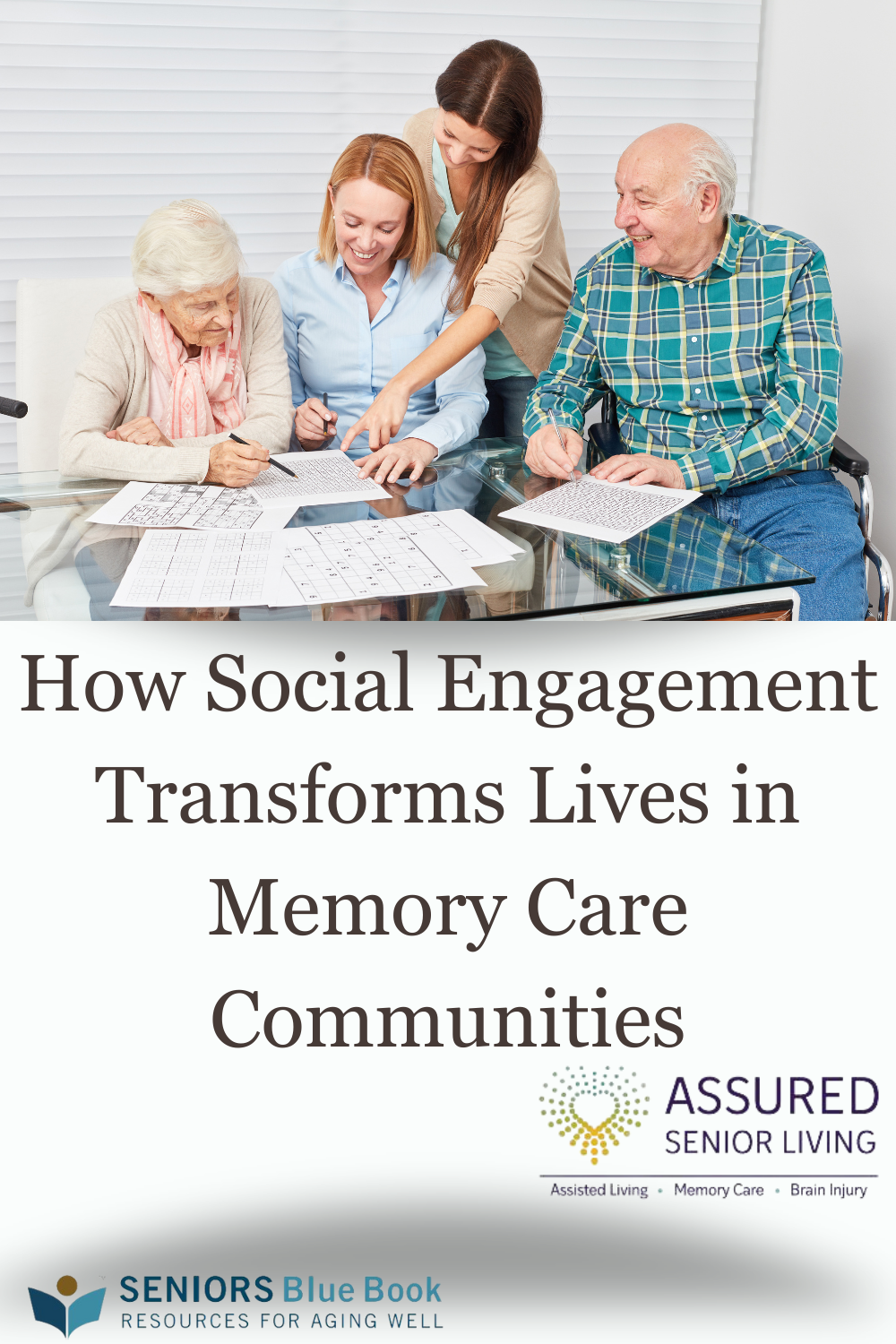
How Social Engagement Transforms Lives in Memory Care Communities
In memory care communities, the impact of social engagement on residents' cognitive health is profound. Research findings consistently demonstrate a direct correlation between social interaction and cognitive well-being, emphasizing the pivotal role of community dynamics and social activities in fostering a sense of belonging and purpose. By exploring the significance of social engagement in memory care settings, we can uncover the transformative power of meaningful connections and the positive influence of innovative social engagement programs on residents' overall well-being.THE ROLE OF SOCIAL ENGAGEMENTS IN MEMORY CARE COMMUNITIESCommunity dynamics and social activities play a pivotal role in fostering the well-being of individuals. The positive influence of social interactions extends beyond mere engagement, significantly impacting the overall quality of life for residents. Here's a closer look at the specific ways in which community dynamics contribute to the well-being of individuals in memory care settings:Promoting a Sense of Belonging: Social interactions create a sense of community and belonging, providing residents with a supportive network of peers and caregivers. This fosters a feeling of inclusion and connectedness, which is instrumental in enhancing emotional well-being and reducing feelings of loneliness and isolation.Reducing Isolation: Community dynamics and social activities serve as powerful tools in mitigating the effects of isolation commonly experienced by individuals with memory care needs. By facilitating regular social engagement, memory care communities create opportunities for residents to connect, communicate, and share experiences, thereby reducing the sense of seclusion and disconnection.Enhancing Overall Quality of Life: The presence of vibrant community dynamics and social activities contributes to an enriched living experience for residents. Meaningful interactions and shared experiences create a positive and uplifting environment, promoting emotional resilience and a higher overall quality of life.By recognizing the pivotal role of social interactions in memory care communities, we can better understand the profound impact of community dynamics on the well-being of individuals with memory care needs.THE SIGNIFICANCE OF SOCIAL ENGAGEMENT IN MEMORY CARE SETTINGSIn memory care settings, social interaction plays a pivotal role in promoting purposeful care and fostering positive outcomes for residents. Here are key insights into the ways social engagement contributes to a meaningful and fulfilling environment for individuals with memory care needs:Enhancing Cognitive Stimulation: Social interaction serves as a catalyst for cognitive stimulation, offering residents opportunities to engage in conversations, activities, and shared experiences that stimulate their mental faculties. This active engagement is instrumental in maintaining cognitive function and promoting mental acuity.Supporting Emotional Well-being: Meaningful social interactions create a supportive environment that nurtures emotional well-being. Residents benefit from the emotional support and companionship derived from social engagement, leading to reduced stress and anxiety while promoting a sense of contentment and fulfillment.Fostering a Sense of Purpose: Social interaction in memory care settings provides residents with a sense of purpose and belonging. Meaningful connections and shared experiences contribute to a feeling of significance and value, empowering individuals to actively participate in the community and engage in purposeful activities.By recognizing the significance of social interaction in memory care settings, we can better understand its profound impact on promoting purposeful care and positive outcomes for residents.ENHANCING SOCIAL ENGAGEMENT THROUGH INNOVATIVE PROGRAMSInnovative programs and initiatives are instrumental in enhancing social engagement and enriching the lives of residents. Here are specific examples of successful social engagement programs and their positive effects on residents' overall well-being:Rendever Virtual Reality: This innovative program utilizes virtual reality technology to create immersive experiences for residents, allowing them to virtually visit meaningful locations, reminisce about past experiences, and engage in stimulating activities. Rendever Virtual Reality has been shown to enhance residents' emotional well-being and cognitive stimulation, providing a unique avenue for social interaction and shared experiences.Linked Senior: Linked Senior is a comprehensive engagement platform designed to provide personalized and meaningful activities for individuals in memory care communities. Through a curated selection of digital content, including music, games, and reminiscence therapy, Linked Senior promotes social engagement and fosters a sense of connection among residents, contributing to their overall well-being.Art and Music Therapy Programs: These programs offer residents the opportunity to engage in creative and expressive activities, such as painting, drawing, and music sessions. By participating in these programs, residents not only engage in social interactions with peers and caregivers but also benefit from the emotional and cognitive stimulation derived from artistic expression and musical engagement.By highlighting these innovative social engagement programs, we can recognize their positive effects on residents' overall well-being, underscoring the importance of incorporating such initiatives into memory care communities.THE TRANSFORMATIVE POWER OF MEANINGFUL SOCIAL CONNECTIONSMeaningful social connections play a pivotal role in empowering residents and contributing to a fulfilling and enriching living experience. Here's a closer look at the ways in which social engagement empowers residents and fosters a sense of purpose:Enhanced Emotional Well-being: Meaningful social connections provide residents with emotional support, companionship, and a sense of belonging, leading to improved emotional well-being and reduced feelings of loneliness and isolation.Fostering a Sense of Purpose: Through social engagement, residents are empowered to participate in meaningful activities, contribute to the community, and form valuable connections, fostering a sense of purpose and significance in their daily lives.Promoting Overall Fulfillment: Meaningful social connections contribute to a sense of fulfillment and contentment among residents, enriching their living experience and promoting a positive outlook on life.By emphasizing the transformative power of meaningful social connections, we can recognize the profound impact of social engagement on the well-being of individuals in memory care communities. This understanding underscores the importance of prioritizing social interactions and community dynamics in memory care settings, ultimately contributing to a holistic and compassionate environment for residents.From fostering a sense of belonging and reducing isolation to promoting purposeful care and empowering residents, social interactions play a pivotal role in creating a holistic and compassionate environment. By prioritizing community dynamics and innovative social engagement programs, memory care communities can enrich the lives of residents, providing them with meaningful connections and an enhanced quality of life.For those seeking a personalized and purposeful approach to memory care, Assured Senior Living offers a comprehensive and compassionate model that prioritizes the well-being of individuals with memory care needs. To learn more about their holistic approach, visit https://www.assuredassistedliving.com/.
Jul 08, 2024

VA Aid and Attendance Benefit and How It Can Help Pay for Senior Living
For many families worried about whether they can afford the cost of senior living, the Veterans Aid & Attendance benefit can offer great peace of mind. Though its been around since the 1950s, many Americans are not familiar with this important VA benefit for senior living. In fact, more than one-third of Americans over 65 are either wartime Veterans or are married to one, which means they may qualify for benefits that can help offset the cost of senior care. Yet less than 10 percent of those who qualify have even applied for Veterans Aid & Attendance, which provides a non-service-connected pension to assist in paying for long-term care for wartime Veterans or a surviving spouse with limited income. Eligibility for This Important VA Benefit for Senior Living You may be eligible for this benefit if you get a VA pension, and you meet at least one of these requirements: You need another person to help you perform daily activities, like bathing, feeding, and dressing,or You have to stay in bedor spend a large portion of the day in bedbecause of illness,or You are a patient in a nursing home due to the loss of mental or physical abilities related to a disability,or Your eyesight is limited (even with glasses or contact lenses you have only 5/200 or less in both eyes; or concentric contraction of the visual field to 5 degrees or less) Housebound benefits eligibility: You may be eligible for this VA benefit for senior living if you get a VA pension and you spend most of your time in your home because of a permanent disability (a disability that doesnt go away). How Aid & Attendance Benefits Your Senior Living Budget Quite simply, with Aid & Attendance you have increased buying power which: Opens up more options when it comes to choosing the senior living community that fits your needs best. Gives you peace of mind in being able to stay in the community longer than your budget otherwise may have allowed. Whats more, this VA benefit for senior living is tax-free and paid directly to you by the Treasury Department. Watch out for mythslearn the truth about this VA benefit for senior living. There are many misconceptions that can cause Veterans or their surviving spouses to miss out on the full benefits they are entitled to, or to not even attempt the application process at all. At Assured Senior Living, we want you to have the facts. Here are a few common myths you should know about. Myth: To qualify for this VA benefit for senior living, you must have served in a combat zone. Truth: To qualify, the Veteran must have served during an eligible wartime period. Except for the Vietnam wartime period of February 28, 1961 to August 4, 1964, there is no requirement that the Veteran must have served in a combat zone. The service criteria are 90 days of active duty, with at least 1 day during an eligible wartime period and the Veteran was other than dishonorably discharged. Or, your spouse at the time of their death met these criteria. Myth: You cant receive a partial benefit for Aid & Attendance. Truth: Aid & Attendance is not all or nothing, you can get a partial benefit. For example, if your income minus home care and facility costs leaves you with a positive number or Income for VA Purposes, but one less than the Maximum Pension Benefit, you can receive the approximate difference between the Maximum Pension and the calculated Income for VA Purposes. Myth: A spouse can only receive Aid & Attendance if the Veteran has passed away. Truth: If a Veteran is still married and his or her spouse needs care, they are considered a dependent spouse. A married Veteran can be awarded a Basic Pension if he or she has a dependent spouse as long as eligibility requirements are met. To Apply for the Aid & Attendance Benefit: Send a completed VA form (https://www.vba.va.gov/pubs/forms/VBA-21-2680-ARE.pdf) to the Pension Management Center (PMC) that serves your state. Find your PMC at https://www.va.gov/pension/pension-management-centers/. File a claim online (https://www.va.gov/pension/application/527EZ/introduction) Apply in person at a VA office (https://www.va.gov/find-locations/?facilityType=benefits) near you. Why You Might Want the Assistance of VA Accredited Agent Keep in mind that its not just the length of the application for this VA benefit for senior living that makes the process complex, its also all understanding all the nuances. An expert who knows all the rules and regulations, as well as how the VA works can not only help make the process much easier, but also make sure you get the benefits you deserve to pay towards senior living costs. And while the VA may tell you to expect it to take 12 to 18 months for your application to be approved, a VA accredited agent can typically help reduce that time significantly. At Assured Senior Living, we want everyone who needs care to have the opportunity to thrive physically, intellectually and socially.
Sep 28, 2022

Understanding the Cost of Senior Care
Understanding the cost of senior care can go a long way towards helping you making the right decisions for yourself or for a loved one. Most people underestimate these numbers, simply because they arent taking into account all the aspects of what senior care involves. Once you take a closer look at the information, you can feel more confident with a plan that best suits your familys needs.The Cost of Senior Care: Whats InvolvedRight off the bat, many people assume that caring for an older adult at home would be less expensive than moving them to assisted living or memory care. And for those individuals who only need a small amount of assistance, that might be true, at least until their needs change. But for those who require 24-hour assistance with bathing, dressing, using the toilet, transferring from a chair to a bed, incontinence, and eating and drinking, home care can prove to be more expensive than a senior living community.Take a look at these costs, according to a 2021 Genworth survey. TYPE OF AT-HOME CAREHOURLY RATEMONTHLY ESTIMATEHomemaker services$21$15,120Home health aide services$22$15,840CNA (medical) services$17$12,240LPN (medical) services$27$19,400There Are More Expenses to Consider at Home If youre contemplating a budget if your loved one stayed at home, dont forget all the other expenses a well. Such as housekeeping, home repairs and maintenance, food and supplies, medications, modifying the home for safety, transportation to physicians and therapists, and more. The cost of senior care isnt just medical or health-related, its committing to 24-hour attention and assistancewhether thats you, a family member, or caregivers you bring in to help. The physical and emotional stress can be overwhelming. And like so many things, the costs of senior care are rising, due to factors such as lack of labor, sicker patients, and wage pressures. It is estimated that 80% of home care comes from unpaid caregivers.The Cost of Senior Care: Assisted Living and Memory CareSenior living communities offer more care and housing options today than ever before. It truly can be a new beginning for a senior, offering not only the right amount of support and assistance, but a greater sense of independence, opportunities for safe socializing, freedom from home upkeep or other everyday worries, and so much more.In other words, when you do your comparisons, you might decide that the right senior living is worth every penny. Assisted living provides housing, onsite care and support with activities of daily living while helping residents maintain their independence and enjoy a purposeful life. Personalized care includes assistance with bathing, dressing, eating and medication as well as onsite medical care. Features include 24-hour supervision, transportation, access to exceptional amenities, housekeeping and other services, and more. (Some assisted living settings also include designated neighborhoods offering memory care.)Average monthly costprivate, one-bedroom: $4,500 Skilled nursing offers 24-hour supervised care, a licensed physician or nurse on site, as well as physical, speech and occupational therapists. Features include health monitoring and medication management, exercise programs, social opportunities and activities, housekeeping, laundry service, three daily meals, and more. This level of care is best suited for those with chronic health conditions or incontinence, who require dispensing and monitoring intravenous medications and/or who are recovering after a surgery or hospitalization.Average monthly costsemi-private room: $7,908; private room: $9,034 Memory care is specifically designed to nurture those with Alzheimers disease and dementia with 24-hour supervised care. Senior living communities that offer memory care do so with specially trained staff that provides individualized support in a safe environment with opportunities for an older adult to find purpose and joy. Average monthly cost$3,233 to $10,447 What Determines the Costs in A Senior Living Community?Some senior living communities are located in parts of the country where costs are higher. Some are large, big box senior communities with large campuses and resort-style amenities. While its difficult to give an average cost of senior care, it is important to remember that you do have choices.For example, Assured Senior Living stands apart by offering an intimate, residential-style setting for assisted living and memory care that genuinely feels like homefolding into a friendly neighborhood that residents can feel part ofand at a fraction of the cost of standard home care. With an outstanding staffing ratio of 1 to 4, residents are able to engage and thrive in the least restrictive environment. We would love to tell you more. Our personalized care, home environment, and Montessori Activities program help our residents to keep their golden years golden.
Oct 19, 2022
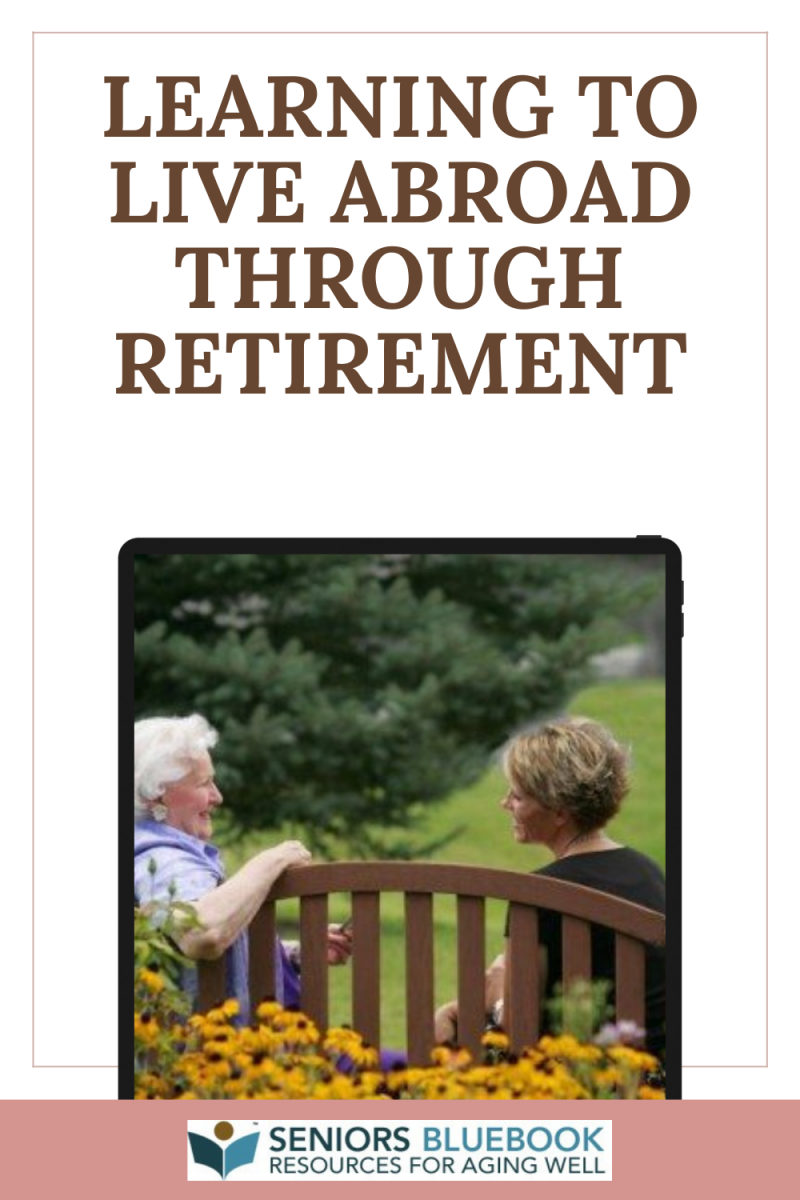
Learning to Live Abroad Through Retirement
You dont have to spend your golden years in one place. If you imagine living abroad but dont want to give up your life at home, you do not have to. Many ex-pats spend part of the year in one country and the rest in another. Imagine spending time in warm weather or seeing your family on noteworthy occasions and enjoying life abroad throughout the year. You can have it both ways Assured Senior Livingpresents a guide that explains how.Planning for RetirementWhen retiring with two homes in two different countries, you need to have a clear plan. According to the experts, your first plan should be to check the visa andresidency requirements. Every country differs, as do all of the different laws. Keep in mind that there are exchange rate fluctuations.Before moving to anew country, collect your important documents and place them in a folder. You should also have a file on your computer full of necessary paperwork. Find out about any vaccination requirements in both countries.Set up all of your bank accounts for online access. You should have the capability of viewing your transactions no matter where you are. Online, you can pay bills and make money transfers between banks. Another convenient way to plan for your finances is to ensure you have mobile apps for your banks on the phone.Learning to Live AbroadLearning to live abroad means learning the culture and the language. If you spend part of your retirement in a country that speaks a language other than your native language, consider learning the language. For example, if youre moving somewhere like India, set a goal to read a newspaper article. Read as often as you can. On the one hand, you have an opportunity to relax with a book and on the other, you learn more words and context.If you do not want to buy a property abroad, consider long-term rentals. In longer rentals, you can stay in one place for months at a time. When you live part-time in a country, you learn the culture faster by enveloping yourself in it while there.Taking Care of Obligations RemotelyWhen you split your time between countries, you cannot always handle your finances in person. Instead, you may have to handle investments, mortgages, car payments and other financial obligations online. Likewise, you may need to contribute to taxes depending on where you live. For example, Americans living abroad have to file a U.S. tax return. Find out your tax requirements ahead of time, so there are no surprises during tax season.If you have family or loved ones to support in one country, you can still help when you are away. Like many expats, you can enjoy your retirement in one country and still help friends and family back home when necessary. One of the best ways to stay connected and help others is through the internet. Use social media to remain close to those you love, wherever you are.If you need to send money home, there are various ways to support it from afar. For example, if you split your time between India and the U.S., you can transfer money with services like Remitly. Remitly offer slow or zero fees and if you spend less than $1000, you may only have to pay $3.99 through express and economy service.If you want to spend retirement abroad, there are many ways you can do it. As long as you plan and dive into the culture, you can live as an ex-pat wherever you wish.
Jan 17, 2022
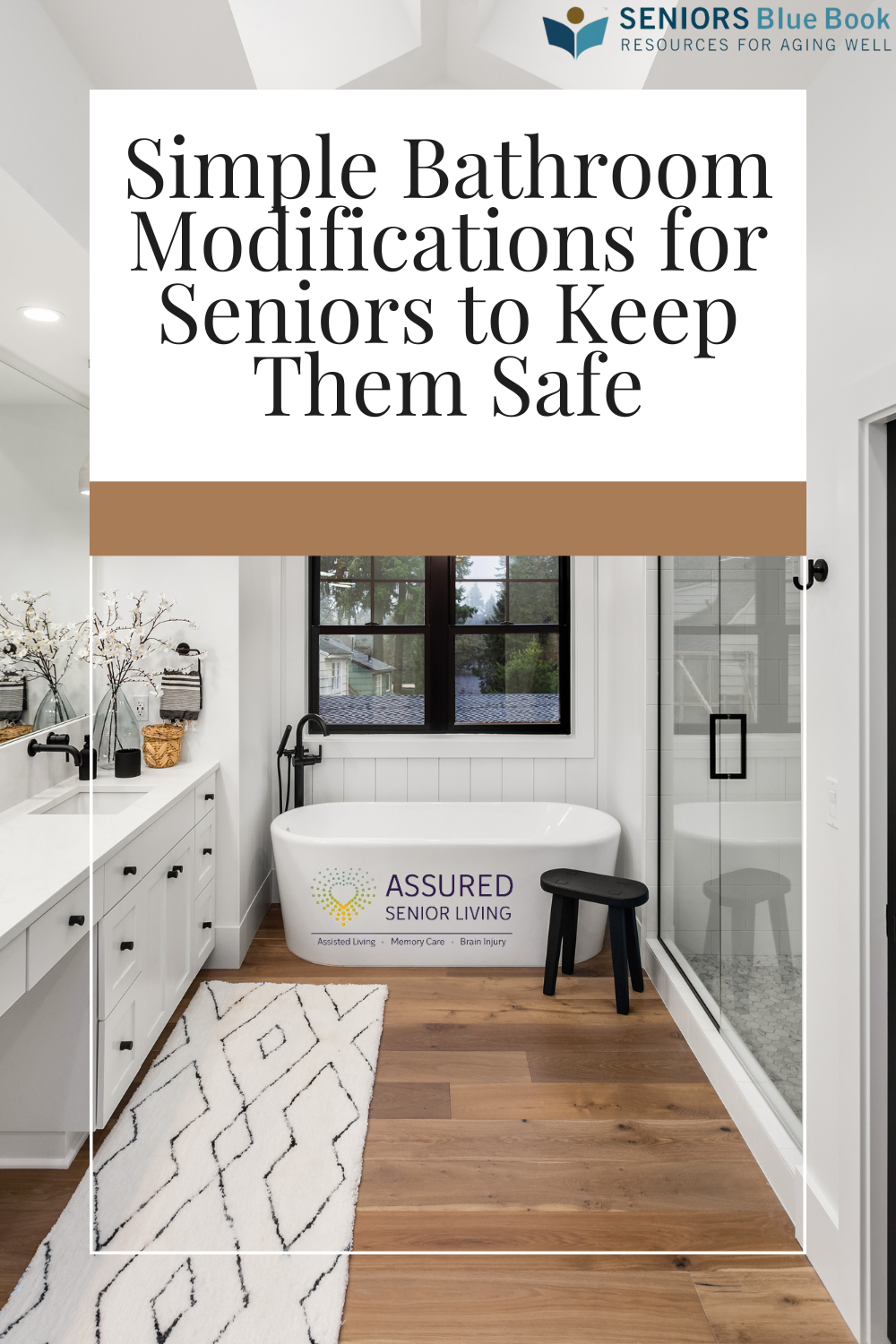
Simple Bathroom Modifications for Seniors to Keep Them Safe
You know how important it is to prioritize seniors' safety at home, especially in the bathroom where slips and falls are common. Simple modifications such as installing grab bars and using non-slip mats can make a world of difference. But have you thought about adjusting fixture heights or improving lighting to enhance visibility? These changes can greatly enhance stability and prevent accidents. There's more to think about, such as adding shower chairs and handheld showerheads for ease of use. Ready to explore how these adjustments can help maintain independence and provide peace of mind?WALK-IN TUBSAdding a walk-in tub can significantly improve safety and comfort for seniors in the bathroom. These tubs feature low-entry thresholds and built-in seats, reducing the risk of slips and falls.Key features to consider:Low-Entry Threshold: Easier to step in and out of.Built-In Seat: Provides a safe, comfortable place to sit while bathing.Grab Bars: Additional support for stability.Non-Slip Floor: Prevents slipping on wet surfaces.Handheld Showerhead: Allows for easy rinsing without standing.Quick Drain Feature: Reduces waiting time to exit the tub.Walk-in tubs often require professional installation to ensure safety and proper plumbing, but the enhanced accessibility and peace of mind they provide make them a valuable addition to any senior-friendly bathroom. A great place to see the best ones is at Walkintub.org. There a so many different options to consider.INSTALL GRAB BARSInstalling grab bars in the bathroom can greatly enhance safety for seniors. You should focus on placing grab bars near the toilet, shower, and bathtub, where balance and stability are most needed. By doing this, you're providing essential support that can prevent slips and falls, which are common among older adults.It's important to choose grab bars that are sturdy and capable of supporting significant weight. Stainless steel or other durable materials are ideal choices.When installing grab bars, make sure they're securely anchored into wall studs. This guarantees they can withstand the pressure and weight applied by users. You might also want to contemplate textured grab bars to provide a better grip, especially when hands are wet. Placement should be at a height that's easily reachable for the senior, typically around waist level.It's a good idea to consult a professional for proper installation if you're not confident in your DIY skills. Incorrect installation can render the bars ineffective or even dangerous.USE NON-SLIP MATSAlong with grab bars, non-slip mats are another important addition to enhance bathroom safety for seniors. These mats can greatly reduce the risk of slips and falls, which is essential for maintaining independence and confidence.When choosing non-slip mats, consider the following tips:Material: Look for mats made of rubber or other non-slip materials. These provide a sturdy grip and are more durable than cloth or plastic alternatives.Size: Make sure the mat covers the entire area where water might accumulate, such as the shower floor or bathtub. A larger mat means fewer exposed slippery spots.Maintenance: Pick mats that are easy to clean. Mats that can be machine-washed or wiped down will stay in good condition longer and prevent mold or mildew buildup.Grip: Check for strong suction cups on the underside of the mat. These help the mat stay firmly in place, even when the floor is wet.ADJUST FIXTURE HEIGHTSWhen you adjust fixture heights in the bathroom, it can make a significant difference for seniors' comfort and safety.Consider lowering sink heights and installing raised toilet seats to reduce strain and enhance accessibility.These simple changes help create a more senior-friendly environment.Lower Sink HeightsLowering sink heights is an essential modification to guarantee seniors can comfortably and safely use the bathroom. When sinks are too high, they can cause strain or even lead to accidents. By adjusting the height, you make daily tasks such as washing hands and brushing teeth much easier and safer.To effectively lower sink heights, consider the following steps:Measure the ideal height: Typically, a sink height of 30-34 inches from the floor is suitable for seniors, but you should tailor this based on individual needs.Install an ergonomic faucet: Choose a faucet with a lever handle or touchless feature to minimize the effort required to turn it on and off.Ensure knee clearance: If the senior uses a wheelchair, make certain there's enough space underneath the sink for comfortable access. The area should be at least 27 inches high, 30 inches wide, and 19 inches deep.Secure the sink: Make sure the sink is firmly attached to the wall or counter to prevent any wobbling or accidental falls.Raised Toilet SeatsElevating toilet seats is an important modification to improve safety and comfort for seniors in the bathroom. As people age, getting up from a low toilet can become challenging and sometimes risky. By raising the height of the toilet seat, you make it easier for seniors to sit down and stand up, reducing the risk of falls and strain on their joints.You can choose from various types of raised toilet seats. Some are simply elevated seats that fit over the existing toilet, while others are more integrated solutions that replace the entire fixture. Look for models with secure locking mechanisms and non-slip pads to promote stability. Additionally, consider seats with built-in armrests for added support, making it even easier for seniors to maneuver.Installing a raised toilet seat doesn't require major renovations. Most products are easy to install and can be done without professional help. This small change can make a significant difference in a senior's daily routine, giving them more independence and confidence.Don't overlook this simple yet effective modification when making a bathroom safer for seniors. It's a practical step that promotes both safety and dignity.IMPROVE LIGHTINGImproving the bathroom's lighting can greatly reduce the risk of falls and enhance overall safety for seniors. Bright, well-distributed light helps seniors see better, making it easier for them to navigate the bathroom.Here are some effective ways to improve bathroom lighting:Install Bright Overhead Lights: Replace dim or outdated fixtures with bright LED lights. These provide clear, even lighting and are energy-efficient.Add Night Lights: Place night lights along the path to the bathroom and inside it. Motion-activated night lights are particularly useful, as they illuminate the space without the need to fumble for switches.Use Vanity Lights: Position vanity lights around the mirror. This reduces shadows on the face, making grooming tasks like shaving or applying makeup safer and easier.Ensure Proper Light Switch Placement: Make sure light switches are easily accessible, ideally at the entrance to the bathroom. Consider rocker switches, which are easier to use for those with arthritis or limited dexterity.ADD SHOWER CHAIRSEnsuring a safe and comfortable bathing experience, adding a shower chair can greatly enhance stability and reduce the risk of slips and falls for seniors. It's a vital yet effective modification that provides a secure place to sit while showering, making the entire process safer and less physically demanding.When selecting a shower chair, look for one with non-slip rubber tips on the legs to prevent it from sliding. Adjustable height options can also be beneficial, allowing you to customize the chair to the user's needs. Some models come with backrests and armrests for added support and comfort. Additionally, make sure the material is water-resistant and easy to clean to maintain hygiene.Positioning the chair correctly is essential. Place it in a spot that's easily accessible and free of any obstructions. If the shower area is small, consider a foldable chair that can be stored away when not in use.INSTALL HANDHELD SHOWERHEADSOften overlooked, installing a handheld showerhead can greatly enhance the bathing experience for seniors. It's a simple modification that adds both safety and convenience. With a handheld showerhead, seniors can direct the water flow exactly where they need it, reducing the need for excessive movement and the risk of slipping.Here are four reasons why you should install a handheld showerhead for seniors:Ease of Use:A handheld showerhead allows for easy maneuvering, making it simpler to wash hard-to-reach areas. Seniors can sit comfortably on a shower chair and still clean themselves thoroughly.Improved Safety:Reducing the need to twist and turn minimizes the risk of falls. Seniors can maintain their balance more effectively when they're not stretching awkwardly to rinse off.Increased Comfort:Adjustable settings on many handheld showerheads let seniors choose their preferred water pressure and temperature, making showers more enjoyable and tailored to individual needs.Assistance-Friendly:If a caregiver is needed, a handheld showerhead makes it easier for them to help with bathing. It allows for a more dignified and efficient bathing process.USE RAISED TOILET SEATSSwitching gears to another important modification, using raised toilet seats can greatly enhance both safety and comfort for seniors in the bathroom. These seats reduce the distance a person has to bend when sitting down or standing up, which is particularly beneficial for those with limited mobility or joint issues. By installing a raised toilet seat, you can lower the risk of falls and strain, making daily routines much smoother for your loved ones.Raised toilet seats come in various heights and styles to fit different needs. Some models offer handles or armrests for additional support, while others are designed to be easily removable, making them a versatile option for shared bathrooms. When selecting a raised toilet seat, make sure it's compatible with your existing toilet and secure enough to prevent any wobbling or slipping.Installation is typically straightforward, often requiring no tools or specialized skills. Most raised seats simply clamp onto the existing toilet bowl, ensuring a snug fit.APPLY ANTI-SCALD DEVICESInstalling anti-scald devices in your bathroom can prevent dangerous burns and make the space safer for seniors. These devices regulate water temperature, guaranteeing it doesn't exceed a safe threshold.Here's how you can easily integrate them into your bathroom setup:Faucet Anti-Scald Devices: These are small and can be attached directly to your existing faucets. They automatically reduce water flow if the temperature gets too high, preventing accidental burns.Showerhead Anti-Scald Devices: Similar to faucet devices, these attach to your showerhead and ensure the water temperature remains consistent. They're especially useful for seniors who mightn't react quickly to sudden temperature changes.Thermostatic Mixing Valves: These valves mix hot and cold water to maintain a constant, safe temperature. You can install them at the water heater or directly at the point of use, such as under the sink or behind the shower panel.Water Heater Temperature Adjustment: Set your water heater to a maximum of 120F (49C). This simple adjustment can greatly reduce the risk of scalding incidents, providing an additional layer of protection.ENSURE PROPER VENTILATIONProper ventilation in the bathroom is essential to prevent mold and mildew, which can pose health risks for seniors. You need to make sure that the bathroom is well-ventilated to reduce humidity levels. Installing an exhaust fan is a great start. Choose a fan with an appropriate CFM (cubic feet per minute) rating for the size of your bathroom. This will help effectively remove moisture from the air.Don't forget to clean the exhaust fan regularly to keep it functioning at its best. A dirty fan won't be as efficient at reducing humidity. You should also consider installing a timer switch for the fan. This ensures the fan runs long enough to clear out moisture even after you've left the bathroom.If your bathroom has windows, use them to your advantage. Open the windows when weather permits to allow fresh air to circulate. This can greatly reduce humidity levels. Ensure the windows are easy to open and close, so seniors can operate them without straining.Lastly, check for any signs of mold or mildew regularly. Early detection allows you to address the problem before it becomes a serious health concern.CONCLUSIONBy making a few simple modifications, like installing grab bars, using non-slip mats, and adjusting fixture heights, you can greatly enhance bathroom safety for seniors.Adding shower chairs, handheld showerheads, and raised toilet seats, along with anti-scald devices and proper lighting, guarantees a comfortable and secure environment.Don't forget good ventilation to keep things fresh.These changes help seniors maintain their independence and navigate the bathroom with ease and confidence.
Jul 08, 2024

4 Key Aspects Senior Couples Should Consider Before Getting Married
The expression love knows no bounds fits perfectly for couples looking to tie the knot in their golden years. Compared to marrying young, as a senior, youre bound to have much more financial stability and a stronger understanding of who you are as a person. As a result, you can dedicate the majority of your time to living the best life with your significant other. For older couples on the cusp of marriage, this article will explore key considerations to be aware of before starting the next chapter of your life.This resource guide is just one example of the great content you can find on the Assured Senior Living website.Take a Call on FinancesThe big question to answer will be whether to combine your finances or not. Merging finances is not as simple as pooling money into the same savings accounts, youll need to take a call on:Managing day-to-day expenses such as home maintenance, groceries, utilities, etc.Whether to add your spouses name on assets such as a second home, investment property, 401(k) plan, and more.If either of you have debt, decide whether the individual will be solely responsible for repaying it or will it be repaid using pooled resources.Additionally, be open about your future investment plans, such as expanding your portfolio, buying property, etc., and ask your spouse to do the same. Make the necessary tweaks and create a new financial plan which serves as a pathway to reach goals as a couple. Given the complexity of this process, consider working with a financial professional who can help make a solid plan and educate you on how to manage money as a new couple.Review Medicaid BenefitsIf you or your spouse currently receive Medicaid, take into consideration how the marriage will impact the benefits you receive. As reported by Medicaid.gov, this is a public health program catered toward helping low-income individuals, but its eligibility is calculated based on total household income. Hence, if the annual income of your new household exceeds the maximum threshold, you may no longer be eligible for Medicaid.In this scenario, it is important to make a clear plan on how healthcare requirements will be managed in the future. The best options include:Applying for good health insurance, which can be taken separately or as a couple.Use your employer-provided health insurance to cover healthcare needs. As coverage varies among companies, its best to speak with the employer to understand the viability of this option.Create Future PlansWith a partner by your side, the future will look different than before. While you dont need to follow plans to the T, its good to create several mutually shared goals to work towards in the golden years of your life. These can include:Starting a Business: If the entrepreneurial spirit burns bright in both of you, starting a business can be a great option to consider. Given decades of work experience, both of you will bring unique skills and experience to the table that will help make the business successful. In addition to serving as the primary or secondary source of income, managing the business as a couple will result in you spending the majority of time with your better half each day.When it comes to promoting your business, the essentials will include designing a responsive website and leveraging social media advertising. There are various online tools through which you can create a Facebook ad in seconds. Buying a Home: While moving in with your partner is always an option, relocating is an exciting prospect to consider. This can involve moving to a state both of you always wanted to live in, or making the move away from the city to spend your retirement years in peace in the suburbs.The home buying process can be tedious, as it may involve selling your current home, applying for a mortgage, and much more. Hence, its best to start early and create provisions in your financial plan.Consider a Prenuptial AgreementWhile this may be an uncomfortable topic to bring up, discuss the need for a prenuptial agreement (prenup) with your partner. As reported by Nolo, a prenup is a legal document that includes details regarding the financial assets of each individual and conditions attached to them in the event of divorce or bereavement.Here are prominent reasons you can consider creating a prenup:Assets from Previous Marriages: Individuals with children from prior marriages can use prenups to clarify how assets will be distributed in the event of their passing. Without a prenup, property rights typically pass onto the significant other, which creates the possibility of a future legal dispute.Protection from Debts: Prenups can also be used to protect yourself from being held liable for the repayment of your partners debts. While you may be counting down the days to the wedding, before making it official, take the time to make a plan regarding the above-mentioned aspects to ensure you and your partner are secured for the foreseeable future.
Sep 28, 2022
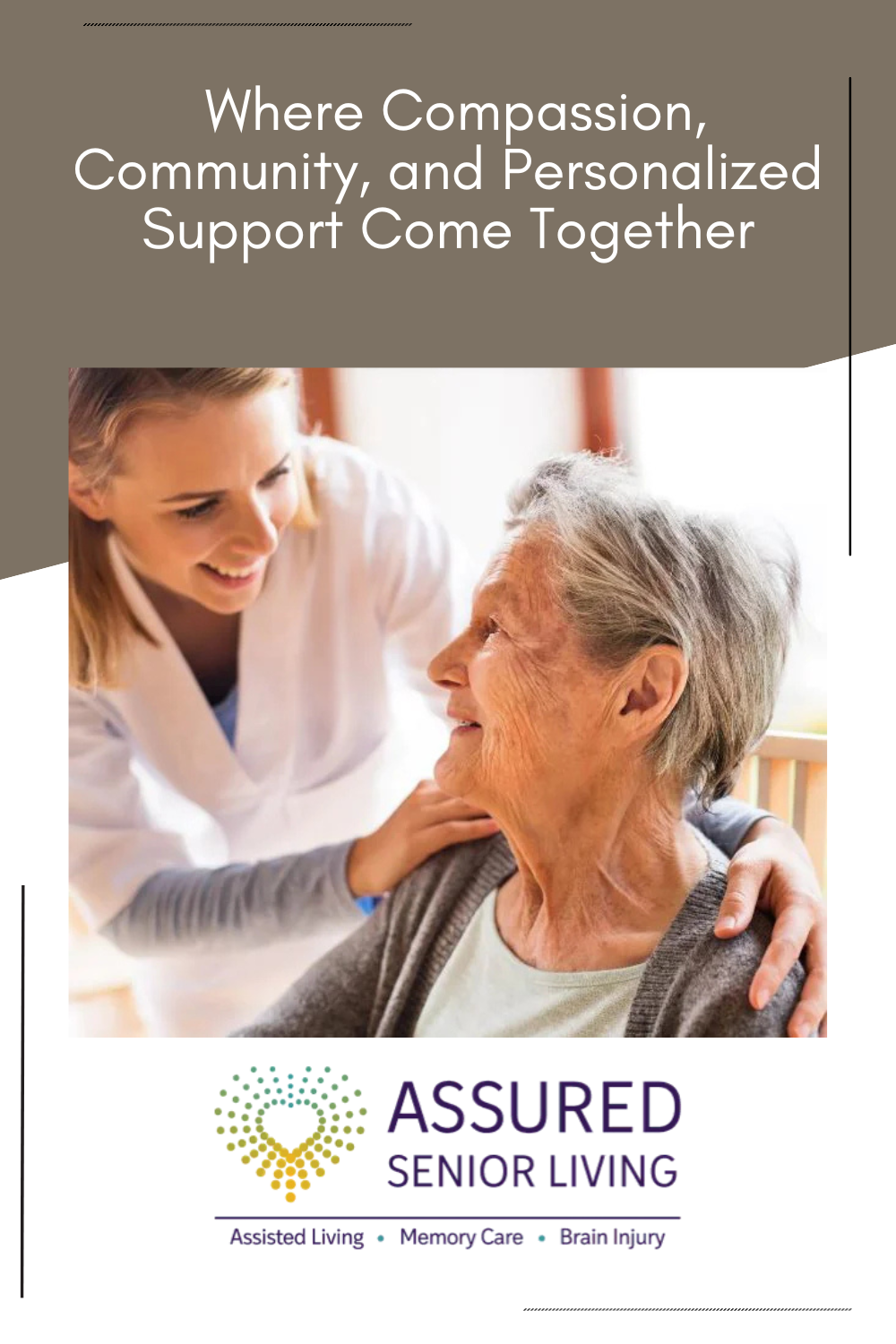
Where Compassion, Community, and Personalized Support Come Together
Choosing an assisted living community is a major decision for families with aging loved ones. As Denver grows and more seniors settle here, finding caring, high-quality support is crucial. Families want safety, comfort, expert care, and a place that feels like home.Assured Senior Living serves the Denver area with a distinctive approach: our small-home, family-style communities focus on care that respects each residents interests, routines, and relationships. Unlike traditional larger facilities, we do more than provide helpwe fill each day with activities, pay close attention to individual needs, and create a caring, home-like environment. Our homes are designed to feel welcoming, not clinical, so seniors can feel they belong and make real connections while getting the support they need.A Philosophy Built on Respect and Heartfelt CareEach family arrives with unique concerns, hopes, and questions. Our team learns each residents care needs, stories, routines, and preferences.Cheryl Griffin, a compassionate leader and advocate within the organization, shared:Seniors deserve care that honors their history and supports their independence. Our goal is to ensure every resident feels valued, comfortable, and genuinely at home. Cheryl Griffin.This philosophy shapes everything we do, from how we design our living spaces to how our staff build daily relationships with residents.A Home-Like Setting Designed for ComfortAssured Senior Living homes in Denver feel cozy and residential, helping residents relax and stay safe. Instead of large, multi-story buildings with long hallways, our communities look and feel like real homesinviting, warm, and easy to navigate.Features residents and families appreciate include:Secure, comfortable, private, and semi-private roomsCozy shared living spaces designed for social interactionSafe outdoor patios and walking pathsSimple layouts that reduce confusion and increase independencePersonalized dcor that makes each room feel familiarResidents can enjoy Denvers changing seasons, from warm summer nights to quiet snowy mornings, because of our well-designed outdoor spaces and caring staff supervision.Personalized Assisted Living That Adapts to Changing NeedsAs people get older, their needs can change. Assured Senior Living offers flexible support that adjusts as needed, helping residents stay independent and safe.Their care approach focuses on:Daily Living SupportAssistance with bathing, dressing, grooming, and mobility.Medication SupportProfessional medication administration and tracking.Health MonitoringRegular wellness assessments and communication with families.Homemade Meals & Social DiningNutritious options that accommodate dietary needs and preferences.Engaging ActivitiesPrograms that stimulate the mind, encourage movement, and inspire joy.24/7 Trained CaregiversCompassionate staff available at all times for reassurance and safety.Denvers active lifestyle inspires our programs. Residents often take part in group exercise, seasonal celebrations, music therapy, time outdoors, and activities based on their hobbies.The Value of Smaller Assisted Living SettingsMany families choose Assured Senior Living for our unique small-home model, where residents benefit from a close-knit, family-style environment unlike larger assisted living facilities. Smaller settings offer several benefits:Stronger resident-caregiver relationshipsPersonalized attentionA peaceful atmosphere with fewer distractionsA predictable routine that reduces stressGreater flexibility in meal planning, activities, and daily schedulesFor seniors who want a familiar, private, and peaceful place to live, this model offers comfort and consistency.Supporting Families Through Every Step of the JourneyFiguring out senior care can be overwhelming, especially for adult children who are juggling work, caregiving, and their own families. At Assured Senior Living, we believe in open communication and working closely with families.Families regularly receive:Transparent updatesSupport during transitionsGuidance through changing care needsHelpful education about aging, safety, and health conditionsWhether you live in Denver or are helping a loved one from another state, this open communication gives families peace of mind and a sense of working together.Integrated Enrichment That Enhances Quality of LifeAn active, engaging lifestyle is important for emotional and mental health. Assured Senior Living offers activities that match each residents personality, abilities, and interests.Examples of resident-centered enrichment include:Music therapy and sing-alongsGentle exercise and stretching classesMemory-supportive activitiesReading groups and storytellingArts, crafts, and seasonal creative projectsCommunity celebrations and birthday gatheringsQuiet spaces for relaxation, meditation, or private hobbiesSince Denver has so much culture, natural beauty, and community spirit, our programs often include local traditions, holidays, and seasonal events.Compassionate, Experienced Caregiving You Can TrustCaregiving is built on relationships, so Assured Senior Living makes sure residents see the same caregivers each daya rarity in larger facilities. Families value knowing their loved one is cared for by a consistent, friendly, patient, and well-trained team.The organization demonstrates E-E-A-T by:Employing experienced, trained caregiversFollowing care best practices and health standardsProviding ongoing staff educationMaintaining strong ethical communication with familiesCreating individualized care plans based on real expertiseBecause of this commitment to professionalism, Assured Senior Living has become a trusted name in Denvers senior care community.Why Seniors Thrive at Assured Senior LivingResidents enjoy a community that gives them both independence and support. Families often see positive changes like:Increased social engagementBetter nutrition and hydrationReduced fall riskGreater daily activityImproved moodMore meaningful moments of connectionMost importantly, families see their loved ones treated with kindness, dignity, and companionship.Visit Their Seniors Blue Book ListingTo find out more about Assured Senior Living, including living options and availability, visit their Seniors Blue Book listing.FAQs About Assisted Living in Denver1. What makes Assured Senior Living different from larger assisted living facilities?Their small-home model offers personalized attention, stronger relationships, and a warm residential atmosphere.2. Do residents have access to 24/7 care?Yes, trained caregivers are on-site around the clock.3. Can residents personalize their rooms?Absolutely! Families are encouraged to bring personal items and dcor.4. Does the community offer activities for all ability levels?Yes, activities are adapted to meet physical, cognitive, and emotional needs.5. What types of meals are provided?Home-cooked meals, tailored to dietary needs and preferences, are served in a social dining environment.
Nov 20, 2025

Helpful Ways to Support the Seniors in Your Community
While most of us hope our loved ones will be around to support us when we reach our senior years, this is not the case for many people. Seniors often live far away from their relatives. Even if long-distance loved ones are providing support from afar, these seniors can feel lonely and isolated without people around to provide assistance or offer valuable opportunities for socialization. If you want to give back to your community, reaching out to local seniors is a great way to make a difference in peoples lives. Here are some suggestions from Assured Senior Living.Offer Tech SupportTechnology offers numerous ways for seniors to connect with people and engage in their favorite activities from home. Here are some ways to offer tech support to local seniors.Research and recommend devices that will allow them to navigate the internet easily, like an iPad. Just remember to protect it with a good case!Show them how to order groceries and other essentials online.Teach them how to use video chat services and social media to communicate with long-distance loved ones.Teach them how to use a website to find and connect with former Denver-area high school students they went to school with.Help Out Around the HouseSeniors can have a hard time keeping up with housework. Whether youre good in the kitchen or you have a knack for landscaping, offer to lend a hand!You could even help them hire people to keep their homes neat and tidy. Cook up a batch of freezer-friendly meals that they can pop in the oven for dinner.Offer to help with general home maintenance to repair or spruce up parts of the house.Help them develop healthy morning habits such as light stretching, hydrating, and meditating.Make Aging-in-Place UpgradesAging-in-place can be much easierand saferwith a few basic home upgrades. Offer to help a local senior make home improvements to better meet their needs.Install grab bars in the bathroom and bedroom.Replace doorknobs with lever-style handles.Increase the lighting throughout the home, especially in stairways and dark hallways.Apply non-slip rugs and runners to reduce their fall risk.Reaching out to seniors in your neighborhood is a great way to lend a hand to those who need it. For people aging-in-place without relatives nearby, neighbors and other community members can provide a significant source of assistance and support. Get in touch with a local senior and find ways to help them navigate the challenges of daily life.At Assured Senior Living, our goal is to provide an environment with cutting-edge senior care. For more information, please visit our website or contact us today!
Sep 28, 2022
Helping Seniors Maintain Purpose and Joy Through Memory Care in Castle
Helping Seniors Maintain Purpose and Joy Through Memory Care in Castle RockA dementia diagnosis can change many aspects of daily life, but it does not erase a persons need for connection, purpose, and joy. Seniors living with Alzheimers disease or other forms of memory loss still benefit greatly from meaningful routines, social engagement, and compassionate support.Families in Castle Rock are increasingly searching for memory care communities that focus not only on safety, but also on helping residents continue experiencing fulfilling daily lives. Assured Senior Living 1 recognizes that emotional wellness and dignity remain essential throughout every stage of cognitive decline.Looking Beyond Medical SupportMany people assume memory care is focused entirely on supervision and assistance with daily tasks. While safety and healthcare coordination are important, quality memory care also emphasizes emotional and social wellness.Residents living with dementia often continue to enjoy:MusicConversationGardeningArt projectsFamily gatheringsGentle exerciseSpiritual activitiesFamiliar hobbiesEncouraging participation in enjoyable experiences can improve mood and create moments of connection.Why Emotional Wellness MattersMemory loss can feel isolating and frustrating for seniors. Confusion or difficulty communicating may cause anxiety or withdrawal.Communities that focus on emotional wellness help residents feel:RespectedIncludedHeardSafeEncouragedConnectedCaregivers trained in dementia support understand the importance of patience and reassurance.The Marketing Team at Assured Senior Living 1 explains, Meaningful relationships and compassionate interaction can make a tremendous difference in helping residents feel secure and engaged each day.Encouraging Social InteractionIsolation is common among seniors experiencing cognitive decline. Social engagement can help improve emotional wellness and reduce feelings of loneliness.Memory care communities often create opportunities for interaction through:Shared MealsFamily-style dining encourages conversation and familiarity.Group ActivitiesGames, music sessions, and community events allow residents to participate at their own comfort level.Outdoor ExperiencesFresh air and scenic surroundings can support relaxation and mood improvement.Celebrations and Family EventsHoliday gatherings and birthday celebrations help maintain traditions and family connections.Castle Rocks welcoming atmosphere makes it an appealing location for families seeking community-centered senior care.Supporting Independence Whenever PossibleEven when seniors require assistance, maintaining independence remains important.Memory care communities often encourage residents to continue participating in manageable daily tasks such as:Choosing clothingHelping set tablesWatering plantsParticipating in hobbiesAssisting with simple routinesSmall opportunities for independence can strengthen confidence and preserve dignity.Creating Safe and Comfortable EnvironmentsSeniors living with dementia may experience confusion, wandering, or disorientation. Thoughtfully designed memory care communities help reduce risks while promoting comfort.Features may include:Secure entrances and exitsClear walking pathsComfortable common areasSimple room layoutsCalm lighting and dcorStructured daily schedulesA peaceful environment can help residents feel more relaxed and less overwhelmed.Family Caregivers Need Support TooCaring for someone with dementia is emotionally demanding. Family caregivers often juggle work, parenting responsibilities, and caregiving duties simultaneously.Over time, exhaustion and stress can affect physical and emotional health.Professional memory care communities provide families with:Respite from daily caregiving tasksGuidance and communicationConfidence in resident safetyEmotional reassuranceMore opportunities for meaningful visitsMany families discover they can focus more on enjoying time with their loved one once professional care support is in place.Castle Rocks Growing Senior PopulationCastle Rock continues to attract retirees because of its balance between suburban comfort and convenient access to healthcare services.Families appreciate:Beautiful sceneryStrong community atmosphereAccess to parks and recreationNearby medical providersFamily-friendly neighborhoodsFor seniors requiring memory care, staying close to familiar surroundings and loved ones can support emotional well-being.Building Strong Relationships in Memory CareTrust is essential in dementia support. Residents often respond positively to familiar caregivers who communicate with patience and consistency.Communities that prioritize relationship-based care may help residents feel:More relaxedLess anxiousMore willing to participate in activitiesEmotionally secureSmall interactions such as remembering favorite foods, preferred routines, or meaningful life stories can create a more personal experience.Memory Care Can Enhance Quality of LifeAlthough dementia presents challenges, seniors can still experience meaningful moments, companionship, and joy.Supportive memory care communities focus on preserving quality of life by helping residents remain engaged and connected.At Assured Senior Living 1, compassionate support and personalized attention are central to daily care.Families searching for memory care services in Castle Rock can explore Assured Senior Living 1s Seniors Blue Book listing for additional information and local senior care resources.FAQsCan seniors with dementia still enjoy activities?Yes. Many residents continue participating in music, crafts, social events, and exercise programs tailored to their abilities.Why is emotional wellness important in memory care?Emotional support helps reduce anxiety, isolation, and frustration while improving overall quality of life.How does memory care support independence?Residents are encouraged to participate in daily tasks and routines whenever safely possible.What should families look for in a memory care community?Families often consider caregiver training, personalized care, safety measures, activities, and communication.Is memory care only for advanced dementia?No. Many seniors benefit from memory care support during earlier stages of cognitive decline.
May 21, 2026
Insurance Options for Paying for Senior Living
If youre like many people, your financial basket may hold more possibilities to fund your future than you might realize. One of these funding sources could be insurance for senior livingutilizing a policy to secure the lifestyle that meets your care needs, or those of a loved oneeven if you have decided you cant afford senior living.Ways to Use Insurance for Senior Living ExpensesLong-Term Care Insurance for Senior LivingLong-term care (LTC) insurance helps to pay for the cost of home care, adult day care, assisted living, memory care, skilled nursing, respite care and hospice by covering services typically not covered by health insurance, Medicare or Medicaid. Policies often even cover some homemaker services, such as meal preparation or housekeeping as long as it is in conjunction with the personal care services you receive. Before purchasing long-term care insurance, its always a good idea to make sure the policy offers the right coverage for you and your familys situation. How it works: Many LTC policies begin to pay benefits once an assessment has determined you need help with two or more Activities of Daily Living or cognitive impairments; otherwise known as a benefit trigger. The insurance company will approve a Plan of Care. Then you will have an elimination period, typically 30, 60 or 90 days after the benefit trigger occurs before you start receiving payment for service. During this time, you must cover the cost of services you receive. What to expect: Once the benefits begin many policies pay your costs up to a pre-set daily limit until your lifetime maximum is reached. Conversion of Life Insurance for Senior Living Many people dont realize that converting a life insurance policy into a Long-Term Care Benefit Plan is another option. Yet anyone with an in-force life insurance policy can transform it into a pre-funded financial account that disburses a monthly benefit to help pay for long-term care needs such as home care, assisted living, skilled nursing and hospice. Unlike life insurance, this account is a Medicaid qualified asset. How it works: The conversion process transfers ownership of a life insurance policy from the original holder to an entity that acts as the benefits administrator. Because the original owner no longer holds the policy, it wont count against them in the Medicaid spend down process. The benefits administrator assumes all responsibility for paying the monthly premiums on the policy to the insurance company and agrees to pay the previous policy holder a series of monthly payments based on the value of their policy. These payments can then be used to pay for your long-term care. The pros You can convert any type of life insurance for senior living: whole, term or universal. There are no monthly premium payments; monthly payout amounts are adjustable based on how many months you want to receive payments. Monthly payouts dont count against qualifying for Medicaid coverage; a long-term care benefit plan is recognized by Medicaid as an acceptable spend-down during the five-year look-back period. A long-term care benefit plan is comprised of private pay dollars, which means that it can be used to pay for any kind of carehome care, assisted living, skilled nursing and hospice. A special fund is set aside for future funeral expenses. The cons You must have an immediate need for some form of acceptable long-term care, because monthly payments are made directly to a long-term care provider, not the previous holder of the life insurance policy. Individuals with smaller policies ($10,000 or less) may be better off holding on to their plan or giving it up it in exchange for the cash surrender value. Or those who have a life insurance policy with a large cash value built in (e.g. a $100,000 policy with a $90,000 cash value) may better off taking that cash value.What to expect: There are no application fees or obligations to apply, and the typical enrollment time is 30-45 days. Once a policy is converted by the owner, the Long-Term Care Benefit payments begin immediately, and the enrollee is relieved of any responsibility to pay any more premiums. Insurance for Senior Living: An Option Worth ExploringAt Assured Senior Living, we understand that coming up with a financial plan for paying for senior care can be a complex process. However, we believe that taking a proactive approach is a sound strategy, just as weighing your options for assisted living and memory care early can help reduce stress for you and your family in the years to come. Let us help you find the answers.At Assured Senior Living, our goal is to make your loved one feel completely at home.
Sep 27, 2022
How Quality Memory Care Improves Daily Life for Seniors in Castle Rock
How Quality Memory Care Improves Daily Life for Seniors in Castle Rock Living with DementiaWhen families first begin researching memory care, safety is often their biggest concern.Will Mom be safe? Will Dad have the supervision he needs? Will someone be there if confusion worsens?These are important questionsand safety absolutely matters.But truly exceptional memory care offers much more than a secure environment.The best memory care communities focus not only on protecting residents, but on improving daily life. They create opportunities for comfort, meaningful engagement, connection, and joyeven in the presence of memory loss.For families in Castle Rock, communities like Assured Senior Living 1 provide specialized support designed to help seniors living with Alzheimers disease and dementia experience better quality of life every day.Memory care is not just about managing symptoms.It is about helping residents live with dignity, purpose, and compassion.Dementia Changes Daily Life in Significant WaysMemory-related conditions affect much more than short-term memory.Over time, dementia can influence nearly every part of a persons daily experience.This may include changes in: Communication Emotional regulation Judgment Problem-solving Physical coordination Social interaction Sleep routines As symptoms progress, even simple daily tasks can become increasingly difficult.Activities that once felt automatic may now require reminders, guidance, or full support.This can be frustrating and overwhelming for both seniors and families.Thats why specialized memory care matters.Quality of Life Still Matters at Every StageA dementia diagnosis does not erase the need for joy, connection, comfort, or purpose.Even as memory changes, emotional experiences remain deeply meaningful.Individuals living with dementia still benefit from: Feeling safe Feeling respected Social connection Familiar routines Comforting environments Positive daily experiences These elements significantly affect emotional wellbeing.Quality memory care focuses on creating these positive experiences consistently.The Role of Routine in Daily ComfortRoutine plays a powerful role in dementia care.For seniors living with memory loss, consistency helps reduce confusion and anxiety.Predictable daily routines create familiarity.This often improves: Emotional comfort Calmness Sleep quality Appetite Behavioral stability When daily life feels structured and predictable, residents often feel more secure.This stability can reduce stress significantly.Memory care communities are designed around routines that promote comfort and familiarity.That structure helps improve daily life.Meaningful Engagement Supports Cognitive WellnessEngagement is another critical part of quality memory care.Without stimulation, seniors with dementia may experience increased withdrawal, isolation, or emotional decline.Meaningful activities help residents remain connected and engaged.These may include: Music activities Art and crafts Gentle movement Conversation Sensory activities Reminiscence exercises These activities are not about testing memory.They are about creating moments of connection, enjoyment, and comfort.Sometimes something as simple as listening to a favorite song can spark joy or calm anxiety.Those moments matter.The Environment Makes a DifferencePhysical surroundings can greatly affect how seniors with dementia feel.Busy, noisy, or unfamiliar environments can increase confusion.Memory care communities are designed to create calm, supportive settings.Important features often include: Comfortable living spaces Safe layouts Reduced environmental stress Familiar routines Secure surroundings These elements help residents feel safer and more at ease.A supportive environment improves emotional wellbeing.How Assured Senior Living 1 Supports Daily WellnessAssured Senior Living 1 provides memory care focused on improving residents daily experiences through compassionate, personalized support.Their approach recognizes that each resident has a unique journey.Every person has different: Life experiences Cognitive challenges Personal preferences Emotional needs That is why individualized care matters so much.Personalized support allows caregivers to better understand each residents needs while helping preserve dignity and comfort.This creates a more meaningful care experience.Compassionate Care Builds TrustTrust is essential in memory care.Seniors living with dementia often experience fear, confusion, or anxiety.Compassionate caregiving helps reduce these feelings.Patience, kindness, and calm communication make a tremendous difference.Caregivers who build trust create stronger emotional security for residents.This can improve: Comfort Cooperation Emotional stability Daily wellbeing Compassion is not optional in memory care.It is essential.Families Benefit from Better Quality of Life TooWhen families see a loved one feeling calm, comfortable, and engaged, it brings enormous relief.Many families worry that moving into memory care means loss.In reality, quality memory care often improves life for everyone involved.Families gain peace of mind knowing their loved one has: Professional support Safe supervision Daily engagement Structured routines This reduces constant stress and worry.Families can spend more time focusing on meaningful connection instead of daily caregiving challenges.That emotional shift matters.Why Castle Rock Families Value Personalized Memory CareCastle Rock is a growing community known for strong family values, scenic beauty, and high quality of life.Families here prioritize care environments that feel personal, compassionate, and supportive.Having trusted memory care close to home allows loved ones to stay involved and connected.Frequent visits and ongoing involvement can positively impact both families and residents.That local connection matters.Small Moments Can Make a Big DifferenceOne of the most powerful truths about memory care is that small moments matter.A smile. A comforting touch. A favorite meal. A familiar song. A calm conversation.These moments may seem simple.But they can create meaningful comfort and joy.Quality memory care recognizes the importance of these moments.They help shape better daily experiences.The Marketing Team at Assured Senior Living shares: Quality memory care means creating an environment where residents feel safe, valued, and supported while helping them experience meaningful moments every day.That reflects what compassionate care should provide.Final ThoughtsMemory care is about much more than supervision.The best communities create environments where seniors living with dementia can experience safety, comfort, connection, and meaningful daily engagement.For families in Castle Rock, Assured Senior Living 1 provides compassionate memory care focused on improving quality of life at every stage of the journey.When care prioritizes dignity and daily wellbeing, life can remain meaningfuleven in the face of memory loss.Visit Their Seniors Blue Book Listing TodayLooking for compassionate memory care in Castle Rock? Visit Assured Senior Living 1s Seniors Blue Book listing to learn more about their personalized care services.FAQsHow does memory care improve quality of life?Memory care improves safety, comfort, routine, and daily engagement for seniors with dementia.Why is routine important in dementia care?Routine reduces confusion, anxiety, and stress while improving daily stability.What activities help seniors with dementia?Music, art, gentle movement, conversation, and sensory activities can support engagement.Does memory care help families too?Yes. Memory care reduces caregiver stress and improves peace of mind.What makes quality memory care different? Quality memory care focuses on safety, personalized care, dignity, and meaningful daily experiences.
Jun 29, 2026
Finding Comfort and Familiarity in Memory Care Communities in Castle R
Finding Comfort and Familiarity in Memory Care Communities in Castle RockFamilies in Castle Rock often spend months trying to decide when memory care may become the safest and most supportive option for an aging parent or spouse. Dementia-related illnesses such as Alzheimers disease can slowly change a persons routines, communication abilities, and daily independence. During this emotional transition, many local families are searching for a setting where their loved one can continue living with dignity, encouragement, and compassionate support.In the growing community of Castle Rock, memory care communities are becoming an important resource for seniors who require specialized assistance beyond what traditional senior living can provide. Assured Senior Living 1 focuses on creating a calm environment where residents receive individualized attention while families gain reassurance knowing their loved ones are cared for by trained professionals.Why Memory Care Is DifferentMemory care communities are designed specifically for individuals experiencing cognitive decline. Unlike general assisted living communities, memory care programs include specialized routines, secured environments, and staff members trained to support residents with memory-related conditions.Seniors living with dementia often benefit from:Structured daily schedulesPredictable routinesPersonalized support plansCognitive stimulation activitiesAssistance with daily living tasksSecure environments designed to reduce confusionSocial opportunities that encourage interactionThese elements help reduce anxiety while promoting confidence and comfort.Castle Rock families are increasingly prioritizing communities that focus not only on safety but also on preserving joy and connection. Residents deserve opportunities to laugh, engage in meaningful activities, and maintain a sense of purpose.The Importance of a Familiar EnvironmentCastle Rock offers a peaceful backdrop for seniors requiring memory care support. With scenic views, quiet neighborhoods, and a strong sense of community, the area creates a calming atmosphere that many families appreciate.For seniors experiencing memory loss, environment matters greatly. Loud or overly busy surroundings can increase confusion and agitation. Communities that provide smaller, home-like settings often help residents feel more comfortable.At Assured Senior Living 1, creating a welcoming atmosphere is an essential part of daily care. Personalized routines and familiar interactions can make a meaningful difference in a residents emotional well-being.The Marketing Team at Assured Senior Living 1 explains, Families want to know their loved ones are seen as individuals, not simply residents. Personalized attention and compassionate interaction can help seniors feel valued and secure every day.Recognizing When It May Be Time for Memory CareMany family caregivers struggle with deciding when to seek additional support. Often, the transition to memory care happens after months or years of attempting to manage care at home.Common signs that a senior may benefit from memory care include:Increased Safety ConcernsWandering, leaving appliances on, forgetting medications, or becoming lost in familiar places can create serious risks.Difficulty Managing Daily TasksBathing, dressing, cooking, and maintaining hygiene may become overwhelming for someone with cognitive decline.Caregiver BurnoutFamily caregivers frequently experience exhaustion, stress, and emotional fatigue. Professional memory care support can improve quality of life for both seniors and their loved ones.Social WithdrawalIsolation is common among seniors living with dementia. Structured activities and social engagement can help reduce loneliness.Behavioral ChangesMood swings, anxiety, aggression, or confusion may increase as dementia progresses.Seeking help earlier rather than later often allows seniors to transition more comfortably into a supportive environment.Activities That Support Cognitive WellnessMemory care is about much more than supervision. Todays communities emphasize engagement, creativity, and emotional support.Residents often benefit from activities such as:Music therapyReminiscence conversationsGentle exercise programsGardening opportunitiesArts and craftsSensory activitiesFamily-style dining experiencesGroup games and storytellingMeaningful engagement can help residents maintain connections with others while supporting emotional wellness.In Castle Rock, many families appreciate memory care communities that provide individualized activities based on each residents background, hobbies, and interests.Supporting Families Through the JourneyDementia impacts entire families, not only the individual diagnosed with memory loss. Spouses, adult children, and grandchildren often face emotional uncertainty throughout the caregiving process.Supportive memory care communities understand the importance of communication and family involvement. Families want updates, reassurance, and guidance as their loved ones needs evolve.At Assured Senior Living 1, families are encouraged to remain actively involved in their loved ones care journey. Open communication can help families feel informed and supported during difficult transitions.Why Castle Rock Families Value Local CareCastle Rock continues to attract retirees and families because of its balance between peaceful living and convenient access to healthcare resources. Seniors living in the area can enjoy beautiful surroundings while remaining connected to loved ones nearby.For many local families, choosing a nearby memory care community allows:Easier family visitsContinued community involvementFamiliar surroundings for seniorsGreater peace of mindStronger family participation in careMaintaining these local connections can improve emotional wellness for both residents and their loved ones.Building Trust Through CompassionFamilies searching for memory care are not only evaluating services and amenities. They are searching for trust, kindness, and reassurance.Communities that prioritize compassion often make the greatest impact. Residents deserve patient communication, encouragement, and opportunities to experience joy each day.The team at Assured Senior Living 1 believes memory care should focus on preserving dignity while supporting independence whenever possible.Looking Ahead With ConfidenceReceiving a dementia diagnosis can feel overwhelming, but families do not have to navigate the journey alone. Professional memory care communities provide structure, support, and compassionate guidance during every stage of cognitive decline.By choosing a community focused on personalized attention and meaningful engagement, families can help their loved ones continue living with comfort and connection.Families interested in learning more about memory care services in Castle Rock are encouraged to visit Assured Senior Living 1s Seniors Blue Book listing for additional information and local resources.FAQsWhat is the difference between assisted living and memory care?Memory care includes specialized support for seniors living with Alzheimers disease or other forms of dementia, along with secured environments and trained caregivers.How do I know when memory care is needed?Signs may include wandering, confusion, safety concerns, medication issues, or increasing caregiver stress.Are family visits encouraged in memory care communities?Yes. Many communities encourage family involvement and regular visits to support emotional well-being.What activities are available for residents with dementia?Residents often participate in music therapy, cognitive activities, exercise programs, art projects, and social events.Why choose memory care in Castle Rock?Castle Rock offers a calm, community-focused setting that many families find comforting and convenient.
May 21, 2026
The Role of Compassionate Caregivers in Memory Care Communities in Cas
The Role of Compassionate Caregivers in Memory Care Communities in Castle RockWhen families begin searching for memory care for a loved one, they often focus on safety features, amenities, and healthcare support. While these factors are important, one of the most meaningful aspects of quality memory care is the compassion and dedication of caregivers.For seniors living with Alzheimers disease or other forms of dementia, daily interactions can significantly affect emotional well-being. Caregivers who communicate with patience, kindness, and understanding help residents feel safe, valued, and respected.In Castle Rock, families seeking memory care support increasingly recognize the importance of relationship-centered care. Assured Senior Living 1 emphasizes compassionate support that focuses on both physical and emotional wellness.Why Compassion Matters in Memory CareDementia affects memory, communication, behavior, and emotional processing. Seniors experiencing confusion or frustration may feel anxious in unfamiliar situations.Compassionate caregivers help create comfort by:Speaking calmly and patientlyOffering reassuranceBuilding familiarity and trustEncouraging participationSupporting dignity and independenceUnderstanding emotional triggersResidents often respond positively when caregivers take time to connect personally rather than rushing through tasks.Building Trust Through ConsistencyConsistency is especially important for individuals with memory loss. Familiar faces, routines, and interactions can reduce confusion and anxiety.Caregivers who build relationships with residents often learn:Preferred routinesFavorite foodsHobbies and interestsCommunication stylesComforting activitiesPersonal history and family storiesThese personal connections help create a more supportive environment.The Marketing Team at Assured Senior Living 1 shares, Compassionate caregiving is about more than completing tasks. Its about creating meaningful relationships that help residents feel secure and respected.Communication Techniques That Support ResidentsSeniors with dementia may struggle to express thoughts or process information quickly. Skilled caregivers understand how to adapt communication in supportive ways.Helpful approaches may include:Using Simple LanguageShort, clear sentences can reduce confusion.Offering Gentle ReassuranceResidents often benefit from calm and comforting responses during moments of frustration.Maintaining Eye ContactWarm facial expressions and direct engagement can help residents feel understood.Redirecting AttentionCaregivers may gently redirect conversations or activities when residents become upset.These techniques help create positive interactions and emotional stability.Encouraging Purpose and ParticipationMemory care residents continue benefiting from opportunities to contribute and participate in daily life.Compassionate caregivers often encourage residents to:Join group activitiesHelp with simple tasksParticipate in hobbiesEngage sociallySpend time outdoorsThese moments can improve confidence and emotional wellness.Supporting Families During Difficult TransitionsMoving a loved one into memory care is emotional for many families. Feelings of guilt, grief, or uncertainty are common.Caregivers who communicate openly and compassionately can help families feel more comfortable during transitions.Families often appreciate:Frequent updatesHonest communicationEmotional reassuranceWelcoming visitation policiesCollaborative care planningProfessional support allows family members to focus on spending meaningful time together instead of managing daily caregiving demands alone.Creating Comfortable Daily ExperiencesCompassionate memory care extends beyond medical support. Everyday experiences such as meals, activities, and conversations contribute significantly to residents quality of life.Caregivers often help residents feel comfortable by:Respecting personal preferencesCelebrating accomplishmentsEncouraging social interactionMaintaining familiar routinesCreating calm environmentsThese details can make daily life feel more stable and reassuring.Castle Rock Provides a Welcoming Setting for SeniorsCastle Rocks peaceful surroundings and community-oriented atmosphere make it an appealing location for senior living.Families appreciate the areas:Scenic landscapesQuiet neighborhoodsAccessible healthcare servicesFamily-friendly environmentStrong sense of communityFor seniors receiving memory care, calm surroundings can support emotional wellness and relaxation.Training and Experience MatterMemory care caregivers require specialized training to understand the progression of dementia and how to respond to changing needs.Professional caregivers often receive education in:Dementia communication techniquesBehavioral support strategiesSafety and fall preventionMedication assistanceEmotional wellness supportOngoing education helps caregivers provide compassionate and effective support.Choosing a Memory Care CommunityFamilies evaluating memory care communities should consider more than appearances and amenities.Questions to ask may include:How are caregivers trained?What is the caregiver-to-resident ratio?How are activities personalized?How does the community support families?What safety measures are in place?Observing caregiver interactions during tours can also provide valuable insight into the communitys culture.Compassion Creates Meaningful CareAt the heart of every quality memory care community is human connection. Seniors living with dementia deserve patience, encouragement, and opportunities to experience comfort and joy.Assured Senior Living 1 focuses on creating supportive relationships that help residents feel respected and cared for throughout every stage of memory loss.Families seeking compassionate memory care in Castle Rock are encouraged to visit Assured Senior Living 1s Seniors Blue Book listing to learn more about available services and local resources.FAQsWhy are compassionate caregivers important in memory care?Compassionate caregivers help residents feel safe, respected, and emotionally supported.What training do memory care caregivers receive?Caregivers often receive specialized dementia training focused on communication, safety, and behavioral support.How do caregivers reduce anxiety for residents?Consistent routines, calm communication, and familiar interactions can help residents feel more comfortable.Should families visit memory care communities before choosing one?Yes. Touring communities allows families to observe caregiver interactions and ask important questions.What makes Castle Rock appealing for senior care?Castle Rock offers peaceful surroundings, strong community connections, and access to healthcare resources.
May 21, 2026
Why Small-Home Memory Care in Castle Rock Creates Comfort for Seniors
Why Small-Home Memory Care in Castle Rock Creates Comfort for Seniors and Peace of Mind for FamiliesCaring for a loved one with Alzheimers disease or dementia is a journey filled with love, devotion, and difficult decisions.For many families, one of the hardest questions is not whether their loved one needs supportbut where they will receive the best care.Safety matters. Quality care matters. But for many families, another important question often rises to the surface:Where will Mom feel comfortable? Where will Dad feel calm, safe, and at peace?These questions matter deeply because dementia care is about much more than supervision.Environment plays a major role in emotional wellbeing.For families in Castle Rock, smaller memory care settings like Assured Senior Living 1 can offer something especially valuable: a more intimate, personalized care experience that feels warm, familiar, and comforting.For seniors living with memory loss, that environment can make a meaningful difference in daily life.Why Environment Matters in Memory CareMemory-related conditions affect how individuals process the world around them.As dementia progresses, unfamiliar or overstimulating environments can become overwhelming.Large spaces, excessive noise, crowded hallways, and constant activity may increase: Confusion Anxiety Agitation Disorientation Emotional stress This is why environment matters so much in memory care.A calm, structured setting often helps seniors feel more comfortable and secure.The right environment supports both emotional stability and quality of life.The Benefits of Smaller Memory Care SettingsMany families are drawn to smaller memory care homes because they often provide a more personal atmosphere.Smaller environments can offer several important advantages.Less OverstimulationA quieter environment can reduce sensory overload.This often helps lower anxiety and confusion for residents living with dementia.More Personalized AttentionSmaller resident populations often allow caregivers to better understand individual needs.This can lead to more customized care.Familiarity and ComfortSmaller settings often feel more like home.That familiarity can be especially beneficial for seniors with memory loss.Stronger RelationshipsSmaller communities often foster closer connections between caregivers, residents, and families.These relationships build trust.That trust matters.Familiarity Helps Reduce AnxietyFor seniors living with dementia, familiarity creates comfort.When surroundings feel predictable and recognizable, residents often feel calmer.This may improve: Emotional wellbeing Daily routines Cooperation with care Sleep patterns Overall comfort Home-like environments can help residents feel less overwhelmed.This creates a more peaceful daily experience.Why Personalized Care MattersNo two dementia journeys look the same.Each resident has unique needs, preferences, challenges, and routines.Thats why personalized care is so important.Effective memory care considers: Cognitive abilities Communication style Personal history Behavioral patterns Emotional triggers Daily preferences Individualized support improves care quality significantly.Personalized care helps residents feel respected and understood.How Assured Senior Living 1 Supports ResidentsAssured Senior Living 1 provides specialized memory care focused on compassionate, personalized support in a comfortable setting.Their care approach emphasizes helping residents feel safe, supported, and valued.Each resident receives care tailored to their individual needs.This includes support with: Daily living activities Medication management Routine care Safety supervision Cognitive support Emotional comfort This individualized approach helps improve both safety and daily quality of life.Memory Care Is Also About Emotional SupportFamilies often focus heavily on physical safety.Thats understandable.But emotional wellbeing matters just as much.Seniors living with dementia often experience: Fear Confusion Frustration Anxiety Loneliness Compassionate memory care helps address these emotional needs.Calm communication, patience, reassurance, and consistency can make a tremendous difference.Sometimes the smallest moments create the biggest impact.A reassuring voice. A smile. A familiar routine. A calm environment.These moments matter deeply.Memory Care Helps Families TooDementia affects entire familiesnot just individuals.Family caregivers often carry enormous emotional and physical stress.Many caregivers spend years managing: Medication schedules Safety concerns Wandering risks Daily care routines Emotional support Over time, this level of caregiving can become overwhelming.Even the most devoted caregivers need support.Memory care helps relieve this burden.Families gain peace of mind knowing their loved one is receiving professional care in a safe and supportive environment.That reassurance can be life-changing.Family Relationships Often ImproveMany families fear that moving a loved one into memory care means losing connection.In reality, the opposite is often true.When caregiving responsibilities are reduced, families often regain the ability to focus on meaningful connection.Instead of constantly managing care tasks, loved ones can focus more on: Visiting Sharing meals Having conversations Spending quality time together This emotional shift can be powerful.Families often feel less stressed and more present.Why Castle Rock Families Value Compassionate Memory CareCastle Rock is known for its family-centered community, scenic beauty, and strong local values.Families here prioritize compassionate, high-quality senior care.Having trusted memory care close to home gives families the ability to remain actively involved in their loved ones care journey.Frequent visits and local support matter.Being close creates comfort for both residents and families.That connection is important.Planning Early Makes Transitions EasierOne of the best things families can do is begin researching memory care before a crisis happens.Early planning allows families to: Understand care options Compare communities Ask important questions Make thoughtful decisions This leads to smoother transitions and less stress.Preparation gives families more confidence.The Marketing Team at Assured Senior Living shares: Memory care is about creating comfort, dignity, and peace of mind for both residents and families. The right environment can truly change daily life.That perspective reflects what quality memory care should provide.Final ThoughtsChoosing memory care for a loved one is one of the most important decisions a family can make.The right environment provides more than supervisionit creates safety, comfort, personalized support, and emotional peace of mind.For families in Castle Rock, Assured Senior Living 1 offers compassionate memory care designed to support seniors living with dementia in a safe, comforting environment.When care feels personal and supportive, families gain confidenceand seniors experience greater comfort and dignity.Visit Their Seniors Blue Book Listing TodayLooking for trusted memory care in Castle Rock? Visit Assured Senior Living 1s Seniors Blue Book listing to learn more about their compassionate care services.FAQsWhy do smaller memory care homes help seniors with dementia?Smaller settings often reduce confusion, anxiety, and overstimulation.Is memory care helpful for family caregivers?Yes. Memory care reduces caregiver stress and provides peace of mind.How does environment affect dementia care?Calm, familiar environments can improve comfort and emotional wellbeing.When should families explore memory care?Families should begin exploring options when safety or daily care needs increase.What makes memory care different? Memory care provides specialized dementia support, structured routines, and secure environments.
Jun 29, 2026
Thinking of Moving Closer to Your Aging Parents? Here Are 4 Things to Consider
SHOULD I MOVE CLOSER TO MY AGING PARENTS?As your parents get older, physical, and mental capabilities noticeably decline. Forgetting where the car keys went doesnt necessarily mean someone is in need of greater assistance, because weve all done that. However, when daily tasks become a constant struggle, it may be time to consider moving closer to support your parents or finding support for them. Below are some ways you can help your aging parents by moving closer to them.Combat Elder LonelinessEven if your parents are not currently in need of daily support, loneliness is a serious issue among many elders. An article published by the CDC outlines the health risks of loneliness with some staggering statistics. 25% of people over the age of 65 are socially isolated, and social isolation is associated with approximately a 50% increased risk of dementia. Depending on how isolated your parents are, being geographically close to them will help fend off the loneliness if you are able to frequently spend time together.If you still have younger kids, your parents would love to be able to spend more time with their grandchildren. Plus, living close together makes holiday get togethers much easier and will eliminate any fears you might have of them driving long distances. If for whatever reason you cant physically be there, whether that be because of COVID or otherwise, you can always Facetime or Zoom family during holidays. Its not the same as being in person, but it can at least help with their loneliness.Assist Around the HouseIf your parents have an injury or other physical ailments, there are many ways you can offer to help around the house. You might be able to help them by lifting any heavy objects, moving furniture, or bringing things down staircases. Make sure everyday use items are in easy to reach places to prevent any unnecessary accidents. According to the CDC, one out of every five falls causes injuries such as broken bones or damage to the head. Stairs and slippery surfaces are common causes of these accidents. Make sure railings are secure and that carpeting covers any slippery surfaces to help prevent injury. These types of preventative measures are tasks that you could take care of by visiting your parents a couple of times, however, if they require daily care youll want to look into options for daily at-home care. Most of the time, seniors do not want to leave their homes, so at-home care is a great way to help them retain their independence while getting the assistance they need.Decide if You Can Afford a Move Right NowMoving closer to your parents might be a big decision depending on how far away they are. Current housing market conditions might make moving a much more difficult process, so youll have to ask yourself, what house can I afford? House prices have been pushed upwards significantly, which could work in your favor if youre planning to move in with an aging parent. However, if you have a family and kids, youll want to carefully consider what works best for your family financially. Youll also want to consider your employment options. Luckily, many employers currently have the option for remote work, so you may be able to make a move without interfering with your current position. If your current role does not offer this, you may have to find remote employment or a new job in the area near your parents.At the end of the day, youll have to make some compromises between where you want to live, your job opportunities, and uprooting your current lifestyle. For those reasons, picking up and moving to support your parents isnt possible for everyone. If youre certain your parents need daily help, you might want to have a conversation about assisted living facilities.Find an Assisted Living FacilityAssisted living facilities provide care at all levels. Facilities like Assured Senior Living provide memory care, home care, or complete 24-hour care as a resident at one of the facilities. This is a great option, especially if you are unable to move closer to your parents. Youll be comforted knowing that they have constant support, and if anything happens there will be someone there to help. You can still stay in touch and visit them for special occasions, but you wont have the conflict of moving your family or switching jobs. Having the talk about long-term care might be difficult to have but is necessary if life circumstances prevent you from being able to provide daily care yourself.
Sep 28, 2022
Compassionate Memory Care in Castle Rock CO for Seniors Living with Al
Compassionate Memory Care in Castle Rock CO for Seniors Living with Alzheimers and DementiaA dementia diagnosis changes life for everyone involved.Whether a loved one has been diagnosed with Alzheimers disease, vascular dementia, Lewy body dementia, or another memory-related condition, families often find themselves navigating unfamiliar challenges. What starts as occasional forgetfulness may gradually evolve into confusion, personality changes, safety concerns, and increasing care needs.For families, the emotional impact can be overwhelming.Questions quickly arise:How do we keep Mom safe? Can Dad continue living at home? What happens as symptoms progress? How can we ensure quality of life?These are deeply personal and often difficult decisions.For many families in Castle Rock, memory care becomes one of the most important support systems available. Specialized communities like Assured Senior Living 1 provide structured, compassionate care designed specifically for seniors living with memory loss.The goal is not simply to provide supervisionit is to create an environment where residents feel safe, respected, engaged, and supported.Understanding Memory CareMemory care is a specialized type of senior living created for individuals with Alzheimers disease, dementia, and other cognitive conditions.Unlike traditional assisted living, memory care communities are specifically designed to address the unique challenges associated with memory loss.Services typically include: 24-hour care and supervision Medication management Personal care assistance Secure living environments Cognitive engagement activities Specialized dementia-trained staff Structured daily routines Assistance with daily living tasks These services work together to improve safety and overall wellbeing.Memory care communities are built around understanding the physical, emotional, and behavioral needs of residents with cognitive decline.That specialized support makes a meaningful difference.Why Specialized Memory Care MattersDementia affects much more than memory.Over time, cognitive decline can impact: Communication Problem-solving Judgment Emotional regulation Mobility Behavior Daily routines These changes can make everyday life increasingly difficult.Tasks that once felt simplegetting dressed, taking medication, eating meals, or remembering familiar facesmay become challenging or impossible without assistance.This progression creates growing care demands.Families often do their best to manage care at home, but dementia care can become physically and emotionally exhausting.Thats where specialized memory care provides critical support.Safety Is a Major Concern for FamiliesSafety concerns are often one of the first reasons families consider memory care.Seniors living with dementia may face increased risks such as: Wandering Falls Medication mistakes Poor nutrition Household accidents Confusion in unfamiliar situations These risks can escalate quickly as symptoms progress.A secure memory care environment helps reduce these concerns significantly.Having trained caregivers available around the clock provides reassurance that residents are being monitored and supported safely.This peace of mind matters greatly for families.The Importance of Routine and StructureOne of the most effective tools in dementia care is routine.Consistency helps reduce confusion and anxiety.Structured daily schedules provide familiarity, which can improve emotional stability and comfort.Predictable routines often help residents feel calmer and more secure.This can improve: Sleep patterns Appetite Engagement Mood Behavioral stability For individuals with dementia, familiar routines create a sense of comfort in a world that may increasingly feel confusing.Memory care communities are designed around this principle.Engagement Improves Quality of LifeA common misconception about memory care is that it focuses only on safety.Safety is essentialbut quality of life matters just as much.Meaningful engagement can improve emotional wellbeing and daily satisfaction.Activities in memory care often focus on: Cognitive stimulation Sensory engagement Social interaction Familiar routines Gentle physical movement These experiences help residents stay engaged in meaningful ways.Even small moments of joy matter.A familiar song. A shared conversation. A favorite activity. A comforting routine.These moments can have a powerful impact.How Assured Senior Living 1 Supports ResidentsAssured Senior Living 1 provides specialized memory care support focused on safety, dignity, and individualized care.Their approach recognizes that every resident experiences dementia differently.Each person has unique: Care needs Preferences Abilities Challenges Personal history This is why personalized care is so important.Individualized support helps ensure residents receive care tailored to their needs while preserving dignity and comfort.This person-centered approach creates a more compassionate care experience.Memory Care Supports Families TooMemory loss affects entire families.Loved ones often carry tremendous emotional and physical stress.Family caregivers frequently experience: Burnout Anxiety Guilt Emotional exhaustion Chronic stress Many families struggle with the decision to move a loved one into memory care.But memory care often improves quality of life for both seniors and families.Families gain peace of mind knowing their loved one is receiving professional support in a safe environment.This allows loved ones to shift from full-time caregivers back into meaningful family roles.That emotional relief is important.Why Castle Rock Families Value Local Memory CareCastle Rock is known for its strong sense of community, beautiful scenery, and family-centered lifestyle.Many families in Castle Rock prioritize compassionate, high-quality senior care close to home.Having trusted memory care options nearby allows families to stay actively involved in their loved ones care journey.That local connection matters.Frequent visits, family involvement, and ongoing communication can positively impact both residents and loved ones.Being close creates comfort.Planning Early Helps FamiliesMany families wait until a crisis occurs before exploring memory care.That can make the transition more stressful.Planning early allows families to: Learn about care options Evaluate communities Ask questions Prepare emotionally Make informed decisions Early planning leads to smoother transitions and better outcomes.It gives families more control during an uncertain time.The Marketing Team at Assured Senior Living shares: Memory care is about more than meeting daily needs. Its about creating a safe, compassionate environment where residents feel valued, respected, and supported every day.That philosophy reflects what quality memory care should provide.Final ThoughtsMemory loss creates challenges that affect every part of life.But with the right support, seniors living with Alzheimers or dementia can continue experiencing safety, comfort, and meaningful daily moments.For families in Castle Rock, Assured Senior Living 1 provides compassionate memory care designed to support residents with dignity and specialized attention.When families have the right support, they gain confidence and peace of mind.And when seniors receive care in the right environment, quality of life can improve in powerful ways.Visit Their Seniors Blue Book Listing TodayLooking for trusted memory care in Castle Rock? Visit Assured Senior Living 1s Seniors Blue Book listing to learn more about their compassionate care services.FAQsWhat is memory care?Memory care is specialized senior living designed for individuals with Alzheimers disease, dementia, and other memory-related conditions.How is memory care different from assisted living?Memory care offers specialized dementia support, secure environments, and staff trained in cognitive care.When should families consider memory care?Families often consider memory care when safety, confusion, or daily care needs become difficult to manage at home.Does memory care improve quality of life?Yes. Structured routines, specialized support, and meaningful engagement often improve comfort and wellbeing.Why is routine important for dementia care? Routine helps reduce confusion, anxiety, and behavioral challenges.
Jun 29, 2026

How to Live Your Best Life After 65
Gone are the days when retirement and advancing years were associated with being incapacitated and decrepit. Today that image is changing for the better. And we encourage that if you are nearing retirement, form some plans to make the most out of this free time.Here are some ideas on how you can continue to live an enriching, quality, and the best of your life after hitting 65.Time Out for The Things You LoveOld age is the perfect time for people to do things they've always wanted to do. Your children are all grown up and you have plenty of time on your hands. So, before looking up a long-term care facility near me in Google, be sure to take some time to do things you've always wanted to do.It could be enrolling in cooking classes, trying new foods or recipes, or learning a new language. Perhaps you always wanted to get a pilot's license. Or maybe you always wanted to learn piano but never had the time. Get online and get yourself in the right courses. Seize the moment.Get MovingAvoid a sedentary life at all costs. It's easy to get lazy when you don't have much commitment. But remember people over 65 years of age are more prone to developing depression, arthritis, obesity, diabetes, memory loss, and myriad health conditions unless they remain active enough.And, while you don't have to hit the gym; you could go for a walk by grabbing your favorite pair of shoes. Consider light exercises like Pilates, ballroom dancing, swimming, yoga, or anything your heart desires.Have a Sense of PurposeSince you no longer have kids to look after, you could try adopting an animal like a cat or a dog. There's nothing quite like looking after another creature to give you a sense of purpose. If you plan on moving to a retirement community, then look for assisted living homes that allow pets.Travel as Much as You CanGo out and explore the world. Use some of the money you saved for retirement towards visiting your favorite countries or places. Although due to COVID travel restrictions have gotten stricter; there are still several beautiful places you could visit in Australia, New Zealand, and several other countries with travel relaxations.Traveling makes you a richer person. It opens you to new experiences and adventures. That sense of newness when you immerse in new cultures/places keeps your spirits high. It's the best way to remain young at heart and stay purposeful. Seeing how the rest of the world lives could also offer you a new perspective on life.Prioritize Family and FriendsBeing busy with a job and career doesn't always give you time to spend time with friends and family. But, during retirement, you have the perfect opportunity to visit your sons, daughters, and grandkids.Call them up or invite them over for dinner. Plan a few holidays with them. Now is the time to express your love for them as nothing is keeping you busy. If you're divorced or widowed, you could consider going on a new date.There are dating sites dedicated to seniors. If your friends don't live nearby; then join activities and clubs to make new ones.Learn New ThingsLearning should never stop. Even when you're old. A growing number of seniors are now choosing to develop a new skill or learn a new language as they retire. You could always visit your local community college and see what all courses they have to offer. You could even get a senior discount.Find a course that sounds interesting. The best thing about learning something new is that it keeps you mentally sharp. It slows down cognitive decline. Let's not forget the proud feeling of having learned something new.Volunteer In Your Local AreaThere's nothing more meaningful and rewarding than giving back to society. You can do that by volunteering at a local school, community center, church, memory care center or hospital. You could even volunteer at a charity shop. Alternatively, you could reach out to family and friends to offer help in case they need it. You never know! A spring-cleaning break could be an excuse to bond with your grandchildren.Connect with New PeopleAs humans, we crave and thrive on social connections. During old age, it's easy to become isolated from everyone. This is not good for your mental health. Connecting with new people keeps you mentally well. Its good for your spirit.So, take time to socialize with interesting people. You could join a community, a club, a swimming pool, or hobby classes to meet with them. Traveling is another way to find like-minded people.Meeting new people is great for your mental health. Go for a coffee or an outing with new friends you make.Take Care of Your LooksNo! Looking good is not selfish or narcissistic. It's a form of therapy and remaining in good spirits. The way you look says a lot about your self-worth and how you view yourself.Here are some useful tips to look sharp - Get a fresh haircut Take care of your dental health by regularly brushing/flossing Wear clothes that not only fit nice but also make you look better Go for a head massage once in a while Women should try wearing pearls while men should ensure grooming sessions like shaving, etc.Final ThoughtsOld age does not have to be a painful or isolating period waiting for the inevitable death to arrive. With proper planning and commitment, this could be one of the most beautiful and rewarding periods of your life.
Jan 17, 2022
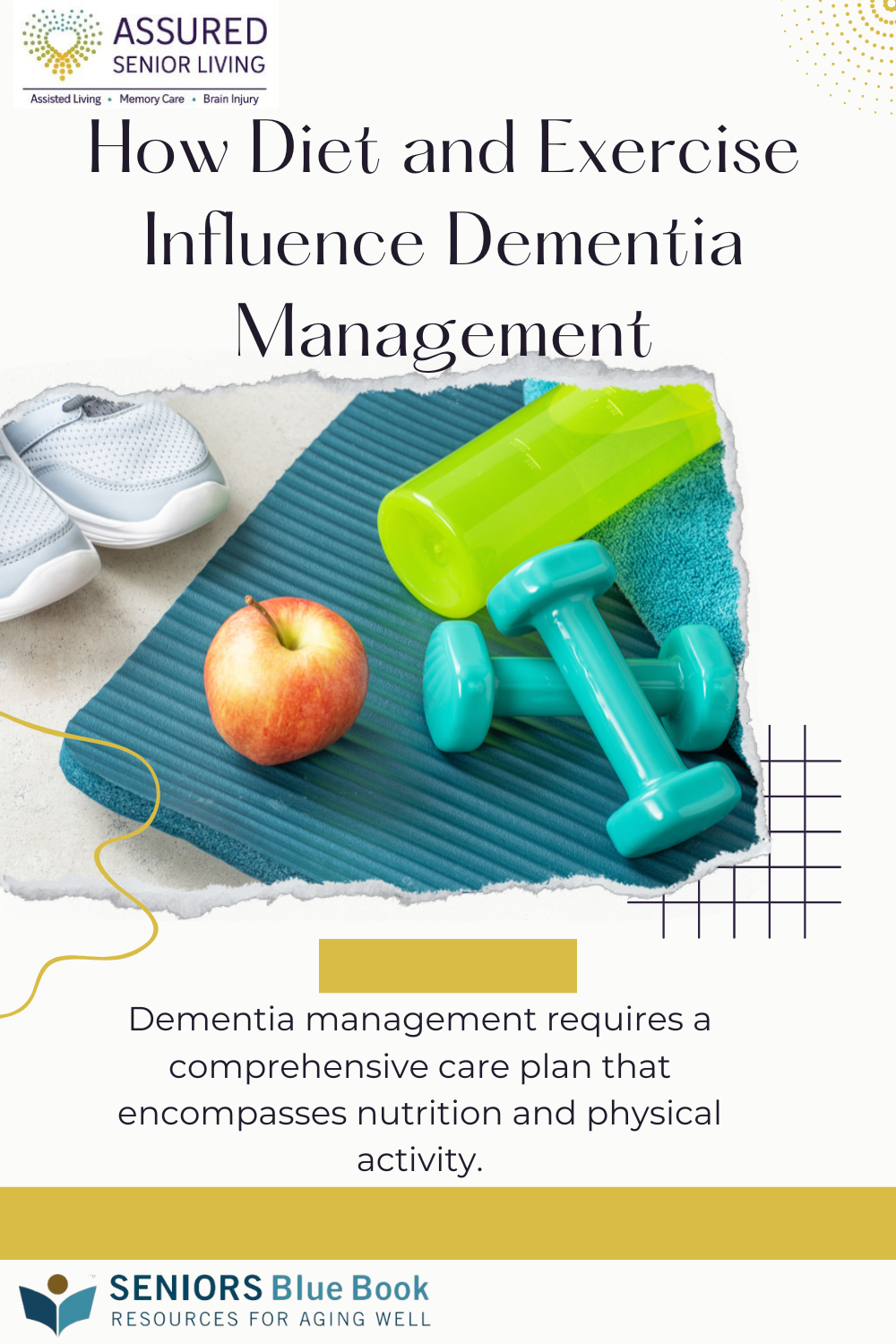
How Diet and Exercise Influence Dementia Management
Dementia management requires a comprehensive care plan that encompasses nutrition and physical activity. Research has shown a significant correlation between diet and cognitive function in individuals with dementia, highlighting the impact of specific nutrients and dietary patterns. Similarly, the role of exercise in managing dementia symptoms cannot be overstated, with various forms of physical activity demonstrating benefits for cognitive health.THE ROLE OF EXERCISE IN A DEMENTIA CARE PLANPhysical activity plays a pivotal role in the management of dementia symptoms, offering multifaceted benefits for cognitive health. The impact of exercise on individuals with dementia is profound, encompassing both physiological and psychological advantages. Here's a closer look at the significance of physical activity in dementia care:Cognitive Benefits of ExerciseRegular physical activity has been linked to improved cognitive function in individuals with dementia.Engaging in exercise can enhance memory, attention, and overall mental acuity, contributing to a higher quality of life for dementia patients.Emotional Well-beingExercise has been shown to alleviate symptoms of anxiety and depression in individuals with dementia, promoting a more positive emotional state.Physical activity can also foster a sense of accomplishment and independence, bolstering the overall well-being of dementia patients.Types of ExerciseBoth aerobic exercises, such as walking or swimming, and strength training activities have demonstrated positive effects on cognitive function in individuals with dementia.Tailoring exercise programs to the specific needs and abilities of dementia patients is crucial for maximizing the benefits and ensuring safety.Caregiver InvolvementInvolving caregivers in facilitating and supporting exercise routines for individuals with dementia can enhance the overall effectiveness of the physical activity interventions.Caregivers play a vital role in encouraging and enabling dementia patients to engage in regular exercise, contributing to the holistic management of the condition.IMPLEMENTING NUTRITIONAL STRATEGIES IN YOUR DEMENTIA CARE PLANTailoring nutritional plans for individuals with dementia is essential for supporting their overall well-being and cognitive function. Implementing effective nutrition strategies involves personalized dietary approaches and practical insights to ensure optimal care for dementia patients.Guidelines for Effective Nutrition StrategiesEmphasizing nutrient-dense foods that support brain health, such as fruits, vegetables, whole grains, and lean proteins, is integral to effective nutrition strategies for dementia patients.Ensuring adequate hydration and addressing any challenges related to eating and drinking are key components of implementing nutritional plans for individuals with dementia.Importance of Consistency and RoutineEstablishing regular meal times and creating a calm, familiar dining environment can promote better eating habits and reduce mealtime stress for individuals with dementia.Consistency in meal presentation and texture modification, if necessary, can facilitate easier and more enjoyable eating experiences for dementia patients.Involvement of Caregivers and Healthcare ProfessionalsCollaboration between caregivers and healthcare professionals is vital for implementing and monitoring the effectiveness of nutritional strategies for individuals with dementia.Educating caregivers about the specific dietary needs and challenges associated with dementia can empower them to provide optimal support and assistance in meal planning and preparation.INTEGRATING PHYSICAL ACTIVITY INTO A DEMENTIA CARE PLANIntegrating physical activity into dementia management presents unique challenges and opportunities, requiring tailored exercise programs and approaches suitable for individuals with cognitive impairments.Tailored Exercise ProgramsDesigning exercise programs that accommodate the specific needs and abilities of individuals with dementia is essential for ensuring safety and effectiveness.Incorporating activities that focus on balance, flexibility, and strength can help improve overall physical function and reduce the risk of falls among dementia patients.Cognitive Stimulation through Physical ActivityEngaging individuals with dementia in activities that involve coordination and cognitive stimulation, such as dancing or modified sports, can contribute to both physical and mental well-being.Combining physical exercise with cognitive challenges can enhance brain function and promote a sense of accomplishment for dementia patients.Addressing ChallengesOvercoming barriers related to motivation, communication, and behavioral symptoms is crucial when integrating physical activity into dementia care.Adapting exercise routines to accommodate fluctuations in mood and energy levels, as well as addressing any safety concerns, is vital for the successful implementation of physical activity programs.Benefits of ExerciseRegular physical activity has been associated with improved sleep patterns, reduced agitation, and enhanced overall quality of life for individuals with dementia.The positive impact of exercise on mood, social interaction, and physical well-being underscores the importance of integrating physical activity into comprehensive dementia management.HOLISTIC APPROACH TO DEMENTIA CARE A GOOD PLANA holistic approach to dementia care integrates nutrition and physical activity into a comprehensive care plan, recognizing the interconnectedness of these elements in promoting the overall well-being of individuals with dementia.Comprehensive Well-beingBy addressing both nutritional needs and physical activity, a holistic approach aims to support the physical, mental, and emotional health of individuals living with dementia.This comprehensive strategy acknowledges the multifaceted nature of dementia and seeks to optimize the quality of life for patients through a well-rounded care plan.Synergistic BenefitsIntegrating nutrition and exercise can create synergistic benefits, where the positive effects of each component complement and enhance the outcomes of the other.A holistic approach recognizes the potential for improved cognitive function, physical strength, and emotional resilience when nutrition and physical activity are integrated into dementia care plans.ENHANCED QUALITY OF LIFE WITH A DEMENTIA CARE PLANEmbracing a holistic approach to dementia care can lead to an improved overall quality of life for individuals with dementia, fostering a sense of purpose, independence, and vitality.By addressing the diverse needs of dementia patients through a comprehensive care plan, caregivers and healthcare professionals can contribute to a more fulfilling and enriching experience for those under their care.The integration of nutrition and physical activity into comprehensive care plans is pivotal for effectively managing dementia. By recognizing the interconnectedness of these elements and embracing a holistic approach, caregivers and healthcare professionals can significantly enhance the overall well-being and quality of life for individuals living with dementia. The synergistic benefits of tailored nutritional strategies and personalized exercise programs underscore the importance of a multifaceted care approach. For personalized and holistic care options, readers are encouraged to explore the offerings at Assured Senior Living: https://www.assuredassistedliving.com/
Jul 08, 2024
Physical Rehabilitation Activities That Aid Brain Injury Recovery
The integration of purposeful physical activities in brain injury rehabilitation plays a pivotal role in fostering recovery and enhancing cognitive functions. This article looks at the evidence-based techniques and scientific principles underpinning brain injury rehabilitation, shedding light on the specific physical activities that have shown efficacy in aiding brain injury recovery.By exploring the intersection of physical activities and brain injury rehabilitation, we aim to highlight the innovative approaches that contribute to effective recovery and empower individuals undergoing rehabilitation.TAILORED PHYSICAL REHABILITATION EXERCISES FOR EFFECTIVE RECOVERYIn brain injury rehabilitation, the incorporation of tailored physical exercises stands as a cornerstone in empowering individuals and facilitating effective recovery. By focusing on personalized physical activities, rehabilitation programs can address the specific needs of each individual, promoting targeted progress and overall well-being. This tailored approach not only enhances physical strength and mobility but also plays a crucial role in cognitive and emotional rehabilitation.Importance of Individualized Physical ActivitiesTailored physical exercises cater to the unique challenges and goals of each individual undergoing brain injury rehabilitation. These activities are designed to address specific cognitive and physical impairments, promoting targeted recovery and functional independence. By customizing physical exercises, rehabilitation programs can adapt to the evolving needs of individuals, ensuring a dynamic and responsive approach to recovery.Empowerment Through Purposeful EngagementTailored physical activities empower individuals by providing a sense of agency and control over their rehabilitation journey. Engaging in personalized exercises fosters a positive and proactive mindset, contributing to a holistic approach to recovery. The individualized nature of these activities promotes a sense of ownership and motivation, driving individuals to actively participate in their rehabilitation process.In essence, the role of physical activities in brain injury rehabilitation extends beyond mere physical rehabilitation; it encompasses a personalized and purposeful approach that empowers individuals to navigate their recovery journey with resilience and determination.HARNESSING NEUROPLASTICITY FOR RECOVERYNeuroplasticity, the brain's remarkable ability to reorganize and form new neural connections, plays a pivotal role in brain injury rehabilitation. Specific physical activities can leverage neuroplasticity to promote recovery and enhance cognitive functions in individuals with brain injuries, offering a pathway to regain lost abilities and adapt to new challenges.Adapting to Neural Changes Through Physical ActivitiesNeuroplasticity allows the brain to adapt and rewire itself in response to learning, experience, and injury. Tailored physical exercises capitalize on neuroplasticity, facilitating the formation of new neural pathways to compensate for damaged areas of the brain. By engaging in purposeful physical activities, individuals can harness neuroplasticity to enhance cognitive functions, such as memory, attention, and problem-solving skills.Promoting Functional Recovery and AdaptationThe plastic nature of the brain enables individuals to regain lost functions and develop compensatory strategies through targeted physical activities. Physical exercises that challenge and stimulate the brain contribute to functional recovery and adaptation, fostering resilience in the face of cognitive impairments. Harnessing neuroplasticity through purposeful physical activities offers a pathway for individuals to adapt to their evolving cognition, promoting independence and quality of life.Understanding and leveraging neuroplasticity through tailored physical activities provides a foundation for promoting recovery and enhancing cognitive functions in individuals undergoing brain injury rehabilitation. By embracing the adaptive potential of the brain, rehabilitation programs can offer a proactive and empowering approach to recovery.PERSONALIZED AND ENGAGING PHYSICAL REHABILITATION ACTIVITIESThe practical implementation of purposeful physical activities is paramount to fostering independence and enhancing the quality of life for individuals undergoing rehabilitation. By incorporating personalized and engaging physical exercises into rehabilitation programs, a supportive and empowering environment can be cultivated, promoting holistic well-being and functional progress.Tailoring Activities to Individual NeedsRehabilitation programs customize physical activities to address the unique cognitive and physical challenges faced by each individual. Personalized exercises are designed to align with the specific goals and capabilities of the individual, ensuring targeted and meaningful engagement. By tailoring activities to individual needs, rehabilitation programs can create a supportive and inclusive environment that nurtures progress and independence.Fostering Independence and Well-beingEngaging in purposeful physical activities empowers individuals to actively participate in their rehabilitation journey, fostering a sense of autonomy and accomplishment. Personalized and engaging exercises contribute to a positive and fulfilling rehabilitation experience, promoting emotional well-being and a sense of purpose.The incorporation of purposeful physical activities into rehabilitation programs fosters a supportive and inclusive environment, where individuals can thrive and make meaningful strides in their recovery journey.The integration of personalized and engaging physical exercises within rehabilitation programs serves as a catalyst for promoting independence, resilience, and overall well-being for individuals undergoing brain injury rehabilitation. By embracing a tailored and purposeful approach, rehabilitation programs can create an environment where individuals feel empowered and supported in their journey toward recovery.TAILORED PHYSICAL ACTIVITY PLANS FOR HOLISTIC RECOVERYThe development of personalized physical activity plans tailored to individuals undergoing brain injury rehabilitation is instrumental in promoting recovery and enhancing overall well-being. These personalized plans are designed to address the specific needs and goals of each individual, fostering a proactive and targeted approach to rehabilitation.Customizing Plans for Targeted ProgressPersonalized physical activity plans are tailored to align with the unique cognitive and physical requirements of individuals undergoing brain injury rehabilitation. These plans are developed in collaboration with healthcare professionals, ensuring that they cater to the specific goals and capabilities of each individual. By customizing activity plans, rehabilitation programs can promote targeted progress, functional independence, and overall well-being for individuals on their recovery journey.Enhancing Overall Well-being and Quality of LifePersonalized physical activity plans contribute to a holistic approach to recovery, addressing not only physical rehabilitation but also emotional well-being and cognitive enhancement. These plans are designed to engage individuals in purposeful and meaningful activities, fostering a sense of fulfillment and purpose during the rehabilitation process. By enhancing overall well-being and quality of life, personalized physical activity plans play a pivotal role in empowering individuals to navigate their recovery journey with resilience and determination.The development of personalized activity plans within brain injury rehabilitation programs offers a proactive and targeted approach to recovery, promoting holistic well-being and functional progress for individuals undergoing rehabilitation. By embracing a tailored and purposeful strategy, these plans empower individuals to actively participate in their recovery journey and make meaningful strides toward independence and overall well-being.The integration of purposeful activities within brain injury rehabilitation programs stands as a cornerstone in fostering recovery, promoting independence, and enhancing overall well-being for individuals undergoing rehabilitation. By leveraging tailored physical exercises and personalized activity plans, rehabilitation programs can create a supportive and empowering environment that nurtures progress and resilience.