
Continue Your Search! Explore More Local Options.
Start SearchingLet’s engage and get educated!
Browse through thousands of expert articles in over 100 different categories.
Browse NowArticles You May Like
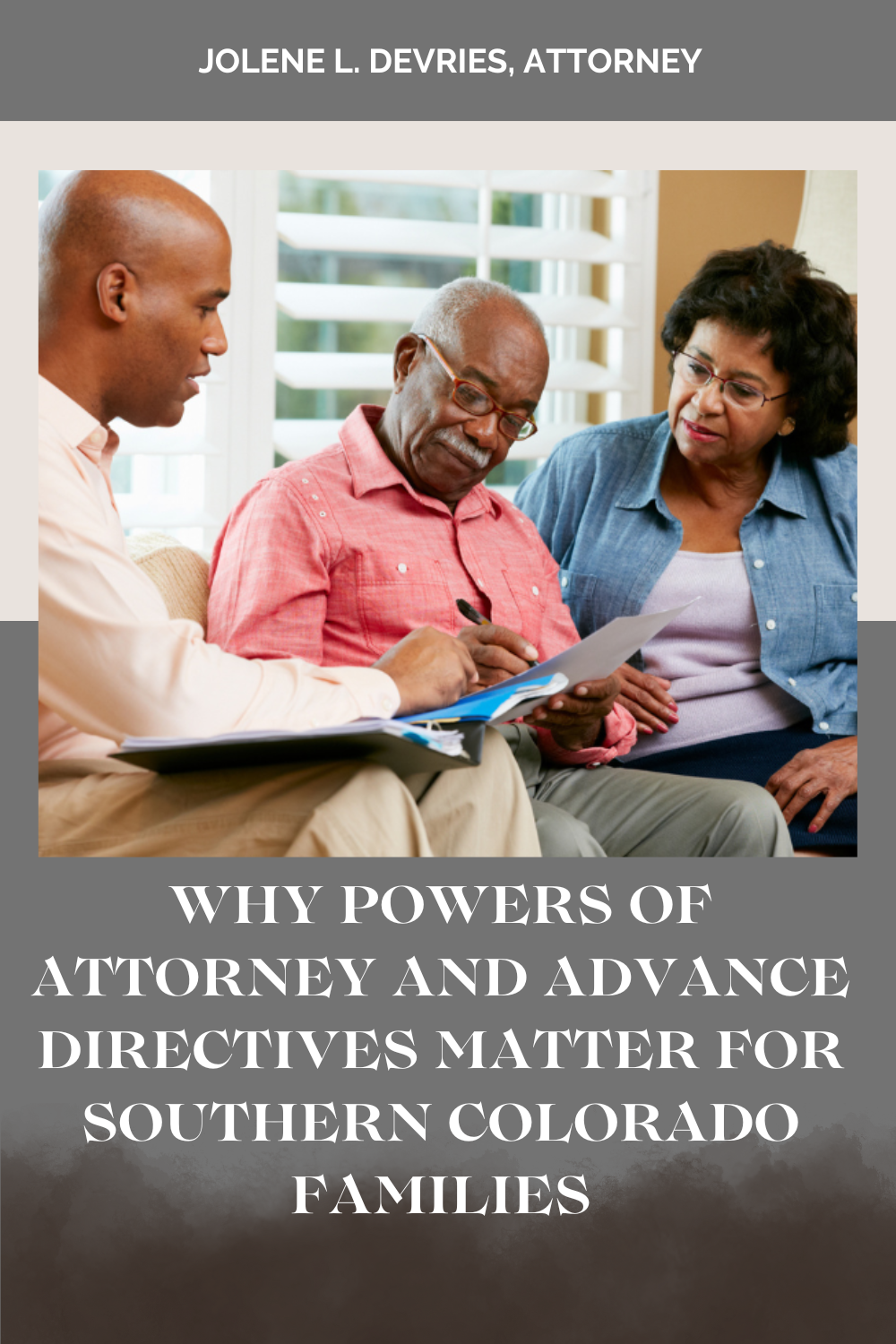
Why Powers of Attorney and Advance Directives Matter for Southern Colorado Families
One of the greatest fears many seniors share is losing their voicebeing unable to make their own medical or financial decisions when it matters most. For families in Southern Colorado, this concern often becomes real during a sudden illness, accident, or cognitive decline. When clear legal authority isnt in place, loved ones may find themselves scrambling for answers, facing delays, or even turning to the court system during already stressful moments.This is where elder law plays a critical and deeply personal role. Jolene L. DeVries, Attorney, helps seniors and families throughout Southern Colorado create powers of attorney and advance directives that protect autonomy, clarify decision-making, and ensure personal wishes are honored. These legal tools are not about preparing for the worstthey are about preserving dignity, control, and peace of mind.What Happens Without Legal Decision-Making DocumentsMany families assume that a spouse or adult child can automatically make decisions in a medical emergency. In reality, without proper documentation, even close family members may not have the legal authority to act.When powers of attorney and advance directives are missing, families may face: Delays in medical or financial decisions Confusion among healthcare providers Disagreements between family members Court involvement to establish guardianship or conservatorship Decisions made without clear guidance on personal wishes These situations can be emotionally draining and may result in outcomes the senior never wanted. One of the most common things I hear is, We thought we had more time, says Jolene DeVries. Putting documents in place early protects families from uncertainty later. Understanding Powers of AttorneyA power of attorney is a legal document that allows a trusted personcalled an agentto act on someones behalf if they are unable to do so themselves. In elder law, there are typically two primary types of powers of attorney: financial and healthcare.Financial Power of AttorneyA financial power of attorney allows an agent to manage financial matters, such as: Paying bills and managing accounts Handling property or real estate matters Managing insurance or benefits Making financial decisions during incapacity This authority can be immediate or only take effect if the individual becomes incapacitated, depending on how the document is structured.Healthcare Power of AttorneyA healthcare power of attorney designates someone to make medical decisions if the individual cannot communicate or make decisions themselves. This ensures healthcare providers know who is authorized to speak on the patients behalf.Together, these documents provide a clear framework for decision-making and reduce confusion during emergencies.What Are Advance Directives?Advance directives are legal documents that outline a persons medical wishes in advance. They guide healthcare providers and loved ones when difficult decisions must be made.Advance directives often address: Preferences for life-sustaining treatment End-of-life care wishes Comfort-focused care decisions Organ donation preferences By clearly documenting these wishes, seniors relieve their families of the burden of guessing or making painful decisions without guidance. Advance directives are one of the most compassionate gifts someone can give their family, Jolene DeVries explains. They remove doubt and help loved ones act with confidence. Preserving Independence Through PlanningIts common for seniors to worry that signing legal documents means giving up control. In reality, these documents preserve independence by ensuring decisions are made according to personal values and priorities.With proper planning: Seniors choose who speaks for them Wishes are documented clearly Courts are less likely to be involved Families have direction instead of uncertainty This proactive approach keeps control where it belongswith the individual.Why These Documents Matter in Southern ColoradoSouthern Colorados rural geography and healthcare access challenges can make timely decision-making especially important. Families may need to coordinate care across multiple providers, facilities, or towns.Having powers of attorney and advance directives in place helps ensure: Faster medical decision-making Clear communication with healthcare providers Less confusion during emergencies Better coordination across local and regional services Local elder law guidance ensures these documents comply with Colorado law and are properly executed.Avoiding Guardianship and ConservatorshipWhen no legal authority is in place and a person becomes incapacitated, families may have no choice but to seek guardianship or conservatorship through the court system. This process can be: Time-consuming Expensive Emotionally stressful Public rather than private Proper powers of attorney and advance directives often eliminate the need for court involvement, allowing families to manage matters privately and efficiently.Helping Adult Children and Caregivers Feel ConfidentAdult children often find themselves stepping into caregiving roles unexpectedly. Without legal authority, even simple taskslike talking to a doctor or accessing accountscan become complicated.These legal tools help caregivers by: Clarifying who can make decisions Reducing family conflict Providing confidence during emergencies Allowing caregivers to focus on care rather than legal barriers This clarity is especially important for families balancing caregiving with work and other responsibilities.Updating Documents as Life ChangesElder law planning is not a one-time task. Life changesmarriages, divorces, moves, health changes, or shifts in family relationshipsmay require updates to legal documents.Working with an elder law attorney ensures documents: Reflect current wishes Name appropriate decision-makers Remain compliant with current laws Jolene L. DeVries works with clients to review and update documents as circumstances evolve, ensuring plans remain effective over time.A Compassionate Approach to Sensitive ConversationsDiscussing future medical and financial decisions can feel uncomfortable. Jolene L. DeVries approaches these conversations with empathy, helping clients feel supported rather than pressured.Clients appreciate: Clear explanations in plain language Respect for personal values Thoughtful guidance through emotional topics A calm, client-centered process This approach helps seniors and families feel empowered rather than overwhelmed.Frequently Asked QuestionsWhen should powers of attorney and advance directives be created? As early as possible, while the individual can fully participate in decisions.Can documents be updated later? Yes. They should be reviewed periodically and updated as needed.Do these documents remove independence? No. They protect independence by ensuring wishes are honored.Are these documents specific to Colorado law? Yes. They must comply with Colorado legal requirements.Does Jolene L. DeVries serve Southern Colorado families? Yes. She works with seniors and families throughout Southern Colorado.Protecting Your Voice Before Its NeededPowers of attorney and advance directives ensure that seniors remain in controleven when they cannot speak for themselves. These legal tools provide clarity, dignity, and reassurance during lifes most vulnerable moments.With compassionate guidance and local expertise, Jolene L. DeVries, Attorney helps Southern Colorado families put the right documents in placeso decisions are made with confidence, respect, and peace of mind. More information can be found on their Seniors Blue Book listing
Dec 17, 2025

Is a Will Necessary?
Is a Will really necessary? I have everything in joint tenancy with my spouse so I really dont think I need a Will.This is a common yet misguided thought among many individuals. Yes, it is necessary to have a Will. In this day of fast paced travel who knows if both you and your spouse will die in an accident. Do you really want the legislators to designate where your assets go and who will wind up the affairs of your estate? In Colorado, if you die without a Will the intestacy laws direct how your assets will be distributed and this may not be what you wanted.So, what really is a Will and what can it really do? A Will is a legal document that directs how your assets will be disposed of at your death. Your property, including real estate, bank accounts, stocks and bonds and personal property, etc., can be given away to anyone you choose, with certain exceptions, after all debts are paid. It also allows you to choose who will be your Personal Representative (the person who carries out your wishes).To insure a Will is valid, there are certain requirements that must be followed. You must be at least 18 years of age, you must know who your family members are, you must know the property you own and you must know the effects of your Will. Moreover, you must be the one wanting to make the Will and not because someone else is forcing you. It must be signed and dated and two (2) disinterested people must witness your signing of your Will. Colorado recognizes not only typed Wills, but also hand written Wills, known as Holographic Wills. But be careful, if you dont follow the rules exactly for your typed or hand written Will, that Will may be considered invalid.To have your wishes known and insure that your property goes to whom you want, a Will is a very powerful and imperative tool. And remember, you should review your Wills every four (4) years to make sure your property that you worked your whole life for is disposed of as you have directed.Editors Note: This article was submitted by Jolene L. DeVries, Attorney at Law, Caon City, Colorado. Ms. DeVries can be reached at 719-275-4424 or by e-mail at [email protected].
Jan 12, 2017

How Elder Law Helps Southern Colorado Seniors Preserve Financial Security
For many seniors in Southern Colorado, financial independence represents a lifetime of hard work, sacrifice, and careful planning. Homes, savings, land, and family assets often carry deep emotional significancenot just monetary value. As aging brings the possibility of long-term care, many individuals and families begin to worry about a difficult question: How can we afford care without losing everything weve worked for?This is where elder law becomes essential. Jolene L. DeVries, Attorney, helps seniors and families throughout Southern Colorado understand how asset protection and long-term care planning can work together. With thoughtful legal strategies, families can plan for future care needs while protecting financial stability, honoring personal wishes, and avoiding unnecessary hardship.Why Asset Protection Is a Major Concern for SeniorsLong-term care costs can be significant. Whether care is provided at home, in assisted living, or in a skilled nursing facility, expenses often exceed what families expect. Many seniors fear that needing care will quickly drain savings or force the sale of a family home.Common concerns include: Paying for care without exhausting retirement savings Protecting a spouse who remains at home Preserving assets for children or grandchildren Avoiding financial decisions made in panic Understanding what Medicaid doesand does notcover Without proper planning, families may face limited options when care becomes necessary. Asset protection planning isnt about hiding resources, says Jolene DeVries. Its about using the law responsibly to protect dignity, stability, and choice. How Elder Law Approaches Asset ProtectionElder law takes a proactive, strategic approach to asset protection. Rather than focusing solely on inheritance, elder law planning considers how assets are managed during a persons lifetimeespecially if care is needed.Asset protection strategies may involve: Understanding which assets are countable for Medicaid Structuring ownership of property appropriately Timing financial decisions carefully Coordinating estate planning with care planning The goal is not to avoid paying for care, but to ensure families are not unnecessarily impoverished by it.The Connection Between Medicaid and Asset PlanningMedicaid is one of the primary programs that can help cover long-term care costs, but eligibility rules are complex and often misunderstood. Many families are surprised to learn that Medicare does not cover extended long-term care.Medicaid planning may help families: Understand income and asset limits Protect certain assets legally Avoid penalties caused by improper transfers Plan ahead for eligibility rather than reacting later Because Medicaid rules are strict and timing matters, working with an elder law attorney early can make a significant difference. Small mistakes can delay benefits or reduce options, Jolene DeVries explains. Thats why guidance matters. Protecting a Spouse from Financial HardshipWhen one spouse needs long-term care, the other spouseoften called the community spousemay worry about financial security. Elder law planning includes strategies designed to protect the spouse who remains at home.These strategies may help ensure: The community spouse retains sufficient income Certain assets remain protected The family home is preserved when possible Without planning, a healthy spouse may be left financially vulnerable while care costs rise.Preserving the Family Home and Legacy AssetsFor many Southern Colorado families, the home is more than propertyits part of the familys story. Elder law planning explores options for protecting a home when care needs arise, while complying with legal requirements.Asset protection planning may also consider: Family land or businesses Long-held savings or investments Legacy goals for children or grandchildren By planning ahead, families can make intentional decisions instead of being forced into rushed or reactive choices.Timing Matters More Than Most Families RealizeOne of the biggest misconceptions about asset protection is that it can be done at any time. In reality, timing is critical. Certain actions taken too late may result in penalties or limited eligibility for benefits.Early planning allows: Greater flexibility in legal strategies More options for protecting assets Reduced stress during health changes Even if care is already needed, elder law can still help families understand remaining optionsbut early action provides the most control.Local Insight for Southern Colorado FamiliesSouthern Colorado presents unique planning considerations. Rural property, multigenerational homes, and limited care options all influence asset protection strategies.As a Canon Citybased elder law attorney, Jolene L. DeVries brings local insight into: Colorado-specific Medicaid rules Regional care resources Practical planning aligned with local realities This local perspective ensures strategies are not just legally sound, but realistic for Southern Colorado families.Supporting Adult Children Through Financial DecisionsAdult children are often involved in planning conversations, especially when they help coordinate care or manage finances. Asset protection planning helps reduce conflict and confusion by providing clear guidance and structure.Families benefit from: Transparent planning discussions Clear explanations of legal options Reduced disagreements during stressful times With professional guidance, families can work together toward shared goals.Ethical, Transparent Planning You Can TrustAsset protection planning sometimes carries misconceptions. Elder law focuses on ethical, lawful strategiesnot shortcuts or secrecy. Jolene L. DeVries emphasizes transparency, education, and responsible planning that aligns with both the law and family values.Clients appreciate: Honest assessments of available options Clear explanations of risks and benefits Respect for personal priorities and concerns This approach builds trust and confidence throughout the planning process.Frequently Asked QuestionsIs asset protection legal in elder law? Yes. When done properly, asset protection uses legal strategies allowed under the law.Is Medicaid planning only for people with significant assets? No. Families at many financial levels benefit from planning.Can planning still help if care is already needed? Often yes, though options may be more limited than with early planning.Does asset protection mean avoiding paying for care? No. It means planning responsibly to avoid unnecessary financial loss.Does Jolene L. DeVries serve Southern Colorado families? Yes. She works with seniors and families throughout Southern Colorado.Planning Today to Protect TomorrowFacing the possibility of long-term care doesnt have to mean sacrificing financial security. With knowledgeable elder law guidance, families can plan ahead, protect what matters most, and approach aging with greater confidence.Jolene L. DeVries, Attorney helps Southern Colorado seniors navigate asset protection and care planning with clarity, compassion, and local expertiseso families can focus on care, not crisis. More information can be found on their Seniors Blue Book listing
Dec 17, 2025
Joint Tenancy Is It Good For You
Joint tenancy is a method of owning real or personal property in the name of two or more people. The effect of joint tenancy ownership is that the individuals own the property as a whole, which means that when one of the owners die, the property passes to the other owner(s) as their sole property. One of the positive attributes of joint tenancy ownership then it avoids probate which eliminates the need for court costs and legal fees associated with probate. Yet, there is a negative side to joint tenancy ownership. For example, if a joint owner has financial difficulties, a creditor can force the sale of the property to pay that debt, or a garnishment or judgment from a creditor can reduce the bank account. Also, all parties must agree on loans against the property or to sell or transfer the property. Owning property in joint tenancy may also have the effect of disinheriting children. Since joint tenancy property passes to the survivor outright, the property (land or bank account) becomes that sole individuals property, even if a Will dictates otherwise. Essentially, the surviving joint owner will not legally need to share in the value of the property. And, of course, another problem involves taxes. Placing property in joint tenancy may cause a gift tax liability or capital gains taxes. So, should you place property in joint tenancy? It all depends on your goals, your money and your estate planning needs. It is always advisable to seek legal advice when titling property.Editors Note: This article was submitted by Jolene L. Devries, Elder Law Attorney. She can be reached at 719-275-4424
Feb 09, 2014
Elder Law Guidance in Caon City, Colorado
Elder Law Guidance in Caon City, ColoradoIn a close-knit community like Caon City, Colorado, planning for the future is more than a legal taskits a way to protect your family, your legacy, and your peace of mind. Whether its ensuring your wishes are honored, safeguarding your assets, or preparing for long-term care, elder law plays a critical role in helping seniors navigate lifes most important transitions.Jolene L. DeVries, Attorney, brings experience, compassion, and local insight to families throughout Caon Cityhelping them make informed decisions with confidence and clarity.What Is Elder Law?Elder law focuses on legal issues that affect older adults and their families. It goes beyond traditional estate planning to address the unique challenges that come with aging.Key areas of elder law include: Estate planning (wills and trusts) Powers of attorney Medicaid and long-term care planning Guardianship and conservatorship Asset protection These legal tools help ensure that individuals maintain control over their futureeven when circumstances change.Why Elder Law Matters in Caon CityCaon Citys strong sense of community and family values makes planning for the future especially important. Many residents have deep roots in the area and want to ensure their legacy is preserved for future generations.Without proper planning, families may face: Lengthy probate processes Disputes over assets Unexpected financial burdens Difficulty making medical or legal decisions on behalf of a loved one Jolene DeVries explains, Elder law is about more than documentsits about giving families peace of mind. When everything is clearly planned, families can focus on what matters most instead of navigating uncertainty.Essential Legal Documents Everyone Should HavePlanning ahead means putting the right legal protections in place. Some of the most important documents include:Last Will and TestamentSpecifies how assets will be distributed and who will manage the estate.TrustsCan help avoid probate, protect assets, and provide more control over how wealth is distributed.Durable Power of AttorneyAllows a trusted individual to handle financial matters if you become unable to do so.Medical Power of AttorneyDesignates someone to make healthcare decisions on your behalf.Advance Directives (Living Will)Outlines your wishes regarding medical treatment and end-of-life care.Protecting Assets While Planning for CareOne of the biggest concerns for families is the cost of long-term care. Without proper planning, care expenses can quickly deplete savings.Elder law strategies can help: Protect assets from being fully spent on care Qualify for programs like Medicaid Preserve wealth for spouses or heirs These strategies must be implemented carefully to comply with state and federal regulations.Avoiding Probate and Simplifying the ProcessProbate can be time-consuming, expensive, and stressful for families. With proper planning, many assets can be transferred without going through probate.Benefits of avoiding probate include: Faster distribution of assets Reduced legal costs Greater privacy Jolene L. DeVries helps families create plans that simplify this process and reduce burdens on loved ones.Planning for IncapacityMany people focus on what happens after they passbut planning for incapacity is just as important.Unexpected events such as illness or injury can make it difficult to manage finances or make decisions.Having the right legal documents in place ensures: Someone you trust can step in Your wishes are followed Your finances remain protected Supporting Families Through Difficult DecisionsLegal planning often involves sensitive conversations about aging, health, and end-of-life wishes. These discussions can be challengingbut they are essential.Jolene DeVries provides guidance that is: Clear and easy to understand Compassionate and respectful Focused on each familys unique situation The Value of Local Legal ExpertiseWorking with a local attorney offers important advantages. Jolene L. DeVries understands the specific legal landscape in Colorado and the needs of Caon City residents.Her local knowledge ensures: Compliance with Colorado laws Personalized recommendations Accessibility and ongoing support When Should You Start Elder Law Planning?The best time to plan is before a crisis occursbut its never too late to begin.You should consider meeting with an elder law attorney if: You are approaching retirement You have aging parents who need support You want to protect your assets You need to update existing legal documents Early planning provides more options and greater peace of mind.Creating a Plan That Reflects Your ValuesEvery family is different, and every plan should reflect individual goals, values, and priorities.With the right guidance, you can: Protect your legacy Ensure your wishes are honored Provide clarity and security for your loved ones Take the Next Step Toward Peace of MindIf youre ready to take control of your future and protect what matters most, expert legal guidance can make all the difference.Visit Jolene L. DeVries, Attorneys Seniors Blue Book listing today to learn more and connect. Start building a plan that provides confidence, security, and peace of mind for you and your family.FAQs1. What is the difference between a will and a trust? A will outlines asset distribution, while a trust can help avoid probate and provide more control over assets.2. Do I need an elder law attorney if I already have a will? Yes, elder law covers additional areas such as long-term care planning and incapacity planning.3. Can elder law help protect assets from nursing home costs? Yes, with proper planning strategies.4. What happens if I dont have a power of attorney? A court may need to appoint someone to manage your affairs. 5. When should I update my legal documents? After major life events such as marriage, divorce, or changes in health.
Apr 14, 2026

How Elder Law Protects Seniors and Families in Caon City
How Elder Law Protects Seniors and Families in Caon CityIn Caon City, families value independence, security, and the ability to pass on what theyve worked hard to build. But as life changes with age, so do the legal and financial challenges that come with it.From protecting assets to planning for long-term care, navigating these decisions without proper guidance can feel overwhelming. Thats where elder law becomes essential. Jolene L. DeVries, Attorney, helps seniors and families in Caon City create clear, legally sound plans that provide peace of mind todayand protection for the future.What Is Elder Law and Why Does It Matter?Elder law focuses on the legal needs of older adults and their families. It covers a wide range of areas designed to protect individuals as they age.These areas may include: Estate planning (wills and trusts) Powers of attorney Medicaid and long-term care planning Guardianship and conservatorship Asset protection strategies Unlike general legal services, elder law takes a holistic approachconsidering both legal and personal needs.Why Planning Early Makes a DifferenceMany families wait until a crisis occurs before seeking legal help. Unfortunately, this can limit options and create unnecessary stress.Planning ahead allows individuals to: Make decisions while they are still able Protect assets from unexpected expenses Ensure their wishes are clearly documented Reduce the burden on family members In a close-knit community like Caon City, where family plays a central role, early planning helps preserve both relationships and peace of mind.Jolene DeVries shares: "Elder law is about more than documentsits about helping families feel prepared, protected, and confident about the future."Key Legal Tools Every Family Should ConsiderUnderstanding the basic legal tools available can help families make informed decisions.Wills and TrustsThese documents outline how assets will be distributed and can help avoid unnecessary legal complications.Powers of AttorneyAllow a trusted individual to make financial or healthcare decisions if someone becomes unable to do so.Advance Healthcare DirectivesProvide clear instructions about medical care preferences.Medicaid Planning StrategiesHelp protect assets while ensuring eligibility for long-term care assistance.Each of these tools plays a role in creating a comprehensive plan.Protecting Assets While Planning for CareOne of the biggest concerns families face is how to afford long-term care without losing everything theyve saved.Elder law strategies can help: Preserve assets for a spouse or family Structure finances to meet Medicaid requirements Avoid unnecessary financial losses With proper planning, its possible to balance care needs with financial security.Navigating Complex Legal DecisionsLegal matters related to aging can be complex and emotionally charged. Decisions about healthcare, finances, and long-term care often involve multiple family members and sensitive conversations.Working with an experienced elder law attorney helps: Clarify options and legal requirements Prevent misunderstandings or disputes Ensure documents are properly prepared and executed Provide guidance during difficult decisions This support allows families to move forward with confidence.Supporting Families Through Life TransitionsElder law is not just about preparing documentsits about guiding families through important life transitions.Jolene L. DeVries provides support during: Changes in health or living situations Planning for long-term care Managing a loved ones affairs Navigating legal responsibilities This personalized approach ensures that each family receives the guidance they need at every stage.The Importance of Local ExpertiseLaws and regulations related to elder care and estate planning can vary by state. Working with a local attorney in Caon City ensures that plans are tailored to Colorado laws and regulations.Local expertise also means: Familiarity with regional resources and services Personalized attention and accessibility A deeper understanding of community needs This local connection helps create plans that are both effective and relevant.Peace of Mind for the FutureAt its core, elder law is about peace of mind. It allows individuals and families to feel confident that their wishes will be honored and their loved ones will be protected.With a comprehensive plan in place, families can: Reduce uncertainty and stress Avoid costly legal complications Focus on what matters mosttime together Take the First Step Toward ProtectionIf you or a loved one are considering estate planning, Medicaid planning, or other elder law services in Caon City, now is the time to take action.Visit Jolene L. DeVries, Attorneys listing on Seniors Blue Book to learn more about how she can help you create a plan that protects your future and provides peace of mind for your family.FAQsWhat does an elder law attorney do? They help seniors and families with legal matters such as estate planning, Medicaid planning, and asset protection.When should I start estate planning? As early as possibleplanning ahead provides more options and better outcomes.What is a power of attorney? It allows someone you trust to make decisions on your behalf if you are unable to do so.Can elder law help with long-term care planning? Yes, it can help protect assets and plan for care needs. Is elder law only for seniors? No, it can benefit anyone planning for future care and financial security.
Apr 13, 2026
Do You Know What To Do When Someone Dies?
It is surprising that even though the one thing so certain in lifes cycle is death, many people dont know what to do when that inevitable event occurs. Following is a short guide of what to do:At the time of death: Call 911, your local Coroners Office or your hospice professional if your loved one is enrolled with hospice.Call family members or friends and ask for help in notifying others.Look through the decedents personal papers for burial information (i.e. funeral plan or written instructions).Contact a funeral home to arrange the pick up of the decedent.Check to see about petsDay One or Two: Meet with the funeral home for further arrangements such as services, location, military involvement, club or organization involvement, the obituary, burial plots and headstones.Order death certificates from the funeral home. A good rule of thumb on the number of Death Certificates to order is one each for every financial institution, vehicle, land, life insurance policy or other assets and then two extra.1 - 10 Days after death:Begin contacting the following individuals:Police to check on the decedents homeAn attorney to obtain information on how to deal with the decedents assets and debtsFinancial and banking institutions to obtain information on accounts, investments and whether the decedent maintained a safe deposit boxInsurance agents regarding claim formsVeterans Affairs and pension agencies regarding stop payments and possible benefits (the funeral home will contact the Social Security Administration for you)Utility companies to change or stop servicesNewspaper(s) and magazines to stop servicesPost Office to forward mailLook for DocumentsFuneral/Burial planWill an heir can request a bank to conduct a Will search in a safe deposit box. If a Will is found, the bank official must keep the Will and deposit it with the CourtLife insurance policiesFinancial statements from banks, stock brokerage firms and financial advisorsDeed(s) and titles to vehiclesBills (such as credit card statements, loans, etc.)Editors Note: This article was submitted by Jolene L. Devries, Elder Law Attorney. She can be reached at 719-275-4424
Oct 27, 2015

Grandparents Raising Grandchildren
One grandmother recently stated that she went through all the trials and tribulations if raising children just so she could have the joys of grandchildren. Little did she know at that time that she would be raising those grandchildren. The phenomenon of grandparents raising grandchildren is increasing and becoming more prominent in the legal system. Colorado law provides various legal avenues to afford grandparents rights to raise their grandchildren, make medical and educational decisions for their grandchildren, etc. The least expensive and most expeditious manner to give grandparents rights is where a parent may give a grandparent a document known as a Minor's Power of Attorney. The grandparent can use this document to seek medical attention or make educational decisions. This special power of attorney can last up to twelve (12) months and can be revoked at any time by the parent.The other avenue for grandparents is to seek court assistance. Court intervention provides more stability for the child(ren) and grandparents than a power of attorney. There are two statutory provisions that a grandparent may use to gain rights over a grandchild. The first is the Domestic Relations statutory provisions which allocate parental responsibilities to the grandparents. The second way is through the Probate statutory provisions where a grandparent can seek guardianship over the grandchild. Both of these avenues will afford grandparents extended rights to make important decisions regarding their grandchildren without terminating the rights of the parents and which can only be changed by court order. It is some times daunting to have to raise your grandchildren, but the law provides one with many options.Editors note: This article was submitted by Jolene L. DeVries, Attorney at Law. For further information she can be reached at 719-275-4424.
May 27, 2009

Do You Know What to do When Someone Dies
It is surprising that the one thing so certain in life's cycle is death, yet many people don't know what to do when that inevitable event occurs. Following is a short guide of what to do:At the time of death: Look through the decedents personal papers for burial information (i.e. funeral plan or written instructions). Contact a funeral home to arrange the pick up of the decedent and for further arrangements such as services, location, military involvement, club or organization involvement, the obituary, burial plots and headstones. Order death certificates from the funeral home. A good rule of thumb for the number of Death Certificates to order is one each for every financial institution, vehicle, land, life insurance policy or other assets and then two extra.After funeral arrangements have been made, begin contacting the following individuals:Police to check on the decedents home An attorney to obtain information on how to deal with the decedents assets and debts Financial and banking institutions to obtain information on accounts, investments and whether or not the decedent maintained a safe deposit box Insurance agents regarding claim forms Social Security/Veterans Affairs and pension agencies regarding stop payments and possible benefits Utility companies to change or stop services Newspaper(s) to stop services Post Office to forward mailWhat documents to look for:Funeral/Burial plan Will an heir can request a bank to conduct a will search in a safety deposit box. If a will is found, the bank official must keep the will and deposit it with the Court Life insurance policies Financial statements from banks, stock brokerage firms and financial advisors Deed(s) and titles to vehiclesEditors Note: This article was submitted by Jolene DeVries, Attorney at Law. For further information she can be reached at 719-275-4424
Mar 29, 2010
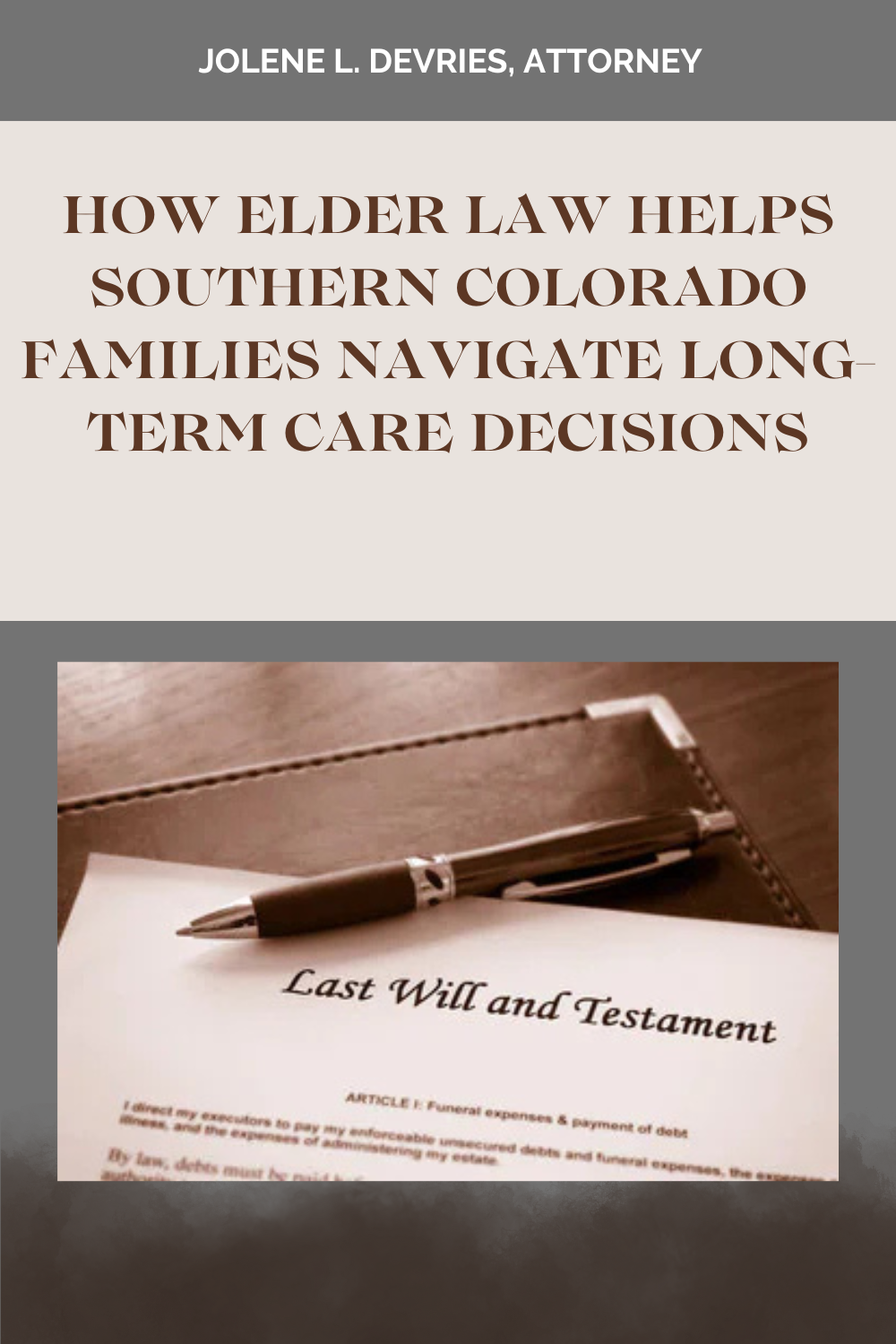
How Elder Law Helps Southern Colorado Families Navigate Long-Term Care Decisions
For many families in Southern Colorado, conversations about long-term care dont begin in a conference roomthey begin in hospital waiting areas, around kitchen tables, or during quiet moments of concern. A fall, a new diagnosis, or a noticeable decline in health can quickly shift a familys focus from someday planning to urgent decision-making. In these moments, families often feel overwhelmed by questions they never expected to answer so soon.Elder law plays a critical role during these transitions. Jolene L. DeVries, Attorney, works with seniors and families across Southern Colorado to help them understand long-term care options, protect legal rights, and make informed decisions that align with personal values and financial realities. Her guidance brings structure and reassurance at a time when families need it most.Why Long-Term Care Planning Is So ComplexLong-term care decisions involve more than choosing a care setting. Families must consider legal authority, financial sustainability, eligibility for benefits, and the wishes of their loved oneall while navigating emotional stress.Long-term care planning may involve: In-home care versus assisted living or skilled nursing Paying for care without exhausting lifetime savings Understanding Medicaid eligibility and timing Legal authority to make decisions Protecting assets for a spouse or family Without proper legal guidance, families may unknowingly make decisions that limit options or create financial hardship later. Long-term care planning is one of the most misunderstood areas of elder law, says Jolene DeVries. Families often dont realize how many choices they still haveuntil they understand the legal landscape. The Role of Elder Law in Long-Term Care DecisionsElder law provides a framework for navigating care needs while protecting both personal wishes and financial stability. Rather than reacting to a crisis, elder law allows families to plan strategicallyeven when care is already needed.An elder law attorney can help: Clarify legal decision-making authority Explain care options and legal implications Coordinate planning with healthcare realities Avoid costly mistakes related to benefits or assets For Southern Colorado families, this guidance is especially valuable when resources may be limited or spread across rural areas.Understanding Medicaid and Long-Term Care CostsOne of the biggest concerns families face is how to pay for long-term care. Medicare coverage is often misunderstood, and many families are surprised to learn how limited it can be for ongoing care needs.Medicaid, when planned for properly, can help cover long-term care costsbut eligibility rules are strict and timing matters. Elder law attorneys assist families in understanding: Income and asset limits Spend-down requirements Protected assets for spouses Common mistakes that delay eligibility Planning aheador even planning during a care transitioncan make a significant difference in access to benefits. Medicaid planning is not just about finances, Jolene DeVries explains. Its about preserving dignity and ensuring care is available when its needed. Protecting a Spouse and Family MembersWhen one spouse needs long-term care, the other spouse often worries about financial security. Elder law planning includes strategies designed to protect the well spouse from unnecessary financial hardship.This may involve: Identifying assets that can be protected Ensuring adequate income remains available Structuring care planning with spousal needs in mind Without guidance, families may unintentionally put a healthy spouse at risk of financial instability.Legal Authority During Care TransitionsCare transitions often require someone to make medical and financial decisions quickly. If legal authority is not clearly established, families may face delays or court involvement.Elder law planning addresses this by putting essential documents in place, such as: Healthcare powers of attorney Financial powers of attorney Advance medical directives These documents ensure trusted individuals can act efficiently and in accordance with the seniors wishesreducing confusion during stressful situations.Supporting Adult Children Through Difficult DecisionsAdult children often find themselves balancing caregiving responsibilities with work, parenting, and their own financial obligations. Legal uncertainty can add another layer of stress.Elder law helps adult children by: Clarifying their role and authority Reducing family conflict over decisions Providing a roadmap during emergencies Offering reassurance that decisions are legally sound With proper planning, caregivers can focus on care rather than paperwork and legal questions.Local Considerations in Southern ColoradoSouthern Colorado families face unique challenges when it comes to long-term care. Rural geography, fewer care facilities, and limited access to specialized services can complicate decisions.As a Canon Citybased attorney, Jolene L. DeVries understands these regional realities. Her local experience helps families align legal strategies with realistic care options available nearbyensuring plans are both practical and effective.Local elder law support helps families: Navigate Colorado-specific Medicaid rules Coordinate care within available local resources Avoid assumptions based on urban care models Avoiding Crisis-Driven DecisionsOne of the most valuable benefits of elder law planning is the ability to slow things downeven during a health crisis. When families understand their options, decisions become more intentional and less reactive.Elder law planning helps families: Avoid rushed facility placements Understand timelines and next steps Maintain a sense of control during transitions This clarity often reduces emotional strain and long-term regret.A Compassionate Approach to Difficult ConversationsLong-term care discussions are emotionally charged. Jolene L. DeVries approaches these conversations with compassion, helping families talk openly about care preferences, finances, and future needs.Clients appreciate: Clear explanations without legal jargon Respect for family dynamics Thoughtful guidance through sensitive topics This supportive approach helps families feel confident rather than overwhelmed.Frequently Asked QuestionsDoes elder law only apply once long-term care is needed? No. Planning can happen before or during care transitions.Can elder law help if care is already needed? Yes. Many strategies are still available even after care begins.Does Medicaid cover all long-term care? Medicaid can help, but eligibility rules apply and planning is essential.Do families need legal authority to make care decisions? Yes. Proper legal documents prevent delays and court involvement.Does Jolene L. DeVries serve Southern Colorado families? Yes. She works with families throughout Southern Colorado.Making Confident Decisions During Lifes TransitionsLong-term care decisions are never easybut they dont have to be made alone. With experienced elder law guidance, families can move forward with clarity, confidence, and compassion.Jolene L. DeVries, Attorney helps Southern Colorado seniors and families navigate long-term care planning with legal insight, local understanding, and a steady hand during times of change. More information can be found on their Seniors Blue Book listing
Dec 17, 2025

Elder Law Planning for Families in Canon City
Elder Law Planning for Families in Canon CityIn Canon City, life is rooted in family, community, and the values we pass down through generations. Whether its a home filled with memories or savings built over a lifetime, protecting what matters most becomes increasingly important as we age.Thats where elder law comes innot just as a legal service, but as a comprehensive approach to planning for the future, ensuring security, and preserving dignity.Attorneys like Jolene L. DeVries specialize in guiding families through complex decisions, helping them prepare for both expected and unexpected life events with clarity and confidence.What Is Elder Law?Elder law focuses on legal issues that affect older adults and their families. It combines elements of estate planning, long-term care planning, and asset protection into one comprehensive strategy.Common areas of elder law include: Wills and trusts Powers of attorney Guardianship and conservatorship Medicaid planning Long-term care planning Asset protection strategies Unlike general legal services, elder law is specifically designed to address the unique needs of aging individuals.As Jolene DeVries explains, "Elder law is about more than documentsits about protecting people, their families, and the lives theyve built."Why Elder Law Planning Is Essential in Canon CityCanon Citys strong sense of community and family ties make planning for the future especially meaningful. Many seniors want to ensure that: Their wishes are respected Their loved ones are protected Their assets are preserved Without proper planning, families may face: Lengthy probate processes Unexpected legal complications Financial strain due to long-term care costs Elder law helps prevent these challenges by putting the right plans in place ahead of time.Key Components of a Strong Elder Law PlanA well-rounded elder law plan addresses multiple aspects of life and future care.1. Wills and TrustsThese documents ensure that assets are distributed according to your wishes and can help avoid probate.2. Powers of AttorneyDesignating someone to make financial and healthcare decisions if you are unable to do so is critical.3. Long-Term Care PlanningPreparing for potential care needs helps protect both finances and quality of life.4. Medicaid PlanningStrategic planning can help individuals qualify for benefits while preserving assets.5. Guardianship PlanningEnsures that trusted individuals can step in when necessary.Each of these elements works together to create a comprehensive safety net.Avoiding Common MistakesMany families delay legal planning or assume its only necessary later in life. However, waiting too long can lead to complications.Common Mistakes Include: Not having a will or trust Failing to update documents Overlooking long-term care costs Choosing the wrong decision-makers Not understanding Medicaid rules Working with an experienced elder law attorney helps avoid these pitfalls.Jolene DeVries shares, "Planning early gives families more options and greater peace of mind. Its one of the most important steps you can take."The Emotional Side of PlanningElder law isnt just about legal documentsits about peace of mind.Having a plan in place can: Reduce stress for families Prevent conflicts among loved ones Ensure that personal wishes are honored For many families in Canon City, this sense of security is invaluable.A Personalized Approach to Legal PlanningNo two families are the same, which is why elder law planning should never be one-size-fits-all.Jolene L. DeVries takes a personalized approach, working closely with clients to understand their unique needs, goals, and concerns.This includes: Listening carefully to family dynamics Explaining complex legal concepts clearly Creating tailored strategies that reflect individual priorities This level of care ensures that each plan is both effective and meaningful.Planning for Long-Term Care CostsOne of the biggest concerns for seniors is the cost of long-term care. Without proper planning, these expenses can quickly deplete savings.Elder law strategies can help: Protect assets Qualify for Medicaid benefits Preserve income for a spouse Ensure access to necessary care Planning ahead provides more flexibility and better outcomes.Supporting Families Through Lifes TransitionsElder law attorneys dont just prepare documentsthey guide families through important life transitions.This includes: Preparing for retirement Navigating health changes Supporting aging parents Planning for end-of-life decisions Having a trusted legal advisor can make these transitions smoother and less overwhelming.Why Local Expertise MattersWorking with a local attorney in Canon City ensures that your plan aligns with Colorado laws and community resources.Local expertise provides: Knowledge of state-specific regulations Familiarity with local care options Personalized service and accessibility Jolene DeVries emphasizes, "Being part of this community allows me to truly understand and support the families I work with."Take the First Step Toward Peace of MindPlanning for the future may feel overwhelmingbut it doesnt have to be. With the right guidance, you can create a plan that protects your assets, supports your family, and ensures your wishes are honored. Visit Jolene L. DeVries, Attorney on Seniors Blue Book to learn more about elder law services and how to start planning for your future today.FAQsQ: When should I start elder law planning? A: Its best to start as early as possible, before major health or financial changes occur.Q: Do I need both a will and a trust? A: It depends on your situationan attorney can help determine the best approach.Q: What is a power of attorney? A: Its a legal document that allows someone to make decisions on your behalf.Q: Can elder law help with long-term care costs? A: Yes, planning strategies can help protect assets and qualify for benefits. Q: How often should I update my documents? A: Review them regularly, especially after major life changes.
Apr 10, 2026
Overcoming Your Fear of Probate
PROBATE AHH!!!Just the mention of the word sends chills down many Americans backs. But is it really that bad? We in Colorado are fortunate that our laws allow us to choose how to proceed into probate (which is the process of winding up the affairs of a decedent by paying creditors and distributing assets and property). The two choices are informal probate or formal probate.Informal probate means that the estate is not court-supervised. Administration of the estate begins by filing a number of probate forms with the District Court, having the Court admit the estate into probate and appointing a personal representative (formally known as an executor or executrix) to begin the process of paying bills, taxes, selling property and/or distributing the decedents assets pursuant to the decedents Will or by the intestacy statutes if the person died without a Will. An informal probate can be wrapped up after six months, but most estate matters take up to a year or more.Formal probate, sometimes referred to as supervised administration, occurs rarely, but is sometimes necessary when a dispute exists between those people interested in the decedents estate. In this case, the Court conducts hearings periodically regarding the distribution of the estate and other matters that arise during the administration process. A formal probate can last years and is often very costly.The good news is that 90% of all estates in Colorado are not supervised, thus there are less costs and attorney fees associated with an informal probate. Because Colorado has adopted what is known as the Uniform Probate Code, probate matters have been greatly simplified, thus, reducing the fear of probate that many of us exhibit today.So, does every estate need to go through the probate process? Not necessarily. For example, if an individual passes away with personal property and bank account assets (not real property) that are valued less than $66,000.00 a small estate affidavit can be used to transfer the property. Also, some property may just pass to another by operation of law, i.e. joint tenancy with right of survivorship, beneficiary designations on life insurance policies and IRAs, payable on death accounts (PODs), transferable on death accounts (TODs), and trusts. However, beware of transferring property or setting up a trust just to avoid probate. There could be significant tax implications and other unnecessary costs by transferring property without the advice of an attorney or accountant. Remember, probate should not be feared. Consult with your attorney on how probate can affect your estate.Editors Note: This article was submitted by Jolene L. Devries, Elder Law Attorney. She can be reached at 719-275-4424
Feb 24, 2018
Why Elder law Planning Matters for Families in Caon City
Why Elder law Planning Matters for Families in Caon CityPlanning for the future is one of the most important gifts you can give your family. Yet for many individuals in Caon City, Colorado, legal planningespecially when it comes to agingis often delayed until a crisis occurs.Elder law is designed to help seniors and their families prepare for the legal, financial, and healthcare decisions that come with aging. With the right guidance, families can protect their assets, ensure their wishes are honored, and avoid unnecessary stress during difficult times.Professionals like Jolene L. DeVries, Attorney, are helping families in Caon City navigate these important decisions with clarity, compassion, and confidence.What is Elder Law?Elder law is a specialized area of legal practice that focuses on the needs of older adults and their families. It covers a wide range of issues, including: Estate planning (wills and trusts) Powers of attorney Guardianship and conservatorship Medicaid and long-term care planning Advance healthcare directives These legal tools work together to ensure that a persons wishes are respected and their assets are protected.Why Planning Early Makes a DifferenceOne of the most common mistakes families make is waiting too long to begin legal planning. Without proper documents in place, families may face: Delays in decision-making Court involvement in personal matters Increased financial strain Family disagreements Planning early allows individuals to make decisions on their own termsbefore health or cognitive changes create limitations.Jolene DeVries explains: Elder law planning isnt just about documentsits about giving families peace of mind and making sure your voice is heard, no matter what the future holds. This proactive approach helps prevent uncertainty and confusion later on.Key Legal Documents Everyone Should HaveElder law planning involves several essential documents that protect both individuals and their families.1. Last Will and TestamentOutlines how assets will be distributed after death.2. Durable Power of AttorneyAppoints someone to handle financial matters if you are unable to do so.3. Medical Power of AttorneyDesignates a person to make healthcare decisions on your behalf.4. Advance Healthcare DirectiveProvides instructions for medical care based on your preferences.5. Trusts (if applicable)Help manage and protect assets while avoiding probate.Having these documents in place ensures that your wishes are clearly defined and legally recognized.Navigating Long-Term Care PlanningOne of the most complex aspects of elder law is planning for long-term care. With rising care costs, many families are concerned about how to pay for services without losing their savings.Elder law attorneys can help: Develop strategies to protect assets Navigate Medicaid eligibility rules Plan for future care needs This guidance is essential for making informed financial decisions.Protecting Families from Legal StressWhen a loved one becomes ill or incapacitated without proper planning, families may need to go through court processes such as guardianship or conservatorship.These processes can be: Time-consuming Expensive Emotionally challenging Having legal documents in place helps avoid these situations and ensures smoother transitions during difficult times.Understanding Local Needs in Caon CityCaon Citys close-knit community and aging population make elder law services particularly important. Many residents have deep roots in the area and want to ensure their families and assets remain protected.Working with a local attorney offers: Familiarity with Colorado laws Personalized, community-focused service Accessibility for ongoing support This local connection enhances both trust and effectiveness.Planning for Blended Families and Unique SituationsEvery family is different, and elder law planning should reflect that. Blended families, second marriages, and unique financial situations require thoughtful legal strategies.An experienced attorney can: Address complex family dynamics Ensure fair distribution of assets Prevent future disputes This customized approach ensures that plans align with each familys unique needs.Peace of Mind for the FutureElder law planning is about more than legal documentsits about peace of mind. Knowing that your affairs are in order allows you and your family to focus on what truly matters.It provides: Confidence in your decisions Security for your loved ones Clarity during uncertain times When Should You Start Elder Law Planning?The best time to start is nowbefore a crisis occurs. Even if youre in good health, having a plan in place ensures that youre prepared for whatever the future may bring.Its especially important to start planning if: You are approaching retirement You have significant assets You want to avoid burdening your family You are considering long-term care options A Partner in PlanningWorking with an experienced elder law attorney provides guidance, clarity, and reassurance. From drafting documents to navigating complex decisions, having a trusted professional by your side makes the process more manageable.Final ThoughtsPlanning for the future may not always be easy, but it is one of the most important steps you can take to protect yourself and your loved ones. Elder law provides the tools and guidance needed to ensure that your wishes are honored and your legacy is preserved.In Caon City, Jolene L. DeVries, Attorney is helping families take control of their future with confidence and care. Visit Jolene L. DeVries, Attorneys Seniors Blue Book listing to learn more about how elder law planning can help you protect what matters most.FAQs1. What does an elder law attorney do? They help with legal planning related to aging, including estate planning and long-term care.2. When should I start estate planning? As early as possiblebefore health issues arise.3. What is a power of attorney? It allows someone to make decisions on your behalf if you are unable.4. Can elder law help with Medicaid planning? Yes, attorneys can guide you through eligibility and asset protection strategies. 5. Do I need a trust? It depends on your financial situation and goals.
Apr 08, 2026
Joint Tenancy - Is It Good For You
Joint tenancy is a method of owning real or personal property in the name of two or more people. The effect of joint tenancy ownership is that the individuals own the property as a whole, which means that when one of the owners die, the property passes to the other owner(s) as their sole property. One of the positive attributes of joint tenancy ownership then it avoids probate which eliminates the need for court costs and legal fees associated with probate. Yet, there is a negative side to joint tenancy ownership. For example, if a joint owner has financial difficulties, a creditor can force the sale of the property to pay that debt, or a garnishment or judgment from a creditor can reduce the bank account. Also, all parties must agree on loans against the property or to sell or transfer the property. Owning property in joint tenancy may also have the effect of disinheriting children. Since joint tenancy property passes to the survivor outright, the property (land or bank account) becomes that sole individuals property, even if a Will dictates otherwise. Essentially, the surviving joint owner will not legally need to share in the value of the property. And, of course, another problem involves taxes. Placing property in joint tenancy may cause a gift tax liability or capital gains taxes. So, should you place property in joint tenancy? It all depends on your goals, your money and your estate planning needs. It is always advisable to seek legal advice when titling property.Editors Note: This article was submitted by Jolene L. Devries, Elder Law Attorney. For more information she can be reached at 719-275-4424
Jan 12, 2011
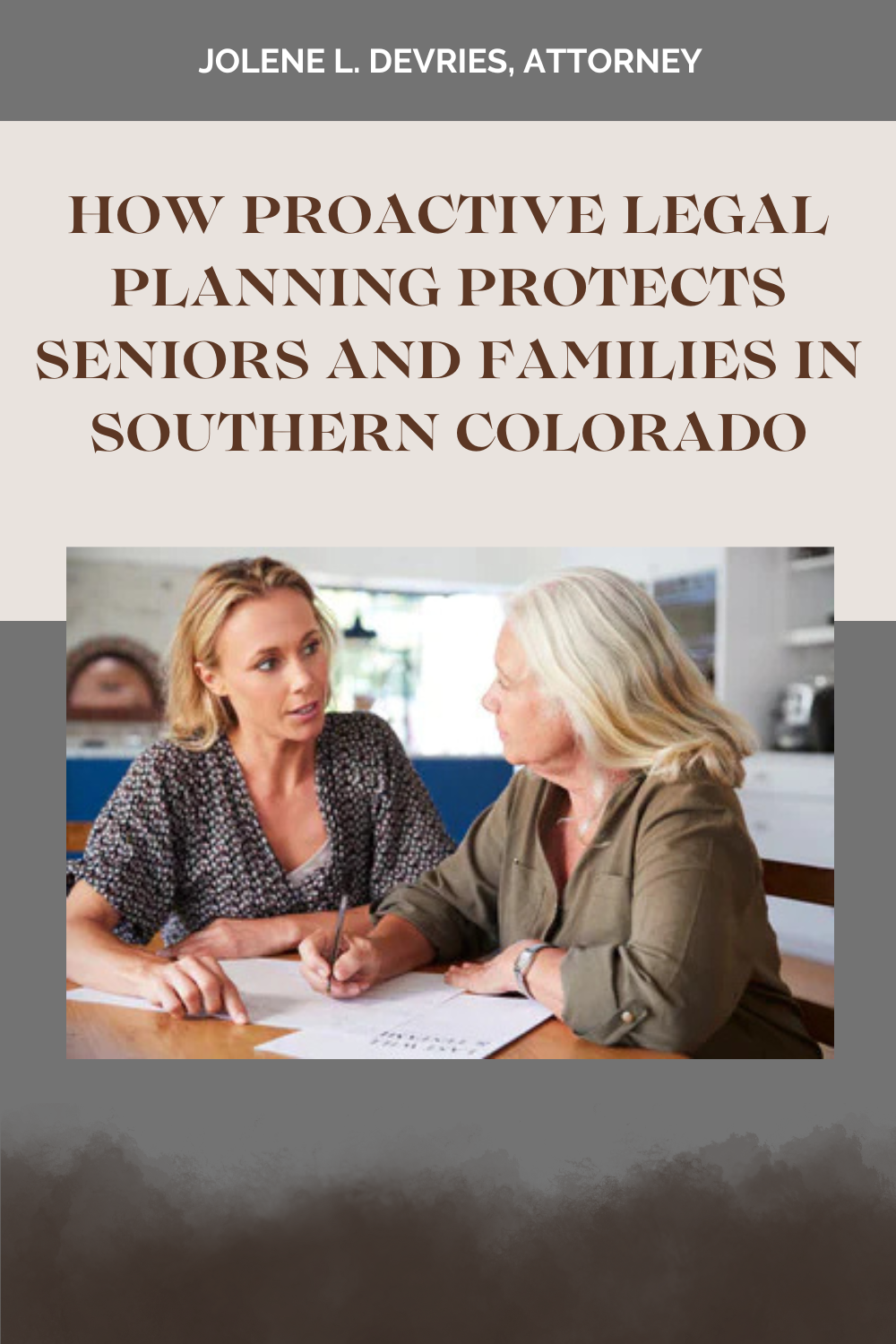
How Proactive Legal Planning Protects Seniors and Families in Southern Colorado
In Southern Colorado, families pride themselves on independence, self-reliance, and taking care of one another. Many older adults in Canon City and surrounding communities have spent decades building homes, raising families, and contributing to their towns. As aging brings new realitieshealth changes, financial concerns, or the possibility of long-term carefamilies often realize they need guidance navigating unfamiliar legal territory.Elder law provides that guidance. Jolene L. DeVries, Attorney, helps seniors and their families throughout Southern Colorado prepare for the legal challenges that can arise later in life. Through thoughtful planning, clear communication, and a compassionate approach, Jolene DeVries empowers clients to protect their wishes, their assets, and their peace of mindbefore a crisis ever occurs.What Makes Elder Law Different from Traditional Estate PlanningMany people assume elder law is simply another name for estate planning. While estate planning is an important component, elder law goes further by addressing the legal issues that often arise during a persons lifetimeespecially as health and care needs evolve.Elder law commonly focuses on: Planning for incapacity and decision-making Long-term care and Medicaid considerations Asset protection strategies Guardianship and conservatorship concerns Advocacy for seniors legal rights For families in Southern Colorado, elder law provides a practical framework for navigating aging with dignity and foresight. Elder law planning gives families clarity and control, says Jolene DeVries. It allows people to make informed choices while they still can. Why Waiting Can Create Unnecessary StressOne of the most common challenges Jolene DeVries sees is families waiting too long to plan. Often, legal questions arise suddenlyafter a medical emergency, a diagnosis, or a rapid decline in health. When that happens, options may be limited.Without proactive planning, families may face: Court involvement to establish authority Delays in accessing benefits or care Financial strain due to lack of preparation Family conflict during stressful moments Planning ahead gives individuals a voice in their future and reduces the likelihood of rushed decisions during emotionally charged situations.Local Insight Matters in Elder Law PlanningSouthern Colorado presents unique challenges and opportunities when it comes to aging. Rural geography, limited access to specialized care, and varying availability of community resources all influence legal and care decisions.As a Canon Citybased elder law attorney, Jolene L. DeVries understands these regional factors. Her local knowledge helps clients align legal plans with realistic care options available in Southern Coloradoensuring plans are not just legally sound, but practical.Local elder law guidance helps families: Navigate Colorado-specific laws and regulations Understand local care and benefit systems Coordinate planning with nearby resources This local perspective adds depth and relevance to every plan.Preserving Independence Through Legal ToolsMany seniors worry that legal planning means giving up control. In truth, elder law is one of the most effective ways to preserve independence.Key legal tools often include: Durable powers of attorney for finances Healthcare powers of attorney Advance medical directives These documents allow individuals to choose who will speak for themand howif they are ever unable to do so themselves. Rather than leaving decisions to courts or strangers, seniors retain control by planning ahead. These tools arent about giving power away, Jolene DeVries explains. Theyre about choosing who you trust. Addressing Long-Term Care and Medicaid ConcernsThe cost of long-term care is one of the biggest worries families face. Whether care is needed at home, in assisted living, or in a skilled nursing setting, expenses can quickly become overwhelming.Elder law planning helps families: Understand how Medicaid works in Colorado Explore eligibility strategies Protect certain assets where legally possible Avoid mistakes that can delay benefits With proper planning, families can better prepare for care needs without jeopardizing financial stability.Supporting Adult Children and CaregiversAdult children are often caught in the middlebalancing careers, families, and caregiving responsibilities while trying to make the right legal decisions for aging parents. Elder law planning brings clarity and structure to this role.Benefits for caregivers include: Clear legal authority to act when needed Reduced family disagreements A roadmap for future decisions Less uncertainty during emergencies When plans are in place, caregivers can focus on support and connection rather than legal confusion.Estate Planning with Aging in MindEstate planning remains an important part of elder law, but it is approached with an understanding that life circumstances may change. An elder lawinformed estate plan considers both lifetime needs and legacy goals.This may include: Wills and trusts Asset distribution planning Coordination with long-term care strategies Planning for incapacity as well as death This holistic approach helps ensure plans remain effective as health, care, and financial needs evolve.Compassionate Guidance Through Difficult ConversationsDiscussing aging, illness, or future care can be uncomfortable. Jolene L. DeVries approaches these conversations with empathy and respect, helping clients feel heard rather than pressured.Clients appreciate: Clear explanations without legal jargon Thoughtful pacing of decisions Respect for family dynamics A supportive, judgment-free environment This compassionate approach helps families move forward with confidence rather than fear.Frequently Asked QuestionsWhat does an elder law attorney do? An elder law attorney helps seniors and families plan for aging, long-term care, decision-making, and asset protection.When should elder law planning begin? Ideally before a crisis, while individuals can fully participate in planning.Is elder law only for people with significant assets? No. Elder law planning is valuable for individuals at all financial levels.Can elder law help with Medicaid eligibility? Yes. Elder law attorneys assist with Medicaid planning and long-term care strategies.Does Jolene L. DeVries serve Southern Colorado? Yes. She works with seniors and families throughout Southern Colorado.Preparing Today for Peace of Mind TomorrowElder law is not about anticipating the worstits about being prepared. With the right legal guidance, families can face aging with confidence, clarity, and control.Through thoughtful planning and local expertise, Jolene L. DeVries, Attorney helps Southern Colorado seniors protect their independence, support their families, and move forward with peace of mind. More information can be found on their Seniors Blue Book listing